ABC Family Arquivos Brasileiros de Cardiologia International Journal of Cardiovascular Sciences ABC Heart Failure & Cardiomyopathy ABC Imagem Cardiovascular
Português English
ABC Family
Português English
  • About
    • About ABC Family
    • Internal Regulation
    • Editorial Board
    • Brazilian Society of Cardiology (SBC)
  • Issues
  • SBC Guidelines
  • Content
    • Videos
    • Podcasts
    • News
  • About
    • About ABC Family
    • Internal Regulation
    • Editorial Board
    • Brazilian Society of Cardiology (SBC)
  • Issues
  • SBC Guidelines
  • Content
    • Videos
    • Podcasts
    • News

ABC Family

  • ABC Family
  • Arquivos Brasileiros de Cardiologia
  • International Journal of Cardiovascular Sciences
  • ABC Heart Failure & Cardiomyopathy
  • ABC Imagem Cardiovascular
Search in

No content found.

Journals
Ordering
Article types
Others

  1. Home
  2. Keyword: Vasoplegia
Figure 1
ABC
Research Letter

Vasoplegic Syndrome under Extracorporeal Membrane Oxygenation: Successful Treatment with Methylene Blue

Ahmet Aydin et al. Banu Katlan Selman Kesici

Abstract

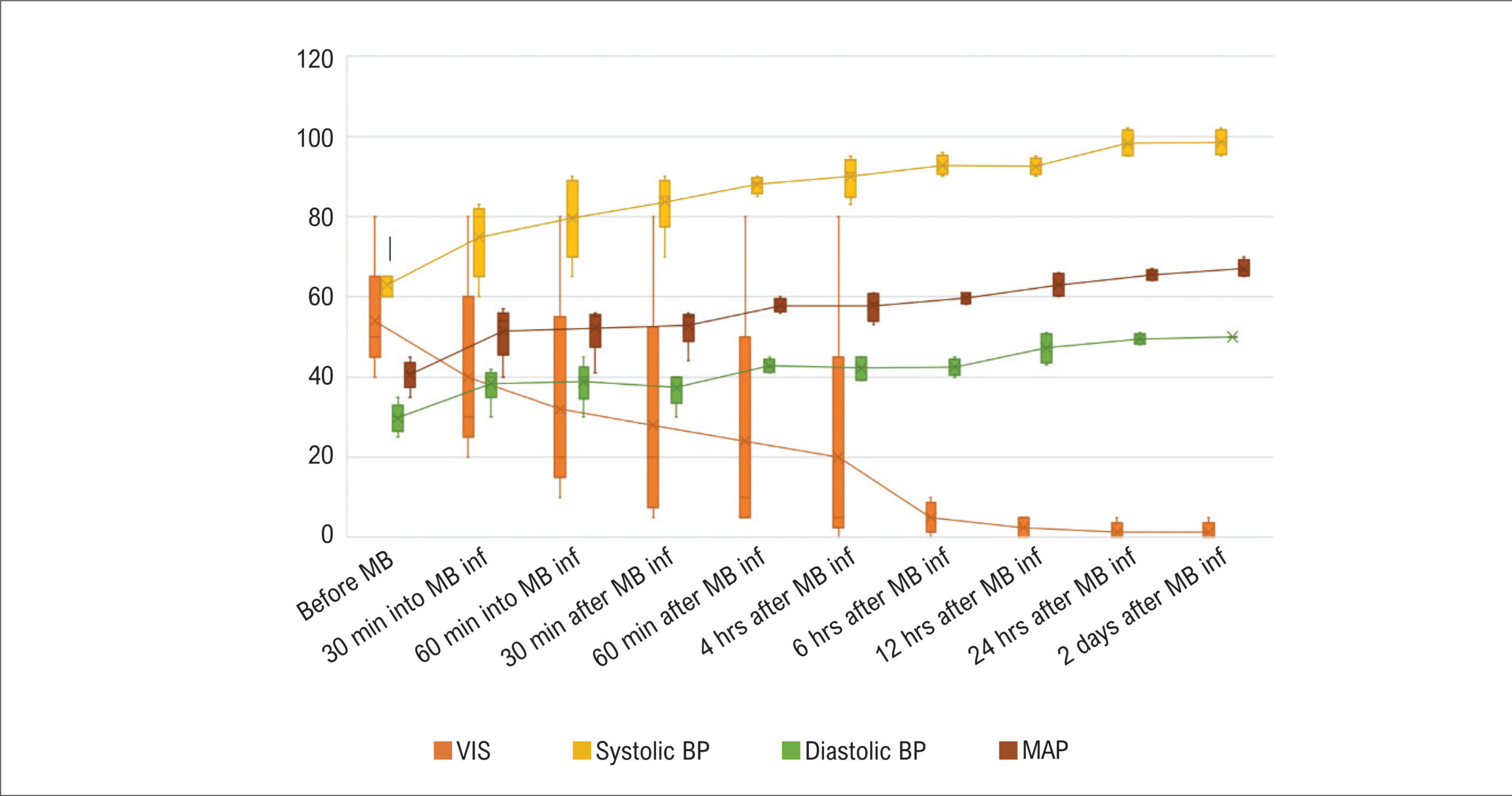
A vasoplegic syndrome is a state of hypotension that develops due to low systemic vascular resistance and is associated with a high mortality rate. Methylene blue is known to improve hypotension and reduce vasopressor requirements by increasing resistance in vasoplegia by inhibiting nitric oxide synthase. Here, we aimed to report on the use and effectiveness of methylene blue to treat severely hypotensive five vasoplegic syndrome cases despite extracorporeal membrane oxygenation. We concluded that Methylene blue can be used as a lifesaving treatment for vasoplegic syndrome refractory to standard supportive treatments, including ECMO.

  • Extracorporeal Membrane Oxygenation
  • methylene blue
  • Vasoplegia
Read Full Article
Creative Commons Attribution (CC BY) Creative Commons license
07/07/2025 DOI: 10.36660/abc.20250070i Views 1
Figure 1
ABCHF
Original Article

Evolution of Hematological Parameters in Patients with Vasoplegia Following Coronary Artery Bypass Graft Surgery

Nicolas Ramos et al. Marcos T. Faé Cristina B. Hebeda Franciani R. da Rocha … Caroline O. F. Bacca Marcelo V. Gambetta

Abstract

Background:

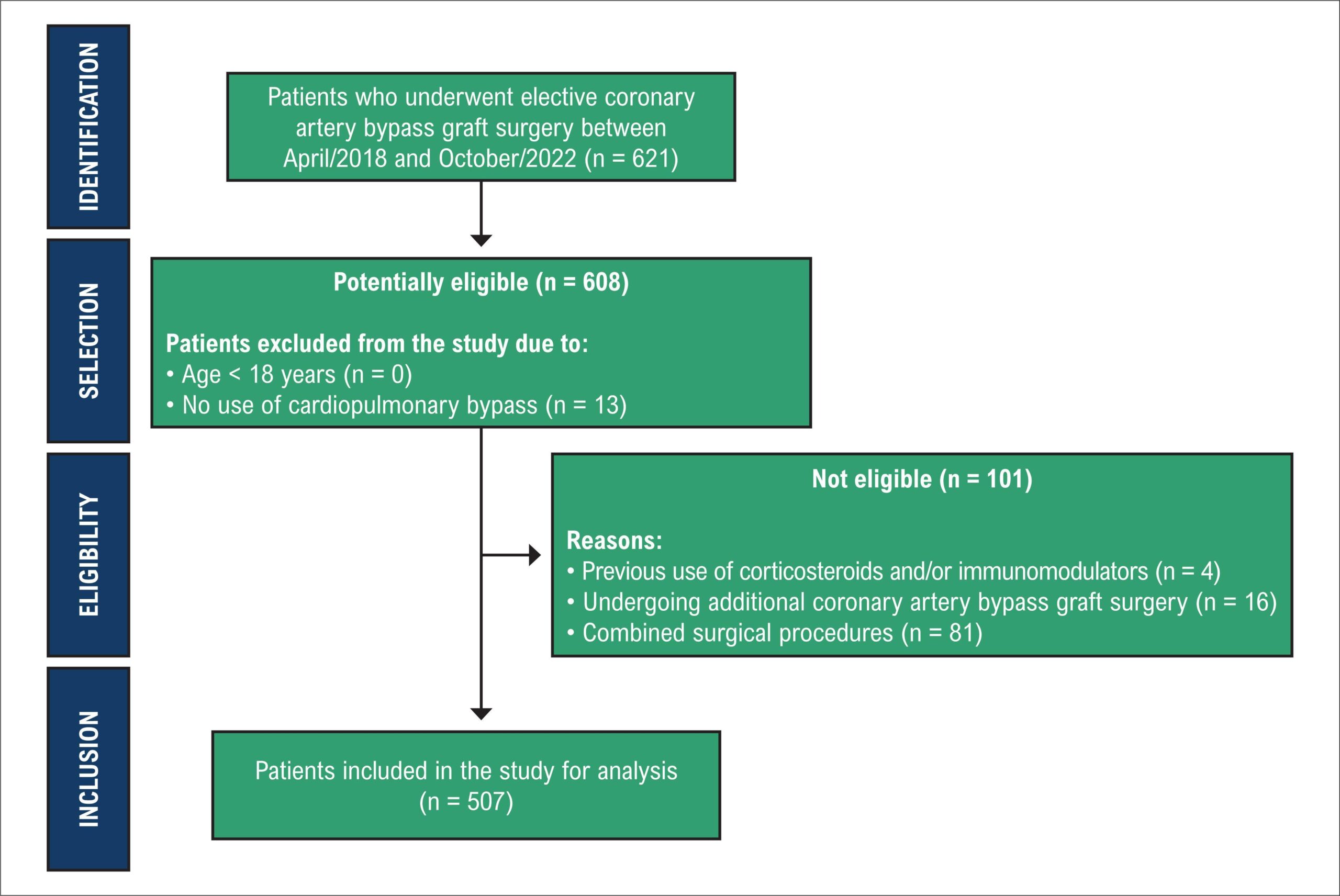
The utilization of extracorporeal circulation during a coronary artery bypass graft (CABG) surgery induces the secretion of inflammatory mediators associated with the onset of vasoplegic syndrome (VS). Blood cells contribute to the amplification of enzymatic mechanisms related to the development of VS, which is responsible for high mortality rates.

Objectives:

To investigate possible changes in hematological ratios to evaluate the evolution of VS in patients undergoing CABG.

Methods:

Analytical observational study of the retrospective cohort type, utilizing data collected from medical records in a reference cardiology hospital.

Results:

VS was associated with decreased monocyte rates (p = 0.02) 24 hours before the CABG, as well as elevated lymphocyte/monocyte ratio (LMR) (p = 0.01) and neutrophil/monocyte ratio (NMR) (p = 0.01) on the same period. Twenty-four hours after the procedure, increased neutrophil counts (p = 0.05) and platelet/lymphocyte ratio (PLR) (p = 0.03), as well as neutrophil/lymphocyte ratio (NLR) (p = 0.04), were associated with VS. Between 24 and 48 hours after CABG, neutrophil ratios (p = 0.01), PLR (p = 0.02), MLR (p = 0.04), and systemic inflammation response index (SIRI) (p = 0.02) were lower in patients who developed vasoplegia.

Conclusion:

A decreased monocyte count 24 hours before CABG was associated with the development of VS, as well as an elevated neutrophil count 24 hours after the procedure. Higher LMR and NMR 24 hours before the surgery, as well as PLR and MLR after the cardiac surgery were also associated with VS. Our data show different hematological changes at different times after CABG and highlight that new studies are essential to allow the use of hematological ratios in the monitoring of patients undergoing CABG.

  • Inflammation
  • Leukocytes
  • Monocytes
  • Neutrophils
  • Vasoplegia
Read Full Article
Creative Commons Attribution (CC BY) Creative Commons license
31/12/2023 DOI: 10.36660/abchf.20230057 Views 1
ABC
Editorial

Inflammation Post-Acute Myocardial Infarction: “Doctor or Monster”

Ricardo Wang et al. Fernando Carvalho Neuenschwander Bruno Ramos Nascimento

As in the short story “The Strange Case of Dr. Jekyll and Mr. Hyde ”, inflammation has a good side, which is the protection against pathogens, and helps in the process of cellular and tissue repair after an injury; on the other hand, it may also perpetuate and worsen the injury and, in the case of acute myocardial infarction (AMI), it may be the trigger of coronary occlusion. In the acute phase of AMI, the immune system is activated in the process of myocardial repair, in which the necrotic tissue is replaced by the scar tissue (fibrosis). From anatomopathological studies, we know that in the first hours after coronary occlusion, neutrophils are mainly recruited to the injury site. The local neutrophil population peaks around the third day, then a progressive decline is observed. From the fifth day, they are replaced by macrophages and both are responsible for clearing non-viable myocytes. In addition to this role, together with smooth muscle cells macrophages are responsible for angiogenesis and collagen production. The scarring process begins at the periphery of the infarcted area and extends to the nucleus, and this repair mechanism is completed in about 4–8 weeks, depending on the infarction size. ,

If we know how the inflammatory process occurs at the cellular level post-AMI, why do we continue to study inflammation? And why concentrating efforts on studies on cytokine expression? Whereas, on the one hand, the inflammatory process is necessary for the repair process, in the context of AMI, inflammation also plays an important role in complications. Such effect is observed in cardiogenic shock (causing vasodilation, vasoplegia and worsening shock), mechanical complications (papillary muscle rupture and ventricular free wall, and interventricular communication), in ventricular remodeling (fibrotic expansion and replacement of the affected wall) and, in the long run, it has been related to new cardiovascular events. Cytokines are molecules that mediate immune and inflammatory reactions and are responsible for activating inappropriate pathways or exaggerated responses (hypersensitivity). Therefore, understanding its kinetics can help to clarify the pathways associated with favorable outcomes and the pathways that, when activated, may lead to an increase in unfavorable events and have the potential to be the target of future therapeutic approaches.

[…]

  • B-Lymphocytes
  • Cytokines
  • Inflammation/complications
  • Myocardial Infarction
  • Shock, Cardiogenic
  • Vasoplegia
Read Full Article
Creative Commons Attribution (CC BY) Creative Commons license
18/01/2021 DOI: 10.36660/abc.20201250 Views 1
Hemodynamic and vascular endothelium function studies in healthy pigs after intravenous bolus infusion of methylene blue
ABC
Artigo Original

Hemodynamic and vascular endothelium function studies in healthy pigs after intravenous bolus infusion of methylene blue

Antonio Carlos Menardi et al. Fernanda Viaro Walter Vilella de Andrade Vicente Alfredo José Rodrigues Paulo Roberto Barbosa Évora

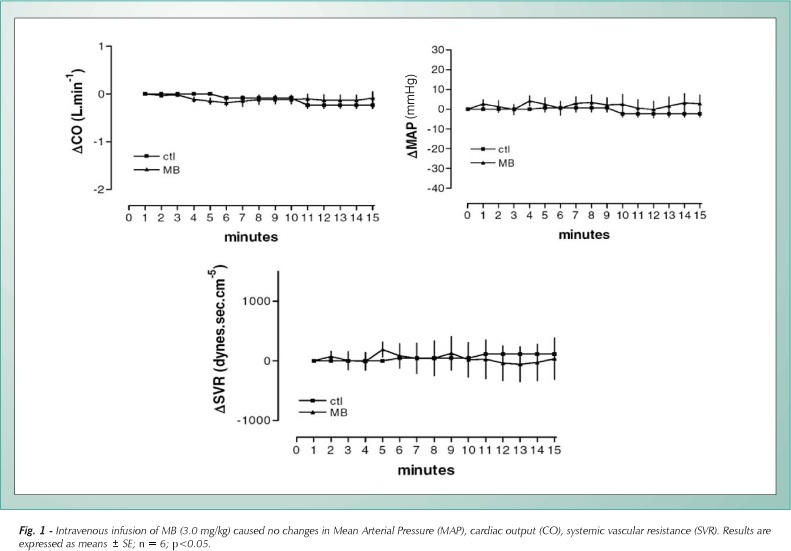
OBJECTIVE: Clinical benefit of methylene blue (MB) treating NO-induced vasoplegia has been reported in sepsis, systemic inflammatory response syndrome (SIRS) in cardiac surgery and anaphylactic shock, but its safety is sometimes questioned, mainly regarding its hemodynamic effects and the possibility of causing endothelium dysfunction. To examine the nitric oxide plasma levels and cardiovascular effects of the infusion of MB in vivo and its effects on endothelium-dependent and endothelium-independent in vitro vascular relaxation. METHODS: The study protocol included two experimental groups of female pigs: Group I (Control) – the animals (n=6) did not receive MB; Group II (MB) – the animals received 3 mg/kg of MB intravenous bolus infusion. After fifteen minutes of hemodynamic parameter recording the animals were sacrificed by exsanguination, and in vitro studies were conducted using segments of coronary, hepatic, superior mesenteric and renal arteries, to determine the effect of MB on the arterial endothelium function with regard to NO release. Nitric oxide plasma levels (NOx) were measured in each of the experimental groups. RESULTS: The results obtained in the present investigation were: 1) intravenous infusion of MB (3.0 mg/kg) caused no hemodynamic changes; 2) absolute and percent plasma NOx values did not differ between the experimental groups; and 3) in vitro study of vascular relaxation showed no significant difference between groups. These results show that MB intravenous infusion seems to be safe. This finding agrees with data from clinical experiments where MB was used to treat vasoplegic syndrome after cardiopulmonary bypass, systemic inflammatory response syndrome (SIRS) and anaphylaxis. These results were not unexpected because, as in healthy subjects, hemodynamics is only fine tuned and not fully under NO control; therefore, MB inhibiting guanylyl cyclase is not expected to do anything. CONCLUSION: Intravenous use of MB, at the investigated dose, did not cause any abnormal hemodynamic responses or impairment of endothelium-dependent relaxation.

  • distributive shock
  • methylene blue
  • Nitric Oxide
  • Vasoplegia
Read Full Article
Creative Commons Attribution (CC BY) Creative Commons license
21/11/2006 DOI: 10.1590/S0066-782X2006001700019 Views 1

How to cite this article

EndNote RIS

Electronic Document Format (Vancouver)

Aydin A, Katlan B, Kesici S. Vasoplegic Syndrome under Extracorporeal Membrane Oxygenation: Successful Treatment with Methylene Blue. Arquivos Brasileiros de Cardiologia 2025;122(5):e20250070.

Electronic Document Format (ABNT)

Aydin, Ahmet; Katlan, Banu; Kesici, Selman. Vasoplegic Syndrome under Extracorporeal Membrane Oxygenation: Successful Treatment with Methylene Blue. Arquivos Brasileiros de Cardiologia, v. 122, n. 5, e20250070, Jul. 2025.

Electronic Document Format (APA)

Aydin, A., Katlan, B., & Kesici, S. (2025). Vasoplegic Syndrome under Extracorporeal Membrane Oxygenation: Successful Treatment with Methylene Blue. Arquivos Brasileiros de Cardiologia, 122(5), e20250070.

Electronic Document Format (ISO)

Aydin, Ahmet and Katlan, Banu and Kesici, Selman. Vasoplegic Syndrome under Extracorporeal Membrane Oxygenation: Successful Treatment with Methylene Blue. Arquivos Brasileiros de Cardiologia [online]. 2025, vol. 122, n. 5, [cited 2026-10-14], e20250070. Available from: <https://journals.cardiol.br/en/article/vasoplegic-syndrome-under-extracorporeal-membrane-oxygenation-successful-treatment-with-methylene-blue/>. ISSN 0066-782X

EndNote RIS

Electronic Document Format (Vancouver)

Ramos N, Faé MT, Hebeda CB, Rocha FR, Bacca COF, Gambetta MV. Evolution of Hematological Parameters in Patients with Vasoplegia Following Coronary Artery Bypass Graft Surgery. ABC Heart Fail Cardiomyop 2023;3(4):e20230057.

Electronic Document Format (ABNT)

Ramos, Nicolas; Faé, Marcos T.; Hebeda, Cristina B.; Rocha, Franciani R. da; Bacca, Caroline O. F.; Gambetta, Marcelo V.. Evolution of Hematological Parameters in Patients with Vasoplegia Following Coronary Artery Bypass Graft Surgery. ABC Heart Fail Cardiomyop, v. 3, n. 4, e20230057, Dec. 2023.

Electronic Document Format (APA)

Ramos, N., Faé, M. T., Hebeda, C. B., Rocha, F. R. , Bacca, C. O. F., & Gambetta, M. V. (2023). Evolution of Hematological Parameters in Patients with Vasoplegia Following Coronary Artery Bypass Graft Surgery. ABC Heart Fail Cardiomyop, 3(4), e20230057.

Electronic Document Format (ISO)

Ramos, Nicolas and Faé, Marcos T. and Hebeda, Cristina B. and Rocha, Franciani R. da and Bacca, Caroline O. F. and Gambetta, Marcelo V.. Evolution of Hematological Parameters in Patients with Vasoplegia Following Coronary Artery Bypass Graft Surgery. ABC Heart Fail Cardiomyop [online]. 2023, vol. 3, n. 4, [cited 2026-10-14], e20230057. Available from: <https://journals.cardiol.br/en/article/evolution-of-hematological-parameters-in-patients-with-vasoplegia-following-coronary-artery-bypass-graft-surgery/>

EndNote RIS

Electronic Document Format (Vancouver)

Wang R, Neuenschwander FC, Nascimento BR. Inflammation Post-Acute Myocardial Infarction: “Doctor or Monster”. Arquivos Brasileiros de Cardiologia 2021;115(6):1-2.

Electronic Document Format (ABNT)

Wang, Ricardo; Neuenschwander, Fernando Carvalho; Nascimento, Bruno Ramos. Inflammation Post-Acute Myocardial Infarction: “Doctor or Monster”. Arquivos Brasileiros de Cardiologia, v. 115, n. 6, p. 1-2, Jan. 2021.

Electronic Document Format (APA)

Wang, R., Neuenschwander, F. C., & Nascimento, B. R. (2021). Inflammation Post-Acute Myocardial Infarction: “Doctor or Monster”. Arquivos Brasileiros de Cardiologia, 115(6), 1-2.

Electronic Document Format (ISO)

Wang, Ricardo and Neuenschwander, Fernando Carvalho and Nascimento, Bruno Ramos. Inflammation Post-Acute Myocardial Infarction: “Doctor or Monster”. Arquivos Brasileiros de Cardiologia [online]. 2021, vol. 115, n. 6, [cited 2026-10-14], pp. 1-2. Available from: <https://journals.cardiol.br/en/article/inflammation-post-acute-myocardial-infarction-doctor-or-monster/>. ISSN 0066-782X

EndNote RIS

Electronic Document Format (Vancouver)

Menardi AC, Viaro F, Vicente WVA, Rodrigues AJ, Évora PRB. Hemodynamic and vascular endothelium function studies in healthy pigs after intravenous bolus infusion of methylene blue. Arquivos Brasileiros de Cardiologia 2006;87(4):525-32.

Electronic Document Format (ABNT)

Menardi, Antonio Carlos; Viaro, Fernanda; Vicente, Walter Vilella de Andrade; Rodrigues, Alfredo José; Évora, Paulo Roberto Barbosa. Hemodynamic and vascular endothelium function studies in healthy pigs after intravenous bolus infusion of methylene blue. Arquivos Brasileiros de Cardiologia, v. 87, n. 4, p. 525-532, Nov. 2006.

Electronic Document Format (APA)

Menardi, A. C., Viaro, F., Vicente, W. V. A., Rodrigues, A. J., & Évora, P. R. B. (2006). Hemodynamic and vascular endothelium function studies in healthy pigs after intravenous bolus infusion of methylene blue. Arquivos Brasileiros de Cardiologia, 87(4), 525-532.

Electronic Document Format (ISO)

Menardi, Antonio Carlos and Viaro, Fernanda and Vicente, Walter Vilella de Andrade and Rodrigues, Alfredo José and Évora, Paulo Roberto Barbosa. Hemodynamic and vascular endothelium function studies in healthy pigs after intravenous bolus infusion of methylene blue. Arquivos Brasileiros de Cardiologia [online]. 2006, vol. 87, n. 4, [cited 2026-10-14], pp. 525-532. Available from: <https://journals.cardiol.br/en/article/hemodynamic-and-vascular-endothelium-function-studies-in-healthy-pigs-after-intravenous-bolus-infusion-of-methylene-blue/>. ISSN 0066-782X

  • About ABC Family
  • Internal Regulation
  • Editorial Board
  • Brazilian Society of Cardiology (SBC)

Issues

SBC Guidelines

  • Videos
  • Podcasts
  • News