ABC Family Arquivos Brasileiros de Cardiologia International Journal of Cardiovascular Sciences ABC Heart Failure & Cardiomyopathy ABC Imagem Cardiovascular
Português English
ABC Family
Português English
  • About
    • About ABC Family
    • Internal Regulation
    • Editorial Board
    • Brazilian Society of Cardiology (SBC)
  • Issues
  • SBC Guidelines
  • Content
    • Videos
    • Podcasts
    • News
  • About
    • About ABC Family
    • Internal Regulation
    • Editorial Board
    • Brazilian Society of Cardiology (SBC)
  • Issues
  • SBC Guidelines
  • Content
    • Videos
    • Podcasts
    • News

ABC Family

  • ABC Family
  • Arquivos Brasileiros de Cardiologia
  • International Journal of Cardiovascular Sciences
  • ABC Heart Failure & Cardiomyopathy
  • ABC Imagem Cardiovascular
Search in

No content found.

Journals
Ordering
Article types
Others

  1. Home
  2. Keyword: Brachial Artery
Endothelial Function by Flow-Mediated Dilation (FMD) in the Brachial Artery in Hypertensive Patients
ABC
Original Article

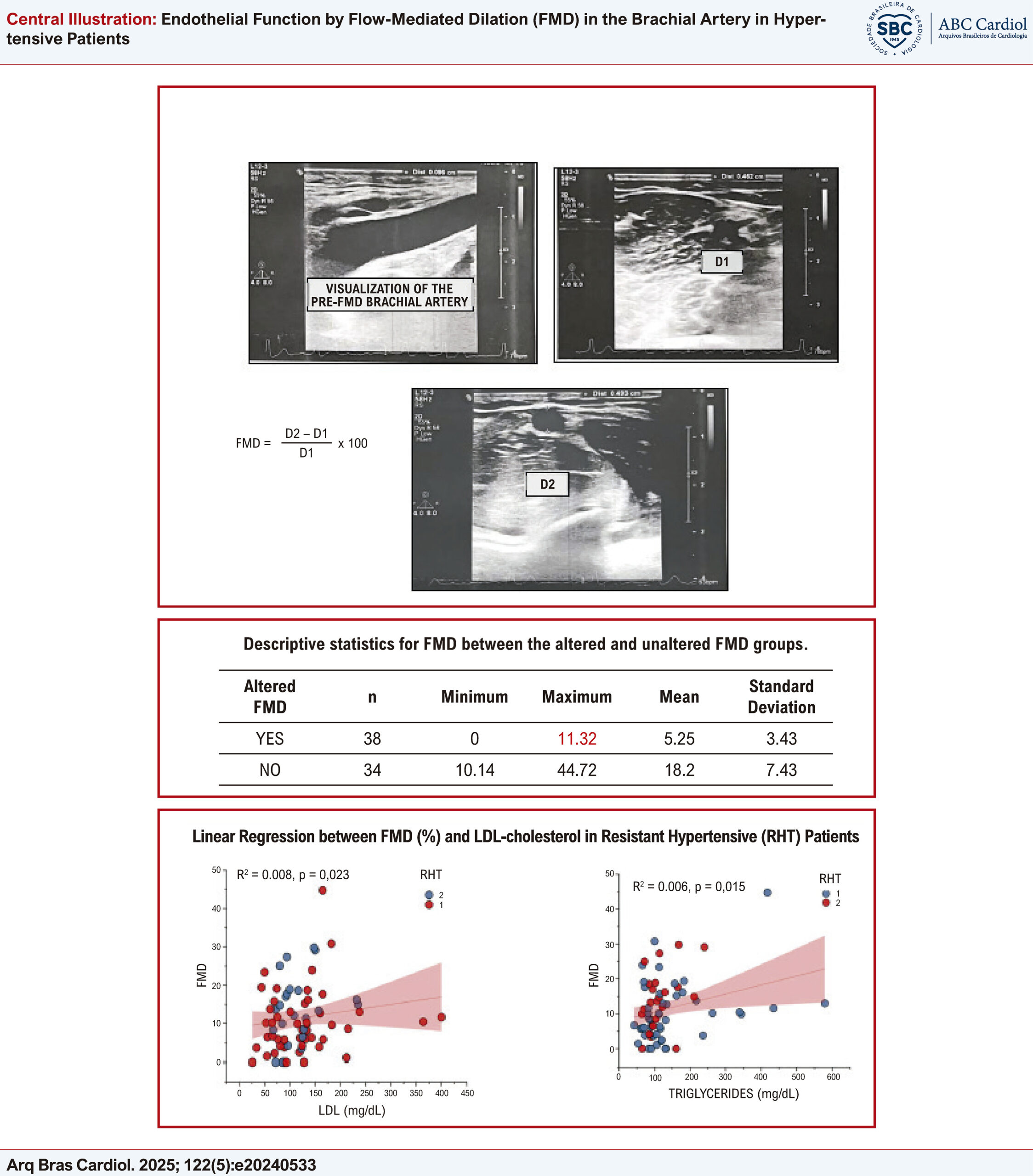
Endothelial Function by Flow-Mediated Dilation (FMD) in the Brachial Artery in Hypertensive Patients

Elaine Alves Santos Tessier et al. Carla Daltro Eduardo Martins Netto Glauco Moniz de Aragão Doria … Andrea Jimena Gutierrez Peredo Fabio Bulhões Roque Aras Ryan A. Harris

Abstract

Background

High blood pressure (BP) values have traditionally been associated with the risk of ischemic heart disease, stroke, chronic kidney disease, and early mortality. The brachial artery FMD after cuff deflation has become the standard parameter for quantifying endothelial function, being a useful surrogate outcome due to its non-invasiveness, close correlation with coronary endothelial function, and association with the incidence of long-term coronary events.

Objectives

To test hypotheses of correlation between the FMD and several blood parameters and to compare parameters between altered and non-altered FMD groups, and between hypertensive patients in the resistant hypertension groups (RHTN and non-RHTN).

Methods

Seventy-two volunteers from a referral hypertension outpatient clinic participated in this prospective cross-sectional study, in which several patient variables were compared between the altered FMD (n = 38) and non-altered FMD (n = 34) groups, and also between the RHTN (n = 49) and non-RHTN (n = 23) groups. The variables that would explain the FMD were also investigated in this study. Statistical analyses were performed using parametric methods when the assumptions were met, and non-parametric methods otherwise. The significance level adopted in the statistical analysis was 5%.

Results

The results showed a significant positive correlation between the FMD and LDL (p = 0.204, p = 0.042) and between FMD and triglycerides (p = 0.247, p = 0.037). Glycated hemoglobin was higher in the RHTN group (p = 0.020), potassium was higher in the non-RHTN group (p = 0.029), and C-reactive protein was higher in the RHTN group (p = 0.04). For the other comparisons, no statistically significant differences were found.

Conclusion

LDL and triglycerides are FMD predictors, and the RHTN and non-RHTN groups differ in terms of the amount of potassium, protein C, and glycated hemoglobin. The altered and non-altered FMD groups differ only in terms of triglycerides.
  • Brachial Artery
  • Hypertension
  • vascular endothelium
Read Full Article
Creative Commons Attribution (CC BY) Creative Commons license
02/06/2025 DOI: 10.36660/abc.20240533i Views 2
Figure 1
ABC
Original Article

The Effect of Atorvastatin + Aspirin on the Endothelial Function Differs with Age in Patients with HIV: A Case-Control Study

Gerson Gomes dos Santos Junior et al. Paulo Sérgio Ramos Araújo Kaliene Maria Estevão Leite Emmanuelle Tenório Godoi … Adriana Ferraz Vasconcelos Heloisa Ramos Lacerda

Abstract

Background

Patients with HIV are more likely to present with cardiovascular disease when compared to the general population.

Objective

This was a case-control study that aimed to assess which factors were associated with a reduction in the carotid intima-media thickness (IMT) and an increase in the brachial artery flow-mediated dilation (FMD) in HIV patients who received atorvastatin + aspirin during a period of 6 months.

Methods

A secondary analysis of a clinical trial was conducted, which included people living with HIV infection and low cardiovascular risk. A total of 38 patients allocated to the intervention arm and treated for 6 months with a combination of atorvastatin + aspirin were included. All participants underwent a carotid and brachial artery ultrasound, both at the beginning and the end of the study. Cases that responded with an increase of >10% of the brachial dilatation (FMD) and reduction of the carotid intima-media thickness (IMT) were considered cases, and those who did not respond were considered controls. We assessed the factors associated with the positive responses obtained through IMT and FMD.

Results

A reduction in the IMT was not significantly associated with any of the evaluated risk factors: age (p=0.211), gender (p=0.260), smoking (p=0.131) or time since HIV diagnosis (p=0.836). An increase in the FMD was significantly associated with age amongst those in the 40-59 age group, p = 0.015 (OR = 4.37; 95% CI: 1.07-17.79).

Conclusions

Older individuals were more likely to present with an increased FMD after 6 months of treatment with atorvastatin + aspirin.

  • Aspirin
  • Atorvastatin
  • Brachial Artery
  • Carotid Arteries Ultrasonography
  • Carotid Intima-Media Thickness
  • Endothelium, Vascular / physiopathology
  • HIV
  • Risk Factors
Read Full Article
Creative Commons Attribution (CC BY) Creative Commons license
02/07/2021 DOI: 10.36660/abc.20190844 Views 1
ABC
Original Article

Cardiovascular Risk in Psoriasis Patients: Clinical, Functional and Morphological Parameters

Angélica Navarro de Oliveira et al. Marcela M. Simões Ricardo Simões Marcus Vinicius Bolivar Malachias Bruno Almeida Rezende

Abstract

Background:

Psoriasis correlates with metabolic disorders, early atheromatosis and increased cardiovascular risk.

Objectives:

To assess markers of cardiovascular disease in psoriatic patients.

Methods:

Cross-sectional, observational study involving 11 psoriatic participants and 33 controls. Anthropometric, biochemical, hemodynamic and imaging parameters were evaluated. Arterial stiffness was assessed by oscillometric measurement of the brachial artery. Intima-media thickness (IMT) and left ventricular diastolic function were assessed by Doppler echography and echocardiography. Between-group comparisons of numerical variables were performed by the Student’s t-test or Wilcoxon Mann-Whitney test for independent samples. Significance level was set at 5%.

Results:

Psoriatic patients showed increased pulse wave velocity (PWV) (9.1 ± 1.8 vs 8.0 ± 2 m/s, p = 0.033), IMT of the left common carotid artery (p = 0.018) and a higher percentage of patients above the 75th percentile according to the ELSA table when compared with controls (54.5 vs 18.2%, p = 0.045). Psoriatic patients also showed an increase in peripheral/central systolic blood pressure (137.1 ± 13.2 vs 122.3 ± 11.6 mmHg, p = 0.004)/(127 ± 13 vs 112.5 ± 10.4 mmHg, p = 0.005), peripheral/central diastolic blood pressure (89.9 ± 8.9 vs 82.2 ± 8, p = 0.022)/(91 ± 9.3 vs 82.2 ± 8.3, p = 0.014), total cholesterol (252 ± 43.5 vs 198 ± 39.8 mg/dL, p < 0.001), LDL cholesterol (167 ± 24 vs 118 ± 40.8 mg/dL, p < 0.001) and C-reactive protein (7.6 ± 35.4 vs 1 ± 1.2 mg/L p < 0.001) compared with controls.

Conclusion:

Psoriasis patients show increased PWV, IMT, peripheral and central blood pressures, and serum cholesterol and C-reactive protein levels, denoting a higher cardiovascular risk.

  • Arterial Stiffness
  • Brachial Artery
  • Cardiovascular Diseases
  • Hypercholesterolemia
  • Hypertension
  • Oscillometry/mehods
  • psoriasis
Read Full Article
Creative Commons Attribution (CC BY) Creative Commons license
18/07/2019 DOI: 10.5935/abc.20190123
Figure 1
ABC
Original Article

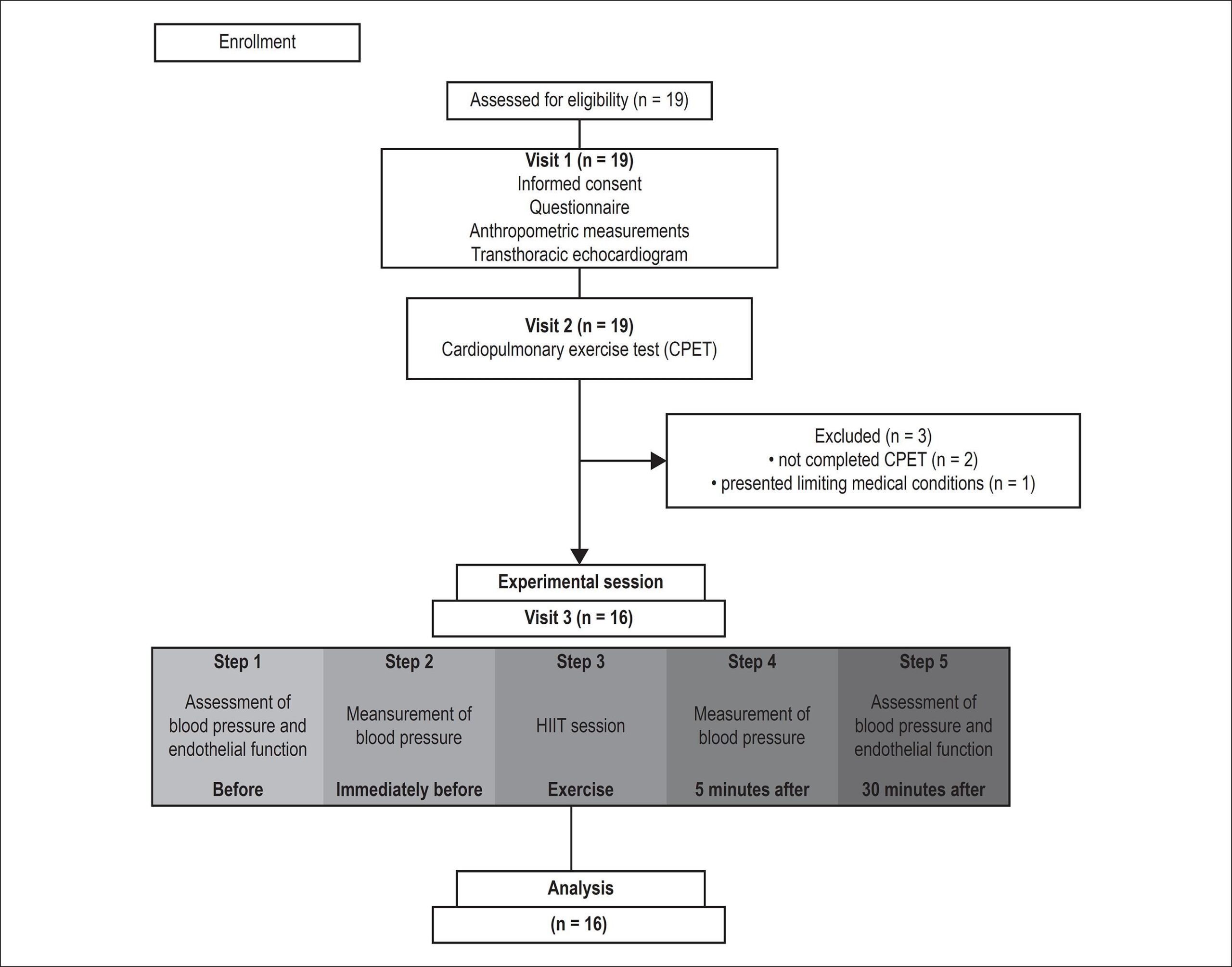
Vasodilation and Reduction of Systolic Blood Pressure after One Session of High-Intensity Interval Training in Patients With Heart Failure with Preserved Ejection Fraction

Juliana Beust de Lima et al. Anderson Donelli da Silveira Marco Aurélio Lumertz Saffi Márcio Garcia Menezes … Diogo Silva Piardi Leila Denise Cardoso Ramos Ramm Maurice Zanini Rosane Maria Nery, Ricardo Stein

Abstract

Background:

Heart failure with preserved ejection fraction (HFpEF) is a multifactorial syndrome characterized by a limited exercising capacity. High-intensity interval training (HIIT) is an emerging strategy for exercise rehabilitation in different settings. In patients with HFpEF, HIIT subacute effects on endothelial function and blood pressure are still unknown.

Objective:

To evaluate the subacute effect of one HIIT session on endothelial function and blood pressure in patients with HFpEF.

Methods:

Sixteen patients with HFpEF underwent a 36-minute session of HIIT on a treadmill, alternating four minutes of high-intensity intervals with three minutes of active recovery. Brachial artery diameter, flow-mediated dilation, and blood pressure were assessed immediately before and 30 minutes after the HIIT session. In all analyses, p <0.05 was considered statistically significant.

Results:

There was an increase in brachial artery diameter (pre-exercise: 3.96 ± 0.57 mm; post-exercise: 4.33 ± 0.69 mm; p < 0.01) and a decrease in systolic blood pressure (pre-exercise: 138 ± 21 mmHg; post-exercise: 125 ± 20 mmHg; p < 0.01). Flow-mediated dilation (pre-exercise: 5.91 ± 5.20%; post-exercise: 3.55 ± 6.59%; p = 0.162) and diastolic blood pressure (pre-exercise: 81 ± 11 mmHg; post-exercise: 77 ± 8 mmHg; p = 1.000) did not change significantly. There were no adverse events throughout the experiment.

Conclusions:

One single HIIT session promoted an increase in brachial artery diameter and reduction in systolic blood pressure, but it did not change flow-mediated dilation and diastolic blood pressure.

  • Arterial Pressure
  • Brachial Artery
  • Endothelium/function
  • Exercise
  • Heart Failure
  • Vasodilatation
Read Full Article
Creative Commons Attribution (CC BY) Creative Commons license
18/10/2018 DOI: 10.5935/abc.20180202 Views 1
ABC
Original Article

Association of Inflammation and Endothelial Dysfunction with Coronary Microvascular Resistance in Patients with Cardiac Syndrome X

Ming Long et al. Zhibin Huang Xiaodong Zhuang Zena Huang … Yue Guo Xinxue Liao Chufan Luo

Abstract

Background:

Although a proportion of CSX patients have impaired brachial artery flow-mediated dilatation (FMD) in response to hyperemia, suggesting that endothelial dysfunction in these patients may be systemic and not just confined to the coronary circulation; the underlying mechanisms triggering endothelial dysfunction in these patients are still incompletely understood.

Objectives:

To assess the association of the index of Microcirculatory Resistance (IMR) with endothelial dysfunction and inflammation in patients with CSX.

Methods:

We studied 20 CSX patients and 20 age and gender-matched control subjects. Thermodilution-derived coronary flow reserve (CFR) and IMR were measured using a pressure-temperature sensor-tipped guidewire. Brachial artery FMD was measured using high-resolution, two-dimensional ultrasound images obtained with a Doppler ultrasound device (HDI-ATL 5000, USA) with a 5 MHz to 12 MHz linear-array transducer.

Results:

Compared with in control subjects, CFR was significantly lower (2.42 ± 0.78 vs. 3.59 ± 0.79, p < 0.001); IMR was higher (32.2 ± 8.0 vs. 19.5 ± 5.5, p < 0.001); the concentration of hs-CRP and FMD was higher (4.75 ± 1.62 vs. 2.75 ± 1.50; 5.24 ± 2.41 vs. 8.57 ± 2.46, p < 0.001) in CSX patients. The Duke treadmill score (DTS) was correlated positively to CFR and FMD (0.489 and 0.661, p < 0.001), it was negative to IMR and hsCRP (-0.761 and -0.087, p < 0.001) in CSX patients.

Conclusions:

The main finding in this study is that the DTS measured in patients with CSX was associated to hsCRP and FMD. Moreover, the independent effects of exercise tolerance can significantly impair FMD and hsCRP in CSX patients; especially it is particularly important to whom where FMD was associated negatively with IMR.

  • Acute coronary syndrome
  • Brachial Artery
  • Endothelium / physiopathology
  • Inflammation
Read Full Article
Creative Commons Attribution (CC BY) Creative Commons license
19/10/2017 DOI: 10.5935/abc.20170149
Prognostic value of endothelial function in patients with atherosclerosis: systematic review
ABC
Artigo Original

Prognostic value of endothelial function in patients with atherosclerosis: systematic review

Maristela Magnavita Oliveira Garcia et al. Paulo Roberto Passos Lima Luis Claudio Lemos Correia

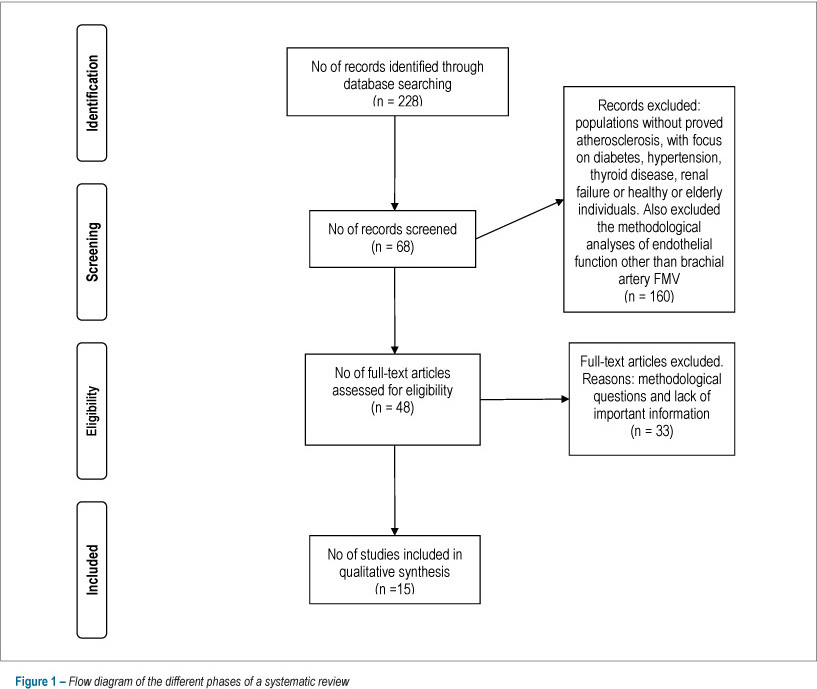
Analysis of flow-mediated vasodilation (FMV) of the brachial artery by use of ultrasound allows assessing endothelial function, and provides pathophysiological, diagnostic and prognostic information. This systematic review was aimed at assessing the literature level of evidence of the predictive capacity of endothelial function, measured through brachial artery FMV by use of ultrasound, regarding cardiovascular events in individuals with atherosclerosis. The MEDLINE, SCIELO and LILACS databases were searched, and prospective cohort studies on human beings about the prognostic value of endothelial function, measured by use of brachial artery FMV in individuals with peripheral or coronary atherosclerosis, were selected. Studies with clear methodological biases were excluded. The final selection consisted of 15 studies. Of the 13 studies that on univariate analysis showed statistical significance of the FMV method to predict cardiovascular events, 12 showed independent predictive capacity on multivariate analysis. None of the studies reviewed described the incremental predictive value of FMV to the traditional predictive models, such as the Framingham score. Results of three studies have suggested that the method adds prognostic value to isolated markers such as ankle-brachial index (ABI), diabetes, and high-sensitivity C-reactive protein (hsCRP). In conclusion, brachial artery FMV predicts cardiovascular risk, but its incremental predictive value to clinical prognostic models has not been established. In addition, solid evidence supporting its use in routine clinical practice to predict cardiovascular risk still lacks.

  • Atherosclerosis
  • Brachial Artery
  • Endothelial function
  • flow-mediated vasodilation
  • Prognosis
Read Full Article
Creative Commons Attribution (CC BY) Creative Commons license
30/08/2012 DOI: 10.1590/S0066-782X2012005000078
Flow-mediated dilatation in the differential diagnosis of preeclampsia syndrome
ABC
Artigo Original

Flow-mediated dilatation in the differential diagnosis of preeclampsia syndrome

Edson Vieira da Cunha Filho et al. Carolina Mohr Breno José Acauan Filho Giovani Gadonski … Leticia Germany Paula Ivan Carlos Ferreira Antonello Carlos Eduardo Poli-de-Figueiredo Bartira Ercilia Pinheiro-da-Costa

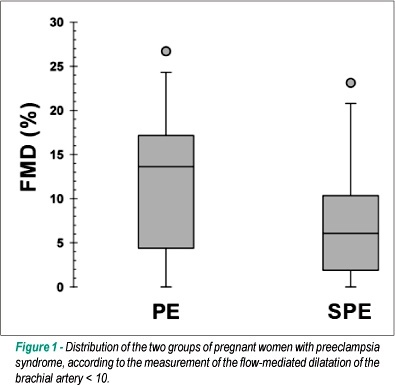
BACKGROUND: The preeclampsia syndrome is associated with endothelial dysfunction and the differential diagnosis between pure preeclampsia (PE) and superimposed preeclampsia (SPE) can be only be attained 12 weeks after delivery. OBJECTIVE: To compare the assessment of endothelial function through flow-mediated dilatation in pregnant women with pure preeclampsia and superimposed preeclampsia. METHODS: The flow-mediated dilatation of the brachial artery was carried out according to the recommendations of the International Brachial Artery Reactivity Task Force in pregnant women with preeclampsia syndrome. PE (n=14) and SPE (n=13) were diagnosed in the postpartum period according to the definitions of the National High Blood Pressure Education Program Working Group on High Blood Pressure in Pregnancy. RESULTS: The median of the flow-mediated dilatation (FMD) in SPE (6.0%; 1.9-10.3) was decreased in comparison with the PE (13.6%;4.4-17.1), an apparently relevant difference , but not statistically significant (p = 0.08). The FMD < 10% was detected in 30.8% of the PE cases and in 69.2% of the SPE cases (p = 0.057). Significant differences could not be detected in the morphology of the uterine arteries between the PE and SPE cases through the Doppler spectrum. CONCLUSION: The FMD of the brachial artery of patients with preeclampsia syndrome was not capable of differentiating between PE and SPE. However, the data suggest that SPE is associated with worse endothelial function I comparison to PE.

  • Brachial Artery
  • eclampsia
  • endotlhelium
  • Ultrasonography
  • Vasodilatation
Read Full Article
Creative Commons Attribution (CC BY) Creative Commons license
05/05/2010 DOI: 10.1590/S0066-782X2010000200009
ABC
Artigo Original

Assessing Ankle-Brachial Index (ABI) by using automated oscillometric devices

Takao Kawamura

BACKGROUND: Assessing Ankle-Brachial Index is an essential procedure in clinical settings, but since its measurement by the gold standard Doppler Ultrasonic (DU) technique is impaired by technical difficulties, it is underperformed. OBJECTIVE: The aim of this study was to assess the efficacy of an automated oscillometric device (AOD) by performing Ankle-Brachial Index (ABI) assessments and to suggest delta brachial-brachial (delta-BB) and delta-ABI as markers of cardiovascular risk. METHODS: In this observational and descriptive study, 247 patients (56.2% females, mean age 62.0 years) had their arterial blood pressure (ABP) measured for ABI calculation. Two AOD (OMRON-HEM705CP) devices were used for simultaneous measurements of the ABP, first of the two arms and then of the arm with higher systolic ABP and a leg, first the left and then the right one. When leg ABP measurements were not possible, ABI determination was performed by using the standard Doppler Ultrasonic (DU) technique. Patients were designated to Group N (normal ABI: 0.91 to 1.30) or Group A (abnormal ABI: 1.30). Other indexes were also calculated: delta-BB (absolute difference in mmHg of systolic ABP between arms) and delta-ABI (absolute difference of ABI between legs) and the results were compared. RESULTS: In most patients (90.7%), it was possible to determine the ABI. Group N data allowed calculation of the 95th percentile reference values (RV) of delta-BB (0 to 8 mmHg) and delta-ABI (0 to 0.13). When compared to Group N, Group A had a significantly higher prevalence of high values greater than the RVs of delta-ABI (30 of 52 and 10 of 195, respectively; Odds Ratio = 25.23; p<0.0001) and delta-BB (13 of 52 and 7 of 195, respectively; Odds Ratio = 8.95; p<0.0001). CONCLUSION: In most patients, the ABI could be measured by AOD. Both indexes, delta-BB and delta-ABI greater than the RVs, were significantly more prevalent in patients with abnormal ABI values, and their usefulness as new markers of cardiovascular disease should be further appraised in epidemiological studies.

  • Blood Pressure
  • Brachial Artery
  • peripheral vascular diseases
  • Predictive Value of Tests
Read Full Article
Creative Commons Attribution (CC BY) Creative Commons license
27/05/2008 DOI: 10.1590/S0066-782X2008000500003 Views 1

How to cite this article

EndNote RIS

Electronic Document Format (Vancouver)

Tessier EAS, Daltro C, Netto EM, Doria GMA, Peredo AJG, Bulhões F, Aras R, et al. Endothelial Function by Flow-Mediated Dilation (FMD) in the Brachial Artery in Hypertensive Patients. Arquivos Brasileiros de Cardiologia 2025;122(5):e20240533.

Electronic Document Format (ABNT)

Tessier, Elaine Alves Santos; Daltro, Carla; Netto, Eduardo Martins; Doria, Glauco Moniz de Aragão; Peredo, Andrea Jimena Gutierrez; Bulhões, Fabio; Aras, Roque; Harris, Ryan A.. Endothelial Function by Flow-Mediated Dilation (FMD) in the Brachial Artery in Hypertensive Patients. Arquivos Brasileiros de Cardiologia, v. 122, n. 5, e20240533, Jun. 2025.

Electronic Document Format (APA)

Tessier, E. A. S., Daltro, C., Netto, E. M., Doria, G. M. A., Peredo, A. J. G., Bulhões, F., Aras, R., & Harris, R. A. (2025). Endothelial Function by Flow-Mediated Dilation (FMD) in the Brachial Artery in Hypertensive Patients. Arquivos Brasileiros de Cardiologia, 122(5), e20240533.

Electronic Document Format (ISO)

Tessier, Elaine Alves Santos and Daltro, Carla and Netto, Eduardo Martins and Doria, Glauco Moniz de Aragão and Peredo, Andrea Jimena Gutierrez and Bulhões, Fabio and Aras, Roque and Harris, Ryan A.. Endothelial Function by Flow-Mediated Dilation (FMD) in the Brachial Artery in Hypertensive Patients. Arquivos Brasileiros de Cardiologia [online]. 2025, vol. 122, n. 5, [cited 2026-10-14], e20240533. Available from: <https://journals.cardiol.br/en/article/endothelial-function-by-flow-mediated-dilation-fmd-in-the-brachial-artery-in-hypertensive-patients/>. ISSN 0066-782X

EndNote RIS

Electronic Document Format (Vancouver)

Santos Junior GG, Araújo PSR, Leite KME, Godoi ET, Vasconcelos AF, Lacerda HR. The Effect of Atorvastatin + Aspirin on the Endothelial Function Differs with Age in Patients with HIV: A Case-Control Study. Arquivos Brasileiros de Cardiologia 2021;117(2):365-7.

Electronic Document Format (ABNT)

Santos Junior, Gerson Gomes dos; Araújo, Paulo Sérgio Ramos; Leite, Kaliene Maria Estevão; Godoi, Emmanuelle Tenório; Vasconcelos, Adriana Ferraz; Lacerda, Heloisa Ramos. The Effect of Atorvastatin + Aspirin on the Endothelial Function Differs with Age in Patients with HIV: A Case-Control Study. Arquivos Brasileiros de Cardiologia, v. 117, n. 2, p. 365-375, Jul. 2021.

Electronic Document Format (APA)

Santos Junior, G. G. , Araújo, P. S. R., Leite, K. M. E., Godoi, E. T., Vasconcelos, A. F., & Lacerda, H. R. (2021). The Effect of Atorvastatin + Aspirin on the Endothelial Function Differs with Age in Patients with HIV: A Case-Control Study. Arquivos Brasileiros de Cardiologia, 117(2), 365-375.

Electronic Document Format (ISO)

Santos Junior, Gerson Gomes dos and Araújo, Paulo Sérgio Ramos and Leite, Kaliene Maria Estevão and Godoi, Emmanuelle Tenório and Vasconcelos, Adriana Ferraz and Lacerda, Heloisa Ramos. The Effect of Atorvastatin + Aspirin on the Endothelial Function Differs with Age in Patients with HIV: A Case-Control Study. Arquivos Brasileiros de Cardiologia [online]. 2021, vol. 117, n. 2, [cited 2026-10-14], pp. 365-375. Available from: <https://journals.cardiol.br/en/article/the-effect-of-atorvastatin-aspirin-on-the-endothelial-function-differs-with-age-in-patients-with-hiv-a-case-control-study/>. ISSN 0066-782X

EndNote RIS

Electronic Document Format (Vancouver)

Oliveira AN, Simões MM, Simões R, Malachias MVB, Rezende BA. Cardiovascular Risk in Psoriasis Patients: Clinical, Functional and Morphological Parameters. Arquivos Brasileiros de Cardiologia 2019;113(2):242-9.

Electronic Document Format (ABNT)

Oliveira, Angélica Navarro de; Simões, Marcela M.; Simões, Ricardo; Malachias, Marcus Vinicius Bolivar; Rezende, Bruno Almeida. Cardiovascular Risk in Psoriasis Patients: Clinical, Functional and Morphological Parameters. Arquivos Brasileiros de Cardiologia, v. 113, n. 2, p. 242-249, Jul. 2019.

Electronic Document Format (APA)

Oliveira, A. N. , Simões, M. M., Simões, R., Malachias, M. V. B., & Rezende, B. A. (2019). Cardiovascular Risk in Psoriasis Patients: Clinical, Functional and Morphological Parameters. Arquivos Brasileiros de Cardiologia, 113(2), 242-249.

Electronic Document Format (ISO)

Oliveira, Angélica Navarro de and Simões, Marcela M. and Simões, Ricardo and Malachias, Marcus Vinicius Bolivar and Rezende, Bruno Almeida. Cardiovascular Risk in Psoriasis Patients: Clinical, Functional and Morphological Parameters. Arquivos Brasileiros de Cardiologia [online]. 2019, vol. 113, n. 2, [cited 2026-10-14], pp. 242-249. Available from: <https://journals.cardiol.br/en/article/cardiovascular-risk-in-psoriasis-patients-clinical-functional-and-morphological-parameters/>. ISSN 0066-782X

EndNote RIS

Electronic Document Format (Vancouver)

Lima JB, Silveira AD, Saffi MAL, Menezes MG, Piardi DS, Ramm LDCR, Zanini M, et al. Vasodilation and Reduction of Systolic Blood Pressure after One Session of High-Intensity Interval Training in Patients With Heart Failure with Preserved Ejection Fraction. Arquivos Brasileiros de Cardiologia 2018;111(5):699-707.

Electronic Document Format (ABNT)

Lima, Juliana Beust de; Silveira, Anderson Donelli da; Saffi, Marco Aurélio Lumertz; Menezes, Márcio Garcia; Piardi, Diogo Silva; Ramm, Leila Denise Cardoso Ramos; Zanini, Maurice; Nery, Rosane Maria; Stein, Ricardo. Vasodilation and Reduction of Systolic Blood Pressure after One Session of High-Intensity Interval Training in Patients With Heart Failure with Preserved Ejection Fraction. Arquivos Brasileiros de Cardiologia, v. 111, n. 5, p. 699-707, Oct. 2018.

Electronic Document Format (APA)

Lima, J. B. , Silveira, A. D. , Saffi, M. A. L., Menezes, M. G., Piardi, D. S., Ramm, L. D. C. R., Zanini, M., Nery, R. M., & Stein, R. (2018). Vasodilation and Reduction of Systolic Blood Pressure after One Session of High-Intensity Interval Training in Patients With Heart Failure with Preserved Ejection Fraction. Arquivos Brasileiros de Cardiologia, 111(5), 699-707.

Electronic Document Format (ISO)

Lima, Juliana Beust de and Silveira, Anderson Donelli da and Saffi, Marco Aurélio Lumertz and Menezes, Márcio Garcia and Piardi, Diogo Silva and Ramm, Leila Denise Cardoso Ramos and Zanini, Maurice and Nery, Rosane Maria and Stein, Ricardo. Vasodilation and Reduction of Systolic Blood Pressure after One Session of High-Intensity Interval Training in Patients With Heart Failure with Preserved Ejection Fraction. Arquivos Brasileiros de Cardiologia [online]. 2018, vol. 111, n. 5, [cited 2026-10-14], pp. 699-707. Available from: <https://journals.cardiol.br/en/article/vasodilation-and-reduction-of-systolic-blood-pressure-after-one-session-of-high-intensity-interval-training-in-patients-with-heart-failure-with-preserved-ejection-fraction/>. ISSN 0066-782X

EndNote RIS

Electronic Document Format (Vancouver)

Long M, Huang Z, Zhuang X, Huang Z, Guo Y, Liao X, Luo C, et al. Association of Inflammation and Endothelial Dysfunction with Coronary Microvascular Resistance in Patients with Cardiac Syndrome X. Arquivos Brasileiros de Cardiologia 2017;109(5):397-403.

Electronic Document Format (ABNT)

Long, Ming; Huang, Zhibin; Zhuang, Xiaodong; Huang, Zena; Guo, Yue; Liao, Xinxue; Luo, Chufan. Association of Inflammation and Endothelial Dysfunction with Coronary Microvascular Resistance in Patients with Cardiac Syndrome X. Arquivos Brasileiros de Cardiologia, v. 109, n. 5, p. 397-403, Oct. 2017.

Electronic Document Format (APA)

Long, M., Huang, Z., Zhuang, X., Huang, Z., Guo, Y., Liao, X., & Luo, C. (2017). Association of Inflammation and Endothelial Dysfunction with Coronary Microvascular Resistance in Patients with Cardiac Syndrome X. Arquivos Brasileiros de Cardiologia, 109(5), 397-403.

Electronic Document Format (ISO)

Long, Ming and Huang, Zhibin and Zhuang, Xiaodong and Huang, Zena and Guo, Yue and Liao, Xinxue and Luo, Chufan. Association of Inflammation and Endothelial Dysfunction with Coronary Microvascular Resistance in Patients with Cardiac Syndrome X. Arquivos Brasileiros de Cardiologia [online]. 2017, vol. 109, n. 5, [cited 2026-10-14], pp. 397-403. Available from: <https://journals.cardiol.br/en/article/association-of-inflammation-and-endothelial-dysfunction-with-coronary-microvascular-resistance-in-patients-with-cardiac-syndrome-x/>. ISSN 0066-782X

EndNote RIS

Electronic Document Format (Vancouver)

Garcia MMO, Lima PRP, Correia LCL. Prognostic value of endothelial function in patients with atherosclerosis: systematic review. Arquivos Brasileiros de Cardiologia 2012;99(3):857-65.

Electronic Document Format (ABNT)

Garcia, Maristela Magnavita Oliveira; Lima, Paulo Roberto Passos; Correia, Luis Claudio Lemos. Prognostic value of endothelial function in patients with atherosclerosis: systematic review. Arquivos Brasileiros de Cardiologia, v. 99, n. 3, p. 857-865, Aug. 2012.

Electronic Document Format (APA)

Garcia, M. M. O., Lima, P. R. P., & Correia, L. C. L. (2012). Prognostic value of endothelial function in patients with atherosclerosis: systematic review. Arquivos Brasileiros de Cardiologia, 99(3), 857-865.

Electronic Document Format (ISO)

Garcia, Maristela Magnavita Oliveira and Lima, Paulo Roberto Passos and Correia, Luis Claudio Lemos. Prognostic value of endothelial function in patients with atherosclerosis: systematic review. Arquivos Brasileiros de Cardiologia [online]. 2012, vol. 99, n. 3, [cited 2026-10-14], pp. 857-865. Available from: <https://journals.cardiol.br/en/article/prognostic-value-of-endothelial-function-in-patients-with-atherosclerosis-systematic-review/>. ISSN 0066-782X

EndNote RIS

Electronic Document Format (Vancouver)

Cunha Filho EV, Mohr C, Acauan Filho BJ, Gadonski G, Paula LG, Antonello ICF, Poli-de-Figueiredo CE, et al. Flow-mediated dilatation in the differential diagnosis of preeclampsia syndrome. Arquivos Brasileiros de Cardiologia 2010;94(2):195-200.

Electronic Document Format (ABNT)

Cunha Filho, Edson Vieira da; Mohr, Carolina; Acauan Filho, Breno José; Gadonski, Giovani; Paula, Leticia Germany; Antonello, Ivan Carlos Ferreira; Poli-de-Figueiredo, Carlos Eduardo; Pinheiro-da-Costa, Bartira Ercilia. Flow-mediated dilatation in the differential diagnosis of preeclampsia syndrome. Arquivos Brasileiros de Cardiologia, v. 94, n. 2, p. 195-200, May. 2010.

Electronic Document Format (APA)

Cunha Filho, E. V. , Mohr, C., Acauan Filho, B. J., Gadonski, G., Paula, L. G., Antonello, I. C. F., Poli-de-Figueiredo, C. E., & Pinheiro-da-Costa, B. E. (2010). Flow-mediated dilatation in the differential diagnosis of preeclampsia syndrome. Arquivos Brasileiros de Cardiologia, 94(2), 195-200.

Electronic Document Format (ISO)

Cunha Filho, Edson Vieira da and Mohr, Carolina and Acauan Filho, Breno José and Gadonski, Giovani and Paula, Leticia Germany and Antonello, Ivan Carlos Ferreira and Poli-de-Figueiredo, Carlos Eduardo and Pinheiro-da-Costa, Bartira Ercilia. Flow-mediated dilatation in the differential diagnosis of preeclampsia syndrome. Arquivos Brasileiros de Cardiologia [online]. 2010, vol. 94, n. 2, [cited 2026-10-14], pp. 195-200. Available from: <https://journals.cardiol.br/en/article/flow-mediated-dilatation-in-the-differential-diagnosis-of-preeclampsia-syndrome/>. ISSN 0066-782X

EndNote RIS

Electronic Document Format (Vancouver)

Kawamura T. Assessing Ankle-Brachial Index (ABI) by using automated oscillometric devices. Arquivos Brasileiros de Cardiologia 2008;90(5):322-6.

Electronic Document Format (ABNT)

Kawamura, Takao. Assessing Ankle-Brachial Index (ABI) by using automated oscillometric devices. Arquivos Brasileiros de Cardiologia, v. 90, n. 5, p. 322-326, May. 2008.

Electronic Document Format (APA)

Kawamura, T. (2008). Assessing Ankle-Brachial Index (ABI) by using automated oscillometric devices. Arquivos Brasileiros de Cardiologia, 90(5), 322-326.

Electronic Document Format (ISO)

Kawamura, Takao. Assessing Ankle-Brachial Index (ABI) by using automated oscillometric devices. Arquivos Brasileiros de Cardiologia [online]. 2008, vol. 90, n. 5, [cited 2026-10-14], pp. 322-326. Available from: <https://journals.cardiol.br/en/article/assessing-ankle-brachial-index-abi-by-using-automated-oscillometric-devices/>. ISSN 0066-782X

  • About ABC Family
  • Internal Regulation
  • Editorial Board
  • Brazilian Society of Cardiology (SBC)

Issues

SBC Guidelines

  • Videos
  • Podcasts
  • News