ABC Family Arquivos Brasileiros de Cardiologia International Journal of Cardiovascular Sciences ABC Heart Failure & Cardiomyopathy ABC Imagem Cardiovascular
Português English
ABC Family
Português English
  • About
    • About ABC Family
    • Internal Regulation
    • Editorial Board
    • Brazilian Society of Cardiology (SBC)
  • Issues
  • SBC Guidelines
  • Content
    • Videos
    • Podcasts
    • News
  • About
    • About ABC Family
    • Internal Regulation
    • Editorial Board
    • Brazilian Society of Cardiology (SBC)
  • Issues
  • SBC Guidelines
  • Content
    • Videos
    • Podcasts
    • News

ABC Family

  • ABC Family
  • Arquivos Brasileiros de Cardiologia
  • International Journal of Cardiovascular Sciences
  • ABC Heart Failure & Cardiomyopathy
  • ABC Imagem Cardiovascular
Search in

No content found.

Journals
Ordering
Article types
Others

  1. Home
  2. Keyword: Hospital Mortality
Transcatheter Aortic Valve Implantation in Nonagenarians: In-Hospital Complications and One-Year Follow-Up Mortality
IJCS
Original Article

Transcatheter Aortic Valve Implantation in Nonagenarians: In-Hospital Complications and One-Year Follow-Up Mortality

Nelson Durval Ferreira Gomes de Mattos et al. Rafael Lauria de Oliveira Constantino Gonzalez Salgado André Luiz Silveira Sousa … Andre Luiz da Fonseca Feijó Rodrigo Verney Castello Branco Giovanna Zadra de Mattos José Carlos Pizzolante Secco Luiz Antonio Ferreira Carvalho Helena Cramer Rey

Abstract

Background:

Aortic Stenosis (AS) is prevalent among elderly individuals and is associated with high mortality when untreated. Transcatheter Aortic Valve Implantation (TAVI) has emerged as a viable therapeutic alternative, particularly for patients with surgical contraindications. However, its application in nonagenarians remains controversial due to limited data in this very elderly population.

Objective:

To evaluate clinical outcomes in nonagenarian patients undergoing TAVI at a private quaternary hospital, with emphasis on mortality and in-hospital as well as one-year complications.

Methods:

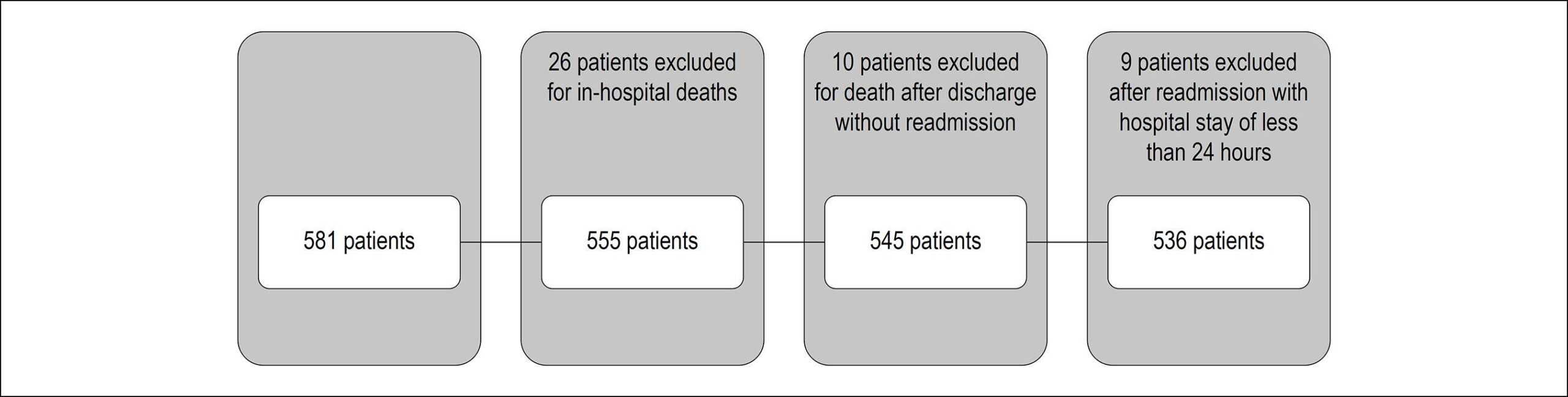
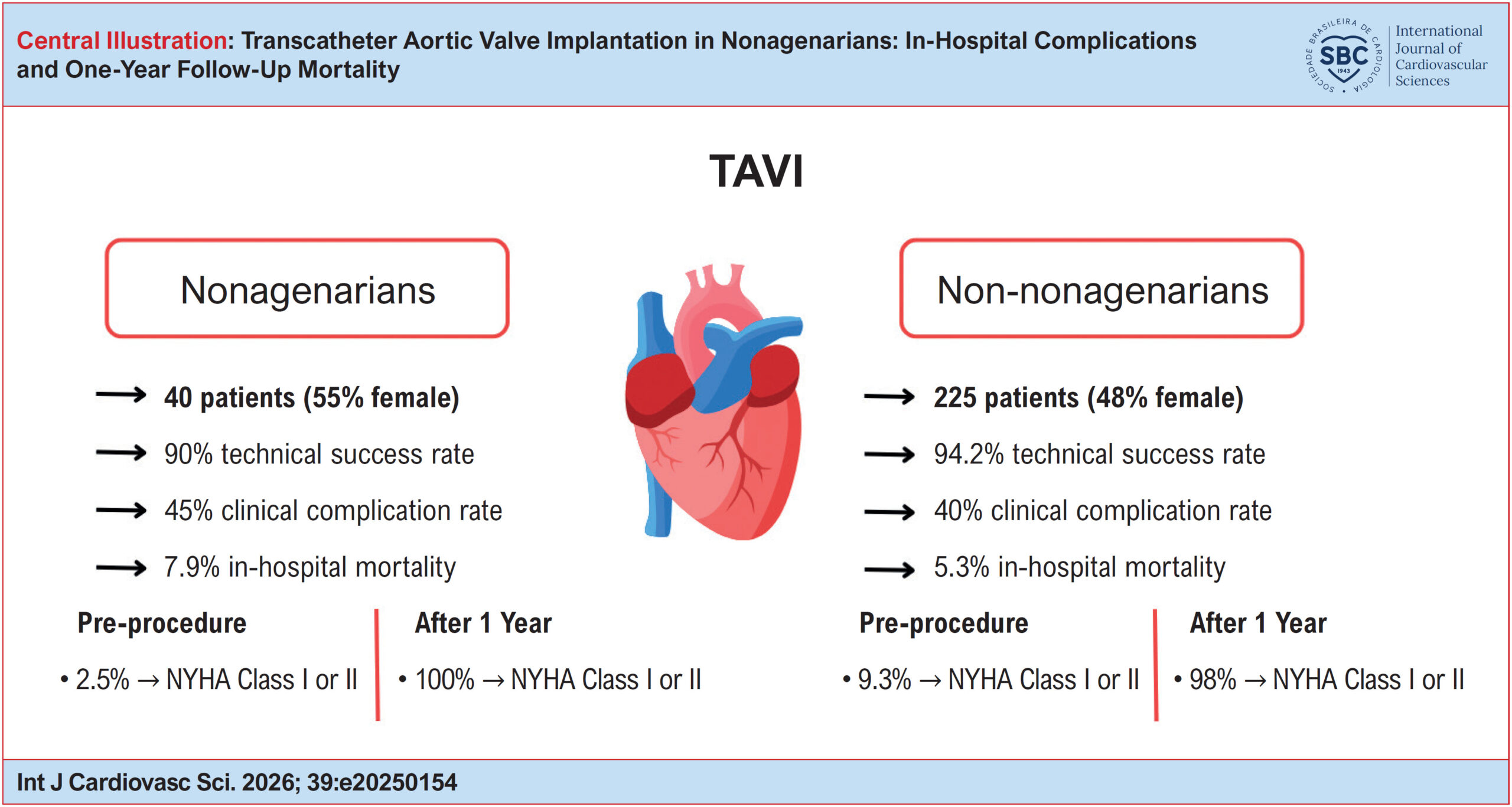
A retrospective cohort study with prospective follow-up was conducted between 2009 and 2023. A total of 265 patients with symptomatic severe AS who underwent TAVI were included, of whom 40 were nonagenarians (≥ 89 years). Data were obtained from an institutional database and from the Brazilian Registry of Aortic Bioprosthesis Implantation by Catheter – New Technologies (RIBAC-NT). Comparisons between nonagenarians and younger patients were performed using the Student’s t-test for continuous variables and the chi-square (χ2) test for categorical variables. A p-value < 0.05 was considered statistically significant.

Results:

Among nonagenarians, 55% were female, 72.5% had hypertension, and 95% had chronic kidney disease. The technical success rate was 55%. Major complications included permanent pacemaker implantation (35%) and adverse events (45%). In-hospital mortality was 7.9%, with no statistically significant differences at 30 days (p = 0.40), 6 months (p = 0.35), and one year (p = 0.06) compared to younger patients.

Conclusion:

TAVI proved to be a safe and effective therapeutic option in nonagenarians, showing clinical outcomes comparable to those of younger individuals.
  • Aortic Valve Stenosis
  • Hospital Mortality
  • Nonagenarians
  • postoperative complications
  • Transcatheter Aortic Valve Replacement
Read Full Article
Creative Commons Attribution (CC BY) Creative Commons license
11/09/2026 DOI: 10.36660/ijcs.20250154 Views 1
Applicability of SAPS 3 and APACHE II Scores in a Cardiac Intensive Care Unit: A Prospective Study
IJCS
Original Article

Applicability of SAPS 3 and APACHE II Scores in a Cardiac Intensive Care Unit: A Prospective Study

Rafael Petri Pinheiro et al. Leonardo Castro Luna Vanessa dos Reis von Doellinger Marcelo Goulart Correia … Bernardo Tura Stephan Lachtermacher

Abstract

Background

Prognostic scores such as the Simplified Acute Physiology Score (SAPS) and the Acute Physiology and Chronic Health Evaluation (APACHE) are essential for assessing performance and predicting mortality in Intensive Care Units (ICUs).

Objectives

To evaluate the performance of SAPS 3 (including the Latin America [LA] and Brazil [BR] versions) and APACHE II in predicting mortality in a cardiac intensive care unit (CICU).

Methods

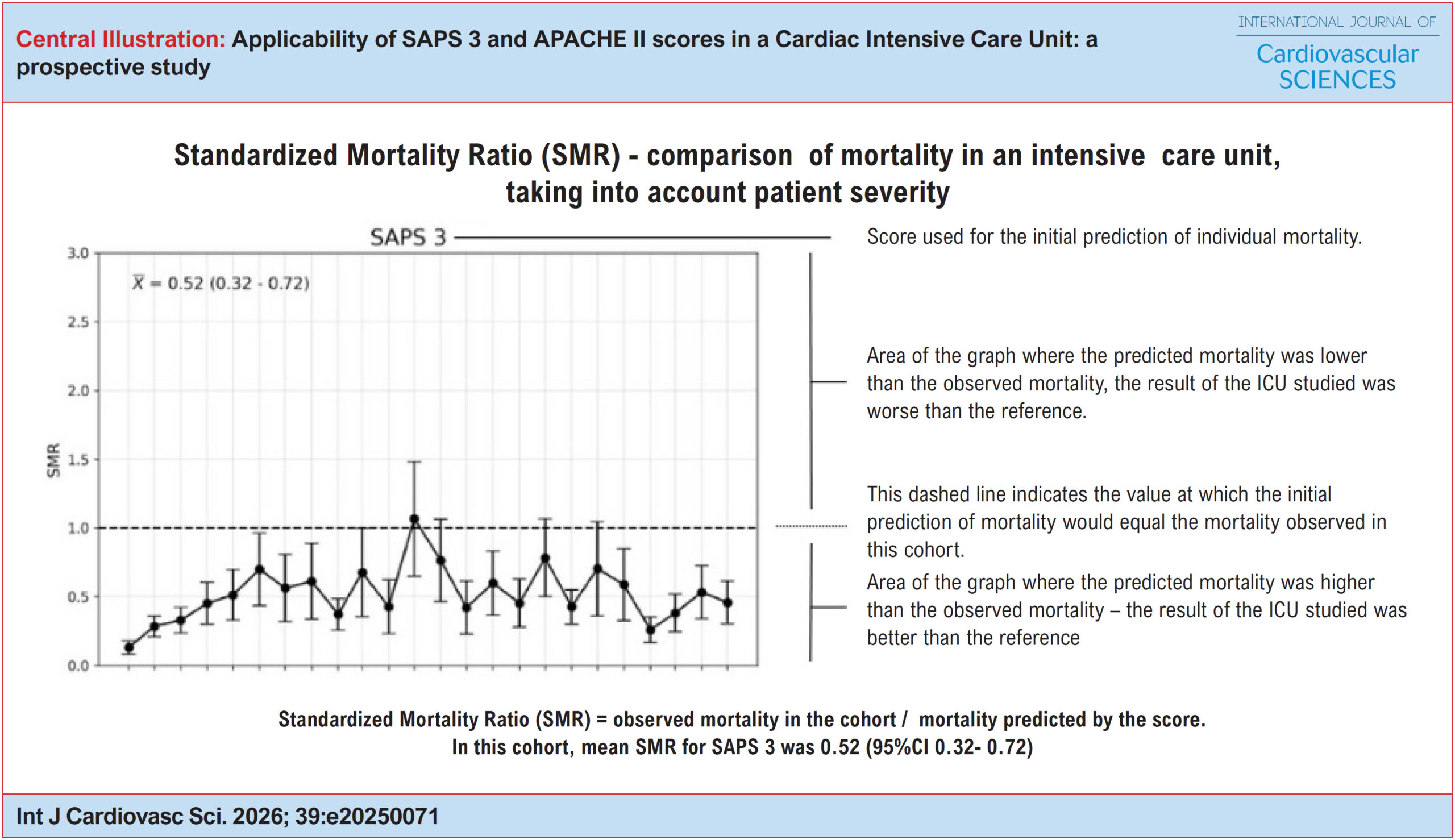
Prospective cohort of patients admitted between June 2022 and May 2024, followed until discharge or death. Data were extracted from electronic medical records. The relationship between observed and predicted mortality was calculated using the Standardized Mortality Ratio (SMR), and discrimination was assessed by the Receiver Operating Characteristic (ROC) curve.

Results

A total of 573 patients were included, 288 (50%) with three or more comorbidities, median age 63 years [IQR: 53–72], and 344 (60%) male. Cardiovascular diseases accounted for 76% of admissions. Overall mortality was 15%. Mean SMR values were: 0.52 (95% CI: 0.32–0.72) for SAPS 3; 0.40 (95% CI: 0.26–0.54) for SAPS 3 Latin America (AL); 0.79 (95% CI: 0.41–1.16) for SAPS 3 Brazil (BR); and 0.86 (95% CI: 0.42–1.29) for APACHE II. The analysis of the area under the curve (AUC) was 0.805 for SAPS 3 and its adapted versions, and 0.704 for APACHE II.

Conclusions

SAPS 3, particularly SAPS 3 Brazil (BR), demonstrated greater accuracy than APACHE II. Despite mortality being above the national average, the SMR indicated that observed mortality was lower than predicted, suggesting good care performance in the unit.

  • APACHE
  • Cardiology
  • Hospital Mortality
  • Intensive Care Units
  • Simplified Acute Physiology Score
Read Full Article
Creative Commons Attribution (CC BY) Creative Commons license
27/04/2026 DOI: 10.36660/ijcs.20250071 Views 1
IJCS
Editorial

ST-Segment Elevation Myocardial Infarction: Assessment of Quality of Care Before and After the COVID-19 Pandemic

Fernando Oswaldo Dias Rangel

In this article, Tavares et al. comparatively analyze quality indicators of care for 193 patients with ST-segment elevation myocardial infarction (STEMI) and relevant clinical outcomes before and during the COVID-19 pandemic.

An increase in mortality rates associated with cardiovascular diseases was observed in Brazil after the onset of the COVID-19 pandemic. Many patients did not leave their homes to seek hospital care, contributing to increased cardiovascular mortality.

[…]

  • COVID-19
  • Hospital Mortality
  • ST Elevation Myocardial Infarction
Read Full Article
Creative Commons Attribution (CC BY) Creative Commons license
29/08/2025 DOI: 10.36660/ijcs.20250099 Views 1
ABC
Editorial

Hospitalizations and In-Hospital Mortality from Heart Failure in Brazil: An Updated Overview

Adriana Lopes Latado

Heart failure (HF) accounts for a growing burden of disease and healthcare costs both globally and in Brazil. It represents the final common pathway of several cardiovascular diseases, including specific and well-defined conditions such as ischemic heart disease. Prevalence and incidence data have shown progressive increases over recent decades, with the current HF prevalence estimated at 2.5% among U.S. adults, and projected to reach 3.0% by 2030., HF-related hospital admissions are also on the rise in the United States. Meanwhile, adjusted in-hospital mortality has declined, from 6.8% in 2002 to 4.9% in 2016, consistent across age groups, sex, and racial/ethnic categories.

In Brazil, the self-reported prevalence of HF is estimated at 1.1% among adults over 18 years old and 3.3% in individuals over 60. Regarding hospitalizations and in-hospital mortality, temporal trend studies indicate a decline in the number of HF-related admissions, with hospital mortality ranging from 9% to 17%, also showing a decreasing trend, especially over the past decade.,, However, national data remain scarce, with limitations in population representativeness and a need for regular updates.

[…]

  • Heart Failure
  • Hospital Mortality
  • Hospitalization
  • Prognosis
Read Full Article
Creative Commons Attribution (CC BY) Creative Commons license
04/07/2025 DOI: 10.36660/abc.20250284i Views 1
Is Female Gender Associated with Mortality in Coronary Artery Bypass Grafting?
ABC
Original Article

Is Female Gender Associated with Mortality in Coronary Artery Bypass Grafting?

Maxim Goncharov et al. Erlon Oliveira de Abreu Silva Pedro Gabriel Melo de Barros e Silva Fabiane Letícia de Freitas … Adriana Costa Moreira Lucas Tramujas Alexandre Biasi Cavalcanti Ieda Maria Liguori Fabio Biscegli Jatene Ieda Biscegli Jatene Claudia Maria Rodrigues Alves

Abstract

Background

Women undergoing coronary artery bypass grafting (CABG) tend to have worse in-hospital outcomes, but it is unclear whether these differences are due to gender or to clinical factors.

Objective

To compare in-hospital outcomes between women and men undergoing CABG.

Methods

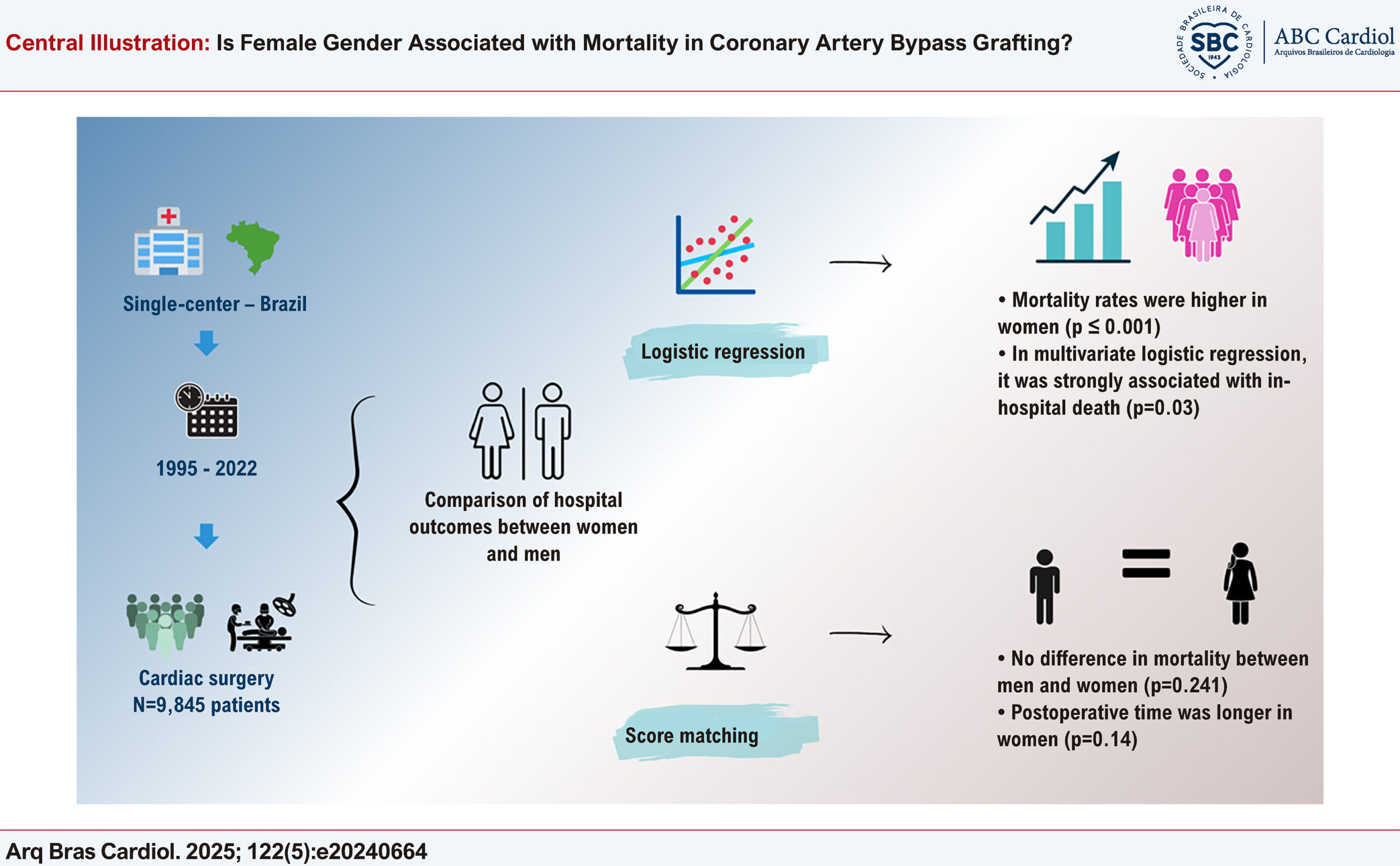
This was a single-center, retrospective observational study analyzing data from 9,845 patients who underwent CABG between 1995 and 2022, of whom 1,947 (19.8%) were women. To evaluate female gender as a prognostic factor for in-hospital mortality, we used descriptive statistics, univariate and multivariate logistic regression, and propensity score matching. The significance level was set at 5%.

Results

Women were older (66.7 vs 62.19 years, p<0.001), had lower body mass index (26.91 vs 27.64, p<0.001), and had a higher prevalence of diabetes mellitus (34.0% vs 31.6%, p=0.045). They also had longer hospital stays (14.84 vs 13.13 days, p<0.001) and higher operative mortality (4.8% vs 2.4%, p<0.001). In logistic regression, female gender was associated with higher mortality (OR=1.51; 95% CI: 1.15-1.99; p=0.003). After matching, there was no significant difference in mortality (OR=1.20; 95% CI: 0.88-1.64; p=0.241), but length of hospital stay remained longer in women.

Conclusion

When clinical factors were matched between men and women, the mortality difference disappeared. This suggests that targeted interventions to reduce disparities may help improve mortality outcomes in women undergoing CABG.

  • Cardiovascular Surgical Procedures
  • Hospital Mortality
  • Women
Read Full Article
Creative Commons Attribution (CC BY) Creative Commons license
26/05/2025 DOI: 10.36660/abc.20240664i Views 2
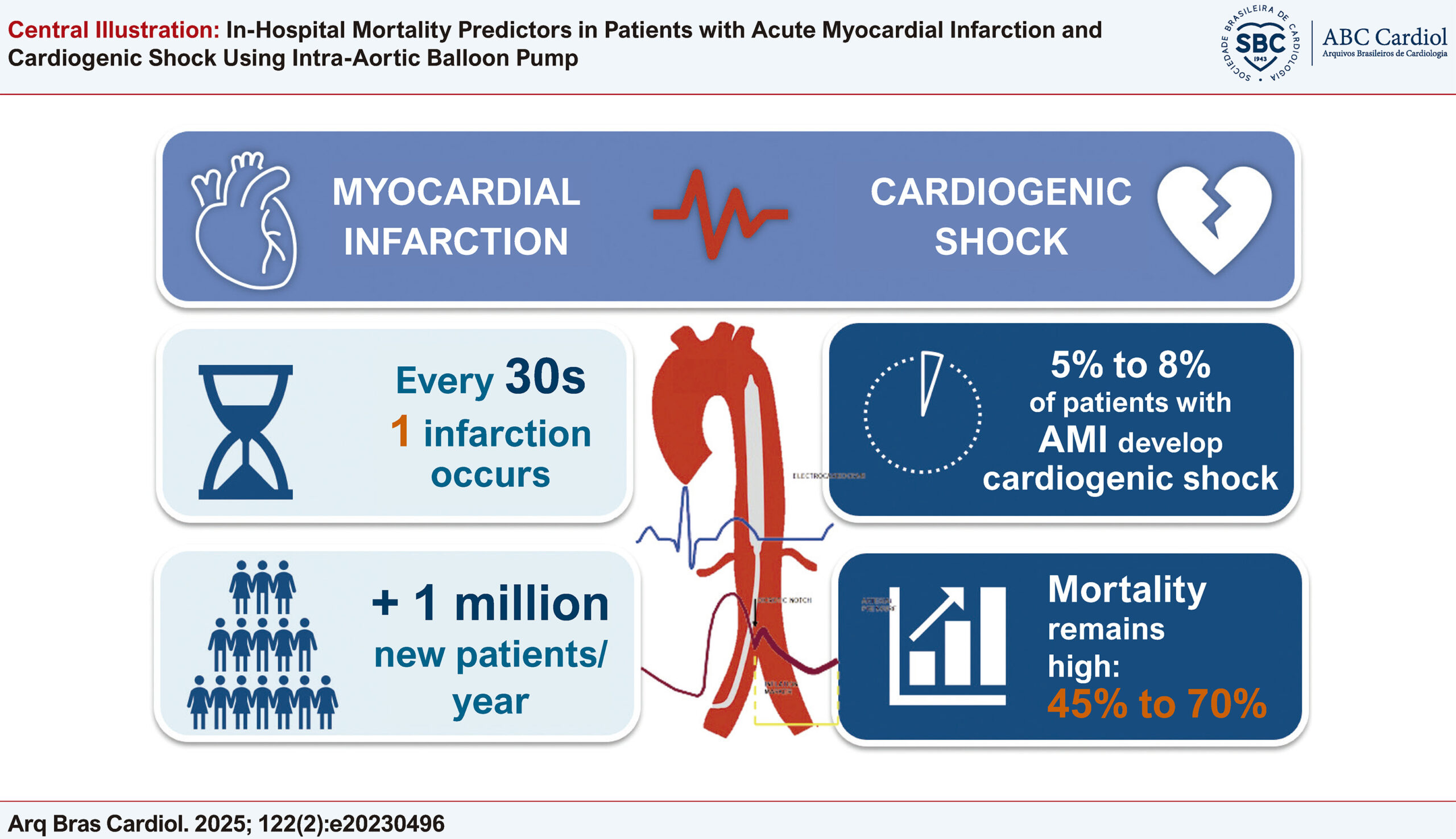
In-Hospital Mortality Predictors in Patients with Acute Myocardial Infarction and Cardiogenic Shock Using Intra-Aortic Balloon Pump
ABC
Original Article

In-Hospital Mortality Predictors in Patients with Acute Myocardial Infarction and Cardiogenic Shock Using Intra-Aortic Balloon Pump

Rossana Dall’Orto Elias et al. Isabella Pedrosa Assunção Julliane Vasconcelos Joviano Santos Maria da Gloria Rodrigues-Machado José Luiz Barros Pena

Abstract

Background

Patients with ST-segment elevation myocardial infarction (STEMI) and cardiogenic shock (CS) have a high risk of death. New types of mechanical devices have limited availability in Brazil. The use of intra-aortic balloon pump (IABP), although new guidelines downgraded its recommendation, is the most widely used mechanical support strategy. However, little is known about the clinical predictors of its effectiveness in reducing mortality in this group of patients.

Objectives

To assess the predictors of IABP effectiveness in reducing in-hospital mortality in patients with STEMI and CS.

Methods

This observational, retrospective, descriptive, single-center study involved 98 patients with STEMI and CS treated with IABP, in an intensive care unit. We compared patients who survived (42 men and 13 women) and those did not (30 men and 13 women) using clinical predictors of IABP effectiveness in reducing in-hospital death, considering a statistical significance level of 5% (p < 0.05).

Results

The use of IABP in patients less than 1 day after infarction (odds ratio [OR]: 0.12; 95% confidence interval [CI]: 0.02 to 0.85; p = 0.034) was a factor that increased the risk of in-hospital death. Younger age (OR: 1.09; 95% CI: 1.02 to 1.16; p = 0.010) and dyslipidemia (OR: 0.19; 95% CI: 0.05 to 0.81; p = 0.024) were predictors of reduced in-hospital mortality. For each additional year of age, the risk of death increased 1.07-fold.

Conclusion

In patients with STEMI and CS, the use of IABP reduced in-hospital mortality when it was used for 2 or more days, as well as in younger patients and those with dyslipidemia. Additional studies are needed to confirm these findings.

  • Cardiogenic shock
  • Hospital Mortality
  • Intra-Aortic Balloon Pumping
  • ST Elevation Myocardial Infarction
Read Full Article
Creative Commons Attribution (CC BY) Creative Commons license
21/02/2025 DOI: 10.36660/abc.20230496i Views 2
A Geoprocessing Approach for Mortality and Social Vulnerability Analysis during the COVID-19 Pandemic
IJCS
Original Article

A Geoprocessing Approach for Mortality and Social Vulnerability Analysis during the COVID-19 Pandemic

Andres Felipe Valencia Rendon et al. Isabela Mendes Volschan Manoella Novais Pereira Wagner Lima Monteiro … Alessandra de Freitas Pimentel Emilia Matos do Nascimento Basilio de Bragança Pereira Glaucia Maria Moraes de Oliveira

Abstract

Background

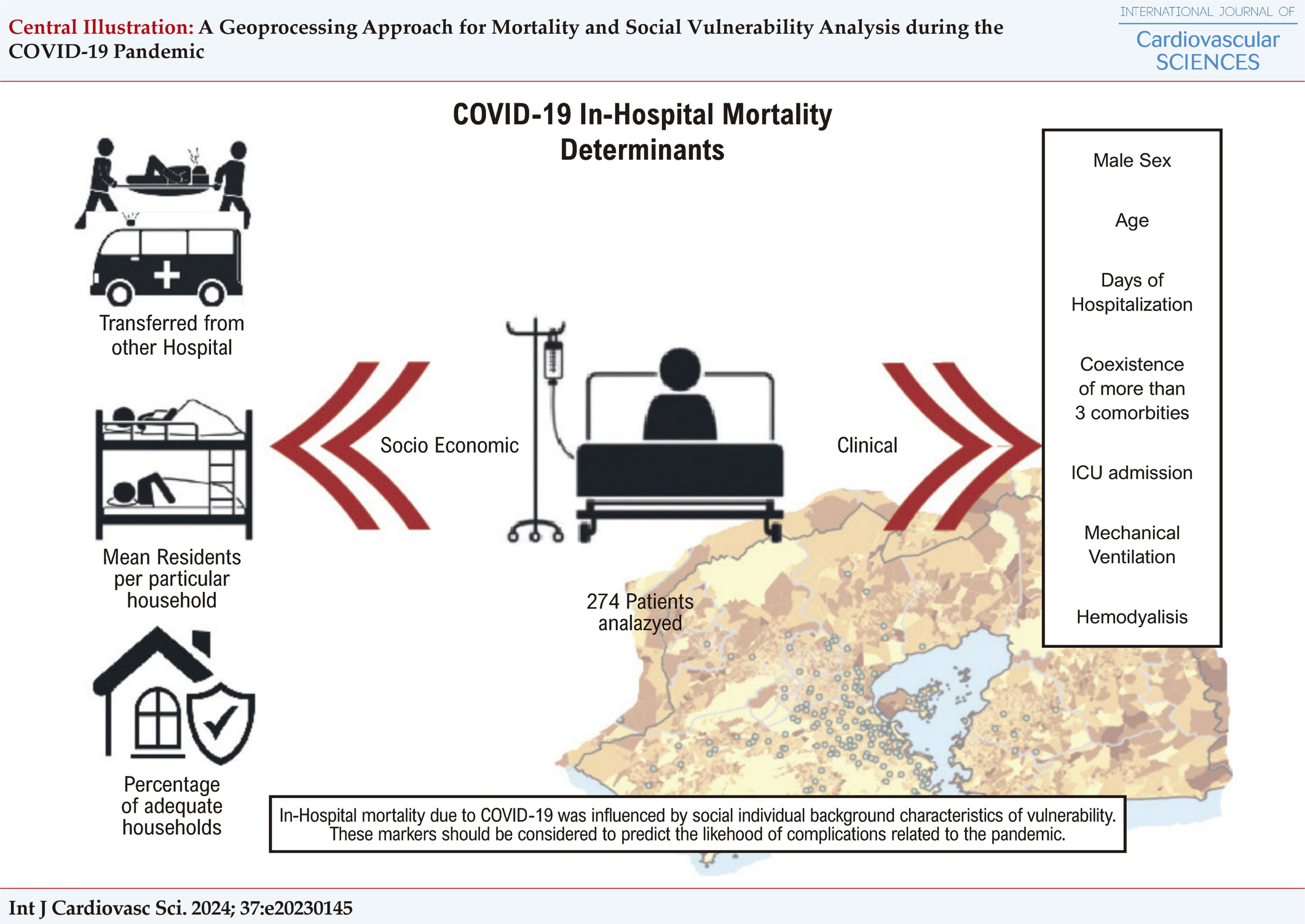
Brazil had high COVID-19 lethality/mortality with multiple social inequalities, where color/race was highly relevant, especially in Rio de Janeiro. Therefore, we hypothesize that COVID-19 hospitalized patients with a highly socially vulnerable background would have more significant in-hospital mortality.

Objective

To analyze the socioeconomic factors of social vulnerability and their association with COVID-19 mortality.

Methods

This work was a prospective study of 274 confirmed adult COVID-19 hospitalized patients in the University Hospital of Clementino Fraga Filho (HUCFF). The clinical features/blood chemistry information were collected from the clinical record. The ArcGIS Pro Software (Esri Gis mapping software, Redlands California-US) and a Python-based algorithm were used to determine in-app/in-map variable management relevance to the socioeconomic variables, inequity markers, and vulnerability. Our study also analyzed the transfers from other primary care institutions to our hospital in order to examine its potential delays in advanced medical care. Logistic regression and ROC curve were used to investigate in-hospital mortality for our statistical analysis. The significance level adopted in the statistical analysis was 5% Results: Male sex, total days of hospitalization, age, having more than three comorbidities, intensive care unit (ICU) admission, hemodialysis, and transfer from other hospitals showed statistical significance. Patients living in low-adequate households (p = 0.030) with high in-house individual agglomeration markers (p = 0.017) and transfers from another Primary Health Care (PHC) institution (p = 0.047) were associated with increased in-hospital mortality, with high ICU admission and mechanical ventilation.

Conclusions

In-hospital mortality due to COVID-19 was influenced by social individual background characteristics of vulnerability. Among other clinical parameters, these markers should be considered to predict the likelihood of complications related to the COVID-19 pandemic.

  • COVID-19
  • Hospital Mortality
  • SARS-CoV-2
  • Social Vulnerability
  • Socioeconomic Disparities in Health
Read Full Article
Creative Commons Attribution (CC BY) Creative Commons license
26/08/2024 DOI: 10.36660/ijcs.20230145 Views 1
Learning Curve for In-Hospital Mortality of Transcatheter Aortic Valve Replacement: Insights from the Brazilian National Registry
ABC
Original Article

Learning Curve for In-Hospital Mortality of Transcatheter Aortic Valve Replacement: Insights from the Brazilian National Registry

Fernando Luiz de Melo Bernardi et al. Alexandre A. Abizaid Fábio Sândoli de Brito Jr Pedro A. Lemos … Dimytri Alexandre Alvim de Siqueira Ricardo Alves Costa Rogério Eduardo Gomes Sarmento Leite Fernanda Marinho Mangione Luiz Eduardo Koenig São Thiago José A. Mangione Valter Correia de Lima Adriano Dourado Oliveira Marcos Antônio Marino Carlos José Francisco Cardoso Paulo R. A. Caramori Rogério Tumelero Antenor Lages Fortes Portela Mauricio Prudente Leônidas Alvarenga Henriques Fabio Solano Souza Cristiano Guedes Bezerra Guy F. A. Prado Jr Leandro Zacaris Figueiredo Freitas Ederlon Ferreira Nogueira George César Ximenes Meireles Renato Bastos Pope Enio Guerios Pedro Beraldo de Andrade Luciano de Moura Santos Mauricio Felippi de Sá Marchi Nelson Henrique Fantin Fundão Henrique Barbosa Ribeiro

Abstract

Background

Robust data on the learning curve (LC) of transcatheter aortic valve replacement (TAVR) are lacking in developing countries.

Objective

To assess TAVR’s LC in Brazil over time.

Methods

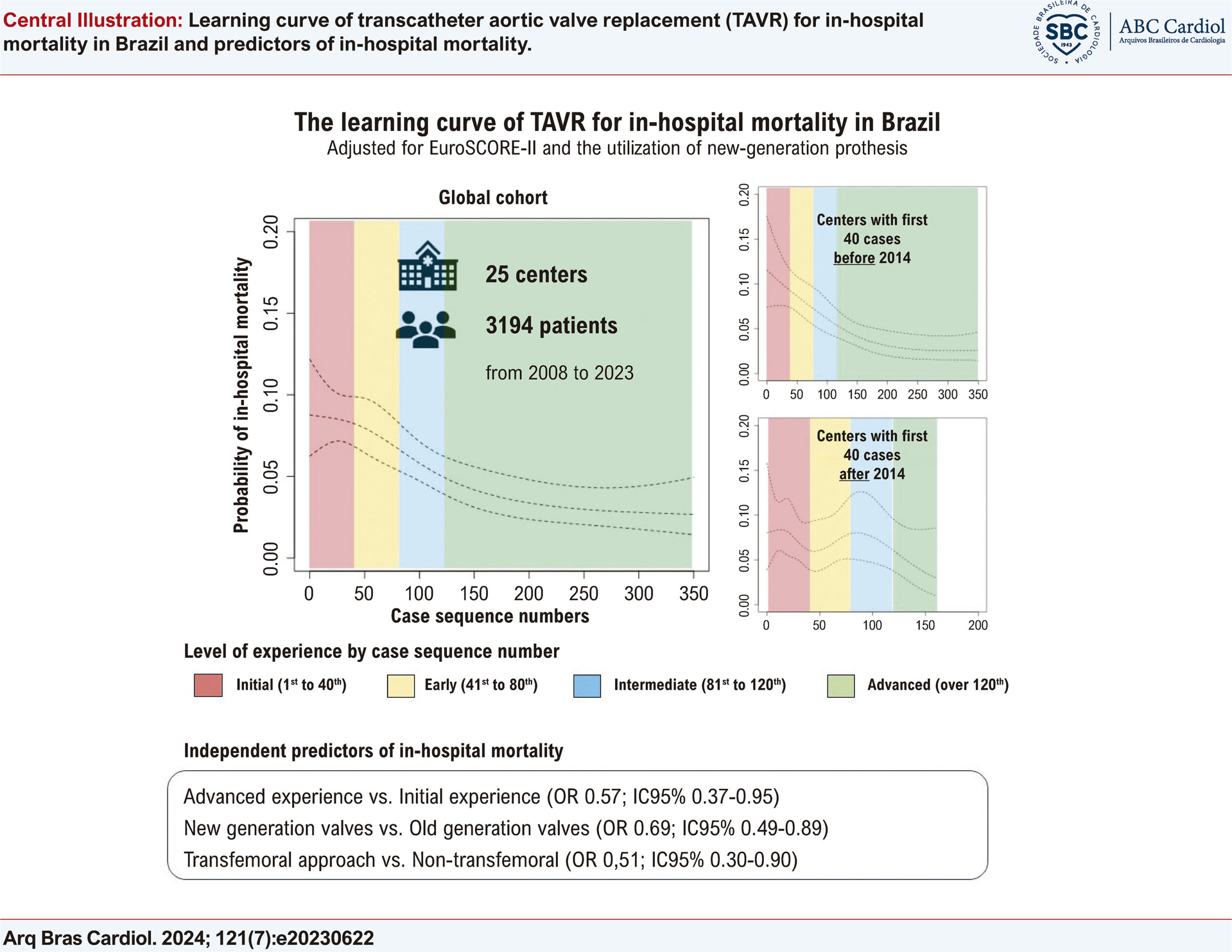
We analyzed data from the Brazilian TAVR registry from 2008 to 2023. Patients from each center were numbered chronologically in case sequence numbers (CSNs). LC was performed using restricted cubic splines adjusted for EuroSCORE-II and the use of new-generation prostheses. Also, in-hospital outcomes were compared between groups defined according to the level of experience based on the CSN: 1st to 40th (initial-experience), 41st to 80th (early-experience), 81st to 120th (intermediate-experience), and over 121st (high-experience). Additional analysis was performed grouping hospitals according to the number of cases treated before 2014 (>40 and ≤40 procedures). The level of significance adopted was <0.05.

Results

A total of 3,194 patients from 25 centers were included. Mean age and EuroSCORE II were 80.7±8.1 years and 7±7.1, respectively. LC analysis demonstrated a drop in adjusted in-hospital mortality after treating 40 patients. A leveling off of the curve was observed after case #118. In-hospital mortality across the groups was 8.6%, 7.7%, 5.9%, and 3.7% for initial-, early-, intermediate-, and high-experience, respectively (p<0.001). High experience independently predicted lower mortality (OR 0.57, p=0.013 vs. initial experience). Low-volume centers before 2014 showed no significant decrease in the likelihood of death with gained experience, whereas high-volume centers had a continuous improvement after case #10.

Conclusion

A TAVR LC phenomenon was observed for in-hospital mortality in Brazil. This effect was more pronounced in centers that treated their first 40 cases before 2014 than those that reached this milestone after 2014.

  • Aortic Valve Stenosis
  • Hospital Mortality
  • Transcatheter Aortic Valve Replacement
Read Full Article
Creative Commons Attribution (CC BY) Creative Commons license
26/07/2024 DOI: 10.36660/abc.20230622i Views 1
The Systemic Immune-Inflammation Index Predicts In-Hospital Mortality in Patients Who Underwent On-Pump Cardiac Surgery
ABC
Original Article

The Systemic Immune-Inflammation Index Predicts In-Hospital Mortality in Patients Who Underwent On-Pump Cardiac Surgery

İnayet Güntürk et al. Rifat Ozmen Okan Ozocak Ertuğrul Emre Güntürk … Fatma Dagli Cevat Yazici

Abstract

Background:

Systemic immune-inflammation index (SII), a new inflammatory index calculated using platelet, neutrophil, and lymphocyte counts, has been demonstrated to be an independent risk factor for the identification of high-risk coronary artery disease in patients undergoing percutaneous coronary intervention and cardiovascular surgery with cardiopulmonary bypass (CPB). The relationship between SII and CPB-related mortality rates remains unclear.

Objective:

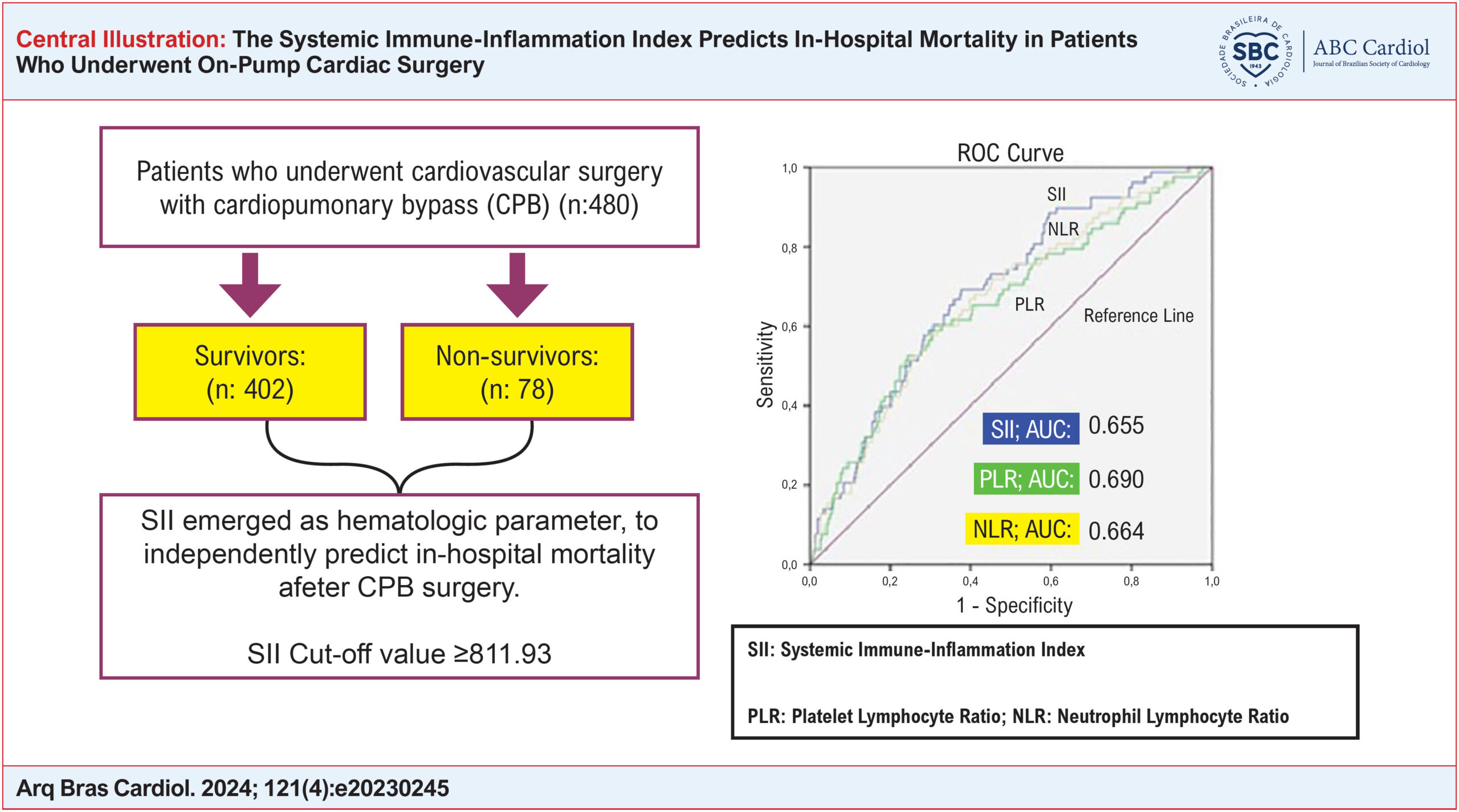
This research was designed to investigate the use of SII to predict in-hospital mortality in patients undergoing cardiac surgery with CPB.

Methods:

Four hundred eighty patients who underwent a cardiac procedure involving CPB over 3 years, were obtained from the hospital’s database. The demographic data, comorbidities, hematological and biochemical profiles, and operative data of the groups were compared. Multiple logistic regression analyses were done to determine independent predictors of mortality. Prognostic factors were assessed by multivariate analysis, and the predictive values of SII, neutrophil-lymphocyte ratio (NLR), and platelet-lymphocyte ratio (PLR) for mortality were compared. A p-value <0.05 was considered significant.

Results:

Of 480 patients, 78 developed in-hospital mortality after cardiac surgery. SII was an independent predictor of in-hospital mortality (Odds ratio: 1.003, 95% confidence interval: 1.001-1.005, p811.93 with 65% sensitivity and 65% specificity (area under the curve: 0.690). The predictive values of SII, PLR, and NLR were close to each other.

Conclusion:

High preoperative SII scores can be used for early determination of appropriate treatments, which may improve surgical outcomes of cardiac surgery in the future.

  • Extracorporeal Circulation
  • Hospital Mortality
  • Inflammation
  • Thoracic Surgery
Read Full Article
Creative Commons Attribution (CC BY) Creative Commons license
19/04/2024 DOI: 10.36660/abc.20230245i Views 2
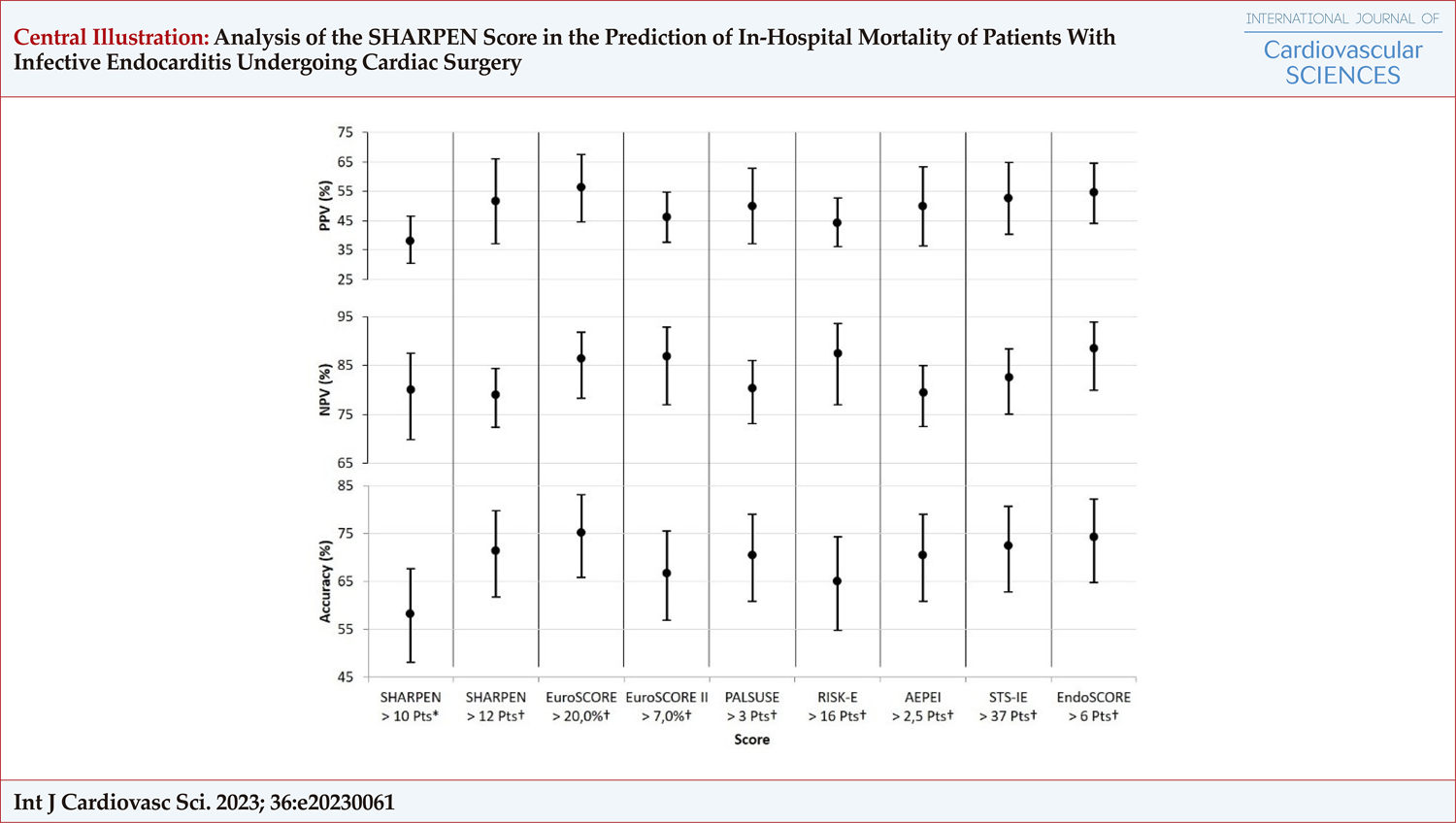
Analysis of the SHARPEN Score in the Prediction of In-Hospital Mortality of Patients With Infective Endocarditis Undergoing Cardiac Surgery
IJCS
Original Article

Analysis of the SHARPEN Score in the Prediction of In-Hospital Mortality of Patients With Infective Endocarditis Undergoing Cardiac Surgery

Mateus Correa Lech et al. Joel Stefani Lucas Fernando Fabra Miguel Gus Fernando Pivatto Júnior

Abstract

Background

The SHARPEN score was developed to predict in-hospital mortality in patients hospitalized for infective endocarditis (IE), undergoing or not undergoing cardiac surgery. A comparison with other available scores has not yet been carried out.

Objective

To evaluate the performance of the SHARPEN score in predicting in-hospital mortality in patients hospitalized for IE undergoing cardiac surgery and compare it with that of both nonspecific and IE-specific surgical scores.

Methods

Retrospective cohort study including all admissions of patients ≥18 years who underwent cardiac surgery due to active IE (modified Duke criteria) at a tertiary care university hospital between 2007 and 2016. The SHARPEN score was compared to the EuroSCORE, EuroSCORE II, STS-IE, PALSUSE, AEPEI, EndoSCORE and RISK-E scores. Differences P<0.05 were considered statistically significant.

Results

A total of 105 hospitalizations of 101 patients (mean age 57.4±14.6 years; 75.2% male) were included. The median SHARPEN score was 11 (9-13) points. The observed in-hospital mortality was 29.5%. There was no statistically significant difference in observed vs. estimated mortality (P = 0.147), with an area under the ROC curve of 0.66 (P = 0.008). In comparison with the other scores, no difference was observed in discriminative ability. The statistics of the SHARPEN score at a cutoff >10 points — positive predictive value (PPV): 38.1%, 95%CI:30.4-46.6; negative predictive value (NPV): 80.0%, 95%CI:69.8-87.4; and accuracy: 58.1%, 95%CI:48.1-67.6 — showed overlapping 95%CIs, indicating no significant difference between scores.

Conclusions

The SHARPEN score did not present parameters with a significant difference in relation to the other scores analyzed; despite the easy obtainment of its few variables, it has limited applicability in clinical practice, like other existing scores.

  • Cardiac Surgical Procedures
  • Endocarditis
  • Hospital Mortality
Read Full Article
Creative Commons Attribution (CC BY) Creative Commons license
20/10/2023 DOI: 10.36660/ijcs.20230061
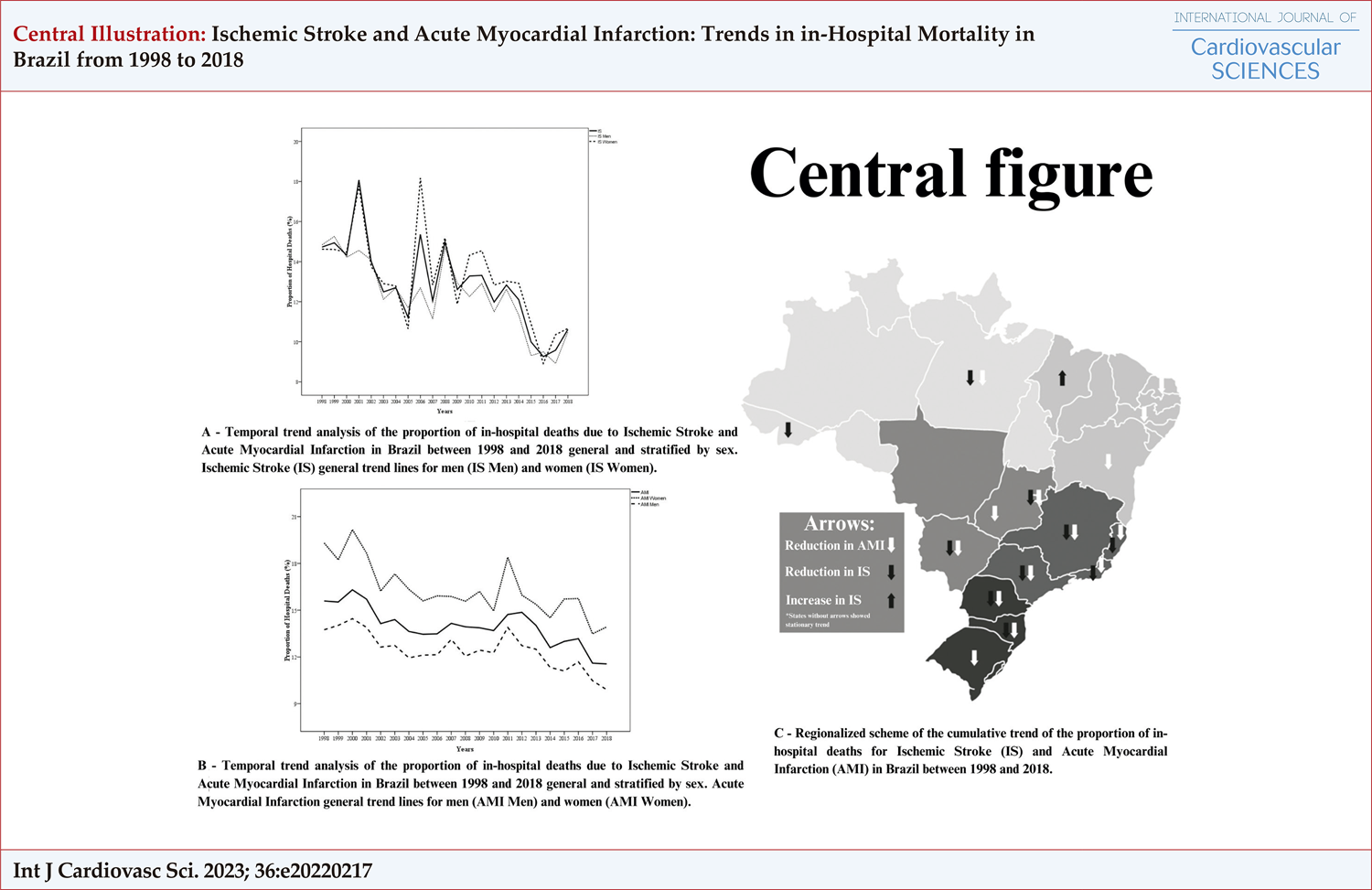
Ischemic Stroke and Acute Myocardial Infarction: Trends in in-Hospital Mortality in Brazil from 1998 to 2018
IJCS
Original Article

Ischemic Stroke and Acute Myocardial Infarction: Trends in in-Hospital Mortality in Brazil from 1998 to 2018

Júlio Martinez Santos et al. Alessandra Barboza Resende Martinez Emerson de Jesus Silva Gustavo Roberto Santana … Romero Henrique de Almeida Barbosa David Fernandes Lima Matheus Rodrigues Lopes Johnnatas Mikael Lopes

Abstract

Background

Ischemic stroke and acute myocardial infarction (AMI) are cardiovascular diseases with high morbidity and mortality rates in Brazil and worldwide. Their outcomes are influenced by public policies aimed at mitigating risk factors and by investments in infrastructure of emergency support and quality of hospital care.

Objective

To analyze the trend in the proportion of in-hospital deaths from ischemic stroke and AMI in Brazil as a way of evaluating the effectiveness of urgency and emergency services.

Methods

Ecological time series study using data from the Hospital Information System. The outcome was the proportion of in-hospital deaths from ischemic stroke and AMI with stratification by sex and state. Prais-Winsten regression was used to analyze the trend between 1998-2018 with α≤0,05.

Results

The proportion of deaths from AMI and ischemic stroke declined in the time series (p<0.001), decreasing annually by 0.17% and 0.25%, respectively. In 20 years, it reduced 43.76% (ischemic stroke) and 32.39% (AMI) in both sexes. However, the decline was more evident in the South and Southeast regions.

Conclusion

The reduction in hospital deaths from AMI and ischemic stroke was heterogeneous among Brazilian regions, which may be related to inequality in emergency services and hospital support.

  • Hospital Mortality
  • Myocardial Infarction
  • Stroke
  • Time Series Studies
Read Full Article
Creative Commons Attribution (CC BY) Creative Commons license
20/10/2023 DOI: 10.36660/ijcs.20220217
IJCS
Original Article

Sociodemographic Profile of Acute Myocardial Infarction in Rio De Janeiro, Brazil (2010-2019)

Lucas André de Carvalho

Abstract

Background

Cardiovascular Diseases (CVDs) are the main cause of mortality in Brazil, which includes acute myocardial infarction (AMI). In 2017, 12% of deaths caused by infarction in Brazil occurred in the state of Rio de Janeiro, characterizing it as an important “hotspot” in the country.

Objectives

This study aimed to characterize the population affected by AMI over the past decade within the state so as to guide future public policies related to CVDs.

Methods

Secondary data of patients affected by AMI between 2010 and 2019 were obtained by DATASUS. In-hospital case-fatality rates, mortality rates, and proportional mortality were calculated using information gathered by the Mortality Information System (SIM) and demographic statistics produced by the Brazilian Institute of Geography and Statistics (IBGE).

Results

The main results showed that in-hospital case-fatality rates were higher in women, patients aged 60 years and over, the black color/race, and the state’s Northwest region. The mortality rate was higher among men, especially in the South-central region and those over 50 years of age. People aged 40-49 years presented a considerable risk of death by infarction. The major categories of data classified as “ignored” in hospital admissions and death certificates were those related to race and education level.

Conclusions

Prevention should not only focus on the elderly, but also on people over 40, especially men. The incompleteness of electronic public data systems can affect the use of race/color or education level as epidemiological variables. New studies should be conducted to understand why the South-central region is so heavily affected by infarction.

  • Descriptive Epidemiology
  • Hospital Mortality
  • Morbidity
  • Socioeconomic Factors, Vital Statistics
Read Full Article
Creative Commons Attribution (CC BY) Creative Commons license
15/05/2023 DOI: 10.36660/ijcs.20210275 Views 1
ABC
Editorial

Sepsis, Atrial Fibrillation, and Aging: A Dangerous Association

Evandro José Cesarino et al. Marildes Luiza de Castro Carolina Baraldi Araujo Restini

Atrial fibrillation (AF) is a common heart rhythm disorder often identified during sepsis’s progression.

Its prevalence increases in the general population with age, reaching 18% in the elderly over 85 years old.

[…]

  • Aged
  • Arrhythmias Cardiac
  • Atrial Fibrillation
  • Hospital Mortality
  • Mortality
  • Sepsis
Read Full Article
Creative Commons Attribution (CC BY) Creative Commons license
07/04/2023 DOI: 10.36660/abc.20230095 Views 1
Central Illustration
ABC
Original Article

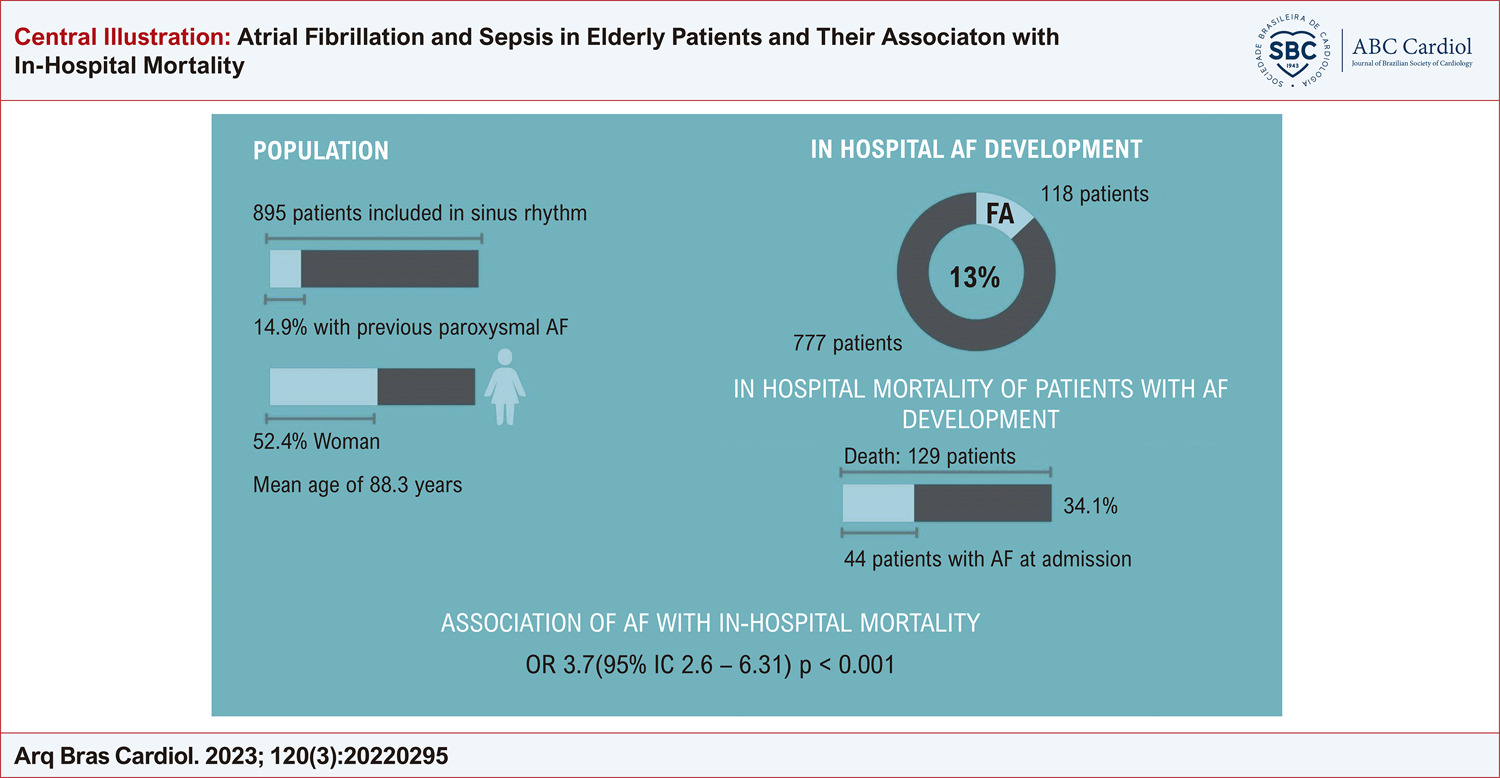
Atrial Fibrillation and Sepsis in Elderly Patients and Their Associaton with In-Hospital Mortality

Michele Ouriques Honorato et al. Juscelio Trajano de Sousa Filho Luiz Frederico Bezerra Honorato Junior Nathalia Watanabe … Gabriela Machado Goulart Rogério Ruscitto do Prado

Abstract

Background

Atrial fibrillation (AF) affects about 2% to 4% of the world population, and in patients hospitalized in intensive care units, this incidence can reach up to 23% in those with septic shock. The impact of AF in patients with sepsis is reflected in worse clinical outcomes, and the identification of the triggering factors can be a target for future prevention and treatment strategies.

Objectives

To verify the relationship between the development of AF and mortality in patients over 80 years of age included in the sepsis protocol and to identify the risk factors that contribute to the development of AF in this population.

Methods

Retrospective observational study, with a review of electronic medical records and inclusion of 895 patients aged 80 years or older, included in the sepsis protocol of a high-complexity private hospital in São Paulo, SP, from January 2018 to December 2020. All tests were performed with a significance level of 5%.

Results

The incidence of AF in the sample was 13%. After multivariate analysis, using multiple logistic regression, it was possible to demonstrate an association of mortality, in the studied population, with the SOFA score (odds ratio [OR] 1.21 [1.09 – 1.35]), higher values of C-reactive protein (OR 1.04 [1.01 – 1.06]), need for vasoactive drugs (OR 2.4 [1.38 – 4.18]), use of mechanical ventilation (OR 3.49 [1.82 – 6.71]), and mainly AF (OR 3.7 [2.16 – 6.31])

Conclusion

In very elderly patients (80 years of age and older) with sepsis, the development of AF was shown to be an independent risk factor for in-hospital mortality.

  • Arrhythmias Cardiac
  • Atrial Fibrillation
  • Hospital Mortality
  • Hospitalization
  • Sepsis
Read Full Article
Creative Commons Attribution (CC BY) Creative Commons license
10/03/2023 DOI: 10.36660/abc.20220295
Figure 1
ABC
Original Article

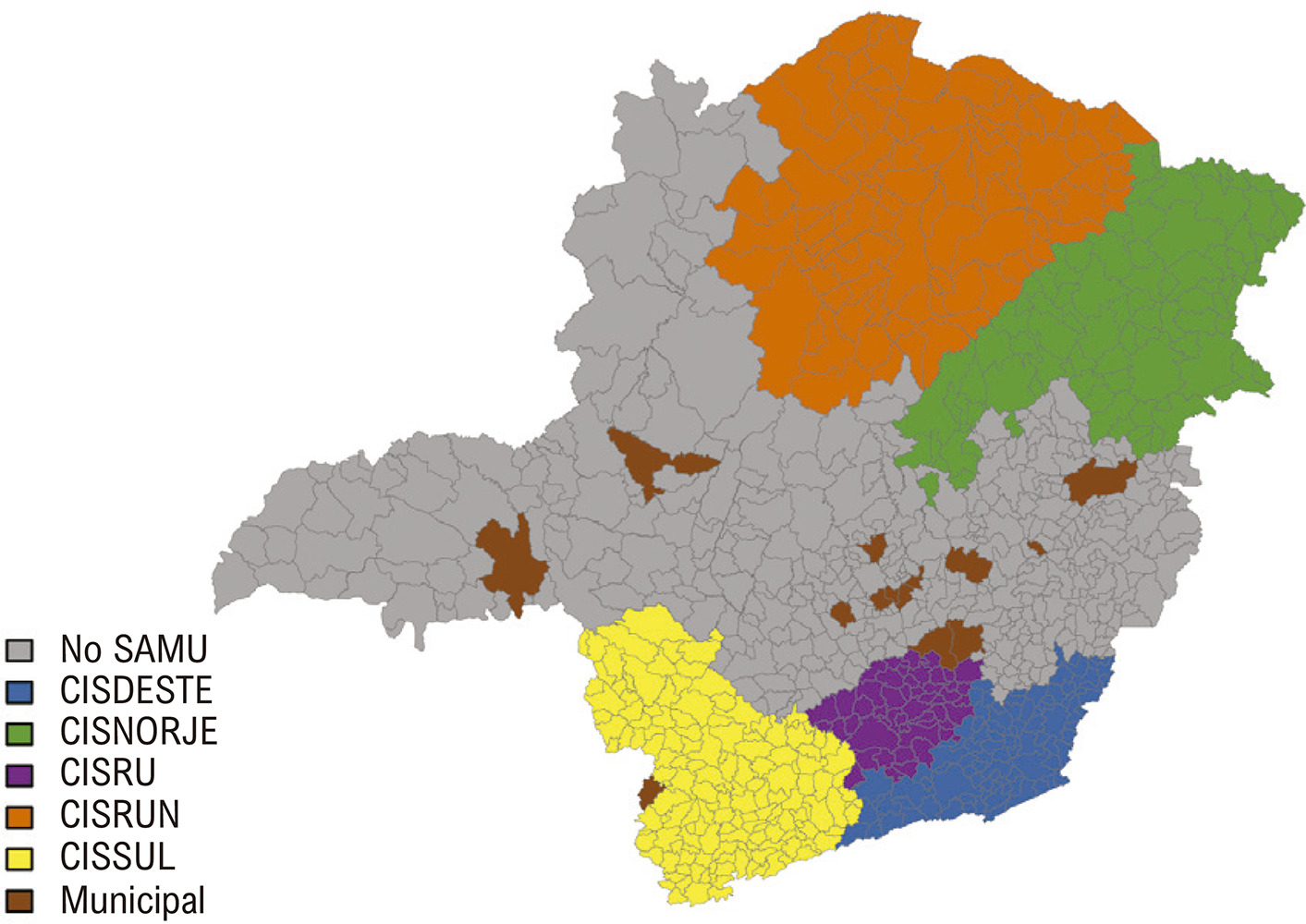
Assessment of the Impact of the Implementation of a Pre-Hospital Ambulance System on Acute Myocardial Infarction Mortality in a Developing Country

Rodrigo Costa Pereira Vieira et al. Milena Soriano Marcolino Luis Gustavo Silva e Silva Daniella Nunes Pereira … Bruno Ramos Nascimento Alzira de Oliveira Jorge Antonio Luiz P Ribeiro

Abstract

Background

The effective management of patients with acute myocardial infarction (AMI) is time-dependent.

Objectives

To assess the impacts of the implementation of prehospital care on admission rates and mortality associated with AMI.

Methods

Retrospective, ecological study, which assessed data from the Brazilian Universal Health System, from all 853 municipalities of Minas Gerais, from 2008 to 2016. Excessive skewness of general and in-hospital mortality rates was smoothed using the empirical Bayes method. This study assessed the relationship between Mobile Emergency Care Service (SAMU) in each municipality and the following 3 outcomes: mortality rate due to AMI, AMI in-hospital mortality, and AMI hospitalization rate, using the Poisson hierarchical model. Rates were corrected by age structure and detrended by seasonality and temporal influences. A confidence interval of 95% was adopted.

Results

AMI mortality rates decreased throughout the study, on average 2% per year, with seasonal variation. AMI in-hospital mortality also showed a decreasing trend, from 13.81% in 2008 to 11.43% in 2016. SAMU implementation was associated with decreased AMI mortality (odds ratio [OR] = 0.967, 95% confidence interval [CI] 0.936 to 0.998) and AMI in-hospital mortality (OR = 0.914, 95% CI 0.845 to 0.986), with no relation with hospitalizations (OR = 1.003, 95% CI 0.927 to 1.083).

Conclusion

SAMU implementation was associated with a modest but significant decrease in AMI in-hospital mortality. This finding reinforces the key role of prehospital care in AMI care and the need for investments on this service to improve clinical outcomes in low- and middle-income countries.

  • Acute Myocardial Infarction
  • Emergency Medical Services
  • Hospital Mortality
Read Full Article
Creative Commons Attribution (CC BY) Creative Commons license
15/09/2022 DOI: 10.36660/abc.20210953 Views 1
ABC
Editorial

The COVID-19 Pandemic and Cardiovascular Disease in Brazil: Learning from the Data

Fernando Cesena

The World Health Organization (WHO) estimates nearly 15 million excess deaths associated with COVID-19 in the world in 2020 and 2021, defined as the difference between the total number of deaths (from all causes) and the number of expected deaths if there was no pandemic.

In Brazil, the WHO estimates 99 and 220 excess deaths associated with the COVID-19 pandemic per 100,000 inhabitants in 2020 and 2021, respectively. This would translate into around 680,000 excess deaths in the first two years of the pandemic, i.e., tens of thousands higher than the officially reported COVID-19 deaths in the period. Many of these excess deaths are related to sub notification due to lack of testing or misdiagnosis (true deaths from COVID-19 assigned to other conditions). Other fatal events were from other causes and somehow indirectly associated with the pandemic, such as the deaths from illnesses not properly treated due to the overwhelmed health system. Considering that cardiovascular disease (CVD) is the main cause of death in Brazil, it is crucial to unravel the impact of COVID-19 on CVD statistics.

[…]

  • Cardiovascular Diseases
  • COVID-19
  • Hospital Mortality
  • Mortality
Read Full Article
Creative Commons Attribution (CC BY) Creative Commons license
11/07/2022 DOI: 10.36660/abc.20220371
IJCS
Letter to the Editor

Effectiveness of Rapid Response Teams and the Importance of Preprints

Hermano Alexandre Lima Rocha et al. Sabrina Gabriele Maia Oliveira Rocha Antônia Célia de Castro Alcântara

To the Editor of the International Journal of Cardiovascular Sciences,

We have read with interest the Point of View: “Performance of the Rapid Response Systems in Health Care Improvement: Benefits and Perspectives” by Viviane Cordeiro Veiga and Salomón Soriano Ordinola Rojas, published ahead of print in the International Journal of Cardiovascular Sciences on April 15, 2019. Rapid response teams to treat trauma patients in Australia 30 years ago, in 1989. From the outset, the aim was to early recognize signs of deterioration and provide a quick response, hence the name of the methodology. The discussion about the activation criteria is relevant and up to date and was treated in a solid manner by the authors in the introduction of the point of view. Indeed, it is known that this is the cause of part of the heterogeneity of results found in studies on the subject.

[…]

  • Hospital Mortality
  • Hospital Rapid Response Team
  • Patient Care Team
  • Patient Safety
Read Full Article
Creative Commons Attribution (CC BY) Creative Commons license
25/11/2020 DOI: 10.36660/ijcs.20190084
ABC
Original Article

Current Impact of Cardiopulmonary Bypass in Coronary Artery Bypass Grafting in São Paulo State

Gabrielle Barbosa Borgomoni et al. Omar Asdrúbal Vilca Mejia Bianca Maria Maglia Orlandi Maxim Goncharov … Luiz Augusto Ferreira Lisboa Pedro Henrique Conte Marco Antonio Praca Oliveira Alfredo Inácio Fiorelli Orlando Petrucci Junior Marcos Grandim Tiveron Luís Alberto de Oliveira Dallan Fabio Biscegli Jatene

Abstract

Background

Previous results on the use of cardiopulmonary bypass (CPB) have generated difficulties in choosing the best treatment for each patient undergoing myocardial revascularization surgery (CABG) in the current context.

Objective

Evaluate the current impact of CPB in CABG in São Paulo State.

Methods

A total of 2905 patients who underwent CABG were consecutively analyzed in 11 São Paulo State centers belonging to the São Paulo Registry of Cardiovascular Surgery (REPLICCAR) I. Perioperative and follow-up data were included online by trained specialists in each hospital. Associations of the perioperative variables with the type of procedure and with the outcomes were analyzed. The study outcomes were morbidity and operative mortality. The expected mortality was calculated using EuroSCORE II (ESII). The values of p <5% were considered significant.

Results

There were no significant differences concerning the patients’ age between the groups (p=0.081). 72.9% of the patients were males. Of the patients, 542 underwent surgery without CPB (18.7%). Of the preoperative characteristics, patients with previous myocardial infarction (p=0.005) and ventricular dysfunction (p=0.031) underwent surgery with CPB. However, emergency or New York Heart Association (NYHA) class IV patients underwent surgery without CPB (p<0.001). The ESII value was similar in both groups (p=0.427). In CABG without CPB, the radial graft was preferred (p<0.001), and in CABG with CPB the right mammary artery was the preferred one (p<0.001). In the postoperative period, CPB use was associated with reoperation for bleeding (p=0.012).

Conclusion

Currently in the REPLICCAR, reoperation for bleeding was the only outcome associated with the use of CPB in CABG. (Arq Bras Cardiol. 2020; 115(4):595-601)

  • Epidemiology
  • Extracorporeal Circulation
  • Hospital Mortality
  • Morbidity
  • Myocardial Revascularization
  • Postoperative Care
  • Risk Factors
Read Full Article
Creative Commons Attribution (CC BY) Creative Commons license
23/10/2020 DOI: 10.36660/abc.20190145 Views 1
Figure 1
ABC
Editorial

How Do We Know a Change is an Improvement? The (Not So) New Scientific Knowledge Every Physician Should Learn, Master and Lead

Alexandre Siciliano Colafranceschi

Cardiothoracic surgeons have a rich history of quality improvement and a strong ethos of transparency and innovation allowing for the rapid diffusion of standards, techniques, and benchmarks worldwide. Nationally, few medical specialties have contributed as much to the development of knowledge as the Brazilian cardiac surgery. From the hard work developed during decades by pioneering surgeons such as Euryclides Zerbini and Adib Jatene to the most contemporaneous leaders in the field, the Instituto do Coração do Hospital das Clínicas da Faculdade de Medicina da Universidade de São Paulo – InCor – is definitely at the heart of this journey. In this issue of Arquivos Brasileiros de Cardiologia the work by Mejia et al. has the merit of taking into account the evolution of the number of cardiovascular surgeries performed at InCor during a 35-year period. The total number is a remarkable one: over 100,000 open heart procedures were analyzed. After all, the mean number of procedures/year is 2,964, – or more than 11 procedures per workday. It is noteworthy the fact that the total number of procedures has been increasing, especially due to an increase in valvular operations and the correction of congenital cardiopathies. Also, of note, there is a 7% decrease in coronary artery bypass graft surgery volume in the most recent period studied.

Besides describing the volume of disease-specific open-heart surgical procedures throughout five different periods of time over the 35 years of data, another objective of the study by Mejia et al. was to evaluate the impact of the actions taken from a continuous quality improvement program on mortality from cardiovascular surgery. It is not clear, however, how the periods of time were selected for the analyses.

[…]

  • Cardiovascular Surgical Procedures/trends
  • Database
  • Hospital Mortality
  • Patient Safety
  • Quality Improvement
Read Full Article
Creative Commons Attribution (CC BY) Creative Commons license
29/05/2020 DOI: 10.36660/abc.20200249
ABC
Editorial

Prognostic Scores for Mortality in Cardiac Surgery for Infective Endocarditis

Alexandre Bahia Barreiras Martins et al. Cristiane da Cruz Lamas

The article by Pivatto F Jr et al. allows us to discuss the important issue of prognostic scores in patients who have cardiac surgery for infective endocarditis (IE). The management of left- sided IE often involves surgery during the index admission, and the main challenge is to rapidly and correctly identify patients at high risk and to transfer them to institutions with a surgical team with expertise in endocarditis surgery.

Prognostic scores are important for several reasons: a reasonable estimate of the risk of death is important in clinical decision-making regarding surgical indication; the estimate is necessary to inform patients and their families of the surgical risk; risk stratification permits a fair comparison of cardiac surgery results, so that surgeons and hospitals treating high-risk patients will not appear to have worse results than others. For operative mortality to remain a valid measure of quality of care, it must be related to the risk profile of the patients receiving surgery.

[…]

  • Cardiac Surgery/mortalidade
  • Endocarditis/surgery
  • Hospital Mortality
  • Prognosis
  • Scores
Read Full Article
Creative Commons Attribution (CC BY) Creative Commons license
06/04/2020 DOI: 10.36660/abc.20200070
Figure 1
ABC
Original Article

Analysis of Risk Scores to Predict Mortality in Patients Undergoing Cardiac Surgery for Endocarditis

Fernando Pivatto Júnior et al. Clarissa Carmona de Azevedo Bellagamba Eduardo Gatti Pianca Fernando Schmidt Fernandes … Maurício Butzke Stefano Boemler Busato Miguel Gus

Abstract

Background

Risk scores are available for use in daily clinical practice, but knowing which one to choose is still fraught with uncertainty.

Objectives

To assess the logistic EuroSCORE, EuroSCORE II, and the infective endocarditis (IE)-specific scores STS-IE, PALSUSE, AEPEI, EndoSCORE and RISK-E, as predictors of hospital mortality in patients undergoing cardiac surgery for active IE at a tertiary teaching hospital in Southern Brazil.

Methods

Retrospective cohort study including all patients aged ≥ 18 years who underwent cardiac surgery for active IE at the study facility from 2007-2016. The scores were assessed by calibration evaluation (observed/expected [O/E] mortality ratio) and discrimination (area under the ROC curve [AUC]). Comparison of AUC was performed by the DeLong test. A p < 0.05 was considered statistically significant.

Results

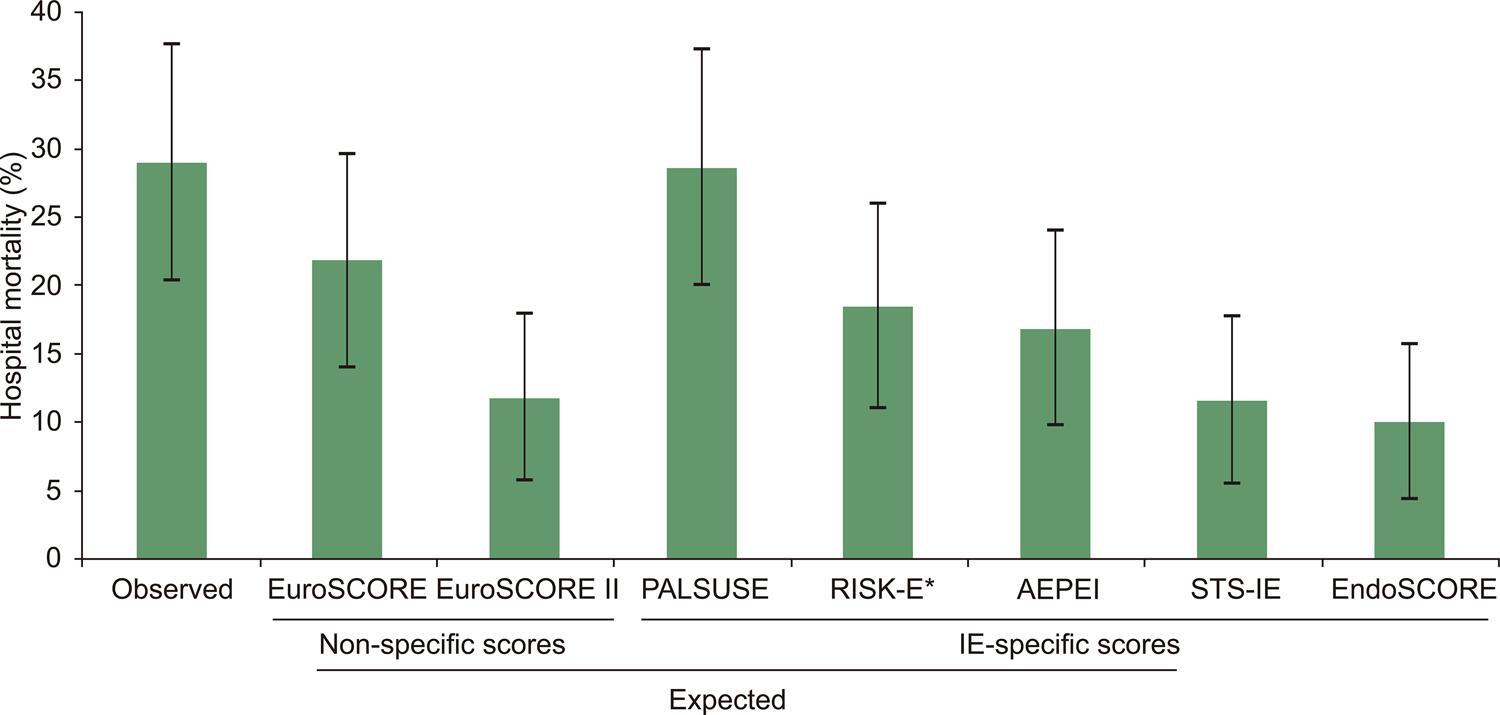
A total of 107 patients were included. Overall hospital mortality was 29.0% (95%CI: 20.4-37.6%). The best O/E mortality ratio was achieved by the PALSUSE score (1.01, 95%CI: 0.70-1.42), followed by the logistic EuroSCORE (1.3, 95%CI: 0.92-1.87). The logistic EuroSCORE had the highest discriminatory power (AUC 0.77), which was significantly superior to EuroSCORE II (p = 0.03), STS-IE (p = 0.03), PALSUSE (p = 0.03), AEPEI (p = 0.03), and RISK-E (p = 0.02).

Conclusions

Despite the availability of recent IE-specific scores, and considering the trade-off between the indexes, the logistic EuroSCORE seemed to be the best predictor of mortality risk in our cohort, taking calibration (O/E mortality ratio: 1.3) and discrimination (AUC 0.77) into account. Local validation of IE-specific scores is needed to better assess preoperative surgical risk. (Arq Bras Cardiol. 2020; 114(3):518-524)

  • Cardiovascular Surgical Procedures/mortality
  • Endocarditis/complications
  • Hospital Mortality
  • Risk Assessment
Read Full Article
Creative Commons Attribution (CC BY) Creative Commons license
06/04/2020 DOI: 10.36660/abc.20190050 Views 2
Figure 1
ABC
Original Article

Analysis of >100,000 Cardiovascular Surgeries Performed at the Heart Institute and a New Era of Outcomes

Omar A.V. Mejia et al. Luiz Augusto Ferreira Lisboa Luiz Fernando Caneo Elisandra Trevisan Arita … Carlos Manuel de Almeida Brandão Ricardo Ribeiro Dias Roberto Costa Marcelo Biscegli Jatene Pablo Maria Alberto Pomerantzeff Luís Alberto Oliveira Dallan Fabio Biscegli Jatene

Abstract

Background:

The current challenge of cardiovascular surgery (CVS) is to improve the outcomes in increasingly severe patients. In this respect, continuous quality improvement (CQI) programs have had an impact on outcomes.

Objective:

To assess the evolution of the incidence and mortality due to CVS, as well as the current outcomes of the Hospital das Clínicas Heart Institute of the University of São Paulo Medical School (InCor-HCFMUSP).

Methods:

An outcome analysis of CVSs performed at the InCor, between January 1984 and June 2019. We observed the surgical volume and mortality rates in 5 time periods: 1st (1984-1989), 2nd (1990-1999), 3rd (2000-2007), 4th (2008-2015) and 5th (2016-2019). The CQI program was implemented between 2015 and 2016. The analysis included the total number of surgeries and the evolution of the most frequent procedures.

Results:

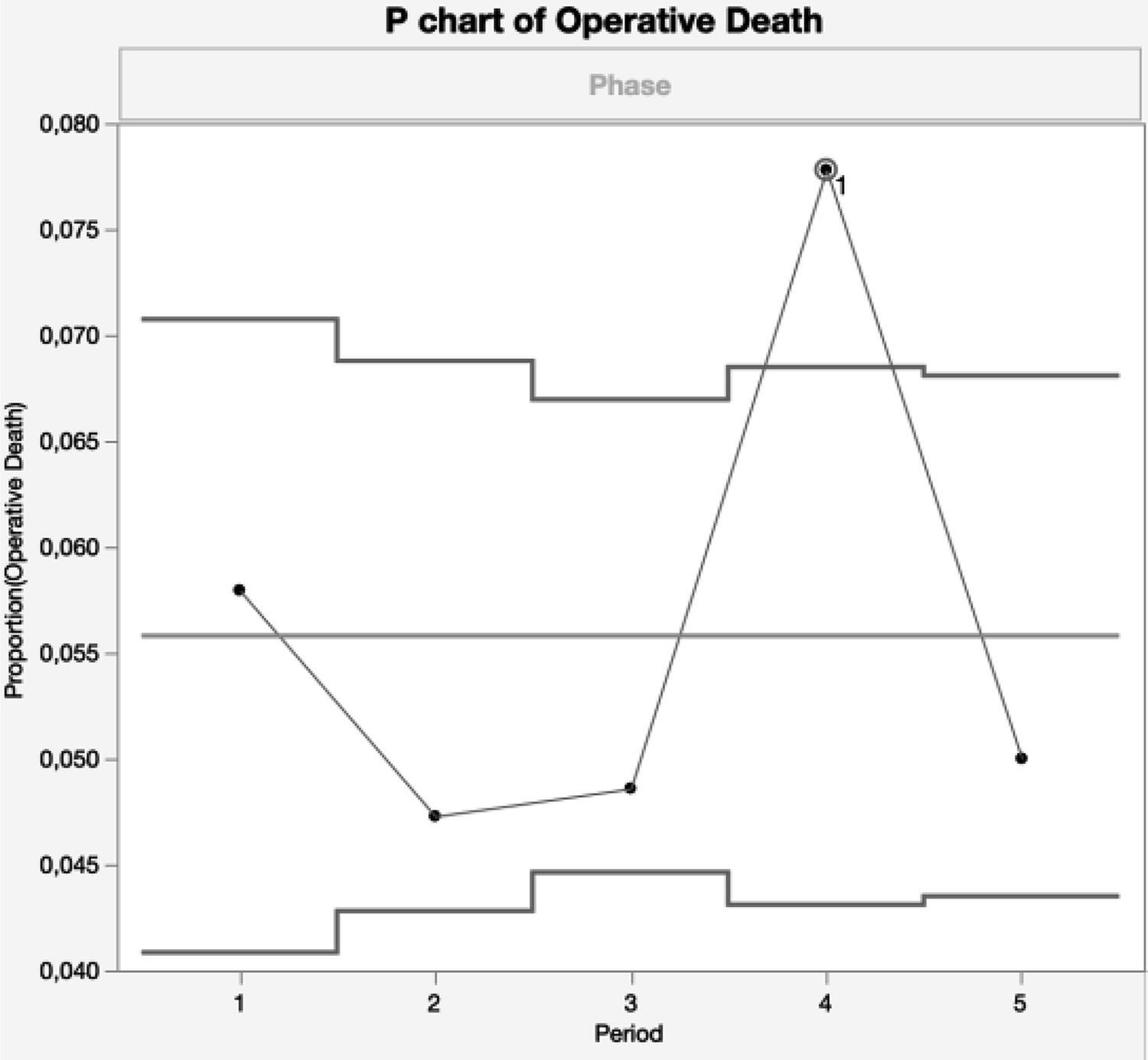
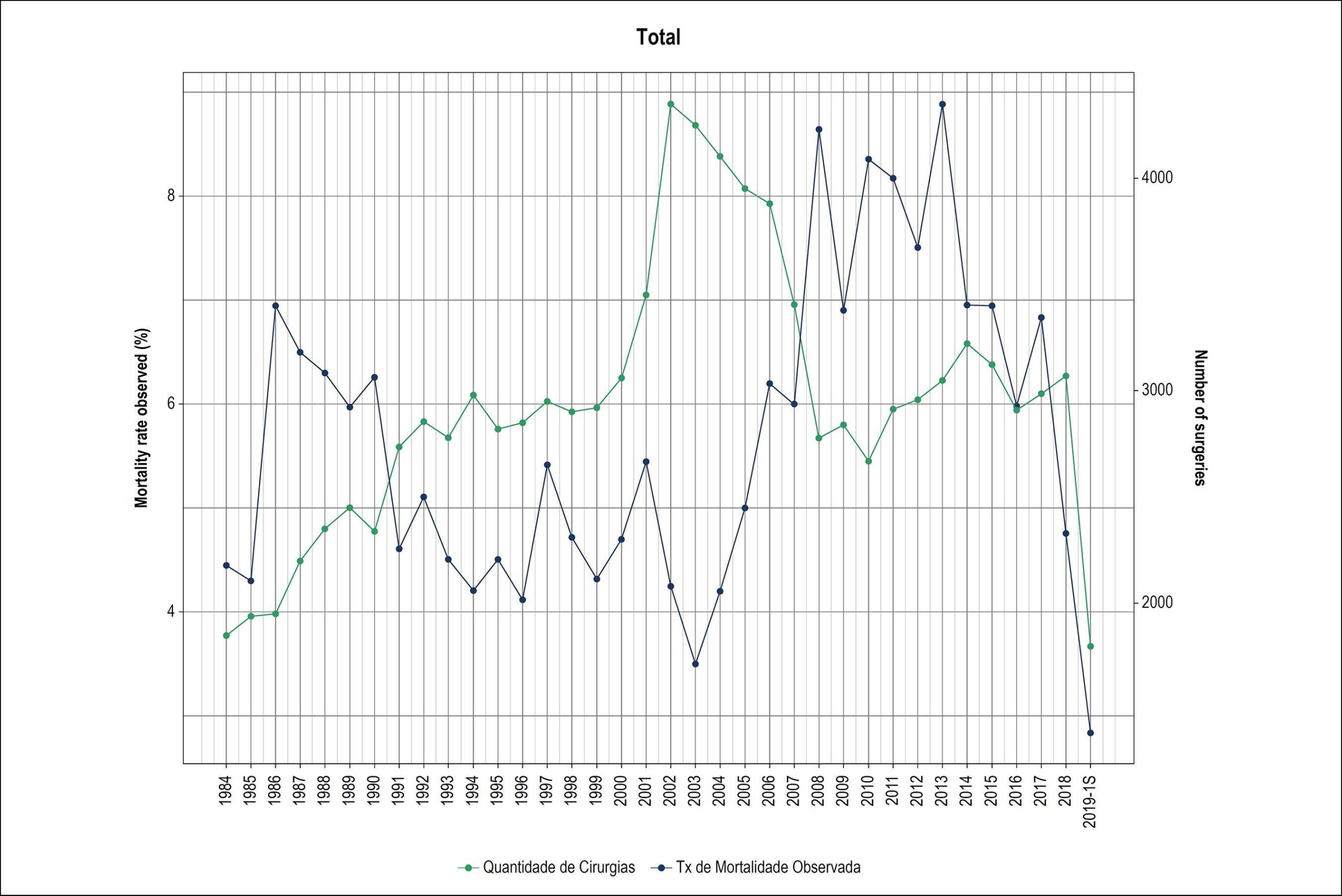
A total of 105,599 CCVs were performed, with an annual mean of 2,964 procedures and mortality of 5,63%. When comparing the 4th and the 5th periods, the average global volume of surgeries was increased from 2,943 to 3,139 (p = 0.368), bypass graft (CABG), from 638 to 597 (p = 0.214), heart valve surgery, from 372 to 465 (p = 0.201), and congenital heart disease surgery, from 530 to 615 (p = 0.125). The average global mortality went from 7.8% to 5% (p < 0.0001); in CABG surgery, from 5.8% to 3.1% (p < 0.0001); in heart valve surgery, from 14% to 7.5% (p < 0.0001) and in congenital heart disease surgery, from 12.1% to 9.6% (p < 0.0001).

Conclusion:

In spite of a recent trend towards increased surgical volume, there was a significant decrease in operative mortality in the groups studied. After the implementation of the CQI program, the mortality rates were closer to international standards.

  • Cardiovascular Surgical Procedures/trends
  • Database
  • Hospital Mortality
  • Patient Safety
  • Quality Improvement
Read Full Article
Creative Commons Attribution (CC BY) Creative Commons license
14/02/2020 DOI: 10.36660/abc.20190736 Views 2
Chart 1
IJCS
Original Article

Decompensated Heart Failure with Mid-Range Ejection Fraction: Epidemiology and In-Hospital Mortality Risk Factors

Gabriela Paiva Cavalcanti et al. Camila Sarteschi Glory Eithne Sarinho Gomes Carolina de Araújo Medeiros … José Henrique Martins Pimentel André Rabelo Lafayette Maria Celita Almeida Paulo Sérgio Rodrigues Oliveira Silvia Marinho Martins

Abstract

Background:

Recently, a new HF entity, with LVEF between 40-49%, was presented to comprehend and seek better therapy for HF with preserved LVEF (HFpEF) and borderline, in the means that HF with reduced LVEF (HFrEF) already has well-defined therapy in the literature.

Objective:

To compare the clinical-therapeutic profile of patients with HF with mid-range LVEF (HFmrEF) with HFpEF and HFrEF and to verify predictors of hospital mortality.

Method:

Historical cohort of patients admitted with decompensated HF at a supplementary hospital in Recife/PE between April/2007 – August/2017, stratified by LVEF (< 40%/40 – 49/≥ 50%), based on the guideline of the European Society of Cardiology (ESC) 2016. The groups were compared and Logistic Regression was used to identify predictors of independent risk for in-hospital death.

Results:

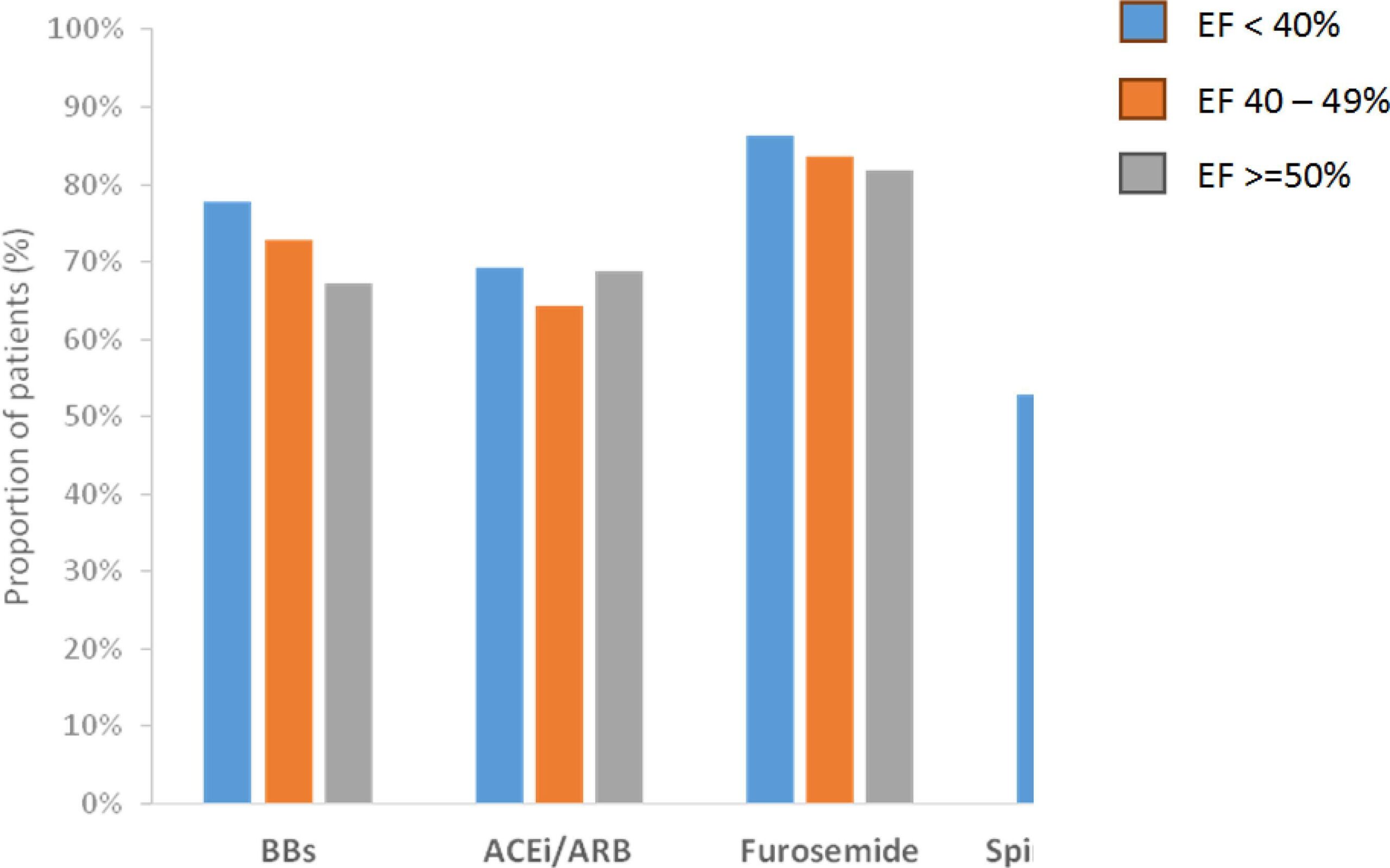
A sample of 493 patients, most with HFrEF (43%), HFpEF (30%) and HFmrEF (26%). Average age of 73 (± 14) years, 59% men. Hospital mortality 14%, readmission within 30 days 19%. In therapeutics, it presented statistical significance among the 3 groups, spironolactone, in HFrEF patients. Hospital death and readmission within 30 days did not make difference. In the HFmrEF group, factors independently associated with death were: valve disease (OR: 4.17, CI: 1.01-9.13), altered urea at admission (OR: 6.18, CI: 1.78-11.45) and beta-blocker hospitalization (OR: 0.29, CI: 0.08-0.97). In HFrEF, predictors were: prior renal disease (OR: 2.84, CI: 1.19-6.79), beta-blocker at admission (OR: 0.29, CI: 0.12-0.72) and ACEI/ ARB (OR: 0.21, CI: 0.09-0.49). In HFpEF, only valve disease (OR: 4.61, CI: 1.33-15.96) and kidney disease (OR: 5.18, CI: 1.68-11.98) were relevant.

Conclusion:

In general, HFmrEF presented intermediate characteristics between HFrEF and HFpEF. Independent predictors of mortality may support risk stratification and management of this group.

  • Epidemiology
  • Heart Failure/physiopatology
  • Hospital Mortality
  • Prognosis
  • Stroke Volume / physiology
Read Full Article
Creative Commons Attribution (CC BY) Creative Commons license
24/10/2019 DOI: 10.5935/2359-4802.20190075 Views 1
Figure 1
ABC
Original Article

Readmission of Patients with Acute Coronary Syndrome and Determinants

Larissa Marina Santana Mendonça de Oliveira et al. Ingrid Maria Novais Barros de Carvalho Costa Danielle Góes da Silva José Rodrigo Santos Santos Silva … José Augusto Soares Barreto-Filho Marcos Antônio Almeida-Santos Joselina Luzia Meneses Oliveira Mirella Dornelas Batalha Moreira Buarque Diva Aliete dos Santos Vieira Antônio Carlos Sobral Sousa

Abstract

Background:

Acute coronary syndrome (ACS) is responsible for high rates of hospital admission and readmission, which are associated with increased costs for the patient and the health system, and increased in-hospital mortality rates.

Objective:

To evaluate readmission in patients with ACS and its determinants.

Methods:

This was a retrospective cohort study of adult and elderly patients with ACS, readmitted to public and private referral cardiology hospitals within one year after the first hospitalization for ACS. The occurrence of readmissions, the time elapsed from the first to the second admission, and the use of medications at admission were collected from the medical records. Associations between categorical variables were evaluated by the chi-square test or the Fisher’s exact test. Multiple logistic regression was used to evaluate predictors for readmissions. A p < 0.05 was set as statistically significant.

Results:

Readmission rate was 21.5% (n = 115) and mean time between admissions was 122.7 ± 112.1 days. The patients were mostly men (64.0%), mean age of 63.15 ± 12.3 years. Among readmitted patients, 7% had a prognosis of “death”, and 68.7% were readmitted more than once within a one-year period. The main reasons of readmission were cardiovascular diseases including ACS. Private health care and the diagnosis of congestive heart failure were associated with multiple logistic regression.

Conclusion:

ACS was the main cause of readmission, with higher prevalence among users of supplemental health care. Readmissions were associated with previous diagnosis of congestive heart failure and the type of health care provided.

  • Acute coronary syndrome
  • Delivery of Health Care/economy
  • Drug Therapy/economia
  • Heart Failure
  • Hospital Mortality
  • Hospitalization/economy
  • Patient Readmission/economy
  • Socioeconomic Factors
Read Full Article
Creative Commons Attribution (CC BY) Creative Commons license
27/06/2019 DOI: 10.5935/abc.20190104

Could not load more articles. Please try again.

How to cite this article

EndNote RIS

Electronic Document Format (Vancouver)

Mattos NDFG, Oliveira RL, Salgado CG, Sousa ALS, Feijó ALF, Branco RVC, Mattos GZ, et al. Transcatheter Aortic Valve Implantation in Nonagenarians: In-Hospital Complications and One-Year Follow-Up Mortality. International Journal of Cardiovascular Sciences 2026;39:e20250154.

Electronic Document Format (ABNT)

Mattos, Nelson Durval Ferreira Gomes de; Oliveira, Rafael Lauria de; Salgado, Constantino Gonzalez; Sousa, André Luiz Silveira; Feijó, Andre Luiz da Fonseca; Branco, Rodrigo Verney Castello; Mattos, Giovanna Zadra de; Secco, José Carlos Pizzolante; Carvalho, Luiz Antonio Ferreira; Rey, Helena Cramer. Transcatheter Aortic Valve Implantation in Nonagenarians: In-Hospital Complications and One-Year Follow-Up Mortality. International Journal of Cardiovascular Sciences, v. 39, e20250154, Sep. 2026.

Electronic Document Format (APA)

Mattos, N. D. F. G. , Oliveira, R. L. , Salgado, C. G., Sousa, A. L. S., Feijó, A. L. F., Branco, R. V. C., Mattos, G. Z. , Secco, J. C. P., Carvalho, L. A. F., & Rey, H. C. (2026). Transcatheter Aortic Valve Implantation in Nonagenarians: In-Hospital Complications and One-Year Follow-Up Mortality. International Journal of Cardiovascular Sciences, 39, e20250154.

Electronic Document Format (ISO)

Mattos, Nelson Durval Ferreira Gomes de and Oliveira, Rafael Lauria de and Salgado, Constantino Gonzalez and Sousa, André Luiz Silveira and Feijó, Andre Luiz da Fonseca and Branco, Rodrigo Verney Castello and Mattos, Giovanna Zadra de and Secco, José Carlos Pizzolante and Carvalho, Luiz Antonio Ferreira and Rey, Helena Cramer. Transcatheter Aortic Valve Implantation in Nonagenarians: In-Hospital Complications and One-Year Follow-Up Mortality. International Journal of Cardiovascular Sciences [online]. 2026, vol. 39, [cited 2026-10-14], e20250154. Available from: <https://journals.cardiol.br/en/article/transcatheter-aortic-valve-implantation-in-nonagenarians-in-hospital-complications-and-one-year-follow-up-mortality/>. ISSN 2359-4802

EndNote RIS

Electronic Document Format (Vancouver)

Pinheiro RP, Luna LC, Doellinger VR, Correia MG, Tura B, Lachtermacher S. Applicability of SAPS 3 and APACHE II Scores in a Cardiac Intensive Care Unit: A Prospective Study. International Journal of Cardiovascular Sciences 2026;39:e20250071.

Electronic Document Format (ABNT)

Pinheiro, Rafael Petri; Luna, Leonardo Castro; Doellinger, Vanessa dos Reis von; Correia, Marcelo Goulart; Tura, Bernardo; Lachtermacher, Stephan. Applicability of SAPS 3 and APACHE II Scores in a Cardiac Intensive Care Unit: A Prospective Study. International Journal of Cardiovascular Sciences, v. 39, e20250071, Apr. 2026.

Electronic Document Format (APA)

Pinheiro, R. P., Luna, L. C., Doellinger, V. R. , Correia, M. G., Tura, B., & Lachtermacher, S. (2026). Applicability of SAPS 3 and APACHE II Scores in a Cardiac Intensive Care Unit: A Prospective Study. International Journal of Cardiovascular Sciences, 39, e20250071.

Electronic Document Format (ISO)

Pinheiro, Rafael Petri and Luna, Leonardo Castro and Doellinger, Vanessa dos Reis von and Correia, Marcelo Goulart and Tura, Bernardo and Lachtermacher, Stephan. Applicability of SAPS 3 and APACHE II Scores in a Cardiac Intensive Care Unit: A Prospective Study. International Journal of Cardiovascular Sciences [online]. 2026, vol. 39, [cited 2026-10-14], e20250071. Available from: <https://journals.cardiol.br/en/article/applicability-of-saps-3-and-apache-ii-scores-in-a-cardiac-intensive-care-unit-a-prospective-study/>. ISSN 2359-4802

EndNote RIS

Electronic Document Format (Vancouver)

Rangel FOD. ST-Segment Elevation Myocardial Infarction: Assessment of Quality of Care Before and After the COVID-19 Pandemic. International Journal of Cardiovascular Sciences 2025;38:e20250099.

Electronic Document Format (ABNT)

Rangel, Fernando Oswaldo Dias. ST-Segment Elevation Myocardial Infarction: Assessment of Quality of Care Before and After the COVID-19 Pandemic. International Journal of Cardiovascular Sciences, v. 38, e20250099, Aug. 2025.

Electronic Document Format (APA)

Rangel, F. O. D. (2025). ST-Segment Elevation Myocardial Infarction: Assessment of Quality of Care Before and After the COVID-19 Pandemic. International Journal of Cardiovascular Sciences, 38, e20250099.

Electronic Document Format (ISO)

Rangel, Fernando Oswaldo Dias. ST-Segment Elevation Myocardial Infarction: Assessment of Quality of Care Before and After the COVID-19 Pandemic. International Journal of Cardiovascular Sciences [online]. 2025, vol. 38, [cited 2026-10-14], e20250099. Available from: <https://journals.cardiol.br/en/article/st-segment-elevation-myocardial-infarction-assessment-of-quality-of-care-before-and-after-the-covid-19-pandemic/>. ISSN 2359-4802

EndNote RIS

Electronic Document Format (Vancouver)

Latado AL. Hospitalizations and In-Hospital Mortality from Heart Failure in Brazil: An Updated Overview. Arquivos Brasileiros de Cardiologia 2025;122(6):e20250284.

Electronic Document Format (ABNT)

Latado, Adriana Lopes. Hospitalizations and In-Hospital Mortality from Heart Failure in Brazil: An Updated Overview. Arquivos Brasileiros de Cardiologia, v. 122, n. 6, e20250284, Jul. 2025.

Electronic Document Format (APA)

Latado, A. L. (2025). Hospitalizations and In-Hospital Mortality from Heart Failure in Brazil: An Updated Overview. Arquivos Brasileiros de Cardiologia, 122(6), e20250284.

Electronic Document Format (ISO)

Latado, Adriana Lopes. Hospitalizations and In-Hospital Mortality from Heart Failure in Brazil: An Updated Overview. Arquivos Brasileiros de Cardiologia [online]. 2025, vol. 122, n. 6, [cited 2026-10-14], e20250284. Available from: <https://journals.cardiol.br/en/article/hospitalizations-and-in-hospital-mortality-from-heart-failure-in-brazil-an-updated-overview/>. ISSN 0066-782X

EndNote RIS

Electronic Document Format (Vancouver)

Goncharov M, Silva EOA, Silva PGMB, Freitas FL, Moreira AC, Tramujas L, Cavalcanti AB, et al. Is Female Gender Associated with Mortality in Coronary Artery Bypass Grafting?. Arquivos Brasileiros de Cardiologia 2025;122(5):e20240664.

Electronic Document Format (ABNT)

Goncharov, Maxim; Silva, Erlon Oliveira de Abreu; Silva, Pedro Gabriel Melo de Barros e; Freitas, Fabiane Letícia de; Moreira, Adriana Costa; Tramujas, Lucas; Cavalcanti, Alexandre Biasi; Liguori, Ieda Maria; Jatene, Fabio Biscegli; Jatene, Ieda Biscegli; Alves, Claudia Maria Rodrigues. Is Female Gender Associated with Mortality in Coronary Artery Bypass Grafting?. Arquivos Brasileiros de Cardiologia, v. 122, n. 5, e20240664, May. 2025.

Electronic Document Format (APA)

Goncharov, M., Silva, E. O. A., Silva, P. G. M. B. , Freitas, F. L. , Moreira, A. C., Tramujas, L., Cavalcanti, A. B., Liguori, I. M., Jatene, F. B., Jatene, I. B., & Alves, C. M. R. (2025). Is Female Gender Associated with Mortality in Coronary Artery Bypass Grafting?. Arquivos Brasileiros de Cardiologia, 122(5), e20240664.

Electronic Document Format (ISO)

Goncharov, Maxim and Silva, Erlon Oliveira de Abreu and Silva, Pedro Gabriel Melo de Barros e and Freitas, Fabiane Letícia de and Moreira, Adriana Costa and Tramujas, Lucas and Cavalcanti, Alexandre Biasi and Liguori, Ieda Maria and Jatene, Fabio Biscegli and Jatene, Ieda Biscegli and Alves, Claudia Maria Rodrigues. Is Female Gender Associated with Mortality in Coronary Artery Bypass Grafting?. Arquivos Brasileiros de Cardiologia [online]. 2025, vol. 122, n. 5, [cited 2026-10-14], e20240664. Available from: <https://journals.cardiol.br/en/article/is-female-gender-associated-with-mortality-in-coronary-artery-bypass-grafting/>. ISSN 0066-782X

EndNote RIS

Electronic Document Format (Vancouver)

Elias RD, Assunção IP, Santos JVJ, Rodrigues-Machado MG, Pena JLB. In-Hospital Mortality Predictors in Patients with Acute Myocardial Infarction and Cardiogenic Shock Using Intra-Aortic Balloon Pump. Arquivos Brasileiros de Cardiologia 2025;122(2):e20230496.

Electronic Document Format (ABNT)

Elias, Rossana Dall’Orto; Assunção, Isabella Pedrosa; Santos, Julliane Vasconcelos Joviano; Rodrigues-Machado, Maria da Gloria; Pena, José Luiz Barros. In-Hospital Mortality Predictors in Patients with Acute Myocardial Infarction and Cardiogenic Shock Using Intra-Aortic Balloon Pump. Arquivos Brasileiros de Cardiologia, v. 122, n. 2, e20230496, Feb. 2025.

Electronic Document Format (APA)

Elias, R. D., Assunção, I. P., Santos, J. V. J., Rodrigues-Machado, M. G., & Pena, J. L. B. (2025). In-Hospital Mortality Predictors in Patients with Acute Myocardial Infarction and Cardiogenic Shock Using Intra-Aortic Balloon Pump. Arquivos Brasileiros de Cardiologia, 122(2), e20230496.

Electronic Document Format (ISO)

Elias, Rossana Dall’Orto and Assunção, Isabella Pedrosa and Santos, Julliane Vasconcelos Joviano and Rodrigues-Machado, Maria da Gloria and Pena, José Luiz Barros. In-Hospital Mortality Predictors in Patients with Acute Myocardial Infarction and Cardiogenic Shock Using Intra-Aortic Balloon Pump. Arquivos Brasileiros de Cardiologia [online]. 2025, vol. 122, n. 2, [cited 2026-10-14], e20230496. Available from: <https://journals.cardiol.br/en/article/in-hospital-mortality-predictors-in-patients-with-acute-myocardial-infarction-and-cardiogenic-shock-using-intra-aortic-balloon-pump/>. ISSN 0066-782X

EndNote RIS

Electronic Document Format (Vancouver)

Rendon AFV, Volschan IM, Pereira MN, Monteiro WL, Pimentel AF, Nascimento EM, Pereira BB, et al. A Geoprocessing Approach for Mortality and Social Vulnerability Analysis during the COVID-19 Pandemic. International Journal of Cardiovascular Sciences 2024;37:e20230145.

Electronic Document Format (ABNT)

Rendon, Andres Felipe Valencia; Volschan, Isabela Mendes; Pereira, Manoella Novais; Monteiro, Wagner Lima; Pimentel, Alessandra de Freitas; Nascimento, Emilia Matos do; Pereira, Basilio de Bragança; Oliveira, Glaucia Maria Moraes de. A Geoprocessing Approach for Mortality and Social Vulnerability Analysis during the COVID-19 Pandemic. International Journal of Cardiovascular Sciences, v. 37, e20230145, Aug. 2024.

Electronic Document Format (APA)

Rendon, A. F. V., Volschan, I. M., Pereira, M. N., Monteiro, W. L., Pimentel, A. F., Nascimento, E. M. , Pereira, B. B., & Oliveira, G. M. M. (2024). A Geoprocessing Approach for Mortality and Social Vulnerability Analysis during the COVID-19 Pandemic. International Journal of Cardiovascular Sciences, 37, e20230145.

Electronic Document Format (ISO)

Rendon, Andres Felipe Valencia and Volschan, Isabela Mendes and Pereira, Manoella Novais and Monteiro, Wagner Lima and Pimentel, Alessandra de Freitas and Nascimento, Emilia Matos do and Pereira, Basilio de Bragança and Oliveira, Glaucia Maria Moraes de. A Geoprocessing Approach for Mortality and Social Vulnerability Analysis during the COVID-19 Pandemic. International Journal of Cardiovascular Sciences [online]. 2024, vol. 37, [cited 2026-10-14], e20230145. Available from: <https://journals.cardiol.br/en/article/a-geoprocessing-approach-for-mortality-and-social-vulnerability-analysis-during-the-covid-19-pandemic/>. ISSN 2359-4802

EndNote RIS

Electronic Document Format (Vancouver)

Bernardi FLM, Abizaid AA, Brito Jr FS, Lemos PA, Siqueira DAA, Costa RA, Leite REGS, et al. Learning Curve for In-Hospital Mortality of Transcatheter Aortic Valve Replacement: Insights from the Brazilian National Registry. Arquivos Brasileiros de Cardiologia 2024;121(7):e20230622.

Electronic Document Format (ABNT)

Bernardi, Fernando Luiz de Melo; Abizaid, Alexandre A.; Brito Jr, Fábio Sândoli de; Lemos, Pedro A.; Siqueira, Dimytri Alexandre Alvim de; Costa, Ricardo Alves; Leite, Rogério Eduardo Gomes Sarmento; Mangione, Fernanda Marinho; Thiago, Luiz Eduardo Koenig São; Mangione, José A.; Lima, Valter Correia de; Oliveira, Adriano Dourado; Marino, Marcos Antônio; Cardoso, Carlos José Francisco; Caramori, Paulo R. A.; Tumelero, Rogério; Portela, Antenor Lages Fortes; Prudente, Mauricio; Henriques, Leônidas Alvarenga; Souza, Fabio Solano; Bezerra, Cristiano Guedes; Prado Jr, Guy F. A.; Freitas, Leandro Zacaris Figueiredo; Nogueira, Ederlon Ferreira; Meireles, George César Ximenes; Pope, Renato Bastos; Guerios, Enio; Andrade, Pedro Beraldo de; Santos, Luciano de Moura; Marchi, Mauricio Felippi de Sá; Fundão, Nelson Henrique Fantin; Ribeiro, Henrique Barbosa. Learning Curve for In-Hospital Mortality of Transcatheter Aortic Valve Replacement: Insights from the Brazilian National Registry. Arquivos Brasileiros de Cardiologia, v. 121, n. 7, e20230622, Jul. 2024.

Electronic Document Format (APA)

Bernardi, F. L. M., Abizaid, A. A., Brito Jr, F. S. , Lemos, P. A., Siqueira, D. A. A. , Costa, R. A., Leite, R. E. G. S., Mangione, F. M., Thiago, L. E. K. S., Mangione, J. A., Lima, V. C. , Oliveira, A. D., Marino, M. A., Cardoso, C. J. F., Caramori, P. R. A., Tumelero, R., Portela, A. L. F., Prudente, M., Henriques, L. A., Souza, F. S., Bezerra, C. G., Prado Jr, G. F. A., Freitas, L. Z. F., Nogueira, E. F., Meireles, G. C. X., Pope, R. B., Guerios, E., Andrade, P. B. , Santos, L. M., Marchi, M. F. S., Fundão, N. H. F., & Ribeiro, H. B. (2024). Learning Curve for In-Hospital Mortality of Transcatheter Aortic Valve Replacement: Insights from the Brazilian National Registry. Arquivos Brasileiros de Cardiologia, 121(7), e20230622.

Electronic Document Format (ISO)

Bernardi, Fernando Luiz de Melo and Abizaid, Alexandre A. and Brito Jr, Fábio Sândoli de and Lemos, Pedro A. and Siqueira, Dimytri Alexandre Alvim de and Costa, Ricardo Alves and Leite, Rogério Eduardo Gomes Sarmento and Mangione, Fernanda Marinho and Thiago, Luiz Eduardo Koenig São and Mangione, José A. and Lima, Valter Correia de and Oliveira, Adriano Dourado and Marino, Marcos Antônio and Cardoso, Carlos José Francisco and Caramori, Paulo R. A. and Tumelero, Rogério and Portela, Antenor Lages Fortes and Prudente, Mauricio and Henriques, Leônidas Alvarenga and Souza, Fabio Solano and Bezerra, Cristiano Guedes and Prado Jr, Guy F. A. and Freitas, Leandro Zacaris Figueiredo and Nogueira, Ederlon Ferreira and Meireles, George César Ximenes and Pope, Renato Bastos and Guerios, Enio and Andrade, Pedro Beraldo de and Santos, Luciano de Moura and Marchi, Mauricio Felippi de Sá and Fundão, Nelson Henrique Fantin and Ribeiro, Henrique Barbosa. Learning Curve for In-Hospital Mortality of Transcatheter Aortic Valve Replacement: Insights from the Brazilian National Registry. Arquivos Brasileiros de Cardiologia [online]. 2024, vol. 121, n. 7, [cited 2026-10-14], e20230622. Available from: <https://journals.cardiol.br/en/article/learning-curve-for-in-hospital-mortality-of-transcatheter-aortic-valve-replacement-insights-from-the-brazilian-national-registry/>. ISSN 0066-782X

EndNote RIS

Electronic Document Format (Vancouver)

Güntürk , Ozmen R, Ozocak O, Güntürk EE, Dagli F, Yazici C. The Systemic Immune-Inflammation Index Predicts In-Hospital Mortality in Patients Who Underwent On-Pump Cardiac Surgery. Arquivos Brasileiros de Cardiologia 2024;121(4):e20230245.

Electronic Document Format (ABNT)

Güntürk, İnayet; Ozmen, Rifat; Ozocak, Okan; Güntürk, Ertuğrul Emre; Dagli, Fatma; Yazici, Cevat. The Systemic Immune-Inflammation Index Predicts In-Hospital Mortality in Patients Who Underwent On-Pump Cardiac Surgery. Arquivos Brasileiros de Cardiologia, v. 121, n. 4, e20230245, Apr. 2024.

Electronic Document Format (APA)

Güntürk, , Ozmen, R., Ozocak, O., Güntürk, E. E., Dagli, F., & Yazici, C. (2024). The Systemic Immune-Inflammation Index Predicts In-Hospital Mortality in Patients Who Underwent On-Pump Cardiac Surgery. Arquivos Brasileiros de Cardiologia, 121(4), e20230245.

Electronic Document Format (ISO)

Güntürk, İnayet and Ozmen, Rifat and Ozocak, Okan and Güntürk, Ertuğrul Emre and Dagli, Fatma and Yazici, Cevat. The Systemic Immune-Inflammation Index Predicts In-Hospital Mortality in Patients Who Underwent On-Pump Cardiac Surgery. Arquivos Brasileiros de Cardiologia [online]. 2024, vol. 121, n. 4, [cited 2026-10-14], e20230245. Available from: <https://journals.cardiol.br/en/article/the-systemic-immune-inflammation-index-predicts-in-hospital-mortality-in-patients-who-underwent-on-pump-cardiac-surgery/>. ISSN 0066-782X

EndNote RIS

Electronic Document Format (Vancouver)

Lech MC, Stefani J, Fabra LF, Gus M, Pivatto Júnior F. Analysis of the SHARPEN Score in the Prediction of In-Hospital Mortality of Patients With Infective Endocarditis Undergoing Cardiac Surgery. International Journal of Cardiovascular Sciences 2023;36:e20230061.

Electronic Document Format (ABNT)

Lech, Mateus Correa; Stefani, Joel; Fabra, Lucas Fernando; Gus, Miguel; Pivatto Júnior, Fernando. Analysis of the SHARPEN Score in the Prediction of In-Hospital Mortality of Patients With Infective Endocarditis Undergoing Cardiac Surgery. International Journal of Cardiovascular Sciences, v. 36, e20230061, Oct. 2023.

Electronic Document Format (APA)

Lech, M. C., Stefani, J., Fabra, L. F., Gus, M., & Pivatto Júnior, F. (2023). Analysis of the SHARPEN Score in the Prediction of In-Hospital Mortality of Patients With Infective Endocarditis Undergoing Cardiac Surgery. International Journal of Cardiovascular Sciences, 36, e20230061.

Electronic Document Format (ISO)

Lech, Mateus Correa and Stefani, Joel and Fabra, Lucas Fernando and Gus, Miguel and Pivatto Júnior, Fernando. Analysis of the SHARPEN Score in the Prediction of In-Hospital Mortality of Patients With Infective Endocarditis Undergoing Cardiac Surgery. International Journal of Cardiovascular Sciences [online]. 2023, vol. 36, [cited 2026-10-14], e20230061. Available from: <https://journals.cardiol.br/en/article/analysis-of-the-sharpen-score-in-the-prediction-of-in-hospital-mortality-of-patients-with-infective-endocarditis-undergoing-cardiac-surgery/>. ISSN 2359-4802

EndNote RIS

Electronic Document Format (Vancouver)

Santos JM, Martinez ABR, Silva EJ, Santana GR, Barbosa RHA, Lima DF, Lopes MR, et al. Ischemic Stroke and Acute Myocardial Infarction: Trends in in-Hospital Mortality in Brazil from 1998 to 2018. International Journal of Cardiovascular Sciences 2023;36:e20220217.

Electronic Document Format (ABNT)

Santos, Júlio Martinez; Martinez, Alessandra Barboza Resende; Silva, Emerson de Jesus; Santana, Gustavo Roberto; Barbosa, Romero Henrique de Almeida; Lima, David Fernandes; Lopes, Matheus Rodrigues; Lopes, Johnnatas Mikael. Ischemic Stroke and Acute Myocardial Infarction: Trends in in-Hospital Mortality in Brazil from 1998 to 2018. International Journal of Cardiovascular Sciences, v. 36, e20220217, Oct. 2023.

Electronic Document Format (APA)

Santos, J. M., Martinez, A. B. R., Silva, E. J., Santana, G. R., Barbosa, R. H. A., Lima, D. F., Lopes, M. R., & Lopes, J. M. (2023). Ischemic Stroke and Acute Myocardial Infarction: Trends in in-Hospital Mortality in Brazil from 1998 to 2018. International Journal of Cardiovascular Sciences, 36, e20220217.

Electronic Document Format (ISO)

Santos, Júlio Martinez and Martinez, Alessandra Barboza Resende and Silva, Emerson de Jesus and Santana, Gustavo Roberto and Barbosa, Romero Henrique de Almeida and Lima, David Fernandes and Lopes, Matheus Rodrigues and Lopes, Johnnatas Mikael. Ischemic Stroke and Acute Myocardial Infarction: Trends in in-Hospital Mortality in Brazil from 1998 to 2018. International Journal of Cardiovascular Sciences [online]. 2023, vol. 36, [cited 2026-10-14], e20220217. Available from: <https://journals.cardiol.br/en/article/ischemic-stroke-and-acute-myocardial-infarction-trends-in-in-hospital-mortality-in-brazil-from-1998-to-2018/>. ISSN 2359-4802

EndNote RIS

Electronic Document Format (Vancouver)

Carvalho LA. Sociodemographic Profile of Acute Myocardial Infarction in Rio De Janeiro, Brazil (2010-2019). International Journal of Cardiovascular Sciences 2023;36:e20210275.

Electronic Document Format (ABNT)

Carvalho, Lucas André de. Sociodemographic Profile of Acute Myocardial Infarction in Rio De Janeiro, Brazil (2010-2019). International Journal of Cardiovascular Sciences, v. 36, e20210275, May. 2023.

Electronic Document Format (APA)

Carvalho, L. A. (2023). Sociodemographic Profile of Acute Myocardial Infarction in Rio De Janeiro, Brazil (2010-2019). International Journal of Cardiovascular Sciences, 36, e20210275.

Electronic Document Format (ISO)

Carvalho, Lucas André de. Sociodemographic Profile of Acute Myocardial Infarction in Rio De Janeiro, Brazil (2010-2019). International Journal of Cardiovascular Sciences [online]. 2023, vol. 36, [cited 2026-10-14], e20210275. Available from: <https://journals.cardiol.br/en/article/sociodemographic-profile-of-acute-myocardial-infarction-in-rio-de-janeiro-brazil-2010-2019/>. ISSN 2359-4802

EndNote RIS

Electronic Document Format (Vancouver)

Cesarino EJ, Castro ML, Restini CBA. Sepsis, Atrial Fibrillation, and Aging: A Dangerous Association. Arquivos Brasileiros de Cardiologia 2023;120(3):e20230095.

Electronic Document Format (ABNT)

Cesarino, Evandro José; Castro, Marildes Luiza de; Restini, Carolina Baraldi Araujo. Sepsis, Atrial Fibrillation, and Aging: A Dangerous Association. Arquivos Brasileiros de Cardiologia, v. 120, n. 3, e20230095, Apr. 2023.

Electronic Document Format (APA)

Cesarino, E. J., Castro, M. L. , & Restini, C. B. A. (2023). Sepsis, Atrial Fibrillation, and Aging: A Dangerous Association. Arquivos Brasileiros de Cardiologia, 120(3), e20230095.

Electronic Document Format (ISO)

Cesarino, Evandro José and Castro, Marildes Luiza de and Restini, Carolina Baraldi Araujo. Sepsis, Atrial Fibrillation, and Aging: A Dangerous Association. Arquivos Brasileiros de Cardiologia [online]. 2023, vol. 120, n. 3, [cited 2026-10-14], e20230095. Available from: <https://journals.cardiol.br/en/article/sepsis-atrial-fibrillation-and-aging-a-dangerous-association/>. ISSN 0066-782X

EndNote RIS

Electronic Document Format (Vancouver)

Honorato MO, Sousa Filho JT, Honorato Junior LFB, Watanabe N, Goulart GM, Prado RR. Atrial Fibrillation and Sepsis in Elderly Patients and Their Associaton with In-Hospital Mortality. Arquivos Brasileiros de Cardiologia 2023;120(3):e20220295.

Electronic Document Format (ABNT)

Honorato, Michele Ouriques; Sousa Filho, Juscelio Trajano de; Honorato Junior, Luiz Frederico Bezerra; Watanabe, Nathalia; Goulart, Gabriela Machado; Prado, Rogério Ruscitto do. Atrial Fibrillation and Sepsis in Elderly Patients and Their Associaton with In-Hospital Mortality. Arquivos Brasileiros de Cardiologia, v. 120, n. 3, e20220295, Mar. 2023.

Electronic Document Format (APA)

Honorato, M. O., Sousa Filho, J. T. , Honorato Junior, L. F. B., Watanabe, N., Goulart, G. M., & Prado, R. R. (2023). Atrial Fibrillation and Sepsis in Elderly Patients and Their Associaton with In-Hospital Mortality. Arquivos Brasileiros de Cardiologia, 120(3), e20220295.

Electronic Document Format (ISO)

Honorato, Michele Ouriques and Sousa Filho, Juscelio Trajano de and Honorato Junior, Luiz Frederico Bezerra and Watanabe, Nathalia and Goulart, Gabriela Machado and Prado, Rogério Ruscitto do. Atrial Fibrillation and Sepsis in Elderly Patients and Their Associaton with In-Hospital Mortality. Arquivos Brasileiros de Cardiologia [online]. 2023, vol. 120, n. 3, [cited 2026-10-14], e20220295. Available from: <https://journals.cardiol.br/en/article/atrial-fibrillation-and-sepsis-in-elderly-patients-and-their-associaton-with-in-hospital-mortality/>. ISSN 0066-782X

EndNote RIS

Electronic Document Format (Vancouver)

Vieira RCP, Marcolino MS, Silva LG, Pereira DN, Nascimento BR, Jorge AO, Ribeiro ALP, et al. Assessment of the Impact of the Implementation of a Pre-Hospital Ambulance System on Acute Myocardial Infarction Mortality in a Developing Country. Arquivos Brasileiros de Cardiologia 2022;119(5):756-63.

Electronic Document Format (ABNT)

Vieira, Rodrigo Costa Pereira; Marcolino, Milena Soriano; Silva, Luis Gustavo e; Pereira, Daniella Nunes; Nascimento, Bruno Ramos; Jorge, Alzira de Oliveira; Ribeiro, Antonio Luiz P. Assessment of the Impact of the Implementation of a Pre-Hospital Ambulance System on Acute Myocardial Infarction Mortality in a Developing Country. Arquivos Brasileiros de Cardiologia, v. 119, n. 5, p. 756-763, Sep. 2022.

Electronic Document Format (APA)

Vieira, R. C. P., Marcolino, M. S., Silva, L. G. , Pereira, D. N., Nascimento, B. R., Jorge, A. O., & Ribeiro, A. L. P. (2022). Assessment of the Impact of the Implementation of a Pre-Hospital Ambulance System on Acute Myocardial Infarction Mortality in a Developing Country. Arquivos Brasileiros de Cardiologia, 119(5), 756-763.

Electronic Document Format (ISO)

Vieira, Rodrigo Costa Pereira and Marcolino, Milena Soriano and Silva, Luis Gustavo e and Pereira, Daniella Nunes and Nascimento, Bruno Ramos and Jorge, Alzira de Oliveira and Ribeiro, Antonio Luiz P. Assessment of the Impact of the Implementation of a Pre-Hospital Ambulance System on Acute Myocardial Infarction Mortality in a Developing Country. Arquivos Brasileiros de Cardiologia [online]. 2022, vol. 119, n. 5, [cited 2026-10-14], pp. 756-763. Available from: <https://journals.cardiol.br/en/article/assessment-of-the-impact-of-the-implementation-of-a-pre-hospital-ambulance-system-on-acute-myocardial-infarction-mortality-in-a-developing-country/>. ISSN 0066-782X

EndNote RIS

Electronic Document Format (Vancouver)

Cesena F. The COVID-19 Pandemic and Cardiovascular Disease in Brazil: Learning from the Data. Arquivos Brasileiros de Cardiologia 2022;119(1):46-7.

Electronic Document Format (ABNT)

Cesena, Fernando. The COVID-19 Pandemic and Cardiovascular Disease in Brazil: Learning from the Data. Arquivos Brasileiros de Cardiologia, v. 119, n. 1, p. 46-47, Jul. 2022.

Electronic Document Format (APA)

Cesena, F. (2022). The COVID-19 Pandemic and Cardiovascular Disease in Brazil: Learning from the Data. Arquivos Brasileiros de Cardiologia, 119(1), 46-47.

Electronic Document Format (ISO)

Cesena, Fernando. The COVID-19 Pandemic and Cardiovascular Disease in Brazil: Learning from the Data. Arquivos Brasileiros de Cardiologia [online]. 2022, vol. 119, n. 1, [cited 2026-10-14], pp. 46-47. Available from: <https://journals.cardiol.br/en/article/the-covid-19-pandemic-and-cardiovascular-disease-in-brazil-learning-from-the-data/>. ISSN 0066-782X

EndNote RIS

Electronic Document Format (Vancouver)

Rocha HAL, Rocha SGMO, Alcântara ACC. Effectiveness of Rapid Response Teams and the Importance of Preprints. International Journal of Cardiovascular Sciences 2020;33(6):721-2.

Electronic Document Format (ABNT)

Rocha, Hermano Alexandre Lima; Rocha, Sabrina Gabriele Maia Oliveira; Alcântara, Antônia Célia de Castro. Effectiveness of Rapid Response Teams and the Importance of Preprints. International Journal of Cardiovascular Sciences, v. 33, n. 6, p. 721-722, Nov. 2020.

Electronic Document Format (APA)

Rocha, H. A. L., Rocha, S. G. M. O., & Alcântara, A. C. C. (2020). Effectiveness of Rapid Response Teams and the Importance of Preprints. International Journal of Cardiovascular Sciences, 33(6), 721-722.

Electronic Document Format (ISO)

Rocha, Hermano Alexandre Lima and Rocha, Sabrina Gabriele Maia Oliveira and Alcântara, Antônia Célia de Castro. Effectiveness of Rapid Response Teams and the Importance of Preprints. International Journal of Cardiovascular Sciences [online]. 2020, vol. 33, n. 6, [cited 2026-10-14], pp. 721-722. Available from: <https://journals.cardiol.br/en/article/effectiveness-of-rapid-response-teams-and-the-importance-of-preprints/>. ISSN 2359-4802

EndNote RIS

Electronic Document Format (Vancouver)

Borgomoni GB, Mejia OAV, Orlandi BMM, Goncharov M, Lisboa LAF, Conte PH, Oliveira MAP, et al. Current Impact of Cardiopulmonary Bypass in Coronary Artery Bypass Grafting in São Paulo State. Arquivos Brasileiros de Cardiologia 2020;115(4):595-601.

Electronic Document Format (ABNT)

Borgomoni, Gabrielle Barbosa; Mejia, Omar Asdrúbal Vilca; Orlandi, Bianca Maria Maglia; Goncharov, Maxim; Lisboa, Luiz Augusto Ferreira; Conte, Pedro Henrique; Oliveira, Marco Antonio Praca; Fiorelli, Alfredo Inácio; Petrucci Junior, Orlando; Tiveron, Marcos Grandim; Dallan, Luís Alberto de Oliveira; Jatene, Fabio Biscegli. Current Impact of Cardiopulmonary Bypass in Coronary Artery Bypass Grafting in São Paulo State. Arquivos Brasileiros de Cardiologia, v. 115, n. 4, p. 595-601, Oct. 2020.

Electronic Document Format (APA)

Borgomoni, G. B., Mejia, O. A. V., Orlandi, B. M. M., Goncharov, M., Lisboa, L. A. F., Conte, P. H., Oliveira, M. A. P., Fiorelli, A. I., Petrucci Junior, O., Tiveron, M. G., Dallan, L. A. O., & Jatene, F. B. (2020). Current Impact of Cardiopulmonary Bypass in Coronary Artery Bypass Grafting in São Paulo State. Arquivos Brasileiros de Cardiologia, 115(4), 595-601.

Electronic Document Format (ISO)

Borgomoni, Gabrielle Barbosa and Mejia, Omar Asdrúbal Vilca and Orlandi, Bianca Maria Maglia and Goncharov, Maxim and Lisboa, Luiz Augusto Ferreira and Conte, Pedro Henrique and Oliveira, Marco Antonio Praca and Fiorelli, Alfredo Inácio and Petrucci Junior, Orlando and Tiveron, Marcos Grandim and Dallan, Luís Alberto de Oliveira and Jatene, Fabio Biscegli. Current Impact of Cardiopulmonary Bypass in Coronary Artery Bypass Grafting in São Paulo State. Arquivos Brasileiros de Cardiologia [online]. 2020, vol. 115, n. 4, [cited 2026-10-14], pp. 595-601. Available from: <https://journals.cardiol.br/en/article/current-impact-of-cardiopulmonary-bypass-in-coronary-artery-bypass-grafting-in-sao-paulo-state/>. ISSN 0066-782X

EndNote RIS

Electronic Document Format (Vancouver)

Colafranceschi AS. How Do We Know a Change is an Improvement? The (Not So) New Scientific Knowledge Every Physician Should Learn, Master and Lead. Arquivos Brasileiros de Cardiologia 2020;114(4):613-5.

Electronic Document Format (ABNT)

Colafranceschi, Alexandre Siciliano. How Do We Know a Change is an Improvement? The (Not So) New Scientific Knowledge Every Physician Should Learn, Master and Lead. Arquivos Brasileiros de Cardiologia, v. 114, n. 4, p. 613-615, May. 2020.

Electronic Document Format (APA)

Colafranceschi, A. S. (2020). How Do We Know a Change is an Improvement? The (Not So) New Scientific Knowledge Every Physician Should Learn, Master and Lead. Arquivos Brasileiros de Cardiologia, 114(4), 613-615.

Electronic Document Format (ISO)

Colafranceschi, Alexandre Siciliano. How Do We Know a Change is an Improvement? The (Not So) New Scientific Knowledge Every Physician Should Learn, Master and Lead. Arquivos Brasileiros de Cardiologia [online]. 2020, vol. 114, n. 4, [cited 2026-10-14], pp. 613-615. Available from: <https://journals.cardiol.br/en/article/how-do-we-know-a-change-is-an-improvement-the-not-so-new-scientific-knowledge-every-physician-should-learn-master-and-lead/>. ISSN 0066-782X

EndNote RIS

Electronic Document Format (Vancouver)

Martins ABB, Lamas CC. Prognostic Scores for Mortality in Cardiac Surgery for Infective Endocarditis. Arquivos Brasileiros de Cardiologia 2020;114(3):525-9.

Electronic Document Format (ABNT)

Martins, Alexandre Bahia Barreiras; Lamas, Cristiane da Cruz. Prognostic Scores for Mortality in Cardiac Surgery for Infective Endocarditis. Arquivos Brasileiros de Cardiologia, v. 114, n. 3, p. 525-529, Apr. 2020.

Electronic Document Format (APA)

Martins, A. B. B., & Lamas, C. C. (2020). Prognostic Scores for Mortality in Cardiac Surgery for Infective Endocarditis. Arquivos Brasileiros de Cardiologia, 114(3), 525-529.

Electronic Document Format (ISO)

Martins, Alexandre Bahia Barreiras and Lamas, Cristiane da Cruz. Prognostic Scores for Mortality in Cardiac Surgery for Infective Endocarditis. Arquivos Brasileiros de Cardiologia [online]. 2020, vol. 114, n. 3, [cited 2026-10-14], pp. 525-529. Available from: <https://journals.cardiol.br/en/article/prognostic-scores-for-mortality-in-cardiac-surgery-for-infective-endocarditis/>. ISSN 0066-782X

EndNote RIS

Electronic Document Format (Vancouver)

Pivatto Júnior F, Bellagamba CCA, Pianca EG, Fernandes FS, Butzke M, Busato SB, Gus M, et al. Analysis of Risk Scores to Predict Mortality in Patients Undergoing Cardiac Surgery for Endocarditis. Arquivos Brasileiros de Cardiologia 2020;114(3):518-24.

Electronic Document Format (ABNT)

Pivatto Júnior, Fernando; Bellagamba, Clarissa Carmona de Azevedo; Pianca, Eduardo Gatti; Fernandes, Fernando Schmidt; Butzke, Maurício; Busato, Stefano Boemler; Gus, Miguel. Analysis of Risk Scores to Predict Mortality in Patients Undergoing Cardiac Surgery for Endocarditis. Arquivos Brasileiros de Cardiologia, v. 114, n. 3, p. 518-524, Apr. 2020.

Electronic Document Format (APA)

Pivatto Júnior, F., Bellagamba, C. C. A., Pianca, E. G., Fernandes, F. S., Butzke, M., Busato, S. B., & Gus, M. (2020). Analysis of Risk Scores to Predict Mortality in Patients Undergoing Cardiac Surgery for Endocarditis. Arquivos Brasileiros de Cardiologia, 114(3), 518-524.

Electronic Document Format (ISO)

Pivatto Júnior, Fernando and Bellagamba, Clarissa Carmona de Azevedo and Pianca, Eduardo Gatti and Fernandes, Fernando Schmidt and Butzke, Maurício and Busato, Stefano Boemler and Gus, Miguel. Analysis of Risk Scores to Predict Mortality in Patients Undergoing Cardiac Surgery for Endocarditis. Arquivos Brasileiros de Cardiologia [online]. 2020, vol. 114, n. 3, [cited 2026-10-14], pp. 518-524. Available from: <https://journals.cardiol.br/en/article/analysis-of-risk-scores-to-predict-mortality-in-patients-undergoing-cardiac-surgery-for-endocarditis/>. ISSN 0066-782X

EndNote RIS

Electronic Document Format (Vancouver)

Mejia OA, Lisboa LAF, Caneo LF, Arita ET, Brandão CMA, Dias RR, Costa R, et al. Analysis of >100,000 Cardiovascular Surgeries Performed at the Heart Institute and a New Era of Outcomes. Arquivos Brasileiros de Cardiologia 2020;114(4):603-12.

Electronic Document Format (ABNT)

Mejia, Omar A.V.; Lisboa, Luiz Augusto Ferreira; Caneo, Luiz Fernando; Arita, Elisandra Trevisan; Brandão, Carlos Manuel de Almeida; Dias, Ricardo Ribeiro; Costa, Roberto; Jatene, Marcelo Biscegli; Pomerantzeff, Pablo Maria Alberto; Dallan, Luís Alberto Oliveira; Jatene, Fabio Biscegli. Analysis of >100,000 Cardiovascular Surgeries Performed at the Heart Institute and a New Era of Outcomes. Arquivos Brasileiros de Cardiologia, v. 114, n. 4, p. 603-612, Feb. 2020.

Electronic Document Format (APA)

Mejia, O. A., Lisboa, L. A. F., Caneo, L. F., Arita, E. T., Brandão, C. M. A., Dias, R. R., Costa, R., Jatene, M. B., Pomerantzeff, P. M. A., Dallan, L. A. O., & Jatene, F. B. (2020). Analysis of >100,000 Cardiovascular Surgeries Performed at the Heart Institute and a New Era of Outcomes. Arquivos Brasileiros de Cardiologia, 114(4), 603-612.

Electronic Document Format (ISO)

Mejia, Omar A.V. and Lisboa, Luiz Augusto Ferreira and Caneo, Luiz Fernando and Arita, Elisandra Trevisan and Brandão, Carlos Manuel de Almeida and Dias, Ricardo Ribeiro and Costa, Roberto and Jatene, Marcelo Biscegli and Pomerantzeff, Pablo Maria Alberto and Dallan, Luís Alberto Oliveira and Jatene, Fabio Biscegli. Analysis of >100,000 Cardiovascular Surgeries Performed at the Heart Institute and a New Era of Outcomes. Arquivos Brasileiros de Cardiologia [online]. 2020, vol. 114, n. 4, [cited 2026-10-14], pp. 603-612. Available from: <https://journals.cardiol.br/en/article/analysis-of-100000-cardiovascular-surgeries-performed-at-the-heart-institute-and-a-new-era-of-outcomes/>. ISSN 0066-782X

EndNote RIS

Electronic Document Format (Vancouver)

Cavalcanti GP, Sarteschi C, Gomes GES, Medeiros CA, Pimentel JHM, Lafayette AR, Almeida MC, et al. Decompensated Heart Failure with Mid-Range Ejection Fraction: Epidemiology and In-Hospital Mortality Risk Factors. International Journal of Cardiovascular Sciences 2019;33(1):45-54.

Electronic Document Format (ABNT)

Cavalcanti, Gabriela Paiva; Sarteschi, Camila; Gomes, Glory Eithne Sarinho; Medeiros, Carolina de Araújo; Pimentel, José Henrique Martins; Lafayette, André Rabelo; Almeida, Maria Celita; Oliveira, Paulo Sérgio Rodrigues; Martins, Silvia Marinho. Decompensated Heart Failure with Mid-Range Ejection Fraction: Epidemiology and In-Hospital Mortality Risk Factors. International Journal of Cardiovascular Sciences, v. 33, n. 1, p. 45-54, Oct. 2019.

Electronic Document Format (APA)

Cavalcanti, G. P., Sarteschi, C., Gomes, G. E. S., Medeiros, C. A., Pimentel, J. H. M., Lafayette, A. R., Almeida, M. C., Oliveira, P. S. R., & Martins, S. M. (2019). Decompensated Heart Failure with Mid-Range Ejection Fraction: Epidemiology and In-Hospital Mortality Risk Factors. International Journal of Cardiovascular Sciences, 33(1), 45-54.

Electronic Document Format (ISO)

Cavalcanti, Gabriela Paiva and Sarteschi, Camila and Gomes, Glory Eithne Sarinho and Medeiros, Carolina de Araújo and Pimentel, José Henrique Martins and Lafayette, André Rabelo and Almeida, Maria Celita and Oliveira, Paulo Sérgio Rodrigues and Martins, Silvia Marinho. Decompensated Heart Failure with Mid-Range Ejection Fraction: Epidemiology and In-Hospital Mortality Risk Factors. International Journal of Cardiovascular Sciences [online]. 2019, vol. 33, n. 1, [cited 2026-10-14], pp. 45-54. Available from: <https://journals.cardiol.br/en/article/decompensated-heart-failure-with-mid-range-ejection-fraction-epidemiology-and-in-hospital-mortality-risk-factors/>. ISSN 2359-4802

EndNote RIS

Electronic Document Format (Vancouver)

Oliveira LMSM, Costa IMNBC, Silva DG, Silva JRSS, Barreto-Filho JAS, Almeida-Santos MA, Oliveira JLM, et al. Readmission of Patients with Acute Coronary Syndrome and Determinants. Arquivos Brasileiros de Cardiologia 2019;113(1):42-9.

Electronic Document Format (ABNT)

Oliveira, Larissa Marina Santana Mendonça de; Costa, Ingrid Maria Novais Barros de Carvalho; Silva, Danielle Góes da; Silva, José Rodrigo Santos Santos; Barreto-Filho, José Augusto Soares; Almeida-Santos, Marcos Antônio; Oliveira, Joselina Luzia Meneses; Buarque, Mirella Dornelas Batalha Moreira; Vieira, Diva Aliete dos Santos; Sousa, Antônio Carlos Sobral. Readmission of Patients with Acute Coronary Syndrome and Determinants. Arquivos Brasileiros de Cardiologia, v. 113, n. 1, p. 42-49, Jun. 2019.

Electronic Document Format (APA)

Oliveira, L. M. S. M. , Costa, I. M. N. B. C., Silva, D. G. , Silva, J. R. S. S., Barreto-Filho, J. A. S., Almeida-Santos, M. A., Oliveira, J. L. M., Buarque, M. D. B. M., Vieira, D. A. S., & Sousa, A. C. S. (2019). Readmission of Patients with Acute Coronary Syndrome and Determinants. Arquivos Brasileiros de Cardiologia, 113(1), 42-49.

Electronic Document Format (ISO)

Oliveira, Larissa Marina Santana Mendonça de and Costa, Ingrid Maria Novais Barros de Carvalho and Silva, Danielle Góes da and Silva, José Rodrigo Santos Santos and Barreto-Filho, José Augusto Soares and Almeida-Santos, Marcos Antônio and Oliveira, Joselina Luzia Meneses and Buarque, Mirella Dornelas Batalha Moreira and Vieira, Diva Aliete dos Santos and Sousa, Antônio Carlos Sobral. Readmission of Patients with Acute Coronary Syndrome and Determinants. Arquivos Brasileiros de Cardiologia [online]. 2019, vol. 113, n. 1, [cited 2026-10-14], pp. 42-49. Available from: <https://journals.cardiol.br/en/article/readmission-of-patients-with-acute-coronary-syndrome-and-determinants/>. ISSN 0066-782X

  • About ABC Family
  • Internal Regulation
  • Editorial Board
  • Brazilian Society of Cardiology (SBC)

Issues

SBC Guidelines

  • Videos
  • Podcasts
  • News