ABC Family Arquivos Brasileiros de Cardiologia International Journal of Cardiovascular Sciences ABC Heart Failure & Cardiomyopathy ABC Imagem Cardiovascular
Português English
ABC Family
Português English
  • About
    • About ABC Family
    • Internal Regulation
    • Editorial Board
    • Brazilian Society of Cardiology (SBC)
  • Issues
  • SBC Guidelines
  • Content
    • Videos
    • Podcasts
    • News
  • About
    • About ABC Family
    • Internal Regulation
    • Editorial Board
    • Brazilian Society of Cardiology (SBC)
  • Issues
  • SBC Guidelines
  • Content
    • Videos
    • Podcasts
    • News

ABC Family

  • ABC Family
  • Arquivos Brasileiros de Cardiologia
  • International Journal of Cardiovascular Sciences
  • ABC Heart Failure & Cardiomyopathy
  • ABC Imagem Cardiovascular
Search in

No content found.

Journals
Ordering
Article types
Others

  1. Home
  2. Keyword: questionnaires
IJCS
Original Article

Improvement in Semiconductivity On The Measurement Of Blood Pressure After An Educational Intervention In Health Professionals

Cynthia Kallás Bachur et al. Sarah Silva Candido Gerlia Bernardes Silveira Samantha Gurgel Oliveira Sousa … Joao Hercos Neto Eugenia Velludo Veiga

Abstract

Background

Measuring blood pressure is a simple method, but it is subject to errors.

Objective

to evaluate the theoretical and practical knowledge of the steps of blood pressure measurement in health professionals, before and after the educational intervention.

Methods

The theoretical knowledge questionnaire on indirect blood pressure measurement was used to assess theoretical knowledge; to assess practical knowledge, the simulation strategy was applied in a standardized clinical setting and environment. The assessments were reapplied after one month. For data analysis, descriptive statistics were used.

Results

30 health professionals from different categories; 19 of whom were males aged 41 ± 9.4 years and 11 were females aged 35 ± 9.5 years. Improvement was observed in most stages of theoretical and practical knowledge when compared to pre-and post-intervention, with an emphasis on the theoretical stages: “Position of the lower limbs” 2 (6.6%) x 16 (53.3%) and “Forceps with adequate position” 1 (3.3%) x 6 (20%). In the assessment of practical knowledge, it should be highlighted: “Do not speak during the measurement” 6 (20%) x 28 (93.3%) and in the “ideal size clamp” stage 0 (0%) x 5 (16.6 %).

Conclusion

The theoretical and practical knowledge on the stages of BP measurement by health professionals in this sample was insufficient. However, after the educational intervention, there was an improvement in the technique in most stages. (International Journal of Cardiovascular Sciences. 2020; [online].ahead print, PP.0-0)
  • Blood Pressure
  • Health Personal
  • Hypertension
  • Inservice Training
  • Knowledge
  • Measument Equipment
  • questionnaires
  • Sphygmomanometers
  • Stethoscppes
Read Full Article
Creative Commons Attribution (CC BY) Creative Commons license
15/07/2020 DOI: 10.36660/ijcs.20190129 Views 3
ABC
Original Article

Reproducibility and Reliability of the Quality of Life Questionnaire in Patients With Atrial Fibrillation

Rita Simone Lopes Moreira et al. Lucas Bassolli Enia Coutinho Paloma Ferrer … Érika Olivier Bragança Antonio Carlos Camargo Carvalho Angelo Amato de Paola Bráulio Luna Filho

Abstract

Background:

Studies have shown the impact of atrial fibrillation (AF) on the patients’ quality of life. Specific questionnaires enable the evaluation of relevant events. We previously developed a questionnaire to assess the quality of life of patients with AF (AFQLQ version 1), which was reviewed in this study, and new domains were added.

Objective:

To demonstrate the reproducibility of the AFQLQ version 2 (AFQLQ v.2), which included the domains of fatigue, illness perception and well-being.

Methods:

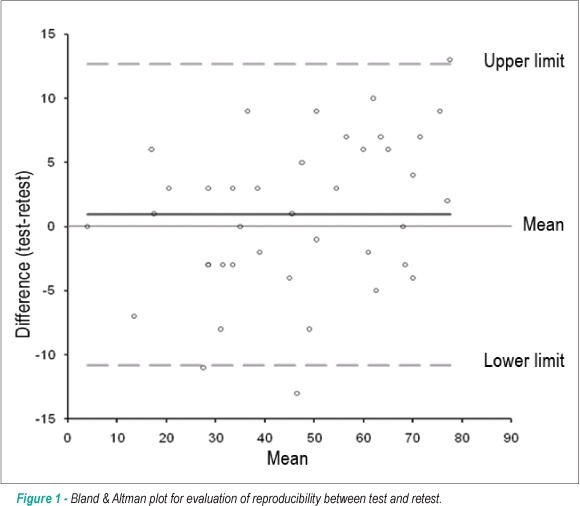
We applied 160 questionnaires (AFQLQ v.2 and SF-36) to 40 patients, at baseline and 15 days after, to measure inter- and intraobserver reproducibility. The analysis of quality of life stability was determined by test-retest, applying the Bartko intraclass correlation coefficient (ICC). Internal consistency was assessed by Cronbach’s alpha test.

Results:

The total score of the test-retest (n = 40) had an ICC of 0.98 in the AFQLQ v.2, and of 0.94 in the SF36. In assessing the intra- and interobserver reproducibility of the AFQLQ v.2, the ICC reliability was 0.98 and 0.97, respectively. The internal consistency had a Cronbach’s alpha coefficient of 0.82, compatible with good agreement of the AFQLQ v.2.

Conclusion:

The AFQLQ v.2 performed better than its previous version. Similarly, the domains added contributed to make it more comprehensive and robust to assess the quality of life of patients with AF.

  • Atrial Fibrillation/psychology
  • Quality of life
  • questionnaires
Read Full Article
Creative Commons Attribution (CC BY) Creative Commons license
01/03/2016 DOI: 10.5935/abc.20160026 Views 1
Figure 1
ABC
Original Article

Level of Physical Activity and In-Hospital Course of Patients with Acute Coronary Syndrome

Juliana de Goes Jorge et al. Marcos Antonio Almeida Santos José Augusto Soares Barreto Filho Joselina Luzia Menezes Oliveira … Enaldo Vieira de Melo Norma Alves de Oliveira Gustavo Baptista de Almeida Faro Antônio Carlos Sobral Sousa

Abstract

Background:

Acute coronary syndrome (ACS) is one of the main causes of morbidity and mortality in the modern world. A sedentary lifestyle, present in 85% of the Brazilian population, is considered a risk factor for the development of coronary artery disease. However, the correlation of a sedentary lifestyle with cardiovascular events (CVE) during hospitalization for ACS is not well established.

Objective:

To evaluate the association between physical activity level, assessed with the International Physical Activity Questionnaire (IPAQ), with in-hospital prognosis in patients with ACS.

Methods:

Observational, cross-sectional, and analytical study with 215 subjects with a diagnosis of ACS consecutively admitted to a referral hospital for cardiac patients between July 2009 and February 2011. All volunteers answered the short version of the IPAQ and were observed for the occurrence of CVE during hospitalization with a standardized assessment conducted by the researcher and corroborated by data from medical records.

Results:

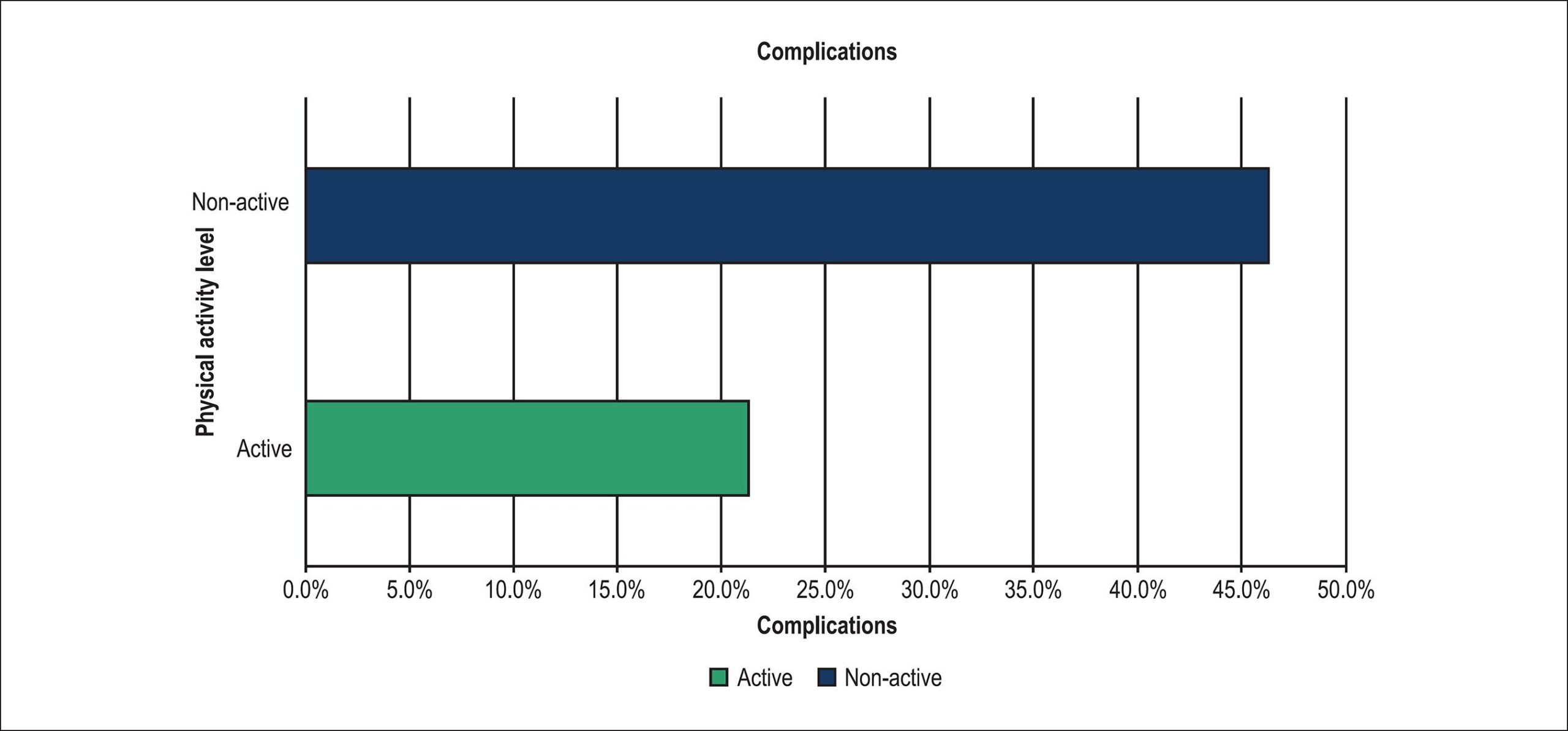
The patients were admitted with diagnoses of unstable angina (34.4%), acute myocardial infarction (AMI) without ST elevation (41.4%), and AMI with ST elevation (24.2%). According to the level of physical activity, the patients were classified as non-active (56.3%) and active (43.7%). A CVE occurred in 35.3% of the cohort. The occurrence of in-hospital complications was associated with the length of hospital stay (odds ratio [OR] = 1.15) and physical inactivity (OR = 2.54), and was independent of age, systolic blood pressure, and prior congestive heart failure.

Conclusion:

A physically active lifestyle reduces the risk of CVE during hospitalization in patients with ACS.

  • Acute Coronary Syndrome / mortality
  • Exercise
  • Motor Activity / physiology
  • questionnaires
  • Risk Factors
  • Sedentary Lifestyle
Read Full Article
Creative Commons Attribution (CC BY) Creative Commons license
22/12/2015 DOI: 10.5935/abc.20160006 Views 2
Figure 1
ABC
Original Article

Validation of a Brazilian Portuguese Version of the Walking Estimated-Limitation Calculated by History (WELCH)

Gabriel Grizzo Cucato et al. Marilia de Almeida Correia Breno Quintella Farah Glauco Fernandes Saes … Aluísio Henrique de Andrade Lima Raphael Mendes Ritti-Dias Nelson Wolosker

Abstract

Background:

The Walking Estimated-Limitation Calculated by History (WELCH) questionnaire has been proposed to evaluate walking impairment in patients with intermittent claudication (IC), presenting satisfactory psychometric properties. However, a Brazilian Portuguese version of the questionnaire is unavailable, limiting its application in Brazilian patients.

Objective:

To analyze the psychometric properties of a translated Brazilian Portuguese version of the WELCH in Brazilian patients with IC.

Methods:

Eighty-four patients with IC participated in the study. After translation and back-translation, carried out by two independent translators, the concurrent validity of the WELCH was analyzed by correlating the questionnaire scores with the walking capacity assessed with the Gardner treadmill test. To determine the reliability of the WELCH, internal consistency and test–retest reliability with a seven-day interval between the two questionnaire applications were calculated.

Results:

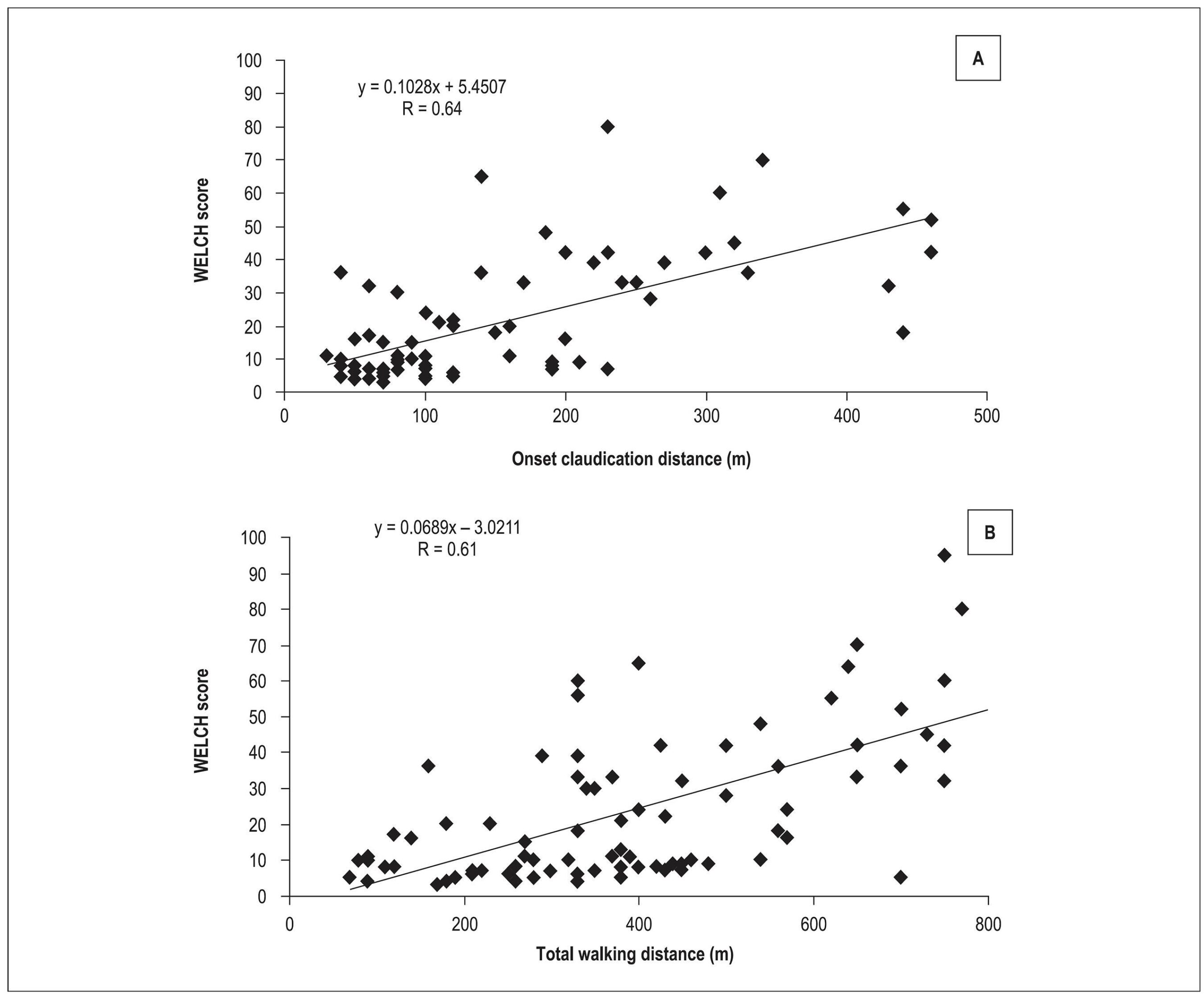
There were significant correlations between the WELCH score and the claudication onset distance (r = 0.64, p = 0.01) and total walking distance (r = 0.61, p = 0.01). The internal consistency was 0.84 and the intraclass correlation coefficient between questionnaire evaluations was 0.84. There were no differences in WELCH scores between the two questionnaire applications.

Conclusion:

The Brazilian Portuguese version of the WELCH presents adequate validity and reliability indicators, which support its application to Brazilian patients with IC.

  • Brazil
  • Disability Evaluation
  • Gait
  • Intermittent Claudication
  • Predictive Value of Tests
  • questionnaires
  • walking
Read Full Article
Creative Commons Attribution (CC BY) Creative Commons license
08/12/2015 DOI: 10.5935/abc.20160004 Views 2
Figure 1
ABC
Original Article

Post-Acute Coronary Syndrome Alcohol Abuse: Prospective Evaluation in the ERICO Study

Abner Morilha et al. Samuel Karagulian Paulo A. Lotufo Itamar S. Santos … Isabela M. Benseñor Alessandra C. Goulart

Background:

Some studies have indicated alcohol abuse as one of the contributors to the development of cardiovascular disease, particularly coronary heart disease. However, this relationship is controversial.

Objective:

To investigate the relationship between post-acute coronary syndrome (ACS) alcohol abuse in the Acute Coronary Syndrome Registry Strategy (ERICO Study).

Methods:

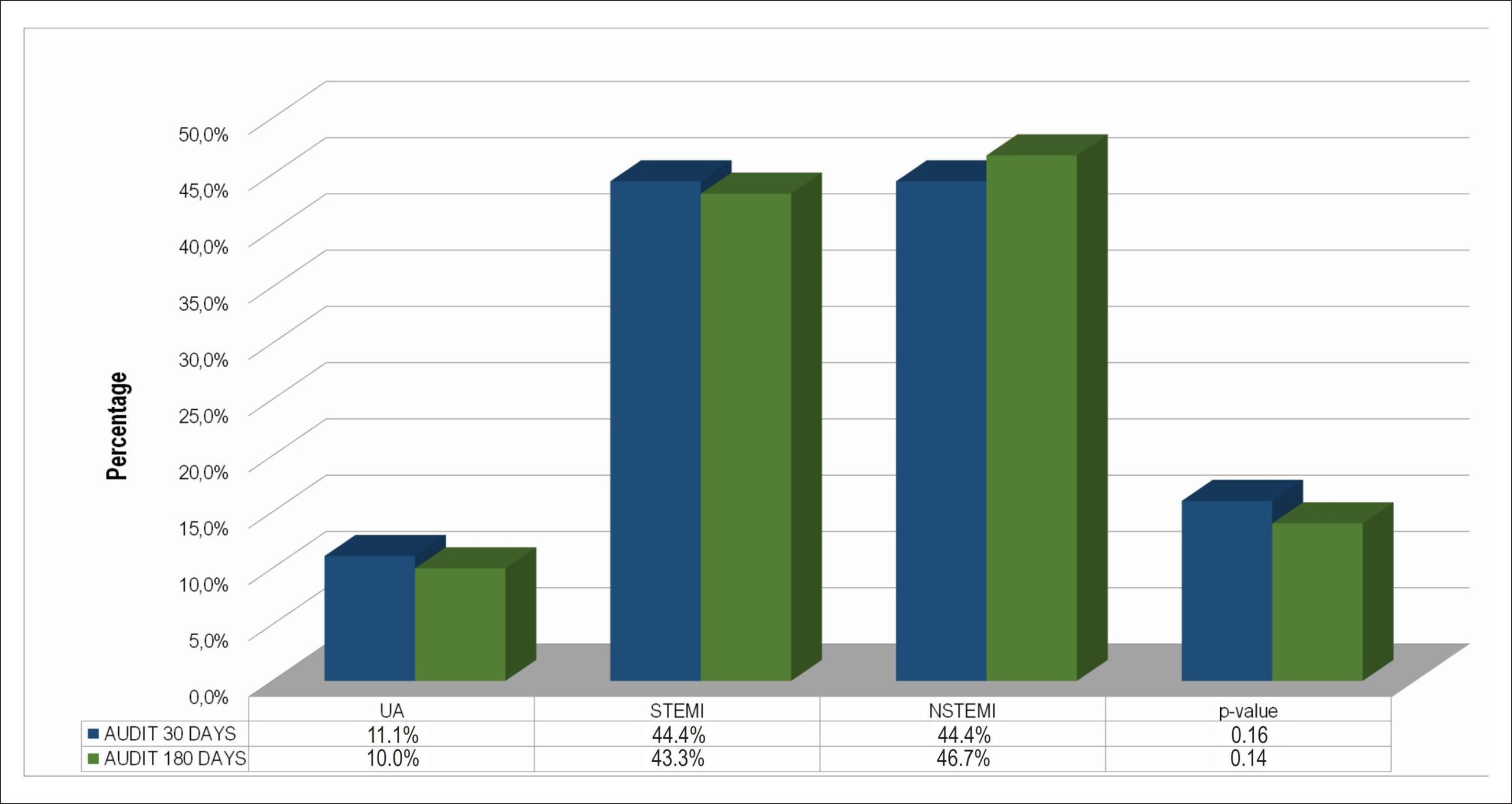
146 participants from the ERICO Study answered structured questionnaires and underwent laboratory evaluations at baseline, 30 days and 180 days after ACS. The Alcohol Use Disorders Identification Test (AUDIT) was applied to assess harmful alcohol consumption in the 12 months preceding ACS (30 day-interview) and six months after that.

Results:

The frequencies of alcohol abuse were 24.7% and 21.1% in the 12 months preceding ACS and six months after that, respectively. The most significant cardiovascular risk factors associated with high-risk for alcohol abuse 30 days after the acute event were: male sex (88.9%), current smoking (52.8%) and hypertension (58.3%). Six months after the acute event, the most significant results were replicated in our logistic regression, for the association between alcohol abuse among younger individuals [35-44 year-old multivariate OR: 38.30 (95% CI: 1.44-1012.56) and 45-54 year-old multivariate OR: 10.10 (95% CI: 1.06-96.46)] and for smokers [current smokers multivariate OR: 51.09 (95% CI: 3.49-748.01) and past smokers multivariate OR: 40.29 (95% CI: 2.37-685.93)].

Conclusion:

Individuals younger than 54 years and smokers showed a significant relation with harmful alcohol consumption, regardless of the ACS subtype.

  • Acute coronary syndrome
  • Alcohol Drinking
  • Alcoholism
  • Myocardial Infarction
  • questionnaires
Read Full Article
Creative Commons Attribution (CC BY) Creative Commons license
05/05/2015 DOI: 10.5935/abc.20150038
ABC
Original Article

Quality of Life on Arterial Hypertension: Validity of Known Groups of MINICHAL

Ana Lúcia Soares Soutello et al. Roberta Cunha Matheus Rodrigues Fernanda Freire Jannuzzi Thaís Moreira São-João … Gabriela Giordano Martinix Wilson Nadruz Jr. Maria-Cecília Bueno Jayme Gallani

Introductions:

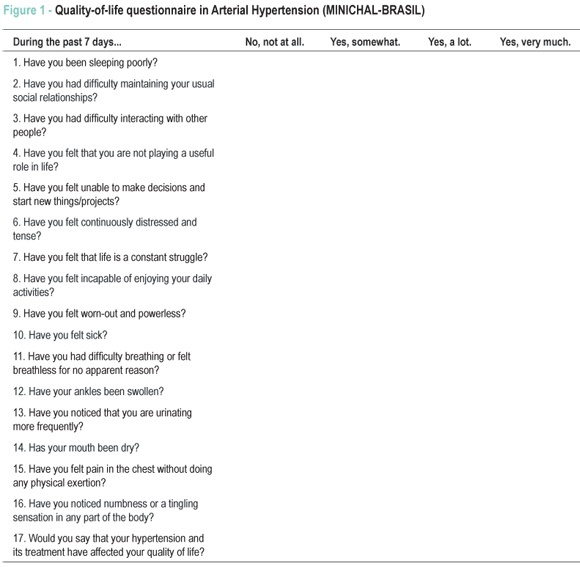
In the care of hypertension, it is important that health professionals possess available tools that allow evaluating the impairment of the health-related quality of life, according to the severity of hypertension and the risk for cardiovascular events. Among the instruments developed for the assessment of health-related quality of life, there is the Mini-Cuestionario of Calidad de Vida en la Hipertensión Arterial (MINICHAL) recently adapted to the Brazilian culture.

Objective:

To estimate the validity of known groups of the Brazilian version of the MINICHAL regarding the classification of risk for cardiovascular events, symptoms, severity of dyspnea and target-organ damage.

Methods:

Data of 200 hypertensive outpatients concerning sociodemographic and clinical information and health-related quality of life were gathered by consulting the medical charts and the application of the Brazilian version of MINICHAL. The Mann-Whitney test was used to compare health-related quality of life in relation to symptoms and target-organ damage. The Kruskal-Wallis test and ANOVA with ranks transformation were used to compare health-related quality of life in relation to the classification of risk for cardiovascular events and intensity of dyspnea, respectively.

Results:

The MINICHAL was able to discriminate health-related quality of life in relation to symptoms and kidney damage, but did not discriminate health-related quality of life in relation to the classification of risk for cardiovascular events.

Conclusion:

The Brazilian version of the MINICHAL is a questionnaire capable of discriminating differences on the health‑related quality of life regarding dyspnea, chest pain, palpitation, lipothymy, cephalea and renal damage.

  • Clinical Trial
  • Hypertensions
  • Psychometry
  • Quality of life
  • questionnaires
  • Validation Studies
Read Full Article
Creative Commons Attribution (CC BY) Creative Commons license
27/02/2015 DOI: 10.5935/abc.20150009 Views 2
Figure 1
ABC
Artigo Original

Duke Activity Status Index for Cardiovascular Diseases: Validation of the Portuguese Translation

Mariana A. Coutinho-Myrrha et al. Rosângela C. Dias Aline A. Fernandes Christiano G. Araújo … Mark A. Hlatky Danielle G. Pereira Raquel R. Britto

Background:

The Duke Activity Status Index (DASI) assesses the functional capacity of patients with cardiovascular disease (CVD), but there is no Portuguese version validated for CVD.

Objectives:

To translate and adapt cross-culturally the DASI for the Portuguese-Brazil language, and to verify its psychometric properties in the assessment of functional capacity of patients with CVD.

Methods:

The DASI was translated into Portuguese, then checked by back-translation into English and evaluated by an expert committee. The pre-test version was first evaluated in 30 subjects. The psychometric properties and correlation with exercise testing was performed in a second group of 67 subjects. An exploratory factor analyses was performed in all 97 subjects to verify the construct validity of the DASI.

Results:

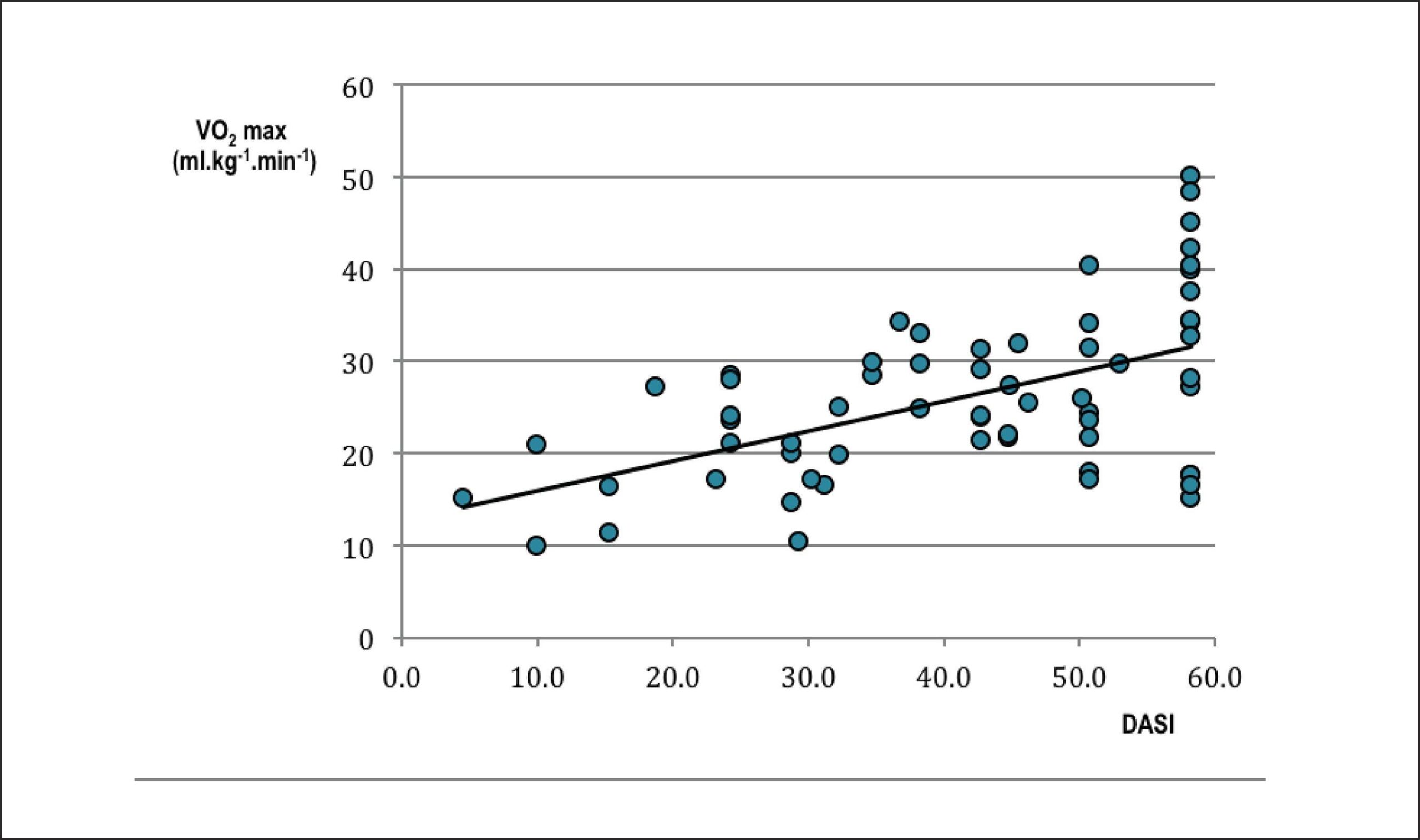
The intraclass correlation coefficient for test-retest reliability was 0.87 and for the inter-rater reliability was 0.84. Cronbach’s α for internal consistency was 0.93. The concurrent validity was verified by significant positive correlations of DASI scores with the VO2max (r = 0.51, p < 0.001). The factor analysis yielded two factors, which explained 54% of the total variance, with factor 1 accounting for 40% of the variance. Application of the DASI required between one and three and a half minutes per patient.

Conclusions:

The Brazilian version of the DASI appears to be a valid, reliable, fast and easy to administer tool to assess functional capacity among patients with CVD.

  • Cardiovascular Diseases
  • Exercise Test
  • Practice guidelines
  • questionnaires
  • Validation Studies
  • Work capacity evaluation
Read Full Article
Creative Commons Attribution (CC BY) Creative Commons license
17/02/2014 DOI: 10.5935/abc.20140031 Views 1
ABC
Artigo Original

Construction and Validation of a Questionnaire about Heart Failure Patients' Knowledge of Their Disease

Christiani Decker Batista Bonin et al. Rafaella Zulianello dos Santos Gabriela Lima de Melo Ghisi Ariany Marques Vieira … Ricardo Amboni Magnus Benetti

Background:

The lack of tools to measure heart failure patients’ knowledge about their syndrome when participating in rehabilitation programs demonstrates the need for specific recommendations regarding the amount or content of information required.

Objectives:

To develop and validate a questionnaire to assess heart failure patients’ knowledge about their syndrome when participating in cardiac rehabilitation programs.

Methods:

The tool was developed based on the Coronary Artery Disease Education Questionnaire and applied to 96 patients with heart failure, with a mean age of 60.22 ± 11.6 years, 64% being men. Reproducibility was obtained via the intraclass correlation coefficient, using the test-retest method. Internal consistency was assessed by use of Cronbach’s alpha, and construct validity, by use of exploratory factor analysis.

Results:

The final version of the tool had 19 questions arranged in ten areas of importance for patient education. The proposed questionnaire had a clarity index of 8.94 ± 0.83. The intraclass correlation coefficient was 0.856, and Cronbach’s alpha, 0.749. Factor analysis revealed five factors associated with the knowledge areas. Comparing the final scores with the characteristics of the population evidenced that low educational level and low income are significantly associated with low levels of knowledge.

Conclusion:

The instrument has satisfactory clarity and validity indices, and can be used to assess the heart failure patients’ knowledge about their syndrome when participating in cardiac rehabilitation programs.

  • Heart failure / rehabilitation
  • questionnaires
  • Validation Studies
Read Full Article
Creative Commons Attribution (CC BY) Creative Commons license
17/02/2014 DOI: 10.5935/abc.20140032 Views 1
ABC
Artigo Original

Brazilian portuguese validated version of the cardiac anxiety questionnaire

Aline Sardinha et al. Antonio Egidio Nardi Claudio Gil Soares de Araújo Maria Cristina Ferreira Georg H. Eifert

BACKGROUND: Cardiac Anxiety (CA) is the fear of cardiac sensations, characterized by recurrent anxiety symptoms, in patients with or without cardiovascular disease. The Cardiac Anxiety Questionnaire (CAQ) is a tool to assess CA, already adapted but not validated to Portuguese. OBJECTIVE: This paper presents the three phases of the validation studies of the Brazilian CAQ. METHODS: To extract the factor structure and assess the reliability of the CAQ (phase 1), 98 patients with coronary artery disease were recruited. The aim of phase 2 was to explore the convergent and divergent validity. Fifty-six patients completed the CAQ, along with the Body Sensations Questionnaire (BSQ) and the Social Phobia Inventory (SPIN). To determine the discriminative validity (phase 3), we compared the CAQ scores of two subgroups formed with patients from phase 1 (n = 98), according to the diagnoses of panic disorder and agoraphobia, obtained with the MINI – Mini International Neuropsychiatric Interview. RESULTS: A 2-factor solution was the most interpretable (46.4% of the variance). Subscales were named “Fear and Hypervigilance” (n=9; alpha = 0.88), and “Avoidance”, (n = 5; alpha = 0.82). Significant correlation was found between factor 1 and the BSQ total score (p<0.01), but not with factor 2. SPIN factors showed significant correlations with CAQ subscales (p < 0.01). In phase 3, "Cardiac with panic" patients scored significantly higher in CAQ factor 1 (t = -3.42; p < 0.01, CI = -1.02 to -0.27), and higher, but not significantly different, in factor 2 (t = -1.98; p = 0.51, CI = -0.87 to 0.00). CONCLUSIONS: These results provide a definite Brazilian validated version of the CAQ, adequate to clinical and research settings.

  • Anxiety
  • Cardiovascular Diseases
  • Psychological Tests
  • Psychometrics
  • questionnaires
Read Full Article
Creative Commons Attribution (CC BY) Creative Commons license
22/10/2013 DOI: 10.5935/abc.20130207 Views 1
ABC
Brief Communication

Validation of the short-version of Rose angina questionnaire in Brazil

Maria-Socorro Bastos et al. Paulo A. Lotufo Aristarcho L. Whitaker Isabela M. Bensenor

BACKGROUND: Stable angina pectoris is a serious condition with few epidemiological studies in Brazil. OBJECTIVE: To validate the short-version of the Rose angina questionnaire in Brazilian Portuguese for its implementation in surveys and longitudinal studies. METHODS: A total of 116 consecutive patients from an outpatient clinic without prior myocardial infarction and/or coronary revascularization were enrolled for application of three questions of the Rose angina questionnaire addressing chest pain after exertion. We used the treadmill test as the gold standard with the Ellestad protocol. RESULTS: The short-version of the Rose angina questionnaire of the 116 subjects submitted to the exercise treadmill test disclosed 89.7% of accuracy, 25% of sensitivity, 92.0% of specificity, 10.0% of positive predictive value, 97.2% of negative predictive value, and 3.1 of positive likelihood ratio and 0.82 of negative likelihood ratio. CONCLUSION: The Portuguese version with three items of the Rose angina questionnaire is suitable for epidemiological purposes.

  • Angina Pectoris
  • Cardiovascular Diseases
  • Coronary Artery Disease
  • questionnaires
Read Full Article
Creative Commons Attribution (CC BY) Creative Commons license
22/11/2012 DOI: 10.1590/S0066-782X2012001400012 Views 1
ABC
Artigo Original

Quality of life of hypertensive patients and comparison of two instruments of HRQOL measure

Michelle Adler Normando Carvalho et al. Isabela Bispo Santos Silva Sarah Brito Pinheiro Ramos Laura Fernandes Coelho … Isabela Dias Gonçalves José Albuquerque de Figueiredo Neto

BACKGROUND: Measuring health-related quality of life (QOL) helps evaluating the efficiency of a treatment and identifies problems with major impact on the patient’s QOL. However, these measures are safer if assessed by generic and specific instruments together, where it is necessary to check for compatibility between these and avoid repetitions and contradictions between the domains. OBJECTIVE: To describe the quality of life of hypertensive patients and to evaluate the compatibility of a specific instrument (MINICHAL) and a generic instrument (SF-36). METHODS: One hundred adult hypertensive under outpatient care were interviewed. The mean HRQOL as measured by MINICHAL was 6.64 (SD 6.04) in mental status and average of 5.03 (SD 4.11) in the state of somatic manifestations. The means for the instrument SF-36 were in ranking order: limitation due to physical aspects 47.3 (SD 42.9), vitality 57.4 (SD 19.7), limitation due to emotional aspects 58 (SD 44.7), functional capacity 58.7 (SD 27.8), pain 60.4 (SD 26.3), general health condition 60.7 (SD 22.7), mental health 66.8 (SD 22.1) and social aspects 78 (SD 26.1). RESULTS: The MINICHAL significantly correlated (p <0.001) with the SF-36 in all domains. CONCLUSION: The MINICHAL proved to be a useful tool in the assessment of HRQOL in patients with hypertension. (Arq Bras Cardiol. 2012; [online].ahead print, PP.0-0)

  • Hypertension
  • outpatients
  • Quality of life
  • questionnaires
Read Full Article
Creative Commons Attribution (CC BY) Creative Commons license
05/04/2012 DOI: 10.1590/S0066-782X2012005000032
ABC
Artigo Original

Development and validation of the Brazilian Portuguese version of the Cardiac Rehabilitation Barriers Scale

Gabriela Lima de Melo Ghisi et al. Rafaella Zulianello dos Santos Vanessa Schveitzer Aline Lange Barros … Thais Lunardi Recchia Paul Oh Magnus Benetti Sherry L. Grace

BACKGROUND: Cardiovascular diseases show high incidence and prevalence in Brazil; however, participation in Cardiac Rehabilitation (CR) is limited and has been poorly investigated in the country. The Cardiac Rehabilitation Barriers Scale (CRBS) was developed to assess the barriers to participation and adherence to CR. OBJECTIVE: To translate, cross-culturally adapt and psychometrically validate CRBS to Brazilian Portuguese. METHODS: Two independent initial translations were performed. After the reverse translation, both versions were reviewed by a committee. The new version was tested in 173 patients with coronary artery disease (48 women, mean age = 63 years). Of these, 139 (80.3%) participated in CR. Internal consistency was assessed by Cronbach’s alpha, test-retest reliability by intraclass correlation coefficient (ICC) and construct validity by factor analysis. T-tests were used to assess criterion validity between participants and non-participants in CR. The applied test results were evaluated regarding patient characteristics (gender, age, health status and educational level). RESULTS: The Brazilian Portuguese version of the CRBS had Cronbach’s alpha of 0.88, ICC of 0.68 and disclosed five factors, most of which showed to be internally consistent and all were defined by the items. The mean score for patients in CR was 1.29 (SD = 0.27) and 2.36 for ambulatory patients (SD = 0.50) (p <0.001). Criterion validity was also supported by significant differences in total scores by gender, age and educational level. CONCLUSION: The Brazilian Portuguese version of CRBS has shown adequate validity and reliability, which supports its use in future studies.

  • Cardiovascular Diseases
  • Patient Compliance
  • Patient Participation
  • questionnaires
  • Treatment Outcome
Read Full Article
Creative Commons Attribution (CC BY) Creative Commons license
15/03/2012 DOI: 10.1590/S0066-782X2012005000025 Views 1
ABC
Artigo Original

Cross-cultural adaptation into Brazilian portuguese of the Dietary Sodium Restriction Questionnaire (DSRQ)

Karina Sanches Machado d'Almeida et al. Gabriela Correa Souza Eneida Rejane Rabelo

BACKGROUND: Sodium restriction is a non-pharmacological measure often recommended to patients with heart failure (HF). However, adherence is low, being among the most common causes of HF decompensation. The Dietary Sodium Restriction Questionnaire (DSRQ) aims at identifying factors that affect adherence to dietary sodium restriction by patients with HF. In Brazil, there are no instruments to assess these factors. OBJECTIVE: Perform the transcultural adaptation of DSRQ. METHODS: Methodological study that involved the following steps: translation, synthesis, back-translation, review by an expert committee, pretest of the final version and analysis of interobserver agreement. In the pretest, items and their understanding were evaluated, as well as internal consistency by Cronbach’s alpha. The instrument was simultaneously and independently administered by two researchers and the kappa test was used for agreement analysis. RESULTS: Only one question underwent major semantic and/or cultural alteration. At the pretest, Cronbach’s alpha for the total obtained was 0.77; for the Attitude, Subjective Norm and Behavioral Control scales were obtained, respectively: 0.66, 0.50 and 0.85. At the agreement step, the Kappa was calculated for 12 of the 16 questions, with values ranging from 0.62 to 1.00. In items for which the calculation was not possible, the incidence of equal responses ranged from 95% to 97.5%. CONCLUSION: Based on the transcultural adaptation of DSRQ, it was possible to propose a version of the questionnaire for further evaluation of psychometric properties.

  • Heart Failure
  • questionnaires
  • Sodium Chloride, Dietary
  • translating
Read Full Article
Creative Commons Attribution (CC BY) Creative Commons license
15/12/2011 DOI: 10.1590/S0066-782X2011005000122
ABC
Artigo Original

Quality of life of patients that had a heart transplant: application of Whoqol-Bref scale

Maria Isis Freire de Aguiar et al. Deisiana Rios Farias Mabel Leite Pinheiro Emília Soares Chaves … Isaura Letícia Tavares Palmeira Rolim Paulo César de Almeida

BACKGROUND: The success of cardiac transplantation involves ensuring the survival of patients with heart disease and allowing them to carry out their daily activities. Heart transplant is the first option of treatment for heart failure and it represents an increase in the survival rate and quality of life of transplant patients. OBJECTIVE: To evaluate the quality of life of patients that had a heart transplant by using a standardized scale (Whoqol-Bref). METHODS: A quantitative descriptive exploratory study, conducted with 55 patients that had a heart transplant, in a period ranging between the third and 103rd months, who were monitored at the Transplant and Heart Failure Unit in a benchmark cardiology hospital in the city of Fortaleza, State of Ceará. The data were collected from February 2009 to April 2009, by administering a WHO-standardized questionnaire and by using data contained in medical records. RESULTS: With respect to the physical domain, 62.8% of male patients and 58.3% of female patients are satisfied. In the psychological domain, 65.1% of males are satisfied with the quality of life and, 58.3% of females are satisfied. In terms of social relations, it was observed that 53.5% of males are very satisfied and 100% of females are satisfied. With regard to the environment, 65.1% of male patients and 83.3% of female patients are satisfied. CONCLUSION: The heart transplant had a lot of influence on the quality of life of transplant patients, because the results have proven to be statistically significant after the transplant.

  • Heart Transplantation
  • Psychological Tests
  • Quality of life
  • questionnaires
Read Full Article
Creative Commons Attribution (CC BY) Creative Commons license
01/10/2010 DOI: 10.1590/S0066-782X2010005000133 Views 1
ABC
Artigo Original

Suspicion of Obstructive Sleep Apnea by Berlin Questionnaire predicts events in patients with Acute Coronary Syndrome

Eryca Vanessa S. de Jesus et al. Euvaldo B. Dias-Filho Bethania de M. Mota Luiz de Souza … Celi Marques-Santos João Bosco G. Rocha Joselina L. M. Oliveira Antônio C. S. Sousa José Augusto Barreto-Filho

BACKGROUND: From a mechanistic standpoint, obstructive sleep apnea (OSA) may further disturb cardiovascular homeostasis in the setting of acute coronary syndrome (ACS). OBJECTIVE: We sought to investigate if a standardized clinical diagnosis of OSA, in acute coronary syndrome patients, predicts the risk of cardiovascular events during hospitalization. METHODS: In a prospective cohort study, a group of 200 patients diagnosed with ACS between September 2005 and November 2007 were stratified by the Berlin Questionnaire (BQ) regarding the risk for OSA (high or low risk). We tested if the subgroup of high risk for OSA was prone to a higher frequency of cardiovascular events. The primary endpoint evaluated was a composite outcome of cardiovascular death, recurrent cardiac ischemic events, acute pulmonary edema and stroke during hospitalization. RESULTS: Ninety four (47%) patients assessed by the BQ were likely to have OSA. High risk for OSA was associated with a non-significant higher mortality (4.25% vs 0.94%; p=0.189), but a significant higher incidence of composite cardiovascular events (18.08% vs 6.6%; p=0.016). In the logistic regression model, multivariate predictors of composite cardiovascular events were age (OR= 1.048; 95% CI 1.008 to 1.090; p=0.019), left ventricular ejection fraction (OR= 0.954; 95% CI 0.920 to 0.989; p=0.010), and higher risk for OSA (OR= 3.657; 95% CI 1.216 to 10.996; p=0.021). CONCLUSION: The use of a simple and validated questionnaire (BQ) to identify patients with higher risk for OSA may help in the prediction of cardiovascular outcome during hospitalization. Moreover, our data suggests that OSA is very common in patients with ACS.

  • Acute coronary syndrome
  • questionnaires
  • Sleep Apnea, Obstructive
Read Full Article
Creative Commons Attribution (CC BY) Creative Commons license
06/08/2010 DOI: 10.1590/S0066-782X2010005000103 Views 1
ABC
Artigo Original

Construction and validation of the CADE-Q for patient education in cardiac rehabilitation programs

Gabriela Lima de Melo Ghisi et al. Adriana Durieux Waldomiro Carlos Manfroi Artur Haddad Herdy … Tales de Carvalho Alexandre Andrade Magnus Benetti

BACKGROUND: Being aware of the coronary artery disease can be considered the first step to reduce the risk of cardiac complications. OBJECTIVE: Building and validating a tool to assess and describe coronary patients’ awareness in cardiac rehabilitation programs, with the purpose of education. METHODS: For the construction, we analyzed articles and field studies to submit items to multidisciplinary team associated to cardiac rehabilitation. After this analysis, we generated the version tested in a pilot study. The tool, named CADE-Q (Questionnaire for Coronary Patient Education) was applied in 155 patients aged 61 ± 9 (min = 36, max = 86) in response to cardiac rehabilitation programs. Out of the 155 patients, 114 were men. Internal consistency was measured by Cronbach’s alpha coefficient. Reproducibility was tested by the intraclass correlation coefficient (ICC) and construct validity was performed by exploratory factor analysis. The analysis compared the total scores as a function population characteristics and rehabilitation groups (private and public). RESULTS: The final version has 19 questions with 4 alternatives, with 4 quadrants of awareness. Cronbach’s alpha was 0.68 and ICC was 0.783. The factor analysis revealed 6 factors, covering three areas of awareness, which demonstrates the multifactorial nature of the instrument. The population characteristics as a function of the total score showed significant differences depending on the socioeconomic status variables (type of rehabilitation, household income and education level). CONCLUSION: CADE-Q has proper validity and reliability to be used in the Brazilian population in future research.

  • Coronary Diseases
  • Education
  • questionnaires
  • Rehabilitation
Read Full Article
Creative Commons Attribution (CC BY) Creative Commons license
07/05/2010 DOI: 10.1590/S0066-782X2010005000045 Views 1
ABC
Artigo Original

Quality of life in hypertensive patients and concurrent validity of Minichal-Brazil

Ana Carolina Melchiors et al. Cassyano Januário Correr Roberto Pontarolo Felipe de Oliveira de Souza Santos Rodrigo Augusto de Paula e Souza

BACKGROUND: Health-Related Quality of Life Questionnaires (HRQOL) are humanistic outcome measure instruments both in clinical and in pharmacoeconomic studies. However, they should have their psychometric parameters evaluated so as to reflect the individual subjective assessment of quality of life. OBJECTIVES: To describe the quality of life profile of hypertensive patients and to assess the concurrent validity of the Minichal-Brazil instrument by comparing it to the generic World Health Organization’s (WHO) assessment instrument known as WHOQOL-Bref. METHODS: A total of 191 adult patients (72.8% females) with hypertension were interviewed. Approximately one third of these patients had their hypertension controlled. The mean HRQOL as measured by the total Minichal score was 69.7 (SD = 19.2; 95%CI from 66.9 to 72.4); the “mental status” domain and “somatic manifestations” domain scores were 69.1 (95%CI from 66.1 to 72.2), and 69.9 (95%CI from 66.5 to 73.2), respectively. The means for the WHOQOL-Bref instrument were: in the “physical” domain = 61.5 (95%CI from 59.0 to 64.1); in the “psychological” domain = 65.7 (95%CI from 63.2 to 68.2); in the “social” domain = 72.3 (95%CI from 70.0 to 74.5); and in the “environment” domain = 59.7 (95%CI from 57.7 to 61.7). RESULTS: Minichal significantly correlated (p<0.001) with WHOQOL-Bref as regards all its domains, except for the "environment" domain, which did not correlate with the "somatic manifestations" domain. CONCLUSION: Minichal-Brazil proved to be a useful tool in the assessment of HRQOL in hypertensive patients.

  • Cross-Sectional Studies
  • Evaluation Studies
  • Hypertension
  • Quality of life
  • questionnaires
Read Full Article
Creative Commons Attribution (CC BY) Creative Commons license
28/04/2010 DOI: 10.1590/S0066-782X2010000300013
ABC
Artigo Original

Validation into portuguese of the Maugerl CaRdiac preventiOn-Questionnaire (MICRO-Q)

Gabriela Lima de Melo Ghisi et al. Claudia Medeiros Leite Adriana Durieux Isabel de Castro Schenkel … Maíra S. de Assumpção Melina Medeiros de Barros Daniel Taiva Alexandro Andrade Magnus Benetti

BACKGROUND: The Maugerl CaRdiac preventiOn-Questionnaire (MICRO-Q) is a validated specific tool used to assess the knowledge of the patient with coronary disease on aspects related to the secondary prevention of coronary artery disease (CAD). OBJECTIVE: To translate, adapt and validate the MICRO-Q to Brazilian Portuguese. METHODS: Two initial independent translations were carried out into Brazilian Portuguese. After their comparison, the reverse translation was carried out, which was reviewed by a committee and generated the final version that was tested in a pilot study. The tool was applied to 212 coronary patients, with a mean age of 60 to 71 years (standard deviation = 9.4; range: 35-86) that participated in cardiac rehabilitation programs. The internal consistency was verified by Cronbach’s Alpha Coefficient, correlation through Spearman’s Rho and the validity of the construct was verified through exploratory factorial analysis. The means were analyzed by comparing the scales of the correct questions in relation to variables such as age, sex, associate comorbidities, degree of schooling, family income, among others. RESULTS: The Brazilian version of the MICRO-Q has 25 questions. The reliability of this version presented a Cronbach’s Alpha Coefficient of 0.64 and a Spearman’s Rho of the correct answers of 0.65. The factorial analysis showed 6 factors related to the domains of knowledge of the questionnaire. The analysis of the population characteristics regarding the scales of the correct questions presented significant differences only in relation to monthly family income and degree of schooling. CONCLUSION: The approved Brazilian version of the MICRO-Q presents adequate validity and reliability for its use in future studies.

  • Coronary Artery Disease
  • Knowledge
  • questionnaires
  • Rehabilitation
Read Full Article
Creative Commons Attribution (CC BY) Creative Commons license
28/04/2010 DOI: 10.1590/S0066-782X2010000300018 Views 1
Validation of the Portuguese version of the Minnesota Living with Heart Failure Questionnaire
ABC
Artigo Original

Validation of the Portuguese version of the Minnesota Living with Heart Failure Questionnaire

Vitor Oliveira Carvalho et al. Guilherme Veiga Guimarães Dirceu Carrara Fernando Bacal Edimar Alcides Bocchi

BACKGROUND: The Minnesota Living with Heart Failure Questionnaire (MLHFQ) is an important measurement instrument for assessing the quality of life of heart failure patients. Despite being largely used within our context, the questionnaire had not yet been translated and validated into the Portuguese language. OBJECTIVE: Of this study was to translate and validate the Portuguese version of the MLHFQ for use in heart failure patients. METHODS: Forty patients with heart failure (30 men, LVEF 30±6%, 55% ischemic etiology, classified as NYHA I to III), clinically stable and on optimized drug therapy underwent maximal cardiopulmonary stress testing to assess their physical capacity. Right after the test, the MLHFQ duly translated into Portuguese was administered by the same investigator. The NYHA functional classification was provided by the medical team. RESULTS: The Portuguese version of the MLHFQ had the same structure and metrics of the original version. There was no difficulty in the administration of the questionnaire or in the patient’s understanding of the questions. The Portuguese version of the MLHFQ was consistent with peak VO2, duration of the cardiopulmonary test, and NYHA functional classification. There was no difference in the score mean for the questionnaire between the group of patients with ischemic etiology and the group with non-ischemic etiology. CONCLUSION: The Portuguese version of the MLHFQ proposed in this study proved to be valid for heart failure patients, and constitutes a new and important instrument for assessing quality of life.

  • Heart Failure
  • Quality of life
  • questionnaires
  • validation
Read Full Article
Creative Commons Attribution (CC BY) Creative Commons license
13/10/2009 DOI: 10.1590/S0066-782X2009000700008 Views 2
ABC
Artigo Original

Brazilian version of a lifestyle questionnaire: translation and validation for young adults

Ciro Romélio Rodriguez Añez et al. Rodrigo Siqueira Reis Edio Luiz Petroski

BACKGROUND: Inappropriate lifestyles have been responsible for the leading causes of mortality. The purpose of the Fantastic Lifestyle Questionnaire is to help physicians involved in health prevention to identify and assess their patients’ lifestyles. OBJECTIVE: To translate and validate the Fantastic Lifestyle Questionnaire for use with young adults. METHODS: The process of translation into Portuguese and validation consisted of four steps: 1) translation; 2) correction and semantic adaptation by professional experts (judges); 3) content validation; and 4) a final evaluation by the target population. The statistical analyses used were Cronbach’s alpha to measure internal consistency reliability, intra-class correlation coefficient (R) for external consistency, and the Kappa index to test construct validity. RESULTS: Cronbach’s alpha coefficient measured the correlation between items and the total was 0.69, which is considered reasonable for an instrument designed to evaluate a latent variable that can only be estimated and not measured. When the items were grouped into domains, it was possible to verify that they all contributed equally to the stability of the questionnaire (α=0.60). The external consistency evaluated by intra-class correlation was R=0.92 (p=0.2), which demonstrates a high degree of reproducibility; the construct validity of 4 and 3 categories was 75 and 80.7% with Kappa indices of 0.58 and 0.7, respectively, which show an excellent discriminatory classificatory capacity. CONCLUSION: The Fantastic Lifestyle Questionnaire has an adequate internal and external consistency for evaluating young adult lifestyles, and it can be recommended for primary care and epidemiological studies.

  • adults health
  • Life Style
  • Motor Activity
  • Quality of life
  • questionnaires
Read Full Article
Creative Commons Attribution (CC BY) Creative Commons license
08/08/2008 DOI: 10.1590/S0066-782X2008001400006 Views 1
Validation of the short form of the spanish hypertension quality of life questionnaire (MINICHAL) for portuguese (Brazil)
ABC
Artigo Original

Validation of the short form of the spanish hypertension quality of life questionnaire (MINICHAL) for portuguese (Brazil)

Renata Berberi Schulz et al. Paula Rossignoli Cassyano J. Correr Fernando Fernández-Llimós Plínio Marco de Toni

BACKGRAOUND: The assessment of quality of life has been considered an essential parameter in understanding the impact of arterial hypertension. OBJECTIVE: To translate into portuguese, cross-culturally adapt and validate the questionnaire specific for the assessment of quality of life known as “Mini Cuestionario de Calidad de Vida en Hipertensión Arterial” (MINICHAL). METHODS: Two independent translations of MINICHAL were made into brazilian portuguese. Later, these two translations were harmonized yielding a version that was back-translated into the source language. This version was revised by a committee of judges and the new version was tested in a pilot study. After the cross-cultural adaptation, the final version of the instrument was administered to a sample of 300 patients. The psychometric properties of the questionnaire such as reliability and construct validity were analyzed. The internal consistency of the instrument was measured by Cronbach’s alpha coefficient. RESULTS: In the brazilian version of MINICHAL, Cronbach’s alpha coefficients of internal consistency reliability were 0.88 for the Mental Status domain and 0.85 for the Somatic Manifestations domain. As to content validity, the judges’ assessment attained a high level of agreement (75.44%). The factor analysis confirmed both domains, with differences in one item which was included in factor 2. The control group presented significant differences relative to hypertensive patients (t=4.86, gl=276.8, p< 0.001). CONCLUSION: The brazilian version of MINICHAL was successfully validated and represents a useful and reliable instrument for assessing the quality of life of brazilian hypertensive patients.

  • Hypertension
  • Outcome Assessment (Health Care)
  • Quality of life
  • questionnaires
Read Full Article
Creative Commons Attribution (CC BY) Creative Commons license
28/04/2008 DOI: 10.1590/S0066-782X2008000200010
ABC
Artigo Original

Quality of life of hypertensive patients treated at an outpatient clinic

Margaret Assad Cavalcante et al. Maria Teresa Nogueira Bombig Braulio Luna Filho Antonio Carlos de Camargo Carvalho … Angelo A. V. de Paola Rui Póvoa

BACKGROUND: The main cause of mortality in braziliam population is the cardiovascular disease and arterial hypertension (AH) the most prevalent one. The antihypertensive treatment is effective however it is not well known how affects the quality of life (QOL) in patients afterwards. OBJECTIVE: To comparatively assess the QOL in patients submitted to an antihypertensive treatment. METHODS: One-hundred patients with AH were studied of which 46 had complied with a standard treatment regimen (group A) and 54 (group B control) were about to start the same regimen. We collected clinical and sociodemographic data and questions focusing sexuality, self-perception of QOL, number and types of medication taken and their influence on sex life. The questionnaire SF-36 was also administered. The data were analyzed using the tests chi-square, Student’s t, Pearson correlation and Tukey. RESULTS: No differences were detected between group A and B in any of the SF-36 domains. There was an association between the question on self-perception of QOL and the SF-36 domains, emotional aspects excepted. As regards sexuality, there was difference in the quality of sex life between the groups, which was less satisfactory for group A. CONCLUSION: When the SF-36 was administered no changes in QOL were detected between the groups because it is an asymptomatic chronic disease. The SF-36 did not properly assess emotional aspects in our case series of hypertensive patients that had high behavior variability. Group A showed lower quality sex life; however, this was not related to the number and type of medication used.

  • Hypertension
  • outpatients
  • Quality of life
  • questionnaires
Read Full Article
Creative Commons Attribution (CC BY) Creative Commons license
18/04/2008 DOI: 10.1590/S0066-782X2007001600006 Views 1
ABC
Original Article

Reliability of the information about the history of diagnosis and treatment of hypertension. Differences in regard to sex, age, and educational level. The pró-saúde study

Eduardo Faerstein et al. Dóra Chor Claudia de S. Lopes

OBJECTIVE: To assess the intraobserver reliability of the information about the history of diagnosis and treatment of hypertension. METHODS: A multidimensional health questionnaire, which was filled out by the interviewees, was applied twice with an interval of 2 weeks, in July ’99, to 192 employees of the University of the State of Rio de Janeiro (UERJ), stratified by sex, age, and educational level. The intraobserver reliability of the answers provided was estimated by the kappa statistic and by the coefficient of intraclass correlation (CICC). RESULTS: The general kappa (k) statistic was 0.75 (95% CI=0.73-0.77). Reliability was higher among females (k=0.88, 95% CI=0.85-0.91) than among males (k=0.62, 95% CI=0.59-0.65).The reliability was higher among individuals 40 years of age or older (k=0.79; 95% CI=0.73-0.84) than those from 18 to 39 years (k=0.52; 95% CI=0.45-0.57). Finally, the kappa statistic was higher among individuals with a university educational level (k=0.86; 95% CI=0.81-0.91) than among those with high school educational level (k=0.61; 95% CI=0.53-0.70) or those with middle school educational level (k=0.68; 95% CI=0.64-0.72). The coefficient of intraclass correlation estimated by the intraobserver agreement in regard to age at the time of the diagnosis of hypertension was 0.74. A perfect agreement between the 2 answers (k=1.00) was observed for 22 interviewees who reported prior prescription of antihypertensive medication. CONCLUSION: In the population studied, estimates of the reliability of the history of medical diagnosis of hypertension and its treatment ranged from substantial to almost perfect reliability.

  • Hypertension
  • questionnaires
  • reliability of results
Read Full Article
Creative Commons Attribution (CC BY) Creative Commons license
08/01/2002 DOI: 10.1590/S0066-782X2001000400004

How to cite this article

EndNote RIS

Electronic Document Format (Vancouver)

Bachur CK, Candido SS, Silveira GB, Sousa SGO, Hercos Neto J, Veiga EV. Improvement in Semiconductivity On The Measurement Of Blood Pressure After An Educational Intervention In Health Professionals. International Journal of Cardiovascular Sciences 2020;34(1):1-7.

Electronic Document Format (ABNT)

Bachur, Cynthia Kallás; Candido, Sarah Silva; Silveira, Gerlia Bernardes; Sousa, Samantha Gurgel Oliveira; Hercos Neto, Joao; Veiga, Eugenia Velludo. Improvement in Semiconductivity On The Measurement Of Blood Pressure After An Educational Intervention In Health Professionals. International Journal of Cardiovascular Sciences, v. 34, n. 1, p. 1-7, Jul. 2020.

Electronic Document Format (APA)

Bachur, C. K., Candido, S. S., Silveira, G. B., Sousa, S. G. O., Hercos Neto, J., & Veiga, E. V. (2020). Improvement in Semiconductivity On The Measurement Of Blood Pressure After An Educational Intervention In Health Professionals. International Journal of Cardiovascular Sciences, 34(1), 1-7.

Electronic Document Format (ISO)

Bachur, Cynthia Kallás and Candido, Sarah Silva and Silveira, Gerlia Bernardes and Sousa, Samantha Gurgel Oliveira and Hercos Neto, Joao and Veiga, Eugenia Velludo. Improvement in Semiconductivity On The Measurement Of Blood Pressure After An Educational Intervention In Health Professionals. International Journal of Cardiovascular Sciences [online]. 2020, vol. 34, n. 1, [cited 2026-10-14], pp. 1-7. Available from: <https://journals.cardiol.br/en/article/improvement-in-semiconductivity-on-the-measurement-of-blood-pressure-after-an-educational-intervention-in-health-professionals/>. ISSN 2359-4802

EndNote RIS

Electronic Document Format (Vancouver)

Moreira RSL, Bassolli L, Coutinho E, Ferrer P, Bragança O, Carvalho ACC, Paola AA, et al. Reproducibility and Reliability of the Quality of Life Questionnaire in Patients With Atrial Fibrillation. Arquivos Brasileiros de Cardiologia 2016;106(3):171-8.

Electronic Document Format (ABNT)

Moreira, Rita Simone Lopes; Bassolli, Lucas; Coutinho, Enia; Ferrer, Paloma; Bragança, Érika Olivier; Carvalho, Antonio Carlos Camargo; Paola, Angelo Amato de; Luna Filho, Bráulio. Reproducibility and Reliability of the Quality of Life Questionnaire in Patients With Atrial Fibrillation. Arquivos Brasileiros de Cardiologia, v. 106, n. 3, p. 171-181, Feb. 2016.

Electronic Document Format (APA)

Moreira, R. S. L., Bassolli, L., Coutinho, E., Ferrer, P., Bragança, O., Carvalho, A. C. C., Paola, A. A. , & Luna Filho, B. (2016). Reproducibility and Reliability of the Quality of Life Questionnaire in Patients With Atrial Fibrillation. Arquivos Brasileiros de Cardiologia, 106(3), 171-181.

Electronic Document Format (ISO)

Moreira, Rita Simone Lopes and Bassolli, Lucas and Coutinho, Enia and Ferrer, Paloma and Bragança, Érika Olivier and Carvalho, Antonio Carlos Camargo and Paola, Angelo Amato de and Luna Filho, Bráulio. Reproducibility and Reliability of the Quality of Life Questionnaire in Patients With Atrial Fibrillation. Arquivos Brasileiros de Cardiologia [online]. 2016, vol. 106, n. 3, [cited 2026-10-14], pp. 171-181. Available from: <https://journals.cardiol.br/en/article/reproducibility-and-reliability-of-the-quality-of-life-questionnaire-in-patients-with-atrial-fibrillation/>. ISSN 0066-782X

EndNote RIS

Electronic Document Format (Vancouver)

Jorge JG, Santos MAA, Barreto Filho JAS, Oliveira JLM, Melo EV, Oliveira NA, Faro GBA, et al. Level of Physical Activity and In-Hospital Course of Patients with Acute Coronary Syndrome. Arquivos Brasileiros de Cardiologia 2015;106(1):33-40.

Electronic Document Format (ABNT)

Jorge, Juliana de Goes; Santos, Marcos Antonio Almeida; Barreto Filho, José Augusto Soares; Oliveira, Joselina Luzia Menezes; Melo, Enaldo Vieira de; Oliveira, Norma Alves de; Faro, Gustavo Baptista de Almeida; Sousa, Antônio Carlos Sobral. Level of Physical Activity and In-Hospital Course of Patients with Acute Coronary Syndrome. Arquivos Brasileiros de Cardiologia, v. 106, n. 1, p. 33-40, Dec. 2015.

Electronic Document Format (APA)

Jorge, J. G., Santos, M. A. A., Barreto Filho, J. A. S., Oliveira, J. L. M., Melo, E. V. , Oliveira, N. A. , Faro, G. B. A., & Sousa, A. C. S. (2015). Level of Physical Activity and In-Hospital Course of Patients with Acute Coronary Syndrome. Arquivos Brasileiros de Cardiologia, 106(1), 33-40.

Electronic Document Format (ISO)

Jorge, Juliana de Goes and Santos, Marcos Antonio Almeida and Barreto Filho, José Augusto Soares and Oliveira, Joselina Luzia Menezes and Melo, Enaldo Vieira de and Oliveira, Norma Alves de and Faro, Gustavo Baptista de Almeida and Sousa, Antônio Carlos Sobral. Level of Physical Activity and In-Hospital Course of Patients with Acute Coronary Syndrome. Arquivos Brasileiros de Cardiologia [online]. 2015, vol. 106, n. 1, [cited 2026-10-14], pp. 33-40. Available from: <https://journals.cardiol.br/en/article/level-of-physical-activity-and-in-hospital-course-of-patients-with-acute-coronary-syndrome/>. ISSN 0066-782X

EndNote RIS

Electronic Document Format (Vancouver)

Cucato GG, Correia MA, Farah BQ, Saes GF, Lima AHA, Ritti-Dias RM, Wolosker N, et al. Validation of a Brazilian Portuguese Version of the Walking Estimated-Limitation Calculated by History (WELCH). Arquivos Brasileiros de Cardiologia 2015;106(1):49-55.

Electronic Document Format (ABNT)

Cucato, Gabriel Grizzo; Correia, Marilia de Almeida; Farah, Breno Quintella; Saes, Glauco Fernandes; Lima, Aluísio Henrique de Andrade; Ritti-Dias, Raphael Mendes; Wolosker, Nelson. Validation of a Brazilian Portuguese Version of the Walking Estimated-Limitation Calculated by History (WELCH). Arquivos Brasileiros de Cardiologia, v. 106, n. 1, p. 49-55, Dec. 2015.

Electronic Document Format (APA)

Cucato, G. G., Correia, M. A., Farah, B. Q., Saes, G. F., Lima, A. H. A., Ritti-Dias, R. M., & Wolosker, N. (2015). Validation of a Brazilian Portuguese Version of the Walking Estimated-Limitation Calculated by History (WELCH). Arquivos Brasileiros de Cardiologia, 106(1), 49-55.

Electronic Document Format (ISO)

Cucato, Gabriel Grizzo and Correia, Marilia de Almeida and Farah, Breno Quintella and Saes, Glauco Fernandes and Lima, Aluísio Henrique de Andrade and Ritti-Dias, Raphael Mendes and Wolosker, Nelson. Validation of a Brazilian Portuguese Version of the Walking Estimated-Limitation Calculated by History (WELCH). Arquivos Brasileiros de Cardiologia [online]. 2015, vol. 106, n. 1, [cited 2026-10-14], pp. 49-55. Available from: <https://journals.cardiol.br/en/article/validation-of-a-brazilian-portuguese-version-of-the-walking-estimated-limitation-calculated-by-history-welch/>. ISSN 0066-782X

EndNote RIS

Electronic Document Format (Vancouver)

Morilha A, Karagulian S, Lotufo PA, Santos IS, Benseñor IM, Goulart AC. Post-Acute Coronary Syndrome Alcohol Abuse: Prospective Evaluation in the ERICO Study. Arquivos Brasileiros de Cardiologia 2015;104(6):457-6.

Electronic Document Format (ABNT)

Morilha, Abner; Karagulian, Samuel; Lotufo, Paulo A.; Santos, Itamar S.; Benseñor, Isabela M.; Goulart, Alessandra C.. Post-Acute Coronary Syndrome Alcohol Abuse: Prospective Evaluation in the ERICO Study. Arquivos Brasileiros de Cardiologia, v. 104, n. 6, p. 457-467, May. 2015.

Electronic Document Format (APA)

Morilha, A., Karagulian, S., Lotufo, P. A., Santos, I. S., Benseñor, I. M., & Goulart, A. C. (2015). Post-Acute Coronary Syndrome Alcohol Abuse: Prospective Evaluation in the ERICO Study. Arquivos Brasileiros de Cardiologia, 104(6), 457-467.

Electronic Document Format (ISO)

Morilha, Abner and Karagulian, Samuel and Lotufo, Paulo A. and Santos, Itamar S. and Benseñor, Isabela M. and Goulart, Alessandra C.. Post-Acute Coronary Syndrome Alcohol Abuse: Prospective Evaluation in the ERICO Study. Arquivos Brasileiros de Cardiologia [online]. 2015, vol. 104, n. 6, [cited 2026-10-14], pp. 457-467. Available from: <https://journals.cardiol.br/en/article/post-acute-coronary-syndrome-alcohol-abuse-prospective-evaluation-in-the-erico-study/>. ISSN 0066-782X

EndNote RIS

Electronic Document Format (Vancouver)

Soutello ALS, Rodrigues RCM, Jannuzzi FF, São-João TM, Martinix GG, Nadruz Jr. W, Gallani MBJ, et al. Quality of Life on Arterial Hypertension: Validity of Known Groups of MINICHAL. Arquivos Brasileiros de Cardiologia 2015;104(4):299-307.

Electronic Document Format (ABNT)

Soutello, Ana Lúcia Soares; Rodrigues, Roberta Cunha Matheus; Jannuzzi, Fernanda Freire; São-João, Thaís Moreira; Martinix, Gabriela Giordano; Nadruz Jr., Wilson; Gallani, Maria-Cecília Bueno Jayme. Quality of Life on Arterial Hypertension: Validity of Known Groups of MINICHAL. Arquivos Brasileiros de Cardiologia, v. 104, n. 4, p. 299-307, Feb. 2015.

Electronic Document Format (APA)

Soutello, A. L. S., Rodrigues, R. C. M., Jannuzzi, F. F., São-João, T. M., Martinix, G. G., Nadruz Jr., W., & Gallani, M. B. J. (2015). Quality of Life on Arterial Hypertension: Validity of Known Groups of MINICHAL. Arquivos Brasileiros de Cardiologia, 104(4), 299-307.

Electronic Document Format (ISO)

Soutello, Ana Lúcia Soares and Rodrigues, Roberta Cunha Matheus and Jannuzzi, Fernanda Freire and São-João, Thaís Moreira and Martinix, Gabriela Giordano and Nadruz Jr., Wilson and Gallani, Maria-Cecília Bueno Jayme. Quality of Life on Arterial Hypertension: Validity of Known Groups of MINICHAL. Arquivos Brasileiros de Cardiologia [online]. 2015, vol. 104, n. 4, [cited 2026-10-14], pp. 299-307. Available from: <https://journals.cardiol.br/en/article/quality-of-life-on-arterial-hypertension-validity-of-known-groups-of-minichal/>. ISSN 0066-782X

EndNote RIS

Electronic Document Format (Vancouver)

Coutinho-Myrrha MA, Dias RC, Fernandes AA, Araújo CG, Hlatky MA, Pereira DG, Britto RR, et al. Duke Activity Status Index for Cardiovascular Diseases: Validation of the Portuguese Translation. Arquivos Brasileiros de Cardiologia 2014;102(4):383-90.

Electronic Document Format (ABNT)

Coutinho-Myrrha, Mariana A.; Dias, Rosângela C.; Fernandes, Aline A.; Araújo, Christiano G.; Hlatky, Mark A.; Pereira, Danielle G.; Britto, Raquel R.. Duke Activity Status Index for Cardiovascular Diseases: Validation of the Portuguese Translation. Arquivos Brasileiros de Cardiologia, v. 102, n. 4, p. 383-390, Feb. 2014.

Electronic Document Format (APA)

Coutinho-Myrrha, M. A., Dias, R. C., Fernandes, A. A., Araújo, C. G., Hlatky, M. A., Pereira, D. G., & Britto, R. R. (2014). Duke Activity Status Index for Cardiovascular Diseases: Validation of the Portuguese Translation. Arquivos Brasileiros de Cardiologia, 102(4), 383-390.

Electronic Document Format (ISO)

Coutinho-Myrrha, Mariana A. and Dias, Rosângela C. and Fernandes, Aline A. and Araújo, Christiano G. and Hlatky, Mark A. and Pereira, Danielle G. and Britto, Raquel R.. Duke Activity Status Index for Cardiovascular Diseases: Validation of the Portuguese Translation. Arquivos Brasileiros de Cardiologia [online]. 2014, vol. 102, n. 4, [cited 2026-10-14], pp. 383-390. Available from: <https://journals.cardiol.br/en/article/duke-activity-status-index-for-cardiovascular-diseases-validation-of-the-portuguese-translation/>. ISSN 0066-782X

EndNote RIS

Electronic Document Format (Vancouver)

Bonin CDB, Santos RZ, Ghisi GLM, Vieira AM, Amboni R, Benetti M. Construction and Validation of a Questionnaire about Heart Failure Patients’ Knowledge of Their Disease. Arquivos Brasileiros de Cardiologia 2014;102(4):364-73.

Electronic Document Format (ABNT)

Bonin, Christiani Decker Batista; Santos, Rafaella Zulianello dos; Ghisi, Gabriela Lima de Melo; Vieira, Ariany Marques; Amboni, Ricardo; Benetti, Magnus. Construction and Validation of a Questionnaire about Heart Failure Patients’ Knowledge of Their Disease. Arquivos Brasileiros de Cardiologia, v. 102, n. 4, p. 364-373, Feb. 2014.

Electronic Document Format (APA)

Bonin, C. D. B., Santos, R. Z. , Ghisi, G. L. M., Vieira, A. M., Amboni, R., & Benetti, M. (2014). Construction and Validation of a Questionnaire about Heart Failure Patients’ Knowledge of Their Disease. Arquivos Brasileiros de Cardiologia, 102(4), 364-373.

Electronic Document Format (ISO)

Bonin, Christiani Decker Batista and Santos, Rafaella Zulianello dos and Ghisi, Gabriela Lima de Melo and Vieira, Ariany Marques and Amboni, Ricardo and Benetti, Magnus. Construction and Validation of a Questionnaire about Heart Failure Patients’ Knowledge of Their Disease. Arquivos Brasileiros de Cardiologia [online]. 2014, vol. 102, n. 4, [cited 2026-10-14], pp. 364-373. Available from: <https://journals.cardiol.br/en/article/construction-and-validation-of-a-questionnaire-about-heart-failure-patients-knowledge-of-their-disease/>. ISSN 0066-782X

EndNote RIS

Electronic Document Format (Vancouver)

Sardinha A, Nardi AE, Araújo CGS, Ferreira MC, Eifert GH. Brazilian portuguese validated version of the cardiac anxiety questionnaire. Arquivos Brasileiros de Cardiologia 2013;101(6):554-61.

Electronic Document Format (ABNT)

Sardinha, Aline; Nardi, Antonio Egidio; Araújo, Claudio Gil Soares de; Ferreira, Maria Cristina; Eifert, Georg H.. Brazilian portuguese validated version of the cardiac anxiety questionnaire. Arquivos Brasileiros de Cardiologia, v. 101, n. 6, p. 554-561, Oct. 2013.

Electronic Document Format (APA)

Sardinha, A., Nardi, A. E., Araújo, C. G. S. , Ferreira, M. C., & Eifert, G. H. (2013). Brazilian portuguese validated version of the cardiac anxiety questionnaire. Arquivos Brasileiros de Cardiologia, 101(6), 554-561.

Electronic Document Format (ISO)

Sardinha, Aline and Nardi, Antonio Egidio and Araújo, Claudio Gil Soares de and Ferreira, Maria Cristina and Eifert, Georg H.. Brazilian portuguese validated version of the cardiac anxiety questionnaire. Arquivos Brasileiros de Cardiologia [online]. 2013, vol. 101, n. 6, [cited 2026-10-14], pp. 554-561. Available from: <https://journals.cardiol.br/en/article/brazilian-portuguese-validated-version-of-the-cardiac-anxiety-questionnaire/>. ISSN 0066-782X

EndNote RIS

Electronic Document Format (Vancouver)

Bastos M, Lotufo PA, Whitaker AL, Bensenor IM. Validation of the short-version of Rose angina questionnaire in Brazil. Arquivos Brasileiros de Cardiologia 2012;99(5):1056-9.

Electronic Document Format (ABNT)

Bastos, Maria-Socorro; Lotufo, Paulo A.; Whitaker, Aristarcho L.; Bensenor, Isabela M.. Validation of the short-version of Rose angina questionnaire in Brazil. Arquivos Brasileiros de Cardiologia, v. 99, n. 5, p. 1056-1059, Nov. 2012.

Electronic Document Format (APA)

Bastos, M., Lotufo, P. A., Whitaker, A. L., & Bensenor, I. M. (2012). Validation of the short-version of Rose angina questionnaire in Brazil. Arquivos Brasileiros de Cardiologia, 99(5), 1056-1059.

Electronic Document Format (ISO)

Bastos, Maria-Socorro and Lotufo, Paulo A. and Whitaker, Aristarcho L. and Bensenor, Isabela M.. Validation of the short-version of Rose angina questionnaire in Brazil. Arquivos Brasileiros de Cardiologia [online]. 2012, vol. 99, n. 5, [cited 2026-10-14], pp. 1056-1059. Available from: <https://journals.cardiol.br/en/article/validation-of-the-short-version-of-rose-angina-questionnaire-in-brazil/>. ISSN 0066-782X

EndNote RIS

Electronic Document Format (Vancouver)

Carvalho MAN, Silva IBS, Ramos SBP, Coelho LF, Gonçalves ID, Figueiredo Neto JA. Quality of life of hypertensive patients and comparison of two instruments of HRQOL measure. Arquivos Brasileiros de Cardiologia 2012;98(5):442-51.

Electronic Document Format (ABNT)

Carvalho, Michelle Adler Normando; Silva, Isabela Bispo Santos; Ramos, Sarah Brito Pinheiro; Coelho, Laura Fernandes; Gonçalves, Isabela Dias; Figueiredo Neto, José Albuquerque de. Quality of life of hypertensive patients and comparison of two instruments of HRQOL measure. Arquivos Brasileiros de Cardiologia, v. 98, n. 5, p. 442-451, Apr. 2012.

Electronic Document Format (APA)

Carvalho, M. A. N., Silva, I. B. S., Ramos, S. B. P., Coelho, L. F., Gonçalves, I. D., & Figueiredo Neto, J. A. (2012). Quality of life of hypertensive patients and comparison of two instruments of HRQOL measure. Arquivos Brasileiros de Cardiologia, 98(5), 442-451.

Electronic Document Format (ISO)

Carvalho, Michelle Adler Normando and Silva, Isabela Bispo Santos and Ramos, Sarah Brito Pinheiro and Coelho, Laura Fernandes and Gonçalves, Isabela Dias and Figueiredo Neto, José Albuquerque de. Quality of life of hypertensive patients and comparison of two instruments of HRQOL measure. Arquivos Brasileiros de Cardiologia [online]. 2012, vol. 98, n. 5, [cited 2026-10-14], pp. 442-451. Available from: <https://journals.cardiol.br/en/article/quality-of-life-of-hypertensive-patients-and-comparison-of-two-instruments-of-hrqol-measure/>. ISSN 0066-782X

EndNote RIS

Electronic Document Format (Vancouver)

Ghisi GLM, Santos RZ, Schveitzer V, Barros AL, Recchia TL, Oh P, Benetti M, et al. Development and validation of the Brazilian Portuguese version of the Cardiac Rehabilitation Barriers Scale. Arquivos Brasileiros de Cardiologia 2012;98(4):344-52.

Electronic Document Format (ABNT)

Ghisi, Gabriela Lima de Melo; Santos, Rafaella Zulianello dos; Schveitzer, Vanessa; Barros, Aline Lange; Recchia, Thais Lunardi; Oh, Paul; Benetti, Magnus; Grace, Sherry L.. Development and validation of the Brazilian Portuguese version of the Cardiac Rehabilitation Barriers Scale. Arquivos Brasileiros de Cardiologia, v. 98, n. 4, p. 344-352, Mar. 2012.

Electronic Document Format (APA)

Ghisi, G. L. M., Santos, R. Z. , Schveitzer, V., Barros, A. L., Recchia, T. L., Oh, P., Benetti, M., & Grace, S. L. (2012). Development and validation of the Brazilian Portuguese version of the Cardiac Rehabilitation Barriers Scale. Arquivos Brasileiros de Cardiologia, 98(4), 344-352.

Electronic Document Format (ISO)

Ghisi, Gabriela Lima de Melo and Santos, Rafaella Zulianello dos and Schveitzer, Vanessa and Barros, Aline Lange and Recchia, Thais Lunardi and Oh, Paul and Benetti, Magnus and Grace, Sherry L.. Development and validation of the Brazilian Portuguese version of the Cardiac Rehabilitation Barriers Scale. Arquivos Brasileiros de Cardiologia [online]. 2012, vol. 98, n. 4, [cited 2026-10-14], pp. 344-352. Available from: <https://journals.cardiol.br/en/article/development-and-validation-of-the-brazilian-portuguese-version-of-the-cardiac-rehabilitation-barriers-scale/>. ISSN 0066-782X

EndNote RIS

Electronic Document Format (Vancouver)

d’Almeida KSM, Souza GC, Rabelo ER. Cross-cultural adaptation into Brazilian portuguese of the Dietary Sodium Restriction Questionnaire (DSRQ). Arquivos Brasileiros de Cardiologia 2011;98(1):70-5.

Electronic Document Format (ABNT)

d’Almeida, Karina Sanches Machado; Souza, Gabriela Correa; Rabelo, Eneida Rejane. Cross-cultural adaptation into Brazilian portuguese of the Dietary Sodium Restriction Questionnaire (DSRQ). Arquivos Brasileiros de Cardiologia, v. 98, n. 1, p. 70-75, Dec. 2011.

Electronic Document Format (APA)

d’Almeida, K. S. M., Souza, G. C., & Rabelo, E. R. (2011). Cross-cultural adaptation into Brazilian portuguese of the Dietary Sodium Restriction Questionnaire (DSRQ). Arquivos Brasileiros de Cardiologia, 98(1), 70-75.

Electronic Document Format (ISO)

d’Almeida, Karina Sanches Machado and Souza, Gabriela Correa and Rabelo, Eneida Rejane. Cross-cultural adaptation into Brazilian portuguese of the Dietary Sodium Restriction Questionnaire (DSRQ). Arquivos Brasileiros de Cardiologia [online]. 2011, vol. 98, n. 1, [cited 2026-10-14], pp. 70-75. Available from: <https://journals.cardiol.br/en/article/cross-cultural-adaptation-into-brazilian-portuguese-of-the-dietary-sodium-restriction-questionnaire-dsrq/>. ISSN 0066-782X

EndNote RIS

Electronic Document Format (Vancouver)

Aguiar MIF, Farias DR, Pinheiro ML, Chaves ES, Rolim ILTP, Almeida PC. Quality of life of patients that had a heart transplant: application of Whoqol-Bref scale. Arquivos Brasileiros de Cardiologia 2010;96(1):60-8.

Electronic Document Format (ABNT)

Aguiar, Maria Isis Freire de; Farias, Deisiana Rios; Pinheiro, Mabel Leite; Chaves, Emília Soares; Rolim, Isaura Letícia Tavares Palmeira; Almeida, Paulo César de. Quality of life of patients that had a heart transplant: application of Whoqol-Bref scale. Arquivos Brasileiros de Cardiologia, v. 96, n. 1, p. 60-68, Sep. 2010.

Electronic Document Format (APA)

Aguiar, M. I. F. , Farias, D. R., Pinheiro, M. L., Chaves, E. S., Rolim, I. L. T. P., & Almeida, P. C. (2010). Quality of life of patients that had a heart transplant: application of Whoqol-Bref scale. Arquivos Brasileiros de Cardiologia, 96(1), 60-68.

Electronic Document Format (ISO)

Aguiar, Maria Isis Freire de and Farias, Deisiana Rios and Pinheiro, Mabel Leite and Chaves, Emília Soares and Rolim, Isaura Letícia Tavares Palmeira and Almeida, Paulo César de. Quality of life of patients that had a heart transplant: application of Whoqol-Bref scale. Arquivos Brasileiros de Cardiologia [online]. 2010, vol. 96, n. 1, [cited 2026-10-14], pp. 60-68. Available from: <https://journals.cardiol.br/en/article/quality-of-life-of-patients-that-had-a-heart-transplant-application-of-whoqol-bref-scale/>. ISSN 0066-782X

EndNote RIS

Electronic Document Format (Vancouver)

Jesus EVS, Dias-Filho EB, Mota BM, Souza L, Marques-Santos C, Rocha JBG, Oliveira JLM, et al. Suspicion of Obstructive Sleep Apnea by Berlin Questionnaire predicts events in patients with Acute Coronary Syndrome. Arquivos Brasileiros de Cardiologia 2010;95(3):313-20.

Electronic Document Format (ABNT)

Jesus, Eryca Vanessa S. de; Dias-Filho, Euvaldo B.; Mota, Bethania de M.; Souza, Luiz de; Marques-Santos, Celi; Rocha, João Bosco G.; Oliveira, Joselina L. M.; Sousa, Antônio C. S.; Barreto-Filho, José Augusto. Suspicion of Obstructive Sleep Apnea by Berlin Questionnaire predicts events in patients with Acute Coronary Syndrome. Arquivos Brasileiros de Cardiologia, v. 95, n. 3, p. 313-320, Aug. 2010.

Electronic Document Format (APA)

Jesus, E. V. S. , Dias-Filho, E. B., Mota, B. M., Souza, L. , Marques-Santos, C., Rocha, J. B. G., Oliveira, J. L. M., Sousa, A. C. S., & Barreto-Filho, J. A. (2010). Suspicion of Obstructive Sleep Apnea by Berlin Questionnaire predicts events in patients with Acute Coronary Syndrome. Arquivos Brasileiros de Cardiologia, 95(3), 313-320.

Electronic Document Format (ISO)

Jesus, Eryca Vanessa S. de and Dias-Filho, Euvaldo B. and Mota, Bethania de M. and Souza, Luiz de and Marques-Santos, Celi and Rocha, João Bosco G. and Oliveira, Joselina L. M. and Sousa, Antônio C. S. and Barreto-Filho, José Augusto. Suspicion of Obstructive Sleep Apnea by Berlin Questionnaire predicts events in patients with Acute Coronary Syndrome. Arquivos Brasileiros de Cardiologia [online]. 2010, vol. 95, n. 3, [cited 2026-10-14], pp. 313-320. Available from: <https://journals.cardiol.br/en/article/suspicion-of-obstructive-sleep-apnea-by-berlin-questionnaire-predicts-events-in-patients-with-acute-coronary-syndrome/>. ISSN 0066-782X

EndNote RIS

Electronic Document Format (Vancouver)

Ghisi GLM, Durieux A, Manfroi WC, Herdy AH, Carvalho T, Andrade A, Benetti M, et al. Construction and validation of the CADE-Q for patient education in cardiac rehabilitation programs. Arquivos Brasileiros de Cardiologia 2010;94(6):813-22.

Electronic Document Format (ABNT)

Ghisi, Gabriela Lima de Melo; Durieux, Adriana; Manfroi, Waldomiro Carlos; Herdy, Artur Haddad; Carvalho, Tales de; Andrade, Alexandre; Benetti, Magnus. Construction and validation of the CADE-Q for patient education in cardiac rehabilitation programs. Arquivos Brasileiros de Cardiologia, v. 94, n. 6, p. 813-822, May. 2010.

Electronic Document Format (APA)

Ghisi, G. L. M., Durieux, A., Manfroi, W. C., Herdy, A. H., Carvalho, T. , Andrade, A., & Benetti, M. (2010). Construction and validation of the CADE-Q for patient education in cardiac rehabilitation programs. Arquivos Brasileiros de Cardiologia, 94(6), 813-822.

Electronic Document Format (ISO)

Ghisi, Gabriela Lima de Melo and Durieux, Adriana and Manfroi, Waldomiro Carlos and Herdy, Artur Haddad and Carvalho, Tales de and Andrade, Alexandre and Benetti, Magnus. Construction and validation of the CADE-Q for patient education in cardiac rehabilitation programs. Arquivos Brasileiros de Cardiologia [online]. 2010, vol. 94, n. 6, [cited 2026-10-14], pp. 813-822. Available from: <https://journals.cardiol.br/en/article/construction-and-validation-of-the-cade-q-for-patient-education-in-cardiac-rehabilitation-programs/>. ISSN 0066-782X

EndNote RIS

Electronic Document Format (Vancouver)

Melchiors AC, Correr CJ, Pontarolo R, Santos FOS, Souza RAP. Quality of life in hypertensive patients and concurrent validity of Minichal-Brazil. Arquivos Brasileiros de Cardiologia 2010;94(3):357-64.

Electronic Document Format (ABNT)

Melchiors, Ana Carolina; Correr, Cassyano Januário; Pontarolo, Roberto; Santos, Felipe de Oliveira de Souza; Souza, Rodrigo Augusto de Paula e. Quality of life in hypertensive patients and concurrent validity of Minichal-Brazil. Arquivos Brasileiros de Cardiologia, v. 94, n. 3, p. 357-364, Apr. 2010.

Electronic Document Format (APA)

Melchiors, A. C., Correr, C. J., Pontarolo, R., Santos, F. O. S., & Souza, R. A. P. (2010). Quality of life in hypertensive patients and concurrent validity of Minichal-Brazil. Arquivos Brasileiros de Cardiologia, 94(3), 357-364.

Electronic Document Format (ISO)

Melchiors, Ana Carolina and Correr, Cassyano Januário and Pontarolo, Roberto and Santos, Felipe de Oliveira de Souza and Souza, Rodrigo Augusto de Paula e. Quality of life in hypertensive patients and concurrent validity of Minichal-Brazil. Arquivos Brasileiros de Cardiologia [online]. 2010, vol. 94, n. 3, [cited 2026-10-14], pp. 357-364. Available from: <https://journals.cardiol.br/en/article/quality-of-life-in-hypertensive-patients-and-concurrent-validity-of-minichal-brazil/>. ISSN 0066-782X

EndNote RIS

Electronic Document Format (Vancouver)

Ghisi GLM, Leite CM, Durieux A, Schenkel IC, Assumpção MS, Barros MM, Taiva D, et al. Validation into portuguese of the Maugerl CaRdiac preventiOn-Questionnaire (MICRO-Q). Arquivos Brasileiros de Cardiologia 2010;94(3):394-400.

Electronic Document Format (ABNT)

Ghisi, Gabriela Lima de Melo; Leite, Claudia Medeiros; Durieux, Adriana; Schenkel, Isabel de Castro; Assumpção, Maíra S. de; Barros, Melina Medeiros de; Taiva, Daniel; Andrade, Alexandro; Benetti, Magnus. Validation into portuguese of the Maugerl CaRdiac preventiOn-Questionnaire (MICRO-Q). Arquivos Brasileiros de Cardiologia, v. 94, n. 3, p. 394-400, Apr. 2010.

Electronic Document Format (APA)

Ghisi, G. L. M., Leite, C. M., Durieux, A., Schenkel, I. C., Assumpção, M. S. , Barros, M. M. , Taiva, D., Andrade, A., & Benetti, M. (2010). Validation into portuguese of the Maugerl CaRdiac preventiOn-Questionnaire (MICRO-Q). Arquivos Brasileiros de Cardiologia, 94(3), 394-400.

Electronic Document Format (ISO)

Ghisi, Gabriela Lima de Melo and Leite, Claudia Medeiros and Durieux, Adriana and Schenkel, Isabel de Castro and Assumpção, Maíra S. de and Barros, Melina Medeiros de and Taiva, Daniel and Andrade, Alexandro and Benetti, Magnus. Validation into portuguese of the Maugerl CaRdiac preventiOn-Questionnaire (MICRO-Q). Arquivos Brasileiros de Cardiologia [online]. 2010, vol. 94, n. 3, [cited 2026-10-14], pp. 394-400. Available from: <https://journals.cardiol.br/en/article/validation-into-portuguese-of-the-maugerl-cardiac-prevention-questionnaire-micro-q/>. ISSN 0066-782X

EndNote RIS

Electronic Document Format (Vancouver)

Carvalho VO, Guimarães GV, Carrara D, Bacal F, Bocchi EA. Validation of the Portuguese version of the Minnesota Living with Heart Failure Questionnaire. Arquivos Brasileiros de Cardiologia 2009;93(1):39-44.

Electronic Document Format (ABNT)

Carvalho, Vitor Oliveira; Guimarães, Guilherme Veiga; Carrara, Dirceu; Bacal, Fernando; Bocchi, Edimar Alcides. Validation of the Portuguese version of the Minnesota Living with Heart Failure Questionnaire. Arquivos Brasileiros de Cardiologia, v. 93, n. 1, p. 39-44, Oct. 2009.

Electronic Document Format (APA)

Carvalho, V. O., Guimarães, G. V., Carrara, D., Bacal, F., & Bocchi, E. A. (2009). Validation of the Portuguese version of the Minnesota Living with Heart Failure Questionnaire. Arquivos Brasileiros de Cardiologia, 93(1), 39-44.

Electronic Document Format (ISO)

Carvalho, Vitor Oliveira and Guimarães, Guilherme Veiga and Carrara, Dirceu and Bacal, Fernando and Bocchi, Edimar Alcides. Validation of the Portuguese version of the Minnesota Living with Heart Failure Questionnaire. Arquivos Brasileiros de Cardiologia [online]. 2009, vol. 93, n. 1, [cited 2026-10-14], pp. 39-44. Available from: <https://journals.cardiol.br/en/article/validation-of-the-portuguese-version-of-the-minnesota-living-with-heart-failure-questionnaire/>. ISSN 0066-782X

EndNote RIS

Electronic Document Format (Vancouver)

Añez CRR, Reis RS, Petroski EL. Brazilian version of a lifestyle questionnaire: translation and validation for young adults. Arquivos Brasileiros de Cardiologia 2008;91(2):102-9.

Electronic Document Format (ABNT)

Añez, Ciro Romélio Rodriguez; Reis, Rodrigo Siqueira; Petroski, Edio Luiz. Brazilian version of a lifestyle questionnaire: translation and validation for young adults. Arquivos Brasileiros de Cardiologia, v. 91, n. 2, p. 102-109, Aug. 2008.

Electronic Document Format (APA)

Añez, C. R. R., Reis, R. S., & Petroski, E. L. (2008). Brazilian version of a lifestyle questionnaire: translation and validation for young adults. Arquivos Brasileiros de Cardiologia, 91(2), 102-109.

Electronic Document Format (ISO)

Añez, Ciro Romélio Rodriguez and Reis, Rodrigo Siqueira and Petroski, Edio Luiz. Brazilian version of a lifestyle questionnaire: translation and validation for young adults. Arquivos Brasileiros de Cardiologia [online]. 2008, vol. 91, n. 2, [cited 2026-10-14], pp. 102-109. Available from: <https://journals.cardiol.br/en/article/brazilian-version-of-a-lifestyle-questionnaire-translation-and-validation-for-young-adults/>. ISSN 0066-782X

EndNote RIS

Electronic Document Format (Vancouver)

Schulz RB, Rossignoli P, Correr CJ, Fernández-Llimós F, Toni PM. Validation of the short form of the spanish hypertension quality of life questionnaire (MINICHAL) for portuguese (Brazil). Arquivos Brasileiros de Cardiologia 2008;90(2):139-44.

Electronic Document Format (ABNT)

Schulz, Renata Berberi; Rossignoli, Paula; Correr, Cassyano J.; Fernández-Llimós, Fernando; Toni, Plínio Marco de. Validation of the short form of the spanish hypertension quality of life questionnaire (MINICHAL) for portuguese (Brazil). Arquivos Brasileiros de Cardiologia, v. 90, n. 2, p. 139-144, Apr. 2008.

Electronic Document Format (APA)

Schulz, R. B., Rossignoli, P., Correr, C. J., Fernández-Llimós, F., & Toni, P. M. (2008). Validation of the short form of the spanish hypertension quality of life questionnaire (MINICHAL) for portuguese (Brazil). Arquivos Brasileiros de Cardiologia, 90(2), 139-144.

Electronic Document Format (ISO)

Schulz, Renata Berberi and Rossignoli, Paula and Correr, Cassyano J. and Fernández-Llimós, Fernando and Toni, Plínio Marco de. Validation of the short form of the spanish hypertension quality of life questionnaire (MINICHAL) for portuguese (Brazil). Arquivos Brasileiros de Cardiologia [online]. 2008, vol. 90, n. 2, [cited 2026-10-14], pp. 139-144. Available from: <https://journals.cardiol.br/en/article/validation-of-the-short-form-of-the-spanish-hypertension-quality-of-life-questionnaire-minichal-for-portuguese-brazil/>. ISSN 0066-782X

EndNote RIS

Electronic Document Format (Vancouver)

Cavalcante MA, Bombig MTN, Luna Filho B, Carvalho ACC, Paola AAV, Póvoa R. Quality of life of hypertensive patients treated at an outpatient clinic. Arquivos Brasileiros de Cardiologia 2008;89(4):245-50.

Electronic Document Format (ABNT)

Cavalcante, Margaret Assad; Bombig, Maria Teresa Nogueira; Luna Filho, Braulio; Carvalho, Antonio Carlos de Camargo; Paola, Angelo A. V. de; Póvoa, Rui. Quality of life of hypertensive patients treated at an outpatient clinic. Arquivos Brasileiros de Cardiologia, v. 89, n. 4, p. 245-250, Apr. 2008.

Electronic Document Format (APA)

Cavalcante, M. A., Bombig, M. T. N., Luna Filho, B., Carvalho, A. C. C., Paola, A. A. V. , & Póvoa, R. (2008). Quality of life of hypertensive patients treated at an outpatient clinic. Arquivos Brasileiros de Cardiologia, 89(4), 245-250.

Electronic Document Format (ISO)

Cavalcante, Margaret Assad and Bombig, Maria Teresa Nogueira and Luna Filho, Braulio and Carvalho, Antonio Carlos de Camargo and Paola, Angelo A. V. de and Póvoa, Rui. Quality of life of hypertensive patients treated at an outpatient clinic. Arquivos Brasileiros de Cardiologia [online]. 2008, vol. 89, n. 4, [cited 2026-10-14], pp. 245-250. Available from: <https://journals.cardiol.br/en/article/quality-of-life-of-hypertensive-patients-treated-at-an-outpatient-clinic/>. ISSN 0066-782X

EndNote RIS

Electronic Document Format (Vancouver)

Faerstein E, Chor D, Lopes CS. Reliability of the information about the history of diagnosis and treatment of hypertension. Differences in regard to sex, age, and educational level. The pró-saúde study. Arquivos Brasileiros de Cardiologia 2002;76(4):301-4.

Electronic Document Format (ABNT)

Faerstein, Eduardo; Chor, Dóra; Lopes, Claudia de S.. Reliability of the information about the history of diagnosis and treatment of hypertension. Differences in regard to sex, age, and educational level. The pró-saúde study. Arquivos Brasileiros de Cardiologia, v. 76, n. 4, p. 301-304, Jan. 2002.

Electronic Document Format (APA)

Faerstein, E., Chor, D., & Lopes, C. S. (2002). Reliability of the information about the history of diagnosis and treatment of hypertension. Differences in regard to sex, age, and educational level. The pró-saúde study. Arquivos Brasileiros de Cardiologia, 76(4), 301-304.

Electronic Document Format (ISO)

Faerstein, Eduardo and Chor, Dóra and Lopes, Claudia de S.. Reliability of the information about the history of diagnosis and treatment of hypertension. Differences in regard to sex, age, and educational level. The pró-saúde study. Arquivos Brasileiros de Cardiologia [online]. 2002, vol. 76, n. 4, [cited 2026-10-14], pp. 301-304. Available from: <https://journals.cardiol.br/en/article/reliability-of-the-information-about-the-history-of-diagnosis-and-treatment-of-hypertension-differences-in-regard-to-sex-age-and-educational-level-the-pro-saude-study/>. ISSN 0066-782X

  • About ABC Family
  • Internal Regulation
  • Editorial Board
  • Brazilian Society of Cardiology (SBC)

Issues

SBC Guidelines

  • Videos
  • Podcasts
  • News