ABC Family Arquivos Brasileiros de Cardiologia International Journal of Cardiovascular Sciences ABC Heart Failure & Cardiomyopathy ABC Imagem Cardiovascular
Português English
ABC Family
Português English
  • About
    • About ABC Family
    • Internal Regulation
    • Editorial Board
    • Brazilian Society of Cardiology (SBC)
  • Issues
  • SBC Guidelines
  • Content
    • Videos
    • Podcasts
    • News
  • About
    • About ABC Family
    • Internal Regulation
    • Editorial Board
    • Brazilian Society of Cardiology (SBC)
  • Issues
  • SBC Guidelines
  • Content
    • Videos
    • Podcasts
    • News

ABC Family

  • ABC Family
  • Arquivos Brasileiros de Cardiologia
  • International Journal of Cardiovascular Sciences
  • ABC Heart Failure & Cardiomyopathy
  • ABC Imagem Cardiovascular
Search in

No content found.

Journals
Ordering
Article types
Others

  1. Home
  2. Keyword: HDL, Cholesterol
Association between the Neutrophil-to-HDL-Cholesterol Ratio and Myocardial Infarction: A Cross-Sectional Study
ABC
Original Article

Association between the Neutrophil-to-HDL-Cholesterol Ratio and Myocardial Infarction: A Cross-Sectional Study

Youpeng Wang et al. Qian Yin Ying Lei Juncang Duan

Abstract

Background

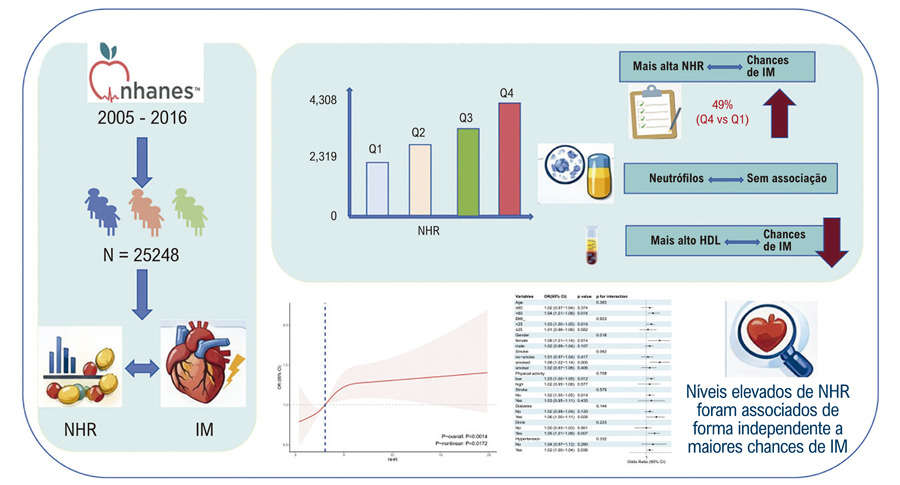
Myocardial infarction (MI) remains a major global health burden. Inflammation and lipid metabolism’s roles in MI pathogenesis have drawn more attention. The neutrophil-to-high-density lipoprotein cholesterol ratio (NHR) is a new composite biomarker integrating inflammation and lipid metabolism markers, but its association with MI is unclear.

Objectives

We investigated the association between NHR and MI.

Methods

We analyzed data from 25,248 eligible participants from NHANES between 2005 and 2016. A history of MI was determined using questionnaire data, and NHR values were derived from laboratory measurements. Logistic regression models were used to assess the associations of NHR, neutrophil count, and high-density lipoprotein cholesterol (HDL-C) with the odds of MI. Restricted cubic spline (RCS) analysis was used to evaluate potential nonlinear associations. Subgroup analyses and interaction tests were performed to explore potential heterogeneity across demographic and clinical subgroups. Sensitivity analyses were performed to evaluate the robustness of the primary findings. A two-sided P value of <0.05 was considered statistically significant.

Results

Higher NHR was independently associated with higher odds of MI. In the fully adjusted model, participants in the highest NHR quartile had 49% higher odds of MI than those in the lowest quartile. Neutrophil count alone was not significantly associated with MI, whereas HDL-C levels were inversely associated with MI. RCS suggested a modest nonlinear association between NHR and MI. Although a data-driven inflection point was identified at 6.93, this result should be interpreted as exploratory and descriptive rather than a clinically meaningful threshold. Subgroup analyses suggested a stronger association in women, and the interaction by sex was statistically significant. Sensitivity analyses confirmed the robustness of these findings.

Conclusion

In this large, representative sample, elevated NHR was independently associated with higher odds of MI, suggesting that NHR may serve as a potentially informative epidemiological marker for MI. Prospective studies are needed to determine causality and elucidate the underlying mechanisms.
  • HDL, Cholesterol
  • Myocardial Infarction
  • Neutrophils
  • Nutrition Surveys
Read Full Article
Creative Commons Attribution (CC BY) Creative Commons license
28/08/2026 DOI: 10.36660/abc.20250718i Views 1
ABC
Editorial

HDL Functionality, CETP Inhibitors, and Exercise Training: Where are We?

Raul D. Santos et al. Pedro Gabriel Senger Braga

Exercise training is well established as an effective strategy to increase high-density lipoprotein cholesterol (HDL-C) concentrations, especially in people with high triglycerides and excess visceral adiposity, and is consistently associated with a lower risk of cardiovascular disease (CVD). However, the traditional stratification of CVD risk based solely on HDL-C levels has been increasingly challenged by evidence highlighting the importance of assessing HDL particle functionality rather than HDL-C levels alone. This paradigm shift gained particular attention following clinical trials of cholesteryl ester transfer protein (CETP) inhibitors, in which substantial pharmacologically mediated increases in HDL-C failed to translate into improved cardiovascular outcomes. CETP inhibitor trials reported marked elevations in HDL-C, ranging from approximately 31% to 133%, whereas exercise training typically induces a much more modest increase, on the order of 2% to 5%.– Despite these quantitative differences, both interventions have been shown to enhance aspects of HDL functionality. In exercise-based interventions, increases in HDL-C are accompanied by improvements in HDL-mediated cholesterol uptake, commonly assessed by cholesterol efflux capacity (CEC), a metric that more accurately reflects reverse cholesterol transport and CVD risk than HDL-C concentration alone.– Mechanistically, CETP inhibition also enhances HDL cholesterol efflux capacity, indicating that pharmacologically enlarged HDL particles may retain functional properties. Nevertheless, adverse off-target effects and the artificial modulation of lipoprotein metabolism may partly explain the neutral or unfavorable cardiovascular outcomes observed in several CETP inhibitor trials.,, Together, these findings underscore that, although both exercise training and CETP inhibition substantially increase circulating HDL-C, the biological context, qualitative effects on HDL particles, and clinical implications differ fundamentally between these interventions, reinforcing the need to move beyond HDL-C quantity when evaluating cardiovascular risk and therapeutic strategies.

[…]

  • Cholesterol Ester Transfer Proteins
  • Exercise
  • HDL, Cholesterol
Read Full Article
Creative Commons Attribution (CC BY) Creative Commons license
17/07/2026 DOI: 10.36660/abc.20260145i Views 1
ABC
Letter to the Editor

Use of Atherogenic Indices as Assessment Methods of Clinical Atherosclerotic Diseases

Muhammed Seyithanoğlu

To the Editor,

The recent publication by Araujo et al. provides valuable insight into the relationship between atherosclerosis and the atherogenic index of plasma (AIP), Castelli Risk Index I (CRI-I), and Castelli Risk Index II (CRI-II). Their results, showing elevated index values in patients with atherosclerotic disease compared with controls, underscore the potential role of these lipid-derived ratios as practical and inexpensive predictors of cardiovascular risk within a Brazilian population.

[…]

  • Atherosclerosis
  • Cardiovascular Diseases
  • HDL, Cholesterol
  • Risk Factors
  • Sex Characteristics
Read Full Article
Creative Commons Attribution (CC BY) Creative Commons license
15/05/2026 DOI: 10.36660/abc.20250691i Views 2
Figure 1
IJCS
Original Article

Inflammation and Nocturnal Pattern of Blood Pressure in Normotensives

Seyda Gunay et al. Serhat Çalışkan Deniz Sigirli

Abstract

Background:

In most healthy individuals, blood pressure (BP) shows a circadian rhythm. Being non-dipper increases cardiovascular risk in normotensive and hypertensive individuals. Nocturnal dipping shows a correlation with the state of inflammation.

Objetive:

To investigate the relationship between inflammation-based indexes and nocturnal BP pattern in normotensive individuals.

Method:

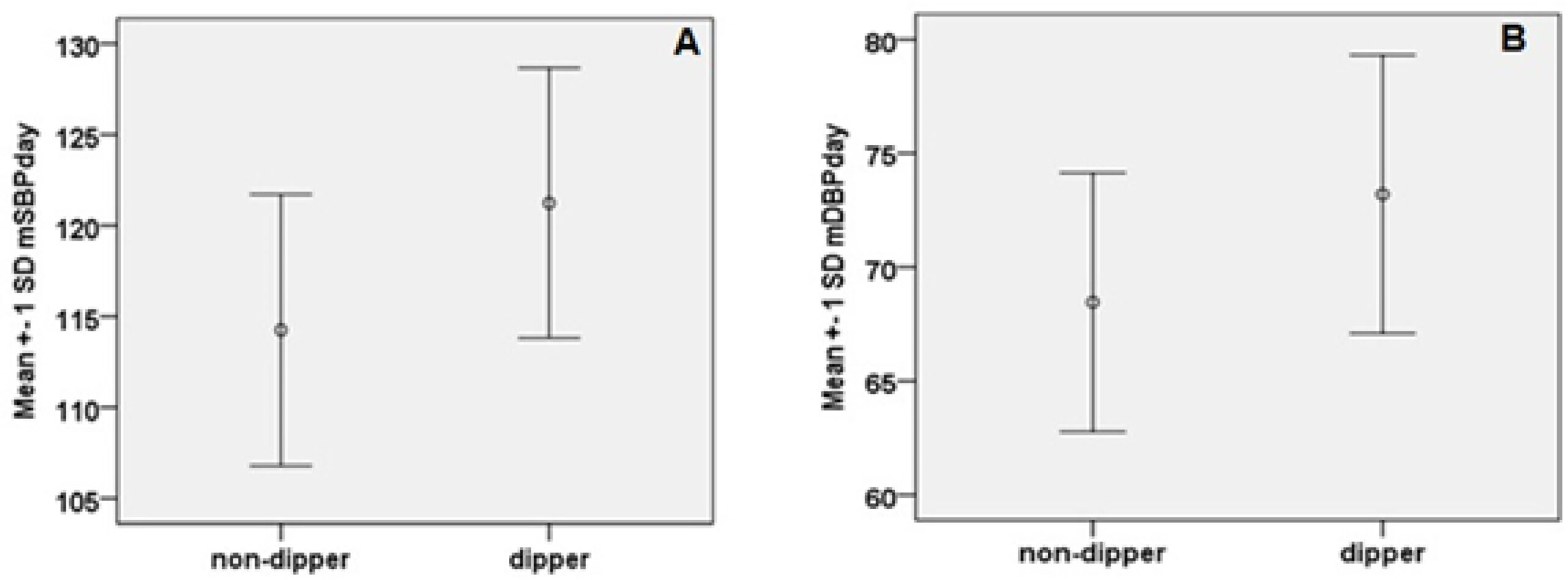
This is a retrospective study that included patients evaluated with ambulatory BP monitoring (ABPM). A total of 131 normotensive individuals were included and grouped as dippers and non-dippers. The normality of the data was verified with a Shapiro-Wilk test. We compared ABPM variables and inflammation-based indexes derived from blood tests (monocyte to high-density lipoprotein ratio [MHR], platelet to lymphocyte ratio [PLR], neutrophil to lymphocyte ratio [NLR], and systemic immune-inflammation index [SII]) between groups. The independent samples t-test and Mann-Whitney U test were used for comparing variables with normal and non-normal distributions, respectively. The Pearson’s chi-squared test was used to compare categorical variables, and Spearman’s correlation coefficient was used to examine the relationships between variables. A receiver operating characteristic (ROC) curve was used to evaluate the diagnostic performances of inflammation-based indexes. The level of statistical significance was 5%.

Results:

The study included 131 patients (mean±standard deviation [SD] age 49.2±15.1 years, 58 [76.0%] of which were women). SII was significantly higher in the non-dipper group (p=0.033). Significant negative correlations were observed between the change in systolic BP [ΔSBP] and SII (r=-0.172, p=0.049) and between ΔSBP and PLR (r=-0.179, p=0.040).

Conclusion:

SII is a predictor of nocturnal BP pattern in normotensives.

  • HDL, Cholesterol
  • Hypertension
  • Inflammation
  • Monocytes
Read Full Article
Creative Commons Attribution (CC BY) Creative Commons license
09/08/2021 DOI: 10.36660/ijcs.20200298 Views 2
ABC
Original Article

Association between Leisure Time Physical Activity and HDL-C in the Elsa-Brasil Study Participants: Are There Any Gender Differences in the Dose-Response Effect?

Francisco José Gondim Pitanga et al. Rosane Harter Griep Maria da Conceição Almeida Maria de Jesus Mendes da Fonseca … Andreia Rios de Souza Raiane de Carvalho Silva Sheila Maria Alvim Matos

Abstract

Background

High levels of high-density lipoprotein (HDL-C) are known for their protective effect against cardiovascular diseases and the regular practice of leisure time physical activity (LTPA) may be associated with their increase.

Objective

To verify the existence of differences between genders in the dose-response effect regarding the association between LTPA and HDL-C in the ELSA-Brasil study cohort.

Methods

Cross-sectional study with data from wave 2 of 13,931 participants of both genders (7,607 women) from the Longitudinal Study of Adult Health ELSA-Brasil. The LTPA was measured using the International Physical Activity Questionnaire (IPAQ) and classified into four categories: sedentary, low active, active and very active. The discriminatory power of LTPA at different intensities analyzed for high HDL-C was tested using ROC curves. Associations, adjusted for confounders between LTPA and HDL-C were analyzed by logistic regression. A 95% confidence interval was used.

Results

A positive association, with a dose-response effect, was observed between LTPA and HDL-C in both men and women. With regard to intensity, only vigorous physical activity discriminated high HDL-C in men, while both walking and moderate and vigorous physical activity discriminated high HDL-C in women.

Conclusions

LTPA shows a positive association with gradient dose-response and HDL-C, but in men, the association is not observed for those classified as physically unfit. In women, both walking intensity and moderate or vigorous physical activity can discriminate high HDL-C levels, whereas only vigorous intensity-exercise discriminate elevated HDL-C levels in men, demonstrating that males need to do more physical activity for this benefit to be observed.

  • Cardiovascular Diseases
  • Cross-Sectional Studies
  • Epidemiology
  • Exercise
  • HDL, Cholesterol
  • Physical activity
  • walking
Read Full Article
Creative Commons Attribution (CC BY) Creative Commons license
02/07/2021 DOI: 10.36660/abc.20200438 Views 1
Figure 1
ABC
Original Article

Impact of Atherogenic Indexes in Saphenous Vein Graft Stenosis

Fethi Yavuz et al. Salih Kilic Mehmet Kaplan Arafat Yıldırım … Mehmet Kucukosmanoglu Mustafa Dogdus

Abstract

Background

Saphenous vein grafts (SVG) are frequently used in patients that have undergone coronary artery bypass graft (CABG) surgery. Objectives: To evaluate the relationship between atherogenic indexes and SVG stenosis.

Methods

Altogether, 534 patients (27.7% women, mean age 65±8.4 years) that underwent CABG and elective coronary angiography were included in the study. Patients with at least one SVG stenosis ≥50% were allocated to the stenosis group SVG (+) (n=259) and patients without stenosis were categorized as SVG (-) (n=275). Atherogenic index of plasma (AIP) and atherogenic coefficient (AC) were calculated from the patients’ routine lipid parameters. The level of significance was p<0.05.

Results

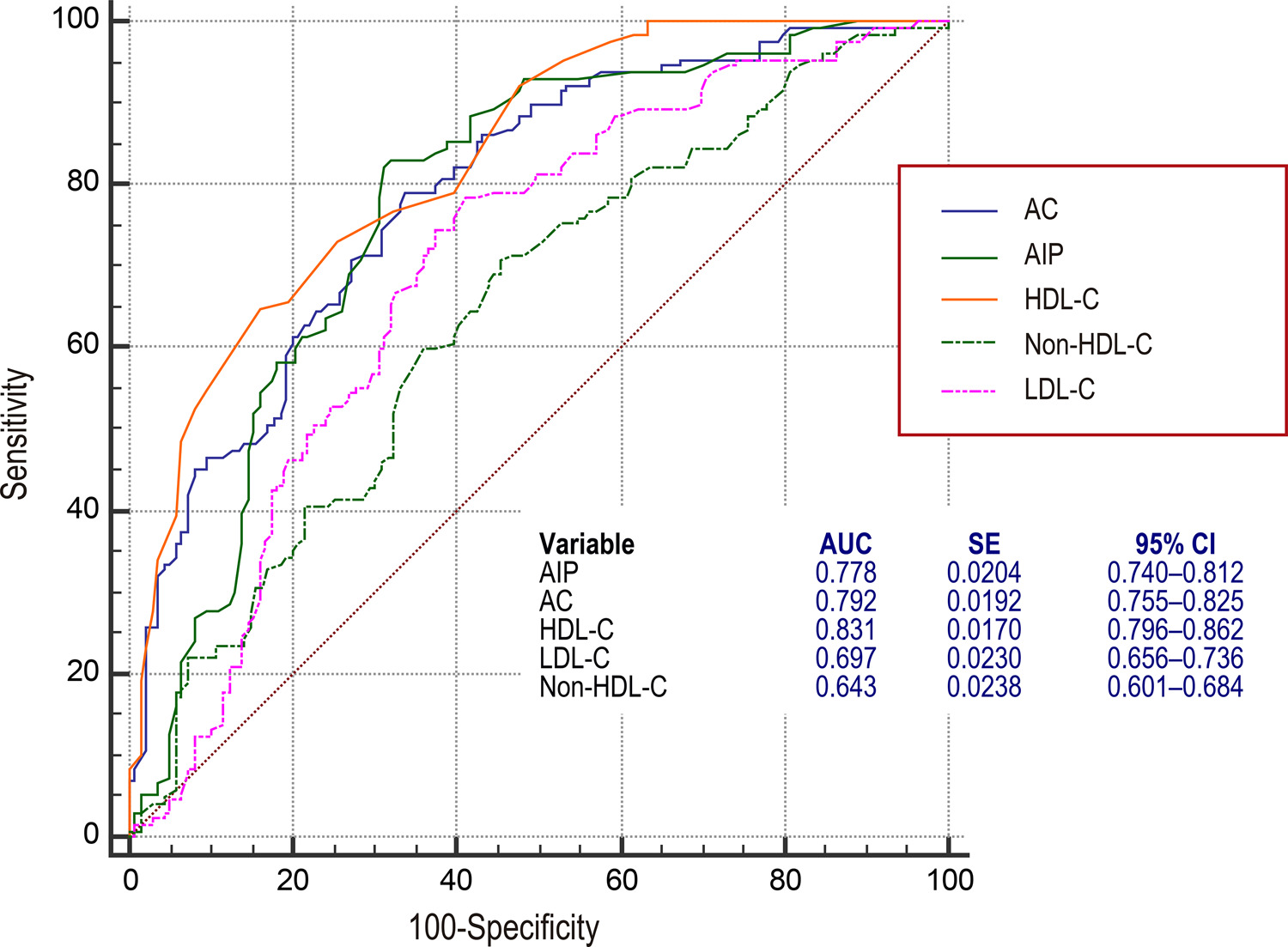
The number of patients with a history of hypertension (HT), diabetes mellitus (DM), stroke, and heart failure was significantly higher in the SVG (+) group than in the SVG (-) group. Total cholesterol, triglycerides, LDL-C were significantly higher and HDL-C was lower in the SVG (+) group than in the SVG (-) group. AIP (p<0.001) and AC (p<0.001) were significantly higher in the SVG (+) group than in the SVG (-) group. The receiver operating characteristic (ROC) analysis show that both AIP and AC were better than HDL-C, LDL-C and non-HDL-C at predicting SVG stenosis. In the multivariate analysis, history of DM, HT, stroke, heart failure (HF), number of saphenous grafts, HDL-C, LDL-C, non-HDL-C, AIP and AC were found to be independent risk factors for SVG stenosis.

Conclusion

AIP and AC were independent predictors of SVG stenosis. Moreover, both AIP and AC have better performance in predicting SVG stenosis than LDL-C, HDL-C and non-HDL-C. (Arq Bras Cardiol. 2020; 115(3):538-544)

  • Diabetes Mellitus
  • HDL, Cholesterol
  • Hypertension
  • LDL-cholesterol
  • Plaque, Atherosclerotic
  • Saphenous Vein/Stenosis
  • Saphenous Vein/transplantation
  • Stroke
Read Full Article
Creative Commons Attribution (CC BY) Creative Commons license
28/09/2020 DOI: 10.36660/abc.20190683 Views 2
Effect of red wine associated with physical exercise in the cardiovascular system of spontaneously hipertensive rats
ABC
Artigo Original

Effect of red wine associated with physical exercise in the cardiovascular system of spontaneously hipertensive rats

Paulo Roberto Soares Filho et al. Iran Castro Adriene Stahlschmidt

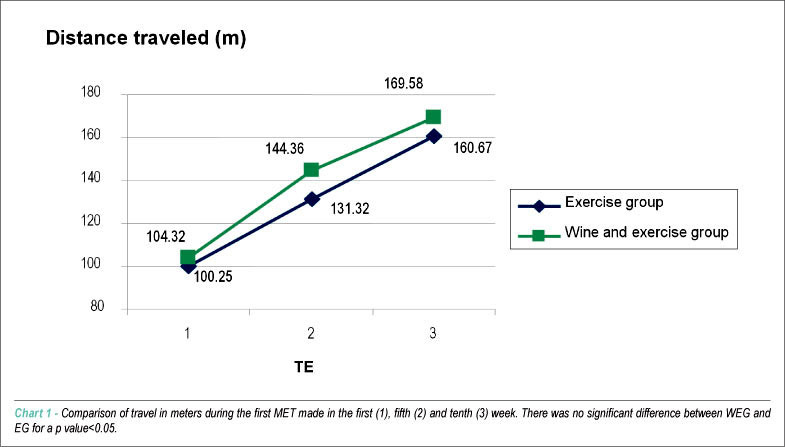
BACKGROUND: Physical exercise (PE) is effective in the treatment and prevention of hypertension associated with improved lipid profile and cardiac contractile function. Regular and moderate consumption of alcoholic beverages such as red wine brings a cardiovascular protective effect. Beverage-derived polyphenols have antioxidant properties benefiting blood vessels. There is little evidence on the consumption of red wine associated with PE and the influences on the cardiovascular system. OBJECTIVE: To investigate the effect of physical exercise (PE) and moderate red wine intake interaction on systolic blood pressure (SBP), high density lipoprotein (HDL) levels, physical performance (PP) and left ventricular ejection fraction (LVEF) in spontaneously hypertensive rats (SHR). METHODS: Sample of 32 SHRs divided into four groups: wine and exercise group (WEG), wine group (WG), exercise group (EG) and control group (CG). Red wine doses were given by intra-gastric gavage, during ten weeks, coincident with PE period, performed on treadmills. The SHRs received red wine doses of 3.715 ml/kg/day. Physical performance was analyzed by maximal exercise test (MET) and LVEF by echocardiographic measures. SBP measurement was made before and after the PE protocol. RESULTS: Demonstrated that the three groups which suffered intervention presented significant SBP reduction compared to CG. At the end of the protocol, WEG showed the largest reduction. Like in SBP results, WEG showed the best outcome on HDL levels at the experiment end. There was no significant difference of physical performance and LVEF between groups. CONCLUSION: PE associated with moderate red wine intake has cardioprotective effects on SBP and HDL levels in SHR. Their physical performance and LVEF are not modified.

  • Cardiovascular System
  • Exercise
  • HDL, Cholesterol
  • Hypertension
  • Wine
Read Full Article
Creative Commons Attribution (CC BY) Creative Commons license
25/02/2011 DOI: 10.1590/S0066-782X2011005000020

How to cite this article

EndNote RIS

Electronic Document Format (Vancouver)

Wang Y, Yin Q, Lei Y, Duan J. Association between the Neutrophil-to-HDL-Cholesterol Ratio and Myocardial Infarction: A Cross-Sectional Study. Arquivos Brasileiros de Cardiologia 2026;123(8):e20250718.

Electronic Document Format (ABNT)

Wang, Youpeng; Yin, Qian; Lei, Ying; Duan, Juncang. Association between the Neutrophil-to-HDL-Cholesterol Ratio and Myocardial Infarction: A Cross-Sectional Study. Arquivos Brasileiros de Cardiologia, v. 123, n. 8, e20250718, Aug. 2026.

Electronic Document Format (APA)

Wang, Y., Yin, Q., Lei, Y., & Duan, J. (2026). Association between the Neutrophil-to-HDL-Cholesterol Ratio and Myocardial Infarction: A Cross-Sectional Study. Arquivos Brasileiros de Cardiologia, 123(8), e20250718.

Electronic Document Format (ISO)

Wang, Youpeng and Yin, Qian and Lei, Ying and Duan, Juncang. Association between the Neutrophil-to-HDL-Cholesterol Ratio and Myocardial Infarction: A Cross-Sectional Study. Arquivos Brasileiros de Cardiologia [online]. 2026, vol. 123, n. 8, [cited 2026-10-14], e20250718. Available from: <https://journals.cardiol.br/en/article/association-between-the-neutrophil-to-hdl-cholesterol-ratio-and-myocardial-infarction-a-cross-sectional-study/>. ISSN 0066-782X

EndNote RIS

Electronic Document Format (Vancouver)

Santos RD, Braga PGS. HDL Functionality, CETP Inhibitors, and Exercise Training: Where are We?. Arquivos Brasileiros de Cardiologia 2026;123(5):e20260145.

Electronic Document Format (ABNT)

Santos, Raul D.; Braga, Pedro Gabriel Senger. HDL Functionality, CETP Inhibitors, and Exercise Training: Where are We?. Arquivos Brasileiros de Cardiologia, v. 123, n. 5, e20260145, Jul. 2026.

Electronic Document Format (APA)

Santos, R. D., & Braga, P. G. S. (2026). HDL Functionality, CETP Inhibitors, and Exercise Training: Where are We?. Arquivos Brasileiros de Cardiologia, 123(5), e20260145.

Electronic Document Format (ISO)

Santos, Raul D. and Braga, Pedro Gabriel Senger. HDL Functionality, CETP Inhibitors, and Exercise Training: Where are We?. Arquivos Brasileiros de Cardiologia [online]. 2026, vol. 123, n. 5, [cited 2026-10-14], e20260145. Available from: <https://journals.cardiol.br/en/article/hdl-functionality-cetp-inhibitors-and-exercise-training-where-are-we/>. ISSN 0066-782X

EndNote RIS

Electronic Document Format (Vancouver)

Seyithanoğlu M. Use of Atherogenic Indices as Assessment Methods of Clinical Atherosclerotic Diseases. Arquivos Brasileiros de Cardiologia 2026;123(3):e20250691.

Electronic Document Format (ABNT)

Seyithanoğlu, Muhammed. Use of Atherogenic Indices as Assessment Methods of Clinical Atherosclerotic Diseases. Arquivos Brasileiros de Cardiologia, v. 123, n. 3, e20250691, May. 2026.

Electronic Document Format (APA)

Seyithanoğlu, M. (2026). Use of Atherogenic Indices as Assessment Methods of Clinical Atherosclerotic Diseases. Arquivos Brasileiros de Cardiologia, 123(3), e20250691.

Electronic Document Format (ISO)

Seyithanoğlu, Muhammed. Use of Atherogenic Indices as Assessment Methods of Clinical Atherosclerotic Diseases. Arquivos Brasileiros de Cardiologia [online]. 2026, vol. 123, n. 3, [cited 2026-10-14], e20250691. Available from: <https://journals.cardiol.br/en/article/use-of-atherogenic-indices-as-assessment-methods-of-clinical-atherosclerotic-diseases-2/>. ISSN 0066-782X

EndNote RIS

Electronic Document Format (Vancouver)

Gunay S, Çalışkan S, Sigirli D. Inflammation and Nocturnal Pattern of Blood Pressure in Normotensives. International Journal of Cardiovascular Sciences 2021;34(6):685-91.

Electronic Document Format (ABNT)

Gunay, Seyda; Çalışkan, Serhat; Sigirli, Deniz. Inflammation and Nocturnal Pattern of Blood Pressure in Normotensives. International Journal of Cardiovascular Sciences, v. 34, n. 6, p. 685-691, Aug. 2021.

Electronic Document Format (APA)

Gunay, S., Çalışkan, S., & Sigirli, D. (2021). Inflammation and Nocturnal Pattern of Blood Pressure in Normotensives. International Journal of Cardiovascular Sciences, 34(6), 685-691.

Electronic Document Format (ISO)

Gunay, Seyda and Çalışkan, Serhat and Sigirli, Deniz. Inflammation and Nocturnal Pattern of Blood Pressure in Normotensives. International Journal of Cardiovascular Sciences [online]. 2021, vol. 34, n. 6, [cited 2026-10-14], pp. 685-691. Available from: <https://journals.cardiol.br/en/article/inflammation-and-nocturnal-pattern-of-blood-pressure-in-normotensives/>. ISSN 2359-4802

EndNote RIS

Electronic Document Format (Vancouver)

Pitanga FJG, Griep RH, Almeida MC, Fonseca MJM, Souza AR, Silva RC, Matos SMA, et al. Association between Leisure Time Physical Activity and HDL-C in the Elsa-Brasil Study Participants: Are There Any Gender Differences in the Dose-Response Effect?. Arquivos Brasileiros de Cardiologia 2021;117(3):494-500.

Electronic Document Format (ABNT)

Pitanga, Francisco José Gondim; Griep, Rosane Harter; Almeida, Maria da Conceição; Fonseca, Maria de Jesus Mendes da; Souza, Andreia Rios de; Silva, Raiane de Carvalho; Matos, Sheila Maria Alvim. Association between Leisure Time Physical Activity and HDL-C in the Elsa-Brasil Study Participants: Are There Any Gender Differences in the Dose-Response Effect?. Arquivos Brasileiros de Cardiologia, v. 117, n. 3, p. 494-500, Jul. 2021.

Electronic Document Format (APA)

Pitanga, F. J. G., Griep, R. H., Almeida, M. C., Fonseca, M. J. M. , Souza, A. R. , Silva, R. C., & Matos, S. M. A. (2021). Association between Leisure Time Physical Activity and HDL-C in the Elsa-Brasil Study Participants: Are There Any Gender Differences in the Dose-Response Effect?. Arquivos Brasileiros de Cardiologia, 117(3), 494-500.

Electronic Document Format (ISO)

Pitanga, Francisco José Gondim and Griep, Rosane Harter and Almeida, Maria da Conceição and Fonseca, Maria de Jesus Mendes da and Souza, Andreia Rios de and Silva, Raiane de Carvalho and Matos, Sheila Maria Alvim. Association between Leisure Time Physical Activity and HDL-C in the Elsa-Brasil Study Participants: Are There Any Gender Differences in the Dose-Response Effect?. Arquivos Brasileiros de Cardiologia [online]. 2021, vol. 117, n. 3, [cited 2026-10-14], pp. 494-500. Available from: <https://journals.cardiol.br/en/article/association-between-leisure-time-physical-activity-and-hdl-c-in-the-elsa-brasil-study-participants-are-there-any-gender-differences-in-the-dose-response-effect/>. ISSN 0066-782X

EndNote RIS

Electronic Document Format (Vancouver)

Yavuz F, Kilic S, Kaplan M, Yıldırım A, Kucukosmanoglu M, Dogdus M. Impact of Atherogenic Indexes in Saphenous Vein Graft Stenosis. Arquivos Brasileiros de Cardiologia 2020;115(3):538-44.

Electronic Document Format (ABNT)

Yavuz, Fethi; Kilic, Salih; Kaplan, Mehmet; Yıldırım, Arafat; Kucukosmanoglu, Mehmet; Dogdus, Mustafa. Impact of Atherogenic Indexes in Saphenous Vein Graft Stenosis. Arquivos Brasileiros de Cardiologia, v. 115, n. 3, p. 538-544, Sep. 2020.

Electronic Document Format (APA)

Yavuz, F., Kilic, S., Kaplan, M., Yıldırım, A., Kucukosmanoglu, M., & Dogdus, M. (2020). Impact of Atherogenic Indexes in Saphenous Vein Graft Stenosis. Arquivos Brasileiros de Cardiologia, 115(3), 538-544.

Electronic Document Format (ISO)

Yavuz, Fethi and Kilic, Salih and Kaplan, Mehmet and Yıldırım, Arafat and Kucukosmanoglu, Mehmet and Dogdus, Mustafa. Impact of Atherogenic Indexes in Saphenous Vein Graft Stenosis. Arquivos Brasileiros de Cardiologia [online]. 2020, vol. 115, n. 3, [cited 2026-10-14], pp. 538-544. Available from: <https://journals.cardiol.br/en/article/impact-of-atherogenic-indexes-in-saphenous-vein-graft-stenosis/>. ISSN 0066-782X

EndNote RIS

Electronic Document Format (Vancouver)

Soares Filho PR, Castro I, Stahlschmidt A. Effect of red wine associated with physical exercise in the cardiovascular system of spontaneously hipertensive rats. Arquivos Brasileiros de Cardiologia 2011;96(4):277-83.

Electronic Document Format (ABNT)

Soares Filho, Paulo Roberto; Castro, Iran; Stahlschmidt, Adriene. Effect of red wine associated with physical exercise in the cardiovascular system of spontaneously hipertensive rats. Arquivos Brasileiros de Cardiologia, v. 96, n. 4, p. 277-283, Feb. 2011.

Electronic Document Format (APA)

Soares Filho, P. R., Castro, I., & Stahlschmidt, A. (2011). Effect of red wine associated with physical exercise in the cardiovascular system of spontaneously hipertensive rats. Arquivos Brasileiros de Cardiologia, 96(4), 277-283.

Electronic Document Format (ISO)

Soares Filho, Paulo Roberto and Castro, Iran and Stahlschmidt, Adriene. Effect of red wine associated with physical exercise in the cardiovascular system of spontaneously hipertensive rats. Arquivos Brasileiros de Cardiologia [online]. 2011, vol. 96, n. 4, [cited 2026-10-14], pp. 277-283. Available from: <https://journals.cardiol.br/en/article/effect-of-red-wine-associated-with-physical-exercise-in-the-cardiovascular-system-of-spontaneously-hipertensive-rats/>. ISSN 0066-782X

  • About ABC Family
  • Internal Regulation
  • Editorial Board
  • Brazilian Society of Cardiology (SBC)

Issues

SBC Guidelines

  • Videos
  • Podcasts
  • News