ABC Family Arquivos Brasileiros de Cardiologia International Journal of Cardiovascular Sciences ABC Heart Failure & Cardiomyopathy ABC Imagem Cardiovascular
Português English
ABC Family
Português English
  • About
    • About ABC Family
    • Internal Regulation
    • Editorial Board
    • Brazilian Society of Cardiology (SBC)
  • Issues
  • SBC Guidelines
  • Content
    • Videos
    • Podcasts
    • News
  • About
    • About ABC Family
    • Internal Regulation
    • Editorial Board
    • Brazilian Society of Cardiology (SBC)
  • Issues
  • SBC Guidelines
  • Content
    • Videos
    • Podcasts
    • News

ABC Family

  • ABC Family
  • Arquivos Brasileiros de Cardiologia
  • International Journal of Cardiovascular Sciences
  • ABC Heart Failure & Cardiomyopathy
  • ABC Imagem Cardiovascular
Search in

No content found.

Journals
Ordering
Article types
Others

  1. Home
  2. Keyword: Effectiveness
Figura 1
ABC
Original Article

Effectiveness and Safety of Transvenous Removal of Cardiac Pacing and Implantable Cardioverter-defibrillator Leads in the Real Clinical Scenario

Roberto Costa et al. Katia Regina da Silva Elizabeth Sartori Crevelari Wagner Tadeu Jurevicius Nascimento … Marcia Mitie Nagumo Martino Martinelli Filho Fabio Biscegli Jatene

Abstract

Background

Transvenous lead extraction (TLE) of cardiac implantable electronic devices (CIED) is an uncommon procedure and requires specialized personnel and adequate facilities.

Objectives

To evaluate the effectiveness and safety of the removal of CIED leads and to determine risk factors for surgical complications and mortality in 30 days.

Methods

Prospective study with data derived from clinical practice. From January 2014 to April 2020, we included 365 consecutive patients who underwent TLE, regardless of the indication and surgical technique used. The primary outcomes were: success rate of the procedure, combined rate of major complications and intraoperative death. Secondary outcomes were: risk factors for major intraoperative complications and death within 30 days. Univariate and multivariate analysis were used, with a significance level of 5%.

Results

Procedure success rate was 96.7%, with 90.1% of complete success and 6.6% of clinical success. Major intraoperative complications occurred in 15 (4.1%) patients. Predictors of major complications were: lead dwelling time ≥ 7 years (OR = 3.78, p = 0.046) and change in surgical strategy (OR = 5.30, p = 0.023). Functional class III-IV (OR = 6.98, p <0.001), renal failure (OR = 5.75, p = 0.001), CIED infection (OR = 13.30, p <0.001), number of procedures performed (OR = 77.32, p <0.001) and major intraoperative complications (OR = 38.84, p <0.001) were predictors of 30-day mortality.

Conclusions

The results of this study, which is the largest prospective registry of consecutive TLE procedures in Latin America, confirm the safety and effectiveness of this procedure in the context of real clinical practice. (Arq Bras Cardiol. 2020; 115(6):1114-1124)
  • Cardiac Pacing, Artificial
  • Effectiveness
  • Electrodes, Implanted
  • Infection
  • Mortality
  • Pacemaker
  • Surgical complications
  • Transvenous lead extracion
Read Full Article
Creative Commons Attribution (CC BY) Creative Commons license
18/01/2021 DOI: 10.36660/abc.20200476 Views 1
ABC
Editorial

Effectiveness of Biomarkers in Cardiology

Luis Cláudio Lemos Correia

Besides providing diagnostic or prognostic accuracy, a biomarker must be effective to ensure its adequate use in routine clinical implementation. Effectiveness can be defined as an individual’s potential to benefit from using the biomarker. This benefit includes the prevention of undesirable clinical outcomes and improvement in an individual’s quality of life.

Assessment of a biomarker’s effectiveness should include two sequential criteria. First, the biomarker should add prognostic value in relation to basic clinical and laboratory data. Second, the information provided by the biomarker should promote changes in medical conduct in a way that ultimately benefits the patient. Beginning with the analysis of prognostic value, a new biomarker must have a prognostic value independent of conventional risk markers. However, this criterion of statistical significance is not enough to guarantee clinical significance. Once the statistical significance is confirmed by multivariate analysis, it is necessary to proceed and evaluate whether the biomarker increases our ability to identify individuals who will present the undesirable outcome. This is done by incremental analysis of the C-statistic and net reclassification analysis. For example, although high sensitivity C-reactive protein has an independent association with cardiovascular risk, it only slightly increases the discriminatory capacity in Framingham score. The coronary calcium score, on the other hand, can increase the C-statistic of Framingham score, in addition to correctly reclassifying a proportion of patients. This incremental value is an essential condition for a biomarker to be effective, because only then can its result correctly modify clinical decisions.

[…]

  • Biological Markers
  • Cardiovascular Diseases/genetic
  • Disease Prevention
  • Effectiveness
  • Evidence-Based Practice
Read Full Article
Creative Commons Attribution (CC BY) Creative Commons license
01/12/2014 DOI: 10.5935/abc.20140194
Figure 1
ABC
Original Article

Efficacy and Safety of Drug-Eluting Stents in the Real World: 8-Year Follow-Up

Denise Oliveira Pellegrini et al. Vitor Osório Gomes Ricardo Lasevitch Luis Smidt … Marco Aurélio Azeredo Priscila Ledur Rodrigo Bodanese Leonardo Sinnott Emílio Moriguchi Paulo Caramori

Background:

Drug-eluting stents have been used in daily practice since 2002, with the clear advantages of reducing the risk of target vessel revascularization and an impressive reduction in restenosis rate by 50%-70%. However, the occurrence of a late thrombosis can compromise long-term results, particularly if the risks of this event were sustained. In this context, a registry of clinical cases gains special value.

Objective:

To evaluate the efficacy and safety of drug-eluting stents in the real world.

Methods:

We report on the clinical findings and 8-year follow-up parameters of all patients that underwent percutaneous coronary intervention with a drug-eluting stent from January 2002 to April 2007. Drug-eluting stents were used in accordance with the clinical and interventional cardiologist decision and availability of the stent.

Results:

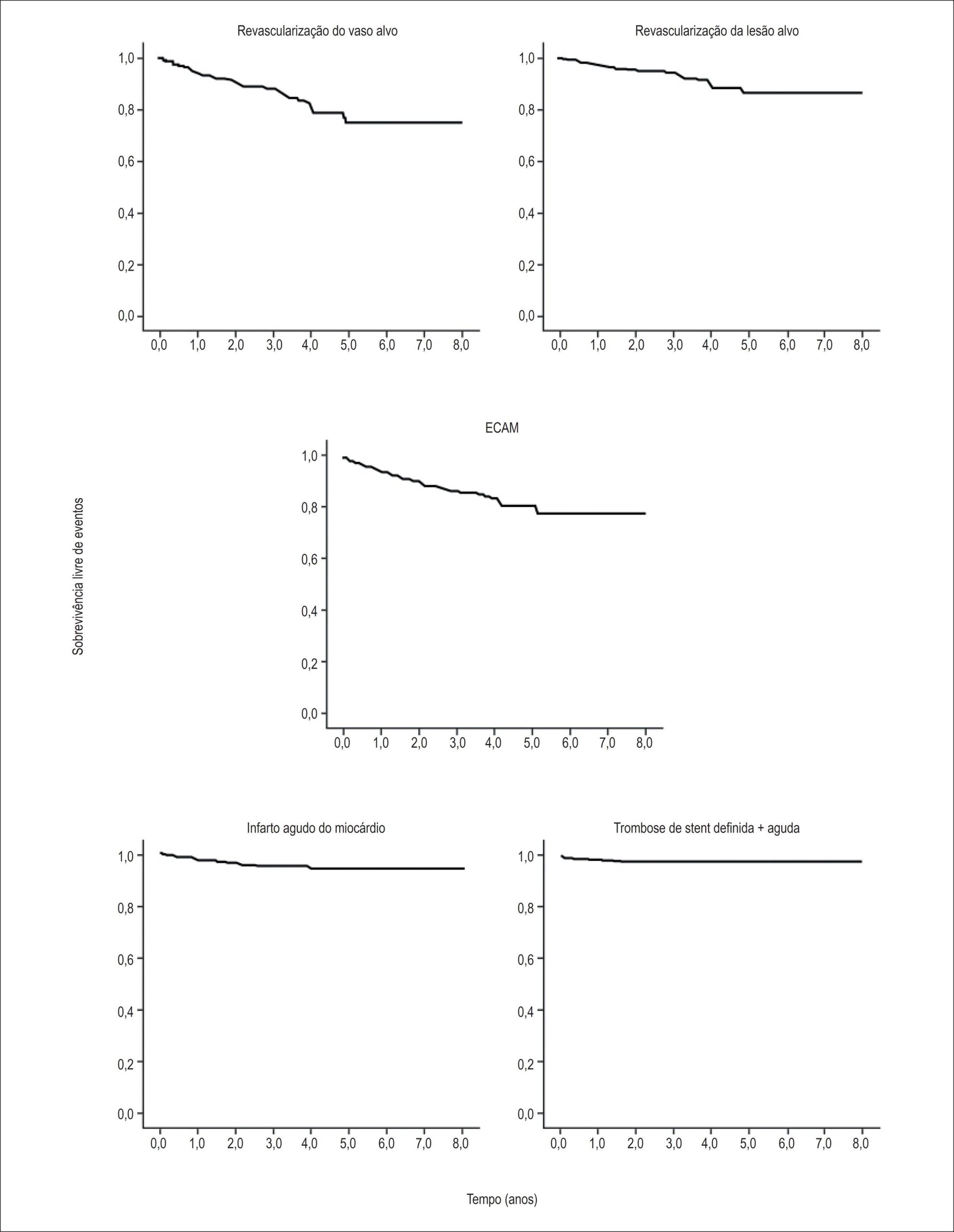
A total of 611 patients were included, and clinical follow-up of up to 8 years was obtained for 96.2% of the patients. Total mortality was 8.7% and nonfatal infarctions occurred in 4.3% of the cases. Target vessel revascularization occurred in 12.4% of the cases, and target lesion revascularization occurred in 8% of the cases. The rate of stent thrombosis was 2.1%. There were no new episodes of stent thrombosis after the fifth year of follow-up. Comparative subanalysis showed no outcome differences between the different types of stents used, including Cypher®, Taxus®, and Endeavor®.

Conclusion:

These findings indicate that drug-eluting stents remain safe and effective at very long-term follow-up. Patients in the “real world” may benefit from drug-eluting stenting with excellent, long-term results.

  • Drug–Eluting Stents/trends
  • Effectiveness
  • Long-Term Effect
  • Treatment Outcome
Read Full Article
Creative Commons Attribution (CC BY) Creative Commons license
01/08/2014 DOI: 10.5935/abc.20140110 Views 1
Effectiveness and safety of drug-eluting stents in a cardiology clinic in Curitiba, PR, Brazil
ABC
Artigo Original

Effectiveness and safety of drug-eluting stents in a cardiology clinic in Curitiba, PR, Brazil

Chiu Yun Yu Braga et al. Luiz Antonio Rivetti Francisco de Paula Stella

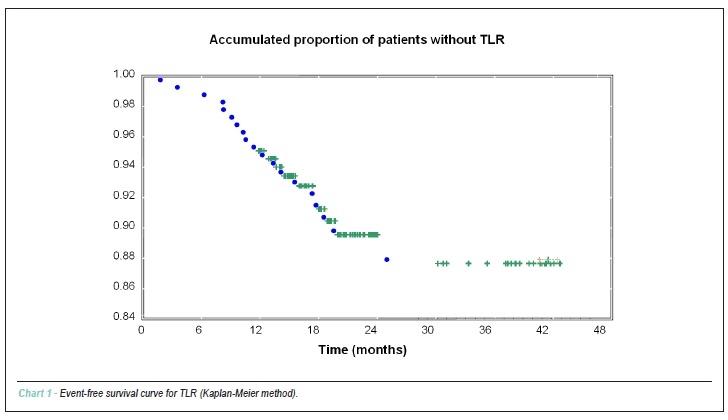
BACKGROUND: The effectiveness and safety of drug-eluting stents (DES) have still been questioned. OBJECTIVE: The objective of this study was to evaluate the effectiveness and safety of these stents, as well as the incidence of target lesion revascularization (TLR), in addition to identifying possible variables influencing the need for TLR. METHODS: A total of 203 patients from Hospital Costantini who were clinically followed up for one to 3 years were selected. RESULTS: The sample characteristics were as follows: 470 lesions; 171 (84.24%) male patients; 54 (26.6%) had diabetes; 131 (64.35%) had hypertension; 127 (62.56%), dyslipidemia; 40 (19.70%) were smokers; and 79 (38.92%) had a family history of coronary artery disease. Also: 49 (24.14%) patients presented with stable angina; 58 (28.57%), unstable angina; and 6 (2.96%), myocardial infarction. Eighty five (41.87%) patients were asymptomatic, and 146 (71.92%), had multivessel disease. As for the characteristics of the lesions, 77.45% were B2/C (AHA/ACC). Taxus was implanted in 73.62% of the patients. Stents with diameter > 2.5 mm were used in 381 (81.96%) patients. The stent length was < 30 mm in 67.87% of the lesions, with a mean of 2.3 stents per patient. After follow-up, 19 patients (9.3%) underwent TLR. Four patients died (1.97%), two of them of MI (0.98%), one of stroke (0.49%), and one of abdominal aneurysm (0.49%). Also, one patient died of late thrombosis (0.49%), and one of reinfarction (0.49%). In the statistical analysis carried out, only the bifurcation lesions variable reached values close to the statistical significance level, with p < 0.06. CONCLUSION: In conclusion, drug-eluting stents have good effectiveness and safety profiles; the incidence of TLR was 9.3%, and we did not identify a variable correlated with the need for TLR.

  • Brazil
  • Curitiba (PR)
  • diagnostic services
  • Drug-Eluting Stents
  • Effectiveness
  • Safety
Read Full Article
Creative Commons Attribution (CC BY) Creative Commons license
02/07/2010 DOI: 10.1590/S0066-782X2010005000081 Views 2
Analysis of 6-minute walk test safety in pre-heart transplantation patients
ABC
Artigo Original

Analysis of 6-minute walk test safety in pre-heart transplantation patients

Gerson Cipriano Jr et al. Darlene Yuri Graziella França Bernardelli Vanessa Mair … Enio Buffolo João Nelson Rodrigues Branco

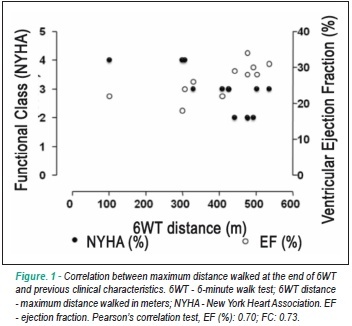
BACKGROUND: The 6-minute walk test (6WT) has been used as a means of assessment of the functional capacity, clinical staging and cardiovascular prognosis. Its safety and metabolic impact have not been frequently described in the literature, especially in patients with severe heart failure with clinical indication for cardiovascular transplantation. OBJECTIVE: To evaluate the occurrence of arrhythmias and cardiovascular changes during 6WT. To correlate 6WT performance with clinical staging and cardiovascular prognosis. METHODS: Twelve patients, 10 of whom males, aged 52 ± 8 years were evaluated at baseline. 6WT was performed with telemetry electrocardiography, vital signs and lactate monitoring. The patients were followed-up for 12 months. RESULTS: The patients walked 399.4±122.5 (D, m), reaching a perceived exertion (PE) of 14.3±1.5 and a 34% baseline heart rate variation. Two patients presented more severe pre-6WT arrhythmia which did not worsen with the exercice, four patients presented a significant increase of blood lactate levels (>5 mmol/dl), and three interrupted the test. The distance walked correlated with the ejection fraction (%) and functional class (NYHA). After 12-month follow-up, three patients died and seven were rehospitalized for cardiac decompensation. The D/PE ratio and 2-minute heart rate recovery (HRR2, bpm) were lower in the death group. CONCLUSION: The clinical and electrocardiographic behaviors suggest that the method is safe, but it may be considered too strenuous for some patients with severe heart failure. Variables related to 6WT performance may be associated with the one-year follow-up mortality.

  • Effectiveness
  • health evaluation
  • Heart Failure
  • walking
Read Full Article
Creative Commons Attribution (CC BY) Creative Commons license
23/06/2009 DOI: 10.1590/S0066-782X2009000400011 Views 2

How to cite this article

EndNote RIS

Electronic Document Format (Vancouver)

Costa R, Silva KR, Crevelari ES, Nascimento WTJ, Nagumo MM, Martinelli Filho M, Jatene FB, et al. Effectiveness and Safety of Transvenous Removal of Cardiac Pacing and Implantable Cardioverter-defibrillator Leads in the Real Clinical Scenario. Arquivos Brasileiros de Cardiologia 2021;115(6):1114-2.

Electronic Document Format (ABNT)

Costa, Roberto; Silva, Katia Regina da; Crevelari, Elizabeth Sartori; Nascimento, Wagner Tadeu Jurevicius; Nagumo, Marcia Mitie; Martinelli Filho, Martino; Jatene, Fabio Biscegli. Effectiveness and Safety of Transvenous Removal of Cardiac Pacing and Implantable Cardioverter-defibrillator Leads in the Real Clinical Scenario. Arquivos Brasileiros de Cardiologia, v. 115, n. 6, p. 1114-1124, Jan. 2021.

Electronic Document Format (APA)

Costa, R., Silva, K. R. , Crevelari, E. S., Nascimento, W. T. J., Nagumo, M. M., Martinelli Filho, M., & Jatene, F. B. (2021). Effectiveness and Safety of Transvenous Removal of Cardiac Pacing and Implantable Cardioverter-defibrillator Leads in the Real Clinical Scenario. Arquivos Brasileiros de Cardiologia, 115(6), 1114-1124.

Electronic Document Format (ISO)

Costa, Roberto and Silva, Katia Regina da and Crevelari, Elizabeth Sartori and Nascimento, Wagner Tadeu Jurevicius and Nagumo, Marcia Mitie and Martinelli Filho, Martino and Jatene, Fabio Biscegli. Effectiveness and Safety of Transvenous Removal of Cardiac Pacing and Implantable Cardioverter-defibrillator Leads in the Real Clinical Scenario. Arquivos Brasileiros de Cardiologia [online]. 2021, vol. 115, n. 6, [cited 2026-10-14], pp. 1114-1124. Available from: <https://journals.cardiol.br/en/article/effectiveness-and-safety-of-transvenous-removal-of-cardiac-pacing-and-implantable-cardioverter-defibrillator-leads-in-the-real-clinical-scenario/>. ISSN 0066-782X

EndNote RIS

Electronic Document Format (Vancouver)

Correia LCL. Effectiveness of Biomarkers in Cardiology. Arquivos Brasileiros de Cardiologia 2014;103(6):449-50.

Electronic Document Format (ABNT)

Correia, Luis Cláudio Lemos. Effectiveness of Biomarkers in Cardiology. Arquivos Brasileiros de Cardiologia, v. 103, n. 6, p. 449-450, Nov. 2014.

Electronic Document Format (APA)

Correia, L. C. L. (2014). Effectiveness of Biomarkers in Cardiology. Arquivos Brasileiros de Cardiologia, 103(6), 449-450.

Electronic Document Format (ISO)

Correia, Luis Cláudio Lemos. Effectiveness of Biomarkers in Cardiology. Arquivos Brasileiros de Cardiologia [online]. 2014, vol. 103, n. 6, [cited 2026-10-14], pp. 449-450. Available from: <https://journals.cardiol.br/en/article/effectiveness-of-biomarkers-in-cardiology/>. ISSN 0066-782X

EndNote RIS

Electronic Document Format (Vancouver)

Pellegrini DO, Gomes VO, Lasevitch R, Smidt L, Azeredo MA, Ledur P, Bodanese R, et al. Efficacy and Safety of Drug-Eluting Stents in the Real World: 8-Year Follow-Up. Arquivos Brasileiros de Cardiologia 2014;103(3):174-82.

Electronic Document Format (ABNT)

Pellegrini, Denise Oliveira; Gomes, Vitor Osório; Lasevitch, Ricardo; Smidt, Luis; Azeredo, Marco Aurélio; Ledur, Priscila; Bodanese, Rodrigo; Sinnott, Leonardo; Moriguchi, Emílio; Caramori, Paulo. Efficacy and Safety of Drug-Eluting Stents in the Real World: 8-Year Follow-Up. Arquivos Brasileiros de Cardiologia, v. 103, n. 3, p. 174-182, Jul. 2014.

Electronic Document Format (APA)

Pellegrini, D. O., Gomes, V. O., Lasevitch, R., Smidt, L., Azeredo, M. A., Ledur, P., Bodanese, R., Sinnott, L., Moriguchi, E., & Caramori, P. (2014). Efficacy and Safety of Drug-Eluting Stents in the Real World: 8-Year Follow-Up. Arquivos Brasileiros de Cardiologia, 103(3), 174-182.

Electronic Document Format (ISO)

Pellegrini, Denise Oliveira and Gomes, Vitor Osório and Lasevitch, Ricardo and Smidt, Luis and Azeredo, Marco Aurélio and Ledur, Priscila and Bodanese, Rodrigo and Sinnott, Leonardo and Moriguchi, Emílio and Caramori, Paulo. Efficacy and Safety of Drug-Eluting Stents in the Real World: 8-Year Follow-Up. Arquivos Brasileiros de Cardiologia [online]. 2014, vol. 103, n. 3, [cited 2026-10-14], pp. 174-182. Available from: <https://journals.cardiol.br/en/article/efficacy-and-safety-of-drug-eluting-stents-in-the-real-world-8-year-follow-up/>. ISSN 0066-782X

EndNote RIS

Electronic Document Format (Vancouver)

Braga CYY, Rivetti LA, Stella FP. Effectiveness and safety of drug-eluting stents in a cardiology clinic in Curitiba, PR, Brazil. Arquivos Brasileiros de Cardiologia 2010;95(1):3-11.

Electronic Document Format (ABNT)

Braga, Chiu Yun Yu; Rivetti, Luiz Antonio; Stella, Francisco de Paula. Effectiveness and safety of drug-eluting stents in a cardiology clinic in Curitiba, PR, Brazil. Arquivos Brasileiros de Cardiologia, v. 95, n. 1, p. 3-11, Jul. 2010.

Electronic Document Format (APA)

Braga, C. Y. Y., Rivetti, L. A., & Stella, F. P. (2010). Effectiveness and safety of drug-eluting stents in a cardiology clinic in Curitiba, PR, Brazil. Arquivos Brasileiros de Cardiologia, 95(1), 3-11.

Electronic Document Format (ISO)

Braga, Chiu Yun Yu and Rivetti, Luiz Antonio and Stella, Francisco de Paula. Effectiveness and safety of drug-eluting stents in a cardiology clinic in Curitiba, PR, Brazil. Arquivos Brasileiros de Cardiologia [online]. 2010, vol. 95, n. 1, [cited 2026-10-14], pp. 3-11. Available from: <https://journals.cardiol.br/en/article/effectiveness-and-safety-of-drug-eluting-stents-in-a-cardiology-clinic-in-curitiba-pr-brazil/>. ISSN 0066-782X

EndNote RIS

Electronic Document Format (Vancouver)

Cipriano Jr G, Yuri D, Bernardelli GF, Mair V, Buffolo E, Branco JNR. Analysis of 6-minute walk test safety in pre-heart transplantation patients. Arquivos Brasileiros de Cardiologia 2009;92(4):312-9.

Electronic Document Format (ABNT)

Cipriano Jr, Gerson; Yuri, Darlene; Bernardelli, Graziella França; Mair, Vanessa; Buffolo, Enio; Branco, João Nelson Rodrigues. Analysis of 6-minute walk test safety in pre-heart transplantation patients. Arquivos Brasileiros de Cardiologia, v. 92, n. 4, p. 312-319, Jun. 2009.

Electronic Document Format (APA)

Cipriano Jr, G., Yuri, D., Bernardelli, G. F., Mair, V., Buffolo, E., & Branco, J. N. R. (2009). Analysis of 6-minute walk test safety in pre-heart transplantation patients. Arquivos Brasileiros de Cardiologia, 92(4), 312-319.

Electronic Document Format (ISO)

Cipriano Jr, Gerson and Yuri, Darlene and Bernardelli, Graziella França and Mair, Vanessa and Buffolo, Enio and Branco, João Nelson Rodrigues. Analysis of 6-minute walk test safety in pre-heart transplantation patients. Arquivos Brasileiros de Cardiologia [online]. 2009, vol. 92, n. 4, [cited 2026-10-14], pp. 312-319. Available from: <https://journals.cardiol.br/en/article/analysis-of-6-minute-walk-test-safety-in-pre-heart-transplantation-patients/>. ISSN 0066-782X

  • About ABC Family
  • Internal Regulation
  • Editorial Board
  • Brazilian Society of Cardiology (SBC)

Issues

SBC Guidelines

  • Videos
  • Podcasts
  • News