ABC Family Arquivos Brasileiros de Cardiologia International Journal of Cardiovascular Sciences ABC Heart Failure & Cardiomyopathy ABC Imagem Cardiovascular
Português English
ABC Family
Português English
  • About
    • About ABC Family
    • Internal Regulation
    • Editorial Board
    • Brazilian Society of Cardiology (SBC)
  • Issues
  • SBC Guidelines
  • Content
    • Videos
    • Podcasts
    • News
  • About
    • About ABC Family
    • Internal Regulation
    • Editorial Board
    • Brazilian Society of Cardiology (SBC)
  • Issues
  • SBC Guidelines
  • Content
    • Videos
    • Podcasts
    • News

ABC Family

  • ABC Family
  • Arquivos Brasileiros de Cardiologia
  • International Journal of Cardiovascular Sciences
  • ABC Heart Failure & Cardiomyopathy
  • ABC Imagem Cardiovascular
Search in

No content found.

Journals
Ordering
Article types
Others

  1. Home
  2. Keyword: Physiotherapy
ABC
Editorial

Post-COVID Dysautonomias: The Importance of Early Recognition and Implementation of Recovery Programs

Denise Hachul et al. Tatiana Almeida Mauricio Scanavacca

The international scientific community has devoted all its efforts over the last three years to a better understanding and treatment of the SARS-COV-2 infection, which initially seemed to be limited to a severe acute respiratory syndrome. However, as time goes by, we are faced with a growing number of patients with multisystemic, persistent, intermittent, or late symptoms, which generate significant psycho-functional impairment of those affected and reveal to us the chronic and unpredictable nature of the disease.

The recognized Post-COVID Syndrome courses with a significant number of complaints described in case reports, population studies, and meta-analyses. Myocarditis, myocardial infarction, stroke, heart failure, arrhythmias, genitourinary, gastrointestinal, endocrinological, central, and peripheral neurological disorders of varying severities have been described in the subacute and chronic phases after contact with the virus.–

[…]
  • Depression
  • Dysautonomias/post-covid
  • Exercises
  • Memory/deficiency
  • Physiotherapy
  • Post-Covid/complications
  • Rehabilitation
  • SARS-CoV-2
Read Full Article
Creative Commons Attribution (CC BY) Creative Commons license
03/04/2023 DOI: 10.36660/abc.20230110 Views 1
Figure 1
IJCS
Original Article

Effects of Inspiratory Muscle Training Using an Electronic Device on Patients Undergoing Cardiac Surgery: A Randomized Controlled Trial

João Vyctor Silva Fortes et al. Mayara Gabrielle Barbosa Borges Maria Jhany da Silva Marques Rafaella Lima Oliveira … Liana Rodrigues da Rocha Érica Miranda de Castro Mateus Souza Esquivel Daniel Lago Borges

Abstract

Background

Cardiac surgery causes pathophysiological changes that favor the occurrence of pulmonary and functional complications.

Objective

To investigate the effects of inspiratory muscle training (IMT) with an electronic device on patients undergoing cardiac surgery.

Methods

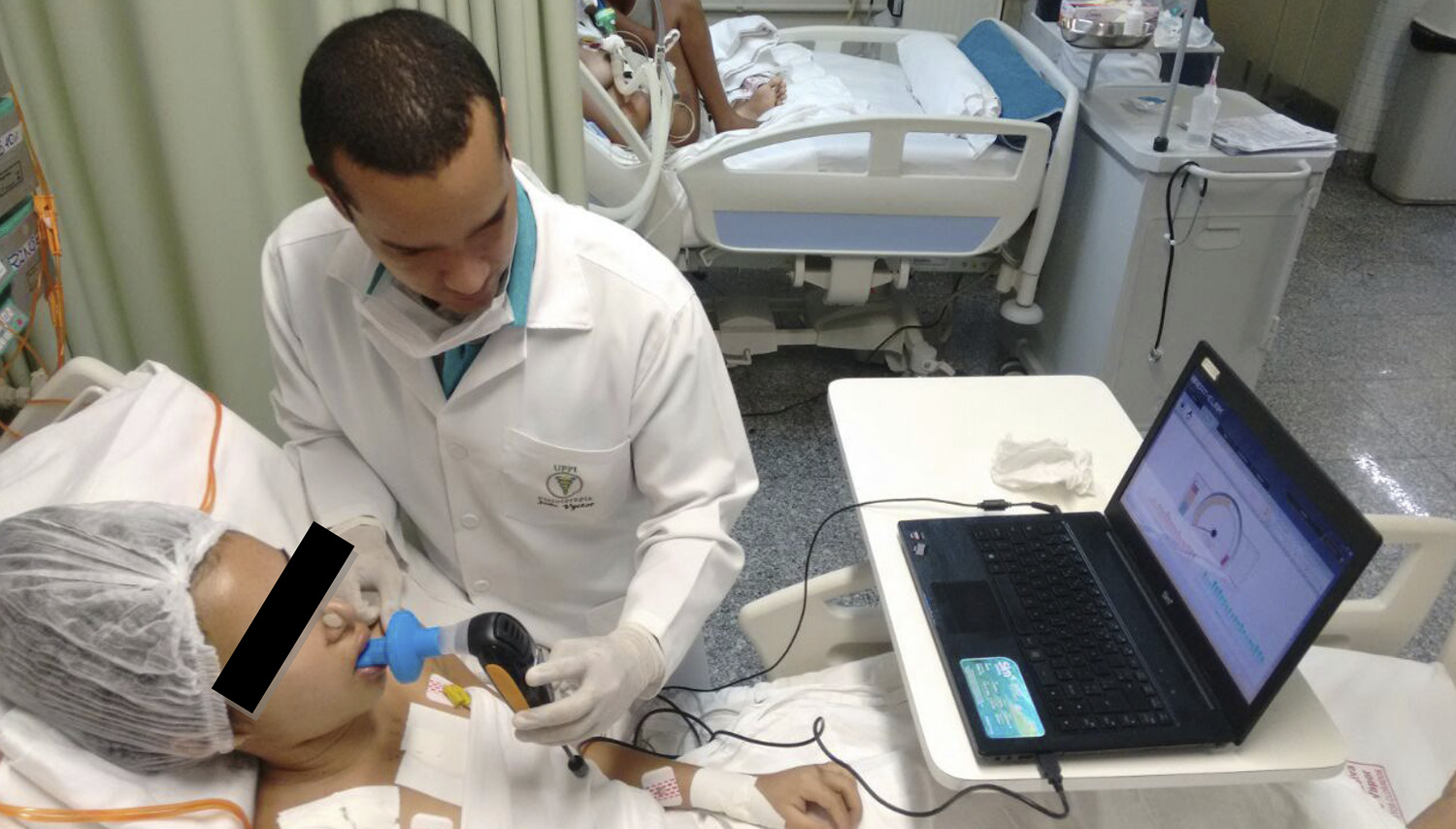
A randomized controlled trial was conducted with 30 adult patients undergoing elective cardiac surgery. A control group (CG) received conventional physical therapy care, and an intervention group (IG) received IMT using the POWERbreathe K5® electronic device. Two daily sessions of physical therapy were performed at the intensive care unit and one daily session at the ward until the sixth postoperative day. The following variables were measured preoperatively and on the sixth postoperative day, in both groups: inspiratory muscle strength, dynamic inspiratory muscle strength, and peak inspiratory flow. Data distribution was evaluated by the Shapiro-Wilk test. Analysis of variance was used, and the results were considered statistically significant when p < 0.05.

Results

Maximal inspiratory pressure (71.7 ± 17.1 cmH2O vs 63.3 ± 21.3 cmH2O; p = 0.11], S-index (52.61 ± 18.61 vs 51.08 ± 20.71), and peak inspiratory flow [(2.94 ± 1.09 vs 2.79 ± 1.26)] were maintained in the IG but had a significant reduction in the CG.

Conclusion

IMT performed with an electronic device was effective at maintaining inspiratory muscle strength, dynamic inspiratory muscle strength, and peak inspiratory flow when compared to conventional physical therapy. Int J Cardiovasc Sci. 2020; [online].ahead print, PP.0-0

  • Breathing Exercises
  • Cardiac Surgery/complications
  • Muscle Strength
  • Physiotherapy
  • Rehabilitation
  • Respiratory Tract Diseases/complications
Read Full Article
Creative Commons Attribution (CC BY) Creative Commons license
06/11/2020 DOI: 10.36660/ijcs.20190093 Views 1
IJCS
Review Article

Effects of Exercise Training on Cardiovascular and Autonomic Parameters in Stroke Survivors: A Systematic Review

Bruno Bavaresco Gambassi et al. Fabiano de Jesus Furtado Almeida Ana Eugênia Araújo Furtado Almeida João Alberto Ribeiro … Tânia Maria Gaspar Novais Paulo Adriano Schwingel Ciro Oliveira Queiroz Clarcson Plácido Conceição dos Santos Bruno Rodrigues

Abstract

Negative changes in cardiovascular and autonomic variables in stroke survivors have encouraged the global scientific community to focus on investigating therapeutic strategies to mitigate stroke damage. The objective of the present study was to describe the effects of exercise training on cardiovascular and autonomic variables in stroke survivors. We used the PICO (population, intervention, control/comparison, and outcome variables) model for the search of articles in PubMed and Physiotherapy Evidence Databases from 2009 to December 2018. The following data were also recorded: type of study, author, year of publication, participants (time after stroke, sample size, and age) and benefits of exercise training. A total of 544 articles were initially selected, of which nine peer-reviewed articles met the search criteria. These nine studies enrolled 611 participants (middle-aged or elderly), and pointed to positive effects of training on maximal oxygen uptake, peak aerobic capacity, 6-minute walk test and resting heart rate. However, more well-controlled studies are needed to confirm the benefits of exercise training on cardiovascular and autonomic variables in this population.

  • Autonomic Nervous System
  • Cardiovascular System
  • Exercise
  • physical fitness
  • Physiotherapy
  • Rehabilitation
  • Review
  • Stroke
Read Full Article
Creative Commons Attribution (CC BY) Creative Commons license
12/08/2019 DOI: 10.5935/2359-4802.20190047
Figure 1
ABC
Original Article

Safety and Efficacy of Aerobic Exercise Training Associated to Non-Invasive Ventilation in Patients with Acute Heart Failure

Mayron F. Oliveira et al. Rita C. Santos Suellen A. Artz Vanessa M. F. Mendez … Denise M. L. Lobo Edileide B. Correia Almir S. Ferraz Iracema I. K. Umeda Priscila A. Sperandio

Abstract

Background:

Exercise training (ET) improves functional capacity in chronic heart failure (HF). However, ET effects in acute HF are unknown.

Objective:

To investigate the effects of ET alone or combined with noninvasive ventilation (NIV) compared with standard medical treatment during hospitalization in acute HF patients.

Methods:

Twenty-nine patients (systolic HF) were randomized into three groups: control (Control – only standard medical treatment); ET with placebo NIV (ET+Sham) and ET+NIV (NIV with 14 and 8 cmH2O of inspiratory and expiratory pressure, respectively). The 6MWT was performed on day 1 and day 10 of hospitalization and the ET was performed on an unloaded cycle ergometer until patients’ tolerance limit (20 min or less) for eight consecutive days. For all analyses, statistical significance was set at 5% (p < 0.05).

Results:

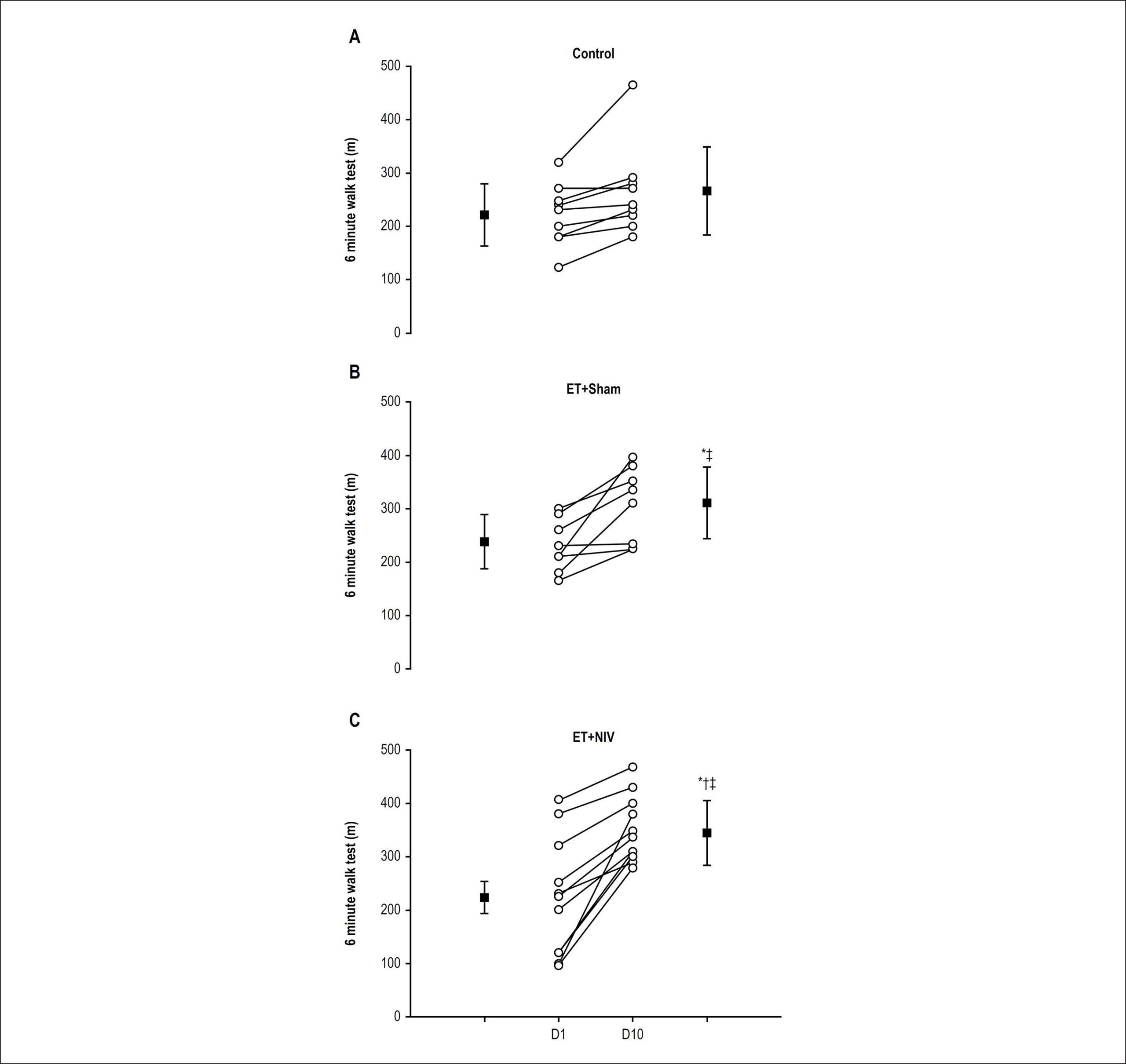
None of the patients in either exercise groups had adverse events or required exercise interruption. The 6MWT distance was greater in ET+NIV (Δ120 ± 72 m) than in ET+Sham (Δ73 ± 26 m) and Control (Δ45 ± 32 m; p < 0.05). Total exercise time was greater (128 ± 10 vs. 92 ± 8 min; p < 0.05) and dyspnea was lower (3 ± 1 vs. 4 ± 1; p < 0.05) in ET+NIV than ET+Sham. The ET+NIV group had a shorter hospital stay (17 ± 10 days) than ET+Sham (23 ± 8 days) and Control (39 ± 15 days) groups (p < 0.05). Total exercise time in ET+Sham and ET+NIV had significant correlation with length of hospital stay (r = -0.75; p = 0.01).

Conclusion:

Exercise training in acute HF was safe, had no adverse events and, when combined with NIV, improved 6MWT and reduce dyspnea and length of stay.

  • Acute Heart Failure
  • Exercise
  • Non-Invasive Ventilation
  • Physiotherapy
  • Rehabilitation
Read Full Article
Creative Commons Attribution (CC BY) Creative Commons license
12/03/2018 DOI: 10.5935/abc.20180039 Views 1
IJCS
Original Article

Correlation between Length of Hospital Stay and Gait Speed in Patients Submitted to Cardiac Surgery

André Luiz Lisboa Cordeiro et al. Daniel Lago Borges Max Paulo Peruna André Raimundo Guimarães Lucas de Assis Cacau

Abstract

Background:

Cardiovascular diseases have been increasing worldwide in recent decades due to the increased occurrence of triggering factors. In the postoperative period of cardiovascular surgery, patients experience a functional decline, which may be potentiated by the length of hospital stay. Therefore, it is important to evaluate these patients’ functional capacity.

Objective:

To compare the length of hospital stay with the gait speed in patients undergoing cardiac surgery.

Method:

Prospective, cohort study carried out at the Instituto Nobre de Cardiologia (Incardio) at Santa Casa de Misericórdia (Feira de Santana, Bahia). Upon discharge, all patients were evaluated with the 6-minute walk test (6MWT). The length of hospital stay in the postoperative period was also recorded at the same time and correlate with the gait speed. We used the Kolmogorov-Smirnov test to evaluate the assumption of normality, and Spearman’s correlation to correlate the gait velocity with age, length of hospital stay, and duration of cardiopulmonary bypass (CPB) and invasive mechanical ventilation (IMV). All conclusions were based on a significance level of 5%.

Results:

In all, 64 patients were included (33 males [51.5%], mean age 57.2 ± 14.06 years). The mean distance walked by the patients was 375.8 ± 197.6 meters, the mean gait speed was 0.98 ± 0.53 m/s, and the mean hospital stay was 8.2 ± 2.3 days. A weak correlation was observed between the length of hospital stay and gait speed (r = 0.27 and p = 0.02).

Conclusion:

The length of hospital stay correlated weakly with the gait speed upon hospital discharge in a sample of patients undergoing cardiac surgery.

Trial registration:

Registered at CAAE (41151214.5.0000.5654) on June 26, 2015.

  • Cardiovascular Diseases/surgery
  • Hospitalization
  • Physiotherapy
  • Thoracic Surgery
  • Velocity Measurement
  • walking
Read Full Article
Creative Commons Attribution (CC BY) Creative Commons license
01/01/2017 DOI: 10.5935/2359-4802.20170029

How to cite this article

EndNote RIS

Electronic Document Format (Vancouver)

Hachul D, Almeida T, Scanavacca M. Post-COVID Dysautonomias: The Importance of Early Recognition and Implementation of Recovery Programs. Arquivos Brasileiros de Cardiologia 2023;120(3):e20230110.

Electronic Document Format (ABNT)

Hachul, Denise; Almeida, Tatiana; Scanavacca, Mauricio. Post-COVID Dysautonomias: The Importance of Early Recognition and Implementation of Recovery Programs. Arquivos Brasileiros de Cardiologia, v. 120, n. 3, e20230110, Apr. 2023.

Electronic Document Format (APA)

Hachul, D., Almeida, T., & Scanavacca, M. (2023). Post-COVID Dysautonomias: The Importance of Early Recognition and Implementation of Recovery Programs. Arquivos Brasileiros de Cardiologia, 120(3), e20230110.

Electronic Document Format (ISO)

Hachul, Denise and Almeida, Tatiana and Scanavacca, Mauricio. Post-COVID Dysautonomias: The Importance of Early Recognition and Implementation of Recovery Programs. Arquivos Brasileiros de Cardiologia [online]. 2023, vol. 120, n. 3, [cited 2026-10-14], e20230110. Available from: <https://journals.cardiol.br/en/article/post-covid-dysautonomias-the-importance-of-early-recognition-and-implementation-of-recovery-programs/>. ISSN 0066-782X

EndNote RIS

Electronic Document Format (Vancouver)

Fortes JVS, Borges MGB, Marques MJS, Oliveira RL, Rocha LR, Castro M, Esquivel MS, et al. Effects of Inspiratory Muscle Training Using an Electronic Device on Patients Undergoing Cardiac Surgery: A Randomized Controlled Trial. International Journal of Cardiovascular Sciences 2020;34(1):44-52.

Electronic Document Format (ABNT)

Fortes, João Vyctor Silva; Borges, Mayara Gabrielle Barbosa; Marques, Maria Jhany da Silva; Oliveira, Rafaella Lima; Rocha, Liana Rodrigues da; Castro, Érica Miranda de; Esquivel, Mateus Souza; Borges, Daniel Lago. Effects of Inspiratory Muscle Training Using an Electronic Device on Patients Undergoing Cardiac Surgery: A Randomized Controlled Trial. International Journal of Cardiovascular Sciences, v. 34, n. 1, p. 44-52, Nov. 2020.

Electronic Document Format (APA)

Fortes, J. V. S., Borges, M. G. B., Marques, M. J. S., Oliveira, R. L., Rocha, L. R. , Castro, M. , Esquivel, M. S., & Borges, D. L. (2020). Effects of Inspiratory Muscle Training Using an Electronic Device on Patients Undergoing Cardiac Surgery: A Randomized Controlled Trial. International Journal of Cardiovascular Sciences, 34(1), 44-52.

Electronic Document Format (ISO)

Fortes, João Vyctor Silva and Borges, Mayara Gabrielle Barbosa and Marques, Maria Jhany da Silva and Oliveira, Rafaella Lima and Rocha, Liana Rodrigues da and Castro, Érica Miranda de and Esquivel, Mateus Souza and Borges, Daniel Lago. Effects of Inspiratory Muscle Training Using an Electronic Device on Patients Undergoing Cardiac Surgery: A Randomized Controlled Trial. International Journal of Cardiovascular Sciences [online]. 2020, vol. 34, n. 1, [cited 2026-10-14], pp. 44-52. Available from: <https://journals.cardiol.br/en/article/effects-of-inspiratory-muscle-training-using-an-electronic-device-on-patients-undergoing-cardiac-surgery-a-randomized-controlled-trial/>. ISSN 2359-4802

EndNote RIS

Electronic Document Format (Vancouver)

Gambassi BB, Almeida FJF, Almeida AEAF, Ribeiro JA, Novais TMG, Schwingel PA, Queiroz CO, et al. Effects of Exercise Training on Cardiovascular and Autonomic Parameters in Stroke Survivors: A Systematic Review. International Journal of Cardiovascular Sciences 2019;32(4):408-13.

Electronic Document Format (ABNT)

Gambassi, Bruno Bavaresco; Almeida, Fabiano de Jesus Furtado; Almeida, Ana Eugênia Araújo Furtado; Ribeiro, João Alberto; Novais, Tânia Maria Gaspar; Schwingel, Paulo Adriano; Queiroz, Ciro Oliveira; Santos, Clarcson Plácido Conceição dos; Rodrigues, Bruno. Effects of Exercise Training on Cardiovascular and Autonomic Parameters in Stroke Survivors: A Systematic Review. International Journal of Cardiovascular Sciences, v. 32, n. 4, p. 408-413, Aug. 2019.

Electronic Document Format (APA)

Gambassi, B. B., Almeida, F. J. F., Almeida, A. E. A. F., Ribeiro, J. A., Novais, T. M. G., Schwingel, P. A., Queiroz, C. O., Santos, C. P. C. , & Rodrigues, B. (2019). Effects of Exercise Training on Cardiovascular and Autonomic Parameters in Stroke Survivors: A Systematic Review. International Journal of Cardiovascular Sciences, 32(4), 408-413.

Electronic Document Format (ISO)

Gambassi, Bruno Bavaresco and Almeida, Fabiano de Jesus Furtado and Almeida, Ana Eugênia Araújo Furtado and Ribeiro, João Alberto and Novais, Tânia Maria Gaspar and Schwingel, Paulo Adriano and Queiroz, Ciro Oliveira and Santos, Clarcson Plácido Conceição dos and Rodrigues, Bruno. Effects of Exercise Training on Cardiovascular and Autonomic Parameters in Stroke Survivors: A Systematic Review. International Journal of Cardiovascular Sciences [online]. 2019, vol. 32, n. 4, [cited 2026-10-14], pp. 408-413. Available from: <https://journals.cardiol.br/en/article/effects-of-exercise-training-on-cardiovascular-and-autonomic-parameters-in-stroke-survivors-a-systematic-review/>. ISSN 2359-4802

EndNote RIS

Electronic Document Format (Vancouver)

Oliveira MF, Santos RC, Artz SA, Mendez VMF, Lobo DML, Correia EB, Ferraz AS, et al. Safety and Efficacy of Aerobic Exercise Training Associated to Non-Invasive Ventilation in Patients with Acute Heart Failure. Arquivos Brasileiros de Cardiologia 2018;110(5):467-75.

Electronic Document Format (ABNT)

Oliveira, Mayron F.; Santos, Rita C.; Artz, Suellen A.; Mendez, Vanessa M. F.; Lobo, Denise M. L.; Correia, Edileide B.; Ferraz, Almir S.; Umeda, Iracema I. K.; Sperandio, Priscila A.. Safety and Efficacy of Aerobic Exercise Training Associated to Non-Invasive Ventilation in Patients with Acute Heart Failure. Arquivos Brasileiros de Cardiologia, v. 110, n. 5, p. 467-475, Mar. 2018.

Electronic Document Format (APA)

Oliveira, M. F., Santos, R. C., Artz, S. A., Mendez, V. M. F., Lobo, D. M. L., Correia, E. B., Ferraz, A. S., Umeda, I. I. K., & Sperandio, P. A. (2018). Safety and Efficacy of Aerobic Exercise Training Associated to Non-Invasive Ventilation in Patients with Acute Heart Failure. Arquivos Brasileiros de Cardiologia, 110(5), 467-475.

Electronic Document Format (ISO)

Oliveira, Mayron F. and Santos, Rita C. and Artz, Suellen A. and Mendez, Vanessa M. F. and Lobo, Denise M. L. and Correia, Edileide B. and Ferraz, Almir S. and Umeda, Iracema I. K. and Sperandio, Priscila A.. Safety and Efficacy of Aerobic Exercise Training Associated to Non-Invasive Ventilation in Patients with Acute Heart Failure. Arquivos Brasileiros de Cardiologia [online]. 2018, vol. 110, n. 5, [cited 2026-10-14], pp. 467-475. Available from: <https://journals.cardiol.br/en/article/safety-and-efficacy-of-aerobic-exercise-training-associated-to-non-invasive-ventilation-in-patients-with-acute-heart-failure/>. ISSN 0066-782X

EndNote RIS

Electronic Document Format (Vancouver)

Cordeiro ALL, Borges DL, Peruna MP, Guimarães AR, Cacau LA. Correlation between Length of Hospital Stay and Gait Speed in Patients Submitted to Cardiac Surgery. International Journal of Cardiovascular Sciences 2017;30(2):123-7.

Electronic Document Format (ABNT)

Cordeiro, André Luiz Lisboa; Borges, Daniel Lago; Peruna, Max Paulo; Guimarães, André Raimundo; Cacau, Lucas de Assis. Correlation between Length of Hospital Stay and Gait Speed in Patients Submitted to Cardiac Surgery. International Journal of Cardiovascular Sciences, v. 30, n. 2, p. 123-127, Dec. 2016.

Electronic Document Format (APA)

Cordeiro, A. L. L., Borges, D. L., Peruna, M. P., Guimarães, A. R., & Cacau, L. A. (2017). Correlation between Length of Hospital Stay and Gait Speed in Patients Submitted to Cardiac Surgery. International Journal of Cardiovascular Sciences, 30(2), 123-127.

Electronic Document Format (ISO)

Cordeiro, André Luiz Lisboa and Borges, Daniel Lago and Peruna, Max Paulo and Guimarães, André Raimundo and Cacau, Lucas de Assis. Correlation between Length of Hospital Stay and Gait Speed in Patients Submitted to Cardiac Surgery. International Journal of Cardiovascular Sciences [online]. 2017, vol. 30, n. 2, [cited 2026-10-14], pp. 123-127. Available from: <https://journals.cardiol.br/en/article/correlation-between-length-of-hospital-stay-and-gait-speed-in-patients-submitted-to-cardiac-surgery/>. ISSN 2359-4802

  • About ABC Family
  • Internal Regulation
  • Editorial Board
  • Brazilian Society of Cardiology (SBC)

Issues

SBC Guidelines

  • Videos
  • Podcasts
  • News