ABC Family Arquivos Brasileiros de Cardiologia International Journal of Cardiovascular Sciences ABC Heart Failure & Cardiomyopathy ABC Imagem Cardiovascular
Português English
ABC Family
Português English
  • About
    • About ABC Family
    • Internal Regulation
    • Editorial Board
    • Brazilian Society of Cardiology (SBC)
  • Issues
  • SBC Guidelines
  • Content
    • Videos
    • Podcasts
    • News
  • About
    • About ABC Family
    • Internal Regulation
    • Editorial Board
    • Brazilian Society of Cardiology (SBC)
  • Issues
  • SBC Guidelines
  • Content
    • Videos
    • Podcasts
    • News

ABC Family

  • ABC Family
  • Arquivos Brasileiros de Cardiologia
  • International Journal of Cardiovascular Sciences
  • ABC Heart Failure & Cardiomyopathy
  • ABC Imagem Cardiovascular
Search in

No content found.

Journals
Ordering
Article types
Others

  1. Home
  2. Keyword: Unified Health System
Central Illustration
ABCIC
Review Article

Infective Endocarditis in Brazil: A Narrative Review and Critical Analysis of Population and Hospital Case Data

Diego Augusto Medeiros Santos et al. Flávio Tarasoutchi João Ricardo Cordeiro Fernandes Milena Ribeiro Paixão … Tânia Mara Varejão Strabelli Karen Francine Köohler Alfredo José Mansur Rinaldo Focaccia Siciliano

Abstract

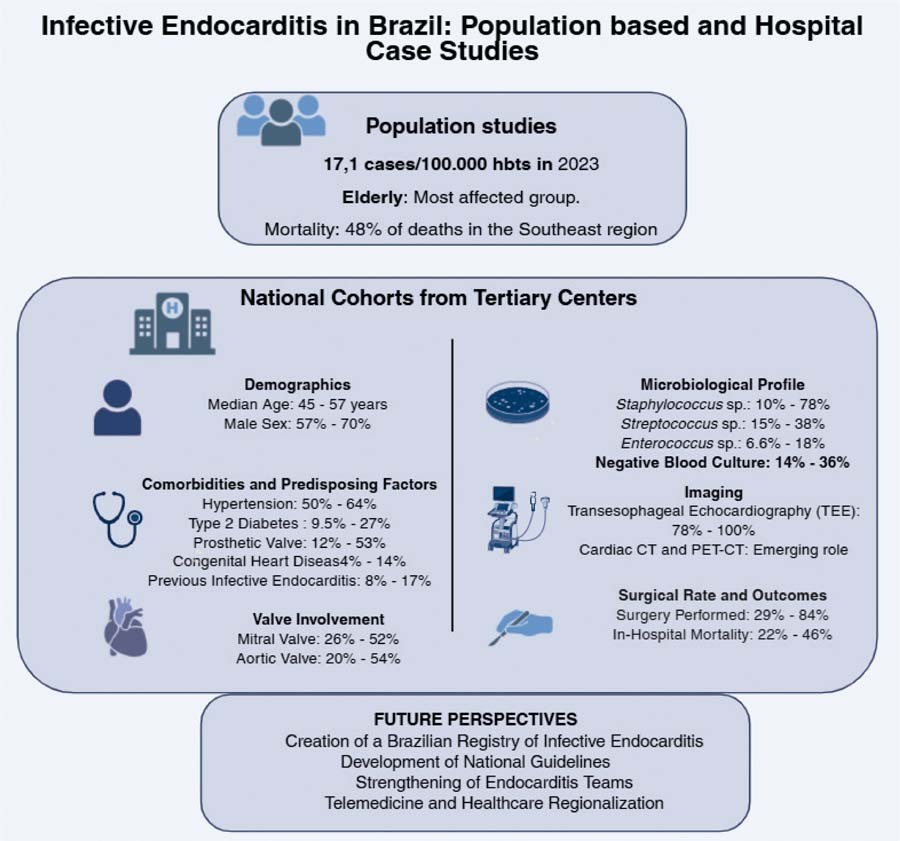
Infective endocarditis remains a serious condition with high morbidity and mortality rates despite advances in diagnostic and therapy. While the Global North has seen a shift toward older patients with prosthetic valve infections, Brazil’s understanding of the disease is hindered by reliance on fragmented, hospital-based data, primarily from the Southeast region. This narrative review synthesizes recent evidence to outline the national panorama. Population studies indicate an increase in incidence and mortality, primarily affecting men and the elderly, but with marked regional heterogeneity. Analyses of hospital case series reveal an epidemiological profile characterized by patients younger than international averages, with a high prevalence of comorbidities, underlying structural heart disease, and prosthetic valves. The microbiological landscape is diverse, with no consistent predominance between staphylococci and streptococci. Nevertheless, a particularly concerning finding is the high incidence of negative blood cultures. Severe complications are frequent, and variability exists in surgical intervention rates and in-hospital mortallity across studies. In light of this scenario, the authors propose a set of strategic actions to guide future advances: the creation of a Brazilian Registry of Infective Endocarditis, the development of Contextualized National Guidelines, the strengthening of multidisciplinary teams (Endocarditis Teams), and the implementation of measures with the potential to reduce regional disparities, such as telemedicine and the regionalization of care. The consolidation of these initiatives has the potential to transform the current landscape by enhancing epidemiological knowledge, standardizing care practices, and ultimately improving clinical outcomes nationwide.
  • Diagnostic Imaging
  • Endocarditis
  • Heart Valve Diseases
  • Unified Health System
Read Full Article
Creative Commons Attribution (CC BY) Creative Commons license
12/02/2026 DOI: 10.36660/abcimg.20250098i Views 2
Figure 1
ABCIC
Original Article

Overview of Professional Practice in Computed Tomography and Cardiac Magnetic Resonance Imaging in Brazil

Isabela Bispo Santos da Silva Costa et al. Jorge Andion Torreão Juliano de Lara Fernandes Henrique Trad … Gabriela Liberato Roberto Sasdelli Neto Silvio Henrique Barberato Ibraim Masciarelli Pinto Tiago Senra

Abstract

Background:

Non-invasive imaging for cardiovascular disease diagnosis has grown in volume and relevance in recent years, and it is important for early detection of cardiovascular diseases. There is a lack of data from Brazil on the availability of methods such as computed tomography (CT) and cardiac magnetic resonance imaging (CMR).

Objective:

This study assessed the regional distribution of professional practice and the exams performed, correlating these factors with population data and the number of active professionals.

Methods:

A nationwide survey was conducted by means of an online questionnaire applied to professionals who perform CT and CMR, compared with demographic data and the number of scans performed within Brazilian public and private healthcare systems.

Results:

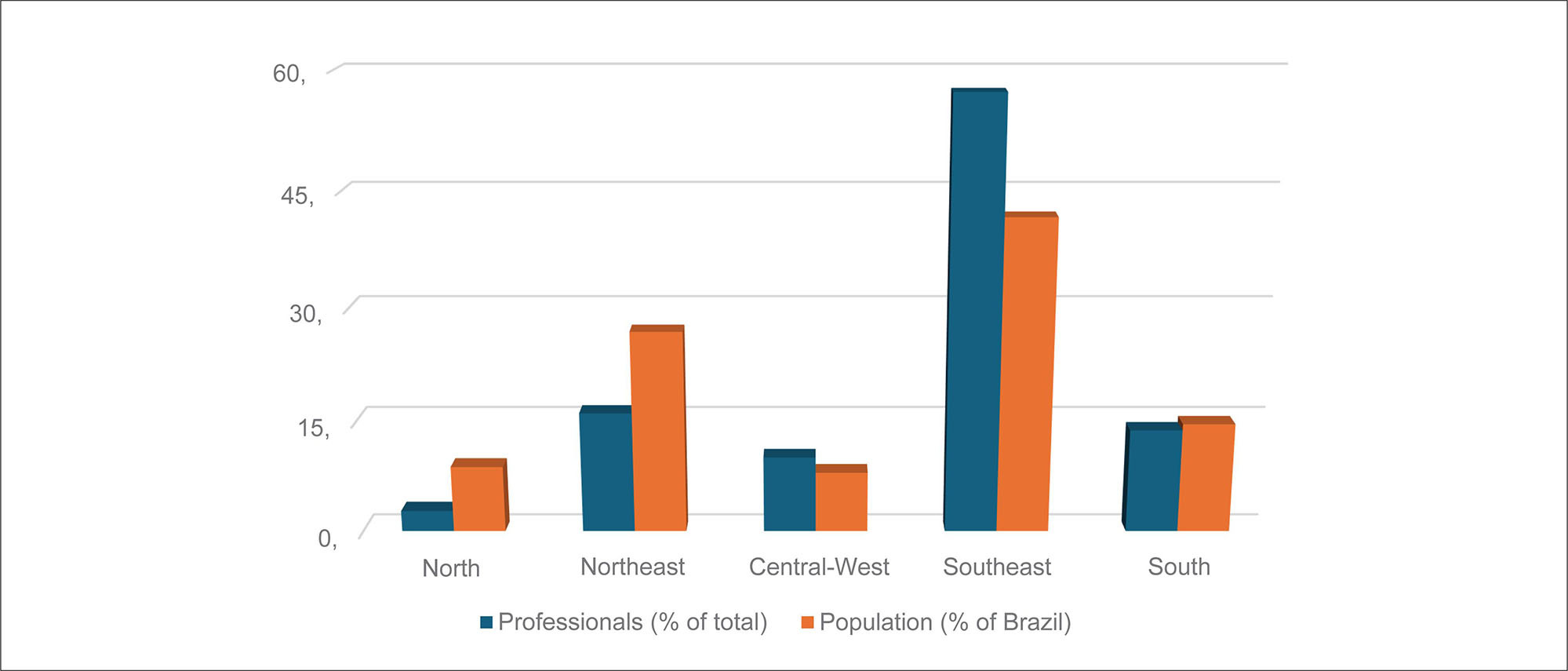
A total of 219 professionals filled out the questionnaire, 139 (63.8%) male, 161 (73.9%) cardiologists, and 46 (21.1%) radiologists. Regarding regional distribution, the Southeast had 125 professionals (57.3%), the Northeast 35 (16.1%), the South 30 (13.8%), the Central-West 22 (10.1%), and the North 6 (2.8%). The profile of these professionals in Brazilian regions was similar, with no statistical differences observed regarding the proportion of men (p = 0.2451), cardiologists (p = 0.1325), radiologists (p = 0.4564), or training time > 2 years (p = 0.8519). The Southeast had the highest absolute number of exams, and the North had the lowest.

Conclusion:

The data revealed structural disparities in access to cardiovascular imaging throughout Brazil, in terms of both number of professionals and number of exams performed. The regional discrepancies observed in this study reflect distinct demographic and economic circumstances in Brazilian regions.

  • Cardiovascular Diseases
  • Magnetic Resonance Imaging
  • Supplemental Health
  • Unified Health System
  • X-Ray Computed Tomography
Read Full Article
Creative Commons Attribution (CC BY) Creative Commons license
17/11/2025 DOI: 10.36660/abcimg.20250053i Views 1
ABC
Editorial

Datasus: An Essential Tool for Public Health in Brazil

Marcia Koike

Since its creation in 1991, the Information Technology Department of the Unified Health System (DATASUS) has implemented information systems and IT support necessary for the planning, operation, and control of institutions linked to the SUS. Furthermore, DATASUS provides information that can assist in analyzing the health situation, making evidence-based decisions and developing health programs.

Measuring the population’s health status began with recording mortality and survival data evolving epidemiological and morbidity information. Currently, data on morbidity, disability, access to services, quality of care, living conditions, and environmental factors are used to create Health Indicators essential for quantifying and evaluating health information.

[…]

  • Cardiovascular Diseases
  • Public Health
  • Unified Health System
Read Full Article
Creative Commons Attribution (CC BY) Creative Commons license
14/04/2025 DOI: 10.36660/abc.20250123i Views 1
Figure 1
ABCHF
Original Article

Availability of Natriuretic Peptide Testing in Primary Public Health Care in Brazil

Andressa Araujo Braga et al. Marisa da Silva Santos Bernardo Rangel Tura Bruno Monteiro Barros … Quenia Cristina Dias Morais Ione Gualandi Oliveira

Abstract

Background:

Early detection of heart failure makes it possible to intervene in risk factors, and treatment is capable of modifying the natural history of the disease. For diagnostic confirmation, natriuretic peptide (NP) testing or transthoracic echocardiography can be performed; the former is preferable when considering cost and accessibility. Although this test was incorporated into the Brazilian Unified Health System (SUS) in 2018, requests for this test were registered in only 4.63% of municipalities in the SUS Outpatient Information System (SIA/SUS) in 2022. This leads to difficulties in both heart failure diagnosis and access to specific treatments, given that the use of sacubitril valsartan sodium depends on the performance of this test.

Objective:

To evaluate the availability of NP testing in the SUS.

Methods:

Cross-sectional study carried out by means of telephone contact with a probabilistic sample of 255 Brazilian municipal health departments.

Results:

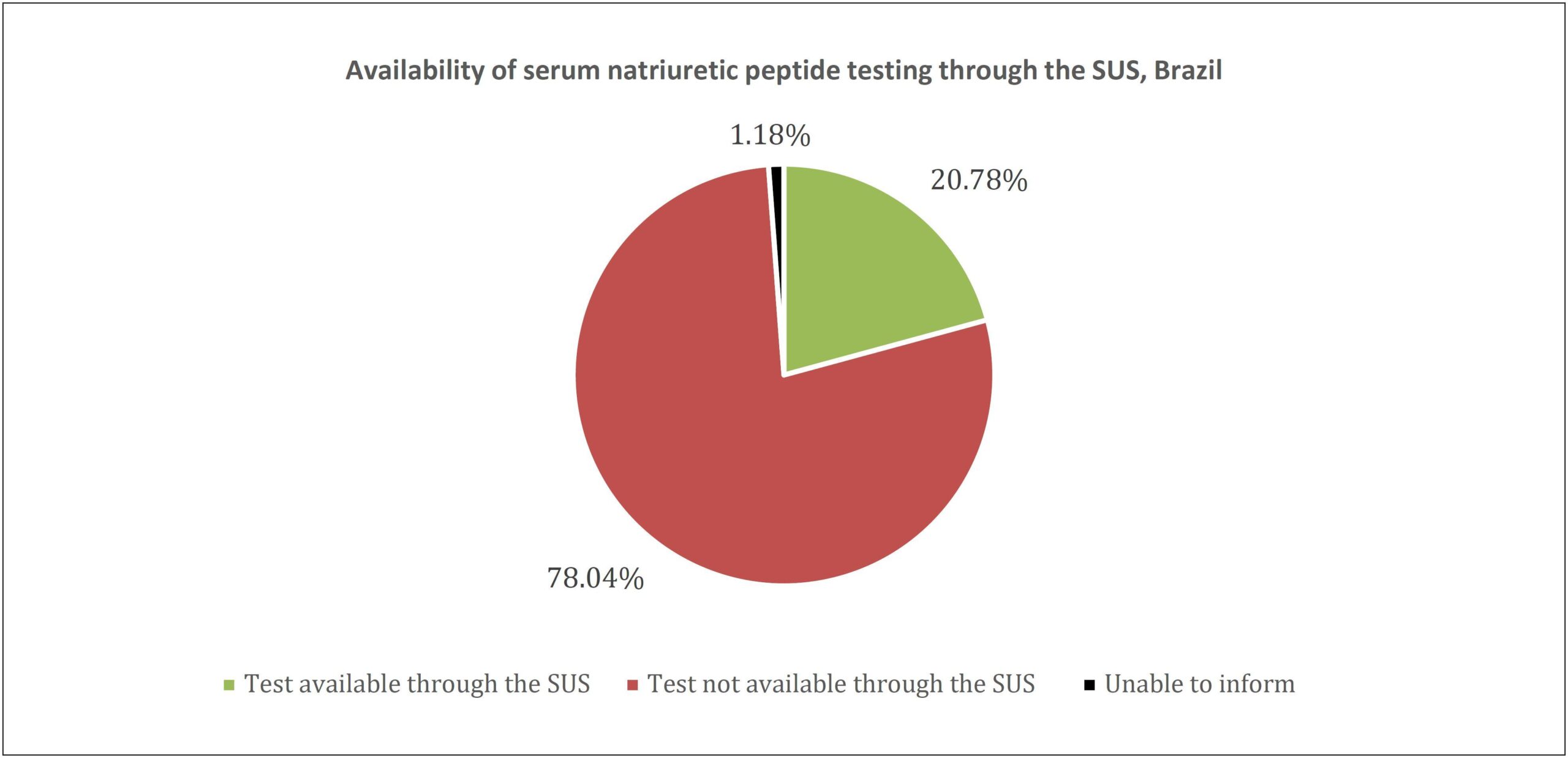
NP testing was reported as available in 20.78% (53/255) of contacts, either within the municipality (16.86% [43/255]) or in the reference municipality (3.92% [10/255]), while 78.04% (199/255) of interviewees reported that the test was not available through the SUS.

Conclusion:

Although NP testing has been incorporated into the SUS since 2018, we observed that the test was available in 12.23% of municipalities, in addition to those that actually registered a request in the SIA/SUS during the year studied (2022). This suggests that, in addition to the fact that the test is not offered in a uniform manner throughout the country, there are still municipalities where the test is available, but its use has not been registered.

  • Brain Natriuretic Peptide
  • Effective Access to Health Services
  • Health Equity
  • Heart Failure
  • Unified Health System
Read Full Article
Creative Commons Attribution (CC BY) Creative Commons license
31/12/2023 DOI: 10.36660/abchf.20230087
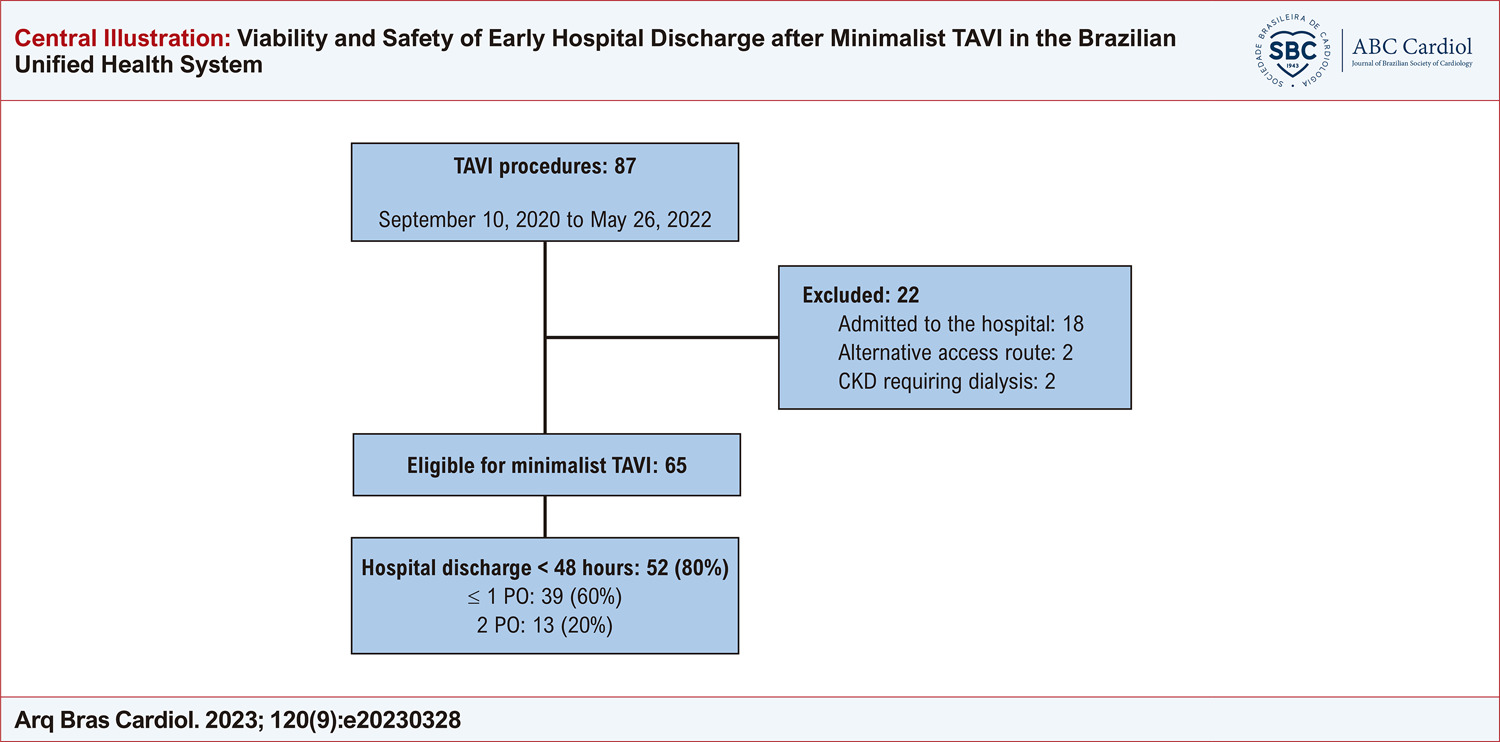
Viability and Safety of Early Hospital Discharge after Minimalist TAVI in the Brazilian Unified Health System
ABC
Research Letter

Viability and Safety of Early Hospital Discharge after Minimalist TAVI in the Brazilian Unified Health System

Marcos Almeida Meniconi et al. Fernanda Jacques Calçado Oliveira Alberto Colella Cervone Dorival Julio Della Togna … Fausto Feres Auristela Isabel de Oliveira Ramos Dimytri Alexandre de Alvim Siqueira

Introduction

Transcatheter aortic valve implantation (TAVI) has established itself as the treatment of choice for octogenarian patients with aortic stenosis. Broadly speaking, TAVI with a minimalist approach (M-TAVI) refers to the performance of the procedure under conscious sedation and local anesthesia, percutaneous femoral access, monitoring with transthoracic echocardiography, and early mobilization. Studies have indicated the safety of M-TAVI with hospital discharge within 24 hours after the procedure, with reduced hospital costs,,which is a relevant aspect from the perspective of national public health. Thus, the objective of this study was to evaluate the feasibility and safety of a multidisciplinary institutional M-TAVI protocol with the goal of hospital discharge within 48 hours, implemented in a tertiary hospital that is part of the Brazilian Unified Health System (SUS).

[…]

  • Aortic Valve Stenosis
  • Transcatheter Aortic Valve Replacement
  • Unified Health System
Read Full Article
Creative Commons Attribution (CC BY) Creative Commons license
20/10/2023 DOI: 10.36660/abc.20230328
Non-Targeted Self-Measured Blood Pressure and Hypertension Control in Public and Private Health Systems in Brazil
IJCS
Original Article

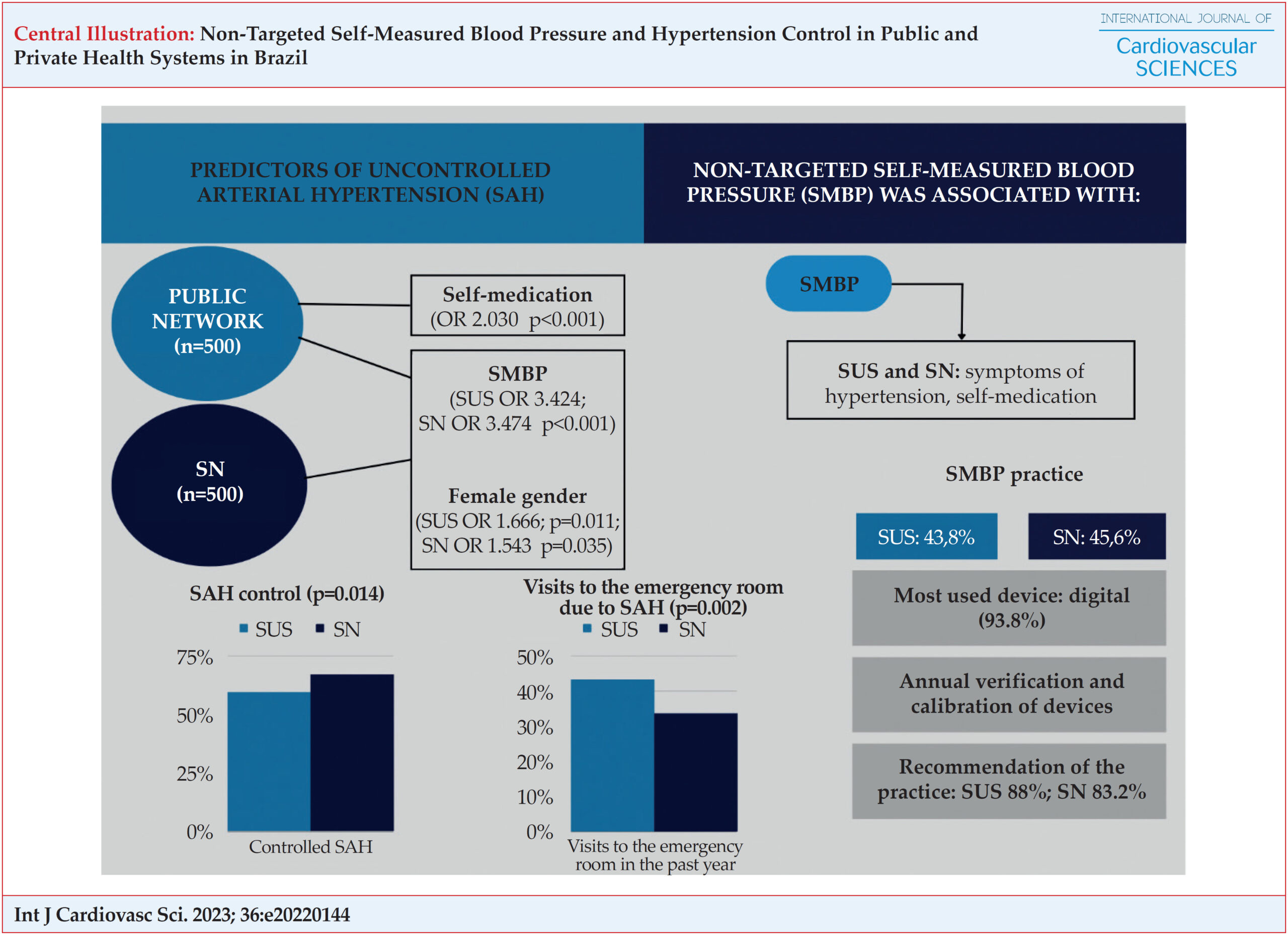
Non-Targeted Self-Measured Blood Pressure and Hypertension Control in Public and Private Health Systems in Brazil

Gabriela de Oliveira Salazar et al. Glessiane de Oliveira Almeida José Augusto Soares Barreto-Filho Marcos Antônio Almeida-Santos … Enaldo Vieira de Melo Felipe J. Aidar José Ícaro Nunes Cruz Joselina Luzia Menezes Oliveira Leonardo Baumworcel Antônio Carlos Sobral Sousa

Abstract

Background:

It is estimated that more than 30% of the Brazilian population has systemic arterial hypertension (SAH), and mostly as an uncontrolled disease. The most recent Brazilian Guideline of Hypertension recommends the practice of self-measurement of blood pressure (BP) as one of the strategies for a better control of SAH, but there is no consensus about the efficiency of this tool.

Objective:

To assess the control of SAH and the practice of non-targeted self-measured BP (SMBP) among hypertensive users of the Unified Health System (SUS) and the Supplementary Network (SN).

Methods:

This is a cross-sectional, observational, analytical study, with a stratified probability sample. One thousand volunteers were investigated, being 500 from SUS and 500 from the SN. Uni and multivariate analyses were performed considering a 5% significance level.

Results:

Patients from SUS presented inferior sociodemographic data (schooling, social status) in relation to those of the SN (p < 0.001), and showed lower control of SAH (p = 0.014), as well as more visits to the emergency room in the past year due to hypertension (p = 0.002), and fewer regular appointments with the cardiologist (p = 0.004). SMBP was equally present in both assessed groups (p = 0.567), even though users of the SN have been more advised to not conduct such a practice (p = 0.002). SMBP (p < 0.001) was an independent factor for uncontrolled SAH both in SUS (OR = 3.424) and in the SN (OR = 3.474).

Conclusion:

Patients in SUS presented lower SAH control. The practice of SMBP, mostly practiced with an uncalibrated digital device, was equally present in both groups and became an independent factor of uncontrolled SAH.

  • Health Systems
  • Hypertension
  • Unified Health System
Read Full Article
Creative Commons Attribution (CC BY) Creative Commons license
28/08/2023 DOI: 10.36660/ijcs.202220144
ABC
Letter to the Editor

Previous Chronic Diseases and their Relationship with COVID-19 Infection

Bruna Redivo de Souza et al. Eliane Mazzuco Layse Wiggers Kemper

Dear editor,

Due to the current global pandemic, the subject addressed is of great relevance. It is known that there is a certain urgency in the production and dissemination of scientific and epidemiological data about the new Coronavirus. Therefore, research that helps profile the population most vulnerable to this disease contributes to preventing an even greater number of deaths and sequelae resulting from COVID-19.

[…]

  • COVID-19
  • Diabetes Mellitus/prevalence
  • epidemiologic studies
  • Hypertension/prevalence
  • Pandemic
  • Primary Health Care
  • Risk Factors
  • Unified Health System
Read Full Article
Creative Commons Attribution (CC BY) Creative Commons license
05/08/2022 DOI: 10.36660/abc.20210859
Figure 1
ABCHF
Original Article

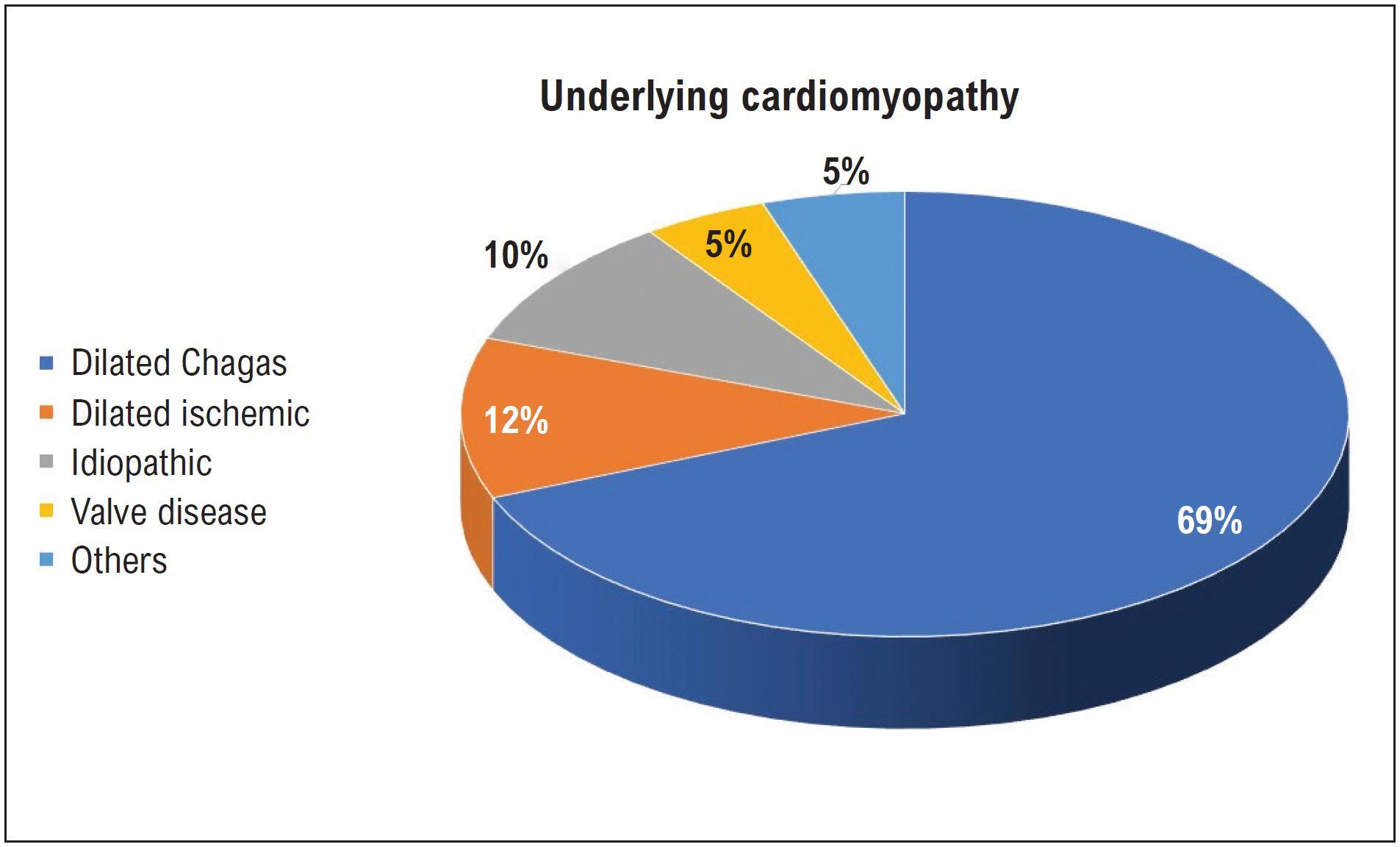
Cost-Effectiveness of Heart Transplantation: Data from a Referral Center in the Central-West Region of Brazil

Rodrigo Santos Biondi et al. Luis Claudio Correia Nubia Welerson Vieira Vitor Salvatore Barzilai … Renato Bueno Chaves Edvar Ferreira da Rocha Júnior Milla Carolina Costa Lafetá Araújo Ludmila Rosa Faria Phellipe Fabbrini Santos Lucas Juliana Soares de Araujo Ana Paula Camargos Araújo Andreza Andrade Barbosa Guilherme Urpia Monte Fernando Antibas Atik

Abstract

Background:

In Brazil, heart transplantation is fully funded by the Brazilian Unified Health System.

Objectives:

The objective of this study is to explore, for the first time, the cost-effectiveness profile of heart transplantation in a convenience sample, in a referral center in the Central-West Region of Brazil.

Methods:

Costs related to transplant hospitalization were evaluated, including those related to the surgical procedure, as well as hospitalization in the intensive care unit and in the inpatient ward, until patients were discharged. Costs associated with professional remuneration, fees, materials, and medications were computed. In order to assess effectiveness, post-transplant survival was used. For survivors, survival time was censored until the last contact recorded in the medical records of the transplant clinic. The cost-effectiveness ratio was expressed in Brazilian reals (BRL) per year of life saved.

Results:

We observed that the cost-effectiveness ratio was 25,806 BRL/year of life saved. Considering the average survival projected by Kaplan-Meier analysis, the cost-effectiveness ratio was 6,842 BRL/year of life saved.

Conclusion:

This result demonstrates a good cost-effectiveness ratio when compared to international studies that have evaluated this parameter. We did not, however, assess the micro-costing of the program and its feasibility for the institution. Given that this is a single-center study, the evaluation of other transplant centers is necessary in order to better elucidate this scenario.

  • Capital Financing
  • Cost-Benefit Analysis
  • Heart Transplantation
  • Unified Health System
Read Full Article
Creative Commons Attribution (CC BY) Creative Commons license
29/06/2022 DOI: 10.36660/abchf.20220051 Views 1
ABC
Editorial

It is Time for Coronary Computed Tomography Angiography to be Incorporated into the SUS

Nilson Tavares Poppi

In the evaluation of patients with stable coronary artery disease (CAD), also called chronic coronary syndrome (CCS), complementary tests are used both for diagnostic and prognostic purposes. , Anatomical (coronary angiography and coronary CT angiography) and functional (exercise testing, stress echocardiography, rest and stress myocardial perfusion imaging by scintigraphy, magnetic resonance, and positron emission tomography) tests are available. Coronary angiography, the gold standard, is invasive and therefore, indicated for clinically more severe patients, or those with poor prognostic findings in non-invasive testing, when myocardial revascularization is considered or planned.

The choice for the most appropriate diagnostic test is an important and challenging issue for the cardiologist in the clinical evaluation of CCS. The first step in this decision-making process is the assessment of the pre-test probability (PTP) of CAD. As recommended by the current SCC guidelines, , patients classified as having high PTP should receive medical therapy and undergo testing for prognostic information. The patients with low PTP should be assessed for an alternative diagnosis more likely than CAD. Patients with PTP calculated between 15-85% are in the intermediate range, where the complementary tests are more useful and important for CAD diagnosis. In addition to diagnostic accuracy and PTP, the selection of a non-invasive test depends on the clinical characteristics of patients, local expertise, and the availability of tests. In Brazil, it is estimated that up to 80% of the population depends exclusively on medical care provided by the public health system (SUS). In this context of managing economic resources, physicians and health managers should focus on the most cost-effective options for the diagnosis of CAD.

[…]

  • Computed Tomography Angiography
  • Coronary Artery Disease
  • Cost-Benefit Analysis
  • Diagnostic Imaging/methods
  • Stable Angina
  • Unified Health System
Read Full Article
Creative Commons Attribution (CC BY) Creative Commons license
18/03/2022 DOI: 10.36660/abc.20220033 Views 1
ABC
Editorial

The Challenge of Incorporating High-Cost Technologies: An Analysis of PCSK9 Inhibitors

Miriam Allein Zago Marcolino et al. Sérgio Renato da Rosa Decker Eduardo Gehling Bertoldi Carisi A. Polanczyk

Since the discovery, in 2003, that loss-of-function mutations in the gene that encodes proprotein convertase subtilisin/kexin type 9 (PCSK9) reduce LDL cholesterol levels, there has been growing interest in using PCSK9 pathways to treat patients with increased risk of cardiovascular disease and atherosclerosis., In multiple randomized clinical trials, PCSK9 inhibitors reduced LDL levels, with a significant reduction in cardiovascular events, although the effect on mortality has been less consistent. The FOURIER clinical trial was the largest randomized clinical trial with these medications, including 27,564 patients with high risks; it demonstrated a reduction in major cardiovascular events with the use of PCSK9 inhibitors, without any significant impact on cardiovascular mortality.

Nevertheless, the high cost of therapy, with continuous lifelong treatment, is an important obstacle to its use. Costs directly impact the prescription of these medications by physicians, as well as patient compliance, and large-scale adoption by health systems. This problem is not unique to low- and middle-income countries. Several international studies have indicated that, from an economic perspective, the prices of these drugs were not proportionate to the expected benefit., There has been massive appeal from the international community for a reduction in the price of PCSK9 inhibitors, which has been taking place over the years.,

[…]

  • Atherosclerosis
  • Cost-Bebefit Analysis
  • Health Expenditures
  • Proprotein Convertase/therapeutic use
  • Technology Assessment, Biomedical
  • Unified Health System
Read Full Article
Creative Commons Attribution (CC BY) Creative Commons license
22/11/2021 DOI: 10.36660/abc.20210840 Views 1
Figure 1
ABC
Original Article

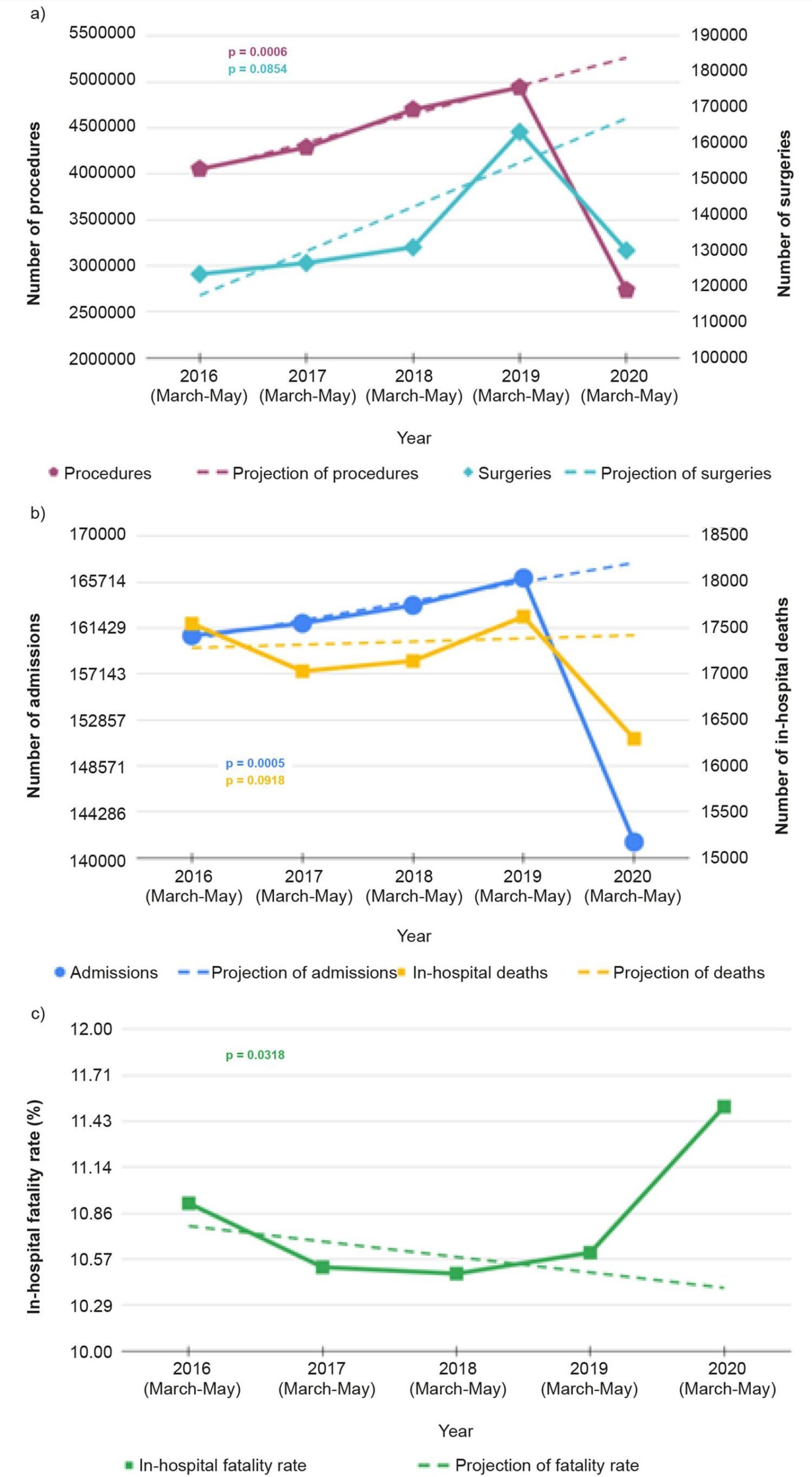
Reduction in Hospitalization and Increase in Mortality Due to Cardiovascular Diseases during the COVID-19 Pandemic in Brazil

Paulo Garcia Normando et al. José de Arimatéia Araujo-Filho Gabriela de Alcântara Fonseca Rodrigo Elton Ferreira Rodrigues … Victor Agripino Oliveira Ludhmila Abrahão Hajjar André Luiz Cerqueira Almeida Edimar Alcides Bocchi Vera Maria Cury Salemi Marcelo Melo

Abstract

Background

In the COVID-19 pandemic, the increase in the incidence of cardiovascular diseases (CVD) and mortality from them has been recognized worldwide. In Brazil, the impact of COVID-19 on CVD must be evaluated.

Objectives

To assess the impact of the current pandemic on the numbers of hospital admissions (HA), in-hospital deaths (ID), and in-hospital fatality (IF) from CVD by use of national epidemiological data from the Brazilian Unified Public Health System.

Methods

Time-series observational study using comparative analysis of the HA, ID, and IF due to CVD recorded from January to May 2020, having as reference the values registered in the same period from 2016 to 2019 and the values projected by linear regression methods for 2020. The statistical significance level applied was 0.05.

Results

Compared to the same period in 2019, there was a 15% decrease in the HA rate and a 9% decrease in the total ID due to CVD between March and May 2020, followed by a 9% increase in the IF rate due to CVD, especially among patients aged 20-59 years. The HA and IF rates registered in 2020 differed significantly from the projected trend for 2020 (p = 0.0005 and 0.0318, respectively).

Conclusions

During the first months of the pandemic, there were a decline in HA and an increase in IF due to CVD in Brazil. These data might have resulted from the inadequate planning of the CVD management during the pandemic. Thus, immediate actions are required to change this scenario. (Arq Bras Cardiol. 2021; [online].ahead print, PP.0-0)

  • Betacoronavirus
  • Cardiovascular Diseases/complications
  • Comorbidities
  • COVID-19
  • Epidemiology
  • Hospitalization
  • Mortality
  • Pandemics
  • Unified Health System
Read Full Article
Creative Commons Attribution (CC BY) Creative Commons license
08/02/2021 DOI: 10.36660/abc.20200821 Views 2
ABC
Editorial

Outlook and Perspectives in Diagnosis and Treatment of Congenital Heart Diseases in Brazil

Fabio Augusto Selig

The 1988 Brazilian Constitution, also called the “Citizen Constitution”, established universal access to health when, in its article 196, it stated that this is the right of all citizens and the Government’s responsibility. Just over a decade later, the Brazilian Unified Health System (SUS, Sistema Único de Saúde ) was created, which, in order to respect the principles of universality, integrality and equality established in the Magna Carta, laid down guidelines for decentralization, comprehensive care and popular participation.

Very much inspired at the time on the English health system, SUS is undoubtedly one of the largest public health systems worldwide, responsible for approximately 190 million people, 80% of whom depend exclusively on it to take care of their health, as they do not have access to the private health system. Still, even among those with access to the private system, the use of the public health system is constitutionally guaranteed, without limits or restrictions.

[…]

  • Constitution and Bylaws
  • Healthcare Financing
  • Heart Defects Congenital/diagnostic
  • Unified Health System
Read Full Article
Creative Commons Attribution (CC BY) Creative Commons license
18/01/2021 DOI: 10.36660/abc.20200680
ABC
Editorial

Analysis of a Population-Based Registry of Hospitalizations for Acute Myocardial Infarction

Gabriel Porto Soares

Ischemic heart disease (IHD) is the leading cause of mortality in the world, being responsible for more than 9 million deaths in 2016. The trend profile of IHD mortality rates varied according to the economic level of countries. Developed nations have experienced a dramatic reduction in IHD mortality rates in recent years, perhaps attributed to a greater focus on primary prevention and better diagnosis and treatment. However, in the so-called developing countries, the reduction was not so accentuated, representing a major challenge for public health.,

Among the IHDs, the most severe form of presentation is acute myocardial infarction with ST-segment elevation (STEMI), which corresponds to approximately one-third of IHD presentations but has higher mortality when compared to non-ST-segment elevation myocardial infarction and unstable angina.,

[…]

  • Cardiovascular Diseases, mortality
  • Hospitalization
  • Morbidity
  • Myocardial Infarction/mortality
  • Myocardial Ischemia
  • Unified Health System
Read Full Article
Creative Commons Attribution (CC BY) Creative Commons license
07/12/2020 DOI: 10.36660/abc.20200611 Views 2
ABC
Editorial

High Prevalence of Dyslipidemia in Children and Adolescents: Opportunity for Prevention

Leonardo Mangili

Cardiovacular diseases are a major cause of morbidity and mortality. According with the World Health Organization (WHO), worldwide, one third of ischemic heart diseases are attributable to high cholesterol, which causes 2.6 million deaths per year. Atherosclerosis begins in childhood and evolves in an insidious process which can last decades from the first artery injuries to the clinical outcomes (death, myocardial infarction or strokes). This process is speeded up by risk factors such as cholesterol, smoking, obesity and hypertension.

The multicenter study Pathological Determinants of Atherosclerosis in Youth (PDAY) revealed the presence of atherosclerosis injuries in all aortas and in 50% of right coronary arteries in 1.532 necropsies of individuals aged from 15 to 19 years. When the role of risk factors was assessed in individuals between 15 and 34 years of age, it was found that the aortic injuries were positively correlated with LDL and VLDL levels, glucose intolerance, smoking, hypertension, obesity, but negatively associated with HDL levels. Similar findings were described by the Bogalusa Heart Study, which associated the presence of fatty streaks in the aorta with higher total and LDL cholesterol levels, in addition to an inverse association with HDL-C. There was also greater severity of atherosclerosis injuries in the presence of multiple concomitant risk factors (body mass index, blood pressure, cholesterol and triglyceride concentration).

[…]

  • Adolescent
  • Cardiovascular Diseases
  • Child
  • Dyslipidemias
  • Hypercholesterolemi
  • Laboratoty Test
  • Unified Health System
  • Young Adult
Read Full Article
Creative Commons Attribution (CC BY) Creative Commons license
10/02/2020 DOI: 10.36660/abc.20190761 Views 1
Figure 1
ABC
Original Article

Evaluation of Lipid Profiles of Children and Youth from Basic Health Units in Campinas, SP, Brazil: A Cross-Sectional Laboratory Study

Érica Ivana Lázaro Gomes et al. Vanessa Helena de Souza Zago Eliana Cotta de Faria

Abstract

Background:

Among dyslipidemias, hypercholesterolemia is considered the main risk factor for cardiovascular diseases in adults. In childhood and adolescence, elevated total cholesterol (TC) and low-density lipoprotein cholesterol (LDL-C) are positively associated with atherosclerosis markers, however, systematic screening for dyslipidemias in these groups is a controversial topic.

Objective:

To characterize the frequencies, types and severity of dyslipidemias in children and adolescents attended at the Basic Health Units managed by SUS in Campinas/SP.

Methods:

After an agreement with the Municipal Health Department of Campinas, consecutive results of serum lipid profiles (n = 312,650) of individuals of both sexes (n = 62,530) aged between 1 day old and 19 years were obtained, from 2008 to 2015. Age groups and dyslipidemias were classified according to recommendations in the literature. The statistical significance level adopted was the probability value (p) of 0.05 or less.

Results:

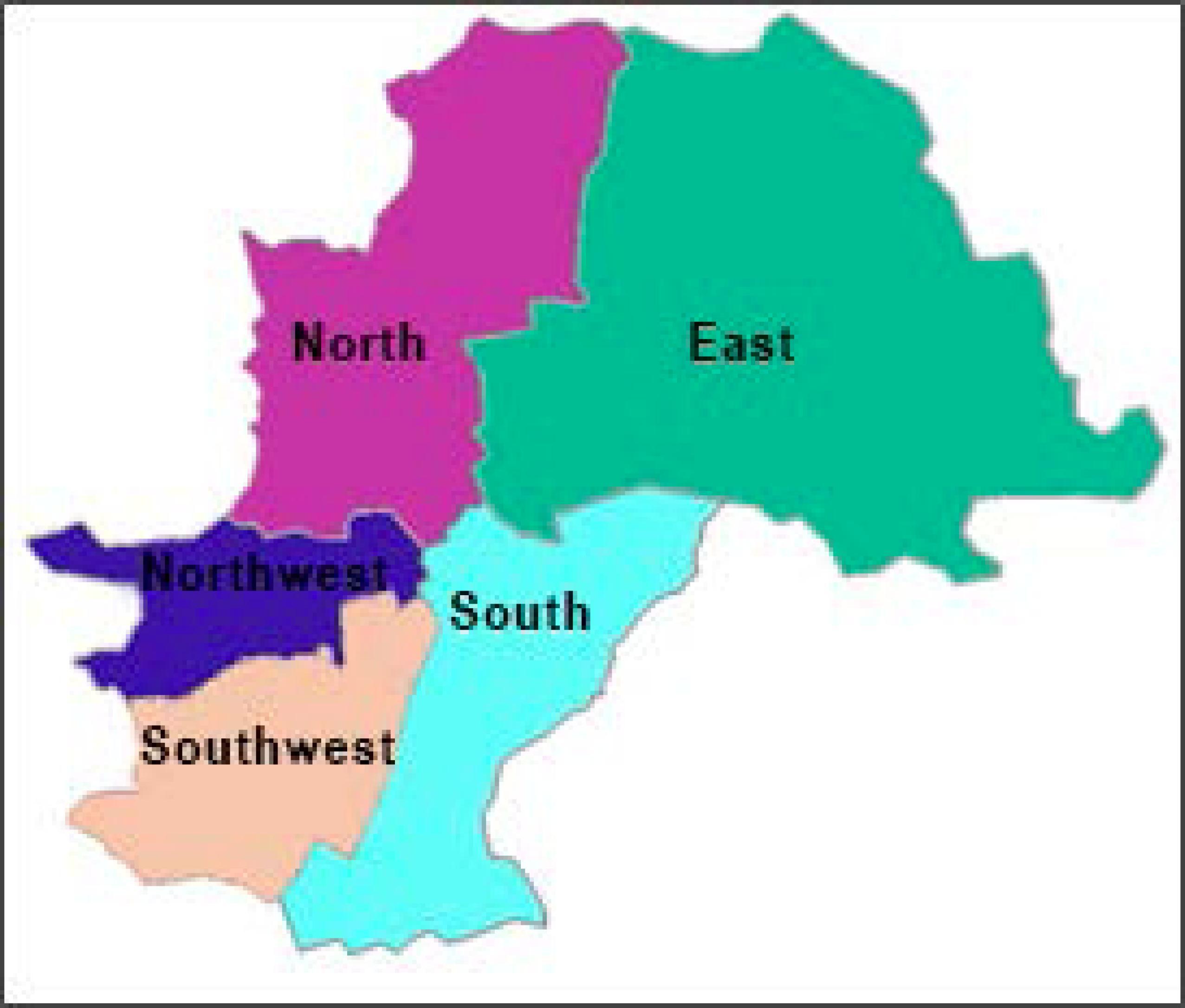
The observed frequencies of increased TC, triglycerides (TG), LDL-C and non-HDL-C (NHDL-C) were 33%, 40%, 29% and 13% respectively, and of reduced high-density lipoprotein cholesterol (HDL-C) the frequency was 39%. The frequencies, in general, were greater in females and in the southwest and south regions of the city, whose populations are more vulnerable from the socioeconomic point of view; on the other hand, in children and adolescents, the frequencies of TG and HDL-C prevailed, respectively.

Conclusions:

The high frequency and regionalization of dyslipidemias in children and adolescents indicate the need for specific actions in the handling and treatment of such diseases by the public health system of Campinas.

  • Adolescent
  • Cardiovascular Diseases
  • Child
  • Dyslipidemias
  • Hypercholesterolemia
  • laboratory test
  • Unified Health System
  • Young Adult
Read Full Article
Creative Commons Attribution (CC BY) Creative Commons license
21/10/2019 DOI: 10.5935/abc.20190209
ABC
Viewpoint

Digital Health, Universal Right, Duty of the State?

Marcelo Antônio Cartaxo Queiroga Lopes et al. Gláucia Maria Moraes de Oliveira Luciano Mariz Maia

Introduction

The Brazilian Constitution establishes, in its art. 196, that “health is a universal right and duty of the State, guaranteed by social and economic policies aimed at reducing the risk of diseases and other ailments, and universal and equal access to actions and services for their promotion and recovery”.

In addition, article 198, states that “public health actions and services are part of a regionalized and hierarchical network and constitute a single system, organized with the following guidelines: I – decentralization, with a single direction in each sphere of government; II – integral care, with priority for preventive actions, without loss to the care services; III – community participation”.

[…]

  • Comprehensive Health Care/legislation & jurisprudence
  • Health Public Administration
  • Personal Health Services/trends
  • Telemedicine
  • Unified Health System
Read Full Article
Creative Commons Attribution (CC BY) Creative Commons license
29/08/2019 DOI: 10.5935/abc.20190161 Views 1
IJCS
Original Article

Knock on the Right Door. How we are Treating the Patient with Acute Myocardial Infarction

Clóvis Hoepfner et al. Edilson Roma Jessé Vinicius Lana Ana Luysa Santin … Ana Lavratti Borga Ana Cláudia Yamamoto Juliana Vicente Techentin

Abstract

Background:

To reduce mortality of acute myocardial infarction, medical care must be provided within the first hours of the event.

Objective: To identify the “front door” to medical care of acute coronary patients and the time elapsed between patients’ admission and performance of myocardial reperfusion in the public health system of the city of Joinville, Brazil.

Methods:

The study was a retrospective analysis of the medical records of 112 consecutive patients diagnosed with acute myocardial infarction by coronary angiography. We identified the place of the first medical contact and calculated the time between admission to this place and admission to the referral hospital, as well as the time until coronary angiography, with or without percutaneous transluminal angioplasty. A descriptive analysis of data was made using mean and standard deviation, and a p < 0.05 was set as statistically significant.

Results:

Only 16 (14.3%) patients were admitted through the cardiology referral unit. Door-to-angiography time was shorter than 90 minutes in 50 (44.2%) patients and longer than 270 minutes in 39 (34.5%) patients. No statistically significant difference was observed in door-to-angiography time between patients transported directly to the referral hospital and those transferred from other health units (p<0.240). Considering the time between pain onset and angiography, only 3 (2.9%) patients may have benefited from myocardial reperfusion performed within less than 240 minutes.

Conclusion:

Management of patients with acute myocardial infarction is not in conformity with current guidelines for the treatment of this condition. The structure of the healthcare system should be urgently modified so that users in need of emergency services receive adequate care in accordance with local conditions.

  • Emergency Medical Services
  • Failure to Rescue, Health Care
  • Guidelines Adherence
  • Myocardial Infarction
  • Unified Health System
Read Full Article
Creative Commons Attribution (CC BY) Creative Commons license
23/08/2018 DOI: 10.5935/2359-4802.20180056 Views 1
Figure 1
IJCS
Original Article

Disparities in Acute Myocardial Infarction Treatment Between Users of the Public and Private Healthcare System in Sergipe

Jussiely Cunha Oliveira et al. Laís Costa Souza Oliveira Jeferson Cunha Oliveira Ikaro Daniel de Carvalho Barreto … Marcos Antonio Almeida-Santos Ticiane Clair Remacre Munareto Lima Larissa Andreline Maia Arcelino Luiz Flávio Andrade Prado Fábio Serra Silveira Thiago Augusto Nascimento Eduardo José Pereira Ferreira Rafael Vasconcelos Barreto Enilson Vieira Moraes José Teles de Mendonça Antonio Carlos Sobral Sousa José Augusto Barreto-Filho

Abstract

Background:

The Brazilian Unified Health System (SUS) was created to ensure universal, integral and equitable access to quality healthcare to Brazilians. However, studies scrutinizing the quality of the healthcare provided by the SUS are scarce. This is especially critical for patients with ST-elevation myocardial infarction (STEMI), who depend on healthcare system responsiveness and timely reperfusion to achieve better outcomes.

Objective:

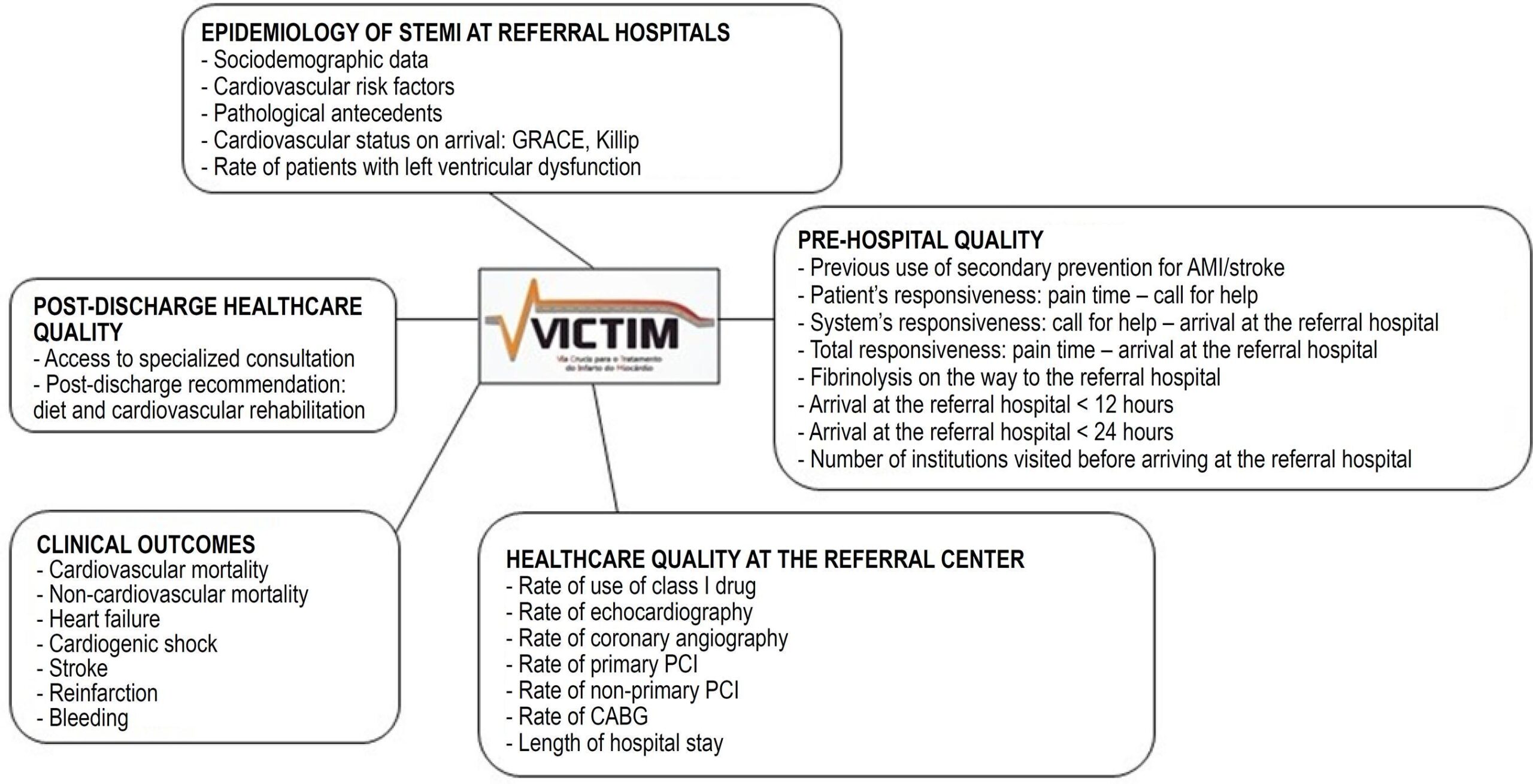
To describe the methodology of the VICTIM Registry aimed at characterizing and comparing the access to effective therapies and the outcomes of patients with STEMI, who use the SUS and the private healthcare system at hospitals capable of performing angioplasty in Sergipe. In addition, that registry aimed at identifying and measuring possible disparities in the quality of the care provided.

Methods and Results:

The VICTIM Registry is an observational study, launched in December 2014, being still in the data collection phase, to investigate: the epidemiology of STEMI in Sergipe, the temporal and geographic courses of the patients up to their admission to one of the hospitals capable of performing angioplasty, the reperfusion therapy rates, the quality of the healthcare provided during the event, and the 30-day mortality. It compares the results obtained in the SUS with those of the private healthcare system.

Conclusions:

The VICTIM Registry is an interinstitutional effort to identify opportunities for healthcare improvement for SUS and private healthcare system patients with STEMI. It is expected to provide healthcare managers with information to support new, more efficient and equitable healthcare policies.

  • Healthcare Disparities
  • Myocardial Infarction
  • Private Health Care Coverage
  • Unified Health System
Read Full Article
Creative Commons Attribution (CC BY) Creative Commons license
01/01/2018 DOI: 10.5935/2359-4802.20180043 Views 1
Figure 1
IJCS
Original Article

Impact of Risk Factors for Coronary Artery Disease on Hospital Costs of Patients Undergoing Myocardial Revascularization Surgery in the Brazilian Unified Health System (SUS)

João Luis Barbosa et al. Clarissa Antunes Thiers Carlos Felipe dos Santos Cunha Juliana Moutella … Bernardo Rangel Tura Giulia Principe Orsi Karen Feldman Nathália Rodrigues da Silva Luiz Felipe Faria

Abstract

Background:

Cardiovascular diseases are a major cause of mortality and morbidity. Myocardial revascularization surgery may be indicated for the relief of symptoms and to reduce mortality. However, surgery is a costly procedure and the impact of the number of cardiovascular risk factors on the cost of the procedure has not been established.

Objectives:

To identify the impact of risk factors for coronary artery disease on myocardial revascularization surgery cost.

Methods:

We selected 239 patients undergoing myocardial revascularization surgery at the National Institute of Cardiology in the period from 01 January to 31 December 2013. We included patients aged over 30 years, with indication for the procedure. Patients undergoing combined procedures were excluded.

Results:

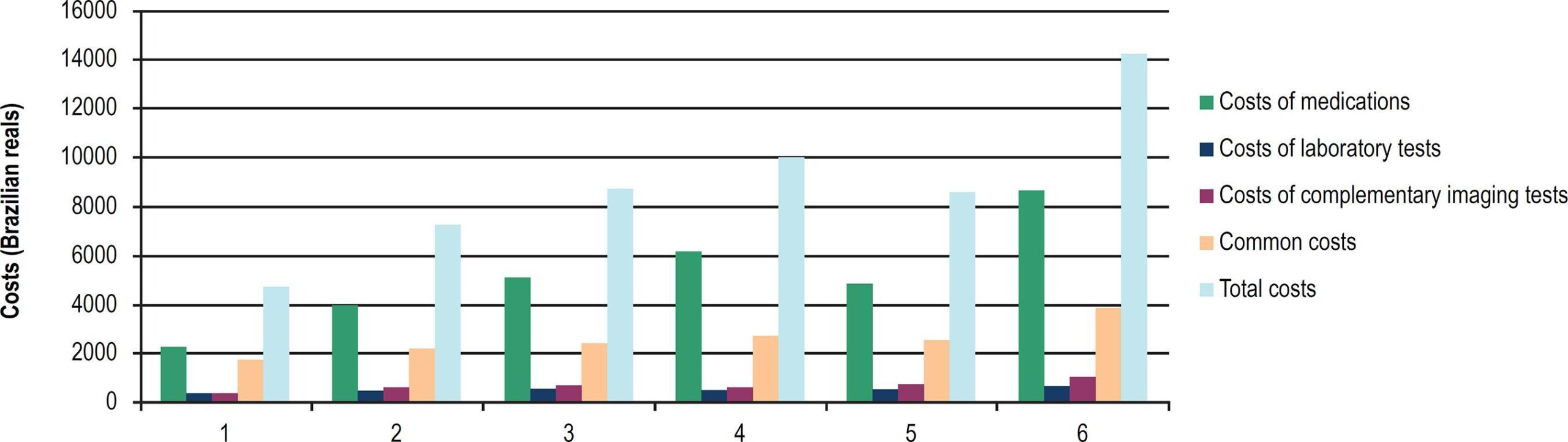
Seven patients had only one risk factor, 32 patients had two risk factors, 75 patients had 3 risk factors, 78 patients had four risk factors, 36 patients had 5 risk factors and 11 patients presented 6 risk factors. The total costs, on average, was R$ 14,143.22 in the group with 1 risk factor, R$ 18,380.40 in the group with 2 risk factors, R$ 21,229.51 in the group with 3 risk factors, R$ 24,620.86 in the group with 4 risk factors, R$ 21,337.92 in the group with 5 risk factors and R$ 36,098,35 in the group with 6 risk factors (p = 0.441).

Conclusion:

This study demonstrates that, in a public referral center for highly complex cardiology procedures, there was no significant correlation between the number of cardiovascular risk factors and hospitalization costs.

  • Coronary Artery Disease
  • Hospital Costs
  • Myocardial Revascularization / economics
  • Risk Factors
  • Unified Health System
Read Full Article
Creative Commons Attribution (CC BY) Creative Commons license
01/01/2018 DOI: 10.5935/2359-4802.20170098 Views 1
Figure 1
IJCS
Original Article

Temporal Evaluation of Coronary Revascularization Procedures Performed through the Unified Health System (SUS) in Brazil: a 20-year overview

Igor Ribeiro de Castro Bienert et al. Alexandre Rodrigues Érika Airi Harada Karoline Lopes Silva … Amanda Ribeiro Valente Paulo André da Silva Joao Carlos Moron Saes Braga Fabio Salerno Rinaldi Fábio Villaça Guimarães Filho Pedro Beraldo de Andrade

Abstract

Introduction:

The mortality rates associated with coronary atherosclerotic disease (CAD) have been declining over the past decades driven, in part, by advances in revascularization techniques.

Objective:

The aim of this study was to provide an overview of the past 20 years in the treatment of CAD delivered by the Brazilian Unified Health Care System (SUS).

Methods:

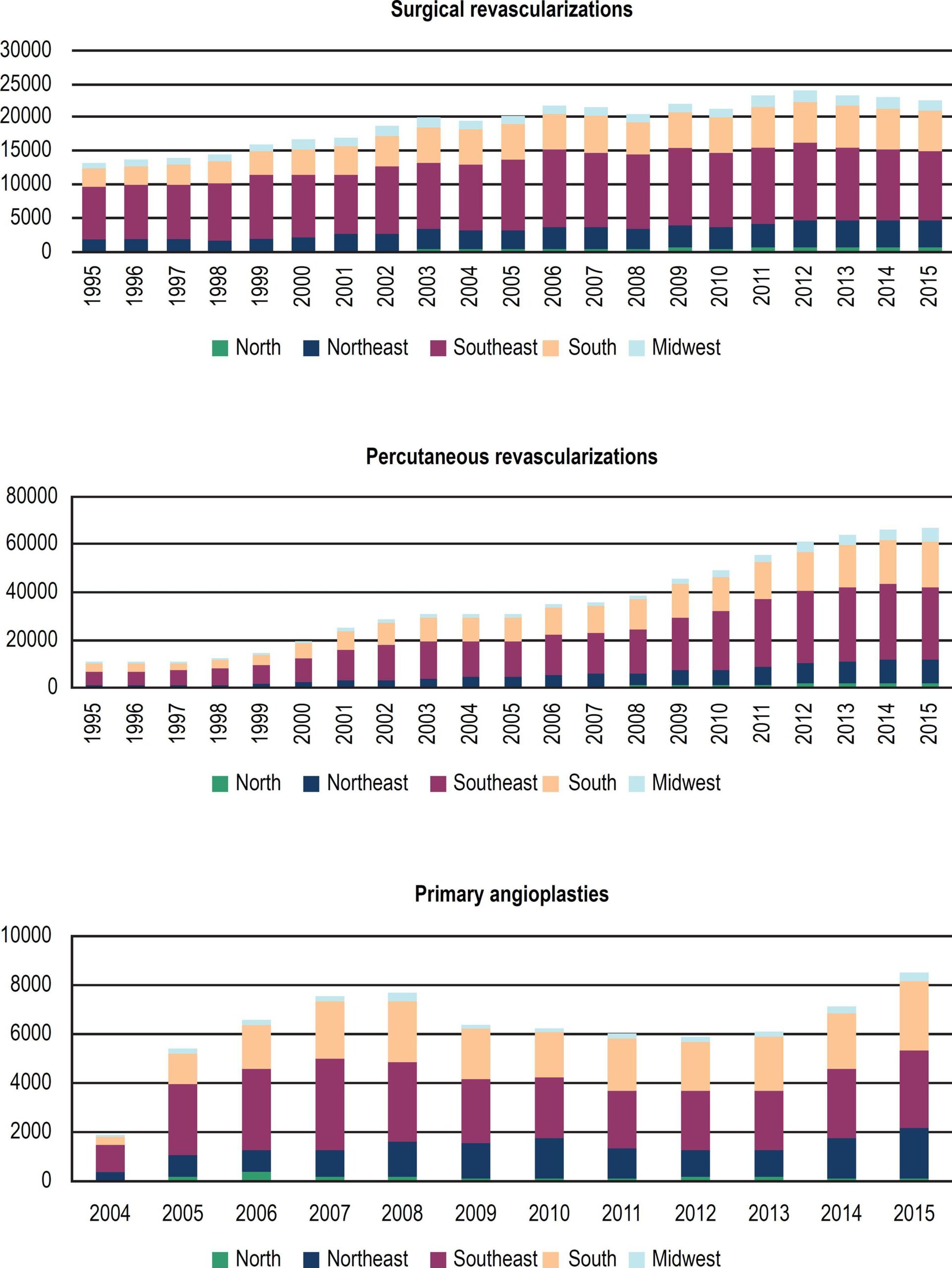
The data were obtained from SUS’s TABNET and SIGTAP systems and IBGE. The procedures were grouped into the categories percutaneous, surgical, and primary percutaneous revascularizations. The analysis included the number of hospital admission authorizations (AIH), mean length of hospital stay, in-hospital mortality, mean total amount paid by procedure, and mean values paid per AIH and for professional and hospital services.

Results:

Between 1995 and 2015, there were increases in the number of surgical revascularizations (from 13,198 to 22,559) and percutaneous revascularizations (from 10,522 to 66,345). Similarly, the number of primary angioplasties increased between 2004 and 2015 (from 1,901 to 8,524). There was a decrease in the mean length of hospital stay (from 14.4 to 12.8 days) and hospital mortality (from 7.6% to 5.9%) for surgical revascularizations, and decrease in mean length of hospital stay (from 5.3 days to 3.7 days) but maintenance of the mortality rates (2.2%) for percutaneous revascularizations. In primary angioplasties, the mean length of hospital stay varied from 5.3 to 5.6 days and the mortality rate varied from 7.94% to 7.43% between 2004 and 2015, respectively. The mean total amount paid for surgical revascularization varied from R$ 4,327.57 to $12,839.13 and for percutaneous revascularizations from R$ 2,615.81 to $6,187.87 between 1995 and 2015, respectively. Corresponding values for primary angioplasties were R$ 5,415.58 in 2004 to R$ 6,581.51 in 2015.

Conclusions:

The number of revascularization procedures increased in Brazil over the past 20 years, with an improvement in mortality rates and decrease in length of hospital stay. There was a substantial lag in economic values relative to the inflation accumulated during the period.

  • Angioplasty, Balloon, Coronary
  • Coronary Artery Diseases
  • Health Care Costs
  • Myocardial Revascularization
  • Unified Health System
Read Full Article
Creative Commons Attribution (CC BY) Creative Commons license
01/01/2017 DOI: 10.5935/2359-4802.20170080 Views 1
ABC
Editorial

Public Health Policy Based on “Made-In-Brazil” Science: A Challenge for the Arquivos Brasileiros de Cardiologia

Jussiely Cunha Oliveira et al. José Augusto Barreto-Filho

Scrutinizing the quality of the Brazilian health system

Since the Brazilian 1998 Federal Constitution (Constitution of the Citizen) was signed and the Brazilian National Unified Health Care System (SUS) was created in 1990, the right to integral, universal, equalitarian and free access to health services of quality has been granted to all Brazilians. The State would have to finance, provide and operate the infrastructure necessary to fulfill the Law 8.080/1990. The constitutional recognition that health is a universal right was a substantial ideological advance. On paper, the public health model idealized for Brazil has become an example to the world. Approximately 75% of Brazilians are estimated to depend on the SUS for health care, while the remaining Brazilians have private complementary coverage.

If the objective is to generate relevant information to guide decision making regarding public policies on health, we should systematically dedicate ourselves to scientifically assess the health care outcomes of SUS. However, after 25 years from SUS implantation, there is little scientific evidence, especially that representing the continental country Brazil is, on the final health care outcomes of SUS. For example, representative data on post-acute myocardial infarction mortality, reperfusion treatment rate or hospital readmission rate in 30 days are not available. Moreover, little is known about the disparities of the health care outcomes between the SUS and the private health care system.

[…]

  • Cardiovascular disease
  • Constitution and Bylaws
  • Outcome Assessment (Health Care)
  • Policy
  • Unified Health System
Read Full Article
Creative Commons Attribution (CC BY) Creative Commons license
01/09/2015 DOI: 10.5935/abc.20150120
Figure 1
ABC
Original Article

Cardiac Surgery Costs According to the Preoperative Risk in the Brazilian Public Health System

David Provenzale Titinger et al. Luiz Augusto Ferreira Lisboa Bruna La Regina Matrangolo Luis Roberto Palma Dallan … Luis Alberto Oliveira Dallan Evelinda Marramon Trindade Ivone Eckl Roberto Kalil Filho Omar Asdrúbal Vilca Mejía Fabio Biscegli Jatene

Abstract

Background:

Heart surgery has developed with increasing patient complexity.

Objective:

To assess the use of resources and real costs stratified by risk factors of patients submitted to surgical cardiac procedures and to compare them with the values reimbursed by the Brazilian Unified Health System (SUS).

Method:

All cardiac surgery procedures performed between January and July 2013 in a tertiary referral center were analyzed. Demographic and clinical data allowed the calculation of the value reimbursed by the Brazilian SUS. Patients were stratified as low, intermediate and high-risk categories according to the EuroSCORE. Clinical outcomes, use of resources and costs (real costs versus SUS) were compared between established risk groups.

Results:

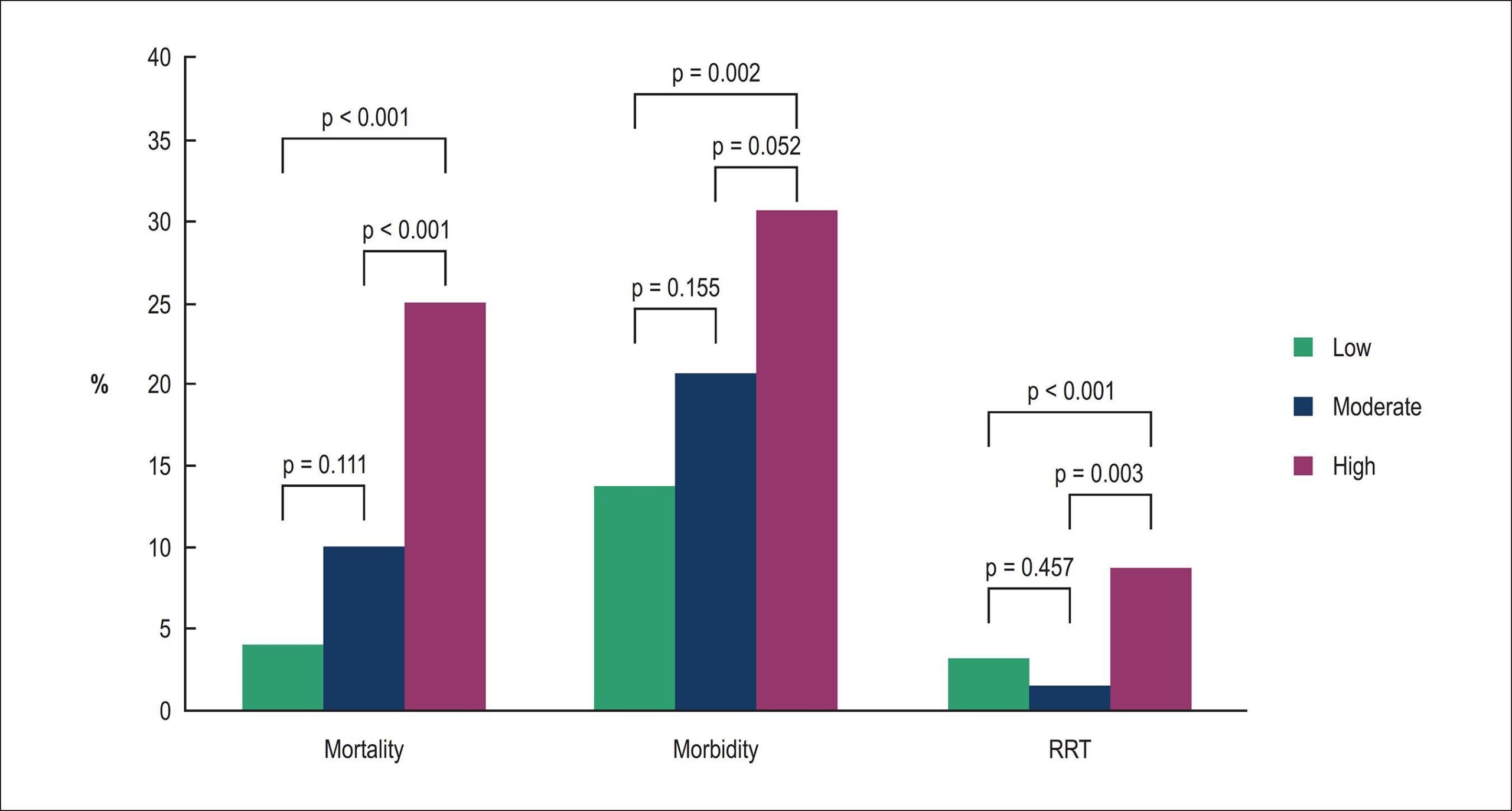
Postoperative mortality rates of low, intermediate and high-risk EuroSCORE risk strata showed a significant linear positive correlation (EuroSCORE: 3.8%, 10%, and 25%; p < 0.0001), as well as occurrence of any postoperative complication EuroSCORE: 13.7%, 20.7%, and 30.8%, respectively; p = 0.006). Accordingly, length-of-stay increased from 20.9 days to 24.8 and 29.2 days (p < 0.001). The real cost was parallel to increased resource use according to EuroSCORE risk strata (R$ 27.116,00 ± R$ 13.928,00 versus R$ 34.854,00 ± R$ 27.814,00 versus R$ 43.234,00 ± R$ 26.009,00, respectively; p < 0.001). SUS reimbursement also increased (R$ 14.306,00 ± R$ 4.571,00 versus R$ 16.217,00 ± R$ 7.298,00 versus R$ 19.548,00 ± R$935,00; p < 0.001). However, as the EuroSCORE increased, there was significant difference (p < 0.0001) between the real cost increasing slope and the SUS reimbursement elevation per EuroSCORE risk strata.

Conclusion:

Higher EuroSCORE was related to higher postoperative mortality, complications, length of stay, and costs. Although SUS reimbursement increased according to risk, it was not proportional to real costs.

  • Cardiac Surgical Procedures / economics
  • Hospital Costs
  • Hospital Mortality
  • Morbidity
  • Preoperative Care
  • Risk Groups
  • Unified Health System
Read Full Article
Creative Commons Attribution (CC BY) Creative Commons license
23/06/2015 DOI: 10.5935/abc.20150068 Views 1
Figure 1
ABC
Original Article

Cost-Effectiveness of High, Moderate and Low-Dose Statins in the Prevention of Vascular Events in the Brazilian Public Health System

Rodrigo Antonini Ribeiro et al. Bruce Bartholow Duncan Patricia Klarmann Ziegelmann Steffan Frosi Stella … Jose Luiz da Costa Vieira Luciane Maria Fabian Restelatto Carisi Anne Polanczyk

Background:

Statins have proven efficacy in the reduction of cardiovascular events, but the financial impact of its widespread use can be substantial.

Objective:

To conduct a cost-effectiveness analysis of three statin dosing schemes in the Brazilian Unified National Health System (SUS) perspective.

Methods:

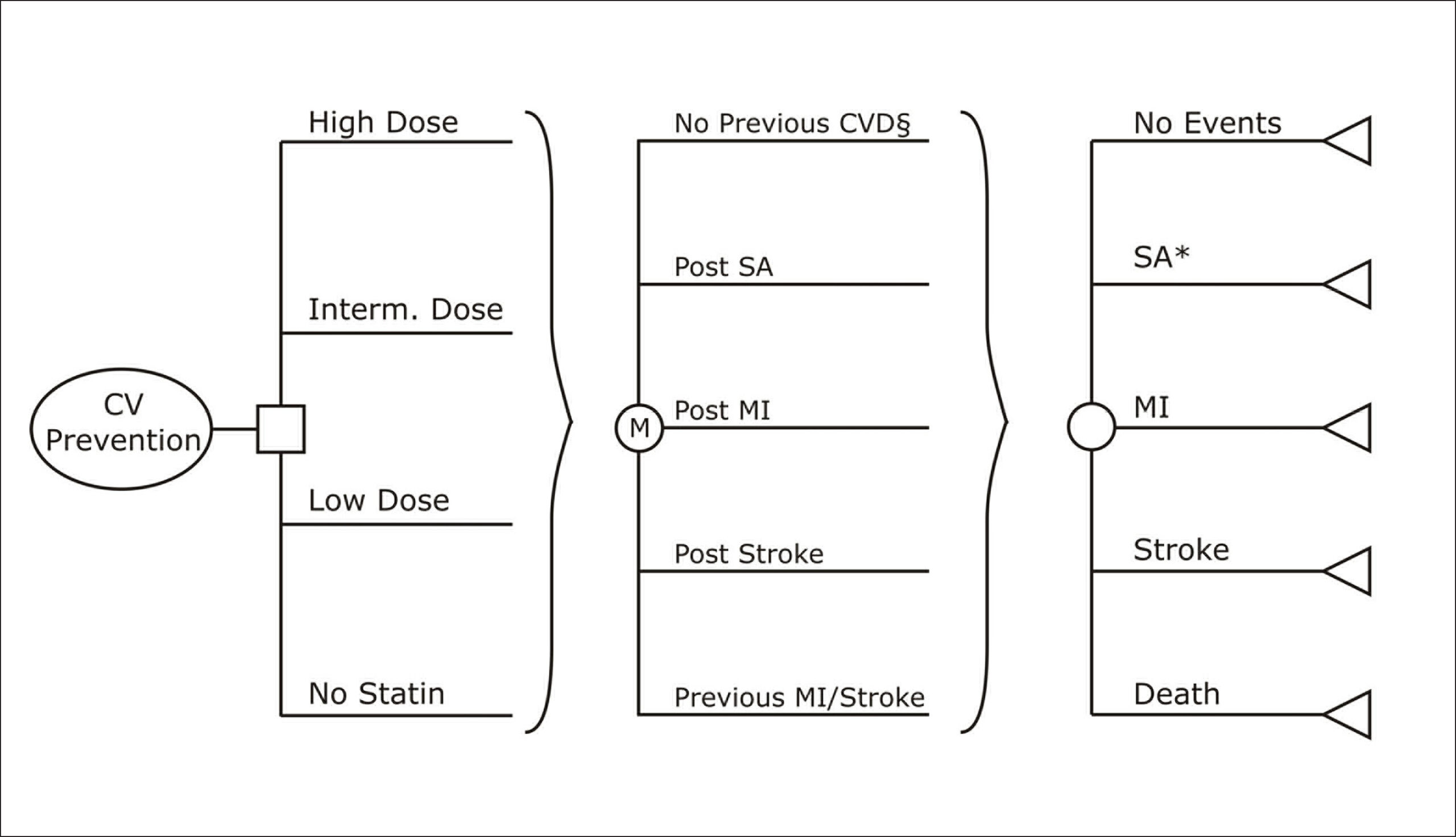
We developed a Markov model to evaluate the incremental cost-effectiveness ratios (ICERs) of low, intermediate and high intensity dose regimens in secondary and four primary scenarios (5%, 10%, 15% and 20% ten-year risk) of prevention of cardiovascular events. Regimens with expected low-density lipoprotein cholesterol reduction below 30% (e.g. simvastatin 10mg) were considered as low dose; between 30-40%, (atorvastatin 10mg, simvastatin 40mg), intermediate dose; and above 40% (atorvastatin 20-80mg, rosuvastatin 20mg), high-dose statins. Effectiveness data were obtained from a systematic review with 136,000 patients. National data were used to estimate utilities and costs (expressed as International Dollars – Int$). A willingness-to-pay (WTP) threshold equal to the Brazilian gross domestic product per capita (circa Int$11,770) was applied.

Results:

Low dose was dominated by extension in the primary prevention scenarios. In the five scenarios, the ICER of intermediate dose was below Int$10,000 per QALY. The ICER of the high versus intermediate dose comparison was above Int$27,000 per QALY in all scenarios. In the cost-effectiveness acceptability curves, intermediate dose had a probability above 50% of being cost-effective with ICERs between Int$ 9,000-20,000 per QALY in all scenarios.

Conclusions:

Considering a reasonable WTP threshold, intermediate dose statin therapy is economically attractive, and should be a priority intervention in prevention of cardiovascular events in Brazil.

  • Cardiovascular Diseases
  • Cost-Benefit Analysis
  • Hydroxymethylglutaryl-CoA Reductase Inhibitors
  • Prevention
  • Unified Health System
Read Full Article
Creative Commons Attribution (CC BY) Creative Commons license
18/11/2014 DOI: 10.5935/abc.20140173 Views 1
Figure 1
ABC
Original Article

Investigation Route of the Coronary Patient in the Public Health System in Curitiba, São Paulo and in Incor – IMPACT Study

Juliano J. Cerci et al. Evelinda Trindade Daniel Preto Rodrigo Julio Cerci … Pedro A. Lemos Luiz Antonio Machado Cesar Luís Preto Luiz Stinghen Cátia Martinez José Claudio Meneghetti

Background:

The investigation of stable coronary artery disease (CAD) and its treatment depend on risk stratification for decision-making on the need for cardiac catheterization and revascularization.

Objective:

To analyze the procedures used in the diagnosis and invasive treatment of patients with CAD, at the Brazilian Unified Health System (SUS) in the cities of Curitiba, São Paulo and at InCor-FMUSP.

Methods:

Retrospective, descriptive, observational study of the diagnostic and therapeutic itineraries of the Brazilian public health care system patient, between groups submitted or not to prior noninvasive tests to invasive cardiac catheterization. Stress testing, stress echocardiography, perfusion scintigraphy, catheterization and percutaneous or surgical revascularization treatment procedures were quantified and the economic impact of the used strategies.

Results:

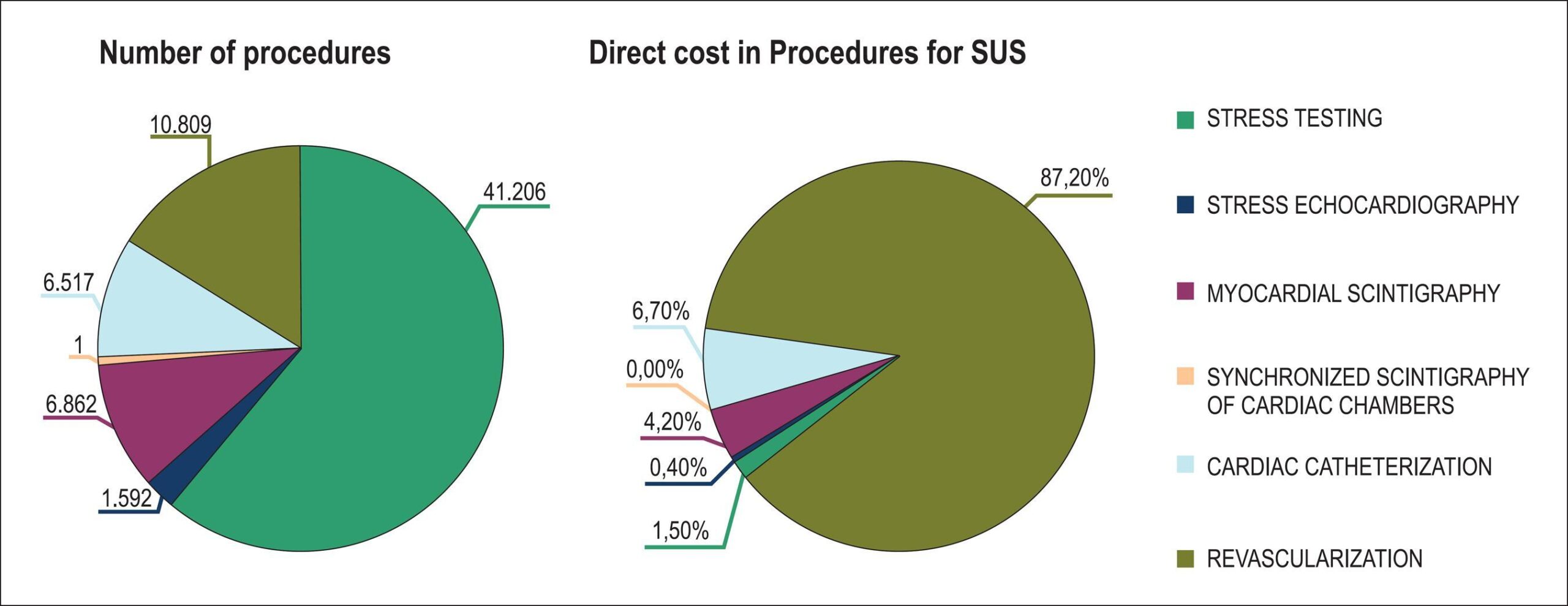
There are significant differences in the assessment of patients with suspected or known CAD in the metropolitan region in the three scenarios. Although functional testing procedures are most often used the direct costs of these procedures differ significantly (6.1% in Curitiba, 20% in São Paulo and 27% in InCor-FMUSP). Costs related to the procedures and invasive treatments represent 59.7% of the direct costs of SUS in São Paulo and 87.2% in Curitiba. In InCor-FMUSP, only 24.3% of patients with stable CAD submitted to CABG underwent a noninvasive test before the procedure.

Conclusion:

Although noninvasive functional tests are the ones most often requested for the assessment of patients with suspected or known CAD most of the costs are related to invasive procedures/treatments. In most revascularized patients, the documentation of ischemic burden was not performed by SUS.

  • Coronary Artery Disease / therapy
  • Coronary Artery Disease/surgery
  • Investigative Techniques
  • Unified Health System
Read Full Article
Creative Commons Attribution (CC BY) Creative Commons license
29/07/2014 DOI: 10.5935/abc.20140107 Views 1

Could not load more articles. Please try again.

How to cite this article

EndNote RIS

Electronic Document Format (Vancouver)

Santos DAM, Tarasoutchi F, Fernandes JRC, Paixão MR, Strabelli TMV, Köohler KF, Mansur AJ, et al. Infective Endocarditis in Brazil: A Narrative Review and Critical Analysis of Population and Hospital Case Data. ABC Imagem Cardiovascular 2026;38(4):e20250098.

Electronic Document Format (ABNT)

Santos, Diego Augusto Medeiros; Tarasoutchi, Flávio; Fernandes, João Ricardo Cordeiro; Paixão, Milena Ribeiro; Strabelli, Tânia Mara Varejão; Köohler, Karen Francine; Mansur, Alfredo José; Siciliano, Rinaldo Focaccia. Infective Endocarditis in Brazil: A Narrative Review and Critical Analysis of Population and Hospital Case Data. ABC Imagem Cardiovascular, v. 38, n. 4, e20250098, Feb. 2026.

Electronic Document Format (APA)

Santos, D. A. M., Tarasoutchi, F., Fernandes, J. R. C., Paixão, M. R., Strabelli, T. M. V., Köohler, K. F., Mansur, A. J., & Siciliano, R. F. (2026). Infective Endocarditis in Brazil: A Narrative Review and Critical Analysis of Population and Hospital Case Data. ABC Imagem Cardiovascular, 38(4), e20250098.

Electronic Document Format (ISO)

Santos, Diego Augusto Medeiros and Tarasoutchi, Flávio and Fernandes, João Ricardo Cordeiro and Paixão, Milena Ribeiro and Strabelli, Tânia Mara Varejão and Köohler, Karen Francine and Mansur, Alfredo José and Siciliano, Rinaldo Focaccia. Infective Endocarditis in Brazil: A Narrative Review and Critical Analysis of Population and Hospital Case Data. ABC Imagem Cardiovascular [online]. 2026, vol. 38, n. 4, [cited 2026-10-14], e20250098. Available from: <https://journals.cardiol.br/en/article/infective-endocarditis-in-brazil-a-narrative-review-and-critical-analysis-of-population-and-hospital-case-data/>. ISSN 2318-8219

EndNote RIS

Electronic Document Format (Vancouver)

Costa IBSS, Torreão JA, Fernandes JL, Trad H, Liberato G, Sasdelli Neto R, Barberato SH, et al. Overview of Professional Practice in Computed Tomography and Cardiac Magnetic Resonance Imaging in Brazil. ABC Imagem Cardiovascular 2025;38(3):e20250053.

Electronic Document Format (ABNT)

Costa, Isabela Bispo Santos da Silva; Torreão, Jorge Andion; Fernandes, Juliano de Lara; Trad, Henrique; Liberato, Gabriela; Sasdelli Neto, Roberto; Barberato, Silvio Henrique; Pinto, Ibraim Masciarelli; Senra, Tiago. Overview of Professional Practice in Computed Tomography and Cardiac Magnetic Resonance Imaging in Brazil. ABC Imagem Cardiovascular, v. 38, n. 3, e20250053, Nov. 2025.

Electronic Document Format (APA)

Costa, I. B. S. S., Torreão, J. A., Fernandes, J. L., Trad, H., Liberato, G., Sasdelli Neto, R., Barberato, S. H., Pinto, I. M., & Senra, T. (2025). Overview of Professional Practice in Computed Tomography and Cardiac Magnetic Resonance Imaging in Brazil. ABC Imagem Cardiovascular, 38(3), e20250053.

Electronic Document Format (ISO)

Costa, Isabela Bispo Santos da Silva and Torreão, Jorge Andion and Fernandes, Juliano de Lara and Trad, Henrique and Liberato, Gabriela and Sasdelli Neto, Roberto and Barberato, Silvio Henrique and Pinto, Ibraim Masciarelli and Senra, Tiago. Overview of Professional Practice in Computed Tomography and Cardiac Magnetic Resonance Imaging in Brazil. ABC Imagem Cardiovascular [online]. 2025, vol. 38, n. 3, [cited 2026-10-14], e20250053. Available from: <https://journals.cardiol.br/en/article/overview-of-professional-practice-in-computed-tomography-and-cardiac-magnetic-resonance-imaging-in-brazil/>. ISSN 2318-8219

EndNote RIS

Electronic Document Format (Vancouver)

Koike M. Datasus: An Essential Tool for Public Health in Brazil. Arquivos Brasileiros de Cardiologia 2025;122(2):e20250123.

Electronic Document Format (ABNT)

Koike, Marcia. Datasus: An Essential Tool for Public Health in Brazil. Arquivos Brasileiros de Cardiologia, v. 122, n. 2, e20250123, Apr. 2025.

Electronic Document Format (APA)

Koike, M. (2025). Datasus: An Essential Tool for Public Health in Brazil. Arquivos Brasileiros de Cardiologia, 122(2), e20250123.

Electronic Document Format (ISO)

Koike, Marcia. Datasus: An Essential Tool for Public Health in Brazil. Arquivos Brasileiros de Cardiologia [online]. 2025, vol. 122, n. 2, [cited 2026-10-14], e20250123. Available from: <https://journals.cardiol.br/en/article/datasus-an-essential-tool-for-public-health-in-brazil/>. ISSN 0066-782X

EndNote RIS

Electronic Document Format (Vancouver)

Braga AA, Santos MS, Tura BR, Barros BM, Morais QCD, Oliveira IG. Availability of Natriuretic Peptide Testing in Primary Public Health Care in Brazil. ABC Heart Fail Cardiomyop 2023;3(4):e20230087.

Electronic Document Format (ABNT)

Braga, Andressa Araujo; Santos, Marisa da Silva; Tura, Bernardo Rangel; Barros, Bruno Monteiro; Morais, Quenia Cristina Dias; Oliveira, Ione Gualandi. Availability of Natriuretic Peptide Testing in Primary Public Health Care in Brazil. ABC Heart Fail Cardiomyop, v. 3, n. 4, e20230087, Dec. 2023.

Electronic Document Format (APA)

Braga, A. A., Santos, M. S., Tura, B. R., Barros, B. M., Morais, Q. C. D., & Oliveira, I. G. (2023). Availability of Natriuretic Peptide Testing in Primary Public Health Care in Brazil. ABC Heart Fail Cardiomyop, 3(4), e20230087.

Electronic Document Format (ISO)

Braga, Andressa Araujo and Santos, Marisa da Silva and Tura, Bernardo Rangel and Barros, Bruno Monteiro and Morais, Quenia Cristina Dias and Oliveira, Ione Gualandi. Availability of Natriuretic Peptide Testing in Primary Public Health Care in Brazil. ABC Heart Fail Cardiomyop [online]. 2023, vol. 3, n. 4, [cited 2026-10-14], e20230087. Available from: <https://journals.cardiol.br/en/article/availability-of-natriuretic-peptide-testing-in-primary-public-health-care-in-brazil/>

EndNote RIS

Electronic Document Format (Vancouver)

Meniconi MA, Oliveira FJC, Cervone AC, Togna DJD, Feres F, Ramos AIO, Siqueira DAA, et al. Viability and Safety of Early Hospital Discharge after Minimalist TAVI in the Brazilian Unified Health System. Arquivos Brasileiros de Cardiologia 2023;120(9):e20230328.

Electronic Document Format (ABNT)

Meniconi, Marcos Almeida; Oliveira, Fernanda Jacques Calçado; Cervone, Alberto Colella; Togna, Dorival Julio Della; Feres, Fausto; Ramos, Auristela Isabel de Oliveira; Siqueira, Dimytri Alexandre de Alvim. Viability and Safety of Early Hospital Discharge after Minimalist TAVI in the Brazilian Unified Health System. Arquivos Brasileiros de Cardiologia, v. 120, n. 9, e20230328, Oct. 2023.

Electronic Document Format (APA)

Meniconi, M. A., Oliveira, F. J. C., Cervone, A. C., Togna, D. J. D., Feres, F., Ramos, A. I. O., & Siqueira, D. A. A. (2023). Viability and Safety of Early Hospital Discharge after Minimalist TAVI in the Brazilian Unified Health System. Arquivos Brasileiros de Cardiologia, 120(9), e20230328.

Electronic Document Format (ISO)

Meniconi, Marcos Almeida and Oliveira, Fernanda Jacques Calçado and Cervone, Alberto Colella and Togna, Dorival Julio Della and Feres, Fausto and Ramos, Auristela Isabel de Oliveira and Siqueira, Dimytri Alexandre de Alvim. Viability and Safety of Early Hospital Discharge after Minimalist TAVI in the Brazilian Unified Health System. Arquivos Brasileiros de Cardiologia [online]. 2023, vol. 120, n. 9, [cited 2026-10-14], e20230328. Available from: <https://journals.cardiol.br/en/article/viability-and-safety-of-early-hospital-discharge-after-minimalist-tavi-in-the-brazilian-unified-health-system/>. ISSN 0066-782X

EndNote RIS

Electronic Document Format (Vancouver)

Salazar GO, Almeida GO, Barreto-Filho JAS, Almeida-Santos MA, Melo EV, Aidar FJ, Cruz JN, et al. Non-Targeted Self-Measured Blood Pressure and Hypertension Control in Public and Private Health Systems in Brazil. International Journal of Cardiovascular Sciences 2023;36:e20220144.

Electronic Document Format (ABNT)

Salazar, Gabriela de Oliveira; Almeida, Glessiane de Oliveira; Barreto-Filho, José Augusto Soares; Almeida-Santos, Marcos Antônio; Melo, Enaldo Vieira de; Aidar, Felipe J.; Cruz, José Ícaro Nunes; Oliveira, Joselina Luzia Menezes; Baumworcel, Leonardo; Sousa, Antônio Carlos Sobral. Non-Targeted Self-Measured Blood Pressure and Hypertension Control in Public and Private Health Systems in Brazil. International Journal of Cardiovascular Sciences, v. 36, e20220144, Aug. 2023.

Electronic Document Format (APA)

Salazar, G. O., Almeida, G. O., Barreto-Filho, J. A. S., Almeida-Santos, M. A., Melo, E. V. , Aidar, F. J., Cruz, J. N., Oliveira, J. L. M., Baumworcel, L., & Sousa, A. C. S. (2023). Non-Targeted Self-Measured Blood Pressure and Hypertension Control in Public and Private Health Systems in Brazil. International Journal of Cardiovascular Sciences, 36, e20220144.

Electronic Document Format (ISO)

Salazar, Gabriela de Oliveira and Almeida, Glessiane de Oliveira and Barreto-Filho, José Augusto Soares and Almeida-Santos, Marcos Antônio and Melo, Enaldo Vieira de and Aidar, Felipe J. and Cruz, José Ícaro Nunes and Oliveira, Joselina Luzia Menezes and Baumworcel, Leonardo and Sousa, Antônio Carlos Sobral. Non-Targeted Self-Measured Blood Pressure and Hypertension Control in Public and Private Health Systems in Brazil. International Journal of Cardiovascular Sciences [online]. 2023, vol. 36, [cited 2026-10-14], e20220144. Available from: <https://journals.cardiol.br/en/article/non-targeted-self-measured-blood-pressure-and-hypertension-control-in-public-and-private-health-systems-in-brazil/>. ISSN 2359-4802

EndNote RIS

Electronic Document Format (Vancouver)

Souza BR, Mazzuco E, Kemper LW. Previous Chronic Diseases and their Relationship with COVID-19 Infection. Arquivos Brasileiros de Cardiologia 2022;119(2):361-2.

Electronic Document Format (ABNT)

Souza, Bruna Redivo de; Mazzuco, Eliane; Kemper, Layse Wiggers. Previous Chronic Diseases and their Relationship with COVID-19 Infection. Arquivos Brasileiros de Cardiologia, v. 119, n. 2, p. 361-362, Aug. 2022.

Electronic Document Format (APA)

Souza, B. R. , Mazzuco, E., & Kemper, L. W. (2022). Previous Chronic Diseases and their Relationship with COVID-19 Infection. Arquivos Brasileiros de Cardiologia, 119(2), 361-362.

Electronic Document Format (ISO)

Souza, Bruna Redivo de and Mazzuco, Eliane and Kemper, Layse Wiggers. Previous Chronic Diseases and their Relationship with COVID-19 Infection. Arquivos Brasileiros de Cardiologia [online]. 2022, vol. 119, n. 2, [cited 2026-10-14], pp. 361-362. Available from: <https://journals.cardiol.br/en/article/previous-chronic-diseases-and-their-relationship-with-covid-19-infection/>. ISSN 0066-782X

EndNote RIS

Electronic Document Format (Vancouver)

Biondi RS, Correia LC, Vieira NW, Barzilai VS, Chaves RB, Rocha Júnior EF, Araújo MCCL, et al. Cost-Effectiveness of Heart Transplantation: Data from a Referral Center in the Central-West Region of Brazil. ABC: Heart Failure & Cardiomyopathy 2022;2(2):146-51.

Electronic Document Format (ABNT)

Biondi, Rodrigo Santos; Correia, Luis Claudio; Vieira, Nubia Welerson; Barzilai, Vitor Salvatore; Chaves, Renato Bueno; Rocha Júnior, Edvar Ferreira da; Araújo, Milla Carolina Costa Lafetá; Faria, Ludmila Rosa; Lucas, Phellipe Fabbrini Santos; Araujo, Juliana Soares de; Araújo, Ana Paula Camargos; Barbosa, Andreza Andrade; Monte, Guilherme Urpia; Atik, Fernando Antibas. Cost-Effectiveness of Heart Transplantation: Data from a Referral Center in the Central-West Region of Brazil. ABC: Heart Failure & Cardiomyopathy, v. 2, n. 2, p. 146-151, Jun. 2022.

Electronic Document Format (APA)

Biondi, R. S., Correia, L. C., Vieira, N. W., Barzilai, V. S., Chaves, R. B., Rocha Júnior, E. F. , Araújo, M. C. C. L., Faria, L. R., Lucas, P. F. S., Araujo, J. S. , Araújo, A. P. C., Barbosa, A. A., Monte, G. U., & Atik, F. A. (2022). Cost-Effectiveness of Heart Transplantation: Data from a Referral Center in the Central-West Region of Brazil. ABC: Heart Failure & Cardiomyopathy, 2(2), 146-151.

Electronic Document Format (ISO)

Biondi, Rodrigo Santos and Correia, Luis Claudio and Vieira, Nubia Welerson and Barzilai, Vitor Salvatore and Chaves, Renato Bueno and Rocha Júnior, Edvar Ferreira da and Araújo, Milla Carolina Costa Lafetá and Faria, Ludmila Rosa and Lucas, Phellipe Fabbrini Santos and Araujo, Juliana Soares de and Araújo, Ana Paula Camargos and Barbosa, Andreza Andrade and Monte, Guilherme Urpia and Atik, Fernando Antibas. Cost-Effectiveness of Heart Transplantation: Data from a Referral Center in the Central-West Region of Brazil. ABC: Heart Failure & Cardiomyopathy [online]. 2022, vol. 2, n. 2, [cited 2026-10-14], pp. 146-151. Available from: <https://journals.cardiol.br/en/article/cost-effectiveness-of-heart-transplantation-data-from-a-referral-center-in-the-central-west-region-of-brazil/>

EndNote RIS

Electronic Document Format (Vancouver)

Poppi NT. It is Time for Coronary Computed Tomography Angiography to be Incorporated into the SUS. Arquivos Brasileiros de Cardiologia 2022;118(3):586-7.

Electronic Document Format (ABNT)

Poppi, Nilson Tavares. It is Time for Coronary Computed Tomography Angiography to be Incorporated into the SUS. Arquivos Brasileiros de Cardiologia, v. 118, n. 3, p. 586-587, Mar. 2022.

Electronic Document Format (APA)

Poppi, N. T. (2022). It is Time for Coronary Computed Tomography Angiography to be Incorporated into the SUS. Arquivos Brasileiros de Cardiologia, 118(3), 586-587.

Electronic Document Format (ISO)

Poppi, Nilson Tavares. It is Time for Coronary Computed Tomography Angiography to be Incorporated into the SUS. Arquivos Brasileiros de Cardiologia [online]. 2022, vol. 118, n. 3, [cited 2026-10-14], pp. 586-587. Available from: <https://journals.cardiol.br/en/article/it-is-time-for-coronary-computed-tomography-angiography-to-be-incorporated-into-the-sus/>. ISSN 0066-782X

EndNote RIS

Electronic Document Format (Vancouver)

Marcolino MAZ, Decker SRR, Bertoldi EG, Polanczyk CA. The Challenge of Incorporating High-Cost Technologies: An Analysis of PCSK9 Inhibitors. Arquivos Brasileiros de Cardiologia 2021;117(5):997-8.

Electronic Document Format (ABNT)

Marcolino, Miriam Allein Zago; Decker, Sérgio Renato da Rosa; Bertoldi, Eduardo Gehling; Polanczyk, Carisi A.. The Challenge of Incorporating High-Cost Technologies: An Analysis of PCSK9 Inhibitors. Arquivos Brasileiros de Cardiologia, v. 117, n. 5, p. 997-998, Nov. 2021.

Electronic Document Format (APA)

Marcolino, M. A. Z., Decker, S. R. R., Bertoldi, E. G., & Polanczyk, C. A. (2021). The Challenge of Incorporating High-Cost Technologies: An Analysis of PCSK9 Inhibitors. Arquivos Brasileiros de Cardiologia, 117(5), 997-998.

Electronic Document Format (ISO)

Marcolino, Miriam Allein Zago and Decker, Sérgio Renato da Rosa and Bertoldi, Eduardo Gehling and Polanczyk, Carisi A.. The Challenge of Incorporating High-Cost Technologies: An Analysis of PCSK9 Inhibitors. Arquivos Brasileiros de Cardiologia [online]. 2021, vol. 117, n. 5, [cited 2026-10-14], pp. 997-998. Available from: <https://journals.cardiol.br/en/article/the-challenge-of-incorporating-high-cost-technologies-an-analysis-of-pcsk9-inhibitors/>. ISSN 0066-782X

EndNote RIS

Electronic Document Format (Vancouver)

Normando PG, Araujo-Filho JA, Fonseca GA, Rodrigues REF, Oliveira VA, Hajjar LA, Almeida ALC, et al. Reduction in Hospitalization and Increase in Mortality Due to Cardiovascular Diseases during the COVID-19 Pandemic in Brazil. Arquivos Brasileiros de Cardiologia 2021;116(3):371-80.

Electronic Document Format (ABNT)

Normando, Paulo Garcia; Araujo-Filho, José de Arimatéia; Fonseca, Gabriela de Alcântara; Rodrigues, Rodrigo Elton Ferreira; Oliveira, Victor Agripino; Hajjar, Ludhmila Abrahão; Almeida, André Luiz Cerqueira; Bocchi, Edimar Alcides; Salemi, Vera Maria Cury; Melo, Marcelo. Reduction in Hospitalization and Increase in Mortality Due to Cardiovascular Diseases during the COVID-19 Pandemic in Brazil. Arquivos Brasileiros de Cardiologia, v. 116, n. 3, p. 371-380, Feb. 2021.

Electronic Document Format (APA)

Normando, P. G., Araujo-Filho, J. A., Fonseca, G. A., Rodrigues, R. E. F., Oliveira, V. A., Hajjar, L. A., Almeida, A. L. C., Bocchi, E. A., Salemi, V. M. C., & Melo, M. (2021). Reduction in Hospitalization and Increase in Mortality Due to Cardiovascular Diseases during the COVID-19 Pandemic in Brazil. Arquivos Brasileiros de Cardiologia, 116(3), 371-380.

Electronic Document Format (ISO)

Normando, Paulo Garcia and Araujo-Filho, José de Arimatéia and Fonseca, Gabriela de Alcântara and Rodrigues, Rodrigo Elton Ferreira and Oliveira, Victor Agripino and Hajjar, Ludhmila Abrahão and Almeida, André Luiz Cerqueira and Bocchi, Edimar Alcides and Salemi, Vera Maria Cury and Melo, Marcelo. Reduction in Hospitalization and Increase in Mortality Due to Cardiovascular Diseases during the COVID-19 Pandemic in Brazil. Arquivos Brasileiros de Cardiologia [online]. 2021, vol. 116, n. 3, [cited 2026-10-14], pp. 371-380. Available from: <https://journals.cardiol.br/en/article/reduction-in-hospitalization-and-increase-in-mortality-due-to-cardiovascular-diseases-during-the-covid-19-pandemic-in-brazil/>. ISSN 0066-782X

EndNote RIS

Electronic Document Format (Vancouver)

Selig FA. Outlook and Perspectives in Diagnosis and Treatment of Congenital Heart Diseases in Brazil. Arquivos Brasileiros de Cardiologia 2021;115(6):1176-7.

Electronic Document Format (ABNT)

Selig, Fabio Augusto. Outlook and Perspectives in Diagnosis and Treatment of Congenital Heart Diseases in Brazil. Arquivos Brasileiros de Cardiologia, v. 115, n. 6, p. 1176-1177, Jan. 2021.

Electronic Document Format (APA)

Selig, F. A. (2021). Outlook and Perspectives in Diagnosis and Treatment of Congenital Heart Diseases in Brazil. Arquivos Brasileiros de Cardiologia, 115(6), 1176-1177.

Electronic Document Format (ISO)

Selig, Fabio Augusto. Outlook and Perspectives in Diagnosis and Treatment of Congenital Heart Diseases in Brazil. Arquivos Brasileiros de Cardiologia [online]. 2021, vol. 115, n. 6, [cited 2026-10-14], pp. 1176-1177. Available from: <https://journals.cardiol.br/en/article/outlook-and-perspectives-in-diagnosis-and-treatment-of-congenital-heart-diseases-in-brazil/>. ISSN 0066-782X

EndNote RIS

Electronic Document Format (Vancouver)

Soares GP. Analysis of a Population-Based Registry of Hospitalizations for Acute Myocardial Infarction. Arquivos Brasileiros de Cardiologia 2020;115(5):925-6.

Electronic Document Format (ABNT)

Soares, Gabriel Porto. Analysis of a Population-Based Registry of Hospitalizations for Acute Myocardial Infarction. Arquivos Brasileiros de Cardiologia, v. 115, n. 5, p. 925-926, Dec. 2020.

Electronic Document Format (APA)

Soares, G. P. (2020). Analysis of a Population-Based Registry of Hospitalizations for Acute Myocardial Infarction. Arquivos Brasileiros de Cardiologia, 115(5), 925-926.

Electronic Document Format (ISO)

Soares, Gabriel Porto. Analysis of a Population-Based Registry of Hospitalizations for Acute Myocardial Infarction. Arquivos Brasileiros de Cardiologia [online]. 2020, vol. 115, n. 5, [cited 2026-10-14], pp. 925-926. Available from: <https://journals.cardiol.br/en/article/analysis-of-a-population-based-registry-of-hospitalizations-for-acute-myocardial-infarction/>. ISSN 0066-782X

EndNote RIS

Electronic Document Format (Vancouver)

Mangili L. High Prevalence of Dyslipidemia in Children and Adolescents: Opportunity for Prevention. Arquivos Brasileiros de Cardiologia 2020;114(1):57-8.

Electronic Document Format (ABNT)

Mangili, Leonardo. High Prevalence of Dyslipidemia in Children and Adolescents: Opportunity for Prevention. Arquivos Brasileiros de Cardiologia, v. 114, n. 1, p. 57-58, Feb. 2020.

Electronic Document Format (APA)

Mangili, L. (2020). High Prevalence of Dyslipidemia in Children and Adolescents: Opportunity for Prevention. Arquivos Brasileiros de Cardiologia, 114(1), 57-58.

Electronic Document Format (ISO)

Mangili, Leonardo. High Prevalence of Dyslipidemia in Children and Adolescents: Opportunity for Prevention. Arquivos Brasileiros de Cardiologia [online]. 2020, vol. 114, n. 1, [cited 2026-10-14], pp. 57-58. Available from: <https://journals.cardiol.br/en/article/high-prevalence-of-dyslipidemia-in-children-and-adolescents-opportunity-for-prevention/>. ISSN 0066-782X

EndNote RIS

Electronic Document Format (Vancouver)

Gomes IL, Zago VHS, Faria EC. Evaluation of Lipid Profiles of Children and Youth from Basic Health Units in Campinas, SP, Brazil: A Cross-Sectional Laboratory Study. Arquivos Brasileiros de Cardiologia 2019;114(1):47-56.

Electronic Document Format (ABNT)

Gomes, Érica Ivana Lázaro; Zago, Vanessa Helena de Souza; Faria, Eliana Cotta de. Evaluation of Lipid Profiles of Children and Youth from Basic Health Units in Campinas, SP, Brazil: A Cross-Sectional Laboratory Study. Arquivos Brasileiros de Cardiologia, v. 114, n. 1, p. 47-56, Oct. 2019.

Electronic Document Format (APA)

Gomes, I. L., Zago, V. H. S., & Faria, E. C. (2019). Evaluation of Lipid Profiles of Children and Youth from Basic Health Units in Campinas, SP, Brazil: A Cross-Sectional Laboratory Study. Arquivos Brasileiros de Cardiologia, 114(1), 47-56.

Electronic Document Format (ISO)

Gomes, Érica Ivana Lázaro and Zago, Vanessa Helena de Souza and Faria, Eliana Cotta de. Evaluation of Lipid Profiles of Children and Youth from Basic Health Units in Campinas, SP, Brazil: A Cross-Sectional Laboratory Study. Arquivos Brasileiros de Cardiologia [online]. 2019, vol. 114, n. 1, [cited 2026-10-14], pp. 47-56. Available from: <https://journals.cardiol.br/en/article/evaluation-of-lipid-profiles-of-children-and-youth-from-basic-health-units-in-campinas-sp-brazil-a-cross-sectional-laboratory-study/>. ISSN 0066-782X

EndNote RIS

Electronic Document Format (Vancouver)

Lopes MACQ, Oliveira GMM, Maia LM. Digital Health, Universal Right, Duty of the State?. Arquivos Brasileiros de Cardiologia 2019;113(3):429-34.

Electronic Document Format (ABNT)

Lopes, Marcelo Antônio Cartaxo Queiroga; Oliveira, Gláucia Maria Moraes de; Maia, Luciano Mariz. Digital Health, Universal Right, Duty of the State?. Arquivos Brasileiros de Cardiologia, v. 113, n. 3, p. 429-434, Aug. 2019.

Electronic Document Format (APA)

Lopes, M. A. C. Q., Oliveira, G. M. M. , & Maia, L. M. (2019). Digital Health, Universal Right, Duty of the State?. Arquivos Brasileiros de Cardiologia, 113(3), 429-434.

Electronic Document Format (ISO)

Lopes, Marcelo Antônio Cartaxo Queiroga and Oliveira, Gláucia Maria Moraes de and Maia, Luciano Mariz. Digital Health, Universal Right, Duty of the State?. Arquivos Brasileiros de Cardiologia [online]. 2019, vol. 113, n. 3, [cited 2026-10-14], pp. 429-434. Available from: <https://journals.cardiol.br/en/article/digital-health-universal-right-duty-of-the-state/>. ISSN 0066-782X

EndNote RIS

Electronic Document Format (Vancouver)

Hoepfner C, Roma E, Lana JV, Santin AL, Borga AL, Yamamoto AC, Techentin JV, et al. Knock on the Right Door. How we are Treating the Patient with Acute Myocardial Infarction. International Journal of Cardiovascular Sciences 2018;31(5):520-6.

Electronic Document Format (ABNT)

Hoepfner, Clóvis; Roma, Edilson; Lana, Jessé Vinicius; Santin, Ana Luysa; Borga, Ana Lavratti; Yamamoto, Ana Cláudia; Techentin, Juliana Vicente. Knock on the Right Door. How we are Treating the Patient with Acute Myocardial Infarction. International Journal of Cardiovascular Sciences, v. 31, n. 5, p. 520-526, Aug. 2018.

Electronic Document Format (APA)

Hoepfner, C., Roma, E., Lana, J. V., Santin, A. L., Borga, A. L., Yamamoto, A. C., & Techentin, J. V. (2018). Knock on the Right Door. How we are Treating the Patient with Acute Myocardial Infarction. International Journal of Cardiovascular Sciences, 31(5), 520-526.

Electronic Document Format (ISO)

Hoepfner, Clóvis and Roma, Edilson and Lana, Jessé Vinicius and Santin, Ana Luysa and Borga, Ana Lavratti and Yamamoto, Ana Cláudia and Techentin, Juliana Vicente. Knock on the Right Door. How we are Treating the Patient with Acute Myocardial Infarction. International Journal of Cardiovascular Sciences [online]. 2018, vol. 31, n. 5, [cited 2026-10-14], pp. 520-526. Available from: <https://journals.cardiol.br/en/article/knock-on-the-right-door-how-we-are-treating-the-patient-with-acute-myocardial-infarction/>. ISSN 2359-4802

EndNote RIS

Electronic Document Format (Vancouver)

Oliveira JC, Oliveira LCS, Oliveira JC, Barreto IDC, Almeida-Santos MA, Lima TCRM, Arcelino LAM, et al. Disparities in Acute Myocardial Infarction Treatment Between Users of the Public and Private Healthcare System in Sergipe. International Journal of Cardiovascular Sciences 2018;31(4):339-58.

Electronic Document Format (ABNT)

Oliveira, Jussiely Cunha; Oliveira, Laís Costa Souza; Oliveira, Jeferson Cunha; Barreto, Ikaro Daniel de Carvalho; Almeida-Santos, Marcos Antonio; Lima, Ticiane Clair Remacre Munareto; Arcelino, Larissa Andreline Maia; Prado, Luiz Flávio Andrade; Silveira, Fábio Serra; Nascimento, Thiago Augusto; Ferreira, Eduardo José Pereira; Barreto, Rafael Vasconcelos; Moraes, Enilson Vieira; Mendonça, José Teles de; Sousa, Antonio Carlos Sobral; Barreto-Filho, José Augusto. Disparities in Acute Myocardial Infarction Treatment Between Users of the Public and Private Healthcare System in Sergipe. International Journal of Cardiovascular Sciences, v. 31, n. 4, p. 339-358, Dec. 2017.

Electronic Document Format (APA)

Oliveira, J. C., Oliveira, L. C. S., Oliveira, J. C., Barreto, I. D. C., Almeida-Santos, M. A., Lima, T. C. R. M., Arcelino, L. A. M., Prado, L. F. A., Silveira, F. S., Nascimento, T. A., Ferreira, E. J. P., Barreto, R. V., Moraes, E. V., Mendonça, J. T. , Sousa, A. C. S., & Barreto-Filho, J. A. (2018). Disparities in Acute Myocardial Infarction Treatment Between Users of the Public and Private Healthcare System in Sergipe. International Journal of Cardiovascular Sciences, 31(4), 339-358.

Electronic Document Format (ISO)

Oliveira, Jussiely Cunha and Oliveira, Laís Costa Souza and Oliveira, Jeferson Cunha and Barreto, Ikaro Daniel de Carvalho and Almeida-Santos, Marcos Antonio and Lima, Ticiane Clair Remacre Munareto and Arcelino, Larissa Andreline Maia and Prado, Luiz Flávio Andrade and Silveira, Fábio Serra and Nascimento, Thiago Augusto and Ferreira, Eduardo José Pereira and Barreto, Rafael Vasconcelos and Moraes, Enilson Vieira and Mendonça, José Teles de and Sousa, Antonio Carlos Sobral and Barreto-Filho, José Augusto. Disparities in Acute Myocardial Infarction Treatment Between Users of the Public and Private Healthcare System in Sergipe. International Journal of Cardiovascular Sciences [online]. 2018, vol. 31, n. 4, [cited 2026-10-14], pp. 339-358. Available from: <https://journals.cardiol.br/en/article/disparities-in-acute-myocardial-infarction-treatment-between-users-of-the-public-and-private-healthcare-system-in-sergipe/>. ISSN 2359-4802

EndNote RIS

Electronic Document Format (Vancouver)

Barbosa JL, Thiers CA, Cunha CFS, Moutella J, Tura BR, Orsi GP, Feldman K, et al. Impact of Risk Factors for Coronary Artery Disease on Hospital Costs of Patients Undergoing Myocardial Revascularization Surgery in the Brazilian Unified Health System (SUS). International Journal of Cardiovascular Sciences 2018;31(2):90-6.

Electronic Document Format (ABNT)

Barbosa, João Luis; Thiers, Clarissa Antunes; Cunha, Carlos Felipe dos Santos; Moutella, Juliana; Tura, Bernardo Rangel; Orsi, Giulia Principe; Feldman, Karen; Silva, Nathália Rodrigues da; Faria, Luiz Felipe. Impact of Risk Factors for Coronary Artery Disease on Hospital Costs of Patients Undergoing Myocardial Revascularization Surgery in the Brazilian Unified Health System (SUS). International Journal of Cardiovascular Sciences, v. 31, n. 2, p. 90-96, Dec. 2017.

Electronic Document Format (APA)

Barbosa, J. L., Thiers, C. A., Cunha, C. F. S., Moutella, J., Tura, B. R., Orsi, G. P., Feldman, K., Silva, N. R. , & Faria, L. F. (2018). Impact of Risk Factors for Coronary Artery Disease on Hospital Costs of Patients Undergoing Myocardial Revascularization Surgery in the Brazilian Unified Health System (SUS). International Journal of Cardiovascular Sciences, 31(2), 90-96.

Electronic Document Format (ISO)

Barbosa, João Luis and Thiers, Clarissa Antunes and Cunha, Carlos Felipe dos Santos and Moutella, Juliana and Tura, Bernardo Rangel and Orsi, Giulia Principe and Feldman, Karen and Silva, Nathália Rodrigues da and Faria, Luiz Felipe. Impact of Risk Factors for Coronary Artery Disease on Hospital Costs of Patients Undergoing Myocardial Revascularization Surgery in the Brazilian Unified Health System (SUS). International Journal of Cardiovascular Sciences [online]. 2018, vol. 31, n. 2, [cited 2026-10-14], pp. 90-96. Available from: <https://journals.cardiol.br/en/article/impact-of-risk-factors-for-coronary-artery-disease-on-hospital-costs-of-patients-undergoing-myocardial-revascularization-surgery-in-the-brazilian-unified-health-system-sus/>. ISSN 2359-4802

EndNote RIS

Electronic Document Format (Vancouver)

Bienert IRC, Rodrigues A, Harada A, Silva KL, Valente AR, Silva PA, Braga JCMS, et al. Temporal Evaluation of Coronary Revascularization Procedures Performed through the Unified Health System (SUS) in Brazil: a 20-year overview. International Journal of Cardiovascular Sciences 2017;30(5):380-9.

Electronic Document Format (ABNT)

Bienert, Igor Ribeiro de Castro; Rodrigues, Alexandre; Harada, Érika Airi; Silva, Karoline Lopes; Valente, Amanda Ribeiro; Silva, Paulo André da; Braga, Joao Carlos Moron Saes; Rinaldi, Fabio Salerno; Guimarães Filho, Fábio Villaça; Andrade, Pedro Beraldo de. Temporal Evaluation of Coronary Revascularization Procedures Performed through the Unified Health System (SUS) in Brazil: a 20-year overview. International Journal of Cardiovascular Sciences, v. 30, n. 5, p. 380-390, Dec. 2016.

Electronic Document Format (APA)

Bienert, I. R. C., Rodrigues, A., Harada, A., Silva, K. L., Valente, A. R., Silva, P. A. , Braga, J. C. M. S., Rinaldi, F. S., Guimarães Filho, F. V., & Andrade, P. B. (2017). Temporal Evaluation of Coronary Revascularization Procedures Performed through the Unified Health System (SUS) in Brazil: a 20-year overview. International Journal of Cardiovascular Sciences, 30(5), 380-390.

Electronic Document Format (ISO)

Bienert, Igor Ribeiro de Castro and Rodrigues, Alexandre and Harada, Érika Airi and Silva, Karoline Lopes and Valente, Amanda Ribeiro and Silva, Paulo André da and Braga, Joao Carlos Moron Saes and Rinaldi, Fabio Salerno and Guimarães Filho, Fábio Villaça and Andrade, Pedro Beraldo de. Temporal Evaluation of Coronary Revascularization Procedures Performed through the Unified Health System (SUS) in Brazil: a 20-year overview. International Journal of Cardiovascular Sciences [online]. 2017, vol. 30, n. 5, [cited 2026-10-14], pp. 380-390. Available from: <https://journals.cardiol.br/en/article/temporal-evaluation-of-coronary-revascularization-procedures-performed-through-the-unified-health-system-sus-in-brazil-a-20-year-overview/>. ISSN 2359-4802

EndNote RIS

Electronic Document Format (Vancouver)

Oliveira JC, Barreto-Filho JA. Public Health Policy Based on “Made-In-Brazil” Science: A Challenge for the Arquivos Brasileiros de Cardiologia. Arquivos Brasileiros de Cardiologia 2015;105(3):211-3.

Electronic Document Format (ABNT)

Oliveira, Jussiely Cunha; Barreto-Filho, José Augusto. Public Health Policy Based on “Made-In-Brazil” Science: A Challenge for the Arquivos Brasileiros de Cardiologia. Arquivos Brasileiros de Cardiologia, v. 105, n. 3, p. 211-213, Aug. 2015.

Electronic Document Format (APA)

Oliveira, J. C., & Barreto-Filho, J. A. (2015). Public Health Policy Based on “Made-In-Brazil” Science: A Challenge for the Arquivos Brasileiros de Cardiologia. Arquivos Brasileiros de Cardiologia, 105(3), 211-213.

Electronic Document Format (ISO)

Oliveira, Jussiely Cunha and Barreto-Filho, José Augusto. Public Health Policy Based on “Made-In-Brazil” Science: A Challenge for the Arquivos Brasileiros de Cardiologia. Arquivos Brasileiros de Cardiologia [online]. 2015, vol. 105, n. 3, [cited 2026-10-14], pp. 211-213. Available from: <https://journals.cardiol.br/en/article/public-health-policy-based-on-made-in-brazil-science-a-challenge-for-the-arquivos-brasileiros-de-cardiologia/>. ISSN 0066-782X

EndNote RIS

Electronic Document Format (Vancouver)

Titinger DP, Lisboa LAF, Matrangolo BLR, Dallan LRP, Dallan LAO, Trindade EM, Eckl I, et al. Cardiac Surgery Costs According to the Preoperative Risk in the Brazilian Public Health System. Arquivos Brasileiros de Cardiologia 2015;105(2):130-8.

Electronic Document Format (ABNT)

Titinger, David Provenzale; Lisboa, Luiz Augusto Ferreira; Matrangolo, Bruna La Regina; Dallan, Luis Roberto Palma; Dallan, Luis Alberto Oliveira; Trindade, Evelinda Marramon; Eckl, Ivone; Kalil Filho, Roberto; Mejía, Omar Asdrúbal Vilca; Jatene, Fabio Biscegli. Cardiac Surgery Costs According to the Preoperative Risk in the Brazilian Public Health System. Arquivos Brasileiros de Cardiologia, v. 105, n. 2, p. 130-138, Jun. 2015.

Electronic Document Format (APA)

Titinger, D. P., Lisboa, L. A. F., Matrangolo, B. L. R., Dallan, L. R. P., Dallan, L. A. O., Trindade, E. M., Eckl, I., Kalil Filho, R., Mejía, O. A. V., & Jatene, F. B. (2015). Cardiac Surgery Costs According to the Preoperative Risk in the Brazilian Public Health System. Arquivos Brasileiros de Cardiologia, 105(2), 130-138.

Electronic Document Format (ISO)

Titinger, David Provenzale and Lisboa, Luiz Augusto Ferreira and Matrangolo, Bruna La Regina and Dallan, Luis Roberto Palma and Dallan, Luis Alberto Oliveira and Trindade, Evelinda Marramon and Eckl, Ivone and Kalil Filho, Roberto and Mejía, Omar Asdrúbal Vilca and Jatene, Fabio Biscegli. Cardiac Surgery Costs According to the Preoperative Risk in the Brazilian Public Health System. Arquivos Brasileiros de Cardiologia [online]. 2015, vol. 105, n. 2, [cited 2026-10-14], pp. 130-138. Available from: <https://journals.cardiol.br/en/article/cardiac-surgery-costs-according-to-the-preoperative-risk-in-the-brazilian-public-health-system/>. ISSN 0066-782X

EndNote RIS

Electronic Document Format (Vancouver)

Ribeiro RA, Duncan BB, Ziegelmann PK, Stella SF, Vieira JLC, Restelatto LMF, Polanczyk CA, et al. Cost-Effectiveness of High, Moderate and Low-Dose Statins in the Prevention of Vascular Events in the Brazilian Public Health System. Arquivos Brasileiros de Cardiologia 2014;104(1):32-44.

Electronic Document Format (ABNT)

Ribeiro, Rodrigo Antonini; Duncan, Bruce Bartholow; Ziegelmann, Patricia Klarmann; Stella, Steffan Frosi; Vieira, Jose Luiz da Costa; Restelatto, Luciane Maria Fabian; Polanczyk, Carisi Anne. Cost-Effectiveness of High, Moderate and Low-Dose Statins in the Prevention of Vascular Events in the Brazilian Public Health System. Arquivos Brasileiros de Cardiologia, v. 104, n. 1, p. 32-44, Nov. 2014.

Electronic Document Format (APA)

Ribeiro, R. A., Duncan, B. B., Ziegelmann, P. K., Stella, S. F., Vieira, J. L. C., Restelatto, L. M. F., & Polanczyk, C. A. (2014). Cost-Effectiveness of High, Moderate and Low-Dose Statins in the Prevention of Vascular Events in the Brazilian Public Health System. Arquivos Brasileiros de Cardiologia, 104(1), 32-44.

Electronic Document Format (ISO)

Ribeiro, Rodrigo Antonini and Duncan, Bruce Bartholow and Ziegelmann, Patricia Klarmann and Stella, Steffan Frosi and Vieira, Jose Luiz da Costa and Restelatto, Luciane Maria Fabian and Polanczyk, Carisi Anne. Cost-Effectiveness of High, Moderate and Low-Dose Statins in the Prevention of Vascular Events in the Brazilian Public Health System. Arquivos Brasileiros de Cardiologia [online]. 2014, vol. 104, n. 1, [cited 2026-10-14], pp. 32-44. Available from: <https://journals.cardiol.br/en/article/cost-effectiveness-of-high-moderate-and-low-dose-statins-in-the-prevention-of-vascular-events-in-the-brazilian-public-health-system/>. ISSN 0066-782X

EndNote RIS

Electronic Document Format (Vancouver)

Cerci JJ, Trindade E, Preto D, Cerci RJ, Lemos PA, Cesar LAM, Preto L, et al. Investigation Route of the Coronary Patient in the Public Health System in Curitiba, São Paulo and in Incor – IMPACT Study. Arquivos Brasileiros de Cardiologia 2014;103(3):192-200.

Electronic Document Format (ABNT)

Cerci, Juliano J.; Trindade, Evelinda; Preto, Daniel; Cerci, Rodrigo Julio; Lemos, Pedro A.; Cesar, Luiz Antonio Machado; Preto, Luís; Stinghen, Luiz; Martinez, Cátia; Meneghetti, José Claudio. Investigation Route of the Coronary Patient in the Public Health System in Curitiba, São Paulo and in Incor – IMPACT Study. Arquivos Brasileiros de Cardiologia, v. 103, n. 3, p. 192-200, Jul. 2014.

Electronic Document Format (APA)

Cerci, J. J., Trindade, E., Preto, D., Cerci, R. J., Lemos, P. A., Cesar, L. A. M., Preto, L., Stinghen, L., Martinez, C., & Meneghetti, J. C. (2014). Investigation Route of the Coronary Patient in the Public Health System in Curitiba, São Paulo and in Incor – IMPACT Study. Arquivos Brasileiros de Cardiologia, 103(3), 192-200.

Electronic Document Format (ISO)

Cerci, Juliano J. and Trindade, Evelinda and Preto, Daniel and Cerci, Rodrigo Julio and Lemos, Pedro A. and Cesar, Luiz Antonio Machado and Preto, Luís and Stinghen, Luiz and Martinez, Cátia and Meneghetti, José Claudio. Investigation Route of the Coronary Patient in the Public Health System in Curitiba, São Paulo and in Incor – IMPACT Study. Arquivos Brasileiros de Cardiologia [online]. 2014, vol. 103, n. 3, [cited 2026-10-14], pp. 192-200. Available from: <https://journals.cardiol.br/en/article/investigation-route-of-the-coronary-patient-in-the-public-health-system-in-curitiba-sao-paulo-and-in-incor-impact-study/>. ISSN 0066-782X

  • About ABC Family
  • Internal Regulation
  • Editorial Board
  • Brazilian Society of Cardiology (SBC)

Issues

SBC Guidelines

  • Videos
  • Podcasts
  • News