ABC Family Arquivos Brasileiros de Cardiologia International Journal of Cardiovascular Sciences ABC Heart Failure & Cardiomyopathy ABC Imagem Cardiovascular
Português English
ABC Family
Português English
  • About
    • About ABC Family
    • Internal Regulation
    • Editorial Board
    • Brazilian Society of Cardiology (SBC)
  • Issues
  • SBC Guidelines
  • Content
    • Videos
    • Podcasts
    • News
  • About
    • About ABC Family
    • Internal Regulation
    • Editorial Board
    • Brazilian Society of Cardiology (SBC)
  • Issues
  • SBC Guidelines
  • Content
    • Videos
    • Podcasts
    • News

ABC Family

  • ABC Family
  • Arquivos Brasileiros de Cardiologia
  • International Journal of Cardiovascular Sciences
  • ABC Heart Failure & Cardiomyopathy
  • ABC Imagem Cardiovascular
Search in

No content found.

Journals
Ordering
Article types
Others

  1. Home
  2. Keyword: Ambulatory Care
Assessment of Adherence to Drug Therapy in Patients with Heart Failure Followed at a Specialized Outpatient Clinic
IJCS
Original Article

Assessment of Adherence to Drug Therapy in Patients with Heart Failure Followed at a Specialized Outpatient Clinic

Breno Gabriel Araújo Sampaio de Jesus et al. Felipe Barros Oliveira Felipe Caires Araújo Meira Lívia Brito Oliveira … Fabio Figueirêdo Costa Adriana Lopes Latado

Abstract

Background:

Heart failure (HF) is a severe syndrome with high global prevalence. Despite safe and effective pharmacological therapies, its prognosis remains unfavorable, and low treatment adherence is the leading cause of rehospitalizations and worse outcomes.

Objective:

To assess treatment adherence and its determinants in patients with HF followed at cardiology outpatient clinics of a specialized hospital.

Methods:

A single-center, cross-sectional, observational study was conducted, with data collection via in-person interviews. Treatment adherence was measured using the Brief Medication Questionnaire (BMQ). Variables associated with adherence with p < 0.10 were included in a multivariate model, considering a significance level of 5%.

Results:

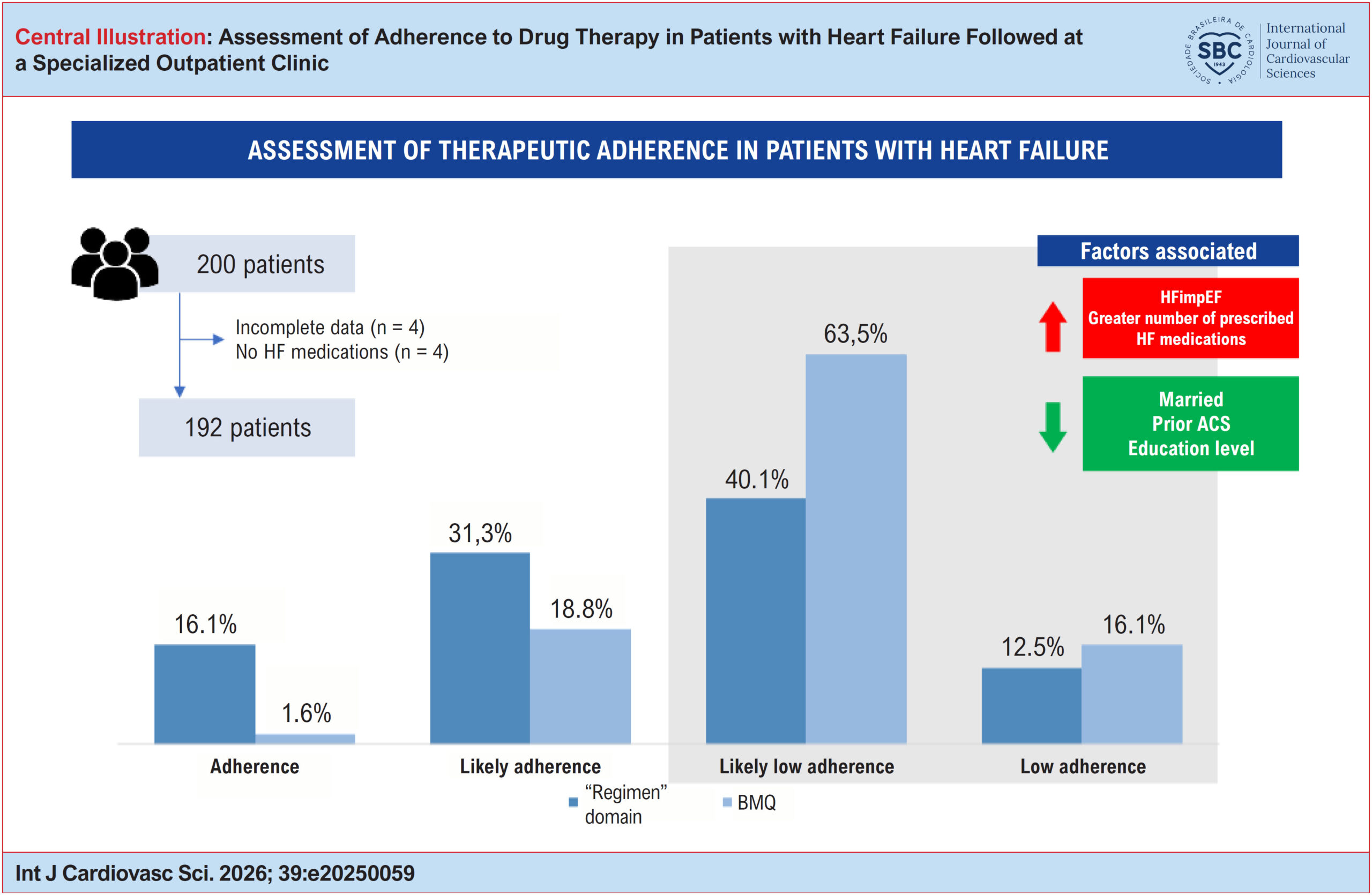
A total of 200 patients were included; 79.6% showed low adherence according to the BMQ, and 52.6% showed low adherence in the “regimen” domain. Only 3 (1.6%) patients presented no barriers to adherence. In multivariate analysis, being married (odds ratio [OR] 0.40; 95% confidence interval [CI] 0.16–0.96; p = 0.042), prior acute coronary syndrome (ACS) (OR 0.21; 95% CI 0.08–0.51; p < 0.001), education level (OR 0.90; 95% CI 0.82–0.98; p = 0.018), higher number of prescribed medications (OR 1.44; 95% CI 1.03–2.05; p = 0.037), and HF with improved ejection fraction (OR 2.76; 95% CI 1.06–7.63; p = 0.042) were independent predictors of low adherence.

Conclusion:

Low therapeutic adherence among patients with HF is prevalent and influenced by socioeconomic factors, social support, polypharmacy, and clinical characteristics. The results reinforce the need for health education and the simplification of therapeutic regimens.
  • Ambulatory Care
  • Heart Failure
  • medication adherence
Read Full Article
Creative Commons Attribution (CC BY) Creative Commons license
13/08/2026 DOI: 10.36660/ijcs.20250059 Views 1
Figure 1
ABCIC
Editorial

New Tools for Optimizing HF Management: The Role of POCUS in the Office

Luiz Claudio Danzmann et al. Elisa Kalil Soraya Abunader Kalil

A Reflection on Clinical and Subclinical Circulatory Congestion

The management of heart failure (HF) has improved over the past 20 years, mainly due to advances in diagnostic methods and circulatory decongestion strategies. Several management strategies have demonstrated efficacy in reducing symptoms, lowering rates of HF decompensation events, decreasing mortality indices, and improving surrogate markers of clinical events, such as left ventricular ejection fraction (LVEF). In HF management, the need for detecting and monitoring circulatory congestion is justified by its strong association with neurohormonal activation and systemic inflammation, which contribute to the progressive worsening of HF and, consequently, a higher incidence of clinical events.

But what is the evidence supporting decongestion strategies with diuretics in reducing hard outcomes? In the outpatient setting, the STRONG-HF clinical trial is a good example. Comparing intensive optimization strategy versus usual HF treatment after hospital discharge, the study demonstrated that the group with more frequent visits and more intensive management achieved an absolute risk reduction of 8.1% (15.2% vs. 23.3%, P=0.0021) in the combined outcome of all-cause mortality and/or HF hospitalization within 180 days of follow-up. The statistically significant reduction in clinical signs of congestion, along with a 27% decrease in natriuretic peptide (NP) levels after three months, provided proof of concept for the relationship between decongestion and clinical benefit. This evidence reinforces the need to detect subclinical congestion, especially during the vulnerable phase of HF, which occurs between one and three months after an HF hospitalization, a period in which most potentially preventable events take place.

[…]

  • Ambulatory Care
  • Heart Failure
  • Ultrasonography
Read Full Article
Creative Commons Attribution (CC BY) Creative Commons license
30/06/2025 DOI: 10.36660/abcimg.20250039i Views 2
Figure 1
ABC
Research Letter

Telemedicine in Cardiology for Outpatient Follow-Up of Patients at High Cardiovascular Risk in Response to the COVID-19 Pandemic

Henrique Turin Moreira et al. Gustavo Jardim Volpe Uebe Chade Rezek Pedro Cunha de Mendonça … Gustavo Corrêa de Almeida Teixeira Bruno Moreira dos Santos Anna Paula Gonçalves Olivieri Ana Julia Abbud Chierice Henrique Zanqueta Monteiro Natanael Mendes de Araújo Benedito Carlos Maciel Antonio Pazin Filho André Schmidt

Introduction

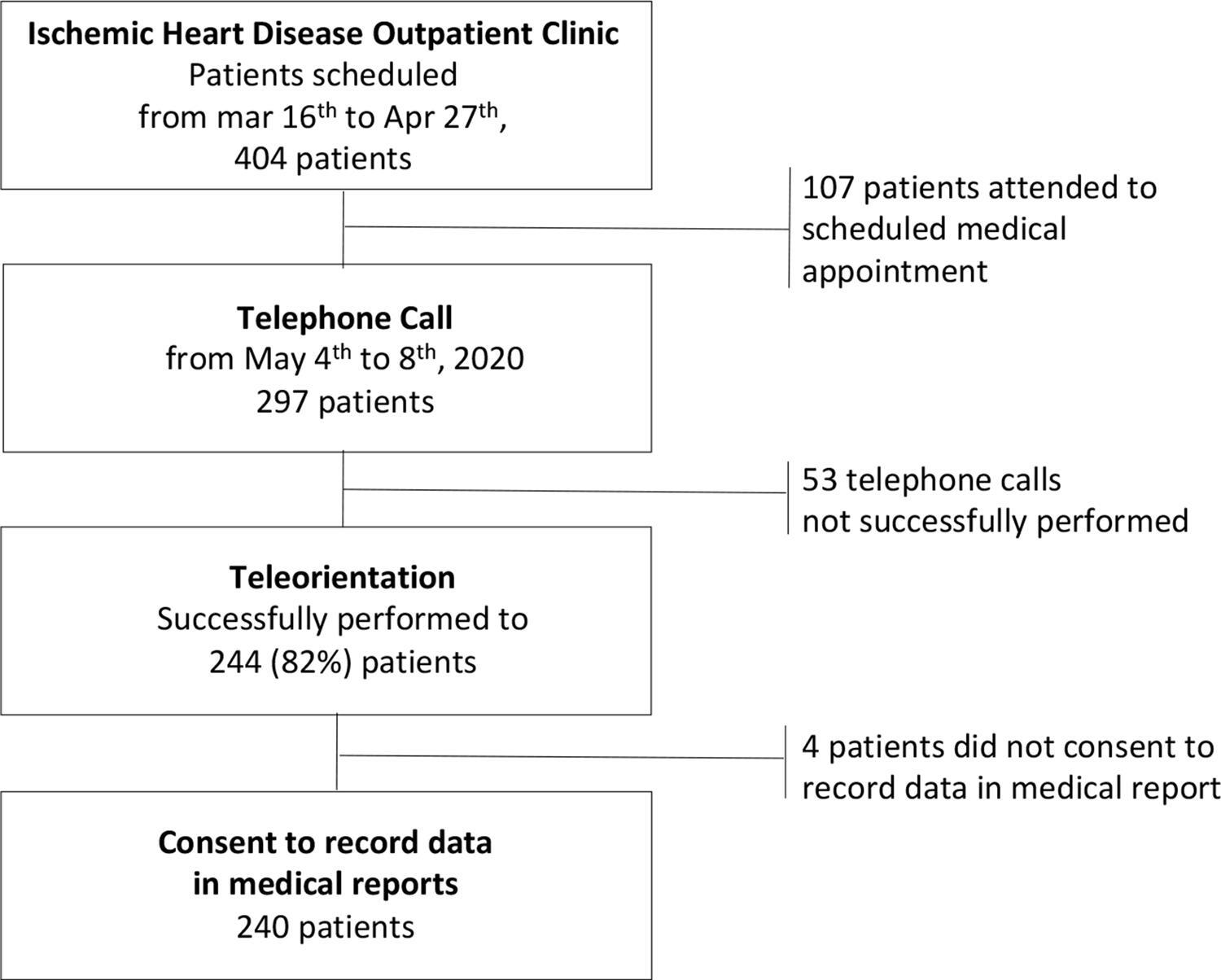
COVID-19, an infectious disease caused by the new type of coronavirus (SARS-Cov-2), usually shows a benign clinical course, although it can lead to acute respiratory distress syndrome. The main risk factors for the severe form of COVID-19 include older age and presence of comorbidities, such as diabetes, hypertension and other cardiovascular diseases.

In response to the COVID-19 pandemic, elective medical appointments have been reduced. Even though an increase in cardiovascular events as an adverse effect of this healthcare system reorganization would be expected, some reports have suggested a possible reduction of such outcomes in countries with high prevalence of SARS-CoV-2 infection. However, the mechanisms related to this decline are not well understood.

[…]

  • Ambulatory Care
  • Betacoronavirus/infection
  • Coronary Artery Disease / complications
  • COVID-19
  • Pandemics
  • Telemedicine
Read Full Article
Creative Commons Attribution (CC BY) Creative Commons license
03/02/2021 DOI: 10.36660/abc.20200715 Views 1
ABC
Editorial

Are We Taking Good Care of Our Patients and Physicians?

Gilson Soares Feitosa

The thorough and well-structured analysis by Marcolino et al. in the article “Satisfaction of emergency physicians with the care provided to patients with cardiovascular diseases in the Extended Northern Region of Minas Gerais”, published in this Arquivos Brasileiros de Cardiologia issue, highlights important problems to be addressed in the Brazilian medical healthcare.

Although circumscribed to a region, that study would most probably reproduce the reality of several other Brazilian regions, some even with a higher human development index. The dissatisfactions brought up in that study can be easily observed in the daily medical practice in almost all Brazilian cities, notably emergency care in general, and emergency cardiovascular care in particular. In the later, the issue is compounded by the frequent need for combining good and prompt care to yield effectiveness.

[…]

  • Ambulatory Care
  • Cardiovascular Diseases
  • Emergency Medical Services
  • Inservice Training
  • Medical Assistance
  • Medical Education / manpower
Read Full Article
Creative Commons Attribution (CC BY) Creative Commons license
01/08/2018 DOI: 10.5935/abc.20180115
IJCS
Original Article

Are Patients' Blood Pressure Levels Being Routinely Measured in Medical Offices?

Israel Guilharde Maynarde et al. Thiago Veiga Jardim Weimar Kunz Sebba Barroso de Souza Ana Luiza Lima Sousa … Andrey Rocha Rocca Bruna Yana de Carvalho Lin Natália Mirelle Carrijo dos Santos Diogo Pereira Santos Sampaio Xênia Larissa Motta Serafim Paulo Cesar Brandao Veiga Jardim

Abstract

Background:

Blood pressure measurement is recommended in all medical evaluations, regardless of the specialty. It is a simple and easy-to-do procedure, but usually neglected or performed incorrectly.

Objectives:

To assess if blood pressure is being measured routinely and compare the values obtained in the usual ambulatory consultations to those obtained when following the adequate techniques.

Methods:

Cross-sectional and observational study that included adult (age >18 years) outpatients treated in clinical and surgical specialties of a teaching hospital. Subjects answered a specific questionnaire and then three blood pressure measurements were performed according to the current guidelines by trained research staff. After that, the patients had their appointments and at the end, the medical charts were checked to see if blood pressure was measured and, if so, the observed value was recorded.

Results:

We included 129 consecutive patients with a mean age of 53 years (± 15.92) predominantly females (61.2%). Most of the appointments occurred in clinical specialties (70.5%) and 49.6% reported themselves as hypertensive. Blood pressure was not measured in 38.8% of the patients, more frequently in surgical specialties (72,5% vs. 27,5%; p < 0,001). The previous diagnosis of hypertension did not influence the chance of a patient having his blood pressure measured (p = 0,082). There were no differences between the blood pressure measured by the researchers and those recorded at the medical charts (118 mmHg vs. 117 mmHg; p = 0,651; 72 mmHg vs. 75 mmHg; p = 0,055).

Conclusions:

The patients’ blood pressure levels were not measured in many of the medical appointments, especially at outpatient clinics of surgical specialties.

  • Ambulatory Care
  • Blood Pressure
  • Hypertension
  • Outpatient Service
  • Physician's Offices
Read Full Article
Creative Commons Attribution (CC BY) Creative Commons license
01/01/2017 DOI: 10.5935/2359-4802.20170055 Views 1
Figure 1
ABC
Original Article

Assessing Strategies for Heart Failure with Preserved Ejection Fraction at the Outpatient Clinic

Antonio José Lagoeiro Jorge et al. Maria Luiza Garcia Rosa Mario Luiz Ribeiro Luiz Claudio Maluhy Fernandes … Monica Di Calafiori Freire Dayse Silva Correia Patrick Duarte Teixeira Evandro Tinoco Mesquita

Background:

Heart failure with preserved ejection fraction (HFPEF) is the most common form of heart failure (HF), its diagnosis being a challenge to the outpatient clinic practice.

Objective:

To describe and compare two strategies derived from algorithms of the European Society of Cardiology Diastology Guidelines for the diagnosis of HFPEF.

Methods:

Cross-sectional study with 166 consecutive ambulatory patients (67.9±11.7 years; 72% of women). The strategies to confirm HFPEF were established according to the European Society of Cardiology Diastology Guidelines criteria. In strategy 1 (S1), tissue Doppler echocardiography (TDE) and electrocardiography (ECG) were used; in strategy 2 (S2), B-type natriuretic peptide (BNP) measurement was included.

Results:

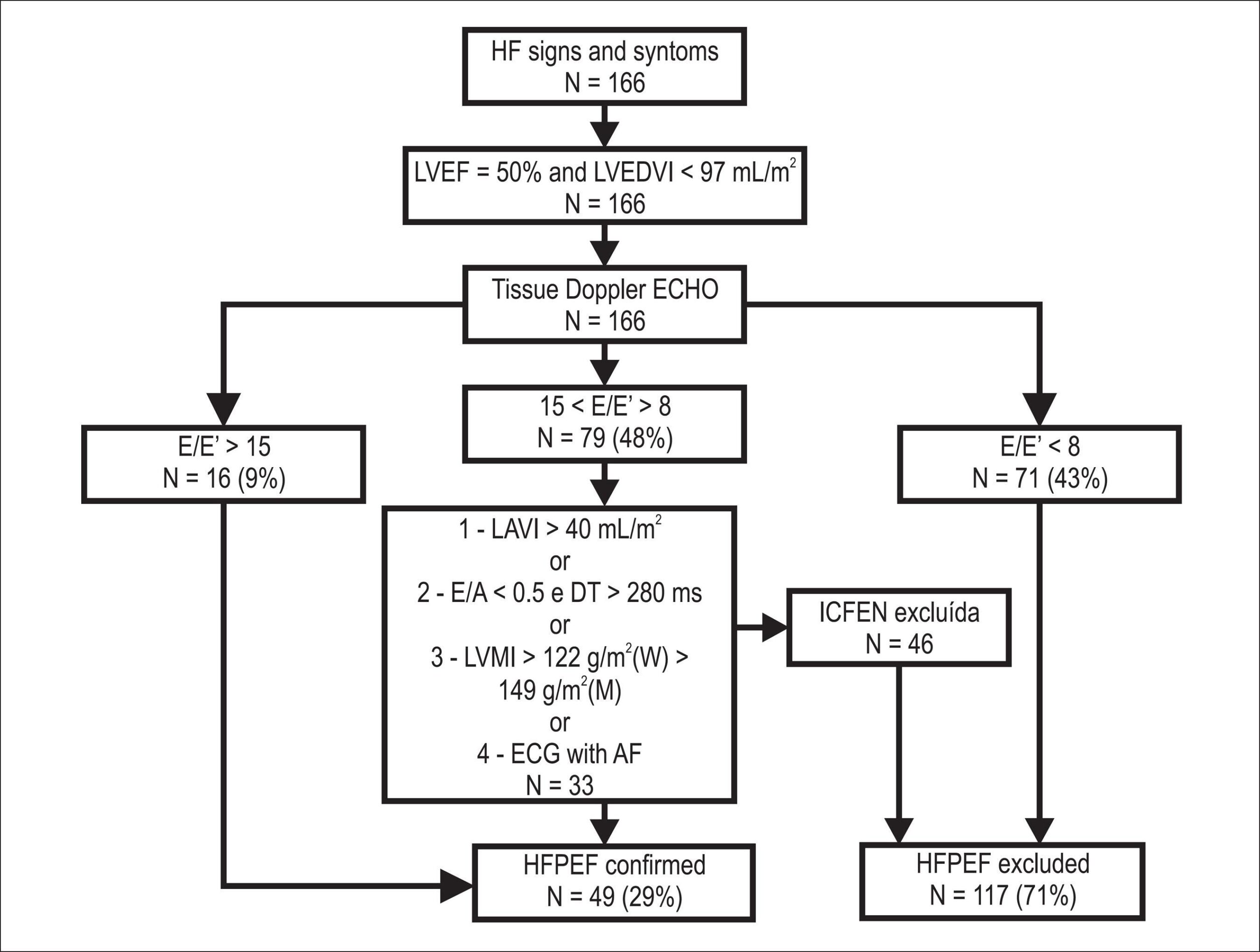
In S1, patients were divided into groups based on the E/E’ratio as follows: GI, E/E’> 15 (n = 16; 9%); GII, E/E’8 to 15 (n = 79; 48%); and GIII, E/E'< 8 (n = 71; 43%). HFPEF was confirmed in GI and excluded in GIII. In GII, TDE [left atrial volume index (LAVI) ≥ 40 mL/m2; left ventricular mass index LVMI) > 122 for women and > 149 g/m2 for men] and ECG (atrial fibrillation) parameters were assessed, confirming HFPEF in 33 more patients, adding up to 49 (29%). In S2, patients were divided into three groups based on BNP levels. GI (BNP > 200 pg/mL) consisted of 12 patients, HFPEF being confirmed in all of them. GII (BNP ranging from 100 to 200 pg/mL) consisted of 20 patients with LAVI > 29 mL/m2, or LVMI ≥ 96 g/m2 for women or ≥ 116 g/m2 for men, or E/E’≥ 8 or atrial fibrillation on ECG, and the diagnosis of HFPEF was confirmed in 15. GIII (BNP < 100 pg/mL) consisted of 134 patients, 26 of whom had the diagnosis of HFPEF confirmed when GII parameters were used. Measuring BNP levels in S2 identified 4 more patients (8%) with HFPEF as compared with those identified in S1.

Conclusion:

The association of BNP measurement and TDE data is better than the isolated use of those parameters. BNP can be useful in identifying patients whose diagnosis of HF had been previously excluded based only on TDE findings.

  • Ambulatory Care
  • Doppler
  • Echocardiography
  • Heart Failure
  • Natriuretic Peptides
Read Full Article
Creative Commons Attribution (CC BY) Creative Commons license
13/08/2014 DOI: 10.5935/abc.20140120

How to cite this article

EndNote RIS

Electronic Document Format (Vancouver)

Jesus BGAS, Oliveira FB, Meira FCA, Oliveira LB, Costa FF, Latado AL. Assessment of Adherence to Drug Therapy in Patients with Heart Failure Followed at a Specialized Outpatient Clinic. International Journal of Cardiovascular Sciences 2026;39:e20250059.

Electronic Document Format (ABNT)

Jesus, Breno Gabriel Araújo Sampaio de; Oliveira, Felipe Barros; Meira, Felipe Caires Araújo; Oliveira, Lívia Brito; Costa, Fabio Figueirêdo; Latado, Adriana Lopes. Assessment of Adherence to Drug Therapy in Patients with Heart Failure Followed at a Specialized Outpatient Clinic. International Journal of Cardiovascular Sciences, v. 39, e20250059, Aug. 2026.

Electronic Document Format (APA)

Jesus, B. G. A. S. , Oliveira, F. B., Meira, F. C. A., Oliveira, L. B., Costa, F. F., & Latado, A. L. (2026). Assessment of Adherence to Drug Therapy in Patients with Heart Failure Followed at a Specialized Outpatient Clinic. International Journal of Cardiovascular Sciences, 39, e20250059.

Electronic Document Format (ISO)

Jesus, Breno Gabriel Araújo Sampaio de and Oliveira, Felipe Barros and Meira, Felipe Caires Araújo and Oliveira, Lívia Brito and Costa, Fabio Figueirêdo and Latado, Adriana Lopes. Assessment of Adherence to Drug Therapy in Patients with Heart Failure Followed at a Specialized Outpatient Clinic. International Journal of Cardiovascular Sciences [online]. 2026, vol. 39, [cited 2026-10-15], e20250059. Available from: <https://journals.cardiol.br/en/article/assessment-of-adherence-to-drug-therapy-in-patients-with-heart-failure-followed-at-a-specialized-outpatient-clinic/>. ISSN 2359-4802

EndNote RIS

Electronic Document Format (Vancouver)

Danzmann LC, Kalil E, Kalil SA. New Tools for Optimizing HF Management: The Role of POCUS in the Office. ABC Imagem Cardiovascular 2025;38(2):e20250039.

Electronic Document Format (ABNT)

Danzmann, Luiz Claudio; Kalil, Elisa; Kalil, Soraya Abunader. New Tools for Optimizing HF Management: The Role of POCUS in the Office. ABC Imagem Cardiovascular, v. 38, n. 2, e20250039, Jun. 2025.

Electronic Document Format (APA)

Danzmann, L. C., Kalil, E., & Kalil, S. A. (2025). New Tools for Optimizing HF Management: The Role of POCUS in the Office. ABC Imagem Cardiovascular, 38(2), e20250039.

Electronic Document Format (ISO)

Danzmann, Luiz Claudio and Kalil, Elisa and Kalil, Soraya Abunader. New Tools for Optimizing HF Management: The Role of POCUS in the Office. ABC Imagem Cardiovascular [online]. 2025, vol. 38, n. 2, [cited 2026-10-15], e20250039. Available from: <https://journals.cardiol.br/en/article/new-tools-for-optimizing-hf-management-the-role-of-pocus-in-the-office/>. ISSN 2318-8219

EndNote RIS

Electronic Document Format (Vancouver)

Moreira HT, Volpe GJ, Rezek UC, Mendonça PC, Teixeira GCA, Santos BM, Olivieri APG, et al. Telemedicine in Cardiology for Outpatient Follow-Up of Patients at High Cardiovascular Risk in Response to the COVID-19 Pandemic. Arquivos Brasileiros de Cardiologia 2021;116(1):153-7.

Electronic Document Format (ABNT)

Moreira, Henrique Turin; Volpe, Gustavo Jardim; Rezek, Uebe Chade; Mendonça, Pedro Cunha de; Teixeira, Gustavo Corrêa de Almeida; Santos, Bruno Moreira dos; Olivieri, Anna Paula Gonçalves; Chierice, Ana Julia Abbud; Monteiro, Henrique Zanqueta; Araújo, Natanael Mendes de; Maciel, Benedito Carlos; Pazin Filho, Antonio; Schmidt, André. Telemedicine in Cardiology for Outpatient Follow-Up of Patients at High Cardiovascular Risk in Response to the COVID-19 Pandemic. Arquivos Brasileiros de Cardiologia, v. 116, n. 1, p. 153-157, Feb. 2021.

Electronic Document Format (APA)

Moreira, H. T., Volpe, G. J., Rezek, U. C., Mendonça, P. C. , Teixeira, G. C. A., Santos, B. M. , Olivieri, A. P. G., Chierice, A. J. A., Monteiro, H. Z., Araújo, N. M. , Maciel, B. C., Pazin Filho, A., & Schmidt, A. (2021). Telemedicine in Cardiology for Outpatient Follow-Up of Patients at High Cardiovascular Risk in Response to the COVID-19 Pandemic. Arquivos Brasileiros de Cardiologia, 116(1), 153-157.

Electronic Document Format (ISO)

Moreira, Henrique Turin and Volpe, Gustavo Jardim and Rezek, Uebe Chade and Mendonça, Pedro Cunha de and Teixeira, Gustavo Corrêa de Almeida and Santos, Bruno Moreira dos and Olivieri, Anna Paula Gonçalves and Chierice, Ana Julia Abbud and Monteiro, Henrique Zanqueta and Araújo, Natanael Mendes de and Maciel, Benedito Carlos and Pazin Filho, Antonio and Schmidt, André. Telemedicine in Cardiology for Outpatient Follow-Up of Patients at High Cardiovascular Risk in Response to the COVID-19 Pandemic. Arquivos Brasileiros de Cardiologia [online]. 2021, vol. 116, n. 1, [cited 2026-10-15], pp. 153-157. Available from: <https://journals.cardiol.br/en/article/telemedicine-in-cardiology-for-outpatient-follow-up-of-patients-at-high-cardiovascular-risk-in-response-to-the-covid-19-pandemic/>. ISSN 0066-782X

EndNote RIS

Electronic Document Format (Vancouver)

Feitosa GS. Are We Taking Good Care of Our Patients and Physicians?. Arquivos Brasileiros de Cardiologia 2018;111(2):160-1.

Electronic Document Format (ABNT)

Feitosa, Gilson Soares. Are We Taking Good Care of Our Patients and Physicians?. Arquivos Brasileiros de Cardiologia, v. 111, n. 2, p. 160-161, Jul. 2018.

Electronic Document Format (APA)

Feitosa, G. S. (2018). Are We Taking Good Care of Our Patients and Physicians?. Arquivos Brasileiros de Cardiologia, 111(2), 160-161.

Electronic Document Format (ISO)

Feitosa, Gilson Soares. Are We Taking Good Care of Our Patients and Physicians?. Arquivos Brasileiros de Cardiologia [online]. 2018, vol. 111, n. 2, [cited 2026-10-15], pp. 160-161. Available from: <https://journals.cardiol.br/article/are-we-taking-good-care-of-our-patients-and-physicians/>. ISSN 0066-782X

EndNote RIS

Electronic Document Format (Vancouver)

Maynarde IG, Jardim TV, Souza WKSB, Sousa ALL, Rocca AR, Lin BYC, Santos NMC, et al. Are Patients’ Blood Pressure Levels Being Routinely Measured in Medical Offices?. International Journal of Cardiovascular Sciences 2017;30(4):293-8.

Electronic Document Format (ABNT)

Maynarde, Israel Guilharde; Jardim, Thiago Veiga; Souza, Weimar Kunz Sebba Barroso de; Sousa, Ana Luiza Lima; Rocca, Andrey Rocha; Lin, Bruna Yana de Carvalho; Santos, Natália Mirelle Carrijo dos; Sampaio, Diogo Pereira Santos; Serafim, Xênia Larissa Motta; Jardim, Paulo Cesar Brandao Veiga. Are Patients’ Blood Pressure Levels Being Routinely Measured in Medical Offices?. International Journal of Cardiovascular Sciences, v. 30, n. 4, p. 293-298, Dec. 2016.

Electronic Document Format (APA)

Maynarde, I. G., Jardim, T. V., Souza, W. K. S. B. , Sousa, A. L. L., Rocca, A. R., Lin, B. Y. C., Santos, N. M. C. , Sampaio, D. P. S., Serafim, X. L. M., & Jardim, P. C. B. V. (2017). Are Patients’ Blood Pressure Levels Being Routinely Measured in Medical Offices?. International Journal of Cardiovascular Sciences, 30(4), 293-298.

Electronic Document Format (ISO)

Maynarde, Israel Guilharde and Jardim, Thiago Veiga and Souza, Weimar Kunz Sebba Barroso de and Sousa, Ana Luiza Lima and Rocca, Andrey Rocha and Lin, Bruna Yana de Carvalho and Santos, Natália Mirelle Carrijo dos and Sampaio, Diogo Pereira Santos and Serafim, Xênia Larissa Motta and Jardim, Paulo Cesar Brandao Veiga. Are Patients’ Blood Pressure Levels Being Routinely Measured in Medical Offices?. International Journal of Cardiovascular Sciences [online]. 2017, vol. 30, n. 4, [cited 2026-10-15], pp. 293-298. Available from: <https://journals.cardiol.br/en/article/are-patients-blood-pressure-levels-being-routinely-measured-in-medical-offices/>. ISSN 2359-4802

EndNote RIS

Electronic Document Format (Vancouver)

Jorge AJL, Rosa MLG, Ribeiro ML, Fernandes LCM, Freire MDC, Correia DS, Teixeira PD, et al. Assessing Strategies for Heart Failure with Preserved Ejection Fraction at the Outpatient Clinic. Arquivos Brasileiros de Cardiologia 2014;103(3):231-7.

Electronic Document Format (ABNT)

Jorge, Antonio José Lagoeiro; Rosa, Maria Luiza Garcia; Ribeiro, Mario Luiz; Fernandes, Luiz Claudio Maluhy; Freire, Monica Di Calafiori; Correia, Dayse Silva; Teixeira, Patrick Duarte; Mesquita, Evandro Tinoco. Assessing Strategies for Heart Failure with Preserved Ejection Fraction at the Outpatient Clinic. Arquivos Brasileiros de Cardiologia, v. 103, n. 3, p. 231-237, Aug. 2014.

Electronic Document Format (APA)

Jorge, A. J. L., Rosa, M. L. G., Ribeiro, M. L., Fernandes, L. C. M., Freire, M. D. C., Correia, D. S., Teixeira, P. D., & Mesquita, E. T. (2014). Assessing Strategies for Heart Failure with Preserved Ejection Fraction at the Outpatient Clinic. Arquivos Brasileiros de Cardiologia, 103(3), 231-237.

Electronic Document Format (ISO)

Jorge, Antonio José Lagoeiro and Rosa, Maria Luiza Garcia and Ribeiro, Mario Luiz and Fernandes, Luiz Claudio Maluhy and Freire, Monica Di Calafiori and Correia, Dayse Silva and Teixeira, Patrick Duarte and Mesquita, Evandro Tinoco. Assessing Strategies for Heart Failure with Preserved Ejection Fraction at the Outpatient Clinic. Arquivos Brasileiros de Cardiologia [online]. 2014, vol. 103, n. 3, [cited 2026-10-15], pp. 231-237. Available from: <https://journals.cardiol.br/en/article/assessing-strategies-for-heart-failure-with-preserved-ejection-fraction-at-the-outpatient-clinic/>. ISSN 0066-782X

  • About ABC Family
  • Internal Regulation
  • Editorial Board
  • Brazilian Society of Cardiology (SBC)

Issues

SBC Guidelines

  • Videos
  • Podcasts
  • News