ABC Family Arquivos Brasileiros de Cardiologia International Journal of Cardiovascular Sciences ABC Heart Failure & Cardiomyopathy ABC Imagem Cardiovascular
Português English
ABC Family
Português English
  • About
    • About ABC Family
    • Internal Regulation
    • Editorial Board
    • Brazilian Society of Cardiology (SBC)
  • Issues
  • SBC Guidelines
  • Content
    • Videos
    • Podcasts
    • News
  • About
    • About ABC Family
    • Internal Regulation
    • Editorial Board
    • Brazilian Society of Cardiology (SBC)
  • Issues
  • SBC Guidelines
  • Content
    • Videos
    • Podcasts
    • News

ABC Family

  • ABC Family
  • Arquivos Brasileiros de Cardiologia
  • International Journal of Cardiovascular Sciences
  • ABC Heart Failure & Cardiomyopathy
  • ABC Imagem Cardiovascular
Search in

No content found.

Journals
Ordering
Article types
Others

  1. Home
  2. Keyword: Sphygmomanometers
IJCS
Original Article

Evaluation of the Profile and Quality of Sphygmomanometers Available at a Health Education Institution in Belo Horizonte

Matheus Evangelista da Costa et al. Sarah Mattos Moraes Kleisson Antonio Pontes Maia

Abstract

Background

Arterial hypertension affects around 30% of the Brazilian adult population, showing a direct and progressive relationship with an increased risk of cardiovascular diseases (CVDs). In this context, adjustments in the calibration and physical constitution of sphygmomanometers are essential conditions for obtaining correct blood pressure (BP) measurements.

Objectives

Analyze the profile and quality of sphygmomanometers used in various sectors of a health education institution in Belo Horizonte, Minas Gerais.

Methods

The present study conducted a cross-sectional, observational, and non-interventional study to assess adherence to various quality parameters of the sphygmomanometers available in the outpatient clinic, emergency department, and ward of an educational institution in the municipality of Belo Horizonte.

Results

We analyzed 78 devices, in which high rates of adherence were identified for velcro/pins, 93.5% (73/78); bulbs/rubbers, 92.1% (70/76); valves, 93.4% (71/76); the seal of the National Institute of Metrology, Quality, and Technology (INMETRO), 97.4% (76/78); and the clock, 92.1% (70/76). However, these parameters showed no statistical significance. Institutions (hospital/outpatient clinic) recorded higher calibration rates, 75% (39/52, p<0.001), in accordance with the deadlines stipulated by INMETRO, and the cuff/equipment compatibility showed its highest value (52%) among students (32/61, p = 0.004).

Conclusion

Our study showed that 38.4% (30/78) of the devices did not presented some type of inadequacy, with outpatient-owned devices had the highest compliance rate (p = 0.015). These findings are worrisome, as they can lead to inaccurate BP measurements.
  • Cardiovascular Diseases
  • Equipment Failure
  • Hypertension
  • Sphygmomanometers
Read Full Article
Creative Commons Attribution (CC BY) Creative Commons license
11/03/2024 DOI: 10.36660/ijcs.20230175 Views 2
IJCS
Original Article

Improvement in Semiconductivity On The Measurement Of Blood Pressure After An Educational Intervention In Health Professionals

Cynthia Kallás Bachur et al. Sarah Silva Candido Gerlia Bernardes Silveira Samantha Gurgel Oliveira Sousa … Joao Hercos Neto Eugenia Velludo Veiga

Abstract

Background

Measuring blood pressure is a simple method, but it is subject to errors.

Objective

to evaluate the theoretical and practical knowledge of the steps of blood pressure measurement in health professionals, before and after the educational intervention.

Methods

The theoretical knowledge questionnaire on indirect blood pressure measurement was used to assess theoretical knowledge; to assess practical knowledge, the simulation strategy was applied in a standardized clinical setting and environment. The assessments were reapplied after one month. For data analysis, descriptive statistics were used.

Results

30 health professionals from different categories; 19 of whom were males aged 41 ± 9.4 years and 11 were females aged 35 ± 9.5 years. Improvement was observed in most stages of theoretical and practical knowledge when compared to pre-and post-intervention, with an emphasis on the theoretical stages: “Position of the lower limbs” 2 (6.6%) x 16 (53.3%) and “Forceps with adequate position” 1 (3.3%) x 6 (20%). In the assessment of practical knowledge, it should be highlighted: “Do not speak during the measurement” 6 (20%) x 28 (93.3%) and in the “ideal size clamp” stage 0 (0%) x 5 (16.6 %).

Conclusion

The theoretical and practical knowledge on the stages of BP measurement by health professionals in this sample was insufficient. However, after the educational intervention, there was an improvement in the technique in most stages. (International Journal of Cardiovascular Sciences. 2020; [online].ahead print, PP.0-0)

  • Blood Pressure
  • Health Personal
  • Hypertension
  • Inservice Training
  • Knowledge
  • Measument Equipment
  • questionnaires
  • Sphygmomanometers
  • Stethoscppes
Read Full Article
Creative Commons Attribution (CC BY) Creative Commons license
15/07/2020 DOI: 10.36660/ijcs.20190129 Views 3
IJCS
Original Article

Inadequacies of Sphygmomanometers Used in Emergency Care Services in a Large Capital City in Brazil

Kleisson Antonio Pontes Maia et al. Marcus Vinícius Bolívar Malachias Isabela Viana de Paiva Rafael da Mota Mariano Rodrigo Viana de Paiva

Abstract

Background:

Hypertension is the main risk factor for cardiovascular diseases. Technical quality of sphygmomanometers is a prerequisite for the correct measurement of arterial pressure.

Objectives:

To evaluate sphygmomanometers available in emergency services in the city of Belo Horizonte, Brazil.

Methods:

We performed a cross-sectional, observational, non-interventional study to evaluate characteristics of the sphygmomanometers available in adult emergency services of public and private hospitals in the city of Belo Horizonte, Brazil. We evaluated 337 sphygmomanometers of 25 hospitals – 15 (of 16) public hospitals and 10 (of 12) private hospitals.

Results:

Twenty-six percent (88/337) of devices were considered inadequate regarding the INMETRO (National Institute of Metrology, Quality and Technology) standards, 39.2% (132/337) for calibration dates, and 54% (188/337) for the mismatching between cuff’s and device’s brands. In 13 of 25 hospitals (52%), there were no spare cuffs in different sizes for different arm circumferences. Higher adequacy was found for aneroid and mercury sphygmomanometers used in private hospitals (p = 0.038 and p < 0.001, respectively) and electronic devices used in public hospitals (p < 0.001) compared with others.

Conclusion:

Seventy-eight percent of sphygmomanometers available in emergency services had technical inadequacies, and half of these services had no spare cuffs in different sizes available. These findings serve as a warning of the conditions of the equipment used in healthcare services provided to the general population in Brazil.

  • Emergency Medical Services
  • Equipment Failure
  • Hospitals, Private
  • Hospitals, Public
  • Hypertension
  • Sphygmomanometers
Read Full Article
Creative Commons Attribution (CC BY) Creative Commons license
01/01/2017 DOI: 10.5935/2359-4802.20170028 Views 1
IJCS
Editorial

The Accuracy of Blood Pressure Measurement

Claudio Tinoco Mesquita

The act of measuring a patient’s blood pressure with a stethoscope and a sphygmomanometer is among the most important because of the various clinical implications that may occur. Failure to detect elevated blood pressure levels may expose a patient to the risk of various complications such as stroke, heart failure, kidney failure, and premature atherosclerosis. Conversely, obtaining falsely elevated measures may lead to diagnostic investigations and use of costly and life-threatening drugs. The concern with the proper calibration and validation of blood pressure measurement devices is constant and fundamental for clinical practice. Turner et al., in a detailed computational study, demonstrated that the error resulting from the decalibrated sphygmomanometer accounts for 20% to 28% of cases of undetected systolic and diastolic hypertension and 15% and 31% of cases of falsely diagnosed systolic and diastolic hypertension, respectively.

[…]

  • blood pressure determination
  • Data Accuracy
  • Hypertension/complications
  • measurement equipment
  • Sphygmomanometers
Read Full Article
Creative Commons Attribution (CC BY) Creative Commons license
01/01/2017 DOI: 10.5935/2359-4802.20170041
Evaluation of accuracy of rastreometer: a new equipment for hypertension tracking
ABC
Artigo Original

Evaluation of accuracy of rastreometer: a new equipment for hypertension tracking

Fernando Bitencourt et al. Carlos Antonio Mascia Gottschall

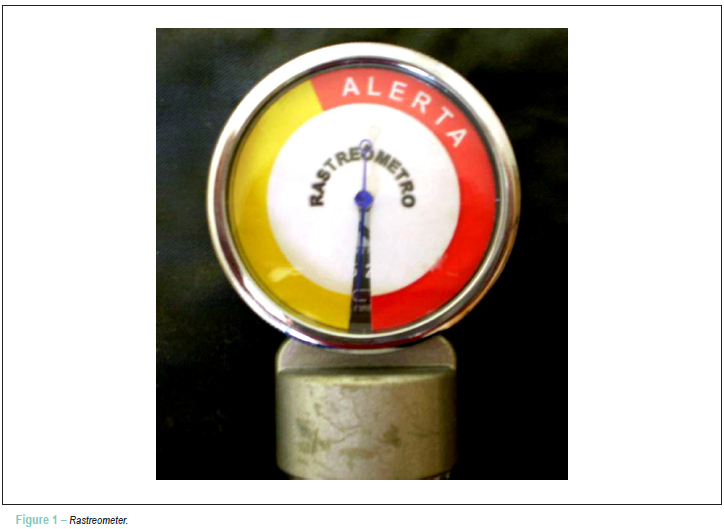
Background: Hypertension is one of the major cardiovascular risk factors affecting more than one billion people. The low awareness of the disease is one of the greatest difficulties related to hypertension. The population screening for hypertension is widely recognized as an effective strategy to detect new cases, but until now, there is no instrument that has become feasible for mass screening of the population. Objective: Evaluate the accuracy and reproducibility of the Rastreometer, a new instrument for the screening of hypertension for community health agents. Methods: Cross-sectional study with a sample of 436 individuals served by the Family Health Strategy. The evaluation was conducted comparing the results of blood pressure obtained by the oscillometric method and reading of the Rastreometer performed by community health agents. Results: The Rastreometer presented a sensitivity of 81.3% and a specificity of 85.6% when assessed in relation to the values of systolic pressure. The operators’ performance influenced the results of the Rastreometer independently (p = 0.0001). The Rastreometer showed substantial reproducibility (Kendall’s W 0.71). Conclusion: The Rastreometer, when operated by community health agents, showed good sensitivity, specificity and reproducibility, especially when evaluated with the values of systolic pressure, tending to confirm this new instrument as a method of screening for hypertension in primary health care.

  • Blood Pressure
  • Diagnosis
  • Hypertension
  • measurement equipment
  • Risk Factors
  • Sphygmomanometers
Read Full Article
Creative Commons Attribution (CC BY) Creative Commons license
31/01/2012 DOI: 10.1590/S0066-782X2012005000013 Views 1
Validation of Missouri aneroid sphygmomanometer to measure blood pressure in patients with cancer
ABC
Artigo Original

Validation of Missouri aneroid sphygmomanometer to measure blood pressure in patients with cancer

Karine Azevedo São Leão Ferreira et al. Ana Claúdia dos Santos Thais Cardoso Arthur Daniela Aparecida A. dos Santos … Daniela Pereira Elizângela Oliveira Freitas Fernanda Medeiros Fukuda Wânia Regina Mollo Baia

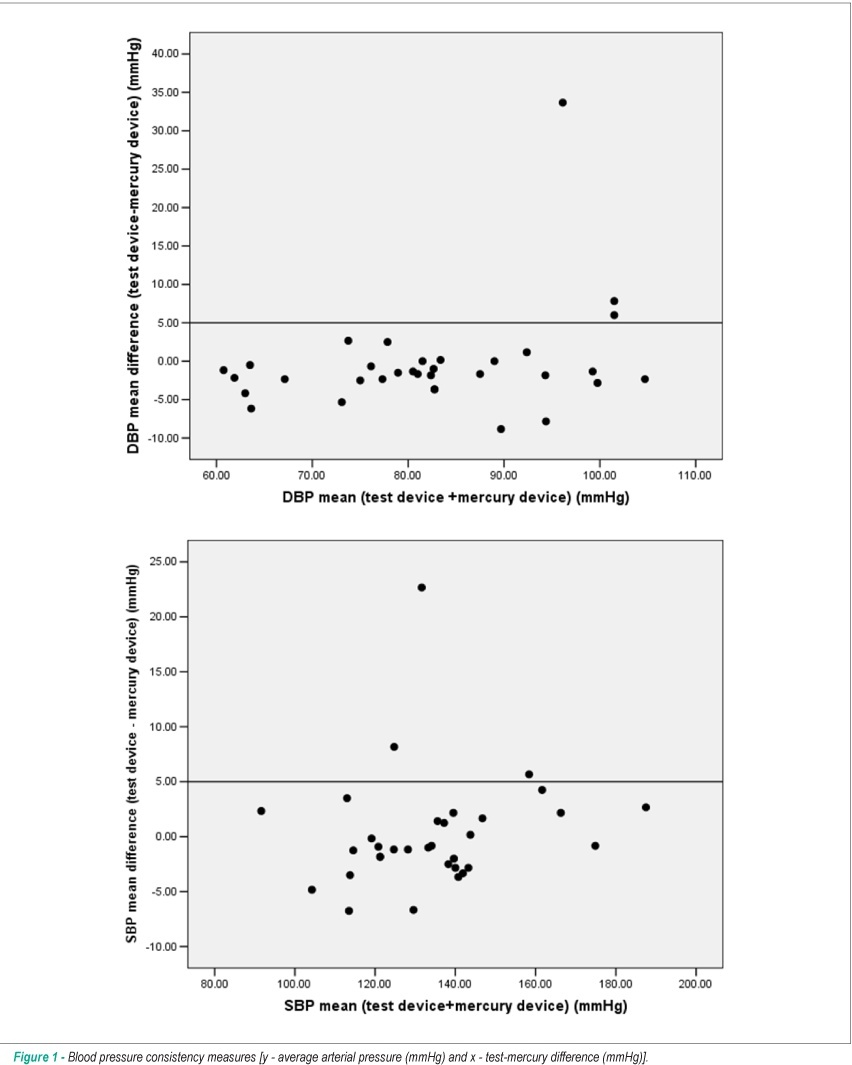
BACKGROUND: Auscultatory mercury sphygmomanometers to measure blood pressure (BP) have been banned from health services because of risk of pollution and environmental accidents with mercury. Aneroid appliances could be an alternative. OBJECTIVE: To validate the MissouriTM aneroid device for blood pressure measurement in cancer patients according to the protocol of the European Society of Hypertension (ESH). METHODS: 33 patients hospitalized or under outpatient care at the Cancer Institute of the State of São Paulo, FMUSP, were evaluated. Three trained and blinded observers performed nine sequential blood pressure measurements interspersed with the mercury sphygmomanometers. The differences between the values of systolic blood pressure (SBP) and diastolic blood pressure (DBP) of the test device with the mercury sphygmomanometer were classified according to the ESH protocol. RESULTS: The MissouriTM equipment underwent all three phases required by the ESH Protocol for SBP and DBP, and it was approved in all of the phases. The average difference between the test device and the mercury sphygmomanometer was 0.62 (SD = 4.53) and 0.06 (SD = 6.57) mmHg for SBP and DBP, respectively. No association was found between the differences in BP measurements with sex, age, body mass index and arm circumference and length. CONCLUSION: The results revealed that the aneroid MissouriTM device meets ESH accuracy recommendations for the measurement of SBP and DBP, and it can be used to replace the mercury sphygmomanometer.

  • Blood Pressure
  • Hypertension
  • Neoplasms
  • Patients
  • Sphygmomanometers
Read Full Article
Creative Commons Attribution (CC BY) Creative Commons license
23/07/2010 DOI: 10.1590/S0066-782X2010005000093 Views 1
Validity of a wrist digital monitor for blood pressure measurement in comparison to a mercury sphygmomanometer
ABC
Artigo Original

Validity of a wrist digital monitor for blood pressure measurement in comparison to a mercury sphygmomanometer

Ana M. B. Menezes et al. Samuel C. Dumith Ricardo B. Noal Ana Paula Nunes … Fernanda I. Mendonça Cora L. P. Araújo Marta A. Duval Paulo E. Caruso Pedro C. Hallal

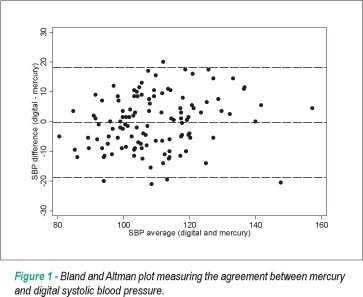
BACKGROUND: Valid measurements of blood pressure, both at clinical and community settings, are essential for monitoring this variable at the population level. OBJECTIVE: To evaluate the validity of a wrist digital monitor for measuring blood pressure among adolescents in comparison to a mercury sphygmomanometer. METHODS: A validation study was carried out in the city of Pelotas, Southern Brazil. Blood pressure was measured twice using two different sphygmomanometers; an OMRON wrist digital and a desktop BD mercury one. Half of the sample was measured first with the digital manometer and subsequently with the mercury one, whereas the remaining half was evaluated in the opposite order. Agreement between both measures was evaluated using the Bland and Altman method. RESULTS: 120 adolescents aged 14 to 15 years were included (50% of each sex). Mean systolic blood pressure among boys was 113.7 mmHg (SD 14.2) when using the mercury manometer and 115.5 mmHg (SD 15.2) when using the digital one. Equivalent values for diastolic blood pressure were 61.5 mmHg (SD 9.9) and 69.6 mmHg (10.2), respectively. Among girls, the mean systolic blood pressure was 104.7 mmHg (SD 10.1) when using the mercury manometer and 102.4 mmHg (SD 11.9) when using the digital device. Values for diastolic blood pressure were 60.0 mmHg (SD 10.4) and 65.7 mmHg (SD 7.7), respectively. CONCLUSIONS: The digital device showed a high level of agreement with the mercury manometer when measuring systolic blood pressure. The level of agreement was lower for diastolic blood pressure. The use of correction equations may be an alternative for studies using this wrist digital monitor in adolescent patients.

  • Adolescent
  • blood pressure determination
  • blood pressure monitors
  • Sphygmomanometers
  • Validation Studies
Read Full Article
Creative Commons Attribution (CC BY) Creative Commons license
28/04/2010 DOI: 10.1590/S0066-782X2010000300014 Views 1
The results of the Campaign for evaluating sphygmomanometers accuracy and their physical conditions
ABC
Original Article

The results of the Campaign for evaluating sphygmomanometers accuracy and their physical conditions

Décio Mion Jr et al. Angela M. G. Pierin Débora Cristina Alavarce José Henrique da Cunha Vasconcellos

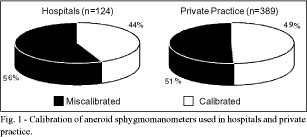
OBJECTIVE: To evaluate the sphygmomanometers calibration accuracy and the physical conditions of the cuff-bladder, bulb, pump, and valve. METHODS: Sixty hundred and forty five aneroid sphygmomanometers were evaluated, 521 used in private practice and 124 used in hospitals. Aneroid manometers were tested against a properly calibrated mercury manometer and were considered calibrated when the error was <=3mm Hg. The physical conditions of the cuffs-bladder, bulb, pump, and valve were also evaluated. RESULTS: Of the aneroid sphygmomanometers tested, 51% of those used in private practice and 56% of those used in hospitals were found to be not accurately calibrated. Of these, the magnitude of inaccuracy ranged from 4 to 8mm Hg in 70% and 51% of the devices, respectively. The problems found in the cuffs – bladders, bulbs, pumps, and valves of the private practice and hospital devices were bladder damage (34% vs. 21%, respectively), holes/leaks in the bulbs (22% vs. 4%, respectively), and rubber aging (15% vs. 12%, respectively). Of the devices tested, 72% revealed at least one problem interfering with blood pressure measurement accuracy. CONCLUSION: Most of the manometers evaluated, whether used in private practice or in hospitals, were found to be inaccurate and unreliable, and their use may jeopardize the diagnosis and treatment of arterial hypertension.

  • blood pressure measurement
  • calibration accuracy
  • Sphygmomanometers
Read Full Article
Creative Commons Attribution (CC BY) Creative Commons license
05/09/2000 DOI: 10.1590/S0066-782X2000000100004 Views 1

How to cite this article

EndNote RIS

Electronic Document Format (Vancouver)

Costa ME, Moraes SM, Maia KAP. Evaluation of the Profile and Quality of Sphygmomanometers Available at a Health Education Institution in Belo Horizonte. International Journal of Cardiovascular Sciences 2024;37:e20230175.

Electronic Document Format (ABNT)

Costa, Matheus Evangelista da; Moraes, Sarah Mattos; Maia, Kleisson Antonio Pontes. Evaluation of the Profile and Quality of Sphygmomanometers Available at a Health Education Institution in Belo Horizonte. International Journal of Cardiovascular Sciences, v. 37, e20230175, Mar. 2024.

Electronic Document Format (APA)

Costa, M. E. , Moraes, S. M., & Maia, K. A. P. (2024). Evaluation of the Profile and Quality of Sphygmomanometers Available at a Health Education Institution in Belo Horizonte. International Journal of Cardiovascular Sciences, 37, e20230175.

Electronic Document Format (ISO)

Costa, Matheus Evangelista da and Moraes, Sarah Mattos and Maia, Kleisson Antonio Pontes. Evaluation of the Profile and Quality of Sphygmomanometers Available at a Health Education Institution in Belo Horizonte. International Journal of Cardiovascular Sciences [online]. 2024, vol. 37, [cited 2026-10-14], e20230175. Available from: <https://journals.cardiol.br/en/article/evaluation-of-the-profile-and-quality-of-sphygmomanometers-available-at-a-health-education-institution-in-belo-horizonte/>. ISSN 2359-4802

EndNote RIS

Electronic Document Format (Vancouver)

Bachur CK, Candido SS, Silveira GB, Sousa SGO, Hercos Neto J, Veiga EV. Improvement in Semiconductivity On The Measurement Of Blood Pressure After An Educational Intervention In Health Professionals. International Journal of Cardiovascular Sciences 2020;34(1):1-7.

Electronic Document Format (ABNT)

Bachur, Cynthia Kallás; Candido, Sarah Silva; Silveira, Gerlia Bernardes; Sousa, Samantha Gurgel Oliveira; Hercos Neto, Joao; Veiga, Eugenia Velludo. Improvement in Semiconductivity On The Measurement Of Blood Pressure After An Educational Intervention In Health Professionals. International Journal of Cardiovascular Sciences, v. 34, n. 1, p. 1-7, Jul. 2020.

Electronic Document Format (APA)

Bachur, C. K., Candido, S. S., Silveira, G. B., Sousa, S. G. O., Hercos Neto, J., & Veiga, E. V. (2020). Improvement in Semiconductivity On The Measurement Of Blood Pressure After An Educational Intervention In Health Professionals. International Journal of Cardiovascular Sciences, 34(1), 1-7.

Electronic Document Format (ISO)

Bachur, Cynthia Kallás and Candido, Sarah Silva and Silveira, Gerlia Bernardes and Sousa, Samantha Gurgel Oliveira and Hercos Neto, Joao and Veiga, Eugenia Velludo. Improvement in Semiconductivity On The Measurement Of Blood Pressure After An Educational Intervention In Health Professionals. International Journal of Cardiovascular Sciences [online]. 2020, vol. 34, n. 1, [cited 2026-10-14], pp. 1-7. Available from: <https://journals.cardiol.br/en/article/improvement-in-semiconductivity-on-the-measurement-of-blood-pressure-after-an-educational-intervention-in-health-professionals/>. ISSN 2359-4802

EndNote RIS

Electronic Document Format (Vancouver)

Maia KAP, Malachias MVB, Paiva IV, Mariano RM, Paiva RV. Inadequacies of Sphygmomanometers Used in Emergency Care Services in a Large Capital City in Brazil. International Journal of Cardiovascular Sciences 2017;30(2):100-8.

Electronic Document Format (ABNT)

Maia, Kleisson Antonio Pontes; Malachias, Marcus Vinícius Bolívar; Paiva, Isabela Viana de; Mariano, Rafael da Mota; Paiva, Rodrigo Viana de. Inadequacies of Sphygmomanometers Used in Emergency Care Services in a Large Capital City in Brazil. International Journal of Cardiovascular Sciences, v. 30, n. 2, p. 100-108, Dec. 2016.

Electronic Document Format (APA)

Maia, K. A. P., Malachias, M. V. B., Paiva, I. V. , Mariano, R. M., & Paiva, R. V. (2017). Inadequacies of Sphygmomanometers Used in Emergency Care Services in a Large Capital City in Brazil. International Journal of Cardiovascular Sciences, 30(2), 100-108.

Electronic Document Format (ISO)

Maia, Kleisson Antonio Pontes and Malachias, Marcus Vinícius Bolívar and Paiva, Isabela Viana de and Mariano, Rafael da Mota and Paiva, Rodrigo Viana de. Inadequacies of Sphygmomanometers Used in Emergency Care Services in a Large Capital City in Brazil. International Journal of Cardiovascular Sciences [online]. 2017, vol. 30, n. 2, [cited 2026-10-14], pp. 100-108. Available from: <https://journals.cardiol.br/en/article/inadequacies-of-sphygmomanometers-used-in-emergency-care-services-in-a-large-capital-city-in-brazil/>. ISSN 2359-4802

EndNote RIS

Electronic Document Format (Vancouver)

Mesquita CT. The Accuracy of Blood Pressure Measurement. International Journal of Cardiovascular Sciences 2017;30(2):98-9.

Electronic Document Format (ABNT)

Mesquita, Claudio Tinoco. The Accuracy of Blood Pressure Measurement. International Journal of Cardiovascular Sciences, v. 30, n. 2, p. 98-99, Dec. 2016.

Electronic Document Format (APA)

Mesquita, C. T. (2017). The Accuracy of Blood Pressure Measurement. International Journal of Cardiovascular Sciences, 30(2), 98-99.

Electronic Document Format (ISO)

Mesquita, Claudio Tinoco. The Accuracy of Blood Pressure Measurement. International Journal of Cardiovascular Sciences [online]. 2017, vol. 30, n. 2, [cited 2026-10-14], pp. 98-99. Available from: <https://journals.cardiol.br/en/article/the-accuracy-of-blood-pressure-measurement/>. ISSN 2359-4802

EndNote RIS

Electronic Document Format (Vancouver)

Bitencourt F, Gottschall CAM. Evaluation of accuracy of rastreometer: a new equipment for hypertension tracking. Arquivos Brasileiros de Cardiologia 2012;98(2):151-60.

Electronic Document Format (ABNT)

Bitencourt, Fernando; Gottschall, Carlos Antonio Mascia. Evaluation of accuracy of rastreometer: a new equipment for hypertension tracking. Arquivos Brasileiros de Cardiologia, v. 98, n. 2, p. 151-160, Jan. 2012.

Electronic Document Format (APA)

Bitencourt, F., & Gottschall, C. A. M. (2012). Evaluation of accuracy of rastreometer: a new equipment for hypertension tracking. Arquivos Brasileiros de Cardiologia, 98(2), 151-160.

Electronic Document Format (ISO)

Bitencourt, Fernando and Gottschall, Carlos Antonio Mascia. Evaluation of accuracy of rastreometer: a new equipment for hypertension tracking. Arquivos Brasileiros de Cardiologia [online]. 2012, vol. 98, n. 2, [cited 2026-10-14], pp. 151-160. Available from: <https://journals.cardiol.br/en/article/evaluation-of-accuracy-of-rastreometer-a-new-equipment-for-hypertension-tracking/>. ISSN 0066-782X

EndNote RIS

Electronic Document Format (Vancouver)

Ferreira KASL, Santos AC, Arthur TC, Santos DAA, Pereira D, Freitas EO, Fukuda FM, et al. Validation of Missouri aneroid sphygmomanometer to measure blood pressure in patients with cancer. Arquivos Brasileiros de Cardiologia 2010;95(2):244-50.

Electronic Document Format (ABNT)

Ferreira, Karine Azevedo São Leão; Santos, Ana Claúdia dos; Arthur, Thais Cardoso; Santos, Daniela Aparecida A. dos; Pereira, Daniela; Freitas, Elizângela Oliveira; Fukuda, Fernanda Medeiros; Baia, Wânia Regina Mollo. Validation of Missouri aneroid sphygmomanometer to measure blood pressure in patients with cancer. Arquivos Brasileiros de Cardiologia, v. 95, n. 2, p. 244-250, Jul. 2010.

Electronic Document Format (APA)

Ferreira, K. A. S. L., Santos, A. C. , Arthur, T. C., Santos, D. A. A. , Pereira, D., Freitas, E. O., Fukuda, F. M., & Baia, W. R. M. (2010). Validation of Missouri aneroid sphygmomanometer to measure blood pressure in patients with cancer. Arquivos Brasileiros de Cardiologia, 95(2), 244-250.

Electronic Document Format (ISO)

Ferreira, Karine Azevedo São Leão and Santos, Ana Claúdia dos and Arthur, Thais Cardoso and Santos, Daniela Aparecida A. dos and Pereira, Daniela and Freitas, Elizângela Oliveira and Fukuda, Fernanda Medeiros and Baia, Wânia Regina Mollo. Validation of Missouri aneroid sphygmomanometer to measure blood pressure in patients with cancer. Arquivos Brasileiros de Cardiologia [online]. 2010, vol. 95, n. 2, [cited 2026-10-14], pp. 244-250. Available from: <https://journals.cardiol.br/en/article/validation-of-missouri-aneroid-sphygmomanometer-to-measure-blood-pressure-in-patients-with-cancer/>. ISSN 0066-782X

EndNote RIS

Electronic Document Format (Vancouver)

Menezes AMB, Dumith SC, Noal RB, Nunes AP, Mendonça FI, Araújo CLP, Duval MA, et al. Validity of a wrist digital monitor for blood pressure measurement in comparison to a mercury sphygmomanometer. Arquivos Brasileiros de Cardiologia 2010;94(3):365-70.

Electronic Document Format (ABNT)

Menezes, Ana M. B.; Dumith, Samuel C.; Noal, Ricardo B.; Nunes, Ana Paula; Mendonça, Fernanda I.; Araújo, Cora L. P.; Duval, Marta A.; Caruso, Paulo E.; Hallal, Pedro C.. Validity of a wrist digital monitor for blood pressure measurement in comparison to a mercury sphygmomanometer. Arquivos Brasileiros de Cardiologia, v. 94, n. 3, p. 365-370, Apr. 2010.

Electronic Document Format (APA)

Menezes, A. M. B., Dumith, S. C., Noal, R. B., Nunes, A. P., Mendonça, F. I., Araújo, C. L. P., Duval, M. A., Caruso, P. E., & Hallal, P. C. (2010). Validity of a wrist digital monitor for blood pressure measurement in comparison to a mercury sphygmomanometer. Arquivos Brasileiros de Cardiologia, 94(3), 365-370.

Electronic Document Format (ISO)

Menezes, Ana M. B. and Dumith, Samuel C. and Noal, Ricardo B. and Nunes, Ana Paula and Mendonça, Fernanda I. and Araújo, Cora L. P. and Duval, Marta A. and Caruso, Paulo E. and Hallal, Pedro C.. Validity of a wrist digital monitor for blood pressure measurement in comparison to a mercury sphygmomanometer. Arquivos Brasileiros de Cardiologia [online]. 2010, vol. 94, n. 3, [cited 2026-10-14], pp. 365-370. Available from: <https://journals.cardiol.br/en/article/validity-of-a-wrist-digital-monitor-for-blood-pressure-measurement-in-comparison-to-a-mercury-sphygmomanometer/>. ISSN 0066-782X

EndNote RIS

Electronic Document Format (Vancouver)

Mion Jr D, Pierin AMG, Alavarce DC, Vasconcellos JHC. The results of the Campaign for evaluating sphygmomanometers accuracy and their physical conditions. Arquivos Brasileiros de Cardiologia 2000;74(1):35-8.

Electronic Document Format (ABNT)

Mion Jr, Décio; Pierin, Angela M. G.; Alavarce, Débora Cristina; Vasconcellos, José Henrique da Cunha. The results of the Campaign for evaluating sphygmomanometers accuracy and their physical conditions. Arquivos Brasileiros de Cardiologia, v. 74, n. 1, p. 35-38, Sep. 2000.

Electronic Document Format (APA)

Mion Jr, D., Pierin, A. M. G., Alavarce, D. C., & Vasconcellos, J. H. C. (2000). The results of the Campaign for evaluating sphygmomanometers accuracy and their physical conditions. Arquivos Brasileiros de Cardiologia, 74(1), 35-38.

Electronic Document Format (ISO)

Mion Jr, Décio and Pierin, Angela M. G. and Alavarce, Débora Cristina and Vasconcellos, José Henrique da Cunha. The results of the Campaign for evaluating sphygmomanometers accuracy and their physical conditions. Arquivos Brasileiros de Cardiologia [online]. 2000, vol. 74, n. 1, [cited 2026-10-14], pp. 35-38. Available from: <https://journals.cardiol.br/en/article/the-results-of-the-campaign-for-evaluating-sphygmomanometers-accuracy-and-their-physical-conditions/>. ISSN 0066-782X

  • About ABC Family
  • Internal Regulation
  • Editorial Board
  • Brazilian Society of Cardiology (SBC)

Issues

SBC Guidelines

  • Videos
  • Podcasts
  • News