Optimizing Post-Discharge Heart Failure Care: The Role of Natriuretic Peptides
Abstract
Heart failure (HF) remains a leading cause of hospitalization, mortality, and health-care burden worldwide. The post-discharge period following acute decompensated heart failure (ADHF) is characterized by a heightened risk of rehospitalization and death, particularly during the first 90 days, known as the “vulnerable phase.” Effective strategies for risk stratification and therapy optimization during this phase are crucial to improve outcomes.
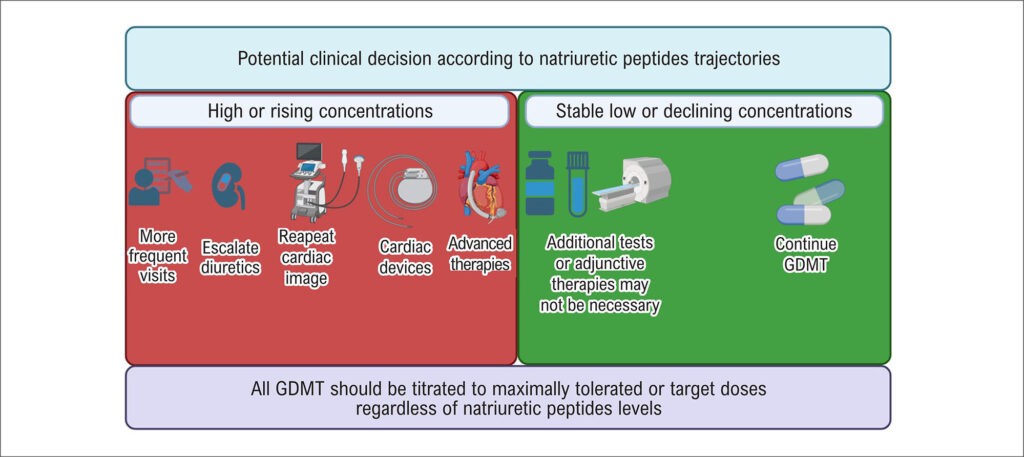
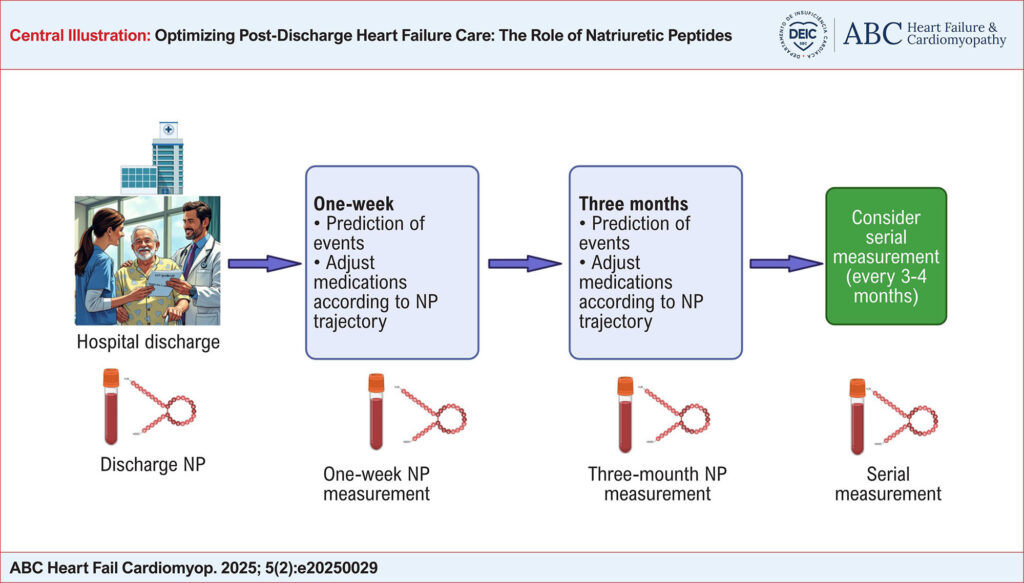
Natriuretic peptides (NPs), including B-type natriuretic peptide (BNP) and its N-terminal fragment (NT-proBNP), are well-established biomarkers of myocardial stress. Beyond their diagnostic role, NPs have emerged as powerful prognostic tools for post-discharge risk assessment and as potential guides for therapy titration. Elevated NP levels at discharge and persistently high concentrations one week post-discharge strongly predict adverse outcomes. Evidence from the STRONG-HF trial demonstrated that early, intensive follow-up incorporating NP monitoring and rapid guideline-directed medical therapy (GDMT) up-titration significantly reduced mortality and rehospitalization. Serial NP measurements further enhance risk stratification by capturing dynamic changes over time. Although trials such as GUIDE-IT showed mixed results for NP-guided therapy using fixed targets, patients achieving lower NP levels consistently demonstrated better outcomes.
In conclusion, NPs provide incremental prognostic value beyond clinical assessment in the vulnerable post-discharge phase and throughout long-term management. Early and serial NP monitoring can identify high-risk patients and support GDMT optimization. Future research should refine timing, thresholds, and integration of NP-guided strategies into multimodal risk models to enhance personalized HF care and improve global patient outcomes.
Images
Image gallery fullscreen viewer
Comments are moderated by the editorial team before publication. Discussions should be evidence-based and use scientific language. Conflicts of interest should be declared.