ABC Family Arquivos Brasileiros de Cardiologia International Journal of Cardiovascular Sciences ABC Heart Failure & Cardiomyopathy ABC Imagem Cardiovascular
Português English
ABC Family
Português English
  • About
    • About ABC Family
    • Internal Regulation
    • Editorial Board
    • Brazilian Society of Cardiology (SBC)
  • Issues
  • SBC Guidelines
  • Content
    • Videos
    • Podcasts
    • News
  • About
    • About ABC Family
    • Internal Regulation
    • Editorial Board
    • Brazilian Society of Cardiology (SBC)
  • Issues
  • SBC Guidelines
  • Content
    • Videos
    • Podcasts
    • News

ABC Family

  • ABC Family
  • Arquivos Brasileiros de Cardiologia
  • International Journal of Cardiovascular Sciences
  • ABC Heart Failure & Cardiomyopathy
  • ABC Imagem Cardiovascular
Search in

No content found.

Journals
Ordering
Article types
Others

  1. Home
  2. Keyword: Survivorship
Usefulness of Age, Creatinine and Ejection Fraction - Modification of Diet in Renal Disease Score for Predicting Survival in Patients with Heart Failure
ABC
Original Article

Usefulness of Age, Creatinine and Ejection Fraction – Modification of Diet in Renal Disease Score for Predicting Survival in Patients with Heart Failure

Rengin Çetin Güvenç et al. Tolga Sinan Güvenç Yüksel Çavuşoğlu Ahmet Temizhan Mehmet Birhan Yılmaz

Abstract

Background

While many risk models have been developed to predict prognosis in heart failure (HF), these models are rarely useful for the clinical practitioner as they include multiple variables that might be time-consuming to obtain, they are usually difficult to calculate, and they may suffer from statistical overfitting.

Objectives

To investigate whether a simpler model, namely the ACEF-MDRD score, could be used for predicting one-year mortality in HF patients.

Methods

748 cases within the SELFIE-HF registry had complete data to calculate the ACEF-MDRD score. Patients were grouped into tertiles for analyses. For all tests, a p-value <0.05 was accepted as significant.

Results

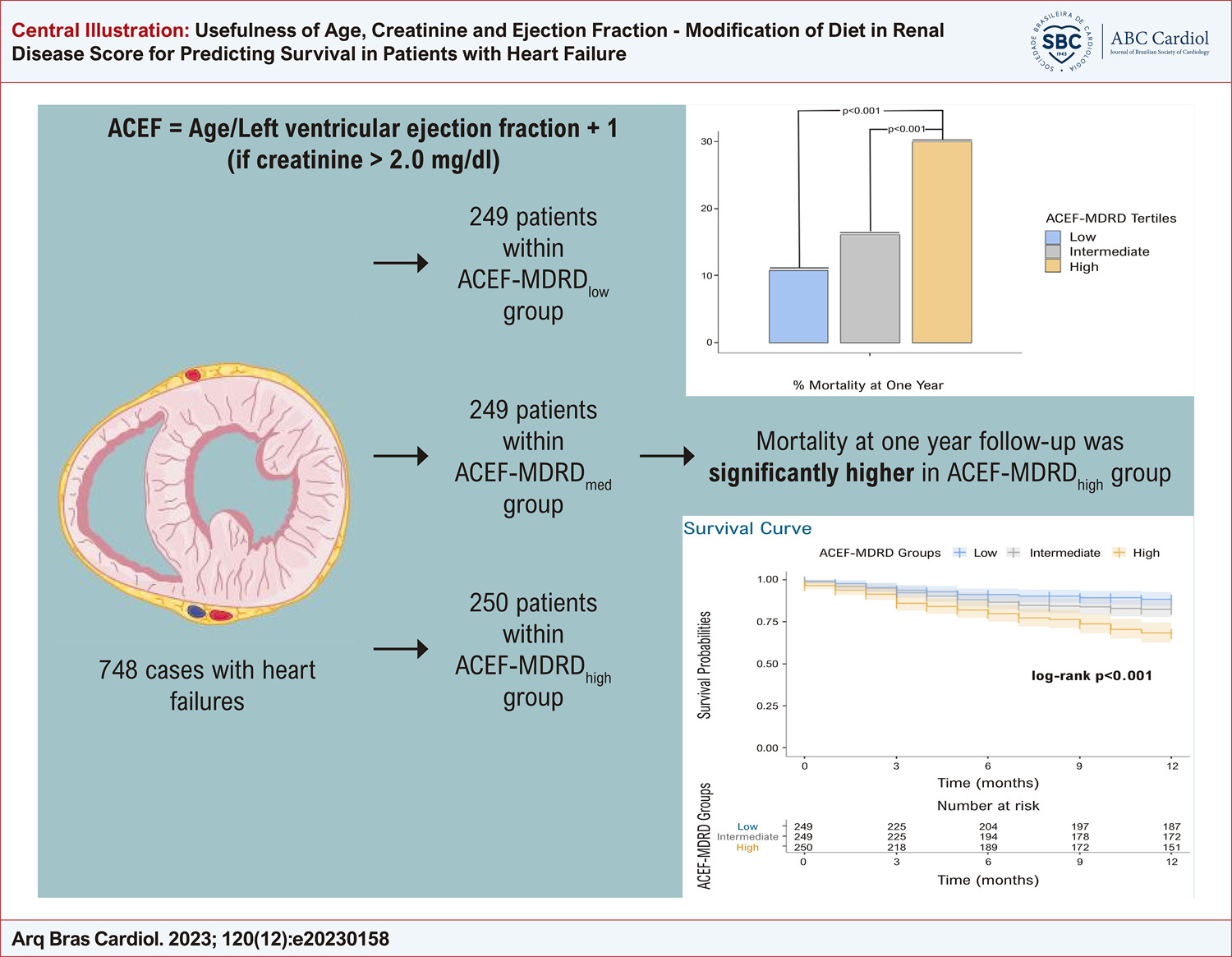
Significantly more patients within the ACEF-MDRD high tertile (30.0%) died within one year, as compared to other tertiles (10.8% and 16.1%, respectively, for ACEF-MDRD low and ACEF-MDRD med , p<0.001 for both comparisons). There was a stepwise decrease in one-year survival as the ACEF-MDRD score increased (log-rank p<0.001). ACEF-MDRD was an independent predictor of survival after adjusting for other variables (OR: 1.14, 95%CI:1.04 – 1.24, p=0.006). ACEF-MDRD score offered similar accuracy to the GWTG-HF score for predicting one-year mortality (p=0.14).

Conclusions

ACEF-MDRD is a predictor of mortality in patients with HF, and its usefulness is comparable to similar yet more complicated models.
  • Heart Failure
  • Mortality
  • Survivorship
Read Full Article
Creative Commons Attribution (CC BY) Creative Commons license
05/01/2024 DOI: 10.36660/abc.20230158
Central Illustration
ABC
Original Article

Outcomes after Clinical and Traumatic Out-of-Hospital Cardiac Arrest

Daiana Terra Nacer et al. Regina Márcia Cardoso de Sousa Anna Leticia Miranda

Abstract

Background

Data on out-of-hospital cardiac arrest are still scarce, very varied, and indicate a poor prognosis for traumatic events.

Objectives

To describe the out-of-hospital/in-hospital survival, survival time, and neurological conditions of those treated by advanced life support units and submitted to cardiopulmonary resuscitation and compare the results of clinical and traumatic cardiac arrests.

Methods

This is a cohort study carried out in three stages; in the first two, data were collected from the Mobile Emergency Care Service forms and medical records; then, the Brain Performance Category Scale was applied in the third stage. The sample consisted of resuscitated victims aged ≥18 years. Fisher’s and log-rank tests were used to compare the causes, considering a significance level of 5%.

Results

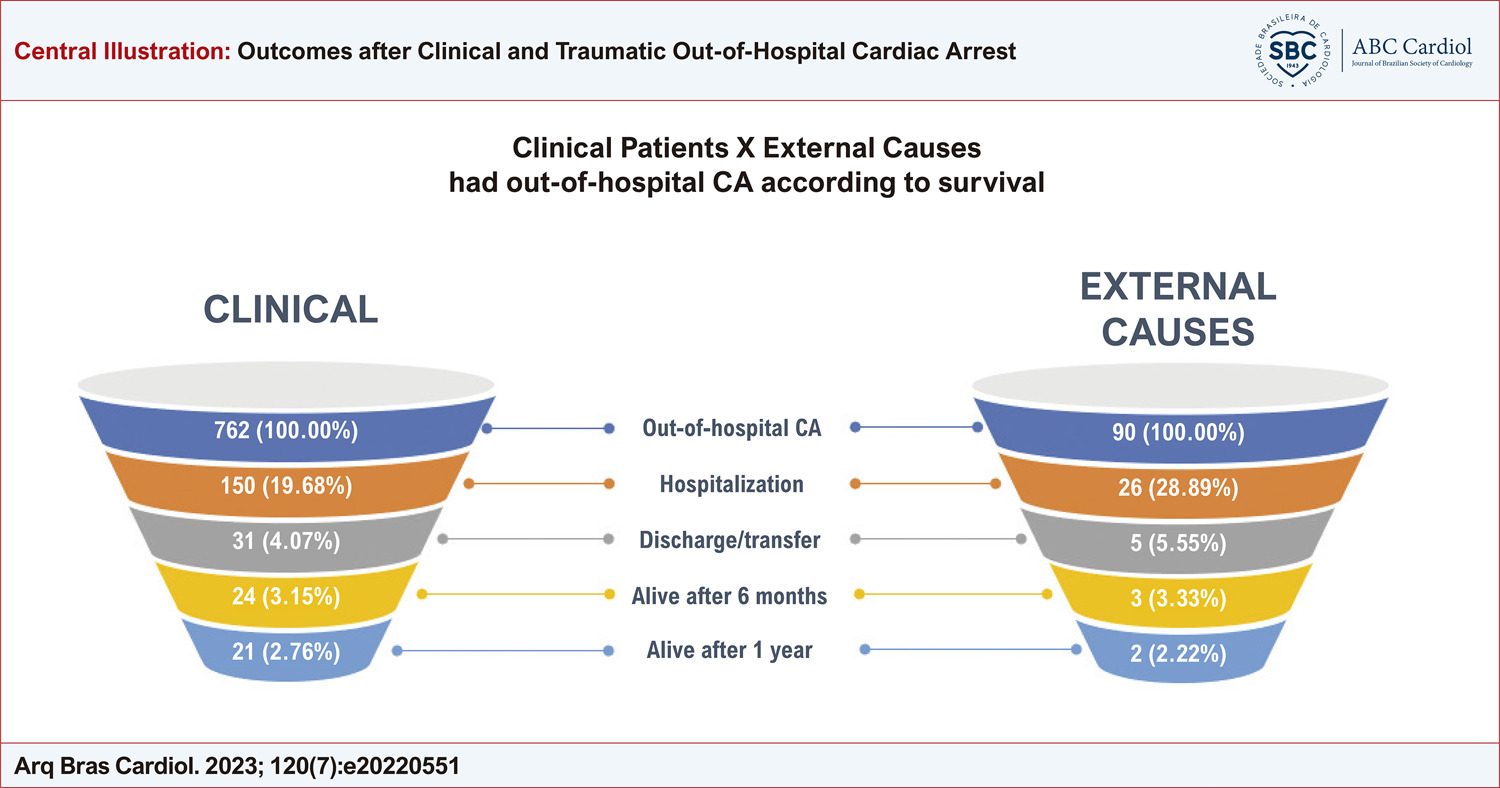
852 patients were analyzed; 20.66% were hospitalized, 4.23% survived until transfer or discharge, and 58.33% had a favorable outcome one year after arrest. There was an association between pre/in-hospital survival and the nature of the occurrence (p=0.026), but there was no difference between the survival curves (p=0.6).

Conclusions

Survival of hospitalization after out-of-hospital cardiac arrest was low; however, most who survived to be discharged achieved a favorable outcome after one year. The survival time of those hospitalized after clinical and traumatic events were similar, but pre-hospital survival was higher among trauma patients.

  • Cardiopulmonary Resuscitation
  • Emergency Medical Services
  • Heart Arrest
  • Out-of-Hospital Cardiac Arrest
  • Survivorship
Read Full Article
Creative Commons Attribution (CC BY) Creative Commons license
24/07/2023 DOI: 10.36660/abc.20220551 Views 1
Figure 1
ABC
Original Article

The Prognosis of Coronary Artery Disease in a Brazilian Community Hospital: Findings from the ERICO Study

Tatiana Cristina Bruno et al. Marcio Sommer Bittencourt Alessandra V. L. Quidim Itamar Santos … Paulo Lotufo Isabela Bensenor Alessandra Goulart

Abstract

Background

Long-term prognosis post-acute coronary syndrome (ACS) in secondary care is not well-known. The severity of coronary artery disease (CAD) as a predictor of long-term mortality was evaluated in a community hospital in Brazil.

Objective

We aimed to compare short and long-term prognosis after an ACS event according to severity of obstructive disease in patients attended in a secondary community hospital from prospective CAD cohort in Brazil (the Strategy of Registry of Acute Coronary Syndrome, ERICO study).

Methods

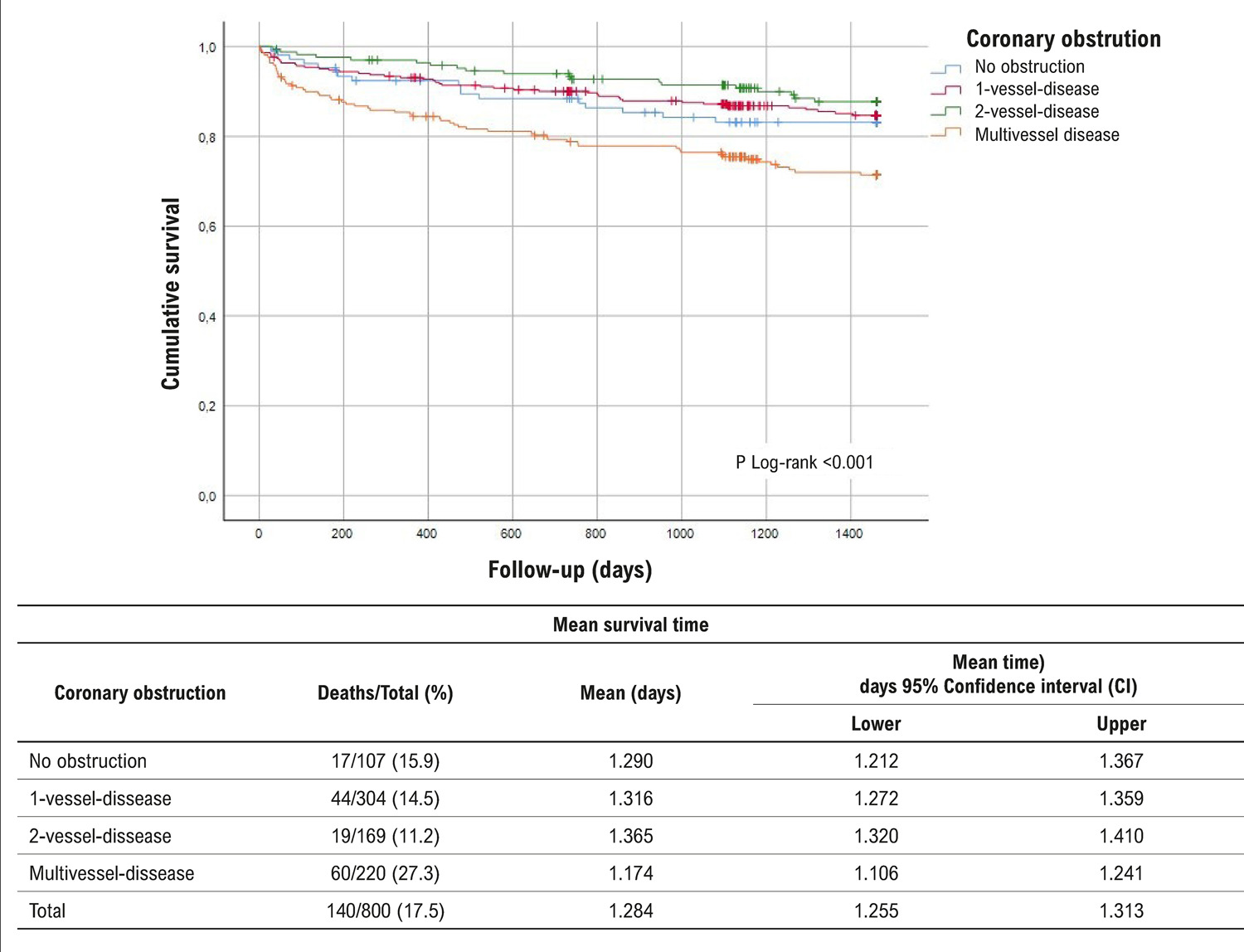
Survival analyses were performed by Kaplan-Meier curves and Cox proportional hazard models (hazard ratios (HR) with respective 95% confidence interval (CI) to evaluate cumulative all-cause, CVD and CAD mortality according the coronary artery obstruction: no-obstruction (reference group), 1-vessel-disease, 2-vessel-disease, multivessel-disease) among 800 adults from an ERICO study during a 4-year-follow-up. HR are presented as crude and further adjusted for potential confounders from 180 days to 4-year follow-up after ACS. A p-value <0.05 was considered statistically significant.

Results

Poorer survival rates were detected among individuals with multivessel-disease (all-cause, CVD and CAD, p-log rank< 0.0001). After multivariate adjustments, multivessel-disease |(HR; 2.33 (CI 95%; 1.10-4.95)) and 1-vessel-disease obstructed (HR; 2.44 (CI 95%; 1.11-5.34)) had the highest risk for all-cause mortality compared to those with no obstruction at 4-year follow-up.

Conclusions

Not only multivessel-disease, but also 1-vessel-disease patients showed a high long-term mortality risk post-ACS. These findings highlight the importance of having a better approach in the treatment and control of cardiovascular risk even in apparently low-risk individuals attended to in secondary care.

  • Acute coronary syndrome
  • Coronary Artery Disease
  • Epidemiology
  • Mortality
  • Public Hospital
  • Survivorship
Read Full Article
Creative Commons Attribution (CC BY) Creative Commons license
08/10/2021 DOI: 10.36660/abc.20200399 Views 1
Figure 1
ABC
Original Article

Survival of Patients with Acute Heart Failure and Mid-range Ejection Fraction in a Developing Country – A Cohort Study in South Brazil

Lucas Celia Petersen et al. Luiz Claudio Danzmann Eduardo Bartholomay Luiz Carlos Bodanese … Brenda Gonçalves Donay Ellen Hettwer Magedanz Adriana Vier Azevedo Gustavo Farias Porciuncula Marcelo Haertel Miglioranza

Abstract

Background

Heart Failure with mid-range Ejection Fraction (HFmEF) was recently described by European and Brazilian guidelines on Heart Failure (HF). The ejection fraction (EF) is an important parameter to guide therapy and prognosis. Studies have shown conflicting results without representative data from developing countries.

Objective

To analyze and compare survival rate in patients with HFmEF, HF patients with reduced EF (HFrEF), and HF patients with preserved EF (HFpEF), and to evaluate the clinical characteristics of these patients.

Methods

A cohort study that included adult patients with acute HF admitted through the emergency department to a tertiary hospital, reference in cardiology, in south Brazil from 2009 to 2011. The sample was divided into three groups according to EF: reduced, mid-range and preserved. A Kaplan-Meier curve was analyzed according to the EF, and a logistic regression analysis was done. Statistical significance was established as p < 0.05.

Results

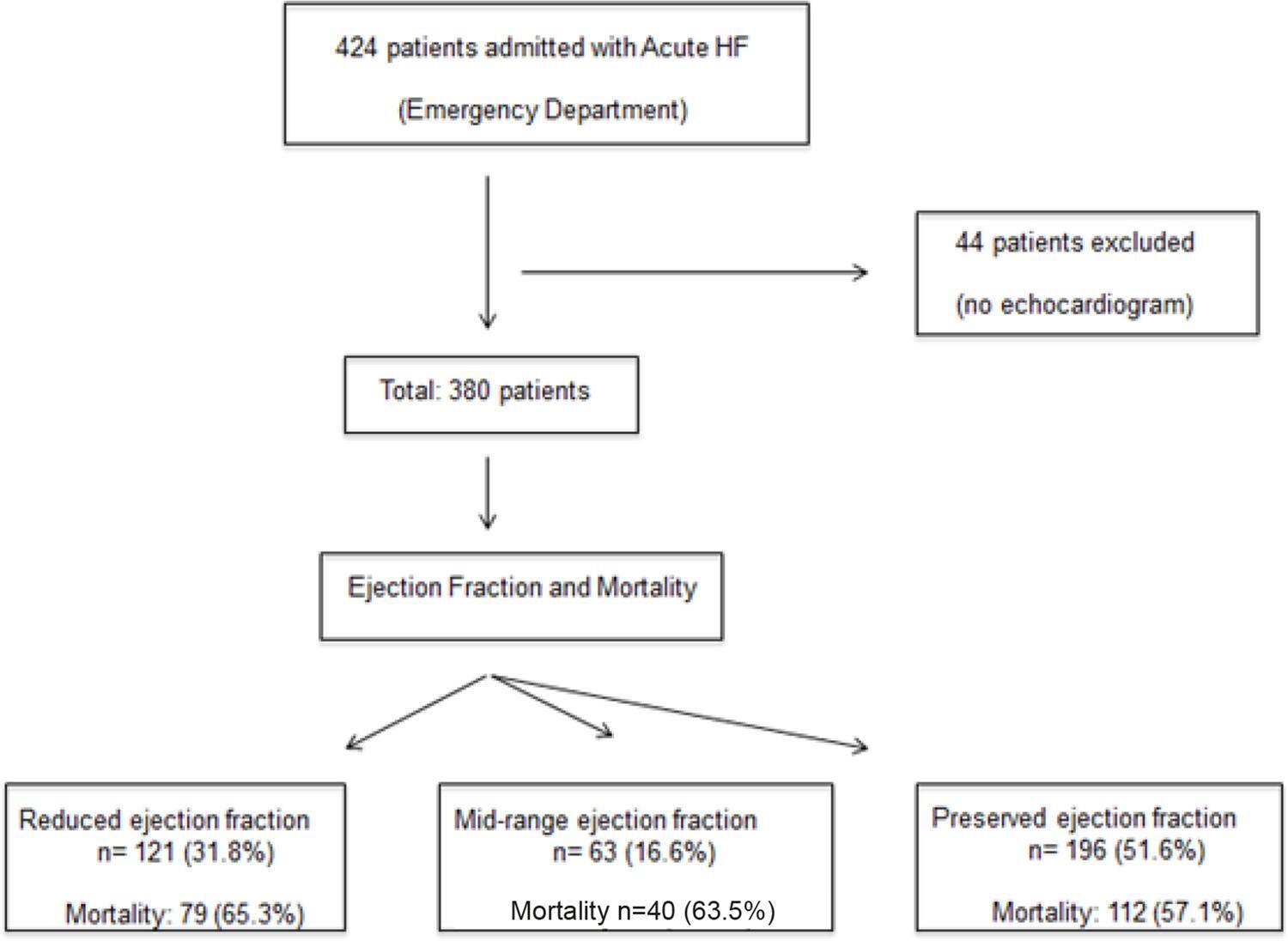
A total of 380 patients were analyzed. Most patients had HFpEF (51%), followed by patients with HFrEF (32%) and HFmEF (17%). Patients with HFmEF showed intermediate characteristics related to age, blood pressure and ventricular diameters, and most patients were of ischemic etiology. Median follow-up time was 4.0 years. There was no statistical difference in overall survival or cardiovascular mortality (p=.0031) between the EF groups (reduced EF: 40.5% mortality; mid-range EF 39.7% and preserved EF 26%). Hospital mortality was 7.6%.

Conclusion

There was no difference in overall survival rate between the EF groups. Patients with HFmEF showed higher mortality from cardiovascular diseases in comparison with HFpEF patients. (Arq Bras Cardiol. 2021; 116(1):14-23)

  • Epidemiology
  • Heart Failure
  • medication adherence
  • Mortality
  • Prognosis
  • Stroke Volume
  • Survivorship
Read Full Article
Creative Commons Attribution (CC BY) Creative Commons license
03/02/2021 DOI: 10.36660/abc.20190427 Views 2
ABC
Viewpoint

Cardiogeriatric, the Future's Cardiology?

Roberto Alexandre Franken et al. Ronaldo Fernandes Rosa

The aging process and survival of living organisms vary among animal and plant species as well as within the same species. The aging process is partially determined by genetic factors and mutations that can prolong the life of many organisms, including worms, flies, and mice, by delaying this process. Considering that most biological processes are conserved through evolution, genes that are identical or similar to those found in other species can regulate factors associated with survival in humans.

In addition to genetic factors, environmental factors, lifestyle, and disease are also associated with longevity.

[…]

  • Aged, 80 and Over
  • Cardiovascular Diseases
  • Demographic Aging
  • Geriatrics/trends
  • Survivorship
Read Full Article
Creative Commons Attribution (CC BY) Creative Commons license
01/10/2014 DOI: 10.5935/abc.20140132 Views 1

How to cite this article

EndNote RIS

Electronic Document Format (Vancouver)

Güvenç R, Güvenç TS, Çavuşoğlu Y, Temizhan A, Yılmaz MB. Usefulness of Age, Creatinine and Ejection Fraction – Modification of Diet in Renal Disease Score for Predicting Survival in Patients with Heart Failure. Arquivos Brasileiros de Cardiologia 2024;120(12):e20230158.

Electronic Document Format (ABNT)

Güvenç, Rengin Çetin; Güvenç, Tolga Sinan; Çavuşoğlu, Yüksel; Temizhan, Ahmet; Yılmaz, Mehmet Birhan. Usefulness of Age, Creatinine and Ejection Fraction – Modification of Diet in Renal Disease Score for Predicting Survival in Patients with Heart Failure. Arquivos Brasileiros de Cardiologia, v. 120, n. 12, e20230158, Jan. 2024.

Electronic Document Format (APA)

Güvenç, R. , Güvenç, T. S., Çavuşoğlu, Y., Temizhan, A., & Yılmaz, M. B. (2024). Usefulness of Age, Creatinine and Ejection Fraction – Modification of Diet in Renal Disease Score for Predicting Survival in Patients with Heart Failure. Arquivos Brasileiros de Cardiologia, 120(12), e20230158.

Electronic Document Format (ISO)

Güvenç, Rengin Çetin and Güvenç, Tolga Sinan and Çavuşoğlu, Yüksel and Temizhan, Ahmet and Yılmaz, Mehmet Birhan. Usefulness of Age, Creatinine and Ejection Fraction – Modification of Diet in Renal Disease Score for Predicting Survival in Patients with Heart Failure. Arquivos Brasileiros de Cardiologia [online]. 2024, vol. 120, n. 12, [cited 2026-10-14], e20230158. Available from: <https://journals.cardiol.br/en/article/usefulness-of-age-creatinine-and-ejection-fraction-modification-of-diet-in-renal-disease-score-for-predicting-survival-in-patients-with-heart-failure/>. ISSN 0066-782X

EndNote RIS

Electronic Document Format (Vancouver)

Nacer DT, Sousa RMC, Miranda AL. Outcomes after Clinical and Traumatic Out-of-Hospital Cardiac Arrest. Arquivos Brasileiros de Cardiologia 2023;120(7):e20220551.

Electronic Document Format (ABNT)

Nacer, Daiana Terra; Sousa, Regina Márcia Cardoso de; Miranda, Anna Leticia. Outcomes after Clinical and Traumatic Out-of-Hospital Cardiac Arrest. Arquivos Brasileiros de Cardiologia, v. 120, n. 7, e20220551, Jul. 2023.

Electronic Document Format (APA)

Nacer, D. T., Sousa, R. M. C. , & Miranda, A. L. (2023). Outcomes after Clinical and Traumatic Out-of-Hospital Cardiac Arrest. Arquivos Brasileiros de Cardiologia, 120(7), e20220551.

Electronic Document Format (ISO)

Nacer, Daiana Terra and Sousa, Regina Márcia Cardoso de and Miranda, Anna Leticia. Outcomes after Clinical and Traumatic Out-of-Hospital Cardiac Arrest. Arquivos Brasileiros de Cardiologia [online]. 2023, vol. 120, n. 7, [cited 2026-10-14], e20220551. Available from: <https://journals.cardiol.br/en/article/outcomes-after-clinical-and-traumatic-out-of-hospital-cardiac-arrest/>. ISSN 0066-782X

EndNote RIS

Electronic Document Format (Vancouver)

Bruno TC, Bittencourt MS, Quidim AVL, Santos I, Lotufo P, Bensenor I, Goulart A, et al. The Prognosis of Coronary Artery Disease in a Brazilian Community Hospital: Findings from the ERICO Study. Arquivos Brasileiros de Cardiologia 2021;117(5):978-85.

Electronic Document Format (ABNT)

Bruno, Tatiana Cristina; Bittencourt, Marcio Sommer; Quidim, Alessandra V. L.; Santos, Itamar; Lotufo, Paulo; Bensenor, Isabela; Goulart, Alessandra. The Prognosis of Coronary Artery Disease in a Brazilian Community Hospital: Findings from the ERICO Study. Arquivos Brasileiros de Cardiologia, v. 117, n. 5, p. 978-985, Oct. 2021.

Electronic Document Format (APA)

Bruno, T. C., Bittencourt, M. S., Quidim, A. V. L., Santos, I., Lotufo, P., Bensenor, I., & Goulart, A. (2021). The Prognosis of Coronary Artery Disease in a Brazilian Community Hospital: Findings from the ERICO Study. Arquivos Brasileiros de Cardiologia, 117(5), 978-985.

Electronic Document Format (ISO)

Bruno, Tatiana Cristina and Bittencourt, Marcio Sommer and Quidim, Alessandra V. L. and Santos, Itamar and Lotufo, Paulo and Bensenor, Isabela and Goulart, Alessandra. The Prognosis of Coronary Artery Disease in a Brazilian Community Hospital: Findings from the ERICO Study. Arquivos Brasileiros de Cardiologia [online]. 2021, vol. 117, n. 5, [cited 2026-10-14], pp. 978-985. Available from: <https://journals.cardiol.br/en/article/the-prognosis-of-coronary-artery-disease-in-a-brazilian-community-hospital-findings-from-the-erico-study/>. ISSN 0066-782X

EndNote RIS

Electronic Document Format (Vancouver)

Petersen LC, Danzmann LC, Bartholomay E, Bodanese LC, Donay BG, Magedanz EH, Azevedo AV, et al. Survival of Patients with Acute Heart Failure and Mid-range Ejection Fraction in a Developing Country – A Cohort Study in South Brazil. Arquivos Brasileiros de Cardiologia 2021;116(1):14-23.

Electronic Document Format (ABNT)

Petersen, Lucas Celia; Danzmann, Luiz Claudio; Bartholomay, Eduardo; Bodanese, Luiz Carlos; Donay, Brenda Gonçalves; Magedanz, Ellen Hettwer; Azevedo, Adriana Vier; Porciuncula, Gustavo Farias; Miglioranza, Marcelo Haertel. Survival of Patients with Acute Heart Failure and Mid-range Ejection Fraction in a Developing Country – A Cohort Study in South Brazil. Arquivos Brasileiros de Cardiologia, v. 116, n. 1, p. 14-23, Feb. 2021.

Electronic Document Format (APA)

Petersen, L. C., Danzmann, L. C., Bartholomay, E., Bodanese, L. C., Donay, B. G., Magedanz, E. H., Azevedo, A. V., Porciuncula, G. F., & Miglioranza, M. H. (2021). Survival of Patients with Acute Heart Failure and Mid-range Ejection Fraction in a Developing Country – A Cohort Study in South Brazil. Arquivos Brasileiros de Cardiologia, 116(1), 14-23.

Electronic Document Format (ISO)

Petersen, Lucas Celia and Danzmann, Luiz Claudio and Bartholomay, Eduardo and Bodanese, Luiz Carlos and Donay, Brenda Gonçalves and Magedanz, Ellen Hettwer and Azevedo, Adriana Vier and Porciuncula, Gustavo Farias and Miglioranza, Marcelo Haertel. Survival of Patients with Acute Heart Failure and Mid-range Ejection Fraction in a Developing Country – A Cohort Study in South Brazil. Arquivos Brasileiros de Cardiologia [online]. 2021, vol. 116, n. 1, [cited 2026-10-14], pp. 14-23. Available from: <https://journals.cardiol.br/en/article/survival-of-patients-with-acute-heart-failure-and-mid-range-ejection-fraction-in-a-developing-country-a-cohort-study-in-south-brazil/>. ISSN 0066-782X

EndNote RIS

Electronic Document Format (Vancouver)

Franken RA, Rosa RF. Cardiogeriatric, the Future’s Cardiology?. Arquivos Brasileiros de Cardiologia 2014;103(4):e52.

Electronic Document Format (ABNT)

Franken, Roberto Alexandre; Rosa, Ronaldo Fernandes. Cardiogeriatric, the Future’s Cardiology?. Arquivos Brasileiros de Cardiologia, v. 103, n. 4, p. e52-e52, Sep. 2014.

Electronic Document Format (APA)

Franken, R. A., & Rosa, R. F. (2014). Cardiogeriatric, the Future’s Cardiology?. Arquivos Brasileiros de Cardiologia, 103(4), e52-e52.

Electronic Document Format (ISO)

Franken, Roberto Alexandre and Rosa, Ronaldo Fernandes. Cardiogeriatric, the Future’s Cardiology?. Arquivos Brasileiros de Cardiologia [online]. 2014, vol. 103, n. 4, [cited 2026-10-14], pp. e52-e52. Available from: <https://journals.cardiol.br/en/article/cardiogeriatric-the-futures-cardiology/>. ISSN 0066-782X

  • About ABC Family
  • Internal Regulation
  • Editorial Board
  • Brazilian Society of Cardiology (SBC)

Issues

SBC Guidelines

  • Videos
  • Podcasts
  • News