ABC Family Arquivos Brasileiros de Cardiologia International Journal of Cardiovascular Sciences ABC Heart Failure & Cardiomyopathy ABC Imagem Cardiovascular
Português English
ABC Family
Português English
  • About
    • About ABC Family
    • Internal Regulation
    • Editorial Board
    • Brazilian Society of Cardiology (SBC)
  • Issues
  • SBC Guidelines
  • Content
    • Videos
    • Podcasts
    • News
  • About
    • About ABC Family
    • Internal Regulation
    • Editorial Board
    • Brazilian Society of Cardiology (SBC)
  • Issues
  • SBC Guidelines
  • Content
    • Videos
    • Podcasts
    • News

ABC Family

  • ABC Family
  • Arquivos Brasileiros de Cardiologia
  • International Journal of Cardiovascular Sciences
  • ABC Heart Failure & Cardiomyopathy
  • ABC Imagem Cardiovascular
Search in

No content found.

Journals
Ordering
Article types
Others

  1. Home
  2. Keyword: Out-of-Hospital Cardiac Arrest
IJCS
Editorial

The Route to Survival: Intravenous or Intraosseous Access in Cardiac Arrest

Imara Correia de Queiroz Barbosa et al. Larissa Neto Espíndola Ana Claudia Andrade Lucena Fátima Elizabeth Fonseca De Oliveira Negri Catia Sueli de Sousa Eufrazino Gondim

Out-of-hospital cardiac arrest (OHCA) continues to be one of the major challenges in emergency cardiovascular care. Despite advances in cardiopulmonary resuscitation (CPR) and defibrillation, overall survival rates remain low worldwide. Current international guidelines recommend the establishment of intravenous (IV) access as the first-line route for drug administration, while intraosseous (IO) access is suggested as an alternative when IV access cannot be promptly achieved.1,2 In this context, every minute counts, and establishing vascular access for drug delivery is often a race against time. However, a long-standing question still persists: does the route of administration – intravenous or intraosseous – truly impact outcomes?

In this issue of the International Journal of Cardiovascular Sciences, Cavalcante et al. present a comprehensive meta-analysis comparing IO and IV access in adults with OHCA. Pooling data from more than 9,000 patients across three major randomized clinical trials,3-5 the authors demonstrate that both routes yield similar results in terms of survival, with favorable neurological outcomes, the return of spontaneous circulation (ROSC), and survival to hospital discharge.6 Moderate heterogeneity was limited to the ROSC outcome, likely due to differences in its definition among studies. Beyond this, the evidence is consistent in showing that time to drug delivery, rather than the route of administration, determines patient outcomes.6

[…]
  • Catheters
  • Intravenous Administration
  • Out-of-Hospital Cardiac Arrest
Read Full Article
Creative Commons Attribution (CC BY) Creative Commons license
12/06/2026 DOI: 10.36660/ijcs.20260006 Views 2
Intraosseous Versus Intravenous Vascular Access for Out-Of-Hospital Cardiac Arrest: A Meta-Analysis of Randomized Clinical Trials
IJCS
Original Article

Intraosseous Versus Intravenous Vascular Access for Out-Of-Hospital Cardiac Arrest: A Meta-Analysis of Randomized Clinical Trials

Milene Vitória Sampaio Sobral et al. Rafaela da Cunha Pirolla Douglas Nunes Cavalcante Nicoly Franciely Sanches Leme … Paula Rocha Fernanda Segura Campos Leonardo Castro Luna

Abstract

Background:

Out-of-hospital cardiac arrest (OHCA) is a life-threatening emergency characterized by low survival rates. Vascular access is critical for drug administration during resuscitation. While intravenous (IV) access is the standard, intraosseous (IO) access may provide practical advantages in certain emergencies.

Objectives:

This meta-analysis aimed to compare IO versus IV access in adult OHCA patients regarding their impact on survival and neurological outcomes.

Methods:

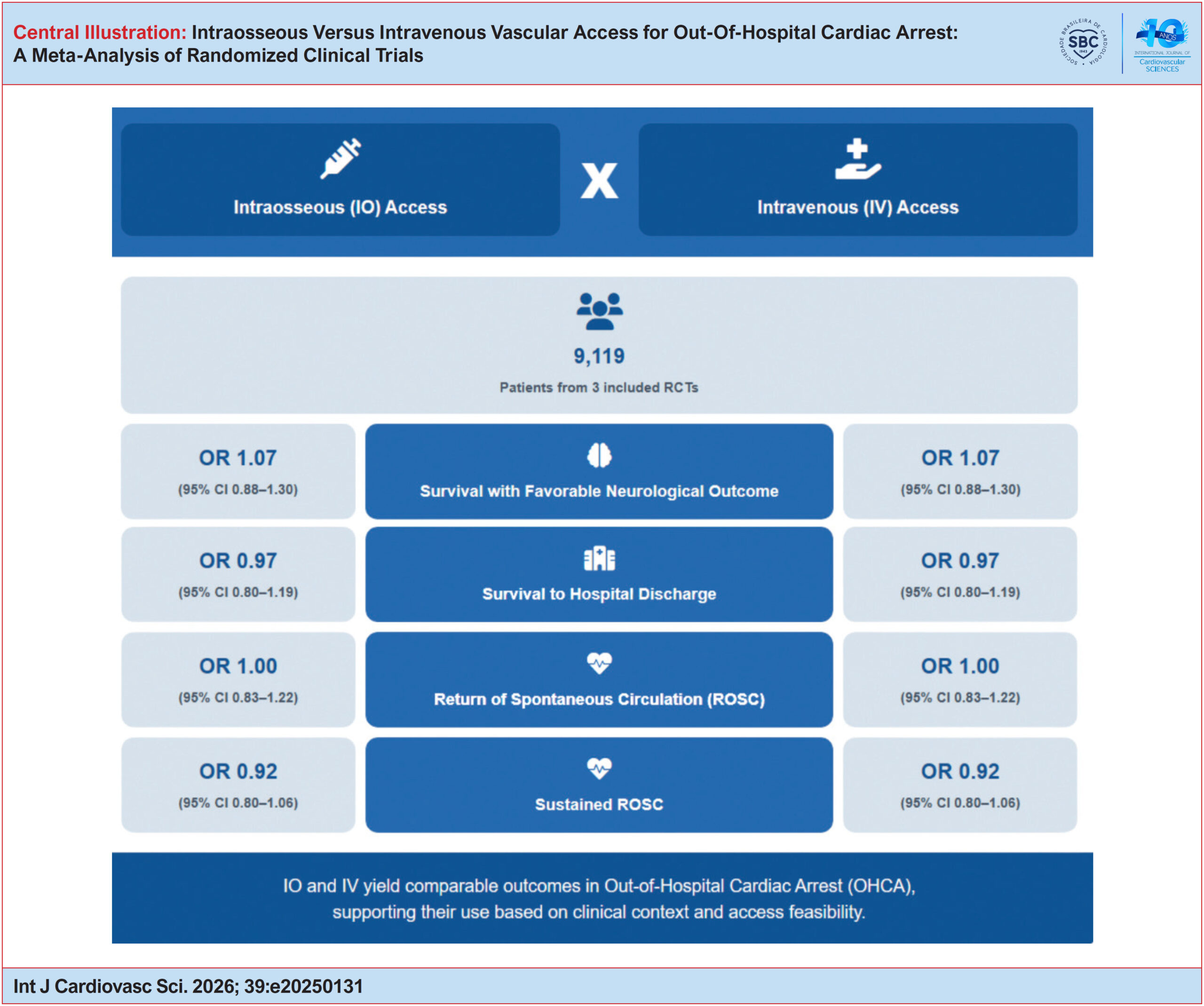
A systematic search of MEDLINE, Embase, and Cochrane CENTRAL through November 2024 was conducted, including randomized controlled trials (RCTs) comparing IO and IV access in adult patients with OHCA. Meta-analyses employed a random-effects model. A p-value < 0.05 was considered statistically significant. Analyses outcomes included survival with a favorable neurological outcome, survival to hospital discharge, return of spontaneous circulation (ROSC), and sustained ROSC. Subgroup analyses were conducted based on initial rhythm and bystander-performed cardiopulmonary resuscitation. The certainty of the evidence was determined using the GRADE approach. Results: Three RCTs involving 9,119 patients were included. IO access showed no significant differences compared to IV access in terms of survival with favorable neurological outcome (OR 1.07; 95% CI 0.88–1.30; p = 0.49; I² = 0%), survival to hospital discharge (OR 0.97; 95% CI 0.80–1.19; p = 0.80; I² = 0%), ROSC (OR 1.00; 95% CI 0.83–1.22; p = 0.97; I² = 64%), or sustained ROSC (OR 0.92; 95% CI 0.80–1.06; p = 0.25; I² = 44%).

Conclusions:

IO and IV access yield comparable outcomes in OHCA patients, supporting their use based on clinical context and provider expertise. Further research is needed to confirm these findings across diverse healthcare settings.

  • Meta-Analysis
  • Out-of-Hospital Cardiac Arrest
  • Vascular Access Devices
Read Full Article
Creative Commons Attribution (CC BY) Creative Commons license
25/05/2026 DOI: 10.36660/ijcs.20250131 Views 1
ABC
Editorial

Recognition by the Regulatory Physician of Expressions Used by Lay People when Asking for Help in Supposed Cardiorespiratory Arrest

Ronaldo C. O. Vinagre

Out-of-hospital cardiac arrest (OHCA) is a time-sensitive, life-threatening emergency that occurs millions of times every year. Data from countries around the world with emergency medical services (EMS) in place suggest a global average of 82.1 EMS-attended OHCAs per 100,000 people per annum. Survival after OHA remains modest despite standardized dispatch protocols in EMS systems, increased community training, and the introduction of post-resuscitation care. Ten percent (range, 6%–22%) of people who experience OHCA can expect to survive with a favorable neurological outcome. However, early prehospital interventions have a substantial impact on the survival of OHA victims.

Bystander-initiated cardiopulmonary resuscitation (CPR) increases the odds of 30-day survival by two-fold and is associated with improved long-term neurological outcomes. So, early recognition of cardiac arrest is the cornerstone of the chain of survival. Well-known clinical signs of cardiac arrest are unresponsiveness and absent or abnormal breathing. However, it is unclear how these signs and symptoms, especially agonistic respirations, are interpreted and described by laypeople. Besides that, dispatcher-assisted CPR increases neurologically intact survival in OHCA, according to several studies.,

[…]

  • Emergency Medical Dispatcher
  • Out-of-Hospital Cardiac Arrest
  • Prehospital Care
Read Full Article
Creative Commons Attribution (CC BY) Creative Commons license
10/01/2025 DOI: 10.36660/abc.20240669i
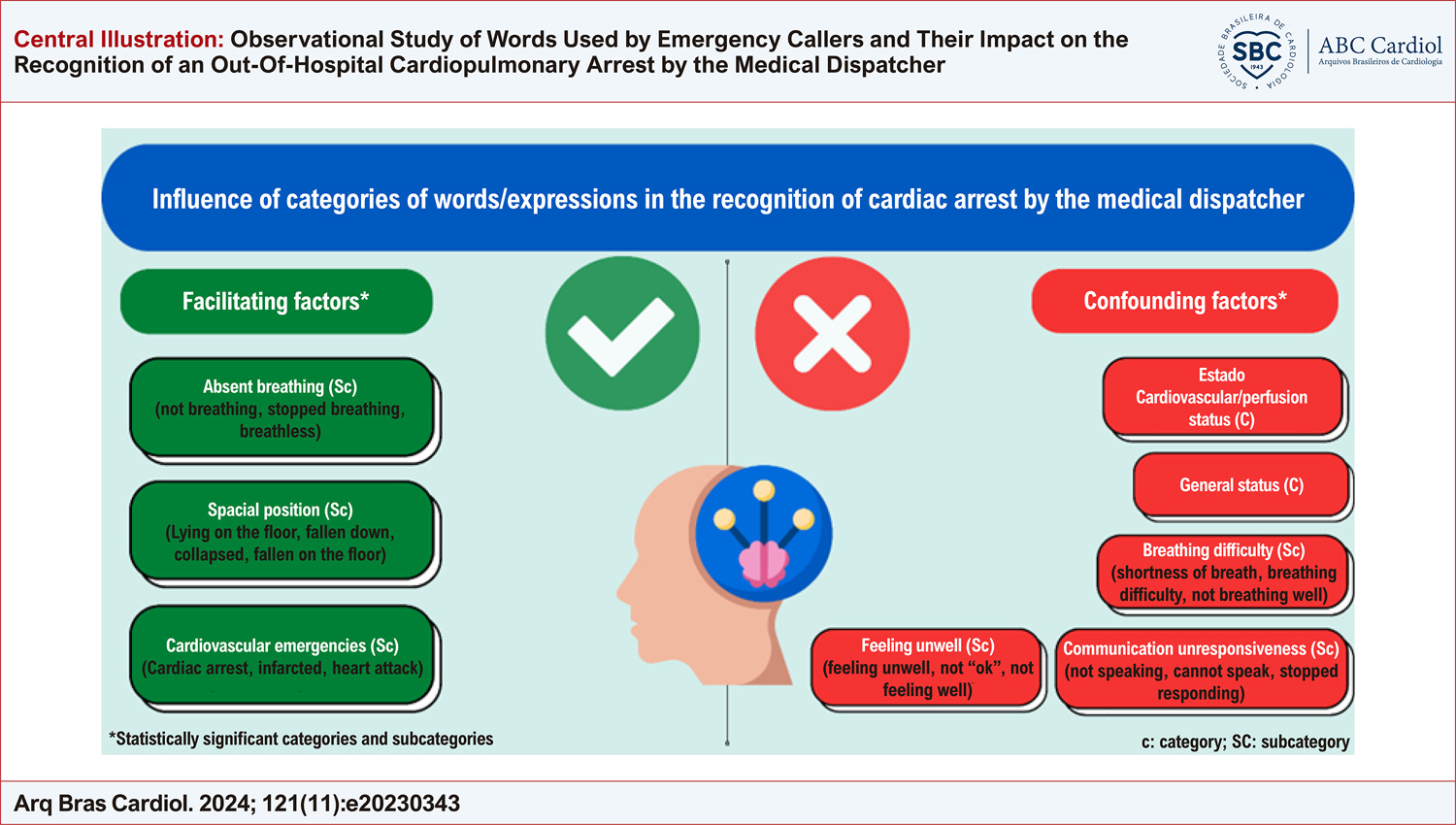
Observational Study of Words Used by Emergency Callers and Their Impact on the Recognition of an Out-Of-Hospital Cardiopulmonary Arrest by the Medical Dispatcher
ABC
Original Article

Observational Study of Words Used by Emergency Callers and Their Impact on the Recognition of an Out-Of-Hospital Cardiopulmonary Arrest by the Medical Dispatcher

Matheus Henrique Ramos Voos et al. Caroline Manami Okamoto Artur Boeck Trommer Amanda Berlinck da Silva … Eduardo Franke da Cruz Gustavo Andreazza Laporte Antônio Rogério Proença Tavares Crespo Andrea Regner Karin Viegas

Abstract

Background

Survival of victims of out-of-hospital cardiopulmonary arrest (CA) is related to the time and quality of cardiopulmonary resuscitation (CPR).1 Considering that most CAs occur outside the hospital setting, it is evident that the early recognition of this condition is the cornerstone of the chain of survival. Current literature on the theme is still scarce.

Objectives

To analyze categories and subcategories of words and expressions spontaneously used by laypeople during emergency calls for CA and their relationship with the recognition of this event by the medical dispatcher.

Methods

This was a cross-sectional study, with analysis of calls made by laypeople due to suspected CA to emergency medical services in Brazil. The expressions used were classified into six categories and 31 subcategories. Univariate and multivariate models were used to assess the strength of the association of categories and subcategories of words and expressions with the presumption of CA. The level of significance was set at 5%. Results: A total of 284 calls were included, and after applying the inclusion criteria, 101 calls were analyzed. The categories “cardiovascular/perfusion status” (p=0.019) and “general status” (p=0.011) were identified as confounding factors for the recognition of CA, and the subcategories “breathing difficulty” (p=0.023), “verbal unresponsiveness” (p=0.034), “facial coloration” (p=0.068) and “feeling unwell” (p=0.013) were also considered as confounders. On the other hand, the subcategories “not breathing” (p=0.010); “spatial position” (p=0.016), and “cardiovascular emergencies” (p=0.045) were identified as facilitating factors for the recognition of CA.

Conclusion

Categories and subcategories of expressions used by emergency callers for CA can influence the timely recognition of this condition by the medical dispatcher.

  • Emergency Medical Dispatcher
  • Out-of-Hospital Cardiac Arrest
  • Prehospital Care
Read Full Article
Creative Commons Attribution (CC BY) Creative Commons license
25/11/2024 DOI: 10.36660/abc.20230343i
ABC
Editorial

Outcome Analysis after Out-of-Hospital Cardiac Arrest

Thais Rocha Salim et al. Gabriel Porto Soares

Cardiac arrest (CA) is defined as the cessation of mechanical activity of the heart, confirmed by the absence of signs of circulation, clinically manifested by unresponsiveness, absence of pulse, and breathing or gasping. CA is the final pathway and mechanism of death in various clinical or traumatic situations that vary with the patient’s age and the occurrence location. The reversal of CA and the prognosis after the event depend on identifying and implementing high-efficiency resuscitation measures. Rates of Return of Spontaneous Circulation (RSC), survival until hospital discharge, and short- and medium-term neurological condition are imprecise and vary in the literature. A meta-analysis of 141 studies from North America, Europe, Asia, and Oceania showed that RSC occurred in 29.7% of adult patients resuscitated in the out-of-hospital environment, and less than 10% survived until hospital discharge. The highest survival rates occurred in witnessed CA cases with early initiation of resuscitation maneuvers. In another meta-analysis that included 44 studies conducted in Europe, Asia, and North America, the use of extracorporeal circulation in out-of-hospital resuscitation resulted in survival rates of up to 24%, with 18% of patients having favorable neurological conditions. However, in the evaluated studies, the time for arrival of the mobile medical service was less than 5 minutes, which may have influenced the outcomes.

In Brazil, in the out-of-hospital environment, survival rates are related to the rhythm of CA. Shockable rhythms, ventricular tachycardia, or ventricular fibrillation account for nearly 80% of events, and when defibrillation is performed between 3-5 minutes from the onset of CA, the survival rate is around 50% to 70%. Meanwhile, non-shockable rhythms, such as pulseless electrical activity and asystole, have a survival rate of less than 17%. According to the Guidelines for Cardiopulmonary Resuscitation and Emergency Cardiovascular Care of the Sociedade Brasileira de Cardiologia , the survival rate in traumatic CA cases is less than 3%. An article published in the Arquivos Brasileiros de Cardiologia provides important information on survival rates and neurological conditions in out-of-hospital CAs in a Brazilian capital, allowing for the development of strategies to prevent such events and improve the cardiopulmonary resuscitation ( CPR) response teams. It is a cohort study conducted in Campo Grande, Mato Grosso do Sul (MS), Brazil. Retrospective data collection was performed from the Prehospital Care records of the Mobile Emergency Care Service, involving 852 victims over 18 years old who experienced out-of-hospital CA between January 2016 and December 2018. The cohort segment was established by collecting information from the medical records of the hospital units where the survivors were admitted or through interviews with the patients and their family members.

[…]

  • Cardiopulmonary Resuscitation
  • Heart Arrest
  • Out-of-Hospital Cardiac Arrest
Read Full Article
Creative Commons Attribution (CC BY) Creative Commons license
07/08/2023 DOI: 10.36660/abc.20230406
Central Illustration
ABC
Original Article

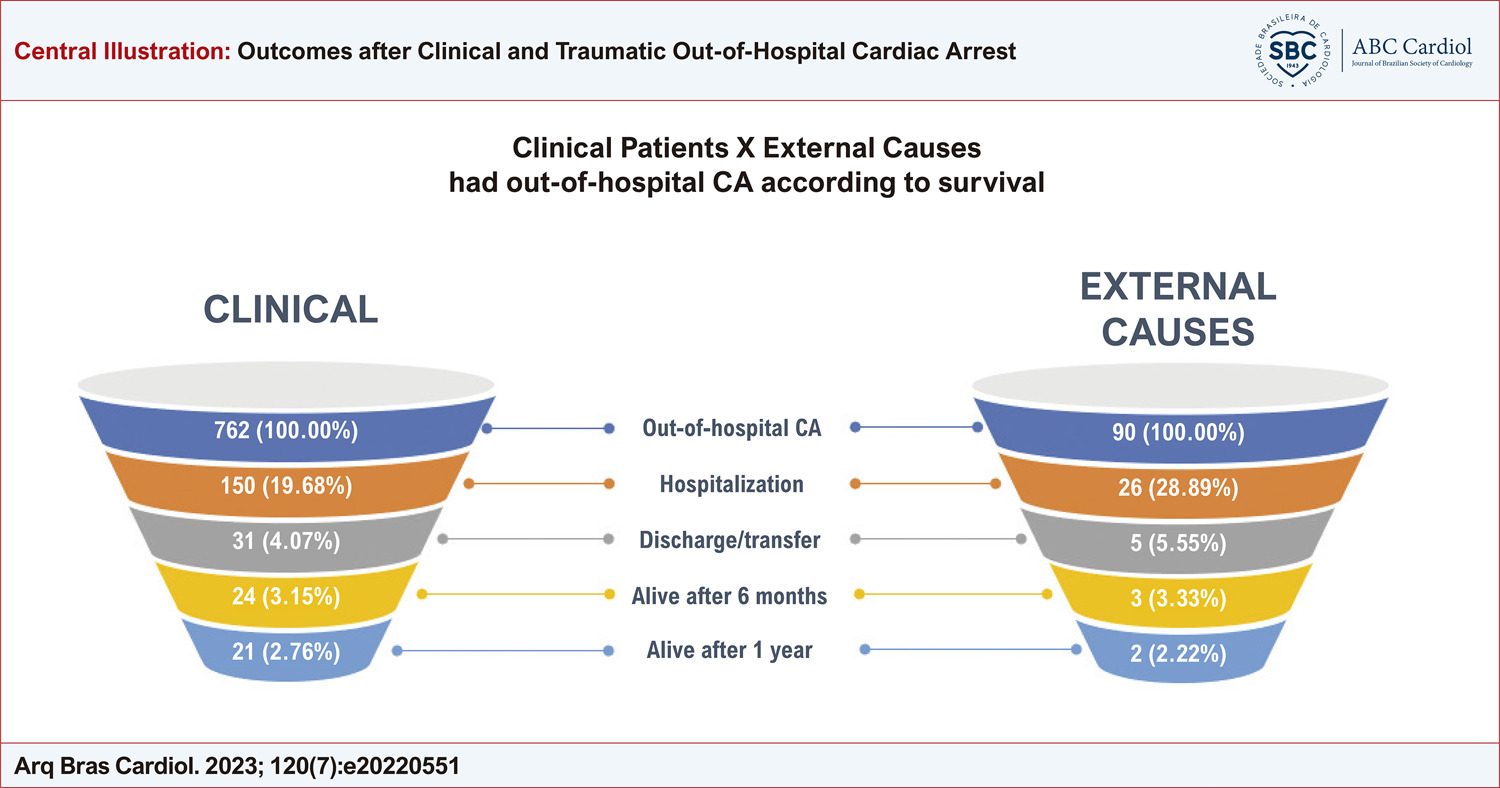
Outcomes after Clinical and Traumatic Out-of-Hospital Cardiac Arrest

Daiana Terra Nacer et al. Regina Márcia Cardoso de Sousa Anna Leticia Miranda

Abstract

Background

Data on out-of-hospital cardiac arrest are still scarce, very varied, and indicate a poor prognosis for traumatic events.

Objectives

To describe the out-of-hospital/in-hospital survival, survival time, and neurological conditions of those treated by advanced life support units and submitted to cardiopulmonary resuscitation and compare the results of clinical and traumatic cardiac arrests.

Methods

This is a cohort study carried out in three stages; in the first two, data were collected from the Mobile Emergency Care Service forms and medical records; then, the Brain Performance Category Scale was applied in the third stage. The sample consisted of resuscitated victims aged ≥18 years. Fisher’s and log-rank tests were used to compare the causes, considering a significance level of 5%.

Results

852 patients were analyzed; 20.66% were hospitalized, 4.23% survived until transfer or discharge, and 58.33% had a favorable outcome one year after arrest. There was an association between pre/in-hospital survival and the nature of the occurrence (p=0.026), but there was no difference between the survival curves (p=0.6).

Conclusions

Survival of hospitalization after out-of-hospital cardiac arrest was low; however, most who survived to be discharged achieved a favorable outcome after one year. The survival time of those hospitalized after clinical and traumatic events were similar, but pre-hospital survival was higher among trauma patients.

  • Cardiopulmonary Resuscitation
  • Emergency Medical Services
  • Heart Arrest
  • Out-of-Hospital Cardiac Arrest
  • Survivorship
Read Full Article
Creative Commons Attribution (CC BY) Creative Commons license
24/07/2023 DOI: 10.36660/abc.20220551 Views 1
Figure 1
ABC
Case Report

Prolonged Cardiopulmonary Arrest Treated Successfully in the São Paulo's Subway

Renan Gianotto-Oliveira et al. Maria Helena Favarato Maria Margarita Gonzalez Thiago Liguori … Sergio Timerman Roberto Kalil Filho

Introduction

In Brazil, circulatory diseases, including CPA (Cardiopulmonary Arrests), were the leading cause of death in 2010. Estimates are that, in Brazil, around 220,000 CPAs happen every year, including ventricular fibrillation, 180,000 in pre-hospital environment and 40,000 in-hospital.

Recent observational studies of victims of CPA in extra-hospital environment revealed that only CCC (Continuous Chest Compressions) – hands-only CPR – were equivalent or higher than conventional CPR (Cardiopulmonary Resuscitation) (using a 30:2 ratio of compressions/ventilations) in adult patients, mainly with regard to neurological benefits – .

[…]

  • Cardiopulmonary Resuscitation
  • Electric Countershock
  • Heart Massage
  • Out-of-Hospital Cardiac Arrest
  • Ventricular Fibrillation
Read Full Article
Creative Commons Attribution (CC BY) Creative Commons license
01/05/2014 DOI: 10.5935/abc.20140058

How to cite this article

EndNote RIS

Electronic Document Format (Vancouver)

Barbosa ICQ, Espíndola LN, Lucena ACA, Negri FEFDO, Gondim CSSE. The Route to Survival: Intravenous or Intraosseous Access in Cardiac Arrest. International Journal of Cardiovascular Sciences 2026;39:e20260006.

Electronic Document Format (ABNT)

Barbosa, Imara Correia de Queiroz; Espíndola, Larissa Neto; Lucena, Ana Claudia Andrade; Negri, Fátima Elizabeth Fonseca De Oliveira; Gondim, Catia Sueli de Sousa Eufrazino. The Route to Survival: Intravenous or Intraosseous Access in Cardiac Arrest. International Journal of Cardiovascular Sciences, v. 39, e20260006, Jun. 2026.

Electronic Document Format (APA)

Barbosa, I. C. Q., Espíndola, L. N., Lucena, A. C. A., Negri, F. E. F. D. O., & Gondim, C. S. S. E. (2026). The Route to Survival: Intravenous or Intraosseous Access in Cardiac Arrest. International Journal of Cardiovascular Sciences, 39, e20260006.

Electronic Document Format (ISO)

Barbosa, Imara Correia de Queiroz and Espíndola, Larissa Neto and Lucena, Ana Claudia Andrade and Negri, Fátima Elizabeth Fonseca De Oliveira and Gondim, Catia Sueli de Sousa Eufrazino. The Route to Survival: Intravenous or Intraosseous Access in Cardiac Arrest. International Journal of Cardiovascular Sciences [online]. 2026, vol. 39, [cited 2026-10-14], e20260006. Available from: <https://journals.cardiol.br/en/article/the-route-to-survival-intravenous-or-intraosseous-access-in-cardiac-arrest/>. ISSN 2359-4802

EndNote RIS

Electronic Document Format (Vancouver)

Sobral MVS, Pirolla RC, Cavalcante DN, Leme NFS, Rocha P, Campos FS, Luna LC, et al. Intraosseous Versus Intravenous Vascular Access for Out-Of-Hospital Cardiac Arrest: A Meta-Analysis of Randomized Clinical Trials. International Journal of Cardiovascular Sciences 2026;39:e20250131.

Electronic Document Format (ABNT)

Sobral, Milene Vitória Sampaio; Pirolla, Rafaela da Cunha; Cavalcante, Douglas Nunes; Leme, Nicoly Franciely Sanches; Rocha, Paula; Campos, Fernanda Segura; Luna, Leonardo Castro. Intraosseous Versus Intravenous Vascular Access for Out-Of-Hospital Cardiac Arrest: A Meta-Analysis of Randomized Clinical Trials. International Journal of Cardiovascular Sciences, v. 39, e20250131, May. 2026.

Electronic Document Format (APA)

Sobral, M. V. S., Pirolla, R. C., Cavalcante, D. N., Leme, N. F. S., Rocha, P., Campos, F. S., & Luna, L. C. (2026). Intraosseous Versus Intravenous Vascular Access for Out-Of-Hospital Cardiac Arrest: A Meta-Analysis of Randomized Clinical Trials. International Journal of Cardiovascular Sciences, 39, e20250131.

Electronic Document Format (ISO)

Sobral, Milene Vitória Sampaio and Pirolla, Rafaela da Cunha and Cavalcante, Douglas Nunes and Leme, Nicoly Franciely Sanches and Rocha, Paula and Campos, Fernanda Segura and Luna, Leonardo Castro. Intraosseous Versus Intravenous Vascular Access for Out-Of-Hospital Cardiac Arrest: A Meta-Analysis of Randomized Clinical Trials. International Journal of Cardiovascular Sciences [online]. 2026, vol. 39, [cited 2026-10-14], e20250131. Available from: <https://journals.cardiol.br/en/article/intraosseous-versus-intravenous-vascular-access-for-out-of-hospital-cardiac-arrest-a-meta-analysis-of-randomized-clinical-trials/>. ISSN 2359-4802

EndNote RIS

Electronic Document Format (Vancouver)

Vinagre RCO. Recognition by the Regulatory Physician of Expressions Used by Lay People when Asking for Help in Supposed Cardiorespiratory Arrest. Arquivos Brasileiros de Cardiologia 2025;121(11):e20240669.

Electronic Document Format (ABNT)

Vinagre, Ronaldo C. O.. Recognition by the Regulatory Physician of Expressions Used by Lay People when Asking for Help in Supposed Cardiorespiratory Arrest. Arquivos Brasileiros de Cardiologia, v. 121, n. 11, e20240669, Jan. 2025.

Electronic Document Format (APA)

Vinagre, R. C. O. (2025). Recognition by the Regulatory Physician of Expressions Used by Lay People when Asking for Help in Supposed Cardiorespiratory Arrest. Arquivos Brasileiros de Cardiologia, 121(11), e20240669.

Electronic Document Format (ISO)

Vinagre, Ronaldo C. O.. Recognition by the Regulatory Physician of Expressions Used by Lay People when Asking for Help in Supposed Cardiorespiratory Arrest. Arquivos Brasileiros de Cardiologia [online]. 2025, vol. 121, n. 11, [cited 2026-10-14], e20240669. Available from: <https://journals.cardiol.br/en/article/recognition-by-the-regulatory-physician-of-expressions-used-by-lay-people-when-asking-for-help-in-supposed-cardiorespiratory-arrest/>. ISSN 0066-782X

EndNote RIS

Electronic Document Format (Vancouver)

Voos MHR, Okamoto CM, Trommer AB, Silva AB, Cruz EF, Laporte GA, Crespo ARPT, et al. Observational Study of Words Used by Emergency Callers and Their Impact on the Recognition of an Out-Of-Hospital Cardiopulmonary Arrest by the Medical Dispatcher. Arquivos Brasileiros de Cardiologia 2024;121(11):e20230343.

Electronic Document Format (ABNT)

Voos, Matheus Henrique Ramos; Okamoto, Caroline Manami; Trommer, Artur Boeck; Silva, Amanda Berlinck da; Cruz, Eduardo Franke da; Laporte, Gustavo Andreazza; Crespo, Antônio Rogério Proença Tavares; Regner, Andrea; Viegas, Karin. Observational Study of Words Used by Emergency Callers and Their Impact on the Recognition of an Out-Of-Hospital Cardiopulmonary Arrest by the Medical Dispatcher. Arquivos Brasileiros de Cardiologia, v. 121, n. 11, e20230343, Nov. 2024.

Electronic Document Format (APA)

Voos, M. H. R., Okamoto, C. M., Trommer, A. B., Silva, A. B. , Cruz, E. F. , Laporte, G. A., Crespo, A. R. P. T., Regner, A., & Viegas, K. (2024). Observational Study of Words Used by Emergency Callers and Their Impact on the Recognition of an Out-Of-Hospital Cardiopulmonary Arrest by the Medical Dispatcher. Arquivos Brasileiros de Cardiologia, 121(11), e20230343.

Electronic Document Format (ISO)

Voos, Matheus Henrique Ramos and Okamoto, Caroline Manami and Trommer, Artur Boeck and Silva, Amanda Berlinck da and Cruz, Eduardo Franke da and Laporte, Gustavo Andreazza and Crespo, Antônio Rogério Proença Tavares and Regner, Andrea and Viegas, Karin. Observational Study of Words Used by Emergency Callers and Their Impact on the Recognition of an Out-Of-Hospital Cardiopulmonary Arrest by the Medical Dispatcher. Arquivos Brasileiros de Cardiologia [online]. 2024, vol. 121, n. 11, [cited 2026-10-14], e20230343. Available from: <https://journals.cardiol.br/en/article/observational-study-of-words-used-by-emergency-callers-and-their-impact-on-the-recognition-of-an-out-of-hospital-cardiopulmonary-arrest-by-the-medical-dispatcher/>. ISSN 0066-782X

EndNote RIS

Electronic Document Format (Vancouver)

Salim TR, Soares GP. Outcome Analysis after Out-of-Hospital Cardiac Arrest. Arquivos Brasileiros de Cardiologia 2023;120(7):e20230406.

Electronic Document Format (ABNT)

Salim, Thais Rocha; Soares, Gabriel Porto. Outcome Analysis after Out-of-Hospital Cardiac Arrest. Arquivos Brasileiros de Cardiologia, v. 120, n. 7, e20230406, Aug. 2023.

Electronic Document Format (APA)

Salim, T. R., & Soares, G. P. (2023). Outcome Analysis after Out-of-Hospital Cardiac Arrest. Arquivos Brasileiros de Cardiologia, 120(7), e20230406.

Electronic Document Format (ISO)

Salim, Thais Rocha and Soares, Gabriel Porto. Outcome Analysis after Out-of-Hospital Cardiac Arrest. Arquivos Brasileiros de Cardiologia [online]. 2023, vol. 120, n. 7, [cited 2026-10-14], e20230406. Available from: <https://journals.cardiol.br/en/article/outcome-analysis-after-out-of-hospital-cardiac-arrest/>. ISSN 0066-782X

EndNote RIS

Electronic Document Format (Vancouver)

Nacer DT, Sousa RMC, Miranda AL. Outcomes after Clinical and Traumatic Out-of-Hospital Cardiac Arrest. Arquivos Brasileiros de Cardiologia 2023;120(7):e20220551.

Electronic Document Format (ABNT)

Nacer, Daiana Terra; Sousa, Regina Márcia Cardoso de; Miranda, Anna Leticia. Outcomes after Clinical and Traumatic Out-of-Hospital Cardiac Arrest. Arquivos Brasileiros de Cardiologia, v. 120, n. 7, e20220551, Jul. 2023.

Electronic Document Format (APA)

Nacer, D. T., Sousa, R. M. C. , & Miranda, A. L. (2023). Outcomes after Clinical and Traumatic Out-of-Hospital Cardiac Arrest. Arquivos Brasileiros de Cardiologia, 120(7), e20220551.

Electronic Document Format (ISO)

Nacer, Daiana Terra and Sousa, Regina Márcia Cardoso de and Miranda, Anna Leticia. Outcomes after Clinical and Traumatic Out-of-Hospital Cardiac Arrest. Arquivos Brasileiros de Cardiologia [online]. 2023, vol. 120, n. 7, [cited 2026-10-14], e20220551. Available from: <https://journals.cardiol.br/en/article/outcomes-after-clinical-and-traumatic-out-of-hospital-cardiac-arrest/>. ISSN 0066-782X

EndNote RIS

Electronic Document Format (Vancouver)

Gianotto-Oliveira R, Favarato MH, Gonzalez MM, Liguori T, Timerman S, Kalil Filho R. Prolonged Cardiopulmonary Arrest Treated Successfully in the São Paulo’s Subway. Arquivos Brasileiros de Cardiologia 2014;102(5):e52-4.

Electronic Document Format (ABNT)

Gianotto-Oliveira, Renan; Favarato, Maria Helena; Gonzalez, Maria Margarita; Liguori, Thiago; Timerman, Sergio; Kalil Filho, Roberto. Prolonged Cardiopulmonary Arrest Treated Successfully in the São Paulo’s Subway. Arquivos Brasileiros de Cardiologia, v. 102, n. 5, p. e52-e54, Apr. 2014.

Electronic Document Format (APA)

Gianotto-Oliveira, R., Favarato, M. H., Gonzalez, M. M., Liguori, T., Timerman, S., & Kalil Filho, R. (2014). Prolonged Cardiopulmonary Arrest Treated Successfully in the São Paulo’s Subway. Arquivos Brasileiros de Cardiologia, 102(5), e52-e54.

Electronic Document Format (ISO)

Gianotto-Oliveira, Renan and Favarato, Maria Helena and Gonzalez, Maria Margarita and Liguori, Thiago and Timerman, Sergio and Kalil Filho, Roberto. Prolonged Cardiopulmonary Arrest Treated Successfully in the São Paulo’s Subway. Arquivos Brasileiros de Cardiologia [online]. 2014, vol. 102, n. 5, [cited 2026-10-14], pp. e52-e54. Available from: <https://journals.cardiol.br/en/article/prolonged-cardiopulmonary-arrest-treated-successfully-in-the-sao-paulos-subway/>. ISSN 0066-782X

  • About ABC Family
  • Internal Regulation
  • Editorial Board
  • Brazilian Society of Cardiology (SBC)

Issues

SBC Guidelines

  • Videos
  • Podcasts
  • News