ABC Family Arquivos Brasileiros de Cardiologia International Journal of Cardiovascular Sciences ABC Heart Failure & Cardiomyopathy ABC Imagem Cardiovascular
Português English
ABC Family
Português English
  • About
    • About ABC Family
    • Internal Regulation
    • Editorial Board
    • Brazilian Society of Cardiology (SBC)
  • Issues
  • SBC Guidelines
  • Content
    • Videos
    • Podcasts
    • News
  • About
    • About ABC Family
    • Internal Regulation
    • Editorial Board
    • Brazilian Society of Cardiology (SBC)
  • Issues
  • SBC Guidelines
  • Content
    • Videos
    • Podcasts
    • News

ABC Family

  • ABC Family
  • Arquivos Brasileiros de Cardiologia
  • International Journal of Cardiovascular Sciences
  • ABC Heart Failure & Cardiomyopathy
  • ABC Imagem Cardiovascular
Search in

No content found.

Journals
Ordering
Article types
Others

  1. Home
  2. Keyword: Acute Coronary Syndrome / diagnosis
ABC
Editorial

Precordial Pain and Infarction in the Elderly. It´S no so Elementary, My Dear Watson!

Ricardo Wang et al. José Carlos da Costa Zanon Fernando Carvalho Neuschwander

In Medical School, we learn the traditional way to conduct the investigative process in order to reach a diagnosis. This process is traditionally based on the collection of anamnesis and clinical exams, clinical reasoning, the generation of a hypothesis, and tests with complementary exams. In general, we follow the the Occam’s razor principle: “the simplest answer is usually the correct answer,” or as William Osler’s aphorism: “Where you hear hoofs, you don´t think of zebras”. However, in this investigative process, the clinical reasoning is challenged in an elderly population over 80 years of age, and not always is the simplest answer the most correct. In this age group, the presence of comorbidities is quite common and can interfere, changing the perception of cardiovascular symptoms (depression, dementia, medications that interfere in the central nervous system, diabetes, analgesics, etc.), or even modify the symptomatology. The presence of atypical symptoms, such as dyspnea, sudoresis, vomiting, diarrhea, epigastric pain, and mental confusion can all mask the cardiovascular pathology. ,

Many studies have shown the difficulty in diagnosing acute myocardial infarction (AMI) in this population, which clearly entails delays in or the lack of treatment. Even when the diagnosis and early treatment of AMI is established, the mortality rate remains high in this population. The under-treatment or lack of treatment contribute to the increase in mortality in this age group. – Understanding the factors that make the diagnosis difficult is of utmost importance in establishing protocols directed toward the older age elderly patient.

[…]
  • Acute Coronary Syndrome / diagnosis
  • Aged
  • aging
  • Angina Pectoris
  • Chest Pain
  • Myocardial Infarction / Diagnosis
Read Full Article
Creative Commons Attribution (CC BY) Creative Commons license
14/06/2021 DOI: 10.36660/abc.20210331 Views 1
Figure 1
IJCS
Brief Communication

Takotsubo Syndrome in the Context of Transmural Acute Myocardial Infarction: Prevalence and How to Differentiate?

João Paulo Soares Costa et al. Luiz Eduardo Fonteles Ritt Rafael Modesto Fernandes Felipe Alvarenga Duarte Campos … Queila Borges Eduardo Sahade Darzé

Introduction

Takotsubo syndrome (TTS) is characterized by transient left ventricular dysfunction culminating in acute cardiac dysfunction. It is frequently preceded by emotional or physical stress.,

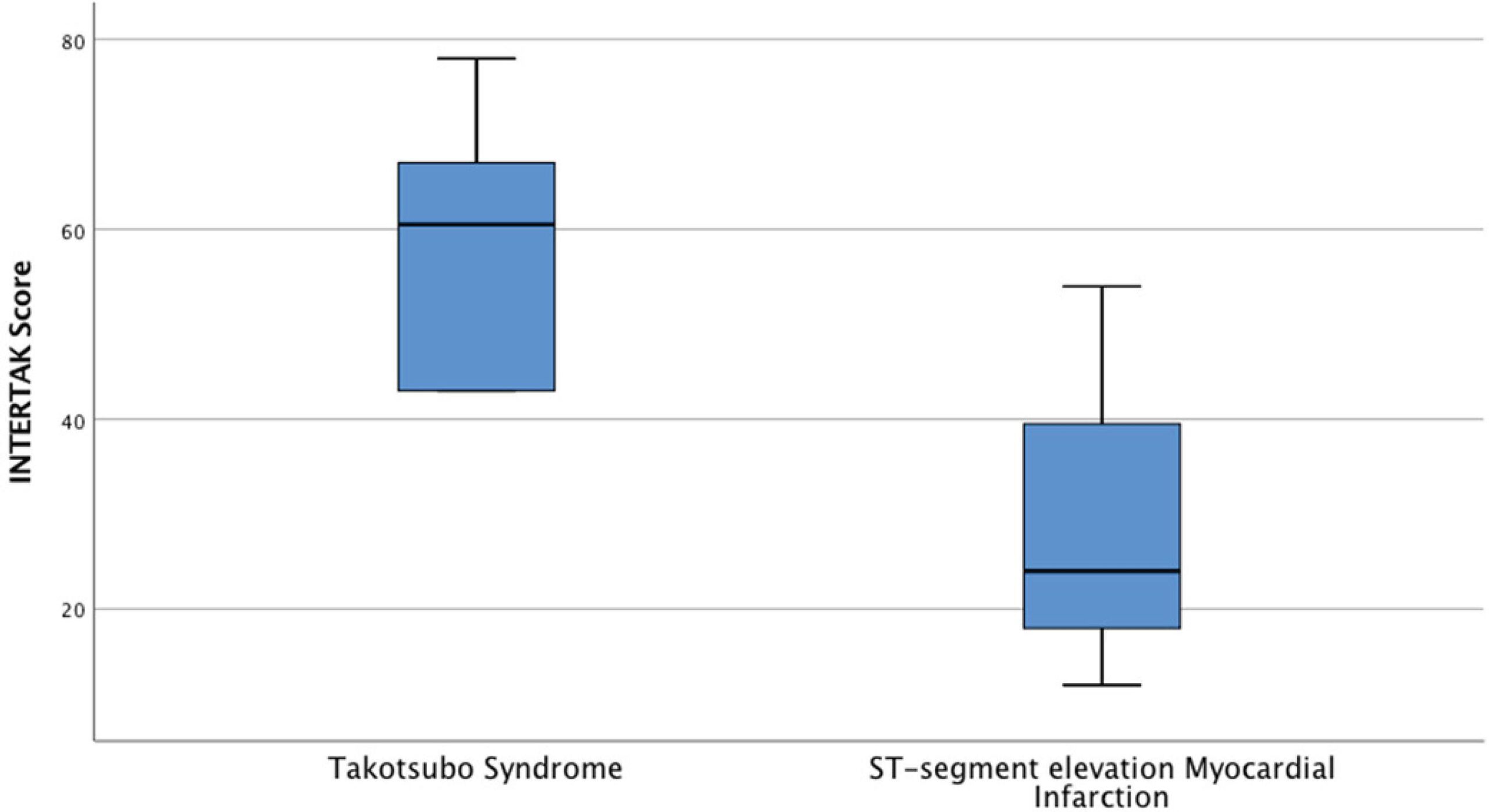
The most common symptoms at presentation are chest pain and dyspnea. Because the presentation of TTS is similar to that of acute coronary syndrome (ACS), the differential diagnosis is difficult, especially from ST-elevation myocardial infarction (STEMI). Absence of coronary artery disease in the affected area must be confirmed to establish the diagnosis of TTS. To facilitate the diagnosis of TTS, the European Society of Cardiology has recently developed the InterTAK diagnostic score, a promising tool that estimates the probability of a TTS event.,

[…]

  • Acute Coronary Syndrome / diagnosis
  • ST Elevation Myocardial Infarction
  • Stress, Physiological
  • Stress, Psychological
  • Takotsubo Cardiomyopathy
  • Ventricular Function, Left
Read Full Article
Creative Commons Attribution (CC BY) Creative Commons license
17/02/2020 DOI: 10.5935/2359-4802.20190080 Views 2
Figure 1
ABC
Original Article

Zero Calcium Score as a Filter for Further Testing in Patients Admitted to the Coronary Care Unit with Chest Pain

Luis Cláudio Lemos Correia et al. Fábio P. Esteves Manuela Carvalhal Thiago Menezes Barbosa de Souza … Nicole de Sá Vitor Calixto de Almeida Correia Felipe Kalil Beirão Alexandre Fernanda Lopes Felipe Ferreira Márcia Noya-Rabelo

Abstract

Background:

The accuracy of zero coronary calcium score as a filter in patients with chest pain has been demonstrated at the emergency room and outpatient clinics, populations with low prevalence of coronary artery disease (CAD).

Objective:

To test the gatekeeping role of zero calcium score in patients with chest pain admitted to the coronary care unit (CCU), where the pretest probability of CAD is higher than that of other populations.

Methods:

Patients underwent computed tomography for calcium scoring, and obstructive CAD was defined by a minimum 70% stenosis on invasive angiography.

Results:

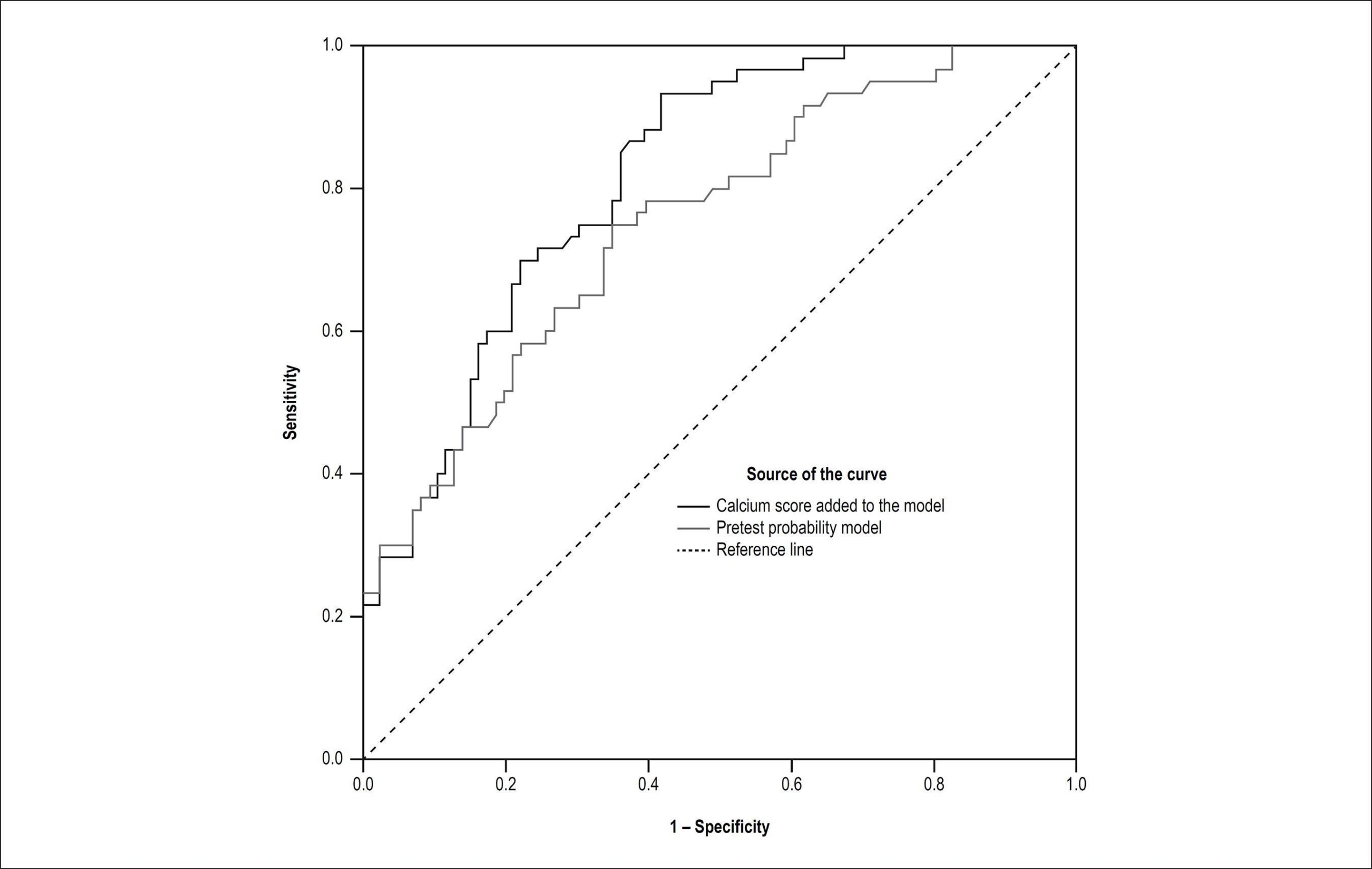
In 146 patients studied, the prevalence of CAD was 41%. A zero calcium score was present in 35% of the patients. The sensitivity and specificity of zero calcium score yielded a negative likelihood ratio of 0.16. After logistic regression adjustment for pretest probability, zero calcium score was independently associated with lower odds of CAD (OR = 0.12, 95%CI = 0.04-0.36), increasing the area under the ROC curve of the clinical model from 0.76 to 0.82 (p = 0.006). Zero calcium score provided a net reclassification improvement of 0.20 (p = 0.0018) over the clinical model when using a pretest probability threshold of 10% for discharging without further testing. In patients with pretest probability < 50%, zero calcium score had a negative predictive value of 95% (95%CI = 83%-99%), with a number needed to test of 2.1 for obtaining one additional discharge.

Conclusion:

Zero calcium score substantially reduces the pretest probability of obstructive CAD in patients admitted to the CCU with acute chest pain. (Arq Bras Cardiol. 2017; [online].ahead print, PP.0-0)

  • Acute Coronary Syndrome / diagnosis
  • Chest Pain, Calcinosis / diagnosis
  • Emergency Medical Services
  • Predictive Value of Tests
Read Full Article
Creative Commons Attribution (CC BY) Creative Commons license
12/06/2017 DOI: 10.5935/abc.20170076 Views 3
Figure 1
ABC
Original Article

Prognostic Value of TIMI Score versus GRACE Score in ST-segment Elevation Myocardial Infarction

Luis C. L. Correia et al. Guilherme Garcia Felipe Kalil Felipe Ferreira … Manuela Carvalhal Ruan Oliveira André Silva Isis Vasconcelos Caio Henri Márcia Noya-Rabelo

Background:

The TIMI Score for ST-segment elevation myocardial infarction (STEMI) was created and validated specifically for this clinical scenario, while the GRACE score is generic to any type of acute coronary syndrome.

Objective:

Between TIMI and GRACE scores, identify the one of better prognostic performance in patients with STEMI.

Methods:

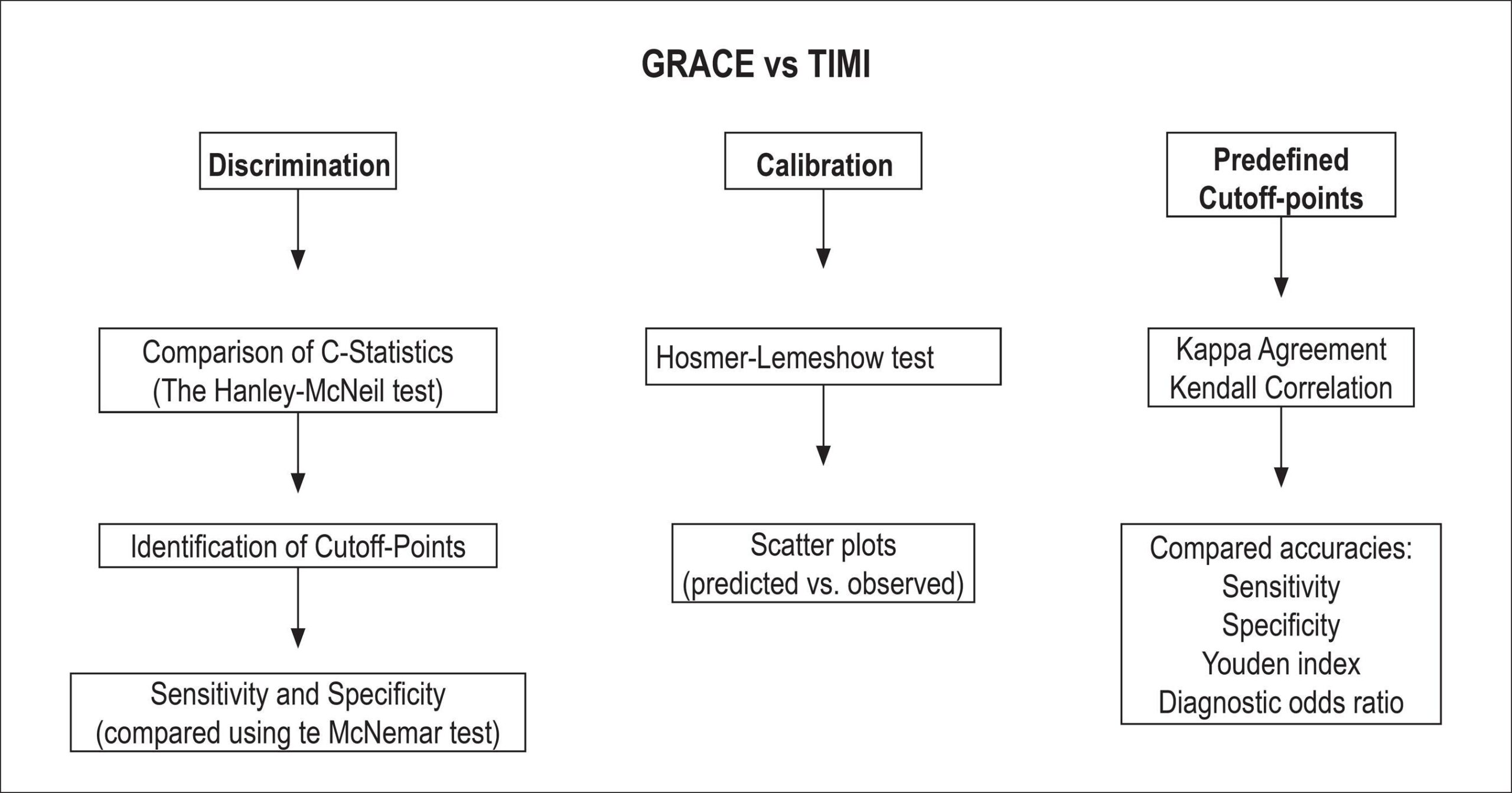
We included 152 individuals consecutively admitted for STEMI. The TIMI and GRACE scores were tested for their discriminatory ability (C-statistics) and calibration (Hosmer-Lemeshow) in relation to hospital death.

Results:

The TIMI score showed equal distribution of patients in the ranges of low, intermediate and high risk (39 %, 27 % and 34 %, respectively), as opposed to the GRACE Score that showed predominant distribution at low risk (80 %, 13 % and 7%, respectively). Case-fatality was 11%. The C-statistics of the TIMI score was 0.87 (95%CI = 0.76 to 0.98), similar to GRACE (0.87, 95%CI = 0.75 to 0.99) – p = 0.71. The TIMI score showed satisfactory calibration represented by χ2 = 1.4 (p = 0.92), well above the calibration of the GRACE score, which showed χ2 = 14 (p = 0.08). This calibration is reflected in the expected incidence ranges for low, intermediate and high risk, according to the TIMI score (0 %, 4.9 % and 25 %, respectively), differently to GRACE (2.4%, 25% and 73%), which featured middle range incidence inappropriately.

Conclusion:

Although the scores show similar discriminatory capacity for hospital death, the TIMI score had better calibration than GRACE. These findings need to be validated populations of different risk profiles.

  • Acute Coronary Syndrome / diagnosis
  • Comparative Study
  • Myocardial Infarction
  • Prognosis
  • Propensity Score
  • Risk Factors
Read Full Article
Creative Commons Attribution (CC BY) Creative Commons license
15/07/2014 DOI: 10.5935/abc.20140095 Views 1

How to cite this article

EndNote RIS

Electronic Document Format (Vancouver)

Wang R, Zanon JCC, Neuschwander FC. Precordial Pain and Infarction in the Elderly. It´S no so Elementary, My Dear Watson!. Arquivos Brasileiros de Cardiologia 2021;116(6):1046-7.

Electronic Document Format (ABNT)

Wang, Ricardo; Zanon, José Carlos da Costa; Neuschwander, Fernando Carvalho. Precordial Pain and Infarction in the Elderly. It´S no so Elementary, My Dear Watson!. Arquivos Brasileiros de Cardiologia, v. 116, n. 6, p. 1046-1047, Jun. 2021.

Electronic Document Format (APA)

Wang, R., Zanon, J. C. C., & Neuschwander, F. C. (2021). Precordial Pain and Infarction in the Elderly. It´S no so Elementary, My Dear Watson!. Arquivos Brasileiros de Cardiologia, 116(6), 1046-1047.

Electronic Document Format (ISO)

Wang, Ricardo and Zanon, José Carlos da Costa and Neuschwander, Fernando Carvalho. Precordial Pain and Infarction in the Elderly. It´S no so Elementary, My Dear Watson!. Arquivos Brasileiros de Cardiologia [online]. 2021, vol. 116, n. 6, [cited 2026-10-14], pp. 1046-1047. Available from: <https://journals.cardiol.br/en/article/precordial-pain-and-infarction-in-the-elderly-its-no-so-elementary-my-dear-watson/>. ISSN 0066-782X

EndNote RIS

Electronic Document Format (Vancouver)

Costa JPS, Ritt LEF, Fernandes RM, Campos FAD, Borges Q, Darzé ES. Takotsubo Syndrome in the Context of Transmural Acute Myocardial Infarction: Prevalence and How to Differentiate?. International Journal of Cardiovascular Sciences 2020;33(1):94-7.

Electronic Document Format (ABNT)

Costa, João Paulo Soares; Ritt, Luiz Eduardo Fonteles; Fernandes, Rafael Modesto; Campos, Felipe Alvarenga Duarte; Borges, Queila; Darzé, Eduardo Sahade. Takotsubo Syndrome in the Context of Transmural Acute Myocardial Infarction: Prevalence and How to Differentiate?. International Journal of Cardiovascular Sciences, v. 33, n. 1, p. 94-97, Feb. 2020.

Electronic Document Format (APA)

Costa, J. P. S., Ritt, L. E. F., Fernandes, R. M., Campos, F. A. D., Borges, Q., & Darzé, E. S. (2020). Takotsubo Syndrome in the Context of Transmural Acute Myocardial Infarction: Prevalence and How to Differentiate?. International Journal of Cardiovascular Sciences, 33(1), 94-97.

Electronic Document Format (ISO)

Costa, João Paulo Soares and Ritt, Luiz Eduardo Fonteles and Fernandes, Rafael Modesto and Campos, Felipe Alvarenga Duarte and Borges, Queila and Darzé, Eduardo Sahade. Takotsubo Syndrome in the Context of Transmural Acute Myocardial Infarction: Prevalence and How to Differentiate?. International Journal of Cardiovascular Sciences [online]. 2020, vol. 33, n. 1, [cited 2026-10-14], pp. 94-97. Available from: <https://journals.cardiol.br/en/article/takotsubo-syndrome-in-the-context-of-transmural-acute-myocardial-infarction-prevalence-and-how-to-differentiate/>. ISSN 2359-4802

EndNote RIS

Electronic Document Format (Vancouver)

Correia LCL, Esteves FP, Carvalhal M, Souza TMB, Sá N, Correia VCA, Alexandre FKB, et al. Zero Calcium Score as a Filter for Further Testing in Patients Admitted to the Coronary Care Unit with Chest Pain. Arquivos Brasileiros de Cardiologia 2017;109(2):97-102.

Electronic Document Format (ABNT)

Correia, Luis Cláudio Lemos; Esteves, Fábio P.; Carvalhal, Manuela; Souza, Thiago Menezes Barbosa de; Sá, Nicole de; Correia, Vitor Calixto de Almeida; Alexandre, Felipe Kalil Beirão; Lopes, Fernanda; Ferreira, Felipe; Noya-Rabelo, Márcia. Zero Calcium Score as a Filter for Further Testing in Patients Admitted to the Coronary Care Unit with Chest Pain. Arquivos Brasileiros de Cardiologia, v. 109, n. 2, p. 97-102, Jun. 2017.

Electronic Document Format (APA)

Correia, L. C. L., Esteves, F. P., Carvalhal, M., Souza, T. M. B. , Sá, N. , Correia, V. C. A., Alexandre, F. K. B., Lopes, F., Ferreira, F., & Noya-Rabelo, M. (2017). Zero Calcium Score as a Filter for Further Testing in Patients Admitted to the Coronary Care Unit with Chest Pain. Arquivos Brasileiros de Cardiologia, 109(2), 97-102.

Electronic Document Format (ISO)

Correia, Luis Cláudio Lemos and Esteves, Fábio P. and Carvalhal, Manuela and Souza, Thiago Menezes Barbosa de and Sá, Nicole de and Correia, Vitor Calixto de Almeida and Alexandre, Felipe Kalil Beirão and Lopes, Fernanda and Ferreira, Felipe and Noya-Rabelo, Márcia. Zero Calcium Score as a Filter for Further Testing in Patients Admitted to the Coronary Care Unit with Chest Pain. Arquivos Brasileiros de Cardiologia [online]. 2017, vol. 109, n. 2, [cited 2026-10-14], pp. 97-102. Available from: <https://journals.cardiol.br/en/article/zero-calcium-score-as-a-filter-for-further-testing-in-patients-admitted-to-the-coronary-care-unit-with-chest-pain/>. ISSN 0066-782X

EndNote RIS

Electronic Document Format (Vancouver)

Correia LCL, Garcia G, Kalil F, Ferreira F, Carvalhal M, Oliveira R, Silva A, et al. Prognostic Value of TIMI Score versus GRACE Score in ST-segment Elevation Myocardial Infarction. Arquivos Brasileiros de Cardiologia 2014;103(2):98-106.

Electronic Document Format (ABNT)

Correia, Luis C. L.; Garcia, Guilherme; Kalil, Felipe; Ferreira, Felipe; Carvalhal, Manuela; Oliveira, Ruan; Silva, André; Vasconcelos, Isis; Henri, Caio; Noya-Rabelo, Márcia. Prognostic Value of TIMI Score versus GRACE Score in ST-segment Elevation Myocardial Infarction. Arquivos Brasileiros de Cardiologia, v. 103, n. 2, p. 98-106, Jul. 2014.

Electronic Document Format (APA)

Correia, L. C. L., Garcia, G., Kalil, F., Ferreira, F., Carvalhal, M., Oliveira, R., Silva, A., Vasconcelos, I., Henri, C., & Noya-Rabelo, M. (2014). Prognostic Value of TIMI Score versus GRACE Score in ST-segment Elevation Myocardial Infarction. Arquivos Brasileiros de Cardiologia, 103(2), 98-106.

Electronic Document Format (ISO)

Correia, Luis C. L. and Garcia, Guilherme and Kalil, Felipe and Ferreira, Felipe and Carvalhal, Manuela and Oliveira, Ruan and Silva, André and Vasconcelos, Isis and Henri, Caio and Noya-Rabelo, Márcia. Prognostic Value of TIMI Score versus GRACE Score in ST-segment Elevation Myocardial Infarction. Arquivos Brasileiros de Cardiologia [online]. 2014, vol. 103, n. 2, [cited 2026-10-14], pp. 98-106. Available from: <https://journals.cardiol.br/en/article/prognostic-value-of-timi-score-versus-grace-score-in-st-segment-elevation-myocardial-infarction/>. ISSN 0066-782X

  • About ABC Family
  • Internal Regulation
  • Editorial Board
  • Brazilian Society of Cardiology (SBC)

Issues

SBC Guidelines

  • Videos
  • Podcasts
  • News