Coronary-Cavitary Fistula, an Unusual Cause of Heart Failure
Introduction
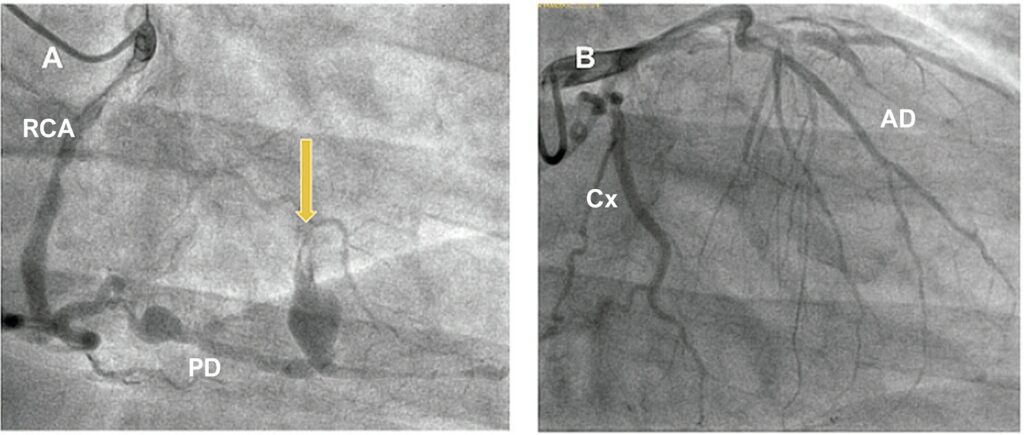
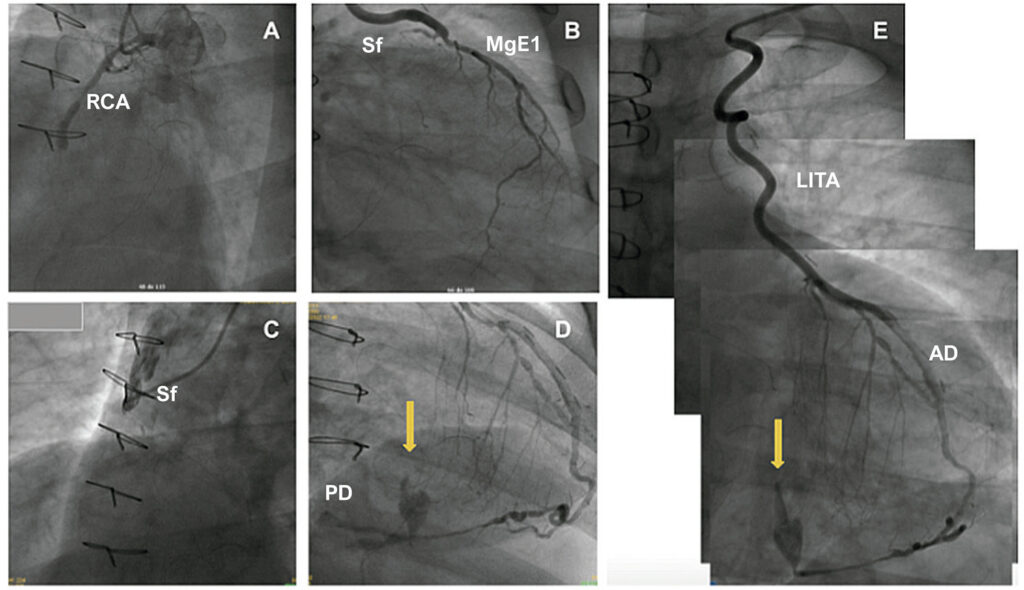
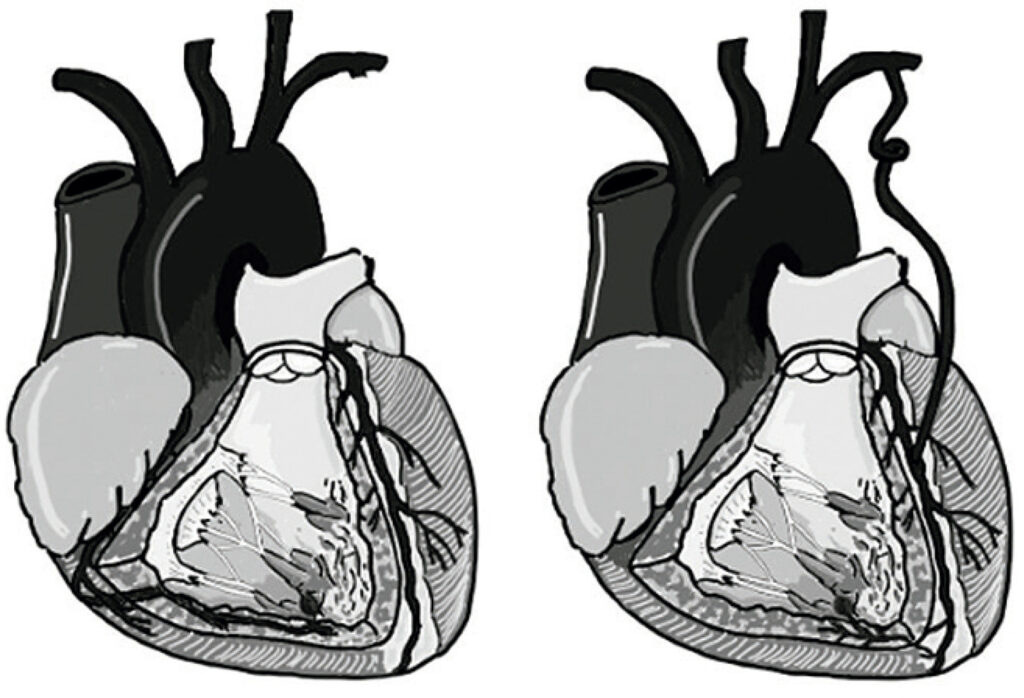
Coronary fistulas (CFs) are defined as a direct anomalous connection between one or more coronary arteries with a large vessel or cardiac chamber. Most CFs drain into a lower pressure system, such as the right ventricle (RV) 40%, right atrium (RA) 26%, pulmonary artery (PA) 17%, coronary sinus 7%, and vena cava 1%. The clinical presentation will depend on the location and volume of the shunt generated by the fistula. Approximately 50% of cases are asymptomatic and, when present, may include dyspnea, palpitations, chest pain, or, in more severe cases, heart failure (HF), acute coronary syndromes, and arrhythmias.,
[…]
Images
Image gallery fullscreen viewer
Comments are moderated by the editorial team before publication. Discussions should be evidence-based and use scientific language. Conflicts of interest should be declared.