ABC Family Arquivos Brasileiros de Cardiologia International Journal of Cardiovascular Sciences ABC Heart Failure & Cardiomyopathy ABC Imagem Cardiovascular
Português English
ABC Family
Português English
  • About
    • About ABC Family
    • Internal Regulation
    • Editorial Board
    • Brazilian Society of Cardiology (SBC)
  • Issues
  • SBC Guidelines
  • Content
    • Videos
    • Podcasts
    • News
  • About
    • About ABC Family
    • Internal Regulation
    • Editorial Board
    • Brazilian Society of Cardiology (SBC)
  • Issues
  • SBC Guidelines
  • Content
    • Videos
    • Podcasts
    • News

ABC Family

  • ABC Family
  • Arquivos Brasileiros de Cardiologia
  • International Journal of Cardiovascular Sciences
  • ABC Heart Failure & Cardiomyopathy
  • ABC Imagem Cardiovascular
Search in

No content found.

Journals
Ordering
Article types
Others

  1. Home
  2. Keyword: Coronary Artery Diseases
Figure 1
ABC
Original Article

Assessment of the Relationship Between the Adropin Levels and the Coronary Collateral Circulation in Patients wıth Chronic Coronary Syndrome

Hasan Akkaya et al. Ertuğrul Emre Güntürk Fulya Akkaya Uğur Karabıyık … İnayet Güntürk Samet Yılmaz

Abstract

Background

Coronary collateral circulation (CCC) provides an alternative blood flow to myocardial tissue exposed to ischemia and helps to preserve myocardial functions. Endothelial-derived nitric-oxide (NO) production and vascular endothelial growth factor (VEGF) have been suggested as the most important factors in the development of CCC. Adropin is a peptide hormone responsible for energy hemostasis, and is known for its positive effects on the endothelium through NO and VEGF.

Objective

The aim of this study is to investigate the association between adropin and the presence of CCC in patients with chronic coronary syndrome (CCS).

Methods

A total of 102 patients with CCS, who had complete occlusion of at least one major epicardial coronary artery, were included in the study and were divided into two groups: the group of patients (n:50) with poor CCC (Rentrop 0-1) and the group of patients (n:52) with good CCC (Rentrop 2-3). The level of significance adopted in the statistical analysis was 5%.

Results

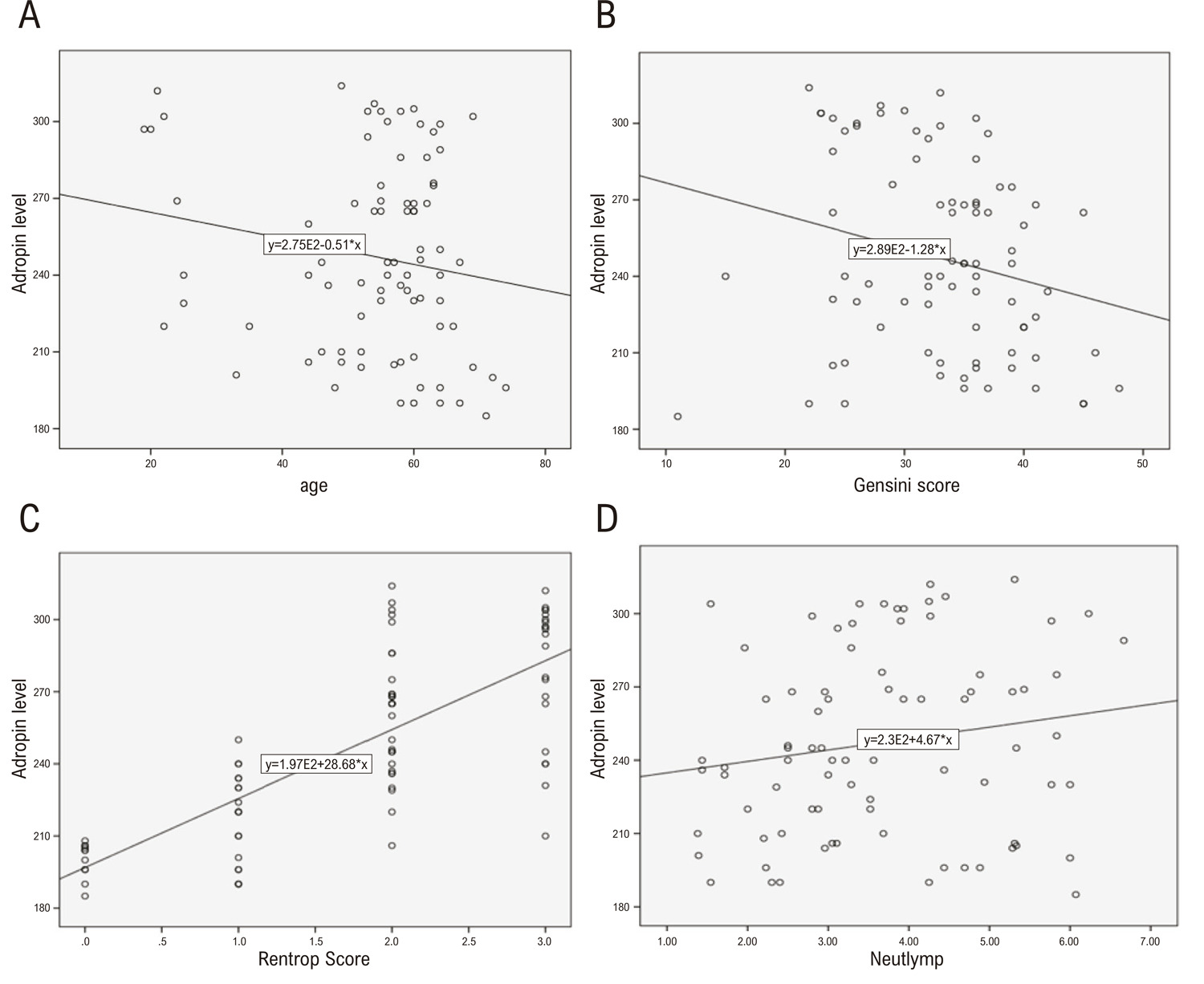
Mean adropine levels were found as 210.83±17.76 pg/mL and 268.25±28.94 pg/mL in the poor and good CCC groups, respectively (p<0.001). Adropin levels proved to be positively correlated with neutrophil-to-lymphocyte ratios (r:0.17, p:0.04) and the rentrop scores (r:0.76, p<0.001), and negatively correlated with age (r:-0.23, p:0.01) and Gensini scores (r:-0.19, p:0.02). Adropin level is a strong independent predictor of good CCC development (OR:1.12, 95% CI:(1.06–1.18), p<0.001).

Conclusion

This study suggests that adropin levels may be a possible factor associated with the presence of CCC in CCS patients.
  • Acute coronary syndrome
  • Adropin
  • Atherosclerosis
  • Coronary Angiography
  • Coronary Artery Diseases
  • Coronary Collateral Circulation
  • Diagnostic Imaging
  • Peptides
Read Full Article
Creative Commons Attribution (CC BY) Creative Commons license
27/06/2022 DOI: 10.36660/abc.20210573 Views 1
ABC
Original Article

Percutaneous Coronary Intervention in Unprotected Left Main Coronary Artery Lesions

Douglas dos Santos Grion et al. Debora Carvalho Grion Igor Veiga Silverio Leonardo Shingu de Oliveira … Isabela Faria Larini Anna Victória Martins Juliana Moreira Marianne Machado Lissa Shizue Tateiwa Niekawa Adriana dos Santos Grion Cintia Magalhães Carvalho Grion

Abstract

Background

The advent of drug-eluting stents allowed the percutaneous coronary intervention to present safe results in lesions in the left main coronary artery.

Objectives

To analyze the results of the percutaneous treatment of unprotected left main coronary artery lesion with the use of intravascular ultrasound.

Methods

Study of consecutive case series carried out from January 2010 to December 2018. Clinical data were collected from patients as well as prognostic scores and data on coronary lesion. Low-grade residual lesion (less than 50%) on angiography and minimum luminal area greater than 6 mm2on intravascular ultrasound were considered successful. The adopted significance level was 5%.

Results

107 cases were analyzed. The multivessel lesion was predominant, with most (39.25%) of the lesions being found in three vessels in addition to the left main coronary artery. The SYNTAX score had a mean of 46.80 (SD: 22.95), and 70 (65.42%) patients had a SYNTAX score above 32 points. Angiographic success of percutaneous intervention was considered in 106 (99.06%) patients. The overall rate of major cardiac and cerebrovascular events in the hospital outcome was 6.54%, being similar in patients with SYNTAX score ≤ 32 (8.10%) and ≥ 33 (5.71%; p = 0.68).

Conclusions

Percutaneous intervention in cases of unprotected left main coronary artery lesion was safely performed and presented excellent results. Considerable angiographic success of treatment guided by intravascular ultrasound was achieved. The rate of major cardiac and cerebrovascular events was similar between patients at low and high risks.

  • Coronary Artery Diseases
  • Drug–Eluting Stents/trends
  • Myocardial Reperfusion
  • Percutaneous Coronary Intervention/methods
  • Ultrasonography, Interventional/methods
Read Full Article
Creative Commons Attribution (CC BY) Creative Commons license
14/06/2021 DOI: 10.36660/abc.20190653 Views 1
IJCS
Editorial

Elevated Lipoprotein(A) in Children and Adolescents: Early Identification is Key for Successful Intervention

Sergio Emanuel Kaiser

Over the last decades, numerous studies have demonstrated that elevated lipoprotein (Lp)(a) is a powerful and independent risk factor for coronary heart disease,, ischemic stroke, and calcific aortic stenosis. Even in patients treated with statins who achieve LDL-cholesterol goals below 70 mg/dL, elevated Lp(a) levels remain independently related to an increased risk of atherosclerotic events.

The LDL particle has a unique molecular structure, as exemplified by its covalent bond with an apolipoprotein(a) that bears resemblance to plasminogen and may well represent an evolutionary deviation of this well-known plasmin precursor. Lp(a) is synthesized by the liver and the amount of circulating particles in the bloodstream is almost exclusively determined by inheritance, leaving very little space for environmental influence. The distribution of Lp(a) levels in the population is highly skewed with approximately 80% of people exhibiting plasma concentrations below 50 mg/dL, and the remaining 20% with a wide range of values above that limit.

[…]

  • Adolescents
  • Aortic Stenosis
  • Atherosclerosis
  • Child
  • Coronary Artery Diseases
  • Lipoprotein(a)
  • Statins/therapeutic, use
Read Full Article
Creative Commons Attribution (CC BY) Creative Commons license
01/02/2021 DOI: 10.36660/ijcs.20200303
IJCS
Original Article

The Role of Cardiovascular Risk Factors and Risk Scoring Systems in Predicting Coronary Atherosclerosis

Suat Gormel et al. Uygar Cagdas Yuksel Murat Celik Salim Yasar … Erkan Yildirim Baris Bugan Yalcin Gokoglan Hasan Kutsi Kabul Salim Yasar Mustafa Köklü Cem Barçın

Abstract

Background

Comparative data on the performance of cardiovascular risk scoring systems (CRSSs) in patients with severe coronary artery disease (CAD) are lacking.

Objectives

To compare different CRSSs regarding their ability to discriminate patients with severe CAD.

Method

A total of 414 patients (297 men; 61.3±12.3 years of age) undergoing coronary angiography were enrolled and evaluated for major risk factors. Cardiovascular risk and risk category were defined for each patient using the Framingham, Systemic Coronary Risk Evaluation (SCORE), and Pooled Cohort Risk Assessment Equation (PCRAE) tools. Severe CAD was defined as ≥ 50% stenosis in at least one major coronary artery and/or previous coronary stenting or coronary artery bypass grafting. A p < 0.05 was considered statistically significant.

Results

Severe CAD was identified in 271 (65.4%) patients. The ROC curves of the 3 CRSSs for predicting severe CAD were compared and showed no significant difference: the area under the ROC curve was 0.727, 0.694, and 0.717 for the Framingham, SCORE, and PCRAE tools, respectively (p > 0.05). However, when individual patients were classified as having low, intermediate, or high cardiovascular risk, the rate of patients in the high-risk group was significantly different between the PCRAE, Framingham, and SCORE tools (73.4%, 27.5%, and 37.9%, respectively; p < 0.001).

Discussion

PCRAE had higher positive and negative predictive values for detecting severe CAD in high-risk patients than the Framingham and SCORE tools.

Conclusion

We can speculate that currently used CRSSs are not sufficient, and new scoring systems are needed. In addition, other risk factors, such as serum creatinine, should be considered in future CRSSs. Int J Cardiovasc Sci. 2020; [online].ahead print, PP.0-0

  • Atherosclerosis
  • Cardiovascular Diseases
  • Coronary Angiography
  • Coronary Artery Diseases
  • Diabetes Mellitus
  • Epidemiology
  • Heredity
  • Hypertension
  • Renal Insufficiency
  • Risk Factors
Read Full Article
Creative Commons Attribution (CC BY) Creative Commons license
06/11/2020 DOI: 10.36660/ijcs.20190134 Views 1
ABC
Original Article

Role of Interleukin-18 and the Thrombus Precursor Protein in Coronary Artery Disease

Carlos Scherr et al. Denilson Campos de Albuquerque Roberto Pozzan Kezia Ataide … Talita Ludmila Fernanda Blanco Claudio Martins Mangia

Abstract

Background

Coronary failure is the leading cause of death worldwide and identifying patients at higher risk for coronary artery disease (CAD) is a challenge.

Objectives

To test the biomarkers interleukin 18 (IL-18) and thrombus precursor protein (TpP), involved in atherogenesis, to aid in the early assessment of CAD.

Methods

This was a cross-sectional cohort of 119 patients, stratified into three groups: Group I – acute coronary syndrome (39); Group II – chronic CAD (40) and Group III – control, without coronary lesion, but who might have risk factors for CAD (40). Statistical analysis was performed using the statistical program SPSS (Statistical Package for the Social Sciences) for Windows ,version 17.0 of 2008. The significance level was set at 0.05 or 5% (p <0.05), with a 95% confidence interval. Chi-square test (χ2), Analysis of variance (ANOVA), and Tukey’s test were used.

Results

The mean age was 60.36 ± 9.64 years; there was a prevalence of females in Group III (65.0% p = 0.002), but without statistical significance for the means of IL-18 and TpP. The means of IL-18 and TpP were increased in Group I when compared to the other groups; IL-18 = 1325.44 ± 1860.13 ng/dL, p = 0.002; TpP = 35.86 ± 28.36 µg / mL, p <0.001). When compared two-by-two, it was observed that Group I had higher mean IL-18 and TpP values than Group II (IL-18 = 353.81 ± 273.65 ng / dL; TpP = 25.66 ± 12, 17 µg / mL) and Group III (IL-18 = 633.25 ± 993.93 ng / dL; TpP = 18.00 ± 8.45 µg / mL).

Conclusion

There was an increase in these biomarkers in acute CAD, suggesting a relationship with the atherosclerotic plaque instability process, but not with the chronic phase. (Arq Bras Cardiol. 2020; 114(4):692-698)

  • Acute Coronary Syndrome/prevention and control
  • Biomarkers
  • Cardiovascular Diseases, mortality
  • Coronary Artery Diseases
  • Interleukin-18
Read Full Article
Creative Commons Attribution (CC BY) Creative Commons license
29/05/2020 DOI: 10.36660/abc.20190176 Views 1
Figure 1
IJCS
Original Article

Performance of a Hematological Scoring System in Predicting All-Cause Mortality in Patients with Acute Myocardial Infarction

José Gildo de Moura Monteiro Júnior et al. Dilênia de Oliveira Cipriano Torres Maria Cleide Freire Clementino da Silva Tácio Rian Nogueira Príncipe … Rhayssa Barbosa de Vasconcelos Maria Eduarda Cavalcanti de Brito Maria Alice Aquino Limeira Ana Célia Oliveira dos Santos Ulisses Ramos Montarroyos Dário Celestino Sobral Filho

Abstract

Background:

The presence of nucleated red blood cells (NRBCs) and increases in mean platelet volume (MPV) and neutrophil to lymphocyte ratio (NLR) in peripheral circulation are associated with poorer prognosis in patients with acute coronary disease.

Objective:

We developed a scoring system for in-hospital surveillance of all-cause mortality using hematological laboratory parameters in patients with acute myocardial infarction (AMI).

Methods:

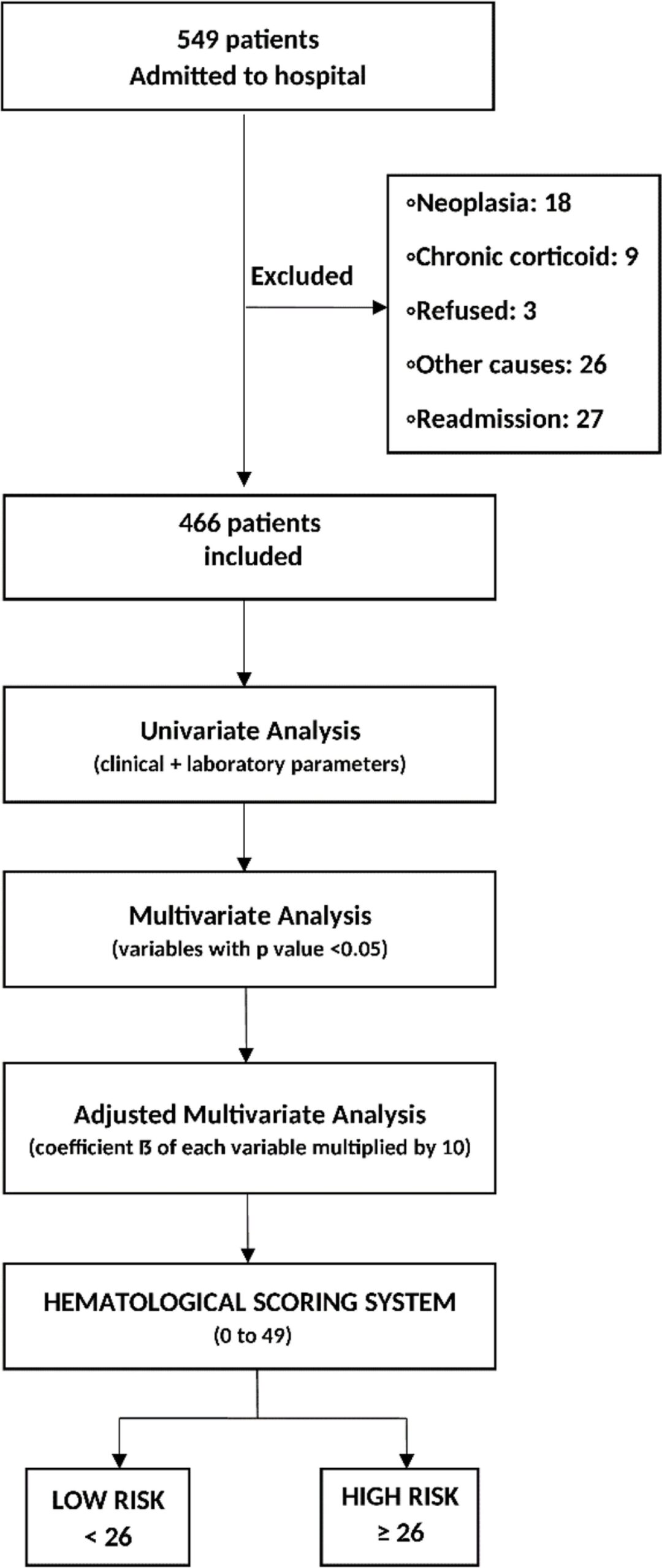
Patients admitted for AMI were recruited in this prospective study. Exclusion criteria were age younger than 18 years, glucocorticoid therapy, cancer or hematological diseases and readmissions. NRBCs, MPV and NLR were measured during hospitalization. The scoring system was developed in three steps: first, the magnitude of the association of clinical and laboratory parameters with in-hospital mortality was measured by odds ratio (OR), second, a multivariate logistic regression model was conducted with all variables significantly (p < 0.05) associated with the outcome, and third, a β-coefficient was estimated by multivariate logistic regression with hematological parameters with a p < 0.05.

Results:

A total of 466 patients (mean age were 64.2 ± 12.8 years, 61.6% male) were included in this study. A hematological scoring system ranging from 0 to 49, where higher values were associated with higher risk of in-hospital death. The best performance was registered for a cut-off value of 26 with sensitivity of 89.1% and specificity of 67.2%, positive predictive value of 26.8% (95% CI: 0.204 – 0.332) and negative predictive value of 97.9% (95% CI: 0.962 – 0.996). The area under the curve for the scoring system was 0.868 (95% CI: 0.818 – 0.918).

Conclusions:

Here we propose a hematological scoring system for surveillance tool during hospitalization of patients with acute myocardial infarction. Based on total blood count parameters, the instrument can evaluate inflammation and hypoxemia due to in-hospital complications and, consequently, predict in-hospital mortality.

  • Coronary Artery Diseases
  • Mean Platelet Volume
  • Mortality
  • Myocardial Infarction
  • neutrophil-to-lymphocyte ratio
  • Nucleated Red Blood Cells
  • Scoring System
  • Severity of Illness Index
Read Full Article
Creative Commons Attribution (CC BY) Creative Commons license
03/02/2020 DOI: 10.36660/ijcs.20190094
ABC
Editorial

Synergy of Rapamycin and Cyanoacrylate in Reducing Intimal Hyperplasia

Marcia Kiyomi Koike

Myocardial revascularization (CABG) surgery remains one of the main therapies for coronary disease. However, vascular disease that follows CABG remains a challenge to medicine. The mechanical, molecular and cellular changes undergone by the venous vascular graft when inserted into the coronary artery flow culminate in thrombosis, intimal hyperplasia, and atherosclerotic process, and end with restenosis.,

CABG experimental models were crucial to the understanding of mechanisms present in the course of vascular disease. The vascular graft model with anastomosis of the external jugular vein with the carotid artery represents an experimental model of vascular disease similar to that occurring after CABG. Pigs, rabbits, and rats may be used in this model because of protocol reproducibility, cost, and benefit.,

[…]

  • Cianoacrilates
  • Coronary Artery Diseases
  • Hyperplasia
  • Imunosupressive Agents
  • Myocardial Revascularization
  • Rats
  • Vascular Diseases
Read Full Article
Creative Commons Attribution (CC BY) Creative Commons license
01/01/2019 DOI: 10.5935/abc.20180269
Figure 1
IJCS
Original Article

Temporal Evaluation of Coronary Revascularization Procedures Performed through the Unified Health System (SUS) in Brazil: a 20-year overview

Igor Ribeiro de Castro Bienert et al. Alexandre Rodrigues Érika Airi Harada Karoline Lopes Silva … Amanda Ribeiro Valente Paulo André da Silva Joao Carlos Moron Saes Braga Fabio Salerno Rinaldi Fábio Villaça Guimarães Filho Pedro Beraldo de Andrade

Abstract

Introduction:

The mortality rates associated with coronary atherosclerotic disease (CAD) have been declining over the past decades driven, in part, by advances in revascularization techniques.

Objective:

The aim of this study was to provide an overview of the past 20 years in the treatment of CAD delivered by the Brazilian Unified Health Care System (SUS).

Methods:

The data were obtained from SUS’s TABNET and SIGTAP systems and IBGE. The procedures were grouped into the categories percutaneous, surgical, and primary percutaneous revascularizations. The analysis included the number of hospital admission authorizations (AIH), mean length of hospital stay, in-hospital mortality, mean total amount paid by procedure, and mean values paid per AIH and for professional and hospital services.

Results:

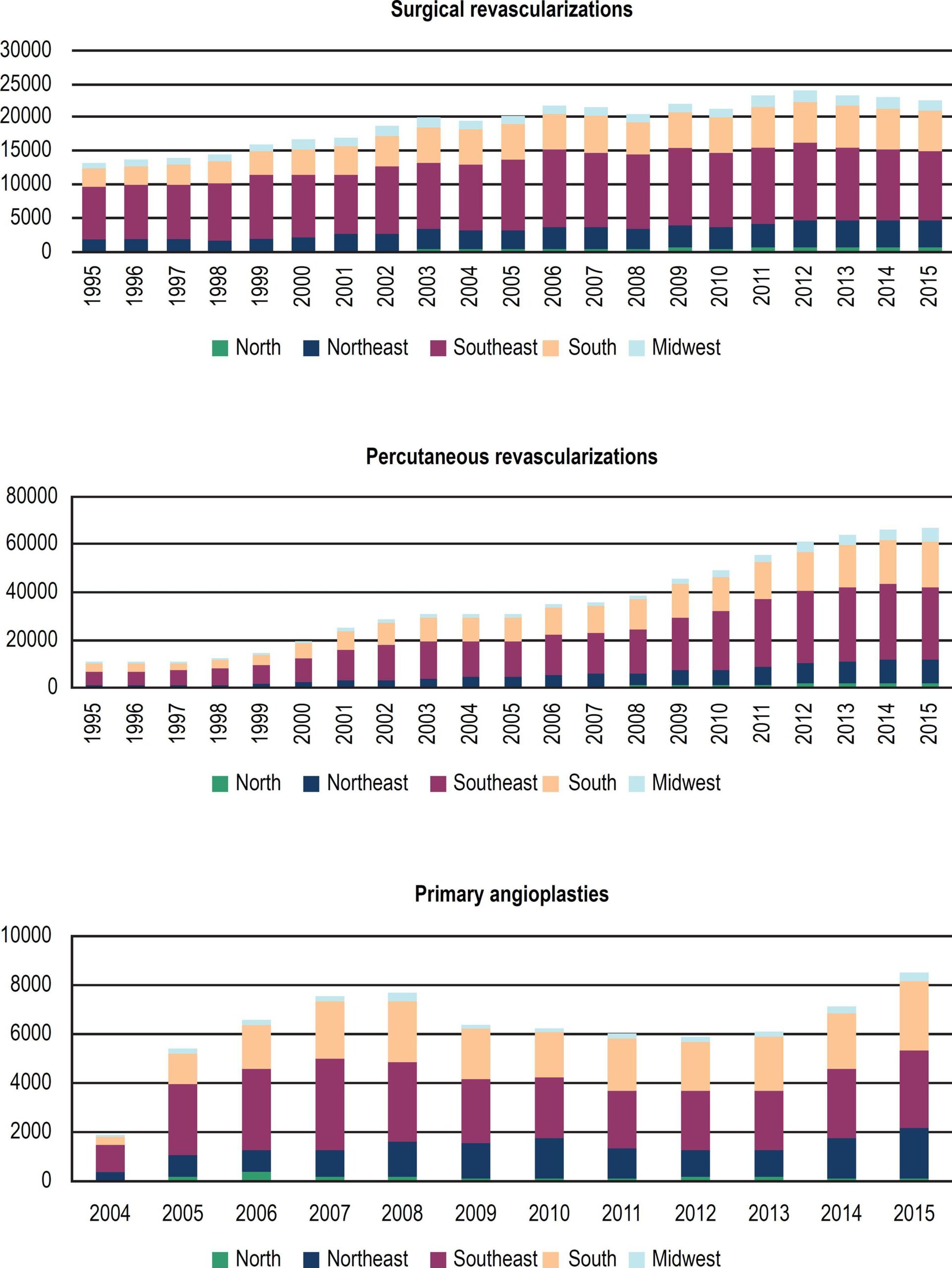
Between 1995 and 2015, there were increases in the number of surgical revascularizations (from 13,198 to 22,559) and percutaneous revascularizations (from 10,522 to 66,345). Similarly, the number of primary angioplasties increased between 2004 and 2015 (from 1,901 to 8,524). There was a decrease in the mean length of hospital stay (from 14.4 to 12.8 days) and hospital mortality (from 7.6% to 5.9%) for surgical revascularizations, and decrease in mean length of hospital stay (from 5.3 days to 3.7 days) but maintenance of the mortality rates (2.2%) for percutaneous revascularizations. In primary angioplasties, the mean length of hospital stay varied from 5.3 to 5.6 days and the mortality rate varied from 7.94% to 7.43% between 2004 and 2015, respectively. The mean total amount paid for surgical revascularization varied from R$ 4,327.57 to $12,839.13 and for percutaneous revascularizations from R$ 2,615.81 to $6,187.87 between 1995 and 2015, respectively. Corresponding values for primary angioplasties were R$ 5,415.58 in 2004 to R$ 6,581.51 in 2015.

Conclusions:

The number of revascularization procedures increased in Brazil over the past 20 years, with an improvement in mortality rates and decrease in length of hospital stay. There was a substantial lag in economic values relative to the inflation accumulated during the period.

  • Angioplasty, Balloon, Coronary
  • Coronary Artery Diseases
  • Health Care Costs
  • Myocardial Revascularization
  • Unified Health System
Read Full Article
Creative Commons Attribution (CC BY) Creative Commons license
01/01/2017 DOI: 10.5935/2359-4802.20170080 Views 1
Figure 1
ABC
Original Article

A Novel Algorithm to Quantify Coronary Remodeling Using Inferred Normal Dimensions

Breno A. A. Falcão et al. João Luiz A. A. Falcão Gustavo R. Morais Rafael C. Silva … Augusto C. Lopes Paulo R. Soares José Mariani Jr Roberto Kalil-Filho Elazer R. Edelman Pedro A. Lemos

Background:

Vascular remodeling, the dynamic dimensional change in face of stress, can assume different directions as well as magnitudes in atherosclerotic disease. Classical measurements rely on reference to segments at a distance, risking inappropriate comparison between dislike vessel portions.

Objective:

to explore a new method for quantifying vessel remodeling, based on the comparison between a given target segment and its inferred normal dimensions.

Methods:

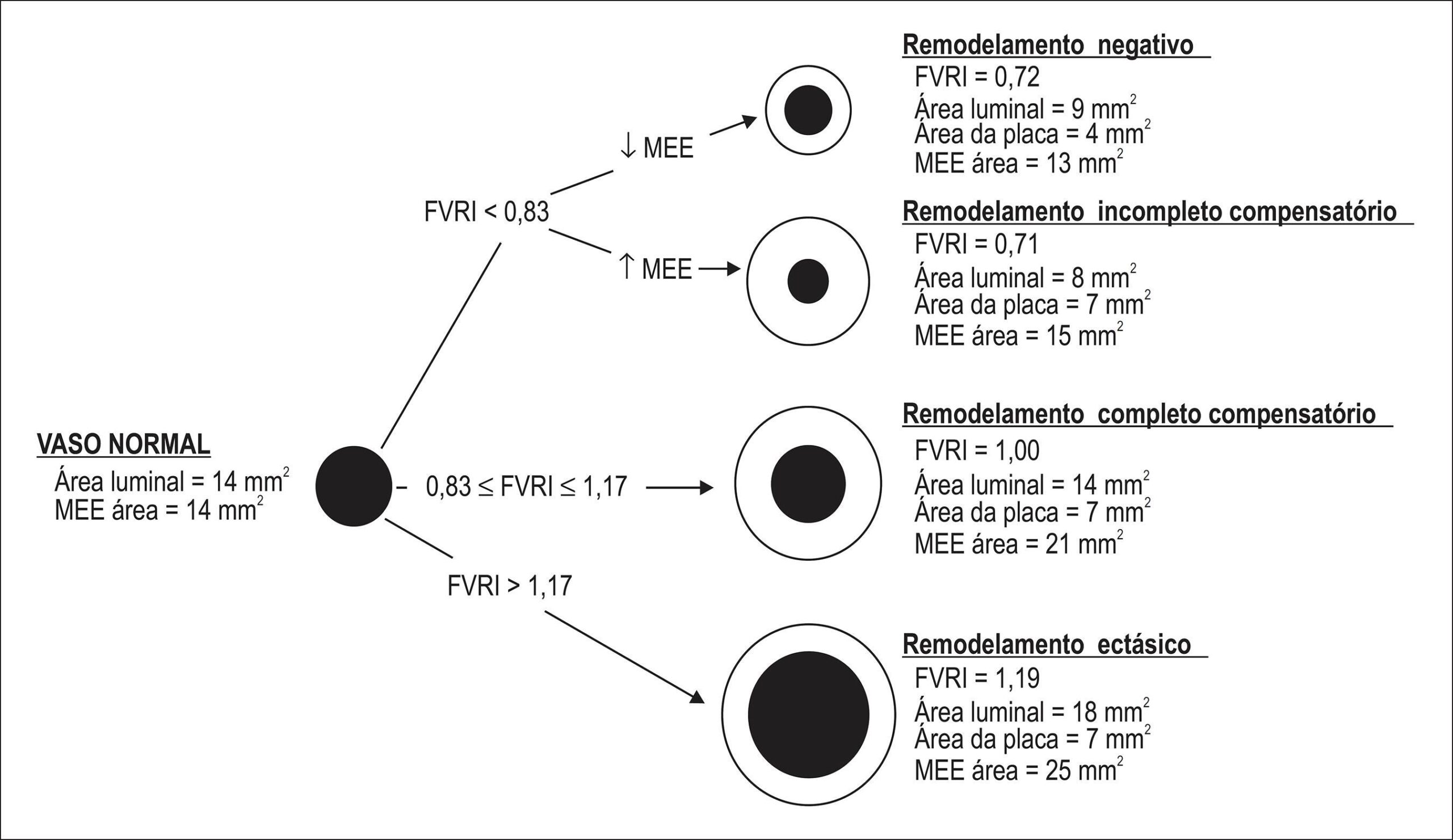
Geometric parameters and plaque composition were determined in 67 patients using three-vessel intravascular ultrasound with virtual histology (IVUS-VH). Coronary vessel remodeling at cross-section (n = 27.639) and lesion (n = 618) levels was assessed using classical metrics and a novel analytic algorithm based on the fractional vessel remodeling index (FVRI), which quantifies the total change in arterial wall dimensions related to the estimated normal dimension of the vessel. A prediction model was built to estimate the normal dimension of the vessel for calculation of FVRI.

Results:

According to the new algorithm, “Ectatic” remodeling pattern was least common, “Complete compensatory” remodeling was present in approximately half of the instances, and “Negative” and “Incomplete compensatory” remodeling types were detected in the remaining. Compared to a traditional diagnostic scheme, FVRI-based classification seemed to better discriminate plaque composition by IVUS-VH.

Conclusion:

Quantitative assessment of coronary remodeling using target segment dimensions offers a promising approach to evaluate the vessel response to plaque growth/regression.

  • Atherosclerosis / physiopathology
  • Coronary Artery Diseases
  • Neovascularization, Pathologic
  • Ultrasonography
  • Vascular Remodeling
Read Full Article
Creative Commons Attribution (CC BY) Creative Commons license
18/08/2015 DOI: 10.5935/abc.20150098 Views 4
ABC
Artigo Original

Coronary artery disease and experiences of losses

Rachel Jurkiewicz et al. Bellkiss Wilma Romano

BACKGROUND: In literature, depression is associated with cardiovascular diseases. From clinical experience, we observed that the psychological category “experience of loss” was associated with the onset and development of coronary heart disease. The experience of loss caused by self-reported significant event(s) leads to grief and the psychosocial factors which predispose the patient to diseases. OBJECTIVE: To study the impact of the experience of loss by investigating the relationship between mourning and depression, in hospitalized patients with coronary heart disease. METHODS: 44 inpatients (50% men and 50% women, aged 33 to 65 years), with a diagnosis of acute myocardial infarction or angina, were evaluated. Two instruments were used: a semi-structured interview, for investigating the experience of loss and evaluating the state of grief; and the Beck Depression Inventory, for measuring the severity of depression. The results were expressed using the computer program Statistical Package for Social Sciences version 11.0. RESULTS: 66% of the patients were in mourning, the relationship between mourning and depression was significant (p<0,05), and we verified that 100% of the patients who had serious depression were in mourning. The most frequent self-reported significant event was death of a family member (47%) and death of a close person (13%), totaling 60% of the events, reported by 84% of the participants. According to the results of Beck Depression Inventory, 48% of them had depression. CONCLUSION: This study suggests that the psychological category "experience of loss" should be used as an indicator of the existence of psychological factors that could predispose the patient to CAD, and also confirms the relationship between a state of mourning and depression.

  • affective symptoms
  • Coronary Artery Diseases
  • Depression
  • Inpatients
Read Full Article
Creative Commons Attribution (CC BY) Creative Commons license
24/11/2009 DOI: 10.1590/S0066-782X2009001000007

How to cite this article

EndNote RIS

Electronic Document Format (Vancouver)

Akkaya H, Güntürk EE, Akkaya F, Karabıyık U, Güntürk , Yılmaz S. Assessment of the Relationship Between the Adropin Levels and the Coronary Collateral Circulation in Patients wıth Chronic Coronary Syndrome. Arquivos Brasileiros de Cardiologia 2022;119(3):402-10.

Electronic Document Format (ABNT)

Akkaya, Hasan; Güntürk, Ertuğrul Emre; Akkaya, Fulya; Karabıyık, Uğur; Güntürk, İnayet; Yılmaz, Samet. Assessment of the Relationship Between the Adropin Levels and the Coronary Collateral Circulation in Patients wıth Chronic Coronary Syndrome. Arquivos Brasileiros de Cardiologia, v. 119, n. 3, p. 402-410, Jun. 2022.

Electronic Document Format (APA)

Akkaya, H., Güntürk, E. E., Akkaya, F., Karabıyık, U., Güntürk, , & Yılmaz, S. (2022). Assessment of the Relationship Between the Adropin Levels and the Coronary Collateral Circulation in Patients wıth Chronic Coronary Syndrome. Arquivos Brasileiros de Cardiologia, 119(3), 402-410.

Electronic Document Format (ISO)

Akkaya, Hasan and Güntürk, Ertuğrul Emre and Akkaya, Fulya and Karabıyık, Uğur and Güntürk, İnayet and Yılmaz, Samet. Assessment of the Relationship Between the Adropin Levels and the Coronary Collateral Circulation in Patients wıth Chronic Coronary Syndrome. Arquivos Brasileiros de Cardiologia [online]. 2022, vol. 119, n. 3, [cited 2026-10-14], pp. 402-410. Available from: <https://journals.cardiol.br/en/article/assessment-of-the-relationship-between-the-adropin-levels-and-the-coronary-collateral-circulation-in-patients-with-chronic-coronary-syndrome/>. ISSN 0066-782X

EndNote RIS

Electronic Document Format (Vancouver)

Grion DS, Grion DC, Silverio IV, Oliveira LS, Larini IF, Martins AV, Moreira J, et al. Percutaneous Coronary Intervention in Unprotected Left Main Coronary Artery Lesions. Arquivos Brasileiros de Cardiologia 2021;116(6):1101-8.

Electronic Document Format (ABNT)

Grion, Douglas dos Santos; Grion, Debora Carvalho; Silverio, Igor Veiga; Oliveira, Leonardo Shingu de; Larini, Isabela Faria; Martins, Anna Victória; Moreira, Juliana; Machado, Marianne; Niekawa, Lissa Shizue Tateiwa; Grion, Adriana dos Santos; Grion, Cintia Magalhães Carvalho. Percutaneous Coronary Intervention in Unprotected Left Main Coronary Artery Lesions. Arquivos Brasileiros de Cardiologia, v. 116, n. 6, p. 1101-1108, Jun. 2021.

Electronic Document Format (APA)

Grion, D. S., Grion, D. C., Silverio, I. V., Oliveira, L. S. , Larini, I. F., Martins, A. V., Moreira, J., Machado, M., Niekawa, L. S. T., Grion, A. S., & Grion, C. M. C. (2021). Percutaneous Coronary Intervention in Unprotected Left Main Coronary Artery Lesions. Arquivos Brasileiros de Cardiologia, 116(6), 1101-1108.

Electronic Document Format (ISO)

Grion, Douglas dos Santos and Grion, Debora Carvalho and Silverio, Igor Veiga and Oliveira, Leonardo Shingu de and Larini, Isabela Faria and Martins, Anna Victória and Moreira, Juliana and Machado, Marianne and Niekawa, Lissa Shizue Tateiwa and Grion, Adriana dos Santos and Grion, Cintia Magalhães Carvalho. Percutaneous Coronary Intervention in Unprotected Left Main Coronary Artery Lesions. Arquivos Brasileiros de Cardiologia [online]. 2021, vol. 116, n. 6, [cited 2026-10-14], pp. 1101-1108. Available from: <https://journals.cardiol.br/en/article/percutaneous-coronary-intervention-in-unprotected-left-main-coronary-artery-lesions/>. ISSN 0066-782X

EndNote RIS

Electronic Document Format (Vancouver)

Kaiser SE. Elevated Lipoprotein(A) in Children and Adolescents: Early Identification is Key for Successful Intervention. International Journal of Cardiovascular Sciences 2021;34(1):19-20.

Electronic Document Format (ABNT)

Kaiser, Sergio Emanuel. Elevated Lipoprotein(A) in Children and Adolescents: Early Identification is Key for Successful Intervention. International Journal of Cardiovascular Sciences, v. 34, n. 1, p. 19-20, Jan. 2021.

Electronic Document Format (APA)

Kaiser, S. E. (2021). Elevated Lipoprotein(A) in Children and Adolescents: Early Identification is Key for Successful Intervention. International Journal of Cardiovascular Sciences, 34(1), 19-20.

Electronic Document Format (ISO)

Kaiser, Sergio Emanuel. Elevated Lipoprotein(A) in Children and Adolescents: Early Identification is Key for Successful Intervention. International Journal of Cardiovascular Sciences [online]. 2021, vol. 34, n. 1, [cited 2026-10-14], pp. 19-20. Available from: <https://journals.cardiol.br/en/article/elevated-lipoproteina-in-children-and-adolescents-early-identification-is-key-for-successful-intervention/>. ISSN 2359-4802

EndNote RIS

Electronic Document Format (Vancouver)

Gormel S, Yuksel UC, Celik M, Yasar S, Yildirim E, Bugan B, Gokoglan Y, et al. The Role of Cardiovascular Risk Factors and Risk Scoring Systems in Predicting Coronary Atherosclerosis. International Journal of Cardiovascular Sciences 2020;34(1):32-8.

Electronic Document Format (ABNT)

Gormel, Suat; Yuksel, Uygar Cagdas; Celik, Murat; Yasar, Salim; Yildirim, Erkan; Bugan, Baris; Gokoglan, Yalcin; Kabul, Hasan Kutsi; Yasar, Salim; Köklü, Mustafa; Barçın, Cem. The Role of Cardiovascular Risk Factors and Risk Scoring Systems in Predicting Coronary Atherosclerosis. International Journal of Cardiovascular Sciences, v. 34, n. 1, p. 32-38, Nov. 2020.

Electronic Document Format (APA)

Gormel, S., Yuksel, U. C., Celik, M., Yasar, S., Yildirim, E., Bugan, B., Gokoglan, Y., Kabul, H. K., Yasar, S., Köklü, M., & Barçın, C. (2020). The Role of Cardiovascular Risk Factors and Risk Scoring Systems in Predicting Coronary Atherosclerosis. International Journal of Cardiovascular Sciences, 34(1), 32-38.

Electronic Document Format (ISO)

Gormel, Suat and Yuksel, Uygar Cagdas and Celik, Murat and Yasar, Salim and Yildirim, Erkan and Bugan, Baris and Gokoglan, Yalcin and Kabul, Hasan Kutsi and Yasar, Salim and Köklü, Mustafa and Barçın, Cem. The Role of Cardiovascular Risk Factors and Risk Scoring Systems in Predicting Coronary Atherosclerosis. International Journal of Cardiovascular Sciences [online]. 2020, vol. 34, n. 1, [cited 2026-10-14], pp. 32-38. Available from: <https://journals.cardiol.br/en/article/the-role-of-cardiovascular-risk-factors-and-risk-scoring-systems-in-predicting-coronary-atherosclerosis/>. ISSN 2359-4802

EndNote RIS

Electronic Document Format (Vancouver)

Scherr C, Albuquerque DC, Pozzan R, Ataide K, Ludmila T, Blanco F, Mangia CM, et al. Role of Interleukin-18 and the Thrombus Precursor Protein in Coronary Artery Disease. Arquivos Brasileiros de Cardiologia 2020;114(4):692-8.

Electronic Document Format (ABNT)

Scherr, Carlos; Albuquerque, Denilson Campos de; Pozzan, Roberto; Ataide, Kezia; Ludmila, Talita; Blanco, Fernanda; Mangia, Claudio Martins. Role of Interleukin-18 and the Thrombus Precursor Protein in Coronary Artery Disease. Arquivos Brasileiros de Cardiologia, v. 114, n. 4, p. 692-698, May. 2020.

Electronic Document Format (APA)

Scherr, C., Albuquerque, D. C. , Pozzan, R., Ataide, K., Ludmila, T., Blanco, F., & Mangia, C. M. (2020). Role of Interleukin-18 and the Thrombus Precursor Protein in Coronary Artery Disease. Arquivos Brasileiros de Cardiologia, 114(4), 692-698.

Electronic Document Format (ISO)

Scherr, Carlos and Albuquerque, Denilson Campos de and Pozzan, Roberto and Ataide, Kezia and Ludmila, Talita and Blanco, Fernanda and Mangia, Claudio Martins. Role of Interleukin-18 and the Thrombus Precursor Protein in Coronary Artery Disease. Arquivos Brasileiros de Cardiologia [online]. 2020, vol. 114, n. 4, [cited 2026-10-14], pp. 692-698. Available from: <https://journals.cardiol.br/en/article/role-of-interleukin-18-and-the-thrombus-precursor-protein-in-coronary-artery-disease/>. ISSN 0066-782X

EndNote RIS

Electronic Document Format (Vancouver)

Monteiro Júnior JGM, Torres DOC, Silva MCFC, Príncipe TRN, Vasconcelos RB, Brito MEC, Limeira MAA, et al. Performance of a Hematological Scoring System in Predicting All-Cause Mortality in Patients with Acute Myocardial Infarction. International Journal of Cardiovascular Sciences 2020;33(4):380-8.

Electronic Document Format (ABNT)

Monteiro Júnior, José Gildo de Moura; Torres, Dilênia de Oliveira Cipriano; Silva, Maria Cleide Freire Clementino da; Príncipe, Tácio Rian Nogueira; Vasconcelos, Rhayssa Barbosa de; Brito, Maria Eduarda Cavalcanti de; Limeira, Maria Alice Aquino; Santos, Ana Célia Oliveira dos; Montarroyos, Ulisses Ramos; Sobral Filho, Dário Celestino. Performance of a Hematological Scoring System in Predicting All-Cause Mortality in Patients with Acute Myocardial Infarction. International Journal of Cardiovascular Sciences, v. 33, n. 4, p. 380-388, Feb. 2020.

Electronic Document Format (APA)

Monteiro Júnior, J. G. M., Torres, D. O. C., Silva, M. C. F. C. , Príncipe, T. R. N., Vasconcelos, R. B. , Brito, M. E. C. , Limeira, M. A. A., Santos, A. C. O. , Montarroyos, U. R., & Sobral Filho, D. C. (2020). Performance of a Hematological Scoring System in Predicting All-Cause Mortality in Patients with Acute Myocardial Infarction. International Journal of Cardiovascular Sciences, 33(4), 380-388.

Electronic Document Format (ISO)

Monteiro Júnior, José Gildo de Moura and Torres, Dilênia de Oliveira Cipriano and Silva, Maria Cleide Freire Clementino da and Príncipe, Tácio Rian Nogueira and Vasconcelos, Rhayssa Barbosa de and Brito, Maria Eduarda Cavalcanti de and Limeira, Maria Alice Aquino and Santos, Ana Célia Oliveira dos and Montarroyos, Ulisses Ramos and Sobral Filho, Dário Celestino. Performance of a Hematological Scoring System in Predicting All-Cause Mortality in Patients with Acute Myocardial Infarction. International Journal of Cardiovascular Sciences [online]. 2020, vol. 33, n. 4, [cited 2026-10-14], pp. 380-388. Available from: <https://journals.cardiol.br/en/article/performance-of-a-hematological-scoring-system-in-predicting-all-cause-mortality-in-patients-with-acute-myocardial-infarction/>. ISSN 2359-4802

EndNote RIS

Electronic Document Format (Vancouver)

Koike MK. Synergy of Rapamycin and Cyanoacrylate in Reducing Intimal Hyperplasia. Arquivos Brasileiros de Cardiologia 2019;112(1):11.

Electronic Document Format (ABNT)

Koike, Marcia Kiyomi. Synergy of Rapamycin and Cyanoacrylate in Reducing Intimal Hyperplasia. Arquivos Brasileiros de Cardiologia, v. 112, n. 1, p. 11-11, Dec. 2018.

Electronic Document Format (APA)

Koike, M. K. (2019). Synergy of Rapamycin and Cyanoacrylate in Reducing Intimal Hyperplasia. Arquivos Brasileiros de Cardiologia, 112(1), 11-11.

Electronic Document Format (ISO)

Koike, Marcia Kiyomi. Synergy of Rapamycin and Cyanoacrylate in Reducing Intimal Hyperplasia. Arquivos Brasileiros de Cardiologia [online]. 2019, vol. 112, n. 1, [cited 2026-10-14], pp. 11-11. Available from: <https://journals.cardiol.br/en/article/synergy-of-rapamycin-and-cyanoacrylate-in-reducing-intimal-hyperplasia/>. ISSN 0066-782X

EndNote RIS

Electronic Document Format (Vancouver)

Bienert IRC, Rodrigues A, Harada A, Silva KL, Valente AR, Silva PA, Braga JCMS, et al. Temporal Evaluation of Coronary Revascularization Procedures Performed through the Unified Health System (SUS) in Brazil: a 20-year overview. International Journal of Cardiovascular Sciences 2017;30(5):380-9.

Electronic Document Format (ABNT)

Bienert, Igor Ribeiro de Castro; Rodrigues, Alexandre; Harada, Érika Airi; Silva, Karoline Lopes; Valente, Amanda Ribeiro; Silva, Paulo André da; Braga, Joao Carlos Moron Saes; Rinaldi, Fabio Salerno; Guimarães Filho, Fábio Villaça; Andrade, Pedro Beraldo de. Temporal Evaluation of Coronary Revascularization Procedures Performed through the Unified Health System (SUS) in Brazil: a 20-year overview. International Journal of Cardiovascular Sciences, v. 30, n. 5, p. 380-390, Dec. 2016.

Electronic Document Format (APA)

Bienert, I. R. C., Rodrigues, A., Harada, A., Silva, K. L., Valente, A. R., Silva, P. A. , Braga, J. C. M. S., Rinaldi, F. S., Guimarães Filho, F. V., & Andrade, P. B. (2017). Temporal Evaluation of Coronary Revascularization Procedures Performed through the Unified Health System (SUS) in Brazil: a 20-year overview. International Journal of Cardiovascular Sciences, 30(5), 380-390.

Electronic Document Format (ISO)

Bienert, Igor Ribeiro de Castro and Rodrigues, Alexandre and Harada, Érika Airi and Silva, Karoline Lopes and Valente, Amanda Ribeiro and Silva, Paulo André da and Braga, Joao Carlos Moron Saes and Rinaldi, Fabio Salerno and Guimarães Filho, Fábio Villaça and Andrade, Pedro Beraldo de. Temporal Evaluation of Coronary Revascularization Procedures Performed through the Unified Health System (SUS) in Brazil: a 20-year overview. International Journal of Cardiovascular Sciences [online]. 2017, vol. 30, n. 5, [cited 2026-10-14], pp. 380-390. Available from: <https://journals.cardiol.br/en/article/temporal-evaluation-of-coronary-revascularization-procedures-performed-through-the-unified-health-system-sus-in-brazil-a-20-year-overview/>. ISSN 2359-4802

EndNote RIS

Electronic Document Format (Vancouver)

Falcão BAA, Falcão JLAA, Morais GR, Silva RC, Lopes AC, Soares PR, Mariani Jr J, et al. A Novel Algorithm to Quantify Coronary Remodeling Using Inferred Normal Dimensions. Arquivos Brasileiros de Cardiologia 2015;105(4):390-8.

Electronic Document Format (ABNT)

Falcão, Breno A. A.; Falcão, João Luiz A. A.; Morais, Gustavo R.; Silva, Rafael C.; Lopes, Augusto C.; Soares, Paulo R.; Mariani Jr, José; Kalil-Filho, Roberto; Edelman, Elazer R.; Lemos, Pedro A.. A Novel Algorithm to Quantify Coronary Remodeling Using Inferred Normal Dimensions. Arquivos Brasileiros de Cardiologia, v. 105, n. 4, p. 390-398, Aug. 2015.

Electronic Document Format (APA)

Falcão, B. A. A., Falcão, J. L. A. A., Morais, G. R., Silva, R. C., Lopes, A. C., Soares, P. R., Mariani Jr, J., Kalil-Filho, R., Edelman, E. R., & Lemos, P. A. (2015). A Novel Algorithm to Quantify Coronary Remodeling Using Inferred Normal Dimensions. Arquivos Brasileiros de Cardiologia, 105(4), 390-398.

Electronic Document Format (ISO)

Falcão, Breno A. A. and Falcão, João Luiz A. A. and Morais, Gustavo R. and Silva, Rafael C. and Lopes, Augusto C. and Soares, Paulo R. and Mariani Jr, José and Kalil-Filho, Roberto and Edelman, Elazer R. and Lemos, Pedro A.. A Novel Algorithm to Quantify Coronary Remodeling Using Inferred Normal Dimensions. Arquivos Brasileiros de Cardiologia [online]. 2015, vol. 105, n. 4, [cited 2026-10-14], pp. 390-398. Available from: <https://journals.cardiol.br/en/article/a-novel-algorithm-to-quantify-coronary-remodeling-using-inferred-normal-dimensions/>. ISSN 0066-782X

EndNote RIS

Electronic Document Format (Vancouver)

Jurkiewicz R, Romano BW. Coronary artery disease and experiences of losses. Arquivos Brasileiros de Cardiologia 2009;93(4):352-9.

Electronic Document Format (ABNT)

Jurkiewicz, Rachel; Romano, Bellkiss Wilma. Coronary artery disease and experiences of losses. Arquivos Brasileiros de Cardiologia, v. 93, n. 4, p. 352-359, Nov. 2009.

Electronic Document Format (APA)

Jurkiewicz, R., & Romano, B. W. (2009). Coronary artery disease and experiences of losses. Arquivos Brasileiros de Cardiologia, 93(4), 352-359.

Electronic Document Format (ISO)

Jurkiewicz, Rachel and Romano, Bellkiss Wilma. Coronary artery disease and experiences of losses. Arquivos Brasileiros de Cardiologia [online]. 2009, vol. 93, n. 4, [cited 2026-10-14], pp. 352-359. Available from: <https://journals.cardiol.br/en/article/coronary-artery-disease-and-experiences-of-losses/>. ISSN 0066-782X

  • About ABC Family
  • Internal Regulation
  • Editorial Board
  • Brazilian Society of Cardiology (SBC)

Issues

SBC Guidelines

  • Videos
  • Podcasts
  • News