ABC Family Arquivos Brasileiros de Cardiologia International Journal of Cardiovascular Sciences ABC Heart Failure & Cardiomyopathy ABC Imagem Cardiovascular
Português English
ABC Family
Português English
  • About
    • About ABC Family
    • Internal Regulation
    • Editorial Board
    • Brazilian Society of Cardiology (SBC)
  • Issues
  • SBC Guidelines
  • Content
    • Videos
    • Podcasts
    • News
  • About
    • About ABC Family
    • Internal Regulation
    • Editorial Board
    • Brazilian Society of Cardiology (SBC)
  • Issues
  • SBC Guidelines
  • Content
    • Videos
    • Podcasts
    • News

ABC Family

  • ABC Family
  • Arquivos Brasileiros de Cardiologia
  • International Journal of Cardiovascular Sciences
  • ABC Heart Failure & Cardiomyopathy
  • ABC Imagem Cardiovascular
Search in

No content found.

Journals
Ordering
Article types
Others

  1. Home
  2. Keyword: Peptides
Figure 1
ABC
Original Article

Assessment of the Relationship Between the Adropin Levels and the Coronary Collateral Circulation in Patients wıth Chronic Coronary Syndrome

Hasan Akkaya et al. Ertuğrul Emre Güntürk Fulya Akkaya Uğur Karabıyık … İnayet Güntürk Samet Yılmaz

Abstract

Background

Coronary collateral circulation (CCC) provides an alternative blood flow to myocardial tissue exposed to ischemia and helps to preserve myocardial functions. Endothelial-derived nitric-oxide (NO) production and vascular endothelial growth factor (VEGF) have been suggested as the most important factors in the development of CCC. Adropin is a peptide hormone responsible for energy hemostasis, and is known for its positive effects on the endothelium through NO and VEGF.

Objective

The aim of this study is to investigate the association between adropin and the presence of CCC in patients with chronic coronary syndrome (CCS).

Methods

A total of 102 patients with CCS, who had complete occlusion of at least one major epicardial coronary artery, were included in the study and were divided into two groups: the group of patients (n:50) with poor CCC (Rentrop 0-1) and the group of patients (n:52) with good CCC (Rentrop 2-3). The level of significance adopted in the statistical analysis was 5%.

Results

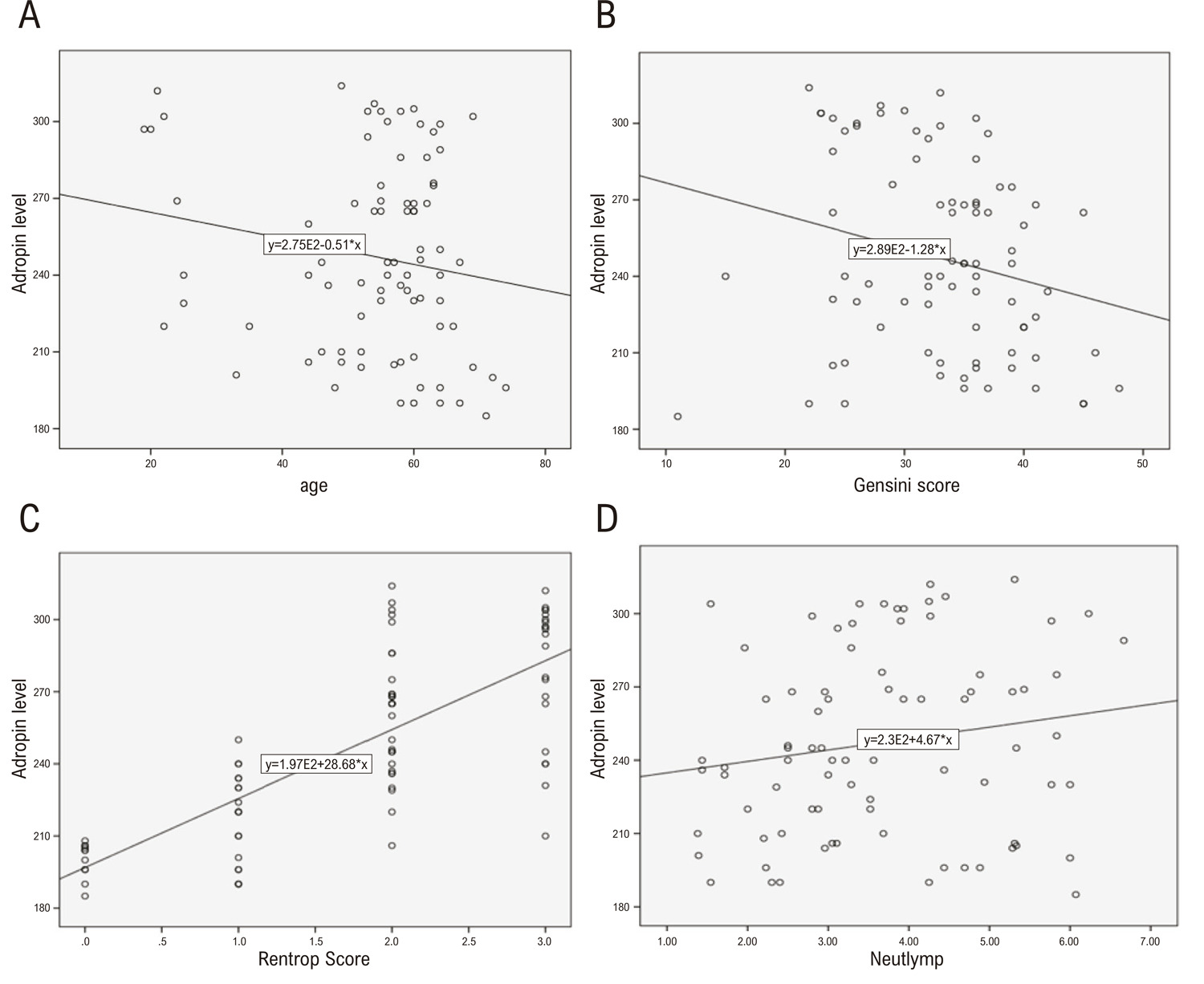
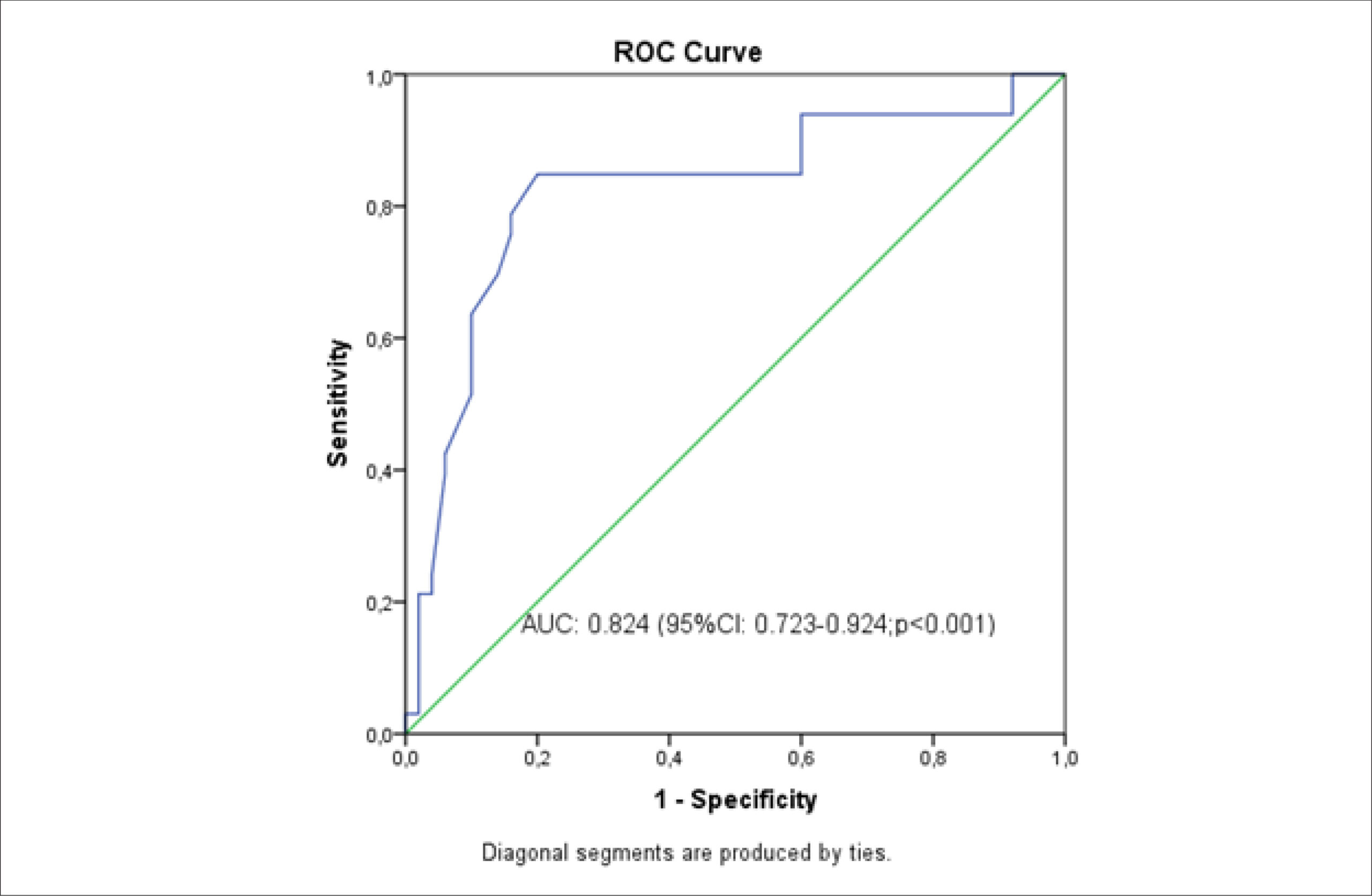
Mean adropine levels were found as 210.83±17.76 pg/mL and 268.25±28.94 pg/mL in the poor and good CCC groups, respectively (p<0.001). Adropin levels proved to be positively correlated with neutrophil-to-lymphocyte ratios (r:0.17, p:0.04) and the rentrop scores (r:0.76, p<0.001), and negatively correlated with age (r:-0.23, p:0.01) and Gensini scores (r:-0.19, p:0.02). Adropin level is a strong independent predictor of good CCC development (OR:1.12, 95% CI:(1.06–1.18), p<0.001).

Conclusion

This study suggests that adropin levels may be a possible factor associated with the presence of CCC in CCS patients.
  • Acute coronary syndrome
  • Adropin
  • Atherosclerosis
  • Coronary Angiography
  • Coronary Artery Diseases
  • Coronary Collateral Circulation
  • Diagnostic Imaging
  • Peptides
Read Full Article
Creative Commons Attribution (CC BY) Creative Commons license
27/06/2022 DOI: 10.36660/abc.20210573 Views 1
Figure 1
ABC
Original Article

Association Between Serum Elabela Levels and Chronic Totally Occlusion in Patients with Stable Angina Pectoris

Fethi Yavuz et al. Mehmet Kaplan

Abstract

Background:

The beneficial effects of Elabela on the cardiovascular system have been shown in studies.

Objective:

To compare serum Elabela levels of chronic total occlusion (CTO) patients with control patients with normal coronary arteries, and to investigate whether there is a correlation with collateral development.

Methods:

The study was planned cross-sectionally and prospectively. Fifty patients (28.0% female, mean age 61.6±7.3years) with CTO in at least one coronary vessel and 50 patients (38% female, mean age 60,7±6.38 years) with normal coronary arteries were included in the study. Patients in the CTO group were divided into two groups as Rentrop 0-1, those with weak collateral development, and Rentrop 2-3 with good collateral development. In addition to the age, sex, demographic characteristics and routine laboratory tests of the patients, Elabela levels were measured.

Results:

Demographic characteristics and laboratory values were similar in both groups. While the mean NT-proBNP and troponin were higher in the CTO group, the Elabela mean was lower (p <0.05 for all). In the multivariate regression analysis, NT-proBNP and Elabela levels were found to be independent predictors for CTO. Also, Elabela level was found to be statistically higher in Rentrop class 2-3 patients compared to Rentrop class 0-1 patients (p<0.05).

Conclusion:

In our study, we showed that the average Elabela level was low in CTO patients compared to normal patients. In addition, we found the level of Elabela to be lower in patients with weak collateral development compared to patients with good collateral development. (Arq Bras Cardiol. 2021; [online].ahead print, PP.0-0)

  • Angina Pectoris
  • Apelin
  • Chronic Total Occlusion
  • Colateral Circulation
  • Coronary Angiography
  • Coronary Occlusion
  • Elabela
  • Peptides
Read Full Article
Creative Commons Attribution (CC BY) Creative Commons license
31/05/2021 DOI: 10.36660/abc.20200492 Views 1
Figure 1
ABC
Original Article

Adropin and Irisin in Patients with Cardiac Cachexia

Ali Kemal Kalkan et al. Huseyin Altug Cakmak Mehmet Erturk Kübra Erol Kalkan … Fatih Uzun Omer Tasbulak Vesile Ornek Diker Suleyman Aydin Ahmet Celik

Abstract

Background:

Cardiac cachexia is an important predictive factor of the reduction in survival of patients with heart failure with reduced ejection fraction.

Objectives:

The aims of the present study were to evaluate adropin and irisin levels in cachectic and non-cachectic subjects and the relationships between the levels of these proteins and clinical and laboratory parameters in patients with HFrEF.

Methods:

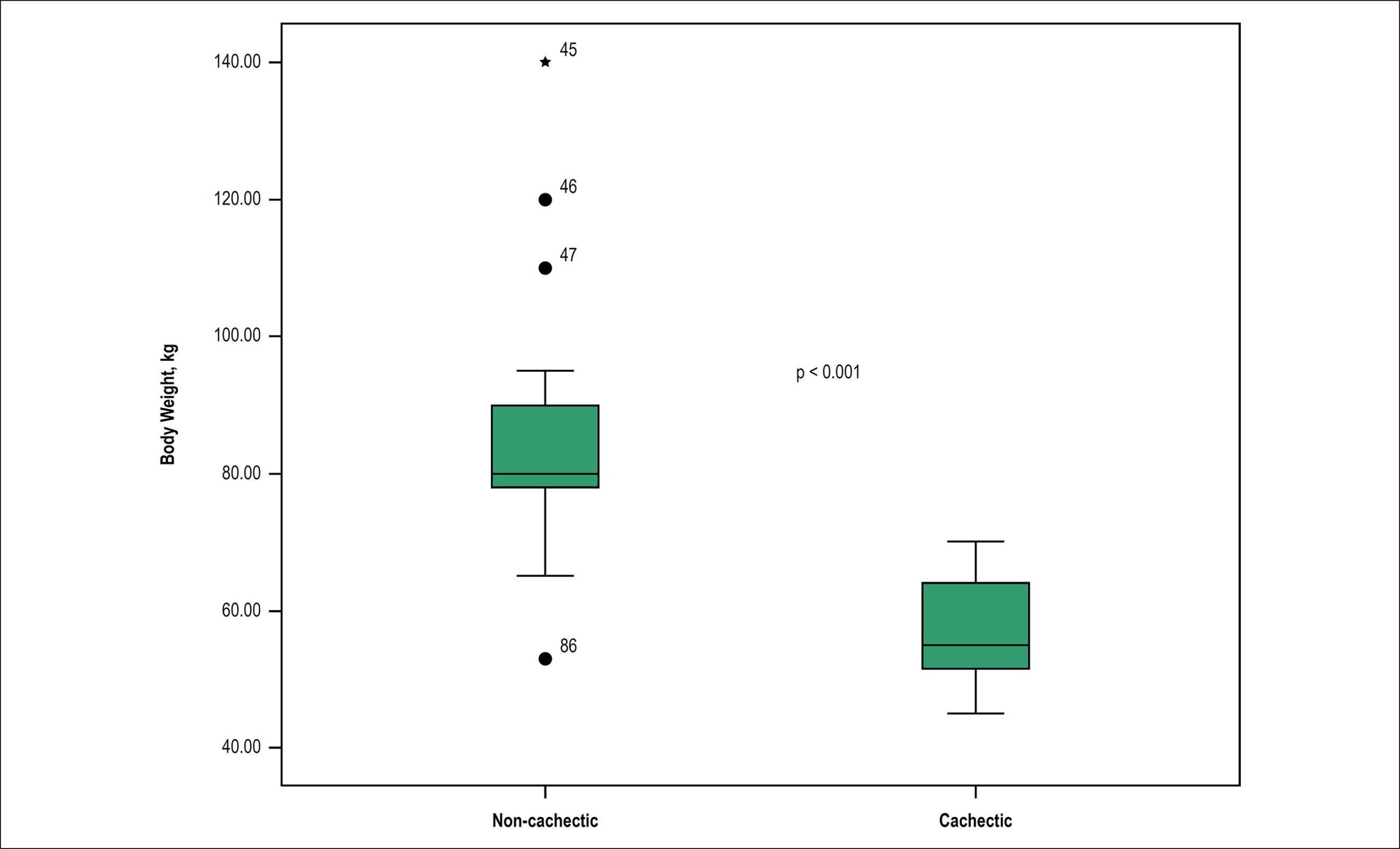
The clinical records of patients who were admitted to the cardiology outpatient clinic for heart failure with reduced ejection fraction were screened. Cachectic patients were identified and assigned to the study group (n = 44, mean age, 65.4 ± 11.2 y; 61.4% men). Heart failure with reduced ejection fraction patients without weight loss were enrolled as the control group (n = 42, mean age, 61.0 ± 16.5 y; 64.3% men). The serum adropin and irisin levels of all patients were measured. A p-value < 0.05 was considered significant.

Results:

Serum adropin and irisin levels were significantly higher in the cachexia group than in the controls (Adropin (ng/L); 286.1 (231.3-404.0) vs 213.7 (203.1-251.3); p < 0.001, Irisin (µg/mL); 2.6 (2.2-4.4) vs 2.1 (1.8-2.4); p = 0.001). Serum adropin and irisin levels were positively correlated with brain natriuretic peptide (BNP) levels and New York Heart Association (NYHA) class and negatively correlated with body mass index (BMI) and serum albumin levels (all p values: < 0.001). In a multivariate analysis, adropin was the only independent predictor of cachexia in the heart failure with reduced ejection fraction patients (OR: 1.021; 95% CI: 1.004−1.038; p = 0.017).

Conclusions:

The results suggest that adropin and irisin may be novel markers of cardiac cachexia in heart failure with reduced ejection fraction patients. Adropin and irisin are related with the severity of heart failure.

  • Adropin
  • Cachexia / complications
  • Heart Failure / physiopathology, Hypertrophy, Left Ventricular
  • Hormones
  • Peptides
  • Ventricular Function, Left
Read Full Article
Creative Commons Attribution (CC BY) Creative Commons license
02/07/2018 DOI: 10.5935/abc.20180109
The apelinergic system: the role played in human physiology and pathology and potential therapeutic applications
ABC
Review Article

The apelinergic system: the role played in human physiology and pathology and potential therapeutic applications

Ricardo Ladeiras-Lopes et al. João Ferreira-Martins Adelino F. Leite-Moreira

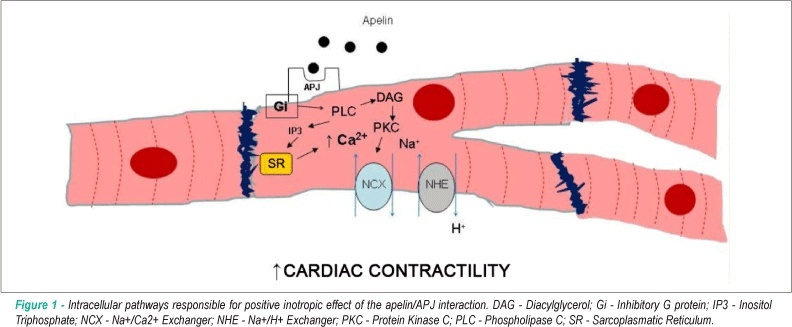
Apelin is a recently discovered peptide, identified as an endogenous ligand of receptor APJ. Apelin and receptor APJ are expressed in a wide variety of tissues including heart, brain, kidneys and lungs. Their interaction may have relevant pathophysiologic effects in those tissues. In fact, the last decade has been rich in illustrating the possible roles played by apelin in human physiology, namely as a regulating peptide of cardiovascular, hypothalamus-hypophysis, gastrointestinal, and immune systems. The possible involvement of apelin in the pathogenesis of high prevalence conditions and comorbidities – such as hypertension, heart failure, and Diabetes Mellitus Type 2 (T2DM) – rank it as a likely therapeutic target to be investigated in the future. The present paper is an overview of apelin physiologic effects and presents the possible role played by this peptide in the pathogenesis of a number of conditions as well as the therapeutic implications that might, therefore, be investigated.

  • apeline
  • cardiac output, low
  • Diabetes Mellitus
  • Hypertension
  • Peptides
Read Full Article
Creative Commons Attribution (CC BY) Creative Commons license
27/05/2008 DOI: 10.1590/S0066-782X2008000500012 Views 1

How to cite this article

EndNote RIS

Electronic Document Format (Vancouver)

Akkaya H, Güntürk EE, Akkaya F, Karabıyık U, Güntürk , Yılmaz S. Assessment of the Relationship Between the Adropin Levels and the Coronary Collateral Circulation in Patients wıth Chronic Coronary Syndrome. Arquivos Brasileiros de Cardiologia 2022;119(3):402-10.

Electronic Document Format (ABNT)

Akkaya, Hasan; Güntürk, Ertuğrul Emre; Akkaya, Fulya; Karabıyık, Uğur; Güntürk, İnayet; Yılmaz, Samet. Assessment of the Relationship Between the Adropin Levels and the Coronary Collateral Circulation in Patients wıth Chronic Coronary Syndrome. Arquivos Brasileiros de Cardiologia, v. 119, n. 3, p. 402-410, Jun. 2022.

Electronic Document Format (APA)

Akkaya, H., Güntürk, E. E., Akkaya, F., Karabıyık, U., Güntürk, , & Yılmaz, S. (2022). Assessment of the Relationship Between the Adropin Levels and the Coronary Collateral Circulation in Patients wıth Chronic Coronary Syndrome. Arquivos Brasileiros de Cardiologia, 119(3), 402-410.

Electronic Document Format (ISO)

Akkaya, Hasan and Güntürk, Ertuğrul Emre and Akkaya, Fulya and Karabıyık, Uğur and Güntürk, İnayet and Yılmaz, Samet. Assessment of the Relationship Between the Adropin Levels and the Coronary Collateral Circulation in Patients wıth Chronic Coronary Syndrome. Arquivos Brasileiros de Cardiologia [online]. 2022, vol. 119, n. 3, [cited 2026-10-14], pp. 402-410. Available from: <https://journals.cardiol.br/en/article/assessment-of-the-relationship-between-the-adropin-levels-and-the-coronary-collateral-circulation-in-patients-with-chronic-coronary-syndrome/>. ISSN 0066-782X

EndNote RIS

Electronic Document Format (Vancouver)

Yavuz F, Kaplan M. Association Between Serum Elabela Levels and Chronic Totally Occlusion in Patients with Stable Angina Pectoris. Arquivos Brasileiros de Cardiologia 2021;117(3):503-10.

Electronic Document Format (ABNT)

Yavuz, Fethi; Kaplan, Mehmet. Association Between Serum Elabela Levels and Chronic Totally Occlusion in Patients with Stable Angina Pectoris. Arquivos Brasileiros de Cardiologia, v. 117, n. 3, p. 503-510, May. 2021.

Electronic Document Format (APA)

Yavuz, F., & Kaplan, M. (2021). Association Between Serum Elabela Levels and Chronic Totally Occlusion in Patients with Stable Angina Pectoris. Arquivos Brasileiros de Cardiologia, 117(3), 503-510.

Electronic Document Format (ISO)

Yavuz, Fethi and Kaplan, Mehmet. Association Between Serum Elabela Levels and Chronic Totally Occlusion in Patients with Stable Angina Pectoris. Arquivos Brasileiros de Cardiologia [online]. 2021, vol. 117, n. 3, [cited 2026-10-14], pp. 503-510. Available from: <https://journals.cardiol.br/en/article/association-between-serum-elabela-levels-and-chronic-totally-occlusion-in-patients-with-stable-angina-pectoris/>. ISSN 0066-782X

EndNote RIS

Electronic Document Format (Vancouver)

Kalkan AK, Cakmak HA, Erturk M, Kalkan KE, Uzun F, Tasbulak O, Diker VO, et al. Adropin and Irisin in Patients with Cardiac Cachexia. Arquivos Brasileiros de Cardiologia 2018;111(1):39-47.

Electronic Document Format (ABNT)

Kalkan, Ali Kemal; Cakmak, Huseyin Altug; Erturk, Mehmet; Kalkan, Kübra Erol; Uzun, Fatih; Tasbulak, Omer; Diker, Vesile Ornek; Aydin, Suleyman; Celik, Ahmet. Adropin and Irisin in Patients with Cardiac Cachexia. Arquivos Brasileiros de Cardiologia, v. 111, n. 1, p. 39-47, Jul. 2018.

Electronic Document Format (APA)

Kalkan, A. K., Cakmak, H. A., Erturk, M., Kalkan, K. E., Uzun, F., Tasbulak, O., Diker, V. O., Aydin, S., & Celik, A. (2018). Adropin and Irisin in Patients with Cardiac Cachexia. Arquivos Brasileiros de Cardiologia, 111(1), 39-47.

Electronic Document Format (ISO)

Kalkan, Ali Kemal and Cakmak, Huseyin Altug and Erturk, Mehmet and Kalkan, Kübra Erol and Uzun, Fatih and Tasbulak, Omer and Diker, Vesile Ornek and Aydin, Suleyman and Celik, Ahmet. Adropin and Irisin in Patients with Cardiac Cachexia. Arquivos Brasileiros de Cardiologia [online]. 2018, vol. 111, n. 1, [cited 2026-10-14], pp. 39-47. Available from: <https://journals.cardiol.br/en/article/adropin-and-irisin-in-patients-with-cardiac-cachexia-2/>. ISSN 0066-782X

EndNote RIS

Electronic Document Format (Vancouver)

Ladeiras-Lopes R, Ferreira-Martins J, Leite-Moreira AF. The apelinergic system: the role played in human physiology and pathology and potential therapeutic applications. Arquivos Brasileiros de Cardiologia 2008;90(5):374-80.

Electronic Document Format (ABNT)

Ladeiras-Lopes, Ricardo; Ferreira-Martins, João; Leite-Moreira, Adelino F.. The apelinergic system: the role played in human physiology and pathology and potential therapeutic applications. Arquivos Brasileiros de Cardiologia, v. 90, n. 5, p. 374-380, May. 2008.

Electronic Document Format (APA)

Ladeiras-Lopes, R., Ferreira-Martins, J., & Leite-Moreira, A. F. (2008). The apelinergic system: the role played in human physiology and pathology and potential therapeutic applications. Arquivos Brasileiros de Cardiologia, 90(5), 374-380.

Electronic Document Format (ISO)

Ladeiras-Lopes, Ricardo and Ferreira-Martins, João and Leite-Moreira, Adelino F.. The apelinergic system: the role played in human physiology and pathology and potential therapeutic applications. Arquivos Brasileiros de Cardiologia [online]. 2008, vol. 90, n. 5, [cited 2026-10-14], pp. 374-380. Available from: <https://journals.cardiol.br/en/article/the-apelinergic-system-the-role-played-in-human-physiology-and-pathology-and-potential-therapeutic-applications/>. ISSN 0066-782X

  • About ABC Family
  • Internal Regulation
  • Editorial Board
  • Brazilian Society of Cardiology (SBC)

Issues

SBC Guidelines

  • Videos
  • Podcasts
  • News