ABC Family Arquivos Brasileiros de Cardiologia International Journal of Cardiovascular Sciences ABC Heart Failure & Cardiomyopathy ABC Imagem Cardiovascular
Português English
ABC Family
Português English
  • About
    • About ABC Family
    • Internal Regulation
    • Editorial Board
    • Brazilian Society of Cardiology (SBC)
  • Issues
  • SBC Guidelines
  • Content
    • Videos
    • Podcasts
    • News
  • About
    • About ABC Family
    • Internal Regulation
    • Editorial Board
    • Brazilian Society of Cardiology (SBC)
  • Issues
  • SBC Guidelines
  • Content
    • Videos
    • Podcasts
    • News

ABC Family

  • ABC Family
  • Arquivos Brasileiros de Cardiologia
  • International Journal of Cardiovascular Sciences
  • ABC Heart Failure & Cardiomyopathy
  • ABC Imagem Cardiovascular
Search in

No content found.

Journals
Ordering
Article types
Others

  1. Home
  2. Keyword: Radial Artery
IJCS
Editorial

From Right to Left Radial Access in Older Patients: Are We Witnessing the Next Procedural Shift?

Sandro Cadaval Gonçalves

The steady rise in percutaneous coronary interventions performed in older patients reflects not only demographic trends but also the growing body of evidence supporting the effectiveness of invasive strategies in this population. Three decades ago, the femoral approach was the undisputed standard. Early reports of transradial access in the early 1990s were met with skepticism, mainly due to concerns about procedural complexity and unfamiliarity with the required technical adjustments. Over time, radial access became the preferred approach. The transition from radial to femoral access offered elderly patients a clear reduction in bleeding and vascular complications. Operators naturally shifted from right femoral to right radial access, remaining on the same side of the patient and often overlooking the more distant left side. As a result, right radial access (RRA) became the default. The choice between RRA and left radial access (LRA) is often driven by habit, operator ergonomics, equipment availability, and catheterization laboratory setup. Emerging evidence suggests this decision warrants closer consideration. In older patients, atherosclerotic and tortuous changes in the subclavian and brachiocephalic arteries are disproportionately more common on the right side. A left radial approach may reduce technical challenges, potentially shortening procedure time and lowering radiation exposure and contrast volume.,

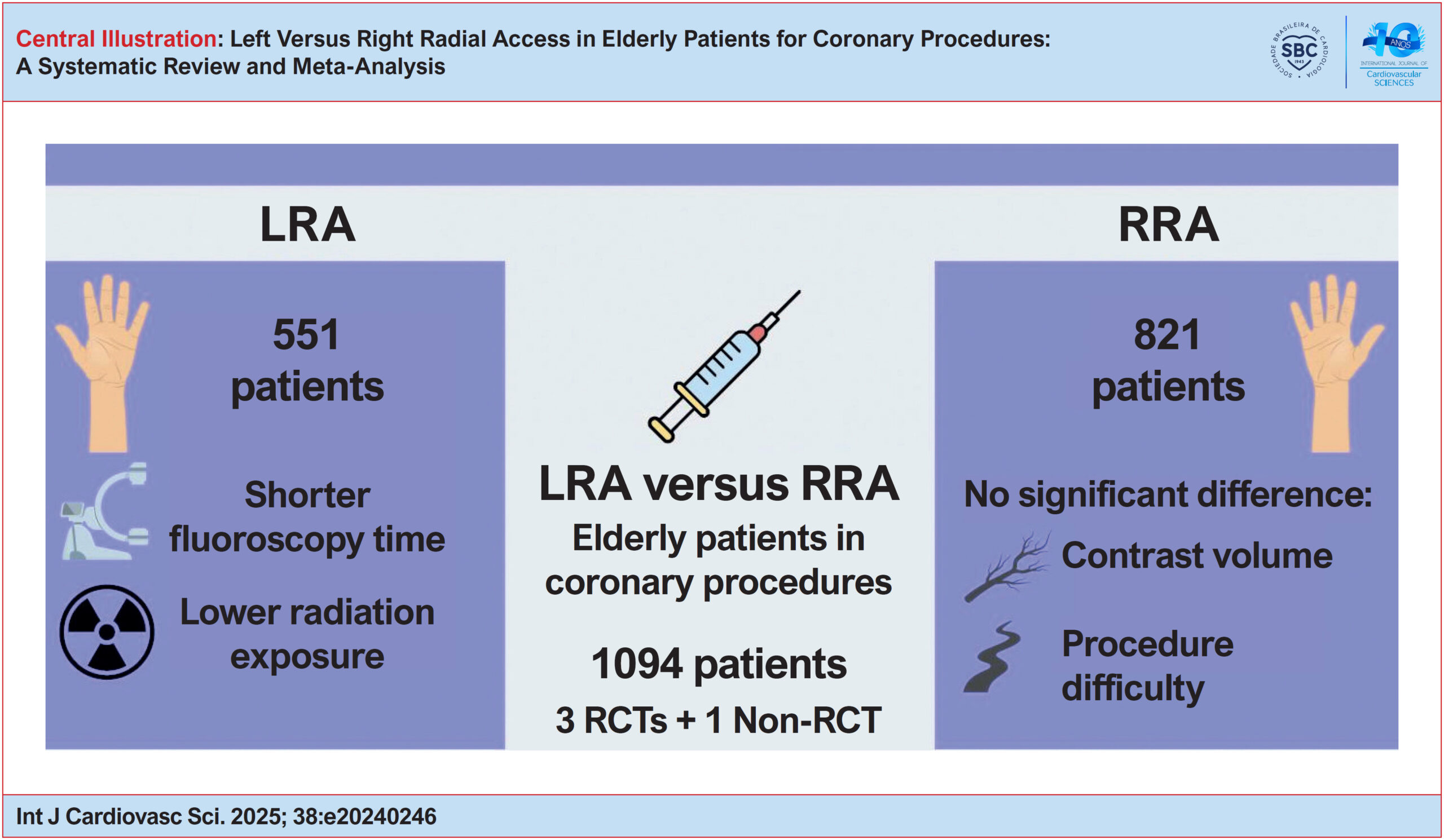
In this issue of the International Journal of Cardiovascular Sciences, Gonçalves et al. shed light on this important topic. In an elegant and technically well-performed systematic review and meta-analysis, including 1,094 patients from three randomized trials and one observational study, the authors provide compelling evidence to reconsider the choice of radial access in elderly patients. While numerous previous reviews have compared LRA and RRA, this study is unique in its exclusive focus on the elderly population. The analysis included studies involving patients aged ≥70 years undergoing diagnostic or therapeutic coronary procedures, comparing RRA and LRA, and reporting at least one of three outcomes: fluoroscopy time, contrast volume, and procedural difficulty.

[…]

  • Aged
  • Coronary Angiography
  • Radial Artery
Read Full Article
Creative Commons Attribution (CC BY) Creative Commons license
27/04/2026 DOI: 10.36660/ijcs.20250195
Left Versus Right Radial Access in Elderly Patients for Coronary Procedures: A Systematic Review and Meta-Analysis
IJCS
Original Article

Left Versus Right Radial Access in Elderly Patients for Coronary Procedures: A Systematic Review and Meta-Analysis

Anna Loise da Cruz Gonçalves et al. Deivyd Vieira Silva Cavalcante Brenda de Adonai Rodrigues Martins Caroline de Oliveira Fischer Bacca … Júlia Gonçalves Gadelha Suelen Queiroz Gabriel Erzinger Octávio Drummond Guina

Abstract

Background:

Radial artery access is widely used in coronary procedures, but the optimal choice between left (LRA) and right (RRA) radial access remains controversial, especially in older patients.

Objective:

Compare LRA and RRA in patients ≥ 70 years undergoing coronary procedures.

Methods:

This study conducted a systematic review and meta-analysis of observational studies and randomized clinical trials (RCTs), adopting a significance level of 5% for all statistical analyses. We searched PubMed, Embase, and Cochrane Central for studies comparing LRA and RRA in patients aged ≥ 70 years. The main outcomes were fluoroscopy time, contrast volume, and procedure difficulty.

Results:

We included 1,094 patients from 4 studies, of which 3 were RCTs. Among them, 821 (75%) patients underwent the procedure via RRA. The LRA group showed a significantly shorter fluoroscopy time (standard mean difference [MD]: −0.41; 95% confidence interval [CI]: −0.67 to −0.42; p < 0.01; I2 = 80%), and there was a significant reduction in the contrast volume between the groups, favoring LRA (MD: −13.04 milliliters; 95% CI: −18.0 to −8.20; p < 0.01; I2 = 0%). However, there was no significant difference in the perceived difficulty level between the groups (risk ratio [RR]: 1.03; 95% CI: 0.61 to 1.73; p = 0.92; I2 = 0%).

Conclusion:

LRA is associated with a significantly shorter fluoroscopy time, suggesting a greater efficiency in terms of radiation exposure. These findings imply that, while LRA may offer some efficiency benefits, the choice between LRA and RRA should consider other clinical and technical factors, such as operator preference and experience.

  • Aged
  • Cardiology
  • Radial Artery
Read Full Article
Creative Commons Attribution (CC BY) Creative Commons license
09/01/2026 DOI: 10.36660/ijcs.20240246 Views 31
ABC
Editorial

Radial Access and Fondaparinux: A Synergistic Interaction

Pedro Beraldo de Andrade et al. Leonardo Maróstica Alves Silva

The consolidation of antithrombotic treatment based on dual antiplatelet therapy with aspirin and P2Y12 receptor inhibitors, the routine adoption of invasive risk stratification, the technical refinement of percutaneous coronary intervention (PCI), with greater use of intravascular imaging as an adjunctive tool to guide procedures, as well as the technological evolution of coronary stents, culminated in a temporal decline over the last two decades in the occurrence of ischemic complications in patients admitted with non-ST-segment elevation acute coronary syndrome (NSTEMI). In this context, the risk of bleeding is no longer tolerated as an inherent complication of anti-ischemic treatment. Still, it has come to play a central role in the search for a balance between efficacy and safety in the clinical management of this patient profile. The importance of bleeding risk was achieved through publications demonstrating that major bleeding, whether related to PCI arterial access or bleeding in the central nervous system, digestive tract, or genitourinary system, was associated with a worse prognosis, with morbidity and mortality similar to or exceeding recurrent ischemic events.,

In 2010, the concept of “Bleeding Avoidance Strategies” emerged, consisting of a set of measures associated with high-quality, cost-effective clinical practice, whose metrics demonstrate its ability to mitigate major bleeding rates in patients undergoing invasive risk stratification ()..,

[…]

  • Fondaparinux
  • Non-ST Elevated Myocardial Infarction
  • Radial Artery
Read Full Article
Creative Commons Attribution (CC BY) Creative Commons license
01/12/2025 DOI: 10.36660/abc.20250556i Views 2
Figure 1
IJCS
Original Article

Option for the Radial versus Femoral Access in Coronary Intervention in Acute Coronary Syndromes: A Risk-Treatment Paradox

Yasmin Falcon Lacerda et al. Nicole Cruz de Sá Jessica Gonzalez Suerdieck Letícia Fonseca … Fernanda Lopes Gabriella Sant'Ana Sodré Mateus dos Santos Viana Marcia Maria Noya Rabelo Luis Claudio Lemos Correia

Abstract

Background:

In coronary procedures, although the radial approach protects patients from hemorrhagic complications, it is technically more complex than the femoral approach.

Objectives:

To test the hypothesis that the radial approach is the procedure of choice in ACS patients due to the high risk of bleeding; and to identify independent predictors of the choice for radial access.

Methods:

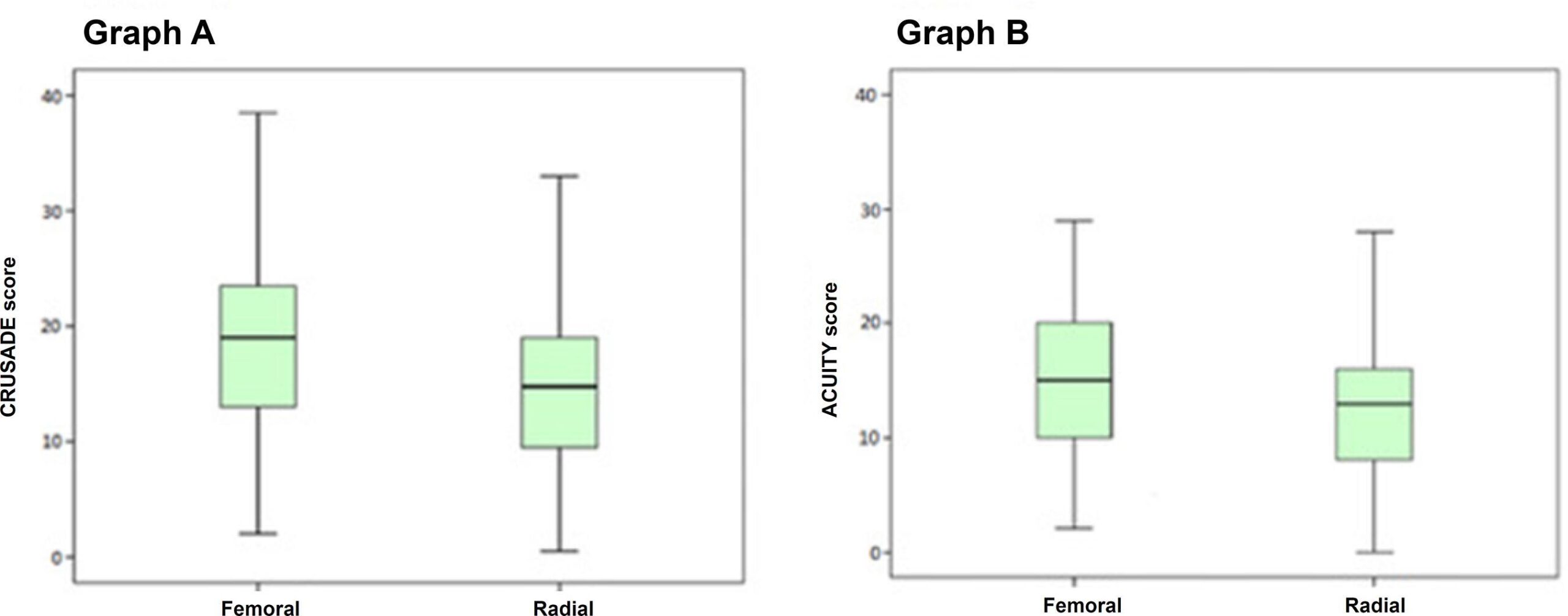
Patients admitted for ACS who underwent invasive coronary procedure were included. We registered the type of access (femoral or radial) chosen by the physician for the first angiography; the investigators did not interfere with this choosing process. Student’s t-test was used for comparisons between the CRUSADE and ACUITY scores. Predictors of radial access were compared between the groups. Statistical significance was defined by p < 0,05.

Results: Radial access was chosen in 67% of 347 consecutive patients. Patients who underwent radial approach had lower risk of bleeding determined by CRUSADE (30 ± 14 vs. 37 ± 15; p < 0.001) as compared with femoral access. In multivariate analysis, four variables were identified as independent predictors negatively associated with radial access – age (OR = 0.98; 95%CI = 0.96 – 0.99), creatinine (OR = 0.54; 95%CI = 0.3 – 0.98), signs of left ventricular failure (OR = 0.45; 95% CI = 0.22 – 0.92) and previous CABG (OR = 0.022; 95%CI = 0.003 – 0.166).

Conclusion:

The propensity to choose radial over femoral access in coronary intervention was not primarily influenced by patients’ bleeding risk. Predictors of this decision, identified in the study, indicated less complex patients, suggesting that the difficulty in performing the technique was a stronger determinant than its potential antihemorrhagic effect. (Int J Cardiovasc Sci. 2018; [online].ahead print, PP.0-0)

  • Angioplasty
  • Catheterism
  • Coronary Artery Disease
  • femoral artery
  • Percutaneous Coronary Intervention
  • Radial Artery
  • Stents
Read Full Article
Creative Commons Attribution (CC BY) Creative Commons license
27/08/2018 DOI: 10.5935/2359-4802.20180066 Views 1
Figure 1
IJCS
Original Article

12-Month Clinical Follow-Up of Patients Undergoing Early Invasive Strategy by the Transradial or Transfemoral Approach with Vascular Closure Device

Pedro Beraldo de Andrade et al. Luiz Alberto Piva e Mattos Fabio Salerno Rinaldi Igor Ribeiro de Castro Bienert … Robson Alves Barbosa Sérgio Kreimer Vinícius Cardoso Esteves Marden André Tebet André Labrunie Amanda Guerra de Moraes Rego Sousa

Abstract

Background:

The radial approach reduces the prevalence of vascular complications, major bleeding and mortality when compared to the femoral approach. However, the last still prevails as the preferred approach for the performance of invasive coronary procedures, requiring the adoption of strategies to minimize complications.

Objectives:

To compare the survival free of major adverse cardiovascular events at 12 months in patients undergoing early intervention strategy by the radial or femoral access with vascular closure device.

Methods:

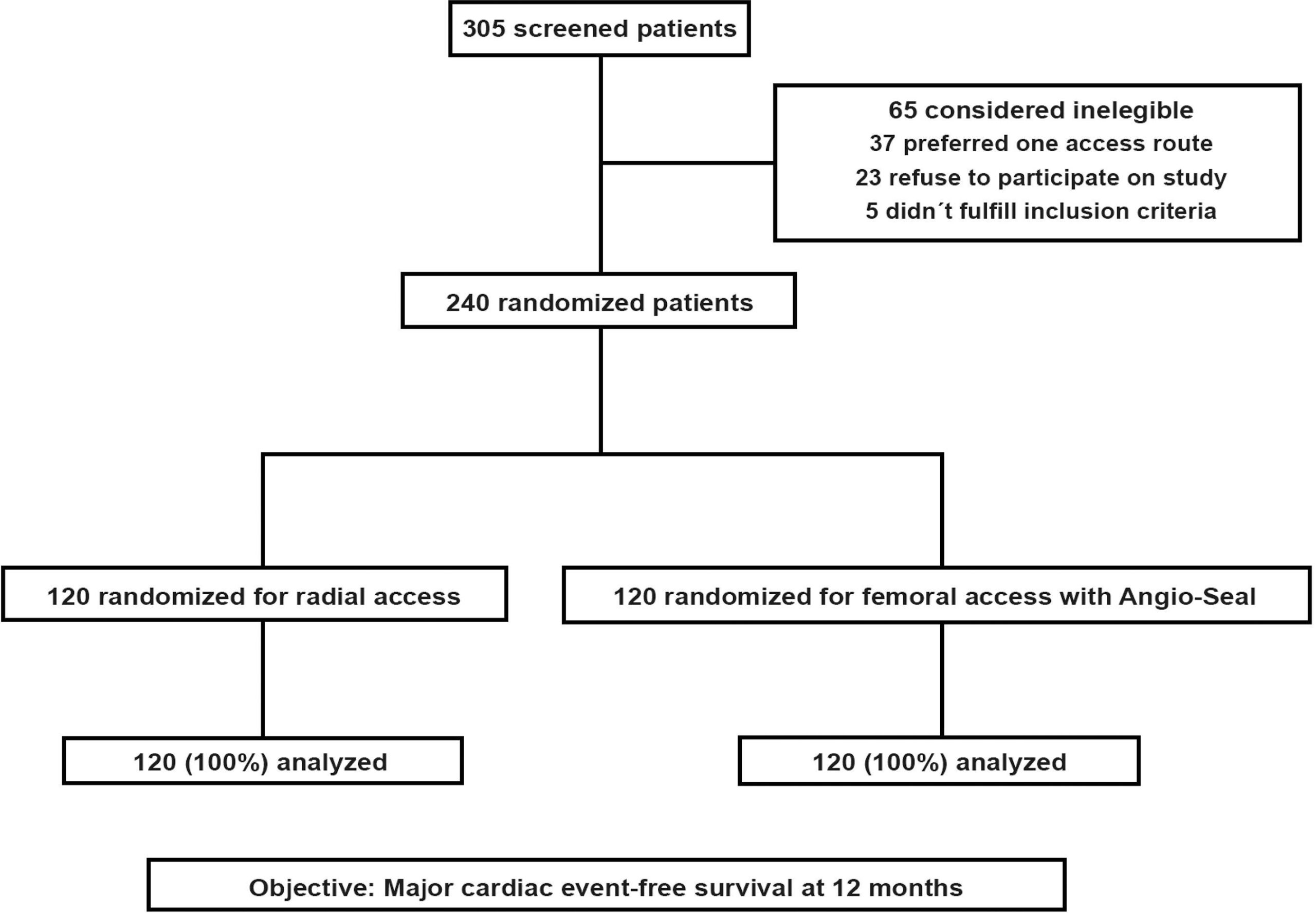
Randomized non inferiority trial involving 240 non-ST-segment elevation acute coronary syndrome patients. The survival free of death, myocardial infarction or stroke was estimated by the Kaplan-Meier method and compared using the log rank test.

Results:

The 30-day rate of vascular complications in the arterial puncture site was 12.5% in the Angio-Seal group and 13.3% in the radial group (p = 1.000). The 12-month incidence of major bleeding or blood transfusion did not differ between groups (2.5% vs. 1.7%, p = 1.000). There was no difference in survival free of major adverse cardiovascular events (90.8% versus 94.2%, p = 0.328).

Conclusions:

There was no distinction between the techniques in survival free of major adverse cardiovascular events at 12 months of follow-up. Clinical trials with greater statistical power are needed to validate these findings.

  • Hemostasis
  • Myocardial Ischemia
  • Percutaneous Coronary Percutaneous
  • Radial Artery
Read Full Article
Creative Commons Attribution (CC BY) Creative Commons license
01/01/2017 DOI: 10.5935/2359-4802.20170057 Views 1
ABC
Editorial

Primary Angioplasty in the ACCEPT Registry: Why has it Been Difficult to Accept and Implement the Radial Artery Access as Preferential?

Dimytri Alexandre de Alvim Siqueira et al. Fabio Sandoli de Brito Jr Alexandre A. C. Abizaid

Radial access and the reduction in mortality and adverse cardiac events

Although the causal relationship remains controversial, several studies have reported that the radial access for primary angioplasty is associated with a reduction in mortality and in adverse cardiac events (). The largest clinical trial comparing the arterial accesses for percutaneous coronary intervention, the randomized and multicenter Radial Versus Femoral Access for Coronary Intervention (RIVAL) trial, has selected individuals with acute coronary syndromes (ACS) with or without ST-segment elevation, to whom the invasive strategy had been indicated. Individuals with the following characteristics were excluded: cardiogenic shock or previous coronary artery bypass grafting (CABG) – which could make coronary angiography and the study of bypass grafts via the radial access difficult -, and peripheral arterial disease that could make the femoral approach unfeasible. Of the 7,021 patients randomized for femoral (n = 3,514) or radial (n = 3,507) access, 1,958 individuals (28%) were diagnosed with STEMI. In that specific subgroup, patients undergoing coronary angiography and angioplasty via radial access had lower rates of mortality (1.3% versus 3.2%, p = 0.006) and of the combined outcome of death, infarction and stroke (2.7 versus 4.6%, p = 0.031) at 30 days, as compared with individuals undergoing the procedure via femoral access. The beneficial results of the RIVAL trial in the subgroup of STEMI patients have been replicated in the Radial Versus Femoral Randomization Investigation in ST-Elevation Acute Coronary Syndrome (RIFLE-STEACS), a randomized clinical trial with 1,001 patients. Mortality at 30 days was significantly lower in patients undergoing angioplasty via radial access (5.2% versus 9.2%, p = 0.020). In addition, the subanalysis of the Harmonizing Outcomes with Revascularization and Stents in Acute Myocardial Infarction (HORIZONS-AMI) trial has revealed a significantly lower incidence of death and reinfarction at 30 days in individuals treated via the radial access (1.0% versus 4.3%; p = 0.02).

Although those trials have been designed to neither specifically assess the occurrence of death as primary outcome nor to unravel the potential mechanisms associated with its reduction, the favorable impact on the incidence of bleedings has been assumed to be the major determinant of the lower mortality of patients treated via the radial access.

[…]

  • Angioplasty
  • Femoral Artery / complications
  • Fibrinolytic Agents
  • Harm Reduction
  • Radial Artery
Read Full Article
Creative Commons Attribution (CC BY) Creative Commons license
01/10/2014 DOI: 10.5935/abc.20140154 Views 1
Radial approach in percutaneous coronary interventions: current status in Brazil
ABC
Artigo Original

Radial approach in percutaneous coronary interventions: current status in Brazil

Pedro Beraldo de Andrade et al. Marden André Tebet Mônoca Vieira Athanazio de Andrade André Labrunie Luiz Alberto Piva e Mattos

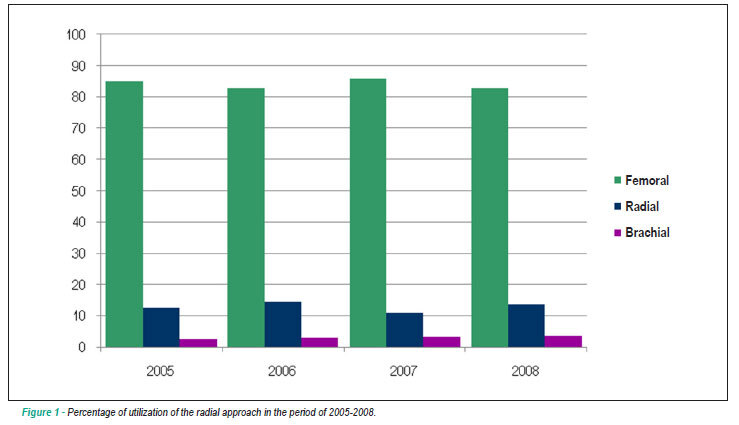
BACKGROUND: Although the radial approach offers an unquestionable result in terms of reduction of vascular complications and occurrence of severe bleeding in comparison to the femoral approach, so far it has only been used in few centers which elected it as the preferential access. OBJECTIVE: To evaluate the current status of percutaneous coronary interventions in Brazil, as regards the use of the radial approach. METHODS: Analysis of data spontaneously recorded in Central Nacional de Intervenções Cardiovasculares – CENIC (National Center for Cardiovascular Interventions) from 2005 to 2008, in a total of 83,376 procedures. RESULTS: The radial approach was used in 12.6% of the procedures performed, and the femoral approach, in 84.3%. The remaining 3.1% corresponded to brachial artery dissection or puncture. With a success rate of 97.5%, the choice of the radial approach was associated with a significant reduction of vascular complications in comparison to the femoral approach (2.5% versus 3.6 %, p < 0.0001). CONCLUSION: The radial approach remains uncommonly used in Brazil, and this is possibly explained by the lack of training programs, uncertainties regarding the learning curve, and the lack of large-scale studies corroborating the benefits demonstrated to date.

  • Angioplasty transluminal percutaneous coronary
  • Brazil
  • femoral artery
  • Medical Records
  • Radial Artery
Read Full Article
Creative Commons Attribution (CC BY) Creative Commons license
04/03/2011 DOI: 10.1590/S0066-782X2011005000026 Views 1
Transradial approach for coronary interventions
ABC
Original Article

Transradial approach for coronary interventions

José Carlos Brito et al. Antônio Azevedo Júnior Adriano Oliveira Roberto Von Sohsten … Ademar Santos Filho Heitor Carvalho

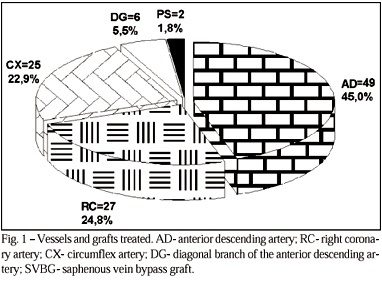
OBJECTIVE: To assess the feasibility and safety of coronary interventions performed through the radial artery. METHODS: We studied 103 patients with ages from 38 to 86 years (57±8.7), 90 (87%) males, and: radial pulse with a good amplitude, presence of ulnar pulse, a good collateral flow through the palmar arch assessed with the Allen’s test. RESULTS: The vascular approach was obtained in 97 (94%) patients, 88 (91%) treated electively and 9 (9%) during acute myocardial infarction, for primary angioplasty; 56 (64%) unstable angina; 22 (25%) stable angina; 10 (11%) were asymptomatic, 6 referred for recanalization of chronic occlusion and 4 silent ischemia in the first week after acute myocardial infarction. We approached 107 arteries: anterior descending artery, 49 (46%); right coronary artery, 27 (25%); circumflex artery, 25 (23%); diagonal artery, 6 (6%); and 2 saphenous vein bypass grafts. We treated 129 lesions: 80 (62%) B2 type; 23 (18%) B1 type; 17 (13%) C type; and 9 (7%). A type. There were 70 stents , and 59 balloon angioplasties performed. Thirty-two (33%) patients used GP IIb/IIIa inhibitors. The mean duration of the elective procedure was 42.3±12.8 min. Success, correct stent deployment and residual lesion <20%, was reached in 100% of the lesions treated with stent implantation; arterial dilation with residual lesion <50% was obtained in 96% of the lesions treated with transluminal coronary angioplasty (TCA). Complications, were: 1 (1.0%) non-Q-wave acute myocardial infarction; 2 (2%) hematomas in the forearm; and 2 losses of radial pulse. CONCLUSION: Radial artery aproach is practical and safe for percutaneous coronary interventions there was a low incidence of complications.

  • percutaneous interventions
  • Radial Artery
Read Full Article
Creative Commons Attribution (CC BY) Creative Commons license
08/01/2002 DOI: 10.1590/S0066-782X2001000500003 Views 2

How to cite this article

EndNote RIS

Electronic Document Format (Vancouver)

Gonçalves SC. From Right to Left Radial Access in Older Patients: Are We Witnessing the Next Procedural Shift?. International Journal of Cardiovascular Sciences 2026;39:e20250195.

Electronic Document Format (ABNT)

Gonçalves, Sandro Cadaval. From Right to Left Radial Access in Older Patients: Are We Witnessing the Next Procedural Shift?. International Journal of Cardiovascular Sciences, v. 39, e20250195, Apr. 2026.

Electronic Document Format (APA)

Gonçalves, S. C. (2026). From Right to Left Radial Access in Older Patients: Are We Witnessing the Next Procedural Shift?. International Journal of Cardiovascular Sciences, 39, e20250195.

Electronic Document Format (ISO)

Gonçalves, Sandro Cadaval. From Right to Left Radial Access in Older Patients: Are We Witnessing the Next Procedural Shift?. International Journal of Cardiovascular Sciences [online]. 2026, vol. 39, [cited 2026-10-14], e20250195. Available from: <https://journals.cardiol.br/en/article/from-right-to-left-radial-access-in-older-patients-are-we-witnessing-the-next-procedural-shift/>. ISSN 2359-4802

EndNote RIS

Electronic Document Format (Vancouver)

Gonçalves ALC, Cavalcante DVS, Martins BAR, Bacca COF, Gadelha JG, Queiroz S, Erzinger G, et al. Left Versus Right Radial Access in Elderly Patients for Coronary Procedures: A Systematic Review and Meta-Analysis. International Journal of Cardiovascular Sciences 2026;38:e20240246.

Electronic Document Format (ABNT)

Gonçalves, Anna Loise da Cruz; Cavalcante, Deivyd Vieira Silva; Martins, Brenda de Adonai Rodrigues; Bacca, Caroline de Oliveira Fischer; Gadelha, Júlia Gonçalves; Queiroz, Suelen; Erzinger, Gabriel; Guina, Octávio Drummond. Left Versus Right Radial Access in Elderly Patients for Coronary Procedures: A Systematic Review and Meta-Analysis. International Journal of Cardiovascular Sciences, v. 38, e20240246, Jan. 2026.

Electronic Document Format (APA)

Gonçalves, A. L. C., Cavalcante, D. V. S., Martins, B. A. R., Bacca, C. O. F., Gadelha, J. G., Queiroz, S., Erzinger, G., & Guina, O. D. (2026). Left Versus Right Radial Access in Elderly Patients for Coronary Procedures: A Systematic Review and Meta-Analysis. International Journal of Cardiovascular Sciences, 38, e20240246.

Electronic Document Format (ISO)

Gonçalves, Anna Loise da Cruz and Cavalcante, Deivyd Vieira Silva and Martins, Brenda de Adonai Rodrigues and Bacca, Caroline de Oliveira Fischer and Gadelha, Júlia Gonçalves and Queiroz, Suelen and Erzinger, Gabriel and Guina, Octávio Drummond. Left Versus Right Radial Access in Elderly Patients for Coronary Procedures: A Systematic Review and Meta-Analysis. International Journal of Cardiovascular Sciences [online]. 2026, vol. 38, [cited 2026-10-14], e20240246. Available from: <https://journals.cardiol.br/en/article/left-versus-right-radial-access-in-elderly-patients-for-coronary-procedures-a-systematic-review-and-meta-analysis/>. ISSN 2359-4802

EndNote RIS

Electronic Document Format (Vancouver)

Andrade PB, Silva LMA. Radial Access and Fondaparinux: A Synergistic Interaction. Arquivos Brasileiros de Cardiologia 2025;122(9):e20250556.

Electronic Document Format (ABNT)

Andrade, Pedro Beraldo de; Silva, Leonardo Maróstica Alves. Radial Access and Fondaparinux: A Synergistic Interaction. Arquivos Brasileiros de Cardiologia, v. 122, n. 9, e20250556, Nov. 2025.

Electronic Document Format (APA)

Andrade, P. B. , & Silva, L. M. A. (2025). Radial Access and Fondaparinux: A Synergistic Interaction. Arquivos Brasileiros de Cardiologia, 122(9), e20250556.

Electronic Document Format (ISO)

Andrade, Pedro Beraldo de and Silva, Leonardo Maróstica Alves. Radial Access and Fondaparinux: A Synergistic Interaction. Arquivos Brasileiros de Cardiologia [online]. 2025, vol. 122, n. 9, [cited 2026-10-14], e20250556. Available from: <https://journals.cardiol.br/en/article/radial-access-and-fondaparinux-a-synergistic-interaction/>. ISSN 0066-782X

EndNote RIS

Electronic Document Format (Vancouver)

Lacerda YF, Sá NC, Suerdieck JG, Fonseca L, Lopes F, Sodré GS, Viana MS, et al. Option for the Radial versus Femoral Access in Coronary Intervention in Acute Coronary Syndromes: A Risk-Treatment Paradox. International Journal of Cardiovascular Sciences 2018;31(6):562-8.

Electronic Document Format (ABNT)

Lacerda, Yasmin Falcon; Sá, Nicole Cruz de; Suerdieck, Jessica Gonzalez; Fonseca, Letícia; Lopes, Fernanda; Sodré, Gabriella Sant’Ana; Viana, Mateus dos Santos; Rabelo, Marcia Maria Noya; Correia, Luis Claudio Lemos. Option for the Radial versus Femoral Access in Coronary Intervention in Acute Coronary Syndromes: A Risk-Treatment Paradox. International Journal of Cardiovascular Sciences, v. 31, n. 6, p. 562-568, Aug. 2018.

Electronic Document Format (APA)

Lacerda, Y. F., Sá, N. C. , Suerdieck, J. G., Fonseca, L., Lopes, F., Sodré, G. S., Viana, M. S., Rabelo, M. M. N., & Correia, L. C. L. (2018). Option for the Radial versus Femoral Access in Coronary Intervention in Acute Coronary Syndromes: A Risk-Treatment Paradox. International Journal of Cardiovascular Sciences, 31(6), 562-568.

Electronic Document Format (ISO)

Lacerda, Yasmin Falcon and Sá, Nicole Cruz de and Suerdieck, Jessica Gonzalez and Fonseca, Letícia and Lopes, Fernanda and Sodré, Gabriella Sant’Ana and Viana, Mateus dos Santos and Rabelo, Marcia Maria Noya and Correia, Luis Claudio Lemos. Option for the Radial versus Femoral Access in Coronary Intervention in Acute Coronary Syndromes: A Risk-Treatment Paradox. International Journal of Cardiovascular Sciences [online]. 2018, vol. 31, n. 6, [cited 2026-10-14], pp. 562-568. Available from: <https://journals.cardiol.br/en/article/option-for-the-radial-versus-femoral-access-in-coronary-intervention-in-acute-coronary-syndromes-a-risk-treatment-paradox/>. ISSN 2359-4802

EndNote RIS

Electronic Document Format (Vancouver)

Andrade PB, Mattos LAP, Rinaldi FS, Bienert IRC, Barbosa RA, Kreimer S, Esteves VC, et al. 12-Month Clinical Follow-Up of Patients Undergoing Early Invasive Strategy by the Transradial or Transfemoral Approach with Vascular Closure Device. International Journal of Cardiovascular Sciences 2017;30(4):299-306.

Electronic Document Format (ABNT)

Andrade, Pedro Beraldo de; Mattos, Luiz Alberto Piva e; Rinaldi, Fabio Salerno; Bienert, Igor Ribeiro de Castro; Barbosa, Robson Alves; Kreimer, Sérgio; Esteves, Vinícius Cardoso; Tebet, Marden André; Labrunie, André; Sousa, Amanda Guerra de Moraes Rego. 12-Month Clinical Follow-Up of Patients Undergoing Early Invasive Strategy by the Transradial or Transfemoral Approach with Vascular Closure Device. International Journal of Cardiovascular Sciences, v. 30, n. 4, p. 299-306, Dec. 2016.

Electronic Document Format (APA)

Andrade, P. B. , Mattos, L. A. P. , Rinaldi, F. S., Bienert, I. R. C., Barbosa, R. A., Kreimer, S., Esteves, V. C., Tebet, M. A., Labrunie, A., & Sousa, A. G. M. R. (2017). 12-Month Clinical Follow-Up of Patients Undergoing Early Invasive Strategy by the Transradial or Transfemoral Approach with Vascular Closure Device. International Journal of Cardiovascular Sciences, 30(4), 299-306.

Electronic Document Format (ISO)

Andrade, Pedro Beraldo de and Mattos, Luiz Alberto Piva e and Rinaldi, Fabio Salerno and Bienert, Igor Ribeiro de Castro and Barbosa, Robson Alves and Kreimer, Sérgio and Esteves, Vinícius Cardoso and Tebet, Marden André and Labrunie, André and Sousa, Amanda Guerra de Moraes Rego. 12-Month Clinical Follow-Up of Patients Undergoing Early Invasive Strategy by the Transradial or Transfemoral Approach with Vascular Closure Device. International Journal of Cardiovascular Sciences [online]. 2017, vol. 30, n. 4, [cited 2026-10-14], pp. 299-306. Available from: <https://journals.cardiol.br/en/article/12-month-clinical-follow-up-of-patients-undergoing-early-invasive-strategy-by-the-transradial-or-transfemoral-approach-with-vascular-closure-device/>. ISSN 2359-4802

EndNote RIS

Electronic Document Format (Vancouver)

Siqueira DAA, Brito Jr FS, Abizaid AAC. Primary Angioplasty in the ACCEPT Registry: Why has it Been Difficult to Accept and Implement the Radial Artery Access as Preferential?. Arquivos Brasileiros de Cardiologia 2014;103(4):268-71.

Electronic Document Format (ABNT)

Siqueira, Dimytri Alexandre de Alvim; Brito Jr, Fabio Sandoli de; Abizaid, Alexandre A. C.. Primary Angioplasty in the ACCEPT Registry: Why has it Been Difficult to Accept and Implement the Radial Artery Access as Preferential?. Arquivos Brasileiros de Cardiologia, v. 103, n. 4, p. 268-271, Sep. 2014.

Electronic Document Format (APA)

Siqueira, D. A. A., Brito Jr, F. S. , & Abizaid, A. A. C. (2014). Primary Angioplasty in the ACCEPT Registry: Why has it Been Difficult to Accept and Implement the Radial Artery Access as Preferential?. Arquivos Brasileiros de Cardiologia, 103(4), 268-271.

Electronic Document Format (ISO)

Siqueira, Dimytri Alexandre de Alvim and Brito Jr, Fabio Sandoli de and Abizaid, Alexandre A. C.. Primary Angioplasty in the ACCEPT Registry: Why has it Been Difficult to Accept and Implement the Radial Artery Access as Preferential?. Arquivos Brasileiros de Cardiologia [online]. 2014, vol. 103, n. 4, [cited 2026-10-14], pp. 268-271. Available from: <https://journals.cardiol.br/en/article/primary-angioplasty-in-the-accept-registry-why-has-it-been-difficult-to-accept-and-implement-the-radial-artery-access-as-preferential/>. ISSN 0066-782X

EndNote RIS

Electronic Document Format (Vancouver)

Andrade PB, Tebet MA, Andrade MVA, Labrunie A, Mattos LAP. Radial approach in percutaneous coronary interventions: current status in Brazil. Arquivos Brasileiros de Cardiologia 2011;96(4):312-6.

Electronic Document Format (ABNT)

Andrade, Pedro Beraldo de; Tebet, Marden André; Andrade, Mônoca Vieira Athanazio de; Labrunie, André; Mattos, Luiz Alberto Piva e. Radial approach in percutaneous coronary interventions: current status in Brazil. Arquivos Brasileiros de Cardiologia, v. 96, n. 4, p. 312-316, Mar. 2011.

Electronic Document Format (APA)

Andrade, P. B. , Tebet, M. A., Andrade, M. V. A. , Labrunie, A., & Mattos, L. A. P. (2011). Radial approach in percutaneous coronary interventions: current status in Brazil. Arquivos Brasileiros de Cardiologia, 96(4), 312-316.

Electronic Document Format (ISO)

Andrade, Pedro Beraldo de and Tebet, Marden André and Andrade, Mônoca Vieira Athanazio de and Labrunie, André and Mattos, Luiz Alberto Piva e. Radial approach in percutaneous coronary interventions: current status in Brazil. Arquivos Brasileiros de Cardiologia [online]. 2011, vol. 96, n. 4, [cited 2026-10-14], pp. 312-316. Available from: <https://journals.cardiol.br/en/article/radial-approach-in-percutaneous-coronary-interventions-current-status-in-brazil/>. ISSN 0066-782X

EndNote RIS

Electronic Document Format (Vancouver)

Brito JC, Azevedo Júnior A, Oliveira A, Sohsten RV, Santos Filho A, Carvalho H. Transradial approach for coronary interventions. Arquivos Brasileiros de Cardiologia 2002;76(5):374-8.

Electronic Document Format (ABNT)

Brito, José Carlos; Azevedo Júnior, Antônio; Oliveira, Adriano; Sohsten, Roberto Von; Santos Filho, Ademar; Carvalho, Heitor. Transradial approach for coronary interventions. Arquivos Brasileiros de Cardiologia, v. 76, n. 5, p. 374-378, Jan. 2002.

Electronic Document Format (APA)

Brito, J. C., Azevedo Júnior, A., Oliveira, A., Sohsten, R. V., Santos Filho, A., & Carvalho, H. (2002). Transradial approach for coronary interventions. Arquivos Brasileiros de Cardiologia, 76(5), 374-378.

Electronic Document Format (ISO)

Brito, José Carlos and Azevedo Júnior, Antônio and Oliveira, Adriano and Sohsten, Roberto Von and Santos Filho, Ademar and Carvalho, Heitor. Transradial approach for coronary interventions. Arquivos Brasileiros de Cardiologia [online]. 2002, vol. 76, n. 5, [cited 2026-10-14], pp. 374-378. Available from: <https://journals.cardiol.br/en/article/transradial-approach-for-coronary-interventions/>. ISSN 0066-782X

  • About ABC Family
  • Internal Regulation
  • Editorial Board
  • Brazilian Society of Cardiology (SBC)

Issues

SBC Guidelines

  • Videos
  • Podcasts
  • News