| ABC
ABC Family Arquivos Brasileiros de Cardiologia International Journal of Cardiovascular Sciences ABC Heart Failure & Cardiomyopathy ABC Imagem Cardiovascular
Português English
ABC Family | ABC
Português English
  • About
    • About the Journal
    • Internal Regulation
    • Editors Section
    • Editorial Board
    • History
    • SBC Award
  • Instructions to Authors
    • Guidelines for Publication
    • Editorial Policy
    • Ethics Policy
    • Policy on the Use of Artificial Intelligence
    • Mandatory Publication Form
    • Publication Fee
  • Issues
  • SBC Guidelines
  • Abstracts
    • How to Publish an Abstract Supplement?
    • Supplements from the Brazilian Congress of Cardiology
  • About
    • About the Journal
    • Internal Regulation
    • Editors Section
    • Editorial Board
    • History
    • SBC Award
  • Instructions to Authors
    • Guidelines for Publication
    • Editorial Policy
    • Ethics Policy
    • Policy on the Use of Artificial Intelligence
    • Mandatory Publication Form
    • Publication Fee
  • Issues
  • SBC Guidelines
  • Abstracts
    • How to Publish an Abstract Supplement?
    • Supplements from the Brazilian Congress of Cardiology

ABC Family

  • ABC Family
  • Arquivos Brasileiros de Cardiologia
  • International Journal of Cardiovascular Sciences
  • ABC Heart Failure & Cardiomyopathy
  • ABC Imagem Cardiovascular
Search in

No content found.

Journals
Ordering
Article types
Others

  1. Home
  2. ABC
  3. Issues
  4. 2024, Volume 121, Number 6
Editorial

Analysis of Myocardial Flow Reserve Using the CZT Camera. Additional Value to Perfusion and Functional Information in Identifying the Cause of Chest Discomfort

Paola Emanuela Poggio Smanio

Chest discomfort is one of the most common symptoms that often leads people to hospital emergency services. The importance of rapid differentiation between acute cardiac ischemic syndrome secondary to significant obstruction of the coronary arteries (obstructive CAD) and other conditions that also causes chest discomfort promptly is essential.

Many patients are discharged inadvertently and progress to acute events, on the other hand, others remain for several days occupying precious beds in hospital emergency rooms without the cause being cardiological.

[…]

  • Coronary Artery Disease
  • Myocardial Fractional Flow Reserve
  • Myocardial Ischemia
  • Myocardial Perfusion Imaging
Read Full Article
Creative Commons Attribution (CC BY) Creative Commons license
30/09/2024 DOI: 10.36660/abc.20240366i
Editorial

Revisiting ICD Use in Chagas Cardiomyopathy: Current Evidence and Future Directions

André Carmo et al. Antônio Luiz Pinho Ribeiro

Chagas cardiomyopathy (ChC) is a chronic infectious heart disease that has recently been considered an infectious arrhythmogenic cardiomyopathy according to the HRS statement on this subject. After an acute phase, patients become chronically infected, displaying a wide range of presentations concerning heart disease, including heart failure, stroke, conduction abnormalities, atrial fibrillation, and ventricular arrhythmia. Sudden death is a mode of death of most patients with ChC, and implantable cardioverter-defibrillator (ICD) has been used as a preferred therapy, at least for secondary prevention, following recommendations similar to those of other cardiovascular diseases.

All information on the use of ICD in ChC comes from observational studies and, regarding death rates, two meta-analyses have evaluated this topic in different populations. The first meta-analysis, conducted by our group, found an annual mortality rate of 9.7% (95% CI: 5.7 to 13.7) in a population with ICD implanted exclusively for secondary prevention. The second meta-analysis, evaluating a mixed population of primary and secondary prevention, revealed a pooled annual all-cause mortality rate of 9.0%. These findings highlight the significant mortality risk in patients with ChC who have ICDs, emphasizing the importance of careful monitoring and management in this population.

[…]

  • Chagas Cardiomyopathy
  • Chagas disease
  • Defibrillators, Implantable / trends
  • Heart Failure
  • Stroke
Read Full Article
Creative Commons Attribution (CC BY) Creative Commons license
26/08/2024 DOI: 10.36660/abc.20240423i Views 1
Editorial

Long Non-Coding RNA, Apoptosis, and Doxorubicin-Induced Cardiotoxicity

Carolina R. Tonon et al. Bertha F. Polegato

Doxorubicin is one of the most effective chemotherapy drugs used in the treatment of many types of solid and hematologic malignancies. However, it causes several adverse effects. Cardiotoxicity is the most important collateral effect because it can lead to the development of heart failure, a chronic condition with high mortality, reaching with a 1-year risk of 15-30% and a 5-year risk of up to 75% in specific populations.

The pathophysiology of doxorubicin-induced cardiotoxicity is not completely understood. Classical pathways are involved such as direct damage to DNA, oxidative stress, inflammation, alteration in intracellular calcium transient, inhibition of muscle protein-related genes, mitochondrial dysfunction, and activation of cell death pathways, such as apoptosis. However, new mechanisms have gained more importance in the last decade, mainly in the genetic field.

[…]

  • Apoptosis Inducing Factor
  • Cardiotoxicity
  • Doxorubicin/toxicity
  • Heart Failure
  • Oxidative Stress
  • RNA, Long Noncoding
Read Full Article
Creative Commons Attribution (CC BY) Creative Commons license
23/08/2024 DOI: 10.36660/abc.20240331i Views 1
Predictors of Appropriate Therapies and Death in Patients with Implantable Cardioverter-Defibrillator and Chronic Chagas Heart Disease
Original Article

Predictors of Appropriate Therapies and Death in Patients with Implantable Cardioverter-Defibrillator and Chronic Chagas Heart Disease

Francisca Tatiana Moreira Pereira et al. Eduardo Arrais Rocha Davi Sales Pereira Gondim Rosa Livia Freitas de Almeida Roberto da Justa Pires Neto

Abstract

Background:

There are few retrospective and prospective studies on implantable cardioverter-defibrillators (ICD) in primary and secondary prevention of sudden death in chronic Chagas heart disease (CCHD).

Objectives:

To describe the long-term evolution of patients with CCHD and ICD and to identify and analyze predictors of mortality and appropriate device therapy in this population.

Methods:

This was a historical prospective study with 117 patients with ICD and CCHD. Devices were implanted from January 2003 to December 2021. Predictors of appropriate therapies and long-term mortality were identified and analyzed. The level of statistical significance was p < 0.05.

Results:

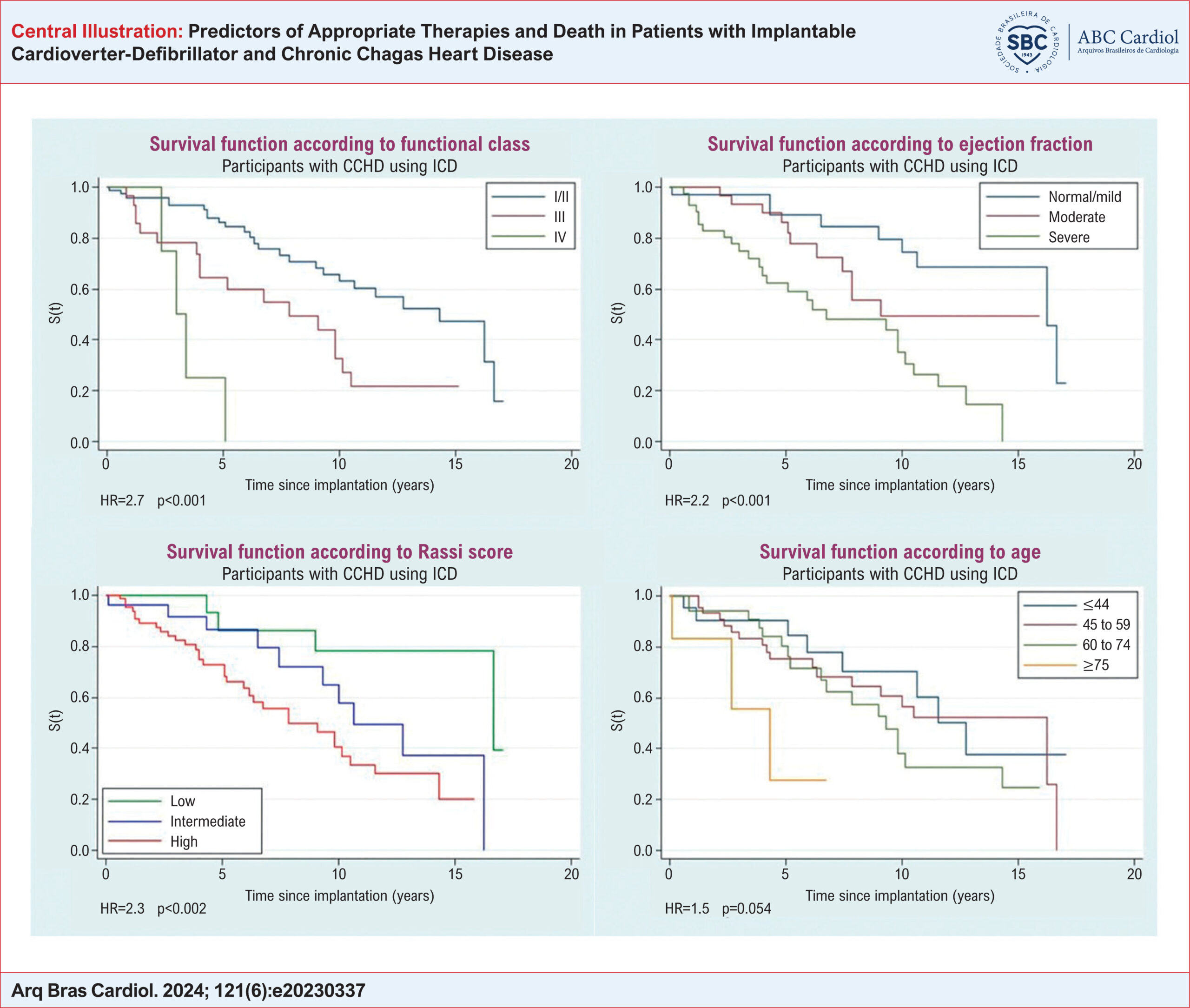
Patients (n = 117) had a median follow-up of 61 months (25 to 121 months); they were predominantly male (74%), with a median age of 55 years (48 to 64 years). There were 43.6% appropriate shocks, 26.5% antitachycardia pacing (ATP), and 51% appropriate therapies. During follow-up, 46 patients (39.7%) died. Mortality was 6.2% person-years (95% confidence interval [CI]: 4.6 to 8.3), with 2 sudden deaths during follow-up. Secondary prevention (hazard ratio [HR] 2.1; 95% CI: 1.1 to 4.3; p = 0.029) and ejection fraction less than 30% (HR 1.8; 95% CI: 1.1 to 3.1; p < 0.05) were predictors of appropriate therapies. Intermediate Rassi score showed a strong association with the occurrence of ATP alone (p = 0.015). Functional class IV (p = 0.007), left ventricular ejection fraction < 30 (p = 0.010), and age above 75 years (p = 0.042) were predictors of total mortality.

Conclusion:

ICDs in CCHD showed a high incidence of appropriate activation, especially in patients with secondary prevention, low left ventricular ejection fraction, and intermediate Rassi score. Patients with congestive heart failure, elevated functional class, and age over 75 years showed elevated mortality.

  • Chagas disease
  • Implantable Defibrillators
  • Sudden Death
Read Full Article
Creative Commons Attribution (CC BY) Creative Commons license
19/08/2024 DOI: 10.36660/abc.20230337i Views 1
Editorial

Is There a Relationship Between Physical Activity in Free Time and the Incidence of High Blood Pressure?

Jacqueline Lima et al. Leandro Franzoni Elren Passos Monteiro

Cardiovascular diseases (CVDs) are a group of diseases linked to blood vessels, the heart, and adjacent tissues that impact health and normal life, and it is a disease that has one of the highest morbidity and mortality rates in the world., In 2019, the biggest cause of death in the world was CVDs, responsible for 16% of total deaths. In the same year, there were a total of 8.9 million deaths around the world.

CVDs are the main cause of death, hospitalizations, and outpatient care throughout the world, including in developing countries such as Brazil., Just like CVDs, arterial hypertension (AH) is the main risk factor for morbidity, mortality, and disability due to CVDs.

[…]

  • Cardiovascular Diseases
  • Exercise
  • Hypertension
Read Full Article
Creative Commons Attribution (CC BY) Creative Commons license
19/08/2024 DOI: 10.36660/abc.20240318i Views 1
Editorial

Inflammation and Atrial Fibrillation: An Exclusive Association or an Accomplice to the Cardiovascular Continuum of Additional Risk Factors?

Francisco Darrieux

The role of systemic inflammation in promoting cardiovascular diseases has attracted the attention of several researchers. Inflammation can be protective as also being part of the response to infection and injury, playing a role in the defense and healing processes. However, the inflammatory response can persist beyond the original threat leading to chronic inflammation, adverse tissue remodeling, and disease.,

The inflammation relationship in the occurrence of AF has been a recurring issue for more than 20 years., There is increasing evidence suggesting a direct link between systemic or local inflammation and the development of AF. Local cardiac inflammatory conditions, including pericarditis and myocarditis, also increase the incidence of AF, as well as severe coronavirus disease cases. Some studies have demonstrated a link between inflammatory biomarkers and AF, but one of the limitations of these studies is that generally use a single biomarker, resulting in heterogenous findings.,

[…]

  • Atrial Fibrillation
  • Inflammation
  • Mechanism
Read Full Article
Creative Commons Attribution (CC BY) Creative Commons license
19/08/2024 DOI: 10.36660/abc.20240382i Views 1
Figure 1
Viewpoint

Angina Pectoris and Orbita 2 Trial: Reflections on the Future of Angina Treatment

Eduardo Bello Martins et al. Eduardo Gomes Lima Jaime Paula Pessoa Linhares Filho Henrique Trombini Pinesi … Fabio Grunspun Pitta Carlos Vicente Serrano Júnior

The ORBITA trial

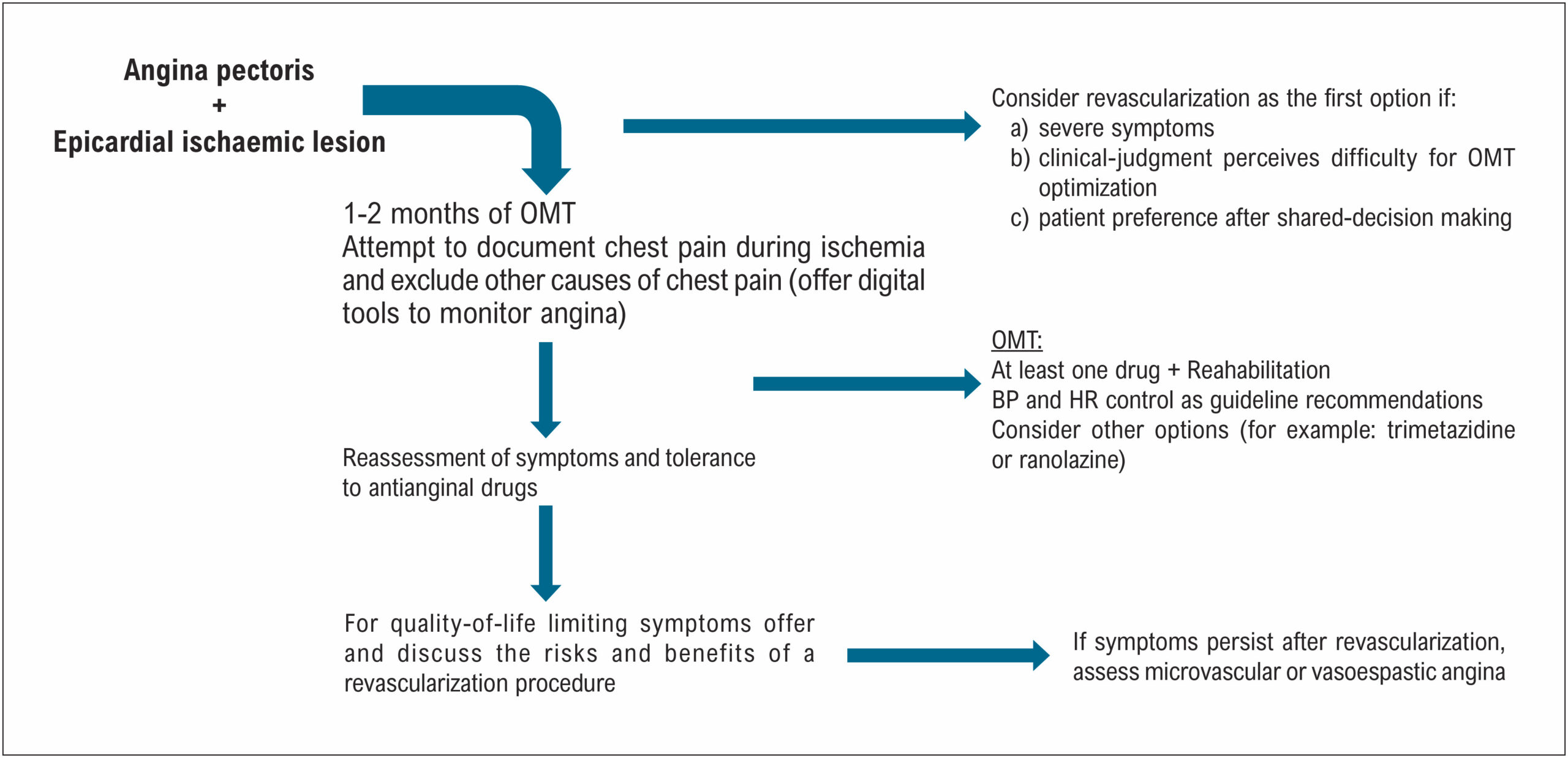
Although the above-mentioned studies have demonstrated some improvement in angina after myocardial revascularization, one of their major limitations is the open nature and a possible placebo effect. In this regard, the ORBITA study showed no benefit of PCI versus a placebo procedure on the primary end-point of an increase in exercise time. ORBITA was a well conducted study that demonstrated the possibility of a placebo component and lack of symptom improvement by PCI. However, several limitations could have influenced these results and have been discussed in the literature, such as the fact that it included patients with non-limiting symptoms, no ischemia in almost a quarter of the participants and short follow-up.

In 2023, the ORBITA 2 trial was finally published in NEJM and addressed for the first time the PCI as a monotherapy for angina relief at a placebo-controlled trial. It provides another piece of the puzzle of angina control and overcomes some of the first ORBITA limitations. ORBITA 2 was an investigator-initiated, multicenter, double-blind, randomized, placebo-controlled trial that was conducted at 14 sites in the United Kingdom and included 301 participants. Patients enrolled had angina or equivalent symptoms, anatomic evidence of severe coronary stenosis and objective evidence of ischemia based on noninvasive imaging or invasive coronary physiology testing. First, antianginal medications were discontinued (median number of antianginal drugs was only 1) and the participants were instructed to use a dedicated smartphone application to report the presence or absence of angina and the number of angina episodes daily. Patients also completed validated questionnaires on symptoms and quality of life. The Canadian Cardiovascular Society (CCS) functional classification was assessed, treadmill exercise test and dobutamine stress echocardiography were also performed. The patients then entered a two-week pre-randomization period during which they reported the number of episodes of angina daily, through the smartphone application. Patients were eligible to proceed to randomization if they reported at least one episode of angina during the symptom assessment phase.

[…]

  • Angina Pectoris
  • Coronary Disease
  • Myocardial Revascularization
Read Full Article
Creative Commons Attribution (CC BY) Creative Commons license
02/08/2024 DOI: 10.36660/abc.20230848i
Figure 1
Editorial

Inflammation and Prognosis in Acute Heart Failure: Is There a Role for Pan-Immune-Inflammation Value?

Humberto Villacorta

Heart failure (HF) is a major health problem, with high morbidity and mortality rates. Patients with HF are frequently hospitalized. Inflammation plays a role in the pathophysiology of HF and several cytokines, such as tumor necrosis factor (TNF), transforming growth factor-ß (TGF-ß), and interleukins 6 and 1, are elevated in HF. In acute decompensated HF (ADHF) the triggers of this inflammatory cascade are secondary to neurohormonal activation and oxidative stress, but in addition, there is evidence for elevated bacterial or endotoxin translocation, due to gut edema or relative hypoperfusion., The measurement of cytokines is not appropriate for day-to-day clinical practice and C-reactive protein (CRP),, another biomarker of inflammation, is usually chosen to assess inflammation. However, a more robust and convenient marker is warranted.

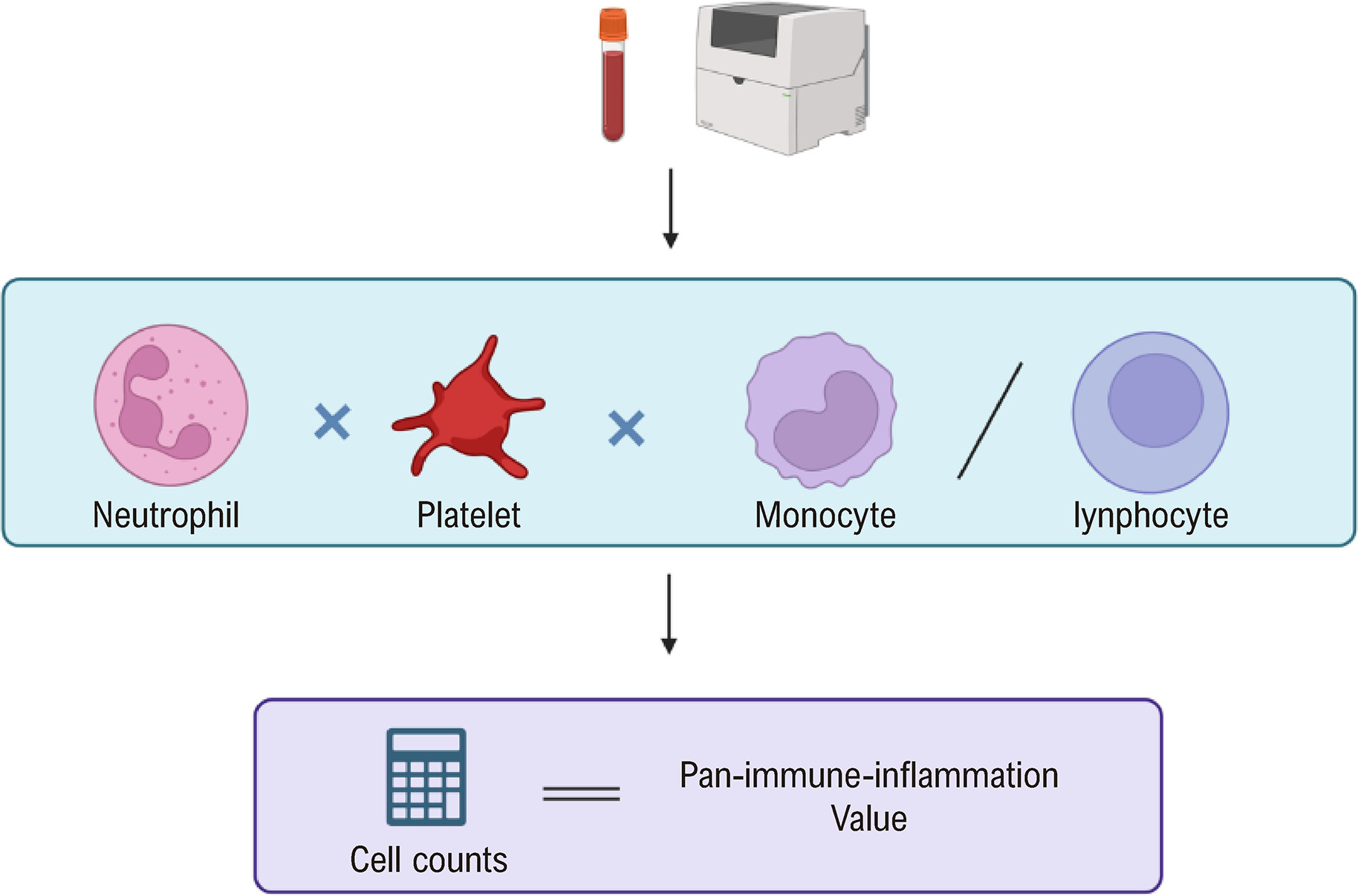
A new marker of inflammation has been recently introduced. Pan-immune-inflammation value (PIV) is calculated from peripheral blood immune-inflammatory components, including neutrophil, platelet, monocyte, and lymphocyte counts, as shown in . PIV has been shown to be prognostic in some cardiovascular disorders and also in non-cardiovascular diseases, such as cancer and advanced renal disease.–

[…]

  • Biomarkers
  • Endotoxins
  • Heart Failure
  • Hospitalization
  • Inflammation
  • Prognosis
Read Full Article
Creative Commons Attribution (CC BY) Creative Commons license
02/08/2024 DOI: 10.36660/abc.20240286i
Randomized Study Comparing Radiofrequency Ablation with the PVAC Gold System vs. Antiarrhythmic Drugs in Elderly Patients with Symptomatic Atrial Fibrillation
Original Article

Randomized Study Comparing Radiofrequency Ablation with the PVAC Gold System vs. Antiarrhythmic Drugs in Elderly Patients with Symptomatic Atrial Fibrillation

Luiz Claudio Berhmann Martins et al. Cristiano F. Pisani Fabio K. Dorfman Francisco C. C. Darrieux … Tan C. Wu Alberto P. Ferraz Denise T. Hachul Claudio Campi de Castro Rogério Ruscitto do Prado Luciana V. F. Souza Luciana Sacilloto Gabrielle D. A. Pessente Cesar J. Grupi Muhieddine Omar Chokr Cesar H. Nomura Kátia Rodrigues de Oliveira Conrado P. Balbo Sissy L. Melo Pedro Veronese Mauricio I. Scanavacca

Abstract

Background

There are no randomized studies comparing the maintenance of sinus rhythm after catheter ablation (CA) concerning treatment with antiarrhythmic drugs (AA) in elderly patients with paroxysmal atrial fibrillation (AF).

Objectives

To compare the clinical results of pulmonary vein (PV) isolation with the second-generation PVAC Gold catheter against AA treatment in elderly people with recurrent symptomatic paroxysmal AF, refractory to at least one AA, and without structural heart disease.

Methods

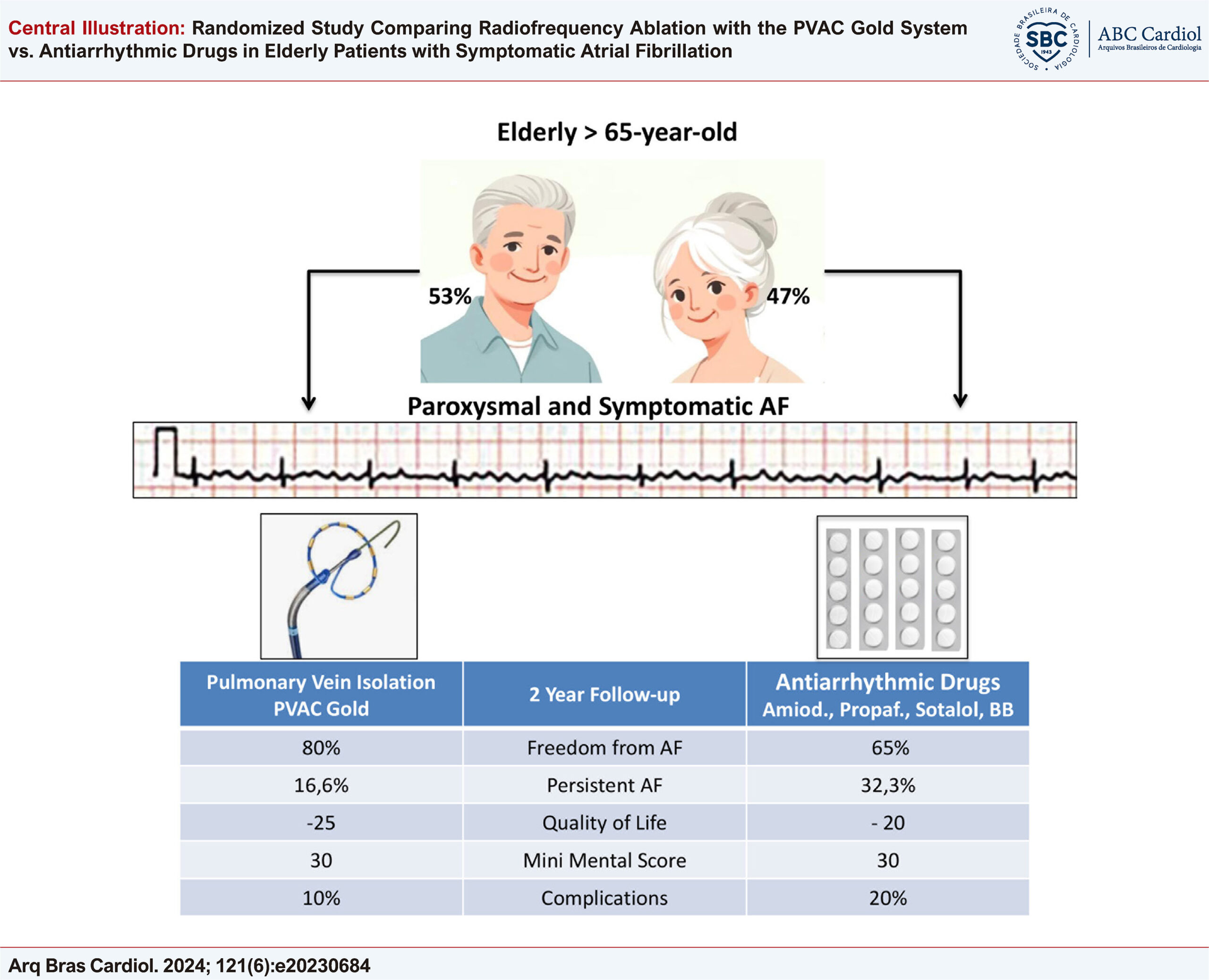
Sixty patients with paroxysmal AF ≥ 65 years old were randomized to two forms of treatment: group 1: CA and group 2: AA drugs. The primary outcome was the AF recurrence-free rate after at least one year of follow-up. Secondary outcomes were: progression to persistent forms of AF, impact on quality of life (QOLF), and complications. The significance level adopted in the statistical analysis was 5% (p<0.05).

Results

The AF recurrence-free rate was 80% (10% with amiodarone) in the CA group, after 1.3 procedures per patient and 65% in the AA group (60% with amiodarone), (p = 0.119) in an average follow-up of 719 days (Q1: 566; Q3: 730). The persistent AF free rate was 83.4% in the AC group and 67.7% in the AA group (p = 0.073) Both strategies showed an improvement in the AFQoL score during follow-up (p < 0.001), with no difference between the groups. Although without clinical repercussions or impact on the intellectual assessment test, 25% of patients in the CA group showed signs of cerebral embolization on brain MRI.

Conclusions

Both strategies for maintaining sinus rhythm promoted an improvement in the quality of life of elderly patients with symptomatic AF, with no statistical difference in the clinical outcomes. Additional studies using technologies with a better safety profile are needed to evaluate the benefits of CA in elderly patients with AF.

  • Anti-Arrhythmia Agents
  • Atrial Fibrillation
  • Catheter Ablation
  • Quality of life
  • Stroke
Read Full Article
Creative Commons Attribution (CC BY) Creative Commons license
02/08/2024 DOI: 10.36660/abc.20230684i Views 3
Editorial

Registries and Evidence-Based Medicine

Fernando Antibas Atik

Since the landmark achievement of Rene Favaloro in 1967, coronary artery bypass grafting (CABG) has developed great advances. Despite the widespread adoption of percutaneous coronary intervention with stenting, CABG remains an extremely important invasive treatment option in patients with coronary artery disease. Coronary artery bypass grafting has been extensively investigated in the literature through many randomized controlled trials and large-scale multicenter and unicenter observational registries, which have provided appropriateness of decision in a patient-centered approach, achieving the highest level of recommendation in many clinical scenarios.

In this issue of Arquivos Brasileiros de Cardiologia, a manuscript entitled “Age, Renal Failure and Transfusion are Risk Predictors of Prolonged Hospital Stay after Coronary Artery Bypass Grafting Surgery” addresses an important issue. The authors aimed to determine factors associated with prolonged postoperative hospital length of stay, defined as greater than 14 days. The authors studied 3703 patients submitted to CABG over 2 years, using the Sao Paulo State Registry REPPLICAR II. This data is out of date in about 5 years. They have found that 6.16% of patients had prolonged postoperative length of stay, being the preoperative and intraoperative determinants of the primary outcome, using multivariable logistic regression analysis, the presence of age greater than 60 years, preoperative kidney dysfunction, and intraoperative red blood cell transfusion.

[…]

  • Complications
  • coronary artery bypass grafting
  • heart surgery
Read Full Article
Creative Commons Attribution (CC BY) Creative Commons license
02/08/2024 DOI: 10.36660/abc.20240330i
Editorial

Evaluation of Catheter Ablation Using the PVAC Gold Catheter in Elderly Patients with Atrial Fibrillation

José Carlos Pachon-M et al. Tomas G. Santillana-P Enrique I. Pachon-M

Atrial fibrillation (AF) represents one of the most significant challenges in contemporary cardiological practice, especially in elderly patients, where the complexity of treatment is amplified by prevalent comorbidities and the fragility of this population. In this context, the study “Randomized Study Comparing Radiofrequency Ablation with the PVAC Gold System vs. Antiarrhythmic Drugs in Elderly Patients with Symptomatic Atrial Fibrillation” recently published in the ABC Cardiol by Martins et al., is remarkable. It offers crucial insights into therapeutic options, risks, and benefits for these patients. Additionally, this article is led by a team with remarkable international experience in AF ablation, navigating the challenges with astute clinical judgment having been a pioneer in several procedures.

This group of frequently polymedicated patients constantly inspires the search for therapies that reduce medication dependence and enhance quality of life. The prospect of eliminating AF through ablation and reducing multiple medications is highly appealing.,

[…]

  • Atrial Fibrillation
  • Catheter Ablation
  • Catheters
Read Full Article
Creative Commons Attribution (CC BY) Creative Commons license
02/08/2024 DOI: 10.36660/abc.20240306i
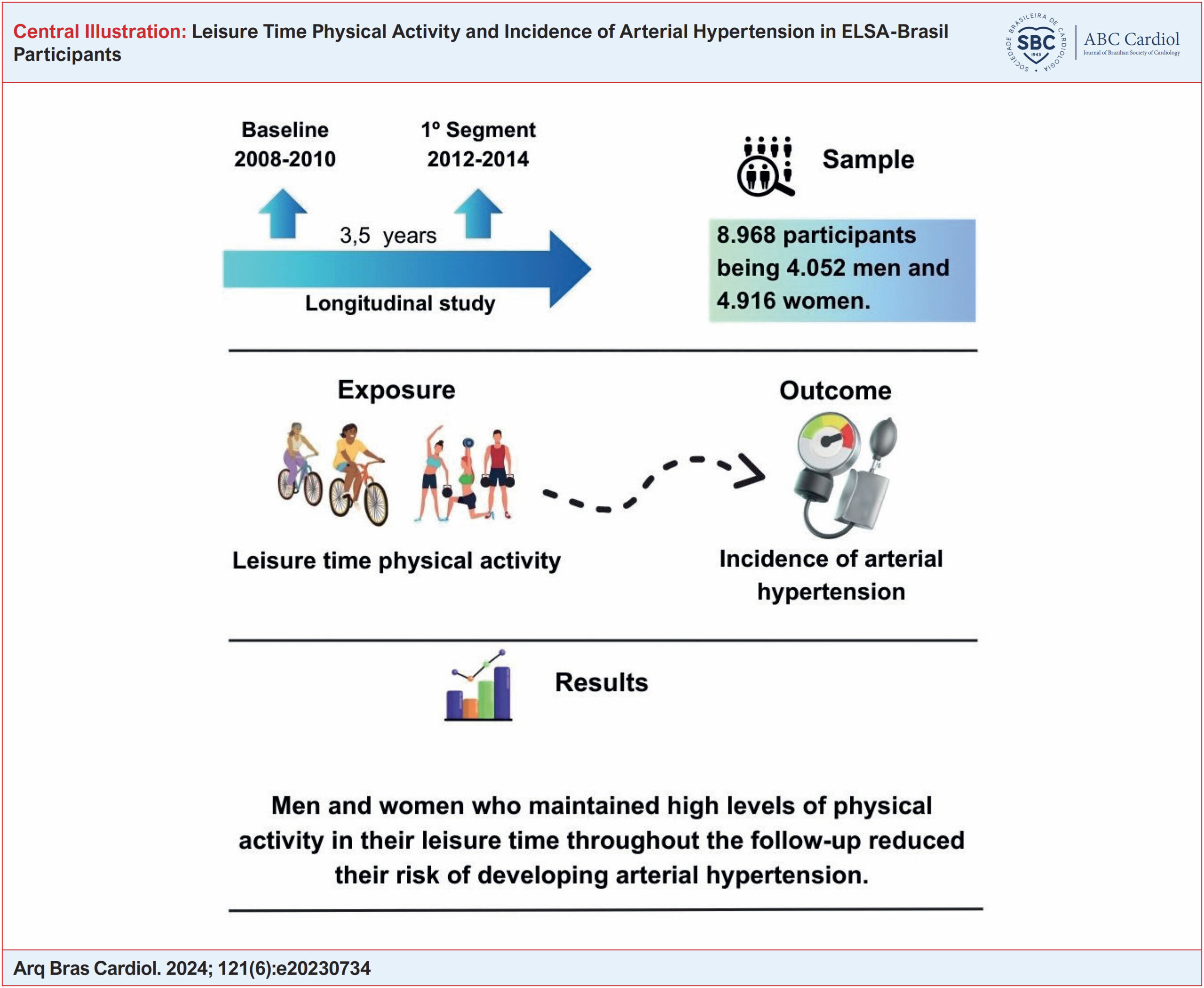
Leisure Time Physical Activity and Incidence of Arterial Hypertension in ELSA-Brasil Participants
Original Article

Leisure Time Physical Activity and Incidence of Arterial Hypertension in ELSA-Brasil Participants

Tarcísio C. Souza et al. Sheila M. A. Matos Maria da C. C. de Almeida Maria J. M. Fonseca … Maria del Carmen B. Molina Rosane H. Griep Cristiano P. S. Pitanga Francisco J. G. Pitanga

Abstract

Background:

Evidence indicates that physical activity (PA) has a protective effect against chronic diseases, including high arterial hypertension (AH).

Objective:

This study investigated, longitudinally, the association between changes in leisure time physical activity (LTPA) and the incidence of hypertension in ELSA-Brasil participants.

Methods:

Data from 8,968 participants were analyzed at two different times (2008-2010 and 2012-2014). The International Physical Activity Questionnaire (IPAQ), long version, was used to assess LTPA. The association between LTPA and AH was tested using Poisson regression with relative risk (RR) estimation, with a significance level of 5% and a 95% confidence interval.

Results:

When the LTPA level variable was categorized as sufficient and insufficient, no statistically significant associations were found between LTPA and AH incidence as a function of changes in PA during follow-up. However, when the LTPA variable was categorized as inactive, little active, active, and very active, a statistically significant association was observed between LTPA and AH in participants classified as very physically active. The risk of AH was reduced by 35% among men RR 0.65 (95% CI 0.50-0.86) and by 66% among women RR 0.34 (95% CI 0.20-0.58) who maintained high levels of LTPA at both moments of follow-up.

Conclusion:

These results suggest that maintaining high levels of PA over time is associated with a lower risk of developing AH, highlighting the importance of PA in preventing this condition, for both men and women.

  • Cardiovascular Diseases
  • Epidemiology
  • Longitudinal Studies
  • Public Health
Read Full Article
Creative Commons Attribution (CC BY) Creative Commons license
02/08/2024 DOI: 10.36660/abc.20230734i Views 2
Torsemide versus Furosemide in the Treatment of Heart Failure: A Systematic Review and Meta-Analysis of Randomized Controlled Trials
Review Article

Torsemide versus Furosemide in the Treatment of Heart Failure: A Systematic Review and Meta-Analysis of Randomized Controlled Trials

Larissa Teixeira et al. Nicole Felix Denilsa D. P. Navalha Rafael Ferreira … Mariana R.C. Clemente Thiago Madeira Alleh Nogueira Lucas Tramujas

Abstract

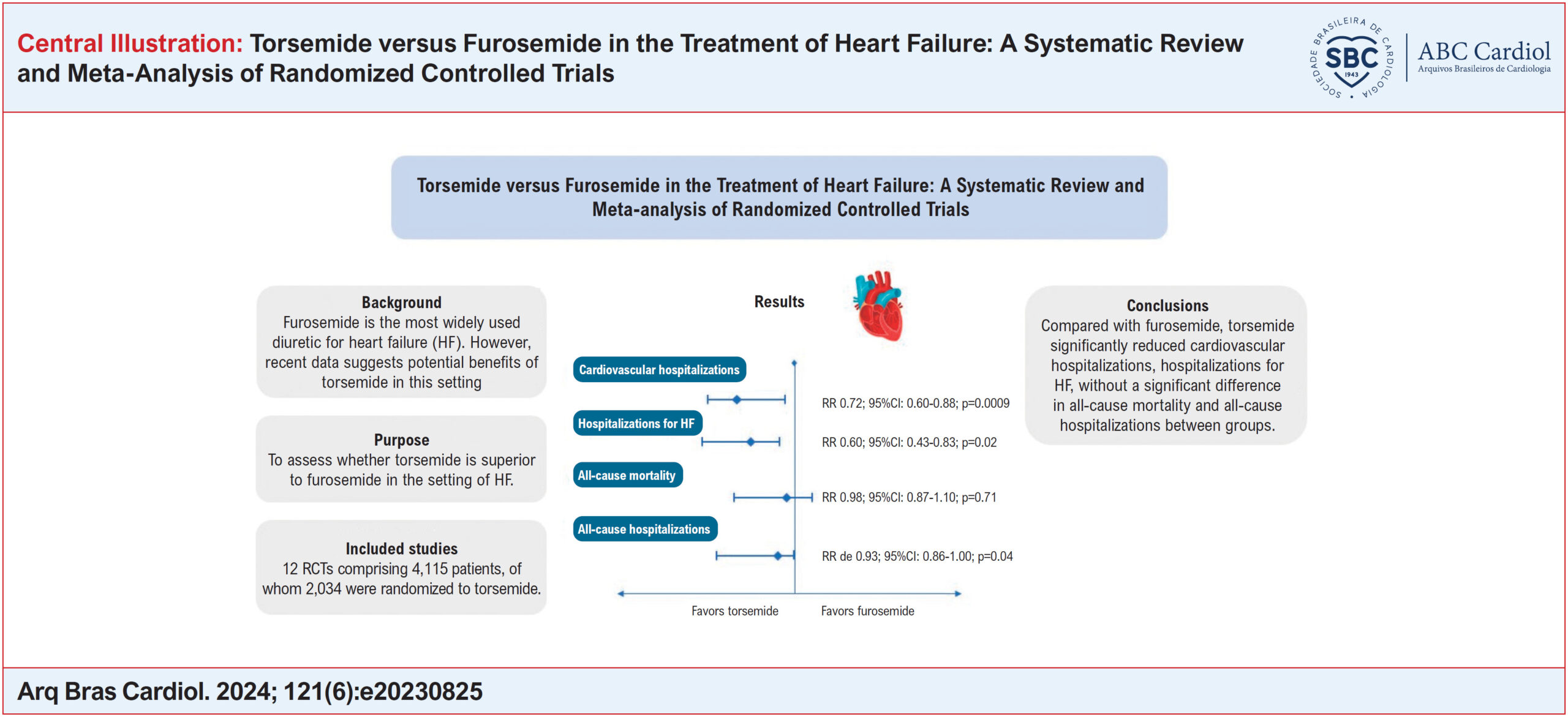
Furosemide is the most used diuretic for volume overload symptoms in patients with heart failure (HF). Recent data suggested that torsemide may be superior to furosemide in this setting. However, whether this translates into better clinical outcomes in this population remains unclear.

To assess whether torsemide is superior to furosemide in the setting of HF.

We performed a systematic review and meta-analysis of RCTs comparing the efficacy of torsemide versus furosemide in patients with HF. PubMed, Embase, and Web of Science were searched for eligible trials. Outcomes of interest were all-cause hospitalizations, hospitalizations for HF (HHF), hospitalizations for all cardiovascular causes, all-cause mortality, and NYHA class improvement. Echocardiographic parameters were also assessed. We applied a random-effects model to calculate risk ratios (RR) and mean differences (MD) with 95% confidence intervals (CI) and a 0.05 level of significance.

12 RCTs were included, comprising 4,115 patients. Torsemide significantly reduced HHF (RR 0.60; 95% CI, 0.43-0.83; p=0.002; I2=0%), hospitalization for cardiovascular causes (RR 0.72; 95% CI, 0.60-0.88; p=0.0009; I2=0%), and improved LVEF (MD 4.51%; 95% CI, 2.94 to 6.07; p<0.0001; I2=0%) compared with furosemide. There was no significant difference in all-cause hospitalizations (RR 0.93; 95% CI, 0.86-1.00; p=0.04; I2=0%), all-cause mortality (RR 0.98; 95% CI, 0.87-1.10; p=0.73; I2=0%), NYHA class improvement (RR 1.25; 95% CI, 0.92-1.68; p=0.15; I2=0%), or NYHA class change (MD -0.04; 95% CI, -0.24 to 0.16; p=0.70; I2=15%) between groups.

Torsemide significantly reduced hospitalizations for HF and cardiovascular causes, also improving LVEF.

  • Furosemide
  • Heart Failure
  • Sodium Potassium Chloride Symporter Inhibitors
Read Full Article
Creative Commons Attribution (CC BY) Creative Commons license
22/07/2024 DOI: 10.36660/abc.20230825i Views 1
Editorial

Understanding Cardiac Alterations in Familial Partial Lipodystrophy: Insights from Echocardiography

Silvio Henrique Barberato

Lipodystrophies are a diverse group of diseases characterized by a loss of fatty tissue in the body. Consequently, lipids are stored in non-fat cells, leading to major metabolic consequences, such as liver steatosis and insulin resistance, and increased risk of cardiovascular diseases due to premature atherosclerosis. Lipodystrophies can be classified as congenital or acquired, and generalized or partial, depending on the extent of fat distribution disturbance. Unlike congenital generalized lipodystrophy (CGL), patients with familial partial lipodystrophy (PL) do not have a widespread lack of fat throughout the body but rather a localized loss of fat in limbs and trunk. PL is a rare genetic disorder often accompanied by mutations in the lamin A/C gene (LMNA), belonging to the complex group of laminopathies that can lead to muscular and cardiac dystrophies, neuropathies, and syndromes of premature aging., Due to the rarity of the lipodystrophies and the phenotypic range of cardiac manifestations, only case reports and studies with limited numbers of patients, mostly restricted to individuals with CGL, are available.

Cardiomyopathy associated with familial PL remains underexplored despite its potential to cause early mortality. While premature atherosclerosis and cardiac arrhythmias are common, the direct impact of gene mutations on cardiac structure and function is unclear. Previous reports have described different phenotypes of cardiomyopathies in this group of patients, ranging from isolated left ventricular (LV) hypertrophy and hypertrophic cardiomyopathy to dilated cardiomyopathy.

[…]

  • Echocardiography
  • Heart Function Tests
  • Lipodystrophy
Read Full Article
Creative Commons Attribution (CC BY) Creative Commons license
22/07/2024 DOI: 10.36660/abc.20240305i Views 1
Letter to the Editor

Reflections on ECG Preoperative Screening for Asymptomatic Low-Risk Individuals

José Nunes de Alencar

I read with interest the study by Ramos et al. on the ” Prognostic Value of Preoperative Electrocardiogram in Low-Risk Patients Undergoing Surgical Intervention and General Anesthesia”. The authors’ efforts to clarify the predictive efficacy of preoperative electrocardiography (ECG) in a population that appears to have a low-risk profile are meritorious. Nonetheless, I harbor concerns regarding the employed methodology, which may potentially impact the study’s findings.

Directly examining the hypothesis that an abnormal ECG can serve as a predictor of events is essential. This secondary analysis was incorporated by the authors within a subset of the population that underwent ECG. To robustly test their hypothesis, the primary analysis should have been whether an abnormal ECG is a predictor of increased risk compared to normal ECG findings. Implementing this methodology would yield a more precise assessment of the ECG’s ability to forecast postoperative complications.

[…]

  • electrocardiogram
  • Preoperative
Read Full Article
Creative Commons Attribution (CC BY) Creative Commons license
22/07/2024 DOI: 10.36660/abc.20240055i Views 1
Association of Pan Immune-Inflammation Value with Long Term Outcomes of Acute Decompensated Heart Failure
Original Article

Association of Pan Immune-Inflammation Value with Long Term Outcomes of Acute Decompensated Heart Failure

Bektas Murat et al. Selda Murat Mehmet Eren Altınbas Halit Emre Yalvac … Fatih Enes Durmaz Kadir Ugur Mert Yüksel Cavusoglu

Abstract

Background

Although there have been significant improvements in the treatment of heart failure (HF) in recent decades, its prognosis remains poor. Although there are many biomarkers that can help predict the prognosis of patients with HF, there is a need for simpler, cheaper, and more easily available biomarkers.

Objective

To evaluate the predictive value of pan-immune-inflammation value (PIV) in patients with acute decompensated HF.

Methods

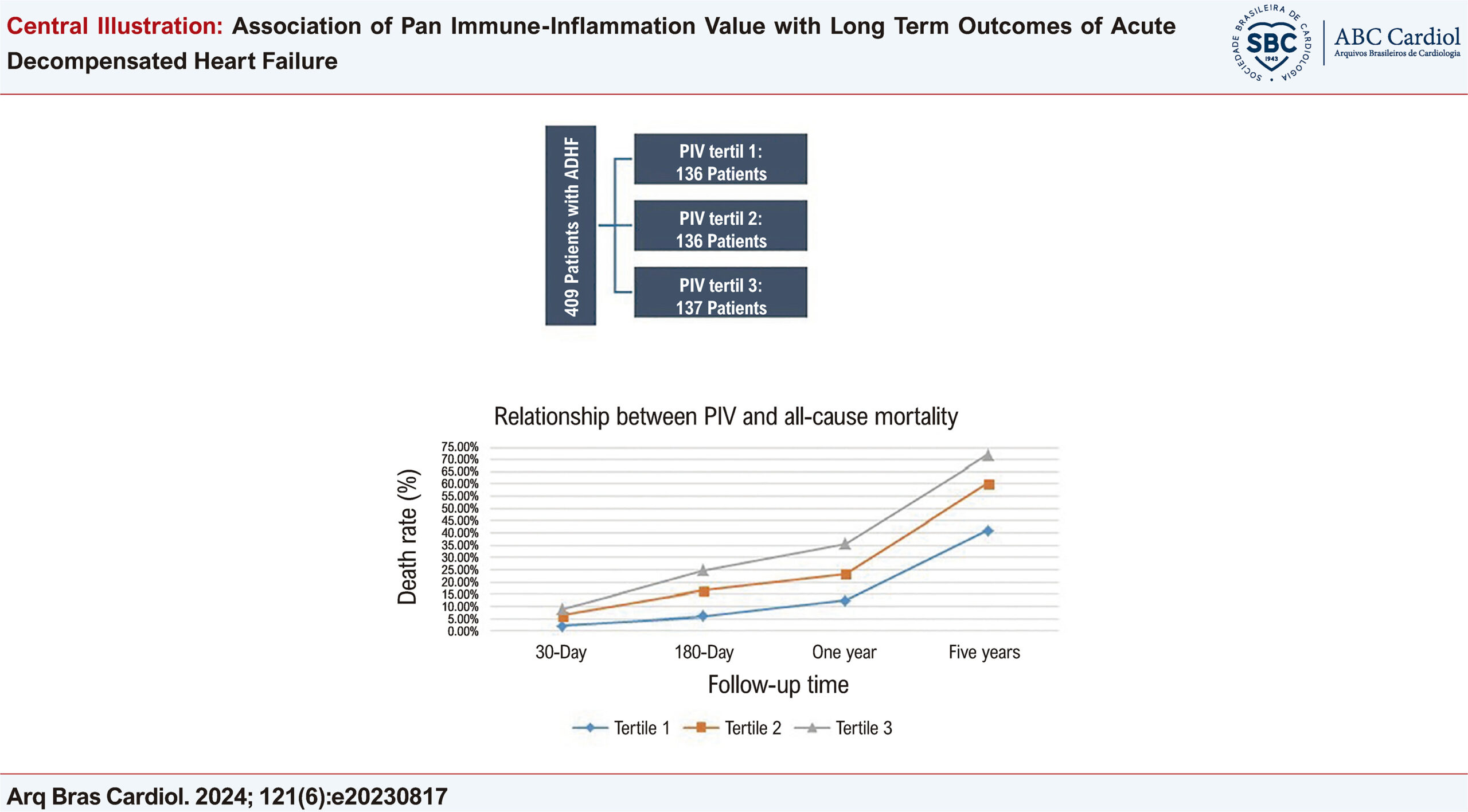
We analyzed 409 patients with HF with reduced ejection fraction who were hospitalized for acute decompensated HF. Patients were divided into 3 groups according to tertiles of PIV: tertile 1 (PIV < 357.25), tertile 2 (PIV ≥ 357.25 and < 834.55), and tertile 3 (PIV ≥ 834.55). P values < 0.05 were considered statistically significant. Kaplan-Meier curves and Cox proportional hazards regression models were used to evaluate the association between PIV and all-cause mortality. The primary outcome was 5-year all-cause mortality, and the secondary outcomes were in-hospital 30 days,, 180-day, and 1-year all-cause mortality.

Results

We showed that higher PIV value was associated with both primary and secondary outcomes. The Kaplan-Meier curve showed that patients with higher PIV values had an increased risk of short- and long-term all-cause mortality (log-rank p < 0.001). In the multivariate analysis, PIV was identified as an independent predictor of long-term all-cause mortality in patients with acute decompensated HF, and we observed a 1.96-fold increase in the hazard of an event (odds ratio: 1.96, 95% confidence interval: 1.330 to 2.908, p = 0.001).

Conclusions

Our study showed that the novel biomarker PIV can be used as a predictor of prognosis in patients with acute decompensated HF.

  • Biomarkers
  • Mortality
  • Systolic Heart Failure
Read Full Article
Creative Commons Attribution (CC BY) Creative Commons license
15/07/2024 DOI: 10.36660/abc.20230817i Views 1
Inflammation Burden and Atrial Fibrillation Burden: A Bidirectional Relationship
Original Article

Inflammation Burden and Atrial Fibrillation Burden: A Bidirectional Relationship

Abdulrahman Naser et al. Samet Sayilan Oya Güven Büşra Güvendi Şengör … Atakan Biçici Yücel Uzun Ahmet Ekmekçi Alev Kılıçgedik

Abstract

Background

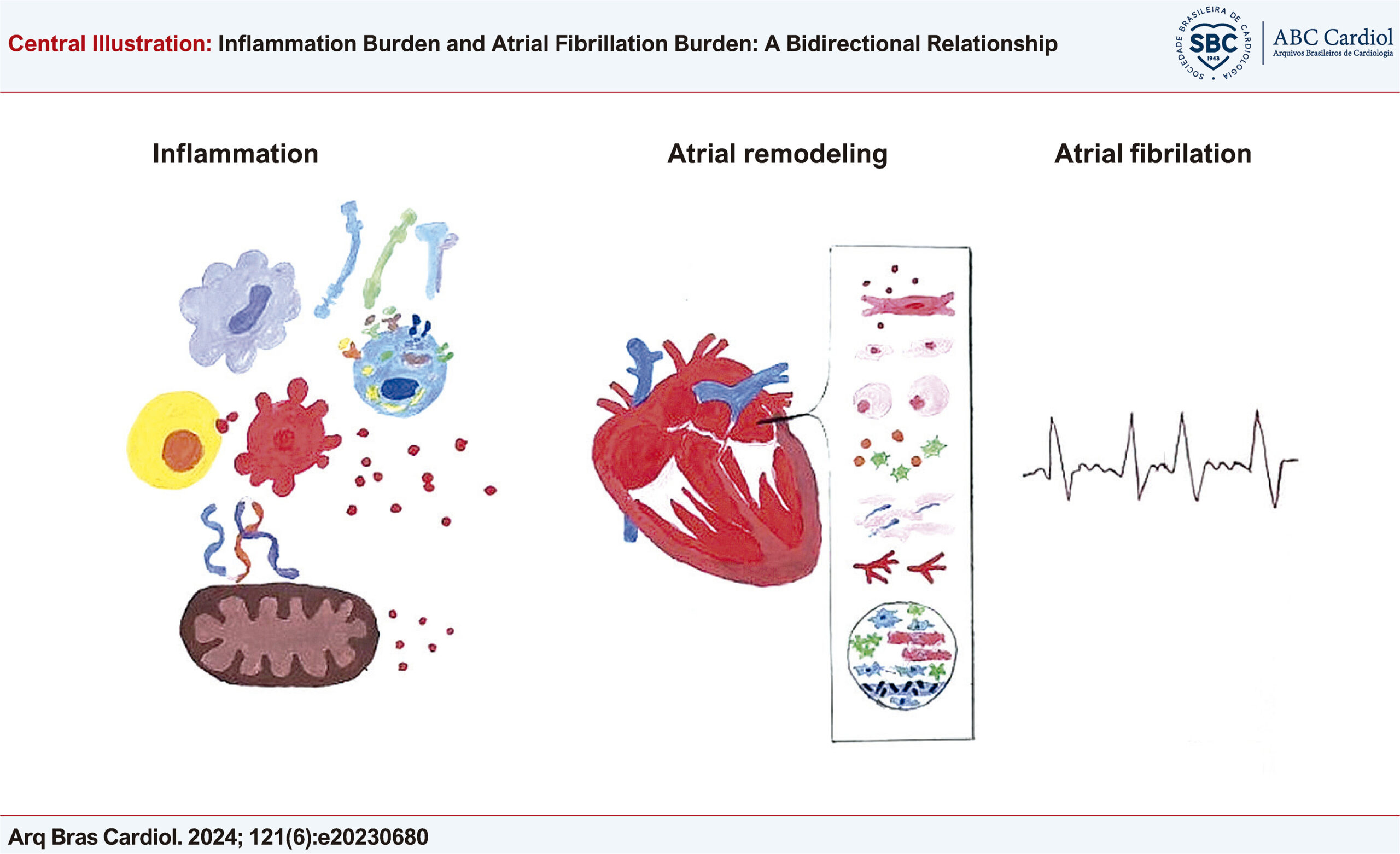
Atrial fibrillation (AF) burden is defined as the proportion of time the patient remains in AF over a given period of time; thus, it is theoretically highest in permanent AF and lowest in paroxysmal AF. Inflammation is associated with the initiation and maintenance of AF. However, the relationship between systemic immune-inflammation index (SII) and AF burden is unknown.

Objective

In the present study, we investigated the relationship between SII and AF burden.

Methods

The present study is a cross-sectional analysis of 453 patients (252 females and 201 males, aged 44 to 94 years) with AF (138 with paroxysmal AF and 315 with permanent AF) who visited the cardiology outpatient clinic between October 2022 and June 2023. SII was calculated as (neutrophils × platelets/lymphocytes). The predictive role of SII and other inflammatory markers in the likelihood of AF pattern was evaluated by logistic regression analyses, and p value < 0.05 was considered statistically significant.

Results

Age, diastolic blood pressure, heart rate, diabetes mellitus, neutrophil, platelet-to-lymphocyte ratio, neutrophil-to-lymphocyte ratio, SII, C-reactive protein, red blood cell distribution width, hemoglobin A1c, and left atrial diameter were significantly higher in the permanent AF group. According to the logistic regression analysis, age (p = 0.038), diabetes mellitus (p = 0.024), red blood cell distribution width (p = 0.023), C-reactive protein (p = 0.010), SII (p = 0.001), and left atrial diameter (p < 0.001) significantly contributed to the prediction of the likelihood of permanent AF.

Conclusion

SII is independently associated with the AF burden. Prospective studies are needed to determine whether SII may be useful in identifying patients at high risk for AF progression.

  • Atrial Fibrillation
  • Inflammation
  • Systemic Immune-inflammation Index
Read Full Article
Creative Commons Attribution (CC BY) Creative Commons license
15/07/2024 DOI: 10.36660/abc.20230680i Views 1
Editorial

Chagas Disease Reactivation after Heart Transplant: Importance of New Predictors

Roberto M. Saraiva et al. Andréa R. Costa

Chronic Chagas disease (CD) affects around 3.7 million Brazilians according to the most recent estimative. As around 30-40% of this population present with the cardiac form, it comes as no surprise that CD is the third most frequent etiology among patients undergoing heart transplant in Brazil. As induction and/or maintenance immunosuppressive therapy carry the risk of CD reactivation (CDR), heart transplant safety could be questioned in CD. However, the experience in Brazil established heart transplants as the leading alternative treatment for CD patients with end-stage heart failure. In fact, the post-transplant survival of patients with CD in Brazil is 76%, 71%, and, 46% after 6 months, five, and 10 years, respectively, and better than the survival of heart transplant recipients with either ischemic or idiopathic cardiomyopathies.,

CDR incidence after heart transplant varies from 19.6% to 90%. CDR can induce symptoms of acute CD (fever, anemia, jaundice), myocarditis, panniculitis, meningoencephalitis, and brain abscess. Myocarditis is the most frequent complication and may present severe symptoms compatible with heart failure, cardiac arrhythmia, and even cardiogenic shock. Fortunately, CDR properly diagnosed and treated results in less than 1% mortality.

[…]

  • Chagas disease
  • Latent Infection
  • Risk Factors
Read Full Article
Creative Commons Attribution (CC BY) Creative Commons license
15/07/2024 DOI: 10.36660/abc.20240284i Views 1
Figure 1
Research Letter

Incomplete Kawasaki Disease Diagnosed only with Prolonged Fever: Report of Two Cases and Review of the Literature

Hikmet Kiztanir et al. Ayse Sulu Pelin Kosger Tugcem Akin Birsen Ucar

Introduction

Kawasaki disease (KD) is an acute febrile vasculitis of unknown cause. Incomplete (atypical) KD has been defined for patients who do not meet the classical characteristic diagnostic criteria. The incidence of coronary artery aneurysm development is higher in patients with incomplete KD due to delays in diagnosis and treatment. In the literature, patients who do not meet the diagnostic criteria but are diagnosed solely with fever are very rare. Here, we present two cases of KD who were diagnosed with coronary artery aneurysm and supportive laboratory findings with no characteristic signs other than high fever. The first case was a 3-year-old girl who was diagnosed with KD after an echocardiographic examination on the 14th day of the fever revealed a coronary artery aneurysm.– The second case was diagnosed on the 8th day of the fever because of the involvement of the coronary arteries without other classic Kawasaki findings. Both patients had been given antibiotherapy with different diagnoses such as gastroenteritis and urinary tract infection before the diagnosis of KD. Both cases were diagnosed before the COVID-19 pandemic. Therefore, multisystem inflammatory disease in children (MIS-C) was not considered. We aimed to emphasize the importance of considering KD in children with unexplained fever and high acute phase reactants, even in the absence of characteristic diagnostic criteria, and the need for serial controls to evaluate suspected patients with echocardiography and other supportive laboratory findings

[…]

  • Incomplete Kawasaki Disease
  • Mucocutaneous Lymph Node Syndrome
Read Full Article
Creative Commons Attribution (CC BY) Creative Commons license
15/07/2024 DOI: 10.36660/abc.20230163i Views 1
Figure 1
Image

Multiple Intracardiac Metastases – A Chaplet Heart

Mariana Tinoco et al. Margarida Castro Hans Dabó Filipa Cordeiro … Pedro von Hafe António Lourenço

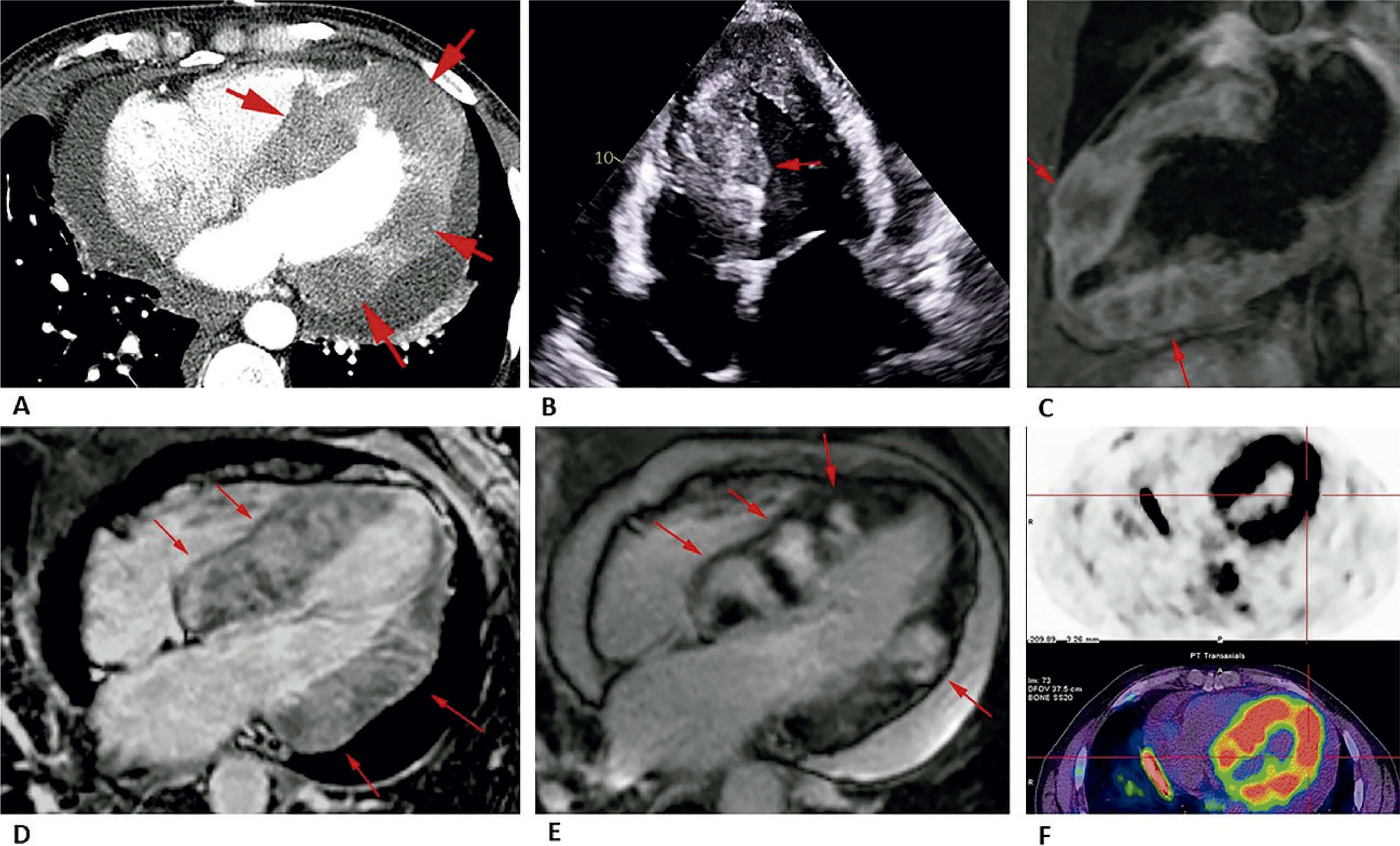
A 52-year-old male was undergoing first-line chemotherapy with pemetrexed due to a stage IV right hilar lung adenocarcinoma with likely pleural, pericardial, liver, and bone metastases. During follow-up, no evidence of disease progression was found. Four years later a follow-up chest CT scan documented a nodular heterogeneous enhancement of the left ventricular (LV) myocardium (), the remaining lesions were overlapping. He had no cardiovascular symptoms and clinical examination was unremarkable. Transthoracic echocardiography () and cardiac MRI (Figures 1C-E) revealed several well-rounded endo-myocardial masses, some of which multilobulated sometimes with almost transmural extension. The lesions are predominantly distributed along the LV inferoseptal wall, inferolateral wall, anterolateral wall, anterior wall, and right side of the interventricular septum. These lesions had heterogeneous signal characteristics, being predominantly hyperintense on T1-weighted images, hypointense on T2-weighted images with a peripheral halo of hyperintensity, showing early heterogeneous and late intense gadolinium enhancement; and abnormal uptake of fluorodeoxyglucose in a 18F-FDG PET/CT ().

[…]

  • Cardioncology
  • Diagnostic Imaging/methods
  • Echocardiography/methods
  • Multimodal Imaging
  • Neoplasm Metastasis
Read Full Article
Creative Commons Attribution (CC BY) Creative Commons license
15/07/2024 DOI: 10.36660/abc.20230732i
Absolute Lymphocyte Count: a Predictor of Positive Serum PCR for Trypanosoma cruzi in Patients with Chagas Disease Undergoing Heart Transplantation
Original Article

Absolute Lymphocyte Count: a Predictor of Positive Serum PCR for Trypanosoma cruzi in Patients with Chagas Disease Undergoing Heart Transplantation

Plínio José Whitaker Wolf et al. Marco Aurelio Finger João Manoel Rossi Neto Carolina Casadei Santos … Victor Bemfica de Mello Mattos Raphael Rossi Lucas Petri Damiani

Abstract

Background

It is unknown whether lymphopenia is a risk factor for the reactivation of Chagas disease in heart transplantation (HTx), as recently described in the reactivation of cytomegalovirus in transplant patients.

Objective

To evaluate whether lymphopenia in the perioperative period of heart transplantation is related to early Trypanosoma cruzi parasitemia.

Methods

This observational, retrospective study analyzed a sample from January 2014 to January 2023). Parasitemia was evaluated in the first 3 months after HTx using serum polymerase chain reaction (PCR) and compared with the total lymphocyte count in the perioperative period of HTx using receiver operating characteristic curves. Baseline characteristics were compared with PCR for Chagas using independent Cox proportional hazards models. A significance level of 5% was adopted.

Results

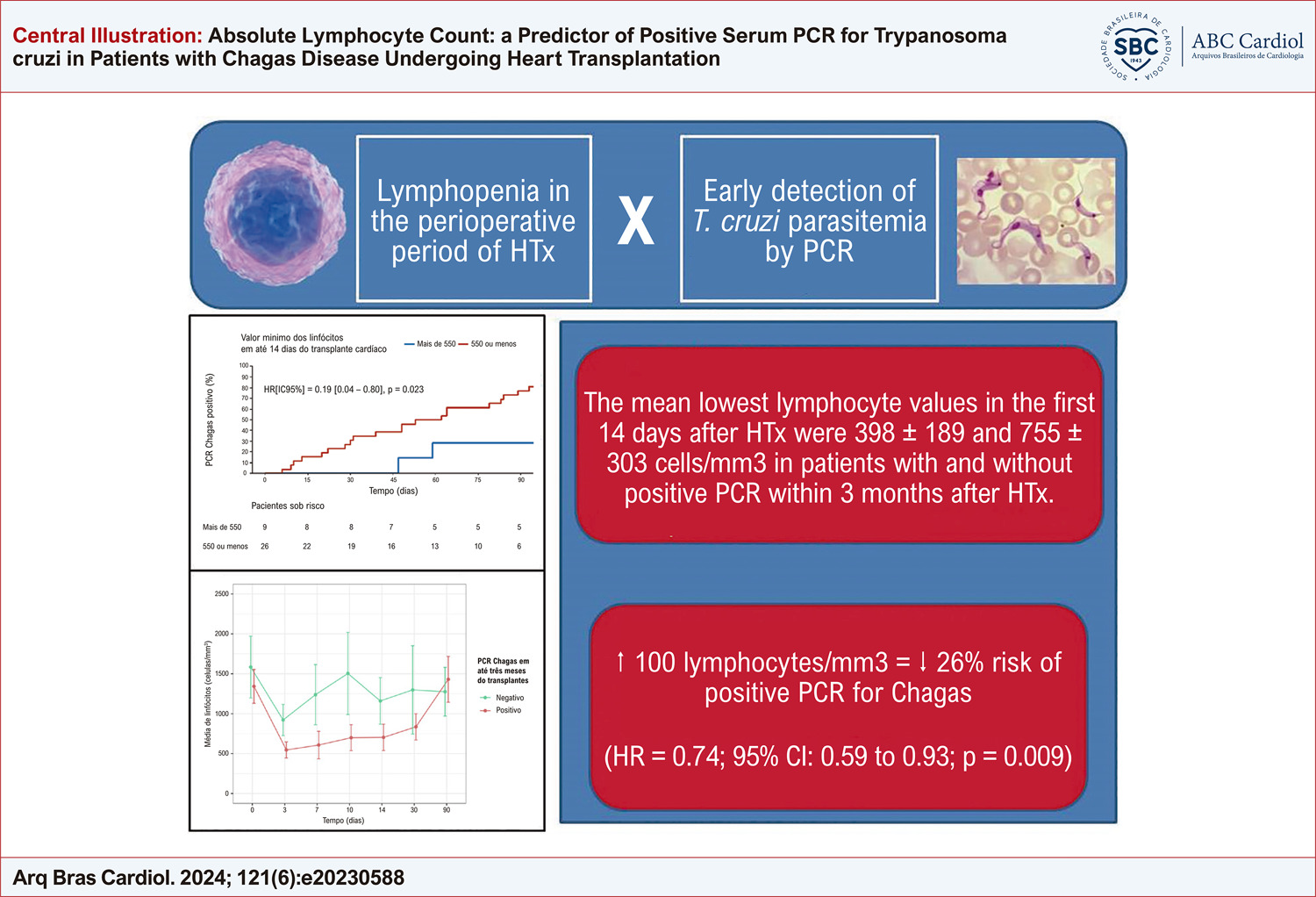
The sample (n = 35) had a mean age of 52.5 ± 8.1 years, and 22 patients (62.8%) had positive PCR for Chagas. The mean lowest lymphocyte values in the first 14 days after HTx were 398 ± 189 and 755 ± 303 cells/mm3 in patients with and without parasitemia, respectively, within 3 months after HTx (area under the curve = 0.857; 95% confidence interval: 0.996 to 0.718, sensitivity and specificity of 83.3% and 86.4%). A cutoff value of less than 550 lymphocytes/mm3 was determined as a risk factor for the presence of parasitemia. Patients with lymphocytes < 550 units/mm3 in the first 14 days after HTx presented positive PCR in 80% of cases. For every increase of 100 lymphocytes/mm3, the risk of PCR positivity was reduced by 26% (hazard rate ratio = 0.74; 95% confidence interval: 0.59 to 0.93, p = 0.009).

Conclusion

There was an association between lymphopenia in the perioperative period of HTx and early T. cruzi parasitemia detected by PCR.

  • Chagas disease
  • Heart Transplantation
  • Immunosuppression Therapy
  • Lymphopenia
Read Full Article
Creative Commons Attribution (CC BY) Creative Commons license
15/07/2024 DOI: 10.36660/abc.20230588i Views 2
Figure 1
Case Report

Deceptive Anteroseptal ST-segment Elevation and Brugada Pattern Caused by Isolated Conus Artery Occlusion

Hakan Gökalp Uzun et al. İrfan Özgen

Abstract

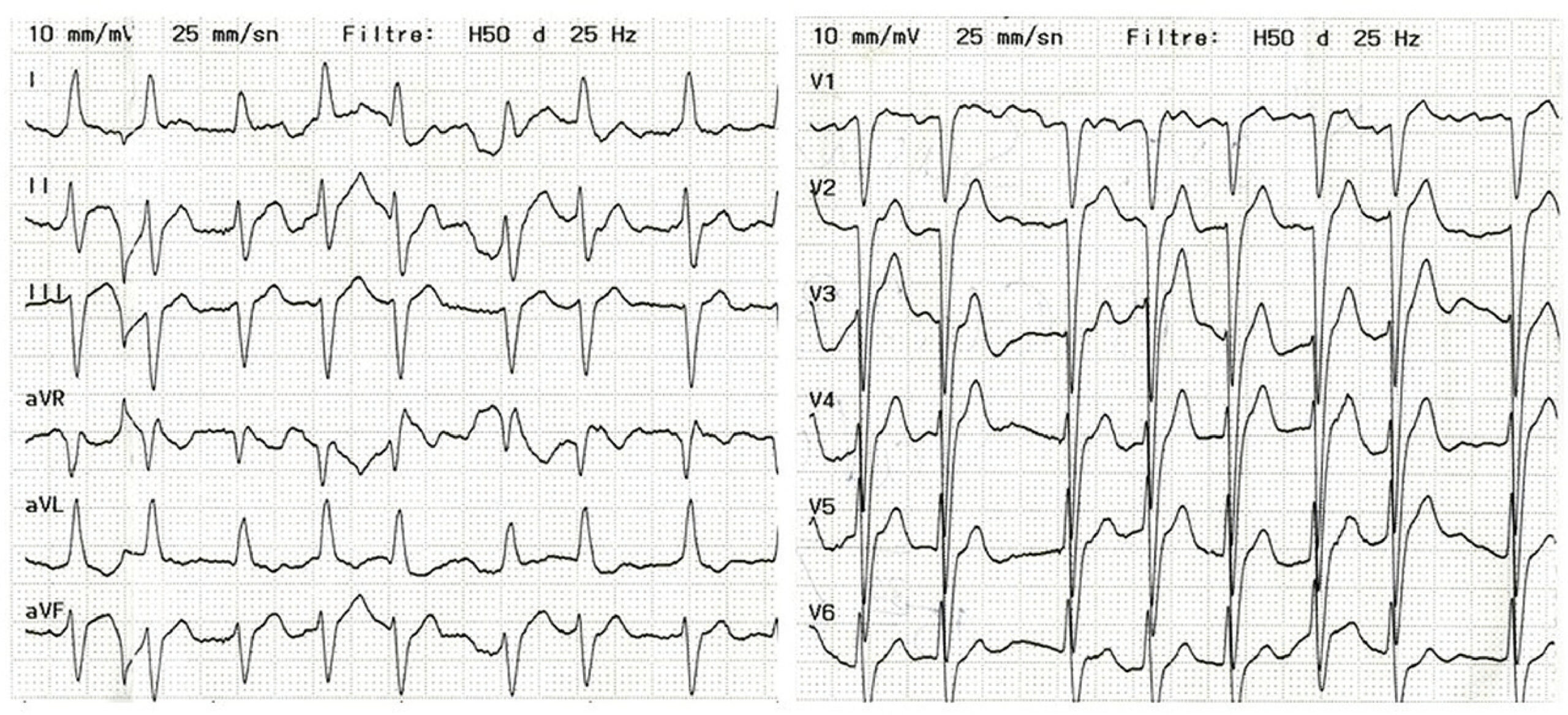
The conus artery (CA) supplies the right ventricular outflow tract (RVOT). ST-segment elevation in leads V1-3, which can resemble Brugada electrocardiogram (EKG) patterns, has been reported due to occlusion of the CA. A 68-year-old male was admitted to the hospital with a diagnosis of non-ST-elevation myocardial infarction. A coronary angiogram revealed a dissection in the conus artery, most likely caused by the catheter. Due to the small caliber of the CA, medical therapy was chosen as the course of action. However, after the procedure, an EKG showed changes consistent with features of both type-1 and type-2 Brugada patterns, with ST-segment elevations in leads V1-4. Subsequent coronary imaging revealed that the CA had progressed to total occlusion. Despite multiple attempts to gain reentry into the true lumen, they were unsuccessful. Based on the risk-benefit ratio, the decision was made to continue with medical therapy. This is the first reported case of CA occlusion induced by catheter dissection, which manifested as anteroseptal ST-segment elevation. The patient did not report any anginal symptoms or arrhythmic events, which contrasts with conventional knowledge. Not all CA obstructions or RVOT infarcts cause Brugada-like patterns. When they do, ST elevations tend to be less than those in true Brugada syndrome.

  • Brugada Syndrome
  • ST Elevation Myocardial Infarction
  • Ventricular Outflow Obstruction, Right
Read Full Article
Creative Commons Attribution (CC BY) Creative Commons license
15/07/2024 DOI: 10.36660/abc.20230749i Views 2
Figure 1
Research Letter

Wide QRS Tachycardias Management in Emergency Departments: What Really Matters

José Nunes de Alencar et al. Guilherme Dagostin de Carvalho Renan Teixeira Campelo Sandro Pinelli Felicioni … Matheus Kiszka Scheffer Mariana Nogueira De Marchi

Introduction

Studies have shown that 80% of wide QRS tachycardias are ventricular tachycardias (VT). This number rises to 90% if there is underlying structural heart disease.– Criteria for differentiating between VT and supraventricular tachycardia (SVT) exist, and they are important in clinical practice, but not necessarily for the purpose of providing an exact diagnosis in acute settings.–

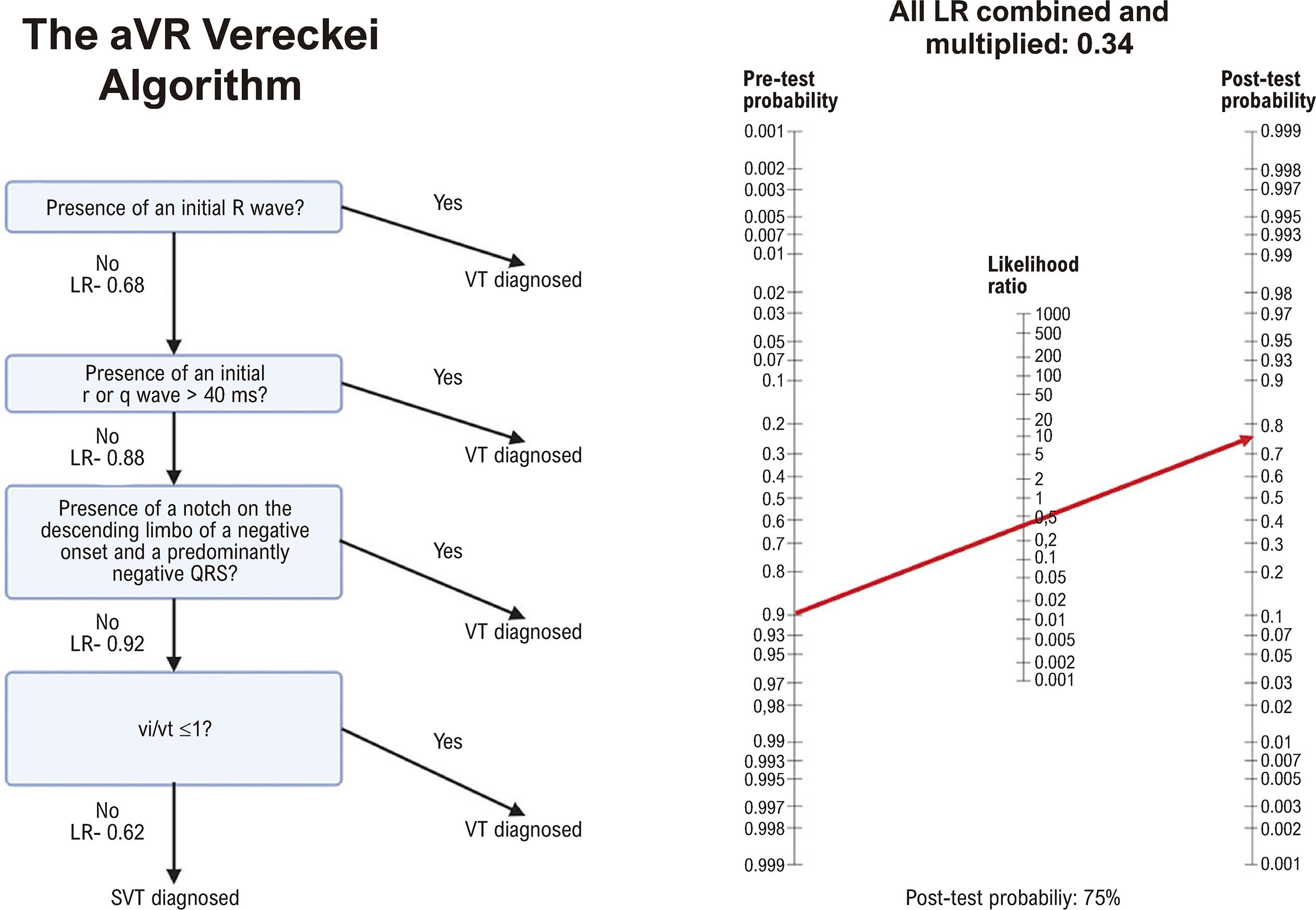
Although the criteria have been validated, they are not as effective at ruling out conditions as one might think. A real-world study showed that Vereckei’s criteria had a negative likelihood ratio of 0.34. This means that applying these criteria to a patient with a 90% pre-test probability would still result in a post-test probability of 75% for VT (). In that study, the Brugada criteria yielded a similar negative likelihood ratio of 0.24, resulting in a 68% probability for VT. Another reason not to rely solely on these criteria is the absence of baseline electrocardiogram (ECG) data. For instance, a patient with congenital heart disease may have a northwest axis and other unique findings. Similarly, a patient with Purkinje fiber blockage and electrically inactive zones may present with misleading ECG features., Adding to the complexity, idiopathic VT, such as fascicular VT, often present ECG patterns that mimic bundle branch or fascicular blocks, leading to misinterpretation. Another emblematic case is bundle-branch reentry VT, where the ECG during tachycardia will display morphological criteria of either left or right bundle branch block, further confounding the diagnosis.

[…]

  • Arrhythmias Cardiac
  • Electrocardiography
  • Hospital Emergency Service
  • Ventricular tachycardia
Read Full Article
Creative Commons Attribution (CC BY) Creative Commons license
15/07/2024 DOI: 10.36660/abc.20230829i Views 1
Clinical Impact of Assessment of Myocardial Flow Reserve in Identifying the Cause of Chest Discomfort
Original Article

Clinical Impact of Assessment of Myocardial Flow Reserve in Identifying the Cause of Chest Discomfort

Ronaldo Lima et al. André Luiz Ferreira Bezerra Marianna Daibes Claudio Domenico Andrea De Lorenzo

Abstract

Background:

Gamma cameras with cadmium-zinc telluride (CZT) detectors allowed the quantification of myocardial flow reserve (MBF), which can increase the accuracy of myocardial perfusion scintigraphy (MPS) to detect the cause of chest discomfort.

Objective:

To assess the clinical impact of MBF to detect the cause of chest discomfort.

Methods:

171 patients with chest discomfort who underwent coronary angiography or coronary CT angiography also underwent MPS and MBF in a time interval of <30 days. The acquisitions of dynamic imaging of rest and stress were initiated simultaneously with the 99mTc injection sestamibi (10 and 30mCi, respectively), both lasting eleven minutes, followed by immediately acquiring perfusion images for 5 minutes. The stress was performed with dipyridamole. A global or per coronary territory MBF <2.0 was classified as abnormal.

Results:

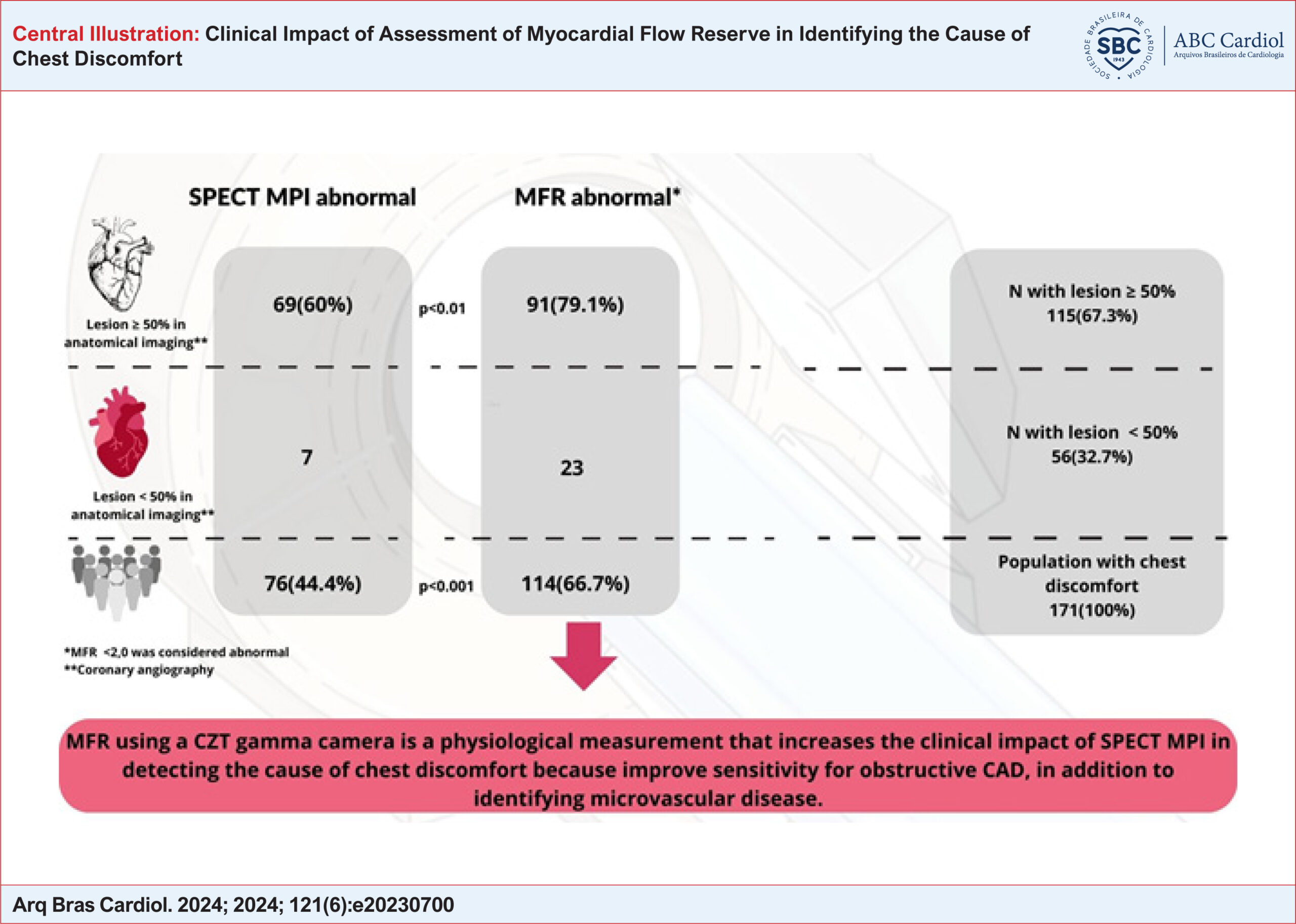
The average age was 65.9±10 years (60% female). The anatomical evaluation showed that 115 (67.3%) patients had coronary obstruction significant, with 69 having abnormal MPs and 91 having abnormal MBF (60.0% vs 79.1%, p<0.01). Among patients without obstruction (56 – 32.7%), 7 had abnormal MPS, and 23 had reduced global MBF. Performing MBF identified the etiology of the chest discomfort in 114 patients while MPS identified it in 76 (66.7% vs 44.4%, p<0.001).

Conclusion:

MBF is a quantifiable physiological measure that increases the clinical impact of MPS in detecting the cause of chest discomfort through greater accuracy for detecting obstructive CAD, and it also makes it possible to identify the presence of the microvascular disease.

  • Myocardium Flow Reserve
  • Myocardium Ischemia
  • SPECT
Read Full Article
Creative Commons Attribution (CC BY) Creative Commons license
08/07/2024 DOI: 10.36660/abc.20230700i Views 1

Could not load more articles. Please try again.

How to cite this article

EndNote RIS

Electronic Document Format (Vancouver)

Smanio PEP. Analysis of Myocardial Flow Reserve Using the CZT Camera. Additional Value to Perfusion and Functional Information in Identifying the Cause of Chest Discomfort. Arquivos Brasileiros de Cardiologia 2024;121(6):e20240366.

Electronic Document Format (ABNT)

Smanio, Paola Emanuela Poggio. Analysis of Myocardial Flow Reserve Using the CZT Camera. Additional Value to Perfusion and Functional Information in Identifying the Cause of Chest Discomfort. Arquivos Brasileiros de Cardiologia, v. 121, n. 6, e20240366, Sep. 2024.

Electronic Document Format (APA)

Smanio, P. E. P. (2024). Analysis of Myocardial Flow Reserve Using the CZT Camera. Additional Value to Perfusion and Functional Information in Identifying the Cause of Chest Discomfort. Arquivos Brasileiros de Cardiologia, 121(6), e20240366.

Electronic Document Format (ISO)

Smanio, Paola Emanuela Poggio. Analysis of Myocardial Flow Reserve Using the CZT Camera. Additional Value to Perfusion and Functional Information in Identifying the Cause of Chest Discomfort. Arquivos Brasileiros de Cardiologia [online]. 2024, vol. 121, n. 6, [cited 2026-10-14], e20240366. Available from: <https://journals.cardiol.br/en/article/analysis-of-myocardial-flow-reserve-using-the-czt-camera-additional-value-to-perfusion-and-functional-information-in-identifying-the-cause-of-chest-discomfort/>. ISSN 0066-782X

EndNote RIS

Electronic Document Format (Vancouver)

Carmo A, Ribeiro ALP. Revisiting ICD Use in Chagas Cardiomyopathy: Current Evidence and Future Directions. Arquivos Brasileiros de Cardiologia 2024;121(6):e20240423.

Electronic Document Format (ABNT)

Carmo, André; Ribeiro, Antônio Luiz Pinho. Revisiting ICD Use in Chagas Cardiomyopathy: Current Evidence and Future Directions. Arquivos Brasileiros de Cardiologia, v. 121, n. 6, e20240423, Aug. 2024.

Electronic Document Format (APA)

Carmo, A., & Ribeiro, A. L. P. (2024). Revisiting ICD Use in Chagas Cardiomyopathy: Current Evidence and Future Directions. Arquivos Brasileiros de Cardiologia, 121(6), e20240423.

Electronic Document Format (ISO)

Carmo, André and Ribeiro, Antônio Luiz Pinho. Revisiting ICD Use in Chagas Cardiomyopathy: Current Evidence and Future Directions. Arquivos Brasileiros de Cardiologia [online]. 2024, vol. 121, n. 6, [cited 2026-10-14], e20240423. Available from: <https://journals.cardiol.br/en/article/revisiting-icd-use-in-chagas-cardiomyopathy-current-evidence-and-future-directions/>. ISSN 0066-782X

EndNote RIS

Electronic Document Format (Vancouver)

Tonon CR, Polegato BF. Long Non-Coding RNA, Apoptosis, and Doxorubicin-Induced Cardiotoxicity. Arquivos Brasileiros de Cardiologia 2024;121(6):e20240331.

Electronic Document Format (ABNT)

Tonon, Carolina R.; Polegato, Bertha F.. Long Non-Coding RNA, Apoptosis, and Doxorubicin-Induced Cardiotoxicity. Arquivos Brasileiros de Cardiologia, v. 121, n. 6, e20240331, Aug. 2024.

Electronic Document Format (APA)

Tonon, C. R., & Polegato, B. F. (2024). Long Non-Coding RNA, Apoptosis, and Doxorubicin-Induced Cardiotoxicity. Arquivos Brasileiros de Cardiologia, 121(6), e20240331.

Electronic Document Format (ISO)

Tonon, Carolina R. and Polegato, Bertha F.. Long Non-Coding RNA, Apoptosis, and Doxorubicin-Induced Cardiotoxicity. Arquivos Brasileiros de Cardiologia [online]. 2024, vol. 121, n. 6, [cited 2026-10-14], e20240331. Available from: <https://journals.cardiol.br/en/article/long-non-coding-rna-apoptosis-and-doxorubicin-induced-cardiotoxicity/>. ISSN 0066-782X

EndNote RIS

Electronic Document Format (Vancouver)

Pereira FTM, Rocha EA, Gondim DSP, Almeida RLF, Pires Neto RJ. Predictors of Appropriate Therapies and Death in Patients with Implantable Cardioverter-Defibrillator and Chronic Chagas Heart Disease. Arquivos Brasileiros de Cardiologia 2024;121(6):e20230337.

Electronic Document Format (ABNT)

Pereira, Francisca Tatiana Moreira; Rocha, Eduardo Arrais; Gondim, Davi Sales Pereira; Almeida, Rosa Livia Freitas de; Pires Neto, Roberto da Justa. Predictors of Appropriate Therapies and Death in Patients with Implantable Cardioverter-Defibrillator and Chronic Chagas Heart Disease. Arquivos Brasileiros de Cardiologia, v. 121, n. 6, e20230337, Aug. 2024.

Electronic Document Format (APA)

Pereira, F. T. M., Rocha, E. A., Gondim, D. S. P., Almeida, R. L. F. , & Pires Neto, R. J. (2024). Predictors of Appropriate Therapies and Death in Patients with Implantable Cardioverter-Defibrillator and Chronic Chagas Heart Disease. Arquivos Brasileiros de Cardiologia, 121(6), e20230337.

Electronic Document Format (ISO)

Pereira, Francisca Tatiana Moreira and Rocha, Eduardo Arrais and Gondim, Davi Sales Pereira and Almeida, Rosa Livia Freitas de and Pires Neto, Roberto da Justa. Predictors of Appropriate Therapies and Death in Patients with Implantable Cardioverter-Defibrillator and Chronic Chagas Heart Disease. Arquivos Brasileiros de Cardiologia [online]. 2024, vol. 121, n. 6, [cited 2026-10-14], e20230337. Available from: <https://journals.cardiol.br/en/article/predictors-of-appropriate-therapies-and-death-in-patients-with-implantable-cardioverter-defibrillator-and-chronic-chagas-heart-disease/>. ISSN 0066-782X

EndNote RIS

Electronic Document Format (Vancouver)

Lima J, Franzoni L, Monteiro EP. Is There a Relationship Between Physical Activity in Free Time and the Incidence of High Blood Pressure?. Arquivos Brasileiros de Cardiologia 2024;121(6):e20240318.

Electronic Document Format (ABNT)

Lima, Jacqueline; Franzoni, Leandro; Monteiro, Elren Passos. Is There a Relationship Between Physical Activity in Free Time and the Incidence of High Blood Pressure?. Arquivos Brasileiros de Cardiologia, v. 121, n. 6, e20240318, Aug. 2024.

Electronic Document Format (APA)

Lima, J., Franzoni, L., & Monteiro, E. P. (2024). Is There a Relationship Between Physical Activity in Free Time and the Incidence of High Blood Pressure?. Arquivos Brasileiros de Cardiologia, 121(6), e20240318.

Electronic Document Format (ISO)

Lima, Jacqueline and Franzoni, Leandro and Monteiro, Elren Passos. Is There a Relationship Between Physical Activity in Free Time and the Incidence of High Blood Pressure?. Arquivos Brasileiros de Cardiologia [online]. 2024, vol. 121, n. 6, [cited 2026-10-14], e20240318. Available from: <https://journals.cardiol.br/en/article/is-there-a-relationship-between-physical-activity-in-free-time-and-the-incidence-of-high-blood-pressure/>. ISSN 0066-782X

EndNote RIS

Electronic Document Format (Vancouver)

Darrieux F. Inflammation and Atrial Fibrillation: An Exclusive Association or an Accomplice to the Cardiovascular Continuum of Additional Risk Factors?. Arquivos Brasileiros de Cardiologia 2024;121(6):e20240382.

Electronic Document Format (ABNT)

Darrieux, Francisco. Inflammation and Atrial Fibrillation: An Exclusive Association or an Accomplice to the Cardiovascular Continuum of Additional Risk Factors?. Arquivos Brasileiros de Cardiologia, v. 121, n. 6, e20240382, Aug. 2024.

Electronic Document Format (APA)

Darrieux, F. (2024). Inflammation and Atrial Fibrillation: An Exclusive Association or an Accomplice to the Cardiovascular Continuum of Additional Risk Factors?. Arquivos Brasileiros de Cardiologia, 121(6), e20240382.

Electronic Document Format (ISO)

Darrieux, Francisco. Inflammation and Atrial Fibrillation: An Exclusive Association or an Accomplice to the Cardiovascular Continuum of Additional Risk Factors?. Arquivos Brasileiros de Cardiologia [online]. 2024, vol. 121, n. 6, [cited 2026-10-14], e20240382. Available from: <https://journals.cardiol.br/en/article/inflammation-and-atrial-fibrillation-an-exclusive-association-or-an-accomplice-to-the-cardiovascular-continuum-of-additional-risk-factors/>. ISSN 0066-782X

EndNote RIS

Electronic Document Format (Vancouver)

Martins EB, Lima EG, Linhares Filho JPP, Pinesi HT, Pitta FG, Serrano Júnior CV. Angina Pectoris and Orbita 2 Trial: Reflections on the Future of Angina Treatment. Arquivos Brasileiros de Cardiologia 2024;121(6):e20230848.

Electronic Document Format (ABNT)

Martins, Eduardo Bello; Lima, Eduardo Gomes; Linhares Filho, Jaime Paula Pessoa; Pinesi, Henrique Trombini; Pitta, Fabio Grunspun; Serrano Júnior, Carlos Vicente. Angina Pectoris and Orbita 2 Trial: Reflections on the Future of Angina Treatment. Arquivos Brasileiros de Cardiologia, v. 121, n. 6, e20230848, Aug. 2024.

Electronic Document Format (APA)

Martins, E. B., Lima, E. G., Linhares Filho, J. P. P., Pinesi, H. T., Pitta, F. G., & Serrano Júnior, C. V. (2024). Angina Pectoris and Orbita 2 Trial: Reflections on the Future of Angina Treatment. Arquivos Brasileiros de Cardiologia, 121(6), e20230848.

Electronic Document Format (ISO)

Martins, Eduardo Bello and Lima, Eduardo Gomes and Linhares Filho, Jaime Paula Pessoa and Pinesi, Henrique Trombini and Pitta, Fabio Grunspun and Serrano Júnior, Carlos Vicente. Angina Pectoris and Orbita 2 Trial: Reflections on the Future of Angina Treatment. Arquivos Brasileiros de Cardiologia [online]. 2024, vol. 121, n. 6, [cited 2026-10-14], e20230848. Available from: <https://journals.cardiol.br/en/article/angina-pectoris-and-orbita-2-trial-reflections-on-the-future-of-angina-treatment/>. ISSN 0066-782X

EndNote RIS

Electronic Document Format (Vancouver)

Villacorta H. Inflammation and Prognosis in Acute Heart Failure: Is There a Role for Pan-Immune-Inflammation Value?. Arquivos Brasileiros de Cardiologia 2024;121(6):e20240286.

Electronic Document Format (ABNT)

Villacorta, Humberto. Inflammation and Prognosis in Acute Heart Failure: Is There a Role for Pan-Immune-Inflammation Value?. Arquivos Brasileiros de Cardiologia, v. 121, n. 6, e20240286, Aug. 2024.

Electronic Document Format (APA)

Villacorta, H. (2024). Inflammation and Prognosis in Acute Heart Failure: Is There a Role for Pan-Immune-Inflammation Value?. Arquivos Brasileiros de Cardiologia, 121(6), e20240286.

Electronic Document Format (ISO)

Villacorta, Humberto. Inflammation and Prognosis in Acute Heart Failure: Is There a Role for Pan-Immune-Inflammation Value?. Arquivos Brasileiros de Cardiologia [online]. 2024, vol. 121, n. 6, [cited 2026-10-14], e20240286. Available from: <https://journals.cardiol.br/en/article/inflammation-and-prognosis-in-acute-heart-failure-is-there-a-role-for-pan-immune-inflammation-value/>. ISSN 0066-782X

EndNote RIS

Electronic Document Format (Vancouver)

Martins LCB, Pisani CF, Dorfman FK, Darrieux FCC, Wu TC, Ferraz AP, Hachul DT, et al. Randomized Study Comparing Radiofrequency Ablation with the PVAC Gold System vs. Antiarrhythmic Drugs in Elderly Patients with Symptomatic Atrial Fibrillation. Arquivos Brasileiros de Cardiologia 2024;121(6):e20230684.

Electronic Document Format (ABNT)

Martins, Luiz Claudio Berhmann; Pisani, Cristiano F.; Dorfman, Fabio K.; Darrieux, Francisco C. C.; Wu, Tan C.; Ferraz, Alberto P.; Hachul, Denise T.; Castro, Claudio Campi de; Prado, Rogério Ruscitto do; Souza, Luciana V. F.; Sacilloto, Luciana; Pessente, Gabrielle D. A.; Grupi, Cesar J.; Chokr, Muhieddine Omar; Nomura, Cesar H.; Oliveira, Kátia Rodrigues de; Balbo, Conrado P.; Melo, Sissy L.; Veronese, Pedro; Scanavacca, Mauricio I.. Randomized Study Comparing Radiofrequency Ablation with the PVAC Gold System vs. Antiarrhythmic Drugs in Elderly Patients with Symptomatic Atrial Fibrillation. Arquivos Brasileiros de Cardiologia, v. 121, n. 6, e20230684, Aug. 2024.

Electronic Document Format (APA)

Martins, L. C. B., Pisani, C. F., Dorfman, F. K., Darrieux, F. C. C., Wu, T. C., Ferraz, A. P., Hachul, D. T., Castro, C. C. , Prado, R. R. , Souza, L. V. F., Sacilloto, L., Pessente, G. D. A., Grupi, C. J., Chokr, M. O., Nomura, C. H., Oliveira, K. R. , Balbo, C. P., Melo, S. L., Veronese, P., & Scanavacca, M. I. (2024). Randomized Study Comparing Radiofrequency Ablation with the PVAC Gold System vs. Antiarrhythmic Drugs in Elderly Patients with Symptomatic Atrial Fibrillation. Arquivos Brasileiros de Cardiologia, 121(6), e20230684.

Electronic Document Format (ISO)

Martins, Luiz Claudio Berhmann and Pisani, Cristiano F. and Dorfman, Fabio K. and Darrieux, Francisco C. C. and Wu, Tan C. and Ferraz, Alberto P. and Hachul, Denise T. and Castro, Claudio Campi de and Prado, Rogério Ruscitto do and Souza, Luciana V. F. and Sacilloto, Luciana and Pessente, Gabrielle D. A. and Grupi, Cesar J. and Chokr, Muhieddine Omar and Nomura, Cesar H. and Oliveira, Kátia Rodrigues de and Balbo, Conrado P. and Melo, Sissy L. and Veronese, Pedro and Scanavacca, Mauricio I.. Randomized Study Comparing Radiofrequency Ablation with the PVAC Gold System vs. Antiarrhythmic Drugs in Elderly Patients with Symptomatic Atrial Fibrillation. Arquivos Brasileiros de Cardiologia [online]. 2024, vol. 121, n. 6, [cited 2026-10-14], e20230684. Available from: <https://journals.cardiol.br/en/article/randomized-study-comparing-radiofrequency-ablation-with-the-pvac-gold-system-vs-antiarrhythmic-drugs-in-elderly-patients-with-symptomatic-atrial-fibrillation/>. ISSN 0066-782X

EndNote RIS

Electronic Document Format (Vancouver)

Atik FA. Registries and Evidence-Based Medicine. Arquivos Brasileiros de Cardiologia 2024;121(6):e20240330.

Electronic Document Format (ABNT)

Atik, Fernando Antibas. Registries and Evidence-Based Medicine. Arquivos Brasileiros de Cardiologia, v. 121, n. 6, e20240330, Aug. 2024.

Electronic Document Format (APA)

Atik, F. A. (2024). Registries and Evidence-Based Medicine. Arquivos Brasileiros de Cardiologia, 121(6), e20240330.

Electronic Document Format (ISO)

Atik, Fernando Antibas. Registries and Evidence-Based Medicine. Arquivos Brasileiros de Cardiologia [online]. 2024, vol. 121, n. 6, [cited 2026-10-14], e20240330. Available from: <https://journals.cardiol.br/en/article/registries-and-evidence-based-medicine/>. ISSN 0066-782X

EndNote RIS

Electronic Document Format (Vancouver)

Pachon-M JC, Santillana-P TG, Pachon-M EI. Evaluation of Catheter Ablation Using the PVAC Gold Catheter in Elderly Patients with Atrial Fibrillation. Arquivos Brasileiros de Cardiologia 2024;121(6):e20240306.

Electronic Document Format (ABNT)

Pachon-M, José Carlos; Santillana-P, Tomas G.; Pachon-M, Enrique I.. Evaluation of Catheter Ablation Using the PVAC Gold Catheter in Elderly Patients with Atrial Fibrillation. Arquivos Brasileiros de Cardiologia, v. 121, n. 6, e20240306, Aug. 2024.

Electronic Document Format (APA)

Pachon-M, J. C., Santillana-P, T. G., & Pachon-M, E. I. (2024). Evaluation of Catheter Ablation Using the PVAC Gold Catheter in Elderly Patients with Atrial Fibrillation. Arquivos Brasileiros de Cardiologia, 121(6), e20240306.

Electronic Document Format (ISO)

Pachon-M, José Carlos and Santillana-P, Tomas G. and Pachon-M, Enrique I.. Evaluation of Catheter Ablation Using the PVAC Gold Catheter in Elderly Patients with Atrial Fibrillation. Arquivos Brasileiros de Cardiologia [online]. 2024, vol. 121, n. 6, [cited 2026-10-14], e20240306. Available from: <https://journals.cardiol.br/en/article/evaluation-of-catheter-ablation-using-the-pvac-gold-catheter-in-elderly-patients-with-atrial-fibrillation/>. ISSN 0066-782X

EndNote RIS

Electronic Document Format (Vancouver)

Souza TC, Matos SMA, Almeida MCC, Fonseca MJM, Molina MCB, Griep RH, Pitanga CPS, et al. Leisure Time Physical Activity and Incidence of Arterial Hypertension in ELSA-Brasil Participants. Arquivos Brasileiros de Cardiologia 2024;121(6):e20230734.

Electronic Document Format (ABNT)

Souza, Tarcísio C.; Matos, Sheila M. A.; Almeida, Maria da C. C. de; Fonseca, Maria J. M.; Molina, Maria del Carmen B.; Griep, Rosane H.; Pitanga, Cristiano P. S.; Pitanga, Francisco J. G.. Leisure Time Physical Activity and Incidence of Arterial Hypertension in ELSA-Brasil Participants. Arquivos Brasileiros de Cardiologia, v. 121, n. 6, e20230734, Aug. 2024.

Electronic Document Format (APA)

Souza, T. C., Matos, S. M. A., Almeida, M. C. C. , Fonseca, M. J. M., Molina, M. C. B., Griep, R. H., Pitanga, C. P. S., & Pitanga, F. J. G. (2024). Leisure Time Physical Activity and Incidence of Arterial Hypertension in ELSA-Brasil Participants. Arquivos Brasileiros de Cardiologia, 121(6), e20230734.

Electronic Document Format (ISO)

Souza, Tarcísio C. and Matos, Sheila M. A. and Almeida, Maria da C. C. de and Fonseca, Maria J. M. and Molina, Maria del Carmen B. and Griep, Rosane H. and Pitanga, Cristiano P. S. and Pitanga, Francisco J. G.. Leisure Time Physical Activity and Incidence of Arterial Hypertension in ELSA-Brasil Participants. Arquivos Brasileiros de Cardiologia [online]. 2024, vol. 121, n. 6, [cited 2026-10-14], e20230734. Available from: <https://journals.cardiol.br/en/article/leisure-time-physical-activity-and-incidence-of-arterial-hypertension-in-elsa-brasil-participants/>. ISSN 0066-782X

EndNote RIS

Electronic Document Format (Vancouver)

Teixeira L, Felix N, Navalha DDP, Ferreira R, Clemente MR, Madeira T, Nogueira A, et al. Torsemide versus Furosemide in the Treatment of Heart Failure: A Systematic Review and Meta-Analysis of Randomized Controlled Trials. Arquivos Brasileiros de Cardiologia 2024;121(6):e20230825.

Electronic Document Format (ABNT)

Teixeira, Larissa; Felix, Nicole; Navalha, Denilsa D. P.; Ferreira, Rafael; Clemente, Mariana R.C.; Madeira, Thiago; Nogueira, Alleh; Tramujas, Lucas. Torsemide versus Furosemide in the Treatment of Heart Failure: A Systematic Review and Meta-Analysis of Randomized Controlled Trials. Arquivos Brasileiros de Cardiologia, v. 121, n. 6, e20230825, Jul. 2024.

Electronic Document Format (APA)

Teixeira, L., Felix, N., Navalha, D. D. P., Ferreira, R., Clemente, M. R., Madeira, T., Nogueira, A., & Tramujas, L. (2024). Torsemide versus Furosemide in the Treatment of Heart Failure: A Systematic Review and Meta-Analysis of Randomized Controlled Trials. Arquivos Brasileiros de Cardiologia, 121(6), e20230825.

Electronic Document Format (ISO)

Teixeira, Larissa and Felix, Nicole and Navalha, Denilsa D. P. and Ferreira, Rafael and Clemente, Mariana R.C. and Madeira, Thiago and Nogueira, Alleh and Tramujas, Lucas. Torsemide versus Furosemide in the Treatment of Heart Failure: A Systematic Review and Meta-Analysis of Randomized Controlled Trials. Arquivos Brasileiros de Cardiologia [online]. 2024, vol. 121, n. 6, [cited 2026-10-14], e20230825. Available from: <https://journals.cardiol.br/en/article/torsemide-versus-furosemide-in-the-treatment-of-heart-failure-a-systematic-review-and-meta-analysis-of-randomized-controlled-trials/>. ISSN 0066-782X

EndNote RIS

Electronic Document Format (Vancouver)

Barberato SH. Understanding Cardiac Alterations in Familial Partial Lipodystrophy: Insights from Echocardiography. Arquivos Brasileiros de Cardiologia 2024;121(6):e20240305.

Electronic Document Format (ABNT)

Barberato, Silvio Henrique. Understanding Cardiac Alterations in Familial Partial Lipodystrophy: Insights from Echocardiography. Arquivos Brasileiros de Cardiologia, v. 121, n. 6, e20240305, Jul. 2024.

Electronic Document Format (APA)

Barberato, S. H. (2024). Understanding Cardiac Alterations in Familial Partial Lipodystrophy: Insights from Echocardiography. Arquivos Brasileiros de Cardiologia, 121(6), e20240305.

Electronic Document Format (ISO)

Barberato, Silvio Henrique. Understanding Cardiac Alterations in Familial Partial Lipodystrophy: Insights from Echocardiography. Arquivos Brasileiros de Cardiologia [online]. 2024, vol. 121, n. 6, [cited 2026-10-14], e20240305. Available from: <https://journals.cardiol.br/en/article/understanding-cardiac-alterations-in-familial-partial-lipodystrophy-insights-from-echocardiography/>. ISSN 0066-782X

EndNote RIS

Electronic Document Format (Vancouver)

Alencar JN. Reflections on ECG Preoperative Screening for Asymptomatic Low-Risk Individuals. Arquivos Brasileiros de Cardiologia 2024;121(6):e20240055.

Electronic Document Format (ABNT)

Alencar, José Nunes de. Reflections on ECG Preoperative Screening for Asymptomatic Low-Risk Individuals. Arquivos Brasileiros de Cardiologia, v. 121, n. 6, e20240055, Jul. 2024.

Electronic Document Format (APA)

Alencar, J. N. (2024). Reflections on ECG Preoperative Screening for Asymptomatic Low-Risk Individuals. Arquivos Brasileiros de Cardiologia, 121(6), e20240055.

Electronic Document Format (ISO)

Alencar, José Nunes de. Reflections on ECG Preoperative Screening for Asymptomatic Low-Risk Individuals. Arquivos Brasileiros de Cardiologia [online]. 2024, vol. 121, n. 6, [cited 2026-10-14], e20240055. Available from: <https://journals.cardiol.br/en/article/reflections-on-ecg-preoperative-screening-for-asymptomatic-low-risk-individuals/>. ISSN 0066-782X

EndNote RIS

Electronic Document Format (Vancouver)

Murat B, Murat S, Altınbas ME, Yalvac HE, Durmaz FE, Mert KU, Cavusoglu Y, et al. Association of Pan Immune-Inflammation Value with Long Term Outcomes of Acute Decompensated Heart Failure. Arquivos Brasileiros de Cardiologia 2024;121(6):e20230817.

Electronic Document Format (ABNT)

Murat, Bektas; Murat, Selda; Altınbas, Mehmet Eren; Yalvac, Halit Emre; Durmaz, Fatih Enes; Mert, Kadir Ugur; Cavusoglu, Yüksel. Association of Pan Immune-Inflammation Value with Long Term Outcomes of Acute Decompensated Heart Failure. Arquivos Brasileiros de Cardiologia, v. 121, n. 6, e20230817, Jul. 2024.

Electronic Document Format (APA)

Murat, B., Murat, S., Altınbas, M. E., Yalvac, H. E., Durmaz, F. E., Mert, K. U., & Cavusoglu, Y. (2024). Association of Pan Immune-Inflammation Value with Long Term Outcomes of Acute Decompensated Heart Failure. Arquivos Brasileiros de Cardiologia, 121(6), e20230817.

Electronic Document Format (ISO)

Murat, Bektas and Murat, Selda and Altınbas, Mehmet Eren and Yalvac, Halit Emre and Durmaz, Fatih Enes and Mert, Kadir Ugur and Cavusoglu, Yüksel. Association of Pan Immune-Inflammation Value with Long Term Outcomes of Acute Decompensated Heart Failure. Arquivos Brasileiros de Cardiologia [online]. 2024, vol. 121, n. 6, [cited 2026-10-14], e20230817. Available from: <https://journals.cardiol.br/en/article/association-of-pan-immune-inflammation-value-with-long-term-outcomes-of-acute-decompensated-heart-failure/>. ISSN 0066-782X

EndNote RIS

Electronic Document Format (Vancouver)

Naser A, Sayilan S, Güven O, Şengör BG, Biçici A, Uzun Y, Ekmekçi A, et al. Inflammation Burden and Atrial Fibrillation Burden: A Bidirectional Relationship. Arquivos Brasileiros de Cardiologia 2024;121(6):e20230680.

Electronic Document Format (ABNT)

Naser, Abdulrahman; Sayilan, Samet; Güven, Oya; Şengör, Büşra Güvendi; Biçici, Atakan; Uzun, Yücel; Ekmekçi, Ahmet; Kılıçgedik, Alev. Inflammation Burden and Atrial Fibrillation Burden: A Bidirectional Relationship. Arquivos Brasileiros de Cardiologia, v. 121, n. 6, e20230680, Jul. 2024.

Electronic Document Format (APA)

Naser, A., Sayilan, S., Güven, O., Şengör, B. G., Biçici, A., Uzun, Y., Ekmekçi, A., & Kılıçgedik, A. (2024). Inflammation Burden and Atrial Fibrillation Burden: A Bidirectional Relationship. Arquivos Brasileiros de Cardiologia, 121(6), e20230680.

Electronic Document Format (ISO)

Naser, Abdulrahman and Sayilan, Samet and Güven, Oya and Şengör, Büşra Güvendi and Biçici, Atakan and Uzun, Yücel and Ekmekçi, Ahmet and Kılıçgedik, Alev. Inflammation Burden and Atrial Fibrillation Burden: A Bidirectional Relationship. Arquivos Brasileiros de Cardiologia [online]. 2024, vol. 121, n. 6, [cited 2026-10-14], e20230680. Available from: <https://journals.cardiol.br/en/article/inflammation-burden-and-atrial-fibrillation-burden-a-bidirectional-relationship/>. ISSN 0066-782X

EndNote RIS

Electronic Document Format (Vancouver)

Saraiva RM, Costa AR. Chagas Disease Reactivation after Heart Transplant: Importance of New Predictors. Arquivos Brasileiros de Cardiologia 2024;121(6):e20240284.

Electronic Document Format (ABNT)

Saraiva, Roberto M.; Costa, Andréa R.. Chagas Disease Reactivation after Heart Transplant: Importance of New Predictors. Arquivos Brasileiros de Cardiologia, v. 121, n. 6, e20240284, Jul. 2024.

Electronic Document Format (APA)

Saraiva, R. M., & Costa, A. R. (2024). Chagas Disease Reactivation after Heart Transplant: Importance of New Predictors. Arquivos Brasileiros de Cardiologia, 121(6), e20240284.

Electronic Document Format (ISO)

Saraiva, Roberto M. and Costa, Andréa R.. Chagas Disease Reactivation after Heart Transplant: Importance of New Predictors. Arquivos Brasileiros de Cardiologia [online]. 2024, vol. 121, n. 6, [cited 2026-10-14], e20240284. Available from: <https://journals.cardiol.br/en/article/chagas-disease-reactivation-after-heart-transplant-importance-of-new-predictors/>. ISSN 0066-782X

EndNote RIS

Electronic Document Format (Vancouver)

Kiztanir H, Sulu A, Kosger P, Akin T, Ucar B. Incomplete Kawasaki Disease Diagnosed only with Prolonged Fever: Report of Two Cases and Review of the Literature. Arquivos Brasileiros de Cardiologia 2024;121(6):e20230163.

Electronic Document Format (ABNT)

Kiztanir, Hikmet; Sulu, Ayse; Kosger, Pelin; Akin, Tugcem; Ucar, Birsen. Incomplete Kawasaki Disease Diagnosed only with Prolonged Fever: Report of Two Cases and Review of the Literature. Arquivos Brasileiros de Cardiologia, v. 121, n. 6, e20230163, Jul. 2024.

Electronic Document Format (APA)

Kiztanir, H., Sulu, A., Kosger, P., Akin, T., & Ucar, B. (2024). Incomplete Kawasaki Disease Diagnosed only with Prolonged Fever: Report of Two Cases and Review of the Literature. Arquivos Brasileiros de Cardiologia, 121(6), e20230163.

Electronic Document Format (ISO)

Kiztanir, Hikmet and Sulu, Ayse and Kosger, Pelin and Akin, Tugcem and Ucar, Birsen. Incomplete Kawasaki Disease Diagnosed only with Prolonged Fever: Report of Two Cases and Review of the Literature. Arquivos Brasileiros de Cardiologia [online]. 2024, vol. 121, n. 6, [cited 2026-10-14], e20230163. Available from: <https://journals.cardiol.br/en/article/incomplete-kawasaki-disease-diagnosed-only-with-prolonged-fever-report-of-two-cases-and-review-of-the-literature/>. ISSN 0066-782X

EndNote RIS

Electronic Document Format (Vancouver)

Tinoco M, Castro M, Dabó H, Cordeiro F, Hafe P, Lourenço A. Multiple Intracardiac Metastases – A Chaplet Heart. Arquivos Brasileiros de Cardiologia 2024;121(6):e20230732.

Electronic Document Format (ABNT)

Tinoco, Mariana; Castro, Margarida; Dabó, Hans; Cordeiro, Filipa; Hafe, Pedro von; Lourenço, António. Multiple Intracardiac Metastases – A Chaplet Heart. Arquivos Brasileiros de Cardiologia, v. 121, n. 6, e20230732, Jul. 2024.

Electronic Document Format (APA)

Tinoco, M., Castro, M., Dabó, H., Cordeiro, F., Hafe, P. , & Lourenço, A. (2024). Multiple Intracardiac Metastases – A Chaplet Heart. Arquivos Brasileiros de Cardiologia, 121(6), e20230732.

Electronic Document Format (ISO)

Tinoco, Mariana and Castro, Margarida and Dabó, Hans and Cordeiro, Filipa and Hafe, Pedro von and Lourenço, António. Multiple Intracardiac Metastases – A Chaplet Heart. Arquivos Brasileiros de Cardiologia [online]. 2024, vol. 121, n. 6, [cited 2026-10-14], e20230732. Available from: <https://journals.cardiol.br/en/article/multiple-intracardiac-metastases-a-chaplet-heart/>. ISSN 0066-782X

EndNote RIS

Electronic Document Format (Vancouver)

Wolf PJW, Finger MA, Rossi Neto JM, Santos CC, Mattos VBM, Rossi R, Damiani LP, et al. Absolute Lymphocyte Count: a Predictor of Positive Serum PCR for Trypanosoma cruzi in Patients with Chagas Disease Undergoing Heart Transplantation. Arquivos Brasileiros de Cardiologia 2024;121(6):e20230588.

Electronic Document Format (ABNT)

Wolf, Plínio José Whitaker; Finger, Marco Aurelio; Rossi Neto, João Manoel; Santos, Carolina Casadei; Mattos, Victor Bemfica de Mello; Rossi, Raphael; Damiani, Lucas Petri. Absolute Lymphocyte Count: a Predictor of Positive Serum PCR for Trypanosoma cruzi in Patients with Chagas Disease Undergoing Heart Transplantation. Arquivos Brasileiros de Cardiologia, v. 121, n. 6, e20230588, Jul. 2024.

Electronic Document Format (APA)

Wolf, P. J. W., Finger, M. A., Rossi Neto, J. M., Santos, C. C., Mattos, V. B. M., Rossi, R., & Damiani, L. P. (2024). Absolute Lymphocyte Count: a Predictor of Positive Serum PCR for Trypanosoma cruzi in Patients with Chagas Disease Undergoing Heart Transplantation. Arquivos Brasileiros de Cardiologia, 121(6), e20230588.

Electronic Document Format (ISO)

Wolf, Plínio José Whitaker and Finger, Marco Aurelio and Rossi Neto, João Manoel and Santos, Carolina Casadei and Mattos, Victor Bemfica de Mello and Rossi, Raphael and Damiani, Lucas Petri. Absolute Lymphocyte Count: a Predictor of Positive Serum PCR for Trypanosoma cruzi in Patients with Chagas Disease Undergoing Heart Transplantation. Arquivos Brasileiros de Cardiologia [online]. 2024, vol. 121, n. 6, [cited 2026-10-14], e20230588. Available from: <https://journals.cardiol.br/en/article/absolute-lymphocyte-count-a-predictor-of-positive-serum-pcr-for-trypanosoma-cruzi-in-patients-with-chagas-disease-undergoing-heart-transplantation/>. ISSN 0066-782X

EndNote RIS

Electronic Document Format (Vancouver)

Uzun HG, Özgen . Deceptive Anteroseptal ST-segment Elevation and Brugada Pattern Caused by Isolated Conus Artery Occlusion. Arquivos Brasileiros de Cardiologia 2024;121(6):e20230749.

Electronic Document Format (ABNT)

Uzun, Hakan Gökalp; Özgen, İrfan. Deceptive Anteroseptal ST-segment Elevation and Brugada Pattern Caused by Isolated Conus Artery Occlusion. Arquivos Brasileiros de Cardiologia, v. 121, n. 6, e20230749, Jul. 2024.

Electronic Document Format (APA)

Uzun, H. G., & Özgen, (2024). Deceptive Anteroseptal ST-segment Elevation and Brugada Pattern Caused by Isolated Conus Artery Occlusion. Arquivos Brasileiros de Cardiologia, 121(6), e20230749.

Electronic Document Format (ISO)

Uzun, Hakan Gökalp and Özgen, İrfan. Deceptive Anteroseptal ST-segment Elevation and Brugada Pattern Caused by Isolated Conus Artery Occlusion. Arquivos Brasileiros de Cardiologia [online]. 2024, vol. 121, n. 6, [cited 2026-10-14], e20230749. Available from: <https://journals.cardiol.br/en/article/deceptive-anteroseptal-st-segment-elevation-and-brugada-pattern-caused-by-isolated-conus-artery-occlusion/>. ISSN 0066-782X

EndNote RIS

Electronic Document Format (Vancouver)

Alencar JN, Carvalho GD, Campelo RT, Felicioni SP, Scheffer MK, Marchi MND. Wide QRS Tachycardias Management in Emergency Departments: What Really Matters. Arquivos Brasileiros de Cardiologia 2024;121(6):e20230829.

Electronic Document Format (ABNT)

Alencar, José Nunes de; Carvalho, Guilherme Dagostin de; Campelo, Renan Teixeira; Felicioni, Sandro Pinelli; Scheffer, Matheus Kiszka; Marchi, Mariana Nogueira De. Wide QRS Tachycardias Management in Emergency Departments: What Really Matters. Arquivos Brasileiros de Cardiologia, v. 121, n. 6, e20230829, Jul. 2024.

Electronic Document Format (APA)

Alencar, J. N. , Carvalho, G. D. , Campelo, R. T., Felicioni, S. P., Scheffer, M. K., & Marchi, M. N. D. (2024). Wide QRS Tachycardias Management in Emergency Departments: What Really Matters. Arquivos Brasileiros de Cardiologia, 121(6), e20230829.

Electronic Document Format (ISO)

Alencar, José Nunes de and Carvalho, Guilherme Dagostin de and Campelo, Renan Teixeira and Felicioni, Sandro Pinelli and Scheffer, Matheus Kiszka and Marchi, Mariana Nogueira De. Wide QRS Tachycardias Management in Emergency Departments: What Really Matters. Arquivos Brasileiros de Cardiologia [online]. 2024, vol. 121, n. 6, [cited 2026-10-14], e20230829. Available from: <https://journals.cardiol.br/en/article/wide-qrs-tachycardias-management-in-emergency-departments-what-really-matters/>. ISSN 0066-782X

EndNote RIS

Electronic Document Format (Vancouver)

Lima R, Bezerra ALF, Daibes M, Domenico C, Lorenzo AD. Clinical Impact of Assessment of Myocardial Flow Reserve in Identifying the Cause of Chest Discomfort. Arquivos Brasileiros de Cardiologia 2024;121(6):e20230700.

Electronic Document Format (ABNT)

Lima, Ronaldo; Bezerra, André Luiz Ferreira; Daibes, Marianna; Domenico, Claudio; Lorenzo, Andrea De. Clinical Impact of Assessment of Myocardial Flow Reserve in Identifying the Cause of Chest Discomfort. Arquivos Brasileiros de Cardiologia, v. 121, n. 6, e20230700, Jul. 2024.

Electronic Document Format (APA)

Lima, R., Bezerra, A. L. F., Daibes, M., Domenico, C., & Lorenzo, A. D. (2024). Clinical Impact of Assessment of Myocardial Flow Reserve in Identifying the Cause of Chest Discomfort. Arquivos Brasileiros de Cardiologia, 121(6), e20230700.

Electronic Document Format (ISO)

Lima, Ronaldo and Bezerra, André Luiz Ferreira and Daibes, Marianna and Domenico, Claudio and Lorenzo, Andrea De. Clinical Impact of Assessment of Myocardial Flow Reserve in Identifying the Cause of Chest Discomfort. Arquivos Brasileiros de Cardiologia [online]. 2024, vol. 121, n. 6, [cited 2026-10-14], e20230700. Available from: <https://journals.cardiol.br/en/article/clinical-impact-of-assessment-of-myocardial-flow-reserve-in-identifying-the-cause-of-chest-discomfort/>. ISSN 0066-782X

Sede – Rio de Janeiro
Av. Marechal Câmara, 160
3º andar – Sala: 330 – Centro
Rio de Janeiro – CEP: 20020-907
Tel.: (55 +21) 3478-2700
ou (21) 99386-3961
E-mail: revista@cardiol.br

Sede – São Paulo
Alameda Santos, 705 – 11º andar
Cerqueira César | São Paulo
CEP: 01419-001
Tel.: (55 +11) 3411-5500
E-mail: revista@cardiol.br

  • About the Journal
  • Internal Regulation
  • Editors Section
  • Editorial Board
  • History
  • SBC Award

  • Guidelines for Publication
  • Editorial Policy
  • Ethics Policy
  • Policy on the Use of Artificial Intelligence
  • Mandatory Publication Form
  • Publication Fee

Issues

SBC Guidelines

  • How to Publish an Abstract Supplement?
  • Supplements from the Brazilian Congress of Cardiology