ABC Family Arquivos Brasileiros de Cardiologia International Journal of Cardiovascular Sciences ABC Heart Failure & Cardiomyopathy ABC Imagem Cardiovascular
Português English
ABC Family
Português English
  • About
    • About ABC Family
    • Internal Regulation
    • Editorial Board
    • Brazilian Society of Cardiology (SBC)
  • Issues
  • SBC Guidelines
  • Content
    • Videos
    • Podcasts
    • News
  • About
    • About ABC Family
    • Internal Regulation
    • Editorial Board
    • Brazilian Society of Cardiology (SBC)
  • Issues
  • SBC Guidelines
  • Content
    • Videos
    • Podcasts
    • News

ABC Family

  • ABC Family
  • Arquivos Brasileiros de Cardiologia
  • International Journal of Cardiovascular Sciences
  • ABC Heart Failure & Cardiomyopathy
  • ABC Imagem Cardiovascular
Search in

No content found.

Journals
Ordering
Article types
Others

  1. Home
  2. Keyword: heart surgery
Figure 1
ABCIC
Case Report

Pericardial Hematoma With Chest Pain and Tamponade in the Late Postoperative Period of Cardiac Surgery

Felipe Carvalho de Oliveira et al. Jun Ramos Kawaoka Bruno de Freitas Leite Diogo Freitas Cardoso de Azevedo … Rafael Modesto Fernandes Marcia Maria Noya-Rabelo

Introduction

Pericardial effusion and mediastinal bleeding are common complications in the postoperative period following cardiac surgery. These conditions typically present within the first few days after the procedure and necessitate additional surgical intervention in a minority of cases.

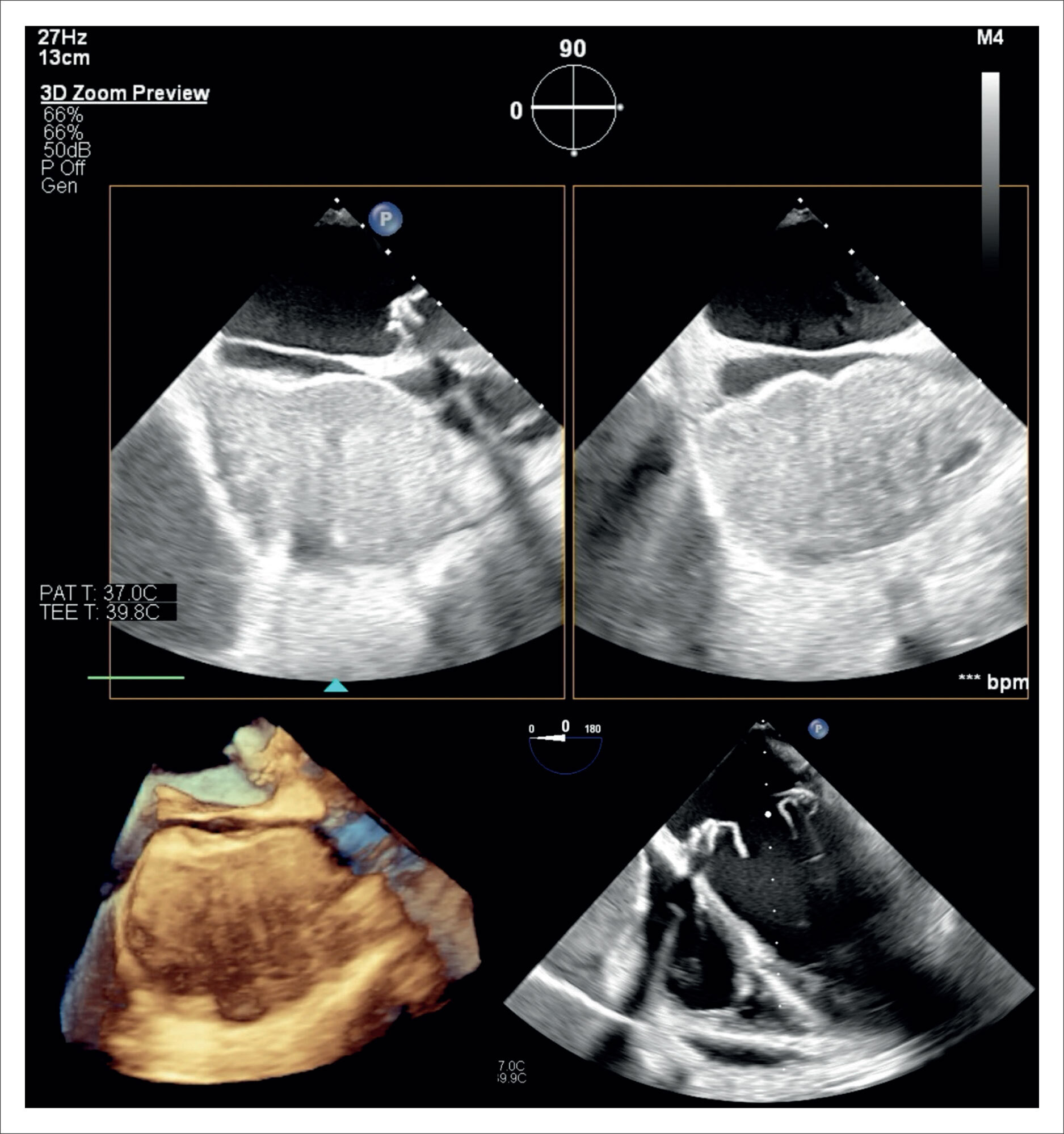
This report describes an atypical presentation of pericardial hematoma, which manifested as severe chest pain on the 23rd postoperative day and rapidly progressed to hemodynamic instability. Echocardiography was instrumental in both diagnosing and managing the case, ultimately contributing to a favorable outcome.

[…]

  • Echocardiography
  • heart surgery
  • pericardial hematoma
Read Full Article
Creative Commons Attribution (CC BY) Creative Commons license
09/12/2024 DOI: 10.36660/abcimg.20240090i Views 1
ABC
Editorial

Registries and Evidence-Based Medicine

Fernando Antibas Atik

Since the landmark achievement of Rene Favaloro in 1967, coronary artery bypass grafting (CABG) has developed great advances. Despite the widespread adoption of percutaneous coronary intervention with stenting, CABG remains an extremely important invasive treatment option in patients with coronary artery disease. Coronary artery bypass grafting has been extensively investigated in the literature through many randomized controlled trials and large-scale multicenter and unicenter observational registries, which have provided appropriateness of decision in a patient-centered approach, achieving the highest level of recommendation in many clinical scenarios.

In this issue of Arquivos Brasileiros de Cardiologia, a manuscript entitled “Age, Renal Failure and Transfusion are Risk Predictors of Prolonged Hospital Stay after Coronary Artery Bypass Grafting Surgery” addresses an important issue. The authors aimed to determine factors associated with prolonged postoperative hospital length of stay, defined as greater than 14 days. The authors studied 3703 patients submitted to CABG over 2 years, using the Sao Paulo State Registry REPPLICAR II. This data is out of date in about 5 years. They have found that 6.16% of patients had prolonged postoperative length of stay, being the preoperative and intraoperative determinants of the primary outcome, using multivariable logistic regression analysis, the presence of age greater than 60 years, preoperative kidney dysfunction, and intraoperative red blood cell transfusion.

[…]

  • Complications
  • coronary artery bypass grafting
  • heart surgery
Read Full Article
Creative Commons Attribution (CC BY) Creative Commons license
02/08/2024 DOI: 10.36660/abc.20240330i
Incentive spirometry with expiratory positive airway pressure brings benefits after myocardial revascularization
ABC
Artigo Original

Incentive spirometry with expiratory positive airway pressure brings benefits after myocardial revascularization

Glória Menz Ferreira et al. Mauren Porto Haeffner Sérgio Saldanha Menna Barreto Pedro Dall'Ago

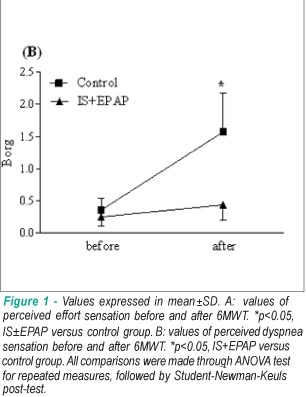
BACKGROUND: Patients undergoing coronary artery bypass graft (CABG) surgery have higher risk to develop pulmonary complications (PCs) such as atelectasis, pneumonia and pleural effusion. These complications could increase the length of hospital stay, resources utilization and also are associated with reduced quality of life and functional capacity a long term. OBJECTIVE: To test if the use of incentive spirometry (IS) associated with expiratory positive airway pressure (EPAP), after CABG surgery improves dyspnea, effort perceived and quality of life 18 months after CABG. METHODS: Sixteen patients submitted to a CABG, were randomized to a control group (n=8) or IS+EPAP group (n=8). The protocol of IS+EPAP was applied in the immediate postoperative period and following for more 4 weeks in the patient’s home. Eighteen months after CABG, the strength of the respiratory muscle, the functional capacity, the lung function, the quality of life and the level of physical activity were evaluated. RESULTS: After six minute walk test (6-MWT), the score of the dyspnea (1.6±0.6 vs 0.6±0.3, P<0.05) and the perceived effort (13.4±1.2 vs 9.1±0.7, P<0.05) were higher in the control group, when compared with the IS+EPAP group. In quality of life evaluation, the domain related to the physical aspects limitations was better in IS+EPAP group (93.7±4.1 vs 50±17, P<0.02). CONCLUSION: Patients that were submitted to IS+EPAP present reduction of dyspnea and lower effort sensation after the 6-MWT, and also a better quality of life 18 months after CABG.

  • heart surgery
  • Motor Activity
  • Quality of life
  • respiratory physical therapy
Read Full Article
Creative Commons Attribution (CC BY) Creative Commons license
05/05/2010 DOI: 10.1590/S0066-782X2010000200017 Views 1
The influence of time on the characteristics and risk factors for patients submitted to myocardial revascularization
ABC
Artigo Original

The influence of time on the characteristics and risk factors for patients submitted to myocardial revascularization

Flávia H. Feier et al. Roberto T. Sant'Anna Eduardo Garcia Felipe de Bacco … Edemar Pereira Marisa Santos Altamiro Reis da Costa Ivo A. Nesralla João Ricardo M. Sant'Anna

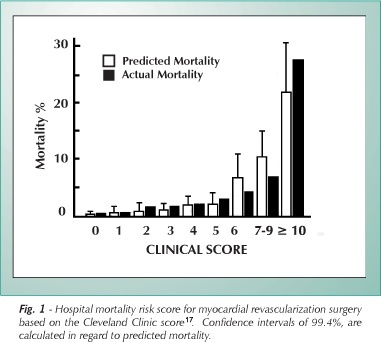
OBJECTIVE: To compare clinical and surgical and clinical profiles of two group of patients submitted to Coronary Artery Bypass Graft (CABG) at Instituto de Cardiologia do RGS within a decade interval, define related hospital mortality and to validate a severity risk score for this populations. METHODS: Retrospective cohort study, including 307 CABG patients operated during six months of 1991/92 (n=153) and 2001/02 (n=154). Demographic characteristics, heart disease severity, co-morbidities and pre-operative events were evaluated and compared between groups. Hospital mortality and severity risk scores for mortality according to Cleveland Clinic were also assessed. RESULTS: Patients operated in 2001/02 were older, had more severe cardiac disease (increased NYHA functional class, prevalence of heart failure, and distribution of coronary diseased) and presented more co-morbidities than those operated in 1991/92. This patients required urgent surgery more often. The mean Cleveland Clinic severity risk score wasn’t different between groups (2.8 + 3.1 in 1991/92 and 2.2 + 2.5 in 2001/02) and hospital mortality didn’t present significant difference (3.3% and 1.9%, respectively). For Cleveland Clinic score 3 the predicted mortality was estimated as 2.0% (with confidence limit 95% of 0- 4.3%) and observed mortality for surgical patients of this institution was 3.4%. CONCLUSION: Patients submitted to CABG currently are older and in worse clinical conditions than those operated 10 years ago, but severity risk scores and hospital mortality were discretely increased for initial series of patients. This may be a consequent of a higher prevalence of urgent surgical indication in those patients. A severity risk score for hospital mortality can be used to predict surgical result and identify patients requiring specific care.

  • heart surgery
  • Myocardial Revascularization
  • Risk Factors
Read Full Article
Creative Commons Attribution (CC BY) Creative Commons license
21/11/2006 DOI: 10.1590/S0066-782X2006001700007
Coarctation of the aorta in infants under one year of age: an analysis of 20 years of experience
ABC
Artigo Original

Coarctation of the aorta in infants under one year of age: an analysis of 20 years of experience

Gabriel Lorier et al. Orlando Wender Renato A.K. Kalil Javier Gonzalez … Gustavo Hoppen Christiano Barcellos Abud Homsi-Neto Paulo R. Prates João R.M. Sant'Anna Ivo A. Nesralla

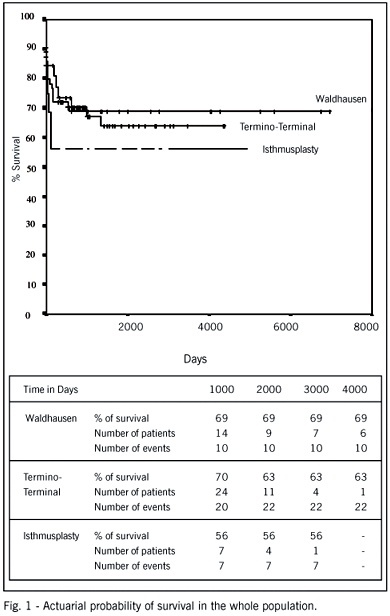
OBJECTIVE: A review of experience with techniques of correction used, in the last 20 years, in children younger than one year old. METHODS: In the period from 1978 to 1998, 148 patients (pt) with coarctation of the aorta (CoAo), under one year of age, with or without associated intracardiac defects, were submitted to surgery. Median age 50 days, 92 female pt (62.1%). The average weight was 4,367± 1,897 gr. The average follow-up was 1,152±1,462 days. The population was divided in 3 groups: Group I, isolated CoAo: 74 pt (50%); Group II, CoAo and interventricular communication (IVC): 41 pt (27.7%) and Group III, CoAo with complex intracardiac malformations: 33 pt (22.3%). RESULTS: The total mortality was of 43 patients (29%). In patients younger than 30 days, the mortality was 53%, p=0.009, DR=4.5, between 31 and 90 days, 14.7%, p=0.69, and over 91 days, 15%, p=0.004. The probability of actuarial survival of the whole population was 67% at 5 and 10 years. Thirty-six patients (24.3%) had recoarctation, from which 18 patients (50%) were younger than 30 days, DR=6.,35. The incidence of recoarctation was with Waldhausen technique in 4 patients (10%) and with the classic termino-terminal technique in 19 patients (26%) p=0.03, and isthmusplastic operation in 6 patients (37.5%). The patients younger than 30 days showed a relative risk for recoarctation de DR=6.35. The probability of actuarial survival, free of coarctation repair, at 5 and 10 years was of 69% with Waldhausen’s technique and 63% with the classic termino-terminal technique. CONCLUSION: Patients younger than 30 days showed increased mortality and recoarctation risk. Waldhausen’s technique in patients older than 30 days showed effective. The classic termino-terminal technique did not show to be a good option in all age ranges, being imperative to carry out more radical technical variations, such as the extended termino-terminal.
  • Aortic Coarctation
  • Children
  • heart surgery
Read Full Article
Creative Commons Attribution (CC BY) Creative Commons license
29/09/2005 DOI: 10.1590/S0066-782X2005001400010 Views 1
ABC
Artigo Original

Hemostatic changes in children undergoing heart surgery with cardiopulmonary bypass

Fernanda Maria Rebouças da Costa Silveira et al. Dayse Maria Lourenço Miguel Maluf Werther B. Carvalho … Enio Buffolo Antonio Carlos Carvalho

PURPOSE: We evaluated hemostasic changes in children undergoing open heart surgery with cardiopulmonary bypass (CPB). METHODS: We studied 17 children before, during surgery, in the immediate, first and between the 4th and 7th postoperative days, measuring hematocrit, prothrombin time, activated partial thromboplastin time, fibrinogen, platelet count, factor V and euglobulin lysis time. Children were divided in those with and without excessive bleeding in the postoperative period. RESULTS: We observed significant prolongation of prothrombin time and activated partial thromboplastin time, reduction of fibrinogen and factor V, and shortening of euglobulin lysis time. Six (35%) children bled excessively. Platelet count reduction was greater in the intra operative period in these cases and the duration of CPB was longer in this group. CONCLUSION: Changes in hemostasis during open heart surgery are due to coagulation cascade disorders as well as fibrinolysis. The incidence of excessive bleeding is higher in the pediatric group. Prolonged CPB time and greater reduction in platelet count differentiated both groups.

  • cardiopulmonary bypass
  • heart surgery
  • Hemostasis
Read Full Article
Creative Commons Attribution (CC BY) Creative Commons license
08/01/2002 DOI: 10.1590/S0066-782X1998000100007

How to cite this article

EndNote RIS

Electronic Document Format (Vancouver)

Oliveira FC, Kawaoka JR, Leite BF, Azevedo DFC, Fernandes RM, Noya-Rabelo MM. Pericardial Hematoma With Chest Pain and Tamponade in the Late Postoperative Period of Cardiac Surgery. ABC Imagem Cardiovascular 2024;37(4):e20240090.

Electronic Document Format (ABNT)

Oliveira, Felipe Carvalho de; Kawaoka, Jun Ramos; Leite, Bruno de Freitas; Azevedo, Diogo Freitas Cardoso de; Fernandes, Rafael Modesto; Noya-Rabelo, Marcia Maria. Pericardial Hematoma With Chest Pain and Tamponade in the Late Postoperative Period of Cardiac Surgery. ABC Imagem Cardiovascular, v. 37, n. 4, e20240090, Dec. 2024.

Electronic Document Format (APA)

Oliveira, F. C. , Kawaoka, J. R., Leite, B. F., Azevedo, D. F. C. , Fernandes, R. M., & Noya-Rabelo, M. M. (2024). Pericardial Hematoma With Chest Pain and Tamponade in the Late Postoperative Period of Cardiac Surgery. ABC Imagem Cardiovascular, 37(4), e20240090.

Electronic Document Format (ISO)

Oliveira, Felipe Carvalho de and Kawaoka, Jun Ramos and Leite, Bruno de Freitas and Azevedo, Diogo Freitas Cardoso de and Fernandes, Rafael Modesto and Noya-Rabelo, Marcia Maria. Pericardial Hematoma With Chest Pain and Tamponade in the Late Postoperative Period of Cardiac Surgery. ABC Imagem Cardiovascular [online]. 2024, vol. 37, n. 4, [cited 2026-10-14], e20240090. Available from: <https://journals.cardiol.br/en/article/pericardial-hematoma-with-chest-pain-and-tamponade-in-the-late-postoperative-period-of-cardiac-surgery/>. ISSN 2318-8219

EndNote RIS

Electronic Document Format (Vancouver)

Atik FA. Registries and Evidence-Based Medicine. Arquivos Brasileiros de Cardiologia 2024;121(6):e20240330.

Electronic Document Format (ABNT)

Atik, Fernando Antibas. Registries and Evidence-Based Medicine. Arquivos Brasileiros de Cardiologia, v. 121, n. 6, e20240330, Aug. 2024.

Electronic Document Format (APA)

Atik, F. A. (2024). Registries and Evidence-Based Medicine. Arquivos Brasileiros de Cardiologia, 121(6), e20240330.

Electronic Document Format (ISO)

Atik, Fernando Antibas. Registries and Evidence-Based Medicine. Arquivos Brasileiros de Cardiologia [online]. 2024, vol. 121, n. 6, [cited 2026-10-14], e20240330. Available from: <https://journals.cardiol.br/en/article/registries-and-evidence-based-medicine/>. ISSN 0066-782X

EndNote RIS

Electronic Document Format (Vancouver)

Ferreira GM, Haeffner MP, Barreto SSM, Dall’Ago P. Incentive spirometry with expiratory positive airway pressure brings benefits after myocardial revascularization. Arquivos Brasileiros de Cardiologia 2010;94(2):246-51.

Electronic Document Format (ABNT)

Ferreira, Glória Menz; Haeffner, Mauren Porto; Barreto, Sérgio Saldanha Menna; Dall’Ago, Pedro. Incentive spirometry with expiratory positive airway pressure brings benefits after myocardial revascularization. Arquivos Brasileiros de Cardiologia, v. 94, n. 2, p. 246-251, May. 2010.

Electronic Document Format (APA)

Ferreira, G. M., Haeffner, M. P., Barreto, S. S. M., & Dall’Ago, P. (2010). Incentive spirometry with expiratory positive airway pressure brings benefits after myocardial revascularization. Arquivos Brasileiros de Cardiologia, 94(2), 246-251.

Electronic Document Format (ISO)

Ferreira, Glória Menz and Haeffner, Mauren Porto and Barreto, Sérgio Saldanha Menna and Dall’Ago, Pedro. Incentive spirometry with expiratory positive airway pressure brings benefits after myocardial revascularization. Arquivos Brasileiros de Cardiologia [online]. 2010, vol. 94, n. 2, [cited 2026-10-14], pp. 246-251. Available from: <https://journals.cardiol.br/en/article/incentive-spirometry-with-expiratory-positive-airway-pressure-brings-benefits-after-myocardial-revascularization/>. ISSN 0066-782X

EndNote RIS

Electronic Document Format (Vancouver)

Feier FH, Sant’Anna RT, Garcia E, Bacco F, Pereira E, Santos M, Costa AR, et al. The influence of time on the characteristics and risk factors for patients submitted to myocardial revascularization. Arquivos Brasileiros de Cardiologia 2006;87(4):439-45.

Electronic Document Format (ABNT)

Feier, Flávia H.; Sant’Anna, Roberto T.; Garcia, Eduardo; Bacco, Felipe de; Pereira, Edemar; Santos, Marisa; Costa, Altamiro Reis da; Nesralla, Ivo A.; Sant’Anna, João Ricardo M.. The influence of time on the characteristics and risk factors for patients submitted to myocardial revascularization. Arquivos Brasileiros de Cardiologia, v. 87, n. 4, p. 439-445, Nov. 2006.

Electronic Document Format (APA)

Feier, F. H., Sant’Anna, R. T., Garcia, E., Bacco, F. , Pereira, E., Santos, M., Costa, A. R. , Nesralla, I. A., & Sant’Anna, J. R. M. (2006). The influence of time on the characteristics and risk factors for patients submitted to myocardial revascularization. Arquivos Brasileiros de Cardiologia, 87(4), 439-445.

Electronic Document Format (ISO)

Feier, Flávia H. and Sant’Anna, Roberto T. and Garcia, Eduardo and Bacco, Felipe de and Pereira, Edemar and Santos, Marisa and Costa, Altamiro Reis da and Nesralla, Ivo A. and Sant’Anna, João Ricardo M.. The influence of time on the characteristics and risk factors for patients submitted to myocardial revascularization. Arquivos Brasileiros de Cardiologia [online]. 2006, vol. 87, n. 4, [cited 2026-10-14], pp. 439-445. Available from: <https://journals.cardiol.br/en/article/the-influence-of-time-on-the-characteristics-and-risk-factors-for-patients-submitted-to-myocardial-revascularization/>. ISSN 0066-782X

EndNote RIS

Electronic Document Format (Vancouver)

Lorier G, Wender O, Kalil RA, Gonzalez J, Hoppen G, Barcellos C, Homsi-Neto A, et al. Coarctation of the aorta in infants under one year of age: an analysis of 20 years of experience. Arquivos Brasileiros de Cardiologia 2005;85(1):51-6.

Electronic Document Format (ABNT)

Lorier, Gabriel; Wender, Orlando; Kalil, Renato A.K.; Gonzalez, Javier; Hoppen, Gustavo; Barcellos, Christiano; Homsi-Neto, Abud; Prates, Paulo R.; Sant’Anna, João R.M.; Nesralla, Ivo A.. Coarctation of the aorta in infants under one year of age: an analysis of 20 years of experience. Arquivos Brasileiros de Cardiologia, v. 85, n. 1, p. 51-56, Sep. 2005.

Electronic Document Format (APA)

Lorier, G., Wender, O., Kalil, R. A., Gonzalez, J., Hoppen, G., Barcellos, C., Homsi-Neto, A., Prates, P. R., Sant’Anna, J. R., & Nesralla, I. A. (2005). Coarctation of the aorta in infants under one year of age: an analysis of 20 years of experience. Arquivos Brasileiros de Cardiologia, 85(1), 51-56.

Electronic Document Format (ISO)

Lorier, Gabriel and Wender, Orlando and Kalil, Renato A.K. and Gonzalez, Javier and Hoppen, Gustavo and Barcellos, Christiano and Homsi-Neto, Abud and Prates, Paulo R. and Sant’Anna, João R.M. and Nesralla, Ivo A.. Coarctation of the aorta in infants under one year of age: an analysis of 20 years of experience. Arquivos Brasileiros de Cardiologia [online]. 2005, vol. 85, n. 1, [cited 2026-10-14], pp. 51-56. Available from: <https://journals.cardiol.br/en/article/coarctation-of-the-aorta-in-infants-under-one-year-of-age-an-analysis-of-20-years-of-experience/>. ISSN 0066-782X

EndNote RIS

Electronic Document Format (Vancouver)

Silveira FMRC, Lourenço DM, Maluf M, Carvalho WB, Buffolo E, Carvalho AC. Hemostatic changes in children undergoing heart surgery with cardiopulmonary bypass. Arquivos Brasileiros de Cardiologia 2002;70(1):29-35.

Electronic Document Format (ABNT)

Silveira, Fernanda Maria Rebouças da Costa; Lourenço, Dayse Maria; Maluf, Miguel; Carvalho, Werther B.; Buffolo, Enio; Carvalho, Antonio Carlos. Hemostatic changes in children undergoing heart surgery with cardiopulmonary bypass. Arquivos Brasileiros de Cardiologia, v. 70, n. 1, p. 29-35, Jan. 2002.

Electronic Document Format (APA)

Silveira, F. M. R. C., Lourenço, D. M., Maluf, M., Carvalho, W. B., Buffolo, E., & Carvalho, A. C. (2002). Hemostatic changes in children undergoing heart surgery with cardiopulmonary bypass. Arquivos Brasileiros de Cardiologia, 70(1), 29-35.

Electronic Document Format (ISO)

Silveira, Fernanda Maria Rebouças da Costa and Lourenço, Dayse Maria and Maluf, Miguel and Carvalho, Werther B. and Buffolo, Enio and Carvalho, Antonio Carlos. Hemostatic changes in children undergoing heart surgery with cardiopulmonary bypass. Arquivos Brasileiros de Cardiologia [online]. 2002, vol. 70, n. 1, [cited 2026-10-14], pp. 29-35. Available from: <https://journals.cardiol.br/en/article/hemostatic-changes-in-children-undergoing-heart-surgery-with-cardiopulmonary-bypass/>. ISSN 0066-782X

  • About ABC Family
  • Internal Regulation
  • Editorial Board
  • Brazilian Society of Cardiology (SBC)

Issues

SBC Guidelines

  • Videos
  • Podcasts
  • News