ABC Family Arquivos Brasileiros de Cardiologia International Journal of Cardiovascular Sciences ABC Heart Failure & Cardiomyopathy ABC Imagem Cardiovascular
Português English
ABC Family
Português English
  • About
    • About ABC Family
    • Internal Regulation
    • Editorial Board
    • Brazilian Society of Cardiology (SBC)
  • Issues
  • SBC Guidelines
  • Content
    • Videos
    • Podcasts
    • News
  • About
    • About ABC Family
    • Internal Regulation
    • Editorial Board
    • Brazilian Society of Cardiology (SBC)
  • Issues
  • SBC Guidelines
  • Content
    • Videos
    • Podcasts
    • News

ABC Family

  • ABC Family
  • Arquivos Brasileiros de Cardiologia
  • International Journal of Cardiovascular Sciences
  • ABC Heart Failure & Cardiomyopathy
  • ABC Imagem Cardiovascular
Search in

No content found.

Journals
Ordering
Article types
Others

  1. Home
  2. Keyword: Furosemide
Figure 1
ABCHF
Original Article

Furosemide Dose Progression after Sodium-Glucose Transporter 2 Inhibitors in Advanced Heart Failure

Isabelle Bolfe et al. Rafaela Kaucz Mendez Ribeiro Caroline Prager João Vitor Bolfe Ana Karyn Ehrenfried de Freitas

Abstract

Background:

Studies on Sodium–Glucose cotransporter-2 inhibitors (SGLT2i) in the treatment of heart failure (HF) investigate their potential as a therapeutic alternative for managing congestion and their influence on diuretic efficacy in acute decompensated HF.

Objectives:

To analyze the impact of introducing SGLT2i in patients with HF, with emphasis on the hypothesis of a potential reduction in outpatient furosemide use over time, as well as concomitant changes in renal function and clinical signs of congestion.

Methods:

Retrospective study of 85 patients with advanced HF under outpatient follow-up between January 2022 and July 2025, including those on furosemide at the time of SGLT2i prescription and excluding those without follow-up visits. Comparative analysis was performed on furosemide doses, signs of congestion, and changes in renal function across four subsequent visits.

Results:

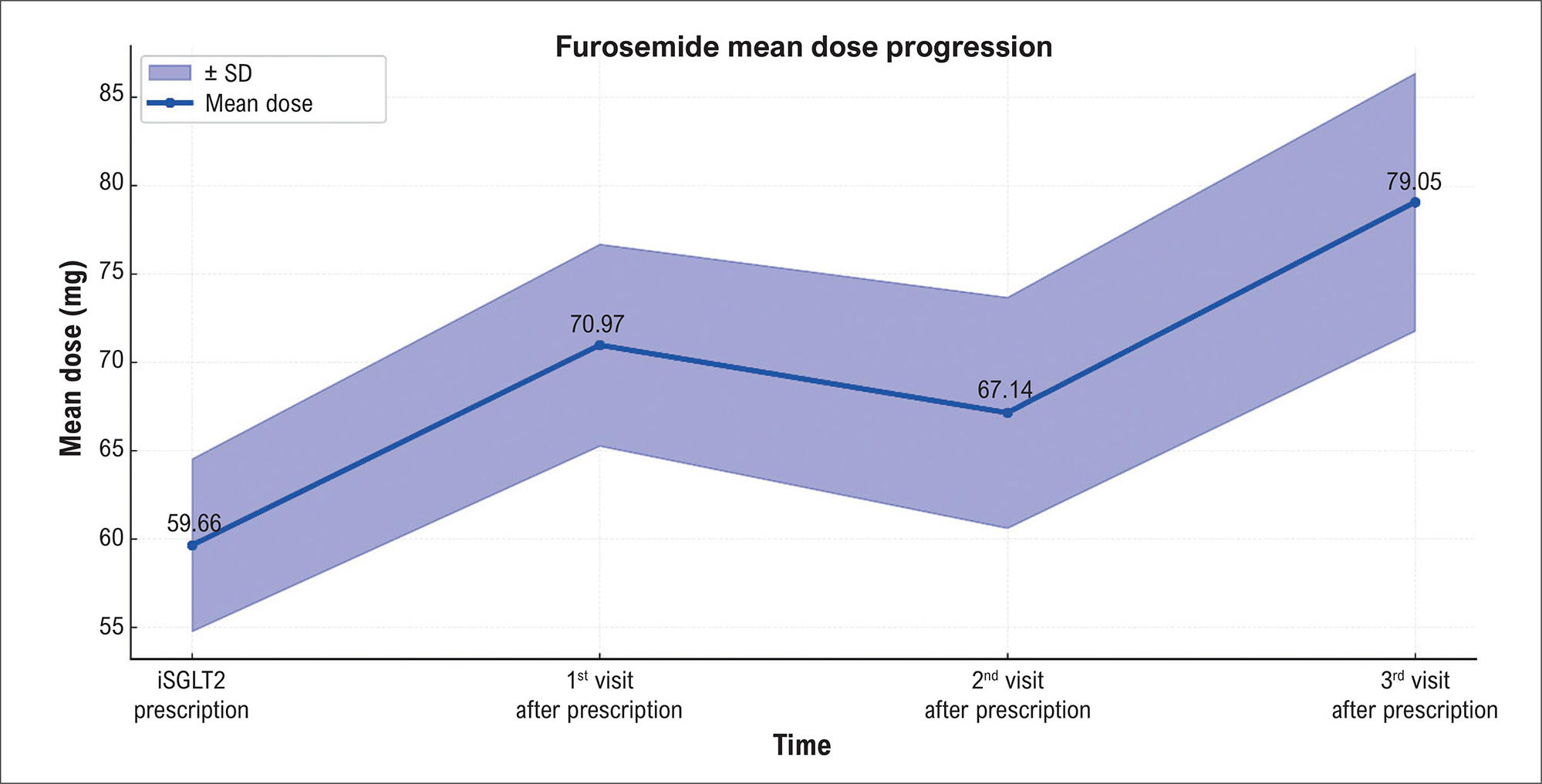
The sample was predominantly male (56.5%), with a high prevalence of HF with reduced ejection fraction (82.4%). After the introduction of SGLT2i, results showed a reduction in jugular venous distension and lower-limb edema, accompanied by increased creatinine levels and a rise in mean furosemide dose from 59.66 ± 4.87 mg to 79.05 ± 7.28 mg (p = 0.003).

Conclusion:

Following the introduction of SGLT2i, an increase in the mean furosemide dose was observed. This finding was associated with elevated creatinine levels, despite modest improvement in clinical signs of congestion, highlighting the dynamic scenario analyzed and the need for prospective studies with follow-up across different stages of HF.
  • Diuretics
  • Furosemide
  • Heart Failure
  • Sodium-Glucose Transporter 2 Inhibitors
Read Full Article
Creative Commons Attribution (CC BY) Creative Commons license
31/12/2025 DOI: 10.36660/abchf.20250032i Views 1
Torsemide versus Furosemide in the Treatment of Heart Failure: A Systematic Review and Meta-Analysis of Randomized Controlled Trials
ABC
Review Article

Torsemide versus Furosemide in the Treatment of Heart Failure: A Systematic Review and Meta-Analysis of Randomized Controlled Trials

Larissa Teixeira et al. Nicole Felix Denilsa D. P. Navalha Rafael Ferreira … Mariana R.C. Clemente Thiago Madeira Alleh Nogueira Lucas Tramujas

Abstract

Furosemide is the most used diuretic for volume overload symptoms in patients with heart failure (HF). Recent data suggested that torsemide may be superior to furosemide in this setting. However, whether this translates into better clinical outcomes in this population remains unclear.

To assess whether torsemide is superior to furosemide in the setting of HF.

We performed a systematic review and meta-analysis of RCTs comparing the efficacy of torsemide versus furosemide in patients with HF. PubMed, Embase, and Web of Science were searched for eligible trials. Outcomes of interest were all-cause hospitalizations, hospitalizations for HF (HHF), hospitalizations for all cardiovascular causes, all-cause mortality, and NYHA class improvement. Echocardiographic parameters were also assessed. We applied a random-effects model to calculate risk ratios (RR) and mean differences (MD) with 95% confidence intervals (CI) and a 0.05 level of significance.

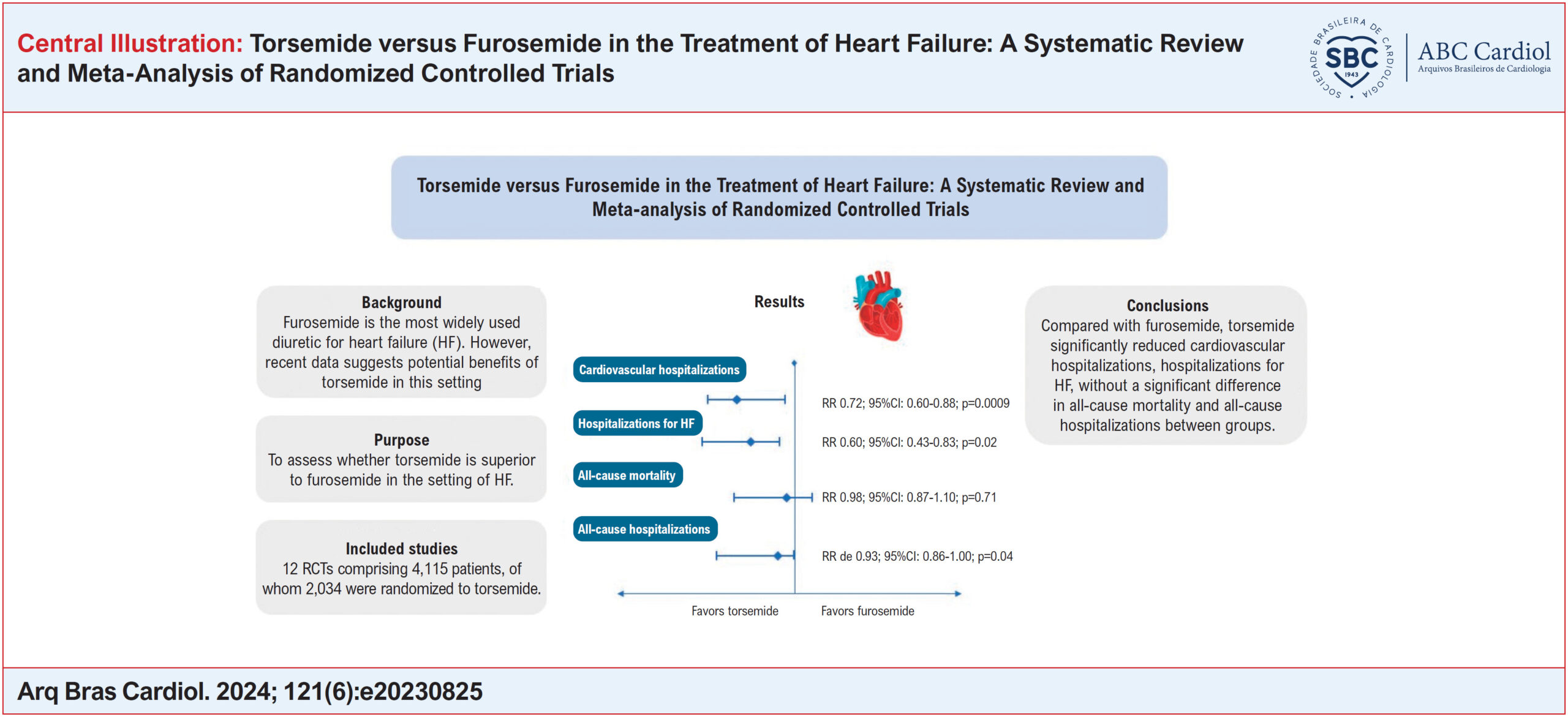
12 RCTs were included, comprising 4,115 patients. Torsemide significantly reduced HHF (RR 0.60; 95% CI, 0.43-0.83; p=0.002; I2=0%), hospitalization for cardiovascular causes (RR 0.72; 95% CI, 0.60-0.88; p=0.0009; I2=0%), and improved LVEF (MD 4.51%; 95% CI, 2.94 to 6.07; p<0.0001; I2=0%) compared with furosemide. There was no significant difference in all-cause hospitalizations (RR 0.93; 95% CI, 0.86-1.00; p=0.04; I2=0%), all-cause mortality (RR 0.98; 95% CI, 0.87-1.10; p=0.73; I2=0%), NYHA class improvement (RR 1.25; 95% CI, 0.92-1.68; p=0.15; I2=0%), or NYHA class change (MD -0.04; 95% CI, -0.24 to 0.16; p=0.70; I2=15%) between groups.

Torsemide significantly reduced hospitalizations for HF and cardiovascular causes, also improving LVEF.

  • Furosemide
  • Heart Failure
  • Sodium Potassium Chloride Symporter Inhibitors
Read Full Article
Creative Commons Attribution (CC BY) Creative Commons license
22/07/2024 DOI: 10.36660/abc.20230825i Views 1
Figure 1
ABCHF
Viewpoint

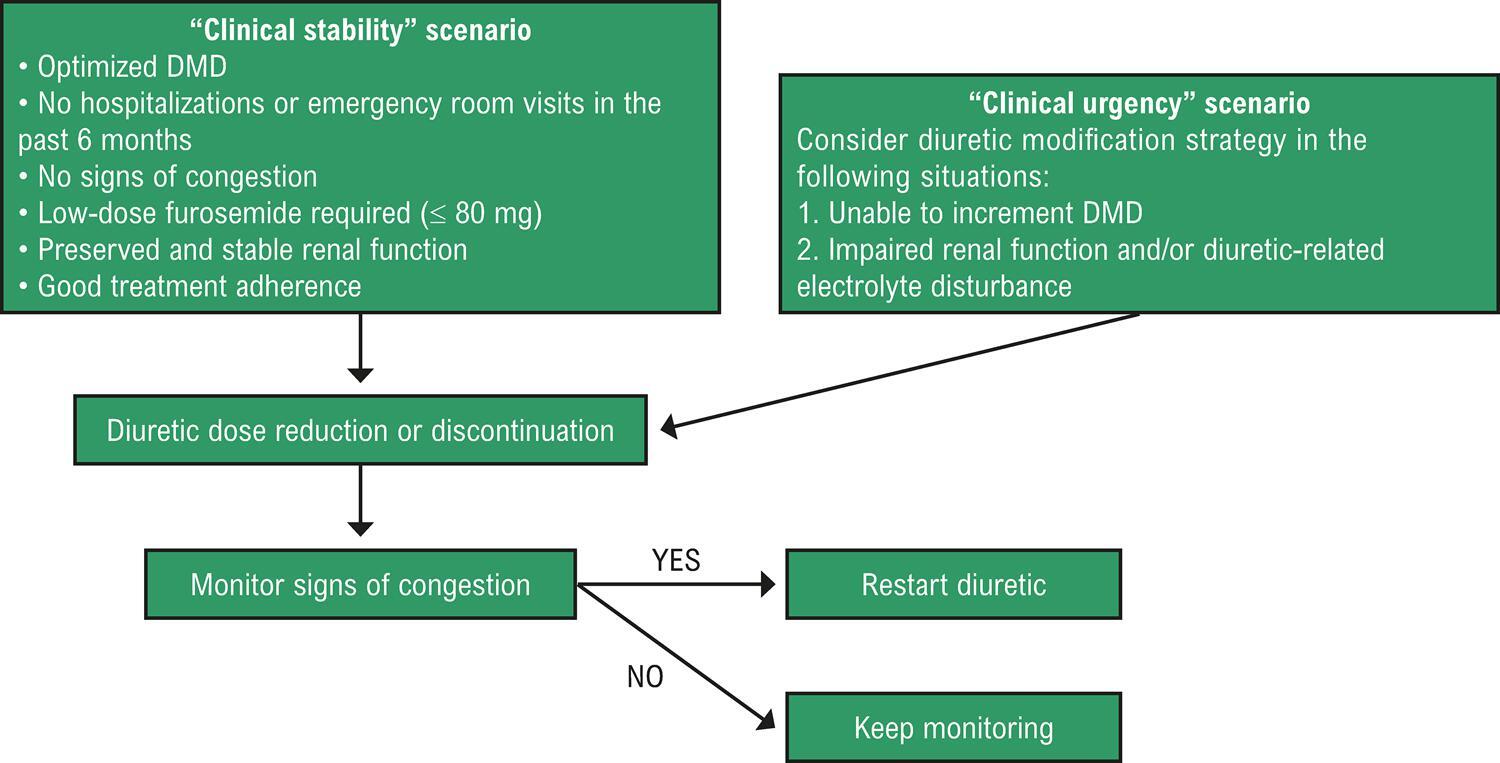
Diuretics In Stable Outpatients with Mild Heart Failure – May I Discontinue Them?

Marciane Maria Rover et al. Aline Coletto Jaccottet Diether Villegas Calle Roberto Tofani Sant´Anna

Heart failure: congestion and diuretic therapy

Congestion is a key component of the pathophysiology of heart failure (HF) and causes some of the cardinal symptoms of the disease, such as edema, orthopnea, and dyspnea on exertion. Congestion management is, therefore, of utmost importance for a successful HF treatment. Management is based on the prescription of loop diuretics for symptomatic patients according to different guidelines, although there are no placebo-controlled studies that support their use for reducing mortality. , When they are administered alone or in combination with other drugs, diuretics improve functional capacity and quality-of-life scores by reducing preload, ventricular filling pressures, and mitral regurgitation, resulting in increased cardiac output.

Congestion assessment is essential in diuretic optimization. Within this context, we should consider the low accuracy of clinical signs of congestion, especially when these signs are used alone. Conversely, concomitant assessment of several factors – including New York Heart Association (NYHA) functional class, orthopnea or paroxysmal nocturnal dyspnea, edema, pulmonary rales, third heart sound, hepatojugular reflux, and jugular venous distension – can identify patients at higher risk when they are grouped together by congestion scores. Additional tests increase predictive value and contribute to decision-making. The most common methods are serum natriuretic peptide measurement and imaging tests such as chest radiography, lung ultrasound, and echocardiography. They may be considered before diuretic discontinuation and for monitoring blood volume, especially in doubtful cases.

[…]

  • Diuretics
  • Furosemide
  • Heart Failure
Read Full Article
Creative Commons Attribution (CC BY) Creative Commons license
12/04/2022 DOI: 10.36660/abchf.20220019 Views 1

How to cite this article

EndNote RIS

Electronic Document Format (Vancouver)

Bolfe I, Ribeiro RKM, Prager C, Bolfe JV, Freitas AKE. Furosemide Dose Progression after Sodium-Glucose Transporter 2 Inhibitors in Advanced Heart Failure. ABC Heart Fail Cardiomyop 2025;5(4):e20250032.

Electronic Document Format (ABNT)

Bolfe, Isabelle; Ribeiro, Rafaela Kaucz Mendez; Prager, Caroline; Bolfe, João Vitor; Freitas, Ana Karyn Ehrenfried de. Furosemide Dose Progression after Sodium-Glucose Transporter 2 Inhibitors in Advanced Heart Failure. ABC Heart Fail Cardiomyop, v. 5, n. 4, e20250032, Dec. 2025.

Electronic Document Format (APA)

Bolfe, I., Ribeiro, R. K. M., Prager, C., Bolfe, J. V., & Freitas, A. K. E. (2025). Furosemide Dose Progression after Sodium-Glucose Transporter 2 Inhibitors in Advanced Heart Failure. ABC Heart Fail Cardiomyop, 5(4), e20250032.

Electronic Document Format (ISO)

Bolfe, Isabelle and Ribeiro, Rafaela Kaucz Mendez and Prager, Caroline and Bolfe, João Vitor and Freitas, Ana Karyn Ehrenfried de. Furosemide Dose Progression after Sodium-Glucose Transporter 2 Inhibitors in Advanced Heart Failure. ABC Heart Fail Cardiomyop [online]. 2025, vol. 5, n. 4, [cited 2026-10-14], e20250032. Available from: <https://journals.cardiol.br/en/article/furosemide-dose-progression-after-sodium-glucose-transporter-2-inhibitors-in-advanced-heart-failure/>

EndNote RIS

Electronic Document Format (Vancouver)

Teixeira L, Felix N, Navalha DDP, Ferreira R, Clemente MR, Madeira T, Nogueira A, et al. Torsemide versus Furosemide in the Treatment of Heart Failure: A Systematic Review and Meta-Analysis of Randomized Controlled Trials. Arquivos Brasileiros de Cardiologia 2024;121(6):e20230825.

Electronic Document Format (ABNT)

Teixeira, Larissa; Felix, Nicole; Navalha, Denilsa D. P.; Ferreira, Rafael; Clemente, Mariana R.C.; Madeira, Thiago; Nogueira, Alleh; Tramujas, Lucas. Torsemide versus Furosemide in the Treatment of Heart Failure: A Systematic Review and Meta-Analysis of Randomized Controlled Trials. Arquivos Brasileiros de Cardiologia, v. 121, n. 6, e20230825, Jul. 2024.

Electronic Document Format (APA)

Teixeira, L., Felix, N., Navalha, D. D. P., Ferreira, R., Clemente, M. R., Madeira, T., Nogueira, A., & Tramujas, L. (2024). Torsemide versus Furosemide in the Treatment of Heart Failure: A Systematic Review and Meta-Analysis of Randomized Controlled Trials. Arquivos Brasileiros de Cardiologia, 121(6), e20230825.

Electronic Document Format (ISO)

Teixeira, Larissa and Felix, Nicole and Navalha, Denilsa D. P. and Ferreira, Rafael and Clemente, Mariana R.C. and Madeira, Thiago and Nogueira, Alleh and Tramujas, Lucas. Torsemide versus Furosemide in the Treatment of Heart Failure: A Systematic Review and Meta-Analysis of Randomized Controlled Trials. Arquivos Brasileiros de Cardiologia [online]. 2024, vol. 121, n. 6, [cited 2026-10-14], e20230825. Available from: <https://journals.cardiol.br/en/article/torsemide-versus-furosemide-in-the-treatment-of-heart-failure-a-systematic-review-and-meta-analysis-of-randomized-controlled-trials/>. ISSN 0066-782X

EndNote RIS

Electronic Document Format (Vancouver)

Rover MM, Jaccottet AC, Calle DV, Sant´Anna RT. Diuretics In Stable Outpatients with Mild Heart Failure – May I Discontinue Them?. ABC Heart Fail Cardiomyop 2022;2(1):94-8.

Electronic Document Format (ABNT)

Rover, Marciane Maria; Jaccottet, Aline Coletto; Calle, Diether Villegas; Sant´Anna, Roberto Tofani. Diuretics In Stable Outpatients with Mild Heart Failure – May I Discontinue Them?. ABC Heart Fail Cardiomyop, v. 2, n. 1, p. 94-98, Apr. 2022.

Electronic Document Format (APA)

Rover, M. M., Jaccottet, A. C., Calle, D. V., & Sant´Anna, R. T. (2022). Diuretics In Stable Outpatients with Mild Heart Failure – May I Discontinue Them?. ABC Heart Fail Cardiomyop, 2(1), 94-98.

Electronic Document Format (ISO)

Rover, Marciane Maria and Jaccottet, Aline Coletto and Calle, Diether Villegas and Sant´Anna, Roberto Tofani. Diuretics In Stable Outpatients with Mild Heart Failure – May I Discontinue Them?. ABC Heart Fail Cardiomyop [online]. 2022, vol. 2, n. 1, [cited 2026-10-14], pp. 94-98. Available from: <https://journals.cardiol.br/en/article/diuretics-in-stable-outpatients-with-mild-heart-failure-may-i-discontinue-them/>

  • About ABC Family
  • Internal Regulation
  • Editorial Board
  • Brazilian Society of Cardiology (SBC)

Issues

SBC Guidelines

  • Videos
  • Podcasts
  • News