Inflammation and Prognosis in Acute Heart Failure: Is There a Role for Pan-Immune-Inflammation Value?
Heart failure (HF) is a major health problem, with high morbidity and mortality rates. Patients with HF are frequently hospitalized. Inflammation plays a role in the pathophysiology of HF and several cytokines, such as tumor necrosis factor (TNF), transforming growth factor-ß (TGF-ß), and interleukins 6 and 1, are elevated in HF. In acute decompensated HF (ADHF) the triggers of this inflammatory cascade are secondary to neurohormonal activation and oxidative stress, but in addition, there is evidence for elevated bacterial or endotoxin translocation, due to gut edema or relative hypoperfusion., The measurement of cytokines is not appropriate for day-to-day clinical practice and C-reactive protein (CRP),, another biomarker of inflammation, is usually chosen to assess inflammation. However, a more robust and convenient marker is warranted.
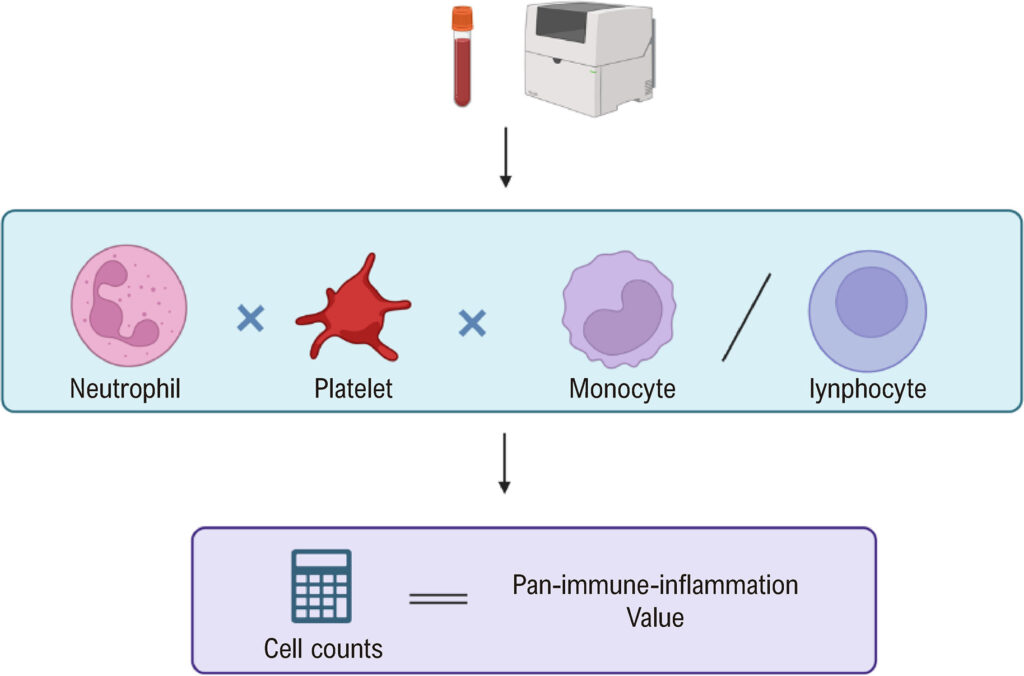
A new marker of inflammation has been recently introduced. Pan-immune-inflammation value (PIV) is calculated from peripheral blood immune-inflammatory components, including neutrophil, platelet, monocyte, and lymphocyte counts, as shown in . PIV has been shown to be prognostic in some cardiovascular disorders and also in non-cardiovascular diseases, such as cancer and advanced renal disease.–
[…]
Images
Image gallery fullscreen viewer
Comments are moderated by the editorial team before publication. Discussions should be evidence-based and use scientific language. Conflicts of interest should be declared.