ABC Family Arquivos Brasileiros de Cardiologia International Journal of Cardiovascular Sciences ABC Heart Failure & Cardiomyopathy ABC Imagem Cardiovascular
Português English
ABC Family
Português English
  • About
    • About ABC Family
    • Internal Regulation
    • Editorial Board
    • Brazilian Society of Cardiology (SBC)
  • Issues
  • SBC Guidelines
  • Content
    • Videos
    • Podcasts
    • News
  • About
    • About ABC Family
    • Internal Regulation
    • Editorial Board
    • Brazilian Society of Cardiology (SBC)
  • Issues
  • SBC Guidelines
  • Content
    • Videos
    • Podcasts
    • News

ABC Family

  • ABC Family
  • Arquivos Brasileiros de Cardiologia
  • International Journal of Cardiovascular Sciences
  • ABC Heart Failure & Cardiomyopathy
  • ABC Imagem Cardiovascular
Search in

No content found.

Journals
Ordering
Article types
Others

  1. Home
  2. Keyword: Heart Function Tests
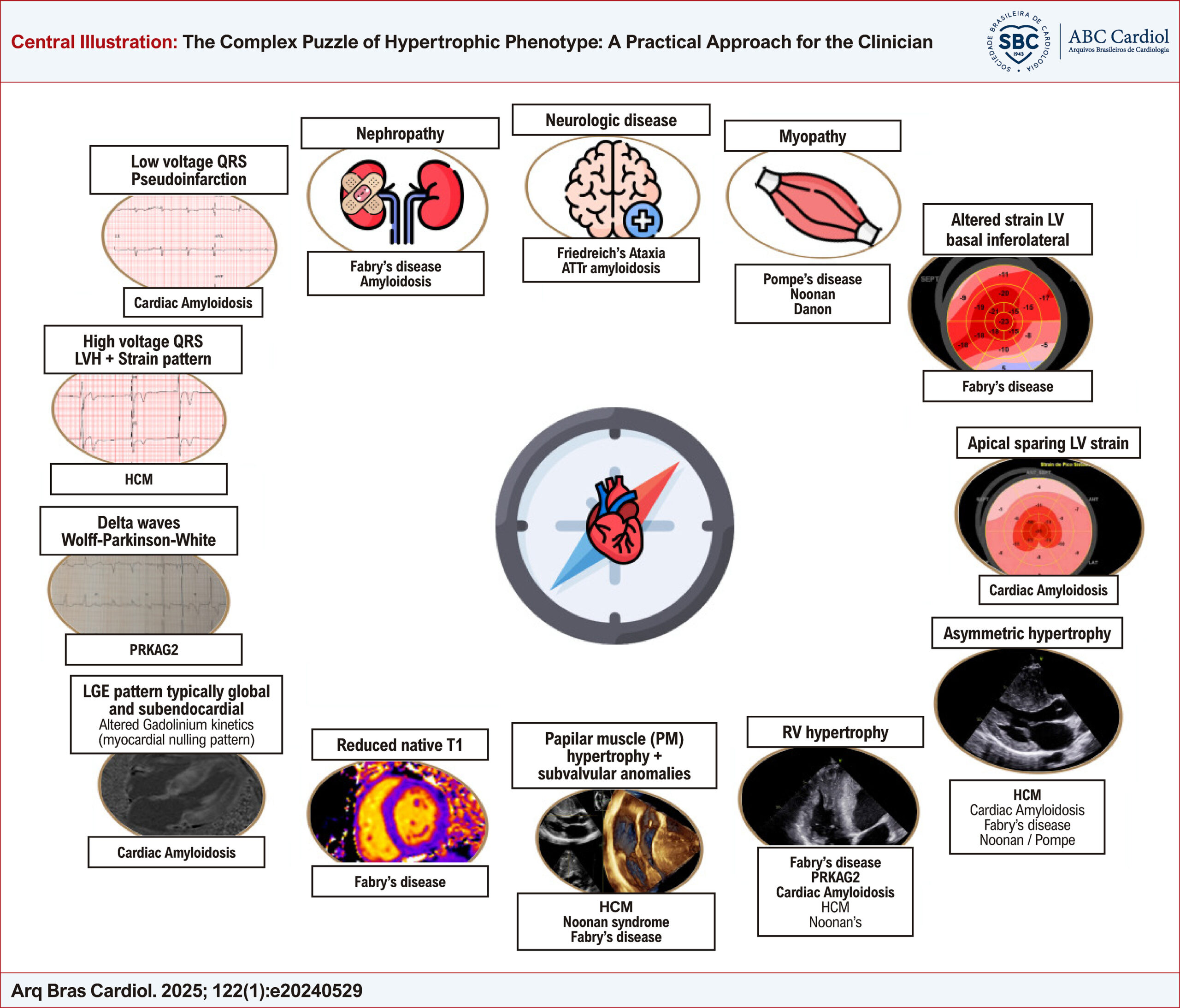
The Complex Puzzle of Hypertrophic Phenotype: A Practical Approach for the Clinician
ABC
Review Article

The Complex Puzzle of Hypertrophic Phenotype: A Practical Approach for the Clinician

Alex dos Santos Felix et al. Silvio Henrique Barberato Marcelo Dantas Tavares de Melo Sílvia Aguiar Rosa Nuno Cardim

Abstract

Left ventricular hypertrophy (LVH) represents a frequent observation in clinical practice. Nonetheless, the hypertrophic phenotype emerges as a common manifestation of diverse conditions, thereby presenting a diagnostic conundrum for clinicians. Differentiation among the etiologies of LVH is imperative for therapy decision-making, as different approaches must be implemented for distinct conditions, such as LVH secondary to loading changes, hypertrophic cardiomyopathy (HCM), or HCM mimics.

In some instances, an erroneous or late diagnosis may lead to a progression of the underlying disease with worsening functional capacity, high morbidity and mortality.

The rational use of cardiovascular multimodality imaging is of great importance when carried out in addition to a thorough clinical assessment and correlated with electrocardiographic findings, providing clues to fill the gaps, being, most of the time, the missing piece to solve this challenging puzzle.

An integrative approach is of paramount importance for the evaluation of these patients, as they are often followed by several specialties, with varied systemic manifestations. Although a multidisciplinary team is needed for an optimized follow-up of these patients, the most important player in this journey is the clinician, whose mission is to bring together all the red flags and coordinate all the data for an assertive diagnosis.

The objective of this review is to provide a pragmatic methodology, highlighting important clues for discriminating among the diverse conditions that result in LVH.
  • Cardiac Imaging Techniques
  • Diagnosis
  • Differential Diagnosis
  • Heart Function Tests
  • Left Ventricular Hypertrophy
Read Full Article
Creative Commons Attribution (CC BY) Creative Commons license
04/04/2025 DOI: 10.36660/abc.20240529i Views 1
Figure 1
ABC
Viewpoint

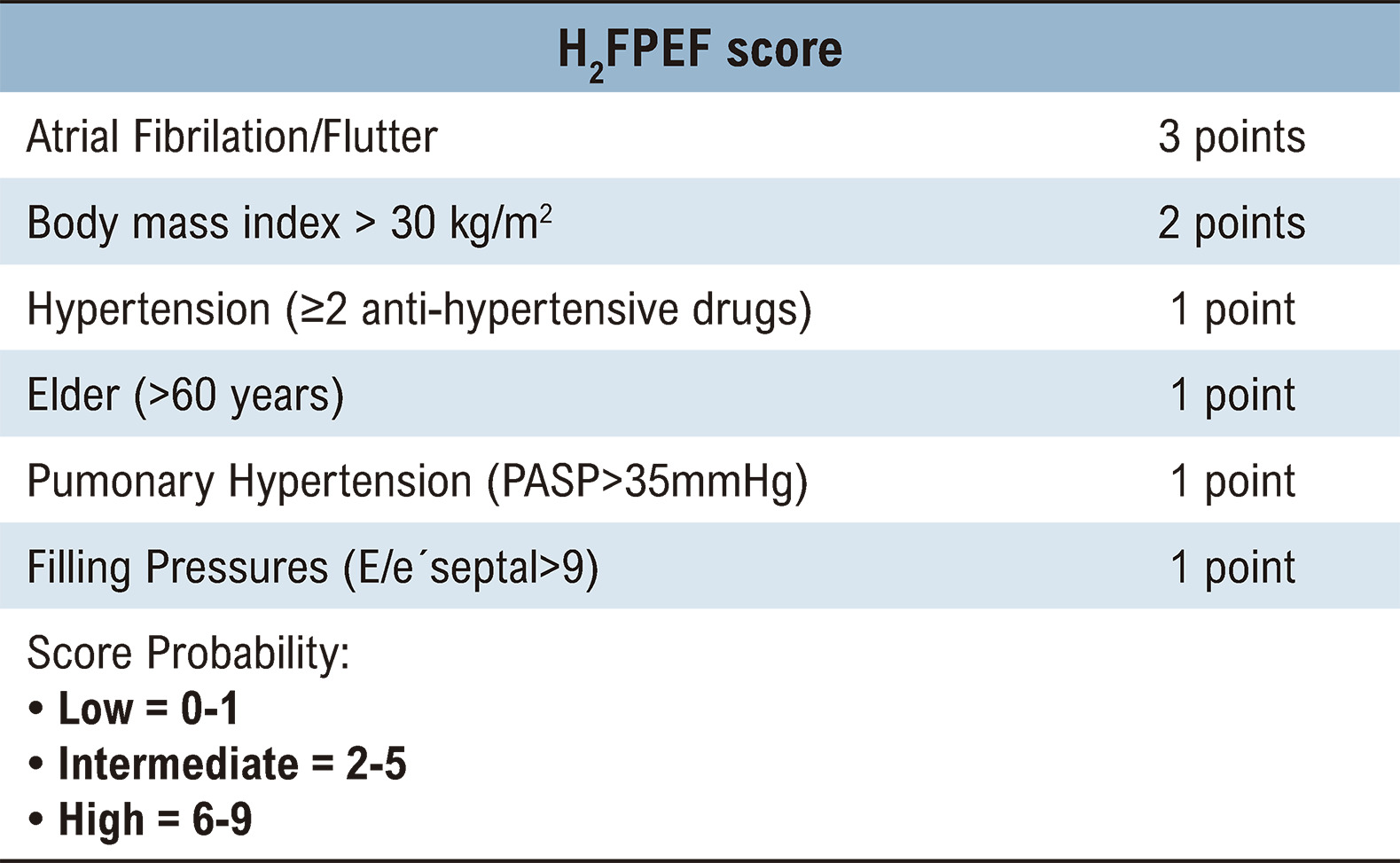
Advancing the Diagnosis and Management of Heart Failure with Preserved Ejection Fraction: A Call for Exercise Hemodynamics

Renato de Aguiar Hortegal et al. Fausto Feres

Introduction

Heart failure (HF) is a progressive medical condition that affects approximately 1-3% of adults, with a significant increase in prevalence in older age groups. More than half of HF patients have a left ventricular ejection fraction (LVEF) of ≥ 50%, known as heart failure with preserved ejection fraction (HFpEF). While the overall number of HF cases seems to be stable or even declining, the incidence of HFpEF continues to rise. HFpEF patients differ significantly from those with reduced ejection fraction regarding pathophysiology, diagnostic evaluation, and treatment. The idiosyncratic pathophysiological heterogeneity and multiorgan dysfunction in addition to diverse clinical presentation will require tailored approaches for this population.

Taking these aspects into account, a specialized unit catering to the HFpEF population was founded in October 2020 at the Instituto Dante Pazzanese de Cardiologia, a tertiary and quaternary public healthcare center located in São Paulo, Brazil. To date, this facility has successfully conducted over 5000 outpatient visits, predominantly for patients presenting dyspnea on exertion.

[…]

  • Echocardiography
  • Heart Failure
  • Heart Function Tests
Read Full Article
Creative Commons Attribution (CC BY) Creative Commons license
26/08/2024 DOI: 10.36660/abc.20230845i Views 2
ABC
Editorial

Understanding Cardiac Alterations in Familial Partial Lipodystrophy: Insights from Echocardiography

Silvio Henrique Barberato

Lipodystrophies are a diverse group of diseases characterized by a loss of fatty tissue in the body. Consequently, lipids are stored in non-fat cells, leading to major metabolic consequences, such as liver steatosis and insulin resistance, and increased risk of cardiovascular diseases due to premature atherosclerosis. Lipodystrophies can be classified as congenital or acquired, and generalized or partial, depending on the extent of fat distribution disturbance. Unlike congenital generalized lipodystrophy (CGL), patients with familial partial lipodystrophy (PL) do not have a widespread lack of fat throughout the body but rather a localized loss of fat in limbs and trunk. PL is a rare genetic disorder often accompanied by mutations in the lamin A/C gene (LMNA), belonging to the complex group of laminopathies that can lead to muscular and cardiac dystrophies, neuropathies, and syndromes of premature aging., Due to the rarity of the lipodystrophies and the phenotypic range of cardiac manifestations, only case reports and studies with limited numbers of patients, mostly restricted to individuals with CGL, are available.

Cardiomyopathy associated with familial PL remains underexplored despite its potential to cause early mortality. While premature atherosclerosis and cardiac arrhythmias are common, the direct impact of gene mutations on cardiac structure and function is unclear. Previous reports have described different phenotypes of cardiomyopathies in this group of patients, ranging from isolated left ventricular (LV) hypertrophy and hypertrophic cardiomyopathy to dilated cardiomyopathy.

[…]

  • Echocardiography
  • Heart Function Tests
  • Lipodystrophy
Read Full Article
Creative Commons Attribution (CC BY) Creative Commons license
22/07/2024 DOI: 10.36660/abc.20240305i Views 1
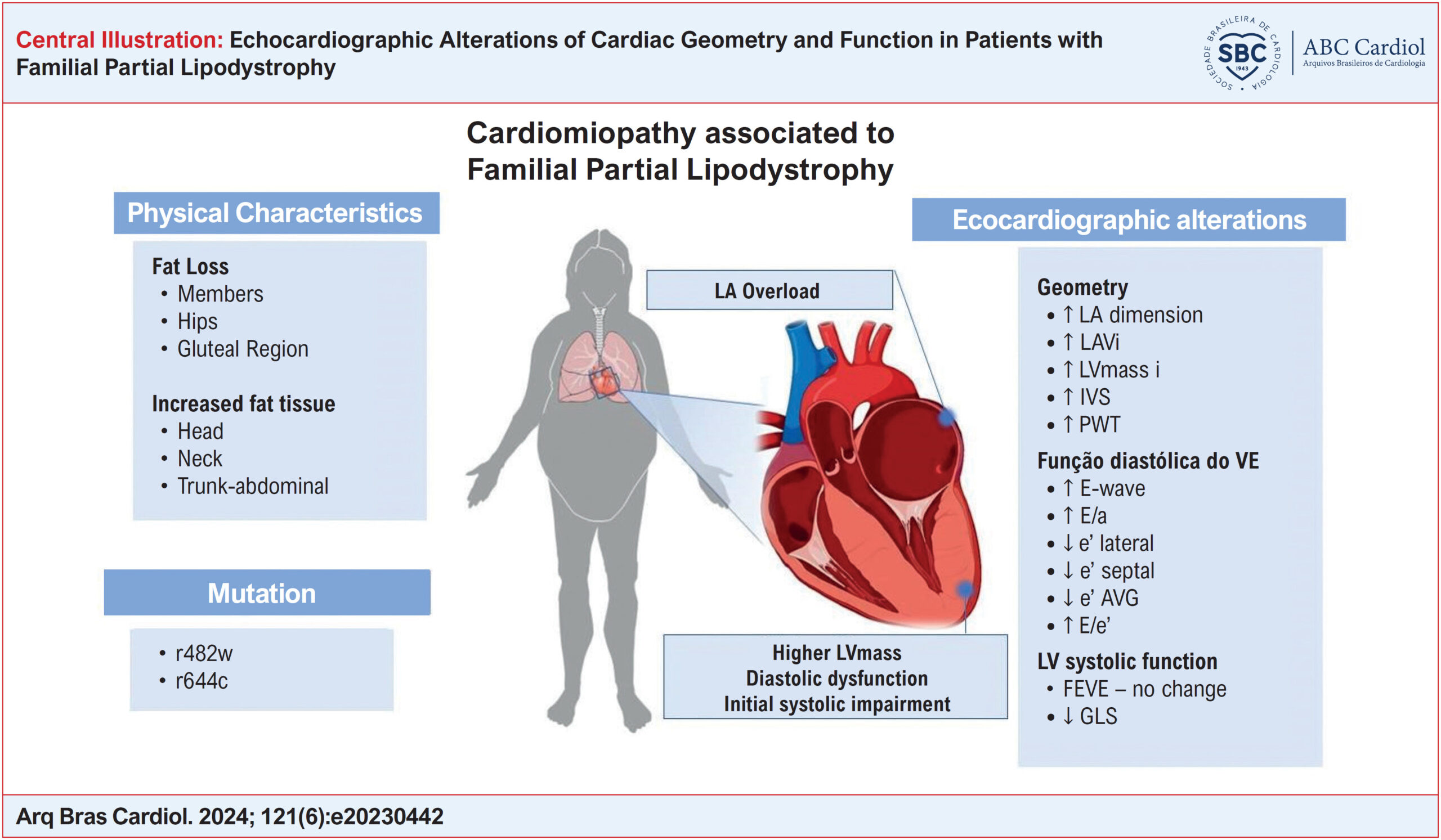
Echocardiographic Alterations of Cardiac Geometry and Function in Patients with Familial Partial Lipodystrophy
ABC
Original Article

Echocardiographic Alterations of Cardiac Geometry and Function in Patients with Familial Partial Lipodystrophy

Minna Moreira Dias Romano et al. André Timóteo Sapalo Natália Rossin Guidorizzi Henrique Turin Moreira … Paula Ananda Chacon Inês Lucas Candelária Kalil Maria Cristina Foss Francisco José Albuquerque de Paula

Abstract

Background:

Cardiomyopathy associated with partial lipodystrophy (PL) has not been well described yet.

Objective:

To characterize cardiac morphology and function in PL.

Methods:

Patients with familial PL and controls were prospectively assessed by transthoracic echocardiography and with speckle-tracking echocardiography (global longitudinal strain, GLS). The relationship between echocardiographic variables and PL diagnosis was tested with regression models, considering the effect of systolic blood pressure (SBP). Significance level of 5% was adopted.

Results:

Twenty-nine patients with PL were compared to 17 controls. They did not differ in age (p=0.94), gender or body mass index (p= 0.05). Patients with PL had statistically higher SBP (p=0.02) than controls. Also, PL patients had higher left atrial dimension (37.3 ± 4.4 vs. 32.1 ± 4.3 mm, p= 0.001) and left atrial (30.2 ± 7.2 vs. 24.9 ± 9.0 mL/m2,p=0.02), left ventricular (LV) mass (79.3 ± 17.4 vs. 67.1 ± 19.4, p=0.02), and reduced diastolic LV parameters (E’ lateral, p= 0.001) (E’ septal, p= 0.001), (E/E’ ratio, p= 0.02). LV ejection fraction (64.7 ± 4.6 vs. 62.2 ± 4.4 %, p= 0.08) and GLS were not statistically different between groups (-17.1 ± 2.7 vs. -18.0 ± 2.0 %, p= 0.25). There was a positive relationship of left atrium (β 5.6, p<0.001), posterior wall thickness, (β 1.3, p=0.011), E’ lateral (β -3.5, p=0.002) and E’ septal (β -3.2, p<0.001) with PL diagnosis, even after adjusted for SBP.

Conclusion:

LP patients have LV hypertrophy, left atrial enlargement, and LV diastolic dysfunction although preserved LVEF and GLS. Echocardiographic parameters are related to PL diagnosis independent of SBP.

  • Echocardiography
  • Heart Function Tests
  • Lipodystrophy
Read Full Article
Creative Commons Attribution (CC BY) Creative Commons license
24/06/2024 DOI: 10.36660/abc.20230442i
Figure 1
ABCIC
Editorial

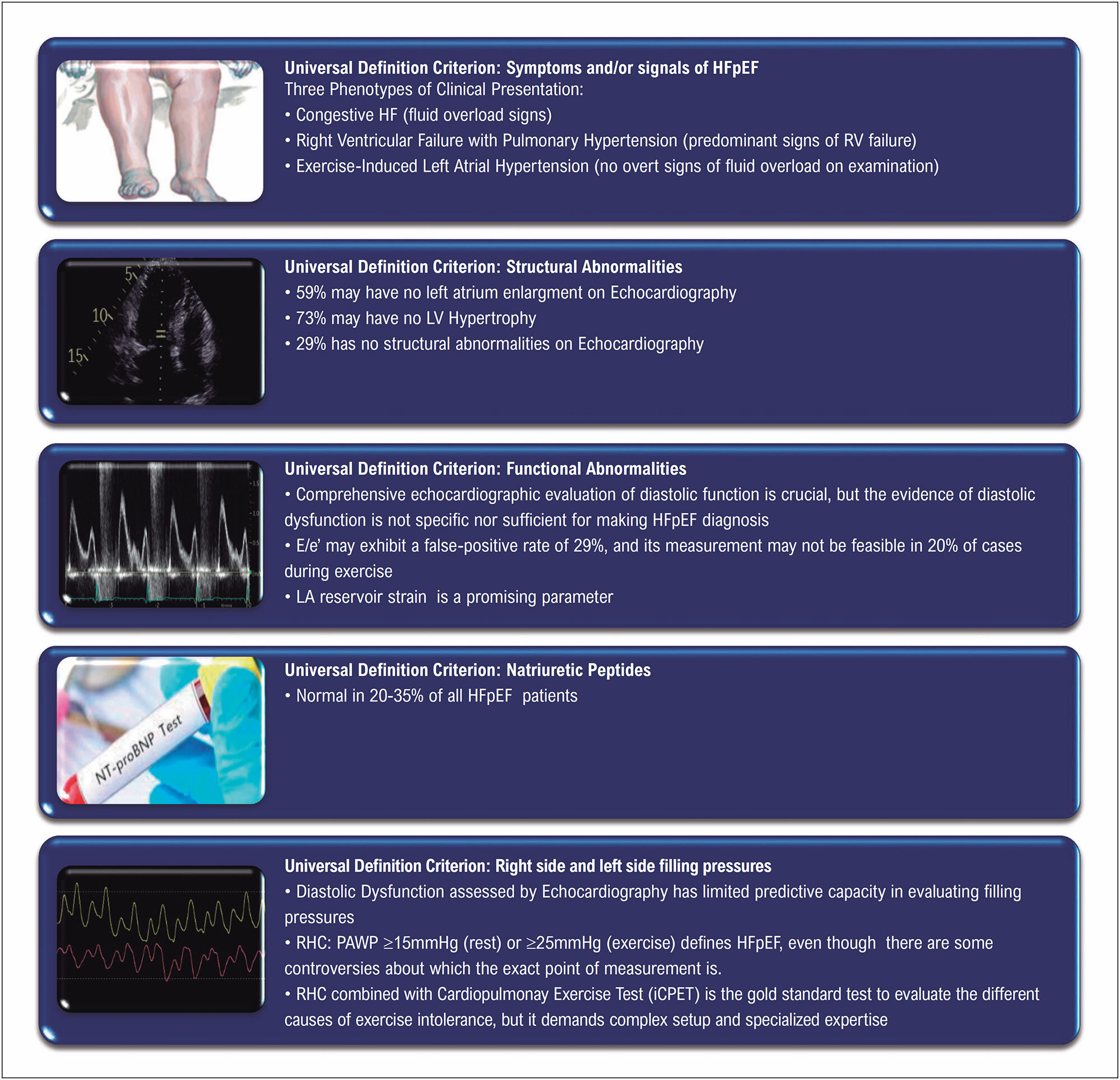
Decoding the Diagnostic Dilemmas of Heart Failure with Preserved Ejection Fraction: Applying the Universal Definition for Enhanced Diagnosis Standardization

Renato A. Hortegal

Implementing the Universal Definition of HF for HFpEF Diagnosis

The clinical diagnosis of HFpEF is straightforward when a patient presents with typical symptoms and signs of left and/or right congestive HF with LVEF ≥50%, along with echocardiography abnormalities and elevated NP.

However, patients with HFpEF may not display this classical HF presentation. Indeed, a significant proportion of patients (∼50%) will only display symptoms during exertion, without current or previous evidence of fluid overload on clinical examination or prior hospitalization for decompensated HF (). This exercise-induced left atrial hypertension phenotype makes diagnosis challenging in clinical practice, with the Framingham criteria showing limited sensitivity.,

[…]

  • Diastolic
  • Heart Failure
  • Heart Function Tests
Read Full Article
Creative Commons Attribution (CC BY) Creative Commons license
02/10/2023 DOI: 10.36660/abcimg.20230074i Views 2
IJCS
Editorial

Are Wistar Rats the Most Suitable Normotensive Controls for Spontaneously Hypertensive Rats to Assess Blood Pressure and Cardiac Structure and Function?

Nazareth Novaes Rocha

The first animal models of hypertension involved constriction of renal arteries (the Goldblatt kidney) or parenchyma (the Page kidney). Although these human analogs closely mimicked the pathophysiology of the disease, renovascular hypertension and the Page kidney represent only a small fraction of human hypertension.

Most experimental studies of hypertension using animals have focused on understanding the mechanisms of primary hypertension. Models of primary hypertension have been more difficult to develop. Some models may have greater face validity than others with respect to phenotypic aspects of hypertension such as age at onset, temporal course, severity, variability, and associated comorbidities. Given the clinical importance of hypertension-related target organ damage, it is noteworthy that models exhibiting face validity for left ventricular hypertrophy, metabolic abnormalities, heart failure, renal damage, and stroke (e.g., spontaneously hypertensive rats [SHR] and Dahl salt-sensitive [DSS] rats) are also available. However, other conditions such as spontaneous development of atherosclerosis or acute myocardial infarction are not typically observed in current models.

[…]

  • Animal, Rats, Wistar
  • Blood Pressure
  • constriction, pathologic
  • Epigenesis,genetic
  • Heart Function Tests
  • Hypertension / genetic
  • renal artery
Read Full Article
Creative Commons Attribution (CC BY) Creative Commons license
09/03/2022 DOI: 10.36660/ijcs.20210286 Views 2

How to cite this article

EndNote RIS

Electronic Document Format (Vancouver)

Felix AS, Barberato SH, Melo MDT, Rosa SA, Cardim N. The Complex Puzzle of Hypertrophic Phenotype: A Practical Approach for the Clinician. Arquivos Brasileiros de Cardiologia 2025;122(1):e20240529.

Electronic Document Format (ABNT)

Felix, Alex dos Santos; Barberato, Silvio Henrique; Melo, Marcelo Dantas Tavares de; Rosa, Sílvia Aguiar; Cardim, Nuno. The Complex Puzzle of Hypertrophic Phenotype: A Practical Approach for the Clinician. Arquivos Brasileiros de Cardiologia, v. 122, n. 1, e20240529, Apr. 2025.

Electronic Document Format (APA)

Felix, A. S., Barberato, S. H., Melo, M. D. T. , Rosa, S. A., & Cardim, N. (2025). The Complex Puzzle of Hypertrophic Phenotype: A Practical Approach for the Clinician. Arquivos Brasileiros de Cardiologia, 122(1), e20240529.

Electronic Document Format (ISO)

Felix, Alex dos Santos and Barberato, Silvio Henrique and Melo, Marcelo Dantas Tavares de and Rosa, Sílvia Aguiar and Cardim, Nuno. The Complex Puzzle of Hypertrophic Phenotype: A Practical Approach for the Clinician. Arquivos Brasileiros de Cardiologia [online]. 2025, vol. 122, n. 1, [cited 2026-10-14], e20240529. Available from: <https://journals.cardiol.br/en/article/the-complex-puzzle-of-hypertrophic-phenotype-a-practical-approach-for-the-clinician/>. ISSN 0066-782X

EndNote RIS

Electronic Document Format (Vancouver)

Hortegal RA, Feres F. Advancing the Diagnosis and Management of Heart Failure with Preserved Ejection Fraction: A Call for Exercise Hemodynamics. Arquivos Brasileiros de Cardiologia 2024;121(7):e20230845.

Electronic Document Format (ABNT)

Hortegal, Renato de Aguiar; Feres, Fausto. Advancing the Diagnosis and Management of Heart Failure with Preserved Ejection Fraction: A Call for Exercise Hemodynamics. Arquivos Brasileiros de Cardiologia, v. 121, n. 7, e20230845, Aug. 2024.

Electronic Document Format (APA)

Hortegal, R. A., & Feres, F. (2024). Advancing the Diagnosis and Management of Heart Failure with Preserved Ejection Fraction: A Call for Exercise Hemodynamics. Arquivos Brasileiros de Cardiologia, 121(7), e20230845.

Electronic Document Format (ISO)

Hortegal, Renato de Aguiar and Feres, Fausto. Advancing the Diagnosis and Management of Heart Failure with Preserved Ejection Fraction: A Call for Exercise Hemodynamics. Arquivos Brasileiros de Cardiologia [online]. 2024, vol. 121, n. 7, [cited 2026-10-14], e20230845. Available from: <https://journals.cardiol.br/en/article/advancing-the-diagnosis-and-management-of-heart-failure-with-preserved-ejection-fraction-a-call-for-exercise-hemodynamics/>. ISSN 0066-782X

EndNote RIS

Electronic Document Format (Vancouver)

Barberato SH. Understanding Cardiac Alterations in Familial Partial Lipodystrophy: Insights from Echocardiography. Arquivos Brasileiros de Cardiologia 2024;121(6):e20240305.

Electronic Document Format (ABNT)

Barberato, Silvio Henrique. Understanding Cardiac Alterations in Familial Partial Lipodystrophy: Insights from Echocardiography. Arquivos Brasileiros de Cardiologia, v. 121, n. 6, e20240305, Jul. 2024.

Electronic Document Format (APA)

Barberato, S. H. (2024). Understanding Cardiac Alterations in Familial Partial Lipodystrophy: Insights from Echocardiography. Arquivos Brasileiros de Cardiologia, 121(6), e20240305.

Electronic Document Format (ISO)

Barberato, Silvio Henrique. Understanding Cardiac Alterations in Familial Partial Lipodystrophy: Insights from Echocardiography. Arquivos Brasileiros de Cardiologia [online]. 2024, vol. 121, n. 6, [cited 2026-10-14], e20240305. Available from: <https://journals.cardiol.br/en/article/understanding-cardiac-alterations-in-familial-partial-lipodystrophy-insights-from-echocardiography/>. ISSN 0066-782X

EndNote RIS

Electronic Document Format (Vancouver)

Romano MMD, Sapalo AT, Guidorizzi NR, Moreira HT, Inês PAC, Kalil LC, Foss MC, et al. Echocardiographic Alterations of Cardiac Geometry and Function in Patients with Familial Partial Lipodystrophy. Arquivos Brasileiros de Cardiologia 2024;121(6):e20230442.

Electronic Document Format (ABNT)

Romano, Minna Moreira Dias; Sapalo, André Timóteo; Guidorizzi, Natália Rossin; Moreira, Henrique Turin; Inês, Paula Ananda Chacon; Kalil, Lucas Candelária; Foss, Maria Cristina; Paula, Francisco José Albuquerque de. Echocardiographic Alterations of Cardiac Geometry and Function in Patients with Familial Partial Lipodystrophy. Arquivos Brasileiros de Cardiologia, v. 121, n. 6, e20230442, Jun. 2024.

Electronic Document Format (APA)

Romano, M. M. D., Sapalo, A. T., Guidorizzi, N. R., Moreira, H. T., Inês, P. A. C., Kalil, L. C., Foss, M. C., & Paula, F. J. A. (2024). Echocardiographic Alterations of Cardiac Geometry and Function in Patients with Familial Partial Lipodystrophy. Arquivos Brasileiros de Cardiologia, 121(6), e20230442.

Electronic Document Format (ISO)

Romano, Minna Moreira Dias and Sapalo, André Timóteo and Guidorizzi, Natália Rossin and Moreira, Henrique Turin and Inês, Paula Ananda Chacon and Kalil, Lucas Candelária and Foss, Maria Cristina and Paula, Francisco José Albuquerque de. Echocardiographic Alterations of Cardiac Geometry and Function in Patients with Familial Partial Lipodystrophy. Arquivos Brasileiros de Cardiologia [online]. 2024, vol. 121, n. 6, [cited 2026-10-14], e20230442. Available from: <https://journals.cardiol.br/en/article/echocardiographic-alterations-of-cardiac-geometry-and-function-in-patients-with-familial-partial-lipodystrophy/>. ISSN 0066-782X

EndNote RIS

Electronic Document Format (Vancouver)

Hortegal RA. Decoding the Diagnostic Dilemmas of Heart Failure with Preserved Ejection Fraction: Applying the Universal Definition for Enhanced Diagnosis Standardization. ABC Imagem Cardiovascular 2023;36(3):e20230074.

Electronic Document Format (ABNT)

Hortegal, Renato A.. Decoding the Diagnostic Dilemmas of Heart Failure with Preserved Ejection Fraction: Applying the Universal Definition for Enhanced Diagnosis Standardization. ABC Imagem Cardiovascular, v. 36, n. 3, e20230074, Oct. 2023.

Electronic Document Format (APA)

Hortegal, R. A. (2023). Decoding the Diagnostic Dilemmas of Heart Failure with Preserved Ejection Fraction: Applying the Universal Definition for Enhanced Diagnosis Standardization. ABC Imagem Cardiovascular, 36(3), e20230074.

Electronic Document Format (ISO)

Hortegal, Renato A.. Decoding the Diagnostic Dilemmas of Heart Failure with Preserved Ejection Fraction: Applying the Universal Definition for Enhanced Diagnosis Standardization. ABC Imagem Cardiovascular [online]. 2023, vol. 36, n. 3, [cited 2026-10-14], e20230074. Available from: <https://journals.cardiol.br/en/article/decoding-the-diagnostic-dilemmas-of-heart-failure-with-preserved-ejection-fraction-applying-the-universal-definition-for-enhanced-diagnosis-standardization/>. ISSN 2318-8219

EndNote RIS

Electronic Document Format (Vancouver)

Rocha NN. Are Wistar Rats the Most Suitable Normotensive Controls for Spontaneously Hypertensive Rats to Assess Blood Pressure and Cardiac Structure and Function?. International Journal of Cardiovascular Sciences 2022;35(2):172-3.

Electronic Document Format (ABNT)

Rocha, Nazareth Novaes. Are Wistar Rats the Most Suitable Normotensive Controls for Spontaneously Hypertensive Rats to Assess Blood Pressure and Cardiac Structure and Function?. International Journal of Cardiovascular Sciences, v. 35, n. 2, p. 172-173, Mar. 2022.

Electronic Document Format (APA)

Rocha, N. N. (2022). Are Wistar Rats the Most Suitable Normotensive Controls for Spontaneously Hypertensive Rats to Assess Blood Pressure and Cardiac Structure and Function?. International Journal of Cardiovascular Sciences, 35(2), 172-173.

Electronic Document Format (ISO)

Rocha, Nazareth Novaes. Are Wistar Rats the Most Suitable Normotensive Controls for Spontaneously Hypertensive Rats to Assess Blood Pressure and Cardiac Structure and Function?. International Journal of Cardiovascular Sciences [online]. 2022, vol. 35, n. 2, [cited 2026-10-14], pp. 172-173. Available from: <https://journals.cardiol.br/en/article/are-wistar-rats-the-most-suitable-normotensive-controls-for-spontaneously-hypertensive-rats-to-assess-blood-pressure-and-cardiac-structure-and-function/>. ISSN 2359-4802

  • About ABC Family
  • Internal Regulation
  • Editorial Board
  • Brazilian Society of Cardiology (SBC)

Issues

SBC Guidelines

  • Videos
  • Podcasts
  • News