ABC Family Arquivos Brasileiros de Cardiologia International Journal of Cardiovascular Sciences ABC Heart Failure & Cardiomyopathy ABC Imagem Cardiovascular
Português English
ABC Family
Português English
  • About
    • About ABC Family
    • Internal Regulation
    • Editorial Board
    • Brazilian Society of Cardiology (SBC)
  • Issues
  • SBC Guidelines
  • Content
    • Videos
    • Podcasts
    • News
  • About
    • About ABC Family
    • Internal Regulation
    • Editorial Board
    • Brazilian Society of Cardiology (SBC)
  • Issues
  • SBC Guidelines
  • Content
    • Videos
    • Podcasts
    • News

ABC Family

  • ABC Family
  • Arquivos Brasileiros de Cardiologia
  • International Journal of Cardiovascular Sciences
  • ABC Heart Failure & Cardiomyopathy
  • ABC Imagem Cardiovascular
Search in

No content found.

Journals
Ordering
Article types
Others

  1. Home
  2. Keyword: Myocardial Fractional Flow Reserve
Physiological Characterization of Coronary Endotypes: Potential Links with Myocardial Ischemia
ABC
Original Article

Physiological Characterization of Coronary Endotypes: Potential Links with Myocardial Ischemia

Lucía Matute-Blanco et al. Thalia Belmonte Kristian Rivera Marcos García-Guimaraes … Juan Casanova-Sandoval Iván D. Benítez Georgina Fuertes-Ferre Ainhoa Pérez Guerrero Raúl Millán Segovia Fernando Worner David De Gonzalo-Calvo Diego Fernández-Rodríguez

Abstract

Background

Comprehensive physiological characterization of coronary endotypes remains limited, especially in epicardial dysfunction.

Objectives

To describe hemodynamic profiles across the full spectrum of coronary endotypes and explore potential links with ischemia.

Methods

Patients with suspected chronic coronary syndromes who underwent invasive physiological assessment in the ANFIBIO Project (NCT05374694) were classified according to fractional flow reserve [(FFR)≤0.80] and index of microcirculatory resistance [(IMR)≥25] in the left anterior descending artery into four groups: normal indices, isolated epicardial, isolated microvascular, and combined dysfunction. Coronary pressure, flow, and resistance indices were compared between groups.

Results

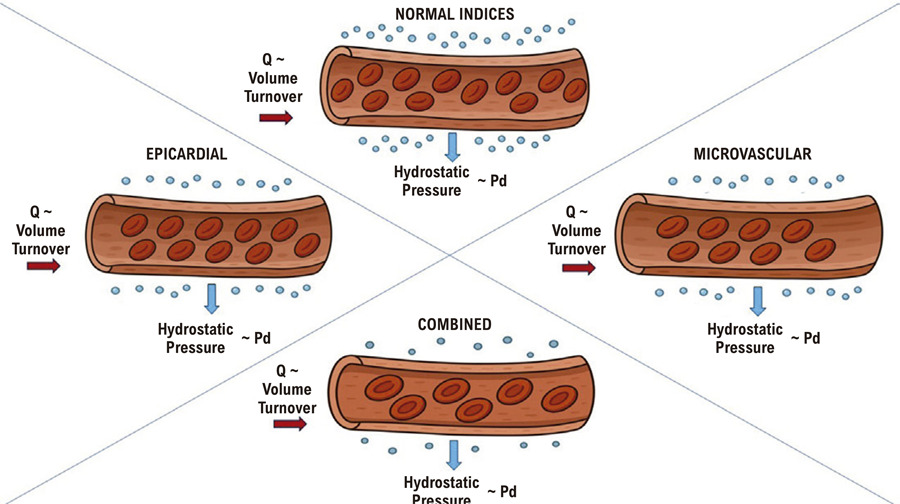
A total of 130 patients were finally included. A gradual decrease in hyperemic coronary flow [(Qcor) in mL/min; normal indices: 387±192, isolated epicardial: 278±153, isolated microvascular: 130±41, combined: 96±33; p<0.001] and a progressive increase in total coronary resistance [(RTotal) in Wood units (WU); normal indices: 238±139, isolated epicardial: 373±167, isolated microvascular: 694±210, combined: 999±342; p<0.001] were observed as more compartments were involved. Also, epicardial dysfunction was primarily associated with reduced distal coronary pressure (Pd) and elevated epicardial resistance [(REpi) in WU; normal indices: 25±18, isolated epicardial: 145±113, isolated microvascular: 66±34, combined: 389±282; p<0.001], whereas microvascular dysfunction was characterized by preserved Pd but markedly decreased Qcor and increased microvascular resistance [(RMicro) in WU; normal indices: 213±124, isolated epicardial: 228±73, isolated microvascular: 628±195, combined: 610±137; p<0.001]. Combined dysfunction shares mechanisms of both epicardial and microvascular dysfunction.

Conclusions

Coronary endotypes exhibit distinct hemodynamic patterns with specific pressure- and flow-related ischemic mechanisms. Integrated physiological assessment is essential for accurate endotype characterization and personalized therapeutic strategies.
  • Coronary Artery Disease
  • coronary circulation
  • Myocardial Fractional Flow Reserve
Read Full Article
Creative Commons Attribution (CC BY) Creative Commons license
02/02/2026 DOI: 10.36660/abc.20250340i Views 1
Figure 1
ABCIC
Review Article

My Approach to Functional Analysis in Computed Tomography Angiography: Myocardial Perfusion and FFRct

Gustavo Corrêa de Almeida Teixeira et al. Bruno Vicente Gomes de Castro Douglas Carli Silva Tiago Magalhães

Abstract

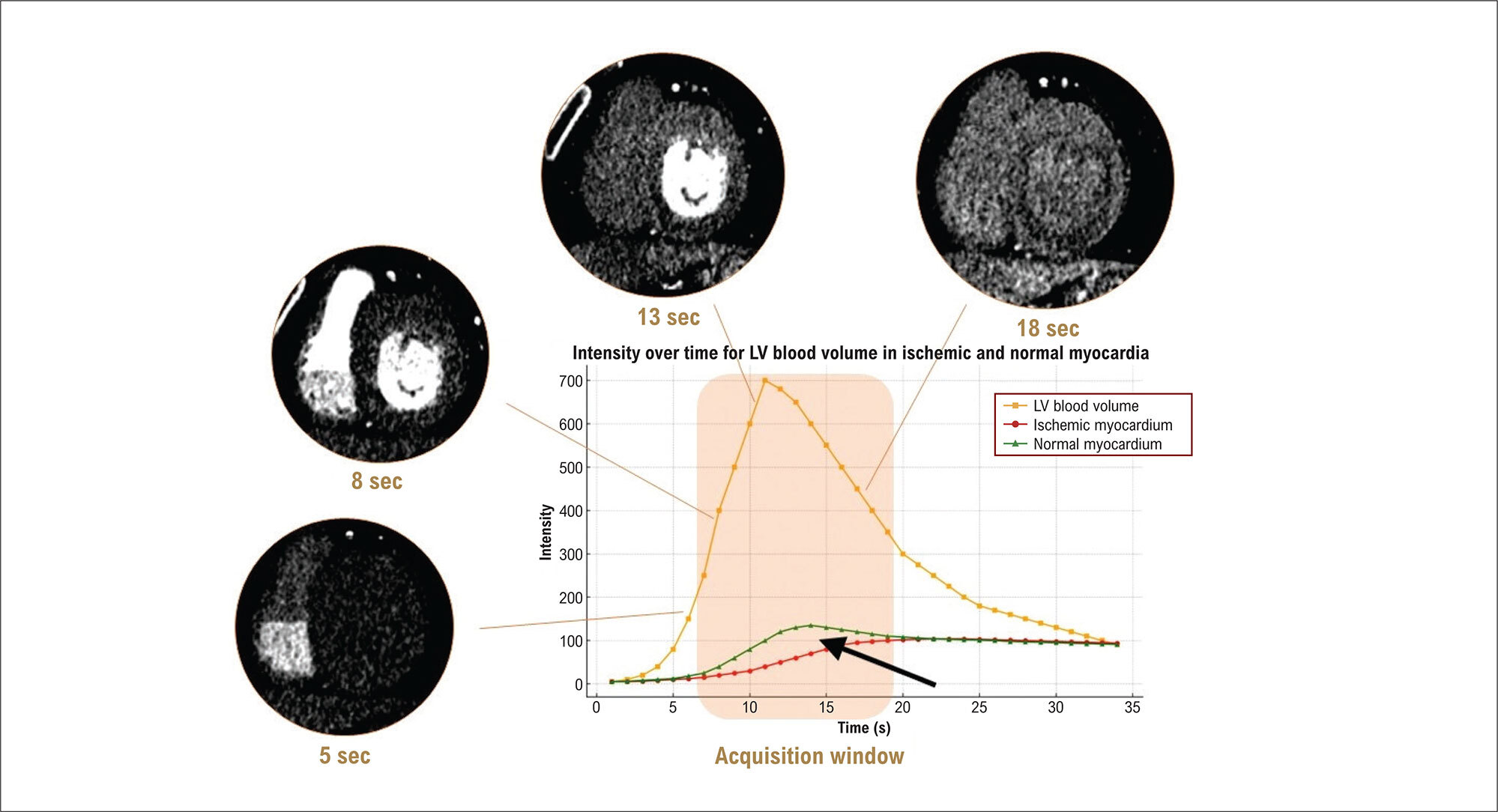
Coronary computed tomography angiography (CCTA) is an effective noninvasive method for detecting atherosclerotic disease, especially in symptomatic patients with low-to-moderate disease probability. Despite good accuracy in detecting obstructions, its relationship with functional lesion severity is limited. For a more accurate assessment, anatomical evaluation can be associated with myocardial computed tomography perfusion and fractional flow reserve derived from CCTA (FFRct). Myocardial perfusion computed tomography identifies areas of ischemia. FFRct, which assesses the hemodynamic significance of stenoses, has shown high accuracy and can reduce the need for invasive catheterizations. The image acquisition and interpretation protocols are essential to ensure reliable results and appropriate management of patients with coronary artery disease.

  • Computed Tomography Angiography
  • Myocardial Fractional Flow Reserve
  • Myocardial Perfusion Imaging
Read Full Article
Creative Commons Attribution (CC BY) Creative Commons license
13/12/2024 DOI: 10.36660/abcimg.20240113i Views 1
ABC
Editorial

Analysis of Myocardial Flow Reserve Using the CZT Camera. Additional Value to Perfusion and Functional Information in Identifying the Cause of Chest Discomfort

Paola Emanuela Poggio Smanio

Chest discomfort is one of the most common symptoms that often leads people to hospital emergency services. The importance of rapid differentiation between acute cardiac ischemic syndrome secondary to significant obstruction of the coronary arteries (obstructive CAD) and other conditions that also causes chest discomfort promptly is essential.

Many patients are discharged inadvertently and progress to acute events, on the other hand, others remain for several days occupying precious beds in hospital emergency rooms without the cause being cardiological.

[…]

  • Coronary Artery Disease
  • Myocardial Fractional Flow Reserve
  • Myocardial Ischemia
  • Myocardial Perfusion Imaging
Read Full Article
Creative Commons Attribution (CC BY) Creative Commons license
30/09/2024 DOI: 10.36660/abc.20240366i
Pathogenesis, Assessment, and Treatment of Coronary Microcirculation Dysfunction
ABC
Review Article

Pathogenesis, Assessment, and Treatment of Coronary Microcirculation Dysfunction

Bing Ji et al. Xue-Bo Liu

Abstract

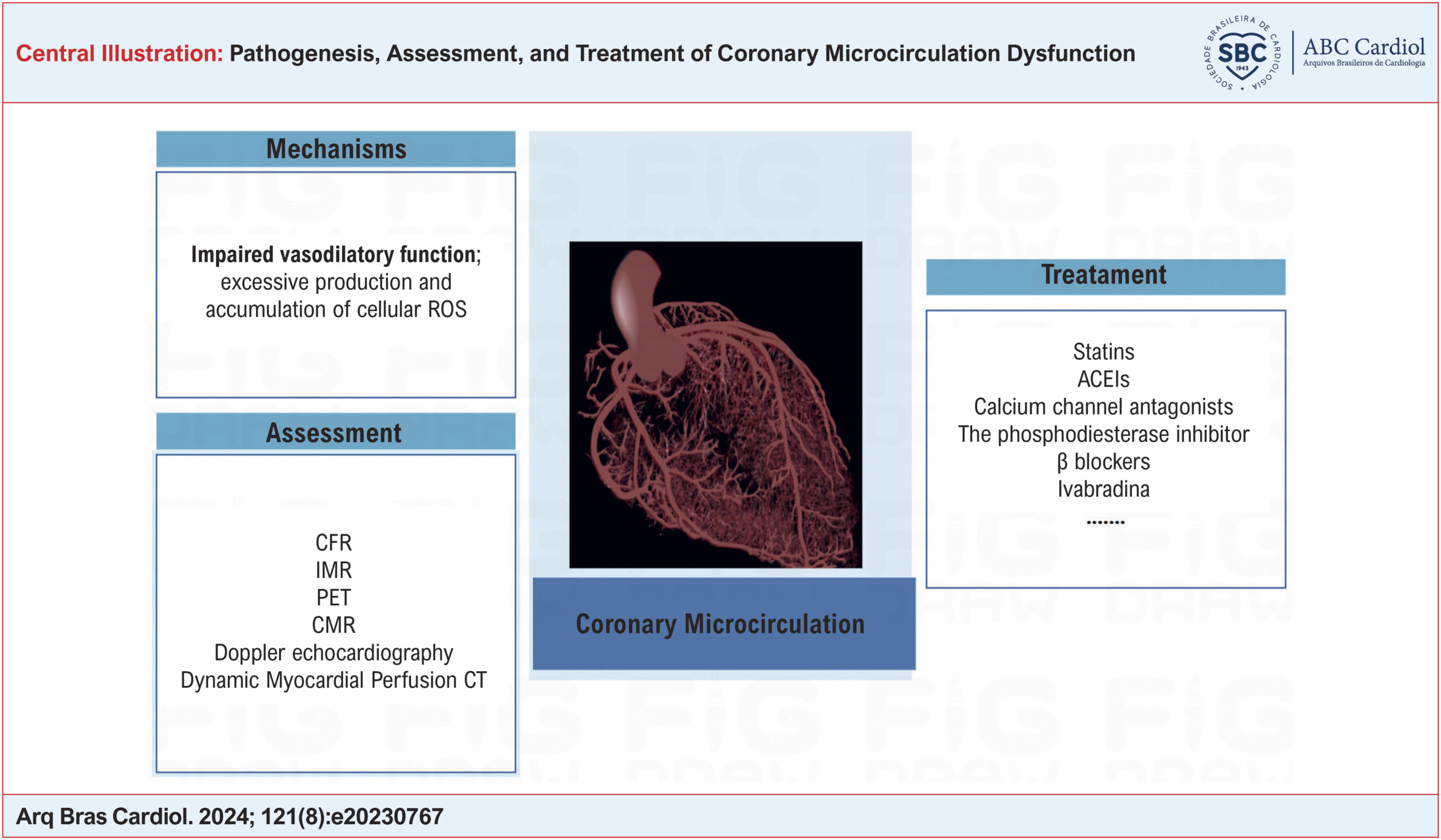
Cardiovascular disease is the predominant cause of mortality on a global scale. Research indicates that women exhibit a greater likelihood of presenting with non-obstructive coronary artery disease (CAD) when experiencing symptoms of myocardial ischemia in comparison to men. Additionally, women tend to experience a higher burden of symptoms relative to men, and despite the presence of ischemic heart disease, they are frequently reassured erroneously due to the absence of obstructive CAD. In cases of ischemic heart disease accompanied by symptoms of myocardial ischemia but lacking obstructive CAD, it is imperative to consider coronary microvascular dysfunction as a potential underlying cause. Coronary microvascular dysfunction, characterized by impaired coronary flow reserve resulting from functional and/or structural abnormalities in the microcirculation, is linked to adverse cardiovascular outcomes. Lifestyle modifications and the use of anti-atherosclerotic and anti-anginal medications may offer potential benefits, although further clinical trials are necessary to inform treatment strategies. This review aims to explore the prevalence, underlying mechanisms, diagnostic approaches, and therapeutic interventions for coronary microvascular dysfunction.

  • coronary circulation
  • Myocardial Fractional Flow Reserve
  • Therapeutics
Read Full Article
Creative Commons Attribution (CC BY) Creative Commons license
02/09/2024 DOI: 10.36660/abc.20230767i
Figure 1
ABC
Original Article

Diagnostic Performance of a Machine Learning-Based CT-Derived FFR in Detecting Flow-Limiting Stenosis

Thamara Carvalho Morais et al. Antonildes Nascimento Assunção-Jr Roberto Nery Dantas Júnior Carla Franco Grego da Silva … Caroline Bastida de Paula Roberto Almeida Torres Tiago Augusto Magalhães César Higa Nomura Luiz Francisco Rodrigues de Ávila José Rodrigues Parga Filho

Abstract

Background

The non-invasive quantification of the fractional flow reserve (FFRCT) using a more recent version of an artificial intelligence-based software and latest generation CT scanner (384 slices) may show high performance to detect coronary ischemia.

Objectives

To evaluate the diagnostic performance of FFRCT for the detection of significant coronary artery disease (CAD) in contrast to invasive FFR (iFFR) using previous generation CT scanners (128 and 256- detector rows).

Methods

Retrospective study with patients referred to coronary artery CT angiography (CTA) and catheterization (iFFR) procedures. Siemens Somatom Definition Flash (256-detector rows) and AS+ (128-detector rows) CT scanners were used to acquire the images. The FFRCT and the minimal lumen area (MLA) were evaluated using a dedicated software (cFFR version 3.0.0, Siemens Healthineers, Forchheim, Germany). Obstructive CAD was defined as CTA lumen reduction ≥ 50%, and flow-limiting stenosis as iFFR ≤0.8. All reported P values are two-tailed, and when <0.05, they were considered statistically significant.

Results

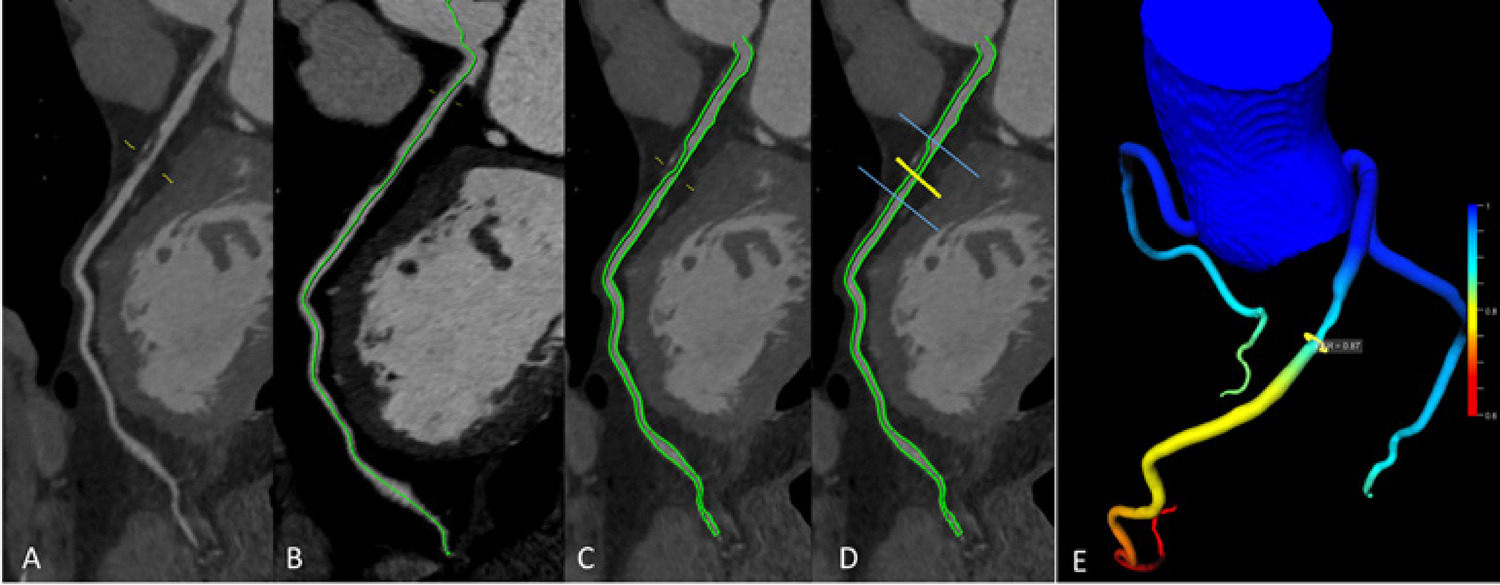
Ninety-three consecutive patients (152 vessels) were included. There was good agreement between FFRCT and iFFR, with minimal FFRCT overestimation (bias: -0.02; limits of agreement:0.14-0.09). Different CT scanners did not modify the association between FFRCT and FFRi (p for interaction=0.73). The performance of FFRCT was significantly superior compared to the visual classification of coronary stenosis (AUC 0.93vs.0.61, p<0.001) and to MLA (AUC 0.93vs.0.75, p<0.001), reducing the number of false-positive cases. The optimal cut-off point for FFRCT using a Youden index was 0.85 (87% Sensitivity, 86% Specificity, 73% PPV, 94% NPV), with a reduction of false-positives.

Conclusion

Machine learning-based FFRCT using previous generation CT scanners (128 and 256-detector rows) shows good diagnostic performance for the detection of CAD, and can be used to reduce the number of invasive procedures.

  • Computed Tomography
  • Coronary Artery Disease
  • Machine Learning
  • Myocardial Fractional Flow Reserve
  • Myocardial Ischemic
Read Full Article
Creative Commons Attribution (CC BY) Creative Commons license
14/06/2021 DOI: 10.36660/abc.20190329 Views 2

How to cite this article

EndNote RIS

Electronic Document Format (Vancouver)

Matute-Blanco L, Belmonte T, Rivera K, García-Guimaraes M, Casanova-Sandoval J, Benítez ID, Fuertes-Ferre G, et al. Physiological Characterization of Coronary Endotypes: Potential Links with Myocardial Ischemia. Arquivos Brasileiros de Cardiologia 2026;122(12):e20250340.

Electronic Document Format (ABNT)

Matute-Blanco, Lucía; Belmonte, Thalia; Rivera, Kristian; García-Guimaraes, Marcos; Casanova-Sandoval, Juan; Benítez, Iván D.; Fuertes-Ferre, Georgina; Guerrero, Ainhoa Pérez; Segovia, Raúl Millán; Worner, Fernando; Gonzalo-Calvo, David De; Fernández-Rodríguez, Diego. Physiological Characterization of Coronary Endotypes: Potential Links with Myocardial Ischemia. Arquivos Brasileiros de Cardiologia, v. 122, n. 12, e20250340, Feb. 2026.

Electronic Document Format (APA)

Matute-Blanco, L., Belmonte, T., Rivera, K., García-Guimaraes, M., Casanova-Sandoval, J., Benítez, I. D., Fuertes-Ferre, G., Guerrero, A. P., Segovia, R. M., Worner, F., Gonzalo-Calvo, D. D., & Fernández-Rodríguez, D. (2026). Physiological Characterization of Coronary Endotypes: Potential Links with Myocardial Ischemia. Arquivos Brasileiros de Cardiologia, 122(12), e20250340.

Electronic Document Format (ISO)

Matute-Blanco, Lucía and Belmonte, Thalia and Rivera, Kristian and García-Guimaraes, Marcos and Casanova-Sandoval, Juan and Benítez, Iván D. and Fuertes-Ferre, Georgina and Guerrero, Ainhoa Pérez and Segovia, Raúl Millán and Worner, Fernando and Gonzalo-Calvo, David De and Fernández-Rodríguez, Diego. Physiological Characterization of Coronary Endotypes: Potential Links with Myocardial Ischemia. Arquivos Brasileiros de Cardiologia [online]. 2026, vol. 122, n. 12, [cited 2026-10-14], e20250340. Available from: <https://journals.cardiol.br/en/article/physiological-characterization-of-coronary-endotypes-potential-links-with-myocardial-ischemia/>. ISSN 0066-782X

EndNote RIS

Electronic Document Format (Vancouver)

Teixeira GCA, Castro BVG, Silva DC, Magalhães T. My Approach to Functional Analysis in Computed Tomography Angiography: Myocardial Perfusion and FFRct. ABC Imagem Cardiovascular 2024;37(4):e20240113.

Electronic Document Format (ABNT)

Teixeira, Gustavo Corrêa de Almeida; Castro, Bruno Vicente Gomes de; Silva, Douglas Carli; Magalhães, Tiago. My Approach to Functional Analysis in Computed Tomography Angiography: Myocardial Perfusion and FFRct. ABC Imagem Cardiovascular, v. 37, n. 4, e20240113, Dec. 2024.

Electronic Document Format (APA)

Teixeira, G. C. A., Castro, B. V. G. , Silva, D. C., & Magalhães, T. (2024). My Approach to Functional Analysis in Computed Tomography Angiography: Myocardial Perfusion and FFRct. ABC Imagem Cardiovascular, 37(4), e20240113.

Electronic Document Format (ISO)

Teixeira, Gustavo Corrêa de Almeida and Castro, Bruno Vicente Gomes de and Silva, Douglas Carli and Magalhães, Tiago. My Approach to Functional Analysis in Computed Tomography Angiography: Myocardial Perfusion and FFRct. ABC Imagem Cardiovascular [online]. 2024, vol. 37, n. 4, [cited 2026-10-14], e20240113. Available from: <https://journals.cardiol.br/en/article/my-approach-to-functional-analysis-in-computed-tomography-angiography-myocardial-perfusion-and-ffrct/>. ISSN 2318-8219

EndNote RIS

Electronic Document Format (Vancouver)

Smanio PEP. Analysis of Myocardial Flow Reserve Using the CZT Camera. Additional Value to Perfusion and Functional Information in Identifying the Cause of Chest Discomfort. Arquivos Brasileiros de Cardiologia 2024;121(6):e20240366.

Electronic Document Format (ABNT)

Smanio, Paola Emanuela Poggio. Analysis of Myocardial Flow Reserve Using the CZT Camera. Additional Value to Perfusion and Functional Information in Identifying the Cause of Chest Discomfort. Arquivos Brasileiros de Cardiologia, v. 121, n. 6, e20240366, Sep. 2024.

Electronic Document Format (APA)

Smanio, P. E. P. (2024). Analysis of Myocardial Flow Reserve Using the CZT Camera. Additional Value to Perfusion and Functional Information in Identifying the Cause of Chest Discomfort. Arquivos Brasileiros de Cardiologia, 121(6), e20240366.

Electronic Document Format (ISO)

Smanio, Paola Emanuela Poggio. Analysis of Myocardial Flow Reserve Using the CZT Camera. Additional Value to Perfusion and Functional Information in Identifying the Cause of Chest Discomfort. Arquivos Brasileiros de Cardiologia [online]. 2024, vol. 121, n. 6, [cited 2026-10-14], e20240366. Available from: <https://journals.cardiol.br/en/article/analysis-of-myocardial-flow-reserve-using-the-czt-camera-additional-value-to-perfusion-and-functional-information-in-identifying-the-cause-of-chest-discomfort/>. ISSN 0066-782X

EndNote RIS

Electronic Document Format (Vancouver)

Ji B, Liu X. Pathogenesis, Assessment, and Treatment of Coronary Microcirculation Dysfunction. Arquivos Brasileiros de Cardiologia 2024;121(8):e20230767.

Electronic Document Format (ABNT)

Ji, Bing; Liu, Xue-Bo. Pathogenesis, Assessment, and Treatment of Coronary Microcirculation Dysfunction. Arquivos Brasileiros de Cardiologia, v. 121, n. 8, e20230767, Sep. 2024.

Electronic Document Format (APA)

Ji, B., & Liu, X. (2024). Pathogenesis, Assessment, and Treatment of Coronary Microcirculation Dysfunction. Arquivos Brasileiros de Cardiologia, 121(8), e20230767.

Electronic Document Format (ISO)

Ji, Bing and Liu, Xue-Bo. Pathogenesis, Assessment, and Treatment of Coronary Microcirculation Dysfunction. Arquivos Brasileiros de Cardiologia [online]. 2024, vol. 121, n. 8, [cited 2026-10-14], e20230767. Available from: <https://journals.cardiol.br/en/article/pathogenesis-assessment-and-treatment-of-coronary-microcirculation-dysfunction/>. ISSN 0066-782X

EndNote RIS

Electronic Document Format (Vancouver)

Morais TC, Assunção-Jr AN, Dantas Júnior RN, Silva CFG, Paula CB, Torres RA, Magalhães TA, et al. Diagnostic Performance of a Machine Learning-Based CT-Derived FFR in Detecting Flow-Limiting Stenosis. Arquivos Brasileiros de Cardiologia 2021;116(6):1091-8.

Electronic Document Format (ABNT)

Morais, Thamara Carvalho; Assunção-Jr, Antonildes Nascimento; Dantas Júnior, Roberto Nery; Silva, Carla Franco Grego da; Paula, Caroline Bastida de; Torres, Roberto Almeida; Magalhães, Tiago Augusto; Nomura, César Higa; Ávila, Luiz Francisco Rodrigues de; Parga Filho, José Rodrigues. Diagnostic Performance of a Machine Learning-Based CT-Derived FFR in Detecting Flow-Limiting Stenosis. Arquivos Brasileiros de Cardiologia, v. 116, n. 6, p. 1091-1098, Jun. 2021.

Electronic Document Format (APA)

Morais, T. C., Assunção-Jr, A. N., Dantas Júnior, R. N., Silva, C. F. G. , Paula, C. B. , Torres, R. A., Magalhães, T. A., Nomura, C. H., Ávila, L. F. R. , & Parga Filho, J. R. (2021). Diagnostic Performance of a Machine Learning-Based CT-Derived FFR in Detecting Flow-Limiting Stenosis. Arquivos Brasileiros de Cardiologia, 116(6), 1091-1098.

Electronic Document Format (ISO)

Morais, Thamara Carvalho and Assunção-Jr, Antonildes Nascimento and Dantas Júnior, Roberto Nery and Silva, Carla Franco Grego da and Paula, Caroline Bastida de and Torres, Roberto Almeida and Magalhães, Tiago Augusto and Nomura, César Higa and Ávila, Luiz Francisco Rodrigues de and Parga Filho, José Rodrigues. Diagnostic Performance of a Machine Learning-Based CT-Derived FFR in Detecting Flow-Limiting Stenosis. Arquivos Brasileiros de Cardiologia [online]. 2021, vol. 116, n. 6, [cited 2026-10-14], pp. 1091-1098. Available from: <https://journals.cardiol.br/en/article/diagnostic-performance-of-a-machine-learning-based-ct-derived-ffr-in-detecting-flow-limiting-stenosis/>. ISSN 0066-782X

  • About ABC Family
  • Internal Regulation
  • Editorial Board
  • Brazilian Society of Cardiology (SBC)

Issues

SBC Guidelines

  • Videos
  • Podcasts
  • News