| ABC
ABC Family Arquivos Brasileiros de Cardiologia International Journal of Cardiovascular Sciences ABC Heart Failure & Cardiomyopathy ABC Imagem Cardiovascular
Português English
ABC Family | ABC
Português English
  • About
    • About the Journal
    • Internal Regulation
    • Editors Section
    • Editorial Board
    • History
    • SBC Award
  • Instructions to Authors
    • Guidelines for Publication
    • Editorial Policy
    • Ethics Policy
    • Policy on the Use of Artificial Intelligence
    • Mandatory Publication Form
    • Publication Fee
  • Issues
  • SBC Guidelines
  • Abstracts
    • How to Publish an Abstract Supplement?
    • Supplements from the Brazilian Congress of Cardiology
  • About
    • About the Journal
    • Internal Regulation
    • Editors Section
    • Editorial Board
    • History
    • SBC Award
  • Instructions to Authors
    • Guidelines for Publication
    • Editorial Policy
    • Ethics Policy
    • Policy on the Use of Artificial Intelligence
    • Mandatory Publication Form
    • Publication Fee
  • Issues
  • SBC Guidelines
  • Abstracts
    • How to Publish an Abstract Supplement?
    • Supplements from the Brazilian Congress of Cardiology

ABC Family

  • ABC Family
  • Arquivos Brasileiros de Cardiologia
  • International Journal of Cardiovascular Sciences
  • ABC Heart Failure & Cardiomyopathy
  • ABC Imagem Cardiovascular
Search in

No content found.

Journals
Ordering
Article types
Others

  1. Home
  2. ABC
  3. Issues
  4. 2024, Volume 121, Number 4
Editorial

Can Pre-Ablation Serum Biomarkers be Used to Predict Arrhythmia Recurrence after Ablation Index-Guided Atrial Fibrillation Ablation?

Muhieddine Omar Chokr

Invasive treatment of atrial fibrillation (AF) has been established as the most effective treatment in controlling and curing this arrhythmia. In most cases, triggers originating from the pulmonary veins are responsible for triggering AF in its paroxysmal form. In its persistent form, different electrophysiological mechanisms are involved. The longer the evolution time, the more complex the invasive treatment strategy becomes. Despite the technological evolution with different electroanatomical mapping systems and the formation of increasingly effective radiofrequency lesions in the atrium wall, recurrences remain a challenge to be avoided.

Creating long-lasting ablation lesions during pulmonary vein isolation for AF is of critical importance to prevent late vein reconnection. Such reconnection is responsible for the vast majority of arrhythmia recurrences in patients with paroxysmal AF. Despite technological improvements, the proportion of veins that remain chronically isolated after radiofrequency ablation is still disappointingly low. This has led to great interest in producing more effective ablation lesions.

[…]

  • Atrial Fibrillation
  • Biomarkers
  • Catheter Ablation
Read Full Article
Creative Commons Attribution (CC BY) Creative Commons license
12/08/2024 DOI: 10.36660/abc.20240355i Views 1
Editorial

Can Artificial Intelligence Change our Interpretation of Cardiovascular Risk Scores?

Maria Cristina Meira Ferreira et al. Glaucia Maria Moraes de Oliveira

The need to discover ways to predict future events has fascinated the human race since its beginnings. Through observations stored in human memory, predicting events was part of security and survival of humanity. Over the centuries, the need for prediction became part of several sciences, due to its extreme importance in guiding strategic decision-making, and in medicine it wasn’t different.

Human beings have developed skills in recording, organizing, and storing data for future analysis. We went from storing in analog mode to digital, and along with the development of statistical methods, analysis of large databases has become possible. In medicine, complex algorithms used by computer systems began to predict the risk of developing diseases, prognoses, the best therapeutic strategies, risk of events, mortality, among others.

[…]

  • Acute coronary syndrome
  • Artificial Intelligence
  • Percutaneous Coronary Intervention
  • ST Elevation Myocardial Infarction
Read Full Article
Creative Commons Attribution (CC BY) Creative Commons license
19/07/2024 DOI: 10.36660/abc.20240280i Views 3
Editorial

Impact of the Implantable Cardioverter Defibrillator on the Lives of its Patients

Silas dos Santos Galvão Filho

The first ICD implant in humans occurred in 1980, followed by the incorporation of this device into the therapeutic arsenal of cardiology in the early 1990s, it was one of the greatest advances in the treatment of cardiac arrhythmias. Being the therapy of choice with evidence of efficacy for a large number of patients at risk of sudden cardiac death from non-reversible causes, ICDs have some peculiarities that can impact the daily lives of their carriers. Initially, ICDs were huge devices, only capable of being implanted at the abdominal level, with their electrodes and reeds for delivering the shock implanted directly into the heart through thoracotomy. At that time, the impact of these devices on the lives of their users was great, from aesthetics to the large number of inappropriate shocks, caused by still precarious algorithms for discriminating the arrhythmia to be treated: ventricular tachycardia (VT) or ventricular fibrillation (VF), in addition to the first programs that were still inadequate. In our initial experience with ICDs in the late 1980s and early 1990s, we had many acceptance problems, with some patients even requesting to remove the device after experiencing repeated shocks. With the spectacular evolution they have undergone, ICDs have incorporated all technological advances, improving their diagnostic performance in the release of therapies and now having dimensions slightly larger than pacemakers, allowing device implants at the thoracic level, with fully transvenous electrodes through minimally invasive surgery, eliminating thoracotomy. Despite these advances, a considerable number of patients continue to report an impact on their quality of life. This is mainly due to one aspect: the ICD is the only implantable electronic cardiac device whose normal therapeutic functioning is perceived by the patient, with sensations described by the vast majority as very unpleasant, especially shock therapy, the worst situation being when repeated shocks occur. The improvement of diagnostic algorithms for tachyarrhythmias, and greater knowledge of device programming, have considerably reduced inappropriate shocks, however, appropriate shocks, even repetitive shocks known as electrical storms, continue to occur,, as they correspond to the normal functioning of the device in reversing cardiac arrest due to VF, or potentially malignant arrhythmia such as VT. Fortunately, today these serious episodes are much less frequent and can be treated through medication and/or interventional procedures such as catheter ablation.

The article “Predictors of Quality of Life, Anxiety and Acceptance in Patients with Implantable Cardioverter-Defibrillator” evaluated these aspects in a reasonable number of patients undergoing the first implantation or replacement of an ICD generator, showing that around a quarter of the patients presented some kind of negative impact. It also showed that being 60 years old or older, the absence of atrial fibrillation (AF), and being female were predictors of better results. This information is important and deserves some consideration: 1- Having improved considerably over the years, ICD still negatively impacts the lives of a relatively important number of its sufferers. This encourages the technological improvement of devices, optimizing therapies, in addition to better approach and psychological preparation of the patient pre-operatively. 2- The worse results of younger patients can be explained by the feeling of great limitation of activities imposed on those with ICDs, however, these limitations are due more to the underlying heart disease than to the device itself. In some cases, without major changes in cardiological function, even impactful professional sporting activities can be allowed,, as in the case of two football players who played in the last World Cup with ICD. 3- In the case of people with AF, this arrhythmia, which is often symptomatic, is not infrequently related to heart disease with worse cardiological function, which increases limitations. Furthermore, AF may be responsible for inappropriate shocks, which can be avoided with adequate programming. 4- Regarding the fact that women present better results despite the aesthetic problems that these devices can cause, this is probably due to greater tolerance to therapies and a better understanding of the possible limitations of their activities, as they have an ICD.

[…]

  • Arrhythmias Cardiac
  • Death, Sudden, Cardiac
  • Defibrillators, Implantable / trends
  • Quality of life
  • sickness impact profile
Read Full Article
Creative Commons Attribution (CC BY) Creative Commons license
05/07/2024 DOI: 10.36660/abc.20240196i Views 2
Editorial

Using High-Sensitivity Troponin for Enhancing Risk Prediction after Non-Cardiac Surgery – Are We There Yet?

António Tralhão

The homeostatic disruption related to non-cardiac surgery is a well-described trigger for cardiovascular morbidity and mortality in the early and late post-operative periods., Through multiple mechanisms, including inflammation and hypercoagulability, hemodynamic instability and blood loss, hypoxemia or suspension of protective therapies, known or silent chronic cardiac conditions like coronary artery disease, left ventricular dysfunction or valve disease may serve as the substrate for myocardial ischemia and infarction, heart failure or arrhythmias.

Epidemiologically, a significant rate of cardiac complications, combined with an immense number of patients undergoing non-cardiac surgical procedures per annum creates a major public healthcare challenge, necessarily shifting the focus towards prevention. Traditionally, risk assessment has been based on patient factors, type of surgery, and urgency of the intervention, which are included, albeit with different weighing, in the available risk scores., Unfortunately, the discriminative ability of existing scores is far from optimal, leaving room for complementary tools like biomarkers. Specifically, the bloodstream release of cardiac troponin (cTn), reflecting multifactorial cardiomyocyte injury, has been shown to signal increased morbidity and mortality when elevated in the perioperative period. However, and until now, the integration of this so-called MINS (“myocardial injury after non-cardiac surgery”) with the more familiar clinical risk evaluation in the task of risk prediction remains a question to be properly answered.

[…]

  • High-sensitivity Troponin
  • Myocardial Injury
  • Non-cardiac Surgery
  • Risk Classification
Read Full Article
Creative Commons Attribution (CC BY) Creative Commons license
17/06/2024 DOI: 10.36660/abc.20240140i Views 2
Editorial

Ventilatory Efficiency: Is This the Key to Unlock the Full Potential of Cardiopulmonary Exercise Testing?

Arthur Proença Rossi et al. Fabrício Braga Ricardo Stein

Enhanced Comparative Analysis:

It allows for more direct comparisons of ventilatory efficiency between CHF and COPD patients, accommodating the pathophysiological differences between these conditions.

[…]

  • ergoespirometry
  • Gas exchange
  • Markers
Read Full Article
Creative Commons Attribution (CC BY) Creative Commons license
07/06/2024 DOI: 10.36660/abc.20240184i
Letter to the Editor

Effects of Immunosuppression in Heart Transplant Patients Due to Chagas Disease

Lúcio Moreira Fontenele et al. Nayara Ribeiro Máximo de Almeida Breno Rennan de Souza Carvalho Egidio Bezerra da Silva Neto … Brenda dos Santos Teixeira Johnnatas Mikael Lopes

Cardiac involvement in Chagas Disease (CD) represents the most severe form of the disease, occurring in 30 to 40% of infected patients. Patients with heart failure of chagasic origin are often refractory to drug treatment, requiring assessment of the need for heart transplantation (CT). After carrying out the CT, it is necessary patient’s immunosuppression to ensure a greater chance of graft acceptance and vitality, on the other hand, immunosuppression is a contributing factor to CD relapse, which could directly compromise the graft or even worsen other health parameters of the patient, directly impacting mortality in the next 5 years after transplant. Many of the cardiac therapies implemented in CD come from therapies studied in heart diseases of other origins, requiring more therapeutic research in populations of individuals with CD.

The article entitled Survival of Survival of Heart Transplant Patients with Chagas’ Disease Under Different Antiproliferative Immunosuppressive Regimens presents a theme of extreme importance for the scenario of care for individuals with Chagas, especially concerning harmful outcomes such as death and reactivation of the disease.

[…]

  • Chagas disease
  • Heart Transplantation
  • Immunosuppresion
Read Full Article
Creative Commons Attribution (CC BY) Creative Commons license
20/05/2024 DOI: 10.36660/abc.20230798i Views 1
Editorial

Unraveling the Challenges in Diagnosing Cardiac Amyloidosis

Lorena Squassante Capeline

Transthyretin amyloidosis (ATTR) is a rare genetically caused pathology leading to potentially fatal infiltrative cardiomyopathy, representing the most common form of hereditary restrictive cardiomyopathy. The transthyretin (TTR) gene is located on chromosome 18q12.1 with autosomal dominant inheritance and variable penetrance. ATTR exhibits heterogeneous clinical manifestations, with cardiac involvement being the primary marker of poor prognosis. Cardiac amyloidosis (CA), a rare and often overlooked condition, has emerged as a significant challenge in the field of cardiology. This disorder poses a series of difficulties regarding early and accurate diagnosis.–

Currently, the availability of genetic testing has identified a population carrying the genetic variant without the phenotype of CA.– However, due to the progressive and slow evolution of the disease, the exact identification of cardiac involvement remains unknown.–

[…]

  • Amyloidosis, Hereditary, Transthyretin-Related
  • Cardiomyopathy, Restrictive
  • Echocardiography
Read Full Article
Creative Commons Attribution (CC BY) Creative Commons license
20/05/2024 DOI: 10.36660/abc.20240107i Views 1
Figure 1
Original Article

Scintigraphic and Echocardiographic Study of Patients with Pathogenic or Probably Pathogenic Variants of the TTR Gene without Overt Cardiac Involvement

Tonnison de Oliveira Silva et al. Eduardo Sahade Darzé Marcela Machado Costa Luiz José Junior … Antonio A. B. Ximenes Fábio Fernandes Mário de Seixas Rocha Marcia M. Noya-Rabelo Luiz Eduardo Fonteles Ritt

Abstract

Background:

Transthyretin amyloidosis (ATTR) is an infiltrative disease caused by abnormal protein deposition mainly in the heart and peripheral nervous system. When it affects the heart, the disease presents as restrictive cardiomyopathy; when it affects the peripheral and autonomic nervous system, it manifests as polyneuropathy, and is called familial amyloid polyneuropathy (FAP). There are two ATTR subtypes: wild-type ATTR, where there is no mutation, and mutant ATTR (ATTRm), which is characterized by a mutation in the gene encoding the transthyretin protein (TTR). In both subtypes, cardiac involvement is the major marker of poor prognosis.

Objectives:

To assess the prevalence of subclinical cardiac involvement in a sample of patients with TTR gene mutation by using pyrophosphate scintigraphy and strain echocardiography; to compare scintigraphy and strain findings; to evaluate the association between neurological manifestations (FAP) and subclinical cardiac involvement; and to analyze whether there is an association between any specific mutation and cardiac involvement.

Methods:

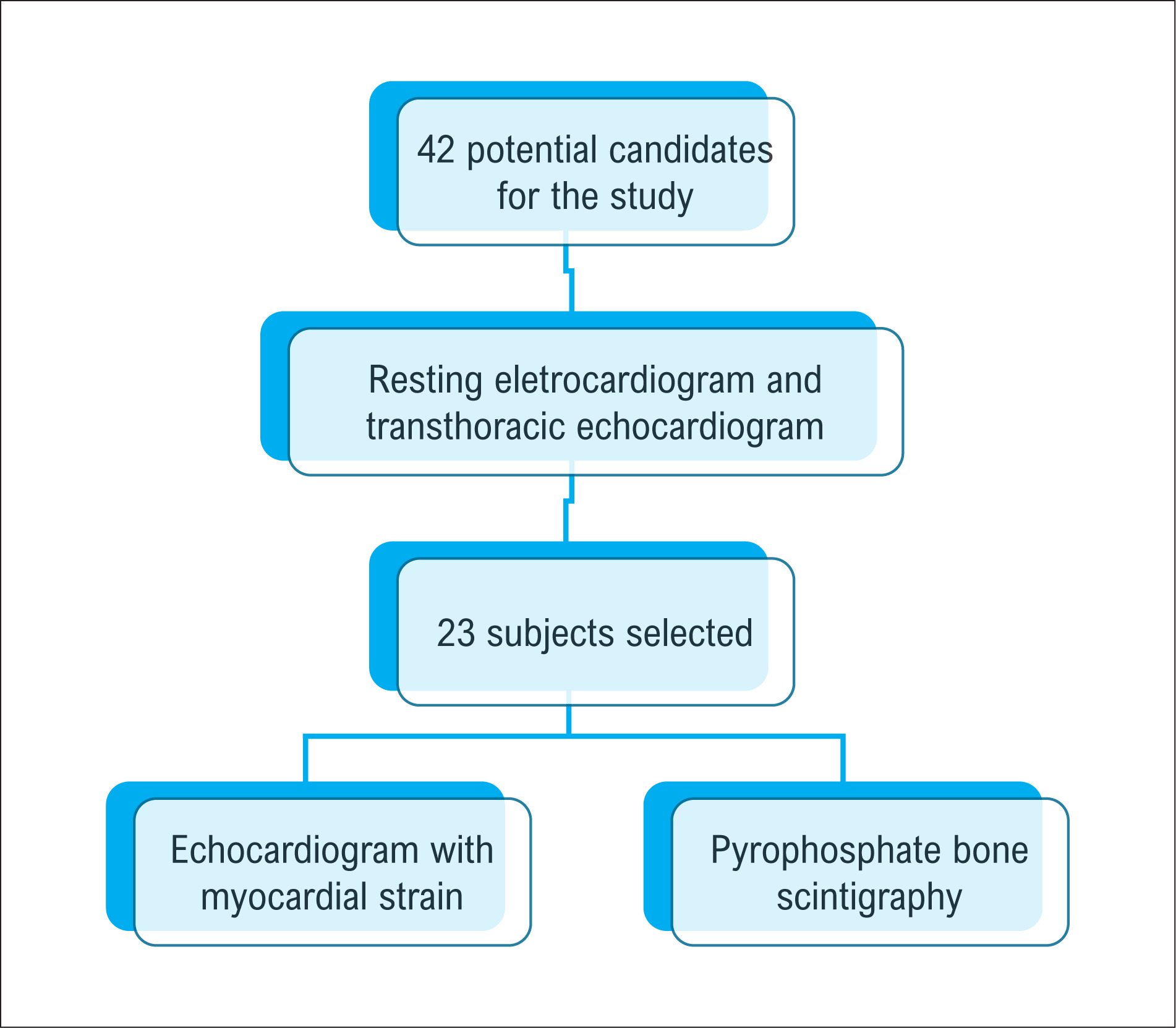
This is a cross-sectional study with carriers of the TTR gene mutation, without cardiovascular symptoms or changes in electrocardiographic or conventional echocardiographic parameters. All patients underwent pyrophosphate scintigraphy and strain echocardiography. Subclinical cardiac involvement was defined as a Perugini score ≥ 2, heart-to-contralateral lung (H/CL) ratio ≥ 1.5 at 1 h, H/CL ≥1.3 at 3 h, or global longitudinal strain (GLS) ≤ −17%. Descriptive and analytical analyses were performed and Fisher’s exact test and Mann–Whitney test were applied. A value of p < 0.05 was considered significant.

Results:

The 23 patients evaluated had a median age of 51 years (IQR 37–57 years), 15 (65.2%) were female, 12 (52.2%) were Pardo, nine (39.1%) had systemic arterial hypertension, and nine (39.1%) had a previous diagnosis of FAP. Of the nine patients with FAP, 8 (34.8%) were on tafamidis. The associated mutations were Val142IIe, Val50Met, and IIe127Val. The median GLS in the sample was −19% (−16% to −20%). Of the 23 patients, nine (39.1%; 95% CI = 29–49%) met criteria for cardiac involvement, six (26%) by the GLS-based criteria only. There was no association between having FAP and being an asymptomatic carrier, as assessed by strain echocardiography and pyrophosphate scintigraphy (p = 0.19). The prevalence of systemic arterial hypertension, diabetes mellitus, dyslipidemia, smoking, and reduced GLS did not differ between groups. Septal e’ wave velocity was the only variable that significantly differed between individuals with and without reduced GLS, with an area under the ROC curve of 0.80 (95% CI = 0.61–0.98, p = 0.027). The best diagnostic accuracy was achieved with a septal e’ velocity ≤ 8.5 cm/s. There was no association between mutation type and preclinical cardiac involvement, nor between tafamidis use and lower degree of cardiac involvement (37.5% versus 40.0%, p = 0.90).

Conclusion:

Subclinical cardiac involvement was common in a sample of TTR mutation carriers without cardiac involvement. Reduced left ventricular GLS was the most frequent finding. There was no association between the presence of amyloid polyneuropathy and subclinical cardiac involvement. Type of mutation was not associated with early cardiac involvement. In this sample, the use of tafamidis 20 mg/day was not associated with a lower prevalence of subclinical cardiac involvement.

  • Amiloidose
  • Echocardiography
  • Familial Amyloid Neuropathies
  • Radionuclide Imaging
Read Full Article
Creative Commons Attribution (CC BY) Creative Commons license
20/05/2024 DOI: 10.36660/abc.20230216i
Figure 1
Original Article

High-Fat Diet and Heart: What is the Real Impact of Resistance Exercise Training?

André Rodrigues Lourenço Dias et al. Andrey Jorge Serra

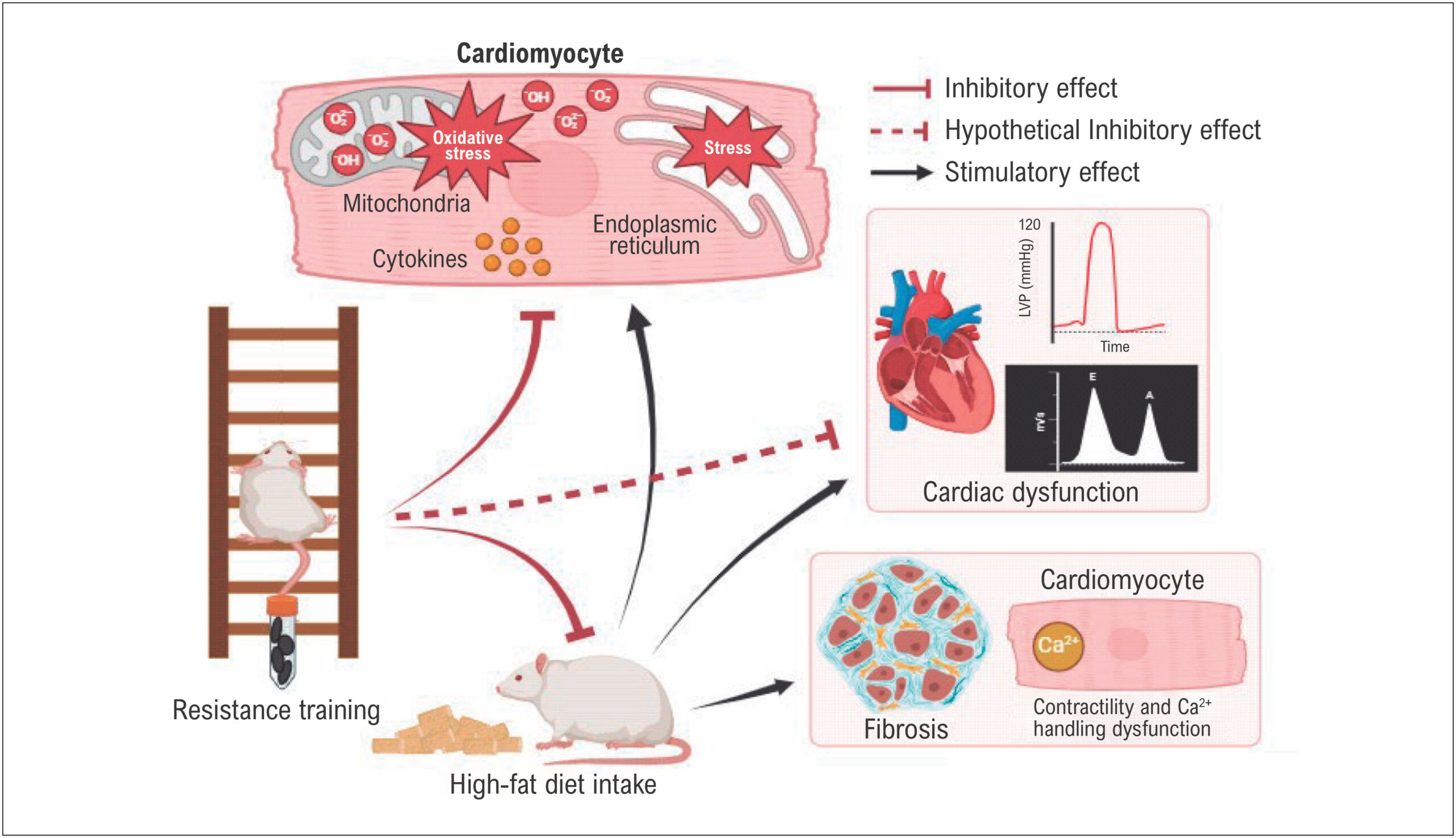
Long-term consumption of a high-fat diet (HFD) causes macrophage infiltration in the myocardium, which begins to secrete cytokines involved in cardiac inflammation. In this regard, interleukin-1β (IL-1β) plays a key role. Elevated levels of IL-1β trigger mitochondrial production of reactive oxygen species (ROS). The burst of ROS in the myocardium contributes to the development of diastolic dysfunction and heart failure with preserved ejection fraction in an experimental HFD model.

A current systematic review by Portes et al. has shown that resistance training (RT) can mitigate a variety of harmful effects of HFD on the heart. The article by Portes et al. reviewed original articles carried out in HFD rodents subjected to an RT program of at least four weeks comparing non-trained animals. Five studies were considered eligible, and ladder climbing with external load was the RT method applied.– Another three studies have found a reduction in body mass in animals subjected to RT,,, indicating that one pathway through which RT may promote cardioprotection may be reducing HFD. However, none of these studies reported food intake.,, A single study by Kim et al. assessed weekly food intake in middle-aged rats, who demonstrated that RT could upregulate proteins linked to mitochondrial biogenesis and reduce markers of sarcoplasmic reticulum stress without affecting HFD intake and body mass.

[…]

  • Atrial Remodeling
  • Diet
  • Exercises
  • Fats/metabolism
  • Heart/physiopatology
  • Physical Endurance
Read Full Article
Creative Commons Attribution (CC BY) Creative Commons license
10/05/2024 DOI: 10.36660/abc.20240091i
Editorial

Cost-Effectiveness Related to Implantable Electronic Cardiac Devices: An Ever-Constant Concern

Luiz Eduardo Montenegro Camanho

Implantable electronic cardiac devices (IECDs) play a crucial role in patients with bradyarrhythmias, with proven effectiveness in improving quality of life and maintaining life itself, and their use in clinical practice is unquestionable. However, the technology used and its possible complications represent a considerable cost to regulatory agencies and the respective paying sources. If, on the one hand, the benefit of IECDs in different clinical scenarios is not questioned, on the other hand, the associated cost, including possible complications, should also be a reason for reflection.

The initial cost related to the procedure is high, as is the cost related to possible complications, such as pneumothorax, hemothorax, electrode disposition, infection, and clinical complications in general.–

[…]

  • Artificial Pacemaker
  • Cost-Effectiveness Analysis
  • Hematoma
  • Pneumothorax
Read Full Article
Creative Commons Attribution (CC BY) Creative Commons license
03/05/2024 DOI: 10.36660/abc.20240185i
Addition of High-Sensitivity Troponin to Perioperative Risk Assessment Improves the Predictive Ability of Death in Non-Cardiac Surgery Patients
Original Article

Addition of High-Sensitivity Troponin to Perioperative Risk Assessment Improves the Predictive Ability of Death in Non-Cardiac Surgery Patients

Bruno Ferraz de Oliveira Gomes et al. Thiago Moreira Bastos da Silva Giovanni Possamai Dutra Leticia de Sousa Peres … Nathalia Duarte Camisão Walter de Souza Homena Júnior João Luiz Fernandes Petriz Plinio Resende do Carmo Junior Basilio de Bragança Pereira Gláucia Maria Moraes de Oliveira

Abstract

Background

Risk stratification is an important step in perioperative evaluation. However, the main risk scores do not incorporate biomarkers in their set of variables.

Objective

Evaluate the incremental power of troponin to the usual risk stratification

Methods

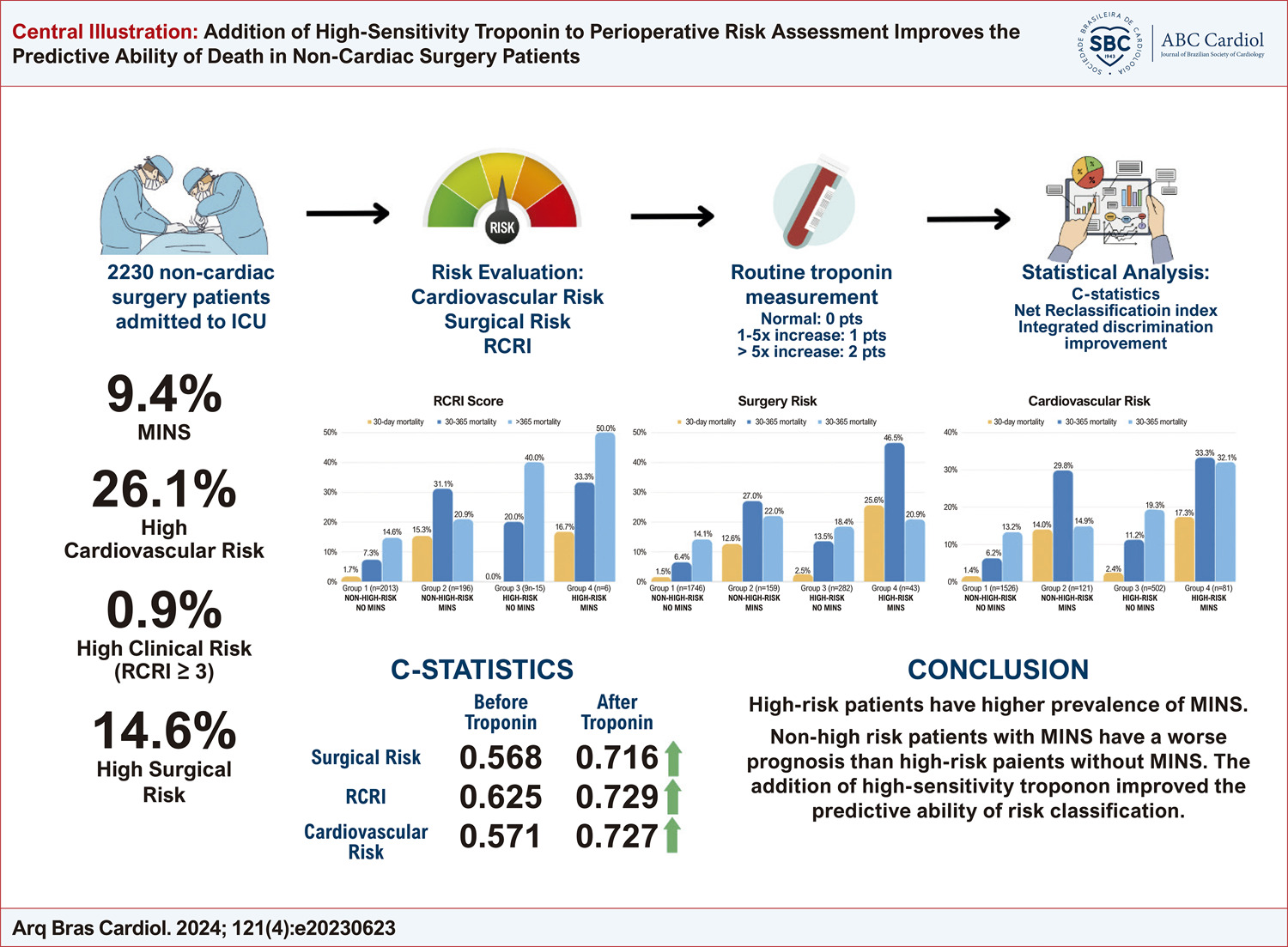
A total of 2,230 patients admitted to the intensive care unit after non-cardiac surgery were classified according to three types of risk: cardiovascular risk (CVR), Revised Cardiac Risk Index (RCRI); and inherent risk of surgery (IRS). The main outcome was all-cause mortality. Cox regression was used as well as c-statistics before and after addition of high-sensitivity troponin (at least one measurement up to three days after surgery). Finally, net reclassification index and integrated discrimination improvement were used to assess the incremental power of troponin for risk stratification. Significance level was set at 0.05.

Results

Mean age of patients was 63.8 years and 55.6% were women. The prevalence of myocardial injury after non-cardiac surgery (MINS) was 9.4%. High CVR-patients had a higher occurrence of MINS (40.1 x 24.8%, p<0.001), as well as high IRS-patients (21.3 x 13.9%, p=0.004) and those with a RCRI≥3 (3.0 x 0.7%, p=0.009). Patients without MINS, regardless of the assessed risk, had similar mortality rate. The addition of troponin to the risk assessment improved the predictive ability of death at 30 days and at 1 year in all risk assessments.

Conclusion

The prevalence of MINS is higher in the high-risk population. However, its prevalence in lower-risk population is not negligible and causes a higher risk of death. The addition of high-sensitivity troponin increased the predictive ability of risk assessment in all groups.

  • High-sensitivity Troponin
  • Myocardial Injury
  • Non-cardiac Surgery
  • Risk Classification
Read Full Article
Creative Commons Attribution (CC BY) Creative Commons license
03/05/2024 DOI: 10.36660/abc.20230623i Views 1
Figure 1
Case Report

Acute Myocarditis as the Initial Presentation of Desmoplakin Mutation – Broadening the Differential Diagnosis

Hideki Koike et al. Amr Idris Justin Berger Victor Y. Cheng … Jay Sengupta João L. Cavalcante

Introduction

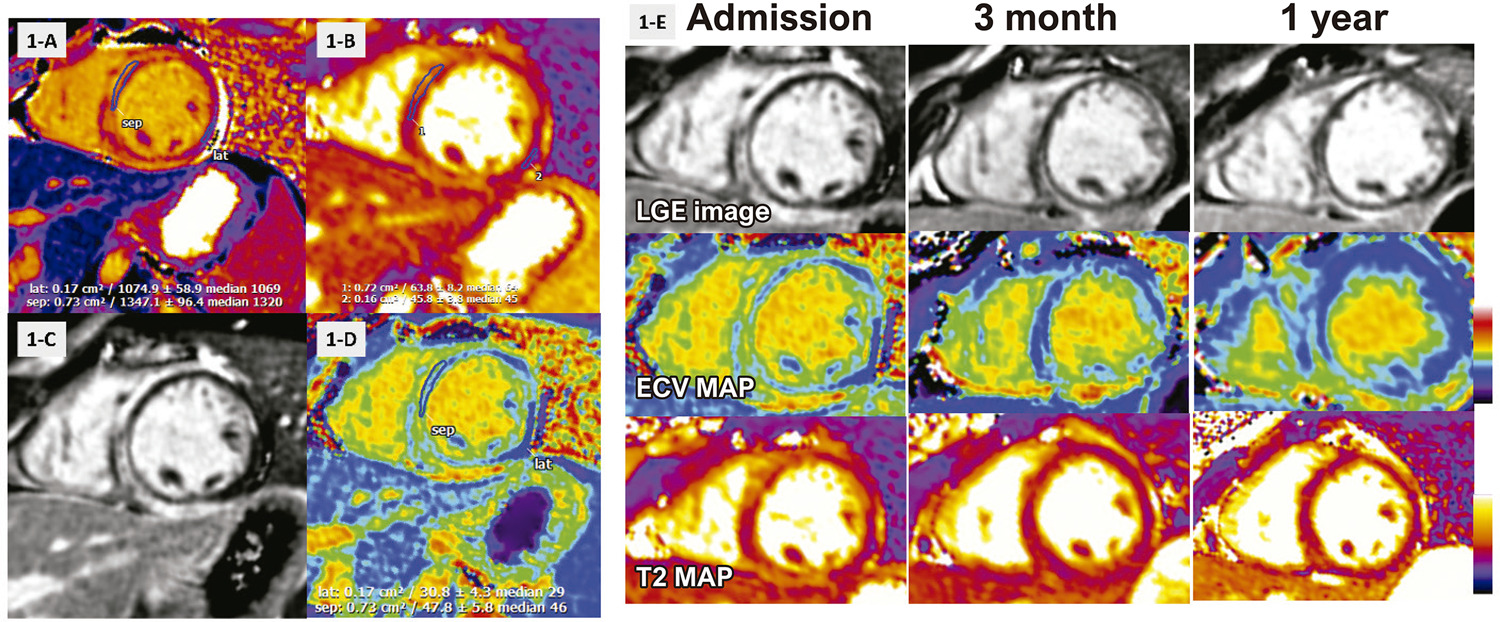
Genetic cardiomyopathy related to desmoplakin (DSP) mutation can start its clinical manifestation with chest pain symptoms, along with transient troponin elevation configuring first manifest as acute myocarditis, sometimes in a relapsing pattern. It is clear that the revised Task Force criteria for genetic cardiomyopathy will miss many cases, particularly those with left-sided dominance. This case reports highlights to understand that genetic cardiomyopathy, particularly with DSP mutation, can present with acute myocarditis and to understand that cardiovascular magnetic resonance (CMR) imaging could raise the possibility of arrhythmogenic cardiomyopathy and predict ventricular tachyarrhythmias despite preserved LVEF.

[…]

  • Dilated Cardiomyopathy
  • Gadolinium
  • Myocardium
Read Full Article
Creative Commons Attribution (CC BY) Creative Commons license
03/05/2024 DOI: 10.36660/abc.20230541i Views 1
Beyond the GRACE ACS Score: Do We Need a Different Model for Men and Women after STEMI?
Original Article

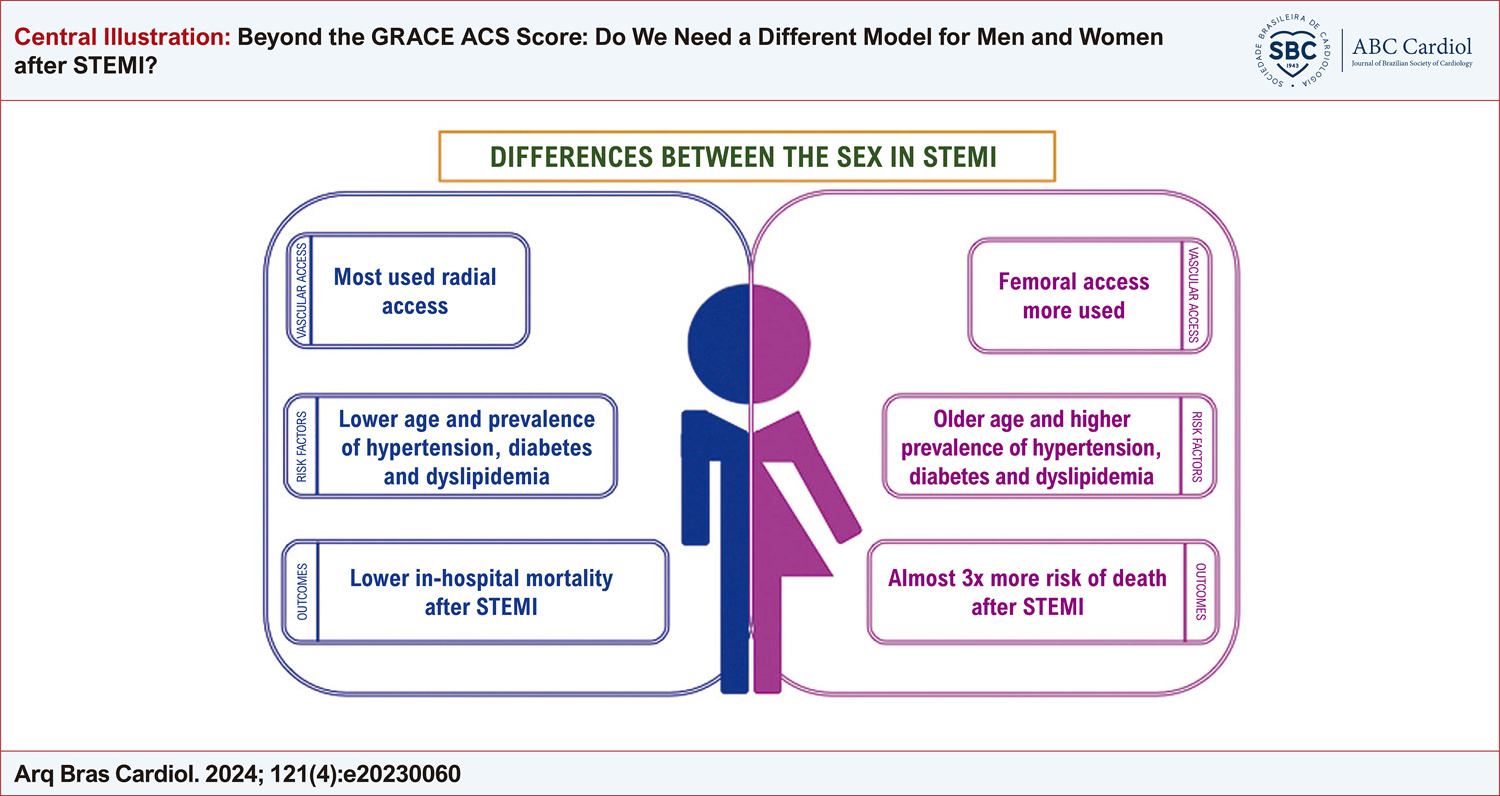
Beyond the GRACE ACS Score: Do We Need a Different Model for Men and Women after STEMI?

José Sergio Nascimento Silva et al. Isly Maria Lucena de Barros Jorge Augusto Nunes Guimarães Davide Cao … Sílvia Marinho Martins Tawanna Xavier Marques de Carvalho Rayssa Santana de Farias Viviana Lemke Roxana Mehran Rodrigo Pedrosa

Abstract

Background

Women, in comparison to men, experience worse outcomes after acute coronary syndrome (ACS). However, whether the female sex per se is an independent predictor of such adverse events remains unclear.

Objective

This study aims to assess the association between the female sex and in-hospital mortality after ST-elevation myocardial infarction (STEMI).

Methods

We conducted a retrospective cohort study by enrolling consecutive STEMI patients admitted to a tertiary hospital from January 2018 to February 2019. All patients were treated per current guideline recommendations. Multivariable logistic regression models were applied to evaluate in-hospital mortality using GRACE variables. Model accuracy was evaluated using c-index. A p-value < 0.05 was statistically significant.

Results

Out of the 1678 ACS patients, 709 presented with STEMI. The population consisted of 36% women, and the median age was 61 years. Women were older (63.13 years vs. 60.53 years, p = 0.011); more often presented with hypertension (75.1% vs. 62.4%, p = 0.001), diabetes (42.2% vs. 27.8%, p < 0.001), and hyperlipidemia (34.1% vs. 23.9%, p = 0.004); and were less likely to undergo percutaneous coronary intervention (PCI) via radial access (23.7% vs. 46.1%, p < 0.001). In-hospital mortality rate was significantly higher in women (13.2% vs. 5.6%, p = 0.001), and the female sex remained at higher risk for in-hospital mortality (OR 2.79, 95% CI 1.15–6.76, p = 0.023). A multivariate model including age, sex, systolic blood pressure, cardiac arrest, and Killip class was 94.1% accurate in predicting in-hospital mortality, and the c-index was 0.85 (95% CI 0.77–0.93).

Conclusion

After adjusting for the risk factors in the GRACE prediction model, women remain at higher risk for in-hospital mortality.

  • Acute coronary syndrome
  • Coronary Artery Disease
  • Percutaneous Coronary Intervention
  • Sex
  • Women
Read Full Article
Creative Commons Attribution (CC BY) Creative Commons license
03/05/2024 DOI: 10.36660/abc.20230060i Views 1
Multiple Causes of Death Associated with Pediatric Cardiopulmonary Arrest from 1996 to 2019 in Brazil
Original Article

Multiple Causes of Death Associated with Pediatric Cardiopulmonary Arrest from 1996 to 2019 in Brazil

Thayanne Mendes de Andrade et al. Mariara Lopes da Costa Marques Thaís Rocha Salim Glaucia Maria Moraes de Oliveira

Abstract

Background:

In pediatrics, cardiopulmonary arrest (CPA) is associated with high mortality and severe neurologic sequelae. Information on the causes and mechanisms of death below the age of 20 years could provide theoretical support for health improvement among children and adolescents.

Objectives:

To conduct a population analysis of mortality rates due to primary and multiple causes of death below the age of 20 years in both sexes from 1996 to 2019 in Brazil, and identify the frequency in which CPA was recorded in the death certificates (DCs) of these individuals and the locations where the deaths occurred, in order to promote strategies to improve the prevention of deaths.

Method:

Ecological time-series study of deaths below the age of 20 years from 1996 to 2019, evaluating the mortality rates (MRs) and proportional mortality (PM) by primary cause of death. We analyzed the percentages of CPA recorded in any line of the DC and the location where the deaths occurred. We calculated the MRs per 100,000 inhabitants and the PM by primary cause of death under the age of 20 years according to sex and age group, the percentages of death from primary causes by age group when CPA was described in any line of Parts I and II of the DC, and the percentage of deaths from primary causes according to their location of occurrence. We retrieved the data from DATASUS, IBGE, and SINASC.

Results:

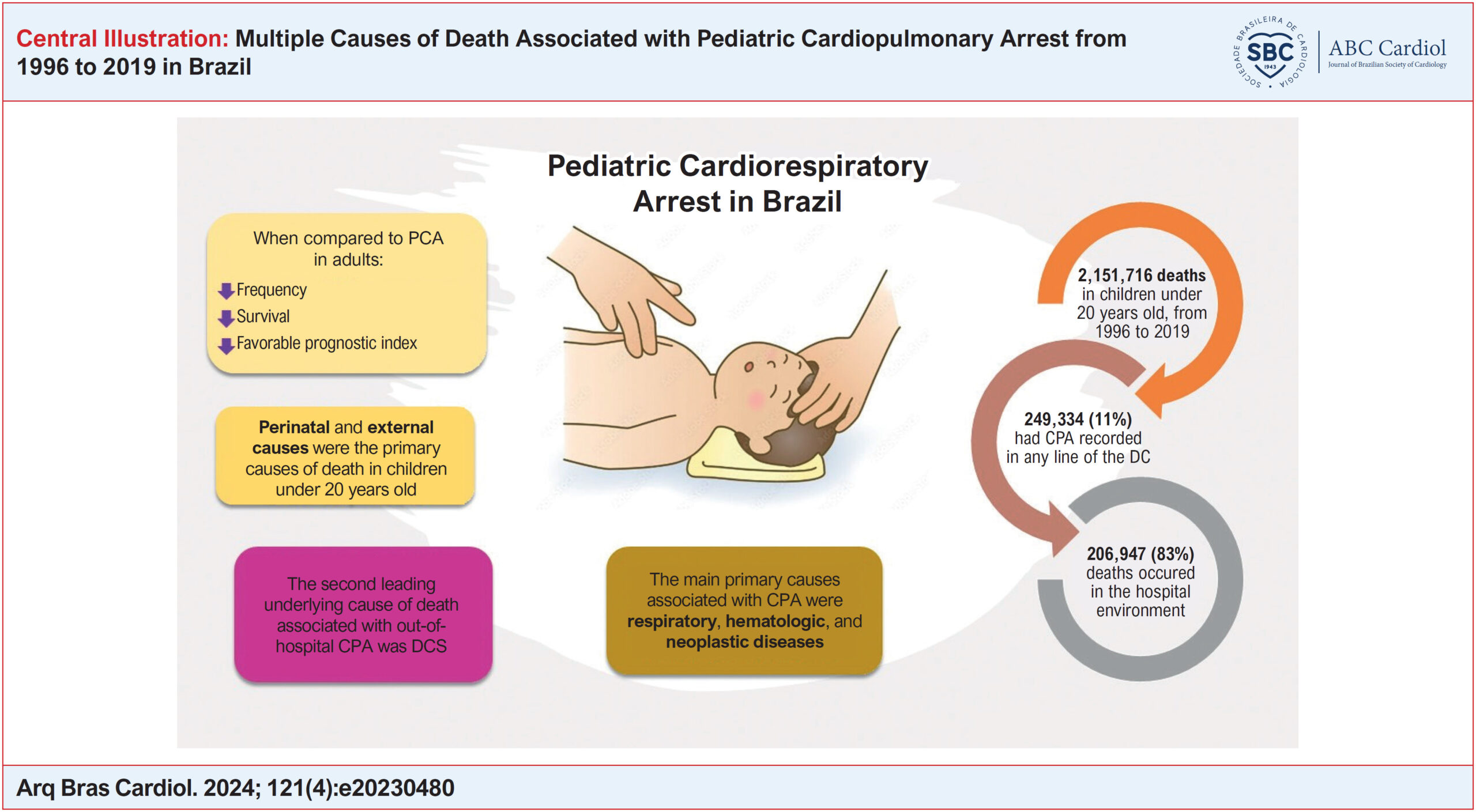
From 1996 to 2019, there were 2,151,716 deaths below the age of 20 years in Brazil, yielding a mortality rate of 134.38 per 100,000 inhabitants. The death rate was highest among male neonates. Of all deaths, 249,334 (11.6%) had CPA recorded in any line of the DC. Specifically, CPA was recorded in 49,178 DCs between the ages of 1 and 4 years and in 88,116 of those between the ages of 29 and 365 days, corresponding, respectively, to 26% and 22% of the deaths in these age groups. These two age groups had the highest rates of CPA recorded in any line of the DC. The main primary causes of death when CPA was recorded in the sequence of death were respiratory, hematologic, and neoplastic diseases.

Conclusion:

Perinatal and external causes were the primary causes of death, with highest MRs under the age of 20 years in Brazil from 1996 to 2019. When multiple causes of death were considered, the main primary causes associated with CPA were respiratory, hematologic, and neoplastic diseases. Most deaths occurred in the hospital environment. Better understanding of the sequence of events in these deaths and improvements in teaching strategies in pediatric cardiopulmonary resuscitation are needed.

  • Brazil
  • Multiple Causes of Death
  • Pediatric Cardiopulmonary Arrest
Read Full Article
Creative Commons Attribution (CC BY) Creative Commons license
29/04/2024 DOI: 10.36660/abc.20230480
Figure 1
Image

Spatio-Temporal Image Correlation: Three-Dimensional Imaging for Fetal Cardiac Screening and Congenital Heart Disease Assessment

André Malho et al. Renato Silveira Ximenes Nathalie Jeanne Bravo-Valenzuela Edward Araujo Júnior

Heart defects are among the most common congenital malformations, occurring in 4 to 12 per 1,000 live births, depending on the population studied. Congenital heart disease (CHD) is an important cause of mortality related to birth defects. Therefore, prenatal diagnosis of CHD is crucial to improve the prognosis associated with this disease. In this scenario, the development of prenatal cardiac ultrasound screening programs serves as crucial tools that have increased the early detection of CHD. These programs achieve this by adding the ventricular outflow tract and superior mediastinum views (three vessels – 3V and 3V with trachea) to the standard four-chamber (4C) view when scanning the cardiac ultrasound.

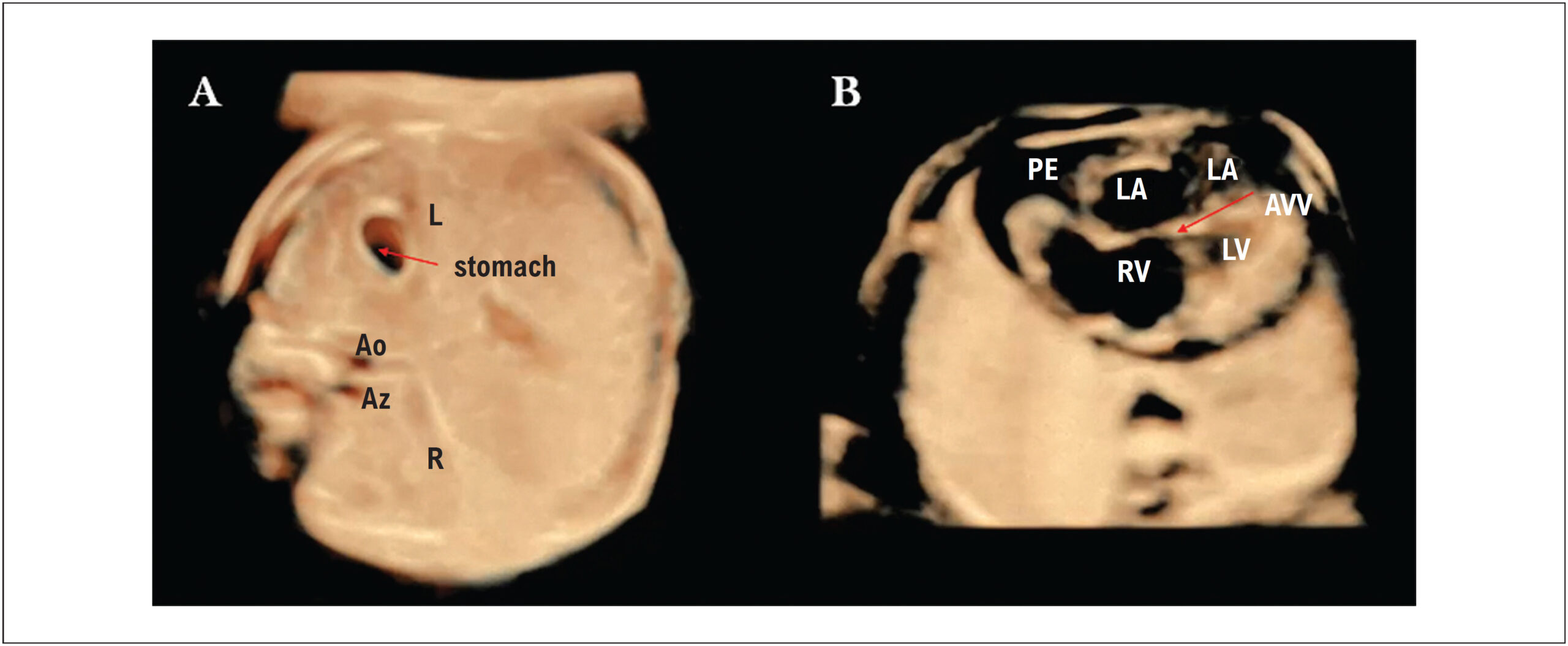
The development of advanced imaging technologies, such as three- and four-dimensional (3D/4D) ultrasound and Spatio-Temporal Image Correlation (STIC), has improved the quality of ultrasound images of the fetal heart with a positive impact on the diagnosis of cardiac malformations. The 4D-STIC technology allows the capture of thousands of cardiac images using a 3D volumetric transducer by a single 7.5 to 15-second slow-motion scan of the 4C view of the fetal heart. The acquired 3D/4D volumes contain a “block” of information of the complete cardiac cycle that can be stored for later off-line navigation of the fetal heart, allowing detailed analysis of cardiac anatomy by the sonographer, or sent via Internet link for analysis by experts in tertiary centers.

[…]

  • Congenital Heart Defects
  • fetal heart
  • Three-Dimensional Imaging
  • Ultrasonography
Read Full Article
Creative Commons Attribution (CC BY) Creative Commons license
29/04/2024 DOI: 10.36660/abc.20230580i Views 1
Comparable Ventilatory Inefficiency at Maximal and Submaximal Performance in COPD vs. CHF subjects: An Innovative Approach
Original Article

Comparable Ventilatory Inefficiency at Maximal and Submaximal Performance in COPD vs. CHF subjects: An Innovative Approach

Gerson Gatass Orro de Campos et al. Leandro Steinhorst Goelzer Tiago Rodrigues de Lemos Augusto Gisele Walter Barbosa … Gaspar R. Chiappa Erik H. van Iterson Paulo T. Muller

Abstract

Background:

Currently, excess ventilation has been grounded under the relationship between minute-ventilation/carbon dioxide output (). Alternatively, a new approach for ventilatory efficiency () has been published.

Objective:

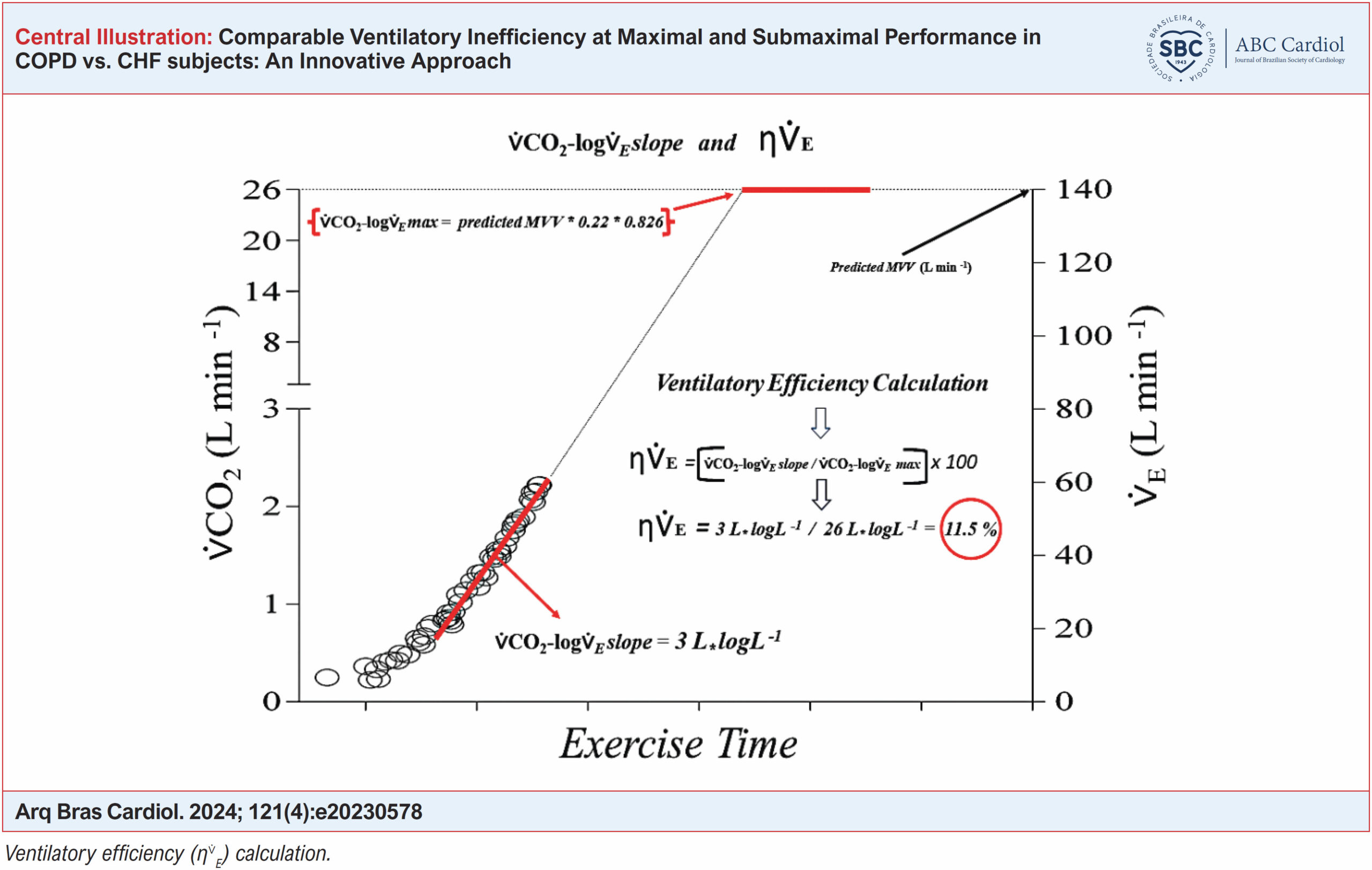
Our main hypothesis is that comparatively low levels of between chronic heart failure (CHF) and chronic obstructive pulmonary disease (COPD) are attainable for a similar level of maximum and submaximal aerobic performance, conversely to long-established methods ( slope and intercept).

Methods:

Both groups performed lung function tests, echocardiography, and cardiopulmonary exercise testing. The significance level adopted in the statistical analysis was 5%. Thus, nineteen COPD and nineteen CHF-eligible subjects completed the study. With the aim of contrasting full values of and for the exercise period (100%), correlations were made with smaller fractions, such as 90% and 75% of the maximum values.

Results:

The two groups attained matched characteristics for age (62±6 vs. 59±9 yrs, p>.05), sex (10/9 vs. 14/5, p>0.05), BMI (26±4 vs. 27±3 Kg m2, p>0.05), and peak (72±19 vs. 74±20 %pred, p>0.05), respectively. The slope and intercept were significantly different for COPD and CHF (27.2±1.4 vs. 33.1±5.7 and 5.3±1.9 vs. 1.7±3.6, p0.850 for both).

Conclusion:

The is a valuable method for comparison between cardiopulmonary diseases, with so far distinct physiopathological mechanisms, including ventilatory constraints in COPD.

  • Chronic Obstructive Pulmonary Disease
  • Exercise
  • Exercise Test
  • Heart Failure
Read Full Article
Creative Commons Attribution (CC BY) Creative Commons license
29/04/2024 DOI: 10.36660/abc.20230578i
Figure 1
Case Report

Pulmonary Arterial Hypertension with Features of Venous Involvement: A Detective's Task

Daniel Inácio Cazeiro et al. Rui Plácido Miguel Azeredo Raposo Joana Brito … Alexandra Borba Tatiana Guimarães Eugénia Pinto Pedro Freitas Fausto J. Pinto

Abstract

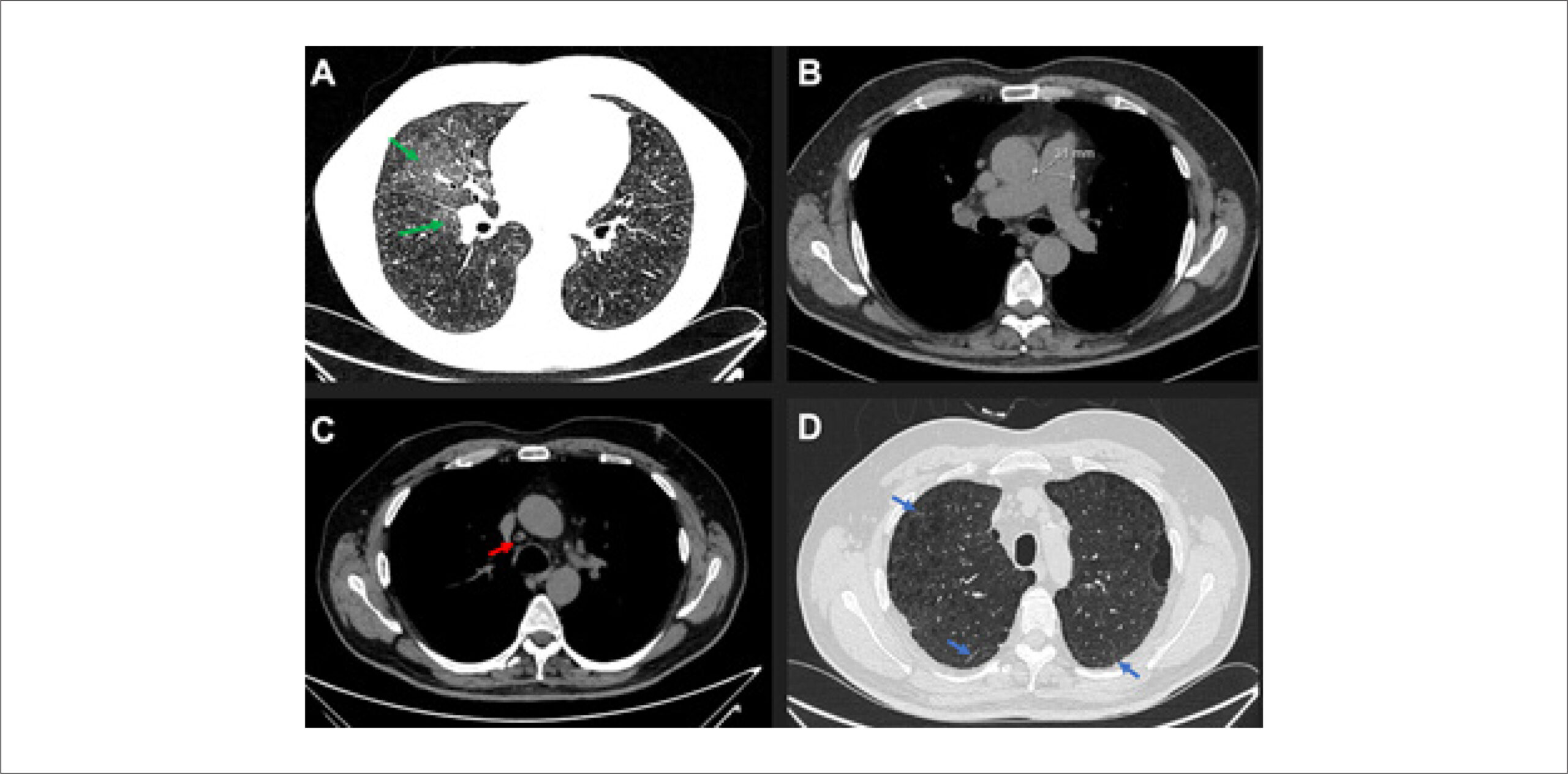
Pulmonary veno-occlusive disease (PVOD) and pulmonary capillary hemangiomatosis are rare types of histopathological substrates within the spectrum of pulmonary arterial hypertension (PAH) with a very poor prognosis. They are characterized by a widespread fibroproliferative process of the small caliber veins and/or capillaries with sparing of the larger veins, resulting in a pre-capillary pulmonary hypertension phenotype. Clinical presentation is unspecific and similar to other PAH etiologies. Definitive diagnosis is obtained through histological analysis, although lung biopsy is not advised due to a higher risk of complications. However, some additional findings may allow a presumptive clinical diagnosis of PVOD, particularly a history of smoking, chemotherapy drug use, exposure to organic solvents (particularly trichloroethylene), low diffusing capacity for carbon monoxide (DLCO), exercise induced desaturation, and evidence of venous congestion without left heart disease on imaging, manifested by a classical triad of ground glass opacities, septal lines, and lymphadenopathies. Lung transplant is the only effective treatment, and patients should be referred at the time of diagnosis due to the rapid progression of the disease and associated poor prognosis.

We present a case of a 58-year-old man with PAH with features of venous/capillary involvement in which clinical suspicion, prompt diagnosis, and early referral for lung transplantation were determinant factors for the successful outcome.

  • Hemangioma Capillary/surgery
  • Lung Transplantation
  • Pulmonary Arterial Hypertension
  • Pulmonary Veno-Oclusive Disease
  • Tomography-X-Ray Computed/diagnostic, imaging
Read Full Article
Creative Commons Attribution (CC BY) Creative Commons license
29/04/2024 DOI: 10.36660/abc.20230565i Views 1
The Predictive Value of the Inflammatory Prognostic Index for Detecting No-Reflow in ST-Elevation Myocardial Infarction Patients
Original Article

The Predictive Value of the Inflammatory Prognostic Index for Detecting No-Reflow in ST-Elevation Myocardial Infarction Patients

Faysal Şaylık et al. Tufan Çınar İbrahim Halil Tanboğa

Abstract

Background:

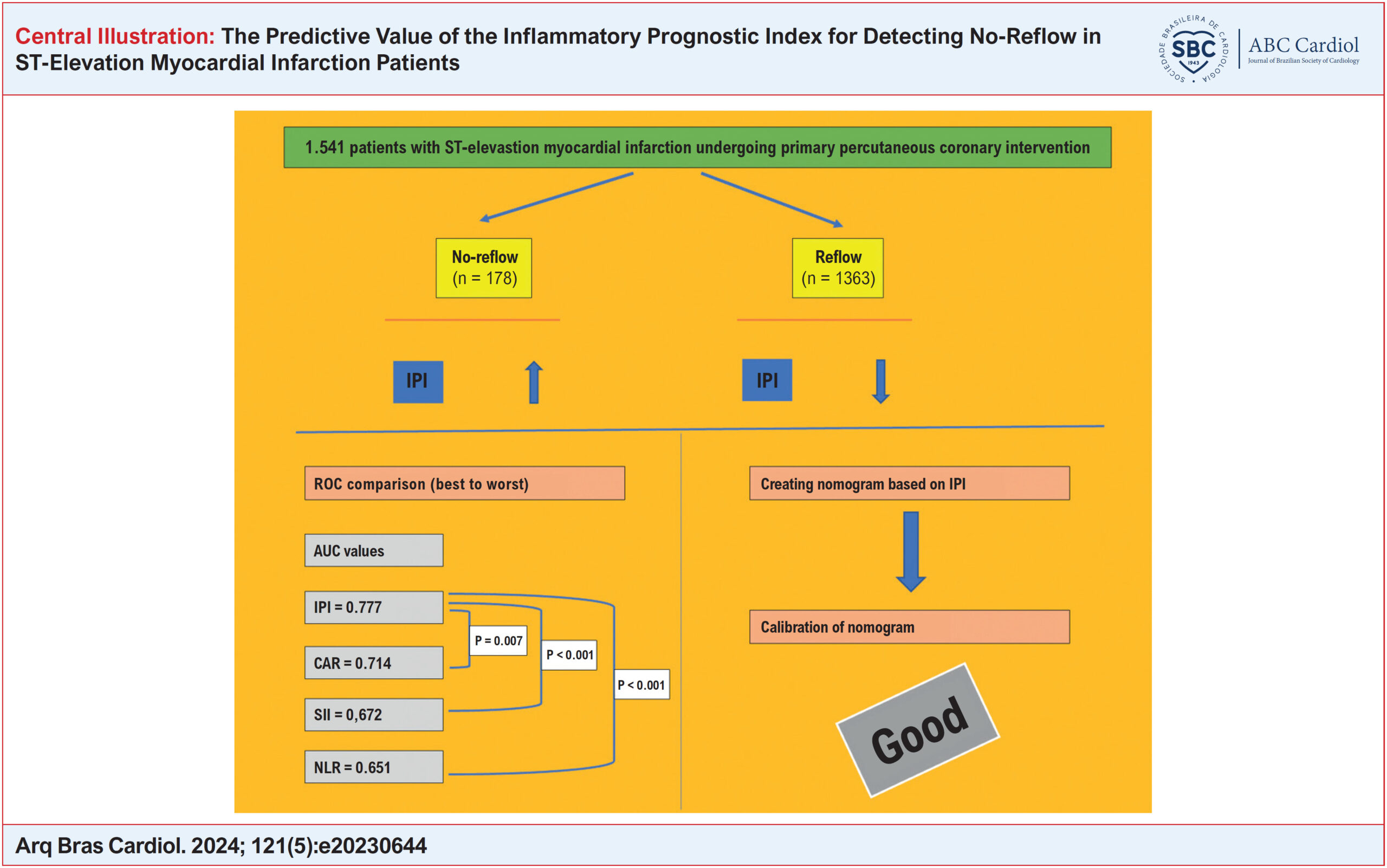
No-reflow (NR) is characterized by an acute reduction in coronary flow that is not accompanied by coronary spasm, thrombosis, or dissection. Inflammatory prognostic index (IPI) is a novel marker that was reported to have a prognostic role in cancer patients and is calculated by neutrophil/lymphocyte ratio (NLR) multiplied by C-reactive protein/albumin ratio.

Objective:

We aimed to investigate the relationship between IPI and NR in ST-segment elevation myocardial infarction (STEMI) patients undergoing primary percutaneous coronary intervention (pPCI).

Methods:

A total of 1541 patients were enrolled in this study (178 with NR and 1363 with reflow). Lasso panelized shrinkage was used for variable selection. A nomogram was created based on IPI for detecting the risk of NR development. Internal validation with Bootstrap resampling was used for model reproducibility. A two-sided p-value <0.05 was accepted as a significance level for statistical analyses.

Results:

IPI was higher in patients with NR than in patients with reflow. IPI was non-linearly associated with NR. IPI had a higher discriminative ability than the systemic immune-inflammation index, NLR, and CRP/albumin ratio. Adding IPI to the baseline multivariable logistic regression model improved the discrimination and net-clinical benefit effect of the model for detecting NR patients, and IPI was the most prominent variable in the full model. A nomogram was created based on IPI to predict the risk of NR. Bootstrap internal validation of nomogram showed a good calibration and discrimination ability.

Conclusion:

This is the first study that shows the association of IPI with NR in STEMI patients who undergo pPCI.

  • No-Reflow Phenomenon
  • Nomograms
  • Percutaneous Coronary Intervention
  • ST Elevation Myocardial Infarction
Read Full Article
Creative Commons Attribution (CC BY) Creative Commons license
29/04/2024 DOI: 10.36660/abc.20230644i
Can Pre-Ablation Biomarkers Be Used to Predict Arrhythmia Recurrence after Ablation Index-Guided Atrial Fibrillation Ablation?
Original Article

Can Pre-Ablation Biomarkers Be Used to Predict Arrhythmia Recurrence after Ablation Index-Guided Atrial Fibrillation Ablation?

Andreia Palma et al. Pedro A. Sousa Carolina Saleiro Sérgio Barra … Natália António Luis Adão João Primo Ana Lebreiro Paulo Fonseca Luís Elvas Lino Gonçalves

Abstract

Background:

Ablation Index (AI) software has allowed better atrial fibrillation (AF) ablation results, but recurrence rates remain significant. Specific serum biomarkers have been associated with this recurrence.

Objectives:

To evaluate whether certain biomarkers could be used (either individually or combined) to predict arrhythmia recurrence after AI-guided AF ablation.

Methods:

Prospective multicenter observational study of consecutive patients referred for AF ablation from January 2018 to March 2021. Hemoglobin, brain natriuretic peptide (BNP), C-reactive protein, high sensitivity cardiac troponin I, creatinine clearance, thyroid-stimulating hormone (TSH) and free thyroxine (FT4) were assessed for their ability to predict arrhythmia recurrence during follow-up. Statistical significance was accepted for p values of<0.05.

Results:

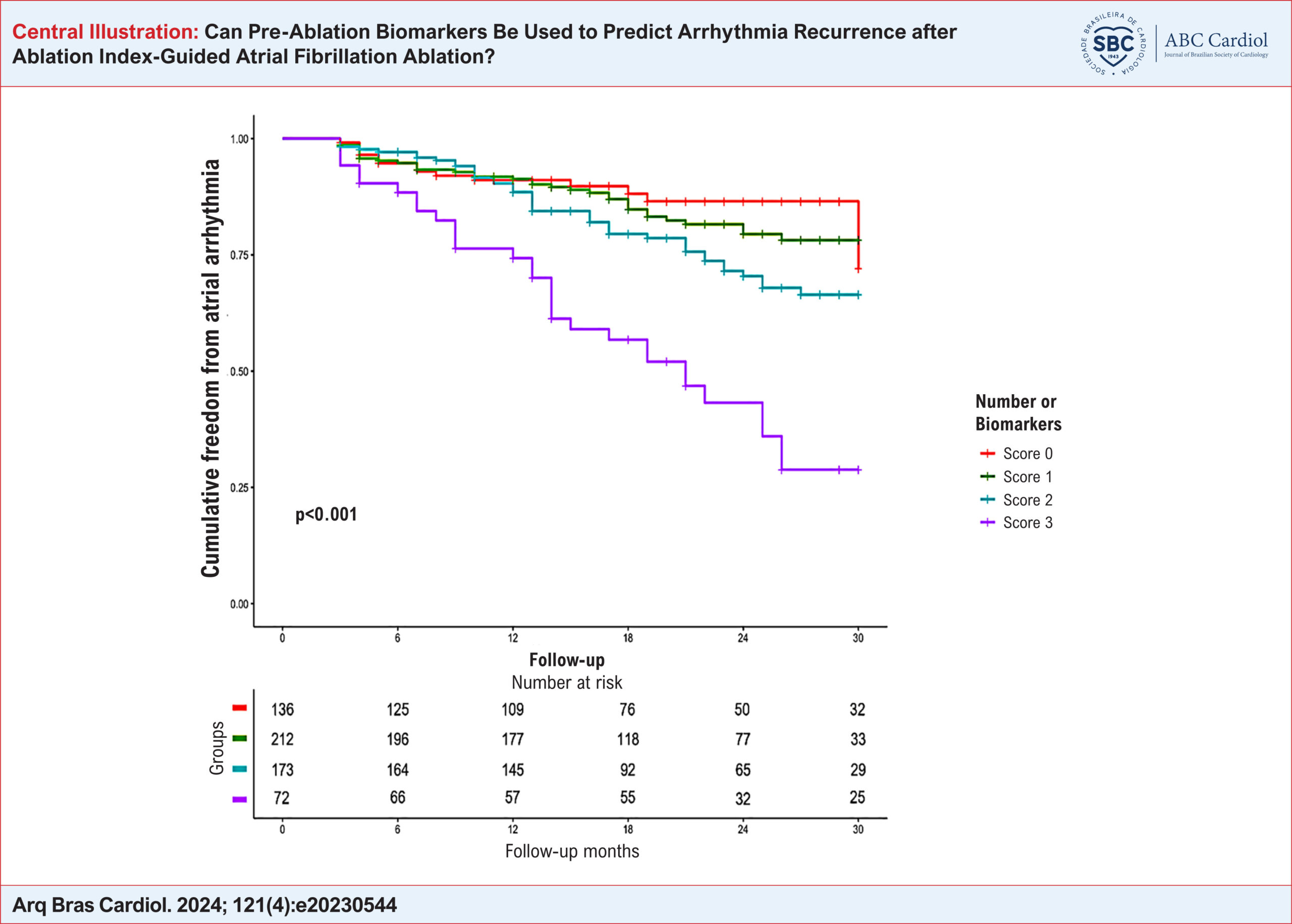
A total of 593 patients were included – 412 patients with paroxysmal AF and 181 with persistent AF. After a mean follow-up of 24±6 months, overall single-procedure freedom from atrial arrhythmia was 76.4%. Individually, all biomarkers had no or only modest predictive power for recurrence. However, a TSH value >1.8 μUI/mL (HR=1.82 [95% CI, 1.89-2.80], p=0.006) was an independent predictor of arrhythmia recurrence. When assessing TSH, FT4 and BNP values in combination, each additional “abnormal” biomarker value was associated with a lower freedom from arrhythmia recurrence (87.1 % for no biomarker vs. 83.5% for one vs. 75.1% for two vs. 43.3% for three biomarkers, p<0.001). Patients with three “abnormal” biomarkers had a threefold higher risk of AF recurrence compared with no “abnormal” biomarker (HR=2.88 [95% CI, 1.39-5.17], p=0.003).

Conclusions:

When used in combination, abnormal TSH, FT4 and BNP values can be a useful tool for predicting arrhythmia recurrence after AI-guided AF ablation.

  • Atrial Fibrillation
  • Biomarkers
  • Cardiac Arrhythmias
  • Catheter Ablation
Read Full Article
Creative Commons Attribution (CC BY) Creative Commons license
29/04/2024 DOI: 10.36660/abc.20230544i Views 1
Factors Associated with the Treatment Costs within the First Year after Pacemaker Implantation or Pulse Generator Replacement
Original Article

Factors Associated with the Treatment Costs within the First Year after Pacemaker Implantation or Pulse Generator Replacement

Lucas Bassoli de Oliveira Alves et al. Katia Regina Silva Jacson Venancio Barros Fernando Antonio Basile Colugnati … Martino Martinelli Filho Roberto Costa

Abstract

Background

The use of artificial cardiac pacemakers has grown steadily in line with the aging population.

Objectives

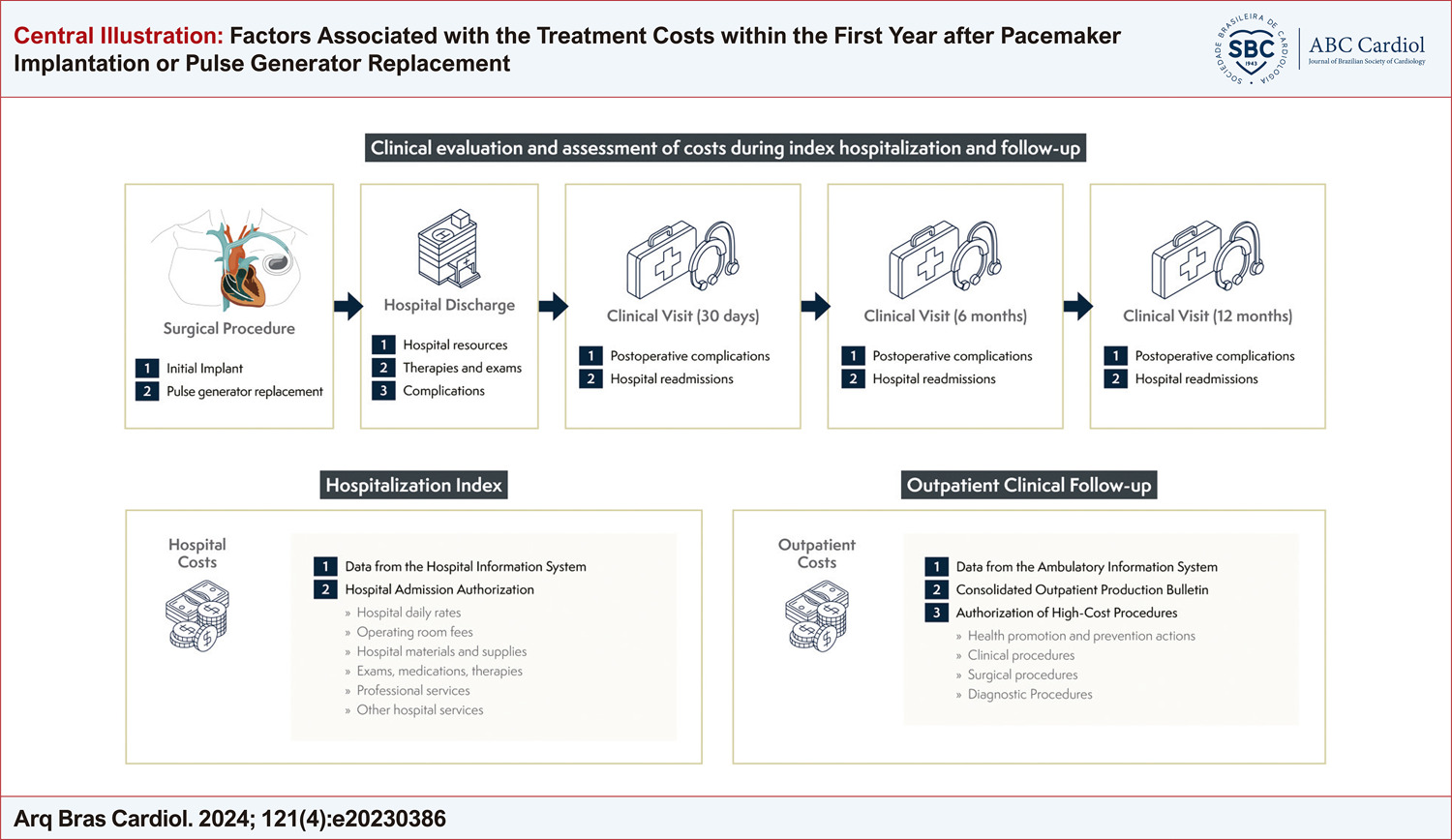
To determine the rates of hospital readmissions and complications after pacemaker implantation or pulse generator replacement and to assess the impact of these events on annual treatment costs from the perspective of the Unified Health System (SUS).

Methods

A prospective registry, with data derived from clinical practice, collected during index hospitalization and during the first 12 months after the surgical procedure. The cost of index hospitalization, the procedure, and clinical follow-up were estimated according to the values reimbursed by SUS and analyzed at the patient level. Generalized linear models were used to study factors associated with the total annual treatment cost, adopting a significance level of 5%.

Results

A total of 1,223 consecutive patients underwent initial implantation (n=634) or pulse generator replacement (n=589). Seventy episodes of complication were observed in 63 patients (5.1%). The incidence of hospital readmissions within one year was 16.4% (95% CI 13.7% – 19.6%) after initial implants and 10.6% (95% CI 8.3% – 13.4%) after generator replacements. Chronic kidney disease, history of stroke, length of hospital stays, need for postoperative intensive care, complications, and hospital readmissions showed a significant impact on the total annual treatment cost.

Conclusions

The results confirm the influence of age, comorbidities, postoperative complications, and hospital readmissions as factors associated with increased total annual treatment cost for patients with pacemakers.

  • Artificial Pacemaker
  • health evaluation
  • Patient Readmission
  • postoperative complications
Read Full Article
Creative Commons Attribution (CC BY) Creative Commons license
26/04/2024 DOI: 10.36660/abc.20230386i Views 2
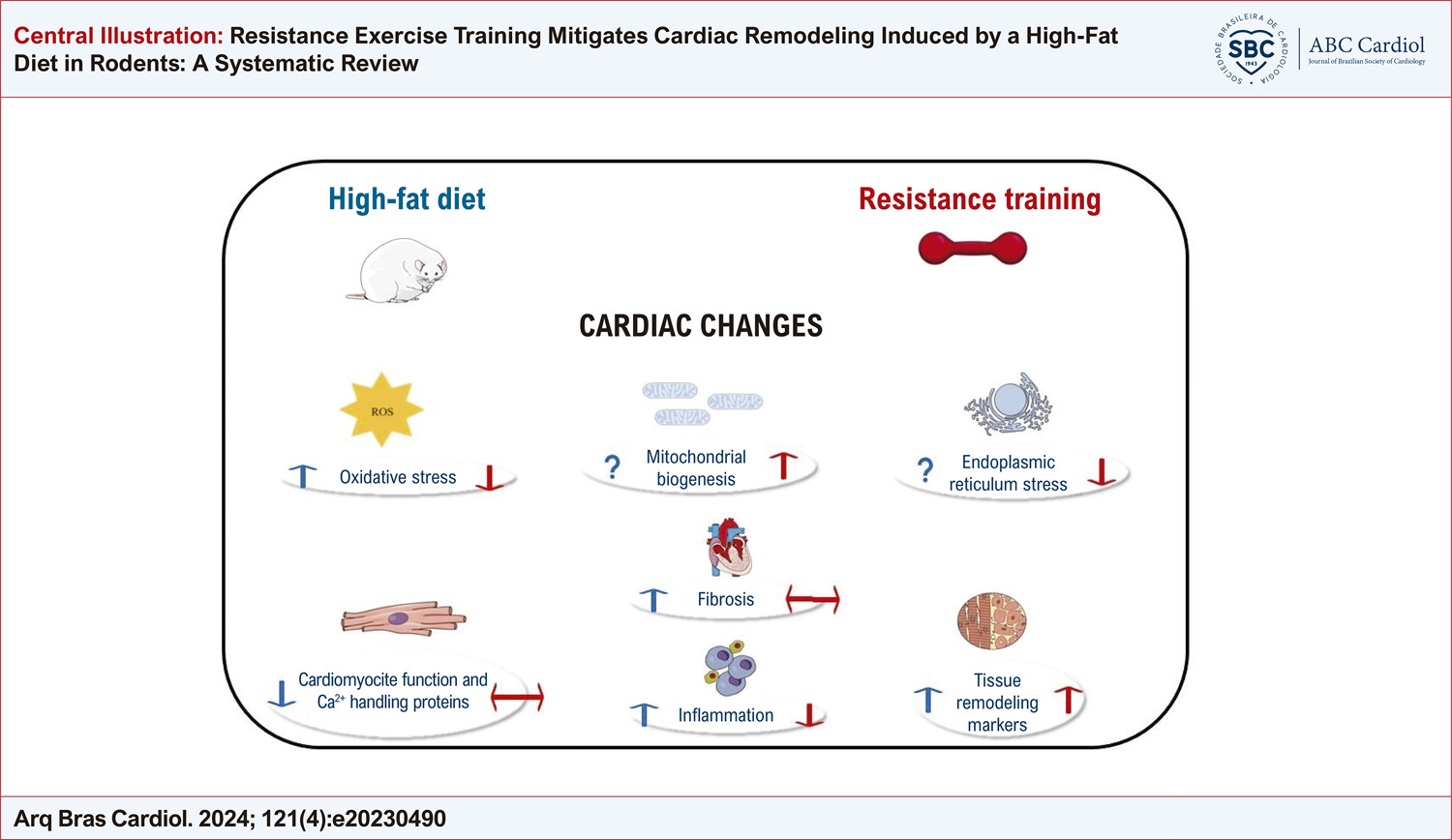
Resistance Exercise Training Mitigates Cardiac Remodeling Induced by a High-Fat Diet in Rodents: A Systematic Review
Original Article

Resistance Exercise Training Mitigates Cardiac Remodeling Induced by a High-Fat Diet in Rodents: A Systematic Review

Alexandre Martins Oliveira Portes et al. Sebastião Felipe Ferreira Costa Luciano Bernardes Leite Victor Neiva Lavorato … Denise Coutinho de Miranda Anselmo Gomes de Moura Leôncio Lopes Soares Mauro César Isoldi Antônio José Natali

Abstract

Background

Obesity is associated with the development of cardiovascular diseases and is a serious public health problem. In animal models, high-fat diet (HFD) feeding impairs cardiac structure and function and promotes oxidative stress and apoptosis. Resistance exercise training (RT), however, has been recommended as coadjutant in the treatment of cardiometabolic diseases, including obesity, because it increases energy expenditure and stimulates lipolysis.

Objective

In this systematic review, we aimed to assess the benefits of RT on the heart of rats and mice fed HFD.

Methods

Original studies were identified by searching PubMed, Scopus, and Embase databases from December 2007 to December 2022. This study was conducted in accordance with the criteria established by PRISMA and registered in PROSPERO (CRD42022369217). The risk of bias and methodological quality was evaluated by SYRCLE and CAMARADES, respectively. Eligible studies included original articles published in English that evaluated cardiac outcomes in rodents submitted to over 4 weeks of RT and controlled by a sedentary, HFD-fed control group (n = 5).

Results

The results showed that RT mitigates cardiac oxidative stress, inflammation, and endoplasmic reticulum stress. It also modifies the activity of structural remodeling markers, although it does not alter biometric parameters, histomorphometric parameters, or the contractile function of cardiomyocytes.

Conclusion

Our results indicate that RT partially counteracts the HFD-induced adverse cardiac remodeling by increasing the activity of structural remodeling markers; elevating mitochondrial biogenesis; reducing oxidative stress, inflammatory markers, and endoplasmic reticulum stress; and improving hemodynamic, anthropometric, and metabolic parameters.

  • Cardiac Myocytes
  • esistance Training
  • High-Fat Diet
  • systematic review
Read Full Article
Creative Commons Attribution (CC BY) Creative Commons license
26/04/2024 DOI: 10.36660/abc.20230490i Views 1
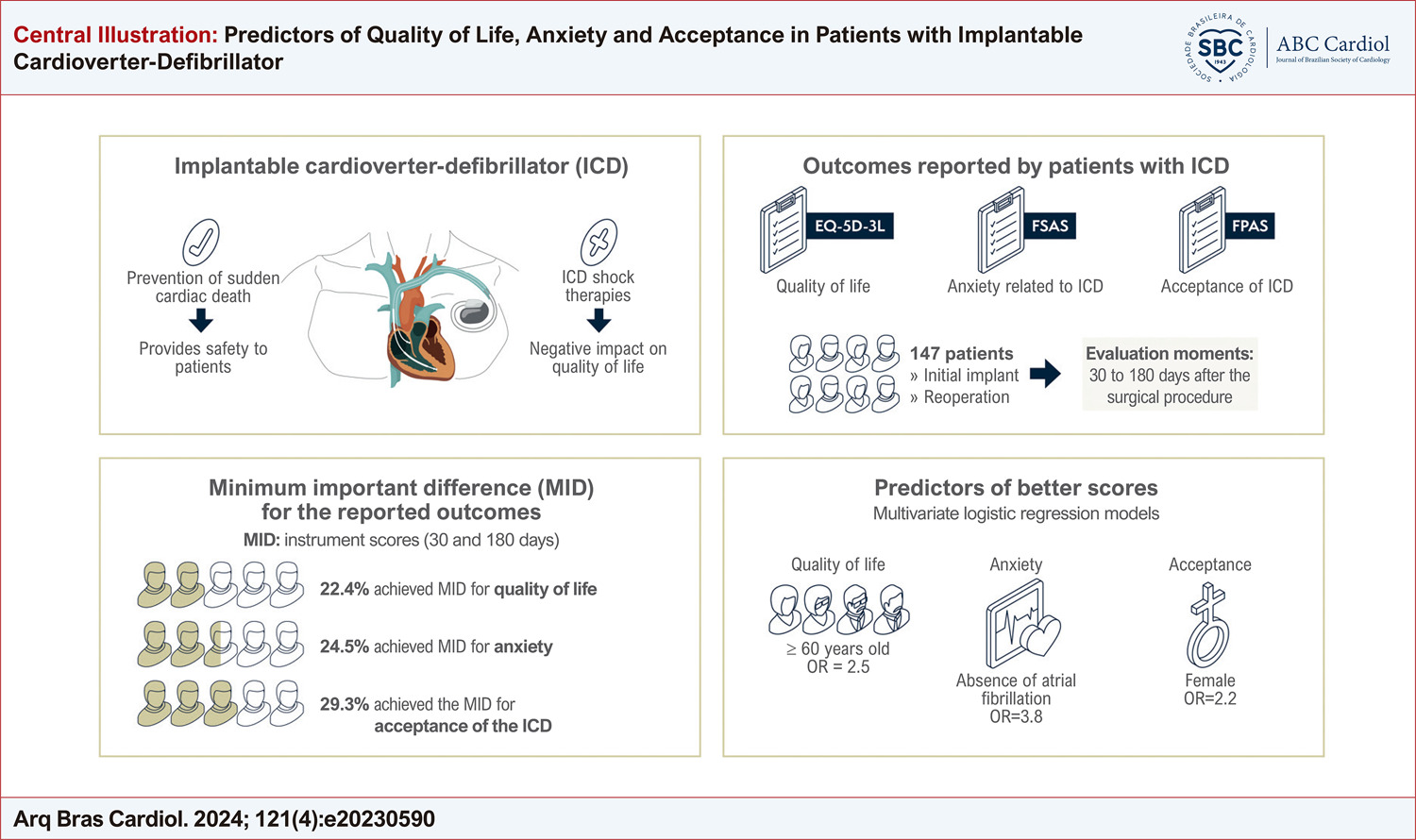
Predictors of Quality of Life, Anxiety and Acceptance in Patients with Implantable Cardioverter-Defibrillator
Original Article

Predictors of Quality of Life, Anxiety and Acceptance in Patients with Implantable Cardioverter-Defibrillator

Laisa Arruda Silva et al. Katia Regina Silva Sarah Caroline Martins Saucedo Roberto Costa

Abstract

Background

An implantable cardioverter-defibrillator (ICD) can cause high levels of anxiety and depression, resulting in negative effects on quality of life.

Objectives

To evaluate the quality of life, anxiety, and acceptance of the ICD using standardized measurement instruments and identify predictors of better responses for each of the outcomes studied.

Method

This is a prospective cohort study with patients undergoing initial ICD implantation or reoperation to maintain the device. The study outcomes included quality of life, anxiety, and acceptance of the ICD. The change in scores (30 and 180 days) was assessed using the minimal important difference (MID). Univariate analysis and the multivariate logistic regression model were used to identify predictors of better responses, adopting a significance level of 5%.

Results

A total of 147 patients were included between January/2020 to June/2021, with a mean age of 55.3 ± 13.4 years and a predominance of males (72.1%). The MID for quality of life, anxiety, and ICD acceptance were observed in 33 (22.4%), 36 (24.5%) and 43 (29.3%) patients, respectively. Age equal to or greater than 60 years (OR=2.5; 95%CI=1.14-5.53; p=0.022), absence of atrial fibrillation (OR=3.8; 95%CI=1.26-11.63; p=0.017) and female gender (OR=2.2; 95%CI=1.02-4.97; p=0.045) were independent predictors of better responses to quality of life, anxiety and acceptance of the ICD, respectively.

Conclusion

The identification of predictors for better quality of life scores, anxiety, and acceptance of the device can support the implementation of specific care for patients with a greater chance of presenting unfavorable results.

  • Anxiety
  • Implantable Defibrillators
  • Quality of life
Read Full Article
Creative Commons Attribution (CC BY) Creative Commons license
26/04/2024 DOI: 10.36660/abc.20230590i Views 1
Figure 3
Diretrizes

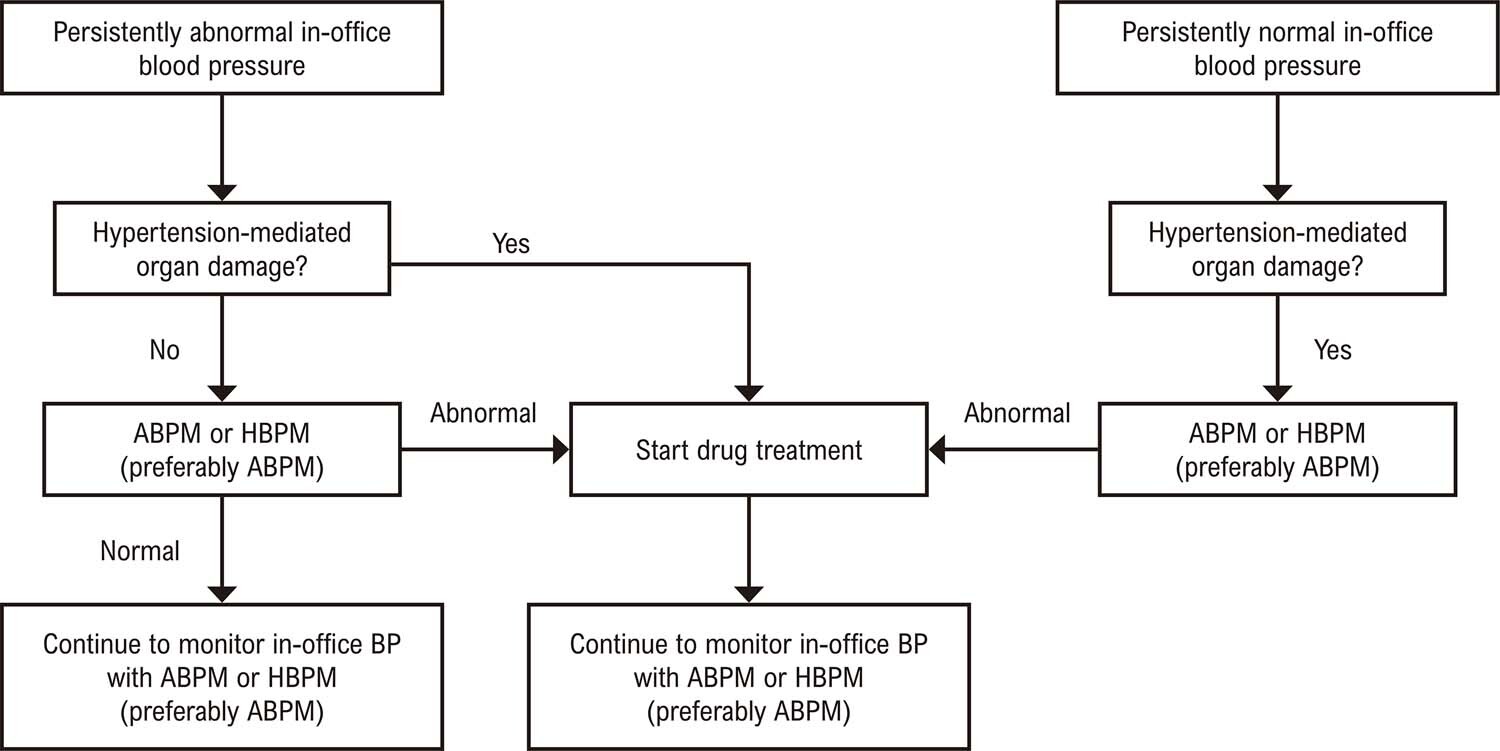
Brazilian Guidelines for In-office and Out-of-office Blood Pressure Measurement – 2023

Audes Diogenes de Magalhães Feitosa et al. Weimar Kunz Sebba Barroso Decio Mion Junior Fernando Nobre … Marco Antonio Mota-Gomes Paulo Cesar Brandão Veiga Jardim Celso Amodeo Adriana Camargo Oliveira Alexandre Alessi Ana Luiza Lima Sousa Andréa Araujo Brandão Andrea Pio-Abreu Andrei C. Sposito Angela Maria Geraldo Pierin Annelise Machado Gomes de Paiva Antonio Carlos de Souza Spinelli Carlos Alberto Machado Carlos Eduardo Poli-de-Figueiredo Cibele Isaac Saad Rodrigues Claudia Lucia de Moraes Forjaz Diogo Pereira Santos Sampaio Eduardo Costa Duarte Barbosa Elizabete Viana de Freitas Elizabeth do Espirito Santo Cestario Elizabeth Silaid Muxfeldt Emilton Lima Júnior Erika Maria Gonçalves Campana Fabiana Gomes Aragão Magalhães Feitosa Fernanda Marciano Consolim-Colombo Fernando Antônio de Almeida Giovanio Vieira da Silva Heitor Moreno Júnior Helius Carlos Finimundi Isabel Cristina Britto Guimarães João Roberto Gemelli José Augusto Soares Barreto-Filho José Fernando Vilela-Martin José Marcio Ribeiro Juan Carlos Yugar-Toledo Lucélia Batista Neves Cunha Magalhães Luciano F. Drager Luiz Aparecido Bortolotto Marco Antonio de Melo Alves Marcus Vinícius Bolívar Malachias Mario Fritsch Toros Neves Mayara Cedrim Santos Nelson Dinamarco Osni Moreira Filho Oswaldo Passarelli Júnior Priscila Valverde de Oliveira Vitorino Roberto Dischinger Miranda Rodrigo Bezerra Rodrigo Pinto Pedrosa Rogerio Baumgratz de Paula Rogério Toshiro Passos Okawa Rui Manuel dos Santos Póvoa Sandra C. Fuchs Sandro Gonçalves de Lima Sayuri Inuzuka Sebastião Rodrigues Ferreira-Filho Silvio Hock de Paffer Fillho Thiago de Souza Veiga Jardim Vanildo da Silva Guimarães Neto Vera Hermina Kalika Koch Waléria Dantas Pereira Gusmão Wille Oigman Wilson Nadruz Junior

Table of contents

Updates and modifications to the Brazilian Guidelines for In-Office and Out-of-Office Blood Pressure Measurement 10

Part 1 – Blood pressure measurement 10

[…]

Read Full Article
Creative Commons Attribution (CC BY) Creative Commons license
26/04/2024 DOI: 10.36660/abc.20240113i Views 3
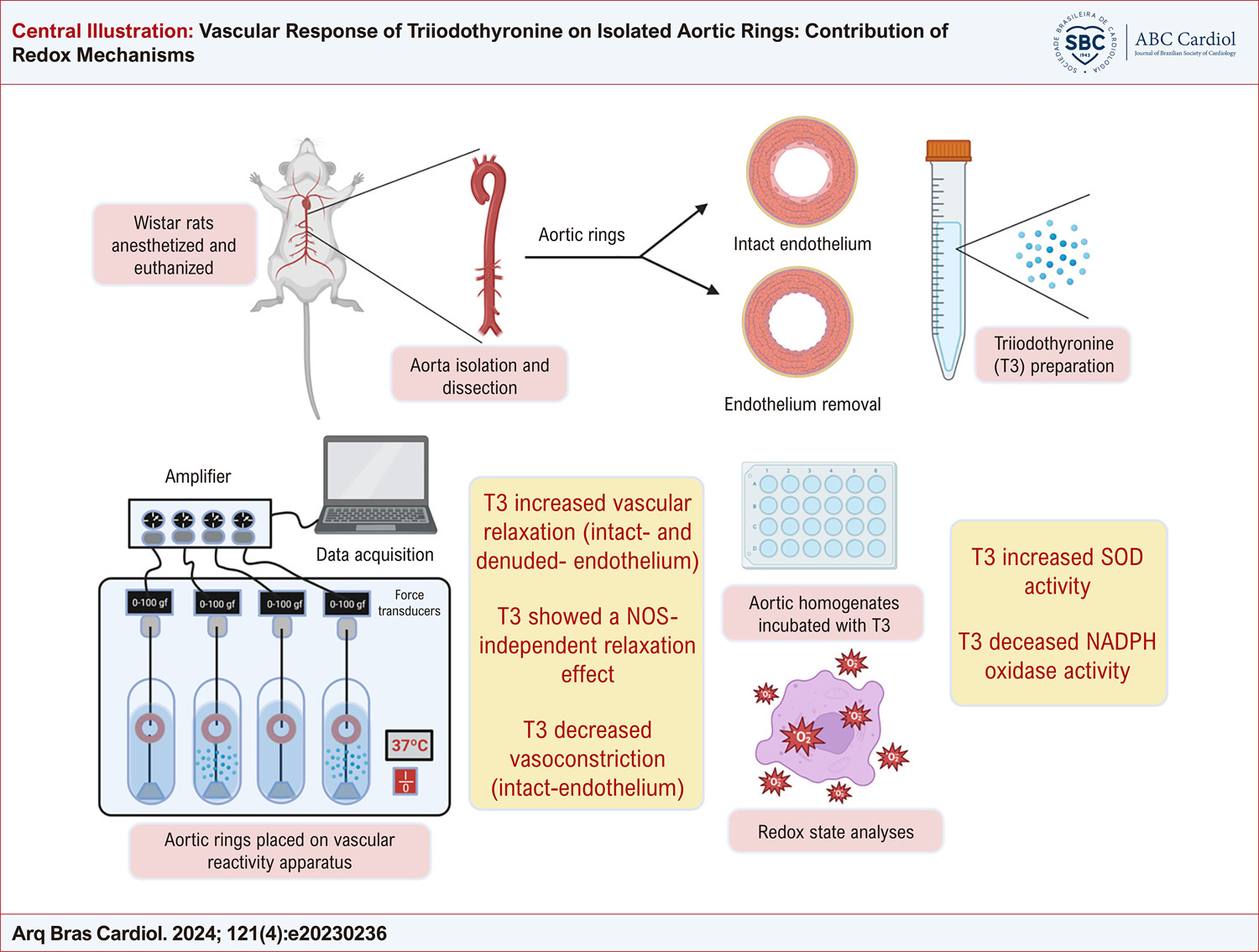
Vascular Response of Triiodothyronine on Isolated Aortic Rings: Contribution of Redox Mechanisms
Original Article

Vascular Response of Triiodothyronine on Isolated Aortic Rings: Contribution of Redox Mechanisms

Viviane Cristina Pederiva et al. Alexandre de Castro Adriane Belló-Klein Alex Sander da Rosa Araujo Patrick Turck

Abstract

Background

Vascular dysfunction constitutes the etiology of many diseases, such as myocardial infarction and hypertension, with the disruption of redox homeostasis playing a role in the imbalance of the vasomotor control mechanism. Our group previously has shown that thyroid hormones exert protective effects on the aortic tissue of infarcted rats by improving angiogenesis signaling.

Objective

Investigate the role of triiodothyronine (T3) on vascular response, exploring its effects on isolated aortas and whether there is an involvement of vascular redox mechanisms.

Methods

Isolated aortic rings (intact- and denuded-endothelium) precontracted with phenylephrine were incubated with T3 (10-8, 10-7, 10-6, 10-5, and 10-4 M), and tension was recorded using a force-displacement transducer coupled with an acquisition system. To assess the involvement of oxidative stress, aortic rings were preincubated with T3 and subsequently submitted to an in vitro reactive oxygen species (ROS) generation system. The level of significance adopted in the statistical analysis was 5%.

Results

T3 (10-4 M) promoted vasorelaxation of phenylephrine precontracted aortic rings in both intact- and denuded-endothelium conditions. Aortic rings preincubated in the presence of T3 (10-4 M) also showed decreased vasoconstriction elicited by phenylephrine (1 µM) in intact-endothelium preparations. Moreover, T3 (10-4 M) vasorelaxation effect persisted in aortic rings preincubated with NG-nitro-L-arginine methylester (L-NAME, 10 µM), a nonspecific NO synthase (NOS) inhibitor. Finally, T3 (10-4 M) exhibited, in vitro, an antioxidant role by reducing NADPH oxidase activity and increasing SOD activity in the aorta’s homogenates.

Conclusion

T3 exerts dependent- and independent-endothelium vasodilation effects, which may be related to its role in maintaining redox homeostasis.

  • Aorta
  • Homeostasis
  • Thyroid Hormones
  • Triiodothyronine
Read Full Article
Creative Commons Attribution (CC BY) Creative Commons license
26/04/2024 DOI: 10.36660/abc.20230236i Views 1

Could not load more articles. Please try again.

How to cite this article

EndNote RIS

Electronic Document Format (Vancouver)

Chokr MO. Can Pre-Ablation Serum Biomarkers be Used to Predict Arrhythmia Recurrence after Ablation Index-Guided Atrial Fibrillation Ablation?. Arquivos Brasileiros de Cardiologia 2024;121(4):e20240355.

Electronic Document Format (ABNT)

Chokr, Muhieddine Omar. Can Pre-Ablation Serum Biomarkers be Used to Predict Arrhythmia Recurrence after Ablation Index-Guided Atrial Fibrillation Ablation?. Arquivos Brasileiros de Cardiologia, v. 121, n. 4, e20240355, Aug. 2024.

Electronic Document Format (APA)

Chokr, M. O. (2024). Can Pre-Ablation Serum Biomarkers be Used to Predict Arrhythmia Recurrence after Ablation Index-Guided Atrial Fibrillation Ablation?. Arquivos Brasileiros de Cardiologia, 121(4), e20240355.

Electronic Document Format (ISO)

Chokr, Muhieddine Omar. Can Pre-Ablation Serum Biomarkers be Used to Predict Arrhythmia Recurrence after Ablation Index-Guided Atrial Fibrillation Ablation?. Arquivos Brasileiros de Cardiologia [online]. 2024, vol. 121, n. 4, [cited 2026-10-14], e20240355. Available from: <https://journals.cardiol.br/en/article/can-pre-ablation-serum-biomarkers-be-used-to-predict-arrhythmia-recurrence-after-ablation-index-guided-atrial-fibrillation-ablation/>. ISSN 0066-782X

EndNote RIS

Electronic Document Format (Vancouver)

Ferreira MCM, Oliveira GMM. Can Artificial Intelligence Change our Interpretation of Cardiovascular Risk Scores?. Arquivos Brasileiros de Cardiologia 2024;121(4):e20240280.

Electronic Document Format (ABNT)

Ferreira, Maria Cristina Meira; Oliveira, Glaucia Maria Moraes de. Can Artificial Intelligence Change our Interpretation of Cardiovascular Risk Scores?. Arquivos Brasileiros de Cardiologia, v. 121, n. 4, e20240280, Jul. 2024.

Electronic Document Format (APA)

Ferreira, M. C. M., & Oliveira, G. M. M. (2024). Can Artificial Intelligence Change our Interpretation of Cardiovascular Risk Scores?. Arquivos Brasileiros de Cardiologia, 121(4), e20240280.

Electronic Document Format (ISO)

Ferreira, Maria Cristina Meira and Oliveira, Glaucia Maria Moraes de. Can Artificial Intelligence Change our Interpretation of Cardiovascular Risk Scores?. Arquivos Brasileiros de Cardiologia [online]. 2024, vol. 121, n. 4, [cited 2026-10-14], e20240280. Available from: <https://journals.cardiol.br/en/article/can-artificial-intelligence-change-our-interpretation-of-cardiovascular-risk-scores/>. ISSN 0066-782X

EndNote RIS

Electronic Document Format (Vancouver)

Galvão Filho SS. Impact of the Implantable Cardioverter Defibrillator on the Lives of its Patients. Arquivos Brasileiros de Cardiologia 2024;121(4):e20240196.

Electronic Document Format (ABNT)

Galvão Filho, Silas dos Santos. Impact of the Implantable Cardioverter Defibrillator on the Lives of its Patients. Arquivos Brasileiros de Cardiologia, v. 121, n. 4, e20240196, Jul. 2024.

Electronic Document Format (APA)

Galvão Filho, S. S. (2024). Impact of the Implantable Cardioverter Defibrillator on the Lives of its Patients. Arquivos Brasileiros de Cardiologia, 121(4), e20240196.

Electronic Document Format (ISO)

Galvão Filho, Silas dos Santos. Impact of the Implantable Cardioverter Defibrillator on the Lives of its Patients. Arquivos Brasileiros de Cardiologia [online]. 2024, vol. 121, n. 4, [cited 2026-10-14], e20240196. Available from: <https://journals.cardiol.br/en/article/impact-of-the-implantable-cardioverter-defibrillator-on-the-lives-of-its-patients/>. ISSN 0066-782X

EndNote RIS

Electronic Document Format (Vancouver)

Tralhão A. Using High-Sensitivity Troponin for Enhancing Risk Prediction after Non-Cardiac Surgery – Are We There Yet?. Arquivos Brasileiros de Cardiologia 2024;121(4):e20240140.

Electronic Document Format (ABNT)

Tralhão, António. Using High-Sensitivity Troponin for Enhancing Risk Prediction after Non-Cardiac Surgery – Are We There Yet?. Arquivos Brasileiros de Cardiologia, v. 121, n. 4, e20240140, Jun. 2024.

Electronic Document Format (APA)

Tralhão, A. (2024). Using High-Sensitivity Troponin for Enhancing Risk Prediction after Non-Cardiac Surgery – Are We There Yet?. Arquivos Brasileiros de Cardiologia, 121(4), e20240140.

Electronic Document Format (ISO)

Tralhão, António. Using High-Sensitivity Troponin for Enhancing Risk Prediction after Non-Cardiac Surgery – Are We There Yet?. Arquivos Brasileiros de Cardiologia [online]. 2024, vol. 121, n. 4, [cited 2026-10-14], e20240140. Available from: <https://journals.cardiol.br/en/article/using-high-sensitivity-troponin-for-enhancing-risk-prediction-after-non-cardiac-surgery-are-we-there-yet/>. ISSN 0066-782X

EndNote RIS

Electronic Document Format (Vancouver)

Rossi AP, Braga F, Stein R. Ventilatory Efficiency: Is This the Key to Unlock the Full Potential of Cardiopulmonary Exercise Testing?. Arquivos Brasileiros de Cardiologia 2024;121(4):e20240184.

Electronic Document Format (ABNT)

Rossi, Arthur Proença; Braga, Fabrício; Stein, Ricardo. Ventilatory Efficiency: Is This the Key to Unlock the Full Potential of Cardiopulmonary Exercise Testing?. Arquivos Brasileiros de Cardiologia, v. 121, n. 4, e20240184, Jun. 2024.

Electronic Document Format (APA)

Rossi, A. P., Braga, F., & Stein, R. (2024). Ventilatory Efficiency: Is This the Key to Unlock the Full Potential of Cardiopulmonary Exercise Testing?. Arquivos Brasileiros de Cardiologia, 121(4), e20240184.

Electronic Document Format (ISO)

Rossi, Arthur Proença and Braga, Fabrício and Stein, Ricardo. Ventilatory Efficiency: Is This the Key to Unlock the Full Potential of Cardiopulmonary Exercise Testing?. Arquivos Brasileiros de Cardiologia [online]. 2024, vol. 121, n. 4, [cited 2026-10-14], e20240184. Available from: <https://journals.cardiol.br/en/article/ventilatory-efficiency-is-this-the-key-to-unlock-the-full-potential-of-cardiopulmonary-exercise-testing/>. ISSN 0066-782X

EndNote RIS

Electronic Document Format (Vancouver)

Fontenele LM, Almeida NRM, Carvalho BRS, Silva Neto EB, Teixeira BS, Lopes JM. Effects of Immunosuppression in Heart Transplant Patients Due to Chagas Disease. Arquivos Brasileiros de Cardiologia 2024;121(4):e20230798.

Electronic Document Format (ABNT)

Fontenele, Lúcio Moreira; Almeida, Nayara Ribeiro Máximo de; Carvalho, Breno Rennan de Souza; Silva Neto, Egidio Bezerra da; Teixeira, Brenda dos Santos; Lopes, Johnnatas Mikael. Effects of Immunosuppression in Heart Transplant Patients Due to Chagas Disease. Arquivos Brasileiros de Cardiologia, v. 121, n. 4, e20230798, May. 2024.

Electronic Document Format (APA)

Fontenele, L. M., Almeida, N. R. M. , Carvalho, B. R. S., Silva Neto, E. B. , Teixeira, B. S., & Lopes, J. M. (2024). Effects of Immunosuppression in Heart Transplant Patients Due to Chagas Disease. Arquivos Brasileiros de Cardiologia, 121(4), e20230798.

Electronic Document Format (ISO)

Fontenele, Lúcio Moreira and Almeida, Nayara Ribeiro Máximo de and Carvalho, Breno Rennan de Souza and Silva Neto, Egidio Bezerra da and Teixeira, Brenda dos Santos and Lopes, Johnnatas Mikael. Effects of Immunosuppression in Heart Transplant Patients Due to Chagas Disease. Arquivos Brasileiros de Cardiologia [online]. 2024, vol. 121, n. 4, [cited 2026-10-14], e20230798. Available from: <https://journals.cardiol.br/en/article/effects-of-immunosuppression-in-heart-transplant-patients-due-to-chagas-disease/>. ISSN 0066-782X

EndNote RIS

Electronic Document Format (Vancouver)

Capeline LS. Unraveling the Challenges in Diagnosing Cardiac Amyloidosis. Arquivos Brasileiros de Cardiologia 2024;121(4):e20240107.

Electronic Document Format (ABNT)

Capeline, Lorena Squassante. Unraveling the Challenges in Diagnosing Cardiac Amyloidosis. Arquivos Brasileiros de Cardiologia, v. 121, n. 4, e20240107, May. 2024.

Electronic Document Format (APA)

Capeline, L. S. (2024). Unraveling the Challenges in Diagnosing Cardiac Amyloidosis. Arquivos Brasileiros de Cardiologia, 121(4), e20240107.

Electronic Document Format (ISO)

Capeline, Lorena Squassante. Unraveling the Challenges in Diagnosing Cardiac Amyloidosis. Arquivos Brasileiros de Cardiologia [online]. 2024, vol. 121, n. 4, [cited 2026-10-14], e20240107. Available from: <https://journals.cardiol.br/en/article/unraveling-the-challenges-in-diagnosing-cardiac-amyloidosis/>. ISSN 0066-782X

EndNote RIS

Electronic Document Format (Vancouver)

Silva TO, Darzé ES, Costa MM, José Junior L, Ximenes AAB, Fernandes F, Rocha MS, et al. Scintigraphic and Echocardiographic Study of Patients with Pathogenic or Probably Pathogenic Variants of the TTR Gene without Overt Cardiac Involvement. Arquivos Brasileiros de Cardiologia 2024;121(4):e20230216.

Electronic Document Format (ABNT)

Silva, Tonnison de Oliveira; Darzé, Eduardo Sahade; Costa, Marcela Machado; José Junior, Luiz; Ximenes, Antonio A. B.; Fernandes, Fábio; Rocha, Mário de Seixas; Noya-Rabelo, Marcia M.; Ritt, Luiz Eduardo Fonteles. Scintigraphic and Echocardiographic Study of Patients with Pathogenic or Probably Pathogenic Variants of the TTR Gene without Overt Cardiac Involvement. Arquivos Brasileiros de Cardiologia, v. 121, n. 4, e20230216, May. 2024.

Electronic Document Format (APA)

Silva, T. O., Darzé, E. S., Costa, M. M., José Junior, L., Ximenes, A. A. B., Fernandes, F., Rocha, M. S., Noya-Rabelo, M. M., & Ritt, L. E. F. (2024). Scintigraphic and Echocardiographic Study of Patients with Pathogenic or Probably Pathogenic Variants of the TTR Gene without Overt Cardiac Involvement. Arquivos Brasileiros de Cardiologia, 121(4), e20230216.

Electronic Document Format (ISO)

Silva, Tonnison de Oliveira and Darzé, Eduardo Sahade and Costa, Marcela Machado and José Junior, Luiz and Ximenes, Antonio A. B. and Fernandes, Fábio and Rocha, Mário de Seixas and Noya-Rabelo, Marcia M. and Ritt, Luiz Eduardo Fonteles. Scintigraphic and Echocardiographic Study of Patients with Pathogenic or Probably Pathogenic Variants of the TTR Gene without Overt Cardiac Involvement. Arquivos Brasileiros de Cardiologia [online]. 2024, vol. 121, n. 4, [cited 2026-10-14], e20230216. Available from: <https://journals.cardiol.br/en/article/scintigraphic-and-echocardiographic-study-of-patients-with-pathogenic-or-probably-pathogenic-variants-of-the-ttr-gene-without-overt-cardiac-involvement/>. ISSN 0066-782X

EndNote RIS

Electronic Document Format (Vancouver)

Dias ARL, Serra AJ. High-Fat Diet and Heart: What is the Real Impact of Resistance Exercise Training?. Arquivos Brasileiros de Cardiologia 2024;121(4):e20240091.

Electronic Document Format (ABNT)

Dias, André Rodrigues Lourenço; Serra, Andrey Jorge. High-Fat Diet and Heart: What is the Real Impact of Resistance Exercise Training?. Arquivos Brasileiros de Cardiologia, v. 121, n. 4, e20240091, May. 2024.

Electronic Document Format (APA)

Dias, A. R. L., & Serra, A. J. (2024). High-Fat Diet and Heart: What is the Real Impact of Resistance Exercise Training?. Arquivos Brasileiros de Cardiologia, 121(4), e20240091.

Electronic Document Format (ISO)

Dias, André Rodrigues Lourenço and Serra, Andrey Jorge. High-Fat Diet and Heart: What is the Real Impact of Resistance Exercise Training?. Arquivos Brasileiros de Cardiologia [online]. 2024, vol. 121, n. 4, [cited 2026-10-14], e20240091. Available from: <https://journals.cardiol.br/en/article/high-fat-diet-and-heart-what-is-the-real-impact-of-resistance-exercise-training/>. ISSN 0066-782X

EndNote RIS

Electronic Document Format (Vancouver)

Camanho LEM. Cost-Effectiveness Related to Implantable Electronic Cardiac Devices: An Ever-Constant Concern. Arquivos Brasileiros de Cardiologia 2024;121(4):e20240185.

Electronic Document Format (ABNT)

Camanho, Luiz Eduardo Montenegro. Cost-Effectiveness Related to Implantable Electronic Cardiac Devices: An Ever-Constant Concern. Arquivos Brasileiros de Cardiologia, v. 121, n. 4, e20240185, May. 2024.

Electronic Document Format (APA)

Camanho, L. E. M. (2024). Cost-Effectiveness Related to Implantable Electronic Cardiac Devices: An Ever-Constant Concern. Arquivos Brasileiros de Cardiologia, 121(4), e20240185.

Electronic Document Format (ISO)

Camanho, Luiz Eduardo Montenegro. Cost-Effectiveness Related to Implantable Electronic Cardiac Devices: An Ever-Constant Concern. Arquivos Brasileiros de Cardiologia [online]. 2024, vol. 121, n. 4, [cited 2026-10-14], e20240185. Available from: <https://journals.cardiol.br/en/article/cost-effectiveness-related-to-implantable-electronic-cardiac-devices-an-ever-constant-concern/>. ISSN 0066-782X

EndNote RIS

Electronic Document Format (Vancouver)

Gomes BFO, Silva TMB, Dutra GP, Peres LS, Camisão ND, Homena Júnior WS, Petriz JLF, et al. Addition of High-Sensitivity Troponin to Perioperative Risk Assessment Improves the Predictive Ability of Death in Non-Cardiac Surgery Patients. Arquivos Brasileiros de Cardiologia 2024;121(4):e20230623.

Electronic Document Format (ABNT)

Gomes, Bruno Ferraz de Oliveira; Silva, Thiago Moreira Bastos da; Dutra, Giovanni Possamai; Peres, Leticia de Sousa; Camisão, Nathalia Duarte; Homena Júnior, Walter de Souza; Petriz, João Luiz Fernandes; Carmo Junior, Plinio Resende do; Pereira, Basilio de Bragança; Oliveira, Gláucia Maria Moraes de. Addition of High-Sensitivity Troponin to Perioperative Risk Assessment Improves the Predictive Ability of Death in Non-Cardiac Surgery Patients. Arquivos Brasileiros de Cardiologia, v. 121, n. 4, e20230623, May. 2024.

Electronic Document Format (APA)

Gomes, B. F. O., Silva, T. M. B. , Dutra, G. P., Peres, L. S., Camisão, N. D., Homena Júnior, W. S., Petriz, J. L. F., Carmo Junior, P. R. , Pereira, B. B., & Oliveira, G. M. M. (2024). Addition of High-Sensitivity Troponin to Perioperative Risk Assessment Improves the Predictive Ability of Death in Non-Cardiac Surgery Patients. Arquivos Brasileiros de Cardiologia, 121(4), e20230623.

Electronic Document Format (ISO)

Gomes, Bruno Ferraz de Oliveira and Silva, Thiago Moreira Bastos da and Dutra, Giovanni Possamai and Peres, Leticia de Sousa and Camisão, Nathalia Duarte and Homena Júnior, Walter de Souza and Petriz, João Luiz Fernandes and Carmo Junior, Plinio Resende do and Pereira, Basilio de Bragança and Oliveira, Gláucia Maria Moraes de. Addition of High-Sensitivity Troponin to Perioperative Risk Assessment Improves the Predictive Ability of Death in Non-Cardiac Surgery Patients. Arquivos Brasileiros de Cardiologia [online]. 2024, vol. 121, n. 4, [cited 2026-10-14], e20230623. Available from: <https://journals.cardiol.br/en/article/addition-of-high-sensitivity-troponin-to-perioperative-risk-assessment-improves-the-predictive-ability-of-death-in-non-cardiac-surgery-patients/>. ISSN 0066-782X

EndNote RIS

Electronic Document Format (Vancouver)

Koike H, Idris A, Berger J, Cheng VY, Sengupta J, Cavalcante JL. Acute Myocarditis as the Initial Presentation of Desmoplakin Mutation – Broadening the Differential Diagnosis. Arquivos Brasileiros de Cardiologia 2024;121(4):e20230541.

Electronic Document Format (ABNT)

Koike, Hideki; Idris, Amr; Berger, Justin; Cheng, Victor Y.; Sengupta, Jay; Cavalcante, João L.. Acute Myocarditis as the Initial Presentation of Desmoplakin Mutation – Broadening the Differential Diagnosis. Arquivos Brasileiros de Cardiologia, v. 121, n. 4, e20230541, May. 2024.

Electronic Document Format (APA)

Koike, H., Idris, A., Berger, J., Cheng, V. Y., Sengupta, J., & Cavalcante, J. L. (2024). Acute Myocarditis as the Initial Presentation of Desmoplakin Mutation – Broadening the Differential Diagnosis. Arquivos Brasileiros de Cardiologia, 121(4), e20230541.

Electronic Document Format (ISO)

Koike, Hideki and Idris, Amr and Berger, Justin and Cheng, Victor Y. and Sengupta, Jay and Cavalcante, João L.. Acute Myocarditis as the Initial Presentation of Desmoplakin Mutation – Broadening the Differential Diagnosis. Arquivos Brasileiros de Cardiologia [online]. 2024, vol. 121, n. 4, [cited 2026-10-14], e20230541. Available from: <https://journals.cardiol.br/en/article/acute-myocarditis-as-the-initial-presentation-of-desmoplakin-mutation-broadening-the-differential-diagnosis/>. ISSN 0066-782X

EndNote RIS

Electronic Document Format (Vancouver)

Silva JSN, Barros IML, Guimarães JAN, Cao D, Martins SM, Carvalho TXM, Farias RS, et al. Beyond the GRACE ACS Score: Do We Need a Different Model for Men and Women after STEMI?. Arquivos Brasileiros de Cardiologia 2024;121(4):e20230060.

Electronic Document Format (ABNT)

Silva, José Sergio Nascimento; Barros, Isly Maria Lucena de; Guimarães, Jorge Augusto Nunes; Cao, Davide; Martins, Sílvia Marinho; Carvalho, Tawanna Xavier Marques de; Farias, Rayssa Santana de; Lemke, Viviana; Mehran, Roxana; Pedrosa, Rodrigo. Beyond the GRACE ACS Score: Do We Need a Different Model for Men and Women after STEMI?. Arquivos Brasileiros de Cardiologia, v. 121, n. 4, e20230060, May. 2024.

Electronic Document Format (APA)

Silva, J. S. N., Barros, I. M. L. , Guimarães, J. A. N., Cao, D., Martins, S. M., Carvalho, T. X. M. , Farias, R. S. , Lemke, V., Mehran, R., & Pedrosa, R. (2024). Beyond the GRACE ACS Score: Do We Need a Different Model for Men and Women after STEMI?. Arquivos Brasileiros de Cardiologia, 121(4), e20230060.

Electronic Document Format (ISO)

Silva, José Sergio Nascimento and Barros, Isly Maria Lucena de and Guimarães, Jorge Augusto Nunes and Cao, Davide and Martins, Sílvia Marinho and Carvalho, Tawanna Xavier Marques de and Farias, Rayssa Santana de and Lemke, Viviana and Mehran, Roxana and Pedrosa, Rodrigo. Beyond the GRACE ACS Score: Do We Need a Different Model for Men and Women after STEMI?. Arquivos Brasileiros de Cardiologia [online]. 2024, vol. 121, n. 4, [cited 2026-10-14], e20230060. Available from: <https://journals.cardiol.br/en/article/beyond-the-grace-acs-score-do-we-need-a-different-model-for-men-and-women-after-stemi/>. ISSN 0066-782X

EndNote RIS

Electronic Document Format (Vancouver)

Andrade TM, Marques MLC, Salim TR, Oliveira GMM. Multiple Causes of Death Associated with Pediatric Cardiopulmonary Arrest from 1996 to 2019 in Brazil. Arquivos Brasileiros de Cardiologia 2024;121(4):e20230480.

Electronic Document Format (ABNT)

Andrade, Thayanne Mendes de; Marques, Mariara Lopes da Costa; Salim, Thaís Rocha; Oliveira, Glaucia Maria Moraes de. Multiple Causes of Death Associated with Pediatric Cardiopulmonary Arrest from 1996 to 2019 in Brazil. Arquivos Brasileiros de Cardiologia, v. 121, n. 4, e20230480, Apr. 2024.

Electronic Document Format (APA)

Andrade, T. M. , Marques, M. L. C., Salim, T. R., & Oliveira, G. M. M. (2024). Multiple Causes of Death Associated with Pediatric Cardiopulmonary Arrest from 1996 to 2019 in Brazil. Arquivos Brasileiros de Cardiologia, 121(4), e20230480.

Electronic Document Format (ISO)

Andrade, Thayanne Mendes de and Marques, Mariara Lopes da Costa and Salim, Thaís Rocha and Oliveira, Glaucia Maria Moraes de. Multiple Causes of Death Associated with Pediatric Cardiopulmonary Arrest from 1996 to 2019 in Brazil. Arquivos Brasileiros de Cardiologia [online]. 2024, vol. 121, n. 4, [cited 2026-10-14], e20230480. Available from: <https://journals.cardiol.br/en/article/multiple-causes-of-death-associated-with-pediatric-cardiopulmonary-arrest-from-1996-to-2019-in-brazil/>. ISSN 0066-782X

EndNote RIS

Electronic Document Format (Vancouver)

Malho A, Ximenes RS, Bravo-Valenzuela NJ, Araujo Júnior E. Spatio-Temporal Image Correlation: Three-Dimensional Imaging for Fetal Cardiac Screening and Congenital Heart Disease Assessment. Arquivos Brasileiros de Cardiologia 2024;121(4):e20230580.

Electronic Document Format (ABNT)

Malho, André; Ximenes, Renato Silveira; Bravo-Valenzuela, Nathalie Jeanne; Araujo Júnior, Edward. Spatio-Temporal Image Correlation: Three-Dimensional Imaging for Fetal Cardiac Screening and Congenital Heart Disease Assessment. Arquivos Brasileiros de Cardiologia, v. 121, n. 4, e20230580, Apr. 2024.

Electronic Document Format (APA)

Malho, A., Ximenes, R. S., Bravo-Valenzuela, N. J., & Araujo Júnior, E. (2024). Spatio-Temporal Image Correlation: Three-Dimensional Imaging for Fetal Cardiac Screening and Congenital Heart Disease Assessment. Arquivos Brasileiros de Cardiologia, 121(4), e20230580.

Electronic Document Format (ISO)

Malho, André and Ximenes, Renato Silveira and Bravo-Valenzuela, Nathalie Jeanne and Araujo Júnior, Edward. Spatio-Temporal Image Correlation: Three-Dimensional Imaging for Fetal Cardiac Screening and Congenital Heart Disease Assessment. Arquivos Brasileiros de Cardiologia [online]. 2024, vol. 121, n. 4, [cited 2026-10-14], e20230580. Available from: <https://journals.cardiol.br/en/article/spatio-temporal-image-correlation-three-dimensional-imaging-for-fetal-cardiac-screening-and-congenital-heart-disease-assessment/>. ISSN 0066-782X

EndNote RIS

Electronic Document Format (Vancouver)

Campos GGO, Goelzer LS, Augusto TRL, Barbosa GW, Chiappa GR, Iterson EH, Muller PT, et al. Comparable Ventilatory Inefficiency at Maximal and Submaximal Performance in COPD vs. CHF subjects: An Innovative Approach. Arquivos Brasileiros de Cardiologia 2024;121(4):e20230578.

Electronic Document Format (ABNT)

Campos, Gerson Gatass Orro de; Goelzer, Leandro Steinhorst; Augusto, Tiago Rodrigues de Lemos; Barbosa, Gisele Walter; Chiappa, Gaspar R.; Iterson, Erik H. van; Muller, Paulo T.. Comparable Ventilatory Inefficiency at Maximal and Submaximal Performance in COPD vs. CHF subjects: An Innovative Approach. Arquivos Brasileiros de Cardiologia, v. 121, n. 4, e20230578, Apr. 2024.

Electronic Document Format (APA)

Campos, G. G. O. , Goelzer, L. S., Augusto, T. R. L., Barbosa, G. W., Chiappa, G. R., Iterson, E. H. , & Muller, P. T. (2024). Comparable Ventilatory Inefficiency at Maximal and Submaximal Performance in COPD vs. CHF subjects: An Innovative Approach. Arquivos Brasileiros de Cardiologia, 121(4), e20230578.

Electronic Document Format (ISO)

Campos, Gerson Gatass Orro de and Goelzer, Leandro Steinhorst and Augusto, Tiago Rodrigues de Lemos and Barbosa, Gisele Walter and Chiappa, Gaspar R. and Iterson, Erik H. van and Muller, Paulo T.. Comparable Ventilatory Inefficiency at Maximal and Submaximal Performance in COPD vs. CHF subjects: An Innovative Approach. Arquivos Brasileiros de Cardiologia [online]. 2024, vol. 121, n. 4, [cited 2026-10-14], e20230578. Available from: <https://journals.cardiol.br/en/article/comparable-ventilatory-inefficiency-at-maximal-and-submaximal-performance-in-copd-vs-chf-subjects-an-innovative-approach/>. ISSN 0066-782X

EndNote RIS

Electronic Document Format (Vancouver)

Cazeiro DI, Plácido R, Raposo MA, Brito J, Borba A, Guimarães T, Pinto E, et al. Pulmonary Arterial Hypertension with Features of Venous Involvement: A Detective’s Task. Arquivos Brasileiros de Cardiologia 2024;121(4):e20230565.

Electronic Document Format (ABNT)

Cazeiro, Daniel Inácio; Plácido, Rui; Raposo, Miguel Azeredo; Brito, Joana; Borba, Alexandra; Guimarães, Tatiana; Pinto, Eugénia; Freitas, Pedro; Pinto, Fausto J.. Pulmonary Arterial Hypertension with Features of Venous Involvement: A Detective’s Task. Arquivos Brasileiros de Cardiologia, v. 121, n. 4, e20230565, Apr. 2024.

Electronic Document Format (APA)

Cazeiro, D. I., Plácido, R., Raposo, M. A., Brito, J., Borba, A., Guimarães, T., Pinto, E., Freitas, P., & Pinto, F. J. (2024). Pulmonary Arterial Hypertension with Features of Venous Involvement: A Detective’s Task. Arquivos Brasileiros de Cardiologia, 121(4), e20230565.

Electronic Document Format (ISO)

Cazeiro, Daniel Inácio and Plácido, Rui and Raposo, Miguel Azeredo and Brito, Joana and Borba, Alexandra and Guimarães, Tatiana and Pinto, Eugénia and Freitas, Pedro and Pinto, Fausto J.. Pulmonary Arterial Hypertension with Features of Venous Involvement: A Detective’s Task. Arquivos Brasileiros de Cardiologia [online]. 2024, vol. 121, n. 4, [cited 2026-10-14], e20230565. Available from: <https://journals.cardiol.br/en/article/pulmonary-arterial-hypertension-with-features-of-venous-involvement-a-detectives-task/>. ISSN 0066-782X

EndNote RIS

Electronic Document Format (Vancouver)

Şaylık F, Çınar T, Tanboğa H. The Predictive Value of the Inflammatory Prognostic Index for Detecting No-Reflow in ST-Elevation Myocardial Infarction Patients. Arquivos Brasileiros de Cardiologia 2024;121(4):e20230644.

Electronic Document Format (ABNT)

Şaylık, Faysal; Çınar, Tufan; Tanboğa, İbrahim Halil. The Predictive Value of the Inflammatory Prognostic Index for Detecting No-Reflow in ST-Elevation Myocardial Infarction Patients. Arquivos Brasileiros de Cardiologia, v. 121, n. 4, e20230644, Apr. 2024.

Electronic Document Format (APA)

Şaylık, F., Çınar, T., & Tanboğa, H. (2024). The Predictive Value of the Inflammatory Prognostic Index for Detecting No-Reflow in ST-Elevation Myocardial Infarction Patients. Arquivos Brasileiros de Cardiologia, 121(4), e20230644.

Electronic Document Format (ISO)

Şaylık, Faysal and Çınar, Tufan and Tanboğa, İbrahim Halil. The Predictive Value of the Inflammatory Prognostic Index for Detecting No-Reflow in ST-Elevation Myocardial Infarction Patients. Arquivos Brasileiros de Cardiologia [online]. 2024, vol. 121, n. 4, [cited 2026-10-14], e20230644. Available from: <https://journals.cardiol.br/en/article/the-predictive-value-of-the-inflammatory-prognostic-index-for-detecting-no-reflow-in-st-elevation-myocardial-infarction-patients/>. ISSN 0066-782X

EndNote RIS

Electronic Document Format (Vancouver)

Palma A, Sousa PA, Saleiro C, Barra S, António N, Adão L, Primo J, et al. Can Pre-Ablation Biomarkers Be Used to Predict Arrhythmia Recurrence after Ablation Index-Guided Atrial Fibrillation Ablation?. Arquivos Brasileiros de Cardiologia 2024;121(4):e20230544.

Electronic Document Format (ABNT)

Palma, Andreia; Sousa, Pedro A.; Saleiro, Carolina; Barra, Sérgio; António, Natália; Adão, Luis; Primo, João; Lebreiro, Ana; Fonseca, Paulo; Elvas, Luís; Gonçalves, Lino. Can Pre-Ablation Biomarkers Be Used to Predict Arrhythmia Recurrence after Ablation Index-Guided Atrial Fibrillation Ablation?. Arquivos Brasileiros de Cardiologia, v. 121, n. 4, e20230544, Apr. 2024.

Electronic Document Format (APA)

Palma, A., Sousa, P. A., Saleiro, C., Barra, S., António, N., Adão, L., Primo, J., Lebreiro, A., Fonseca, P., Elvas, L., & Gonçalves, L. (2024). Can Pre-Ablation Biomarkers Be Used to Predict Arrhythmia Recurrence after Ablation Index-Guided Atrial Fibrillation Ablation?. Arquivos Brasileiros de Cardiologia, 121(4), e20230544.

Electronic Document Format (ISO)

Palma, Andreia and Sousa, Pedro A. and Saleiro, Carolina and Barra, Sérgio and António, Natália and Adão, Luis and Primo, João and Lebreiro, Ana and Fonseca, Paulo and Elvas, Luís and Gonçalves, Lino. Can Pre-Ablation Biomarkers Be Used to Predict Arrhythmia Recurrence after Ablation Index-Guided Atrial Fibrillation Ablation?. Arquivos Brasileiros de Cardiologia [online]. 2024, vol. 121, n. 4, [cited 2026-10-14], e20230544. Available from: <https://journals.cardiol.br/en/article/can-pre-ablation-biomarkers-be-used-to-predict-arrhythmia-recurrence-after-ablation-index-guided-atrial-fibrillation-ablation/>. ISSN 0066-782X

EndNote RIS

Electronic Document Format (Vancouver)

Alves LBO, Silva KR, Barros JV, Colugnati FAB, Martinelli Filho M, Costa R. Factors Associated with the Treatment Costs within the First Year after Pacemaker Implantation or Pulse Generator Replacement. Arquivos Brasileiros de Cardiologia 2024;121(4):e20230386.

Electronic Document Format (ABNT)

Alves, Lucas Bassoli de Oliveira; Silva, Katia Regina; Barros, Jacson Venancio; Colugnati, Fernando Antonio Basile; Martinelli Filho, Martino; Costa, Roberto. Factors Associated with the Treatment Costs within the First Year after Pacemaker Implantation or Pulse Generator Replacement. Arquivos Brasileiros de Cardiologia, v. 121, n. 4, e20230386, Apr. 2024.

Electronic Document Format (APA)

Alves, L. B. O., Silva, K. R., Barros, J. V., Colugnati, F. A. B., Martinelli Filho, M., & Costa, R. (2024). Factors Associated with the Treatment Costs within the First Year after Pacemaker Implantation or Pulse Generator Replacement. Arquivos Brasileiros de Cardiologia, 121(4), e20230386.

Electronic Document Format (ISO)

Alves, Lucas Bassoli de Oliveira and Silva, Katia Regina and Barros, Jacson Venancio and Colugnati, Fernando Antonio Basile and Martinelli Filho, Martino and Costa, Roberto. Factors Associated with the Treatment Costs within the First Year after Pacemaker Implantation or Pulse Generator Replacement. Arquivos Brasileiros de Cardiologia [online]. 2024, vol. 121, n. 4, [cited 2026-10-14], e20230386. Available from: <https://journals.cardiol.br/en/article/factors-associated-with-the-treatment-costs-within-the-first-year-after-pacemaker-implantation-or-pulse-generator-replacement/>. ISSN 0066-782X

EndNote RIS

Electronic Document Format (Vancouver)

Portes AMO, Costa SFF, Leite LB, Lavorato VN, Miranda DC, Moura AG, Soares LL, et al. Resistance Exercise Training Mitigates Cardiac Remodeling Induced by a High-Fat Diet in Rodents: A Systematic Review. Arquivos Brasileiros de Cardiologia 2024;121(4):e20230490.

Electronic Document Format (ABNT)

Portes, Alexandre Martins Oliveira; Costa, Sebastião Felipe Ferreira; Leite, Luciano Bernardes; Lavorato, Victor Neiva; Miranda, Denise Coutinho de; Moura, Anselmo Gomes de; Soares, Leôncio Lopes; Isoldi, Mauro César; Natali, Antônio José. Resistance Exercise Training Mitigates Cardiac Remodeling Induced by a High-Fat Diet in Rodents: A Systematic Review. Arquivos Brasileiros de Cardiologia, v. 121, n. 4, e20230490, Apr. 2024.

Electronic Document Format (APA)

Portes, A. M. O., Costa, S. F. F., Leite, L. B., Lavorato, V. N., Miranda, D. C. , Moura, A. G. , Soares, L. L., Isoldi, M. C., & Natali, A. J. (2024). Resistance Exercise Training Mitigates Cardiac Remodeling Induced by a High-Fat Diet in Rodents: A Systematic Review. Arquivos Brasileiros de Cardiologia, 121(4), e20230490.

Electronic Document Format (ISO)

Portes, Alexandre Martins Oliveira and Costa, Sebastião Felipe Ferreira and Leite, Luciano Bernardes and Lavorato, Victor Neiva and Miranda, Denise Coutinho de and Moura, Anselmo Gomes de and Soares, Leôncio Lopes and Isoldi, Mauro César and Natali, Antônio José. Resistance Exercise Training Mitigates Cardiac Remodeling Induced by a High-Fat Diet in Rodents: A Systematic Review. Arquivos Brasileiros de Cardiologia [online]. 2024, vol. 121, n. 4, [cited 2026-10-14], e20230490. Available from: <https://journals.cardiol.br/en/article/resistance-exercise-training-mitigates-cardiac-remodeling-induced-by-a-high-fat-diet-in-rodents-a-systematic-review/>. ISSN 0066-782X

EndNote RIS

Electronic Document Format (Vancouver)

Silva LA, Silva KR, Saucedo SCM, Costa R. Predictors of Quality of Life, Anxiety and Acceptance in Patients with Implantable Cardioverter-Defibrillator. Arquivos Brasileiros de Cardiologia 2024;121(4):e20230590.

Electronic Document Format (ABNT)

Silva, Laisa Arruda; Silva, Katia Regina; Saucedo, Sarah Caroline Martins; Costa, Roberto. Predictors of Quality of Life, Anxiety and Acceptance in Patients with Implantable Cardioverter-Defibrillator. Arquivos Brasileiros de Cardiologia, v. 121, n. 4, e20230590, Apr. 2024.

Electronic Document Format (APA)

Silva, L. A., Silva, K. R., Saucedo, S. C. M., & Costa, R. (2024). Predictors of Quality of Life, Anxiety and Acceptance in Patients with Implantable Cardioverter-Defibrillator. Arquivos Brasileiros de Cardiologia, 121(4), e20230590.

Electronic Document Format (ISO)

Silva, Laisa Arruda and Silva, Katia Regina and Saucedo, Sarah Caroline Martins and Costa, Roberto. Predictors of Quality of Life, Anxiety and Acceptance in Patients with Implantable Cardioverter-Defibrillator. Arquivos Brasileiros de Cardiologia [online]. 2024, vol. 121, n. 4, [cited 2026-10-14], e20230590. Available from: <https://journals.cardiol.br/en/article/predictors-of-quality-of-life-anxiety-and-acceptance-in-patients-with-implantable-cardioverter-defibrillator/>. ISSN 0066-782X

EndNote RIS

Electronic Document Format (Vancouver)

Feitosa ADM, Barroso WKS, Mion Junior D, Nobre F, Mota-Gomes MA, Jardim PCBV, Amodeo C, et al. Brazilian Guidelines for In-office and Out-of-office Blood Pressure Measurement – 2023. Arquivos Brasileiros de Cardiologia 2024;121(4):e20240113.

Electronic Document Format (ABNT)

Feitosa, Audes Diogenes de Magalhães; Barroso, Weimar Kunz Sebba; Mion Junior, Decio; Nobre, Fernando; Mota-Gomes, Marco Antonio; Jardim, Paulo Cesar Brandão Veiga; Amodeo, Celso; Oliveira, Adriana Camargo; Alessi, Alexandre; Sousa, Ana Luiza Lima; Brandão, Andréa Araujo; Pio-Abreu, Andrea; Sposito, Andrei C.; Pierin, Angela Maria Geraldo; Paiva, Annelise Machado Gomes de; Spinelli, Antonio Carlos de Souza; Machado, Carlos Alberto; Poli-de-Figueiredo, Carlos Eduardo; Rodrigues, Cibele Isaac Saad; Forjaz, Claudia Lucia de Moraes; Sampaio, Diogo Pereira Santos; Barbosa, Eduardo Costa Duarte; Freitas, Elizabete Viana de; Cestario, Elizabeth do Espirito Santo; Muxfeldt, Elizabeth Silaid; Lima Júnior, Emilton; Campana, Erika Maria Gonçalves; Feitosa, Fabiana Gomes Aragão Magalhães; Consolim-Colombo, Fernanda Marciano; Almeida, Fernando Antônio de; Silva, Giovanio Vieira da; Moreno Júnior, Heitor; Finimundi, Helius Carlos; Guimarães, Isabel Cristina Britto; Gemelli, João Roberto; Barreto-Filho, José Augusto Soares; Vilela-Martin, José Fernando; Ribeiro, José Marcio; Yugar-Toledo, Juan Carlos; Magalhães, Lucélia Batista Neves Cunha; Drager, Luciano F.; Bortolotto, Luiz Aparecido; Alves, Marco Antonio de Melo; Malachias, Marcus Vinícius Bolívar; Neves, Mario Fritsch Toros; Santos, Mayara Cedrim; Dinamarco, Nelson; Moreira Filho, Osni; Passarelli Júnior, Oswaldo; Vitorino, Priscila Valverde de Oliveira; Miranda, Roberto Dischinger; Bezerra, Rodrigo; Pedrosa, Rodrigo Pinto; Paula, Rogerio Baumgratz de; Okawa, Rogério Toshiro Passos; Póvoa, Rui Manuel dos Santos; Fuchs, Sandra C.; Lima, Sandro Gonçalves de; Inuzuka, Sayuri; Ferreira-Filho, Sebastião Rodrigues; Fillho, Silvio Hock de Paffer; Jardim, Thiago de Souza Veiga; Guimarães Neto, Vanildo da Silva; Koch, Vera Hermina Kalika; Gusmão, Waléria Dantas Pereira; Oigman, Wille; Nadruz Junior, Wilson. Brazilian Guidelines for In-office and Out-of-office Blood Pressure Measurement – 2023. Arquivos Brasileiros de Cardiologia, v. 121, n. 4, e20240113, Apr. 2024.

Electronic Document Format (APA)

Feitosa, A. D. M., Barroso, W. K. S., Mion Junior, D., Nobre, F., Mota-Gomes, M. A., Jardim, P. C. B. V., Amodeo, C., Oliveira, A. C., Alessi, A., Sousa, A. L. L., Brandão, A. A., Pio-Abreu, A., Sposito, A. C., Pierin, A. M. G., Paiva, A. M. G. , Spinelli, A. C. S., Machado, C. A., Poli-de-Figueiredo, C. E., Rodrigues, C. I. S., Forjaz, C. L. M., Sampaio, D. P. S., Barbosa, E. C. D., Freitas, E. V. , Cestario, E. E. S., Muxfeldt, E. S., Lima Júnior, E., Campana, E. M. G., Feitosa, F. G. A. M., Consolim-Colombo, F. M., Almeida, F. A. , Silva, G. V. , Moreno Júnior, H., Finimundi, H. C., Guimarães, I. C. B., Gemelli, J. R., Barreto-Filho, J. A. S., Vilela-Martin, J. F., Ribeiro, J. M., Yugar-Toledo, J. C., Magalhães, L. B. N. C., Drager, L. F., Bortolotto, L. A., Alves, M. A. M., Malachias, M. V. B., Neves, M. F. T., Santos, M. C., Dinamarco, N., Moreira Filho, O., Passarelli Júnior, O., Vitorino, P. V. O., Miranda, R. D., Bezerra, R., Pedrosa, R. P., Paula, R. B. , Okawa, R. T. P., Póvoa, R. M. S., Fuchs, S. C., Lima, S. G. , Inuzuka, S., Ferreira-Filho, S. R., Fillho, S. H. P., Jardim, T. S. V., Guimarães Neto, V. S., Koch, V. H. K., Gusmão, W. D. P., Oigman, W., & Nadruz Junior, W. (2024). Brazilian Guidelines for In-office and Out-of-office Blood Pressure Measurement – 2023. Arquivos Brasileiros de Cardiologia, 121(4), e20240113.

Electronic Document Format (ISO)

Feitosa, Audes Diogenes de Magalhães and Barroso, Weimar Kunz Sebba and Mion Junior, Decio and Nobre, Fernando and Mota-Gomes, Marco Antonio and Jardim, Paulo Cesar Brandão Veiga and Amodeo, Celso and Oliveira, Adriana Camargo and Alessi, Alexandre and Sousa, Ana Luiza Lima and Brandão, Andréa Araujo and Pio-Abreu, Andrea and Sposito, Andrei C. and Pierin, Angela Maria Geraldo and Paiva, Annelise Machado Gomes de and Spinelli, Antonio Carlos de Souza and Machado, Carlos Alberto and Poli-de-Figueiredo, Carlos Eduardo and Rodrigues, Cibele Isaac Saad and Forjaz, Claudia Lucia de Moraes and Sampaio, Diogo Pereira Santos and Barbosa, Eduardo Costa Duarte and Freitas, Elizabete Viana de and Cestario, Elizabeth do Espirito Santo and Muxfeldt, Elizabeth Silaid and Lima Júnior, Emilton and Campana, Erika Maria Gonçalves and Feitosa, Fabiana Gomes Aragão Magalhães and Consolim-Colombo, Fernanda Marciano and Almeida, Fernando Antônio de and Silva, Giovanio Vieira da and Moreno Júnior, Heitor and Finimundi, Helius Carlos and Guimarães, Isabel Cristina Britto and Gemelli, João Roberto and Barreto-Filho, José Augusto Soares and Vilela-Martin, José Fernando and Ribeiro, José Marcio and Yugar-Toledo, Juan Carlos and Magalhães, Lucélia Batista Neves Cunha and Drager, Luciano F. and Bortolotto, Luiz Aparecido and Alves, Marco Antonio de Melo and Malachias, Marcus Vinícius Bolívar and Neves, Mario Fritsch Toros and Santos, Mayara Cedrim and Dinamarco, Nelson and Moreira Filho, Osni and Passarelli Júnior, Oswaldo and Vitorino, Priscila Valverde de Oliveira and Miranda, Roberto Dischinger and Bezerra, Rodrigo and Pedrosa, Rodrigo Pinto and Paula, Rogerio Baumgratz de and Okawa, Rogério Toshiro Passos and Póvoa, Rui Manuel dos Santos and Fuchs, Sandra C. and Lima, Sandro Gonçalves de and Inuzuka, Sayuri and Ferreira-Filho, Sebastião Rodrigues and Fillho, Silvio Hock de Paffer and Jardim, Thiago de Souza Veiga and Guimarães Neto, Vanildo da Silva and Koch, Vera Hermina Kalika and Gusmão, Waléria Dantas Pereira and Oigman, Wille and Nadruz Junior, Wilson. Brazilian Guidelines for In-office and Out-of-office Blood Pressure Measurement – 2023. Arquivos Brasileiros de Cardiologia [online]. 2024, vol. 121, n. 4, [cited 2026-10-14], e20240113. Available from: <https://journals.cardiol.br/en/article/brazilian-guidelines-for-in-office-and-out-of-office-blood-pressure-measurement-2023/>. ISSN 0066-782X

EndNote RIS

Electronic Document Format (Vancouver)

Pederiva VC, Castro A, Belló-Klein A, Araujo ASR, Turck P. Vascular Response of Triiodothyronine on Isolated Aortic Rings: Contribution of Redox Mechanisms. Arquivos Brasileiros de Cardiologia 2024;121(4):e20230236.

Electronic Document Format (ABNT)

Pederiva, Viviane Cristina; Castro, Alexandre de; Belló-Klein, Adriane; Araujo, Alex Sander da Rosa; Turck, Patrick. Vascular Response of Triiodothyronine on Isolated Aortic Rings: Contribution of Redox Mechanisms. Arquivos Brasileiros de Cardiologia, v. 121, n. 4, e20230236, Apr. 2024.

Electronic Document Format (APA)

Pederiva, V. C., Castro, A. , Belló-Klein, A., Araujo, A. S. R., & Turck, P. (2024). Vascular Response of Triiodothyronine on Isolated Aortic Rings: Contribution of Redox Mechanisms. Arquivos Brasileiros de Cardiologia, 121(4), e20230236.

Electronic Document Format (ISO)

Pederiva, Viviane Cristina and Castro, Alexandre de and Belló-Klein, Adriane and Araujo, Alex Sander da Rosa and Turck, Patrick. Vascular Response of Triiodothyronine on Isolated Aortic Rings: Contribution of Redox Mechanisms. Arquivos Brasileiros de Cardiologia [online]. 2024, vol. 121, n. 4, [cited 2026-10-14], e20230236. Available from: <https://journals.cardiol.br/en/article/vascular-response-of-triiodothyronine-on-isolated-aortic-rings-contribution-of-redox-mechanisms/>. ISSN 0066-782X

Sede – Rio de Janeiro
Av. Marechal Câmara, 160
3º andar – Sala: 330 – Centro
Rio de Janeiro – CEP: 20020-907
Tel.: (55 +21) 3478-2700
ou (21) 99386-3961
E-mail: revista@cardiol.br

Sede – São Paulo
Alameda Santos, 705 – 11º andar
Cerqueira César | São Paulo
CEP: 01419-001
Tel.: (55 +11) 3411-5500
E-mail: revista@cardiol.br

  • About the Journal
  • Internal Regulation
  • Editors Section
  • Editorial Board
  • History
  • SBC Award

  • Guidelines for Publication
  • Editorial Policy
  • Ethics Policy
  • Policy on the Use of Artificial Intelligence
  • Mandatory Publication Form
  • Publication Fee

Issues

SBC Guidelines

  • How to Publish an Abstract Supplement?
  • Supplements from the Brazilian Congress of Cardiology