ABC Family Arquivos Brasileiros de Cardiologia International Journal of Cardiovascular Sciences ABC Heart Failure & Cardiomyopathy ABC Imagem Cardiovascular
Português English
ABC Family
Português English
  • About
    • About ABC Family
    • Internal Regulation
    • Editorial Board
    • Brazilian Society of Cardiology (SBC)
  • Issues
  • SBC Guidelines
  • Content
    • Videos
    • Podcasts
    • News
  • About
    • About ABC Family
    • Internal Regulation
    • Editorial Board
    • Brazilian Society of Cardiology (SBC)
  • Issues
  • SBC Guidelines
  • Content
    • Videos
    • Podcasts
    • News

ABC Family

  • ABC Family
  • Arquivos Brasileiros de Cardiologia
  • International Journal of Cardiovascular Sciences
  • ABC Heart Failure & Cardiomyopathy
  • ABC Imagem Cardiovascular
Search in

No content found.

Journals
Ordering
Article types
Others

  1. Home
  2. Keyword: Myocardial Injury
ABC
Editorial

Using High-Sensitivity Troponin for Enhancing Risk Prediction after Non-Cardiac Surgery – Are We There Yet?

António Tralhão

The homeostatic disruption related to non-cardiac surgery is a well-described trigger for cardiovascular morbidity and mortality in the early and late post-operative periods., Through multiple mechanisms, including inflammation and hypercoagulability, hemodynamic instability and blood loss, hypoxemia or suspension of protective therapies, known or silent chronic cardiac conditions like coronary artery disease, left ventricular dysfunction or valve disease may serve as the substrate for myocardial ischemia and infarction, heart failure or arrhythmias.

Epidemiologically, a significant rate of cardiac complications, combined with an immense number of patients undergoing non-cardiac surgical procedures per annum creates a major public healthcare challenge, necessarily shifting the focus towards prevention. Traditionally, risk assessment has been based on patient factors, type of surgery, and urgency of the intervention, which are included, albeit with different weighing, in the available risk scores., Unfortunately, the discriminative ability of existing scores is far from optimal, leaving room for complementary tools like biomarkers. Specifically, the bloodstream release of cardiac troponin (cTn), reflecting multifactorial cardiomyocyte injury, has been shown to signal increased morbidity and mortality when elevated in the perioperative period. However, and until now, the integration of this so-called MINS (“myocardial injury after non-cardiac surgery”) with the more familiar clinical risk evaluation in the task of risk prediction remains a question to be properly answered.

[…]

  • High-sensitivity Troponin
  • Myocardial Injury
  • Non-cardiac Surgery
  • Risk Classification
Read Full Article
Creative Commons Attribution (CC BY) Creative Commons license
17/06/2024 DOI: 10.36660/abc.20240140i Views 2
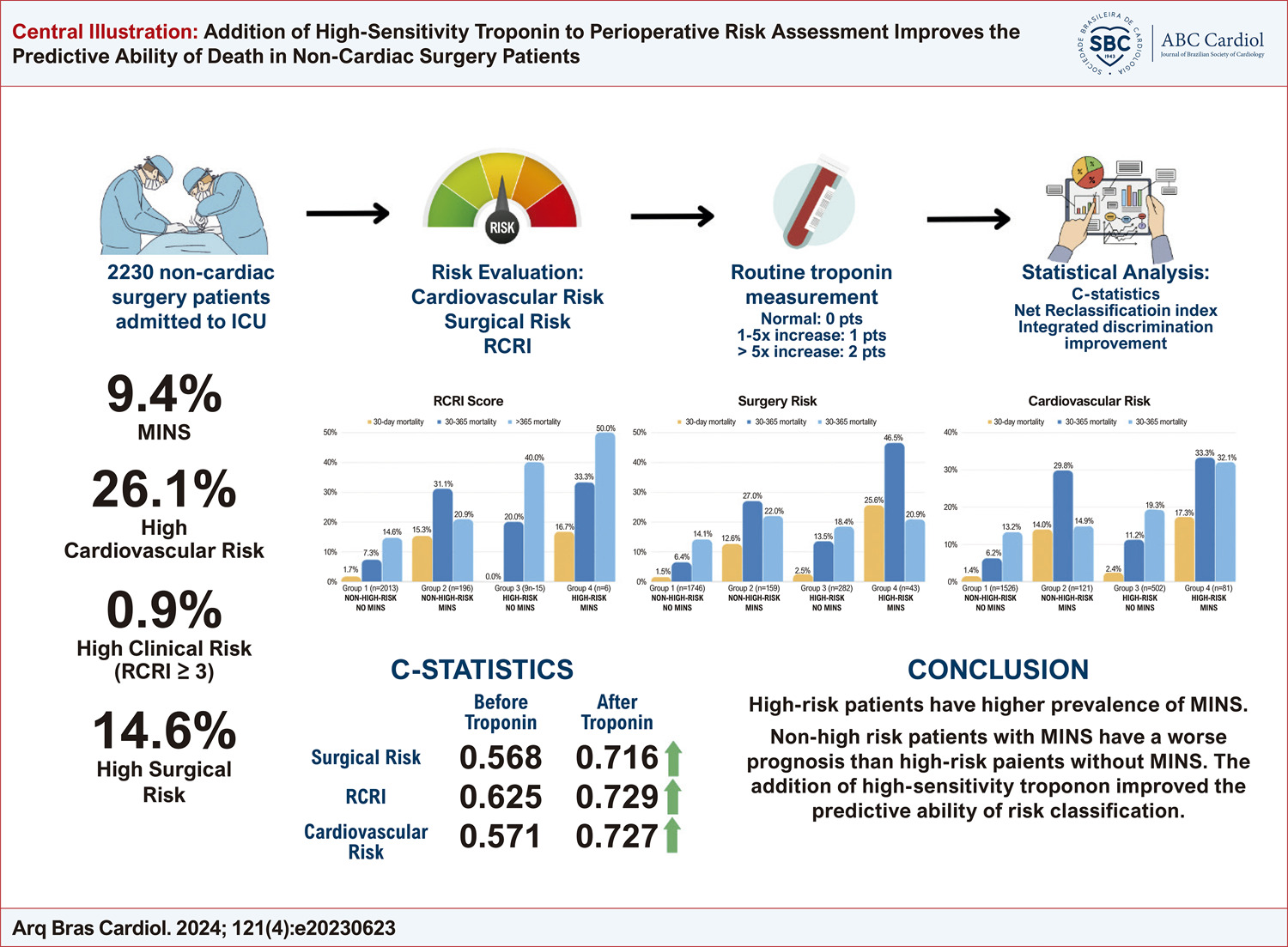
Addition of High-Sensitivity Troponin to Perioperative Risk Assessment Improves the Predictive Ability of Death in Non-Cardiac Surgery Patients
ABC
Original Article

Addition of High-Sensitivity Troponin to Perioperative Risk Assessment Improves the Predictive Ability of Death in Non-Cardiac Surgery Patients

Bruno Ferraz de Oliveira Gomes et al. Thiago Moreira Bastos da Silva Giovanni Possamai Dutra Leticia de Sousa Peres … Nathalia Duarte Camisão Walter de Souza Homena Júnior João Luiz Fernandes Petriz Plinio Resende do Carmo Junior Basilio de Bragança Pereira Gláucia Maria Moraes de Oliveira

Abstract

Background

Risk stratification is an important step in perioperative evaluation. However, the main risk scores do not incorporate biomarkers in their set of variables.

Objective

Evaluate the incremental power of troponin to the usual risk stratification

Methods

A total of 2,230 patients admitted to the intensive care unit after non-cardiac surgery were classified according to three types of risk: cardiovascular risk (CVR), Revised Cardiac Risk Index (RCRI); and inherent risk of surgery (IRS). The main outcome was all-cause mortality. Cox regression was used as well as c-statistics before and after addition of high-sensitivity troponin (at least one measurement up to three days after surgery). Finally, net reclassification index and integrated discrimination improvement were used to assess the incremental power of troponin for risk stratification. Significance level was set at 0.05.

Results

Mean age of patients was 63.8 years and 55.6% were women. The prevalence of myocardial injury after non-cardiac surgery (MINS) was 9.4%. High CVR-patients had a higher occurrence of MINS (40.1 x 24.8%, p<0.001), as well as high IRS-patients (21.3 x 13.9%, p=0.004) and those with a RCRI≥3 (3.0 x 0.7%, p=0.009). Patients without MINS, regardless of the assessed risk, had similar mortality rate. The addition of troponin to the risk assessment improved the predictive ability of death at 30 days and at 1 year in all risk assessments.

Conclusion

The prevalence of MINS is higher in the high-risk population. However, its prevalence in lower-risk population is not negligible and causes a higher risk of death. The addition of high-sensitivity troponin increased the predictive ability of risk assessment in all groups.

  • High-sensitivity Troponin
  • Myocardial Injury
  • Non-cardiac Surgery
  • Risk Classification
Read Full Article
Creative Commons Attribution (CC BY) Creative Commons license
03/05/2024 DOI: 10.36660/abc.20230623i Views 1
Figure 1
ABC
Original Article

Impact of High Cardiovascular Risk on Hospital Mortality in Intensive Care Patients Hospitalized for COVID-19

Bruno Ferraz de Oliveira Gomes et al. João Luiz Fernandes Petriz Iliana Regina Ribeiro Menezes Anny de Sousa Azevedo … Thiago Moreira Bastos da Silva Valdilene Lima Silva Leticia de Sousa Peres David Fernandes Pedro Pereira Giovanni Possamai Dutra Suzanna Andressa Morais de Paula Bárbara Ferreira da Silva Mendes Plinio Resende do Carmo Junior Basilio de Bragança Pereira Gláucia Maria Moraes de Oliveira

Abstract

Background

Some studies have shown a higher prevalence of deaths in patients with cardiovascular risk factors (CRF) during hospitalization for COVID-19.

Objectives

To assess the impact of high cardiovascular risk in patients hospitalized in intensive care for COVID-19

Methods

Retrospective study with patients admitted to an intensive care unit, with a diagnosis of COVID-19 confirmed by RT-PCR, and with at least one troponin measurement during hospitalization. The criteria for defining high cardiovascular risk (HCR) patients were: history of established cardiovascular disease (myocardial infarction, stroke, or peripheral arterial disease), diabetes, chronic kidney disease with clearance 65 years). The primary outcome of this study is all-cause in-hospital mortality. P<0.05 was considered significant.

Results

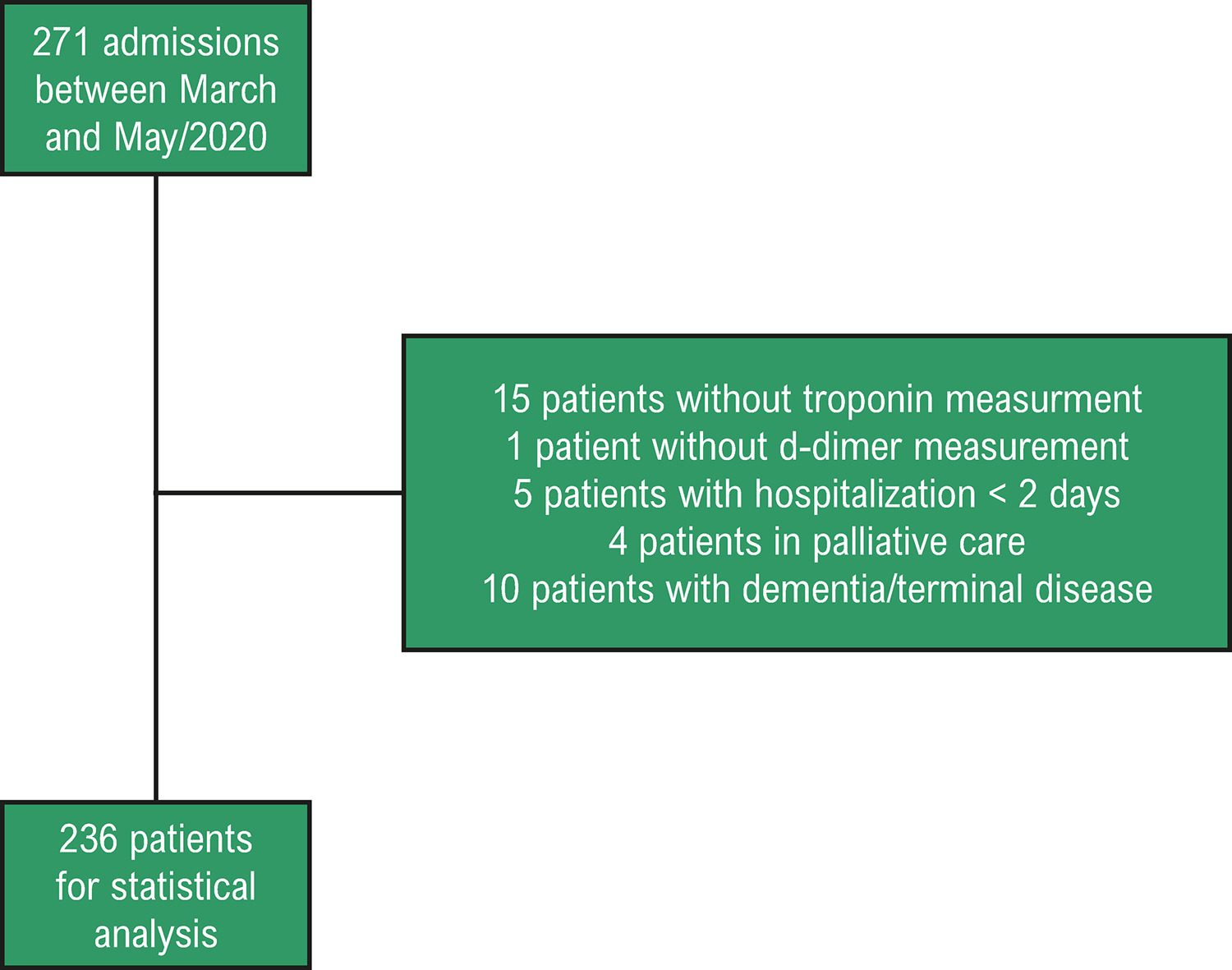
This study included 236 patients, mean age = 61.14±16.2 years, with 63.1% men, 55.5% hypertensive, and 33.1% diabetic; 47.4% of the patients also presented HCR. A significant increase in mortality was observed as the number of risk factors increased (0 FRC: 5.9%; 1 FRC: 17.5%; 2 FRC: 32.2% and ≥3 FRC: 41.2%; p=0.001). In the logistic regression adjusted for severity (SAPS3 score), the HCR and myocardial injury group had a higher occurrence of in-hospital mortality (OR 40.38; 95% CI 11.78-138.39). Patients without HCR but with myocardial injury also exhibited a significant association with the primary outcome (OR 16.7; 95% CI 4.45-62.74).

Conclusion

In patients hospitalized in intensive care for COVID-19, HCR impacts in-hospital mortality only in patients with myocardial injury.

  • Cardiovascular Diseases/complications
  • Cardiovascular risk
  • COVID-19
  • Inpatients
  • Intensive Care
  • Myocardial Injury
  • Ultrasensitivity Troponin
Read Full Article
Creative Commons Attribution (CC BY) Creative Commons license
13/05/2022 DOI: 10.36660/abc.20210349 Views 1
Figure 1
ABCHF
Case Report

Overlapping Etiologies in a Young Patient with Severe Myocarditis: A Case Report

Thaís Martins de Oliveira et al. Fernando Luis Scolari Fabiano de Oliveira Poswar Francine Hehn de Oliveira … Ricardo Stein Lívia Adams Goldraich

Introduction

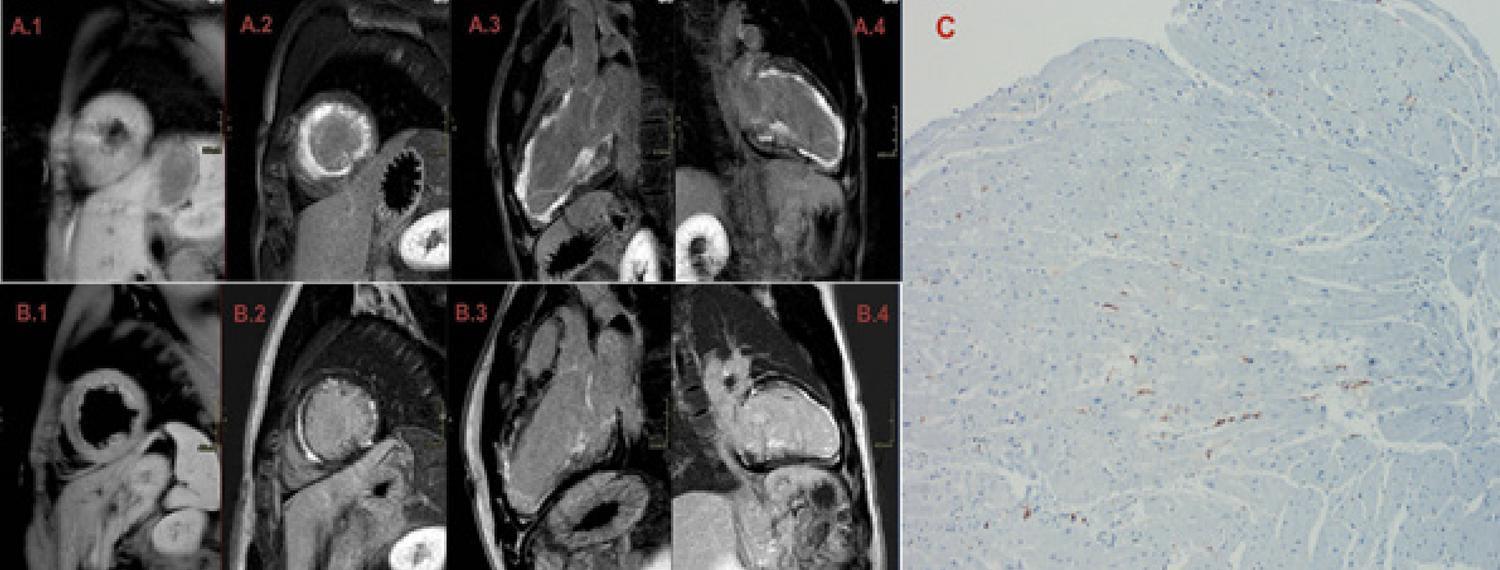
Etiological identification of young patients with heart failure should always be a medical goal. In this scenario, infectious myocarditis is a possible diagnosis and, when it occurs, it has a benign course in the majority of cases. However, congenital heart diseases or familial forms of cardiomyopathy should be considered in differential diagnosis and/or concomitantly, particularly in more severe presentations of myocarditis. In these cases, in addition to specific investigation for myocarditis, which may include clinical evaluation, imaging exams, laboratory tests, and endomyocardial biopsy with viral agent testing in myocardial tissue, genetic study is also worth considering. Associated etiologies can have an impact on clinical presentation and evolution, but data are still scarce, which means that there is still a gap to be explored in the literature. In this report, we describe the case of a young man with cardiogenic shock secondary to myocarditis caused by Epstein Barr virus (EBV), which led to identification of a pathogenic mutation in the PKP2 gene.

[…]

  • Arrhythmogenic Cardiomyopathy
  • Genetics
  • Inflammation
  • Myocardial Injury
Read Full Article
Creative Commons Attribution (CC BY) Creative Commons license
12/04/2022 DOI: 10.36660/abchf.20220022 Views 1
Electrical cardioversion and myocardial injury: evaluation by new cardiac injury markers
ABC
Artigo Original

Electrical cardioversion and myocardial injury: evaluation by new cardiac injury markers

Elizabete Silva dos Santos et al. Marcos Paulo Pereira Luiz Minuzzo Dalmo A. R. Moreira … Rui Ramos Álvaro Avezum Ari Timerman Leopoldo S. Piegas

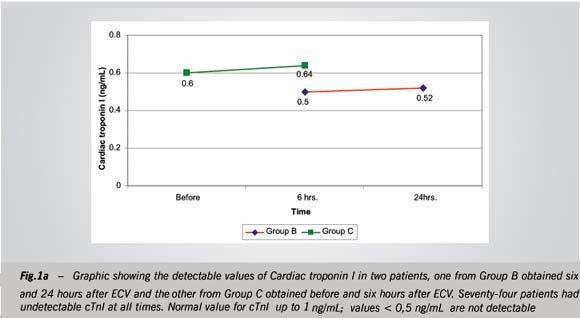
OBJECTIVE: Evaluate, based on the evolution of new biochemical markers of cardiac damage, if electrical cardioversion (ECV) causes myocardial injury. METHODS: Seventy-six patients (P) submitted to elective ECV for atrial fibrillation or atrial flutter were evaluated. Creatine phosphokinase (CPK), CK-MB activity, CK-MB mass, myoglobin and cardiac troponin I (cTnI) were measured before, and 6 and 24 hours after ECV. RESULTS: ECV was successful in 58 P (76.3%). Cumulative energy (CE) was up to 350 joules (J) in 36 P, from 500 to 650 J in 20 P and from 900 to 960 J in 20 P; the mean energy delivered being 493 J (± 309). The levels of cTnI remained within normal limits in all 76 P. The increase of cumulative energy led to an elevation of CPK levels (> p value = 0.007), CK-MB activity (> p value = 0.002), CK-MB mass (> p value = 0.03), and myoglobin (> p value = 0.015). A positive correlation between the cumulative energy and CPK peaks was observed (r = 0.660; p < 0.001), CK-MB activity (r = 0.429; p < 0.0001), CK-MB mass (r = 0.265; p = 0.02), and myoglobin (r = 0.684; p < 0.0001), as well as between the number of shocks and the CPK peaks (r = 0.770; p < 0.001), CK-MB activity (r = 0.642; p < 0.0001), CK-MB mass (r = 0.430; p < 0,0001), and myoglobin (r = 0.745; p < 0.0001). CONCLUSION: ECV does not cause myocardial injury detectable by cTnI measurement. Elevations of CPK, CK-MB activity, CK-MB mass and myoglobin result from skeletal muscle injury and are positively correlated with the CE delivered or with the number of shocks.

  • cardiac troponin I
  • Cardioversion
  • Myocardial Injury
Read Full Article
Creative Commons Attribution (CC BY) Creative Commons license
30/03/2006 DOI: 10.1590/S0066-782X2006000300006
ABC
Artigo Original

Correlation between biochemical markers and coronary angiography in patients with non-ST elevation acute coronary syndromes

Cynthia Karla Magalhães et al. Aristarco Gonçalves de Siqueira Filho José Geraldo de Castro Amino Mônica Nolasco

OBJECTIVE: Investigate the correlation between biochemical markers (TNI, CRP and fibrinogen) and anatomical coronary angiographic findings in patients with non-ST elevation acute coronary syndromes (NSTE-ACS). METHODS: One blood sample was obtained to test for markers, and coronary angiography was performed within the first 72 hours after hospitalization. Univariate analysis was used to search for correlations between the 3 markers and the angiographic findings in the group of patients with an identified ischemia-related artery (IRA), and multivariate analysis was performed to investigate the correlation between these markers and the presence of unstable atherosclerotic lesions solely in the group with a coronary obstruction >50%. RESULTS: Prospective study conducted with 84 patients, 65.5% of whom were men. In the IRA-identified group, blood levels of the three markers were higher than in the groups with no IRA-identified or with normal coronary arteries. The analysis used to evaluate the IRA-identified group showed significant correlations between TIMI flow and TN-I (p = 0.006), unstable atherosclerotic lesions and TN-I and fibrinogen (p = 0.02 and p = 0.01, respectively), and multivessel disease and CRP (p = 0.0005). The multivariate analysis showed that CRP, fibrinogen and TN-I were independent predictors of unstable atherosclerotic lesions (p = 0.002; p = 0.003 and p = 0.007, respectively). CONCLUSION: In NSTE-ACS patients, TN-I, CRP and fibrinogen blood levels within the first 10 hours after hospitalization correlated with coronary angiographic findings.

  • acute coronary syndromes
  • Inflammation
  • Myocardial Injury
  • Thrombosis
Read Full Article
Creative Commons Attribution (CC BY) Creative Commons license
30/03/2006 DOI: 10.1590/S0066-782X2006000300011

How to cite this article

EndNote RIS

Electronic Document Format (Vancouver)

Tralhão A. Using High-Sensitivity Troponin for Enhancing Risk Prediction after Non-Cardiac Surgery – Are We There Yet?. Arquivos Brasileiros de Cardiologia 2024;121(4):e20240140.

Electronic Document Format (ABNT)

Tralhão, António. Using High-Sensitivity Troponin for Enhancing Risk Prediction after Non-Cardiac Surgery – Are We There Yet?. Arquivos Brasileiros de Cardiologia, v. 121, n. 4, e20240140, Jun. 2024.

Electronic Document Format (APA)

Tralhão, A. (2024). Using High-Sensitivity Troponin for Enhancing Risk Prediction after Non-Cardiac Surgery – Are We There Yet?. Arquivos Brasileiros de Cardiologia, 121(4), e20240140.

Electronic Document Format (ISO)

Tralhão, António. Using High-Sensitivity Troponin for Enhancing Risk Prediction after Non-Cardiac Surgery – Are We There Yet?. Arquivos Brasileiros de Cardiologia [online]. 2024, vol. 121, n. 4, [cited 2026-10-14], e20240140. Available from: <https://journals.cardiol.br/en/article/using-high-sensitivity-troponin-for-enhancing-risk-prediction-after-non-cardiac-surgery-are-we-there-yet/>. ISSN 0066-782X

EndNote RIS

Electronic Document Format (Vancouver)

Gomes BFO, Silva TMB, Dutra GP, Peres LS, Camisão ND, Homena Júnior WS, Petriz JLF, et al. Addition of High-Sensitivity Troponin to Perioperative Risk Assessment Improves the Predictive Ability of Death in Non-Cardiac Surgery Patients. Arquivos Brasileiros de Cardiologia 2024;121(4):e20230623.

Electronic Document Format (ABNT)

Gomes, Bruno Ferraz de Oliveira; Silva, Thiago Moreira Bastos da; Dutra, Giovanni Possamai; Peres, Leticia de Sousa; Camisão, Nathalia Duarte; Homena Júnior, Walter de Souza; Petriz, João Luiz Fernandes; Carmo Junior, Plinio Resende do; Pereira, Basilio de Bragança; Oliveira, Gláucia Maria Moraes de. Addition of High-Sensitivity Troponin to Perioperative Risk Assessment Improves the Predictive Ability of Death in Non-Cardiac Surgery Patients. Arquivos Brasileiros de Cardiologia, v. 121, n. 4, e20230623, May. 2024.

Electronic Document Format (APA)

Gomes, B. F. O., Silva, T. M. B. , Dutra, G. P., Peres, L. S., Camisão, N. D., Homena Júnior, W. S., Petriz, J. L. F., Carmo Junior, P. R. , Pereira, B. B., & Oliveira, G. M. M. (2024). Addition of High-Sensitivity Troponin to Perioperative Risk Assessment Improves the Predictive Ability of Death in Non-Cardiac Surgery Patients. Arquivos Brasileiros de Cardiologia, 121(4), e20230623.

Electronic Document Format (ISO)

Gomes, Bruno Ferraz de Oliveira and Silva, Thiago Moreira Bastos da and Dutra, Giovanni Possamai and Peres, Leticia de Sousa and Camisão, Nathalia Duarte and Homena Júnior, Walter de Souza and Petriz, João Luiz Fernandes and Carmo Junior, Plinio Resende do and Pereira, Basilio de Bragança and Oliveira, Gláucia Maria Moraes de. Addition of High-Sensitivity Troponin to Perioperative Risk Assessment Improves the Predictive Ability of Death in Non-Cardiac Surgery Patients. Arquivos Brasileiros de Cardiologia [online]. 2024, vol. 121, n. 4, [cited 2026-10-14], e20230623. Available from: <https://journals.cardiol.br/en/article/addition-of-high-sensitivity-troponin-to-perioperative-risk-assessment-improves-the-predictive-ability-of-death-in-non-cardiac-surgery-patients/>. ISSN 0066-782X

EndNote RIS

Electronic Document Format (Vancouver)

Gomes BFO, Petriz JLF, Menezes IRR, Azevedo AS, Silva TMB, Silva VL, Peres LS, et al. Impact of High Cardiovascular Risk on Hospital Mortality in Intensive Care Patients Hospitalized for COVID-19. Arquivos Brasileiros de Cardiologia 2022;118(5):927-34.

Electronic Document Format (ABNT)

Gomes, Bruno Ferraz de Oliveira; Petriz, João Luiz Fernandes; Menezes, Iliana Regina Ribeiro; Azevedo, Anny de Sousa; Silva, Thiago Moreira Bastos da; Silva, Valdilene Lima; Peres, Leticia de Sousa; Pereira, David Fernandes Pedro; Dutra, Giovanni Possamai; Paula, Suzanna Andressa Morais de; Mendes, Bárbara Ferreira da Silva; Carmo Junior, Plinio Resende do; Pereira, Basilio de Bragança; Oliveira, Gláucia Maria Moraes de. Impact of High Cardiovascular Risk on Hospital Mortality in Intensive Care Patients Hospitalized for COVID-19. Arquivos Brasileiros de Cardiologia, v. 118, n. 5, p. 927-934, May. 2022.

Electronic Document Format (APA)

Gomes, B. F. O., Petriz, J. L. F., Menezes, I. R. R., Azevedo, A. S., Silva, T. M. B. , Silva, V. L., Peres, L. S., Pereira, D. F. P., Dutra, G. P., Paula, S. A. M. , Mendes, B. F. S., Carmo Junior, P. R. , Pereira, B. B., & Oliveira, G. M. M. (2022). Impact of High Cardiovascular Risk on Hospital Mortality in Intensive Care Patients Hospitalized for COVID-19. Arquivos Brasileiros de Cardiologia, 118(5), 927-934.

Electronic Document Format (ISO)

Gomes, Bruno Ferraz de Oliveira and Petriz, João Luiz Fernandes and Menezes, Iliana Regina Ribeiro and Azevedo, Anny de Sousa and Silva, Thiago Moreira Bastos da and Silva, Valdilene Lima and Peres, Leticia de Sousa and Pereira, David Fernandes Pedro and Dutra, Giovanni Possamai and Paula, Suzanna Andressa Morais de and Mendes, Bárbara Ferreira da Silva and Carmo Junior, Plinio Resende do and Pereira, Basilio de Bragança and Oliveira, Gláucia Maria Moraes de. Impact of High Cardiovascular Risk on Hospital Mortality in Intensive Care Patients Hospitalized for COVID-19. Arquivos Brasileiros de Cardiologia [online]. 2022, vol. 118, n. 5, [cited 2026-10-14], pp. 927-934. Available from: <https://journals.cardiol.br/en/article/impact-of-high-cardiovascular-risk-on-hospital-mortality-in-intensive-care-patients-hospitalized-for-covid-19/>. ISSN 0066-782X

EndNote RIS

Electronic Document Format (Vancouver)

Oliveira TM, Scolari FL, Poswar FO, Oliveira FH, Stein R, Goldraich LA. Overlapping Etiologies in a Young Patient with Severe Myocarditis: A Case Report. ABC Heart Fail Cardiomyop 2022;2(1):116-9.

Electronic Document Format (ABNT)

Oliveira, Thaís Martins de; Scolari, Fernando Luis; Poswar, Fabiano de Oliveira; Oliveira, Francine Hehn de; Stein, Ricardo; Goldraich, Lívia Adams. Overlapping Etiologies in a Young Patient with Severe Myocarditis: A Case Report. ABC Heart Fail Cardiomyop, v. 2, n. 1, p. 116-119, Apr. 2022.

Electronic Document Format (APA)

Oliveira, T. M. , Scolari, F. L., Poswar, F. O., Oliveira, F. H. , Stein, R., & Goldraich, L. A. (2022). Overlapping Etiologies in a Young Patient with Severe Myocarditis: A Case Report. ABC Heart Fail Cardiomyop, 2(1), 116-119.

Electronic Document Format (ISO)

Oliveira, Thaís Martins de and Scolari, Fernando Luis and Poswar, Fabiano de Oliveira and Oliveira, Francine Hehn de and Stein, Ricardo and Goldraich, Lívia Adams. Overlapping Etiologies in a Young Patient with Severe Myocarditis: A Case Report. ABC Heart Fail Cardiomyop [online]. 2022, vol. 2, n. 1, [cited 2026-10-14], pp. 116-119. Available from: <https://journals.cardiol.br/en/article/overlapping-etiologies-in-a-young-patient-with-severe-myocarditis-a-case-report/>

EndNote RIS

Electronic Document Format (Vancouver)

Santos ES, Pereira MP, Minuzzo L, Moreira DAR, Ramos R, Avezum , Timerman A, et al. Electrical cardioversion and myocardial injury: evaluation by new cardiac injury markers. Arquivos Brasileiros de Cardiologia 2006;86(3):191-7.

Electronic Document Format (ABNT)

Santos, Elizabete Silva dos; Pereira, Marcos Paulo; Minuzzo, Luiz; Moreira, Dalmo A. R.; Ramos, Rui; Avezum, Álvaro; Timerman, Ari; Piegas, Leopoldo S.. Electrical cardioversion and myocardial injury: evaluation by new cardiac injury markers. Arquivos Brasileiros de Cardiologia, v. 86, n. 3, p. 191-197, Mar. 2006.

Electronic Document Format (APA)

Santos, E. S. , Pereira, M. P., Minuzzo, L., Moreira, D. A. R., Ramos, R., Avezum, , Timerman, A., & Piegas, L. S. (2006). Electrical cardioversion and myocardial injury: evaluation by new cardiac injury markers. Arquivos Brasileiros de Cardiologia, 86(3), 191-197.

Electronic Document Format (ISO)

Santos, Elizabete Silva dos and Pereira, Marcos Paulo and Minuzzo, Luiz and Moreira, Dalmo A. R. and Ramos, Rui and Avezum, Álvaro and Timerman, Ari and Piegas, Leopoldo S.. Electrical cardioversion and myocardial injury: evaluation by new cardiac injury markers. Arquivos Brasileiros de Cardiologia [online]. 2006, vol. 86, n. 3, [cited 2026-10-14], pp. 191-197. Available from: <https://journals.cardiol.br/en/article/electrical-cardioversion-and-myocardial-injury-evaluation-by-new-cardiac-injury-markers/>. ISSN 0066-782X

EndNote RIS

Electronic Document Format (Vancouver)

Magalhães CK, Siqueira Filho AG, Amino JGC, Nolasco M. Correlation between biochemical markers and coronary angiography in patients with non-ST elevation acute coronary syndromes. Arquivos Brasileiros de Cardiologia 2006;86(3):223-31.

Electronic Document Format (ABNT)

Magalhães, Cynthia Karla; Siqueira Filho, Aristarco Gonçalves de; Amino, José Geraldo de Castro; Nolasco, Mônica. Correlation between biochemical markers and coronary angiography in patients with non-ST elevation acute coronary syndromes. Arquivos Brasileiros de Cardiologia, v. 86, n. 3, p. 223-231, Mar. 2006.

Electronic Document Format (APA)

Magalhães, C. K., Siqueira Filho, A. G. , Amino, J. G. C., & Nolasco, M. (2006). Correlation between biochemical markers and coronary angiography in patients with non-ST elevation acute coronary syndromes. Arquivos Brasileiros de Cardiologia, 86(3), 223-231.

Electronic Document Format (ISO)

Magalhães, Cynthia Karla and Siqueira Filho, Aristarco Gonçalves de and Amino, José Geraldo de Castro and Nolasco, Mônica. Correlation between biochemical markers and coronary angiography in patients with non-ST elevation acute coronary syndromes. Arquivos Brasileiros de Cardiologia [online]. 2006, vol. 86, n. 3, [cited 2026-10-14], pp. 223-231. Available from: <https://journals.cardiol.br/en/article/correlation-between-biochemical-markers-and-coronary-angiography-in-patients-with-non-st-elevation-acute-coronary-syndromes/>. ISSN 0066-782X

  • About ABC Family
  • Internal Regulation
  • Editorial Board
  • Brazilian Society of Cardiology (SBC)

Issues

SBC Guidelines

  • Videos
  • Podcasts
  • News