ABC Family Arquivos Brasileiros de Cardiologia International Journal of Cardiovascular Sciences ABC Heart Failure & Cardiomyopathy ABC Imagem Cardiovascular
Português English
ABC Family
Português English
  • About
    • About ABC Family
    • Internal Regulation
    • Editorial Board
    • Brazilian Society of Cardiology (SBC)
  • Issues
  • SBC Guidelines
  • Content
    • Videos
    • Podcasts
    • News
  • About
    • About ABC Family
    • Internal Regulation
    • Editorial Board
    • Brazilian Society of Cardiology (SBC)
  • Issues
  • SBC Guidelines
  • Content
    • Videos
    • Podcasts
    • News

ABC Family

  • ABC Family
  • Arquivos Brasileiros de Cardiologia
  • International Journal of Cardiovascular Sciences
  • ABC Heart Failure & Cardiomyopathy
  • ABC Imagem Cardiovascular
Search in

No content found.

Journals
Ordering
Article types
Others

  1. Home
  2. Keyword: sickness impact profile
ABC
Editorial

Impact of the Implantable Cardioverter Defibrillator on the Lives of its Patients

Silas dos Santos Galvão Filho

The first ICD implant in humans occurred in 1980, followed by the incorporation of this device into the therapeutic arsenal of cardiology in the early 1990s, it was one of the greatest advances in the treatment of cardiac arrhythmias. Being the therapy of choice with evidence of efficacy for a large number of patients at risk of sudden cardiac death from non-reversible causes, ICDs have some peculiarities that can impact the daily lives of their carriers. Initially, ICDs were huge devices, only capable of being implanted at the abdominal level, with their electrodes and reeds for delivering the shock implanted directly into the heart through thoracotomy. At that time, the impact of these devices on the lives of their users was great, from aesthetics to the large number of inappropriate shocks, caused by still precarious algorithms for discriminating the arrhythmia to be treated: ventricular tachycardia (VT) or ventricular fibrillation (VF), in addition to the first programs that were still inadequate. In our initial experience with ICDs in the late 1980s and early 1990s, we had many acceptance problems, with some patients even requesting to remove the device after experiencing repeated shocks. With the spectacular evolution they have undergone, ICDs have incorporated all technological advances, improving their diagnostic performance in the release of therapies and now having dimensions slightly larger than pacemakers, allowing device implants at the thoracic level, with fully transvenous electrodes through minimally invasive surgery, eliminating thoracotomy. Despite these advances, a considerable number of patients continue to report an impact on their quality of life. This is mainly due to one aspect: the ICD is the only implantable electronic cardiac device whose normal therapeutic functioning is perceived by the patient, with sensations described by the vast majority as very unpleasant, especially shock therapy, the worst situation being when repeated shocks occur. The improvement of diagnostic algorithms for tachyarrhythmias, and greater knowledge of device programming, have considerably reduced inappropriate shocks, however, appropriate shocks, even repetitive shocks known as electrical storms, continue to occur,, as they correspond to the normal functioning of the device in reversing cardiac arrest due to VF, or potentially malignant arrhythmia such as VT. Fortunately, today these serious episodes are much less frequent and can be treated through medication and/or interventional procedures such as catheter ablation.

The article “Predictors of Quality of Life, Anxiety and Acceptance in Patients with Implantable Cardioverter-Defibrillator” evaluated these aspects in a reasonable number of patients undergoing the first implantation or replacement of an ICD generator, showing that around a quarter of the patients presented some kind of negative impact. It also showed that being 60 years old or older, the absence of atrial fibrillation (AF), and being female were predictors of better results. This information is important and deserves some consideration: 1- Having improved considerably over the years, ICD still negatively impacts the lives of a relatively important number of its sufferers. This encourages the technological improvement of devices, optimizing therapies, in addition to better approach and psychological preparation of the patient pre-operatively. 2- The worse results of younger patients can be explained by the feeling of great limitation of activities imposed on those with ICDs, however, these limitations are due more to the underlying heart disease than to the device itself. In some cases, without major changes in cardiological function, even impactful professional sporting activities can be allowed,, as in the case of two football players who played in the last World Cup with ICD. 3- In the case of people with AF, this arrhythmia, which is often symptomatic, is not infrequently related to heart disease with worse cardiological function, which increases limitations. Furthermore, AF may be responsible for inappropriate shocks, which can be avoided with adequate programming. 4- Regarding the fact that women present better results despite the aesthetic problems that these devices can cause, this is probably due to greater tolerance to therapies and a better understanding of the possible limitations of their activities, as they have an ICD.

[…]
  • Arrhythmias Cardiac
  • Death, Sudden, Cardiac
  • Defibrillators, Implantable / trends
  • Quality of life
  • sickness impact profile
Read Full Article
Creative Commons Attribution (CC BY) Creative Commons license
05/07/2024 DOI: 10.36660/abc.20240196i Views 2
IJCS
Original Article

Bioprosthesis versus Mechanical Valve Heart Prosthesis: Assessment of Quality of Life

José Carlos Molero Junior et al. Rodrigo Daminello Raimundo, Joice Anaize Tonon do Amaral Luiz Carlos de Abreu João Roberto Breda

Abstract

Background:

The aim of this study was to evaluate the QoL of patients undergoing heart valve replacement using the SF-36 questionnaire, compare it between patients with mechanical prosthesis and patients with bioprosthesis, and correlate the results with sociodemographic variables.

Objective:

To assess the QoL of patients undergoing heart valve replacement and compare it between patients with bioprosthetic valves and patients with mechanical prosthetic valves.

Methods:

We included 36 consecutive patients (16 men) with a mean age of 51 years and six months, who underwent mitral or aortic valve replacement from September 2007 to December 2011. The study was conducted between March and May 2012 and involved the application of the SF-36 survey and a sociodemographic questionnaire. Statistical tests were performed, and data are expressed as absolute frequency and percentile, and median and interquartile range (P25 and P75) (Mann-Whitney test), considering a significance of 95%.

Results:

The average time of surgery was 32.5 months (8-61 months). Participants were asked about the practice of physical activity, and 41.7% were physically active. For the SF-36 domains, the highest scores were observed for the social domain whereas the lowest scores were found for mental health, with a mean of 89.25 and 54.44, respectively. In the statistical analysis, we found statistically higher values in emotional functional for patients with mechanical valve prosthesis (p = 0.0084).

Conclusion:

The QoL of the patients undergoing heart valve replacement improves considerably after the surgery, except for the mental health domain, probably due to the low practice of physical activity. The type of prosthesis seems not to influence the QoL or the patients in the late postoperative period.

  • Aortic Valve
  • Heart Valve Prosthesis
  • Mitral Valve
  • Quality of life
  • sickness impact profile
  • Stress, Psychological
Read Full Article
Creative Commons Attribution (CC BY) Creative Commons license
24/10/2019 DOI: 10.5935/2359-4802.20190074
Quality of life assessment after acute coronary syndrome: systematic review
ABC
Review Article

Quality of life assessment after acute coronary syndrome: systematic review

Suzana Alves da Silva et al. Sonia Regina Lambert Passos Mariana Teixeira Carballo Mabel Figueiró

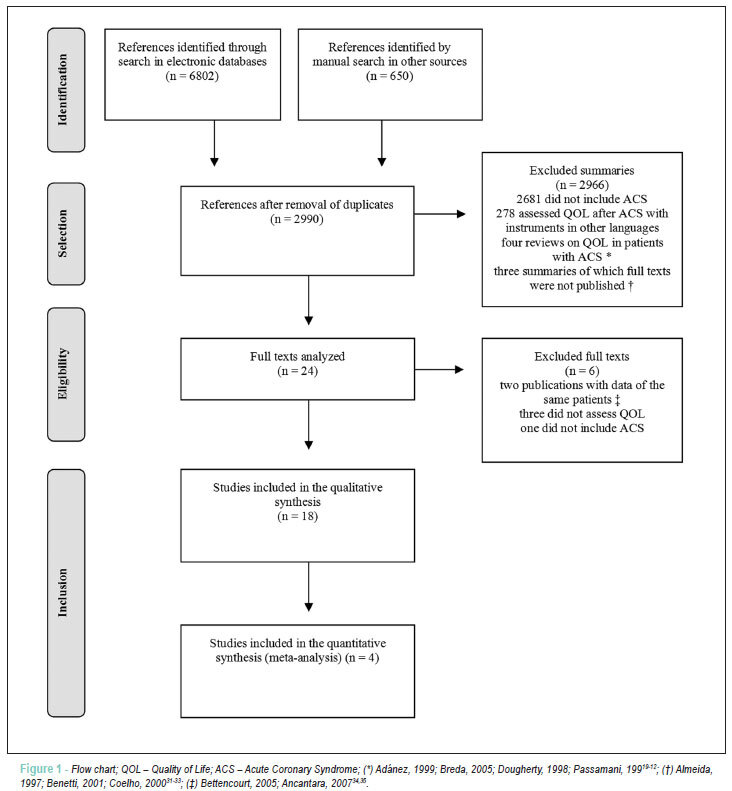
REVIEW ARTICLE

[…]

  • Acute coronary syndrome
  • Quality of life
  • Review
  • sickness impact profile
Read Full Article
Creative Commons Attribution (CC BY) Creative Commons license
16/01/2012 DOI: 10.1590/S0066-782X2011001500013
Clinical and angiographic profile in coronary artery disease: hospital outcome with emphasis on the very elderly
ABC
Artigo Original

Clinical and angiographic profile in coronary artery disease: hospital outcome with emphasis on the very elderly

Micheli Zanotti Galon et al. George César Ximenes Meireles Sérgio Kreimer Gilberto Guilherme Ajjar Marchiori … Desidério Favarato João Aparecido Pimenta de Almeida Lorena Squassante Capeline

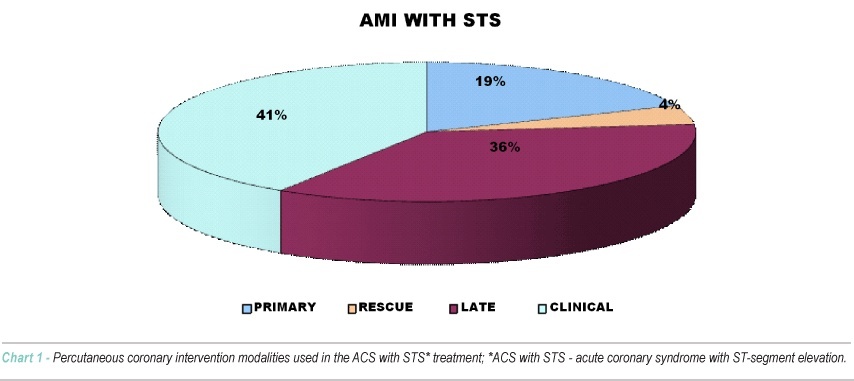
BACKGROUND: Knowing the risk factors and clinical manifestations of coronary artery disease (CAD) allows us to intervene more effectively with a particular population. OBJECTIVE: To identify clinical and angiographic profiles of patients undergoing cardiac catheterization, treated at a tertiary hospital and treated by percutaneous coronary interventions (PCI). METHODS: The study of 1,282 patients who underwent 1,410 cardiac catheterizations, selected from March/2007 to May/2008 from a database in a general hospital for diagnosis of coronary artery disease (CAD). Risk factors, indication for examination, technical details of PCI and in-hospital outcomes were prospectively collected. RESULTS: There were 688 (54.0%) males, mean age 65.4 ± 10.9 years and 20.0% above 75 years age. The most frequent clinical condition was acute coronary syndrome (ACS) without ST-segment elevation (STS) (38.7%). The multi artery CAD occurred in 46.4%, PCI was indicated in 464 patients, 547 target lesions were treated (type B2 or C, 86.0%), and of these, 14.0% treated with drug eluting stents. Among those with AMI with STS, primary PCI was performed in 19.0% of the patients, from these, 77.0% were transferred from the origin hospitals late (late PCI) and had not received prior thrombolytic, and 4.0% had PCI rescue. Angiographic success was achieved in 94.2% of PCIs. Death occurred in 5.6% of patients, with average age of 75.2 ± 10.2 years. CONCLUSION: The prevalence of elderly (20.1% being > 75 years) and male was observed. From the risk factors for CAD, the most common were systemic hypertension and dyslipidemia. There was a predominance of ACS. Age > 75 years old, multiarterial CAD and chronic renal failure were predictors of in-hospital deaths.

  • Aged
  • Coronary Artery Disease
  • heart catheterization
  • Risk Factors
  • sickness impact profile
Read Full Article
Creative Commons Attribution (CC BY) Creative Commons license
17/09/2010 DOI: 10.1590/S0066-782X2010005000127
ABC
Artigo Original

Temporary limitations in daily routine activities: association with arterial pressure and antihypertensive therapy

Gilberto Senechal de Goffredo Filho et al. Eduardo Faerstein

BACKGROUND: Arterial hypertension has a crucial role in the occurrence of severe clinical events, but there are controversies regarding the impact of the arterial pressure levels or anti-hypertensive medication on the routine activities of individuals. OBJECTIVE: To verify whether the increase in arterial pressure levels or anti-hypertensive medications determine a temporary incapacity for routine activities. METHODS: Analysis of sectional data of 2,953 participants, from 1999-2001, of a cohort of university employees in Rio de Janeiro (Pro-Saude Study). The occurrence and duration of the incapacity on the 14 days before data collection were assessed according to the measured level of arterial pressure, as continuous variable and with the stratification of the participants in four groups, combining the information regarding the arterial pressure ( 140/90 mmHg) and the reported use of anti-hypertensive medications. A multinomial logistic regression was carried out, with multiple adjustments for sex, age, ethnicity, per capita household income and report of comorbidities. RESULTS: The adjusted odds ratio for the association between the use of anti-hypertensive medication and incapacity for 8 to 14 days was 2.08 (95% CI: 1.25-3.48), and 0.92 (95%CI: 0.84-1.01) for the association between a 10 mmHg increase in systolic pressure and incapacity for up to 7 days. CONCLUSION: Temporary incapacity for 8 to 14 days associated to anti-hypertensive medications might be related to its adverse effects. Among other reasons, the suggestive inverse association between the systolic pressure and incapacity for up to 7 days can be related to the phenomenon of hypoalgesia, sometimes described by hypertensive individuals.

  • antihypertensive agents
  • Hypertension
  • sickness impact profile
Read Full Article
Creative Commons Attribution (CC BY) Creative Commons license
26/03/2010 DOI: 10.1590/S0066-782X2010005000011 Views 1

How to cite this article

EndNote RIS

Electronic Document Format (Vancouver)

Galvão Filho SS. Impact of the Implantable Cardioverter Defibrillator on the Lives of its Patients. Arquivos Brasileiros de Cardiologia 2024;121(4):e20240196.

Electronic Document Format (ABNT)

Galvão Filho, Silas dos Santos. Impact of the Implantable Cardioverter Defibrillator on the Lives of its Patients. Arquivos Brasileiros de Cardiologia, v. 121, n. 4, e20240196, Jul. 2024.

Electronic Document Format (APA)

Galvão Filho, S. S. (2024). Impact of the Implantable Cardioverter Defibrillator on the Lives of its Patients. Arquivos Brasileiros de Cardiologia, 121(4), e20240196.

Electronic Document Format (ISO)

Galvão Filho, Silas dos Santos. Impact of the Implantable Cardioverter Defibrillator on the Lives of its Patients. Arquivos Brasileiros de Cardiologia [online]. 2024, vol. 121, n. 4, [cited 2026-10-14], e20240196. Available from: <https://journals.cardiol.br/en/article/impact-of-the-implantable-cardioverter-defibrillator-on-the-lives-of-its-patients/>. ISSN 0066-782X

EndNote RIS

Electronic Document Format (Vancouver)

Molero Junior JC, Raimundo RD, Amaral JAT, Abreu LC, Breda JR. Bioprosthesis versus Mechanical Valve Heart Prosthesis: Assessment of Quality of Life. International Journal of Cardiovascular Sciences 2019;33(1):36-42.

Electronic Document Format (ABNT)

Molero Junior, José Carlos; Raimundo, Rodrigo Daminello; Amaral, Joice Anaize Tonon do; Abreu, Luiz Carlos de; Breda, João Roberto. Bioprosthesis versus Mechanical Valve Heart Prosthesis: Assessment of Quality of Life. International Journal of Cardiovascular Sciences, v. 33, n. 1, p. 36-42, Oct. 2019.

Electronic Document Format (APA)

Molero Junior, J. C., Raimundo, R. D., Amaral, J. A. T. , Abreu, L. C. , & Breda, J. R. (2019). Bioprosthesis versus Mechanical Valve Heart Prosthesis: Assessment of Quality of Life. International Journal of Cardiovascular Sciences, 33(1), 36-42.

Electronic Document Format (ISO)

Molero Junior, José Carlos and Raimundo, Rodrigo Daminello and Amaral, Joice Anaize Tonon do and Abreu, Luiz Carlos de and Breda, João Roberto. Bioprosthesis versus Mechanical Valve Heart Prosthesis: Assessment of Quality of Life. International Journal of Cardiovascular Sciences [online]. 2019, vol. 33, n. 1, [cited 2026-10-14], pp. 36-42. Available from: <https://journals.cardiol.br/en/article/bioprosthesis-versus-mechanical-valve-heart-prosthesis-assessment-of-quality-of-life/>. ISSN 2359-4802

EndNote RIS

Electronic Document Format (Vancouver)

Silva SA, Passos SRL, Carballo MT, Figueiró M. Quality of life assessment after acute coronary syndrome: systematic review. Arquivos Brasileiros de Cardiologia 2012;97(6):526-40.

Electronic Document Format (ABNT)

Silva, Suzana Alves da; Passos, Sonia Regina Lambert; Carballo, Mariana Teixeira; Figueiró, Mabel. Quality of life assessment after acute coronary syndrome: systematic review. Arquivos Brasileiros de Cardiologia, v. 97, n. 6, p. 526-540, Jan. 2012.

Electronic Document Format (APA)

Silva, S. A. , Passos, S. R. L., Carballo, M. T., & Figueiró, M. (2012). Quality of life assessment after acute coronary syndrome: systematic review. Arquivos Brasileiros de Cardiologia, 97(6), 526-540.

Electronic Document Format (ISO)

Silva, Suzana Alves da and Passos, Sonia Regina Lambert and Carballo, Mariana Teixeira and Figueiró, Mabel. Quality of life assessment after acute coronary syndrome: systematic review. Arquivos Brasileiros de Cardiologia [online]. 2012, vol. 97, n. 6, [cited 2026-10-14], pp. 526-540. Available from: <https://journals.cardiol.br/en/article/quality-of-life-assessment-after-acute-coronary-syndrome-systematic-review/>. ISSN 0066-782X

EndNote RIS

Electronic Document Format (Vancouver)

Galon MZ, Meireles GCX, Kreimer S, Marchiori GGA, Favarato D, Almeida JAP, Capeline LS, et al. Clinical and angiographic profile in coronary artery disease: hospital outcome with emphasis on the very elderly. Arquivos Brasileiros de Cardiologia 2010;95(4):422-9.

Electronic Document Format (ABNT)

Galon, Micheli Zanotti; Meireles, George César Ximenes; Kreimer, Sérgio; Marchiori, Gilberto Guilherme Ajjar; Favarato, Desidério; Almeida, João Aparecido Pimenta de; Capeline, Lorena Squassante. Clinical and angiographic profile in coronary artery disease: hospital outcome with emphasis on the very elderly. Arquivos Brasileiros de Cardiologia, v. 95, n. 4, p. 422-429, Sep. 2010.

Electronic Document Format (APA)

Galon, M. Z., Meireles, G. C. X., Kreimer, S., Marchiori, G. G. A., Favarato, D., Almeida, J. A. P. , & Capeline, L. S. (2010). Clinical and angiographic profile in coronary artery disease: hospital outcome with emphasis on the very elderly. Arquivos Brasileiros de Cardiologia, 95(4), 422-429.

Electronic Document Format (ISO)

Galon, Micheli Zanotti and Meireles, George César Ximenes and Kreimer, Sérgio and Marchiori, Gilberto Guilherme Ajjar and Favarato, Desidério and Almeida, João Aparecido Pimenta de and Capeline, Lorena Squassante. Clinical and angiographic profile in coronary artery disease: hospital outcome with emphasis on the very elderly. Arquivos Brasileiros de Cardiologia [online]. 2010, vol. 95, n. 4, [cited 2026-10-14], pp. 422-429. Available from: <https://journals.cardiol.br/en/article/clinical-and-angiographic-profile-in-coronary-artery-disease-hospital-outcome-with-emphasis-on-the-very-elderly/>. ISSN 0066-782X

EndNote RIS

Electronic Document Format (Vancouver)

Goffredo Filho GS, Faerstein E. Temporary limitations in daily routine activities: association with arterial pressure and antihypertensive therapy. Arquivos Brasileiros de Cardiologia 2010;94(4):472-6.

Electronic Document Format (ABNT)

Goffredo Filho, Gilberto Senechal de; Faerstein, Eduardo. Temporary limitations in daily routine activities: association with arterial pressure and antihypertensive therapy. Arquivos Brasileiros de Cardiologia, v. 94, n. 4, p. 472-476, Mar. 2010.

Electronic Document Format (APA)

Goffredo Filho, G. S. , & Faerstein, E. (2010). Temporary limitations in daily routine activities: association with arterial pressure and antihypertensive therapy. Arquivos Brasileiros de Cardiologia, 94(4), 472-476.

Electronic Document Format (ISO)

Goffredo Filho, Gilberto Senechal de and Faerstein, Eduardo. Temporary limitations in daily routine activities: association with arterial pressure and antihypertensive therapy. Arquivos Brasileiros de Cardiologia [online]. 2010, vol. 94, n. 4, [cited 2026-10-14], pp. 472-476. Available from: <https://journals.cardiol.br/en/article/temporary-limitations-in-daily-routine-activities-association-with-arterial-pressure-and-antihypertensive-therapy/>. ISSN 0066-782X

  • About ABC Family
  • Internal Regulation
  • Editorial Board
  • Brazilian Society of Cardiology (SBC)

Issues

SBC Guidelines

  • Videos
  • Podcasts
  • News