ABC Family Arquivos Brasileiros de Cardiologia International Journal of Cardiovascular Sciences ABC Heart Failure & Cardiomyopathy ABC Imagem Cardiovascular
Português English
ABC Family
Português English
  • About
    • About ABC Family
    • Internal Regulation
    • Editorial Board
    • Brazilian Society of Cardiology (SBC)
  • Issues
  • SBC Guidelines
  • Content
    • Videos
    • Podcasts
    • News
  • About
    • About ABC Family
    • Internal Regulation
    • Editorial Board
    • Brazilian Society of Cardiology (SBC)
  • Issues
  • SBC Guidelines
  • Content
    • Videos
    • Podcasts
    • News

ABC Family

  • ABC Family
  • Arquivos Brasileiros de Cardiologia
  • International Journal of Cardiovascular Sciences
  • ABC Heart Failure & Cardiomyopathy
  • ABC Imagem Cardiovascular
Search in

No content found.

Journals
Ordering
Article types
Others

  1. Home
  2. Keyword: High-Fat Diet
Treatment with Capsinoids Promotes Impaired Cardiomyocyte Contractility in Obesity without Positively Modulating Metabolic Parameters
ABC
Original Article

Treatment with Capsinoids Promotes Impaired Cardiomyocyte Contractility in Obesity without Positively Modulating Metabolic Parameters

Kiany Miranda et al. Késsia Cristina Carvalho Santos Janete Corrêa Cardoso Lucas Furtado Domingos … Fabiane Merigueti Nunes Luisa Martins Simmer Daniel Sesana Silva Marina Politi Okoshi Danilo Sales Bocalini Ana Paula Lima-Leopoldo André Soares Leopoldo

Abstract

Background:

Capsinoids (Cap) are bioactive compounds with thermogenic properties capable of promoting physiological changes and aiding digestion, potentially influencing fat loss in obesity. However, their effects on cardiac tissue remain unclear.

Objective:

This study investigated the effects of chronic Cap administration on cardiac contractility and morphology in obese (Ob) rats induced by a saturated high-fat diet (HFD).

Methods:

Male Wistar rats were assigned to standard diet (SD) or HFD groups for 19 weeks. After this period, animals were redistributed into Control (C), Obese (Ob), and Obese supplemented with capsinoids (ObCap). The ObCap group received Cap via orogastric gavage (10 mg/kg). Nutritional assessments, dietary profile, histological analyses, comorbidities, and cardiac evaluations were performed. A significance level of 5% was adopted for all tests.

Results:

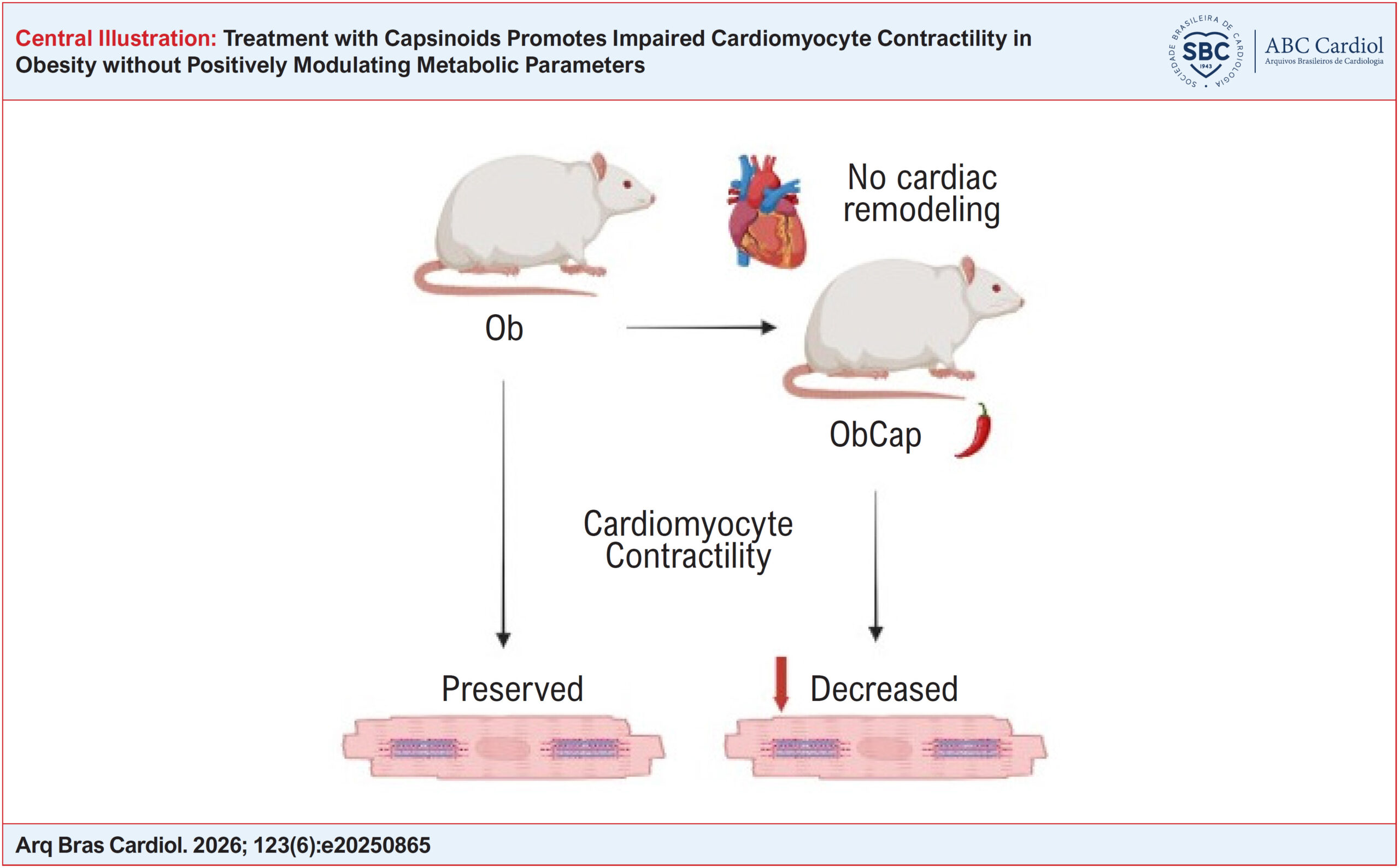
Fat deposits and total adiposity were higher in Ob animals compared with the C group, with no differences between Ob and ObCap. Metabolic, hormonal, and lipid alterations were observed between Ob and ObCap. No differences in cardiac morphometry were detected among groups. The ObCap group exhibited reduced fractional shortening compared with Ob. Regarding shortening time, Ob animals showed a decrease compared with C, whereas ObCap showed an increase compared with Ob.

Conclusion:

Treatment with Cap did not prevent excessive fat accumulation nor improve metabolic parameters in obesity. Moreover, it impaired cardiomyocyte contractility.
  • Heart
  • High-Fat Diet
  • Obesity
Read Full Article
Creative Commons Attribution (CC BY) Creative Commons license
27/07/2026 DOI: 10.36660/abc.20250865i
Resistance Exercise Training Mitigates Cardiac Remodeling Induced by a High-Fat Diet in Rodents: A Systematic Review
ABC
Original Article

Resistance Exercise Training Mitigates Cardiac Remodeling Induced by a High-Fat Diet in Rodents: A Systematic Review

Alexandre Martins Oliveira Portes et al. Sebastião Felipe Ferreira Costa Luciano Bernardes Leite Victor Neiva Lavorato … Denise Coutinho de Miranda Anselmo Gomes de Moura Leôncio Lopes Soares Mauro César Isoldi Antônio José Natali

Abstract

Background

Obesity is associated with the development of cardiovascular diseases and is a serious public health problem. In animal models, high-fat diet (HFD) feeding impairs cardiac structure and function and promotes oxidative stress and apoptosis. Resistance exercise training (RT), however, has been recommended as coadjutant in the treatment of cardiometabolic diseases, including obesity, because it increases energy expenditure and stimulates lipolysis.

Objective

In this systematic review, we aimed to assess the benefits of RT on the heart of rats and mice fed HFD.

Methods

Original studies were identified by searching PubMed, Scopus, and Embase databases from December 2007 to December 2022. This study was conducted in accordance with the criteria established by PRISMA and registered in PROSPERO (CRD42022369217). The risk of bias and methodological quality was evaluated by SYRCLE and CAMARADES, respectively. Eligible studies included original articles published in English that evaluated cardiac outcomes in rodents submitted to over 4 weeks of RT and controlled by a sedentary, HFD-fed control group (n = 5).

Results

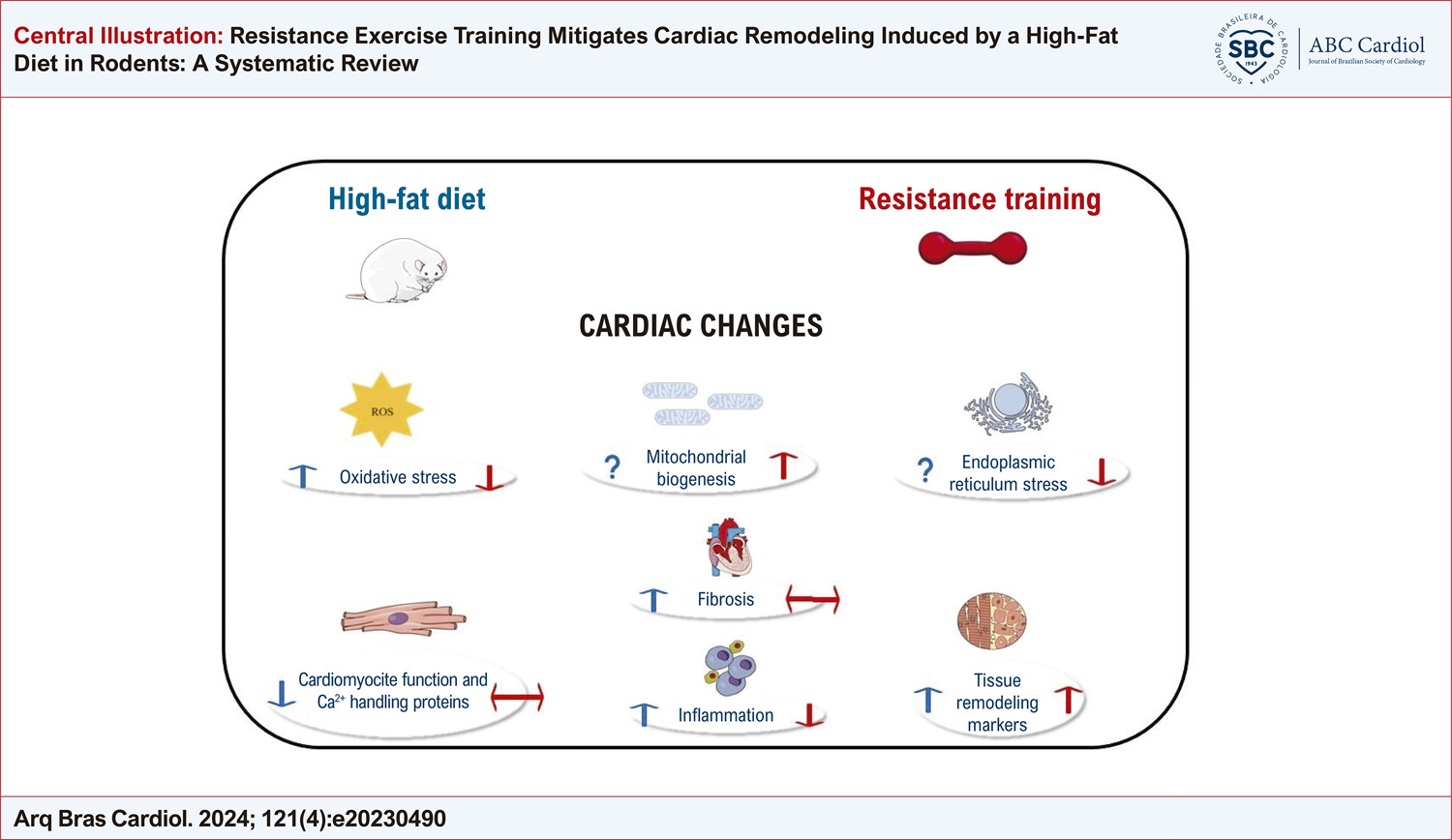
The results showed that RT mitigates cardiac oxidative stress, inflammation, and endoplasmic reticulum stress. It also modifies the activity of structural remodeling markers, although it does not alter biometric parameters, histomorphometric parameters, or the contractile function of cardiomyocytes.

Conclusion

Our results indicate that RT partially counteracts the HFD-induced adverse cardiac remodeling by increasing the activity of structural remodeling markers; elevating mitochondrial biogenesis; reducing oxidative stress, inflammatory markers, and endoplasmic reticulum stress; and improving hemodynamic, anthropometric, and metabolic parameters.

  • Cardiac Myocytes
  • esistance Training
  • High-Fat Diet
  • systematic review
Read Full Article
Creative Commons Attribution (CC BY) Creative Commons license
26/04/2024 DOI: 10.36660/abc.20230490i Views 1
Figure 1
ABC
Original Article

Obesity Resistance Promotes Mild Contractile Dysfunction Associated with Intracellular Ca2+ Handling

Felipe Gonçalves dos Santos de Sá et al. Ana Paula Lima-Leopoldo Bruno Barcellos Jacobsen Artur Junio Togneri Ferron … Wagner Muller Estevam Dijon Henrique Salomé Campos Edson Castardeli Márcia Regina Holanda da Cunha Antonio Carlos Cicogna André Soares Leopoldo

Abstract

Background:

Diet-induced obesity is frequently used to demonstrate cardiac dysfunction. However, some rats, like humans, are susceptible to developing an obesity phenotype, whereas others are resistant to that.

Objective:

To evaluate the association between obesity resistance and cardiac function, and the impact of obesity resistance on calcium handling.

Methods:

Thirty-day-old male Wistar rats were distributed into two groups, each with 54 animals: control (C; standard diet) and obese (four palatable high-fat diets) for 15 weeks. After the experimental protocol, rats consuming the high-fat diets were classified according to the adiposity index and subdivided into obesity-prone (OP) and obesity-resistant (OR). Nutritional profile, comorbidities, and cardiac remodeling were evaluated. Cardiac function was assessed by papillary muscle evaluation at baseline and after inotropic maneuvers.

Results:

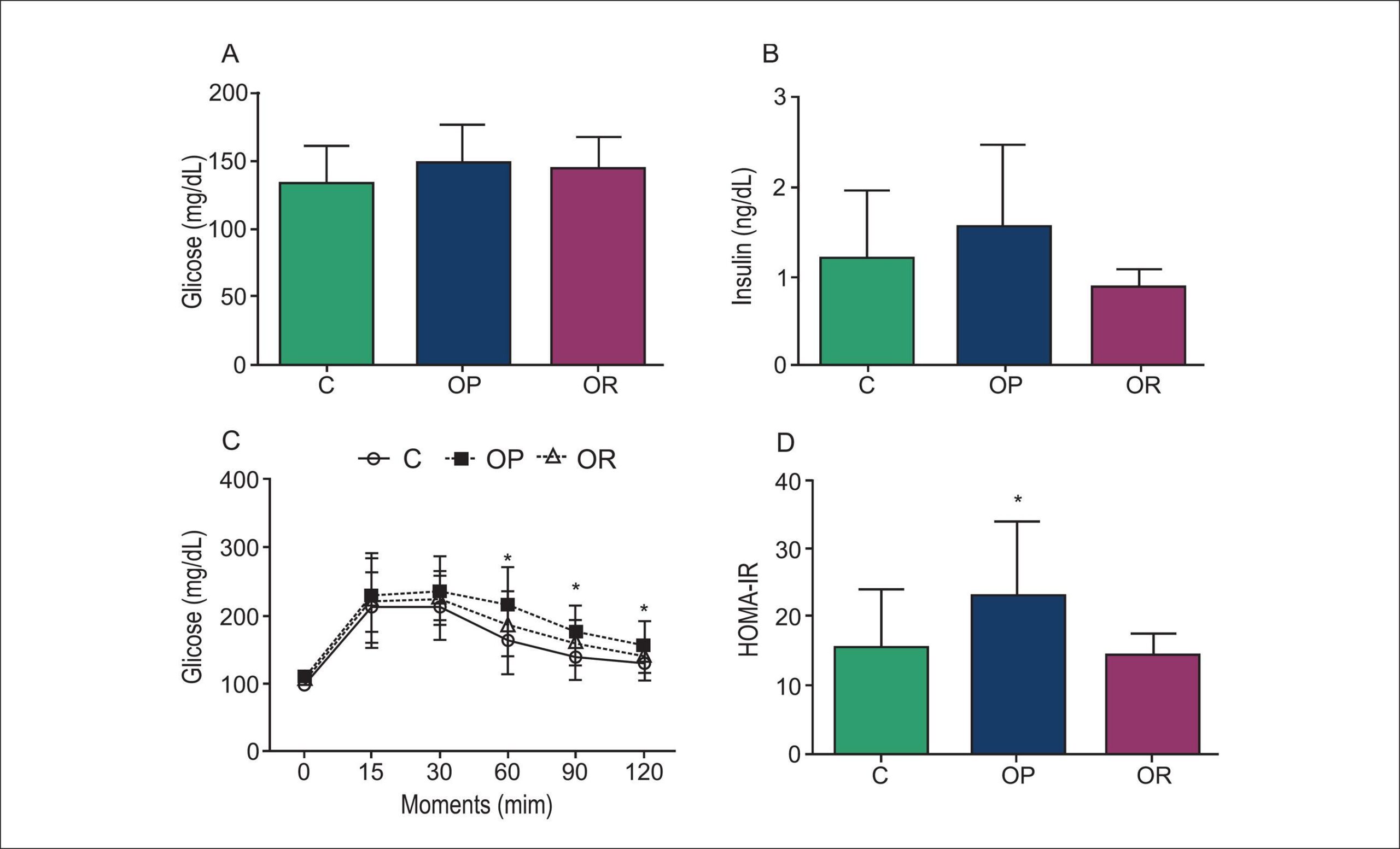
The high-fat diets promoted increase in body fat and adiposity index in OP rats compared with C and OR rats. Glucose, lipid, and blood pressure profiles remained unchanged in OR rats. In addition, the total heart weight and the weight of the left and right ventricles in OR rats were lower than those in OP rats, but similar to those in C rats. Baseline cardiac muscle data were similar in all rats, but myocardial responsiveness to a post-rest contraction stimulus was compromised in OP and OR rats compared with C rats.

Conclusion:

Obesity resistance promoted specific changes in the contraction phase without changes in the relaxation phase. This mild abnormality may be related to intracellular Ca2+ handling.

  • Ca2+ Handling
  • Cardiac function
  • High-Fat Diet
  • Obesity-Resistance
  • Rats
Read Full Article
Creative Commons Attribution (CC BY) Creative Commons license
27/10/2015 DOI: 10.5935/abc.20150134
Figure 1
ABC
Artigo Original

Influence of Term of Exposure to High-Fat Diet-Induced Obesity on Myocardial Collagen Type I and III

Danielle Cristina Tomaz da Silva et al. Ana Paula Lima-Leopoldo André Soares Leopoldo Dijon Henrique Salomé de Campos … André Ferreira do Nascimento Sílvio Assis de Oliveira Junior Carlos Roberto Padovani Antonio Carlos Cicogna

BACKGROUND:

Obesity is a risk factor for many medical complications; medical research has shown that hemodynamic, morphological and functional abnormalities are correlated with the duration and severity of obesity.

OBJECTIVE:

Present study determined the influence of term of exposure to high-fat diet-induced obesity on myocardial collagen type I and III.

METHODS:

Thirty-day-old male Wistar rats were randomly distributed into two groups: a control (C) group fed a standard rat chow and an obese (Ob) group alternately fed one of four palatable high-fat diets. Each diet was changed daily, and the rats were maintained on their respective diets for 15 (C15 and Ob15) and 30 (C30 and Ob30) consecutive weeks. Obesity was determined by adiposity index.

RESULTS:

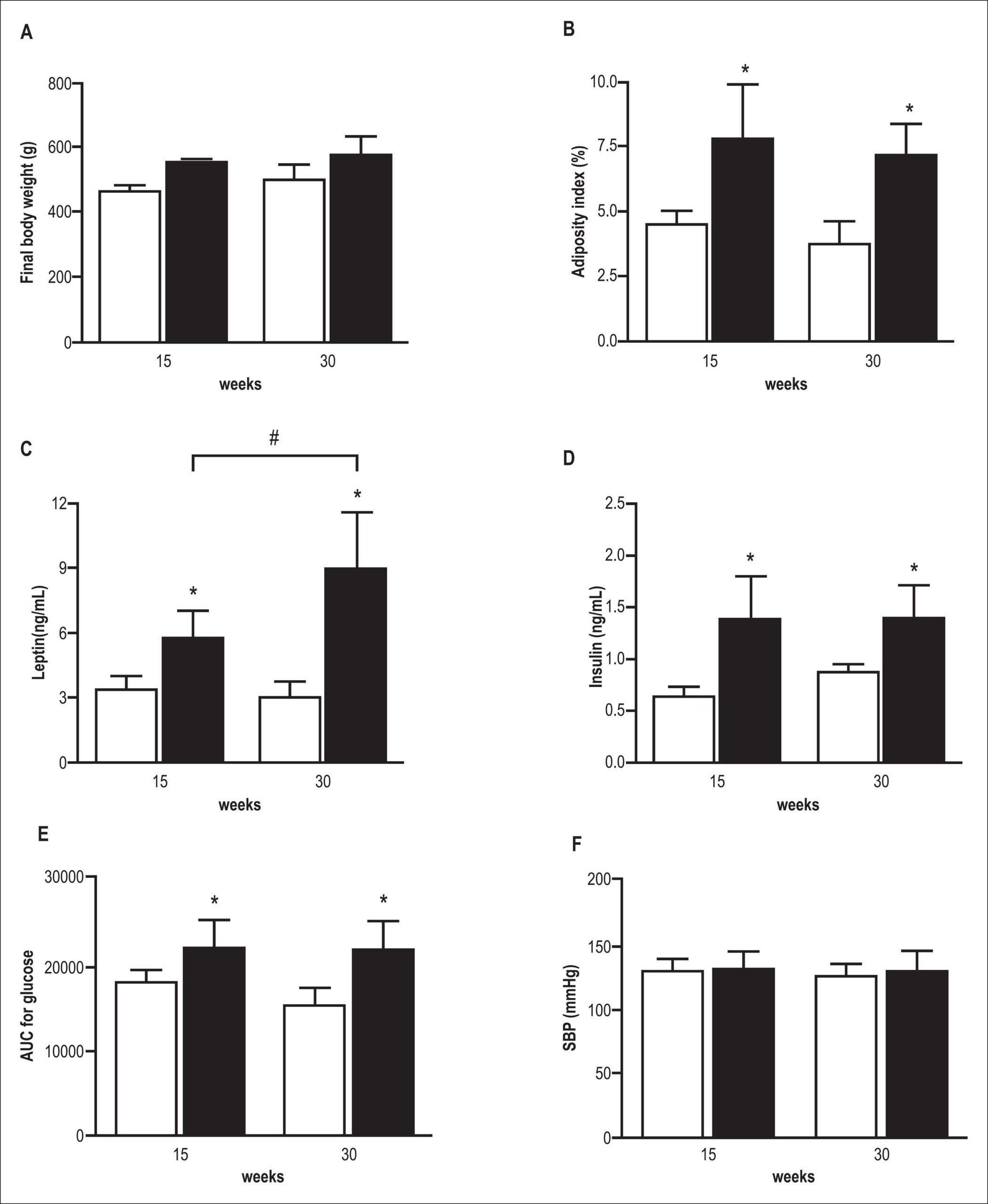
The Ob15 group was similar to the C15 group regarding the expression of myocardial collagen type I; however, expression in the Ob30 group was less than C30 group. The time of exposure to obesity was associated with a reduction in collagen type I in Ob30 when compared with Ob15. Obesity did not affect collagen type III expression.

CONCLUSION:

This study showed that the time of exposure to obesity for 30 weeks induced by unsaturated high-fat diet caused a reduction in myocardial collagen type I expression in the obese rats. However, no effect was seen on myocardial collagen type III expression.

  • Collagen Type I
  • Collagen Type III
  • High-Fat Diet
  • Myocardium
  • Obesity
Read Full Article
Creative Commons Attribution (CC BY) Creative Commons license
09/11/2013 DOI: 10.5935/abc.20130232 Views 2

How to cite this article

EndNote RIS

Electronic Document Format (Vancouver)

Miranda K, Santos KCC, Cardoso JC, Domingos LF, Nunes FM, Simmer LM, Silva DS, et al. Treatment with Capsinoids Promotes Impaired Cardiomyocyte Contractility in Obesity without Positively Modulating Metabolic Parameters. Arquivos Brasileiros de Cardiologia 2026;123(6):e20250865.

Electronic Document Format (ABNT)

Miranda, Kiany; Santos, Késsia Cristina Carvalho; Cardoso, Janete Corrêa; Domingos, Lucas Furtado; Nunes, Fabiane Merigueti; Simmer, Luisa Martins; Silva, Daniel Sesana; Okoshi, Marina Politi; Bocalini, Danilo Sales; Lima-Leopoldo, Ana Paula; Leopoldo, André Soares. Treatment with Capsinoids Promotes Impaired Cardiomyocyte Contractility in Obesity without Positively Modulating Metabolic Parameters. Arquivos Brasileiros de Cardiologia, v. 123, n. 6, e20250865, Jul. 2026.

Electronic Document Format (APA)

Miranda, K., Santos, K. C. C., Cardoso, J. C., Domingos, L. F., Nunes, F. M., Simmer, L. M., Silva, D. S., Okoshi, M. P., Bocalini, D. S., Lima-Leopoldo, A. P., & Leopoldo, A. S. (2026). Treatment with Capsinoids Promotes Impaired Cardiomyocyte Contractility in Obesity without Positively Modulating Metabolic Parameters. Arquivos Brasileiros de Cardiologia, 123(6), e20250865.

Electronic Document Format (ISO)

Miranda, Kiany and Santos, Késsia Cristina Carvalho and Cardoso, Janete Corrêa and Domingos, Lucas Furtado and Nunes, Fabiane Merigueti and Simmer, Luisa Martins and Silva, Daniel Sesana and Okoshi, Marina Politi and Bocalini, Danilo Sales and Lima-Leopoldo, Ana Paula and Leopoldo, André Soares. Treatment with Capsinoids Promotes Impaired Cardiomyocyte Contractility in Obesity without Positively Modulating Metabolic Parameters. Arquivos Brasileiros de Cardiologia [online]. 2026, vol. 123, n. 6, [cited 2026-10-14], e20250865. Available from: <https://journals.cardiol.br/en/article/treatment-with-capsinoids-promotes-impaired-cardiomyocyte-contractility-in-obesity-without-positively-modulating-metabolic-parameters/>. ISSN 0066-782X

EndNote RIS

Electronic Document Format (Vancouver)

Portes AMO, Costa SFF, Leite LB, Lavorato VN, Miranda DC, Moura AG, Soares LL, et al. Resistance Exercise Training Mitigates Cardiac Remodeling Induced by a High-Fat Diet in Rodents: A Systematic Review. Arquivos Brasileiros de Cardiologia 2024;121(4):e20230490.

Electronic Document Format (ABNT)

Portes, Alexandre Martins Oliveira; Costa, Sebastião Felipe Ferreira; Leite, Luciano Bernardes; Lavorato, Victor Neiva; Miranda, Denise Coutinho de; Moura, Anselmo Gomes de; Soares, Leôncio Lopes; Isoldi, Mauro César; Natali, Antônio José. Resistance Exercise Training Mitigates Cardiac Remodeling Induced by a High-Fat Diet in Rodents: A Systematic Review. Arquivos Brasileiros de Cardiologia, v. 121, n. 4, e20230490, Apr. 2024.

Electronic Document Format (APA)

Portes, A. M. O., Costa, S. F. F., Leite, L. B., Lavorato, V. N., Miranda, D. C. , Moura, A. G. , Soares, L. L., Isoldi, M. C., & Natali, A. J. (2024). Resistance Exercise Training Mitigates Cardiac Remodeling Induced by a High-Fat Diet in Rodents: A Systematic Review. Arquivos Brasileiros de Cardiologia, 121(4), e20230490.

Electronic Document Format (ISO)

Portes, Alexandre Martins Oliveira and Costa, Sebastião Felipe Ferreira and Leite, Luciano Bernardes and Lavorato, Victor Neiva and Miranda, Denise Coutinho de and Moura, Anselmo Gomes de and Soares, Leôncio Lopes and Isoldi, Mauro César and Natali, Antônio José. Resistance Exercise Training Mitigates Cardiac Remodeling Induced by a High-Fat Diet in Rodents: A Systematic Review. Arquivos Brasileiros de Cardiologia [online]. 2024, vol. 121, n. 4, [cited 2026-10-14], e20230490. Available from: <https://journals.cardiol.br/en/article/resistance-exercise-training-mitigates-cardiac-remodeling-induced-by-a-high-fat-diet-in-rodents-a-systematic-review/>. ISSN 0066-782X

EndNote RIS

Electronic Document Format (Vancouver)

Sá FGS, Lima-Leopoldo AP, Jacobsen BB, Ferron AJT, Estevam WM, Campos DHS, Castardeli E, et al. Obesity Resistance Promotes Mild Contractile Dysfunction Associated with Intracellular Ca2+ Handling. Arquivos Brasileiros de Cardiologia 2015;105(6):588-96.

Electronic Document Format (ABNT)

Sá, Felipe Gonçalves dos Santos de; Lima-Leopoldo, Ana Paula; Jacobsen, Bruno Barcellos; Ferron, Artur Junio Togneri; Estevam, Wagner Muller; Campos, Dijon Henrique Salomé; Castardeli, Edson; Cunha, Márcia Regina Holanda da; Cicogna, Antonio Carlos; Leopoldo, André Soares. Obesity Resistance Promotes Mild Contractile Dysfunction Associated with Intracellular Ca2+ Handling. Arquivos Brasileiros de Cardiologia, v. 105, n. 6, p. 588-596, Oct. 2015.

Electronic Document Format (APA)

Sá, F. G. S. , Lima-Leopoldo, A. P., Jacobsen, B. B., Ferron, A. J. T., Estevam, W. M., Campos, D. H. S., Castardeli, E., Cunha, M. R. H. , Cicogna, A. C., & Leopoldo, A. S. (2015). Obesity Resistance Promotes Mild Contractile Dysfunction Associated with Intracellular Ca2+ Handling. Arquivos Brasileiros de Cardiologia, 105(6), 588-596.

Electronic Document Format (ISO)

Sá, Felipe Gonçalves dos Santos de and Lima-Leopoldo, Ana Paula and Jacobsen, Bruno Barcellos and Ferron, Artur Junio Togneri and Estevam, Wagner Muller and Campos, Dijon Henrique Salomé and Castardeli, Edson and Cunha, Márcia Regina Holanda da and Cicogna, Antonio Carlos and Leopoldo, André Soares. Obesity Resistance Promotes Mild Contractile Dysfunction Associated with Intracellular Ca2+ Handling. Arquivos Brasileiros de Cardiologia [online]. 2015, vol. 105, n. 6, [cited 2026-10-14], pp. 588-596. Available from: <https://journals.cardiol.br/en/article/obesity-resistance-promotes-mild-contractile-dysfunction-associated-with-intracellular-ca2-handling/>. ISSN 0066-782X

EndNote RIS

Electronic Document Format (Vancouver)

Silva DCT, Lima-Leopoldo AP, Leopoldo AS, Campos DHS, Nascimento AF, Oliveira Junior SA, Padovani CR, et al. Influence of Term of Exposure to High-Fat Diet-Induced Obesity on Myocardial Collagen Type I and III. Arquivos Brasileiros de Cardiologia 2013;102(2):157-64.

Electronic Document Format (ABNT)

Silva, Danielle Cristina Tomaz da; Lima-Leopoldo, Ana Paula; Leopoldo, André Soares; Campos, Dijon Henrique Salomé de; Nascimento, André Ferreira do; Oliveira Junior, Sílvio Assis de; Padovani, Carlos Roberto; Cicogna, Antonio Carlos. Influence of Term of Exposure to High-Fat Diet-Induced Obesity on Myocardial Collagen Type I and III. Arquivos Brasileiros de Cardiologia, v. 102, n. 2, p. 157-164, Nov. 2013.

Electronic Document Format (APA)

Silva, D. C. T. , Lima-Leopoldo, A. P., Leopoldo, A. S., Campos, D. H. S. , Nascimento, A. F. , Oliveira Junior, S. A. , Padovani, C. R., & Cicogna, A. C. (2013). Influence of Term of Exposure to High-Fat Diet-Induced Obesity on Myocardial Collagen Type I and III. Arquivos Brasileiros de Cardiologia, 102(2), 157-164.

Electronic Document Format (ISO)

Silva, Danielle Cristina Tomaz da and Lima-Leopoldo, Ana Paula and Leopoldo, André Soares and Campos, Dijon Henrique Salomé de and Nascimento, André Ferreira do and Oliveira Junior, Sílvio Assis de and Padovani, Carlos Roberto and Cicogna, Antonio Carlos. Influence of Term of Exposure to High-Fat Diet-Induced Obesity on Myocardial Collagen Type I and III. Arquivos Brasileiros de Cardiologia [online]. 2013, vol. 102, n. 2, [cited 2026-10-14], pp. 157-164. Available from: <https://journals.cardiol.br/en/article/influence-of-term-of-exposure-to-high-fat-diet-induced-obesity-on-myocardial-collagen-type-i-and-iii/>. ISSN 0066-782X

  • About ABC Family
  • Internal Regulation
  • Editorial Board
  • Brazilian Society of Cardiology (SBC)

Issues

SBC Guidelines

  • Videos
  • Podcasts
  • News