ABC Family Arquivos Brasileiros de Cardiologia International Journal of Cardiovascular Sciences ABC Heart Failure & Cardiomyopathy ABC Imagem Cardiovascular
Português English
ABC Family
Português English
  • About
    • About ABC Family
    • Internal Regulation
    • Editorial Board
    • Brazilian Society of Cardiology (SBC)
  • Issues
  • SBC Guidelines
  • Content
    • Videos
    • Podcasts
    • News
  • About
    • About ABC Family
    • Internal Regulation
    • Editorial Board
    • Brazilian Society of Cardiology (SBC)
  • Issues
  • SBC Guidelines
  • Content
    • Videos
    • Podcasts
    • News

ABC Family

  • ABC Family
  • Arquivos Brasileiros de Cardiologia
  • International Journal of Cardiovascular Sciences
  • ABC Heart Failure & Cardiomyopathy
  • ABC Imagem Cardiovascular
Search in

No content found.

Journals
Ordering
Article types
Others

  1. Home
  2. Keyword: Cost-Effectiveness Analysis
ABC
Letter to the Editor

Treatment of Heart Failure in Brazil: Where Cost-Effectiveness Studies and Public Access Data to Therapies Meet

Henrique Iahnke Garbin et al. Fernando Luis Scolari Andreia Biolo

Heart failure (HF) remains a leading cause of hospitalization and cardiovascular mortality in Brazil. In recent years, new prognostically modifying pharmacological therapies have been shown to reduce cardiovascular mortality, HF hospitalizations, and improve quality of life. In this context, the availability of these therapies in the public health system becomes a determining factor in improving clinical outcomes at the population level. A recent systematic review on the cost-effectiveness of HF therapies in Brazil demonstrated that several pharmacological interventions, including mineralocorticoid receptor antagonists, sodium-glucose cotransporter 2 (SGLT2) inhibitors, and angiotensin-neprilysin receptor inhibitors, have high economic attractiveness in the national scenario. Dapagliflozin, for example, showed an incremental cost-effectiveness ratio of Int$ 9,000/QALY, and is considered cost-effective.

Interestingly, Brazilian population-based evidence reinforces the clinical impact of these strategies, supporting the cost-effectiveness study. One analysis evaluated the temporal evolution of cardiovascular mortality and hospitalizations for heart failure after the implementation of the public access program for dapagliflozin in Brazil. The policy was initially approved for patients with type 2 diabetes mellitus or established cardiovascular disease aged ≥ 65 years. The medication was also made available to patients ≥ 18 years with heart failure with reduced ejection fraction, type 2 diabetes mellitus, or chronic kidney disease, upon presentation of a specialized medication report. The population-based study demonstrated a reduction in cardiovascular mortality trends (a 6.6% reduction in 2022, 4.7% in 2023, and 5.9% in 2024 compared to 2017) and hospitalizations for heart failure (a 23.8% reduction in 2024 compared to 2017) after the availability and access to medication in patients aged ≥ 65 years.

[…]
  • Brazil
  • Cost-Effectiveness Analysis
  • Heart Failure
Read Full Article
Creative Commons Attribution (CC BY) Creative Commons license
21/09/2026 DOI: 10.36660/abc.20260314i Views 1
Cost-Effectiveness of Therapies for Heart Failure in Brazil: A Systematic Review
ABC
Review Article

Cost-Effectiveness of Therapies for Heart Failure in Brazil: A Systematic Review

Guilherme Augusto Reissig Pereira et al. Mariana de Castro Lopes Bernardo Ludwig Dama Carisi Anne Polanczyk Eduardo Gehling Bertoldi

Abstract

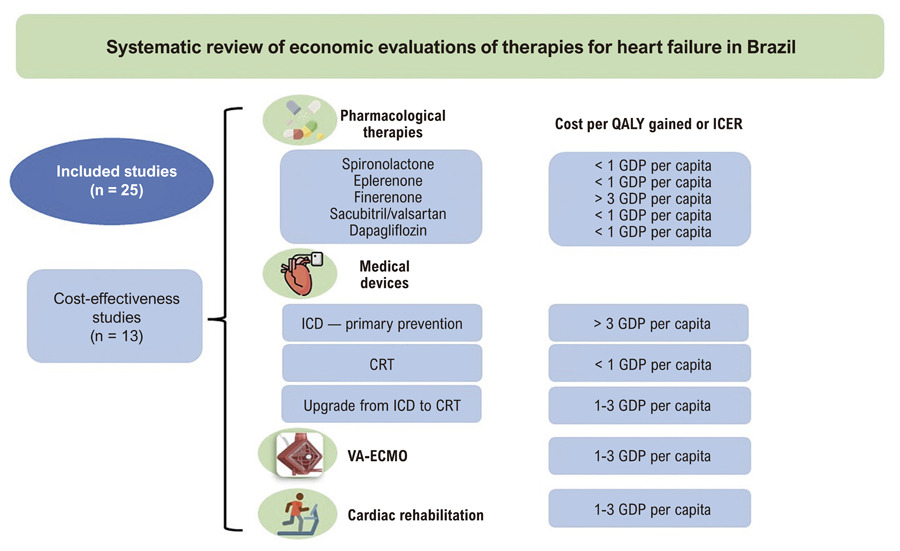
Heart failure (HF) is among the leading causes of cardiovascular mortality in Brazil. In 2021, costs attributable to HF exceeded R$ 22 billion in the Brazilian Unified Health System (SUS). The incorporation of new therapeutic technologies increases the need for cost-effectiveness analyses. To perform a systematic review of economic analyses related to pharmacological and nonpharmacological therapies for HF in Brazil. Searches was conducted in the PubMed, Embase, LILACS, and SciELO databases. Brazilian studies that evaluated costs and cost-effectiveness of therapies in HF were included. The analyzed outcomes were disease cost, cost per quality-adjusted life years (QALY), and cost per clinical outcome. A total of 25 studies were included. Cost-effectiveness analyses used willingness-to-pay thresholds derived from gross domestic product per capita, according to recommendations of the National Committee for Health Technology Incorporation in the Brazilian Unified Health System. From the SUS perspective, in patients with HF with reduced ejection fraction, spironolactone and eplerenone were cost-effective, with incremental cost-effectiveness ratios (ICER) in international dollars (Int$) of 7,955/QALY and Int$ 6,459/QALY, respectively. Dapagliflozin and sacubitril-valsartan showed ICERs of Int$ 9,000/QALY and Int$ 11,691/QALY, respectively, and were also considered cost-effective. Cardiac resynchronization therapy was classified as highly cost-effective (ICER Int$ 15,723/QALY), whereas the implantable cardioverter-defibrillator for primary prevention did not demonstrate cost-effectiveness (ICER Int$ 50,345/QALY). Several HF interventions show economic attractiveness. However, most technologies were evaluated in only one study, which limits more robust analyses. Expanding national economic studies is necessary to support access to effective therapies while maintaining the sustainability of the health system.

  • Cost-Benefit Analysis
  • Cost-Effectiveness Analysis
  • Heart Failure
Read Full Article
Creative Commons Attribution (CC BY) Creative Commons license
20/04/2026 DOI: 10.36660/abc.20250712i Views 1
Cost-Effectiveness Analysis of Coronary Computed Tomography Angiography as the Preferred Exam in the Investigation of Stable Chest Pain in the Brazilian Private Healthcare System
ABC
Original Article

Cost-Effectiveness Analysis of Coronary Computed Tomography Angiography as the Preferred Exam in the Investigation of Stable Chest Pain in the Brazilian Private Healthcare System

Afonso Shiozaki et al. Jorge Torreão Isabela Bispo Santos da Silva Costa Anuncia Bouzas Suarez … Marcelo Tozatti da Silva Thiago Godoy de Oliveira Luana Emanuelly Sinhori Lopes Marcelo Eidi Nita Henrique Trad Carlos E. Rochitte

Abstract

Background

Cardiovascular disease is the leading cause of mortality worldwide. Strategies that prioritize early diagnosis can reduce the incidence of related complications and cost.

Objective

To assess the cost-effectiveness of coronary computed tomography angiography (CCTA) as the initial diagnostic strategy for stable chest pain in patients with intermediate pre-test probability of stable coronary artery disease (CAD), in comparison with invasive coronary angiography (ICA).

Methods

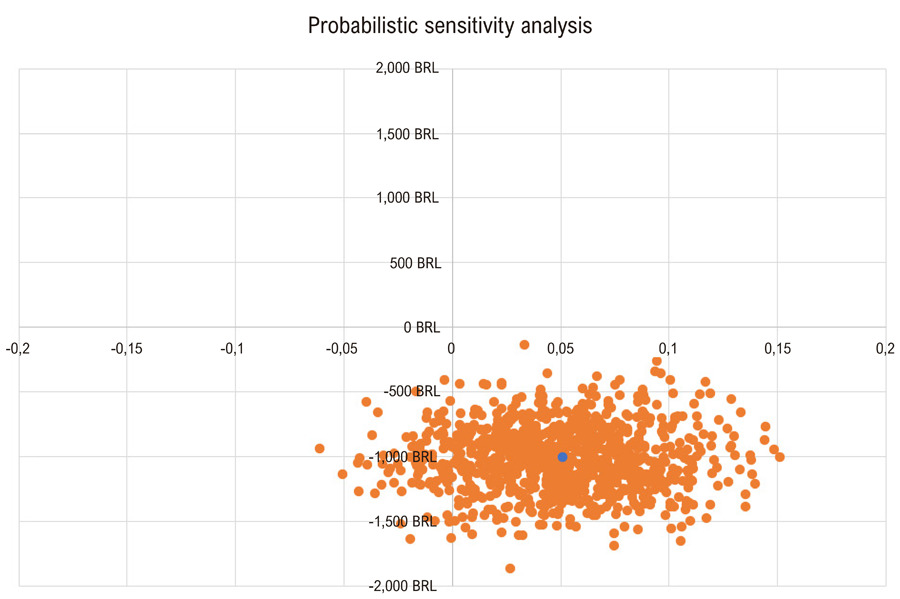
A cost-effectiveness analysis was conducted comparing CCTA and ICA, considering data from the Brazilian private healthcare system. The model considered the direct costs of diagnostic exams, medical supplies, hospitalization for myocardial infarction, and myocardial revascularization in the 5 regions of Brazil. A budget impact analysis was performed regarding the gradual incorporation of CCTA over 5 years, considering 100,000 lives as the eligible population.

Results

The cost-effectiveness analysis comparing CCTA to ICA, estimated for a population of 100,000 lives, demonstrated cost savings of BRL 1,021.00 per life or a total of BRL 102,069,703.00 by the end of the fifth year. When considering the regional average cost of CCTA, for a population of 100,000 over 5 years, we observed the following cost savings per life and in 5 years, respectively: BRL 1,226.00 and BRL 122,577,793.00 in the North Region; BRL 1,460.00 and BRL 145,988,367.00 in the Northeast Region; BRL 1,625.00 and BRL 162,502,626.00 in the Central-West Region; BRL 1,313.00 and BRL 131,270,230.00 in the Southeast Region; and BRL 1,043.00 and BRL 104,268,937.00 in the South Region.

Conclusion

As an initial strategy for investigating stable chest pain, CCTA is cost-effective compared to ICA and is associated with significant cost reductions in the Brazilian private healthcare system.

  • Coronary Artery Disease
  • Cost-Effectiveness Analysis
  • Myocardial Infarction
  • X-Ray Computed Tomography
Read Full Article
Creative Commons Attribution (CC BY) Creative Commons license
30/01/2026 DOI: 10.36660/abc.20250204i Views 2
ABC
Editorial

No Time to Die

Luiz Fernando Caneo

Extracorporeal Membrane Oxygenation (ECMO) is an advanced life-support technology providing prolonged cardiac and respiratory support for patients whose hearts and lungs cannot function adequately. The concept of using a machine to replace these functions dates back to 1931 when John Gibbon, a surgical resident in Boston, treated a woman with a pulmonary embolism. Without available treatments, he could only watch her deteriorate and pass away. This experience led Gibbon to envision a method to oxygenate blood outside the body and bypass blockages. By 1934, he developed a machine that could support a cat’s circulation for thirty minutes, and in 1952, he successfully used the machine on a human, marking the beginning of modern open-heart surgery.

In 1971, Donald Hill used an extracorporeal circuit with a specially designed oxygenator to support a man with respiratory failure for thirty-six hours, making him the first human to survive on ECMO. In 1975, Robert Bartlett and his team used ECMO to save a newborn with respiratory failure. In the following years, hundreds of similar cases were treated with an eighty percent survival rate, establishing ECMO as a standard in major pediatric centers. The use of ECMO in adults has expanded, particularly for conditions refractory to conventional treatments during the H1N1 epidemic and later during the SARS-CoV-2 pandemic., This increase is due to improved cannulation techniques and advancements in pumps, oxygenators, and cannulas. Despite these improvements, selecting appropriate candidates and managing their daily care remains challenging.

[…]

  • Cardiogenic shock
  • Cost-Effectiveness Analysis
  • Extracorporeal Membrane Oxygenation
Read Full Article
Creative Commons Attribution (CC BY) Creative Commons license
27/09/2024 DOI: 10.36660/abc.20240512i
ABC
Editorial

Cost-Effectiveness Related to Implantable Electronic Cardiac Devices: An Ever-Constant Concern

Luiz Eduardo Montenegro Camanho

Implantable electronic cardiac devices (IECDs) play a crucial role in patients with bradyarrhythmias, with proven effectiveness in improving quality of life and maintaining life itself, and their use in clinical practice is unquestionable. However, the technology used and its possible complications represent a considerable cost to regulatory agencies and the respective paying sources. If, on the one hand, the benefit of IECDs in different clinical scenarios is not questioned, on the other hand, the associated cost, including possible complications, should also be a reason for reflection.

The initial cost related to the procedure is high, as is the cost related to possible complications, such as pneumothorax, hemothorax, electrode disposition, infection, and clinical complications in general.–

[…]

  • Artificial Pacemaker
  • Cost-Effectiveness Analysis
  • Hematoma
  • Pneumothorax
Read Full Article
Creative Commons Attribution (CC BY) Creative Commons license
03/05/2024 DOI: 10.36660/abc.20240185i

How to cite this article

EndNote RIS

Electronic Document Format (Vancouver)

Garbin HI, Scolari FL, Biolo A. Treatment of Heart Failure in Brazil: Where Cost-Effectiveness Studies and Public Access Data to Therapies Meet. Arquivos Brasileiros de Cardiologia 2026;123(8):e20260314.

Electronic Document Format (ABNT)

Garbin, Henrique Iahnke; Scolari, Fernando Luis; Biolo, Andreia. Treatment of Heart Failure in Brazil: Where Cost-Effectiveness Studies and Public Access Data to Therapies Meet. Arquivos Brasileiros de Cardiologia, v. 123, n. 8, e20260314, Sep. 2026.

Electronic Document Format (APA)

Garbin, H. I., Scolari, F. L., & Biolo, A. (2026). Treatment of Heart Failure in Brazil: Where Cost-Effectiveness Studies and Public Access Data to Therapies Meet. Arquivos Brasileiros de Cardiologia, 123(8), e20260314.

Electronic Document Format (ISO)

Garbin, Henrique Iahnke and Scolari, Fernando Luis and Biolo, Andreia. Treatment of Heart Failure in Brazil: Where Cost-Effectiveness Studies and Public Access Data to Therapies Meet. Arquivos Brasileiros de Cardiologia [online]. 2026, vol. 123, n. 8, [cited 2026-10-14], e20260314. Available from: <https://journals.cardiol.br/en/article/treatment-of-heart-failure-in-brazil-where-cost-effectiveness-studies-and-public-access-data-to-therapies-meet/>. ISSN 0066-782X

EndNote RIS

Electronic Document Format (Vancouver)

Pereira GAR, Lopes MC, Dama BL, Polanczyk CA, Bertoldi EG. Cost-Effectiveness of Therapies for Heart Failure in Brazil: A Systematic Review. Arquivos Brasileiros de Cardiologia 2026;123(3):e20250712.

Electronic Document Format (ABNT)

Pereira, Guilherme Augusto Reissig; Lopes, Mariana de Castro; Dama, Bernardo Ludwig; Polanczyk, Carisi Anne; Bertoldi, Eduardo Gehling. Cost-Effectiveness of Therapies for Heart Failure in Brazil: A Systematic Review. Arquivos Brasileiros de Cardiologia, v. 123, n. 3, e20250712, Apr. 2026.

Electronic Document Format (APA)

Pereira, G. A. R., Lopes, M. C., Dama, B. L., Polanczyk, C. A., & Bertoldi, E. G. (2026). Cost-Effectiveness of Therapies for Heart Failure in Brazil: A Systematic Review. Arquivos Brasileiros de Cardiologia, 123(3), e20250712.

Electronic Document Format (ISO)

Pereira, Guilherme Augusto Reissig and Lopes, Mariana de Castro and Dama, Bernardo Ludwig and Polanczyk, Carisi Anne and Bertoldi, Eduardo Gehling. Cost-Effectiveness of Therapies for Heart Failure in Brazil: A Systematic Review. Arquivos Brasileiros de Cardiologia [online]. 2026, vol. 123, n. 3, [cited 2026-10-14], e20250712. Available from: <https://journals.cardiol.br/en/article/cost-effectiveness-of-therapies-for-heart-failure-in-brazil-a-systematic-review/>. ISSN 0066-782X

EndNote RIS

Electronic Document Format (Vancouver)

Shiozaki A, Torreão J, Costa IBSS, Suarez AB, Silva MT, Oliveira TG, Lopes LES, et al. Cost-Effectiveness Analysis of Coronary Computed Tomography Angiography as the Preferred Exam in the Investigation of Stable Chest Pain in the Brazilian Private Healthcare System. Arquivos Brasileiros de Cardiologia 2026;122(12):e20250204.

Electronic Document Format (ABNT)

Shiozaki, Afonso; Torreão, Jorge; Costa, Isabela Bispo Santos da Silva; Suarez, Anuncia Bouzas; Silva, Marcelo Tozatti da; Oliveira, Thiago Godoy de; Lopes, Luana Emanuelly Sinhori; Nita, Marcelo Eidi; Trad, Henrique; Rochitte, Carlos E.. Cost-Effectiveness Analysis of Coronary Computed Tomography Angiography as the Preferred Exam in the Investigation of Stable Chest Pain in the Brazilian Private Healthcare System. Arquivos Brasileiros de Cardiologia, v. 122, n. 12, e20250204, Jan. 2026.

Electronic Document Format (APA)

Shiozaki, A., Torreão, J., Costa, I. B. S. S., Suarez, A. B., Silva, M. T. , Oliveira, T. G. , Lopes, L. E. S., Nita, M. E., Trad, H., & Rochitte, C. E. (2026). Cost-Effectiveness Analysis of Coronary Computed Tomography Angiography as the Preferred Exam in the Investigation of Stable Chest Pain in the Brazilian Private Healthcare System. Arquivos Brasileiros de Cardiologia, 122(12), e20250204.

Electronic Document Format (ISO)

Shiozaki, Afonso and Torreão, Jorge and Costa, Isabela Bispo Santos da Silva and Suarez, Anuncia Bouzas and Silva, Marcelo Tozatti da and Oliveira, Thiago Godoy de and Lopes, Luana Emanuelly Sinhori and Nita, Marcelo Eidi and Trad, Henrique and Rochitte, Carlos E.. Cost-Effectiveness Analysis of Coronary Computed Tomography Angiography as the Preferred Exam in the Investigation of Stable Chest Pain in the Brazilian Private Healthcare System. Arquivos Brasileiros de Cardiologia [online]. 2026, vol. 122, n. 12, [cited 2026-10-14], e20250204. Available from: <https://journals.cardiol.br/en/article/cost-effectiveness-analysis-of-coronary-computed-tomography-angiography-as-the-preferred-exam-in-the-investigation-of-stable-chest-pain-in-the-brazilian-private-healthcare-system/>. ISSN 0066-782X

EndNote RIS

Electronic Document Format (Vancouver)

Caneo LF. No Time to Die. Arquivos Brasileiros de Cardiologia 2024;121(8):e20240512.

Electronic Document Format (ABNT)

Caneo, Luiz Fernando. No Time to Die. Arquivos Brasileiros de Cardiologia, v. 121, n. 8, e20240512, Sep. 2024.

Electronic Document Format (APA)

Caneo, L. F. (2024). No Time to Die. Arquivos Brasileiros de Cardiologia, 121(8), e20240512.

Electronic Document Format (ISO)

Caneo, Luiz Fernando. No Time to Die. Arquivos Brasileiros de Cardiologia [online]. 2024, vol. 121, n. 8, [cited 2026-10-14], e20240512. Available from: <https://journals.cardiol.br/en/article/no-time-to-die/>. ISSN 0066-782X

EndNote RIS

Electronic Document Format (Vancouver)

Camanho LEM. Cost-Effectiveness Related to Implantable Electronic Cardiac Devices: An Ever-Constant Concern. Arquivos Brasileiros de Cardiologia 2024;121(4):e20240185.

Electronic Document Format (ABNT)

Camanho, Luiz Eduardo Montenegro. Cost-Effectiveness Related to Implantable Electronic Cardiac Devices: An Ever-Constant Concern. Arquivos Brasileiros de Cardiologia, v. 121, n. 4, e20240185, May. 2024.

Electronic Document Format (APA)

Camanho, L. E. M. (2024). Cost-Effectiveness Related to Implantable Electronic Cardiac Devices: An Ever-Constant Concern. Arquivos Brasileiros de Cardiologia, 121(4), e20240185.

Electronic Document Format (ISO)

Camanho, Luiz Eduardo Montenegro. Cost-Effectiveness Related to Implantable Electronic Cardiac Devices: An Ever-Constant Concern. Arquivos Brasileiros de Cardiologia [online]. 2024, vol. 121, n. 4, [cited 2026-10-14], e20240185. Available from: <https://journals.cardiol.br/en/article/cost-effectiveness-related-to-implantable-electronic-cardiac-devices-an-ever-constant-concern/>. ISSN 0066-782X

  • About ABC Family
  • Internal Regulation
  • Editorial Board
  • Brazilian Society of Cardiology (SBC)

Issues

SBC Guidelines

  • Videos
  • Podcasts
  • News