| ABC
ABC Family Arquivos Brasileiros de Cardiologia International Journal of Cardiovascular Sciences ABC Heart Failure & Cardiomyopathy ABC Imagem Cardiovascular
Português English
ABC Family | ABC
Português English
  • About
    • About the Journal
    • Internal Regulation
    • Editors Section
    • Editorial Board
    • History
    • SBC Award
  • Instructions to Authors
    • Guidelines for Publication
    • Editorial Policy
    • Ethics Policy
    • Policy on the Use of Artificial Intelligence
    • Mandatory Publication Form
    • Publication Fee
  • Issues
  • SBC Guidelines
  • Abstracts
    • How to Publish an Abstract Supplement?
    • Supplements from the Brazilian Congress of Cardiology
  • About
    • About the Journal
    • Internal Regulation
    • Editors Section
    • Editorial Board
    • History
    • SBC Award
  • Instructions to Authors
    • Guidelines for Publication
    • Editorial Policy
    • Ethics Policy
    • Policy on the Use of Artificial Intelligence
    • Mandatory Publication Form
    • Publication Fee
  • Issues
  • SBC Guidelines
  • Abstracts
    • How to Publish an Abstract Supplement?
    • Supplements from the Brazilian Congress of Cardiology

ABC Family

  • ABC Family
  • Arquivos Brasileiros de Cardiologia
  • International Journal of Cardiovascular Sciences
  • ABC Heart Failure & Cardiomyopathy
  • ABC Imagem Cardiovascular
Search in

No content found.

Journals
Ordering
Article types
Others

  1. Home
  2. ABC
  3. Issues
  4. 2010, Volume 94, Number 2
Evolution of cardiovascular surgery at the Instituto do Coração: analysis of 71,305 surgeries
Artigo Original

Evolution of cardiovascular surgery at the Instituto do Coração: analysis of 71,305 surgeries

Luiz Augusto F. Lisboa et al. Luiz Felipe P. Moreira Omar Vilca Mejia Luís Alberto O. Dallan … Pablo M. A. Pomerantzeff Roberto Costa Luiz B. Puig Fabio B. Jatene Miguel Barbero Marcial Noedir A. G. Stolf

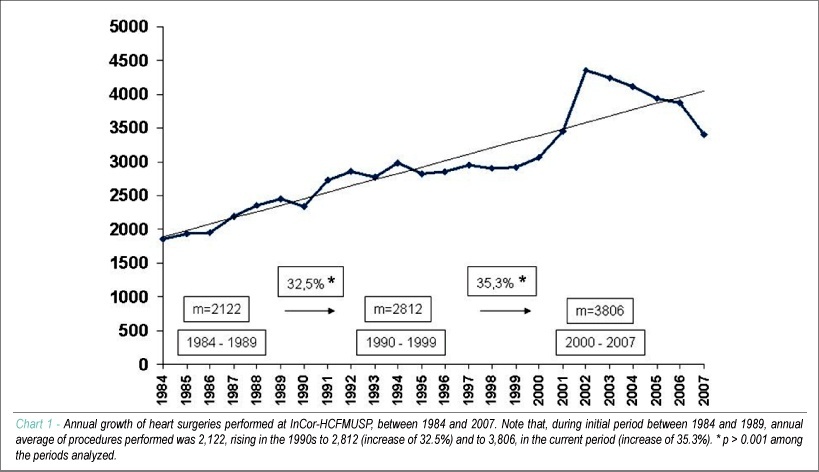
BACKGROUND: Cardiovascular surgery has been undergoing transformations due to the advancement of percutaneous techniques, clinical treatment and primary prevention. OBJECTIVE: Evaluation of incidence and mortality of heart surgeries performed at the Instituto do Coração (InCor-HCFMUSP). METHODS: Using database from the Instituto do Coração, analysis was carried out on cardiovascular surgeries performed between 1984 and 2007, taking into consideration trends of main procedures and of mortality rates. RESULTS: In 24 years, 71,305 heart surgeries were performed, with an annual average of 2971 procedures. The number of coronary artery bypass graft surgeries, which in the 1980s had an average of 856/year, is currently around 1.106/year. Heart valve procedures increased from 400 to 597 surgeries per year, growing 36.7%, when compared to the 1990s. Repair of congenital heart disease also had a significant increase of 50.8% in relation to the last decade. Global mortality average rate, which at baseline was 7.5%, is currently at 7.0% and 4.9% among elective procedures. In coronary artery bypass graft surgery, current average mortality rate is 4.8% and 8.5% in valve surgery. Repair of congenital heart disease accounts for 5.3%. CONCLUSION: Cardiovascular surgery continues increasing. The coronary artery bypass graft is still the most commonly performed surgery. However, profile of procedures has been undergoing changes with the largest increase of approach to cardiac valves and congenital heart disease. Mortality rates are higher when compared to international rates, reflecting the high complexity presented in tertiary service of national reference.
  • Cardiovascular Surgical Procedures
  • databases
  • Mortality
  • Thoracic Surgery
Read Full Article
Creative Commons Attribution (CC BY) Creative Commons license
05/05/2010 DOI: 10.1590/S0066-782X2010000200006 Views 2
Cardiovascular repercussion of lodenafil carbonate, a new PDE5 inhibitor, with and without alcohol consumption
Artigo Original

Cardiovascular repercussion of lodenafil carbonate, a new PDE5 inhibitor, with and without alcohol consumption

Adauto Carvalho Silva et al. Odaly Toffoletto Luiz Antonio Galvão Lucio Paula Ferreira dos Santos … Jorge Barros Afiune João Massud Filho Sergio Tufik

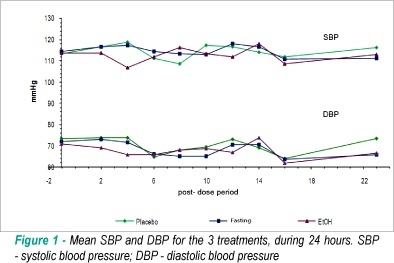
BACKGROUND: Millions of men around the world suffer from erectile dysfunction, for which phosphodiesterase 5 inhibitors (PDE-5 inhibitors) are currently the first treatment option. Sexual activity and alcohol consumption are closely related, and the simultaneous use of alcohol and PDE-5 inhibitors can happen. Lodenafil carbonate is a new PDE-5 inhibitor, developed by a Brazilian pharmaceutical company. OBJECTIVE: This work aimed at evaluating the cardiovascular safety of lodenafil carbonate, with and without simultaneous alcohol consumption. METHODS: Fifteen male volunteers received 160 mg lodenafil carbonate (LC), in three different moments. Participants were assigned to three groups, treated with LC in fasting condition, with alcohol or receiving only placebo. The volunteers were continuously monitored during 24 hours for physical impairment, blood pressure, heart rate, QT interval and lodenafil’s pharmacokinetic parameters. RESULTS: Lodenafil carbonate alone or with alcohol did not induce clinically relevant modifications in arterial blood pressure or heart rate. A statistically significant decrease in blood pressure was seen four hours after LC and alcohol intake, and an increase in heart rate six hours after intake of lodenafil carbonate alone. The QTc interval was not significantly modified. Lodenafil carbonate bioavailability was increased in 74% when drug intake was associated with alcohol. CONCLUSION: These results show that the use of lodenafil carbonate did not have clinically relevant effects on blood pressure or heart rate, and was not associated with QT interval prolongation. The association of lodenafil carbonate and alcohol affected its pharmacokinetic properties, increasing the bioavailability of the drug.

  • Alcohol Drinking
  • attributable risk
  • Cardiovascular System
  • erectile dysfunction
  • Phosphodiesterase Inhibitors
Read Full Article
Creative Commons Attribution (CC BY) Creative Commons license
05/05/2010 DOI: 10.1590/S0066-782X2010000200004 Views 2
Tricuspid valve lesion due to penetrating chest trauma
Case Report

Tricuspid valve lesion due to penetrating chest trauma

Renata de Carvalho Bicalho Carneiro et al. Fernanda de Azevedo Figueiredo Luciana Campomizzi Calazans Marcelo Martins Pinto Filho … Daniel Furtado Vidigal Maria do Carmo Pereira Nunes

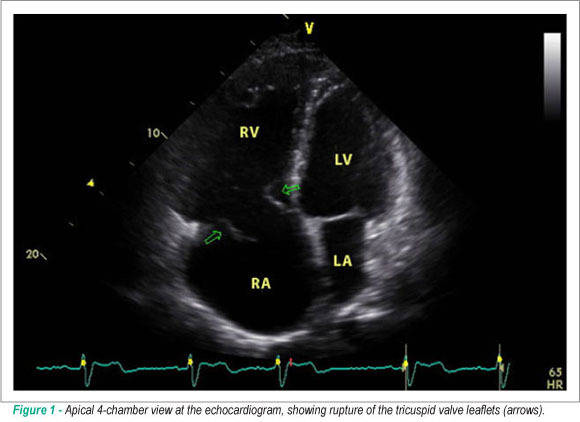
Tricuspid valve lesions caused by penetrating chest trauma are rare and often underdiagnosed. The objective of this report is to describe a case of severe tricuspid insufficiency secondary to a knifing incident with an insidious evolution, diagnosed 19 years after the incident. The case emphasizes the importance of adequate follow-up of patients that are victims of penetrating chest trauma for a long period after the injury, to detect possible late complications of the trauma.

  • Echocardiography
  • Thoracic Injuries
  • Tricuspid Valve Insufficiency
  • wounds
Read Full Article
Creative Commons Attribution (CC BY) Creative Commons license
05/05/2010 DOI: 10.1590/S0066-782X2010000200024 Views 1
Acute coronary artery dissection after aortic valve replacement
Case Report

Acute coronary artery dissection after aortic valve replacement

Fernando de Paula Machado et al. Roney Orismar Sampaio Fernanda Lopez Mazzucato Flávio Tarasoutchi … Guilherme Sobreira Spina Max Grinberg

Late aortic dissection can occur after aortic valve replacement surgery, but rarely in the first postoperative month. Coronary artery dissection is rare and usually occurs after coronary angiography. We report a rare case of coronary artery dissection followed by myocardial infarction in the immediate postoperative period of a successful aortic valve replacement with a good postoperative evolution.

  • Acute coronary syndrome
  • Aortic Valve
  • Coronary Vessels
  • Dissection
Read Full Article
Creative Commons Attribution (CC BY) Creative Commons license
05/05/2010 DOI: 10.1590/S0066-782X2010000200026 Views 1
Left ventricular papillary fibroelastoma
Case Report

Left ventricular papillary fibroelastoma

Renato Jorge Alves et al. Alexandre H. Borin Carlos Renato De Oliveira Raphael Puig … Ana Carolina Mercê Kenji Nakiri

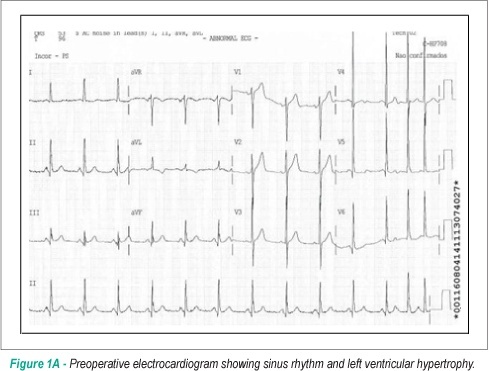
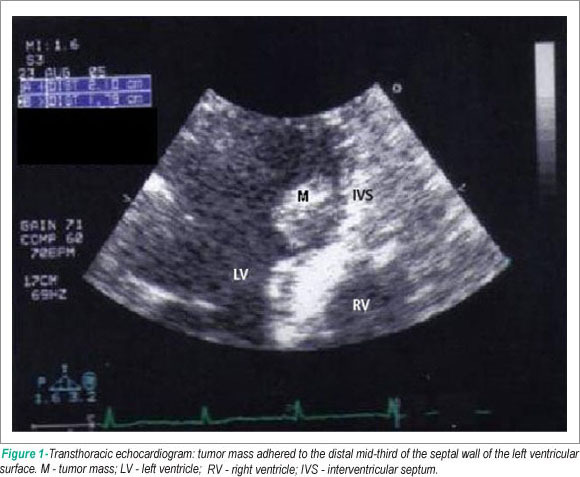
We evaluated the case of a patient with Papillary Fibroelastoma (PFE) that presented embolization to the upper right limb. The patient was submitted to percutaneous embolectomy, with fragment removal. The diagnosis was confirmed by transthoracic echocardiogram and anatomopathological analysis of the fragment. The patient chose to undergo the conservative clinical treatment and the follow-up has shown good evolution with no disease recurrence to date. We decided to use this rare and interesting case with the objective of reviewing the current literature and discuss the best therapeutic management.

  • embolectomy
  • Heart
  • Neoplasms
Read Full Article
Creative Commons Attribution (CC BY) Creative Commons license
05/05/2010 DOI: 10.1590/S0066-782X2010000200025
Use of optical coherence tomography for accurate characterization of atherosclerosis
Artigo Original

Use of optical coherence tomography for accurate characterization of atherosclerosis

John Coletta et al. Nobuaki Suzuki Bruno R. Nascimento Hiram G. Bezerra … Noah Rosenthal Giulio Guagliumi Andrew M. Rollins Marco A. Costa

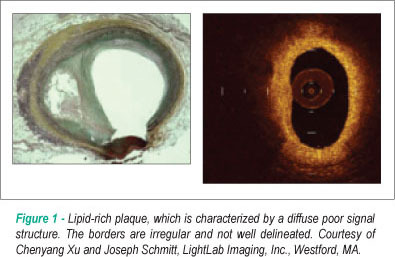
Optical coherence tomography (OCT) is a novel imaging technology based on low-coherence interferometry that uses scattering of near-infrared light as a signal source to provide vascular cross-sectional imaging with definition far superior to any other available modality. With spatial resolution of up to 10μm, OCT provides 20-fold higher resolution than intravascular ultrasound (IVUS), currently the most used modality for intra-coronary imaging. OCT has the capacity to provide invaluable insight into the various phases of atherosclerotic disease and vascular response to therapeutics. Studies have shown the ability of OCT to detect arterial structures and assist in the determination of different histological constituents. Its capacity to distinguish different grades of atherosclerotic changes and the various types of plaques, as compared to histology, has recently been demonstrated with acceptable intra-observer and inter-observer correlations for these findings. OCT provides unrivaled real-time in vivo endovascular resolution, which has been exploited to assess the vascular structures and response to device deployment. While depth remains a limitation for OCT plaque characterization beyond 2-mm, near-histological resolution can be achieved within the first millimeter of the vessel wall allowing unique assessment of fibrous cap characteristics and thickness. In addition, assessment of neointimal coverage, para-strut tissue patterns and stent apposition can now be scrutinized for individual struts on the micron scale, the so-called strut-level analysis. OCT has propelled intravascular imaging into micron-level in vivo vascular analysis and is expected to soon become a valuable and indispensable tool for the cardiologists on both clinical and research applications.

  • Atherosclerosis
  • intravascular imaging
  • Optical coherence tomography
Read Full Article
Creative Commons Attribution (CC BY) Creative Commons license
05/05/2010 DOI: 10.1590/S0066-782X2010000200020
Coronary calcium score as predictor of stenosis and events in pretransplant renal chronic failure
Artigo Original

Coronary calcium score as predictor of stenosis and events in pretransplant renal chronic failure

Miguel Abraão Rosário et al. José Jayme de Lima José R. Parga Luiz F. Ávila … Luis H. Gowdak Pedro A. Lemos Carlos E. Rochitte

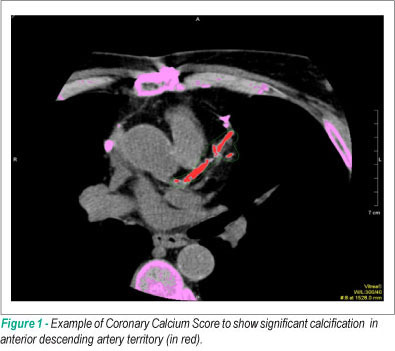
BACKGROUND: Coronary artery disease (CAD) is the major cause of death among chronic renal failure (CRF) patients. Traditional, non-invasive exams to detect CAD and to predict events have shown insufficient results in this group. CT Scan evaluation of Coronary Calcium Score (CCS) has proven to be of prognostic value for the population reporting no renal condition. OBJECTIVE: To investigate CCS accuracy in detecting obstructive CAD and in predicting cardiovascular events in candidates to renal transplant as compared to quantitative invasive coronary angiography (ICA). METHODS: Ninety-seven (97) CRF patients aged > 35 were evaluated. Obstructive CAD was considered as >50% or >70% stenosis on ICA. Descriptive data, concordance, diagnostic tests, Kaplan-Meier, and multivariate analysis were used. RESULTS: Agatston mean score was 580.6 ± 1,102.2. Minimum and maximum values were 0 and 7,994, with median at 176. Only 14 patients had zero calcium score. No differences were reported in regard to ethnicity. Highest regional calcium was associated to the highest probability of coronary stenosis in the same segment. Agatston calcium score showed high accuracy for the diagnosis of >50% and >70% stenosis, with area under ROC curve (AUC) of 0.75 and 0.70, respectively. At the threshold of 400, calcium score identified a subgroup with a higher rate of cardiovascular events at an average follow-up time of 29±11.0 months. CONCLUSION: CCS proved to have good diagnostic and prognostic performance for cardiovascular events evaluation in CRF patients.

  • calcio score
  • Chronic
  • Coronary Artery Disease
  • determination
  • emission-computed
  • Prognostic
  • Renal Insufficiency
  • Tomography
Read Full Article
Creative Commons Attribution (CC BY) Creative Commons license
05/05/2010 DOI: 10.1590/S0066-782X2010000200018 Views 1
Experience with heterotopic heart transplantation in patients with elevated pulmonary vascular resistance: late follow-up
Artigo Original

Experience with heterotopic heart transplantation in patients with elevated pulmonary vascular resistance: late follow-up

Jose Henrique Andrade Vila et al. José Pedro da Silva Luciana da Fonseca José Francisco Baumgratz … Américo Tangari Jr Weverton Ferreira Leite Claudia Jesus Guilhen Egas Armelin

BACKGROUND: Along the past few years the number of papers on heterotopic cardiac transplant has been very scarce in the medical literature, including at the international level; this is particularly true in reference to the long term follow-up of these patients and the reason which led to the presentation of our report. OBJECTIVE: To report the initial clinical experience and late evolution of 4 patients undergoing heterotopic heart transplantation, indications for this procedure and its major complications. METHODS: The surgeries were performed between 1992 and 2001, and all had as indication for heterotopic transplantation the PVR, which ranged from 4.8 WU to 6.5WU, with a transpulmonary gradient above 15mmHg. In the 3rd patient, a direct anastomosis between the pulmonary arteries was performed without the use of a prostetic tube, and a mitral valvuloplasty and a LV aneurysmectomy were performed in the native heart. The immediate immunosuppressive regimens were double, with cyclosporine and azathioprine in the first 3 patients, and cyclosporine and mycophenolate mofetil in the 4th patient. RESULTS: One immediate death occurred from graft failure, one death occurred after 2 ½ years, from endocarditis in an intraventricular thrombus in the native heart, and a third death occurred 6 years after transplantation, from post-operative complications of the aortic valve surgery in the native heart. The remaining patient is well, 15 years after the transplantation. This patient is in functional class II (NYHA), 6 years after a surgical occlusion of the native heart aortic valve. CONCLUSION: Heterotopic heart transplantation results are inferior to those of orthotopic heart transplantation because they present higher RVP. The intraventricular thrombi, in the native heart, which require prolonged anticoagulation, and aortic valve complications, also in the native heart, may require surgical treatment. However, a patient’s 15-year survival has demonstrated a long-term effectiveness of this option for selected patients.

  • Follow-Up Studies
  • Heart Transplantation
  • Hypertension
  • Pulmonary
Read Full Article
Creative Commons Attribution (CC BY) Creative Commons license
05/05/2010 DOI: 10.1590/S0066-782X2010000200019 Views 1
Frequency of acute plaque ruptures and thin cap atheromas at sites of maximal stenosis
Artigo Original

Frequency of acute plaque ruptures and thin cap atheromas at sites of maximal stenosis

Fabio Tavora et al. Nathaniel Cresswell Ling Li David Fowler Allen Burke

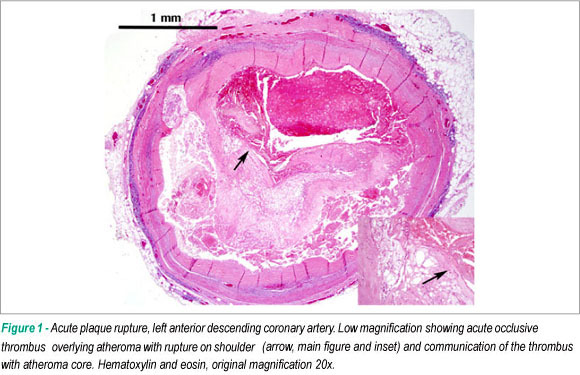
BACKGROUND: There have been few autopsy studies relating sites of thin cap atheroma (TCFA) to sites of acute plaque rupture in culprit arteries, and sites of maximal narrowing in non-culprit arteries. OBJECTIVE: We aimed to quantify and locate the frequency of TCFA related to the sites of maximal stenosis in atherosclerotic plaques. METHODS: We studied 88 hearts in victims of sudden death dying with coronary thrombus overlying acute plaque rupture. Thin cap atheromas were defined as fibrous cap < 65 microns overlying a necrotic core. Percent luminal narrowing was determined at the sites of plaque rupture and thin cap atheromas. RESULTS: There were 81 men and 7 women, mean age 50 years ± 9 SD. The plaque rupture was the site of maximal luminal narrowing in 47% of culprit arteries. TCFAs were present in 67 hearts (83%). Of these, 49 (73%) demonstrated TCFAs in the culprit artery; 17 (25%) in the culprit artery only, 32 (48%) in the culprit artery and in a non-culprit artery, and 18 (27%) only in a non-culprit artery. In non-culprit arteries, TCFAs represented the maximal site of stenosis in 44% of arteries. The acute rupture site is the site of maximal luminal narrowing in the involved vessel in 47% of hearts from patients dying with acute plaque rupture. CONCLUSION: These data may suggest that luminal narrowing is not a reliable marker for TCFA.

  • Atherosclerosis
  • Coronary Artery Disease
  • Coronary stenosis
  • Heart Rupture
Read Full Article
Creative Commons Attribution (CC BY) Creative Commons license
05/05/2010 DOI: 10.1590/S0066-782X2010000200003
Myocardial bridging: therapeutic and clinical development
Artigo Original

Myocardial bridging: therapeutic and clinical development

Aline Braz Pereira et al. Danilo Spricigo Peressoni Castro Emanuela Todeschini Menegotto Wladimir Maia do Amaral Gustavo Spricigo Peressoni Castro

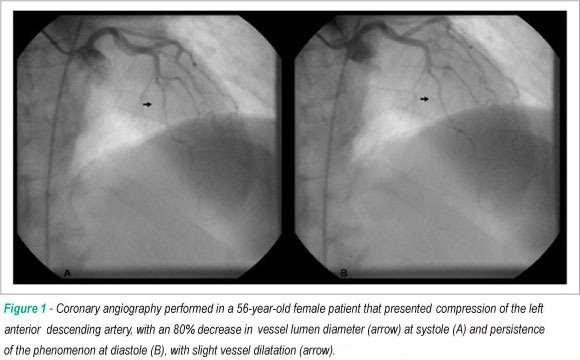
BACKGROUND: The myocardial bridge constitutes one of the main differential diagnoses of coronary artery disease. However, it remains an underdiagnosed condition and its physiopathological mechanisms and therapeutics are yet to be elucidated. OBJECTIVE: To analyze and describe the clinical and therapeutic evolution of patients with an angiographic diagnosis of myocardial bridge, comparing the data with that in the current literature, in order to clarify the patients’ clinical profile and prognosis. METHODS: The results of coronary angiographies carried out from 2003 to 2007 in a Laboratory of Hemodynamics were reviewed; the analysis of patients’ files was carried out and selected patients were interviewed. RESULTS: The frequency of myocardial bridge diagnosis was 3.6%. The mean age of patients was 56.8 years (SD = 11.83; CI = 0.73). The anterior descending artery was affected in isolation in 100% of the cases. After the selection, the analysis and interview of 31 patients were carried out. There was no correlation between symptoms and degree of angiographic narrowing observed in the studied patients. The drug treatment included the use of beta-blockers, calcium-channel antagonists, platelet antiaggregants and/or nitrates and resulted in clinical improvement in 30%, absence of alterations in the clinical picture in 60% and symptom worsening in 10% of the patients. One patient presented sudden death; two patients underwent angioplasty followed by significant clinical improvement and none of the patients underwent surgical procedures. CONCLUSION: Most of the patients with myocardial bridge have a good prognosis, but in the long term, there are not enough data, obtained from a large sample of symptomatic patients, to draw definitive conclusions.

  • Angioplasty
  • Cohort Studies
  • Coronary Artery Disease
  • Myocardial Bridging
  • percutaneous coronary
  • transluminal
Read Full Article
Creative Commons Attribution (CC BY) Creative Commons license
05/05/2010 DOI: 10.1590/S0066-782X2010000200008
Angiotensin II receptor blocker add-on therapy for low cardiac output in decompensated heart failure
Artigo Original

Angiotensin II receptor blocker add-on therapy for low cardiac output in decompensated heart failure

Marcelo E. Ochiai et al. Antonio C. P. Barretto Juliano N. Cardoso Robinson T. Munhoz … Paulo C. Morgado José A. F. Ramires

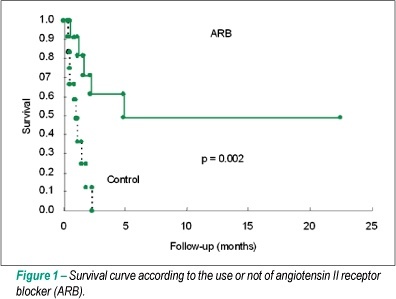
BACKGROUND: During heart failure (HF) decompensation, an intense activation of the renin-angiotensin-aldosterone system occurs; however, the use of angiotensin-converting enzyme inhibitor (ACEI) cannot block it completely. Otherwise, the addition of angiotensin II receptor blocker (ARB) can be useful when the inotropic dependence occurs. We evaluated the efficacy of the ARB-ACEI association on dobutamine withdrawal in advanced decompensated HF. OBJECTIVE: To assess the efficacy of association angiotensin receptor blocker – angiotensin converting enzyme inhibitor to withdraw the intravenous inotropic support in decompensated severe heart failure. METHODS: In a case-control study (N = 24), we selected patients admitted at the hospital due to HF that had been using dobutamine for more than 15 days, with one or more unsuccessful drug withdrawal attempts; optimized dose of ACEI and ejection fraction (EF) < 0.45. Then, the patients additionally received ARB (n=12) or not (control, n=12). The outcome was the successful dobutamine withdrawal, evaluated by logistic regression, with a p < 0.05. RESULTS: The EF was 0.25 and the age was 53 years, with a dobutamine dose of 10.7 μg/kg.min. The successful drug withdrawal was observed in 8 patients from the ARB group (67.7%) and in 2 patients from the control group (16.7%). The odds ratio (OR) was 10.0 (95%CI: 1.4 to 69.3; p = 0.02). The worsening in renal function was similar (ARB group: 42% vs. control group: 67%; p=0.129). CONCLUSION: In this pilot study, the ARB-ACEI association was associated with successful dobutamine withdrawal in advanced decompensated heart failure. The worsening in renal function was similar in both groups. Further studies are necessary to clarify the issue.

  • Angiotensin II Type 1 Receptor Blockers
  • congestive heart failure
  • Prognosis
Read Full Article
Creative Commons Attribution (CC BY) Creative Commons license
05/05/2010 DOI: 10.1590/S0066-782X2010000200015
Artigo Original

ENPP1 K121Q polymorphism and ischemic heart disease in diabetic patients

Milene Moehlecke et al. Caroline K. Kramer Cristiane B. Leitão Ana Luiza Krahe … Ivaldir Balbosco Mirela Jobim de Azevedo Jorge L. Gross Luis Henrique Canani

BACKGROUND: The ecto-nucleotide pyrophosphatase/phosphodiesterase 1 (ENPP1) gene is a candidate gene for insulin resistance. Insulin resistance is a major component of metabolic syndrome (MetS) and has been implicated in ischemic heart disease (IHD). OBJECTIVE: To evaluate the association between the K121Q polymorphism of the ENPP1 gene and IHD in white patients with type 2 diabetes mellitus (DM). METHODS: A cross-sectional study was performed in type 2 DM patients (n = 573, 50.6% males, age 59.5±10.4 years). IHD was defined by the presence of angina or myocardial infarction according to the Worth Health Organization cardiovascular questionnaire and/or compatible electrocardiographic (Minnesota Code), or perfusional abnormalities in myocardial scintigraphy. The K121Q polymorphism of ENPP1 gene was genotyped using PCR-based methods and restriction enzyme digestion. RESULTS: IHD was present in 209 (36.5%) patients. The distribution of KK, KQ and QQ genotypes among patients with IHD was 60.8%, 34.4% and 4.8%, not different from the genotype distribution in the group without IHD (64%, 32.7% and 3.3%, P=0.574). No difference was found in the clinical and laboratory characteristics between the three genotypes, neither regarding the prevalence of Metabolic Syndrome. CONCLUSION: No association was found between polymorphism K121A of ENPP1 gene and the presence of IHD.

  • Diabetes Mellitus, Type 2
  • Metabolic Syndrome
  • Myocardial Ischemia
  • Polymorphism, Genetic
Read Full Article
Creative Commons Attribution (CC BY) Creative Commons license
05/05/2010 DOI: 10.1590/S0066-782X2010000200005
Incentive spirometry with expiratory positive airway pressure brings benefits after myocardial revascularization
Artigo Original

Incentive spirometry with expiratory positive airway pressure brings benefits after myocardial revascularization

Glória Menz Ferreira et al. Mauren Porto Haeffner Sérgio Saldanha Menna Barreto Pedro Dall'Ago

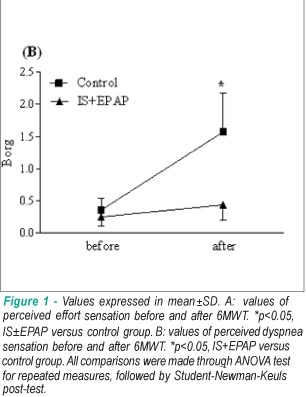
BACKGROUND: Patients undergoing coronary artery bypass graft (CABG) surgery have higher risk to develop pulmonary complications (PCs) such as atelectasis, pneumonia and pleural effusion. These complications could increase the length of hospital stay, resources utilization and also are associated with reduced quality of life and functional capacity a long term. OBJECTIVE: To test if the use of incentive spirometry (IS) associated with expiratory positive airway pressure (EPAP), after CABG surgery improves dyspnea, effort perceived and quality of life 18 months after CABG. METHODS: Sixteen patients submitted to a CABG, were randomized to a control group (n=8) or IS+EPAP group (n=8). The protocol of IS+EPAP was applied in the immediate postoperative period and following for more 4 weeks in the patient’s home. Eighteen months after CABG, the strength of the respiratory muscle, the functional capacity, the lung function, the quality of life and the level of physical activity were evaluated. RESULTS: After six minute walk test (6-MWT), the score of the dyspnea (1.6±0.6 vs 0.6±0.3, P<0.05) and the perceived effort (13.4±1.2 vs 9.1±0.7, P<0.05) were higher in the control group, when compared with the IS+EPAP group. In quality of life evaluation, the domain related to the physical aspects limitations was better in IS+EPAP group (93.7±4.1 vs 50±17, P<0.02). CONCLUSION: Patients that were submitted to IS+EPAP present reduction of dyspnea and lower effort sensation after the 6-MWT, and also a better quality of life 18 months after CABG.

  • heart surgery
  • Motor Activity
  • Quality of life
  • respiratory physical therapy
Read Full Article
Creative Commons Attribution (CC BY) Creative Commons license
05/05/2010 DOI: 10.1590/S0066-782X2010000200017 Views 1
Determinants of C-reactive protein in individuals with very low socioeconomic status
Artigo Original

Determinants of C-reactive protein in individuals with very low socioeconomic status

Luis C. L. Correia et al. Rafaela Penalva Helena Correia Ana M. Ladeia … Marta Menezes Isaac Suzart Agnaluce Moreira José Carlos Lima Bernardo Galvão Armênio C. Guimarães

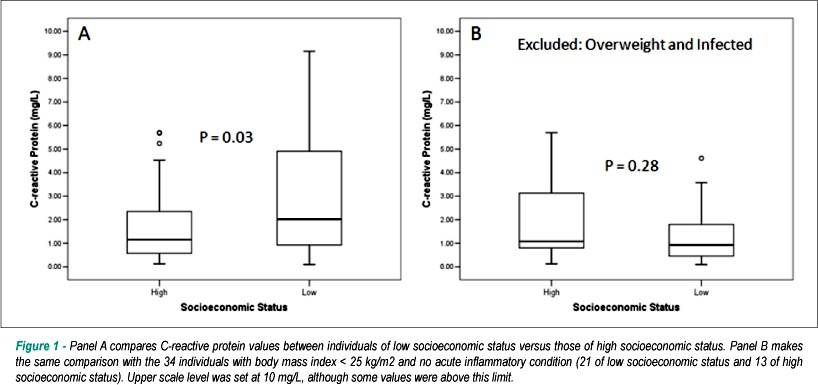
BACKGROUND: Low socioeconomic (SE) status has been associated to inflammation and predictors of C-reactive protein (CRP) have been investigated by studies performed in developed countries. This study aimed to identify predictors of CRP in individuals of very low SE level in a developing country and evaluate whether CRP is related to SE status in this scenario. OBJECTIVE: Eight-two individuals of very low SE level were recruited from a poor, semi-rural community in Brazil. Thirty-two individuals of high socioeconomic level comprised a comparison sample. High-sensitivity CRP was measured by nephelometry. METHODS: Eight-two individuals of very low SE level were recruited from a poor, semi-rural community in Brazil. Thirty-two individuals of high socioeconomic level comprised a comparison sample. High-sensitivity CRP was measured by nephelometry. RESULTS: In the low SE individuals, independent predictors of CRP were body mass index > 25 Kg/m² (P<0.001), smoking (P=0.005) and acute infection conditions (P=0.049). The low SE group (median=2.02 mg/l; interquartile range 0.92 – 4.95 mg/dl) had higher CRP levels compared to the high SE group (1.16 mg/l, interquartile range 0.55 – 2.50 mg/dl, P=0.03). Body mass index tended to be higher (27 ± 4.9 kg/m² vs 25.5 ± 3.2 kg/m²; P=0.07) and the prevalence of acute infection greater (32% vs 3%, P=0.002) in the low SE group. After overweight individuals and those with infectious conditions were excluded, the CRP levels were similar between the groups with low and high SE levels (0.93 mg/l vs 1.08 mg/l, P=0.28). CONCLUSION: Adiposity, infection conditions and smoking are predictors of CRP in individuals with very low SE level. The first two factors determine greater level of inflammation in low SE individuals when compared to the high SE counterparts.

  • Cardiovascular Diseases
  • Inflammation
  • Protein C
  • Risk
  • Social Class
Read Full Article
Creative Commons Attribution (CC BY) Creative Commons license
05/05/2010 DOI: 10.1590/S0066-782X2010000200012
Overweight and cardiovascular risk among young adults followed-up for 17 years: the Rio de Janeiro study, Brazil
Artigo Original

Overweight and cardiovascular risk among young adults followed-up for 17 years: the Rio de Janeiro study, Brazil

Flávia Lopes Fonseca et al. Andréa Araújo Brandão Roberto Pozzan Érika Maria Gonçalves Campana … Oswaldo Luiz Pizzi Maria Eliane Campos Magalhães Elizabete Vianna de Freitas Ayrton Pires Brandão

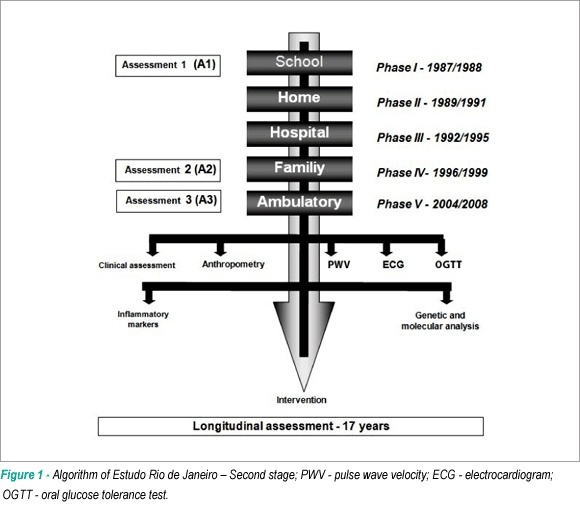
BACKGROUND: The adoption of primary prevention measures among young people has a favorable impact on the context of cardiovascular diseases. OBJECTIVE: To assess blood pressure (BP) and cardiovascular risk variables among young adults stratified according to the body mass index (BMI) behavior obtained along 17 years, since childhood/adolescence (C/A). METHODS: Three assessments were carried out in 115 individuals pertaining to the study cohort of Rio de Janeiro, Brazil. A1: 12.97 ± 1.48 years old; A2: 21.90 ± 1.71 years old; A3: 30.65 ± 2.00 years olds and divided into three groups according to BMI in the three assessments: Group N (always normal BMI; n=46), Group L (varying BMI; n=49) and Group O/O (always increased BMI; n=20). In A1, A2 and A3, BP and BMI were obtained. In A2 and A3, glucose (G) and lipidic profile were dosed. Also in A2, insulin (INS) was dosed and HOMA-IR was calculated. In A3, the measurement of waist circumference (WC), abdomen/hip relation (AHR) and body fat percentage (%BF) were added. RESULTS: 1) Group O/O presented higher mean values of increased BP (p<0.0001) at the three assessments; 2) In A3, Group O/O showed higher mean values for WC, AHR and %BF and prevalence of increased WC and metabolic syndrome (MS) (p<0.0001); 3) higher mean values were observed for INS, HOMA-IR, LDL-c in A2, and G, cholesterol, LDL-c and triglycerides in A3 for Group O/O (p<0.05); 4) masculine sex and O/O at A1 determined higher risk for MS occurrence in adult age. CONCLUSION: The presence of O/O since C/A was associated with higher BP values, anthropometric indexes and higher prevalence of MS in the young adult phase.

  • Adolescents
  • Blood Pressure
  • Body Weights and Measures
  • Cardiovascular risk
Read Full Article
Creative Commons Attribution (CC BY) Creative Commons license
05/05/2010 DOI: 10.1590/S0066-782X2010000200011 Views 2
Obesity and coronary artery disease: role of vascular inflammation
Artigo Original

Obesity and coronary artery disease: role of vascular inflammation

Fernando Gomes et al. Daniela F. Telo Heraldo P. Souza José Carlos Nicolau … Alfredo Halpern Carlos V. Serrano Jr

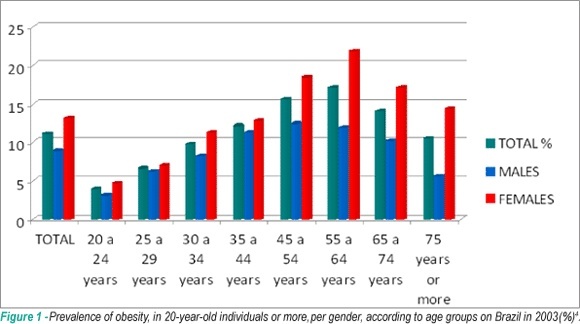
Obesity is becoming a global epidemic. Around 1.1 billion adults and 10% of the world’s children are currently overweight or considered obese. Generally associated with risk factors for cardiovascular disease, such as Diabetes Mellitus and systemic arterial high blood pressure, the obesity has been more and more seen as an independent risk factor for Coronary Artery Disease (CAD). Coronary arteriosclerosis comprises a series of inflammatory responses at cellular and molecular level, whose reactions are stronger in obese patients. In the past, the adipose tissue was regarded as a mere fat deposition. Now it is seen from a totally different standpoint, as an active endocrine and paracrine organ that produces several inflammatory cytokines, such as the adipokines. This article aims to raise awareness about obesity as an increasingly significant public health issue over the past decades, as well as to relate the intense inflammatory process in obese individuals with an increased tendency for this group of individuals to develop CAD.

  • Coronary Artery Disease
  • Inflammation
  • Obesity
  • Protein C
Read Full Article
Creative Commons Attribution (CC BY) Creative Commons license
05/05/2010 DOI: 10.1590/S0066-782X2010000200021 Views 1
Outros

Comments on the article by Girardi et al: costs in cardiac surgery

Paulo R. Benchimol-Barbosa

LETTER TO THE EDITOR

Comments on the article by Girardi et al: costs in cardiac surgery

[…]

Read Full Article
Creative Commons Attribution (CC BY) Creative Commons license
05/05/2010 DOI: 10.1590/S0066-782X2010000200022
Página do Presidente

President's message

Jorge Ilha Guimarães

PRESIDENT’S PAGE

President’s Message

[…]

Read Full Article
Creative Commons Attribution (CC BY) Creative Commons license
05/05/2010 DOI: 10.1590/S0066-782X2010000200001
Reduction of central sleep apnea in heart failure patients with beta-blockers therapy
Artigo Original

Reduction of central sleep apnea in heart failure patients with beta-blockers therapy

Christiano Pereira Silva et al. Geraldo Lorenzi-Filho Bianca Marcondes Gilmar Osmundo Junior … Sandrigo Mangini Aguinaldo Figueiredo Freitas Junior Phillipe Vieira Pires Edimar Alcides Bocchi Fernando Bacal

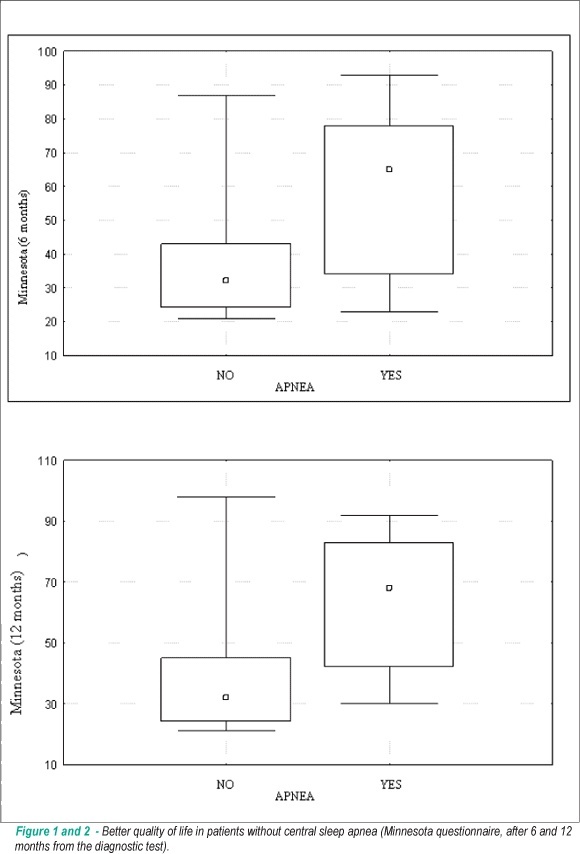
BACKGROUND: Sleep apneas are frequent in patients with heart failure (HF). Estimate of the pre-beta blocker age (BB) point out to 45% of central apneas in these patients. OBJECTIVE: Assess the influence of BB in central apneas and their interference in the quality of sleep and life of patients with heart failure. METHODS: 65 patients with heart failure underwent diagnostic polysomnography. Polysomnography have been assessed according to the use or not of BB. On the day of examination, the patients answered the Minessota questionnaire for quality of life with HF. After 6 and 12 months from the polysomnography date, all patients were contacted by phone, in order to repeat the Minessota questionnaire. RESULTS: The prevalence of sleep apnea (IAH > 15/h) hit 46.1% in the total population, however, central sleep apnea was identified in 18.4% of patients. The use of BB, in a multivariate analysis, was the only predictor of a minor index of central apnea and hypopnea (IAH) (p=0.002), greater saturation (p=0.02) and smaller average desaturation of oxygen (p=0.03). Additionally, the use of BB could predict a better quality of life after 6 and 12 months (p=0.002 and 0.001 respectively) and a smaller number admissions in these periods (p=0.001 and p=0.05 respectively). CONCLUSION: The use BB reduced the rate of central sleep apnea in total population, if we compare to literature data. Additionally, the BB improved parameters of quality of sleep and life of patients with heart failure.

  • Adrenergic beta-Antagonists
  • Heart Failure
  • Sleep apnea syndromes
Read Full Article
Creative Commons Attribution (CC BY) Creative Commons license
05/05/2010 DOI: 10.1590/S0066-782X2010000200016 Views 1
Case 1 - 59-year-old male patient with severe obesity, arterial hypertension and heart failure submitted to anticoagulation therapy for atrial fibrillation, presented cerebrovascular accident and septicemia
Case Report

Case 1 – 59-year-old male patient with severe obesity, arterial hypertension and heart failure submitted to anticoagulation therapy for atrial fibrillation, presented cerebrovascular accident and septicemia

Pedro Veronese et al. Luiz Alberto Benvenuti

ANATOMOCLINICAL CORRELATION

[…]

Read Full Article
Creative Commons Attribution (CC BY) Creative Commons license
05/05/2010 DOI: 10.1590/S0066-782X2010000200023
Artigo Original

Evolution of cardiovascular surgery: the Brazilian saga. A history of work, pioneering experience and success

Domingo M. Braile et al. Walter J. Gomes

EDITORIAL

[…]

Read Full Article
Creative Commons Attribution (CC BY) Creative Commons license
05/05/2010 DOI: 10.1590/S0066-782X2010000200002
Flow-mediated dilatation in the differential diagnosis of preeclampsia syndrome
Artigo Original

Flow-mediated dilatation in the differential diagnosis of preeclampsia syndrome

Edson Vieira da Cunha Filho et al. Carolina Mohr Breno José Acauan Filho Giovani Gadonski … Leticia Germany Paula Ivan Carlos Ferreira Antonello Carlos Eduardo Poli-de-Figueiredo Bartira Ercilia Pinheiro-da-Costa

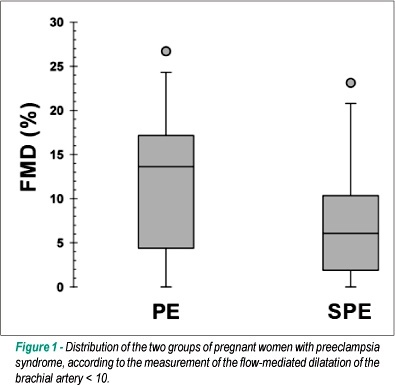
BACKGROUND: The preeclampsia syndrome is associated with endothelial dysfunction and the differential diagnosis between pure preeclampsia (PE) and superimposed preeclampsia (SPE) can be only be attained 12 weeks after delivery. OBJECTIVE: To compare the assessment of endothelial function through flow-mediated dilatation in pregnant women with pure preeclampsia and superimposed preeclampsia. METHODS: The flow-mediated dilatation of the brachial artery was carried out according to the recommendations of the International Brachial Artery Reactivity Task Force in pregnant women with preeclampsia syndrome. PE (n=14) and SPE (n=13) were diagnosed in the postpartum period according to the definitions of the National High Blood Pressure Education Program Working Group on High Blood Pressure in Pregnancy. RESULTS: The median of the flow-mediated dilatation (FMD) in SPE (6.0%; 1.9-10.3) was decreased in comparison with the PE (13.6%;4.4-17.1), an apparently relevant difference , but not statistically significant (p = 0.08). The FMD < 10% was detected in 30.8% of the PE cases and in 69.2% of the SPE cases (p = 0.057). Significant differences could not be detected in the morphology of the uterine arteries between the PE and SPE cases through the Doppler spectrum. CONCLUSION: The FMD of the brachial artery of patients with preeclampsia syndrome was not capable of differentiating between PE and SPE. However, the data suggest that SPE is associated with worse endothelial function I comparison to PE.

  • Brachial Artery
  • eclampsia
  • endotlhelium
  • Ultrasonography
  • Vasodilatation
Read Full Article
Creative Commons Attribution (CC BY) Creative Commons license
05/05/2010 DOI: 10.1590/S0066-782X2010000200009
Global and cardiovascular mortality and risk factors in patients under hemodialysis treatment
Artigo Original

Global and cardiovascular mortality and risk factors in patients under hemodialysis treatment

Fátima Aparecida A. Almeida et al. Felipe Carrhá Machado José Andrade Moura Junior Armênio Costa Guimarães

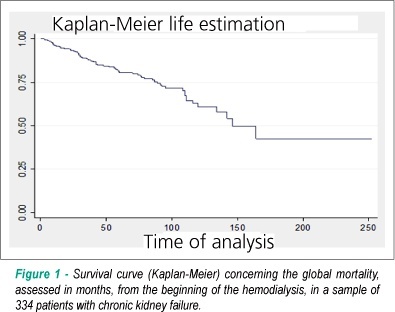
BACKGROUND: There is a high global and cardiovascular mortality rate among patients who need hemodialysis. OBJECTIVE: To assess global and cardiovascular mortality and to identify the risk factors in patients who undergo hemodialysis. METHODS: Observational, prospective study. A total of 334 patients were studied within three years. Primary outcomes: global and cardiovascular mortality. Survival was assessed through Kaplan-Meier method, and the risk variables were identified by means of bivariate and multivariate Cox regression. RESULTS: A total of 189 men (56.6%), aging 48.8 ± 14.2, majority non-white (295, 88.3%) and who did finished the elementary school (211, 63.2%). Global mortality rate was 21.6%, with a 50% rate of 146-month survival; cardiovascular mortality rate was 41.7% (30/72), with a 75% rate of 141-month survival. In the bivariate analysis, the relative risk (RR) for non-cardiovascular and cardiovascular death increased when age >60 years old was Hb126 mg/dl. Only non-cardiovascular death with low school grade and widow, Hb<11.0 g/dl, Ht100 mg/dl, Ca product x P9.2 mg/dl decreased with blood pressure (BP) >140/90 mmHg (before hemodialysis session) and Ht>36%; Obit due only to cardiovascular factors increased with creatinine >9.4 mg/dl. In the multivariate analysis, non-cardiovascular and cardiovascular RR increased with age >60 years old and Hb126 mg/dl, and non-cardiovascular death RR increased with urea removal rate in hemodialysis (Kt/V) 60 years old and Hb126 mg/dL, and for non-cardiovascular cause of death, Kt/V<1,2.

  • Kidney Failure, Chronic
  • letality
  • Mortality
  • renal dialysis
Read Full Article
Creative Commons Attribution (CC BY) Creative Commons license
15/01/2010 DOI: 10.1590/S0066-782X2010005000003
Artigo Original

Remodeling pattern and ventricular function in rats exposed to cigarette smoke

Paula S. Azevedo et al. Marcos F. Minicucci Beatriz B. Matsubara Luiz S. Matsubara … Daniella R. Duarte Sergio A. R. Paiva Leonardo A. M. Zornoff

BACKGROUND: The relevance of the remodeling pattern in the model of rats exposed to cigarette smoke is not known. OBJECTIVE: Analyzing the presence of different remodeling patterns in this model and its relation with the ventricular function. METHODS: Smoking rats (n=47) have been divided according to the geometry pattern, analyzed by echocardiogram: normal (normal mass index and normal relative wall thickness), concentric remodeling (normal mass index and increased relative wall thickness), concentric hypertrophy (increased mass index and increased relative wall thickness) and eccentric hypertrophy (increased mass index and normal relative wall thickness). RESULTS: Smoking rats presented one of the following geometry patterns: normal pattern, 51%; eccentric hypertrophy; 32%; concentric hypertrophy, 13% and concentric remodeling, 4%. The normal and eccentric hypertrophy groups presented smaller ejection fraction values and fractional shortening than the concentric hypertrophy group. Thirteen animals (28%) presented systolic dysfunction detected by the ejection fraction and by fractional shortening. In the single regression analysis, geometry patterns and mass index could not predict ventricular dysfunction (p<). On the other hand, the increased relative thickness of the wall could predict ventricular dysfunction in the single regression analysis (p<0,001) and in the multiple regression analysis after adjustment to the mass index (p=0,003). CONCLUSION: Rats exposed to cigarette smoke presented one of the four different remodeling patterns. Among the geometric variables analyzed, only the increased relative thickness of the left ventricle wall could predict ventricular dysfunction in this model.

  • geometry
  • Remodelling
  • smoking
  • Ventricular Function
Read Full Article
Creative Commons Attribution (CC BY) Creative Commons license
15/01/2010 DOI: 10.1590/S0066-782X2010005000004

Could not load more articles. Please try again.

How to cite this article

EndNote RIS

Electronic Document Format (Vancouver)

Lisboa LAF, Moreira LFP, Mejia OV, Dallan LAO, Pomerantzeff PMA, Costa R, Puig LB, et al. Evolution of cardiovascular surgery at the Instituto do Coração: analysis of 71,305 surgeries. Arquivos Brasileiros de Cardiologia 2010;94(2):174-81.

Electronic Document Format (ABNT)

Lisboa, Luiz Augusto F.; Moreira, Luiz Felipe P.; Mejia, Omar Vilca; Dallan, Luís Alberto O.; Pomerantzeff, Pablo M. A.; Costa, Roberto; Puig, Luiz B.; Jatene, Fabio B.; Marcial, Miguel Barbero; Stolf, Noedir A. G.. Evolution of cardiovascular surgery at the Instituto do Coração: analysis of 71,305 surgeries. Arquivos Brasileiros de Cardiologia, v. 94, n. 2, p. 174-181, May. 2010.

Electronic Document Format (APA)

Lisboa, L. A. F., Moreira, L. F. P., Mejia, O. V., Dallan, L. A. O., Pomerantzeff, P. M. A., Costa, R., Puig, L. B., Jatene, F. B., Marcial, M. B., & Stolf, N. A. G. (2010). Evolution of cardiovascular surgery at the Instituto do Coração: analysis of 71,305 surgeries. Arquivos Brasileiros de Cardiologia, 94(2), 174-181.

Electronic Document Format (ISO)

Lisboa, Luiz Augusto F. and Moreira, Luiz Felipe P. and Mejia, Omar Vilca and Dallan, Luís Alberto O. and Pomerantzeff, Pablo M. A. and Costa, Roberto and Puig, Luiz B. and Jatene, Fabio B. and Marcial, Miguel Barbero and Stolf, Noedir A. G.. Evolution of cardiovascular surgery at the Instituto do Coração: analysis of 71,305 surgeries. Arquivos Brasileiros de Cardiologia [online]. 2010, vol. 94, n. 2, [cited 2026-10-14], pp. 174-181. Available from: <https://journals.cardiol.br/en/article/evolution-of-cardiovascular-surgery-at-the-instituto-do-coracao-analysis-of-71305-surgeries/>. ISSN 0066-782X

EndNote RIS

Electronic Document Format (Vancouver)

Silva AC, Toffoletto O, Lucio LAG, Santos PF, Afiune JB, Massud Filho J, Tufik S, et al. Cardiovascular repercussion of lodenafil carbonate, a new PDE5 inhibitor, with and without alcohol consumption. Arquivos Brasileiros de Cardiologia 2010;94(2):160-7.

Electronic Document Format (ABNT)

Silva, Adauto Carvalho; Toffoletto, Odaly; Lucio, Luiz Antonio Galvão; Santos, Paula Ferreira dos; Afiune, Jorge Barros; Massud Filho, João; Tufik, Sergio. Cardiovascular repercussion of lodenafil carbonate, a new PDE5 inhibitor, with and without alcohol consumption. Arquivos Brasileiros de Cardiologia, v. 94, n. 2, p. 160-167, May. 2010.

Electronic Document Format (APA)

Silva, A. C., Toffoletto, O., Lucio, L. A. G., Santos, P. F. , Afiune, J. B., Massud Filho, J., & Tufik, S. (2010). Cardiovascular repercussion of lodenafil carbonate, a new PDE5 inhibitor, with and without alcohol consumption. Arquivos Brasileiros de Cardiologia, 94(2), 160-167.

Electronic Document Format (ISO)

Silva, Adauto Carvalho and Toffoletto, Odaly and Lucio, Luiz Antonio Galvão and Santos, Paula Ferreira dos and Afiune, Jorge Barros and Massud Filho, João and Tufik, Sergio. Cardiovascular repercussion of lodenafil carbonate, a new PDE5 inhibitor, with and without alcohol consumption. Arquivos Brasileiros de Cardiologia [online]. 2010, vol. 94, n. 2, [cited 2026-10-14], pp. 160-167. Available from: <https://journals.cardiol.br/en/article/cardiovascular-repercussion-of-lodenafil-carbonate-a-new-pde5-inhibitor-with-and-without-alcohol-consumption/>. ISSN 0066-782X

EndNote RIS

Electronic Document Format (Vancouver)

Carneiro RCB, Figueiredo FA, Calazans LC, Pinto Filho MM, Vidigal DF, Nunes MCP. Tricuspid valve lesion due to penetrating chest trauma. Arquivos Brasileiros de Cardiologia 2010;94(2):74-6.

Electronic Document Format (ABNT)

Carneiro, Renata de Carvalho Bicalho; Figueiredo, Fernanda de Azevedo; Calazans, Luciana Campomizzi; Pinto Filho, Marcelo Martins; Vidigal, Daniel Furtado; Nunes, Maria do Carmo Pereira. Tricuspid valve lesion due to penetrating chest trauma. Arquivos Brasileiros de Cardiologia, v. 94, n. 2, p. 74-76, May. 2010.

Electronic Document Format (APA)

Carneiro, R. C. B., Figueiredo, F. A., Calazans, L. C., Pinto Filho, M. M., Vidigal, D. F., & Nunes, M. C. P. (2010). Tricuspid valve lesion due to penetrating chest trauma. Arquivos Brasileiros de Cardiologia, 94(2), 74-76.

Electronic Document Format (ISO)

Carneiro, Renata de Carvalho Bicalho and Figueiredo, Fernanda de Azevedo and Calazans, Luciana Campomizzi and Pinto Filho, Marcelo Martins and Vidigal, Daniel Furtado and Nunes, Maria do Carmo Pereira. Tricuspid valve lesion due to penetrating chest trauma. Arquivos Brasileiros de Cardiologia [online]. 2010, vol. 94, n. 2, [cited 2026-10-14], pp. 74-76. Available from: <https://journals.cardiol.br/en/article/tricuspid-valve-lesion-due-to-penetrating-chest-trauma/>. ISSN 0066-782X

EndNote RIS

Electronic Document Format (Vancouver)

Machado FP, Sampaio RO, Mazzucato FL, Tarasoutchi F, Spina GS, Grinberg M. Acute coronary artery dissection after aortic valve replacement. Arquivos Brasileiros de Cardiologia 2010;94(2):82-5.

Electronic Document Format (ABNT)

Machado, Fernando de Paula; Sampaio, Roney Orismar; Mazzucato, Fernanda Lopez; Tarasoutchi, Flávio; Spina, Guilherme Sobreira; Grinberg, Max. Acute coronary artery dissection after aortic valve replacement. Arquivos Brasileiros de Cardiologia, v. 94, n. 2, p. 82-85, May. 2010.

Electronic Document Format (APA)

Machado, F. P., Sampaio, R. O., Mazzucato, F. L., Tarasoutchi, F., Spina, G. S., & Grinberg, M. (2010). Acute coronary artery dissection after aortic valve replacement. Arquivos Brasileiros de Cardiologia, 94(2), 82-85.

Electronic Document Format (ISO)

Machado, Fernando de Paula and Sampaio, Roney Orismar and Mazzucato, Fernanda Lopez and Tarasoutchi, Flávio and Spina, Guilherme Sobreira and Grinberg, Max. Acute coronary artery dissection after aortic valve replacement. Arquivos Brasileiros de Cardiologia [online]. 2010, vol. 94, n. 2, [cited 2026-10-14], pp. 82-85. Available from: <https://journals.cardiol.br/en/article/acute-coronary-artery-dissection-after-aortic-valve-replacement/>. ISSN 0066-782X

EndNote RIS

Electronic Document Format (Vancouver)

Alves RJ, Borin AH, Oliveira CRD, Puig R, Mercê AC, Nakiri K. Left ventricular papillary fibroelastoma. Arquivos Brasileiros de Cardiologia 2010;94(2):78-81.

Electronic Document Format (ABNT)

Alves, Renato Jorge; Borin, Alexandre H.; Oliveira, Carlos Renato De; Puig, Raphael; Mercê, Ana Carolina; Nakiri, Kenji. Left ventricular papillary fibroelastoma. Arquivos Brasileiros de Cardiologia, v. 94, n. 2, p. 78-81, May. 2010.

Electronic Document Format (APA)

Alves, R. J., Borin, A. H., Oliveira, C. R. D., Puig, R., Mercê, A. C., & Nakiri, K. (2010). Left ventricular papillary fibroelastoma. Arquivos Brasileiros de Cardiologia, 94(2), 78-81.

Electronic Document Format (ISO)

Alves, Renato Jorge and Borin, Alexandre H. and Oliveira, Carlos Renato De and Puig, Raphael and Mercê, Ana Carolina and Nakiri, Kenji. Left ventricular papillary fibroelastoma. Arquivos Brasileiros de Cardiologia [online]. 2010, vol. 94, n. 2, [cited 2026-10-14], pp. 78-81. Available from: <https://journals.cardiol.br/en/article/left-ventricular-papillary-fibroelastoma/>. ISSN 0066-782X

EndNote RIS

Electronic Document Format (Vancouver)

Coletta J, Suzuki N, Nascimento BR, Bezerra HG, Rosenthal N, Guagliumi G, Rollins AM, et al. Use of optical coherence tomography for accurate characterization of atherosclerosis. Arquivos Brasileiros de Cardiologia 2010;94(2):268-72.

Electronic Document Format (ABNT)

Coletta, John; Suzuki, Nobuaki; Nascimento, Bruno R.; Bezerra, Hiram G.; Rosenthal, Noah; Guagliumi, Giulio; Rollins, Andrew M.; Costa, Marco A.. Use of optical coherence tomography for accurate characterization of atherosclerosis. Arquivos Brasileiros de Cardiologia, v. 94, n. 2, p. 268-272, May. 2010.

Electronic Document Format (APA)

Coletta, J., Suzuki, N., Nascimento, B. R., Bezerra, H. G., Rosenthal, N., Guagliumi, G., Rollins, A. M., & Costa, M. A. (2010). Use of optical coherence tomography for accurate characterization of atherosclerosis. Arquivos Brasileiros de Cardiologia, 94(2), 268-272.

Electronic Document Format (ISO)

Coletta, John and Suzuki, Nobuaki and Nascimento, Bruno R. and Bezerra, Hiram G. and Rosenthal, Noah and Guagliumi, Giulio and Rollins, Andrew M. and Costa, Marco A.. Use of optical coherence tomography for accurate characterization of atherosclerosis. Arquivos Brasileiros de Cardiologia [online]. 2010, vol. 94, n. 2, [cited 2026-10-14], pp. 268-272. Available from: <https://journals.cardiol.br/en/article/use-of-optical-coherence-tomography-for-accurate-characterization-of-atherosclerosis/>. ISSN 0066-782X

EndNote RIS

Electronic Document Format (Vancouver)

Rosário MA, Lima JJ, Parga JR, Ávila LF, Gowdak LH, Lemos PA, Rochitte CE, et al. Coronary calcium score as predictor of stenosis and events in pretransplant renal chronic failure. Arquivos Brasileiros de Cardiologia 2010;94(2):252-60.

Electronic Document Format (ABNT)

Rosário, Miguel Abraão; Lima, José Jayme de; Parga, José R.; Ávila, Luiz F.; Gowdak, Luis H.; Lemos, Pedro A.; Rochitte, Carlos E.. Coronary calcium score as predictor of stenosis and events in pretransplant renal chronic failure. Arquivos Brasileiros de Cardiologia, v. 94, n. 2, p. 252-260, May. 2010.

Electronic Document Format (APA)

Rosário, M. A., Lima, J. J. , Parga, J. R., Ávila, L. F., Gowdak, L. H., Lemos, P. A., & Rochitte, C. E. (2010). Coronary calcium score as predictor of stenosis and events in pretransplant renal chronic failure. Arquivos Brasileiros de Cardiologia, 94(2), 252-260.

Electronic Document Format (ISO)

Rosário, Miguel Abraão and Lima, José Jayme de and Parga, José R. and Ávila, Luiz F. and Gowdak, Luis H. and Lemos, Pedro A. and Rochitte, Carlos E.. Coronary calcium score as predictor of stenosis and events in pretransplant renal chronic failure. Arquivos Brasileiros de Cardiologia [online]. 2010, vol. 94, n. 2, [cited 2026-10-14], pp. 252-260. Available from: <https://journals.cardiol.br/en/article/coronary-calcium-score-as-predictor-of-stenosis-and-events-in-pretransplant-renal-chronic-failure/>. ISSN 0066-782X

EndNote RIS

Electronic Document Format (Vancouver)

Vila JHA, Silva JP, Fonseca L, Baumgratz JF, Tangari Jr A, Leite WF, Guilhen CJ, et al. Experience with heterotopic heart transplantation in patients with elevated pulmonary vascular resistance: late follow-up. Arquivos Brasileiros de Cardiologia 2010;94(2):261-7.

Electronic Document Format (ABNT)

Vila, Jose Henrique Andrade; Silva, José Pedro da; Fonseca, Luciana da; Baumgratz, José Francisco; Tangari Jr, Américo; Leite, Weverton Ferreira; Guilhen, Claudia Jesus; Armelin, Egas. Experience with heterotopic heart transplantation in patients with elevated pulmonary vascular resistance: late follow-up. Arquivos Brasileiros de Cardiologia, v. 94, n. 2, p. 261-267, May. 2010.

Electronic Document Format (APA)

Vila, J. H. A., Silva, J. P. , Fonseca, L. , Baumgratz, J. F., Tangari Jr, A., Leite, W. F., Guilhen, C. J., & Armelin, E. (2010). Experience with heterotopic heart transplantation in patients with elevated pulmonary vascular resistance: late follow-up. Arquivos Brasileiros de Cardiologia, 94(2), 261-267.

Electronic Document Format (ISO)

Vila, Jose Henrique Andrade and Silva, José Pedro da and Fonseca, Luciana da and Baumgratz, José Francisco and Tangari Jr, Américo and Leite, Weverton Ferreira and Guilhen, Claudia Jesus and Armelin, Egas. Experience with heterotopic heart transplantation in patients with elevated pulmonary vascular resistance: late follow-up. Arquivos Brasileiros de Cardiologia [online]. 2010, vol. 94, n. 2, [cited 2026-10-14], pp. 261-267. Available from: <https://journals.cardiol.br/en/article/experience-with-heterotopic-heart-transplantation-in-patients-with-elevated-pulmonary-vascular-resistance-late-follow-up/>. ISSN 0066-782X

EndNote RIS

Electronic Document Format (Vancouver)

Tavora F, Cresswell N, Li , Fowler D, Burke A. Frequency of acute plaque ruptures and thin cap atheromas at sites of maximal stenosis. Arquivos Brasileiros de Cardiologia 2010;94(2):153-9.

Electronic Document Format (ABNT)

Tavora, Fabio; Cresswell, Nathaniel; Li, ng; Fowler, David; Burke, Allen. Frequency of acute plaque ruptures and thin cap atheromas at sites of maximal stenosis. Arquivos Brasileiros de Cardiologia, v. 94, n. 2, p. 153-159, May. 2010.

Electronic Document Format (APA)

Tavora, F., Cresswell, N., Li, , Fowler, D., & Burke, A. (2010). Frequency of acute plaque ruptures and thin cap atheromas at sites of maximal stenosis. Arquivos Brasileiros de Cardiologia, 94(2), 153-159.

Electronic Document Format (ISO)

Tavora, Fabio and Cresswell, Nathaniel and Li, ng and Fowler, David and Burke, Allen. Frequency of acute plaque ruptures and thin cap atheromas at sites of maximal stenosis. Arquivos Brasileiros de Cardiologia [online]. 2010, vol. 94, n. 2, [cited 2026-10-14], pp. 153-159. Available from: <https://journals.cardiol.br/en/article/frequency-of-acute-plaque-ruptures-and-thin-cap-atheromas-at-sites-of-maximal-stenosis/>. ISSN 0066-782X

EndNote RIS

Electronic Document Format (Vancouver)

Pereira AB, Castro DSP, Menegotto ET, Amaral WM, Castro GSP. Myocardial bridging: therapeutic and clinical development. Arquivos Brasileiros de Cardiologia 2010;94(2):188-94.

Electronic Document Format (ABNT)

Pereira, Aline Braz; Castro, Danilo Spricigo Peressoni; Menegotto, Emanuela Todeschini; Amaral, Wladimir Maia do; Castro, Gustavo Spricigo Peressoni. Myocardial bridging: therapeutic and clinical development. Arquivos Brasileiros de Cardiologia, v. 94, n. 2, p. 188-194, May. 2010.

Electronic Document Format (APA)

Pereira, A. B., Castro, D. S. P., Menegotto, E. T., Amaral, W. M. , & Castro, G. S. P. (2010). Myocardial bridging: therapeutic and clinical development. Arquivos Brasileiros de Cardiologia, 94(2), 188-194.

Electronic Document Format (ISO)

Pereira, Aline Braz and Castro, Danilo Spricigo Peressoni and Menegotto, Emanuela Todeschini and Amaral, Wladimir Maia do and Castro, Gustavo Spricigo Peressoni. Myocardial bridging: therapeutic and clinical development. Arquivos Brasileiros de Cardiologia [online]. 2010, vol. 94, n. 2, [cited 2026-10-14], pp. 188-194. Available from: <https://journals.cardiol.br/en/article/myocardial-bridging-therapeutic-and-clinical-development/>. ISSN 0066-782X

EndNote RIS

Electronic Document Format (Vancouver)

Ochiai ME, Barretto ACP, Cardoso JN, Munhoz RT, Morgado PC, Ramires JAF. Angiotensin II receptor blocker add-on therapy for low cardiac output in decompensated heart failure. Arquivos Brasileiros de Cardiologia 2010;94(2):235-8.

Electronic Document Format (ABNT)

Ochiai, Marcelo E.; Barretto, Antonio C. P.; Cardoso, Juliano N.; Munhoz, Robinson T.; Morgado, Paulo C.; Ramires, José A. F.. Angiotensin II receptor blocker add-on therapy for low cardiac output in decompensated heart failure. Arquivos Brasileiros de Cardiologia, v. 94, n. 2, p. 235-238, May. 2010.

Electronic Document Format (APA)

Ochiai, M. E., Barretto, A. C. P., Cardoso, J. N., Munhoz, R. T., Morgado, P. C., & Ramires, J. A. F. (2010). Angiotensin II receptor blocker add-on therapy for low cardiac output in decompensated heart failure. Arquivos Brasileiros de Cardiologia, 94(2), 235-238.

Electronic Document Format (ISO)

Ochiai, Marcelo E. and Barretto, Antonio C. P. and Cardoso, Juliano N. and Munhoz, Robinson T. and Morgado, Paulo C. and Ramires, José A. F.. Angiotensin II receptor blocker add-on therapy for low cardiac output in decompensated heart failure. Arquivos Brasileiros de Cardiologia [online]. 2010, vol. 94, n. 2, [cited 2026-10-14], pp. 235-238. Available from: <https://journals.cardiol.br/en/article/angiotensin-ii-receptor-blocker-add-on-therapy-for-low-cardiac-output-in-decompensated-heart-failure/>. ISSN 0066-782X

EndNote RIS

Electronic Document Format (Vancouver)

Moehlecke M, Kramer CK, Leitão CB, Krahe AL, Balbosco I, Azevedo MJ, Gross JL, et al. ENPP1 K121Q polymorphism and ischemic heart disease in diabetic patients. Arquivos Brasileiros de Cardiologia 2010;94(2):168-73.

Electronic Document Format (ABNT)

Moehlecke, Milene; Kramer, Caroline K.; Leitão, Cristiane B.; Krahe, Ana Luiza; Balbosco, Ivaldir; Azevedo, Mirela Jobim de; Gross, Jorge L.; Canani, Luis Henrique. ENPP1 K121Q polymorphism and ischemic heart disease in diabetic patients. Arquivos Brasileiros de Cardiologia, v. 94, n. 2, p. 168-173, May. 2010.

Electronic Document Format (APA)

Moehlecke, M., Kramer, C. K., Leitão, C. B., Krahe, A. L., Balbosco, I., Azevedo, M. J. , Gross, J. L., & Canani, L. H. (2010). ENPP1 K121Q polymorphism and ischemic heart disease in diabetic patients. Arquivos Brasileiros de Cardiologia, 94(2), 168-173.

Electronic Document Format (ISO)

Moehlecke, Milene and Kramer, Caroline K. and Leitão, Cristiane B. and Krahe, Ana Luiza and Balbosco, Ivaldir and Azevedo, Mirela Jobim de and Gross, Jorge L. and Canani, Luis Henrique. ENPP1 K121Q polymorphism and ischemic heart disease in diabetic patients. Arquivos Brasileiros de Cardiologia [online]. 2010, vol. 94, n. 2, [cited 2026-10-14], pp. 168-173. Available from: <https://journals.cardiol.br/en/article/enpp1-k121q-polymorphism-and-ischemic-heart-disease-in-diabetic-patients/>. ISSN 0066-782X

EndNote RIS

Electronic Document Format (Vancouver)

Ferreira GM, Haeffner MP, Barreto SSM, Dall’Ago P. Incentive spirometry with expiratory positive airway pressure brings benefits after myocardial revascularization. Arquivos Brasileiros de Cardiologia 2010;94(2):246-51.

Electronic Document Format (ABNT)

Ferreira, Glória Menz; Haeffner, Mauren Porto; Barreto, Sérgio Saldanha Menna; Dall’Ago, Pedro. Incentive spirometry with expiratory positive airway pressure brings benefits after myocardial revascularization. Arquivos Brasileiros de Cardiologia, v. 94, n. 2, p. 246-251, May. 2010.

Electronic Document Format (APA)

Ferreira, G. M., Haeffner, M. P., Barreto, S. S. M., & Dall’Ago, P. (2010). Incentive spirometry with expiratory positive airway pressure brings benefits after myocardial revascularization. Arquivos Brasileiros de Cardiologia, 94(2), 246-251.

Electronic Document Format (ISO)

Ferreira, Glória Menz and Haeffner, Mauren Porto and Barreto, Sérgio Saldanha Menna and Dall’Ago, Pedro. Incentive spirometry with expiratory positive airway pressure brings benefits after myocardial revascularization. Arquivos Brasileiros de Cardiologia [online]. 2010, vol. 94, n. 2, [cited 2026-10-14], pp. 246-251. Available from: <https://journals.cardiol.br/en/article/incentive-spirometry-with-expiratory-positive-airway-pressure-brings-benefits-after-myocardial-revascularization/>. ISSN 0066-782X

EndNote RIS

Electronic Document Format (Vancouver)

Correia LCL, Penalva R, Correia H, Ladeia AM, Menezes M, Suzart I, Moreira A, et al. Determinants of C-reactive protein in individuals with very low socioeconomic status. Arquivos Brasileiros de Cardiologia 2010;94(2):216-23.

Electronic Document Format (ABNT)

Correia, Luis C. L.; Penalva, Rafaela; Correia, Helena; Ladeia, Ana M.; Menezes, Marta; Suzart, Isaac; Moreira, Agnaluce; Lima, José Carlos; Galvão, Bernardo; Guimarães, Armênio C.. Determinants of C-reactive protein in individuals with very low socioeconomic status. Arquivos Brasileiros de Cardiologia, v. 94, n. 2, p. 216-223, May. 2010.

Electronic Document Format (APA)

Correia, L. C. L., Penalva, R., Correia, H., Ladeia, A. M., Menezes, M., Suzart, I., Moreira, A., Lima, J. C., Galvão, B., & Guimarães, A. C. (2010). Determinants of C-reactive protein in individuals with very low socioeconomic status. Arquivos Brasileiros de Cardiologia, 94(2), 216-223.

Electronic Document Format (ISO)

Correia, Luis C. L. and Penalva, Rafaela and Correia, Helena and Ladeia, Ana M. and Menezes, Marta and Suzart, Isaac and Moreira, Agnaluce and Lima, José Carlos and Galvão, Bernardo and Guimarães, Armênio C.. Determinants of C-reactive protein in individuals with very low socioeconomic status. Arquivos Brasileiros de Cardiologia [online]. 2010, vol. 94, n. 2, [cited 2026-10-14], pp. 216-223. Available from: <https://journals.cardiol.br/en/article/determinants-of-c-reactive-protein-in-individuals-with-very-low-socioeconomic-status/>. ISSN 0066-782X

EndNote RIS

Electronic Document Format (Vancouver)

Fonseca FL, Brandão AA, Pozzan R, Campana MG, Pizzi OL, Magalhães MEC, Freitas EV, et al. Overweight and cardiovascular risk among young adults followed-up for 17 years: the Rio de Janeiro study, Brazil. Arquivos Brasileiros de Cardiologia 2010;94(2):207-15.

Electronic Document Format (ABNT)

Fonseca, Flávia Lopes; Brandão, Andréa Araújo; Pozzan, Roberto; Campana, Érika Maria Gonçalves; Pizzi, Oswaldo Luiz; Magalhães, Maria Eliane Campos; Freitas, Elizabete Vianna de; Brandão, Ayrton Pires. Overweight and cardiovascular risk among young adults followed-up for 17 years: the Rio de Janeiro study, Brazil. Arquivos Brasileiros de Cardiologia, v. 94, n. 2, p. 207-215, May. 2010.

Electronic Document Format (APA)

Fonseca, F. L., Brandão, A. A., Pozzan, R., Campana, M. G., Pizzi, O. L., Magalhães, M. E. C., Freitas, E. V. , & Brandão, A. P. (2010). Overweight and cardiovascular risk among young adults followed-up for 17 years: the Rio de Janeiro study, Brazil. Arquivos Brasileiros de Cardiologia, 94(2), 207-215.

Electronic Document Format (ISO)

Fonseca, Flávia Lopes and Brandão, Andréa Araújo and Pozzan, Roberto and Campana, Érika Maria Gonçalves and Pizzi, Oswaldo Luiz and Magalhães, Maria Eliane Campos and Freitas, Elizabete Vianna de and Brandão, Ayrton Pires. Overweight and cardiovascular risk among young adults followed-up for 17 years: the Rio de Janeiro study, Brazil. Arquivos Brasileiros de Cardiologia [online]. 2010, vol. 94, n. 2, [cited 2026-10-14], pp. 207-215. Available from: <https://journals.cardiol.br/en/article/overweight-and-cardiovascular-risk-among-young-adults-followed-up-for-17-years-the-rio-de-janeiro-study-brazil/>. ISSN 0066-782X

EndNote RIS

Electronic Document Format (Vancouver)

Gomes F, Telo DF, Souza HP, Nicolau JC, Halpern A, Serrano Jr CV. Obesity and coronary artery disease: role of vascular inflammation. Arquivos Brasileiros de Cardiologia 2010;94(2):273-9.

Electronic Document Format (ABNT)

Gomes, Fernando; Telo, Daniela F.; Souza, Heraldo P.; Nicolau, José Carlos; Halpern, Alfredo; Serrano Jr, Carlos V.. Obesity and coronary artery disease: role of vascular inflammation. Arquivos Brasileiros de Cardiologia, v. 94, n. 2, p. 273-279, May. 2010.

Electronic Document Format (APA)

Gomes, F., Telo, D. F., Souza, H. P., Nicolau, J. C., Halpern, A., & Serrano Jr, C. V. (2010). Obesity and coronary artery disease: role of vascular inflammation. Arquivos Brasileiros de Cardiologia, 94(2), 273-279.

Electronic Document Format (ISO)

Gomes, Fernando and Telo, Daniela F. and Souza, Heraldo P. and Nicolau, José Carlos and Halpern, Alfredo and Serrano Jr, Carlos V.. Obesity and coronary artery disease: role of vascular inflammation. Arquivos Brasileiros de Cardiologia [online]. 2010, vol. 94, n. 2, [cited 2026-10-14], pp. 273-279. Available from: <https://journals.cardiol.br/en/article/obesity-and-coronary-artery-disease-role-of-vascular-inflammation/>. ISSN 0066-782X

EndNote RIS

Electronic Document Format (Vancouver)

Benchimol-Barbosa PR. Comments on the article by Girardi et al: costs in cardiac surgery. Arquivos Brasileiros de Cardiologia 2010;94(2):280-1.

Electronic Document Format (ABNT)

Benchimol-Barbosa, Paulo R.. Comments on the article by Girardi et al: costs in cardiac surgery. Arquivos Brasileiros de Cardiologia, v. 94, n. 2, p. 280-281, May. 2010.

Electronic Document Format (APA)

Benchimol-Barbosa, P. R. (2010). Comments on the article by Girardi et al: costs in cardiac surgery. Arquivos Brasileiros de Cardiologia, 94(2), 280-281.

Electronic Document Format (ISO)

Benchimol-Barbosa, Paulo R.. Comments on the article by Girardi et al: costs in cardiac surgery. Arquivos Brasileiros de Cardiologia [online]. 2010, vol. 94, n. 2, [cited 2026-10-14], pp. 280-281. Available from: <https://journals.cardiol.br/en/article/comments-on-the-article-by-girardi-et-al-costs-in-cardiac-surgery/>. ISSN 0066-782X

EndNote RIS

Electronic Document Format (Vancouver)

Guimarães JI. President’s message. Arquivos Brasileiros de Cardiologia 2010;94(2):150.

Electronic Document Format (ABNT)

Guimarães, Jorge Ilha. President’s message. Arquivos Brasileiros de Cardiologia, v. 94, n. 2, p. 150-150, May. 2010.

Electronic Document Format (APA)

Guimarães, J. I. (2010). President’s message. Arquivos Brasileiros de Cardiologia, 94(2), 150-150.

Electronic Document Format (ISO)

Guimarães, Jorge Ilha. President’s message. Arquivos Brasileiros de Cardiologia [online]. 2010, vol. 94, n. 2, [cited 2026-10-14], pp. 150-150. Available from: <https://journals.cardiol.br/en/article/presidents-message/>. ISSN 0066-782X

EndNote RIS

Electronic Document Format (Vancouver)

Silva CP, Lorenzi-Filho G, Marcondes B, Osmundo Junior G, Mangini S, Freitas Junior AF, Pires PV, et al. Reduction of central sleep apnea in heart failure patients with beta-blockers therapy. Arquivos Brasileiros de Cardiologia 2010;94(2):239-45.

Electronic Document Format (ABNT)

Silva, Christiano Pereira; Lorenzi-Filho, Geraldo; Marcondes, Bianca; Osmundo Junior, Gilmar; Mangini, Sandrigo; Freitas Junior, Aguinaldo Figueiredo; Pires, Phillipe Vieira; Bocchi, Edimar Alcides; Bacal, Fernando. Reduction of central sleep apnea in heart failure patients with beta-blockers therapy. Arquivos Brasileiros de Cardiologia, v. 94, n. 2, p. 239-245, May. 2010.

Electronic Document Format (APA)

Silva, C. P., Lorenzi-Filho, G., Marcondes, B., Osmundo Junior, G., Mangini, S., Freitas Junior, A. F., Pires, P. V., Bocchi, E. A., & Bacal, F. (2010). Reduction of central sleep apnea in heart failure patients with beta-blockers therapy. Arquivos Brasileiros de Cardiologia, 94(2), 239-245.

Electronic Document Format (ISO)

Silva, Christiano Pereira and Lorenzi-Filho, Geraldo and Marcondes, Bianca and Osmundo Junior, Gilmar and Mangini, Sandrigo and Freitas Junior, Aguinaldo Figueiredo and Pires, Phillipe Vieira and Bocchi, Edimar Alcides and Bacal, Fernando. Reduction of central sleep apnea in heart failure patients with beta-blockers therapy. Arquivos Brasileiros de Cardiologia [online]. 2010, vol. 94, n. 2, [cited 2026-10-14], pp. 239-245. Available from: <https://journals.cardiol.br/en/article/reduction-of-central-sleep-apnea-in-heart-failure-patients-with-beta-blockers-therapy/>. ISSN 0066-782X

EndNote RIS

Electronic Document Format (Vancouver)

Veronese P, Benvenuti LA. Case 1 – 59-year-old male patient with severe obesity, arterial hypertension and heart failure submitted to anticoagulation therapy for atrial fibrillation, presented cerebrovascular accident and septicemia. Arquivos Brasileiros de Cardiologia 2010;94(2):282-8.

Electronic Document Format (ABNT)

Veronese, Pedro; Benvenuti, Luiz Alberto. Case 1 – 59-year-old male patient with severe obesity, arterial hypertension and heart failure submitted to anticoagulation therapy for atrial fibrillation, presented cerebrovascular accident and septicemia. Arquivos Brasileiros de Cardiologia, v. 94, n. 2, p. 282-288, May. 2010.

Electronic Document Format (APA)

Veronese, P., & Benvenuti, L. A. (2010). Case 1 – 59-year-old male patient with severe obesity, arterial hypertension and heart failure submitted to anticoagulation therapy for atrial fibrillation, presented cerebrovascular accident and septicemia. Arquivos Brasileiros de Cardiologia, 94(2), 282-288.

Electronic Document Format (ISO)

Veronese, Pedro and Benvenuti, Luiz Alberto. Case 1 – 59-year-old male patient with severe obesity, arterial hypertension and heart failure submitted to anticoagulation therapy for atrial fibrillation, presented cerebrovascular accident and septicemia. Arquivos Brasileiros de Cardiologia [online]. 2010, vol. 94, n. 2, [cited 2026-10-14], pp. 282-288. Available from: <https://journals.cardiol.br/en/article/case-1-59-year-old-male-patient-with-severe-obesity-arterial-hypertension-and-heart-failure-submitted-to-anticoagulation-therapy-for-atrial-fibrillation-presented-cerebrovascular-accident-and-sept/>. ISSN 0066-782X

EndNote RIS

Electronic Document Format (Vancouver)

Braile DM, Gomes WJ. Evolution of cardiovascular surgery: the Brazilian saga. A history of work, pioneering experience and success. Arquivos Brasileiros de Cardiologia 2010;94(2):151-2.

Electronic Document Format (ABNT)

Braile, Domingo M.; Gomes, Walter J.. Evolution of cardiovascular surgery: the Brazilian saga. A history of work, pioneering experience and success. Arquivos Brasileiros de Cardiologia, v. 94, n. 2, p. 151-152, May. 2010.

Electronic Document Format (APA)

Braile, D. M., & Gomes, W. J. (2010). Evolution of cardiovascular surgery: the Brazilian saga. A history of work, pioneering experience and success. Arquivos Brasileiros de Cardiologia, 94(2), 151-152.

Electronic Document Format (ISO)

Braile, Domingo M. and Gomes, Walter J.. Evolution of cardiovascular surgery: the Brazilian saga. A history of work, pioneering experience and success. Arquivos Brasileiros de Cardiologia [online]. 2010, vol. 94, n. 2, [cited 2026-10-14], pp. 151-152. Available from: <https://journals.cardiol.br/en/article/evolution-of-cardiovascular-surgery-the-brazilian-saga-a-history-of-work-pioneering-experience-and-success/>. ISSN 0066-782X

EndNote RIS

Electronic Document Format (Vancouver)

Cunha Filho EV, Mohr C, Acauan Filho BJ, Gadonski G, Paula LG, Antonello ICF, Poli-de-Figueiredo CE, et al. Flow-mediated dilatation in the differential diagnosis of preeclampsia syndrome. Arquivos Brasileiros de Cardiologia 2010;94(2):195-200.

Electronic Document Format (ABNT)

Cunha Filho, Edson Vieira da; Mohr, Carolina; Acauan Filho, Breno José; Gadonski, Giovani; Paula, Leticia Germany; Antonello, Ivan Carlos Ferreira; Poli-de-Figueiredo, Carlos Eduardo; Pinheiro-da-Costa, Bartira Ercilia. Flow-mediated dilatation in the differential diagnosis of preeclampsia syndrome. Arquivos Brasileiros de Cardiologia, v. 94, n. 2, p. 195-200, May. 2010.

Electronic Document Format (APA)

Cunha Filho, E. V. , Mohr, C., Acauan Filho, B. J., Gadonski, G., Paula, L. G., Antonello, I. C. F., Poli-de-Figueiredo, C. E., & Pinheiro-da-Costa, B. E. (2010). Flow-mediated dilatation in the differential diagnosis of preeclampsia syndrome. Arquivos Brasileiros de Cardiologia, 94(2), 195-200.

Electronic Document Format (ISO)

Cunha Filho, Edson Vieira da and Mohr, Carolina and Acauan Filho, Breno José and Gadonski, Giovani and Paula, Leticia Germany and Antonello, Ivan Carlos Ferreira and Poli-de-Figueiredo, Carlos Eduardo and Pinheiro-da-Costa, Bartira Ercilia. Flow-mediated dilatation in the differential diagnosis of preeclampsia syndrome. Arquivos Brasileiros de Cardiologia [online]. 2010, vol. 94, n. 2, [cited 2026-10-14], pp. 195-200. Available from: <https://journals.cardiol.br/en/article/flow-mediated-dilatation-in-the-differential-diagnosis-of-preeclampsia-syndrome/>. ISSN 0066-782X

EndNote RIS

Electronic Document Format (Vancouver)

Almeida FAA, Machado FC, Moura Junior JA, Guimarães AC. Global and cardiovascular mortality and risk factors in patients under hemodialysis treatment. Arquivos Brasileiros de Cardiologia 2010;94(2):201-6.

Electronic Document Format (ABNT)

Almeida, Fátima Aparecida A.; Machado, Felipe Carrhá; Moura Junior, José Andrade; Guimarães, Armênio Costa. Global and cardiovascular mortality and risk factors in patients under hemodialysis treatment. Arquivos Brasileiros de Cardiologia, v. 94, n. 2, p. 201-206, Jan. 2010.

Electronic Document Format (APA)

Almeida, F. A. A., Machado, F. C., Moura Junior, J. A., & Guimarães, A. C. (2010). Global and cardiovascular mortality and risk factors in patients under hemodialysis treatment. Arquivos Brasileiros de Cardiologia, 94(2), 201-206.

Electronic Document Format (ISO)

Almeida, Fátima Aparecida A. and Machado, Felipe Carrhá and Moura Junior, José Andrade and Guimarães, Armênio Costa. Global and cardiovascular mortality and risk factors in patients under hemodialysis treatment. Arquivos Brasileiros de Cardiologia [online]. 2010, vol. 94, n. 2, [cited 2026-10-14], pp. 201-206. Available from: <https://journals.cardiol.br/en/article/global-and-cardiovascular-mortality-and-risk-factors-in-patients-under-hemodialysis-treatment/>. ISSN 0066-782X

EndNote RIS

Electronic Document Format (Vancouver)

Azevedo PS, Minicucci MF, Matsubara BB, Matsubara LS, Duarte DR, Paiva SAR, Zornoff LAM, et al. Remodeling pattern and ventricular function in rats exposed to cigarette smoke. Arquivos Brasileiros de Cardiologia 2010;94(2):224-8.

Electronic Document Format (ABNT)

Azevedo, Paula S.; Minicucci, Marcos F.; Matsubara, Beatriz B.; Matsubara, Luiz S.; Duarte, Daniella R.; Paiva, Sergio A. R.; Zornoff, Leonardo A. M.. Remodeling pattern and ventricular function in rats exposed to cigarette smoke. Arquivos Brasileiros de Cardiologia, v. 94, n. 2, p. 224-228, Jan. 2010.

Electronic Document Format (APA)

Azevedo, P. S., Minicucci, M. F., Matsubara, B. B., Matsubara, L. S., Duarte, D. R., Paiva, S. A. R., & Zornoff, L. A. M. (2010). Remodeling pattern and ventricular function in rats exposed to cigarette smoke. Arquivos Brasileiros de Cardiologia, 94(2), 224-228.

Electronic Document Format (ISO)

Azevedo, Paula S. and Minicucci, Marcos F. and Matsubara, Beatriz B. and Matsubara, Luiz S. and Duarte, Daniella R. and Paiva, Sergio A. R. and Zornoff, Leonardo A. M.. Remodeling pattern and ventricular function in rats exposed to cigarette smoke. Arquivos Brasileiros de Cardiologia [online]. 2010, vol. 94, n. 2, [cited 2026-10-14], pp. 224-228. Available from: <https://journals.cardiol.br/en/article/remodeling-pattern-and-ventricular-function-in-rats-exposed-to-cigarette-smoke/>. ISSN 0066-782X

Sede – Rio de Janeiro
Av. Marechal Câmara, 160
3º andar – Sala: 330 – Centro
Rio de Janeiro – CEP: 20020-907
Tel.: (55 +21) 3478-2700
ou (21) 99386-3961
E-mail: revista@cardiol.br

Sede – São Paulo
Alameda Santos, 705 – 11º andar
Cerqueira César | São Paulo
CEP: 01419-001
Tel.: (55 +11) 3411-5500
E-mail: revista@cardiol.br

  • About the Journal
  • Internal Regulation
  • Editors Section
  • Editorial Board
  • History
  • SBC Award

  • Guidelines for Publication
  • Editorial Policy
  • Ethics Policy
  • Policy on the Use of Artificial Intelligence
  • Mandatory Publication Form
  • Publication Fee

Issues

SBC Guidelines

  • How to Publish an Abstract Supplement?
  • Supplements from the Brazilian Congress of Cardiology