ABC Family Arquivos Brasileiros de Cardiologia International Journal of Cardiovascular Sciences ABC Heart Failure & Cardiomyopathy ABC Imagem Cardiovascular
Português English
ABC Family
Português English
  • About
    • About ABC Family
    • Internal Regulation
    • Editorial Board
    • Brazilian Society of Cardiology (SBC)
  • Issues
  • SBC Guidelines
  • Content
    • Videos
    • Podcasts
    • News
  • About
    • About ABC Family
    • Internal Regulation
    • Editorial Board
    • Brazilian Society of Cardiology (SBC)
  • Issues
  • SBC Guidelines
  • Content
    • Videos
    • Podcasts
    • News

ABC Family

  • ABC Family
  • Arquivos Brasileiros de Cardiologia
  • International Journal of Cardiovascular Sciences
  • ABC Heart Failure & Cardiomyopathy
  • ABC Imagem Cardiovascular
Search in

No content found.

Journals
Ordering
Article types
Others

  1. Home
  2. Keyword: Myocardial Bridging
ABC
Editorial

Myocardial Bridge: Friend, Enemy, or Frenemy?

Biljana Parapid et al. Vladimir I. Kanjuh

First mentioned in 1737 by Reyman as an autopsy finding, described in 1922 by Crainicianu, named by Polacek in 1956, and angiographically shown by Portmann and Iwig in 1960, myocardial bridging encompasses the tunneled portion of a coronary artery, while the muscle band enveloping it is termed the myocardial bridge (MB). A myocardial bridge may remain silent lifelong or cause a myriad of clinical symptoms – from angina and ischemia, via syncope with arrhythmia , and heart failure up to sudden death , – however, not even children are spared irrelevant of the setting of the hypertrophic cardiomyopathy (HCMP). ,

From the mainly pathoanatomical standpoint, three main questions remain unanswered: (1) do ethnic differences render some corners of the world more susceptible to being born with this congenital coronary artery anomaly? (2) what are the implications of single or multiple MBs of single or multiple vessels even in the absence of HCMP? Furthermore, (3) what is the real atherosclerotic burden of the tunneled and peri-bridged segment?

[…]

  • Angina Pectoris
  • Arterial Switch Operation
  • Hamartoma
  • Heart Failure
  • Myocardial Bridging
Read Full Article
Creative Commons Attribution (CC BY) Creative Commons license
01/09/2023 DOI: 10.36660/abc.20230426 Views 1
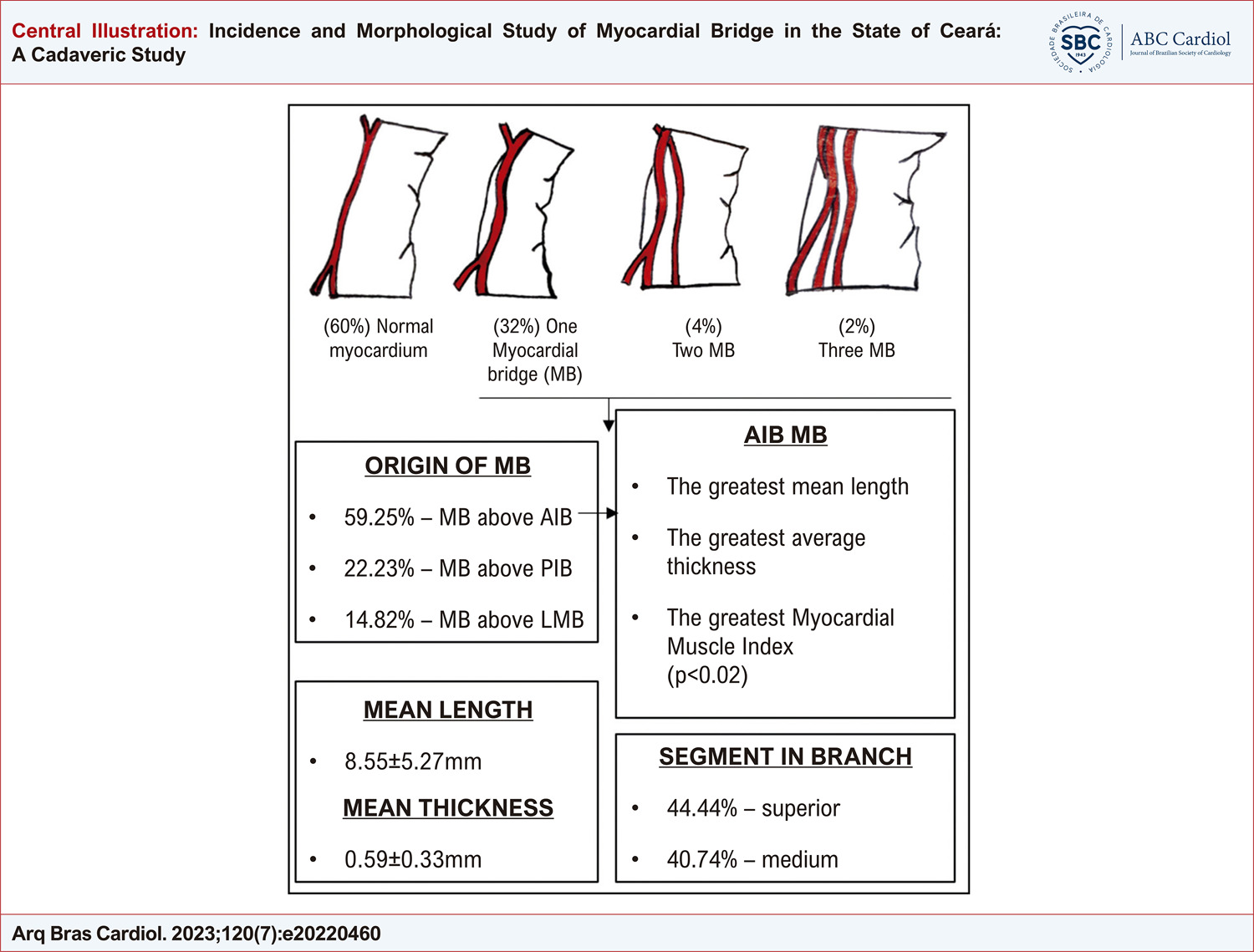
Central Illustration
ABC
Original Article

Incidence and Morphological Study of Myocardial Bridge in the State of Ceará: A Cadaveric Study

Jalles Dantas de Lucena et al. Hudson Martins de Brito João Victor Souza Sanders Jonathan Barros Cavalcante … Michelly Carneiro Collyer Cecília de Lima Leite Helson Freitas da Silveira Julio Cesar Campos Ferreira Filho

Abstract

Background

Myocardial bridges (MB) are anatomical anomalies with possible clinical repercussions; hence, their understanding deserves attention.

Objective

To determinate the prevalence and characterize MB in human hearts from the state of Ceará. Methods: Fifty hearts of adult human cadavers from the Medicine School of Federal University of Ceará, Brazil. The hearts were dissected to identify MBs that pass over part of the coronary artery. The segment of the artery (proximal, middle, and distal) with a bridge was identified. The external diameter of the artery at the proximal and distal points of the MB was measured. The length and thickness of the MB were also measured with an electronic caliper. The muscle index (MMI) of the MB was calculated as the product of length and thickness expressed in millimeters. The significance level adopted in the statistical analysis was 5%.

Results

MB was confirmed in 40% of sample. Approximately one third of the sample had only 1 MB. MB was most frequently found over the anterior interventricular branch of the left coronary artery (59.25%, p=0.02), and its prevalence in other branches was much lower (22.23%). The most affected segments of arteries were the superior (44.44%) and medium (40.74%). The mean diameter of arteries proximal to the MB was 2.38±0.97mm (range=0.78-5.15mm), and the diameter distal to the MB was 1.71±0.75mm (range=0.42-3.58mm). The length was measured as mean=8.55±5.27mm, while the mean thickness was 0.89±0.33mm.

Conclusion

A high prevalence of MB is more likely to affect the left coronary artery system with larger MMI than other affected branches.

  • Anatomy
  • Cardiovascular Abnormalities
  • Incidence
  • Myocardial Bridging
Read Full Article
Creative Commons Attribution (CC BY) Creative Commons license
17/07/2023 DOI: 10.36660/abc.20220460 Views 1
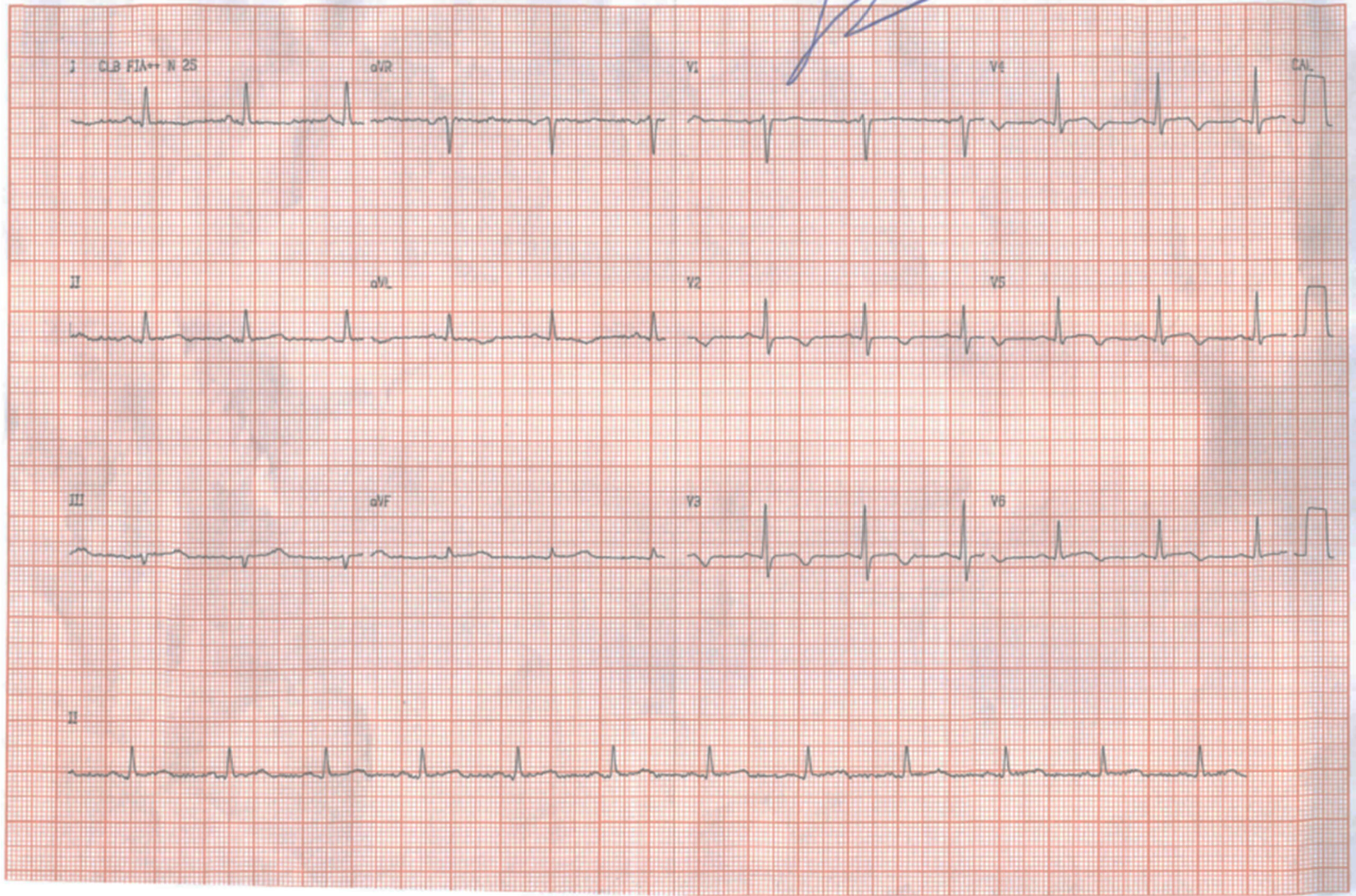
Figure 1
IJCS
Case Report

Case Report: Myocardial Bypass in Left Descending Artery – A Rare Congenital Anomaly

Vergílio Pereira Carvalho et al. Eraldo Ribeiro Ferreira Leão de Moraes João Emílio Hanum Paes Daniela Textor … Hugo Leonardo Shigenaga Ribeiro Amara Chebli Baptista Stephanie Borges Vilela Ana Paula Fontana Isabella Beatriz Silva Rocha Jair Pereira Melo Junior

Abstract

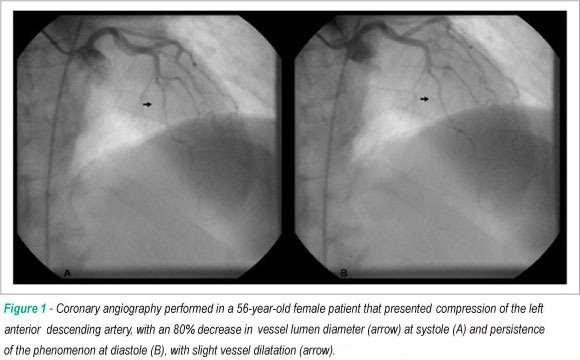
Myocardial bypass (MB) is known to have scientific relevance and is present in several studies with great statistical significance regarding its clinical manifestations and complications. There are still questions about MB in its relationship with heart disease and repercussion in life-threatening conditions. We present a case report of a MB in the left anterior descending coronary artery, whose objective is to identify this rare congenital anomaly and to highlight the patient’s clinical outcome in order to elicit greater contributions about the presence of this variant in the emergency room, its diagnosis by angiography and therapeutic management.

  • Angiography/methods
  • Cardiac Electrophysiology
  • Heart Defects, Congenital
  • Myocardial Bridging
  • Myocardial Ischemia
Read Full Article
Creative Commons Attribution (CC BY) Creative Commons license
03/02/2020 DOI: 10.36660/ijcs.20180032
Figure 1
ABC
Original Article

Assessment of the Relationship between Monocyte to High-Density Lipoprotein Ratio and Myocardial Bridge

Asim Enhos et al. Kahraman Cosansu Mustafa Ahmet Huyut Fahrettin Turna … Erdem Karacop Nijad Bakshaliyev Aydin Nadir Ramazan Ozdemir Mahmut Uluganyan

Abstract

Background:

Assessing the monocyte to high-density lipoprotein ratio (MHR) is a new tool for predicting inflamation, which plays a major role in atherosclerosis. Myocardial bridge (MB) is thought to be a benign condition with development of atherosclerosis, particularly at the proximal segment of the brigde.

Objective:

To evaluate the relationhip between MHR and the presence of MB.

Methods:

We consecutively scanned patients referred for coronary angiography between January 2013- December 2016, and a total of 160 patients who had a MB and normal coronary artery were enrolled in the study. The patients’ angiographic, demographic and clinic characteristics of the patients were reviewed from medical records. Monocytes and HDL-cholesterols were measured via complete blood count. MHR was calculated as the ratio of the absolute monocyte count to the HDL-cholesterol value. MHR values were divided into three tertiles as follows: lower (8.25 ± 1.61), moderate (13.11 ± 1.46), and higher (21.21 ± 4.30) tertile. A p-value of < 0.05 was considered significant.

Results:

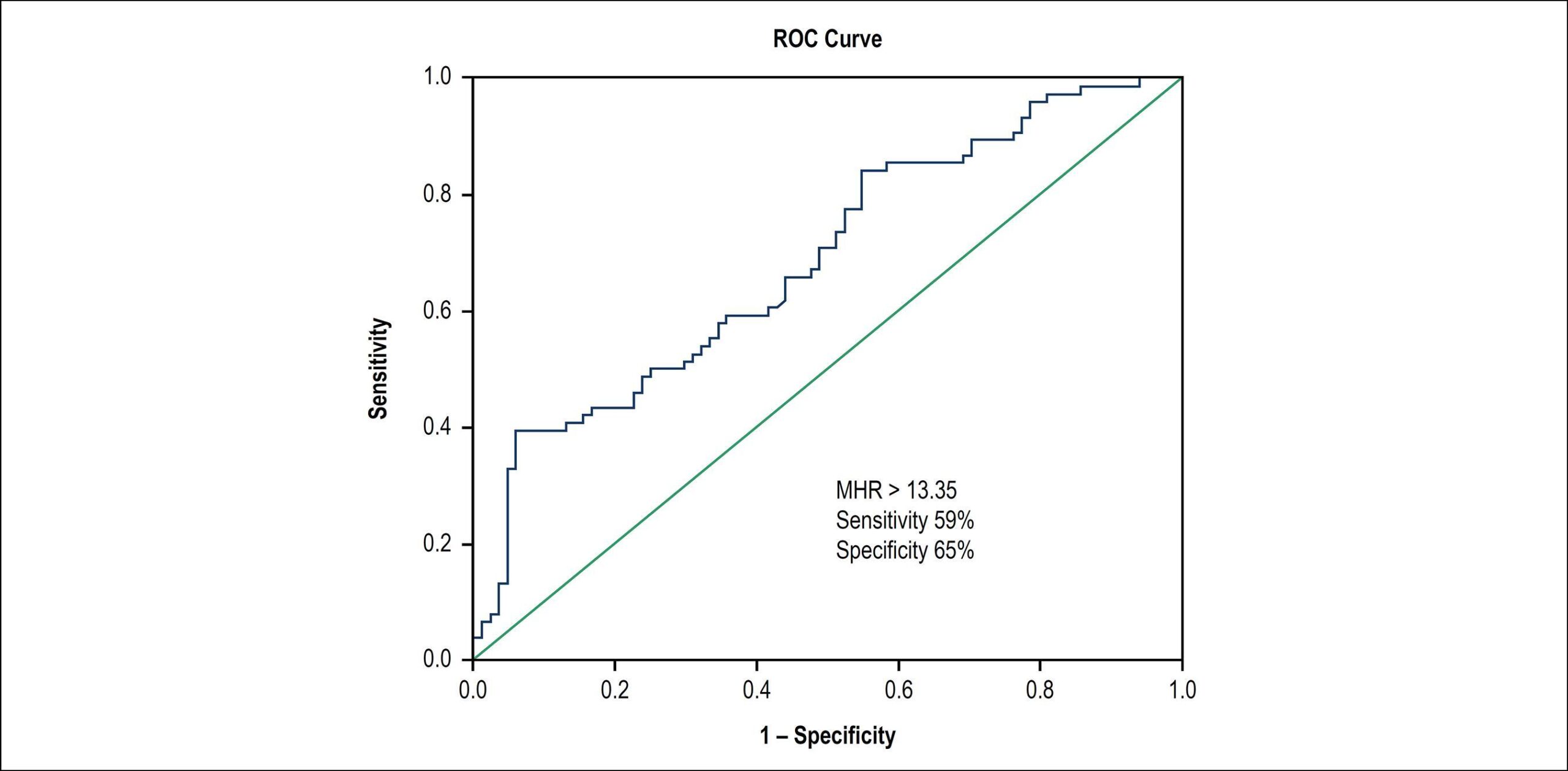
MHR was significantly higher in the MB group compared to the control group with normal coronary arteries. We found the frequency of MB (p = 0.002) to increase as the MHR tertiles rose. The Monocyte-HDL ratio with a cut-point of 13.35 had 59% sensitivity and 65.0% specificity (ROC area under curve: 0.687, 95% CI: 0.606-0.769, p < 0.001) in accurately predicting a MB diagnosis. In the multivariate analysis, MHR (p = 0.013) was found to be a significant independent predictor of the presence of MB, after adjusting for other risk factors.

Conclusion:

The present study revealed a significant correlation between MHR and MB.

  • Atherosclerosis
  • Biomarkers/blood
  • Cholesterol, HDL/blood
  • Inflammation
  • Monocytes/citology
  • Myocardial Bridging
Read Full Article
Creative Commons Attribution (CC BY) Creative Commons license
17/12/2018 DOI: 10.5935/abc.20180253
Myocardial bridge associated with cardiovascular injuries in bovines adult of Canchim race
ABC
Artigo Original

Myocardial bridge associated with cardiovascular injuries in bovines adult of Canchim race

José Wilson dos Santos et al. Nader Wafae Marcelo Emílio Beletti

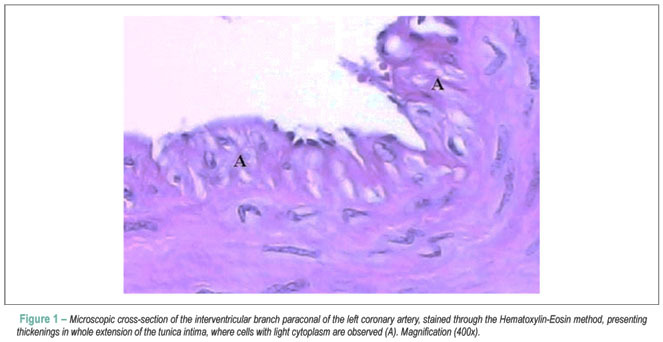
BACKGROUND: The influence that myocardial bridge exercises over blood stream in the course of arterial segment under the bridge has been discussed by the scientific community. OBJECTIVE: To compare ultrastructural muscle tissue of myocardial bridge and the ventricular wall; to analyze the degree of injury to the tunica intima of the arterial segments, and look for possible changes that may precede or initiate the process of atherosclerotic lesions. METHODS: Forty Canchim bovine hearts were studied regarding alterations of the tunica intima from coronary arteries on the different myocardial bridge segments. For the microscopic examination, hematoxylin-eosin and fuchsin-resorcin staining following conventional microscope techniques were made. For the electronic microscopic examination, myocardial Bridge segments from twelve Canchim bovine hearts were collected from the ventricle wall and coronary artery and were processed according to conventional techniques. RESULTS: In the light microscopy, a higher frequency of lesions on prepontine and postpontine segments of the tunica intima was observed, compared to the pontine segment. Tunica intima thickenings were followed by a disarrangement on the internal elastic limitant lamina. These cells often presented their cytoplasmas engorged by lipidic drops, making up the so-called foam cells. Electronic microscopy revealed that the muscular fibers of the myocardial bridge are usually joined in a straight and smooth way presenting lateral branches with a greater number of mitochondria in the ventricular muscle than in the bridge. CONCLUSION: There are few differences between the muscle tissues studied; intimae lesions are less frequent in pontine regions compared to pre and post-pontine regions.

  • Animal Experimentation
  • Atherosclerosis
  • Cattle
  • mitochondria, heart
  • Myocardial Bridging
Read Full Article
Creative Commons Attribution (CC BY) Creative Commons license
06/01/2012 DOI: 10.1590/S0066-782X2012005000003 Views 1
Myocardial bridging: therapeutic and clinical development
ABC
Artigo Original

Myocardial bridging: therapeutic and clinical development

Aline Braz Pereira et al. Danilo Spricigo Peressoni Castro Emanuela Todeschini Menegotto Wladimir Maia do Amaral Gustavo Spricigo Peressoni Castro

BACKGROUND: The myocardial bridge constitutes one of the main differential diagnoses of coronary artery disease. However, it remains an underdiagnosed condition and its physiopathological mechanisms and therapeutics are yet to be elucidated. OBJECTIVE: To analyze and describe the clinical and therapeutic evolution of patients with an angiographic diagnosis of myocardial bridge, comparing the data with that in the current literature, in order to clarify the patients’ clinical profile and prognosis. METHODS: The results of coronary angiographies carried out from 2003 to 2007 in a Laboratory of Hemodynamics were reviewed; the analysis of patients’ files was carried out and selected patients were interviewed. RESULTS: The frequency of myocardial bridge diagnosis was 3.6%. The mean age of patients was 56.8 years (SD = 11.83; CI = 0.73). The anterior descending artery was affected in isolation in 100% of the cases. After the selection, the analysis and interview of 31 patients were carried out. There was no correlation between symptoms and degree of angiographic narrowing observed in the studied patients. The drug treatment included the use of beta-blockers, calcium-channel antagonists, platelet antiaggregants and/or nitrates and resulted in clinical improvement in 30%, absence of alterations in the clinical picture in 60% and symptom worsening in 10% of the patients. One patient presented sudden death; two patients underwent angioplasty followed by significant clinical improvement and none of the patients underwent surgical procedures. CONCLUSION: Most of the patients with myocardial bridge have a good prognosis, but in the long term, there are not enough data, obtained from a large sample of symptomatic patients, to draw definitive conclusions.

  • Angioplasty
  • Cohort Studies
  • Coronary Artery Disease
  • Myocardial Bridging
  • percutaneous coronary
  • transluminal
Read Full Article
Creative Commons Attribution (CC BY) Creative Commons license
05/05/2010 DOI: 10.1590/S0066-782X2010000200008
Morphological description and clinical implications of myocardial bridges: an anatomical study in colombians
ABC
Artigo Original

Morphological description and clinical implications of myocardial bridges: an anatomical study in colombians

Luis Ernesto Ballesteros Acunã et al. Luis Miguel Ramírez Aristeguieta Saldarriaga Bladimir Tellez

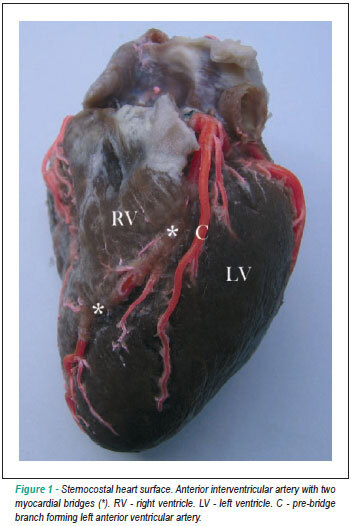
BACKGROUND: Myocardial bridges represent a hotly debated research topic. Myocardial bridges are considered to be a vascular heart variation due to its intermittent or enduring reducing of the arterial lumen, with a possible ischemic effect. METHODS: 154 hearts were studied, having been extracted as fresh autopsy material. Coronary arteries were injected with synthetic resin and cleaned by extracting the pericardial fat. RESULTS: 92 myocardial bridges were observed in 62 hearts (40.3%). Average myocardial bridge length was 19.9 mm. Myocardial bridges varied per artery from one myocardial bridge in 42 hearts (27.3%), two myocardial bridges in 11 hearts (7.2%), three myocardial bridges in 8 hearts (5.2%) and four myocardial bridges in 1 heart (0.7%). Most myocardial bridges coincided with the anterior interventricular artery in its proximal and intermediate segments in 61 cases (39.6%) and left diagonal artery in 11 cases (7.2%). Arteries emitted just before myocardial bridges (pre-bridge branch) in 50 cases (54.3%) of the sample, with an average caliber of 1.41 mm. A third coronary artery was present in 46 cases (29.8%) of total sample. A higher frequency of myocardial bridges was found in hearts with a third coronary artery. CONCLUSION: It is necessary to consider the clinical importance of the variations considering the arterial distribution and associated clinical implications.

  • Chest Pain
  • Coronary Vessels
  • Myocardial Bridging
  • Myocardial Ischemia
Read Full Article
Creative Commons Attribution (CC BY) Creative Commons license
23/06/2009 DOI: 10.1590/S0066-782X2009000400002

How to cite this article

EndNote RIS

Electronic Document Format (Vancouver)

Parapid B, Kanjuh VI. Myocardial Bridge: Friend, Enemy, or Frenemy?. Arquivos Brasileiros de Cardiologia 2023;120(7):e20230426.

Electronic Document Format (ABNT)

Parapid, Biljana; Kanjuh, Vladimir I.. Myocardial Bridge: Friend, Enemy, or Frenemy?. Arquivos Brasileiros de Cardiologia, v. 120, n. 7, e20230426, Aug. 2023.

Electronic Document Format (APA)

Parapid, B., & Kanjuh, V. I. (2023). Myocardial Bridge: Friend, Enemy, or Frenemy?. Arquivos Brasileiros de Cardiologia, 120(7), e20230426.

Electronic Document Format (ISO)

Parapid, Biljana and Kanjuh, Vladimir I.. Myocardial Bridge: Friend, Enemy, or Frenemy?. Arquivos Brasileiros de Cardiologia [online]. 2023, vol. 120, n. 7, [cited 2026-10-14], e20230426. Available from: <https://journals.cardiol.br/en/article/myocardial-bridge-friend-enemy-or-frenemy/>. ISSN 0066-782X

EndNote RIS

Electronic Document Format (Vancouver)

Lucena JD, Brito HM, Sanders JVS, Cavalcante JB, Collyer MC, Leite CL, Silveira HF, et al. Incidence and Morphological Study of Myocardial Bridge in the State of Ceará: A Cadaveric Study. Arquivos Brasileiros de Cardiologia 2023;120(7):e20220460.

Electronic Document Format (ABNT)

Lucena, Jalles Dantas de; Brito, Hudson Martins de; Sanders, João Victor Souza; Cavalcante, Jonathan Barros; Collyer, Michelly Carneiro; Leite, Cecília de Lima; Silveira, Helson Freitas da; Ferreira Filho, Julio Cesar Campos. Incidence and Morphological Study of Myocardial Bridge in the State of Ceará: A Cadaveric Study. Arquivos Brasileiros de Cardiologia, v. 120, n. 7, e20220460, Jul. 2023.

Electronic Document Format (APA)

Lucena, J. D. , Brito, H. M. , Sanders, J. V. S., Cavalcante, J. B., Collyer, M. C., Leite, C. L., Silveira, H. F. , & Ferreira Filho, J. C. C. (2023). Incidence and Morphological Study of Myocardial Bridge in the State of Ceará: A Cadaveric Study. Arquivos Brasileiros de Cardiologia, 120(7), e20220460.

Electronic Document Format (ISO)

Lucena, Jalles Dantas de and Brito, Hudson Martins de and Sanders, João Victor Souza and Cavalcante, Jonathan Barros and Collyer, Michelly Carneiro and Leite, Cecília de Lima and Silveira, Helson Freitas da and Ferreira Filho, Julio Cesar Campos. Incidence and Morphological Study of Myocardial Bridge in the State of Ceará: A Cadaveric Study. Arquivos Brasileiros de Cardiologia [online]. 2023, vol. 120, n. 7, [cited 2026-10-14], e20220460. Available from: <https://journals.cardiol.br/en/article/incidence-and-morphological-study-of-myocardial-bridge-in-the-state-of-ceara-a-cadaveric-study/>. ISSN 0066-782X

EndNote RIS

Electronic Document Format (Vancouver)

Carvalho VP, Moraes ERFL, Paes JEH, Textor D, Ribeiro HLS, Baptista AC, Vilela SB, et al. Case Report: Myocardial Bypass in Left Descending Artery – A Rare Congenital Anomaly. International Journal of Cardiovascular Sciences 2020;33(5):591-6.

Electronic Document Format (ABNT)

Carvalho, Vergílio Pereira; Moraes, Eraldo Ribeiro Ferreira Leão de; Paes, João Emílio Hanum; Textor, Daniela; Ribeiro, Hugo Leonardo Shigenaga; Baptista, Amara Chebli; Vilela, Stephanie Borges; Fontana, Ana Paula; Rocha, Isabella Beatriz Silva; Melo Junior, Jair Pereira. Case Report: Myocardial Bypass in Left Descending Artery – A Rare Congenital Anomaly. International Journal of Cardiovascular Sciences, v. 33, n. 5, p. 591-596, Feb. 2020.

Electronic Document Format (APA)

Carvalho, V. P., Moraes, E. R. F. L. , Paes, J. E. H., Textor, D., Ribeiro, H. L. S., Baptista, A. C., Vilela, S. B., Fontana, A. P., Rocha, I. B. S., & Melo Junior, J. P. (2020). Case Report: Myocardial Bypass in Left Descending Artery – A Rare Congenital Anomaly. International Journal of Cardiovascular Sciences, 33(5), 591-596.

Electronic Document Format (ISO)

Carvalho, Vergílio Pereira and Moraes, Eraldo Ribeiro Ferreira Leão de and Paes, João Emílio Hanum and Textor, Daniela and Ribeiro, Hugo Leonardo Shigenaga and Baptista, Amara Chebli and Vilela, Stephanie Borges and Fontana, Ana Paula and Rocha, Isabella Beatriz Silva and Melo Junior, Jair Pereira. Case Report: Myocardial Bypass in Left Descending Artery – A Rare Congenital Anomaly. International Journal of Cardiovascular Sciences [online]. 2020, vol. 33, n. 5, [cited 2026-10-14], pp. 591-596. Available from: <https://journals.cardiol.br/en/article/case-report-myocardial-bypass-in-left-descending-artery-a-rare-congenital-anomaly/>. ISSN 2359-4802

EndNote RIS

Electronic Document Format (Vancouver)

Enhos A, Cosansu K, Huyut MA, Turna F, Karacop E, Bakshaliyev N, Nadir A, et al. Assessment of the Relationship between Monocyte to High-Density Lipoprotein Ratio and Myocardial Bridge. Arquivos Brasileiros de Cardiologia 2018;112(1):12-7.

Electronic Document Format (ABNT)

Enhos, Asim; Cosansu, Kahraman; Huyut, Mustafa Ahmet; Turna, Fahrettin; Karacop, Erdem; Bakshaliyev, Nijad; Nadir, Aydin; Ozdemir, Ramazan; Uluganyan, Mahmut. Assessment of the Relationship between Monocyte to High-Density Lipoprotein Ratio and Myocardial Bridge. Arquivos Brasileiros de Cardiologia, v. 112, n. 1, p. 12-17, Dec. 2018.

Electronic Document Format (APA)

Enhos, A., Cosansu, K., Huyut, M. A., Turna, F., Karacop, E., Bakshaliyev, N., Nadir, A., Ozdemir, R., & Uluganyan, M. (2018). Assessment of the Relationship between Monocyte to High-Density Lipoprotein Ratio and Myocardial Bridge. Arquivos Brasileiros de Cardiologia, 112(1), 12-17.

Electronic Document Format (ISO)

Enhos, Asim and Cosansu, Kahraman and Huyut, Mustafa Ahmet and Turna, Fahrettin and Karacop, Erdem and Bakshaliyev, Nijad and Nadir, Aydin and Ozdemir, Ramazan and Uluganyan, Mahmut. Assessment of the Relationship between Monocyte to High-Density Lipoprotein Ratio and Myocardial Bridge. Arquivos Brasileiros de Cardiologia [online]. 2018, vol. 112, n. 1, [cited 2026-10-14], pp. 12-17. Available from: <https://journals.cardiol.br/en/article/assessment-of-the-relationship-between-monocyte-to-high-density-lipoprotein-ratio-and-myocardial-bridge/>. ISSN 0066-782X

EndNote RIS

Electronic Document Format (Vancouver)

Santos JW, Wafae N, Beletti ME. Myocardial bridge associated with cardiovascular injuries in bovines adult of Canchim race. Arquivos Brasileiros de Cardiologia 2012;98(1):22-9.

Electronic Document Format (ABNT)

Santos, José Wilson dos; Wafae, Nader; Beletti, Marcelo Emílio. Myocardial bridge associated with cardiovascular injuries in bovines adult of Canchim race. Arquivos Brasileiros de Cardiologia, v. 98, n. 1, p. 22-29, Jan. 2012.

Electronic Document Format (APA)

Santos, J. W. , Wafae, N., & Beletti, M. E. (2012). Myocardial bridge associated with cardiovascular injuries in bovines adult of Canchim race. Arquivos Brasileiros de Cardiologia, 98(1), 22-29.

Electronic Document Format (ISO)

Santos, José Wilson dos and Wafae, Nader and Beletti, Marcelo Emílio. Myocardial bridge associated with cardiovascular injuries in bovines adult of Canchim race. Arquivos Brasileiros de Cardiologia [online]. 2012, vol. 98, n. 1, [cited 2026-10-14], pp. 22-29. Available from: <https://journals.cardiol.br/en/article/myocardial-bridge-associated-with-cardiovascular-injuries-in-bovines-adult-of-canchim-race/>. ISSN 0066-782X

EndNote RIS

Electronic Document Format (Vancouver)

Pereira AB, Castro DSP, Menegotto ET, Amaral WM, Castro GSP. Myocardial bridging: therapeutic and clinical development. Arquivos Brasileiros de Cardiologia 2010;94(2):188-94.

Electronic Document Format (ABNT)

Pereira, Aline Braz; Castro, Danilo Spricigo Peressoni; Menegotto, Emanuela Todeschini; Amaral, Wladimir Maia do; Castro, Gustavo Spricigo Peressoni. Myocardial bridging: therapeutic and clinical development. Arquivos Brasileiros de Cardiologia, v. 94, n. 2, p. 188-194, May. 2010.

Electronic Document Format (APA)

Pereira, A. B., Castro, D. S. P., Menegotto, E. T., Amaral, W. M. , & Castro, G. S. P. (2010). Myocardial bridging: therapeutic and clinical development. Arquivos Brasileiros de Cardiologia, 94(2), 188-194.

Electronic Document Format (ISO)

Pereira, Aline Braz and Castro, Danilo Spricigo Peressoni and Menegotto, Emanuela Todeschini and Amaral, Wladimir Maia do and Castro, Gustavo Spricigo Peressoni. Myocardial bridging: therapeutic and clinical development. Arquivos Brasileiros de Cardiologia [online]. 2010, vol. 94, n. 2, [cited 2026-10-14], pp. 188-194. Available from: <https://journals.cardiol.br/en/article/myocardial-bridging-therapeutic-and-clinical-development/>. ISSN 0066-782X

EndNote RIS

Electronic Document Format (Vancouver)

Acunã LEB, Aristeguieta LMR, Tellez SB. Morphological description and clinical implications of myocardial bridges: an anatomical study in colombians. Arquivos Brasileiros de Cardiologia 2009;92(4):256-62.

Electronic Document Format (ABNT)

Acunã, Luis Ernesto Ballesteros; Aristeguieta, Luis Miguel Ramírez; Tellez, Saldarriaga Bladimir. Morphological description and clinical implications of myocardial bridges: an anatomical study in colombians. Arquivos Brasileiros de Cardiologia, v. 92, n. 4, p. 256-262, Jun. 2009.

Electronic Document Format (APA)

Acunã, L. E. B., Aristeguieta, L. M. R., & Tellez, S. B. (2009). Morphological description and clinical implications of myocardial bridges: an anatomical study in colombians. Arquivos Brasileiros de Cardiologia, 92(4), 256-262.

Electronic Document Format (ISO)

Acunã, Luis Ernesto Ballesteros and Aristeguieta, Luis Miguel Ramírez and Tellez, Saldarriaga Bladimir. Morphological description and clinical implications of myocardial bridges: an anatomical study in colombians. Arquivos Brasileiros de Cardiologia [online]. 2009, vol. 92, n. 4, [cited 2026-10-14], pp. 256-262. Available from: <https://journals.cardiol.br/en/article/morphological-description-and-clinical-implications-of-myocardial-bridges-an-anatomical-study-in-colombians/>. ISSN 0066-782X

  • About ABC Family
  • Internal Regulation
  • Editorial Board
  • Brazilian Society of Cardiology (SBC)

Issues

SBC Guidelines

  • Videos
  • Podcasts
  • News