ABC Family Arquivos Brasileiros de Cardiologia International Journal of Cardiovascular Sciences ABC Heart Failure & Cardiomyopathy ABC Imagem Cardiovascular
Português English
ABC Family
Português English
  • About
    • About ABC Family
    • Internal Regulation
    • Editorial Board
    • Brazilian Society of Cardiology (SBC)
  • Issues
  • SBC Guidelines
  • Content
    • Videos
    • Podcasts
    • News
  • About
    • About ABC Family
    • Internal Regulation
    • Editorial Board
    • Brazilian Society of Cardiology (SBC)
  • Issues
  • SBC Guidelines
  • Content
    • Videos
    • Podcasts
    • News

ABC Family

  • ABC Family
  • Arquivos Brasileiros de Cardiologia
  • International Journal of Cardiovascular Sciences
  • ABC Heart Failure & Cardiomyopathy
  • ABC Imagem Cardiovascular
Search in

No content found.

Journals
Ordering
Article types
Others

  1. Home
  2. Keyword: Heart
Treatment with Capsinoids Promotes Impaired Cardiomyocyte Contractility in Obesity without Positively Modulating Metabolic Parameters
ABC
Original Article

Treatment with Capsinoids Promotes Impaired Cardiomyocyte Contractility in Obesity without Positively Modulating Metabolic Parameters

Kiany Miranda et al. Késsia Cristina Carvalho Santos Janete Corrêa Cardoso Lucas Furtado Domingos … Fabiane Merigueti Nunes Luisa Martins Simmer Daniel Sesana Silva Marina Politi Okoshi Danilo Sales Bocalini Ana Paula Lima-Leopoldo André Soares Leopoldo

Abstract

Background:

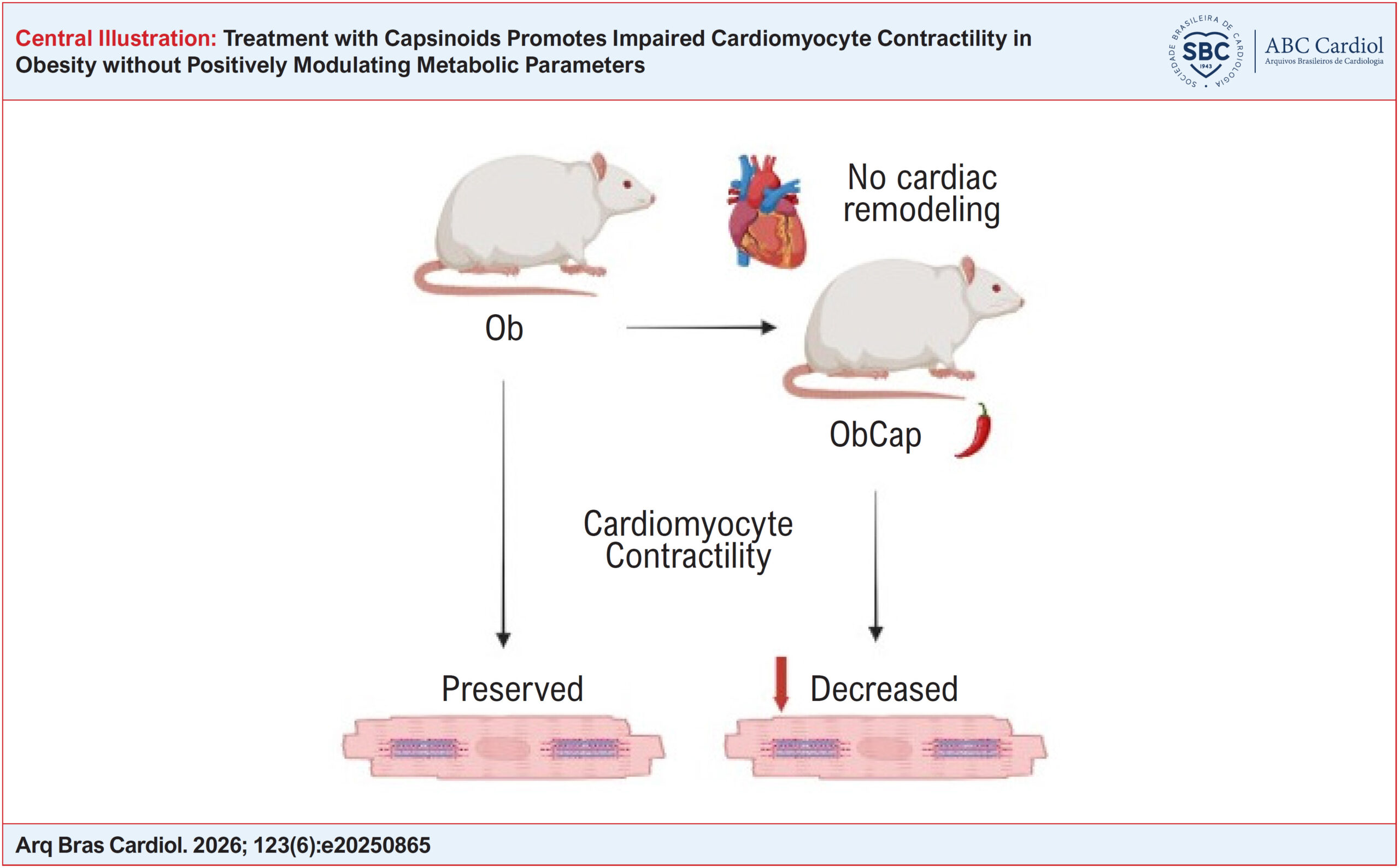
Capsinoids (Cap) are bioactive compounds with thermogenic properties capable of promoting physiological changes and aiding digestion, potentially influencing fat loss in obesity. However, their effects on cardiac tissue remain unclear.

Objective:

This study investigated the effects of chronic Cap administration on cardiac contractility and morphology in obese (Ob) rats induced by a saturated high-fat diet (HFD).

Methods:

Male Wistar rats were assigned to standard diet (SD) or HFD groups for 19 weeks. After this period, animals were redistributed into Control (C), Obese (Ob), and Obese supplemented with capsinoids (ObCap). The ObCap group received Cap via orogastric gavage (10 mg/kg). Nutritional assessments, dietary profile, histological analyses, comorbidities, and cardiac evaluations were performed. A significance level of 5% was adopted for all tests.

Results:

Fat deposits and total adiposity were higher in Ob animals compared with the C group, with no differences between Ob and ObCap. Metabolic, hormonal, and lipid alterations were observed between Ob and ObCap. No differences in cardiac morphometry were detected among groups. The ObCap group exhibited reduced fractional shortening compared with Ob. Regarding shortening time, Ob animals showed a decrease compared with C, whereas ObCap showed an increase compared with Ob.

Conclusion:

Treatment with Cap did not prevent excessive fat accumulation nor improve metabolic parameters in obesity. Moreover, it impaired cardiomyocyte contractility.
  • Heart
  • High-Fat Diet
  • Obesity
Read Full Article
Creative Commons Attribution (CC BY) Creative Commons license
27/07/2026 DOI: 10.36660/abc.20250865i
Reference Echocardiographic Values for Cardiac Chambers in Brazil: A Multiregional, Multi-Racial Study
ABC
Original Article

Reference Echocardiographic Values for Cardiac Chambers in Brazil: A Multiregional, Multi-Racial Study

Ana Clara Tude Rodrigues et al. Roberto Magalhães Saraiva Viviane T. Hotta Gabriel Doreto Rodrigues … Fabiana Camelier de Assis Cardoso Anderson da Costa Armstrong Cláudia Gianini Monaco Adelino Parro Junior José Luis de Castro e Silva Pretto João Marcos Bemfica Barbosa Ferreira Renata Santos Lopes Teixeira de Lima Marcelo Salame Salustiano Pereira de Araujo Carlos Eduardo Suaide Silva Cíntia Galhardo Tressino Fabio Canellas Moreira Ana Cristina Camarozano Minna Moreira Dias Romano Andre Luiz Cerqueira Almeida Claudio Henrique Fischer Alex dos Santos Felix Clarissa Borguezan-Daros Diogo Silva Piardi Diego Cunha Marcelo Dantas Tavares de Melo Rafael Modesto Silvio Henrique Barberato Wercules Antonio Oliveira Marcelo Luiz Campos Vieira Samira Saady Morhy

Abstract

Background

Reference values for cardiac chamber quantification are essential for clinical decision-making. Brazil is a continental country with marked racial diversity and substantial regional socioeconomic and anthropometric variability, which may not be adequately represented in international echocardiographic standards.

Objective

To establish reference echocardiographic measurements for healthy Brazilian adults and to investigate geographic and sex-related differences across Brazil’s major regions.

Methods

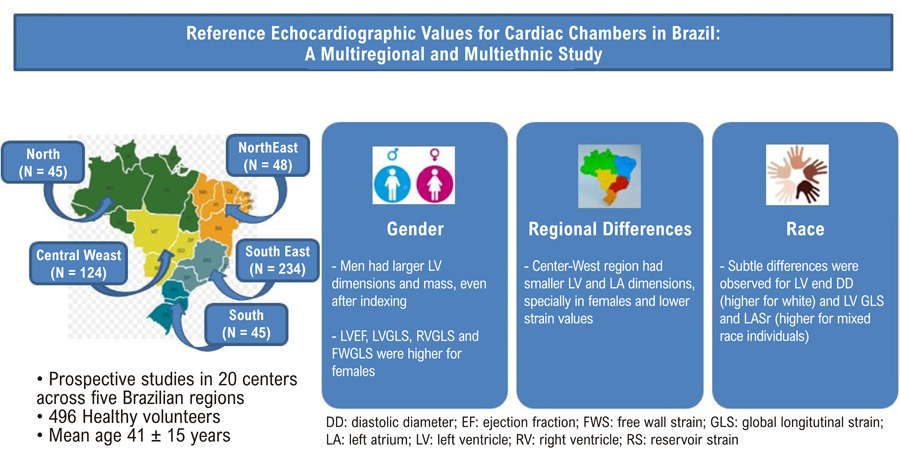
In this prospective, multicenter study, transthoracic echocardiograms were performed in 496 healthy volunteers (mean age 41 ± 15 years; 55% women) from five Brazilian regions. Left ventricular (LV) and left atrial (LA) dimensions, volumes, mass, ejection fraction, and global longitudinal strain (GLS) were analyzed in accordance with current guidelines. Comparisons were conducted by sex (Student’s t test or Mann-Whitney U test) and by region (analysis of variance).

Results

Cardiac chamber dimensions and LV mass were greater in men, even after indexing for body surface area. LA volumes were also higher in men, although these differences were attenuated after indexing. Absolute LVGLS and right ventricle (RV) GLS (RVGLS) values were higher in women, whereas LA strain reservoir (LASr) was similar between sexes. Regionally, the Center-West exhibited significantly smaller LV volumes, a difference primarily driven by women, along with lower LVGLS and RVGLS (p < 0.001). In contrast, LA volumes were smaller in the Northeast region. No significant associations were observed between self-reported race and echocardiographic parameters, except for RVGLS and LASr, which were lower in White participants.

Conclusion

This study establishes echocardiographic reference values in a nationally representative Brazilian cohort, confirms expected sex-related differences, and identifies previously unrecognized regional variations in cardiac chamber dimensions. These findings underscore the need for population-specific standards to ensure accurate cardiac quantification.

  • Echocardiography
  • Heart
  • Reference Values
Read Full Article
Creative Commons Attribution (CC BY) Creative Commons license
23/03/2026 DOI: 10.36660/abc.20250628i Views 1
ABC
Editorial

Cardiac Response to Stress: Influence of Vortioxetine

Rodrigo Guimarães Vieira de Carvalho et al. Gustavo Augusto Ferreira Mota Milene Vitória Sampaio Sobral Ana Paula Coelho Figueira Freire Francis Lopes Pacagnelli

Psychological stress is common and plays a significant role in adapting to environmental challenges. However, it also has negative health effects, potentially triggering psychiatric disorders such as anxiety and depression. Physiological responses to stress play a crucial role in the development of cardiovascular diseases, as hemodynamic, vascular, and immunological changes induced by stress are particularly involved in this process. Stress activates brain regions that, through the sympathetic nervous system or hormones, affect heart function. Chronic unpredictable mild stress (CUMS) increases serum corticosterone, aggravating lipid profiles and accelerating atherosclerosis in rodents. Chronic stress activates the hypothalamic-pituitary-adrenal axis, increasing glucocorticoids and reactive oxygen species, contributing to cardiovascular disorders.

CUMS models simulate depression in animals, as evidenced by anhedonia, which is reversible with antidepressants. This animal model has been validated and is widely used; however, improvements in studies utilizing this model can be implemented. It is recommended to stratify animals in the CUMS group into “resilient” and “susceptible” cohorts, use more refined protocols in the sucrose preference test to minimize physiological and physical artifacts, systematically evaluation of the nonspecific effects of CUMS, and implement adjustments in behavioral tests. Researchers observed that rats exposed to CUMS exhibited both cardiac and behavioral changes, increasing the risk of arrhythmias and infarction.

[…]

  • Antidepressive Agents
  • Heart
  • Psychological Stress
  • Vortioxetine
Read Full Article
Creative Commons Attribution (CC BY) Creative Commons license
14/04/2025 DOI: 10.36660/abc.20250105i Views 1
Management of Ductus-Dependent Systemic Circulatory Lesions in the Neonatal Period: A Ten-Year Experience
ABC
Original Article

Management of Ductus-Dependent Systemic Circulatory Lesions in the Neonatal Period: A Ten-Year Experience

Dilek Dilli et al. Hasan Akduman Rumeysa Çitli Utku Arman Örun … Vehbi Doğan Mehmet Taşar Tamer Yoldaş Nurdan Dinlen Fettah Ahmet Özyazıcı Ayşegül Zenciroğlu

Abstract

Background

In ductus-dependent left-sided heart lesions, systemic circulation depends on right-to-left flow via the ductus arteriosus. These lesions may occur as an isolated defect or complex disease.

Objective

In this study, we aimed to investigate the neonatal outcomes of duct-dependent systemic circulatory lesions, especially aortic coarctation (CoA) and interrupted aortic arch (IAA).

Methods

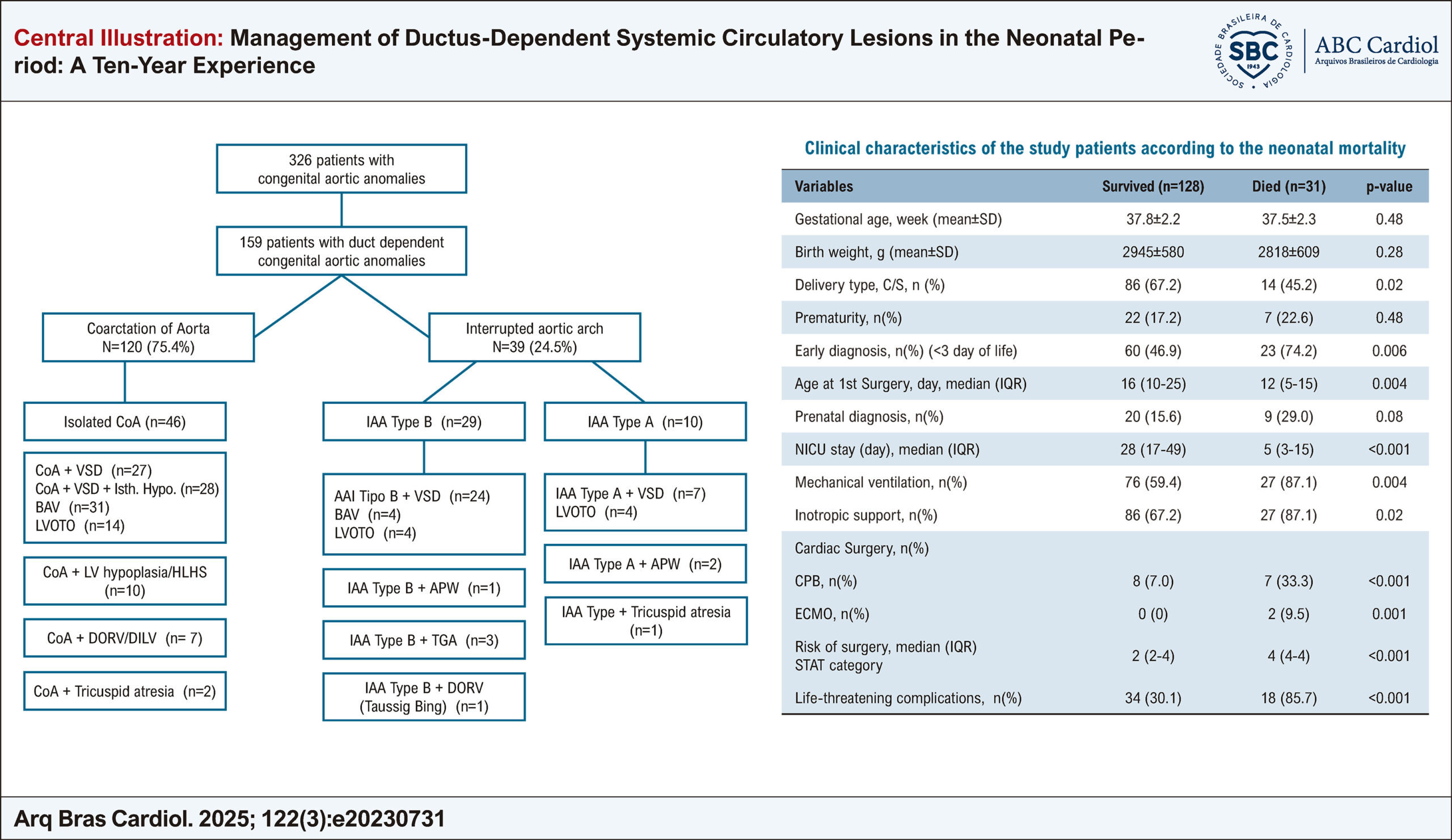
A total of 159 patients with duct-dependent systemic lesions were followed up in the Cardiac NICU of our institution from 2012 to 2022. We retrospectively reviewed the medical charts of all patients from the hospital database. They were analyzed for clinical and surgical outcomes. A p-value of <0.05 was considered statistically significant.

Results

Of 159 patients, CoA was detected in 120 (75.4%) and IAA in 39 (24.5%) patients. Cardiac catheterization was performed in 74 (61.6%) patients with CoA in the neonatal period; 49 (40.8%) underwent therapeutic and 25 (20.8%) diagnostic procedures. One hundred one patients with CoA (84.1%) underwent surgery at a median age of 14 days (9-23). Thirty-four of 39 patients with IAA (87.1%) underwent surgery; single-stage repair was performed on 13 patients (38.2%), while two-stage repair was applied to 21 (61.7%) patients. The overall neonatal mortality rate was 19.5% (n=31). In multivariate analysis, the higher STAT categories (OR:2.3, CI:95%, 1.1-5.1, p=0.03) and the presence of major postoperative complications (OR:9.8, CI:95%, 2.1-35.1, p=0.003) have increased the risk of neonatal mortality.

Conclusion

Newborns with congenital duct-dependent aortic anomalies necessitate meticulous perioperative care due to their heightened risk of morbidity and mortality.

  • Cardiovascular Abnormalities
  • Heart
  • Newborn
  • Thoracic aorta
  • Wounds and Injuries
Read Full Article
Creative Commons Attribution (CC BY) Creative Commons license
31/03/2025 DOI: 10.36660/abc.20230731i Views 2
Figure 1
ABC
Case Report

Cardiac Lymphoma: A Case Report

Leticia Ferraz Pamplona et al. Kelly Barnabé Serpa de Oliveira João Ancelmo dos Reis Neto Luis Antelo Bustamante … Januário Manoel de Souza Flávia Fernandes Silva Zacchi Juliana Brenande de Oliveira Brito Salomon Soriano Ordinola Rojas

Abstract

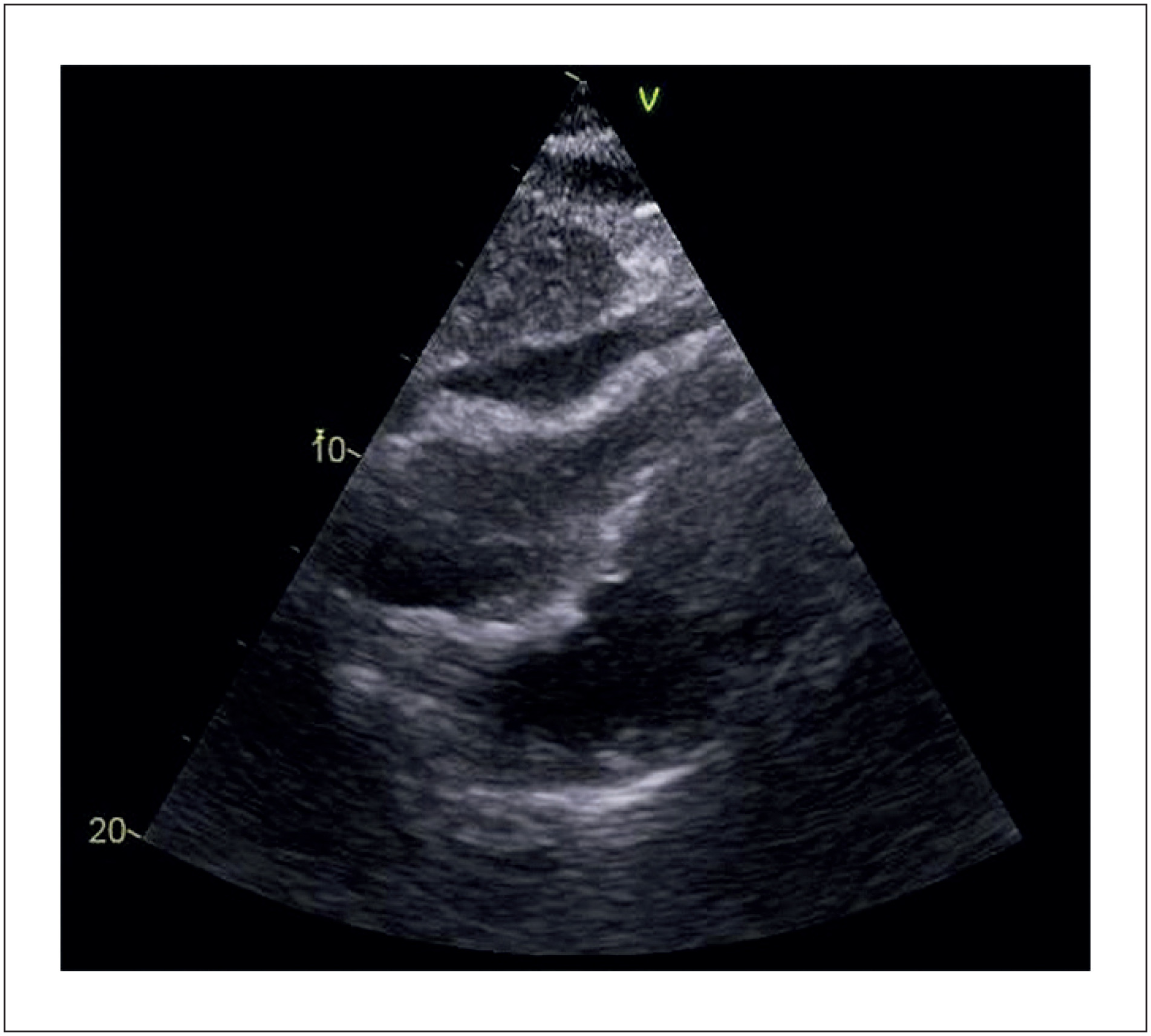
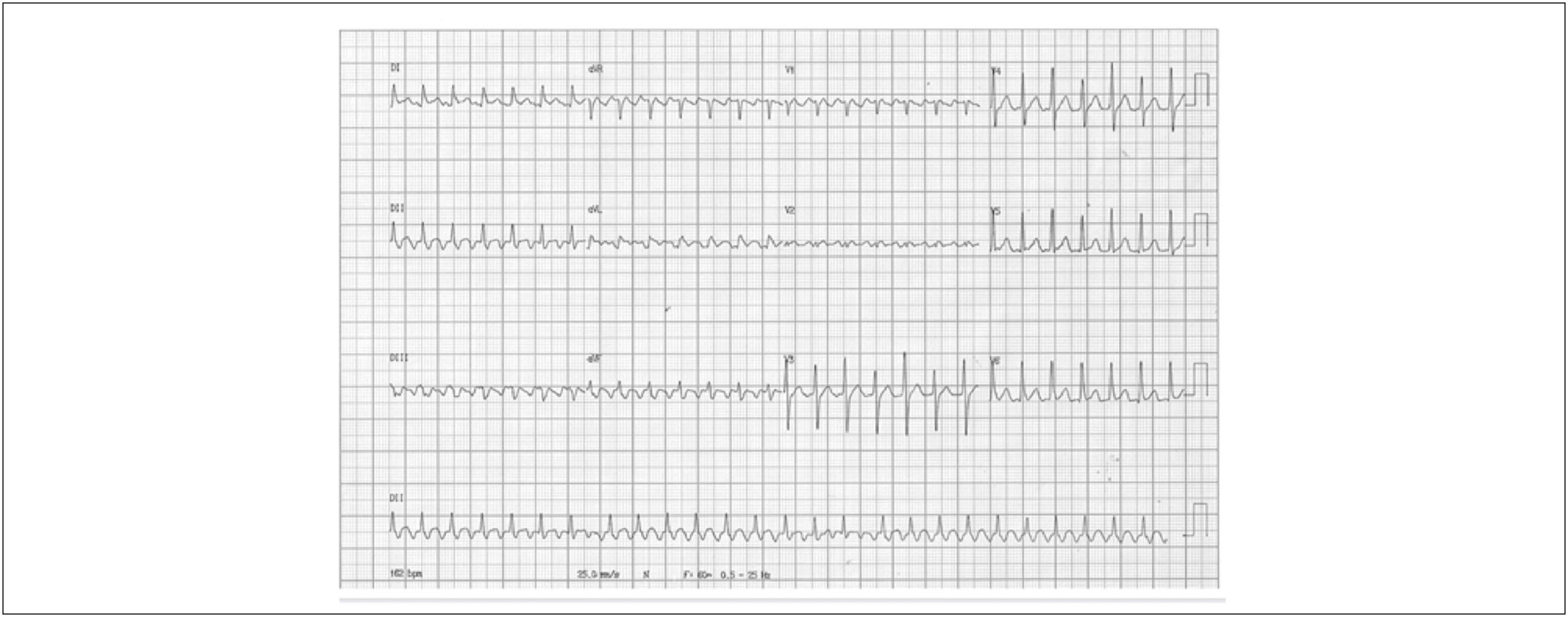
Cardiac tumors are rare. Primary cardiac lymphoma is defined as non-Hodgkin lymphoma that involves only the heart and/or pericardium. It is an aggressive tumor with a poor prognosis and its symptoms may be nonspecific. A definitive diagnosis can only be obtained through histopathological study, and chemotherapy is the main treatment strategy.

This case is about a 71-year-old male patient, with a rare form of primary cardiac tumor. He had postoperative complications such as acute pulmonary edema and the need for a pacemaker, which occurred after tumor resection requiring reconstruction of the vena cava and suture of the right atrium.

Primary cardiac lymphoma is a tumor that is difficult to diagnose because it has a vague and non-specific symptomatic presentation. However, it should always be included as a differential diagnosis of cardiac masses. Early diagnosis can significantly improve the prognosis and increase the survival rate of patients by quickly referring them for specific treatment.

  • Heart
  • Heart Neoplasms
  • Lymphoma
Read Full Article
Creative Commons Attribution (CC BY) Creative Commons license
24/03/2025 DOI: 10.36660/abc.20240299i
Vortioxetine’s Therapeutic Potential: Cardiac Responses to Chronic Unpredictable Mild Stress in a Rat Model
ABC
Original Article

Vortioxetine’s Therapeutic Potential: Cardiac Responses to Chronic Unpredictable Mild Stress in a Rat Model

Ozlem Ozmen et al. Serife Tasan Gulin Ozdamar Unal

Abstract

Background

Stress arises in response to threats or challenges, affecting both physical and mental health. While its harmful effects on the heart are widely recognized, cellular-level investigations remain limited. Antidepressants, including vortioxetine (VOR), are known to impact the cardiovascular system. VOR, used to treat major depressive disorder, is considered a promising option for patients with heart disease due to its anti-inflammatory and antioxidant properties, which may reduce cardiac damage.

Objectives

This study aimed to assess the effects of chronic unpredictable mild stress (CUMS) on rat hearts and evaluate VOR’s potential protective effects against stress-induced cardiac damage.

Methods

Twenty-eight male Wistar Albino rats were divided into four groups. The CUMS group experienced random daily stress for 6 weeks, while the CUMS+VOR group received VOR treatment alongside stress. VOR and control groups were not exposed to stress. Heart samples were examined histopathologically and immunohistochemically.

Results

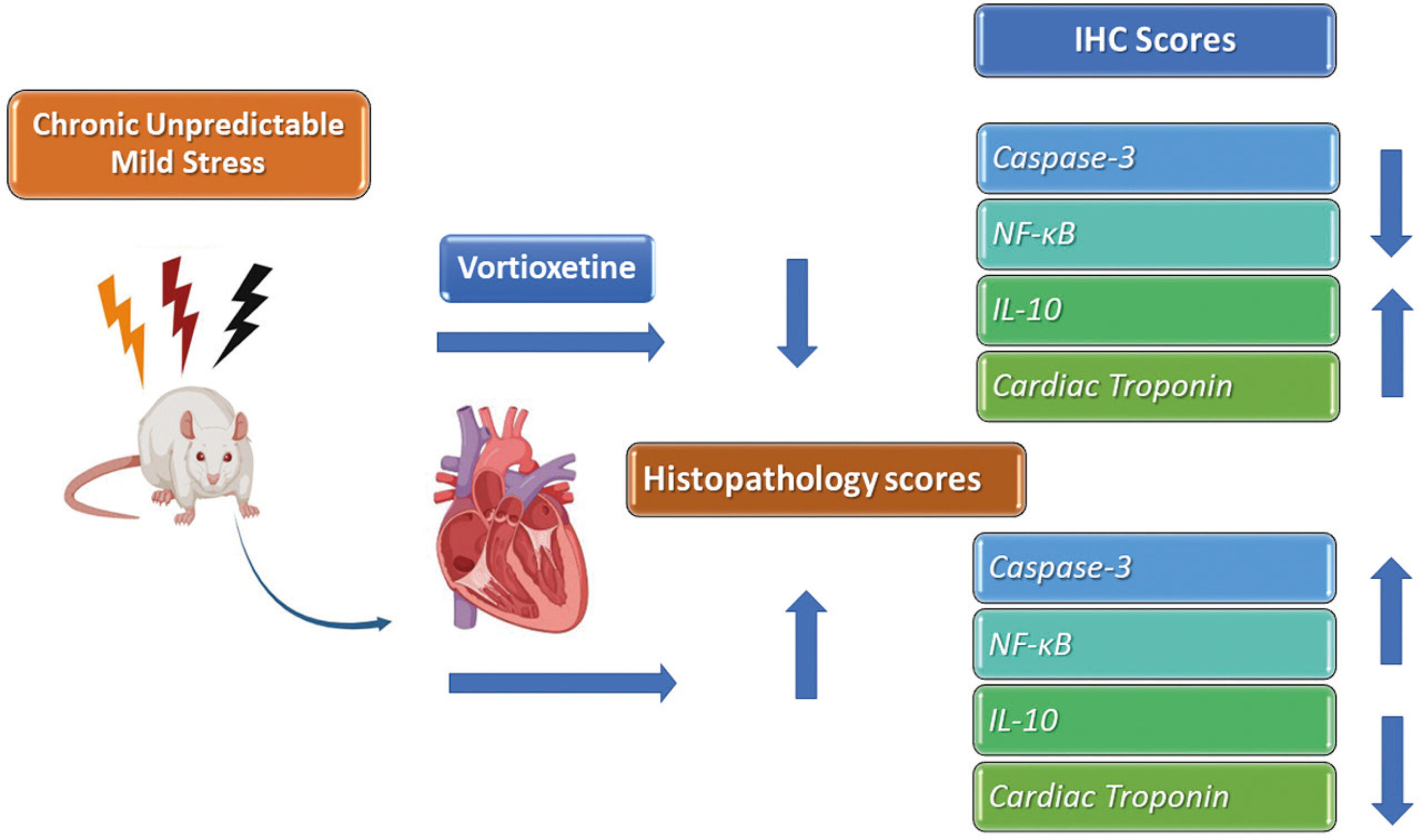
The CUMS group showed increased hyperemia, hemorrhage, edema, vacuolar degeneration, and mononuclear cell infiltrations, with reduced troponin and IL-10 and increased caspase-3 and NF-κB expressions compared to the control group (p≤0.001). VOR treatment improved these findings, normalizing histopathological and immunohistochemical results.

Conclusions

CUMS caused significant cardiac damage in rats, while VOR treatment showed protective effects by alleviating these pathological changes.

  • Heart
  • Immunohistochemistry
  • Pathology
  • Vortioxetine
Read Full Article
Creative Commons Attribution (CC BY) Creative Commons license
10/02/2025 DOI: 10.36660/abc.20240159i
Figure 1
ABCIC
Review Article

The Role of Cardiac Magnetic Resonance in patients with Amyloidosis and Aortic Stenosis

Pedro Macedo Esmeraldo Barbosa et al. Tiago Augusto Magalhães

Abstract

Cardiac magnetic resonance imaging (CMR) plays an important role in the diagnosis and prognosis of various heart diseases. The incidence of cardiac amyloidosis and aortic stenosis has been increasing in recent years, especially with the aging population, and their possible coexistence has created frequent diagnostic challenges in clinical practice. CMR assumes an important value in this context due to its unique capacity for multiparametric assessment evaluations that include anatomical, functional, and histopathological aspects. The present review aimed to increase our knowledge of the diagnosis and prognosis of amyloidosis in the presence of aortic stenosis and highlighted the importance of CMR in this scenario.

  • Amyloidosis
  • Aortic Valve Stenosis
  • Heart
  • Magnetic Resonance Imaging
Read Full Article
Creative Commons Attribution (CC BY) Creative Commons license
01/12/2022 DOI: 10.47593/2675-312X/20223503eabc320i Views 1
ABC
Editorial

Cardioprotective Effect of Resistance Exercise on Left Ventricular Remodeling Associated with Monocrotaline-Induced Pulmonary Arterial Hypertension

Silvio A. Oliveira-Junior et al. Alex Y. Ogura Marianna R. Carvalho Paula F. Martinez

Pulmonary arterial hypertension (PAH) is characterized by progressive pulmonary vascular resistance, affecting several arteries and arterioles. These changes are associated with increased right ventricular afterload and remodeling, characterized by severe hypertrophy, initially adaptive and derived from vascular pressure gradient. , Afterward, these alterations are accompanied by right ventricular dilation and impaired contractile performance, resulting in reduced ejection fraction and ventricular failure. , Clinically, right ventricular size and function parameters alterations have a recognized association with bad prognosis in pulmonary arterial hypertension.

During the PAH development, when right ventricular filling pressure has been increased, and cardiac output is deteriorating, there are concomitant volumetric and pressoric overload into the right ventricle. These effects make the interventricular septum move to the left side, sustaining a paradoxical movement. Next, left ventricle (LV) ejection fraction and diastolic performance are affected, facing impaired early diastolic filling, reduced end-diastolic volume, and adverse remodeling. , Therefore, LV dysfunction configures a secondary and important effect from PAH onset. , ,

[…]

  • Exercise
  • Heart
  • Myocardial Contraction
  • Pulmonary Arterial Hypertension
Read Full Article
Creative Commons Attribution (CC BY) Creative Commons license
21/10/2022 DOI: 10.36660/abc.20220638
ABC
Editorial

What is the Current Scenario of Cardiac Rehabilitation in Brazil and Portugal?

Ricardo Stein et al. Mauricio Milani Ana Abreu

What is the current scenario of cardiac rehabilitation in Brazil?

The scenario in Brazil is alarming. The number of documented CR programs is extremely insufficient in relation to the clinical need, and this is certainly harmful to the health of the Brazilian population with chronic heart diseases. Let’s look at the evidence: In a study published in 2020, Britto et al. estimated that, in Brazil, there is only 1 spot in a CR service for every 99 patients with ischemic heart disease, meaning that the availability is almost 3 times lower than that observed in another 32 countries evaluated (1 spot for every 32.7 patients). In another study that evaluated the worldwide availability and density of CR, this type of service was identified in 111 out of 203 countries, and the global ratio of spots for each patient with ischemic heart disease was 1 to 11, which demonstrates a sad reality.

Unpublished data on the availability of CR identified the operation of only 59 CR programs in Brazil; most of them (71%) were concentrated in the South (20%) and Southeast (51%) Regions of the country, which demonstrates not only the scarcity, but also the heterogeneity in the national distribution. In relation to available spots, the situation is even more concentrated, since 69% of them are in the Southeast Region, which exposes the large gap in spots and services in other Brazilian regions. Based on these data, the authors also calculated the national availability of CR spots for care after hospital discharge. The number of spots to provide care for these patients after a cardiovascular event represented less than 2% of the need.

[…]

  • Exercise
  • Heart
  • Rehabilitation
  • Secondary Prevention
Read Full Article
Creative Commons Attribution (CC BY) Creative Commons license
13/05/2022 DOI: 10.36660/abc.20220210 Views 1
ABC
Original Article

Signs of Cardiac Injury in Critically Ill Paediatric Patients with COVID-19: a Single-Center Experience in Brazil

Marcelo Felipe Kozak et al. Yuri Caldas Pessoa Luciana Oliveira Castro e Silva Manuela Baima Cabral … Barbara Costalonga Pereira Leite Juliana Duarte Diniz Aline Saliba Selma Harue Kawahara

Abstract

Background

Some patients with COVID-19 present myocardial injury.

Objective

To detect myocardial injury in critically ill paediatric patients, and to compare cardiac involvement between children with severe acute respiratory syndrome (SARS) and children with multisystemic inflammatory syndrome (MIS-C).

Methods

All COVID-19 children admitted to a referral intensive care unit were prospectively enrolled and had a two-dimensional echocardiogram (2D-TTE) and a cardiac troponin I (cTnI) assay within the first 72 hours. For statistical analysis, two-sided p < 0.05 was considered significant.

Results

Thirty-three patients were included, of which 51.5% presented elevated cTnI and/or abnormal 2D-TTE and 36.4% needed cardiovascular support, which was more frequent in patients with both raised cTnI and 2D-TTE abnormalities than in patients with normal exams (83.3% and 33.3%, respectively; p 0.006, 95% CI = 0.15-0.73). The most common 2D-TTE findings were pericardial effusion (15.2%) and mitral/tricuspid regurgitation (15.2%). Signs of cardiac involvement were more common in MIS-C than in SARS. MIS-C patients also presented a higher rate of the need for cardiovascular support (66.7% vs 25%, p 0.03, 95% CI = -0.7 to -0.04) and a more frequent rate of raised cTnI (77.8% vs 20.8%; p 0.002, 95% CI = 0.19 to 0.79). The negative predictive values of cTnI for the detection of 2D-TTE abnormalities were 100% for MIS-C patients and 73.7% for SARS patients.

Conclusion

signs of cardiac injury were common, mainly in MIS-C patients. 2D-TTE abnormalities were subtle. To perform a cTnI assay upon admission might help providers to discriminate those patients with a more urgent need for a 2D-TTE.

  • Child
  • COVID-19
  • Heart
Read Full Article
Creative Commons Attribution (CC BY) Creative Commons license
13/05/2022 DOI: 10.36660/abc.20210200 Views 2
ABCIC
Case Report

Cardiac Metastasis in Patient with Rectal Carcinoid Tumor

Iuri Shen de Lacerda et al. Priscilla Ornellas Neves Lucianno Henrique Pereira Santos Joalbo Matos Andrade

[…]

  • Carcinoid Tumor
  • Heart
  • Magnetic Resonance Imaging
  • Neoplasm Metastasis
  • Tomography
Read Full Article
Creative Commons Attribution (CC BY) Creative Commons license
14/01/2022 DOI: 10.5935/2318-8219.20190052
Figure 1
IJCS
Original Article

Is the Wistar Rat a more Suitable Normotensive Control for SHR to Test Blood Pressure and Cardiac Structure and Function?

Leonardo Mateus Teixeira de Rezende et al. Leôncio Lopes Soares Filipe Rios Drummond Pedro Zavagli Suarez … Luciano Leite Joel Alves Rodrigues Tiago Leal Lukiya Favarato Emily Correna Carlo Reis Evandro Favarato Miguel Carneiro Júnior Antônio José Natali Cândido Coimbra Thales Prímola Gomes

Abstract

Background:

There are divergences in the literature regarding the experimental model (Wistar-WIS or Wistar Kyoto-WKY) to be used as a Spontaneously Hypertensive Rat (SHR) control. The characterization of these models in terms of cardiovascular parameters provides researchers with important tools at the time of selection and application in scientific research.

Objective:

The aim of this study was to evaluate the use of WIS and WKY as a Spontaneously Hypertensive Rat (SHR) control by assessing the long-term behavior of blood pressure and cardiac structure and function in these strains.

Methods:

To this end, WIS, WKY, and SHR underwent longitudinal experiments. Blood pressure and body mass were measured every two weeks from the 8th to the 72nd. Echocardiographic analysis was performed in all groups with 16, 48, and 72 weeks of life. After having applied the normality test, the Two-Way ANOVA of repeated measures followed by the Tukey post hoc test was used. A significance level of 5% was established.

Results:

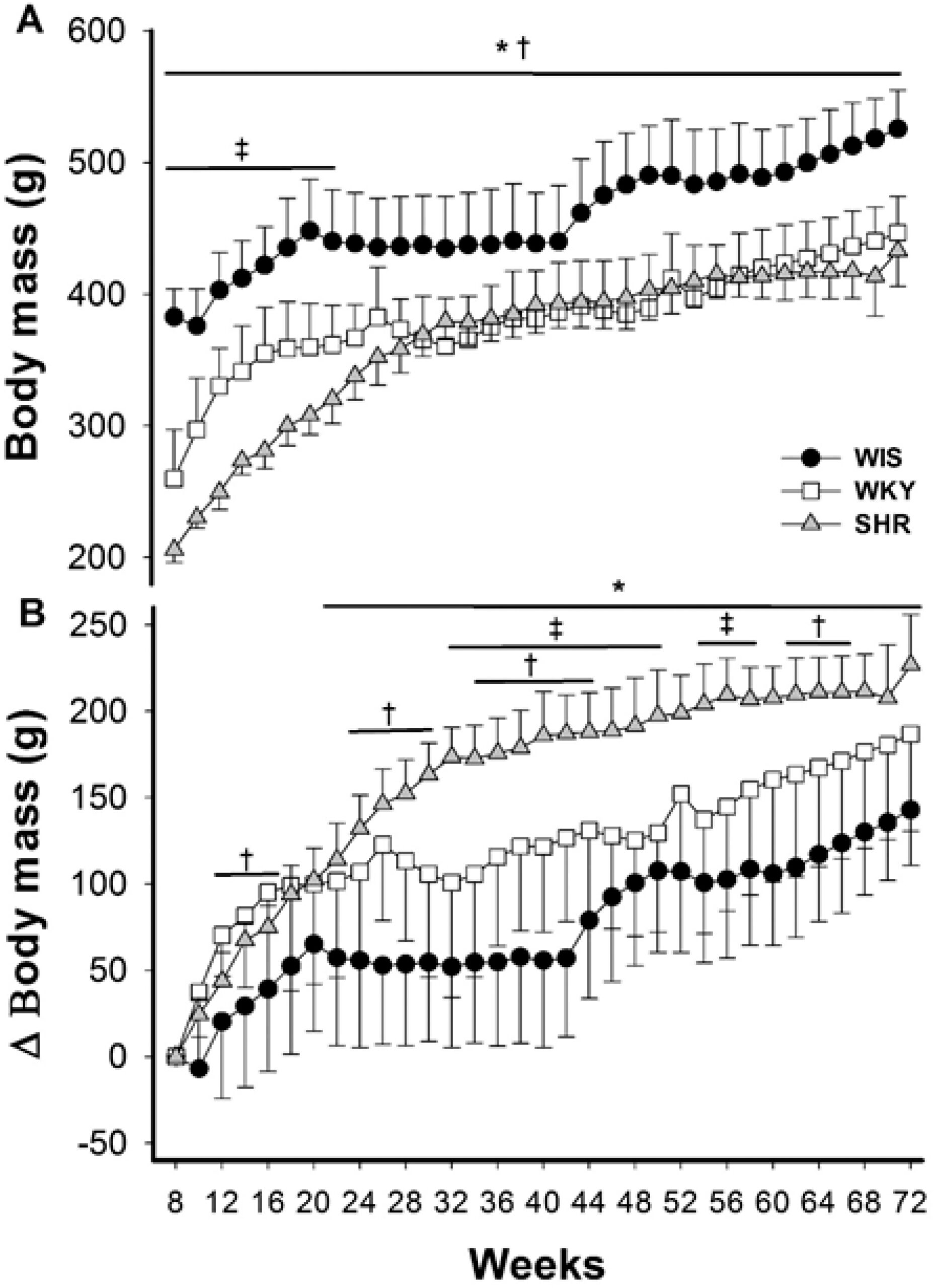
The WIS group showed higher body mass (p<0.05), while the WKY and SHR presented higher body mass variation over time (p<0.05). SHR exhibited increased values of systolic, diastolic, and mean blood pressure when compared to WKY and WIS, whereas the WKY generally showed higher values than WIS (p<0.05). Regarding the cardiac function, SHR showed reduced values, while the WKY presented an early decrease when compared to WIS with aging (p<0.05).

Conclusion:

WIS is a more suitable normotensive control for SHR than WKY in experiments to test blood pressure and cardiac structure and function.

  • Blood Pressure
  • Heart
  • Hypertension
  • Laboratory animals
Read Full Article
Creative Commons Attribution (CC BY) Creative Commons license
26/07/2021 DOI: 10.36660/ijcs.20200367 Views 1
Figure 1
ABCIC
Case Report

Cardiac Intimal Sarcoma: A Rare Cardiac Tumor Entity

Rhavena Brasil de Andrade et al. Carlos José Mota de Lima Ingrid Alves de Freitas Larissa Chagas Corrêa … Danielli Oliveira da Costa Lino Ana Carolina Brito de Alcantâra

Introduction

Malignant cardiac neoplasia is a rare entity with an extremely low incidence that has a nonspecific clinical presentation that may mimic other conditions. It can present arrhythmias and complications such as ischemia due to coronary flow obstruction.

More than 75% of primary cardiac tumors are benign. Of the 25% of malignant tumors, 75% are sarcomas.– Primary cardiac tumors can have a primary or metastatic origin and are diagnosed by imaging methods. Primary tumors occur more frequently in the left chamber, especially in the atrial myxoma, while metastatic tumors originate from malignant melanomas, which occur more frequently in the right chambers.

[…]

  • Atrial flutter
  • Heart
  • Heart Diseases
  • Sarcoma
Read Full Article
Creative Commons Attribution (CC BY) Creative Commons license
16/06/2021 DOI: 10.47593/2675-312X/20213401eabc118 Views 2
ABC
Editorial

Intermittent Diet in Exercise-Induced Cardiac Remodeling

Francis Lopes Pacagnelli et al. Andreo Fernando Aguiar Letícia Estevam Engel Antônio Cláudio Bongiovani Mariana Janini Gomes

The article entitled “Intermittent diet regulates physical exercise induced cardiac remodeling” presents relevant information concerning the effects of physical exercise (PE) on cardiac remodeling, functional capacity, nutritional behavior, and glycemic metabolism. The authors also analyzed the expression of proteins related to cellular differentiation and cardiac remodeling, such as extracellular signal-regulated kinase (ERK) and c-Jun N-terminal kinase (JNK), to determine the possible molecular mechanisms associated with the effects of intermittent diet and PE. The main findings were that: (1) PE increased functional capacity when isolated or combined with an intermittent diet, (2) prescription of an intermittent diet increased glycemic tolerance during PE programs, (3) intermittent diet was able to reduce cardiac remodeling induced by PE.

It is worth highlighting that this study used an experimental model from Wistar rats to mimic an intermittent diet during a long-term PE program (12 weeks). The advantage of animal experiments involving nutritional and physical interventions is the possibility of controlling the confounding variables that can affect the internal validity of the study, such as food intake, lifestyle, and motivation for physical training. In addition, animal models allow for the analysis of morphological, functional, and molecular aspects of cardiac muscle, which enables a more in-depth study of the mechanisms related to the diverse treatments and physical and nutritional interventions. Therefore, the results of this study are highly consistent and relevant for the understanding and improvement of prescribed PE programs, whether when isolated or associated with intermittent diet. The study also reveals a new path for research involving the effects of PE on functional and morphological aspects of cardiac remodeling, and the role intermittent diet in modulating these effects.

[…]

  • Exercise
  • Heart
  • Intermittent Diet
Read Full Article
Creative Commons Attribution (CC BY) Creative Commons license
28/08/2020 DOI: 10.36660/abc.20200632
Figure 1
ABC
Original Article

Evaluation of the Cardiac Effects of a Water-Soluble Lectin (Wsmol) from Moringa Oleifera Seeds

Ainhoa Rodríguez de Yurre et al. José Dayvid Ferreira da Silva Marília Kalinne da Silva Torres Eduarda Lopes Martins … Isalira Peroba Ramos Wênio Sandoval Filho Lima da Silva Jéssica da Silva Sarpa Caio César da Silva Guedes Thiago Henrique Napoleão Luana Cassandra Breitenbach Barroso Coelho Patrícia Maria Guedes Paiva Emiliano Medei

Abstract

Background

Moringa oleifera seeds, which are used for water clarification, contain a lectin named WSMoL which has shown in vitro antibacterial and immunomodulatory activity. Due to their nutritional value and therapeutic potential, the leaves and seeds of this tree are eaten in some communities. Some plant lectins are non-toxic to mammals, but others have been reported to be harmful when ingested or administered by other means.

Objective

As one of the steps needed to define the safety of WSMoL, we evaluated possible cardiotoxic effects of this purified protein. Methods: WSMoL was administered for 21 consecutive days to mice by gavage. Electrophysiological, mechanical, and metabolic cardiac functions were investigated by in vivo and ex vivo electrocardiographic recordings, nuclear magnetic resonance, and high-resolution respirometry.

Results

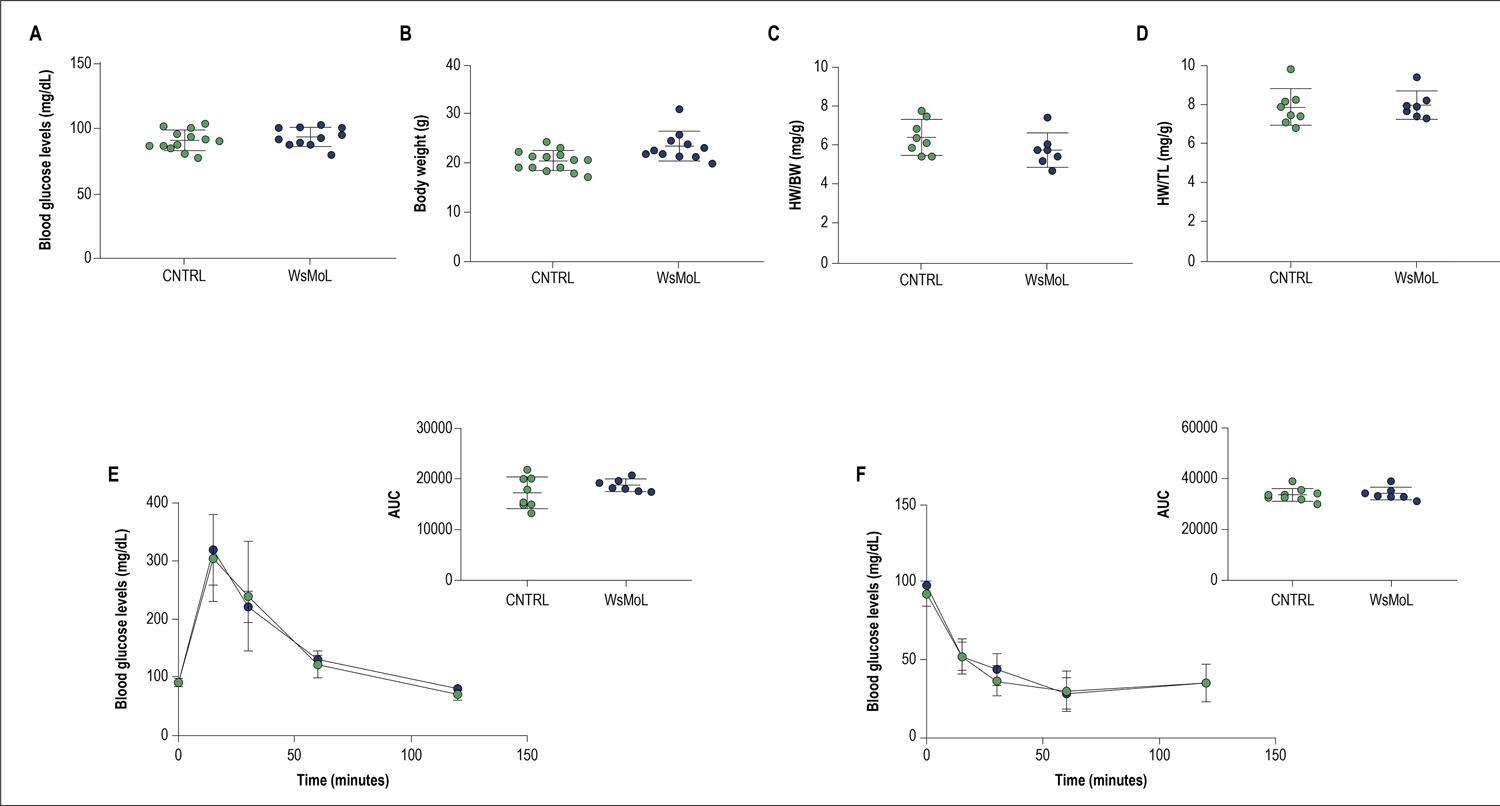
The treatment with WSMoL did not induce changes in blood glucose levels or body weight in comparison with control group. Moreover, the heart weight/body weight and heart weight/tibia length ratios were similar in both groups. Lectin ingestion also did not modify glucose tolerance or insulin resistance. No alterations were observed in electrocardiographic parameters or cardiac action potential duration. The heart of mice from the control and WSMoL groups showed preserved left ventricular function. Furthermore, WSMoL did not induce changes in mitochondrial function (in all cases, p > 0.05).

Conclusions

The administration of WSMoL demonstrated a cardiac safety profile. These results contribute to the safety evaluation of using M. oleifera seeds to treat water, since this lectin is present in the preparation employed by some populations to this end. (Arq Bras Cardiol. 2020; [online].ahead print, PP.0-0)

  • Carbohydrates
  • Heart
  • Mice
  • Moringa Oleífera (WSMoL), Lectins, Glycosides
  • Water Security
Read Full Article
Creative Commons Attribution (CC BY) Creative Commons license
13/03/2020 DOI: 10.36660/abc.20190071 Views 1
Figure 1
IJCS
Viewpoint

A Different Heart in Children´s Literature: The Juvenile Literature in Medical Education

Ana Mallet et al. Fátima Geovanini Luciana Andrade David Kestenberg

Abstract

José Saramago, Nobel Prize in Literature, is the author of a statement that provokes adult readers: “What if children’s stories become mandatory reading for adults? Would they really learn what they’ve been teaching for so long?”. 1 It is in this context that literary texts dedicated to children have been used at times in medical education and clinical practice to bring up often invisible subjectivities.

  • Education, Medical
  • Heart
  • Juvenile Literature
Read Full Article
Creative Commons Attribution (CC BY) Creative Commons license
09/03/2020 DOI: 10.36660/ijcs.20190143 Views 2
Figure 1
ABC
Original Article

Sex-Related Effects of Prenatal Stress on Region-Specific Expression of Monoamine Oxidase A and β Adrenergic Receptors in Rat Hearts

Tanja Jevdjovic et al. Tamara Dakic Sonja Kopanja Iva Lakic … Predrag Vujovic Nebojsa Jasnic Jelena Djordjevic

Abstract

Background:

Prenatal stress may increase risk of developing cardiovascular disorders in adulthood. The cardiotoxic effects of catecholamines are mediated via prolonged adrenergic receptor stimulation and increased oxidative stress upon their degradation by monoamine oxidase A (MAO-A).

Objectives:

We investigated long-term effects of prenatal stress on β (1, 2, 3) adrenergic receptors and MAO-A gene expression in the hearts of adult rat offspring.

Methods:

Pregnant rats were exposed to unpredictable mild stress during the third week of gestation. RNA was isolated from left ventricular apex and base of adult offspring. Quantitative PCR was used to measure gene expression in collected ventricular tissue samples. The level of significance was set to p < 0.05.

Results:

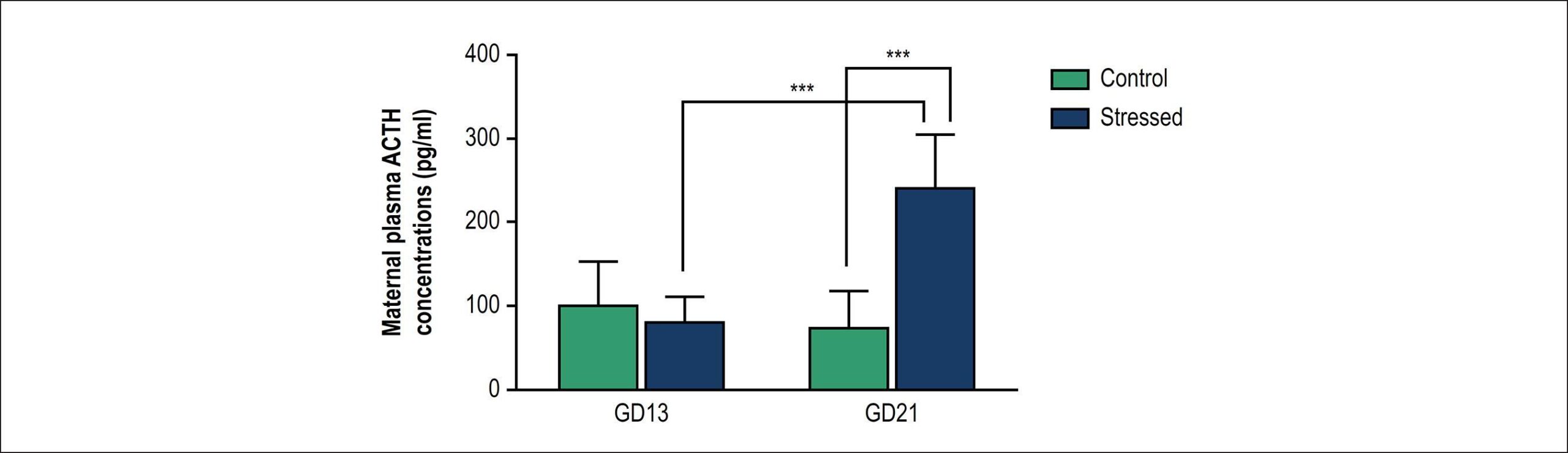
β3 adrenergic receptor mRNA was undetectable in rat left ventricle. β1 adrenergic receptor was the predominantly expressed subtype at the apical and basal left ventricular myocardium in the control females. Male offspring from unstressed mothers displayed higher apical cardiac β1 than β2 adrenergic receptor mRNA levels. However, β1 and β2 adrenergic receptor mRNAs were similarly expressed at the ventricular basal myocardium in males. Unlike males, prenatally stressed females exhibited decreased β1 adrenergic receptor mRNA expression at the apical myocardium. Prenatal stress did not affect cardiac MAO-A gene expression.

Conclusions:

Collectively, our results show that prenatal stress may have exerted region- and sex-specific β1 and β2 adrenergic receptor expression patterns within the left ventricle.

  • Adrenergic beta1 beta2 Receptor Antagonists
  • Cardiotoxicity
  • Catecholamines
  • Female
  • Heart
  • Oxidative Stress
  • Pregnancy
  • Rats
  • Sex
  • Stress, Physiological
Read Full Article
Creative Commons Attribution (CC BY) Creative Commons license
13/12/2018 DOI: 10.5935/abc.20190001
Figure 1
ABC
Original Article

Large Accumulation of Collagen and Increased Activation of Mast Cells in Hearts of Mice with Hyperlipidemia

Yunpeng Cheng et al. Yanqiu Zhu Jiashu Zhang Xingping Duan Ying Zhang

Abstract

Background:

Hyperlipidemia, which is characterized by an elevation of lipids in the bloodstream, is a major risk factor for cardiac disease.

Objectives:

The present study investigated the role of fibrosis in the progression of hyperlipidemia in the mice heart, and whether mast cell activation was associated with the fibrosis process.

Methods:

Hyperlipidemia was produced in C57BL / 6 mice by feeding them on a high-fat diet for 8 weeks.To assess tissue fibrosis, picrosirius red staining was performed. Hematoxylin & eosin (H&E) staining was performed to identify the histopathological changes in the hearts. Immunohistochemistry was also accomplished to determine the localization of transforming growth factor (TGF)-β and α-smooth muscle actin (α-SMA). Western blotting was performed to analyze the expression of chymase, tryptase, TGF-β, α-SMA and activity of Wnt/β-catenin pathway. At the end, serum total cholesterol (TC) and triglycerides (TG) levels were measured. All the values were expressed as means ± SD, the statistical significance level adopted was 5%.

Results:

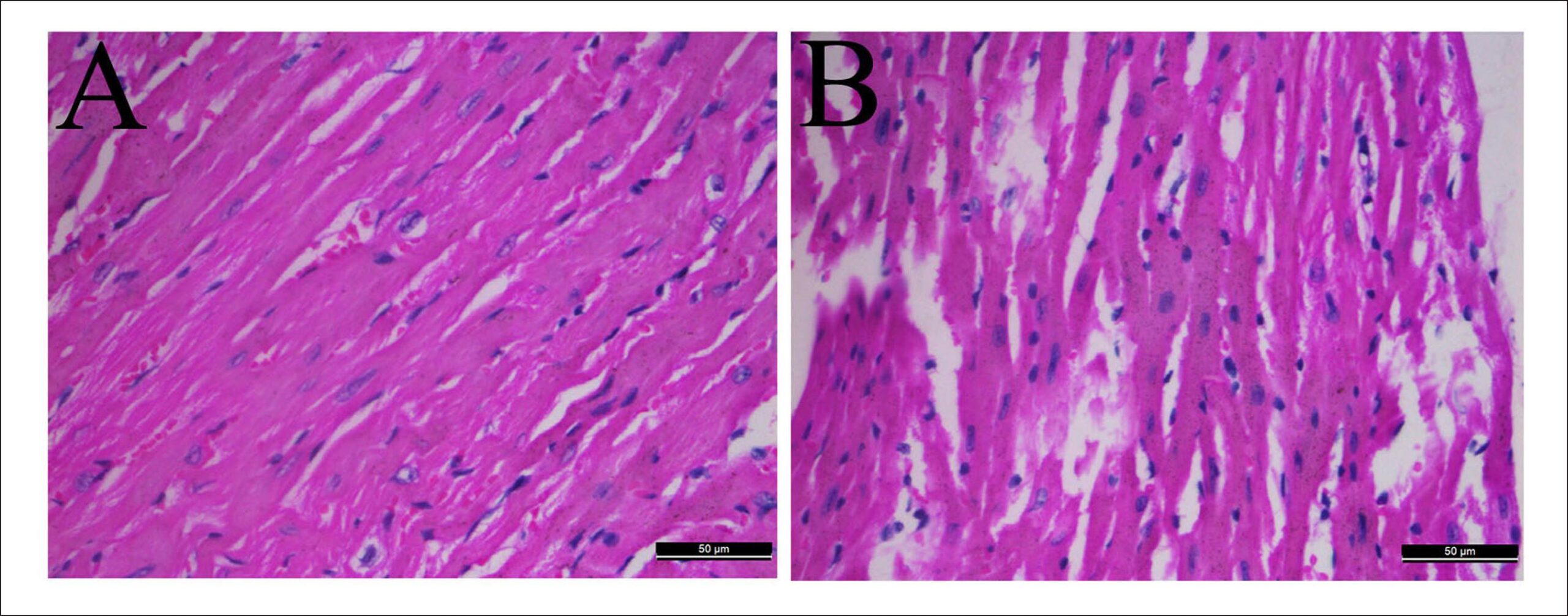
Hyperlipidemia mice showed significantly increased collagen deposition in the hearts compared with normal mice. In addition, H&E staining showed significant cellular degeneration. Cardiac muscle was arranged in disorder with fracture in mice of the model group. Immunohistochemistry and western blot analysis revealed that expression levels of tryptase, chymase, β-catenin, TGF-β and α-SMA were significantly increased in the hyperlipidemia mice compared with the control group.

Conclusions:

The results indicated that mast cell activation might induce cardiac fibrosis by tryptase and chymase in hyperlipidemia, which had a close relationship with the increased activity of TGF-β/Wnt/β-catenin pathway.

  • Fibrosis
  • Heart
  • Hyperlipidemias / physiopathology
  • Leukemia, Mast-Cell
  • Rats
Read Full Article
Creative Commons Attribution (CC BY) Creative Commons license
28/09/2017 DOI: 10.5935/abc.20170143 Views 1
ABC
Artigo Original

Hypertrophic response of the Association of Thyroid Hormone and Exercise in the Heart of Rats

Fernanda Rodrigues de Souza et al. Elmiro Santos Resende Leandro Lopes Alexandre Gonçalves … Rafaella Chagas Thiago Fidale Poliana Rodrigues

Background:

Cardiac hypertrophy is a component of cardiac remodeling occurring in response to an increase of the activity or functional overload of the heart.

Objective:

Assess hypertrophic response of the association of thyroid hormone and exercise in the rat heart.

Methods:

We used 37 Wistar rats, male, adults were randomly divided into four groups: control, hormone (TH), exercise (E), thyroid hormone and exercise (H + E); the group received daily hormone levothyroxine sodium by gavage at a dose of 20 μg thyroid hormone/100g body weight, the exercise group took swimming five times a week, with additional weight corresponding to 20% of body weight for six weeks; in group H + E were applied simultaneously TH treatment groups and E. The statistics used was analysis of variance, where appropriate, by Tukey test and Pearson correlation test.

Results:

The T4 was greater in groups TH and H + E. The total weight of the heart was greater in patients who received thyroid hormone and left ventricular weight was greater in the TH group. The transverse diameter of cardiomyocytes increased in groups TH, E and H + E. The percentage of collagen was greater in groups E and H + E Correlation analysis between variables showed distinct responses.

Conclusion:

The association of thyroid hormone with high-intensity exercise produced cardiac hypertrophy, and generated a standard hypertrophy not directly correlated to the degree of fibrosis.

  • Exercise
  • Heart
  • Hyperthyroidism
  • Rats
  • Thyroid Hormones
Read Full Article
Creative Commons Attribution (CC BY) Creative Commons license
21/12/2013 DOI: 10.5935/abc.20130243 Views 2
Correlation between myocardial scintigraphy and ct angiography in the evaluation of coronary disease
ABC
Artigo Original

Correlation between myocardial scintigraphy and ct angiography in the evaluation of coronary disease

Jader Cunha de Azevedo et al. Diógenes de Souza Ferreira Junior Felipe Carvalhinho Vieira Laís Santos Prezotti … Luciana Silveira Simões Marcelo Souto Nacif Carlos Eduardo Rochitte Amarino de Carvalho Oliveira Junior Evandro Tinoco Mesquita Cláudio Tinoco Mesquita

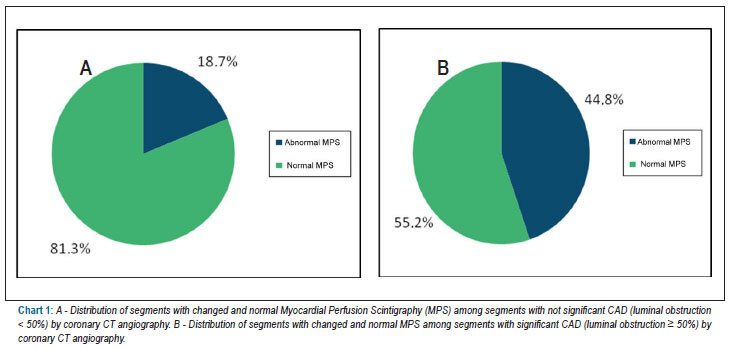
BACKGROUND: Coronary multidetector CT angiography (CTA) has shown good accuracy for detection of coronary stenosis. Although this is a promising technique for the evaluation of CAD, its correlation with the functional expression of the disease is not yet well established. OBJECTIVE: To evaluate whether the presence of CAD and the degree of coronary stenosis assessed by CT angiography are associated with changes in the Myocardial Perfusion Scintigraphy (MPS). METHODS: This is a retrospective observational study, which included 99 consecutive patients with known or suspected CAD. MPS and CTA were conducted. We compared the presence of perfusion defects by MPS with the presence of CAD and the degree of luminal obstruction by CTA. For statistical analysis, Student’s t-test, ANOVA, and Chi-square (or Fisher’s exact test for n <5) tests were used. Multivariate analysis was performed using logistic regression: the level of significance was 5%. RESULTS: Mean age was 62 ± 11.4 years, with 46 (71.7%) men. The variable analysis was performed per patient (n = 99) and per coronary irrigation territory (n = 297). Of the 67 territories that had significant CAD by CTA, 44.8% had abnormal MPS. Considering the degree of stenosis, abnormal MPS was present in 18.7% of the territories with no significant stenosis, 45.28% of the territories with moderate stenosis, and 42.8% of the territories with severe injuries. CONCLUSIONS: CTA is a good method for exclusion of CAD. However, its use to evaluate the severity of stenosis and its functional impact has not shown good correlation.

  • Computed Tomography
  • Coronary Disease
  • Heart
Read Full Article
Creative Commons Attribution (CC BY) Creative Commons license
15/04/2013 DOI: 10.5935/abc.20130042 Views 1
eNOS correlates with mitochondrial biogenesis in hearts of congenital heart disease with cyanosis
ABC
Artigo Original

eNOS correlates with mitochondrial biogenesis in hearts of congenital heart disease with cyanosis

Juan Xiao et al. Lin Chen Xuefeng Wang Mei Liu Yingbin Xiao

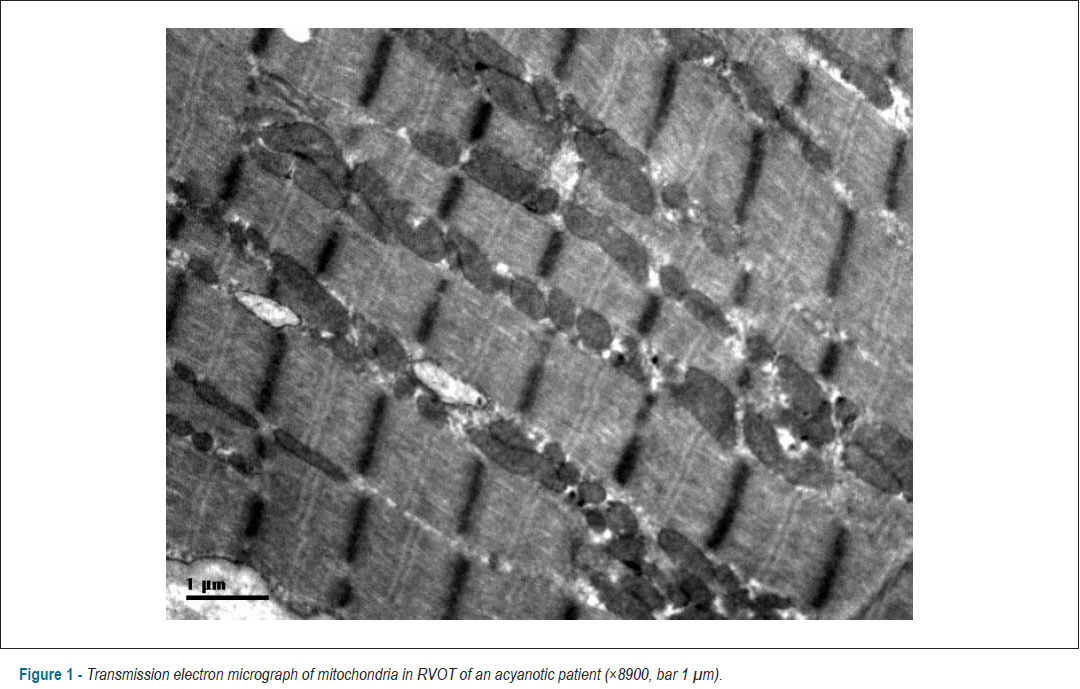
BACKGROUND: Mitochondrial biogenesis program in heart appears to exhibit adaptive remodeling following biomechanical and oxidative stress. The adaptive mechanisms that protect myocardium metabolism during hypoxia are coordinated in part by nitric oxide (NO). OBJECTIVE: To observe mitochondrial biogenesis and nitric oxide synthase (NOS) expression in hearts of congenital heart disease with cyanosis, discuss mitochondrial response to chronic hypoxia in myocardium. METHODS: 20 patients with cyanotic (n=10) or acyanotic cardiac defects (n=10) were investigated. Samples from the right ventricular outflow tract myocardium taken during operation were studied. Morphometric analysis of mitochondria was performed with transmission electron microscope. Relative mtDNA/nDNA ratio was determined with real-time PCR. Cytochrome c oxidase subunit I (COXI), peroxisome-proliferator-activated receptor γ coactivator-1α (PGC-1α), nuclear respiratory factor 1 (NRF1), and mitochondrial transcription factor A (Tfam) transcript levels were detected by real-time fluorescent RT-PCR. COXI and nNOS, iNOS and eNOS protein levels were measured with western blot. RESULTS: Mitochondrial volume density (Vv) and numerical density (Nv) were significantly elevated in patients with cyanotic compared to acyanotic congenital heart disease. Elevated mtDNA and up-regulated COXI, PGC-1α, NRF1 and Tfam mRNA levels were observed in cyanotic patients. Protein levels of COXI and eNOS were significantly higher in the myocardium of cyanotic than of acyanotic patients. PGC-1α transcript levels correlated with the levels of eNOS. Conclusion: Mitochondrial biogenesis is activated in right ventricular outflow tract myocardium in congenital heart disease with cyanosis, which could be the adaptive response to chronic hypoxia and possibly involves eNOS up-regulation. (Arq Bras Cardiol. 2012; [online].ahead print, PP.0-0)

  • Biogenesis
  • Congenital
  • Heart
  • Heart Defects
  • mitochondria
  • nitric oxide Synthase
Read Full Article
Creative Commons Attribution (CC BY) Creative Commons license
02/08/2012 DOI: 10.1590/S0066-782X2012005000072 Views 1
Is abnormal adrenergic activation associated with abnormal Heart Rate Recovery?
ABC
Artigo Original

Is abnormal adrenergic activation associated with abnormal Heart Rate Recovery?

Leandro Rocha Messias et al. Maria Angela M. de Queiroz Carreira Sandra Marina Miranda Jader Cunha de Azevedo … Isabela Ambrósio Gava Ronaldo Campos Rodrigues Elisabeth Maróstica Claudio Tinoco Mesquita

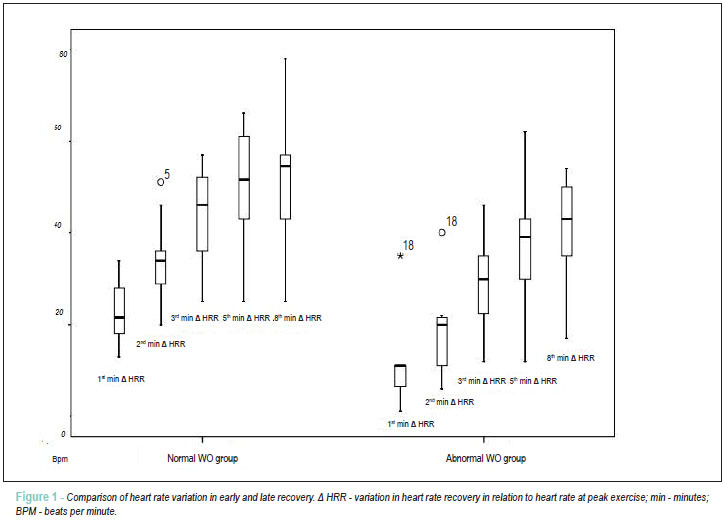
BACKGROUND: Heart Rate Recovery (HRR) reflects the capacity of the cardiovascular system to reverse the vagal withdrawal caused by exercise. Scintigraphy with metaiodobenzylguanidine (I¹23 MIBG) evaluates innervation and cardiac adrenergic activation. The association of these two methods is not well established. OBJECTIVE: To evaluate the association between HRR and washout rate (WO) of I¹²³ MIBG in patients with heart failure (HF). METHODS: wenty-five patients with ejection fraction < 45% underwent exercise testing, and analysis of the variation of HRR from the 1st to the 8th minute after exertion. Submitted to I¹²³ MIBG, they were separated into groups by WO: G1) 27%. For the statistical analysis Mann-Whitney’s U test and Spearman’s correlation coefficient were used. RESULTS: G2 showed a slower variation of HRR: 1st minute: G1: 21.5 (16.12 to 26.87) vs. G2: 11.00 (8.5 to 13.5) bpm, p = 0.001; 2nd minute: G1: 34 (29-39) vs. G2: 20 (14 – 26) bpm, p = 0.001; 3rd minute: G1: 46 (37.8 – 54.1) vs. G2: 30 (22 – 38) bpm, p = 0.005; 5th minute: G1: 51.5 (42 – 61) vs. G2: 39 (31.5 to 46.5) bpm, p = 0.013, and in the 8th minute: G1: 54.5 (46.5 – 62.5) vs. G2: 43 (34 – 52) bpm, p = 0.037. HRR in the 1st (r = -0.555, p = 0.004), and in the 2nd minute (r = -0.550, p = 0.004) were negatively correlated with WO. CONCLUSION: Patients with high HF and WO showed an abnormal HRR compared with patients with normal WO. These findings suggest that adrenergic activation may influence the HRR.

  • Heart
  • Heart Failure
  • Heart Rate
  • Stroke Volume
Read Full Article
Creative Commons Attribution (CC BY) Creative Commons license
27/03/2012 DOI: 10.1590/S0066-782X2012005000027
Validity of maximum heart rate prediction equations for children and adolescents
ABC
Artigo Original

Validity of maximum heart rate prediction equations for children and adolescents

Fabiana Andrade Machado et al. Benedito Sérgio Denadai

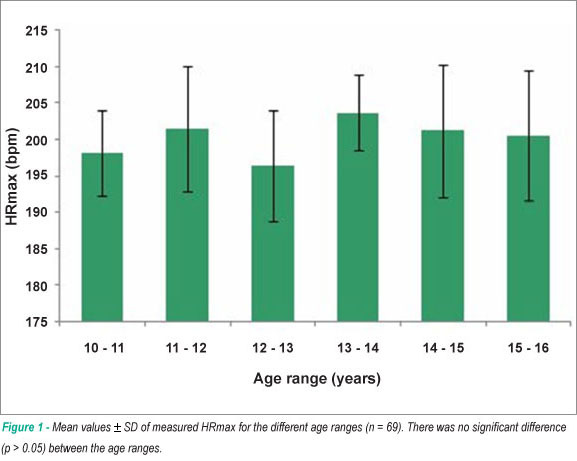
BACKGROUND: There are no studies in the literature to validate equations that predict maximum heart rate (HRmax) in children and adolescents. OBJECTIVE: To analyze the validity of the HRmax predictive equations “220 – age” and “208 – (0.7 x age)” in boys aged 10 and 16. METHODS: A progressive maximal exertion test was carried out in 69 apparently healthy boys aged 10 to 16. The initial test velocity was 9 km/h, with 1-km/h increments every three minutes. The test was maintained until maximum voluntary exertion was achieved, considering HRmax as the highest heart rate attained during the test. The measured HRmax was compared with the values predicted by the “220 – age” and “208 – (0.7 x age)” equations, using ANOVA for repeated measures. RESULTS: The mean values of HRmax (bpm) were: 200.2 ± 8.0 (measured), 207.4 ± 1.5 (“220 – age”) and 199.2 ± 1.1 (“208 – (0.7 x age)”). The HRmax predicted by the “220 – age” equation was significantly higher (p 0.05). CONCLUSION: The “220 – age” equation overestimated the measured HRmax and was not valid for this population. The “208 – (0.7 x age)” equation was valid for this population, showing results that were quite similar to those of measured HRmax. Future studies with larger sample sizes can verify whether the HRmax does not depend on age for this population, a situation in which the constant 200 bpm value would be more appropriate for HRmax.

  • Adolescent
  • Child
  • Heart
  • Heart Rate
Read Full Article
Creative Commons Attribution (CC BY) Creative Commons license
01/07/2011 DOI: 10.1590/S0066-782X2011005000078
Cardiac magnetic resonance and its anatomical planes: How do i do it?
ABC
Review Article

Cardiac magnetic resonance and its anatomical planes: How do i do it?

Marcelo Souto Nacif et al. Amarino Carvalho de Oliveira Junior Antonio Carlos Pires Carvalho Carlos Eduardo Rochitte

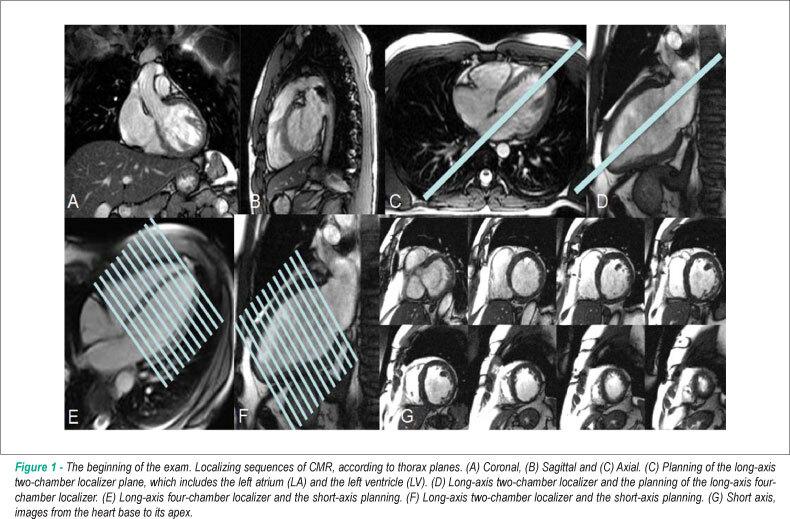
Due to the increasing use of the cardiac magnetic resonance (CMR) method and the frequent implementation of such method in new services, we describe herein, in a step-by-step format, the acquisition techniques that are necessary for a complete cardiac approach, of the main anatomical planes of the heart used by CMR.

  • Education, Medical
  • Heart
  • Magnetic Resonance Imaging
Read Full Article
Creative Commons Attribution (CC BY) Creative Commons license
26/01/2011 DOI: 10.1590/S0066-782X2010001600014 Views 2

Could not load more articles. Please try again.

How to cite this article

EndNote RIS

Electronic Document Format (Vancouver)

Miranda K, Santos KCC, Cardoso JC, Domingos LF, Nunes FM, Simmer LM, Silva DS, et al. Treatment with Capsinoids Promotes Impaired Cardiomyocyte Contractility in Obesity without Positively Modulating Metabolic Parameters. Arquivos Brasileiros de Cardiologia 2026;123(6):e20250865.

Electronic Document Format (ABNT)

Miranda, Kiany; Santos, Késsia Cristina Carvalho; Cardoso, Janete Corrêa; Domingos, Lucas Furtado; Nunes, Fabiane Merigueti; Simmer, Luisa Martins; Silva, Daniel Sesana; Okoshi, Marina Politi; Bocalini, Danilo Sales; Lima-Leopoldo, Ana Paula; Leopoldo, André Soares. Treatment with Capsinoids Promotes Impaired Cardiomyocyte Contractility in Obesity without Positively Modulating Metabolic Parameters. Arquivos Brasileiros de Cardiologia, v. 123, n. 6, e20250865, Jul. 2026.

Electronic Document Format (APA)

Miranda, K., Santos, K. C. C., Cardoso, J. C., Domingos, L. F., Nunes, F. M., Simmer, L. M., Silva, D. S., Okoshi, M. P., Bocalini, D. S., Lima-Leopoldo, A. P., & Leopoldo, A. S. (2026). Treatment with Capsinoids Promotes Impaired Cardiomyocyte Contractility in Obesity without Positively Modulating Metabolic Parameters. Arquivos Brasileiros de Cardiologia, 123(6), e20250865.

Electronic Document Format (ISO)

Miranda, Kiany and Santos, Késsia Cristina Carvalho and Cardoso, Janete Corrêa and Domingos, Lucas Furtado and Nunes, Fabiane Merigueti and Simmer, Luisa Martins and Silva, Daniel Sesana and Okoshi, Marina Politi and Bocalini, Danilo Sales and Lima-Leopoldo, Ana Paula and Leopoldo, André Soares. Treatment with Capsinoids Promotes Impaired Cardiomyocyte Contractility in Obesity without Positively Modulating Metabolic Parameters. Arquivos Brasileiros de Cardiologia [online]. 2026, vol. 123, n. 6, [cited 2026-10-14], e20250865. Available from: <https://journals.cardiol.br/en/article/treatment-with-capsinoids-promotes-impaired-cardiomyocyte-contractility-in-obesity-without-positively-modulating-metabolic-parameters/>. ISSN 0066-782X

EndNote RIS

Electronic Document Format (Vancouver)

Rodrigues ACT, Saraiva RM, Hotta VT, Rodrigues GD, Cardoso FCA, Armstrong AC, Monaco CG, et al. Reference Echocardiographic Values for Cardiac Chambers in Brazil: A Multiregional, Multi-Racial Study. Arquivos Brasileiros de Cardiologia 2026;123(2):e20250628.

Electronic Document Format (ABNT)

Rodrigues, Ana Clara Tude; Saraiva, Roberto Magalhães; Hotta, Viviane T.; Rodrigues, Gabriel Doreto; Cardoso, Fabiana Camelier de Assis; Armstrong, Anderson da Costa; Monaco, Cláudia Gianini; Parro Junior, Adelino; Pretto, José Luis de Castro e Silva; Ferreira, João Marcos Bemfica Barbosa; Lima, Renata Santos Lopes Teixeira de; Salame, Marcelo; Araujo, Salustiano Pereira de; Silva, Carlos Eduardo Suaide; Tressino, Cíntia Galhardo; Moreira, Fabio Canellas; Camarozano, Ana Cristina; Romano, Minna Moreira Dias; Almeida, Andre Luiz Cerqueira; Fischer, Claudio Henrique; Felix, Alex dos Santos; Borguezan-Daros, Clarissa; Piardi, Diogo Silva; Cunha, Diego; Melo, Marcelo Dantas Tavares de; Modesto, Rafael; Barberato, Silvio Henrique; Oliveira, Wercules Antonio; Vieira, Marcelo Luiz Campos; Morhy, Samira Saady. Reference Echocardiographic Values for Cardiac Chambers in Brazil: A Multiregional, Multi-Racial Study. Arquivos Brasileiros de Cardiologia, v. 123, n. 2, e20250628, Mar. 2026.

Electronic Document Format (APA)

Rodrigues, A. C. T., Saraiva, R. M., Hotta, V. T., Rodrigues, G. D., Cardoso, F. C. A., Armstrong, A. C., Monaco, C. G., Parro Junior, A., Pretto, J. L. C. S., Ferreira, J. M. B. B., Lima, R. S. L. T. , Salame, M., Araujo, S. P. , Silva, C. E. S., Tressino, C. G., Moreira, F. C., Camarozano, A. C., Romano, M. M. D., Almeida, A. L. C., Fischer, C. H., Felix, A. S., Borguezan-Daros, C., Piardi, D. S., Cunha, D., Melo, M. D. T. , Modesto, R., Barberato, S. H., Oliveira, W. A., Vieira, M. L. C., & Morhy, S. S. (2026). Reference Echocardiographic Values for Cardiac Chambers in Brazil: A Multiregional, Multi-Racial Study. Arquivos Brasileiros de Cardiologia, 123(2), e20250628.

Electronic Document Format (ISO)

Rodrigues, Ana Clara Tude and Saraiva, Roberto Magalhães and Hotta, Viviane T. and Rodrigues, Gabriel Doreto and Cardoso, Fabiana Camelier de Assis and Armstrong, Anderson da Costa and Monaco, Cláudia Gianini and Parro Junior, Adelino and Pretto, José Luis de Castro e Silva and Ferreira, João Marcos Bemfica Barbosa and Lima, Renata Santos Lopes Teixeira de and Salame, Marcelo and Araujo, Salustiano Pereira de and Silva, Carlos Eduardo Suaide and Tressino, Cíntia Galhardo and Moreira, Fabio Canellas and Camarozano, Ana Cristina and Romano, Minna Moreira Dias and Almeida, Andre Luiz Cerqueira and Fischer, Claudio Henrique and Felix, Alex dos Santos and Borguezan-Daros, Clarissa and Piardi, Diogo Silva and Cunha, Diego and Melo, Marcelo Dantas Tavares de and Modesto, Rafael and Barberato, Silvio Henrique and Oliveira, Wercules Antonio and Vieira, Marcelo Luiz Campos and Morhy, Samira Saady. Reference Echocardiographic Values for Cardiac Chambers in Brazil: A Multiregional, Multi-Racial Study. Arquivos Brasileiros de Cardiologia [online]. 2026, vol. 123, n. 2, [cited 2026-10-14], e20250628. Available from: <https://journals.cardiol.br/en/article/reference-echocardiographic-values-for-cardiac-chambers-in-brazil-a-multiregional-multi-racial-study/>. ISSN 0066-782X

EndNote RIS

Electronic Document Format (Vancouver)

Carvalho RGV, Mota GAF, Sobral MVS, Freire APCF, Pacagnelli FL. Cardiac Response to Stress: Influence of Vortioxetine. Arquivos Brasileiros de Cardiologia 2025;122(2):e20250105.

Electronic Document Format (ABNT)

Carvalho, Rodrigo Guimarães Vieira de; Mota, Gustavo Augusto Ferreira; Sobral, Milene Vitória Sampaio; Freire, Ana Paula Coelho Figueira; Pacagnelli, Francis Lopes. Cardiac Response to Stress: Influence of Vortioxetine. Arquivos Brasileiros de Cardiologia, v. 122, n. 2, e20250105, Apr. 2025.

Electronic Document Format (APA)

Carvalho, R. G. V. , Mota, G. A. F., Sobral, M. V. S., Freire, A. P. C. F., & Pacagnelli, F. L. (2025). Cardiac Response to Stress: Influence of Vortioxetine. Arquivos Brasileiros de Cardiologia, 122(2), e20250105.

Electronic Document Format (ISO)

Carvalho, Rodrigo Guimarães Vieira de and Mota, Gustavo Augusto Ferreira and Sobral, Milene Vitória Sampaio and Freire, Ana Paula Coelho Figueira and Pacagnelli, Francis Lopes. Cardiac Response to Stress: Influence of Vortioxetine. Arquivos Brasileiros de Cardiologia [online]. 2025, vol. 122, n. 2, [cited 2026-10-14], e20250105. Available from: <https://journals.cardiol.br/en/article/cardiac-response-to-stress-influence-of-vortioxetine/>. ISSN 0066-782X

EndNote RIS

Electronic Document Format (Vancouver)

Dilli D, Akduman H, Çitli R, Örun UA, Doğan V, Taşar M, Yoldaş T, et al. Management of Ductus-Dependent Systemic Circulatory Lesions in the Neonatal Period: A Ten-Year Experience. Arquivos Brasileiros de Cardiologia 2025;122(3):e20230731.

Electronic Document Format (ABNT)

Dilli, Dilek; Akduman, Hasan; Çitli, Rumeysa; Örun, Utku Arman; Doğan, Vehbi; Taşar, Mehmet; Yoldaş, Tamer; Fettah, Nurdan Dinlen; Özyazıcı, Ahmet; Zenciroğlu, Ayşegül. Management of Ductus-Dependent Systemic Circulatory Lesions in the Neonatal Period: A Ten-Year Experience. Arquivos Brasileiros de Cardiologia, v. 122, n. 3, e20230731, Mar. 2025.

Electronic Document Format (APA)

Dilli, D., Akduman, H., Çitli, R., Örun, U. A., Doğan, V., Taşar, M., Yoldaş, T., Fettah, N. D., Özyazıcı, A., & Zenciroğlu, A. (2025). Management of Ductus-Dependent Systemic Circulatory Lesions in the Neonatal Period: A Ten-Year Experience. Arquivos Brasileiros de Cardiologia, 122(3), e20230731.

Electronic Document Format (ISO)

Dilli, Dilek and Akduman, Hasan and Çitli, Rumeysa and Örun, Utku Arman and Doğan, Vehbi and Taşar, Mehmet and Yoldaş, Tamer and Fettah, Nurdan Dinlen and Özyazıcı, Ahmet and Zenciroğlu, Ayşegül. Management of Ductus-Dependent Systemic Circulatory Lesions in the Neonatal Period: A Ten-Year Experience. Arquivos Brasileiros de Cardiologia [online]. 2025, vol. 122, n. 3, [cited 2026-10-14], e20230731. Available from: <https://journals.cardiol.br/en/article/management-of-ductus-dependent-systemic-circulatory-lesions-in-the-neonatal-period-a-ten-year-experience/>. ISSN 0066-782X

EndNote RIS

Electronic Document Format (Vancouver)

Pamplona LF, Oliveira KBS, Reis Neto JA, Bustamante LA, Souza JM, Zacchi FFS, Brito JBO, et al. Cardiac Lymphoma: A Case Report. Arquivos Brasileiros de Cardiologia 2025;122(2):e20240299.

Electronic Document Format (ABNT)

Pamplona, Leticia Ferraz; Oliveira, Kelly Barnabé Serpa de; Reis Neto, João Ancelmo dos; Bustamante, Luis Antelo; Souza, Januário Manoel de; Zacchi, Flávia Fernandes Silva; Brito, Juliana Brenande de Oliveira; Rojas, Salomon Soriano Ordinola. Cardiac Lymphoma: A Case Report. Arquivos Brasileiros de Cardiologia, v. 122, n. 2, e20240299, Mar. 2025.

Electronic Document Format (APA)

Pamplona, L. F., Oliveira, K. B. S. , Reis Neto, J. A. , Bustamante, L. A., Souza, J. M. , Zacchi, F. F. S., Brito, J. B. O., & Rojas, S. S. O. (2025). Cardiac Lymphoma: A Case Report. Arquivos Brasileiros de Cardiologia, 122(2), e20240299.

Electronic Document Format (ISO)

Pamplona, Leticia Ferraz and Oliveira, Kelly Barnabé Serpa de and Reis Neto, João Ancelmo dos and Bustamante, Luis Antelo and Souza, Januário Manoel de and Zacchi, Flávia Fernandes Silva and Brito, Juliana Brenande de Oliveira and Rojas, Salomon Soriano Ordinola. Cardiac Lymphoma: A Case Report. Arquivos Brasileiros de Cardiologia [online]. 2025, vol. 122, n. 2, [cited 2026-10-14], e20240299. Available from: <https://journals.cardiol.br/en/article/cardiac-lymphoma-a-case-report/>. ISSN 0066-782X

EndNote RIS

Electronic Document Format (Vancouver)

Ozmen O, Tasan S, Unal GO. Vortioxetine’s Therapeutic Potential: Cardiac Responses to Chronic Unpredictable Mild Stress in a Rat Model. Arquivos Brasileiros de Cardiologia 2025;122(2):e20240159.

Electronic Document Format (ABNT)

Ozmen, Ozlem; Tasan, Serife; Unal, Gulin Ozdamar. Vortioxetine’s Therapeutic Potential: Cardiac Responses to Chronic Unpredictable Mild Stress in a Rat Model. Arquivos Brasileiros de Cardiologia, v. 122, n. 2, e20240159, Feb. 2025.

Electronic Document Format (APA)

Ozmen, O., Tasan, S., & Unal, G. O. (2025). Vortioxetine’s Therapeutic Potential: Cardiac Responses to Chronic Unpredictable Mild Stress in a Rat Model. Arquivos Brasileiros de Cardiologia, 122(2), e20240159.

Electronic Document Format (ISO)

Ozmen, Ozlem and Tasan, Serife and Unal, Gulin Ozdamar. Vortioxetine’s Therapeutic Potential: Cardiac Responses to Chronic Unpredictable Mild Stress in a Rat Model. Arquivos Brasileiros de Cardiologia [online]. 2025, vol. 122, n. 2, [cited 2026-10-14], e20240159. Available from: <https://journals.cardiol.br/en/article/vortioxetines-therapeutic-potential-cardiac-responses-to-chronic-unpredictable-mild-stress-in-a-rat-model/>. ISSN 0066-782X

EndNote RIS

Electronic Document Format (Vancouver)

Barbosa PME, Magalhães TA. The Role of Cardiac Magnetic Resonance in patients with Amyloidosis and Aortic Stenosis. ABC Imagem Cardiovascular 2022;35(4):eabc320.

Electronic Document Format (ABNT)

Barbosa, Pedro Macedo Esmeraldo; Magalhães, Tiago Augusto. The Role of Cardiac Magnetic Resonance in patients with Amyloidosis and Aortic Stenosis. ABC Imagem Cardiovascular, v. 35, n. 4, eabc320, Nov. 2022.

Electronic Document Format (APA)

Barbosa, P. M. E., & Magalhães, T. A. (2022). The Role of Cardiac Magnetic Resonance in patients with Amyloidosis and Aortic Stenosis. ABC Imagem Cardiovascular, 35(4), eabc320.

Electronic Document Format (ISO)

Barbosa, Pedro Macedo Esmeraldo and Magalhães, Tiago Augusto. The Role of Cardiac Magnetic Resonance in patients with Amyloidosis and Aortic Stenosis. ABC Imagem Cardiovascular [online]. 2022, vol. 35, n. 4, [cited 2026-10-14], eabc320. Available from: <https://journals.cardiol.br/en/article/the-role-of-cardiac-magnetic-resonance-in-patients-with-amyloidosis-and-aortic-stenosis/>. ISSN 2318-8219

EndNote RIS

Electronic Document Format (Vancouver)

Oliveira-Junior SA, Ogura AY, Carvalho MR, Martinez PF. Cardioprotective Effect of Resistance Exercise on Left Ventricular Remodeling Associated with Monocrotaline-Induced Pulmonary Arterial Hypertension. Arquivos Brasileiros de Cardiologia 2022;119(4):585-6.

Electronic Document Format (ABNT)

Oliveira-Junior, Silvio A.; Ogura, Alex Y.; Carvalho, Marianna R.; Martinez, Paula F.. Cardioprotective Effect of Resistance Exercise on Left Ventricular Remodeling Associated with Monocrotaline-Induced Pulmonary Arterial Hypertension. Arquivos Brasileiros de Cardiologia, v. 119, n. 4, p. 585-586, Oct. 2022.

Electronic Document Format (APA)

Oliveira-Junior, S. A., Ogura, A. Y., Carvalho, M. R., & Martinez, P. F. (2022). Cardioprotective Effect of Resistance Exercise on Left Ventricular Remodeling Associated with Monocrotaline-Induced Pulmonary Arterial Hypertension. Arquivos Brasileiros de Cardiologia, 119(4), 585-586.

Electronic Document Format (ISO)

Oliveira-Junior, Silvio A. and Ogura, Alex Y. and Carvalho, Marianna R. and Martinez, Paula F.. Cardioprotective Effect of Resistance Exercise on Left Ventricular Remodeling Associated with Monocrotaline-Induced Pulmonary Arterial Hypertension. Arquivos Brasileiros de Cardiologia [online]. 2022, vol. 119, n. 4, [cited 2026-10-14], pp. 585-586. Available from: <https://journals.cardiol.br/en/article/cardioprotective-effect-of-resistance-exercise-on-left-ventricular-remodeling-associated-with-monocrotaline-induced-pulmonary-arterial-hypertension/>. ISSN 0066-782X

EndNote RIS

Electronic Document Format (Vancouver)

Stein R, Milani M, Abreu A. What is the Current Scenario of Cardiac Rehabilitation in Brazil and Portugal?. Arquivos Brasileiros de Cardiologia 2022;118(5):858-60.

Electronic Document Format (ABNT)

Stein, Ricardo; Milani, Mauricio; Abreu, Ana. What is the Current Scenario of Cardiac Rehabilitation in Brazil and Portugal?. Arquivos Brasileiros de Cardiologia, v. 118, n. 5, p. 858-860, May. 2022.

Electronic Document Format (APA)

Stein, R., Milani, M., & Abreu, A. (2022). What is the Current Scenario of Cardiac Rehabilitation in Brazil and Portugal?. Arquivos Brasileiros de Cardiologia, 118(5), 858-860.

Electronic Document Format (ISO)

Stein, Ricardo and Milani, Mauricio and Abreu, Ana. What is the Current Scenario of Cardiac Rehabilitation in Brazil and Portugal?. Arquivos Brasileiros de Cardiologia [online]. 2022, vol. 118, n. 5, [cited 2026-10-14], pp. 858-860. Available from: <https://journals.cardiol.br/en/article/what-is-the-current-scenario-of-cardiac-rehabilitation-in-brazil-and-portugal/>. ISSN 0066-782X

EndNote RIS

Electronic Document Format (Vancouver)

Kozak MF, Pessoa YC, Silva LOC, Cabral MB, Leite BCP, Diniz JD, Saliba A, et al. Signs of Cardiac Injury in Critically Ill Paediatric Patients with COVID-19: a Single-Center Experience in Brazil. Arquivos Brasileiros de Cardiologia 2022;118(5):937-45.

Electronic Document Format (ABNT)

Kozak, Marcelo Felipe; Pessoa, Yuri Caldas; Silva, Luciana Oliveira Castro e; Cabral, Manuela Baima; Leite, Barbara Costalonga Pereira; Diniz, Juliana Duarte; Saliba, Aline; Kawahara, Selma Harue. Signs of Cardiac Injury in Critically Ill Paediatric Patients with COVID-19: a Single-Center Experience in Brazil. Arquivos Brasileiros de Cardiologia, v. 118, n. 5, p. 937-945, May. 2022.

Electronic Document Format (APA)

Kozak, M. F., Pessoa, Y. C., Silva, L. O. C. , Cabral, M. B., Leite, B. C. P., Diniz, J. D., Saliba, A., & Kawahara, S. H. (2022). Signs of Cardiac Injury in Critically Ill Paediatric Patients with COVID-19: a Single-Center Experience in Brazil. Arquivos Brasileiros de Cardiologia, 118(5), 937-945.

Electronic Document Format (ISO)

Kozak, Marcelo Felipe and Pessoa, Yuri Caldas and Silva, Luciana Oliveira Castro e and Cabral, Manuela Baima and Leite, Barbara Costalonga Pereira and Diniz, Juliana Duarte and Saliba, Aline and Kawahara, Selma Harue. Signs of Cardiac Injury in Critically Ill Paediatric Patients with COVID-19: a Single-Center Experience in Brazil. Arquivos Brasileiros de Cardiologia [online]. 2022, vol. 118, n. 5, [cited 2026-10-14], pp. 937-945. Available from: <https://journals.cardiol.br/en/article/signs-of-cardiac-injury-in-critically-ill-paediatric-patients-with-covid-19-a-single-center-experience-in-brazil/>. ISSN 0066-782X

EndNote RIS

Electronic Document Format (Vancouver)

Lacerda IS, Neves PO, Santos LHP, Andrade JM. Cardiac Metastasis in Patient with Rectal Carcinoid Tumor. Arquivos Brasileiros de Cardiologia Imagem cardiovascular 2022;32(4):338-40.

Electronic Document Format (ABNT)

Lacerda, Iuri Shen de; Neves, Priscilla Ornellas; Santos, Lucianno Henrique Pereira; Andrade, Joalbo Matos. Cardiac Metastasis in Patient with Rectal Carcinoid Tumor. Arquivos Brasileiros de Cardiologia Imagem cardiovascular, v. 32, n. 4, p. 338-340, Jan. 2022.

Electronic Document Format (APA)

Lacerda, I. S. , Neves, P. O., Santos, L. H. P., & Andrade, J. M. (2022). Cardiac Metastasis in Patient with Rectal Carcinoid Tumor. Arquivos Brasileiros de Cardiologia Imagem cardiovascular, 32(4), 338-340.

Electronic Document Format (ISO)

Lacerda, Iuri Shen de and Neves, Priscilla Ornellas and Santos, Lucianno Henrique Pereira and Andrade, Joalbo Matos. Cardiac Metastasis in Patient with Rectal Carcinoid Tumor. Arquivos Brasileiros de Cardiologia Imagem cardiovascular [online]. 2022, vol. 32, n. 4, [cited 2026-10-14], pp. 338-340. Available from: <https://journals.cardiol.br/en/article/cardiac-metastasis-in-patient-with-rectal-carcinoid-tumor/>. ISSN 2318-8219

EndNote RIS

Electronic Document Format (Vancouver)

Rezende LMT, Soares LL, Drummond FR, Suarez PZ, Leite L, Rodrigues JA, Leal T, et al. Is the Wistar Rat a more Suitable Normotensive Control for SHR to Test Blood Pressure and Cardiac Structure and Function?. International Journal of Cardiovascular Sciences 2021;35(2):161-7.

Electronic Document Format (ABNT)

Rezende, Leonardo Mateus Teixeira de; Soares, Leôncio Lopes; Drummond, Filipe Rios; Suarez, Pedro Zavagli; Leite, Luciano; Rodrigues, Joel Alves; Leal, Tiago; Favarato, Lukiya; Reis, Emily Correna Carlo; Favarato, Evandro; Carneiro Júnior, Miguel; Natali, Antônio José; Coimbra, Cândido; Gomes, Thales Prímola. Is the Wistar Rat a more Suitable Normotensive Control for SHR to Test Blood Pressure and Cardiac Structure and Function?. International Journal of Cardiovascular Sciences, v. 35, n. 2, p. 161-171, Jul. 2021.

Electronic Document Format (APA)

Rezende, L. M. T. , Soares, L. L., Drummond, F. R., Suarez, P. Z., Leite, L., Rodrigues, J. A., Leal, T., Favarato, L., Reis, E. C. C., Favarato, E., Carneiro Júnior, M., Natali, A. J., Coimbra, C., & Gomes, T. P. (2021). Is the Wistar Rat a more Suitable Normotensive Control for SHR to Test Blood Pressure and Cardiac Structure and Function?. International Journal of Cardiovascular Sciences, 35(2), 161-171.

Electronic Document Format (ISO)

Rezende, Leonardo Mateus Teixeira de and Soares, Leôncio Lopes and Drummond, Filipe Rios and Suarez, Pedro Zavagli and Leite, Luciano and Rodrigues, Joel Alves and Leal, Tiago and Favarato, Lukiya and Reis, Emily Correna Carlo and Favarato, Evandro and Carneiro Júnior, Miguel and Natali, Antônio José and Coimbra, Cândido and Gomes, Thales Prímola. Is the Wistar Rat a more Suitable Normotensive Control for SHR to Test Blood Pressure and Cardiac Structure and Function?. International Journal of Cardiovascular Sciences [online]. 2021, vol. 35, n. 2, [cited 2026-10-14], pp. 161-171. Available from: <https://journals.cardiol.br/en/article/is-the-wistar-rat-a-more-suitable-normotensive-control-for-shr-to-test-blood-pressure-and-cardiac-structure-and-function/>. ISSN 2359-4802

EndNote RIS

Electronic Document Format (Vancouver)

Andrade RB, Lima CJM, Freitas IA, Corrêa LC, Lino DOC, Alcantâra ACB. Cardiac Intimal Sarcoma: A Rare Cardiac Tumor Entity. ABC Imagem Cardiovascular 2021;34(1):eabc118.

Electronic Document Format (ABNT)

Andrade, Rhavena Brasil de; Lima, Carlos José Mota de; Freitas, Ingrid Alves de; Corrêa, Larissa Chagas; Lino, Danielli Oliveira da Costa; Alcantâra, Ana Carolina Brito de. Cardiac Intimal Sarcoma: A Rare Cardiac Tumor Entity. ABC Imagem Cardiovascular, v. 34, n. 1, eabc118, Jun. 2021.

Electronic Document Format (APA)

Andrade, R. B. , Lima, C. J. M. , Freitas, I. A. , Corrêa, L. C., Lino, D. O. C., & Alcantâra, A. C. B. (2021). Cardiac Intimal Sarcoma: A Rare Cardiac Tumor Entity. ABC Imagem Cardiovascular, 34(1), eabc118.

Electronic Document Format (ISO)

Andrade, Rhavena Brasil de and Lima, Carlos José Mota de and Freitas, Ingrid Alves de and Corrêa, Larissa Chagas and Lino, Danielli Oliveira da Costa and Alcantâra, Ana Carolina Brito de. Cardiac Intimal Sarcoma: A Rare Cardiac Tumor Entity. ABC Imagem Cardiovascular [online]. 2021, vol. 34, n. 1, [cited 2026-10-14], eabc118. Available from: <https://journals.cardiol.br/en/article/cardiac-intimal-sarcoma-a-rare-cardiac-tumor-entity/>. ISSN 2318-8219

EndNote RIS

Electronic Document Format (Vancouver)

Pacagnelli FL, Aguiar AF, Engel LE, Bongiovani AC, Gomes MJ. Intermittent Diet in Exercise-Induced Cardiac Remodeling. Arquivos Brasileiros de Cardiologia 2020;115(2):194-6.

Electronic Document Format (ABNT)

Pacagnelli, Francis Lopes; Aguiar, Andreo Fernando; Engel, Letícia Estevam; Bongiovani, Antônio Cláudio; Gomes, Mariana Janini. Intermittent Diet in Exercise-Induced Cardiac Remodeling. Arquivos Brasileiros de Cardiologia, v. 115, n. 2, p. 194-196, Aug. 2020.

Electronic Document Format (APA)

Pacagnelli, F. L., Aguiar, A. F., Engel, L. E., Bongiovani, A. C., & Gomes, M. J. (2020). Intermittent Diet in Exercise-Induced Cardiac Remodeling. Arquivos Brasileiros de Cardiologia, 115(2), 194-196.

Electronic Document Format (ISO)

Pacagnelli, Francis Lopes and Aguiar, Andreo Fernando and Engel, Letícia Estevam and Bongiovani, Antônio Cláudio and Gomes, Mariana Janini. Intermittent Diet in Exercise-Induced Cardiac Remodeling. Arquivos Brasileiros de Cardiologia [online]. 2020, vol. 115, n. 2, [cited 2026-10-14], pp. 194-196. Available from: <https://journals.cardiol.br/en/article/intermittent-diet-in-exercise-induced-cardiac-remodeling/>. ISSN 0066-782X

EndNote RIS

Electronic Document Format (Vancouver)

Yurre AR, Silva JDF, Torres MKS, Martins EL, Ramos IP, Silva WSFL, Sarpa JS, et al. Evaluation of the Cardiac Effects of a Water-Soluble Lectin (Wsmol) from Moringa Oleifera Seeds. Arquivos Brasileiros de Cardiologia 2020;114(6):1029-37.

Electronic Document Format (ABNT)

Yurre, Ainhoa Rodríguez de; Silva, José Dayvid Ferreira da; Torres, Marília Kalinne da Silva; Martins, Eduarda Lopes; Ramos, Isalira Peroba; Silva, Wênio Sandoval Filho Lima da; Sarpa, Jéssica da Silva; Guedes, Caio César da Silva; Napoleão, Thiago Henrique; Coelho, Luana Cassandra Breitenbach Barroso; Paiva, Patrícia Maria Guedes; Medei, Emiliano. Evaluation of the Cardiac Effects of a Water-Soluble Lectin (Wsmol) from Moringa Oleifera Seeds. Arquivos Brasileiros de Cardiologia, v. 114, n. 6, p. 1029-1037, Mar. 2020.

Electronic Document Format (APA)

Yurre, A. R. , Silva, J. D. F. , Torres, M. K. S., Martins, E. L., Ramos, I. P., Silva, W. S. F. L. , Sarpa, J. S., Guedes, C. C. S., Napoleão, T. H., Coelho, L. C. B. B., Paiva, P. M. G., & Medei, E. (2020). Evaluation of the Cardiac Effects of a Water-Soluble Lectin (Wsmol) from Moringa Oleifera Seeds. Arquivos Brasileiros de Cardiologia, 114(6), 1029-1037.

Electronic Document Format (ISO)

Yurre, Ainhoa Rodríguez de and Silva, José Dayvid Ferreira da and Torres, Marília Kalinne da Silva and Martins, Eduarda Lopes and Ramos, Isalira Peroba and Silva, Wênio Sandoval Filho Lima da and Sarpa, Jéssica da Silva and Guedes, Caio César da Silva and Napoleão, Thiago Henrique and Coelho, Luana Cassandra Breitenbach Barroso and Paiva, Patrícia Maria Guedes and Medei, Emiliano. Evaluation of the Cardiac Effects of a Water-Soluble Lectin (Wsmol) from Moringa Oleifera Seeds. Arquivos Brasileiros de Cardiologia [online]. 2020, vol. 114, n. 6, [cited 2026-10-14], pp. 1029-1037. Available from: <https://journals.cardiol.br/en/article/evaluation-of-the-cardiac-effects-of-a-water-soluble-lectin-wsmol-from-moringa-oleifera-seeds/>. ISSN 0066-782X

EndNote RIS

Electronic Document Format (Vancouver)

Mallet A, Geovanini F, Andrade L, Kestenberg D. A Different Heart in Children´s Literature: The Juvenile Literature in Medical Education. International Journal of Cardiovascular Sciences 2020;33(2):185-7.

Electronic Document Format (ABNT)

Mallet, Ana; Geovanini, Fátima; Andrade, Luciana; Kestenberg, David. A Different Heart in Children´s Literature: The Juvenile Literature in Medical Education. International Journal of Cardiovascular Sciences, v. 33, n. 2, p. 185-187, Mar. 2020.

Electronic Document Format (APA)

Mallet, A., Geovanini, F., Andrade, L., & Kestenberg, D. (2020). A Different Heart in Children´s Literature: The Juvenile Literature in Medical Education. International Journal of Cardiovascular Sciences, 33(2), 185-187.

Electronic Document Format (ISO)

Mallet, Ana and Geovanini, Fátima and Andrade, Luciana and Kestenberg, David. A Different Heart in Children´s Literature: The Juvenile Literature in Medical Education. International Journal of Cardiovascular Sciences [online]. 2020, vol. 33, n. 2, [cited 2026-10-14], pp. 185-187. Available from: <https://journals.cardiol.br/en/article/a-different-heart-in-childrens-literature-the-juvenile-literature-in-medical-education/>. ISSN 2359-4802

EndNote RIS

Electronic Document Format (Vancouver)

Jevdjovic T, Dakic T, Kopanja S, Lakic I, Vujovic P, Jasnic N, Djordjevic J, et al. Sex-Related Effects of Prenatal Stress on Region-Specific Expression of Monoamine Oxidase A and β Adrenergic Receptors in Rat Hearts. Arquivos Brasileiros de Cardiologia 2018;112(1):67-75.

Electronic Document Format (ABNT)

Jevdjovic, Tanja; Dakic, Tamara; Kopanja, Sonja; Lakic, Iva; Vujovic, Predrag; Jasnic, Nebojsa; Djordjevic, Jelena. Sex-Related Effects of Prenatal Stress on Region-Specific Expression of Monoamine Oxidase A and β Adrenergic Receptors in Rat Hearts. Arquivos Brasileiros de Cardiologia, v. 112, n. 1, p. 67-75, Dec. 2018.

Electronic Document Format (APA)

Jevdjovic, T., Dakic, T., Kopanja, S., Lakic, I., Vujovic, P., Jasnic, N., & Djordjevic, J. (2018). Sex-Related Effects of Prenatal Stress on Region-Specific Expression of Monoamine Oxidase A and β Adrenergic Receptors in Rat Hearts. Arquivos Brasileiros de Cardiologia, 112(1), 67-75.

Electronic Document Format (ISO)

Jevdjovic, Tanja and Dakic, Tamara and Kopanja, Sonja and Lakic, Iva and Vujovic, Predrag and Jasnic, Nebojsa and Djordjevic, Jelena. Sex-Related Effects of Prenatal Stress on Region-Specific Expression of Monoamine Oxidase A and β Adrenergic Receptors in Rat Hearts. Arquivos Brasileiros de Cardiologia [online]. 2018, vol. 112, n. 1, [cited 2026-10-14], pp. 67-75. Available from: <https://journals.cardiol.br/en/article/sex-related-effects-of-prenatal-stress-on-region-specific-expression-of-monoamine-oxidase-a-and-%ce%b2-adrenergic-receptors-in-rat-hearts/>. ISSN 0066-782X

EndNote RIS

Electronic Document Format (Vancouver)

Cheng Y, Zhu Y, Zhang J, Duan X, Zhang Y. Large Accumulation of Collagen and Increased Activation of Mast Cells in Hearts of Mice with Hyperlipidemia. Arquivos Brasileiros de Cardiologia 2017;109(5):404-9.

Electronic Document Format (ABNT)

Cheng, Yunpeng; Zhu, Yanqiu; Zhang, Jiashu; Duan, Xingping; Zhang, Ying. Large Accumulation of Collagen and Increased Activation of Mast Cells in Hearts of Mice with Hyperlipidemia. Arquivos Brasileiros de Cardiologia, v. 109, n. 5, p. 404-409, Sep. 2017.

Electronic Document Format (APA)

Cheng, Y., Zhu, Y., Zhang, J., Duan, X., & Zhang, Y. (2017). Large Accumulation of Collagen and Increased Activation of Mast Cells in Hearts of Mice with Hyperlipidemia. Arquivos Brasileiros de Cardiologia, 109(5), 404-409.

Electronic Document Format (ISO)

Cheng, Yunpeng and Zhu, Yanqiu and Zhang, Jiashu and Duan, Xingping and Zhang, Ying. Large Accumulation of Collagen and Increased Activation of Mast Cells in Hearts of Mice with Hyperlipidemia. Arquivos Brasileiros de Cardiologia [online]. 2017, vol. 109, n. 5, [cited 2026-10-14], pp. 404-409. Available from: <https://journals.cardiol.br/en/article/large-accumulation-of-collagen-and-increased-activation-of-mast-cells-in-hearts-of-mice-with-hyperlipidemia/>. ISSN 0066-782X

EndNote RIS

Electronic Document Format (Vancouver)

Souza FR, Resende ES, Lopes L, Gonçalves A, Chagas R, Fidale T, Rodrigues P, et al. Hypertrophic response of the Association of Thyroid Hormone and Exercise in the Heart of Rats. Arquivos Brasileiros de Cardiologia 2013;102(2):187-91.

Electronic Document Format (ABNT)

Souza, Fernanda Rodrigues de; Resende, Elmiro Santos; Lopes, Leandro; Gonçalves, Alexandre; Chagas, Rafaella; Fidale, Thiago; Rodrigues, Poliana. Hypertrophic response of the Association of Thyroid Hormone and Exercise in the Heart of Rats. Arquivos Brasileiros de Cardiologia, v. 102, n. 2, p. 187-191, Dec. 2013.

Electronic Document Format (APA)

Souza, F. R. , Resende, E. S., Lopes, L., Gonçalves, A., Chagas, R., Fidale, T., & Rodrigues, P. (2013). Hypertrophic response of the Association of Thyroid Hormone and Exercise in the Heart of Rats. Arquivos Brasileiros de Cardiologia, 102(2), 187-191.

Electronic Document Format (ISO)

Souza, Fernanda Rodrigues de and Resende, Elmiro Santos and Lopes, Leandro and Gonçalves, Alexandre and Chagas, Rafaella and Fidale, Thiago and Rodrigues, Poliana. Hypertrophic response of the Association of Thyroid Hormone and Exercise in the Heart of Rats. Arquivos Brasileiros de Cardiologia [online]. 2013, vol. 102, n. 2, [cited 2026-10-14], pp. 187-191. Available from: <https://journals.cardiol.br/en/article/hypertrophic-response-of-the-association-of-thyroid-hormone-and-exercise-in-the-heart-of-rats/>. ISSN 0066-782X

EndNote RIS

Electronic Document Format (Vancouver)

Azevedo JC, Ferreira Junior DS, Vieira FC, Prezotti LS, Simões LS, Nacif MS, Rochitte CE, et al. Correlation between myocardial scintigraphy and ct angiography in the evaluation of coronary disease. Arquivos Brasileiros de Cardiologia 2013;100(3):238-45.

Electronic Document Format (ABNT)

Azevedo, Jader Cunha de; Ferreira Junior, Diógenes de Souza; Vieira, Felipe Carvalhinho; Prezotti, Laís Santos; Simões, Luciana Silveira; Nacif, Marcelo Souto; Rochitte, Carlos Eduardo; Oliveira Junior, Amarino de Carvalho; Mesquita, Evandro Tinoco; Mesquita, Cláudio Tinoco. Correlation between myocardial scintigraphy and ct angiography in the evaluation of coronary disease. Arquivos Brasileiros de Cardiologia, v. 100, n. 3, p. 238-245, Apr. 2013.

Electronic Document Format (APA)

Azevedo, J. C. , Ferreira Junior, D. S., Vieira, F. C., Prezotti, L. S., Simões, L. S., Nacif, M. S., Rochitte, C. E., Oliveira Junior, A. C., Mesquita, E. T., & Mesquita, C. T. (2013). Correlation between myocardial scintigraphy and ct angiography in the evaluation of coronary disease. Arquivos Brasileiros de Cardiologia, 100(3), 238-245.

Electronic Document Format (ISO)

Azevedo, Jader Cunha de and Ferreira Junior, Diógenes de Souza and Vieira, Felipe Carvalhinho and Prezotti, Laís Santos and Simões, Luciana Silveira and Nacif, Marcelo Souto and Rochitte, Carlos Eduardo and Oliveira Junior, Amarino de Carvalho and Mesquita, Evandro Tinoco and Mesquita, Cláudio Tinoco. Correlation between myocardial scintigraphy and ct angiography in the evaluation of coronary disease. Arquivos Brasileiros de Cardiologia [online]. 2013, vol. 100, n. 3, [cited 2026-10-14], pp. 238-245. Available from: <https://journals.cardiol.br/en/article/correlation-between-myocardial-scintigraphy-and-ct-angiography-in-the-evaluation-of-coronary-disease/>. ISSN 0066-782X

EndNote RIS

Electronic Document Format (Vancouver)

Xiao J, Chen L, Wang X, Liu M, Xiao Y. eNOS correlates with mitochondrial biogenesis in hearts of congenital heart disease with cyanosis. Arquivos Brasileiros de Cardiologia 2012;99(3):780-8.

Electronic Document Format (ABNT)

Xiao, Juan; Chen, Lin; Wang, Xuefeng; Liu, Mei; Xiao, Yingbin. eNOS correlates with mitochondrial biogenesis in hearts of congenital heart disease with cyanosis. Arquivos Brasileiros de Cardiologia, v. 99, n. 3, p. 780-788, Aug. 2012.

Electronic Document Format (APA)

Xiao, J., Chen, L., Wang, X., Liu, M., & Xiao, Y. (2012). eNOS correlates with mitochondrial biogenesis in hearts of congenital heart disease with cyanosis. Arquivos Brasileiros de Cardiologia, 99(3), 780-788.

Electronic Document Format (ISO)

Xiao, Juan and Chen, Lin and Wang, Xuefeng and Liu, Mei and Xiao, Yingbin. eNOS correlates with mitochondrial biogenesis in hearts of congenital heart disease with cyanosis. Arquivos Brasileiros de Cardiologia [online]. 2012, vol. 99, n. 3, [cited 2026-10-14], pp. 780-788. Available from: <https://journals.cardiol.br/en/article/enos-correlates-with-mitochondrial-biogenesis-in-hearts-of-congenital-heart-disease-with-cyanosis/>. ISSN 0066-782X

EndNote RIS

Electronic Document Format (Vancouver)

Messias LR, Carreira MAMQ, Miranda SM, Azevedo JC, Gava IA, Rodrigues RC, Maróstica E, et al. Is abnormal adrenergic activation associated with abnormal Heart Rate Recovery?. Arquivos Brasileiros de Cardiologia 2012;98(5):398-405.

Electronic Document Format (ABNT)

Messias, Leandro Rocha; Carreira, Maria Angela M. de Queiroz; Miranda, Sandra Marina; Azevedo, Jader Cunha de; Gava, Isabela Ambrósio; Rodrigues, Ronaldo Campos; Maróstica, Elisabeth; Mesquita, Claudio Tinoco. Is abnormal adrenergic activation associated with abnormal Heart Rate Recovery?. Arquivos Brasileiros de Cardiologia, v. 98, n. 5, p. 398-405, Mar. 2012.

Electronic Document Format (APA)

Messias, L. R., Carreira, M. A. M. Q., Miranda, S. M., Azevedo, J. C. , Gava, I. A., Rodrigues, R. C., Maróstica, E., & Mesquita, C. T. (2012). Is abnormal adrenergic activation associated with abnormal Heart Rate Recovery?. Arquivos Brasileiros de Cardiologia, 98(5), 398-405.

Electronic Document Format (ISO)

Messias, Leandro Rocha and Carreira, Maria Angela M. de Queiroz and Miranda, Sandra Marina and Azevedo, Jader Cunha de and Gava, Isabela Ambrósio and Rodrigues, Ronaldo Campos and Maróstica, Elisabeth and Mesquita, Claudio Tinoco. Is abnormal adrenergic activation associated with abnormal Heart Rate Recovery?. Arquivos Brasileiros de Cardiologia [online]. 2012, vol. 98, n. 5, [cited 2026-10-14], pp. 398-405. Available from: <https://journals.cardiol.br/en/article/is-abnormal-adrenergic-activation-associated-with-abnormal-heart-rate-recovery/>. ISSN 0066-782X

EndNote RIS

Electronic Document Format (Vancouver)

Machado FA, Denadai BS. Validity of maximum heart rate prediction equations for children and adolescents. Arquivos Brasileiros de Cardiologia 2011;97(2):136-40.

Electronic Document Format (ABNT)

Machado, Fabiana Andrade; Denadai, Benedito Sérgio. Validity of maximum heart rate prediction equations for children and adolescents. Arquivos Brasileiros de Cardiologia, v. 97, n. 2, p. 136-140, Jun. 2011.

Electronic Document Format (APA)

Machado, F. A., & Denadai, B. S. (2011). Validity of maximum heart rate prediction equations for children and adolescents. Arquivos Brasileiros de Cardiologia, 97(2), 136-140.

Electronic Document Format (ISO)

Machado, Fabiana Andrade and Denadai, Benedito Sérgio. Validity of maximum heart rate prediction equations for children and adolescents. Arquivos Brasileiros de Cardiologia [online]. 2011, vol. 97, n. 2, [cited 2026-10-14], pp. 136-140. Available from: <https://journals.cardiol.br/en/article/validity-of-maximum-heart-rate-prediction-equations-for-children-and-adolescents/>. ISSN 0066-782X

EndNote RIS

Electronic Document Format (Vancouver)

Nacif MS, Oliveira Junior AC, Carvalho ACP, Rochitte CE. Cardiac magnetic resonance and its anatomical planes: How do i do it?. Arquivos Brasileiros de Cardiologia 2011;95(6):756-63.

Electronic Document Format (ABNT)

Nacif, Marcelo Souto; Oliveira Junior, Amarino Carvalho de; Carvalho, Antonio Carlos Pires; Rochitte, Carlos Eduardo. Cardiac magnetic resonance and its anatomical planes: How do i do it?. Arquivos Brasileiros de Cardiologia, v. 95, n. 6, p. 756-763, Jan. 2011.

Electronic Document Format (APA)

Nacif, M. S., Oliveira Junior, A. C. , Carvalho, A. C. P., & Rochitte, C. E. (2011). Cardiac magnetic resonance and its anatomical planes: How do i do it?. Arquivos Brasileiros de Cardiologia, 95(6), 756-763.

Electronic Document Format (ISO)

Nacif, Marcelo Souto and Oliveira Junior, Amarino Carvalho de and Carvalho, Antonio Carlos Pires and Rochitte, Carlos Eduardo. Cardiac magnetic resonance and its anatomical planes: How do i do it?. Arquivos Brasileiros de Cardiologia [online]. 2011, vol. 95, n. 6, [cited 2026-10-14], pp. 756-763. Available from: <https://journals.cardiol.br/en/article/cardiac-magnetic-resonance-and-its-anatomical-planes-how-do-i-do-it/>. ISSN 0066-782X

  • About ABC Family
  • Internal Regulation
  • Editorial Board
  • Brazilian Society of Cardiology (SBC)

Issues

SBC Guidelines

  • Videos
  • Podcasts
  • News