ABC Family Arquivos Brasileiros de Cardiologia International Journal of Cardiovascular Sciences ABC Heart Failure & Cardiomyopathy ABC Imagem Cardiovascular
Português English
ABC Family
Português English
  • About
    • About ABC Family
    • Internal Regulation
    • Editorial Board
    • Brazilian Society of Cardiology (SBC)
  • Issues
  • SBC Guidelines
  • Content
    • Videos
    • Podcasts
    • News
  • About
    • About ABC Family
    • Internal Regulation
    • Editorial Board
    • Brazilian Society of Cardiology (SBC)
  • Issues
  • SBC Guidelines
  • Content
    • Videos
    • Podcasts
    • News

ABC Family

  • ABC Family
  • Arquivos Brasileiros de Cardiologia
  • International Journal of Cardiovascular Sciences
  • ABC Heart Failure & Cardiomyopathy
  • ABC Imagem Cardiovascular
Search in

No content found.

Journals
Ordering
Article types
Others

  1. Home
  2. Keyword: Prognostic
ABC
Editorial

Heart Failure Mid-Range Ejection Fraction

Paula Felippe Martinez et al. Marina Politi Okoshi Katashi Okoshi Silvio Assis de Oliveira-Junior

Heart failure (HF) is a clinical syndrome with typical symptoms caused by structural and/or functional cardiac abnormalities. It has a prevalence of up to 1-2% in adults from developed countries with high mortality due to cardiovascular causes., Elevated morbidity and mortality can also be seen in developing countries such as Brazil.

The main terminology used to classify HF is based on left ventricular ejection fraction (LVEF) values. In 2016, the European Society of Cardiology (ESC) Task Force for the Diagnosis and Treatment of Acute and Chronic Heart Failure introduced a new HF class consisting of patients with an LVEF between 40 and 49%, which was called HF with mid-range ejection fraction (HFmrEF). A grey area between heart failure with reduced (HFrEF) and preserved (HFpEF) ejection fraction had been recognized in previous studies. The introduction of this new HF classification led to a rapid increase in the number of studies on HFmrEF over the next few years,, with many conflicting results in terms of survival and the clinical characteristics of HFmrEF being reported in literature. Although mortality and morbidity in HFrEF has been reduced by improving treatment in the last thirty years, similar results were not seen in HFpEF and few studies were specifically designed to evaluate mortality in patients with HFmrEF.

[…]
  • Heart Failure / mortality
  • medication adherence
  • Prognostic
  • Stroke Volume
Read Full Article
Creative Commons Attribution (CC BY) Creative Commons license
03/02/2021 DOI: 10.36660/abc.20200576 Views 1
Figure 1
ABC
Original Article

Prognostic Impact of Iron Metabolism Changes in Patients with Acute Coronary Syndrome

Tatiana Duarte et al. Sara Gonçalves Catarina Sá Rita Rodrigues … Rita Marinheiro Marta Fonseca Filipe Seixo Rui Caria

Abstract

Background:

Iron metabolism disorders have been associated with an increased risk of cardiovascular events. However, the prognostic impact on patients (pts) with acute coronary syndrome (ACS) has yet to be clarified.

Objective:

To determine the prognostic value of serum iron and ferritin levels in pts with ACS in the short and long-term.

Methods:

Consecutive pts admitted to a coronary care unit with a diagnosis of ACS, for a period of 2 years, were evaluated. The population was divided into tertiles of serum iron and ferritin distribution. The primary adverse events were the occurrence of in-hospital death or heart failure (HF) and death or HF at 1 year of follow-up.

Results:

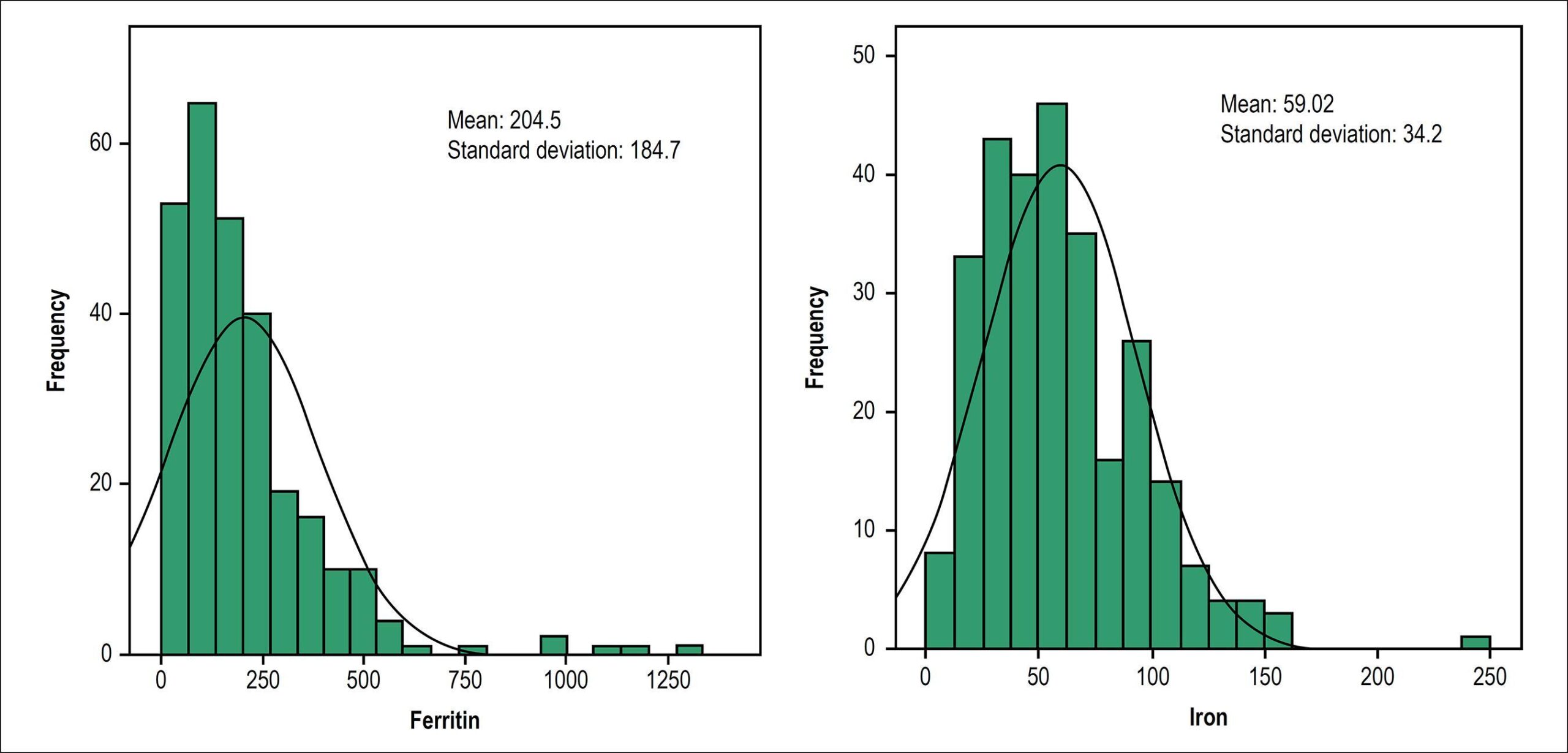
We studied 280 pts (73% males; mean age 68 ± 13 years). The mean levels of serum iron and ferritin were 59 ± 34 mcg/dL and 205 ± 185 ng/mL, respectively. Patients included in the 1st tertile of serum iron (≤ 40 mcg/dL) had a higher rate of adverse events, in-hospital and after 1 year. Lower and higher levels of ferritin (1st and 3rd tertiles, ≤ 110; >219 ng/ml, respectively) were associated with a higher incidence of HF during hospitalization and death at 1 year. A ferritin value >316 ng /mL was an independent risk factor for death at 1 year (adjusted OR: 14; 95%CI: 2.6 to 75.9).

Conclusion:

In this population, iron metabolism alterations were associated with a higher rate of adverse events and higher ferritin levels constituted an independent mortality predictor in the long-term.

  • Acute coronary syndrome
  • Iron Metabolism Disorders
  • Prognostic
Read Full Article
Creative Commons Attribution (CC BY) Creative Commons license
16/07/2018 DOI: 10.5935/abc.20180116
A new tissue doppler index in predicting future atrial fibrillation in patients with heart failure
ABC
Artigo Original

A new tissue doppler index in predicting future atrial fibrillation in patients with heart failure

Cristian Mornos et al. Lucian Petrescu Dragos Cozma Adina Ionac … Sorin Pescariu Stefan Iosif Dragulescu

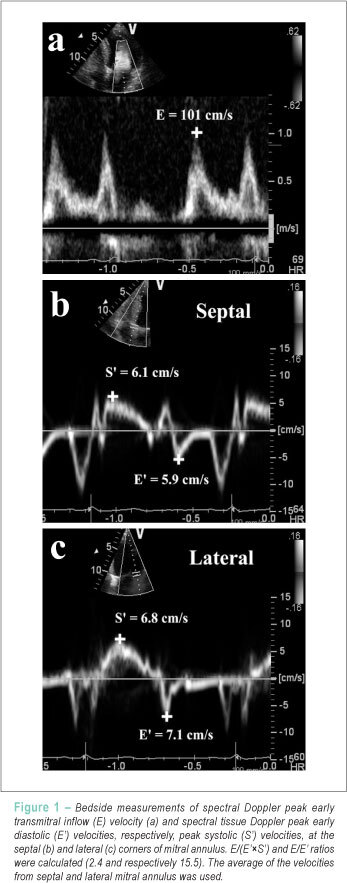
BACKGROUND: Onset of atrial fibrillation (AF) in patients with heart failure (HF) is usually associated with a high occurrence of cardiovascular complications. E/(E’×S’) ratio (E=early diastolic transmitral velocity, E’=early mitral annular diastolic velocity and S’=systolic mitral annulus velocity) has been shown to reflect left ventricular filling pressure. OBJECTIVE: We investigate whether E/(E’×S’) could be a predictor of new-onset AF in patients with HF. METHODS: We analyzed 113 consecutive hospitalized patients with HF, in sinus rhythm, after appropriate medical treatment. Patients with histories of AF, inadequate echocardiographic images, congenital heart disease, paced rhythm, significant primary valvular disease, acute coronary syndrome, coronary revascularization during follow-up, severe pulmonary disease or renal failure were not included. E/(E’×S’) was determined using the average of septal and lateral mitral annular velocities. The primary study end-point was the new-onset AF. RESULTS: During the follow-up period (35.7±11.2 months), 33 patients (29.2%) developed AF. Mean E/(E’×S’) was 3.09±1.12 in these patients, while it was 1.72±1.34 in the other patients (p<0.001). The optimal E/(E'×S') cut-off to predict new-onset AF was 2.2 (88% sensitivity, 77% specificity). There were 64 patients (56.6%) with E/(E'×S')2.2. New-onset AF was higher in patients with E/(E’×S’)>2.2 than in patients with E/(E’×S’)<2.2 [29 (59.1%) versus 4 (6.2%), p<0.001]. On multivariate Cox analysis including the variables that predicted AF on univariate analysis, E/(E'×S') was the only independent predictor of new-onset AF (hazard ratio=2.26, 95% confidence interval=1.25-4.09, p=0.007). CONCLUSION: In patients with HF, E/(E'×S') seems to be a good predictor of new-onset AF.

  • Atrial Fibrillation
  • Heart Failure
  • Prognostic
  • tissue Doppler imaging
Read Full Article
Creative Commons Attribution (CC BY) Creative Commons license
14/10/2011 DOI: 10.1590/S0066-782X2011005000099 Views 3
ABC
Research Article

Impact of renal failure on in-hospital outcomes after coronary artery bypass surgery

Roberto Ramos Barbosa et al. Priscila Feitoza Cestari Julhano Tiago Capeletti Gustavo Magnus T. L. S. R. Peres … Tania L. Pozzo Ibañez Patrícia Viana da Silva Jorge A. Farran Vivian Lerner Amato Pedro Silvio Farsky

BACKGROUND: Chronic kidney disease (CKD) is a predictor of increased mortality in patients undergoing coronary artery bypass surgery (CABG). OBJECTIVE: To evaluate the characteristics and predictors of increased mortality in the CKD population submitted to CABG. To compare in-hospital outcomes between patients with and without CKD, and with and without development of acute renal failure (ARF). METHODS: Retrospective analysis of a prospective database of all isolated CABG performed in a single public tertiary hospital from 1999 to 2007. CKD was considered when creatinine > 1.5 mg/dl. Clinical characteristics, mortality and post-operative complications were evaluated according to renal function. RESULTS: Of 3,890 patients, 362 (9.3%) had CKD. This population was older, presented grater prevalence of hypertension, left ventricular dysfunction, previous stroke, peripheral vascular disease and three-vessel disease. In-hospital outcomes revealed greater incidence of stroke (5.5% vs 2.1%), atrial fibrillation (16 vs 8.3%), low cardiac ouput syndrome (14.4% vs 8.5%), longer stay in intensive care unit (4.04 vs 2.83 days), and greater mortality (10.5% vs 3.8%). Logistic regression: female gender, smoking, diabetes and peripheral vascular disease were associated with higher in-hospital mortality within the CKD group. Patients who did not develop post-operative ARF presented 3.5% mortality; non-dialytic ARF: 35.4%; dialytic ARF: 66.7% mortality. Mortality was directly related to the stage of CKD, according to glomerular filtration rate. CONCLUSION: CKD patients submitted to CABG represent a high risk population, with increased incidence of complications and mortality. Post-operative ARF is a strong in-hospital mortality predictor. Glomerular filtration rate was inversely related to mortality.

  • Intensive Care Units
  • lenght of stay
  • Morbidity
  • Myocardial Revascularization
  • Prognostic
  • Renal Insufficiency, Chronic
Read Full Article
Creative Commons Attribution (CC BY) Creative Commons license
17/06/2011 DOI: 10.1590/S0066-782X2011005000075 Views 2
Comparison between cardiac troponin I and CK-MB mass in acute coronary syndrome without st elevation
ABC
Artigo Original

Comparison between cardiac troponin I and CK-MB mass in acute coronary syndrome without st elevation

Elizabete Silva dos Santos et al. Valéria Troncoso Baltar Marcos Paulo Pereira Luiz Minuzzo … Ari Timerman Álvaro Avezum

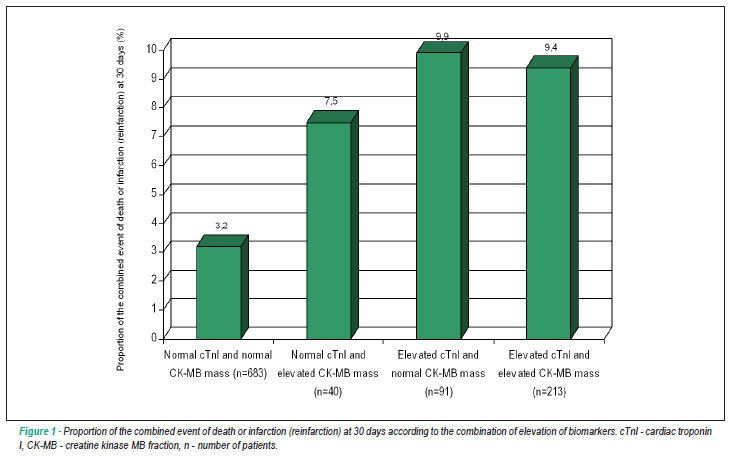
BACKGROUND: There is uncertainty as to the comparative prognostic value between cardiac troponin I (cTnI) and CK-MB in acute coronary syndrome (ACS). OBJECTIVE: To compare the prognostic value between cTnI and CK-MB mass in patients with ACS without ST-segment elevation. METHODS: 1,027 patients were analyzed in a prospective way in a tertiary cardiology center. Combinations of biomarkers were examined: normal cTnI, normal CK-MB mass (65.5%), normal cTnI, elevated CK-MB mass (3.9%), elevated cTnI, normal CK-MB mass (8.8%), elevated cTnI, elevated CK-MB mass (20.7%). A multivariate analysis of clinical, electrocardiographic and laboratory variables determined the independent prognostic value of biomarkers for the event of death or (re)infarction within 30 days. RESULTS: Patients with at least one elevated biomarker were older (p = 0.02) and males (p < 0.001). The previous use of aspirin (p = 0.001), beta-blockers (p = 0.003) or statin (p = 0.013) was most frequent among those without elevated cTnI. Patients with both biomarkers elevated had more ST-segment depression (p < 0.001) or elevated creatinine (p < 0.001). In a multivariate analysis with the inclusion of cTnI, the CK-MB mass was not an independent variable for the event of death or (re) infarction within 30 days (odds ratio [OR] 1.16, p = 0.71). When cTnI was not included, we had the following values: age (OR 1.07; p < 0.001); male (OR 1.09; p = 0.77); diabetes mellitus (OR 1.95; p = 0.02); previous stroke (OR 3.21; p = 0.008); creatinine level (OR 1.63; p = 0.002); CK-MB mass (OR 1.96; p = 0.03). C-statistic 0.77 (p < 0.001). CONCLUSION: With a dose of cTnI, CK-MB mass may be dispensable for prognostic evaluation. If cTnI is unavailable, CK-MB mass is acceptable for making a decision on treatment options.

  • Acute coronary syndrome
  • creatine kinase
  • Myocardial Infarction
  • Prognostic
  • Troponin I
Read Full Article
Creative Commons Attribution (CC BY) Creative Commons license
04/02/2011 DOI: 10.1590/S0066-782X2011005000016
Prognostic value of dipyridamole stress echocardiography in women
ABC
Artigo Original

Prognostic value of dipyridamole stress echocardiography in women

Maria Celita de Almeida et al. Brivaldo Markman Filho

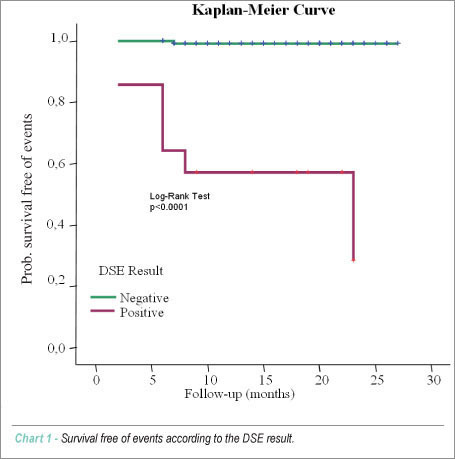
BACKGROUND: Stress echocardiography is an important diagnostic and prognostic tool in ischemic heart disease. OBJECTIVE: To evaluate the role of dipyridamole stress echocardiography (DSE) in the investigation of myocardial ischemia in women and its ability to predict combined events (cardiovascular death, acute myocardial infarction [AMI], unstable angina, coronary artery bypass grafting [surgery or percutaneous intervention] at an average follow-up of 16 months. METHODS: A prospective study using the protocol of dipyridamole at 0.84 mg in 10 minutes, associated with atropine (0.25 mg/min up to 1.0 mg). RESULTS: This study evaluated 147 women. DSE was positive in 14 patients (9.5%), negative in 128 (87.1%) and inconclusive in 5 (3.4%). Events occurred in 8 patients, 7 had positive DSE. The other 138 did not present any events. Our of these, 128 had negative DSE. The sensitivity, specificity, accuracy, the positive and negative predictive values of the test before the events were respectively: 83%, 95%, 94%, 42% and 99%. The event-free survival for patients with negative DSE was 99.2% compared with 58% for positive DSE (p < 0.001). Univariate analysis identified the DSE result, basal electrocardiogram (ECG), LV ejection fraction, dyslipidemia, wall motion score index at rest and peak, history of AMI, coronary artery bypass grafting, as prognostic predictors related to outcomes. The results of DSE and ECG remained significantly associated with outcomes in the multivariate analysis (p < 0.001). CONCLUSION: The baseline ECG and positive DSE were independent variables for the occurrence of outcomes. The DSE showed excellent negative predictive value, confirming its usefulness in evaluating prognosis in such patients.

  • Diagnostic Techniques and Procedures
  • Dipyridamole
  • Echocardiography, Stress
  • Myocardial Ischemia
  • Prognostic
  • Women
Read Full Article
Creative Commons Attribution (CC BY) Creative Commons license
26/11/2010 DOI: 10.1590/S0066-782X2010005000156
Chagas cardiomyopathy: prognosis in clinical and hemodynamic profile C
ABC
Artigo Original

Chagas cardiomyopathy: prognosis in clinical and hemodynamic profile C

Juliano Cardoso et al. Milena Novaes Marcelo Ochiai Kelly Regina … Paulo Morgado Robinson Munhoz Euler Brancalhão Marcelo Lima Antonio Carlos Pereira Barretto

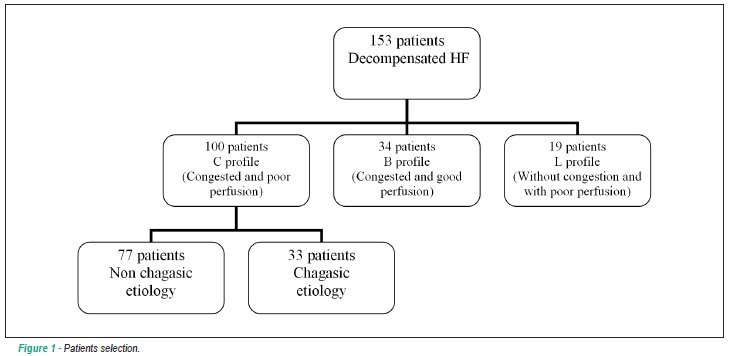
BACKGROUND: Patients with heart failure (HF) who are admitted showing poor perfusion and congestion (clinical-hemodynamic profile C) are the group that evolves with the worst prognosis in decompensated heart failure. However, there is little information in literature on the etiology of cardiopathy influences the outcome of patients in advanced stage. OBJECTIVE: To assess the outcome of patients admitted with clinical and hemodynamic profile C and verify the role of the etiology in this phase. METHODS: A cohort study was performed including patients with left ventricle ejection fraction (LVEF) < 45.0%, functional class IV and hospitalization presenting clinical-hemodynamic profile C. The group was divided into patients with chagasic (Ch) and non chagasic (NCh) cardiomyopathy. Statistical analysis used Student t test, Fisher exact test, chi-square and SPSS tests. The significance of p < 0.05 was considered. RESULTS: One hundred patients, with mean age 57.6 ± 15.1 years and mean LVEF of 23.8 ± 8.5%, were included. Among the patients studied, 33.0% were chagasic and, in comparison with NCh, had lower systolic blood pressure (Ch 89.3 ± 17.1 mmHg versus NCh 98.8 ± 21.7 mmHg, p = 0.03 ) and lowest average age – Ch 52.9 ± 14.5 years versus NCh 59.8 ± 14.9 years, p = 0.03). During follow-up of 25 months, mortality was 66.7% for Ch and 37.3% in NCh (p = 0.019). The Chagas disease etiology was an independent marker of poor prognosis in multivariate analysis with risk ratio of 2.75 (HF 95.0%, from 1.35 to 5.63). CONCLUSION: In patients with advanced HF, Chagas disease is an important predictor of the worst prognosis.

  • Chagas Cardiomyopathy
  • Heart Failure
  • Prognostic
  • Reperfusion
Read Full Article
Creative Commons Attribution (CC BY) Creative Commons license
27/08/2010 DOI: 10.1590/S0066-782X2010005000112 Views 1
Coronary calcium score as predictor of stenosis and events in pretransplant renal chronic failure
ABC
Artigo Original

Coronary calcium score as predictor of stenosis and events in pretransplant renal chronic failure

Miguel Abraão Rosário et al. José Jayme de Lima José R. Parga Luiz F. Ávila … Luis H. Gowdak Pedro A. Lemos Carlos E. Rochitte

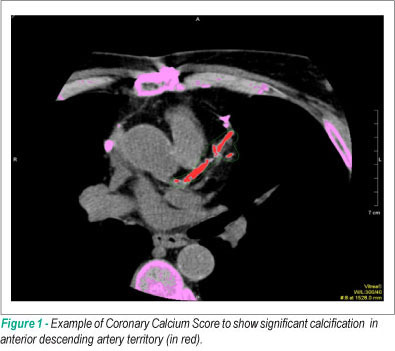
BACKGROUND: Coronary artery disease (CAD) is the major cause of death among chronic renal failure (CRF) patients. Traditional, non-invasive exams to detect CAD and to predict events have shown insufficient results in this group. CT Scan evaluation of Coronary Calcium Score (CCS) has proven to be of prognostic value for the population reporting no renal condition. OBJECTIVE: To investigate CCS accuracy in detecting obstructive CAD and in predicting cardiovascular events in candidates to renal transplant as compared to quantitative invasive coronary angiography (ICA). METHODS: Ninety-seven (97) CRF patients aged > 35 were evaluated. Obstructive CAD was considered as >50% or >70% stenosis on ICA. Descriptive data, concordance, diagnostic tests, Kaplan-Meier, and multivariate analysis were used. RESULTS: Agatston mean score was 580.6 ± 1,102.2. Minimum and maximum values were 0 and 7,994, with median at 176. Only 14 patients had zero calcium score. No differences were reported in regard to ethnicity. Highest regional calcium was associated to the highest probability of coronary stenosis in the same segment. Agatston calcium score showed high accuracy for the diagnosis of >50% and >70% stenosis, with area under ROC curve (AUC) of 0.75 and 0.70, respectively. At the threshold of 400, calcium score identified a subgroup with a higher rate of cardiovascular events at an average follow-up time of 29±11.0 months. CONCLUSION: CCS proved to have good diagnostic and prognostic performance for cardiovascular events evaluation in CRF patients.

  • calcio score
  • Chronic
  • Coronary Artery Disease
  • determination
  • emission-computed
  • Prognostic
  • Renal Insufficiency
  • Tomography
Read Full Article
Creative Commons Attribution (CC BY) Creative Commons license
05/05/2010 DOI: 10.1590/S0066-782X2010000200018 Views 2
Single cardiac troponin T measurement predicts risk for adverse outcome in decompensated heart failure
ABC
Artigo Original

Single cardiac troponin T measurement predicts risk for adverse outcome in decompensated heart failure

Manoel D. C. Oliveira et al. Juliana Álvares Maria Consolação V. Moreira

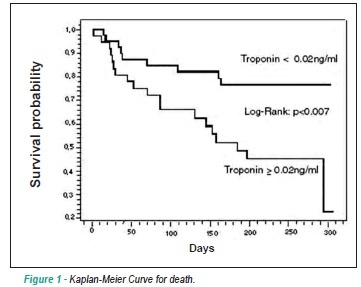
BACKGROUND: The slight increase in cardiac troponin in the blood of patients with heart failure (HF) suggests that myofibrils are degraded in the myocardium and released in the circulation, reflecting a continuous and progressive injury process in the contractile system. OBJECTIVE: To correlate the serum levels of cardiac troponin T (TnT) at the hospital admission of patients with decompensated HF and prognosis. METHODS: A total of 79 consecutive patients, hospitalized due to decompensated HF, with LVEF 2.5 mg%, liver failure, or neuromuscular diseases. RESULTS: High levels of TnTc (>0.02 ng/ml) were detected in 37 patients (46.84%). The global mortality was 35.4%. In the groups with high TnT and low TnT levels (<0.02 ng/ml) there were, respectively, 19 versus 9 deaths (RR=2.4; 95%CI 1.24-4.63; p=0.011), 5 versus 4 heart transplants (RR=1,42; 95%CI 0.41-4.89; p=0.73), 11 versus 7 patients needed IV inotropic agents (RR=1.78; 95%CI 0.77-4.12; p=0.26) and 14 versus 10 patients were re-hospitalized (RR=1.85; 95%CI 0.95-3.6; p=0.10). Mean troponin levels were significantly higher in those individuals who died (0.071±0,119 vs 0.032±0.046; p=0.004). At the multivariate analysis, the persistence of the third sound and the need for IV inotropic agents showed to be independent predictors of death; however, we observed a higher tendency towards mortality for patients presenting high TnT when compared to those with low troponin levels (HR=2.64; 95%CI 0.91-7.63; p=0.07). CONCLUSION: The single troponin measurement at hospital admission in patients with decompensated HF predicts adverse outcomes and should be considered at the early stratification of long-term morbimortality.

  • Heart Failure
  • Prognostic
  • Troponin T
Read Full Article
Creative Commons Attribution (CC BY) Creative Commons license
26/03/2010 DOI: 10.1590/S0066-782X2010005000013 Views 1
Dante Pazzanese risk score for non-st-segment elevation acute coronary syndrome
ABC
Artigo Original

Dante Pazzanese risk score for non-st-segment elevation acute coronary syndrome

Elizabete Silva dos Santos et al. Ari Timerman Valéria Troncoso Baltar Maria Tereza Cabrera Castillo … Marcos Paulo Pereira Luiz Minuzzo Leopoldo Soares Piegas

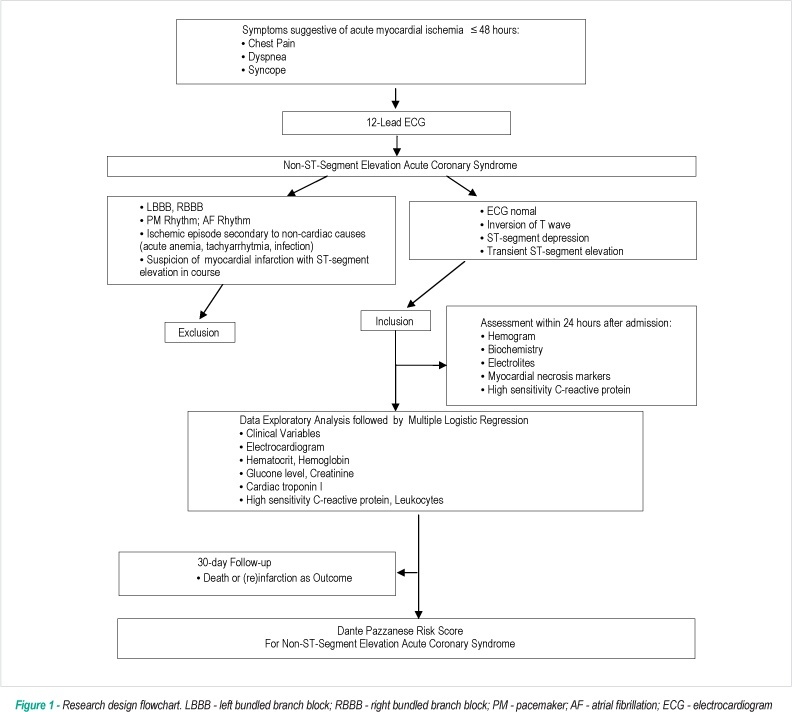
BACKGROUND: The probability of adverse events estimate is crucial in acute coronary syndrome condition. OBJECTIVES: To develop a risk score for the brazilian population presenting non-ST-segment elevation acute coronary syndrome. METHODS: One thousand and twenty seven (1,027) patients were investigated prospectively at a cardiology center in Brazil. A multiple logistic regression model was developed to estimate death or (re)infarction risk within 30 days. Model predictive accuracy was determined by C statistic. RESULTS: Combined event occurred in 54 patients (5.3%). The score was created by the arithmetic sum of independent predictors points. Points were determined by corresponding probabilities of event occurrence. The following variables have been identified: age increase (0 to 9 points); diabetes mellitus history (2 points) or prior stroke (4 points); no previous use of angiotensin converting enzyme inhibitor (1 point); creatinine level increase (0 to 10 points); the combination of troponin I level increase and ST-segment depression (0 to 4 points). Four risk groups were defined: very low (up to 5 points); low (6 to 10 points ); intermediate (11 to 15 points ); high risk (16 to 30 points ). The C statistic was 0.78 for event probability, and 0.74 for risk score. CONCLUSION: A risk score of easy application in the emergency service was developed to predict death or (re)infarction within 30 days in a brazilian population with non-ST-segment elevation acute coronary syndrome.

  • Cardiovascular Diseases
  • Myocardial Infarction
  • Prognostic
  • Risk Factors
  • Unstable Angina
Read Full Article
Creative Commons Attribution (CC BY) Creative Commons license
24/11/2009 DOI: 10.1590/S0066-782X2009001000006
Critical left ventricular volume in aortic stenosis in first year of life: its importance in patients selection candidates to univentricular surgical correction pos-valvotomy
ABC
Artigo Original

Critical left ventricular volume in aortic stenosis in first year of life: its importance in patients selection candidates to univentricular surgical correction pos-valvotomy

Marco Aurélio Santos et al. Vitor Manuel Pereira Azevedo Maria Ourinda Mesquita da Cunha

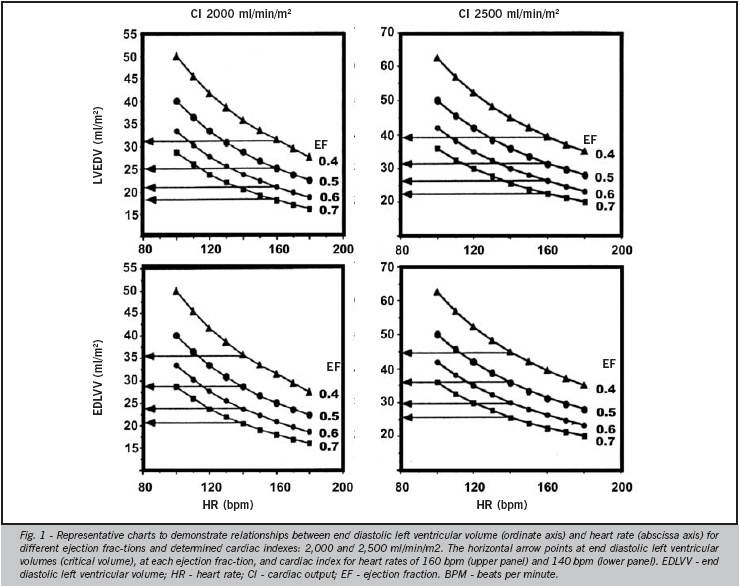
OBJECTIVE: Analysis of critical end diastolic left ventricular volume (EDLVV), defined as the lowest acceptable volume to keep cardiac output, in the selection of patients with post-valvotomy aortic stenosis, candidates to univentricular correction. METHODS: A retrospective study in 21 patients with aortic stenosis, during the first year of life, and 232 patients compiled from literature. Values of end diastolic volume (EDLVV), from 20 to 60 ml/m2 were determined as normal. The EDLVV of deceased patients was compared to that from survival patients. A correlation between the age and EDLVV was carried out at the time of valvotomy, between the groups. Finally, the critical EDLVV through the theoretical relationship between the EDLVV and heart rate for different ejection fractions and designated cardiac indexes (CI): 2,000 and 2,500 20-60 ml/min/m2 was determined. RESULTS: For EDLVV values 60 ml/m2, there was statistical significance between deceased and survival patients (p< 0.0001). However, in the range between 20 and 60 ml/m2, that significance was lower (p=0.0309). A greater incidence of death took place among those who showed it in the first week of life. For a CI of 2,500 ml/min/m2 and a heart rate (HR) of 140 bpm, critical EDLVV will be 26 ml/m2 if left ventricular ejection fraction (LVEF) is 0.70, and 44.5 ml/m2, if LVFE is 0.40. CONCLUSION: The analysis of critical end diastolic left ventricular volume (EDLVV) can add another parameter in the indication of univentricular correction in patients with post-valvotomy aortic stenosis, during the first year of life.

  • Aortic Stenosis
  • left ventricular volume
  • Prognostic
  • univentricular correction
Read Full Article
Creative Commons Attribution (CC BY) Creative Commons license
10/10/2005 DOI: 10.1590/S0066-782X2005001600007

How to cite this article

EndNote RIS

Electronic Document Format (Vancouver)

Martinez PF, Okoshi MP, Okoshi K, Oliveira-Junior SA. Heart Failure Mid-Range Ejection Fraction. Arquivos Brasileiros de Cardiologia 2021;116(1):24-5.

Electronic Document Format (ABNT)

Martinez, Paula Felippe; Okoshi, Marina Politi; Okoshi, Katashi; Oliveira-Junior, Silvio Assis de. Heart Failure Mid-Range Ejection Fraction. Arquivos Brasileiros de Cardiologia, v. 116, n. 1, p. 24-25, Feb. 2021.

Electronic Document Format (APA)

Martinez, P. F., Okoshi, M. P., Okoshi, K., & Oliveira-Junior, S. A. (2021). Heart Failure Mid-Range Ejection Fraction. Arquivos Brasileiros de Cardiologia, 116(1), 24-25.

Electronic Document Format (ISO)

Martinez, Paula Felippe and Okoshi, Marina Politi and Okoshi, Katashi and Oliveira-Junior, Silvio Assis de. Heart Failure Mid-Range Ejection Fraction. Arquivos Brasileiros de Cardiologia [online]. 2021, vol. 116, n. 1, [cited 2026-10-14], pp. 24-25. Available from: <https://journals.cardiol.br/en/article/heart-failure-mid-range-ejection-fraction/>. ISSN 0066-782X

EndNote RIS

Electronic Document Format (Vancouver)

Duarte T, Gonçalves S, Sá C, Rodrigues R, Marinheiro R, Fonseca M, Seixo F, et al. Prognostic Impact of Iron Metabolism Changes in Patients with Acute Coronary Syndrome. Arquivos Brasileiros de Cardiologia 2018;111(2):144-50.

Electronic Document Format (ABNT)

Duarte, Tatiana; Gonçalves, Sara; Sá, Catarina; Rodrigues, Rita; Marinheiro, Rita; Fonseca, Marta; Seixo, Filipe; Caria, Rui. Prognostic Impact of Iron Metabolism Changes in Patients with Acute Coronary Syndrome. Arquivos Brasileiros de Cardiologia, v. 111, n. 2, p. 144-150, Jul. 2018.

Electronic Document Format (APA)

Duarte, T., Gonçalves, S., Sá, C., Rodrigues, R., Marinheiro, R., Fonseca, M., Seixo, F., & Caria, R. (2018). Prognostic Impact of Iron Metabolism Changes in Patients with Acute Coronary Syndrome. Arquivos Brasileiros de Cardiologia, 111(2), 144-150.

Electronic Document Format (ISO)

Duarte, Tatiana and Gonçalves, Sara and Sá, Catarina and Rodrigues, Rita and Marinheiro, Rita and Fonseca, Marta and Seixo, Filipe and Caria, Rui. Prognostic Impact of Iron Metabolism Changes in Patients with Acute Coronary Syndrome. Arquivos Brasileiros de Cardiologia [online]. 2018, vol. 111, n. 2, [cited 2026-10-14], pp. 144-150. Available from: <https://journals.cardiol.br/en/article/prognostic-impact-of-iron-metabolism-changes-in-patients-with-acute-coronary-syndrome/>. ISSN 0066-782X

EndNote RIS

Electronic Document Format (Vancouver)

Mornos C, Petrescu L, Cozma D, Ionac A, Pescariu S, Dragulescu SI. A new tissue doppler index in predicting future atrial fibrillation in patients with heart failure. Arquivos Brasileiros de Cardiologia 2011;97(6):390-477.

Electronic Document Format (ABNT)

Mornos, Cristian; Petrescu, Lucian; Cozma, Dragos; Ionac, Adina; Pescariu, Sorin; Dragulescu, Stefan Iosif. A new tissue doppler index in predicting future atrial fibrillation in patients with heart failure. Arquivos Brasileiros de Cardiologia, v. 97, n. 6, p. 390-477, Oct. 2011.

Electronic Document Format (APA)

Mornos, C., Petrescu, L., Cozma, D., Ionac, A., Pescariu, S., & Dragulescu, S. I. (2011). A new tissue doppler index in predicting future atrial fibrillation in patients with heart failure. Arquivos Brasileiros de Cardiologia, 97(6), 390-477.

Electronic Document Format (ISO)

Mornos, Cristian and Petrescu, Lucian and Cozma, Dragos and Ionac, Adina and Pescariu, Sorin and Dragulescu, Stefan Iosif. A new tissue doppler index in predicting future atrial fibrillation in patients with heart failure. Arquivos Brasileiros de Cardiologia [online]. 2011, vol. 97, n. 6, [cited 2026-10-14], pp. 390-477. Available from: <https://journals.cardiol.br/en/article/a-new-tissue-doppler-index-in-predicting-future-atrial-fibrillation-in-patients-with-heart-failure/>. ISSN 0066-782X

EndNote RIS

Electronic Document Format (Vancouver)

Barbosa RR, Cestari PF, Capeletti JT, Peres GMTLSR, Ibañez TLP, Silva PV, Farran JA, et al. Impact of renal failure on in-hospital outcomes after coronary artery bypass surgery. Arquivos Brasileiros de Cardiologia 2011;97(3):249-53.

Electronic Document Format (ABNT)

Barbosa, Roberto Ramos; Cestari, Priscila Feitoza; Capeletti, Julhano Tiago; Peres, Gustavo Magnus T. L. S. R.; Ibañez, Tania L. Pozzo; Silva, Patrícia Viana da; Farran, Jorge A.; Amato, Vivian Lerner; Farsky, Pedro Silvio. Impact of renal failure on in-hospital outcomes after coronary artery bypass surgery. Arquivos Brasileiros de Cardiologia, v. 97, n. 3, p. 249-253, Jun. 2011.

Electronic Document Format (APA)

Barbosa, R. R., Cestari, P. F., Capeletti, J. T., Peres, G. M. T. L. S. R., Ibañez, T. L. P., Silva, P. V. , Farran, J. A., Amato, V. L., & Farsky, P. S. (2011). Impact of renal failure on in-hospital outcomes after coronary artery bypass surgery. Arquivos Brasileiros de Cardiologia, 97(3), 249-253.

Electronic Document Format (ISO)

Barbosa, Roberto Ramos and Cestari, Priscila Feitoza and Capeletti, Julhano Tiago and Peres, Gustavo Magnus T. L. S. R. and Ibañez, Tania L. Pozzo and Silva, Patrícia Viana da and Farran, Jorge A. and Amato, Vivian Lerner and Farsky, Pedro Silvio. Impact of renal failure on in-hospital outcomes after coronary artery bypass surgery. Arquivos Brasileiros de Cardiologia [online]. 2011, vol. 97, n. 3, [cited 2026-10-14], pp. 249-253. Available from: <https://journals.cardiol.br/en/article/impact-of-renal-failure-on-in-hospital-outcomes-after-coronary-artery-bypass-surgery/>. ISSN 0066-782X

EndNote RIS

Electronic Document Format (Vancouver)

Santos ES, Baltar VT, Pereira MP, Minuzzo L, Timerman A, Avezum . Comparison between cardiac troponin I and CK-MB mass in acute coronary syndrome without st elevation. Arquivos Brasileiros de Cardiologia 2011;96(3):179-87.

Electronic Document Format (ABNT)

Santos, Elizabete Silva dos; Baltar, Valéria Troncoso; Pereira, Marcos Paulo; Minuzzo, Luiz; Timerman, Ari; Avezum, Álvaro. Comparison between cardiac troponin I and CK-MB mass in acute coronary syndrome without st elevation. Arquivos Brasileiros de Cardiologia, v. 96, n. 3, p. 179-187, Feb. 2011.

Electronic Document Format (APA)

Santos, E. S. , Baltar, V. T., Pereira, M. P., Minuzzo, L., Timerman, A., & Avezum, (2011). Comparison between cardiac troponin I and CK-MB mass in acute coronary syndrome without st elevation. Arquivos Brasileiros de Cardiologia, 96(3), 179-187.

Electronic Document Format (ISO)

Santos, Elizabete Silva dos and Baltar, Valéria Troncoso and Pereira, Marcos Paulo and Minuzzo, Luiz and Timerman, Ari and Avezum, Álvaro. Comparison between cardiac troponin I and CK-MB mass in acute coronary syndrome without st elevation. Arquivos Brasileiros de Cardiologia [online]. 2011, vol. 96, n. 3, [cited 2026-10-14], pp. 179-187. Available from: <https://journals.cardiol.br/en/article/comparison-between-cardiac-troponin-i-and-ck-mb-mass-in-acute-coronary-syndrome-without-st-elevation/>. ISSN 0066-782X

EndNote RIS

Electronic Document Format (Vancouver)

Almeida MC, Markman Filho B. Prognostic value of dipyridamole stress echocardiography in women. Arquivos Brasileiros de Cardiologia 2010;96(1):31-7.

Electronic Document Format (ABNT)

Almeida, Maria Celita de; Markman Filho, Brivaldo. Prognostic value of dipyridamole stress echocardiography in women. Arquivos Brasileiros de Cardiologia, v. 96, n. 1, p. 31-37, Nov. 2010.

Electronic Document Format (APA)

Almeida, M. C. , & Markman Filho, B. (2010). Prognostic value of dipyridamole stress echocardiography in women. Arquivos Brasileiros de Cardiologia, 96(1), 31-37.

Electronic Document Format (ISO)

Almeida, Maria Celita de and Markman Filho, Brivaldo. Prognostic value of dipyridamole stress echocardiography in women. Arquivos Brasileiros de Cardiologia [online]. 2010, vol. 96, n. 1, [cited 2026-10-14], pp. 31-37. Available from: <https://journals.cardiol.br/en/article/prognostic-value-of-dipyridamole-stress-echocardiography-in-women/>. ISSN 0066-782X

EndNote RIS

Electronic Document Format (Vancouver)

Cardoso J, Novaes M, Ochiai M, Regina K, Morgado P, Munhoz R, Brancalhão E, et al. Chagas cardiomyopathy: prognosis in clinical and hemodynamic profile C. Arquivos Brasileiros de Cardiologia 2010;95(4):518-23.

Electronic Document Format (ABNT)

Cardoso, Juliano; Novaes, Milena; Ochiai, Marcelo; Regina, Kelly; Morgado, Paulo; Munhoz, Robinson; Brancalhão, Euler; Lima, Marcelo; Barretto, Antonio Carlos Pereira. Chagas cardiomyopathy: prognosis in clinical and hemodynamic profile C. Arquivos Brasileiros de Cardiologia, v. 95, n. 4, p. 518-523, Aug. 2010.

Electronic Document Format (APA)

Cardoso, J., Novaes, M., Ochiai, M., Regina, K., Morgado, P., Munhoz, R., Brancalhão, E., Lima, M., & Barretto, A. C. P. (2010). Chagas cardiomyopathy: prognosis in clinical and hemodynamic profile C. Arquivos Brasileiros de Cardiologia, 95(4), 518-523.

Electronic Document Format (ISO)

Cardoso, Juliano and Novaes, Milena and Ochiai, Marcelo and Regina, Kelly and Morgado, Paulo and Munhoz, Robinson and Brancalhão, Euler and Lima, Marcelo and Barretto, Antonio Carlos Pereira. Chagas cardiomyopathy: prognosis in clinical and hemodynamic profile C. Arquivos Brasileiros de Cardiologia [online]. 2010, vol. 95, n. 4, [cited 2026-10-14], pp. 518-523. Available from: <https://journals.cardiol.br/en/article/chagas-cardiomyopathy-prognosis-in-clinical-and-hemodynamic-profile-c/>. ISSN 0066-782X

EndNote RIS

Electronic Document Format (Vancouver)

Rosário MA, Lima JJ, Parga JR, Ávila LF, Gowdak LH, Lemos PA, Rochitte CE, et al. Coronary calcium score as predictor of stenosis and events in pretransplant renal chronic failure. Arquivos Brasileiros de Cardiologia 2010;94(2):252-60.

Electronic Document Format (ABNT)

Rosário, Miguel Abraão; Lima, José Jayme de; Parga, José R.; Ávila, Luiz F.; Gowdak, Luis H.; Lemos, Pedro A.; Rochitte, Carlos E.. Coronary calcium score as predictor of stenosis and events in pretransplant renal chronic failure. Arquivos Brasileiros de Cardiologia, v. 94, n. 2, p. 252-260, May. 2010.

Electronic Document Format (APA)

Rosário, M. A., Lima, J. J. , Parga, J. R., Ávila, L. F., Gowdak, L. H., Lemos, P. A., & Rochitte, C. E. (2010). Coronary calcium score as predictor of stenosis and events in pretransplant renal chronic failure. Arquivos Brasileiros de Cardiologia, 94(2), 252-260.

Electronic Document Format (ISO)

Rosário, Miguel Abraão and Lima, José Jayme de and Parga, José R. and Ávila, Luiz F. and Gowdak, Luis H. and Lemos, Pedro A. and Rochitte, Carlos E.. Coronary calcium score as predictor of stenosis and events in pretransplant renal chronic failure. Arquivos Brasileiros de Cardiologia [online]. 2010, vol. 94, n. 2, [cited 2026-10-14], pp. 252-260. Available from: <https://journals.cardiol.br/en/article/coronary-calcium-score-as-predictor-of-stenosis-and-events-in-pretransplant-renal-chronic-failure/>. ISSN 0066-782X

EndNote RIS

Electronic Document Format (Vancouver)

Oliveira MDC, Álvares J, Moreira MCV. Single cardiac troponin T measurement predicts risk for adverse outcome in decompensated heart failure. Arquivos Brasileiros de Cardiologia 2010;94(4):527-34.

Electronic Document Format (ABNT)

Oliveira, Manoel D. C.; Álvares, Juliana; Moreira, Maria Consolação V.. Single cardiac troponin T measurement predicts risk for adverse outcome in decompensated heart failure. Arquivos Brasileiros de Cardiologia, v. 94, n. 4, p. 527-534, Mar. 2010.

Electronic Document Format (APA)

Oliveira, M. D. C., Álvares, J., & Moreira, M. C. V. (2010). Single cardiac troponin T measurement predicts risk for adverse outcome in decompensated heart failure. Arquivos Brasileiros de Cardiologia, 94(4), 527-534.

Electronic Document Format (ISO)

Oliveira, Manoel D. C. and Álvares, Juliana and Moreira, Maria Consolação V.. Single cardiac troponin T measurement predicts risk for adverse outcome in decompensated heart failure. Arquivos Brasileiros de Cardiologia [online]. 2010, vol. 94, n. 4, [cited 2026-10-14], pp. 527-534. Available from: <https://journals.cardiol.br/en/article/single-cardiac-troponin-t-measurement-predicts-risk-for-adverse-outcome-in-decompensated-heart-failure/>. ISSN 0066-782X

EndNote RIS

Electronic Document Format (Vancouver)

Santos ES, Timerman A, Baltar VT, Castillo MTC, Pereira MP, Minuzzo L, Piegas LS, et al. Dante Pazzanese risk score for non-st-segment elevation acute coronary syndrome. Arquivos Brasileiros de Cardiologia 2009;93(4):343-51.

Electronic Document Format (ABNT)

Santos, Elizabete Silva dos; Timerman, Ari; Baltar, Valéria Troncoso; Castillo, Maria Tereza Cabrera; Pereira, Marcos Paulo; Minuzzo, Luiz; Piegas, Leopoldo Soares. Dante Pazzanese risk score for non-st-segment elevation acute coronary syndrome. Arquivos Brasileiros de Cardiologia, v. 93, n. 4, p. 343-351, Nov. 2009.

Electronic Document Format (APA)

Santos, E. S. , Timerman, A., Baltar, V. T., Castillo, M. T. C., Pereira, M. P., Minuzzo, L., & Piegas, L. S. (2009). Dante Pazzanese risk score for non-st-segment elevation acute coronary syndrome. Arquivos Brasileiros de Cardiologia, 93(4), 343-351.

Electronic Document Format (ISO)

Santos, Elizabete Silva dos and Timerman, Ari and Baltar, Valéria Troncoso and Castillo, Maria Tereza Cabrera and Pereira, Marcos Paulo and Minuzzo, Luiz and Piegas, Leopoldo Soares. Dante Pazzanese risk score for non-st-segment elevation acute coronary syndrome. Arquivos Brasileiros de Cardiologia [online]. 2009, vol. 93, n. 4, [cited 2026-10-14], pp. 343-351. Available from: <https://journals.cardiol.br/en/article/dante-pazzanese-risk-score-for-non-st-segment-elevation-acute-coronary-syndrome/>. ISSN 0066-782X

EndNote RIS

Electronic Document Format (Vancouver)

Santos MA, Azevedo VMP, Cunha MOM. Critical left ventricular volume in aortic stenosis in first year of life: its importance in patients selection candidates to univentricular surgical correction pos-valvotomy. Arquivos Brasileiros de Cardiologia 2005;85(3):186-90.

Electronic Document Format (ABNT)

Santos, Marco Aurélio; Azevedo, Vitor Manuel Pereira; Cunha, Maria Ourinda Mesquita da. Critical left ventricular volume in aortic stenosis in first year of life: its importance in patients selection candidates to univentricular surgical correction pos-valvotomy. Arquivos Brasileiros de Cardiologia, v. 85, n. 3, p. 186-190, Oct. 2005.

Electronic Document Format (APA)

Santos, M. A., Azevedo, V. M. P., & Cunha, M. O. M. (2005). Critical left ventricular volume in aortic stenosis in first year of life: its importance in patients selection candidates to univentricular surgical correction pos-valvotomy. Arquivos Brasileiros de Cardiologia, 85(3), 186-190.

Electronic Document Format (ISO)

Santos, Marco Aurélio and Azevedo, Vitor Manuel Pereira and Cunha, Maria Ourinda Mesquita da. Critical left ventricular volume in aortic stenosis in first year of life: its importance in patients selection candidates to univentricular surgical correction pos-valvotomy. Arquivos Brasileiros de Cardiologia [online]. 2005, vol. 85, n. 3, [cited 2026-10-14], pp. 186-190. Available from: <https://journals.cardiol.br/en/article/critical-left-ventricular-volume-in-aortic-stenosis-in-first-year-of-life-its-importance-in-patients-selection-candidates-to-univentricular-surgical-correction-pos-valvotomy/>. ISSN 0066-782X

  • About ABC Family
  • Internal Regulation
  • Editorial Board
  • Brazilian Society of Cardiology (SBC)

Issues

SBC Guidelines

  • Videos
  • Podcasts
  • News