ABC Family Arquivos Brasileiros de Cardiologia International Journal of Cardiovascular Sciences ABC Heart Failure & Cardiomyopathy ABC Imagem Cardiovascular
Português English
ABC Family
Português English
  • About
    • About ABC Family
    • Internal Regulation
    • Editorial Board
    • Brazilian Society of Cardiology (SBC)
  • Issues
  • SBC Guidelines
  • Content
    • Videos
    • Podcasts
    • News
  • About
    • About ABC Family
    • Internal Regulation
    • Editorial Board
    • Brazilian Society of Cardiology (SBC)
  • Issues
  • SBC Guidelines
  • Content
    • Videos
    • Podcasts
    • News

ABC Family

  • ABC Family
  • Arquivos Brasileiros de Cardiologia
  • International Journal of Cardiovascular Sciences
  • ABC Heart Failure & Cardiomyopathy
  • ABC Imagem Cardiovascular
Search in

No content found.

Journals
Ordering
Article types
Others

  1. Home
  2. Keyword: Angiotensin II Type 1 Receptor Blockers
Figure 1
ABC
Original Article

Angiotensin Receptor Blockers Evaluated by Office and Home Blood Pressure Measurements. TeleHBPM Study

Weimar Kunz Sebba Barroso et al. Andréa Araujo Brandão Priscila Valverde de Oliveira Vitorino Audes Diógenes de Magalhães Feitosa … Eduardo Costa Duarte Barbosa Roberto Dischinger Miranda Josep Redon Miguel Camafort-Babkowski Antonio Coca Marco Antônio Mota Gomes

Abstract

Background

Adequate treatment of arterial hypertension and achieving arterial hypertension goals in are important in reducing cardiovascular outcomes.

Objectives

To describe angiotensin receptor blockers in monotherapy or double combination therapy and the rate of arterial hypertension control.

Methods

This cross-sectional study evaluated patients who were using angiotensin receptor blockers between 2017 and 2020. Those using three or more antihypertensive drugs were excluded. The analyzed variables included sex, age, body mass index, valid home blood pressure monitoring (HBPM) measurements, casual and HBPM systolic and diastolic blood pressure measurements, blood pressure variability, and antihypertensive and angiotensin receptor blocker class. Paired t, chi-square, and Fisher’s exact tests were used, as well as overlapping 95% confidence intervals and a significance level of 5% (p < 0.05).

Results

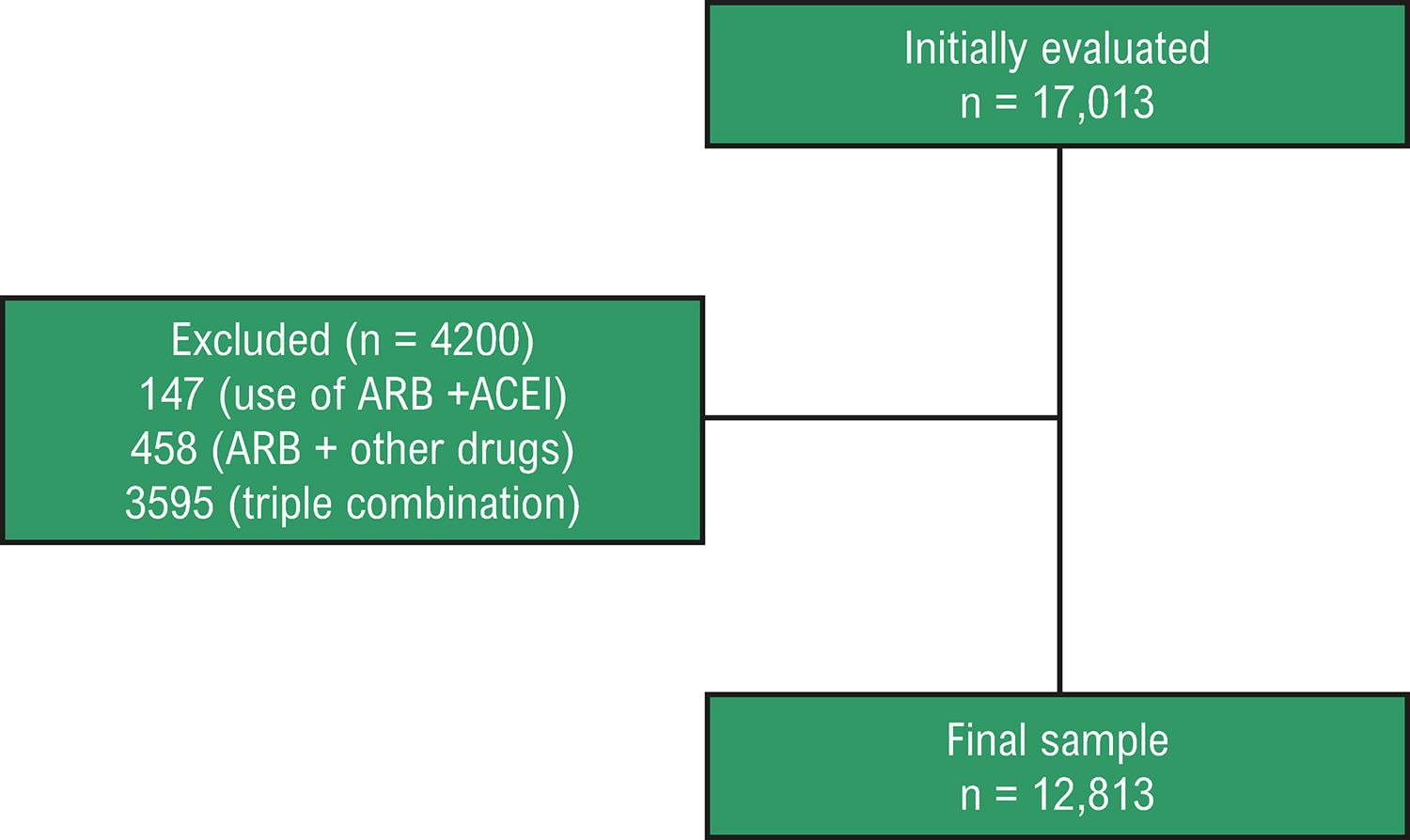
Of 17,013 patients, 12,813 met the inclusion criteria, 62.1% of whom were female. The mean number of valid measurements was 23.3 (SD, 2.0). The mean HBPM and casual measurements for systolic blood pressure were 126.8 (SD, 15.8) mmHg and 133.5 (SD, 20.1) mmHg (p <0.001), respectively, while those for diastolic blood pressure were 79.1 (SD, 9.7 mmHg) and 83.6 (SD, 11.9) mmHg (p <0.001), respectively. Losartan was the most common angiotensin receptor blocker and resulted in the highest blood pressure values. Combinations of angiotensin receptor blockers with diuretics or calcium channel antagonists resulted in lower blood pressure values.

Conclusions

More than half of the patients used losartan, although it was the least efficient drug for reducing and controlling blood pressure.
  • age
  • Angiotensin II Type 1 Receptor Blockers
  • Antihypertensive Agents/therapeutic use
  • Body Weights and Measures
  • Hypertension
  • Losartana
  • Sex
Read Full Article
Creative Commons Attribution (CC BY) Creative Commons license
09/05/2022 DOI: 10.36660/abc.20210504 Views 1
Figure 1
ABCHF
Review Article

Treatment of Heart Failure with reduced Ejection Fraction in 2022: The Essential Pillars

Marcely Gimenes Bonatto et al. Andressa de Oliveira Coiradas Lídia Ana Zytynski Moura

Abstract

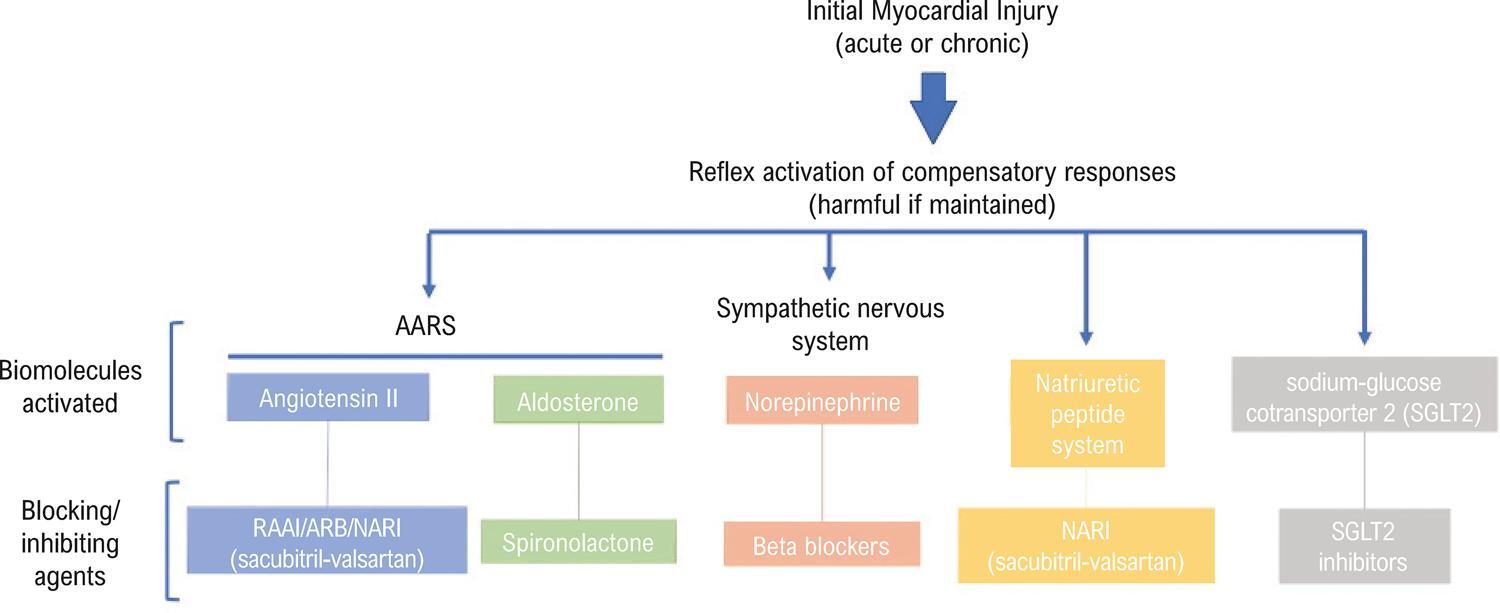
Pharmacological treatment of heart failure with reduced ejection fraction (HFREF) has undergone changes over the years as discoveries have been made related to new systems involved in its pathophysiology and, consequently, of new therapeutic targets. For this treatment, certain drug classes have become essential and should be used in combinations with the objective of reducing the disease’s high rates of morbidity and mortality. They are therefore considered the pillars of treatment for patients with HFREF. These drug classes act on the renin-angiotensin-aldosterone system (angiotensin-converting enzyme inhibitors, angiotensin receptor blockers, and mineralocorticoid receptor antagonists), on the autonomic nervous system (beta blockers), on the natriuretic peptides system (neprilysin and angiotensin receptor inhibitors), and on the sodium-glucose cotransporter 2 (sodium-glucose cotransporter 2 inhibitors). 1 This article will present an analytical summary of the pathophysiologic foundations and the scientific evidence that demonstrates the benefit of these medications, specifically in terms of their impact on the results of clinical trials.

  • Angiotensin II Type 1 Receptor Blockers
  • Heart Failure
  • Mineralocorticoid Receptor Antagonists
  • Sodium-Glucose Transporter 2 Inhibitors
Read Full Article
Creative Commons Attribution (CC BY) Creative Commons license
12/04/2022 DOI: 10.36660/abchf.20220003 Views 2
Angiotensin II receptor blocker add-on therapy for low cardiac output in decompensated heart failure
ABC
Artigo Original

Angiotensin II receptor blocker add-on therapy for low cardiac output in decompensated heart failure

Marcelo E. Ochiai et al. Antonio C. P. Barretto Juliano N. Cardoso Robinson T. Munhoz … Paulo C. Morgado José A. F. Ramires

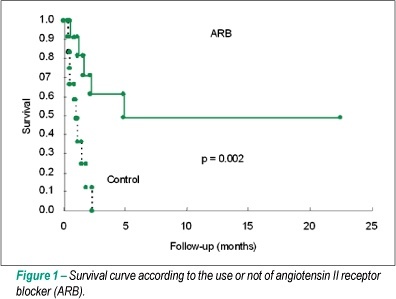
BACKGROUND: During heart failure (HF) decompensation, an intense activation of the renin-angiotensin-aldosterone system occurs; however, the use of angiotensin-converting enzyme inhibitor (ACEI) cannot block it completely. Otherwise, the addition of angiotensin II receptor blocker (ARB) can be useful when the inotropic dependence occurs. We evaluated the efficacy of the ARB-ACEI association on dobutamine withdrawal in advanced decompensated HF. OBJECTIVE: To assess the efficacy of association angiotensin receptor blocker – angiotensin converting enzyme inhibitor to withdraw the intravenous inotropic support in decompensated severe heart failure. METHODS: In a case-control study (N = 24), we selected patients admitted at the hospital due to HF that had been using dobutamine for more than 15 days, with one or more unsuccessful drug withdrawal attempts; optimized dose of ACEI and ejection fraction (EF) < 0.45. Then, the patients additionally received ARB (n=12) or not (control, n=12). The outcome was the successful dobutamine withdrawal, evaluated by logistic regression, with a p < 0.05. RESULTS: The EF was 0.25 and the age was 53 years, with a dobutamine dose of 10.7 μg/kg.min. The successful drug withdrawal was observed in 8 patients from the ARB group (67.7%) and in 2 patients from the control group (16.7%). The odds ratio (OR) was 10.0 (95%CI: 1.4 to 69.3; p = 0.02). The worsening in renal function was similar (ARB group: 42% vs. control group: 67%; p=0.129). CONCLUSION: In this pilot study, the ARB-ACEI association was associated with successful dobutamine withdrawal in advanced decompensated heart failure. The worsening in renal function was similar in both groups. Further studies are necessary to clarify the issue.

  • Angiotensin II Type 1 Receptor Blockers
  • congestive heart failure
  • Prognosis
Read Full Article
Creative Commons Attribution (CC BY) Creative Commons license
05/05/2010 DOI: 10.1590/S0066-782X2010000200015

How to cite this article

EndNote RIS

Electronic Document Format (Vancouver)

Barroso WKS, Brandão AA, Vitorino PVO, Feitosa ADM, Barbosa ECD, Miranda RD, Redon J, et al. Angiotensin Receptor Blockers Evaluated by Office and Home Blood Pressure Measurements. TeleHBPM Study. Arquivos Brasileiros de Cardiologia 2022;118(6):1069-82.

Electronic Document Format (ABNT)

Barroso, Weimar Kunz Sebba; Brandão, Andréa Araujo; Vitorino, Priscila Valverde de Oliveira; Feitosa, Audes Diógenes de Magalhães; Barbosa, Eduardo Costa Duarte; Miranda, Roberto Dischinger; Redon, Josep; Camafort-Babkowski, Miguel; Coca, Antonio; Gomes, Marco Antônio Mota. Angiotensin Receptor Blockers Evaluated by Office and Home Blood Pressure Measurements. TeleHBPM Study. Arquivos Brasileiros de Cardiologia, v. 118, n. 6, p. 1069-1082, May. 2022.

Electronic Document Format (APA)

Barroso, W. K. S., Brandão, A. A., Vitorino, P. V. O., Feitosa, A. D. M., Barbosa, E. C. D., Miranda, R. D., Redon, J., Camafort-Babkowski, M., Coca, A., & Gomes, M. A. M. (2022). Angiotensin Receptor Blockers Evaluated by Office and Home Blood Pressure Measurements. TeleHBPM Study. Arquivos Brasileiros de Cardiologia, 118(6), 1069-1082.

Electronic Document Format (ISO)

Barroso, Weimar Kunz Sebba and Brandão, Andréa Araujo and Vitorino, Priscila Valverde de Oliveira and Feitosa, Audes Diógenes de Magalhães and Barbosa, Eduardo Costa Duarte and Miranda, Roberto Dischinger and Redon, Josep and Camafort-Babkowski, Miguel and Coca, Antonio and Gomes, Marco Antônio Mota. Angiotensin Receptor Blockers Evaluated by Office and Home Blood Pressure Measurements. TeleHBPM Study. Arquivos Brasileiros de Cardiologia [online]. 2022, vol. 118, n. 6, [cited 2026-10-14], pp. 1069-1082. Available from: <https://journals.cardiol.br/en/article/angiotensin-receptor-blockers-evaluated-by-office-and-home-blood-pressure-measurements-telehbpm-study/>. ISSN 0066-782X

EndNote RIS

Electronic Document Format (Vancouver)

Bonatto MG, Coiradas AO, Moura LAZ. Treatment of Heart Failure with reduced Ejection Fraction in 2022: The Essential Pillars. ABC Heart Fail Cardiomyop 2022;2(1):15-23.

Electronic Document Format (ABNT)

Bonatto, Marcely Gimenes; Coiradas, Andressa de Oliveira; Moura, Lídia Ana Zytynski. Treatment of Heart Failure with reduced Ejection Fraction in 2022: The Essential Pillars. ABC Heart Fail Cardiomyop, v. 2, n. 1, p. 15-23, Apr. 2022.

Electronic Document Format (APA)

Bonatto, M. G., Coiradas, A. O., & Moura, L. A. Z. (2022). Treatment of Heart Failure with reduced Ejection Fraction in 2022: The Essential Pillars. ABC Heart Fail Cardiomyop, 2(1), 15-23.

Electronic Document Format (ISO)

Bonatto, Marcely Gimenes and Coiradas, Andressa de Oliveira and Moura, Lídia Ana Zytynski. Treatment of Heart Failure with reduced Ejection Fraction in 2022: The Essential Pillars. ABC Heart Fail Cardiomyop [online]. 2022, vol. 2, n. 1, [cited 2026-10-14], pp. 15-23. Available from: <https://journals.cardiol.br/en/article/treatment-of-heart-failure-with-reduced-ejection-fraction-in-2022-the-essential-pillars/>

EndNote RIS

Electronic Document Format (Vancouver)

Ochiai ME, Barretto ACP, Cardoso JN, Munhoz RT, Morgado PC, Ramires JAF. Angiotensin II receptor blocker add-on therapy for low cardiac output in decompensated heart failure. Arquivos Brasileiros de Cardiologia 2010;94(2):235-8.

Electronic Document Format (ABNT)

Ochiai, Marcelo E.; Barretto, Antonio C. P.; Cardoso, Juliano N.; Munhoz, Robinson T.; Morgado, Paulo C.; Ramires, José A. F.. Angiotensin II receptor blocker add-on therapy for low cardiac output in decompensated heart failure. Arquivos Brasileiros de Cardiologia, v. 94, n. 2, p. 235-238, May. 2010.

Electronic Document Format (APA)

Ochiai, M. E., Barretto, A. C. P., Cardoso, J. N., Munhoz, R. T., Morgado, P. C., & Ramires, J. A. F. (2010). Angiotensin II receptor blocker add-on therapy for low cardiac output in decompensated heart failure. Arquivos Brasileiros de Cardiologia, 94(2), 235-238.

Electronic Document Format (ISO)

Ochiai, Marcelo E. and Barretto, Antonio C. P. and Cardoso, Juliano N. and Munhoz, Robinson T. and Morgado, Paulo C. and Ramires, José A. F.. Angiotensin II receptor blocker add-on therapy for low cardiac output in decompensated heart failure. Arquivos Brasileiros de Cardiologia [online]. 2010, vol. 94, n. 2, [cited 2026-10-14], pp. 235-238. Available from: <https://journals.cardiol.br/en/article/angiotensin-ii-receptor-blocker-add-on-therapy-for-low-cardiac-output-in-decompensated-heart-failure/>. ISSN 0066-782X

  • About ABC Family
  • Internal Regulation
  • Editorial Board
  • Brazilian Society of Cardiology (SBC)

Issues

SBC Guidelines

  • Videos
  • Podcasts
  • News