ABC Family Arquivos Brasileiros de Cardiologia International Journal of Cardiovascular Sciences ABC Heart Failure & Cardiomyopathy ABC Imagem Cardiovascular
Português English
ABC Family
Português English
  • About
    • About ABC Family
    • Internal Regulation
    • Editorial Board
    • Brazilian Society of Cardiology (SBC)
  • Issues
  • SBC Guidelines
  • Content
    • Videos
    • Podcasts
    • News
  • About
    • About ABC Family
    • Internal Regulation
    • Editorial Board
    • Brazilian Society of Cardiology (SBC)
  • Issues
  • SBC Guidelines
  • Content
    • Videos
    • Podcasts
    • News

ABC Family

  • ABC Family
  • Arquivos Brasileiros de Cardiologia
  • International Journal of Cardiovascular Sciences
  • ABC Heart Failure & Cardiomyopathy
  • ABC Imagem Cardiovascular
Search in

No content found.

Journals
Ordering
Article types
Others

  1. Home
  2. Keyword: Social Class
ABC
Editorial

Socioeconomic Indicators and Mortality from Heart Failure: Inseparable Parameters?

Helder Jorge de Andrade Gomes et al. Carlos Eduardo Lucena Montenegro

Cardiovascular diseases (CVD) are still the leading cause of death, accounting for approximately one third of deaths worldwide. In June 2021, the World Health Organization (WHO) underscored its concern about the impact caused by CVD in low- and middle-income countries, where more than three quarters of their deaths occur. Heart failure (HF) is a common final route of heart diseases. It is an out-of-control global pandemic, with increasing prevalence, as a consequence of factors such as population aging, a greater presence of cardiovascular risk factors such as obesity, sedentary lifestyle or diabetes mellitus, despite therapeutic advances that reduce mortality.

The connection between worse socioeconomic conditions and higher mortality from HF seems to have been well established in recent years in different populations– and is partially justified by the worse access to diagnostic methods and pharmacological treatment. However, this relationship is more confusing in low- and middle-income countries, where clinical, demographic, and socioeconomic variables explain little about the variability between one-year HF mortality rates across Africa, India, Southeast Asia, Middle East, South America and China, as observed in the INTER-CHF prospective cohort study.

[…]

  • Cardiovascular Diseases
  • Heart Failure
  • Human Development
  • Mortality, Risk Factor
  • Social Class
Read Full Article
Creative Commons Attribution (CC BY) Creative Commons license
22/11/2021 DOI: 10.36660/abc.20210826 Views 1
Figure 1
IJCS
Original Article

Elderly Mortality from Cerebrovascular Disease in Alagoas, 2000-2016: Spatial-Temporal Analysis

Luiz Carlos Francelino Silva Junior et al. Euclides José Oliveira Da Cunha Carlos Dornels Freire de Souza Alysson Wagner Fernandes Duarte

Abstract

Background

Cerebrovascular diseases (CVDs) are the second leading cause of death in Brazil.

Objective

This study aimed to describe the epidemiological profile and to analyze the spatiotemporal dynamics of mortality from cerebrovascular disease in the elderly in Alagoas from 2000-2016.

Methods

This is a multilevel ecological study of all deaths from CVD in individuals aged 60 years or older. Data were collected from the Mortality Information System. The variables were submitted to descriptive analysis, trend analysis by Joinpoint Regression method and spatial analysis with Global Moran’s and local statistics; 95% confidence interval and significance of 5% were considered in the analysis.

Results

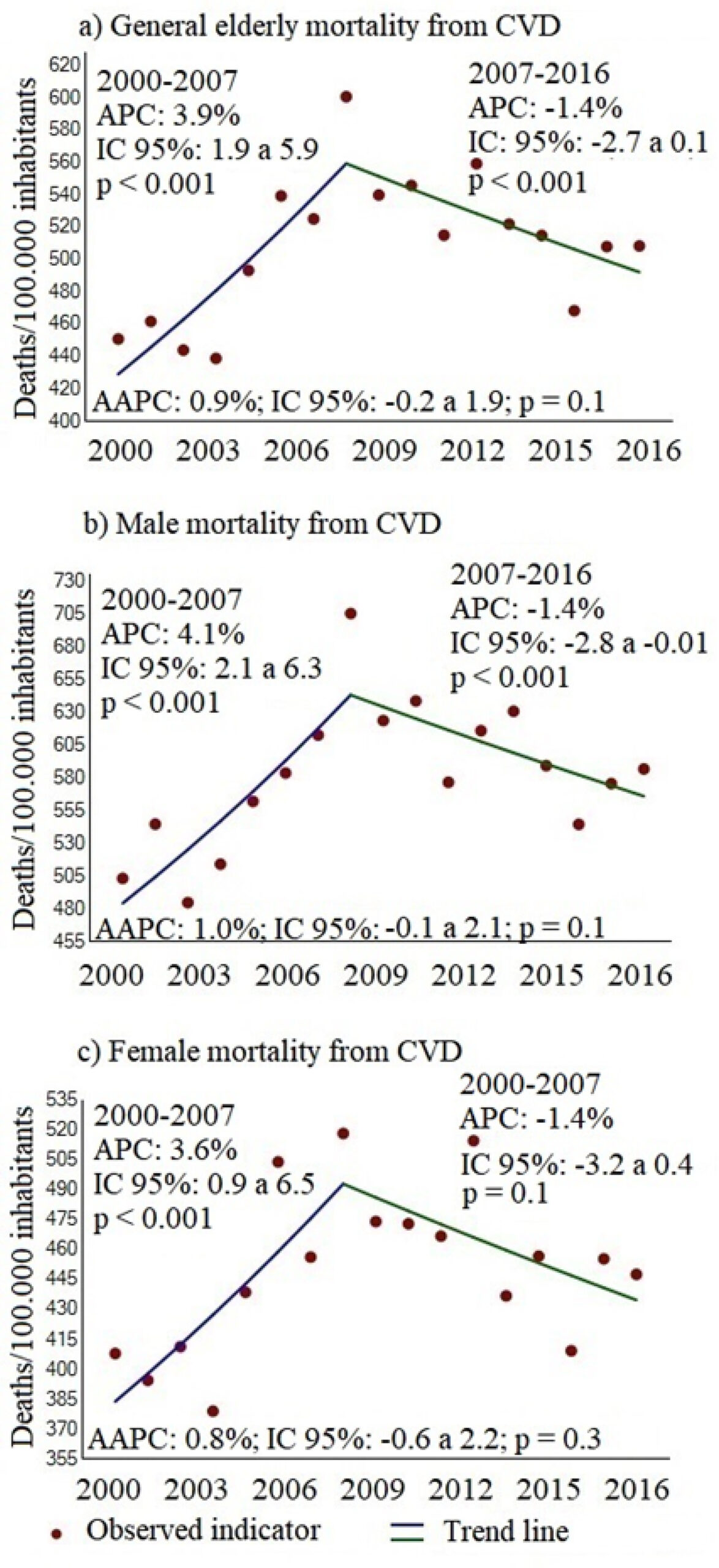
There were 21,440 deaths in the study period, 50.4% (n=10,797) male, 40.5% (n=8,670) aged ≥ 80 years, 44.5% (n=9,465) of “brown” race, 30.1% (n=6,448) married and 36.5% (n=7,828) with less than four years of schooling. Female and male mortality rates were 460.24/100,000 and 602.23 / 100,000, respectively. An annual decreasing trend of -1.4% (p<0.001) in overall and male mortality was observed from 2007 on. The highest mortality rates were concentrated in the eastern region of Alagoas (Moran’s I =0.766288; p=0.01). Twenty-two municipalities were in quadrant Q1 of Moran’s scattering diagram and considered priorities.

Conclusion

Death from CVD in Alagoas occurred equally in men and women in the study period, mostly in individuals of mixed race, married, and with low education attainment. The highest rates were observed in the eastern region of the state . The results highlight the need for public policies aimed at healthy aging in the state. (Int J Cardiovasc Sci. 2020; [online].ahead print, PP.0-0)

  • Cardiovascular Diseases
  • Cerebrovascular Disorders
  • Diabetes Mellitus
  • Ecological Studies
  • Epidemiology
  • Ethnic Inequality
  • Mortality
  • Neoplasms
  • Respiratory Tract Diseases
  • Social Class
Read Full Article
Creative Commons Attribution (CC BY) Creative Commons license
23/11/2020 DOI: 10.36660/ijcs.2019-0208
Figure 1
ABC
Original Article

VO2max-Based Physical Fitness Categories in a Brazilian Population with Supposed High Socioeconomic Status and without Structural Heart Disease

João Manoel Rossi Neto et al. Antonio Sergio Tebexreni Alexandre Novakoski F. Alves Floriana Bertini Abreu … Priscilla Ayumi Nishio Mauricio Cruz Thomazi Ivana Antelmi Paola Emanuela P. Smanio

Abstract

Background

The most widely used data for cardiorespiratory fitness (CRF) referrals are from the Cooper Clinic, which uses calculated maximal oxygen uptake (VO2max) values.

Objective

To develop CRF values from cardiopulmonary exercise testing (CPX) in a Brazilian population with high socioeconomic level and free of structural heart disease. VO2max testing results were compared with the Cooper Clinic and FRIEND Registry data.

Methods

CPX data from consecutive individuals between January 1,2000, and May 31,2016 were used in this study. Inclusion criteria were: VO2max by a pre-specified definition. We built a CRF chart according to VO2max percentiles: very poor (≤20%), poor (20-40%), fair (40-60%), good (60-80%), excellent (80-90%), and superior (≥90%). Kappa correlation was used to analyze our data in comparison with that of the other two databases. Statistical tests with p<0.005 were considered significant.

Results

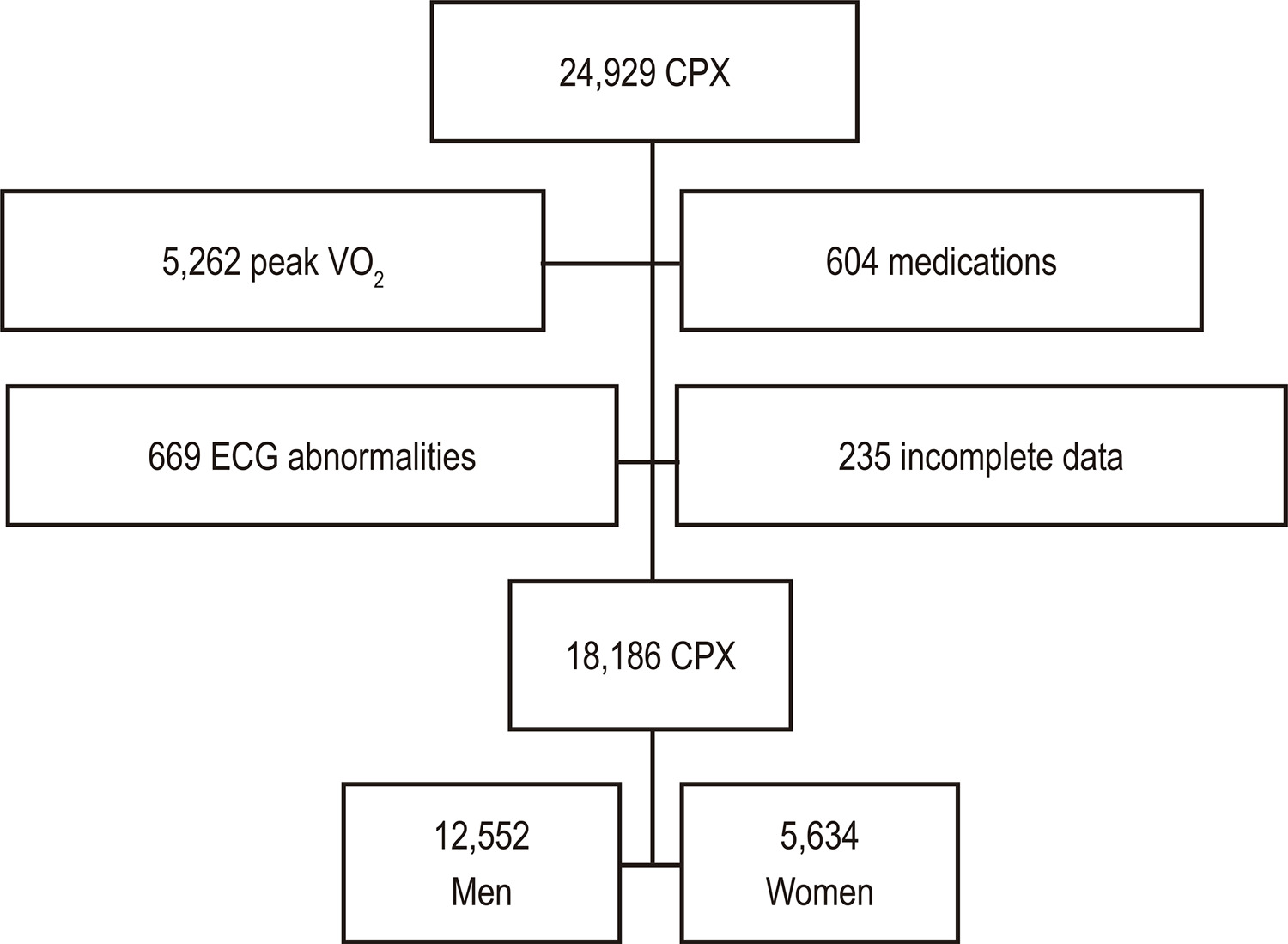
Final cohort included 18,186 tests: 12,552 men, 5,634 women (7–84 years). The most recurrent response was “good” (20.2%). There was a mean difference in weight, height, body mass index (BMI), and age in the CRF chart. An inverse correlation existed between VO2max and age, weight, and BMI. Using a linear regression and these variables, a predictive equation was developed for VO2max. Our findings differed from that of the other databases.

Conclusion

We developed a classification for CRF and found higher values in all classification ranges of functional capacity in contrast to the Cooper Clinic and FRIEND Registry. Our findings offer a more accurate interpretation of ACR in this large Brazilian population sample when compared to previous standards based on the estimated VO2max. (Arq Bras Cardiol. 2020; 115(3):468-477)

  • Cooper Test
  • Endurance Training
  • Exercise
  • Life Style Healthy
  • Physical activity
  • Physical Endurance
  • Social Class
Read Full Article
Creative Commons Attribution (CC BY) Creative Commons license
28/09/2020 DOI: 10.36660/abc.20190189 Views 1
ABC
Editorial

Oxygen Consumption and Cardiorespiratory Fitness. The Difference between Chronological and Biological Age

Artur Haddad Herdy et al. Amberson Vieira Assis

Oxygen is undoubtedly one of the main elements for the life of an aerobic organism. Animals with more complex structures, including humans, developed oxidative metabolism in the evolutionary process as the main source of energy production. Therefore, our ability to consume and use oxygen represents our main power plant and is closely associated with our vitality. Its measurement should undoubtedly be considered as another vital sign. When assessing athletes or people with severe pathologies, oxygen consumption (VO2) is an important marker of performance or survival. VO2 also defines essential therapies in critically-ill patients with CHF. In a series of 715 patients referred for heart transplantation, the event-free survival, such as death and transplantation in one year, was 87% with VO2 > 14, 77% between 10.1 and 14, and 65% when VO2 ≤ 10 mL/kg.min., On the other hand, values above 20 mL/kg.min are considered to have a better prognosis and may continue with the pharmacological therapy.

Recently, in the current coronavirus-19 pandemic (Sars-CoV-2), the value of arterial oxygen levels showed to be an important tool in the assessment of the severity of these patients. In the initial cases of lung injury, patients were relatively well, despite oxygen desaturation, which is not very responsive to oxygen therapy, in a clear gap between the severity of hypoxemia and symptoms, which has been described as “Happy hypoxemia”. The early monitoring of oxygen saturation since the home phase allowed the anticipation of the dyspnea onset, which already represents an indication of the advanced stage of pulmonary impairment and the imminent need for oxygen supplementation and/or invasive ventilation.

[…]

  • Endurance Training
  • Exercise
  • Healthy Lifestyle
  • Motor Activity
  • Myocardial Ischemia/prevention and control
  • Physical Endurance
  • Sedentarism
  • Social Class
Read Full Article
Creative Commons Attribution (CC BY) Creative Commons license
18/09/2020 DOI: 10.36660/abc.20200648
Figure 1
ABC
Original Article

Major Depression and Acute Coronary Syndrome-Related Factors

Jose Henrique Cunha Figueiredo et al. Nelson Albuquerque de Souza e Silva Basilio de Bragança Pereira Glaucia Maria Moraes de Oliveira

Abstract

Background:

Major Depressive Disorder (MDD) is one of the most common mental illnesses in psychiatry, being considered a risk factor for Acute Coronary Syndrome (ACS).

Objective:

To assess the prevalence of MDD in ACS patients, as well as to analyze associated factors through the interdependence of sociodemographic, lifestyle and clinical variables.

Methods:

Observational, descriptive, cross-sectional, case-series study conducted on patients hospitalized consecutively at the coronary units of three public hospitals in the city of Rio de Janeiro over a 24-month period. All participants answered a standardized questionnaire requesting sociodemographic, lifestyle and clinical data, as well as a structured diagnostic interview for the DSM-IV regarding ongoing major depressive episodes. A general log-linear model of multivariate analysis was employed to assess association and interdependence with a significance level of 5%.

Results:

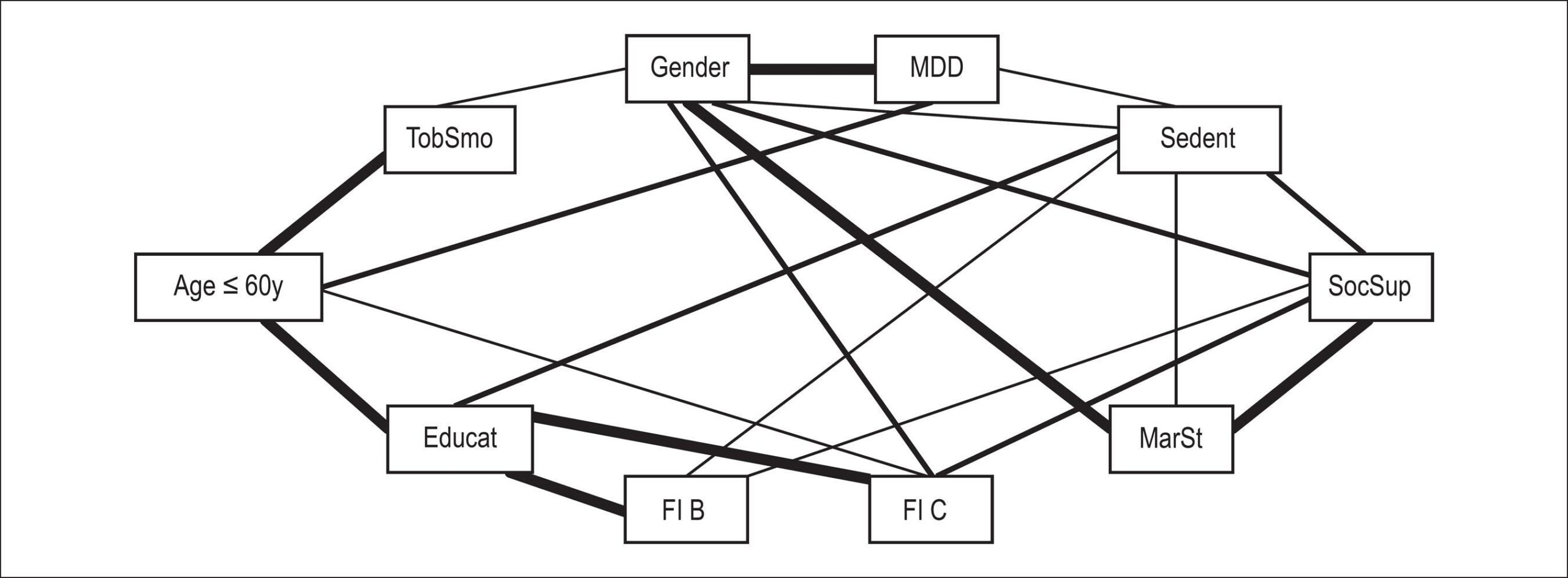
Analysis of 356 patients (229 men), with an average and median age of 60 years (SD ± 11.42, 27-89). We found an MDD point prevalence of 23%, and a significant association between MDD and gender, marital status, sedentary lifestyle, Killip classification, and MDD history. Controlling for gender, we found a statistically significant association between MDD and gender, age ≤ 60 years, sedentary lifestyle and MDD history. The log-linear model identified the variables MDD history, gender, sedentary lifestyle, and age ≤ 60 years as having the greatest association with MDD.

Conclusion:

Distinct approaches are required to diagnose and treat MDD in young women with ACS, history of MDD, sedentary lifestyle, and who are not in stable relationships.

  • Acute coronary syndrome
  • Depressive Disorder, Major
  • Life Style
  • Social Class
Read Full Article
Creative Commons Attribution (CC BY) Creative Commons license
01/03/2017 DOI: 10.5935/abc.20170028
Determinants of C-reactive protein in individuals with very low socioeconomic status
ABC
Artigo Original

Determinants of C-reactive protein in individuals with very low socioeconomic status

Luis C. L. Correia et al. Rafaela Penalva Helena Correia Ana M. Ladeia … Marta Menezes Isaac Suzart Agnaluce Moreira José Carlos Lima Bernardo Galvão Armênio C. Guimarães

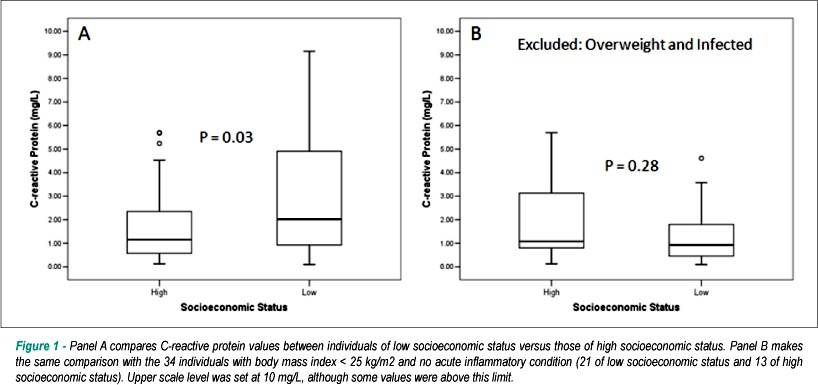
BACKGROUND: Low socioeconomic (SE) status has been associated to inflammation and predictors of C-reactive protein (CRP) have been investigated by studies performed in developed countries. This study aimed to identify predictors of CRP in individuals of very low SE level in a developing country and evaluate whether CRP is related to SE status in this scenario. OBJECTIVE: Eight-two individuals of very low SE level were recruited from a poor, semi-rural community in Brazil. Thirty-two individuals of high socioeconomic level comprised a comparison sample. High-sensitivity CRP was measured by nephelometry. METHODS: Eight-two individuals of very low SE level were recruited from a poor, semi-rural community in Brazil. Thirty-two individuals of high socioeconomic level comprised a comparison sample. High-sensitivity CRP was measured by nephelometry. RESULTS: In the low SE individuals, independent predictors of CRP were body mass index > 25 Kg/m² (P<0.001), smoking (P=0.005) and acute infection conditions (P=0.049). The low SE group (median=2.02 mg/l; interquartile range 0.92 – 4.95 mg/dl) had higher CRP levels compared to the high SE group (1.16 mg/l, interquartile range 0.55 – 2.50 mg/dl, P=0.03). Body mass index tended to be higher (27 ± 4.9 kg/m² vs 25.5 ± 3.2 kg/m²; P=0.07) and the prevalence of acute infection greater (32% vs 3%, P=0.002) in the low SE group. After overweight individuals and those with infectious conditions were excluded, the CRP levels were similar between the groups with low and high SE levels (0.93 mg/l vs 1.08 mg/l, P=0.28). CONCLUSION: Adiposity, infection conditions and smoking are predictors of CRP in individuals with very low SE level. The first two factors determine greater level of inflammation in low SE individuals when compared to the high SE counterparts.

  • Cardiovascular Diseases
  • Inflammation
  • Protein C
  • Risk
  • Social Class
Read Full Article
Creative Commons Attribution (CC BY) Creative Commons license
05/05/2010 DOI: 10.1590/S0066-782X2010000200012
ABC
Artigo Original

Prevalence and variables associated with physical inactivity in individuals with high and low socioeconomic status

Helena França Correia dos Reis et al. Ana Marice Teixeira Ladeia Everton Carvalho Passos Flávio Guilherme de Oliveira Santos … Larissa Tapioca de Wasconcellos Luís Cláudio Lemos Correia Marta Silva Menezes Renata Dáttoli Gouvêa Santos Victor Guerrero do Bomfim Mário de Seixas Rocha

BACKGROUND: Studies that considered only the leisure physical activity found that the physical inactivity is higher among lower-income individuals. There is a possibility that this association shows modifications, when considering transportation, work and domestic activities. OBJECTIVE: To determine whether there is a difference between the prevalence of physical inactivity between individuals of high and low socioeconomic levels. METHODS: The sample consisted of individuals of both sexes, aged 18 or older, from two groups of different socioeconomic levels. The low socioeconomic level (LSEL) group consisted of the parents of students from a public school. The high socioeconomic level (HSEL) group consisted of the parents of students from a private College. The International Physical Activity Questionnaire (IPAQ) was used to determine the level of physical activity. RESULTS: A total of 91 individuals were evaluated in the LSEL group and 59 in the HSEL group. In the LSEL group, 42.9% (39) of the individuals were classified as insufficiently active, compared to 57.6% (34) of individuals in the HSEL group. Taking as a parameter of physical inactivity the time of weekly physical activity < 150 minutes, there was a decrease in the classification of inactivity in both groups, although with the maintenance of higher inactivity among individuals of HSEL (49.2% vs 28.6%; p= 0.01). CONCLUSION: The individuals of HSEL are more sedentary than the individuals of LSEL.

  • Exercise
  • Physical activity
  • Social Class
Read Full Article
Creative Commons Attribution (CC BY) Creative Commons license
17/04/2009 DOI: 10.1590/S0066-782X2009000300007 Views 1

How to cite this article

EndNote RIS

Electronic Document Format (Vancouver)

Gomes HJA, Montenegro CEL. Socioeconomic Indicators and Mortality from Heart Failure: Inseparable Parameters?. Arquivos Brasileiros de Cardiologia 2021;117(5):952-3.

Electronic Document Format (ABNT)

Gomes, Helder Jorge de Andrade; Montenegro, Carlos Eduardo Lucena. Socioeconomic Indicators and Mortality from Heart Failure: Inseparable Parameters?. Arquivos Brasileiros de Cardiologia, v. 117, n. 5, p. 952-953, Nov. 2021.

Electronic Document Format (APA)

Gomes, H. J. A., & Montenegro, C. E. L. (2021). Socioeconomic Indicators and Mortality from Heart Failure: Inseparable Parameters?. Arquivos Brasileiros de Cardiologia, 117(5), 952-953.

Electronic Document Format (ISO)

Gomes, Helder Jorge de Andrade and Montenegro, Carlos Eduardo Lucena. Socioeconomic Indicators and Mortality from Heart Failure: Inseparable Parameters?. Arquivos Brasileiros de Cardiologia [online]. 2021, vol. 117, n. 5, [cited 2026-10-14], pp. 952-953. Available from: <https://journals.cardiol.br/en/article/socioeconomic-indicators-and-mortality-from-heart-failure-inseparable-parameters/>. ISSN 0066-782X

EndNote RIS

Electronic Document Format (Vancouver)

Silva Junior LCF, Cunha EJOD, Souza CDF, Duarte AWF. Elderly Mortality from Cerebrovascular Disease in Alagoas, 2000-2016: Spatial-Temporal Analysis. International Journal of Cardiovascular Sciences 2020;34(2):159-67.

Electronic Document Format (ABNT)

Silva Junior, Luiz Carlos Francelino; Cunha, Euclides José Oliveira Da; Souza, Carlos Dornels Freire de; Duarte, Alysson Wagner Fernandes. Elderly Mortality from Cerebrovascular Disease in Alagoas, 2000-2016: Spatial-Temporal Analysis. International Journal of Cardiovascular Sciences, v. 34, n. 2, p. 159-167, Nov. 2020.

Electronic Document Format (APA)

Silva Junior, L. C. F., Cunha, E. J. O. D., Souza, C. D. F. , & Duarte, A. W. F. (2020). Elderly Mortality from Cerebrovascular Disease in Alagoas, 2000-2016: Spatial-Temporal Analysis. International Journal of Cardiovascular Sciences, 34(2), 159-167.

Electronic Document Format (ISO)

Silva Junior, Luiz Carlos Francelino and Cunha, Euclides José Oliveira Da and Souza, Carlos Dornels Freire de and Duarte, Alysson Wagner Fernandes. Elderly Mortality from Cerebrovascular Disease in Alagoas, 2000-2016: Spatial-Temporal Analysis. International Journal of Cardiovascular Sciences [online]. 2020, vol. 34, n. 2, [cited 2026-10-14], pp. 159-167. Available from: <https://journals.cardiol.br/en/article/elderly-mortality-from-cerebrovascular-disease-in-alagoas-2000-2016-spatial-temporal-analysis/>. ISSN 2359-4802

EndNote RIS

Electronic Document Format (Vancouver)

Rossi Neto JM, Tebexreni AS, Alves ANF, Abreu FB, Nishio PA, Thomazi MC, Antelmi I, et al. VO2max-Based Physical Fitness Categories in a Brazilian Population with Supposed High Socioeconomic Status and without Structural Heart Disease. Arquivos Brasileiros de Cardiologia 2020;115(3):468-77.

Electronic Document Format (ABNT)

Rossi Neto, João Manoel; Tebexreni, Antonio Sergio; Alves, Alexandre Novakoski F.; Abreu, Floriana Bertini; Nishio, Priscilla Ayumi; Thomazi, Mauricio Cruz; Antelmi, Ivana; Smanio, Paola Emanuela P.. VO2max-Based Physical Fitness Categories in a Brazilian Population with Supposed High Socioeconomic Status and without Structural Heart Disease. Arquivos Brasileiros de Cardiologia, v. 115, n. 3, p. 468-477, Sep. 2020.

Electronic Document Format (APA)

Rossi Neto, J. M., Tebexreni, A. S., Alves, A. N. F., Abreu, F. B., Nishio, P. A., Thomazi, M. C., Antelmi, I., & Smanio, P. E. P. (2020). VO2max-Based Physical Fitness Categories in a Brazilian Population with Supposed High Socioeconomic Status and without Structural Heart Disease. Arquivos Brasileiros de Cardiologia, 115(3), 468-477.

Electronic Document Format (ISO)

Rossi Neto, João Manoel and Tebexreni, Antonio Sergio and Alves, Alexandre Novakoski F. and Abreu, Floriana Bertini and Nishio, Priscilla Ayumi and Thomazi, Mauricio Cruz and Antelmi, Ivana and Smanio, Paola Emanuela P.. VO2max-Based Physical Fitness Categories in a Brazilian Population with Supposed High Socioeconomic Status and without Structural Heart Disease. Arquivos Brasileiros de Cardiologia [online]. 2020, vol. 115, n. 3, [cited 2026-10-14], pp. 468-477. Available from: <https://journals.cardiol.br/en/article/vo2max-based-physical-fitness-categories-in-a-brazilian-population-with-supposed-high-socioeconomic-status-and-without-structural-heart-disease/>. ISSN 0066-782X

EndNote RIS

Electronic Document Format (Vancouver)

Herdy AH, Assis AV. Oxygen Consumption and Cardiorespiratory Fitness. The Difference between Chronological and Biological Age. Arquivos Brasileiros de Cardiologia 2020;115(3):478-9.

Electronic Document Format (ABNT)

Herdy, Artur Haddad; Assis, Amberson Vieira. Oxygen Consumption and Cardiorespiratory Fitness. The Difference between Chronological and Biological Age. Arquivos Brasileiros de Cardiologia, v. 115, n. 3, p. 478-479, Sep. 2020.

Electronic Document Format (APA)

Herdy, A. H., & Assis, A. V. (2020). Oxygen Consumption and Cardiorespiratory Fitness. The Difference between Chronological and Biological Age. Arquivos Brasileiros de Cardiologia, 115(3), 478-479.

Electronic Document Format (ISO)

Herdy, Artur Haddad and Assis, Amberson Vieira. Oxygen Consumption and Cardiorespiratory Fitness. The Difference between Chronological and Biological Age. Arquivos Brasileiros de Cardiologia [online]. 2020, vol. 115, n. 3, [cited 2026-10-14], pp. 478-479. Available from: <https://journals.cardiol.br/en/article/oxygen-consumption-and-cardiorespiratory-fitness-the-difference-between-chronological-and-biological-age/>. ISSN 0066-782X

EndNote RIS

Electronic Document Format (Vancouver)

Figueiredo JHC, Silva NAS, Pereira BB, Oliveira GMM. Major Depression and Acute Coronary Syndrome-Related Factors. Arquivos Brasileiros de Cardiologia 2017;108(3):217-2.

Electronic Document Format (ABNT)

Figueiredo, Jose Henrique Cunha; Silva, Nelson Albuquerque de Souza e; Pereira, Basilio de Bragança; Oliveira, Glaucia Maria Moraes de. Major Depression and Acute Coronary Syndrome-Related Factors. Arquivos Brasileiros de Cardiologia, v. 108, n. 3, p. 217-227, Feb. 2017.

Electronic Document Format (APA)

Figueiredo, J. H. C., Silva, N. A. S. , Pereira, B. B., & Oliveira, G. M. M. (2017). Major Depression and Acute Coronary Syndrome-Related Factors. Arquivos Brasileiros de Cardiologia, 108(3), 217-227.

Electronic Document Format (ISO)

Figueiredo, Jose Henrique Cunha and Silva, Nelson Albuquerque de Souza e and Pereira, Basilio de Bragança and Oliveira, Glaucia Maria Moraes de. Major Depression and Acute Coronary Syndrome-Related Factors. Arquivos Brasileiros de Cardiologia [online]. 2017, vol. 108, n. 3, [cited 2026-10-14], pp. 217-227. Available from: <https://journals.cardiol.br/en/article/major-depression-and-acute-coronary-syndrome-related-factors/>. ISSN 0066-782X

EndNote RIS

Electronic Document Format (Vancouver)

Correia LCL, Penalva R, Correia H, Ladeia AM, Menezes M, Suzart I, Moreira A, et al. Determinants of C-reactive protein in individuals with very low socioeconomic status. Arquivos Brasileiros de Cardiologia 2010;94(2):216-23.

Electronic Document Format (ABNT)

Correia, Luis C. L.; Penalva, Rafaela; Correia, Helena; Ladeia, Ana M.; Menezes, Marta; Suzart, Isaac; Moreira, Agnaluce; Lima, José Carlos; Galvão, Bernardo; Guimarães, Armênio C.. Determinants of C-reactive protein in individuals with very low socioeconomic status. Arquivos Brasileiros de Cardiologia, v. 94, n. 2, p. 216-223, May. 2010.

Electronic Document Format (APA)

Correia, L. C. L., Penalva, R., Correia, H., Ladeia, A. M., Menezes, M., Suzart, I., Moreira, A., Lima, J. C., Galvão, B., & Guimarães, A. C. (2010). Determinants of C-reactive protein in individuals with very low socioeconomic status. Arquivos Brasileiros de Cardiologia, 94(2), 216-223.

Electronic Document Format (ISO)

Correia, Luis C. L. and Penalva, Rafaela and Correia, Helena and Ladeia, Ana M. and Menezes, Marta and Suzart, Isaac and Moreira, Agnaluce and Lima, José Carlos and Galvão, Bernardo and Guimarães, Armênio C.. Determinants of C-reactive protein in individuals with very low socioeconomic status. Arquivos Brasileiros de Cardiologia [online]. 2010, vol. 94, n. 2, [cited 2026-10-14], pp. 216-223. Available from: <https://journals.cardiol.br/en/article/determinants-of-c-reactive-protein-in-individuals-with-very-low-socioeconomic-status/>. ISSN 0066-782X

EndNote RIS

Electronic Document Format (Vancouver)

Reis HFC, Ladeia AMT, Passos EC, Santos FGO, Wasconcellos LT, Correia LCL, Menezes MS, et al. Prevalence and variables associated with physical inactivity in individuals with high and low socioeconomic status. Arquivos Brasileiros de Cardiologia 2009;92(3):203-8.

Electronic Document Format (ABNT)

Reis, Helena França Correia dos; Ladeia, Ana Marice Teixeira; Passos, Everton Carvalho; Santos, Flávio Guilherme de Oliveira; Wasconcellos, Larissa Tapioca de; Correia, Luís Cláudio Lemos; Menezes, Marta Silva; Santos, Renata Dáttoli Gouvêa; Bomfim, Victor Guerrero do; Rocha, Mário de Seixas. Prevalence and variables associated with physical inactivity in individuals with high and low socioeconomic status. Arquivos Brasileiros de Cardiologia, v. 92, n. 3, p. 203-208, Apr. 2009.

Electronic Document Format (APA)

Reis, H. F. C. , Ladeia, A. M. T., Passos, E. C., Santos, F. G. O., Wasconcellos, L. T. , Correia, L. C. L., Menezes, M. S., Santos, R. D. G., Bomfim, V. G. , & Rocha, M. S. (2009). Prevalence and variables associated with physical inactivity in individuals with high and low socioeconomic status. Arquivos Brasileiros de Cardiologia, 92(3), 203-208.

Electronic Document Format (ISO)

Reis, Helena França Correia dos and Ladeia, Ana Marice Teixeira and Passos, Everton Carvalho and Santos, Flávio Guilherme de Oliveira and Wasconcellos, Larissa Tapioca de and Correia, Luís Cláudio Lemos and Menezes, Marta Silva and Santos, Renata Dáttoli Gouvêa and Bomfim, Victor Guerrero do and Rocha, Mário de Seixas. Prevalence and variables associated with physical inactivity in individuals with high and low socioeconomic status. Arquivos Brasileiros de Cardiologia [online]. 2009, vol. 92, n. 3, [cited 2026-10-14], pp. 203-208. Available from: <https://journals.cardiol.br/en/article/prevalence-and-variables-associated-with-physical-inactivity-in-individuals-with-high-and-low-socioeconomic-status/>. ISSN 0066-782X

  • About ABC Family
  • Internal Regulation
  • Editorial Board
  • Brazilian Society of Cardiology (SBC)

Issues

SBC Guidelines

  • Videos
  • Podcasts
  • News