ABC Family Arquivos Brasileiros de Cardiologia International Journal of Cardiovascular Sciences ABC Heart Failure & Cardiomyopathy ABC Imagem Cardiovascular
Português English
ABC Family
Português English
  • About
    • About ABC Family
    • Internal Regulation
    • Editorial Board
    • Brazilian Society of Cardiology (SBC)
  • Issues
  • SBC Guidelines
  • Content
    • Videos
    • Podcasts
    • News
  • About
    • About ABC Family
    • Internal Regulation
    • Editorial Board
    • Brazilian Society of Cardiology (SBC)
  • Issues
  • SBC Guidelines
  • Content
    • Videos
    • Podcasts
    • News

ABC Family

  • ABC Family
  • Arquivos Brasileiros de Cardiologia
  • International Journal of Cardiovascular Sciences
  • ABC Heart Failure & Cardiomyopathy
  • ABC Imagem Cardiovascular
Search in

No content found.

Journals
Ordering
Article types
Others

  1. Home
  2. Keyword: Tricuspid Valve Insufficiency
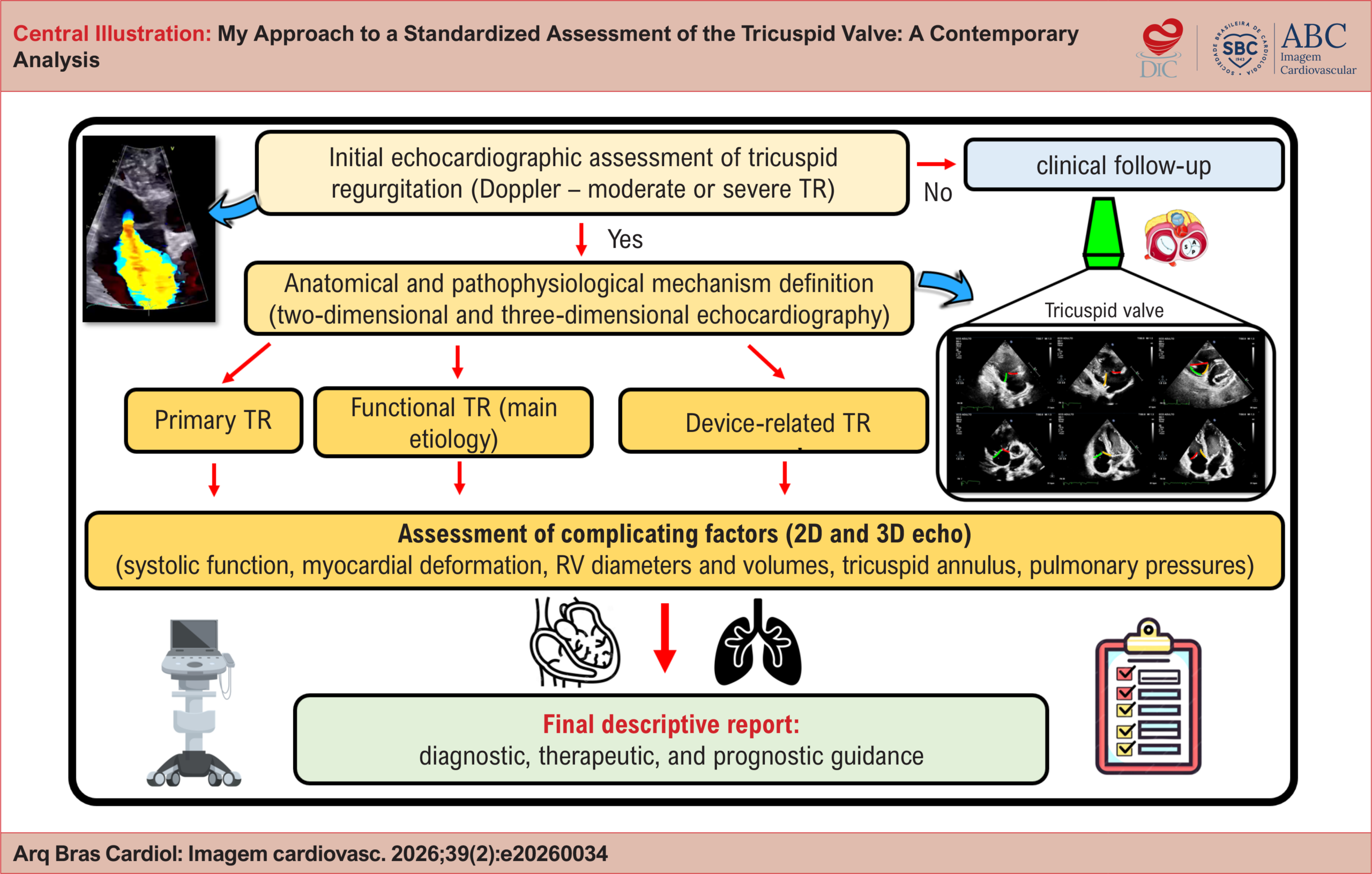
My Approach to a Standardized Assessment of the Tricuspid Valve: A Contemporary Analysis
ABCIC
Review Article

My Approach to a Standardized Assessment of the Tricuspid Valve: A Contemporary Analysis

Halsted Alarcão Gomes Pereira da Silva et al. Alexandre Costa Souza Adenalva Beck

Abstract

Tricuspid regurgitation (TR) remains one of the most frequent valvular diseases encountered in echocardiographic practice. Mild cases generally do not require further investigation or specific treatment. Moderate and severe valvular disease, however, require more detailed anatomical and etiological assessment to better understand the underlying pathophysiological mechanism.

Two-dimensional echocardiographic analysis is the initial examination of choice and should be performed in a standardized manner, with individual identification of the leaflets using the main transthoracic echocardiographic windows. The description of complementary parameters – such as right ventricular (RV) systolic function, myocardial deformation assessed by longitudinal strain, right-sided chamber diameters and volumes, and estimation of pulmonary pressures – guides the clinician regarding potential therapeutic strategies and provides relevant prognostic information.

In this context, the 2025 European Society of Cardiology (ESC) guideline reinforces the importance of a standardized and comprehensive evaluation of the tricuspid valve and its hemodynamic repercussions. Most of this assessment can be performed using widely available two-dimensional transthoracic echocardiography.

  • Pulmonary Hypertension
  • Tricuspid Valve
  • Tricuspid Valve Insufficiency
Read Full Article
Creative Commons Attribution (CC BY) Creative Commons license
24/07/2026 DOI: 10.36660/abcimg.20260034i Views 1
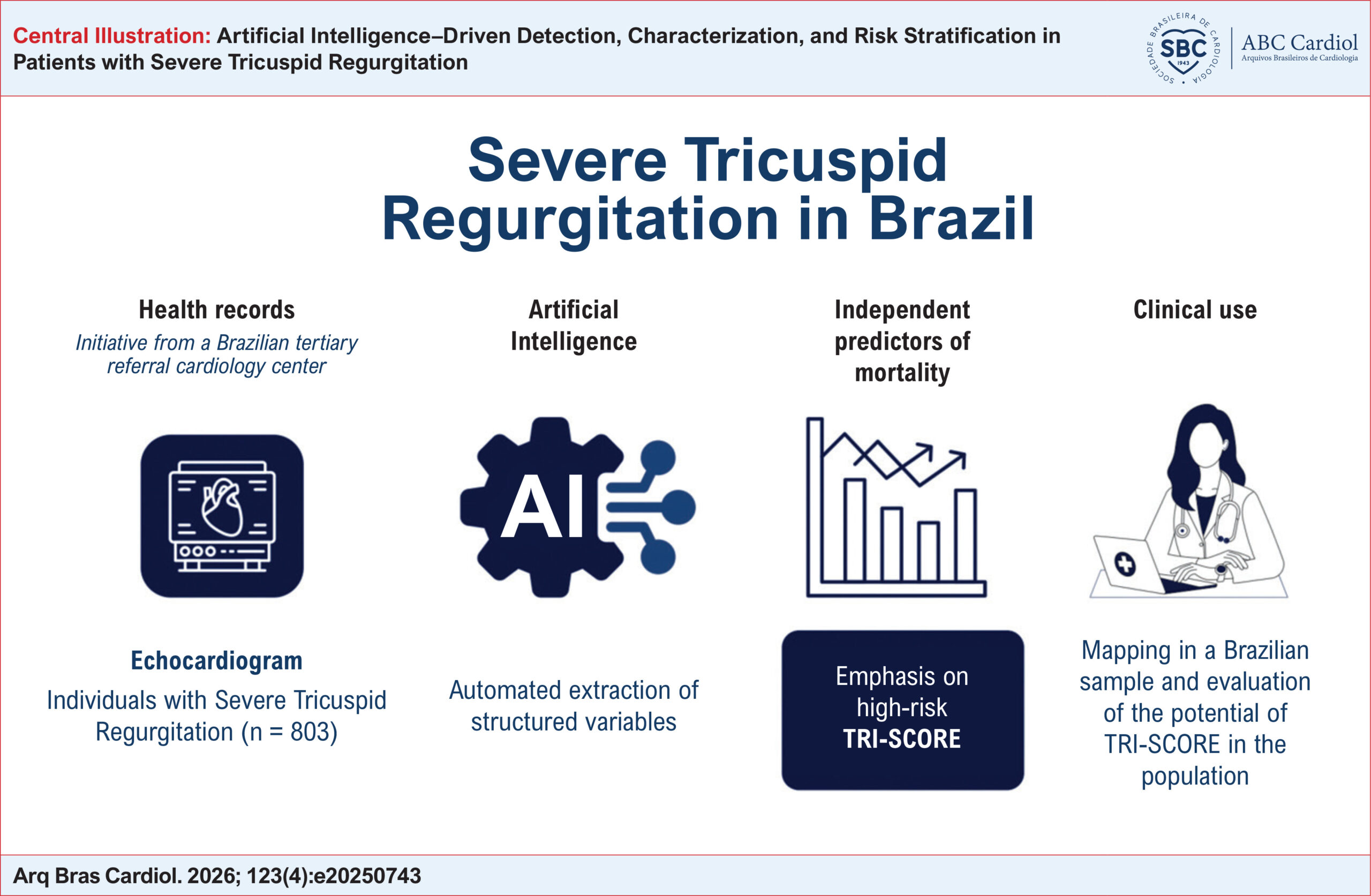
Artificial Intelligence–Driven Detection, Characterization, and Risk Stratification in Patients with Severe Tricuspid Regurgitation
ABC
Original Article

Artificial Intelligence–Driven Detection, Characterization, and Risk Stratification in Patients with Severe Tricuspid Regurgitation

Luna Varela do Carmo et al. Auristela Isabel de Oliveira Ramos Dorival Julio Della Togna Eduardo da Silva Farias Dimytri Alexandre de Alvim Siqueira

Abstract

Background:

Tricuspid regurgitation (TR) is prevalent and challenging to manage. There is a high mortality rate associated with isolated surgery and late referral for intervention. Additionally, there has been a recent expansion of transcatheter therapies. In Brazil, there is a lack of data and validation of prognostic tools.

Objective:

To investigate and define clinical, laboratory, and echocardiographic data from patients with severe TR based on variables collected through the training of an artificial intelligence (AI) model.

Methods:

This observational, single-center, non-interventional, retrospective study was based on 71,911 echocardiographic reports performed between 2021 and 2024. A natural language processing (NLP) model was developed in Python to identify cases of severe TR, extract variables, and perform automated calculation of the TRI-SCORE and EuroSCORE II, which were subsequently reviewed. A two-tailed p-value < 0.05 was considered statistically significant.

Results:

A total of 803 patients with severe TR were identified. The mean age was 68.8 ± 13.5 years, and 64.1% were female. Hypertension (71.7%) and atrial fibrillation (69.4%) were the most prevalent comorbidities. Secondary etiology predominated (96.8%), mainly associated with mitral valve disease (68.5%). Surgical risk was high (medians: EuroSCORE II = 13.4%; TRI-SCORE = 7). Mortality was 17.1%. In the secondary mortality analysis, multivariable regression identified independent predictors, such as high-risk TRI-SCORE (relative risk [RR] 2.19; 95% CI 1.14-4.21) and increased creatinine (RR 3.13; 95% CI 1.91-5.14).

Conclusions:

In the largest Brazilian cohort of severe TR, constructed with the aid of AI, the disease demonstrated high clinical and prognostic complexity. The application of NLP to large echocardiographic databases proved to be efficient and may support multicenter studies.

  • Artificial Intelligence
  • Heart Failure
  • Heart Valve Diseases
  • Tricuspid Valve Insufficiency
Read Full Article
Creative Commons Attribution (CC BY) Creative Commons license
06/07/2026 DOI: 10.36660/abc.20250743i Views 1
Central Illustration
ABCIC
Review Article

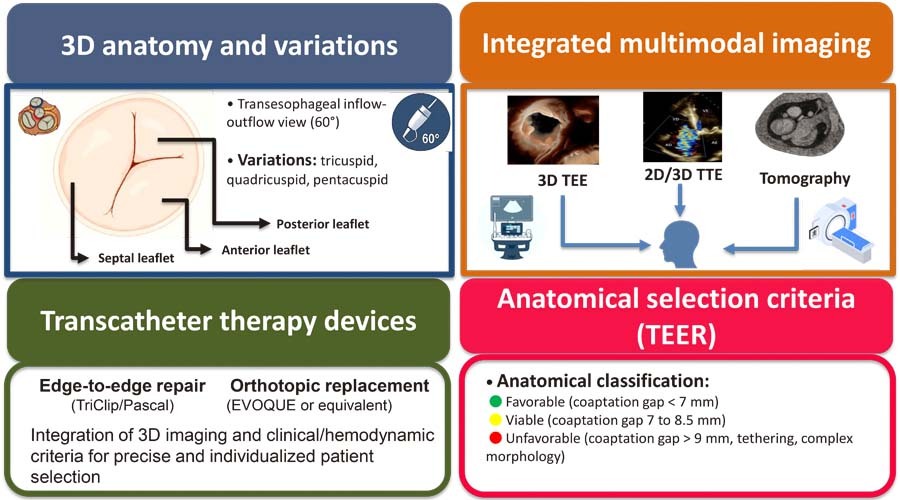
Tricuspid Valve: Anatomical Basis and Patient Selection Criteria for Transcatheter Structural Interventions

Alexandre Costa Souza et al. Halsted Alarcão Gomes Pereira da Silva Alex dos Santos Felix

Abstract

Tricuspid regurgitation has been recognized as a relevant clinical entity, with a direct impact on morbidity and mortality. Recent advances in multimodal cardiovascular imaging have promoted more detailed anatomical and functional assessment of the tricuspid apparatus, guiding the indication and planning of transcatheter interventions. To provide a review of the anatomical basis of the tricuspid valve and discuss echocardiographic and clinical criteria for selecting candidates for transcatheter therapies. This narrative review of the anatomical variability of the tricuspid valve and its subvalvular apparatus incorporates recent recommendations from echocardiography societies and clinical evidence. Special emphasis has been given to three-dimensional echocardiography, transesophageal echocardiography, and computed tomography for morphological and functional characterization of tricuspid regurgitation. Contemporary evidence has demonstrated that up to 45% of patients present with non-classical morphologies (quadricuspid or pentacuspid valves), which impact the viability and outcomes of edge-to-edge repair. The integration of three-dimensional echocardiography enhances accuracy in grading regurgitation severity, enables precise measurement of the vena contracta area, and assists in device selection. Clinical factors including right ventricular function, pulmonary artery systolic pressure, and the presence of intracardiac devices also influence patient selection. Appropriate selection of candidates for transcatheter tricuspid valve therapies requires a systematic approach with integrated application of imaging methods and clinical parameters. Detailed echocardiographic characterization of leaflet morphology, coaptation gap, and annulus geometry is crucial for planning the procedure, selecting the device, and predicting outcomes.

  • Three-Dimensional Echocardiography
  • Transesophageal echocardiography
  • Tricuspid Valve
  • Tricuspid Valve Insufficiency
Read Full Article
Creative Commons Attribution (CC BY) Creative Commons license
16/12/2025 DOI: 10.36660/abcimg.20250064i Views 2
Figura 1
IJCS
Case Report

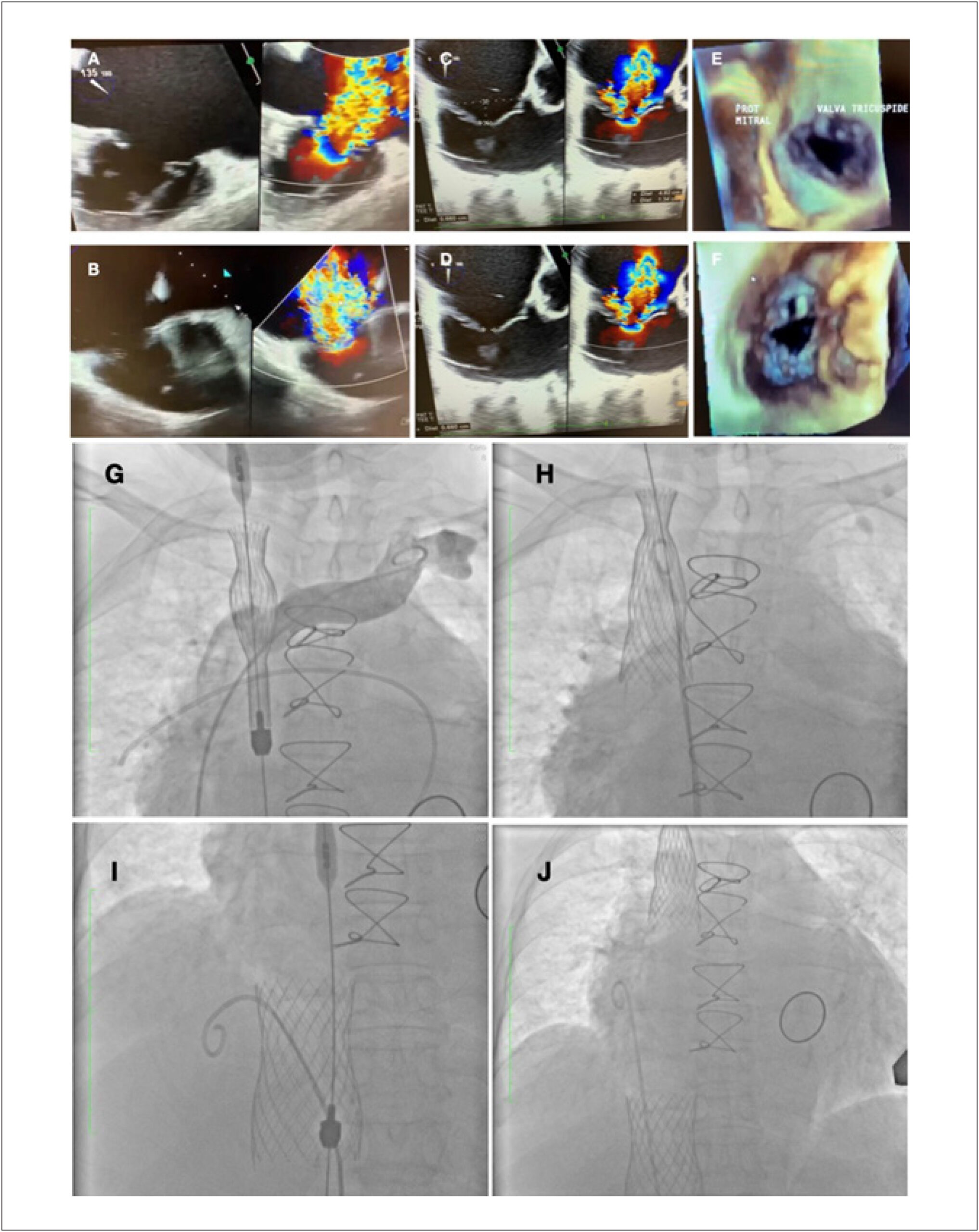
Transcatheter Bicaval Valve System in the Treatment of Torrential Tricuspid Regurgitation and Refractory Systemic Hypervolemia: 12-Month Outcome

Rômulo Francisco de Almeida Torres et al. Alessandro Kraemer Rafael de Almeida Torres Fernanda Proença Lepca Bozzi … Sarah Fagundes Grobe Eduardo Mendel Balbi Filho Guilherme Barreto Gameiro Silva

Abstract

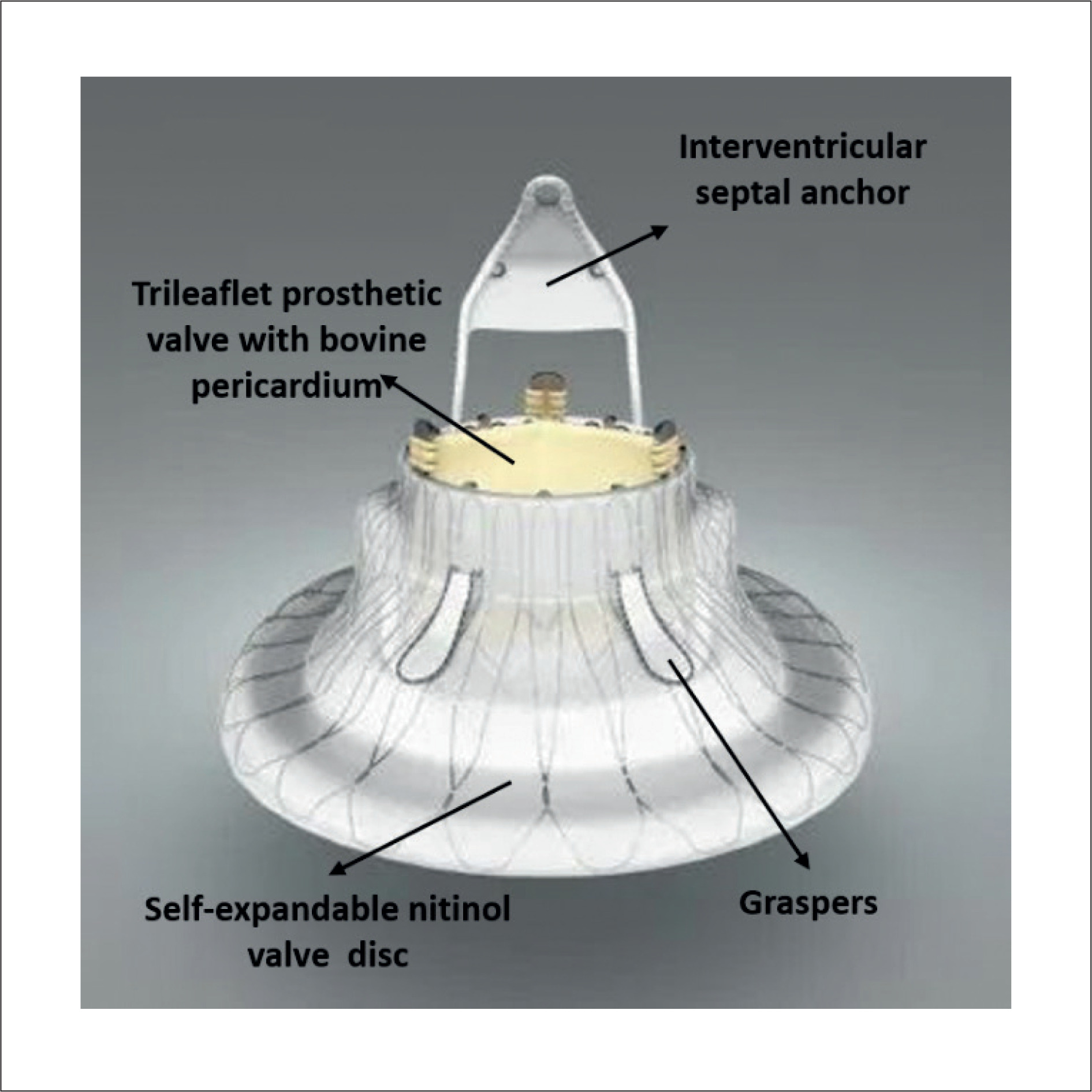
Severe isolated tricuspid regurgitation (TR) is associated with limiting symptoms, negative impact on quality of life, and poor prognosis. The TricValve® device is a transcatheter self-expanding biological valve system designed to mitigate systemic volume overload, improve quality of life, and improve congestive symptoms. We report a 12-month follow-up of a 61-year-old woman with signs of refractory systemic hypervolemia and torrential TR who underwent the procedure. The treatment resulted in significant weight loss, improvement in signs of hypervolemia, and improvement in functional class (FC).

  • Cardiac Catheterization
  • Edema
  • Heart Valve Diseases
  • Tricuspid Valve Insufficiency
Read Full Article
Creative Commons Attribution (CC BY) Creative Commons license
01/09/2025 DOI: 10.36660/ijcs.20250035 Views 2
First Percutaneous Orthotopic Tricuspid Valve Implantations using the LuX-Valve Plus Device in Latin America: Report of the First Three Cases
ABCIC
Original Article

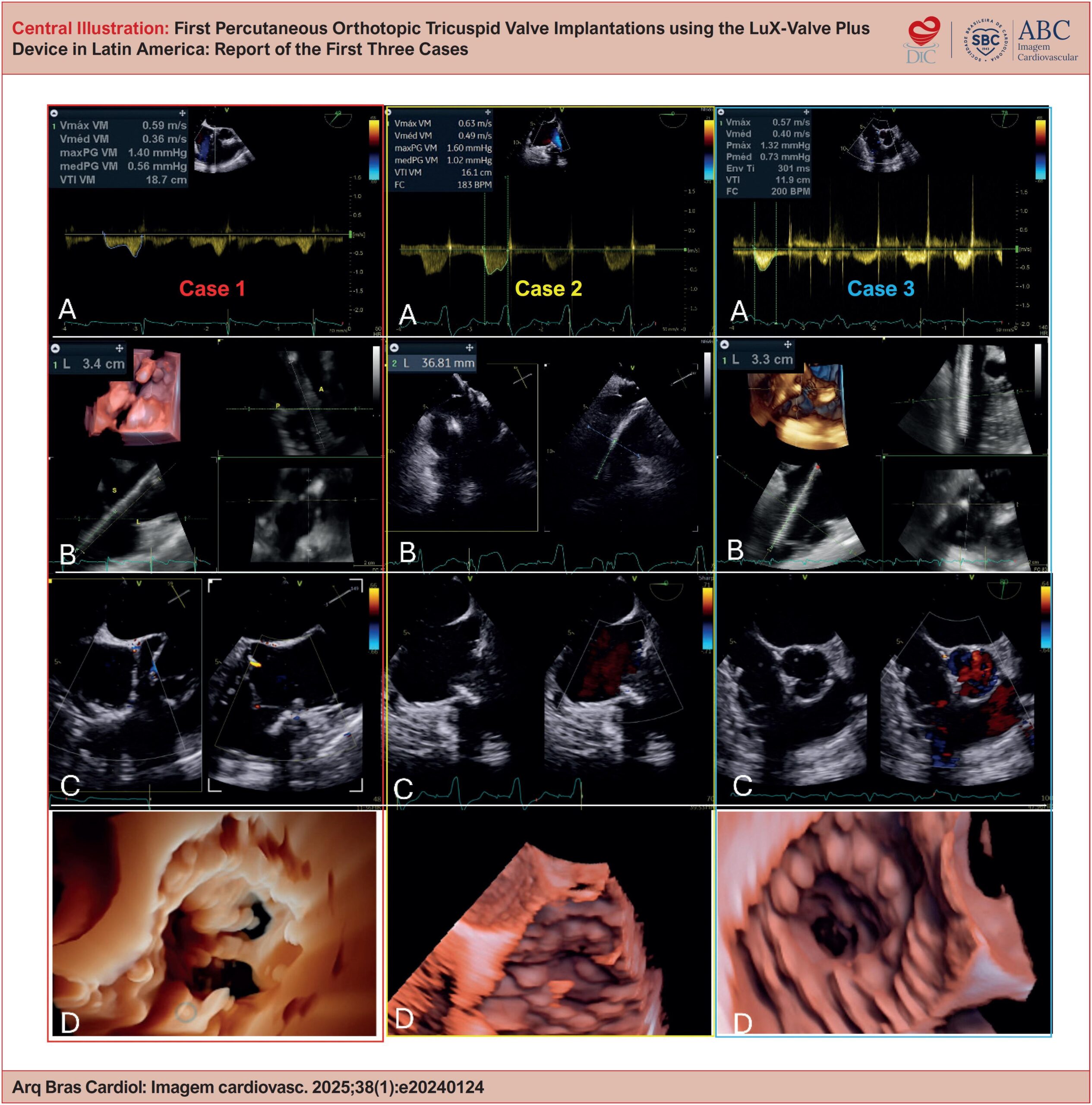
First Percutaneous Orthotopic Tricuspid Valve Implantations using the LuX-Valve Plus Device in Latin America: Report of the First Three Cases

Fernanda Esteves et al. Vinícius Esteves Marcio Mendes Pereira Frederico José Neves Mancuso … Marden Tebet Sergio Kreimer Edmur Carlos de Araújo Francisco Monteiro de Almeida Magalhães

Abstract

Background:

Severe tricuspid regurgitation (TR) is associated with high morbidity and mortality, especially in patients with contraindications for surgery. Transcatheter tricuspid valve replacement has emerged as a minimally invasive alternative for this population, with the LuX-Valve Plus device designed for orthotopic implantation via the transjugular route.

Objective:

To report the first 3 cases of transcatheter tricuspid valve replacement using the LuX-Valve Plus device in Latin America, assessing the feasibility, safety, and immediate clinical outcomes.

Methods:

The study included 3 female patients with torrential TR and high surgical risk. Pre-procedure assessment included transesophageal echocardiography, 3-dimensional transthoracic echocardiography (3D TEE), computed tomography, and cardiac catheterization. The procedure was performed via transjugular access, under general anesthesia, with 3D TEE and fluoroscopy guidance. Implant efficacy was assessed as resolution of TR, transprosthetic gradient, and post-procedure complications.

Results:

The implants were successful in all cases, with complete resolution of TR, absence of paravalvular leaks, and adequate transprosthetic gradient. Right ventricular function was preserved, and all patients were discharged 3 to 4 days after the procedure with no significant complications.

Conclusion:

Transcatheter tricuspid valve replacement using the LuX-Valve Plus was shown to be a viable and safe alternative for patients with severe TR and high surgical risk. The use of 3D TEE was essential to the planning and execution of the implant. Further studies are needed to assess durability and long-term clinical outcomes.

  • Transcatheter Aortic Valve Replacement
  • Transesophageal echocardiography
  • Tricuspid Valve
  • Tricuspid Valve Insufficiency
Read Full Article
Creative Commons Attribution (CC BY) Creative Commons license
28/03/2025 DOI: 10.36660/abcimg.20240124i Views 1
Advances in Percutaneous Tricuspid Valve Treatment
ABCIC
Review Article

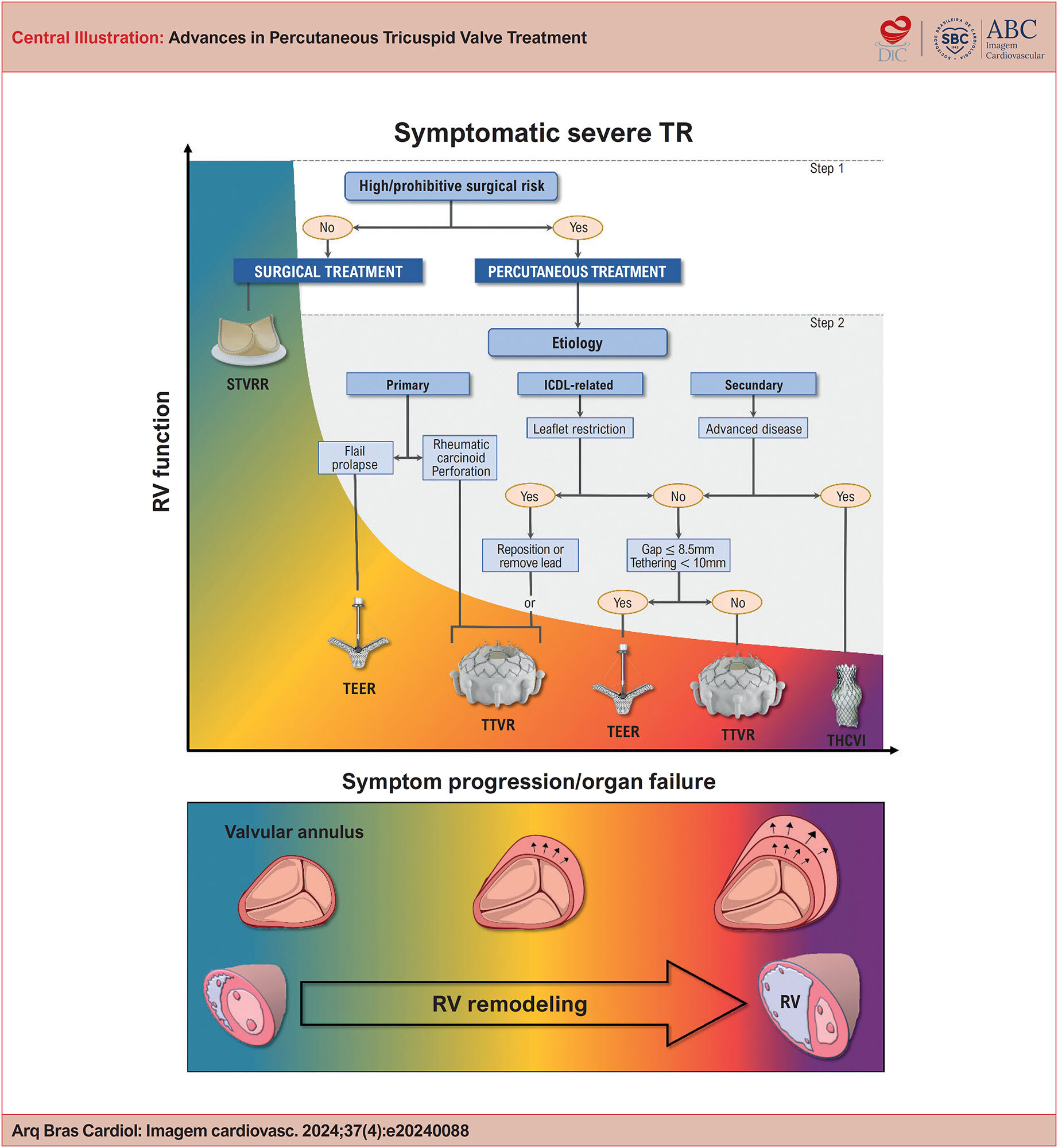
Advances in Percutaneous Tricuspid Valve Treatment

Marcio Mendes Pereira et al. Maria Estefânia Otto Fernando Melo Netto Fernanda Esteves

Abstract

Tricuspid regurgitation (TR) is a frequently underdiagnosed and undertreated condition, often associated with poor clinical outcomes, particularly in elderly and high-risk surgical patients. As the prevalence of TR continues to rise and traditional surgical methods face limitations, percutaneous techniques have emerged as promising alternatives. This article reviews the latest advancements in the percutaneous treatment of TR, highlighting new etiological and quantitative classifications, in addition to exploring the indications and outcomes of key techniques, including percutaneous edge-to-edge repair and transcatheter valve replacement. Moreover, it discusses the anatomical challenges involved and the vital role of echocardiography in periprocedural planning and monitoring. Based on current data, percutaneous interventions have shown effectiveness in alleviating symptoms and enhancing the quality of life for patients with severe TR, making them a viable option for those who are not candidates for conventional surgery.

  • Echocardiography
  • Transcatheter Aortic Valve Replacement
  • Tricuspid Valve Insufficiency
Read Full Article
Creative Commons Attribution (CC BY) Creative Commons license
22/11/2024 DOI: 10.36660/abcimg.20240088i
Figure 1
ABC
Research Letter

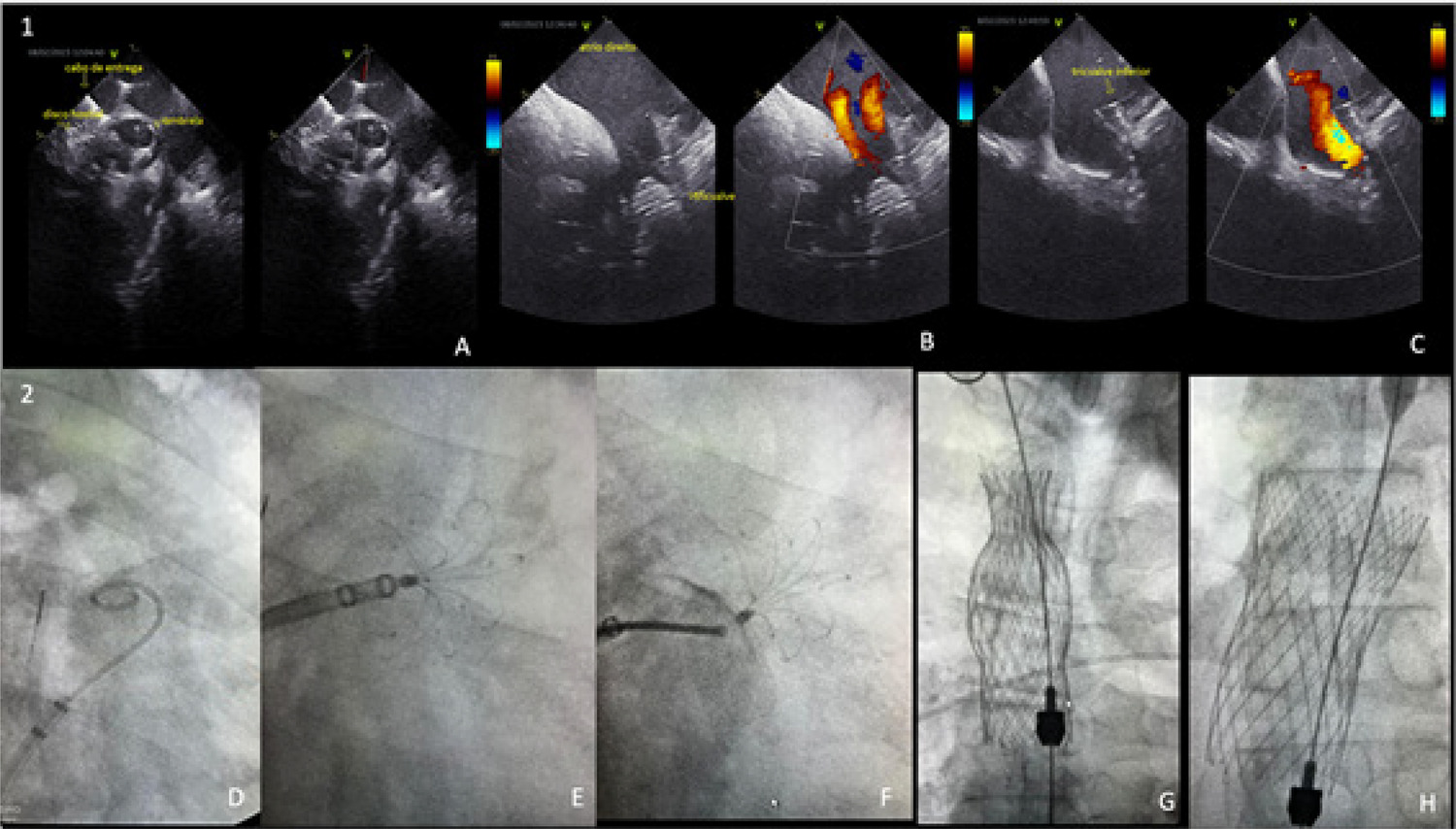
First Performance of Transjugular Transcatheter Tricuspid Valve Replacement with the Lux-Valve Plus System in Latin America. A Case Report

Vinicius Esteves et al. Pedro Beraldo de Andrade Sergio Kreimer Fernanda Almeida Esteves … Francisco Monteiro de Almeida Magalhães Thomas Modine

Introduction

The prevalence of tricuspid regurgitation (TR) increases with age, concomitant left-side heart disease, and chronic atrial fibrillation. Moderate or severe TR is associated with excess mortality and poor outcomes. The interventional treatment of choice is tricuspid valve repair, with a prosthetic ring capable of reducing the tricuspid annulus diameter, improving valve leaflet coaptation, and correcting regurgitation. Valve replacement is reserved for patients who do not have anatomical conditions for repair. However, an isolated surgical approach to the tricuspid valve continues to be rarely indicated, and there are still no data showing improved survival with TR surgical treatment alone, making this condition undertreated in clinical practice, despite the increased mortality rate in patients with moderate to severe TR clinically-only managed.

Based on these observations, the treatment of TR has recently been shifting from a conservative to a more interventional approach. This shift has led to first-in-human attempts at transcatheter tricuspid valve interventions (TTVI). Several devices have been developed, with strategies based on reducing the valve annulus, improving coaptation between the leaflets, or valve replacement. In a propensity-matched case-control study, TTVI was associated with 40% greater survival and freedom from heart failure rehospitalization.

[…]

  • Heart Failure
  • Heart Valve Prosthesis Implantation
  • Tricuspid Valve Insufficiency
Read Full Article
Creative Commons Attribution (CC BY) Creative Commons license
18/10/2024 DOI: 10.36660/abc.20240201i Views 2
Figure 1
ABC
Case Report

Left Atrial Appendage Occlusion and Implantation of a Bicaval System: Report of a Simultaneous Transcatheter Procedure in a Critically Ill Elderly Patient

Marcos Cherem et al. Carlos Eduardo Bernini Jamil Abdalla Saad Dirceu Barbosa Dias Sobrinho … Marcio Sérgio Carvalho Silva Ruthnea Aparecida Lazaro Muzzi

Case Report

We report the case of an 87-year-old male patient who presented with severe torrential tricuspid regurgitation with important hemodynamic repercussions and conditions of right heart failure, episodes of pulmonary thromboembolism, and deep vein thrombosis in the lower limbs, in follow-up at the hospital’s cardiology service since 1996.

The patient had severe comorbidities, including permanent atrial fibrillation in use of prophylactic enoxaparin and impossibility of safe oral anticoagulation due to chronic renal failure. Furthermore, he concomitantly presented stage 3 essential hypertension, left ventricular hypertrophy, hypercholesterolemia, and venous insufficiency of the lower limbs. Although he was using methyldopa, amiodarone, bisoprolol, enoxaparin, epoetin, dapagliflozin, furosemide, spironolactone, propatylnitrate, atorvastatin, and allopurinol, he progressively developed severe tricuspid insufficiency, right heart chamber dilation, and congestion in the venae cavae and right atrium, which were refractory to optimized clinical treatment, with progressive worsening of renal function. The transthoracic echocardiogram revealed severe and maladaptive concentric hypertrophy of the left ventricle, with systolic involvement of the right ventricle, important tricuspid insufficiency, important biatrial enlargement, and moderate pulmonary hypertension.

[…]

  • Atrial Appendage
  • Atrial Fibrillation
  • Cardiac Catheterization/methods
  • Tricuspid Valve Insufficiency
  • Venas Cavas
Read Full Article
Creative Commons Attribution (CC BY) Creative Commons license
22/12/2023 DOI: 10.36660/abc.20230454 Views 1
Central Illustration
ABC
Original Article

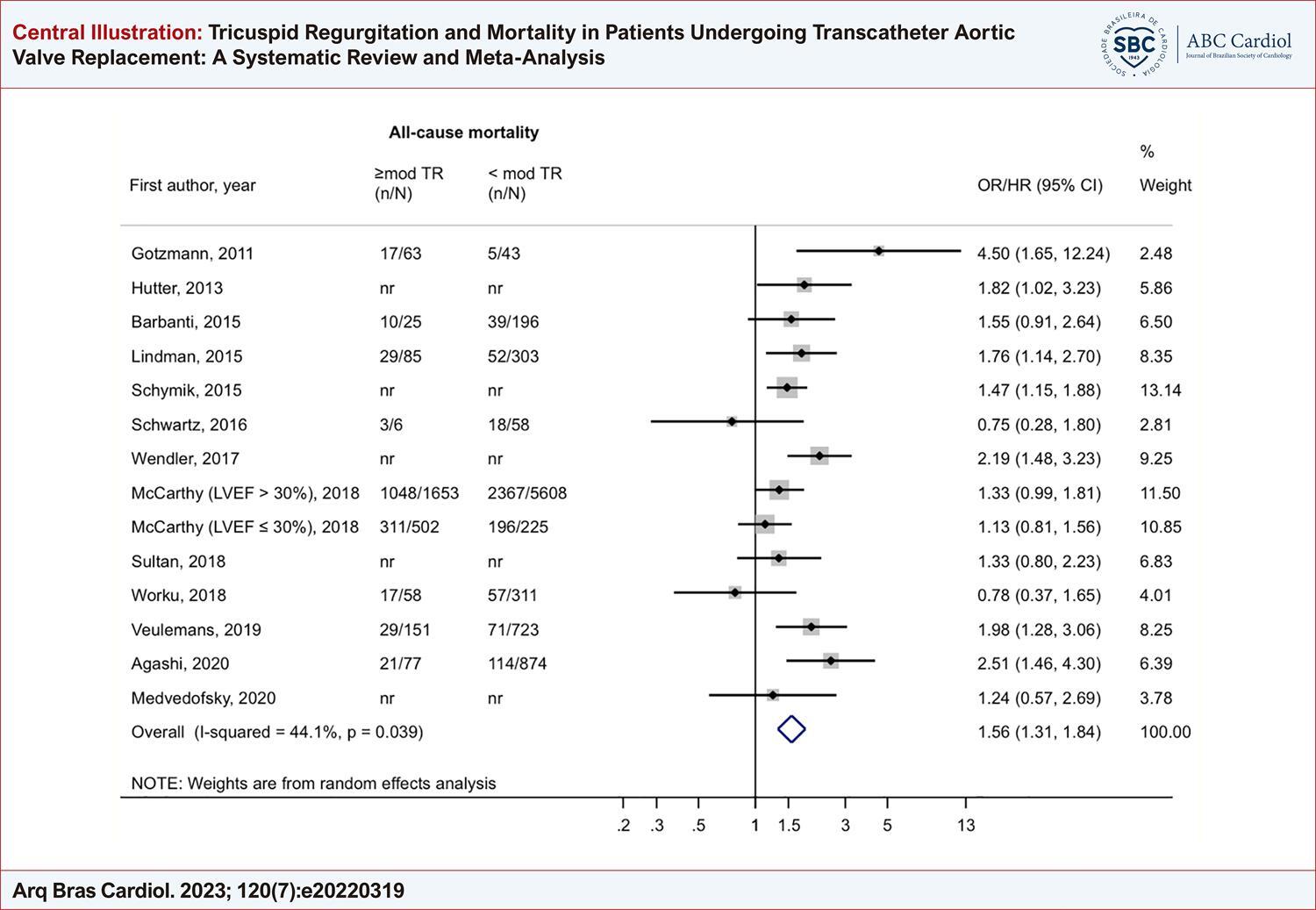
Tricuspid Regurgitation and Mortality in Patients Undergoing Transcatheter Aortic Valve Replacement: A Systematic Review and Meta-Analysis

Bruna Olandoski Erbano et al. Nicolle Amboni Schio Renato Delascio Lopes Tiago Costa Bignoto … Marcia Olandoski Raquel Silva Brito da Luz Guilherme Dagostin de Carvalho Lucas Henrique Olandoski Erbano Auristela Isabel de Oliveira Ramos Fausto Feres José Rocha Faria Neto Cristina Pellegrino Baena Dimytri Alexandre de Alvim Siqueira

Abstract

Background

The extent of cardiac damage associated with aortic stenosis has important prognostic implications after transcatheter aortic valve replacement (TAVR). However, the role of tricuspid regurgitation (TR) in this clinical setting is still unclear.

Objectives

To explore the association between TR and mortality in patients undergoing TAVR and assess changes in TR severity post TAVR and its relationship with short and mid-term mortality.

Methods

Relevant databases were searched for articles published from inception until August 2020. Out of 414 screened studies, we selected 24 that reported the degree of TR pre or post TAVR. The primary outcome was all-cause mortality, and random effects meta-analysis models were conducted (at a significance level of 5%).

Results

Seventeen studies reported associations between pre-TAVR TR and all-cause mortality (> 45,000 participants) and thirteen accessed TR severity post TAVR (709 participants). Moderate/severe baseline TR was associated to higher all-cause mortality both at 30 days (HR 1.65; 95% CI, 1.20-2.29) and 1.2 years (HR 1.56; 95% CI, 1.31-1.84). After TAVR, 43% of patients presented a decrease of at least one grade in TR (30 days, 95% CI, 30-56%), sustained at 12.5 months in 44% of participants (95% CI, 35-52%). Persistence of significant TR was associated with a two-fold increase in all-cause mortality (HR 2.12; 95% CI, 1.53-2.92).

Conclusions

Significant TR pre TAVR is associated with higher mortality. Although TR severity may improve, the persistence of significant TR post TAVR is strongly associated with increased mortality. Our findings highlight the importance of a detailed assessment of TR pre and post TAVR and might help identify patients who may benefit from more careful surveillance in this scenario.

  • Aortic Valve Stenosis
  • Mortality
  • Transcatheter Aortic Valve Replacement
  • Tricuspid Valve Insufficiency
Read Full Article
Creative Commons Attribution (CC BY) Creative Commons license
07/08/2023 DOI: 10.36660/abc.20220319
Figure 1
ABCIC
Review Article

My Approach to Three-Dimensional Echocardiography for Pathophysiological Classification of Tricuspid Regurgitation

Alex dos Santos Felix et al. Monica Luiza de Alcantara Konstantinos Papadopoulos

Introduction

Although it was known as the “forgotten valve” in the past, there has been increasing interest in studying the tricuspid valve (TV) during the last two decades. Tricuspid regurgitation (TR) has been identified as a prognostic marker not only when associated with other cardiac diseases, like heart failure, mitral regurgitation, or aortic stenosis, – but also as an isolated entity. Understanding the pathophysiological mechanisms of this disease is of paramount importance, since new options of transcatheter devices and techniques are emerging, offering invasive treatment for high-risk patients unsuitable for surgical intervention.

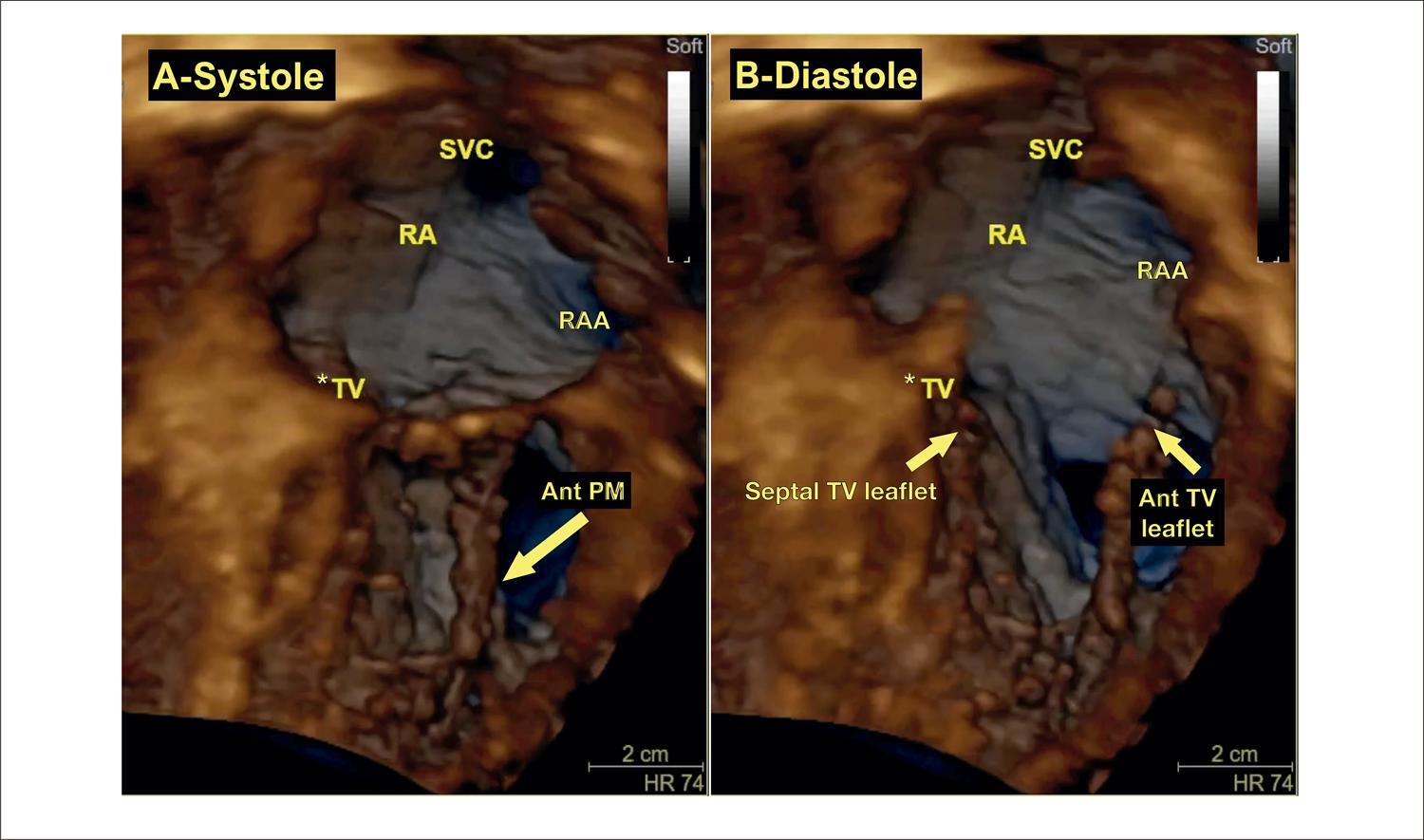
The TV is difficult to image in transesophageal echocardiography (TEE) for the following reasons: 1) the leaflets are much thinner compared to mitral leaflets, with greater anatomic variability; 2) it is an anterior structure, far away from the esophagus, with acoustic shadowing from the fibrous heart skeleton; and 3) it cannot be aligned to the esophageal probe in order to acquire en face views and requires use of lateral resolution. These restrictions may limit the ability of traditional TEE to evaluate the TV, making it necessary to complement the evaluation with special windows from the lower esophagus and transgastric views. Different from other cardiac valves, images of the TV obtained from transthoracic echocardiography (TTE) usually have better resolution than images obtained by TEE. Even though all protocols start with two-dimensional (2D) assessment of the TV, three-dimensional echocardiography (3DE) plays an important role in the evaluation of TV diseases, due not only to its ability to precisely depict the anatomy of the valve and the subvalvular apparatus, but also to its accuracy in quantitation of right ventricular (RV) and right atrial volumes and function and functional analysis of valvular dysfunction, especially for grading TR and evaluating dynamics of the tricuspid annulus (TA) through dedicated software. All of this information is of unparalleled importance for patient management and pre-procedural planning in surgical and transcatheter approaches.

[…]

  • Echocardiography, Three-Dimensional
  • Tricuspid Valve
  • Tricuspid Valve Insufficiency
Read Full Article
Creative Commons Attribution (CC BY) Creative Commons license
30/06/2023 DOI: 10.36660/abcimg.20230055i Views 3
ABCIC
Editorial

A Clinician’s View of Tricuspid Regurgitation: What do I Need to Know? When to Intervene?

Tiago Bignoto

Tricuspid valve dysfunction was considered a benign clinical situation for a long time, but with the advancement of diagnostic imaging methods and better clinical stratification of patients with structural heart disease, adequate classification of tricuspid regurgitation has become fundamental to decision making in the context of a Heart Team.

The first assessment to be taken into account is the etiology of the dysfunction. With a low prevalence, the primary etiology, mainly due to rheumatic and congenital causes, has a well-established intervention flowchart, primarily based on the presence of symptoms or hemodynamic repercussions on the right side of the heart.

[…]

  • Heart Valve Diseases
  • Tricuspid Valve
  • Tricuspid Valve Insufficiency
Read Full Article
Creative Commons Attribution (CC BY) Creative Commons license
24/03/2023 DOI: 10.36660/abcimg.20230005i Views 2
ABC
Research Letter

Emerging Topics in Heart Failure: Interventional Heart Failure Therapies

João Manoel Rossi Neto et al. Dirceu Rodrigues de Almeida Fernando Antibas Atik Monica Samuel Avila Marcely Gimenes Bonatto

Treatment of Secondary Mitral Regurgitation

Before considering percutaneous treatment of mitral regurgitation (MR) for patients with heart failure (HF) with reduced ejection fraction (HFrEF) and severe MR, we recommend that guideline-directed medical therapy be optimized, including cardiac resynchronization therapy and revascularization, where appropriate.

The use of the edge-to-edge device could benefit patients with moderately severe or severe secondary MR (effective regurgitant orifice area [EROA] ≥ 30 mm2 and/or regurgitant volume > 45 mL) with a left ventricular ejection fraction (LVEF) of 20 to 50%, left ventricular (LV) end-systolic diameter < 7.0 cm, and persistent symptoms despite maximized evidence-based medical therapy, with the participation of an experienced multidisciplinary team in the evaluation and treatment of HF and MR.

[…]

  • Catheter Ablation
  • Defibrillators, Implantable
  • Mitral Valve Insufficiency
  • Pacemaker, Artificial
  • Tricuspid Valve Insufficiency
Read Full Article
Creative Commons Attribution (CC BY) Creative Commons license
07/12/2020 DOI: 10.36660/abc.20201086 Views 1
Figure 1
IJCS
Original Article

Early Outcomes of Modified De Vega Annuloplasty for Functional Tricuspid Regurgitation at a Brazilian Hospital

Diogo Luiz de Magalhães Ferraz et al. Karina Mascarenhas Bezerra Alves Larissa Almeida Barp Santos Girliney dos Santos Leandro … Cristiano Berardo Carneiro da Cunha Rodrigo Mezzalira Tchaick Igor Correia Silva João Paulo Segundo de Paiva Oliveira Jeú Delmondes de Carvalho Júnior Felipe Ribeiro Walter Stephanie Steremberg Pires D'Azevedo Tais Lins Severo da Silva Verônica Soares Monteiro Fernando Augusto Marinho dos Santos Figueira

Abstract

Background:

Right valve diseases are not benign, the tricuspid regurgitation has a significant impact on morbidity and mortality of patients.

Objectives:

This study aimed to report the short-term results of tricuspid annuloplasty using the De Vega technique modified by Manuel Antunes.

Methods:

A descriptive-analytical study was performed to evaluate the results of the tricuspid valvuloplasty performed at the Instituto de Medicina Integral Professor Fernando Figueira between 2012 and 2017. Data were collected by reviewing charts and databases of the Department of Cardiology and Cardiovascular Surgery of the institution. Those with rheumatic diseases or infective endocarditis with tricuspid valve involvement, or reoperation of the tricuspid valve were excluded. Student’s t-test and McNemar’s were used for statistical analysis. A p-value < 0.05 was considered statistically significant.

Results:

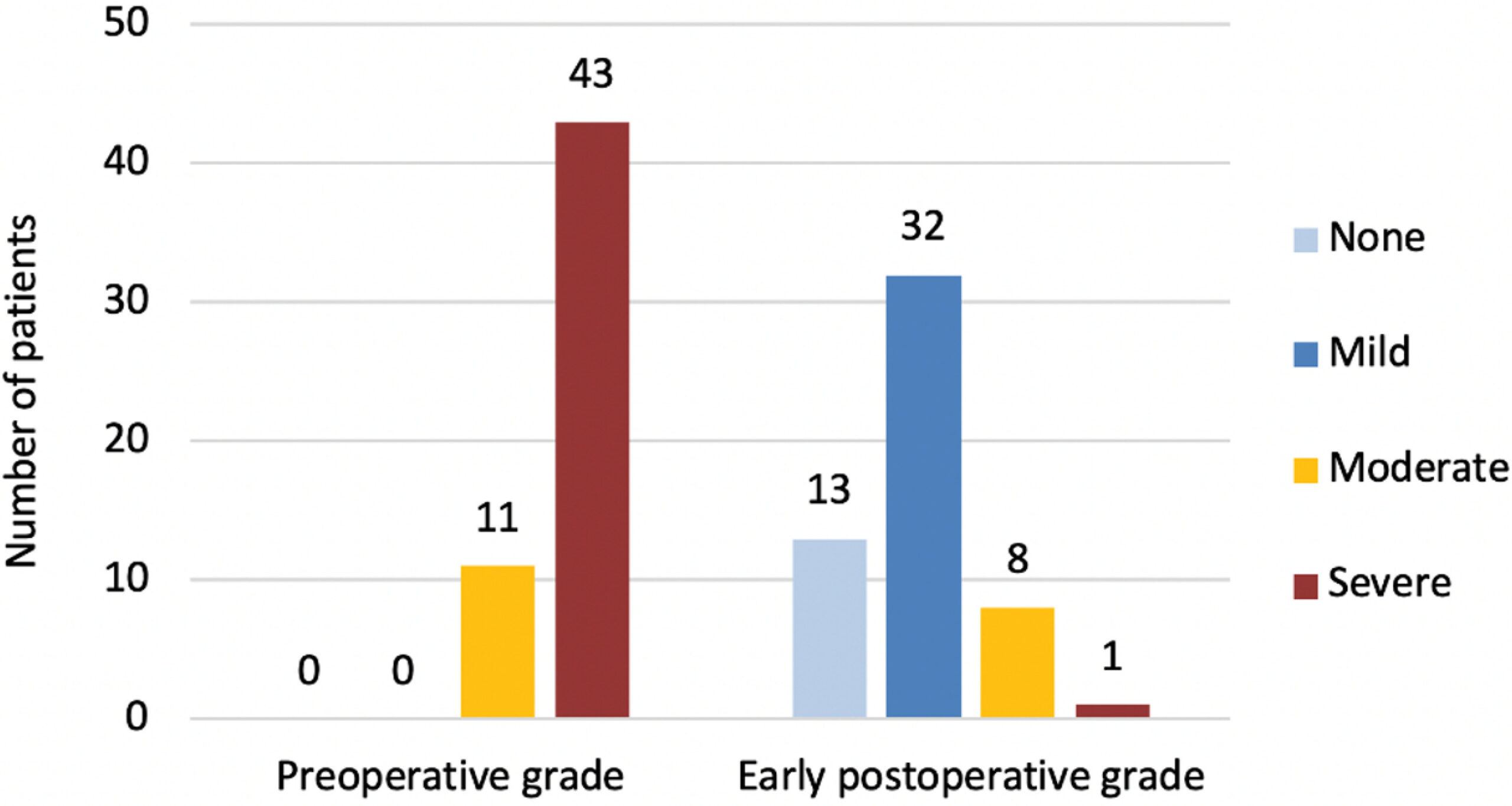
A total of 87 patients were studied, most of them were women (56.3%). The most associated heart valve diseases were mitral regurgitation (27.6%) and aortic regurgitation (20.7%). There was a significant decrease in the degree of tricuspid regurgitation in the postoperative period, with 83.3% of patients with none or mild regurgitation and only 1.1% with severe regurgitation (p = 0.0077).

Conclusions:

In the current study, tricuspid valve annuloplasty using the modified De Vega technique was shown to be effective in the short term. Further studies are needed to evaluate the long-term results.

  • Cardiac Valve Annuloplasty/methods
  • De Vega Annuloplasty
  • Heart Valve Diseases/physiopathology
  • Tricuspid Valve Insufficiency
Read Full Article
Creative Commons Attribution (CC BY) Creative Commons license
03/02/2020 DOI: 10.36660/ijcs.20180086 Views 1
Figure 1
ABC
Case Report

Contusio Cordis Associated with Atrioventricular Block and Tricuspid Regurgitation

Giulio Cesare Longo Neto et al. Wolney de Andrade Martins Humberto Villacorta Junior Eduardo Nani da Silva … Paula Maira Alves Haffner Davyson Gerardt de Souza

Introduction

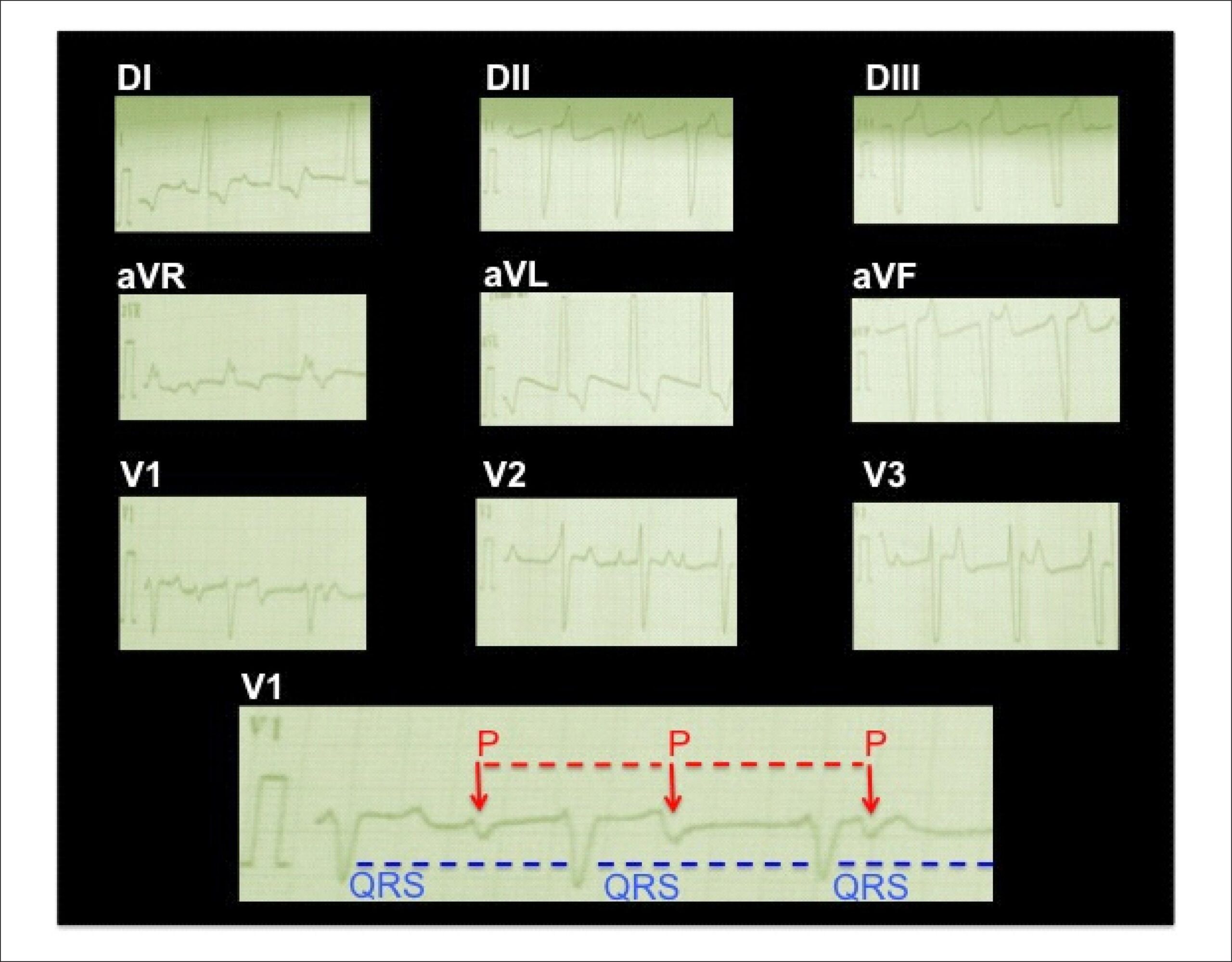
The expression “contusio cordis” defines a lesion of the cardiac myocyte, hemorrhagic or fibrotic, due to the application of violent kinetic force resulting from a blunt trauma to the precordial region. Syncope is almost always the first clinical manifestation observed, and commonly precedes death. Contusio cordis differs from commotio cordis, the latter representing a cardiac electromechanical disorder consequent to a blunt trauma to the precordial region, at a critical moment of the cardiac cycle, which occurs within 10 to 30 ms from the T-wave peak, a period susceptible to the development of ventricular fibrillation – . Both forms are fatal most of the time , , – . Commotio cordis is a form of ventricular fibrillation, rather than a lesion in cardiomyocytes or adjacent organs , . It is a rare condition, leading most cases to death , and being more prevalent among men, because of its relationship to high-impact sports , . The accurate incidence of both entities is unknown, because there is no systematic way to register all cases; however, although rare in the literature, they are believed to be more common than reported , . Contusio cordis associated with complete atrioventricular block (CAVB) is an even rarer condition, with few cases reported. The objective of the present study is to report a case of contusio cordis associated with CAVB and tricuspid regurgitation (TR).

[…]

  • Atrioventricular block
  • Commotio Cordis
  • Myocytes, Cardiac / pathophysiology
  • Tricuspid Valve Insufficiency
  • Ventricular Fibrillation
Read Full Article
Creative Commons Attribution (CC BY) Creative Commons license
01/08/2014 DOI: 10.5935/abc.20140114 Views 1
Tricuspid valve lesion due to penetrating chest trauma
ABC
Case Report

Tricuspid valve lesion due to penetrating chest trauma

Renata de Carvalho Bicalho Carneiro et al. Fernanda de Azevedo Figueiredo Luciana Campomizzi Calazans Marcelo Martins Pinto Filho … Daniel Furtado Vidigal Maria do Carmo Pereira Nunes

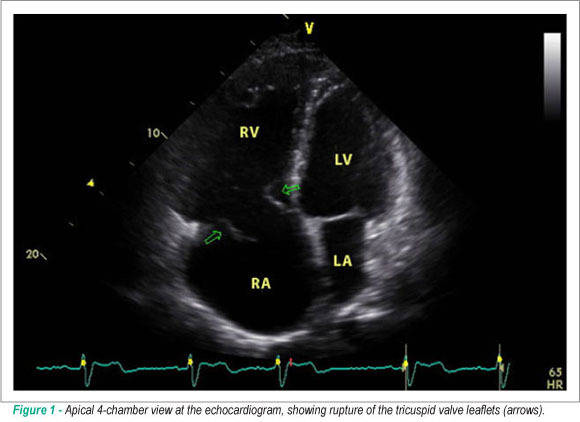
Tricuspid valve lesions caused by penetrating chest trauma are rare and often underdiagnosed. The objective of this report is to describe a case of severe tricuspid insufficiency secondary to a knifing incident with an insidious evolution, diagnosed 19 years after the incident. The case emphasizes the importance of adequate follow-up of patients that are victims of penetrating chest trauma for a long period after the injury, to detect possible late complications of the trauma.

  • Echocardiography
  • Thoracic Injuries
  • Tricuspid Valve Insufficiency
  • wounds
Read Full Article
Creative Commons Attribution (CC BY) Creative Commons license
05/05/2010 DOI: 10.1590/S0066-782X2010000200024 Views 1
Atypical presentation of rheumatic carditis in pregnancy
ABC
Case Report

Atypical presentation of rheumatic carditis in pregnancy

Lurildo Cleano Ribeiro Saraiva et al. Aluísio Macedo Ana Elizabeth M. Batista

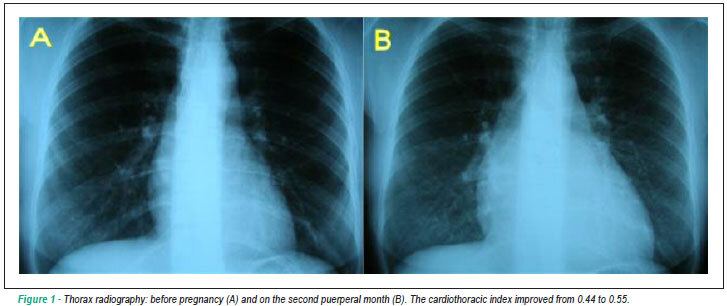
We report the case of a 31-year old woman presenting with atypical rheumatic disease in the 28th week of the second pregnancy. Questions related to prevention of the disease and its treatment during the pregnancy-puerperium cycle are discussed.

  • Pregnancy
  • Rheumatic Fever
  • Tricuspid Valve Insufficiency
Read Full Article
Creative Commons Attribution (CC BY) Creative Commons license
23/06/2009 DOI: 10.1590/S0066-782X2009000400017 Views 1
Case 1/2009: 21-month-old infant with partial atrioventricular septal defect, consisting of atrial septal defect and tricuspid insufficiency
ABC
Correlação Clínico-Radiográfica

Case 1/2009: 21-month-old infant with partial atrioventricular septal defect, consisting of atrial septal defect and tricuspid insufficiency

Edmar Atik

CLINICORADIOLOGICAL SESSION

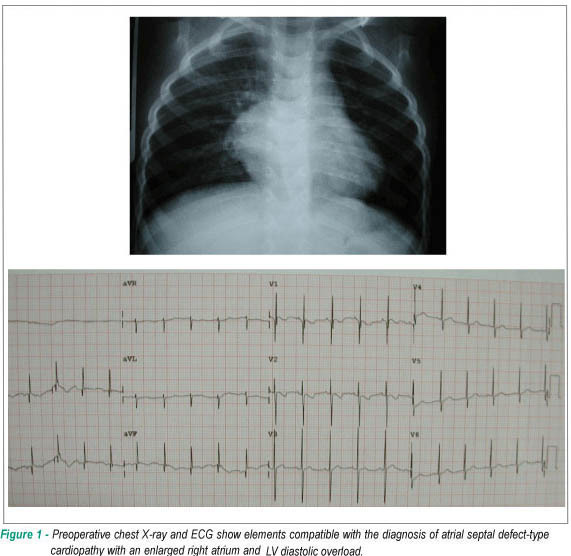
Case 1/2009 – 21-month-old infant with partial atrioventricular septal defect, consisting of atrial septal defect and tricuspid insufficiency

[…]

  • Heart Defects
  • Heart septal defects
  • Tricuspid Valve Insufficiency
Read Full Article
Creative Commons Attribution (CC BY) Creative Commons license
04/02/2009 DOI: 10.1590/S0066-782X2009000100012 Views 2
Corrected transposition of the great arteries: late clinical presentation, in the fifth decade of life
ABC
Case Report

Corrected transposition of the great arteries: late clinical presentation, in the fifth decade of life

Roger Pereira de Oliveira et al. Panayotis Agorianitis Ronaldo Vegni Gustavo Nobre … Marcelo Kalichsztein José Kezen

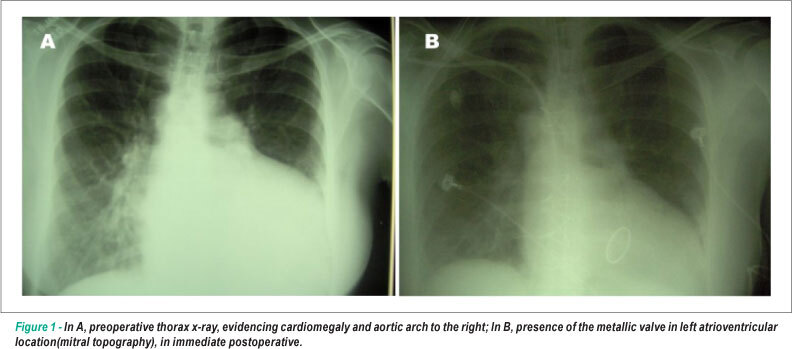
The corrected transposition of the great arteries, rare congenital cardiopathy, is related to the largest incidence of cardiological complications. We report a case in which the clinical presentation of the disease occurred in the fifth decade of life, with tricuspid insufficiency, occasion that the patient was submitted to valvar replacement.

  • Heart Defects, Congenital
  • Transposition of Great Vessels
  • Tricuspid Valve Insufficiency
Read Full Article
Creative Commons Attribution (CC BY) Creative Commons license
11/11/2008 DOI: 10.1590/S0066-782X2008001600015 Views 2

How to cite this article

EndNote RIS

Electronic Document Format (Vancouver)

Silva HAGP, Souza AC, Beck A. My Approach to a Standardized Assessment of the Tricuspid Valve: A Contemporary Analysis. ABC Imagem Cardiovascular 2026;39(2):e20260034.

Electronic Document Format (ABNT)

Silva, Halsted Alarcão Gomes Pereira da; Souza, Alexandre Costa; Beck, Adenalva. My Approach to a Standardized Assessment of the Tricuspid Valve: A Contemporary Analysis. ABC Imagem Cardiovascular, v. 39, n. 2, e20260034, Jul. 2026.

Electronic Document Format (APA)

Silva, H. A. G. P. , Souza, A. C., & Beck, A. (2026). My Approach to a Standardized Assessment of the Tricuspid Valve: A Contemporary Analysis. ABC Imagem Cardiovascular, 39(2), e20260034.

Electronic Document Format (ISO)

Silva, Halsted Alarcão Gomes Pereira da and Souza, Alexandre Costa and Beck, Adenalva. My Approach to a Standardized Assessment of the Tricuspid Valve: A Contemporary Analysis. ABC Imagem Cardiovascular [online]. 2026, vol. 39, n. 2, [cited 2026-10-14], e20260034. Available from: <https://journals.cardiol.br/en/article/my-approach-to-a-standardized-assessment-of-the-tricuspid-valve-a-contemporary-analysis/>. ISSN 2318-8219

EndNote RIS

Electronic Document Format (Vancouver)

Carmo LV, Ramos AIO, Togna DJD, Farias ES, Siqueira DAA. Artificial Intelligence–Driven Detection, Characterization, and Risk Stratification in Patients with Severe Tricuspid Regurgitation. Arquivos Brasileiros de Cardiologia 2026;123(4):e20250743.

Electronic Document Format (ABNT)

Carmo, Luna Varela do; Ramos, Auristela Isabel de Oliveira; Togna, Dorival Julio Della; Farias, Eduardo da Silva; Siqueira, Dimytri Alexandre de Alvim. Artificial Intelligence–Driven Detection, Characterization, and Risk Stratification in Patients with Severe Tricuspid Regurgitation. Arquivos Brasileiros de Cardiologia, v. 123, n. 4, e20250743, Jul. 2026.

Electronic Document Format (APA)

Carmo, L. V. , Ramos, A. I. O., Togna, D. J. D., Farias, E. S., & Siqueira, D. A. A. (2026). Artificial Intelligence–Driven Detection, Characterization, and Risk Stratification in Patients with Severe Tricuspid Regurgitation. Arquivos Brasileiros de Cardiologia, 123(4), e20250743.

Electronic Document Format (ISO)

Carmo, Luna Varela do and Ramos, Auristela Isabel de Oliveira and Togna, Dorival Julio Della and Farias, Eduardo da Silva and Siqueira, Dimytri Alexandre de Alvim. Artificial Intelligence–Driven Detection, Characterization, and Risk Stratification in Patients with Severe Tricuspid Regurgitation. Arquivos Brasileiros de Cardiologia [online]. 2026, vol. 123, n. 4, [cited 2026-10-14], e20250743. Available from: <https://journals.cardiol.br/en/article/artificial-intelligence-driven-detection-characterization-and-risk-stratification-in-patients-with-severe-tricuspid-regurgitation/>. ISSN 0066-782X

EndNote RIS

Electronic Document Format (Vancouver)

Souza AC, Silva HAGP, Felix AS. Tricuspid Valve: Anatomical Basis and Patient Selection Criteria for Transcatheter Structural Interventions. ABC Imagem Cardiovascular 2025;38(3):e20250064.

Electronic Document Format (ABNT)

Souza, Alexandre Costa; Silva, Halsted Alarcão Gomes Pereira da; Felix, Alex dos Santos. Tricuspid Valve: Anatomical Basis and Patient Selection Criteria for Transcatheter Structural Interventions. ABC Imagem Cardiovascular, v. 38, n. 3, e20250064, Dec. 2025.

Electronic Document Format (APA)

Souza, A. C., Silva, H. A. G. P. , & Felix, A. S. (2025). Tricuspid Valve: Anatomical Basis and Patient Selection Criteria for Transcatheter Structural Interventions. ABC Imagem Cardiovascular, 38(3), e20250064.

Electronic Document Format (ISO)

Souza, Alexandre Costa and Silva, Halsted Alarcão Gomes Pereira da and Felix, Alex dos Santos. Tricuspid Valve: Anatomical Basis and Patient Selection Criteria for Transcatheter Structural Interventions. ABC Imagem Cardiovascular [online]. 2025, vol. 38, n. 3, [cited 2026-10-14], e20250064. Available from: <https://journals.cardiol.br/en/article/tricuspid-valve-anatomical-basis-and-patient-selection-criteria-for-transcatheter-structural-interventions/>. ISSN 2318-8219

EndNote RIS

Electronic Document Format (Vancouver)

Torres RFA, Kraemer A, Torres RA, Bozzi FPL, Grobe SF, Balbi Filho EM, Silva GBG, et al. Transcatheter Bicaval Valve System in the Treatment of Torrential Tricuspid Regurgitation and Refractory Systemic Hypervolemia: 12-Month Outcome. International Journal of Cardiovascular Sciences 2025;38:e20250035.

Electronic Document Format (ABNT)

Torres, Rômulo Francisco de Almeida; Kraemer, Alessandro; Torres, Rafael de Almeida; Bozzi, Fernanda Proença Lepca; Grobe, Sarah Fagundes; Balbi Filho, Eduardo Mendel; Silva, Guilherme Barreto Gameiro. Transcatheter Bicaval Valve System in the Treatment of Torrential Tricuspid Regurgitation and Refractory Systemic Hypervolemia: 12-Month Outcome. International Journal of Cardiovascular Sciences, v. 38, e20250035, Aug. 2025.

Electronic Document Format (APA)

Torres, R. F. A., Kraemer, A., Torres, R. A., Bozzi, F. P. L., Grobe, S. F., Balbi Filho, E. M., & Silva, G. B. G. (2025). Transcatheter Bicaval Valve System in the Treatment of Torrential Tricuspid Regurgitation and Refractory Systemic Hypervolemia: 12-Month Outcome. International Journal of Cardiovascular Sciences, 38, e20250035.

Electronic Document Format (ISO)

Torres, Rômulo Francisco de Almeida and Kraemer, Alessandro and Torres, Rafael de Almeida and Bozzi, Fernanda Proença Lepca and Grobe, Sarah Fagundes and Balbi Filho, Eduardo Mendel and Silva, Guilherme Barreto Gameiro. Transcatheter Bicaval Valve System in the Treatment of Torrential Tricuspid Regurgitation and Refractory Systemic Hypervolemia: 12-Month Outcome. International Journal of Cardiovascular Sciences [online]. 2025, vol. 38, [cited 2026-10-14], e20250035. Available from: <https://journals.cardiol.br/en/article/transcatheter-bicaval-valve-system-in-the-treatment-of-torrential-tricuspid-regurgitation-and-refractory-systemic-hypervolemia-12-month-outcome/>. ISSN 2359-4802

EndNote RIS

Electronic Document Format (Vancouver)

Esteves F, Esteves V, Pereira MM, Mancuso FJN, Tebet M, Kreimer S, Araújo EC, et al. First Percutaneous Orthotopic Tricuspid Valve Implantations using the LuX-Valve Plus Device in Latin America: Report of the First Three Cases. ABC Imagem Cardiovascular 2025;38(1):e20240124.

Electronic Document Format (ABNT)

Esteves, Fernanda; Esteves, Vinícius; Pereira, Marcio Mendes; Mancuso, Frederico José Neves; Tebet, Marden; Kreimer, Sergio; Araújo, Edmur Carlos de; Magalhães, Francisco Monteiro de Almeida. First Percutaneous Orthotopic Tricuspid Valve Implantations using the LuX-Valve Plus Device in Latin America: Report of the First Three Cases. ABC Imagem Cardiovascular, v. 38, n. 1, e20240124, Mar. 2025.

Electronic Document Format (APA)

Esteves, F., Esteves, V., Pereira, M. M., Mancuso, F. J. N., Tebet, M., Kreimer, S., Araújo, E. C. , & Magalhães, F. M. A. (2025). First Percutaneous Orthotopic Tricuspid Valve Implantations using the LuX-Valve Plus Device in Latin America: Report of the First Three Cases. ABC Imagem Cardiovascular, 38(1), e20240124.

Electronic Document Format (ISO)

Esteves, Fernanda and Esteves, Vinícius and Pereira, Marcio Mendes and Mancuso, Frederico José Neves and Tebet, Marden and Kreimer, Sergio and Araújo, Edmur Carlos de and Magalhães, Francisco Monteiro de Almeida. First Percutaneous Orthotopic Tricuspid Valve Implantations using the LuX-Valve Plus Device in Latin America: Report of the First Three Cases. ABC Imagem Cardiovascular [online]. 2025, vol. 38, n. 1, [cited 2026-10-14], e20240124. Available from: <https://journals.cardiol.br/en/article/first-percutaneous-orthotopic-tricuspid-valve-implantations-using-the-lux-valve-plus-device-in-latin-america-report-of-the-first-three-cases/>. ISSN 2318-8219

EndNote RIS

Electronic Document Format (Vancouver)

Pereira MM, Otto ME, Netto FM, Esteves F. Advances in Percutaneous Tricuspid Valve Treatment. ABC Imagem Cardiovascular 2024;37(4):e20240088.

Electronic Document Format (ABNT)

Pereira, Marcio Mendes; Otto, Maria Estefânia; Netto, Fernando Melo; Esteves, Fernanda. Advances in Percutaneous Tricuspid Valve Treatment. ABC Imagem Cardiovascular, v. 37, n. 4, e20240088, Nov. 2024.

Electronic Document Format (APA)

Pereira, M. M., Otto, M. E., Netto, F. M., & Esteves, F. (2024). Advances in Percutaneous Tricuspid Valve Treatment. ABC Imagem Cardiovascular, 37(4), e20240088.

Electronic Document Format (ISO)

Pereira, Marcio Mendes and Otto, Maria Estefânia and Netto, Fernando Melo and Esteves, Fernanda. Advances in Percutaneous Tricuspid Valve Treatment. ABC Imagem Cardiovascular [online]. 2024, vol. 37, n. 4, [cited 2026-10-14], e20240088. Available from: <https://journals.cardiol.br/en/article/advances-in-percutaneous-tricuspid-valve-treatment/>. ISSN 2318-8219

EndNote RIS

Electronic Document Format (Vancouver)

Esteves V, Andrade PB, Kreimer S, Esteves FA, Magalhães FMA, Modine T. First Performance of Transjugular Transcatheter Tricuspid Valve Replacement with the Lux-Valve Plus System in Latin America. A Case Report. Arquivos Brasileiros de Cardiologia 2024;121(10):e20240201.

Electronic Document Format (ABNT)

Esteves, Vinicius; Andrade, Pedro Beraldo de; Kreimer, Sergio; Esteves, Fernanda Almeida; Magalhães, Francisco Monteiro de Almeida; Modine, Thomas. First Performance of Transjugular Transcatheter Tricuspid Valve Replacement with the Lux-Valve Plus System in Latin America. A Case Report. Arquivos Brasileiros de Cardiologia, v. 121, n. 10, e20240201, Oct. 2024.

Electronic Document Format (APA)

Esteves, V., Andrade, P. B. , Kreimer, S., Esteves, F. A., Magalhães, F. M. A., & Modine, T. (2024). First Performance of Transjugular Transcatheter Tricuspid Valve Replacement with the Lux-Valve Plus System in Latin America. A Case Report. Arquivos Brasileiros de Cardiologia, 121(10), e20240201.

Electronic Document Format (ISO)

Esteves, Vinicius and Andrade, Pedro Beraldo de and Kreimer, Sergio and Esteves, Fernanda Almeida and Magalhães, Francisco Monteiro de Almeida and Modine, Thomas. First Performance of Transjugular Transcatheter Tricuspid Valve Replacement with the Lux-Valve Plus System in Latin America. A Case Report. Arquivos Brasileiros de Cardiologia [online]. 2024, vol. 121, n. 10, [cited 2026-10-14], e20240201. Available from: <https://journals.cardiol.br/en/article/first-performance-of-transjugular-transcatheter-tricuspid-valve-replacement-with-the-lux-valve-plus-system-in-latin-america-a-case-report/>. ISSN 0066-782X

EndNote RIS

Electronic Document Format (Vancouver)

Cherem M, Bernini CE, Saad JA, Sobrinho DBD, Silva MSC, Muzzi RAL. Left Atrial Appendage Occlusion and Implantation of a Bicaval System: Report of a Simultaneous Transcatheter Procedure in a Critically Ill Elderly Patient. Arquivos Brasileiros de Cardiologia 2023;120(11):e20230454.

Electronic Document Format (ABNT)

Cherem, Marcos; Bernini, Carlos Eduardo; Saad, Jamil Abdalla; Sobrinho, Dirceu Barbosa Dias; Silva, Marcio Sérgio Carvalho; Muzzi, Ruthnea Aparecida Lazaro. Left Atrial Appendage Occlusion and Implantation of a Bicaval System: Report of a Simultaneous Transcatheter Procedure in a Critically Ill Elderly Patient. Arquivos Brasileiros de Cardiologia, v. 120, n. 11, e20230454, Dec. 2023.

Electronic Document Format (APA)

Cherem, M., Bernini, C. E., Saad, J. A., Sobrinho, D. B. D., Silva, M. S. C., & Muzzi, R. A. L. (2023). Left Atrial Appendage Occlusion and Implantation of a Bicaval System: Report of a Simultaneous Transcatheter Procedure in a Critically Ill Elderly Patient. Arquivos Brasileiros de Cardiologia, 120(11), e20230454.

Electronic Document Format (ISO)

Cherem, Marcos and Bernini, Carlos Eduardo and Saad, Jamil Abdalla and Sobrinho, Dirceu Barbosa Dias and Silva, Marcio Sérgio Carvalho and Muzzi, Ruthnea Aparecida Lazaro. Left Atrial Appendage Occlusion and Implantation of a Bicaval System: Report of a Simultaneous Transcatheter Procedure in a Critically Ill Elderly Patient. Arquivos Brasileiros de Cardiologia [online]. 2023, vol. 120, n. 11, [cited 2026-10-14], e20230454. Available from: <https://journals.cardiol.br/en/article/left-atrial-appendage-occlusion-and-implantation-of-a-bicaval-system-report-of-a-simultaneous-transcatheter-procedure-in-a-critically-ill-elderly-patient/>. ISSN 0066-782X

EndNote RIS

Electronic Document Format (Vancouver)

Erbano BO, Schio NA, Lopes RD, Bignoto TC, Olandoski M, Luz RSB, Carvalho GD, et al. Tricuspid Regurgitation and Mortality in Patients Undergoing Transcatheter Aortic Valve Replacement: A Systematic Review and Meta-Analysis. Arquivos Brasileiros de Cardiologia 2023;120(7):e20220319.

Electronic Document Format (ABNT)

Erbano, Bruna Olandoski; Schio, Nicolle Amboni; Lopes, Renato Delascio; Bignoto, Tiago Costa; Olandoski, Marcia; Luz, Raquel Silva Brito da; Carvalho, Guilherme Dagostin de; Erbano, Lucas Henrique Olandoski; Ramos, Auristela Isabel de Oliveira; Feres, Fausto; Faria Neto, José Rocha; Baena, Cristina Pellegrino; Siqueira, Dimytri Alexandre de Alvim. Tricuspid Regurgitation and Mortality in Patients Undergoing Transcatheter Aortic Valve Replacement: A Systematic Review and Meta-Analysis. Arquivos Brasileiros de Cardiologia, v. 120, n. 7, e20220319, Aug. 2023.

Electronic Document Format (APA)

Erbano, B. O., Schio, N. A., Lopes, R. D., Bignoto, T. C., Olandoski, M., Luz, R. S. B. , Carvalho, G. D. , Erbano, L. H. O., Ramos, A. I. O., Feres, F., Faria Neto, J. R., Baena, C. P., & Siqueira, D. A. A. (2023). Tricuspid Regurgitation and Mortality in Patients Undergoing Transcatheter Aortic Valve Replacement: A Systematic Review and Meta-Analysis. Arquivos Brasileiros de Cardiologia, 120(7), e20220319.

Electronic Document Format (ISO)

Erbano, Bruna Olandoski and Schio, Nicolle Amboni and Lopes, Renato Delascio and Bignoto, Tiago Costa and Olandoski, Marcia and Luz, Raquel Silva Brito da and Carvalho, Guilherme Dagostin de and Erbano, Lucas Henrique Olandoski and Ramos, Auristela Isabel de Oliveira and Feres, Fausto and Faria Neto, José Rocha and Baena, Cristina Pellegrino and Siqueira, Dimytri Alexandre de Alvim. Tricuspid Regurgitation and Mortality in Patients Undergoing Transcatheter Aortic Valve Replacement: A Systematic Review and Meta-Analysis. Arquivos Brasileiros de Cardiologia [online]. 2023, vol. 120, n. 7, [cited 2026-10-14], e20220319. Available from: <https://journals.cardiol.br/en/article/tricuspid-regurgitation-and-mortality-in-patients-undergoing-transcatheter-aortic-valve-replacement-a-systematic-review-and-meta-analysis/>. ISSN 0066-782X

EndNote RIS

Electronic Document Format (Vancouver)

Felix AS, Alcantara ML, Papadopoulos K. My Approach to Three-Dimensional Echocardiography for Pathophysiological Classification of Tricuspid Regurgitation. ABC Imagem Cardiovascular 2023;36(2):e20230055.

Electronic Document Format (ABNT)

Felix, Alex dos Santos; Alcantara, Monica Luiza de; Papadopoulos, Konstantinos. My Approach to Three-Dimensional Echocardiography for Pathophysiological Classification of Tricuspid Regurgitation. ABC Imagem Cardiovascular, v. 36, n. 2, e20230055, Jun. 2023.

Electronic Document Format (APA)

Felix, A. S., Alcantara, M. L. , & Papadopoulos, K. (2023). My Approach to Three-Dimensional Echocardiography for Pathophysiological Classification of Tricuspid Regurgitation. ABC Imagem Cardiovascular, 36(2), e20230055.

Electronic Document Format (ISO)

Felix, Alex dos Santos and Alcantara, Monica Luiza de and Papadopoulos, Konstantinos. My Approach to Three-Dimensional Echocardiography for Pathophysiological Classification of Tricuspid Regurgitation. ABC Imagem Cardiovascular [online]. 2023, vol. 36, n. 2, [cited 2026-10-14], e20230055. Available from: <https://journals.cardiol.br/en/article/my-approach-to-three-dimensional-echocardiography-for-pathophysiological-classification-of-tricuspid-regurgitation/>. ISSN 2318-8219

EndNote RIS

Electronic Document Format (Vancouver)

Bignoto T. A Clinician’s View of Tricuspid Regurgitation: What do I Need to Know? When to Intervene?. Arquivos Brasileiros de Cardiologia Imagem cardiovascular 2023;36(1):e20230005.

Electronic Document Format (ABNT)

Bignoto, Tiago. A Clinician’s View of Tricuspid Regurgitation: What do I Need to Know? When to Intervene?. Arquivos Brasileiros de Cardiologia Imagem cardiovascular, v. 36, n. 1, e20230005, Mar. 2023.

Electronic Document Format (APA)

Bignoto, T. (2023). A Clinician’s View of Tricuspid Regurgitation: What do I Need to Know? When to Intervene?. Arquivos Brasileiros de Cardiologia Imagem cardiovascular, 36(1), e20230005.

Electronic Document Format (ISO)

Bignoto, Tiago. A Clinician’s View of Tricuspid Regurgitation: What do I Need to Know? When to Intervene?. Arquivos Brasileiros de Cardiologia Imagem cardiovascular [online]. 2023, vol. 36, n. 1, [cited 2026-10-14], e20230005. Available from: <https://journals.cardiol.br/en/article/a-clinicians-view-of-tricuspid-regurgitation-what-do-i-need-to-know-when-to-intervene/>. ISSN 2318-8219

EndNote RIS

Electronic Document Format (Vancouver)

Rossi Neto JM, Almeida DR, Atik FA, Avila MS, Bonatto MG. Emerging Topics in Heart Failure: Interventional Heart Failure Therapies. Arquivos Brasileiros de Cardiologia 2020;115(5):953-5.

Electronic Document Format (ABNT)

Rossi Neto, João Manoel; Almeida, Dirceu Rodrigues de; Atik, Fernando Antibas; Avila, Monica Samuel; Bonatto, Marcely Gimenes. Emerging Topics in Heart Failure: Interventional Heart Failure Therapies. Arquivos Brasileiros de Cardiologia, v. 115, n. 5, p. 953-955, Dec. 2020.

Electronic Document Format (APA)

Rossi Neto, J. M., Almeida, D. R. , Atik, F. A., Avila, M. S., & Bonatto, M. G. (2020). Emerging Topics in Heart Failure: Interventional Heart Failure Therapies. Arquivos Brasileiros de Cardiologia, 115(5), 953-955.

Electronic Document Format (ISO)

Rossi Neto, João Manoel and Almeida, Dirceu Rodrigues de and Atik, Fernando Antibas and Avila, Monica Samuel and Bonatto, Marcely Gimenes. Emerging Topics in Heart Failure: Interventional Heart Failure Therapies. Arquivos Brasileiros de Cardiologia [online]. 2020, vol. 115, n. 5, [cited 2026-10-14], pp. 953-955. Available from: <https://journals.cardiol.br/en/article/emerging-topics-in-heart-failure-interventional-heart-failure-therapies/>. ISSN 0066-782X

EndNote RIS

Electronic Document Format (Vancouver)

Ferraz DLM, Alves KMB, Santos LAB, Leandro GS, Cunha CBC, Tchaick RM, Silva IC, et al. Early Outcomes of Modified De Vega Annuloplasty for Functional Tricuspid Regurgitation at a Brazilian Hospital. International Journal of Cardiovascular Sciences 2020;33(5):472-8.

Electronic Document Format (ABNT)

Ferraz, Diogo Luiz de Magalhães; Alves, Karina Mascarenhas Bezerra; Santos, Larissa Almeida Barp; Leandro, Girliney dos Santos; Cunha, Cristiano Berardo Carneiro da; Tchaick, Rodrigo Mezzalira; Silva, Igor Correia; Oliveira, João Paulo Segundo de Paiva; Carvalho Júnior, Jeú Delmondes de; Walter, Felipe Ribeiro; D’Azevedo, Stephanie Steremberg Pires; Silva, Tais Lins Severo da; Monteiro, Verônica Soares; Figueira, Fernando Augusto Marinho dos Santos. Early Outcomes of Modified De Vega Annuloplasty for Functional Tricuspid Regurgitation at a Brazilian Hospital. International Journal of Cardiovascular Sciences, v. 33, n. 5, p. 472-478, Feb. 2020.

Electronic Document Format (APA)

Ferraz, D. L. M., Alves, K. M. B., Santos, L. A. B., Leandro, G. S., Cunha, C. B. C. , Tchaick, R. M., Silva, I. C., Oliveira, J. P. S. P., Carvalho Júnior, J. D. , Walter, F. R., D’Azevedo, S. S. P., Silva, T. L. S. , Monteiro, V. S., & Figueira, F. A. M. S. (2020). Early Outcomes of Modified De Vega Annuloplasty for Functional Tricuspid Regurgitation at a Brazilian Hospital. International Journal of Cardiovascular Sciences, 33(5), 472-478.

Electronic Document Format (ISO)

Ferraz, Diogo Luiz de Magalhães and Alves, Karina Mascarenhas Bezerra and Santos, Larissa Almeida Barp and Leandro, Girliney dos Santos and Cunha, Cristiano Berardo Carneiro da and Tchaick, Rodrigo Mezzalira and Silva, Igor Correia and Oliveira, João Paulo Segundo de Paiva and Carvalho Júnior, Jeú Delmondes de and Walter, Felipe Ribeiro and D’Azevedo, Stephanie Steremberg Pires and Silva, Tais Lins Severo da and Monteiro, Verônica Soares and Figueira, Fernando Augusto Marinho dos Santos. Early Outcomes of Modified De Vega Annuloplasty for Functional Tricuspid Regurgitation at a Brazilian Hospital. International Journal of Cardiovascular Sciences [online]. 2020, vol. 33, n. 5, [cited 2026-10-14], pp. 472-478. Available from: <https://journals.cardiol.br/en/article/early-outcomes-of-modified-de-vega-annuloplasty-for-functional-tricuspid-regurgitation-at-a-brazilian-hospital/>. ISSN 2359-4802

EndNote RIS

Electronic Document Format (Vancouver)

Longo Neto GC, Martins WA, Villacorta Junior H, Silva EN, Haffner PMA, Souza DG. Contusio Cordis Associated with Atrioventricular Block and Tricuspid Regurgitation. Arquivos Brasileiros de Cardiologia 2014;103(2):e22-5.

Electronic Document Format (ABNT)

Longo Neto, Giulio Cesare; Martins, Wolney de Andrade; Villacorta Junior, Humberto; Silva, Eduardo Nani da; Haffner, Paula Maira Alves; Souza, Davyson Gerardt de. Contusio Cordis Associated with Atrioventricular Block and Tricuspid Regurgitation. Arquivos Brasileiros de Cardiologia, v. 103, n. 2, p. e22-e25, Jul. 2014.

Electronic Document Format (APA)

Longo Neto, G. C., Martins, W. A., Villacorta Junior, H., Silva, E. N. , Haffner, P. M. A., & Souza, D. G. (2014). Contusio Cordis Associated with Atrioventricular Block and Tricuspid Regurgitation. Arquivos Brasileiros de Cardiologia, 103(2), e22-e25.

Electronic Document Format (ISO)

Longo Neto, Giulio Cesare and Martins, Wolney de Andrade and Villacorta Junior, Humberto and Silva, Eduardo Nani da and Haffner, Paula Maira Alves and Souza, Davyson Gerardt de. Contusio Cordis Associated with Atrioventricular Block and Tricuspid Regurgitation. Arquivos Brasileiros de Cardiologia [online]. 2014, vol. 103, n. 2, [cited 2026-10-14], pp. e22-e25. Available from: <https://journals.cardiol.br/en/article/contusio-cordis-associated-with-atrioventricular-block-and-tricuspid-regurgitation/>. ISSN 0066-782X

EndNote RIS

Electronic Document Format (Vancouver)

Carneiro RCB, Figueiredo FA, Calazans LC, Pinto Filho MM, Vidigal DF, Nunes MCP. Tricuspid valve lesion due to penetrating chest trauma. Arquivos Brasileiros de Cardiologia 2010;94(2):74-6.

Electronic Document Format (ABNT)

Carneiro, Renata de Carvalho Bicalho; Figueiredo, Fernanda de Azevedo; Calazans, Luciana Campomizzi; Pinto Filho, Marcelo Martins; Vidigal, Daniel Furtado; Nunes, Maria do Carmo Pereira. Tricuspid valve lesion due to penetrating chest trauma. Arquivos Brasileiros de Cardiologia, v. 94, n. 2, p. 74-76, May. 2010.

Electronic Document Format (APA)

Carneiro, R. C. B., Figueiredo, F. A., Calazans, L. C., Pinto Filho, M. M., Vidigal, D. F., & Nunes, M. C. P. (2010). Tricuspid valve lesion due to penetrating chest trauma. Arquivos Brasileiros de Cardiologia, 94(2), 74-76.

Electronic Document Format (ISO)

Carneiro, Renata de Carvalho Bicalho and Figueiredo, Fernanda de Azevedo and Calazans, Luciana Campomizzi and Pinto Filho, Marcelo Martins and Vidigal, Daniel Furtado and Nunes, Maria do Carmo Pereira. Tricuspid valve lesion due to penetrating chest trauma. Arquivos Brasileiros de Cardiologia [online]. 2010, vol. 94, n. 2, [cited 2026-10-14], pp. 74-76. Available from: <https://journals.cardiol.br/en/article/tricuspid-valve-lesion-due-to-penetrating-chest-trauma/>. ISSN 0066-782X

EndNote RIS

Electronic Document Format (Vancouver)

Saraiva LCR, Macedo A, Batista AEM. Atypical presentation of rheumatic carditis in pregnancy. Arquivos Brasileiros de Cardiologia 2009;92(4):e53-5.

Electronic Document Format (ABNT)

Saraiva, Lurildo Cleano Ribeiro; Macedo, Aluísio; Batista, Ana Elizabeth M.. Atypical presentation of rheumatic carditis in pregnancy. Arquivos Brasileiros de Cardiologia, v. 92, n. 4, p. e53-e55, Jun. 2009.

Electronic Document Format (APA)

Saraiva, L. C. R., Macedo, A., & Batista, A. E. M. (2009). Atypical presentation of rheumatic carditis in pregnancy. Arquivos Brasileiros de Cardiologia, 92(4), e53-e55.

Electronic Document Format (ISO)

Saraiva, Lurildo Cleano Ribeiro and Macedo, Aluísio and Batista, Ana Elizabeth M.. Atypical presentation of rheumatic carditis in pregnancy. Arquivos Brasileiros de Cardiologia [online]. 2009, vol. 92, n. 4, [cited 2026-10-14], pp. e53-e55. Available from: <https://journals.cardiol.br/en/article/atypical-presentation-of-rheumatic-carditis-in-pregnancy/>. ISSN 0066-782X

EndNote RIS

Electronic Document Format (Vancouver)

Atik E. Case 1/2009: 21-month-old infant with partial atrioventricular septal defect, consisting of atrial septal defect and tricuspid insufficiency. Arquivos Brasileiros de Cardiologia 2009;92(1):77-8.

Electronic Document Format (ABNT)

Atik, Edmar. Case 1/2009: 21-month-old infant with partial atrioventricular septal defect, consisting of atrial septal defect and tricuspid insufficiency. Arquivos Brasileiros de Cardiologia, v. 92, n. 1, p. 77-78, Feb. 2009.

Electronic Document Format (APA)

Atik, E. (2009). Case 1/2009: 21-month-old infant with partial atrioventricular septal defect, consisting of atrial septal defect and tricuspid insufficiency. Arquivos Brasileiros de Cardiologia, 92(1), 77-78.

Electronic Document Format (ISO)

Atik, Edmar. Case 1/2009: 21-month-old infant with partial atrioventricular septal defect, consisting of atrial septal defect and tricuspid insufficiency. Arquivos Brasileiros de Cardiologia [online]. 2009, vol. 92, n. 1, [cited 2026-10-14], pp. 77-78. Available from: <https://journals.cardiol.br/en/article/case-1-2009-21-month-old-infant-with-partial-atrioventricular-septal-defect-consisting-of-atrial-septal-defect-and-tricuspid-insufficiency/>. ISSN 0066-782X

EndNote RIS

Electronic Document Format (Vancouver)

Oliveira RP, Agorianitis P, Vegni R, Nobre G, Kalichsztein M, Kezen J. Corrected transposition of the great arteries: late clinical presentation, in the fifth decade of life. Arquivos Brasileiros de Cardiologia 2008;91(4):e35-7.

Electronic Document Format (ABNT)

Oliveira, Roger Pereira de; Agorianitis, Panayotis; Vegni, Ronaldo; Nobre, Gustavo; Kalichsztein, Marcelo; Kezen, José. Corrected transposition of the great arteries: late clinical presentation, in the fifth decade of life. Arquivos Brasileiros de Cardiologia, v. 91, n. 4, p. e35-e37, Nov. 2008.

Electronic Document Format (APA)

Oliveira, R. P. , Agorianitis, P., Vegni, R., Nobre, G., Kalichsztein, M., & Kezen, J. (2008). Corrected transposition of the great arteries: late clinical presentation, in the fifth decade of life. Arquivos Brasileiros de Cardiologia, 91(4), e35-e37.

Electronic Document Format (ISO)

Oliveira, Roger Pereira de and Agorianitis, Panayotis and Vegni, Ronaldo and Nobre, Gustavo and Kalichsztein, Marcelo and Kezen, José. Corrected transposition of the great arteries: late clinical presentation, in the fifth decade of life. Arquivos Brasileiros de Cardiologia [online]. 2008, vol. 91, n. 4, [cited 2026-10-14], pp. e35-e37. Available from: <https://journals.cardiol.br/en/article/corrected-transposition-of-the-great-arteries-late-clinical-presentation-in-the-fifth-decade-of-life/>. ISSN 0066-782X

  • About ABC Family
  • Internal Regulation
  • Editorial Board
  • Brazilian Society of Cardiology (SBC)

Issues

SBC Guidelines

  • Videos
  • Podcasts
  • News