ABC Family Arquivos Brasileiros de Cardiologia International Journal of Cardiovascular Sciences ABC Heart Failure & Cardiomyopathy ABC Imagem Cardiovascular
Português English
ABC Family
Português English
  • About
    • About ABC Family
    • Internal Regulation
    • Editorial Board
    • Brazilian Society of Cardiology (SBC)
  • Issues
  • SBC Guidelines
  • Content
    • Videos
    • Podcasts
    • News
  • About
    • About ABC Family
    • Internal Regulation
    • Editorial Board
    • Brazilian Society of Cardiology (SBC)
  • Issues
  • SBC Guidelines
  • Content
    • Videos
    • Podcasts
    • News

ABC Family

  • ABC Family
  • Arquivos Brasileiros de Cardiologia
  • International Journal of Cardiovascular Sciences
  • ABC Heart Failure & Cardiomyopathy
  • ABC Imagem Cardiovascular
Search in

No content found.

Journals
Ordering
Article types
Others

  1. Home
  2. Keyword: Learning
IJCS
Editorial

The Growing Role of Simulation-Based Learning in Cardiology Education

Diandro Marinho Mota et al. Fabiano Barcellos Filho

Introduction

Simulation-based learning has emerged as a cornerstone in modern medical education, offering a safe and controlled environment for trainees to acquire and refine complex clinical skills.– This pedagogical approach is particularly pertinent in dynamic and high-stakes specialties such as cardiology, where precision, rapid decision-making, and technical proficiency are paramount. The systematic review by Silva, Souza, and Santos titled “The Use of Simulation-Based Learning in Cardiology Education: A Systematic Review” provides a comprehensive overview of the current evidence supporting the integration of simulation into cardiology curricula. This mini-editorial aims to reflect on the significant contributions of this review and to articulate the journal’s perspective on the evolving landscape of simulation in cardiovascular education.

[…]

  • Cardiology
  • Learning
  • Medical Education
  • systematic review
Read Full Article
Creative Commons Attribution (CC BY) Creative Commons license
13/03/2026 DOI: 10.36660/ijcs.20250180
Figure 1
ABC
Original Article

Deduction, Induction and the Art of Clinical Reasoning in Medical Education: Systematic Review and Bayesian Proposal

Marcos Roberto de-Sousa et al. Túlio Roberto Xavier de Aguiar

Abstract

Background

Clinical reasoning is at the core of medical practice and entangled in a conceptual confusion. The duality theory in probability allows to evaluate its objective and subjective aspects.

Objectives

To conduct a systematic review of the literature about clinical reasoning in decision making in medical education and to propose a “reasoning based on the Bayesian rule” (RBBR).

Methods

A systematic review on PubMed was conducted (until February 27, 2022), following a strict methodology, by a researcher experienced in systematic review. The RBBR, presented in the discussion section, was constructed in his undergraduate dissertation in Philosophy at Minas Gerais Federal University. Heart failure was used as example.

Results

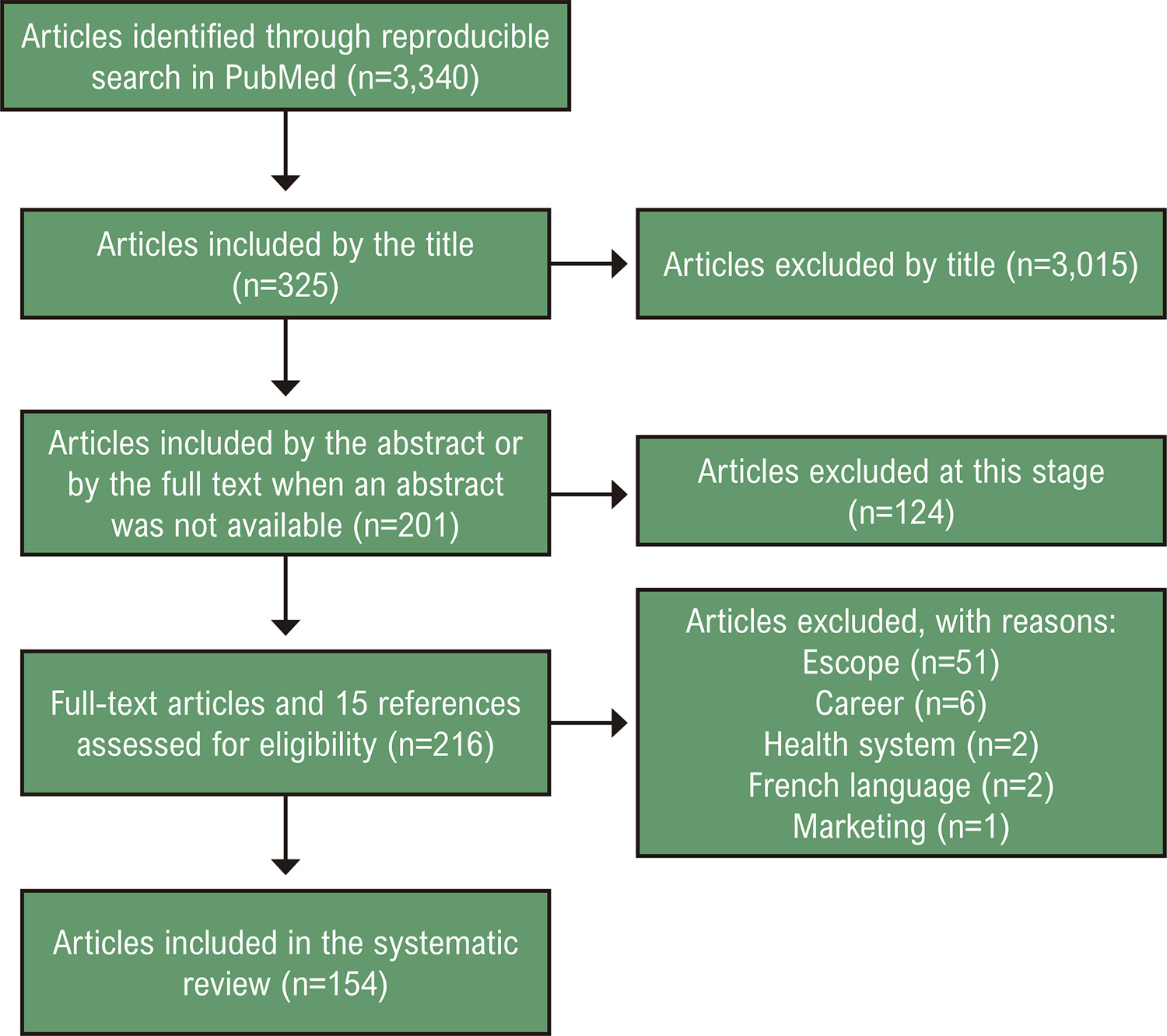
Of 3,340 articles retrieved, 154 were included: 24 discussing the uncertainty condition, 87 on vague concepts (case discussion, heuristics, list of cognitive biases, choosing wisely) subsumed under the term “art”, and 43 discussing the general idea of inductive or deductive reasoning. RBBR provides coherence and reproducibility rules, inference under uncertainty, and learning rule, and can incorporate those vague terms classified as “art”, arguments and evidence, from a subjective perspective about probability.

Conclusions

This systematic review shows that reasoning is grounded in uncertainty, predominantly probabilistic, and reviews possible errors of the hypothetico-deductive reasoning. RBBR is a two-step probabilistic reasoning that can be taught. The Bayes theorem is a linguistic tool, a general rule of reasoning, diagnosis, scientific communication and review of medical knowledge according to new evidence.

  • Bayes Theorem
  • Clinical Decision – Making
  • Education, Medical
  • Evidence-Based Medicine
  • Learning
  • Problem Solving
  • systematic review
Read Full Article
Creative Commons Attribution (CC BY) Creative Commons license
25/11/2022 DOI: 10.36660/abc.20220405 Views 1
Figure 1
ABC
Original Article

Teaching of Clinical Reasoning Guided by Illness Script Theory

Juliana de Cássia Vaz Oliveira et al. Aline Barbosa Peixoto Gustavo Eugênio Martins Marinho José Maria Peixoto

Abstract

Background

Teaching of clinical reasoning (CR) can be facilitated by educational strategies guided by illness script theory.

Objective

To evaluate the effects of an educational strategy guided by illness script theory on the diagnostic accuracy of chest pain in medical students.

Methods

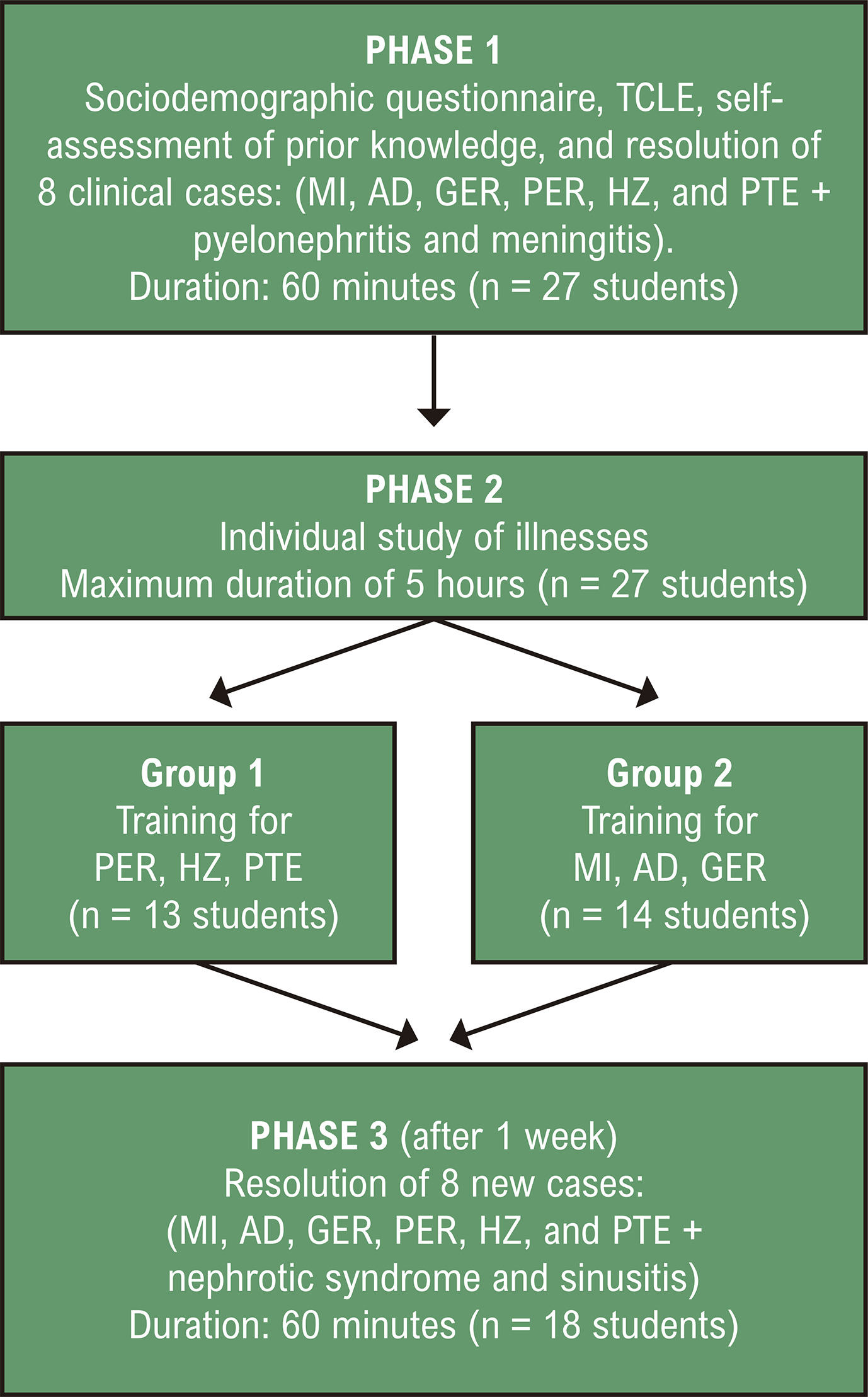
Experimental study in 3 phases, with 18 third-year medical students completing phase 3. Phases 1 and 2 had 27 students. In phase 1, each participant solved 8 clinical cases (6 of chest pain and 2 distractors). In phase 2, participants were divided into 2 groups, which distinctly trained 3 of the chest pain diagnoses from phase 1. In phase 3, after 1 week, each participant solved 8 new cases, with the same diagnoses as phase 1. Case resolution time and diagnostic accuracy were evaluated. The significance level adopted for statistical analysis was p < 0.05.

Results

In phase 3, both groups showed improved diagnostic accuracy and reduced case resolution time for the trained diagnoses, with no transfer of learning. For these diagnoses, the diagnostic accuracy scores in phases 1 and 3 were: group 1 = 1.00, IQR [0.00 to 1.00] versus 2.00, IQR [2.00 to 2.50], p = 0.017 and group 2 = 1.00, IQR [0.66 to 1.17] versus 3.00, IQR [1.33 to 3.00], p = 0.006. Case resolution times in seconds were: group 1: 485, IQR [450 to 583] versus 318, IQR [284 to 418], p = 0.027 and group 2: 655, IQR [543 to 740] versus 408, IQR [337 to 569], p = 0.010.

Conclusion

The proposed strategy seems to contribute to improved diagnostic accuracy, and it may be considered for teaching CR.

  • Cardiovascular Diseases
  • Clinical Decision – Making
  • Decision Making
  • Education,Medical
  • Learning
  • Students, Medical
Read Full Article
Creative Commons Attribution (CC BY) Creative Commons license
25/11/2022 DOI: 10.36660/abc.20220419 Views 1
ABC
Editorial

Medical Education: Interlocutor of Science and Society

José Maria Peixoto

Scientific progress in Cardiology is unquestionable. , We must have in mind, however, that the propelling of this development lies on education sciences , which transform the world by mobilizing people to knowledge. Despite the debate on what types of knowledge are related to them, according to Kant, education sciences enable individuals to reach autonomy and freedom to live in society.

Traditional science produces knowledge from experiment and observation, using rational methods that guarantee the validity of the results. Nevertheless, these assumptions favor the separation between the subject and the object of study, resulting in a technical-scientific culture that often ignores philosophical thinking, which drives individual’s desire for knowledge.

[…]

  • Cardiology/education
  • Education, Medical
  • Faculty, Medicine
  • Learning
  • Scientific Research and Technological Development
Read Full Article
Creative Commons Attribution (CC BY) Creative Commons license
25/11/2022 DOI: 10.36660/abc.20220491 Views 1
Figure 1
ABC
Original Article

Retention of Cardiopulmonary Resuscitation Skills in Medical Students

Miguel Antônio Moretti et al. Adriana de Oliveira Camboim Caroline Awoki Ferrandez Isabela Corralo Ramos … Iaggo Bemini Costa Juliana Seidler Canonaco Vanessa Lopes Mathia João Fernando Monteiro Ferreira Antonio Carlos Palandri Chagas

Abstract

Background

Reduction of mortality and sequelae of cardiac arrest depends on an effective and fast intervention, started as soon as possible. Basic life support involves a series of steps that may be initiated out of the hospital setting and taught to any person in specific courses. However, it is important that the rescuers retain the knowledge and skills to perform cardiopulmonary resuscitation (CPR), as one never knows when they will be required. Studies have shown that a loss of skills occurs as early as 30 days after the training course, with variations according to personal and professional characteristics.

Objectives

to assess whether medical students are able to retain skills acquired in a BLS course for more than six months.

Methods

Prospective, case-control, observational study. Medical students attended a 40-hour course on sudden death and cardiac arrest. Skills acquired during the course were evaluated immediately after and six months after the course. Students’ individual scores were compared between these time points, the percentage of correct answers was evaluated, and overall performance was rated as excellent, good, and poor. Observers and evaluation criteria were the same immediately after the course and six months later. Data were analyzed using the paired t-test and the McNemar test. The 95% confidence interval was established, and a p < 0.05 was set as statistically significant.

Results

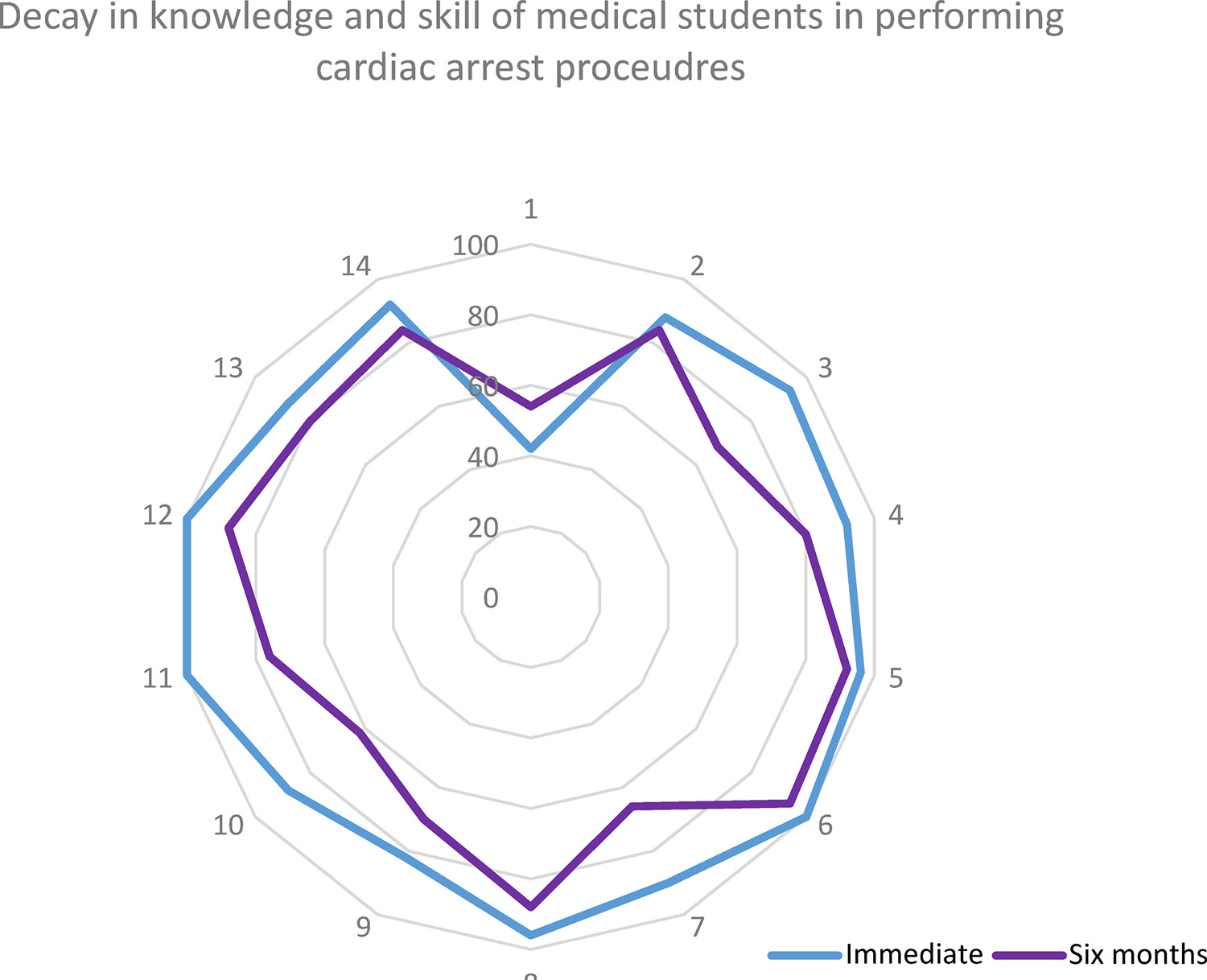
Fifty students (27 female) in the first year of medical school aged from 18 to 24 years (mean of 21 years) attended the course. The number of steps successfully completed by the students at six months was significantly lower than immediately after the course (10.8 vs 12.5 p < 0.001). Neither sex nor age affected the results. Overall performance of 78% of the students was considered excellent immediately after the course, and this percentage was significantly higher than six months later (p < 0.01). After six months, the steps that the students failed to complete at six months were those related to practical skills (such as a correct hand positioning).

Conclusion

A significant loss of skills was detected six months after the BLS course among medical students, compromising their overall performance.

  • Cardiopulmonary Resuscitation
  • Education
  • Hability
  • Heart Arrest
  • Learning
  • Medical Students
  • Mortality
Read Full Article
Creative Commons Attribution (CC BY) Creative Commons license
16/08/2021 DOI: 10.36660/abc.20200546 Views 1
Figure 1
ABCHF
Editorial

The Role of the Heart Failure Specialist: Benefits for Both the Patient and the Cardiology Community

Livia A. Goldraich et al. Jefferson L. Vieira Nadine Clausell

In recent decades, the advancement of knowledge of cardiovascular diseases has been remarkable. Heart failure (HF) has a prominent role among the conditions of greatest epidemiological relevance for the population, given its high prevalence and incidence worldwide, including Brazil.– Thus, mastery of this condition is key to cardiologist training. However, the understanding of the complexity of the different diseases and pathophysiological mechanisms potentially involved in the development, progression, and prognosis of HF has advanced, and a broad and intricate spectrum of therapeutic options has emerged, especially in the past two decades. These advances allowed a significant improvement in the clinical outcomes of HF patients; however, as knowledge and consequent therapeutic challenges became more complex, it was clear that a new type of training and expertise in the field of Cardiology was needed.

The American Heart Association (AHA) and the European Society of Cardiology (ESC) were the first to encourage the growth and strengthening of the HF specialty, with the creation of study groups, departments, and journals focused on this condition.– Several specific HF congresses have been organized and brought together a growing number of participants for about 20 years. Concomitantly, several cardiology centers of worldwide relevance have developed fellowship programs in HF and heart transplantation, many of which more recently also cover mechanical circulatory support. Finally, certification examinations for HF specialist by the American Board of Internal Medicine (ABIM) and the ESC Heart Failure Association were created in 2013 and 2014, respectively., In 2020, an expert consensus of the American College of Cardiology (ACC) together with the Heart Failure Society of America (HFSA) and the International Society for Heart and Lung Transplantation (ISHLT) introduced a list of requirements for HF specialist training, based on the core competencies of the Accreditation Council for Graduate Medical Education (ACGME). This document outlines, in particular, the expectations for physicians who treat advanced HF patients or heart transplant recipients, and recommends specific skills in mechanical circulatory support, cardiac resynchronization therapy, heart transplantation, and pulmonary hypertension. The authors also recommend that there be a maintenance of certification process based on participation in continuing medical education programs and collaboration with national databases and registries. exemplifies and adapts the HF training model used at Brigham and Women’s Hospital, Harvard University, Boston, United States.

[…]

  • Continuity of Patient Care
  • Cross-Sectional Studies
  • Epidemiology
  • Heart failure/prevalence
  • Learning
  • Specialization
Read Full Article
Creative Commons Attribution (CC BY) Creative Commons license
06/07/2021 DOI: 10.36660/abchf.20210002 Views 1
ABC
Research Letter

Emerging Topics in Heart Failure: The Future of Heart Failure: Telemonitoring, Wearables, Artificial Intelligence and Learning in the Post-Pandemic Era

Aguinaldo F Freitas Jr et al. Fábio S. Silveira Germano E. Conceição-Souza Manoel F. Canesin … Pedro V. Schwartzmann Sabrina Bernardez-Pereira Reinaldo B. Bestetti

Telemonitoring in Heart Failure and Remote Management

Telemonitoring consists of monitoring and remote support for chronic heart failure (HF) patients. Telemonitoring can be non-invasive or invasive. Non-invasive telemonitoring includes telephone calls, periodic guidance through instructional material, control and monitoring of body weight, video calls and teleconsultations. , Invasive telemonitoring involves implantable devices that transmit hemodynamic and intrathoracic impedance data to a remote server. ,

Clinical trials of non-invasive telemonitoring often show conflicting results. However, meta-analyses of observational and randomized studies on invasive and non-invasive telemonitoring have shown that they have a positive impact on HF prognosis. The reduction in overall mortality in HF patients can vary from 19 to 31% with invasive or non-invasive telemonitoring, , while reduction in the frequency of hospitalization for HF varies from 27 to 39%, mainly in functional class III/IV patients. –

[…]

  • Artificial Intelligence
  • Heart Failure
  • Learning
  • Telemonitoring
Read Full Article
Creative Commons Attribution (CC BY) Creative Commons license
18/01/2021 DOI: 10.36660/abc.20201127 Views 1

How to cite this article

EndNote RIS

Electronic Document Format (Vancouver)

Mota DM, Barcellos Filho F. The Growing Role of Simulation-Based Learning in Cardiology Education. International Journal of Cardiovascular Sciences 2026;39:e20250180.

Electronic Document Format (ABNT)

Mota, Diandro Marinho; Barcellos Filho, Fabiano. The Growing Role of Simulation-Based Learning in Cardiology Education. International Journal of Cardiovascular Sciences, v. 39, e20250180, Mar. 2026.

Electronic Document Format (APA)

Mota, D. M., & Barcellos Filho, F. (2026). The Growing Role of Simulation-Based Learning in Cardiology Education. International Journal of Cardiovascular Sciences, 39, e20250180.

Electronic Document Format (ISO)

Mota, Diandro Marinho and Barcellos Filho, Fabiano. The Growing Role of Simulation-Based Learning in Cardiology Education. International Journal of Cardiovascular Sciences [online]. 2026, vol. 39, [cited 2026-10-14], e20250180. Available from: <https://journals.cardiol.br/en/article/the-growing-role-of-simulation-based-learning-in-cardiology-education/>. ISSN 2359-4802

EndNote RIS

Electronic Document Format (Vancouver)

de-Sousa MR, Aguiar TRX. Deduction, Induction and the Art of Clinical Reasoning in Medical Education: Systematic Review and Bayesian Proposal. Arquivos Brasileiros de Cardiologia 2022;119(5 suppl 1):27-34.

Electronic Document Format (ABNT)

de-Sousa, Marcos Roberto; Aguiar, Túlio Roberto Xavier de. Deduction, Induction and the Art of Clinical Reasoning in Medical Education: Systematic Review and Bayesian Proposal. Arquivos Brasileiros de Cardiologia, v. 119, n. 5 suppl 1, p. 27-34, Nov. 2022.

Electronic Document Format (APA)

de-Sousa, M. R., & Aguiar, T. R. X. (2022). Deduction, Induction and the Art of Clinical Reasoning in Medical Education: Systematic Review and Bayesian Proposal. Arquivos Brasileiros de Cardiologia, 119(5 suppl 1), 27-34.

Electronic Document Format (ISO)

de-Sousa, Marcos Roberto and Aguiar, Túlio Roberto Xavier de. Deduction, Induction and the Art of Clinical Reasoning in Medical Education: Systematic Review and Bayesian Proposal. Arquivos Brasileiros de Cardiologia [online]. 2022, vol. 119, n. 5 suppl 1, [cited 2026-10-14], pp. 27-34. Available from: <https://journals.cardiol.br/en/article/deduction-induction-and-the-art-of-clinical-reasoning-in-medical-education-systematic-review-and-bayesian-proposal/>. ISSN 0066-782X

EndNote RIS

Electronic Document Format (Vancouver)

Oliveira JCV, Peixoto AB, Marinho GEM, Peixoto JM. Teaching of Clinical Reasoning Guided by Illness Script Theory. Arquivos Brasileiros de Cardiologia 2022;119(5 suppl 1):14-21.

Electronic Document Format (ABNT)

Oliveira, Juliana de Cássia Vaz; Peixoto, Aline Barbosa; Marinho, Gustavo Eugênio Martins; Peixoto, José Maria. Teaching of Clinical Reasoning Guided by Illness Script Theory. Arquivos Brasileiros de Cardiologia, v. 119, n. 5 suppl 1, p. 14-21, Nov. 2022.

Electronic Document Format (APA)

Oliveira, J. C. V., Peixoto, A. B., Marinho, G. E. M., & Peixoto, J. M. (2022). Teaching of Clinical Reasoning Guided by Illness Script Theory. Arquivos Brasileiros de Cardiologia, 119(5 suppl 1), 14-21.

Electronic Document Format (ISO)

Oliveira, Juliana de Cássia Vaz and Peixoto, Aline Barbosa and Marinho, Gustavo Eugênio Martins and Peixoto, José Maria. Teaching of Clinical Reasoning Guided by Illness Script Theory. Arquivos Brasileiros de Cardiologia [online]. 2022, vol. 119, n. 5 suppl 1, [cited 2026-10-14], pp. 14-21. Available from: <https://journals.cardiol.br/en/article/teaching-of-clinical-reasoning-guided-by-illness-script-theory/>. ISSN 0066-782X

EndNote RIS

Electronic Document Format (Vancouver)

Peixoto JM. Medical Education: Interlocutor of Science and Society. Arquivos Brasileiros de Cardiologia 2022;119(5 suppl 1):4-5.

Electronic Document Format (ABNT)

Peixoto, José Maria. Medical Education: Interlocutor of Science and Society. Arquivos Brasileiros de Cardiologia, v. 119, n. 5 suppl 1, p. 4-5, Nov. 2022.

Electronic Document Format (APA)

Peixoto, J. M. (2022). Medical Education: Interlocutor of Science and Society. Arquivos Brasileiros de Cardiologia, 119(5 suppl 1), 4-5.

Electronic Document Format (ISO)

Peixoto, José Maria. Medical Education: Interlocutor of Science and Society. Arquivos Brasileiros de Cardiologia [online]. 2022, vol. 119, n. 5 suppl 1, [cited 2026-10-14], pp. 4-5. Available from: <https://journals.cardiol.br/en/article/medical-education-interlocutor-of-science-and-society/>. ISSN 0066-782X

EndNote RIS

Electronic Document Format (Vancouver)

Moretti MA, Camboim AO, Ferrandez CA, Ramos IC, Costa IB, Canonaco JS, Mathia VL, et al. Retention of Cardiopulmonary Resuscitation Skills in Medical Students. Arquivos Brasileiros de Cardiologia 2021;117(5):1030-5.

Electronic Document Format (ABNT)

Moretti, Miguel Antônio; Camboim, Adriana de Oliveira; Ferrandez, Caroline Awoki; Ramos, Isabela Corralo; Costa, Iaggo Bemini; Canonaco, Juliana Seidler; Mathia, Vanessa Lopes; Ferreira, João Fernando Monteiro; Chagas, Antonio Carlos Palandri. Retention of Cardiopulmonary Resuscitation Skills in Medical Students. Arquivos Brasileiros de Cardiologia, v. 117, n. 5, p. 1030-1035, Aug. 2021.

Electronic Document Format (APA)

Moretti, M. A., Camboim, A. O., Ferrandez, C. A., Ramos, I. C., Costa, I. B., Canonaco, J. S., Mathia, V. L., Ferreira, J. F. M., & Chagas, A. C. P. (2021). Retention of Cardiopulmonary Resuscitation Skills in Medical Students. Arquivos Brasileiros de Cardiologia, 117(5), 1030-1035.

Electronic Document Format (ISO)

Moretti, Miguel Antônio and Camboim, Adriana de Oliveira and Ferrandez, Caroline Awoki and Ramos, Isabela Corralo and Costa, Iaggo Bemini and Canonaco, Juliana Seidler and Mathia, Vanessa Lopes and Ferreira, João Fernando Monteiro and Chagas, Antonio Carlos Palandri. Retention of Cardiopulmonary Resuscitation Skills in Medical Students. Arquivos Brasileiros de Cardiologia [online]. 2021, vol. 117, n. 5, [cited 2026-10-14], pp. 1030-1035. Available from: <https://journals.cardiol.br/en/article/retention-of-cardiopulmonary-resuscitation-skills-in-medical-students/>. ISSN 0066-782X

EndNote RIS

Electronic Document Format (Vancouver)

Goldraich LA, Vieira JL, Clausell N. The Role of the Heart Failure Specialist: Benefits for Both the Patient and the Cardiology Community. ABC: Heart Failure & Cardiomyopathy 2021;1(1):11-4.

Electronic Document Format (ABNT)

Goldraich, Livia A.; Vieira, Jefferson L.; Clausell, Nadine. The Role of the Heart Failure Specialist: Benefits for Both the Patient and the Cardiology Community. ABC: Heart Failure & Cardiomyopathy, v. 1, n. 1, p. 11-14, Jul. 2021.

Electronic Document Format (APA)

Goldraich, L. A., Vieira, J. L., & Clausell, N. (2021). The Role of the Heart Failure Specialist: Benefits for Both the Patient and the Cardiology Community. ABC: Heart Failure & Cardiomyopathy, 1(1), 11-14.

Electronic Document Format (ISO)

Goldraich, Livia A. and Vieira, Jefferson L. and Clausell, Nadine. The Role of the Heart Failure Specialist: Benefits for Both the Patient and the Cardiology Community. ABC: Heart Failure & Cardiomyopathy [online]. 2021, vol. 1, n. 1, [cited 2026-10-14], pp. 11-14. Available from: <https://journals.cardiol.br/en/article/the-role-of-the-heart-failure-specialist-benefits-for-both-the-patient-and-the-cardiology-community/>

EndNote RIS

Electronic Document Format (Vancouver)

Freitas Jr AF, Silveira FS, Conceição-Souza GE, Canesin MF, Schwartzmann PV, Bernardez-Pereira S, Bestetti RB, et al. Emerging Topics in Heart Failure: The Future of Heart Failure: Telemonitoring, Wearables, Artificial Intelligence and Learning in the Post-Pandemic Era. Arquivos Brasileiros de Cardiologia 2021;115(6):1190-2.

Electronic Document Format (ABNT)

Freitas Jr, Aguinaldo F; Silveira, Fábio S.; Conceição-Souza, Germano E.; Canesin, Manoel F.; Schwartzmann, Pedro V.; Bernardez-Pereira, Sabrina; Bestetti, Reinaldo B.. Emerging Topics in Heart Failure: The Future of Heart Failure: Telemonitoring, Wearables, Artificial Intelligence and Learning in the Post-Pandemic Era. Arquivos Brasileiros de Cardiologia, v. 115, n. 6, p. 1190-1192, Jan. 2021.

Electronic Document Format (APA)

Freitas Jr, A. F., Silveira, F. S., Conceição-Souza, G. E., Canesin, M. F., Schwartzmann, P. V., Bernardez-Pereira, S., & Bestetti, R. B. (2021). Emerging Topics in Heart Failure: The Future of Heart Failure: Telemonitoring, Wearables, Artificial Intelligence and Learning in the Post-Pandemic Era. Arquivos Brasileiros de Cardiologia, 115(6), 1190-1192.

Electronic Document Format (ISO)

Freitas Jr, Aguinaldo F and Silveira, Fábio S. and Conceição-Souza, Germano E. and Canesin, Manoel F. and Schwartzmann, Pedro V. and Bernardez-Pereira, Sabrina and Bestetti, Reinaldo B.. Emerging Topics in Heart Failure: The Future of Heart Failure: Telemonitoring, Wearables, Artificial Intelligence and Learning in the Post-Pandemic Era. Arquivos Brasileiros de Cardiologia [online]. 2021, vol. 115, n. 6, [cited 2026-10-14], pp. 1190-1192. Available from: <https://journals.cardiol.br/en/article/emerging-topics-in-heart-failure-the-future-of-heart-failure-telemonitoring-wearables-artificial-intelligence-and-learning-in-the-post-pandemic-era/>. ISSN 0066-782X

  • About ABC Family
  • Internal Regulation
  • Editorial Board
  • Brazilian Society of Cardiology (SBC)

Issues

SBC Guidelines

  • Videos
  • Podcasts
  • News