ABC Family Arquivos Brasileiros de Cardiologia International Journal of Cardiovascular Sciences ABC Heart Failure & Cardiomyopathy ABC Imagem Cardiovascular
Português English
ABC Family
Português English
  • About
    • About ABC Family
    • Internal Regulation
    • Editorial Board
    • Brazilian Society of Cardiology (SBC)
  • Issues
  • SBC Guidelines
  • Content
    • Videos
    • Podcasts
    • News
  • About
    • About ABC Family
    • Internal Regulation
    • Editorial Board
    • Brazilian Society of Cardiology (SBC)
  • Issues
  • SBC Guidelines
  • Content
    • Videos
    • Podcasts
    • News

ABC Family

  • ABC Family
  • Arquivos Brasileiros de Cardiologia
  • International Journal of Cardiovascular Sciences
  • ABC Heart Failure & Cardiomyopathy
  • ABC Imagem Cardiovascular
Search in

No content found.

Journals
Ordering
Article types
Others

  1. Home
  2. Keyword: Kidney Transplantation
Figure 1
ABC
Research Letter

Predictive Value of Cardiac Biomarkers on Delayed Graft Function in Renal Transplant Patients

Rodrigo Pinheiro Amantéa et al. Virgílio da Rocha Olsen Laura Caroline Tavares Hastenteufel Flávia K. Borges … Roberto Ceratti Manfro Lívia Adams Goldraich Nadine Clausell

Introduction

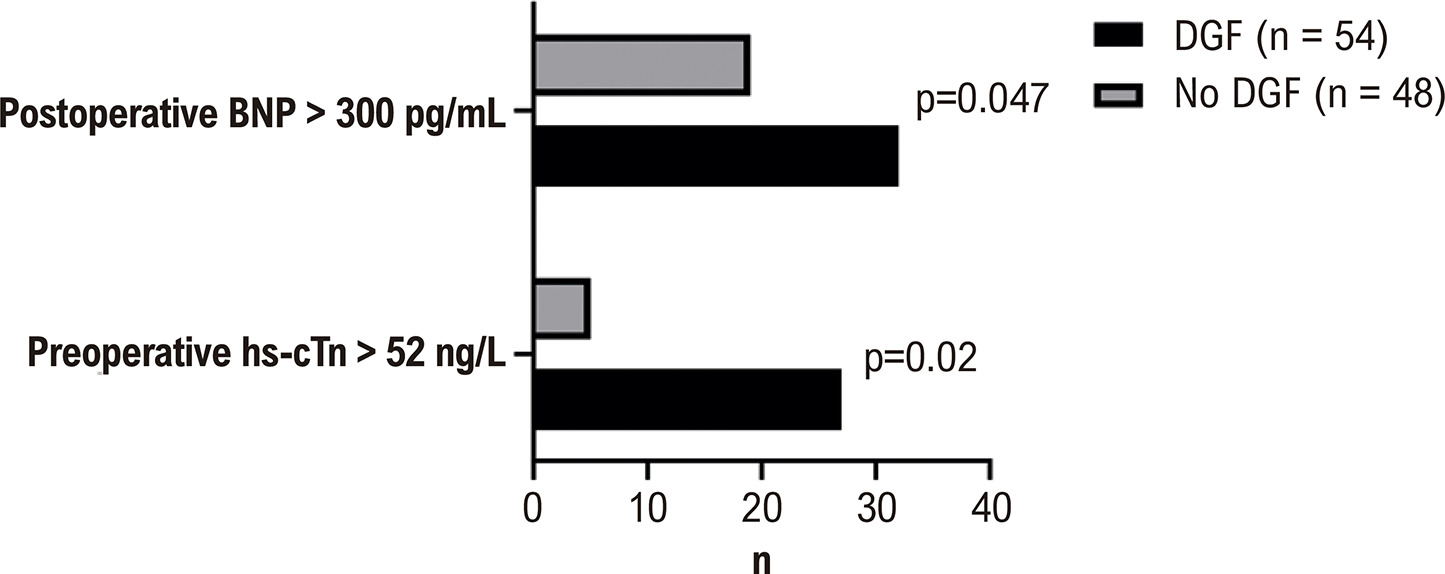
Cardiovascular (CV) disease is the leading cause of death among adult kidney transplant recipients, accounting for 25% of deaths in patients with functioning grafts. Cardiac biomarkers, in particular, brain natriuretic peptide (BNP) and cardiac troponin (cTn), are the most studied biomarkers for predicting the risk of major adverse cardiovascular events (MACE) in end-stage kidney disease and kidney transplant.,

Myocardial injury after non-cardiac surgery (MINS) is a new clinical entity with relevant clinical and prognostic implications. It is defined as ischemic myocardial injury until 30 days after non-cardiac surgery and is independently associated with increased mortality. PJ Devereaux et al. evaluated the cohort of the VISION study, which involved the assessment of perioperative cTn and BNP on more than 20.000 patients, but without a representative number of renal transplant patients.

[…]
  • Biomarkers
  • Kidney Transplantation
  • Perioperative Care
Read Full Article
Creative Commons Attribution (CC BY) Creative Commons license
25/11/2024 DOI: 10.36660/abc.20230858i
Figure 1
ABC
Case Report

Staged Heart-Kidney Transplantation with Renal Pulsatile Preservation: A Viable Approach for Combined Transplantation

Arthur Gus Manfro et al. Rodrigo Fontanive Franco Roberto Ceratti Manfro Nadine Clausell Livia Adams Goldraich

Introduction

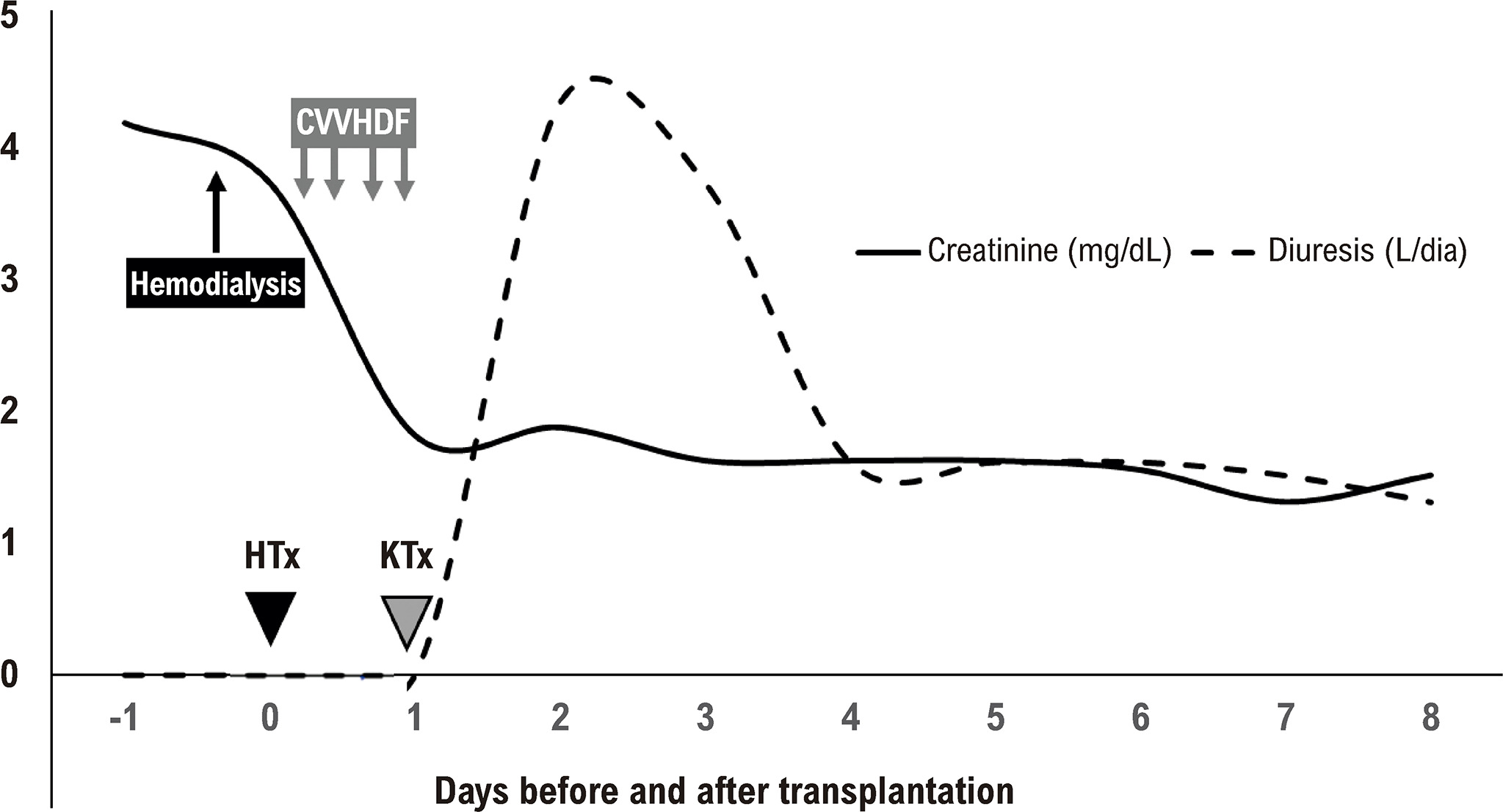
Isolated heart and kidney transplants have become routine procedures for addressing end-stage organ failure. Notably, renal dysfunction is frequently observed in patients with advanced heart failure (HF), significantly impacting the prognosis of heart transplantation. Conversely, advanced HF is common in patients with end-stage renal disease (ESRD), often impairing kidney transplantation. Consequently, many centers are adopting combined heart and kidney transplantation (HKTx) as the standard of care for those patients. The progress in this field has led to a substantial increase in multiorgan transplants over the last decade. Despite the growth in HKTx, uncertainties persist regarding the preferred surgical sequence. In Brazil, while a significant number of isolated heart and kidney transplants are performed annually, only a few combined HKTx have been documented., Considering the advancements in the field, it is anticipated that combined transplants will become more commonplace shortly. Here, we present a case report of a staged HKTx with renal pulsatile perfusion preservation.

[…]

  • Heart Transplantation
  • Kidney Transplantation
  • Organ Preservation
Read Full Article
Creative Commons Attribution (CC BY) Creative Commons license
26/08/2024 DOI: 10.36660/abc.20240007i
Figure 1
ABC
Original Article

Clinical Implementation of Different Strategies for Exercise-Based Rehabilitation in Kidney and Liver Transplant Recipients: A Pilot Study

Paula A. B. Ribeiro et al. Mathieu Gradassi Sarah-Maude Martin Jonathan Leenknegt … Mathilde Baudet VyVan Le Marie-Pascale Pomey Agnes Räkel François Tournoux

Abstract

Background:

Cardiovascular disease is among the leading causes of death in solid organ transplant recipients with a functional graft. Although these patients could theoretically benefit from exercise-based rehabilitation (EBR) programs, their implementation is a challenge.

Objective:

We present our initial experience on different delivery modes of a pilot EBR program in kidney and liver transplant recipients.

Methods:

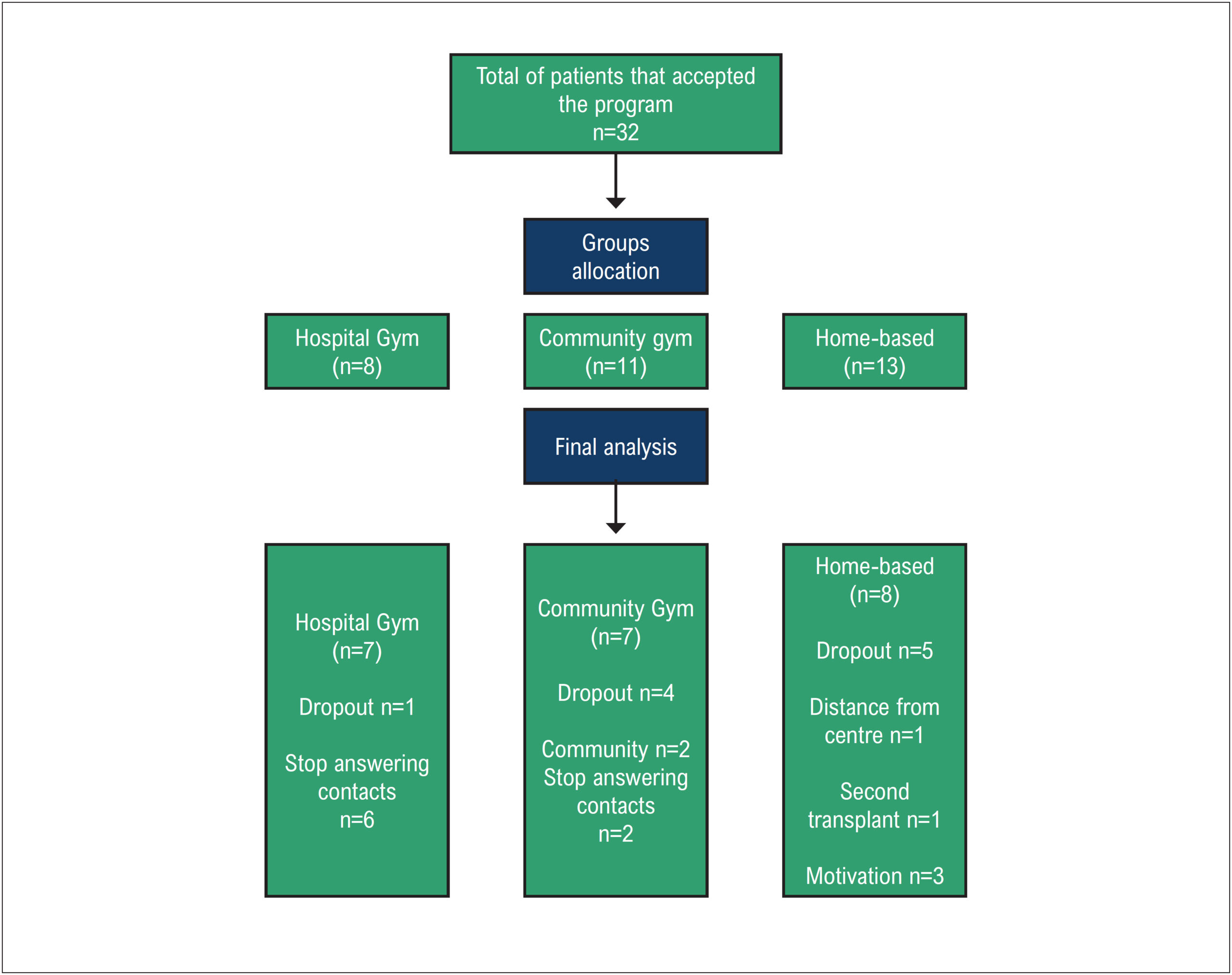
Thirty-two kidney or liver transplant recipients were invited for a 6-month EBR program delivered at the hospital gym, community gym or at home, according to the patient’s preference. The significance level adopted was 5%.

Results:

Ten patients (31%) did not complete their program. Among the 22 who did, 7 trained at the hospital gym, 7 at the community gym, and 8 at home. The overall effect was an 11.4% increase in maximum METs (Hedges’ effect size g = 0.39). The hospital gym group had an increase in METs of 25.5% (g= 0.58, medium effect size) versus 10% (g= 0.25), and 6.5% (g= 0.20) for the community gym and home groups, respectively. There was a beneficial effect on systolic and diastolic blood pressures, greater for the hospital gym (g= 0.51 and 0.40) and community gym (g= 0.60 and 1.15) groups than for the patients training at home (g= 0.07 and 0.10). No significant adverse event was reported during the follow-up.

Conclusion:

EBR programs in kidney and liver transplant recipients should be encouraged, even if they are delivered outside a hospital gym, since they are safe with positive effects on exercise capacity and cardiovascular risk factors.

  • Exercise
  • Exercise Movement Techniques
  • Exercise Therapy
  • Kidney Transplantation
  • Liver Transplantation
  • Physical Conditioning Human
Read Full Article
Creative Commons Attribution (CC BY) Creative Commons license
05/08/2022 DOI: 10.36660/abc.20210159 Views 2
ABC
Editorial

Exercise-Based Rehabilitation for Pre- and Post-Solid Organ Transplant Patients

Rosane Maria Nery

In the last decades, numerous advances in solid organ transplantation (SOT) have resulted in greater patient survival, resulting in a considerable increase in the number of transplants performed in the world., SOT is a life-saving intervention in patients with heart disease, pulmonary, renal or hepatic. Although the recipients improve both in functional capacity and quality of life (QoL), these are still not equivalent to the same levels of healthy individuals.

The long waiting period, caused by the lack of organ donors, often makes patients unprepared for the transplant physically and mentally. In addition to the classic cardiovascular risk factors, we still have the patient’s lack of adherence to the programs, knowledge deficits about the rules of conduct after transplantation, non-acceptance of the new organ, fear of rejection, lack of a physical exercise routine, strategies for coping and occupational health issues and social rights.,

[…]

  • Kidney Transplantation
  • Liver Transplantation
  • Organ Transplantation/rehabilitation
  • Physical activity
  • Transplantation Immunology
Read Full Article
Creative Commons Attribution (CC BY) Creative Commons license
05/08/2022 DOI: 10.36660/abc.20220373 Views 1
Figure 1
IJCS
Case Report

Cardiac Arrest Due to Hypocalcemia

Fernanda Aburesi Salvadori et al. Eduardo Martelli Moreira Murilo Bacchini Dias Amaro Nunes Duarte-Neto Edison Ferreira de Paiva

Discussion

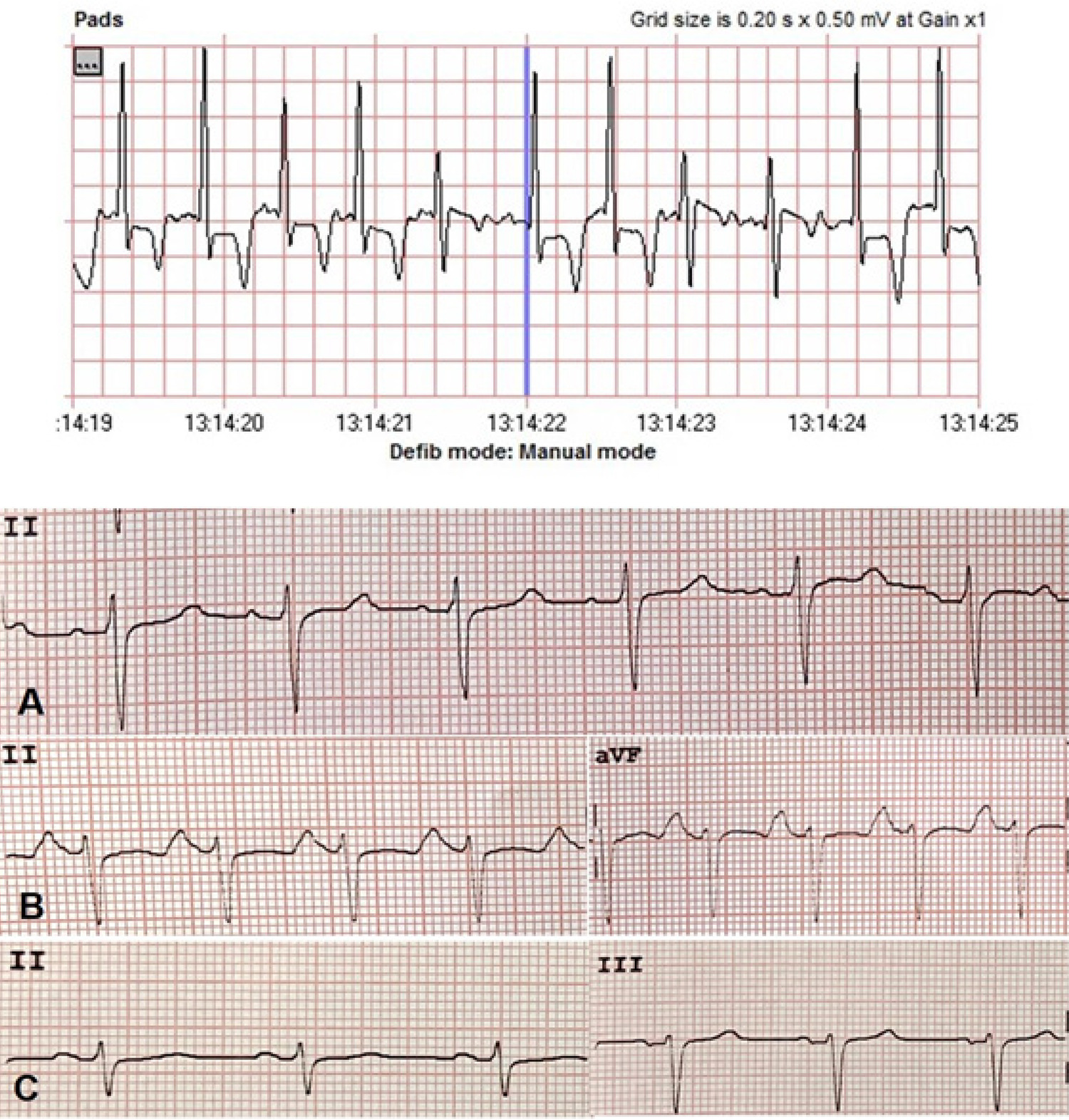
Long QT syndrome (LQTS) can be congenital or acquired. The causes of acquired LQTS include hypocalcemia, due to prolongation of the phase 2 of the action potential (AP), medications (amiodarone, antidepressants and neuroleptics), hypokalemia, hypomagnesemia and severe bradycardia. – LQTS is associated with a specific polymorphic ventricular tachycardia (VT), named as torsades de pointes (TdP), because of the characteristic shift in the QRS axis that gives the impression of a “torsion”.

The QT interval is a marker of the AP duration. In LQTS patients, the AP is prolonged unevenly across the myocardium, so as to cause high dispersion of repolarization. The AP prolongation favors the formation of early afterdepolarization (EAD), which are deformities in the plateau and rapid repolarization phases (2 and 3) capable of inducing ventricular extrasystoles. EADs in the unevenly repolarized myocardium are the cause of TdP. Tachycardia is sustained due to focal electric activity and/or a reentrant mechanism. It may either cease spontaneously or degenerate into ventricular fibrillation and cardiac arrest , .

[…]

  • Cardiopulmonary Resuscitation
  • Heart Arrest
  • Hypertension
  • Hypocalcemia
  • Kidney Transplantation
  • renal dialysis
  • Renal Insufficiency
  • Tachycardia, Ventricular
Read Full Article
Creative Commons Attribution (CC BY) Creative Commons license
23/11/2020 DOI: 10.36660/ijcs.20200034
Figure 1
ABC
Original Article

Predictors of Arrhythmic Events Detected by Implantable Loop Recorders in Renal Transplant Candidates

Rodrigo Tavares Silva et al. Martino Martinelli Filho Giselle de Lima Peixoto José Jayme Galvão de Lima … Sérgio Freitas de Siqueira Roberto Costa Luís Henrique Wolff Gowdak Flávio Jota de Paula Roberto Kalil Filho José Antônio Franchini Ramires

Abstract

Background:

The recording of arrhythmic events (AE) in renal transplant candidates (RTCs) undergoing dialysis is limited by conventional electrocardiography. However, continuous cardiac rhythm monitoring seems to be more appropriate due to automatic detection of arrhythmia, but this method has not been used.

Objective:

We aimed to investigate the incidence and predictors of AE in RTCs using an implantable loop recorder (ILR).

Methods:

A prospective observational study conducted from June 2009 to January 2011 included 100 consecutive ambulatory RTCs who underwent ILR and were followed-up for at least 1 year. Multivariate logistic regression was applied to define predictors of AE.

Results:

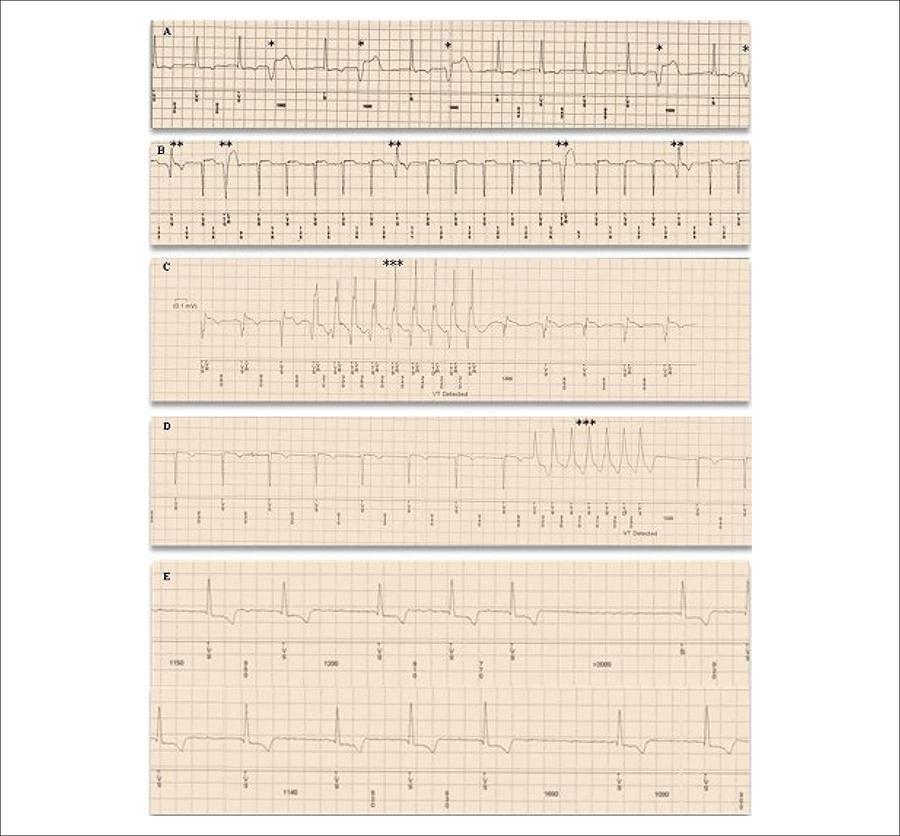
During a mean follow-up of 424 ± 127 days, AE could be detected in 98% of patients, and 92% had more than one type of arrhythmia, with most considered potentially not serious. Sustained atrial tachycardia and atrial fibrillation occurred in 7% and 13% of patients, respectively, and bradyarrhythmia and non-sustained or sustained ventricular tachycardia (VT) occurred in 25% and 57%, respectively. There were 18 deaths, of which 7 were sudden cardiac events: 3 bradyarrhythmias, 1 ventricular fibrillation, 1 myocardial infarction, and 2 undetermined. The presence of a long QTc (odds ratio [OR] = 7.28; 95% confidence interval [CI], 2.01–26.35; p = 0.002), and the duration of the PR interval (OR = 1.05; 95% CI, 1.02–1.08; p < 0.001) were independently associated with bradyarrhythmias. Left ventricular dilatation (LVD) was independently associated with non-sustained VT (OR = 2.83; 95% CI, 1.01–7.96; p = 0.041).

Conclusions:

In medium-term follow-up of RTCs, ILR helped detect a high incidence of AE, most of which did not have clinical relevance. The PR interval and presence of long QTc were predictive of bradyarrhythmias, whereas LVD was predictive of non-sustained VT.

  • Arrhythmias Cardiac
  • Difibrillators
  • Electric Countershock
  • Kidney Transplantation
  • Myocardial Contraction
Read Full Article
Creative Commons Attribution (CC BY) Creative Commons license
04/09/2015 DOI: 10.5935/abc.20150106 Views 2
Study of echocardiographic alterations in the first six months after kidney transplantation
ABC
Artigo Original

Study of echocardiographic alterations in the first six months after kidney transplantation

Francival Leite de Souza et al. Karenn Barros Bezerra Andréa Rodrigues Sousa Teresa Cristina Alves Ferreira … Maria Inês Gomes Oliveira Giovanna Parada Martins Fernando Alberto Costa Cardoso Silva Alcione Miranda Santos Natalino Salgado Filho

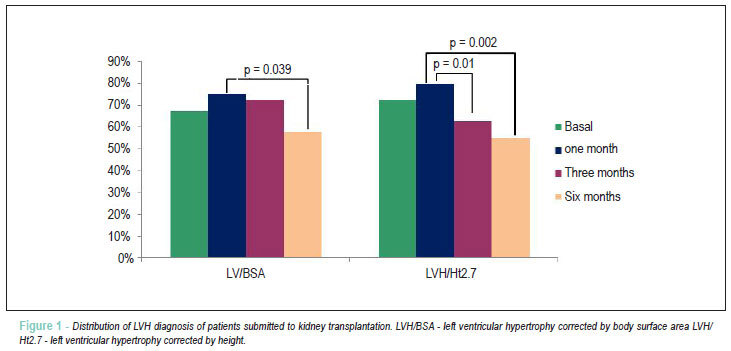
BACKGROUND: Cardiac disorders are very common in individuals with chronic kidney disease and are associated with morbimortality. OBJECTIVE: To evaluate cardiac alterations after kidney transplantation. METHODS: We prospectively evaluated 40 patients with chronic kidney disease, immediately before and one month, three months and six months after kidney transplantation, using tissue Doppler echocardiographic study. The left ventricular mass, systolic and diastolic function parameters were analyzed. RESULTS: The mean age was 31.6 years and 40% of patients were female. We observed a reduction in left ventricular diastolic diameter (52.23 to 49.95 mm, p = 0.021) and LV mass index (131.48 to 113.039 g/m2, p = 0.002) after kidney transplantation. The mean E/e’ decreased in the third and sixth months after kidney transplantation, when compared to basal values (8.13 and 7.85 vs. 9.79, p <0.05). The ejection fraction increased from the first month after kidney transplantation compared to basal assessment (69.72% vs. 65.68%, p <0.05). The prevalence of diastolic dysfunction decreased 43% during the evaluated period. The basal ejection fraction and mean E/e' were associated with reduced LV mass index after kidney transplantation. The LV mass index at baseline, female sex and decrease in serum phosphorus were associated with a reduction in the mean E/e ' ratio after kidney transplantation. CONCLUSION: Kidney transplantation resulted in significant alterations in Doppler echocardiographic parameters of LV mass, systolic and diastolic function in patients with chronic kidney disease.

  • Chronic
  • Echocardiography, Doppler
  • Kidney Failure
  • Kidney Transplantation
  • Kidney, Diseases
Read Full Article
Creative Commons Attribution (CC BY) Creative Commons license
26/04/2012 DOI: 10.1590/S0066-782X2012005000040
A strategy to improve the cardiovascular risk factor profile in renal transplant patients
ABC
Artigo Original

A strategy to improve the cardiovascular risk factor profile in renal transplant patients

Denise Leite et al. Alexandre Holthausen Campos

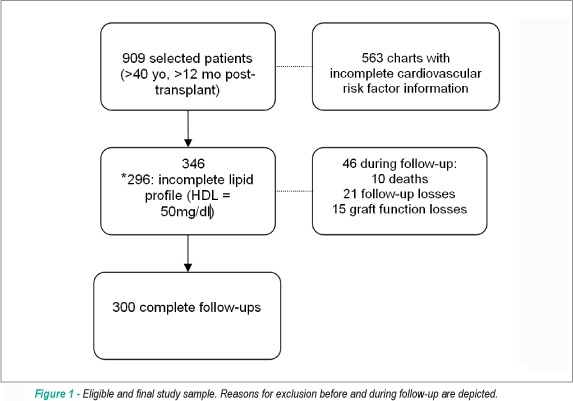
BACKGROUND: Cardiovascular disease represents the leading cause of morbidity, mortality and graft function loss in renal transplant recipients (RTR). Aggressive treatment of risk factors is strongly advocated. However, there is a gap between recommended evidence-based therapy and effective cardiovascular management in that population. OBJECTIVE: To establish a cardiovascular risk factor control strategy for RTR. METHODS: The cardiovascular risk of 300 RTR of a renal transplant unit was assessed using the Framingham criteria. Interventions on modifiable risk factors were suggested to attending physicians by letters attached to patients’ charts, including lifestyle modifications, blood pressure control and use of antiplatelet and lipid-lowering therapy. Risk factor profiles were re-evaluated after 6 and 12 months. RESULTS: Most patients were at high cardiovascular risk (58%). After 12 months, the proportion of patients on antiplatelet, antihypertensive and lipid-lowering therapy was significantly increased (29 to 51%, 83 to 92% and 3 to 46%, p < 0.001, respectively). Total cholesterol and triglyceride levels decreased (237 to 215 mg/dl, p = 0.001 and 244 to 221 mg/dl, p = 0.03). Although a non-significant reduction in LDL levels was observed (136 to 116 mg/dl, p = 0.12), patients starting statins within the first 6 months of the study presented a significant 25% reduction in LDL (159 to 119 mg/dl, p < 0.001). The proportion of patients with complete plasma lipid evaluation was also increased (27% to 49%, p < 0.001). CONCLUSION: Our results suggest that a simple, inexpensive strategy significantly improves the cardiovascular risk profile of RTR, potentially translating into marked benefits for long-term graft function and life expectancy.

  • Cardiovascular Diseases
  • Kidney Transplantation
  • Patients
  • Risk Factors
Read Full Article
Creative Commons Attribution (CC BY) Creative Commons license
28/05/2010 DOI: 10.1590/S0066-782X2010005000055

How to cite this article

EndNote RIS

Electronic Document Format (Vancouver)

Amantéa RP, Olsen VR, Hastenteufel LCT, Borges FK, Manfro RC, Goldraich LA, Clausell N, et al. Predictive Value of Cardiac Biomarkers on Delayed Graft Function in Renal Transplant Patients. Arquivos Brasileiros de Cardiologia 2024;121(11):e20230858.

Electronic Document Format (ABNT)

Amantéa, Rodrigo Pinheiro; Olsen, Virgílio da Rocha; Hastenteufel, Laura Caroline Tavares; Borges, Flávia K.; Manfro, Roberto Ceratti; Goldraich, Lívia Adams; Clausell, Nadine. Predictive Value of Cardiac Biomarkers on Delayed Graft Function in Renal Transplant Patients. Arquivos Brasileiros de Cardiologia, v. 121, n. 11, e20230858, Nov. 2024.

Electronic Document Format (APA)

Amantéa, R. P., Olsen, V. R., Hastenteufel, L. C. T., Borges, F. K., Manfro, R. C., Goldraich, L. A., & Clausell, N. (2024). Predictive Value of Cardiac Biomarkers on Delayed Graft Function in Renal Transplant Patients. Arquivos Brasileiros de Cardiologia, 121(11), e20230858.

Electronic Document Format (ISO)

Amantéa, Rodrigo Pinheiro and Olsen, Virgílio da Rocha and Hastenteufel, Laura Caroline Tavares and Borges, Flávia K. and Manfro, Roberto Ceratti and Goldraich, Lívia Adams and Clausell, Nadine. Predictive Value of Cardiac Biomarkers on Delayed Graft Function in Renal Transplant Patients. Arquivos Brasileiros de Cardiologia [online]. 2024, vol. 121, n. 11, [cited 2026-10-14], e20230858. Available from: <https://journals.cardiol.br/en/article/predictive-value-of-cardiac-biomarkers-on-delayed-graft-function-in-renal-transplant-patients/>. ISSN 0066-782X

EndNote RIS

Electronic Document Format (Vancouver)

Manfro AG, Franco RF, Manfro RC, Clausell N, Goldraich LA. Staged Heart-Kidney Transplantation with Renal Pulsatile Preservation: A Viable Approach for Combined Transplantation. Arquivos Brasileiros de Cardiologia 2024;121(7):e20240007.

Electronic Document Format (ABNT)

Manfro, Arthur Gus; Franco, Rodrigo Fontanive; Manfro, Roberto Ceratti; Clausell, Nadine; Goldraich, Livia Adams. Staged Heart-Kidney Transplantation with Renal Pulsatile Preservation: A Viable Approach for Combined Transplantation. Arquivos Brasileiros de Cardiologia, v. 121, n. 7, e20240007, Aug. 2024.

Electronic Document Format (APA)

Manfro, A. G., Franco, R. F., Manfro, R. C., Clausell, N., & Goldraich, L. A. (2024). Staged Heart-Kidney Transplantation with Renal Pulsatile Preservation: A Viable Approach for Combined Transplantation. Arquivos Brasileiros de Cardiologia, 121(7), e20240007.

Electronic Document Format (ISO)

Manfro, Arthur Gus and Franco, Rodrigo Fontanive and Manfro, Roberto Ceratti and Clausell, Nadine and Goldraich, Livia Adams. Staged Heart-Kidney Transplantation with Renal Pulsatile Preservation: A Viable Approach for Combined Transplantation. Arquivos Brasileiros de Cardiologia [online]. 2024, vol. 121, n. 7, [cited 2026-10-14], e20240007. Available from: <https://journals.cardiol.br/en/article/staged-heart-kidney-transplantation-with-renal-pulsatile-preservation-a-viable-approach-for-combined-transplantation/>. ISSN 0066-782X

EndNote RIS

Electronic Document Format (Vancouver)

Ribeiro PAB, Gradassi M, Martin S, Leenknegt J, Baudet M, Le V, Pomey M, et al. Clinical Implementation of Different Strategies for Exercise-Based Rehabilitation in Kidney and Liver Transplant Recipients: A Pilot Study. Arquivos Brasileiros de Cardiologia 2022;119(2):246-54.

Electronic Document Format (ABNT)

Ribeiro, Paula A. B.; Gradassi, Mathieu; Martin, Sarah-Maude; Leenknegt, Jonathan; Baudet, Mathilde; Le, VyVan; Pomey, Marie-Pascale; Räkel, Agnes; Tournoux, François. Clinical Implementation of Different Strategies for Exercise-Based Rehabilitation in Kidney and Liver Transplant Recipients: A Pilot Study. Arquivos Brasileiros de Cardiologia, v. 119, n. 2, p. 246-254, Aug. 2022.

Electronic Document Format (APA)

Ribeiro, P. A. B., Gradassi, M., Martin, S., Leenknegt, J., Baudet, M., Le, V., Pomey, M., Räkel, A., & Tournoux, F. (2022). Clinical Implementation of Different Strategies for Exercise-Based Rehabilitation in Kidney and Liver Transplant Recipients: A Pilot Study. Arquivos Brasileiros de Cardiologia, 119(2), 246-254.

Electronic Document Format (ISO)

Ribeiro, Paula A. B. and Gradassi, Mathieu and Martin, Sarah-Maude and Leenknegt, Jonathan and Baudet, Mathilde and Le, VyVan and Pomey, Marie-Pascale and Räkel, Agnes and Tournoux, François. Clinical Implementation of Different Strategies for Exercise-Based Rehabilitation in Kidney and Liver Transplant Recipients: A Pilot Study. Arquivos Brasileiros de Cardiologia [online]. 2022, vol. 119, n. 2, [cited 2026-10-14], pp. 246-254. Available from: <https://journals.cardiol.br/en/article/clinical-implementation-of-different-strategies-for-exercise-based-rehabilitation-in-kidney-and-liver-transplant-recipients-a-pilot-study/>. ISSN 0066-782X

EndNote RIS

Electronic Document Format (Vancouver)

Nery RM. Exercise-Based Rehabilitation for Pre- and Post-Solid Organ Transplant Patients. Arquivos Brasileiros de Cardiologia 2022;119(2):255-6.

Electronic Document Format (ABNT)

Nery, Rosane Maria. Exercise-Based Rehabilitation for Pre- and Post-Solid Organ Transplant Patients. Arquivos Brasileiros de Cardiologia, v. 119, n. 2, p. 255-256, Aug. 2022.

Electronic Document Format (APA)

Nery, R. M. (2022). Exercise-Based Rehabilitation for Pre- and Post-Solid Organ Transplant Patients. Arquivos Brasileiros de Cardiologia, 119(2), 255-256.

Electronic Document Format (ISO)

Nery, Rosane Maria. Exercise-Based Rehabilitation for Pre- and Post-Solid Organ Transplant Patients. Arquivos Brasileiros de Cardiologia [online]. 2022, vol. 119, n. 2, [cited 2026-10-14], pp. 255-256. Available from: <https://journals.cardiol.br/en/article/exercise-based-rehabilitation-for-pre-and-post-solid-organ-transplant-patients/>. ISSN 0066-782X

EndNote RIS

Electronic Document Format (Vancouver)

Salvadori FA, Moreira EM, Dias MB, Duarte-Neto AN, Paiva EF. Cardiac Arrest Due to Hypocalcemia. International Journal of Cardiovascular Sciences 2020;34(5 Supl 1):154-7.

Electronic Document Format (ABNT)

Salvadori, Fernanda Aburesi; Moreira, Eduardo Martelli; Dias, Murilo Bacchini; Duarte-Neto, Amaro Nunes; Paiva, Edison Ferreira de. Cardiac Arrest Due to Hypocalcemia. International Journal of Cardiovascular Sciences, v. 34, n. 5 Supl 1, p. 154-157, Nov. 2020.

Electronic Document Format (APA)

Salvadori, F. A., Moreira, E. M., Dias, M. B., Duarte-Neto, A. N., & Paiva, E. F. (2020). Cardiac Arrest Due to Hypocalcemia. International Journal of Cardiovascular Sciences, 34(5 Supl 1), 154-157.

Electronic Document Format (ISO)

Salvadori, Fernanda Aburesi and Moreira, Eduardo Martelli and Dias, Murilo Bacchini and Duarte-Neto, Amaro Nunes and Paiva, Edison Ferreira de. Cardiac Arrest Due to Hypocalcemia. International Journal of Cardiovascular Sciences [online]. 2020, vol. 34, n. 5 Supl 1, [cited 2026-10-14], pp. 154-157. Available from: <https://journals.cardiol.br/en/article/cardiac-arrest-due-to-hypocalcemia/>. ISSN 2359-4802

EndNote RIS

Electronic Document Format (Vancouver)

Silva RT, Martinelli Filho M, Peixoto GL, Lima JJG, Siqueira SF, Costa R, Gowdak LHW, et al. Predictors of Arrhythmic Events Detected by Implantable Loop Recorders in Renal Transplant Candidates. Arquivos Brasileiros de Cardiologia 2015;105(5):493-502.

Electronic Document Format (ABNT)

Silva, Rodrigo Tavares; Martinelli Filho, Martino; Peixoto, Giselle de Lima; Lima, José Jayme Galvão de; Siqueira, Sérgio Freitas de; Costa, Roberto; Gowdak, Luís Henrique Wolff; Paula, Flávio Jota de; Kalil Filho, Roberto; Ramires, José Antônio Franchini. Predictors of Arrhythmic Events Detected by Implantable Loop Recorders in Renal Transplant Candidates. Arquivos Brasileiros de Cardiologia, v. 105, n. 5, p. 493-502, Sep. 2015.

Electronic Document Format (APA)

Silva, R. T., Martinelli Filho, M., Peixoto, G. L., Lima, J. J. G. , Siqueira, S. F. , Costa, R., Gowdak, L. H. W., Paula, F. J. , Kalil Filho, R., & Ramires, J. A. F. (2015). Predictors of Arrhythmic Events Detected by Implantable Loop Recorders in Renal Transplant Candidates. Arquivos Brasileiros de Cardiologia, 105(5), 493-502.

Electronic Document Format (ISO)

Silva, Rodrigo Tavares and Martinelli Filho, Martino and Peixoto, Giselle de Lima and Lima, José Jayme Galvão de and Siqueira, Sérgio Freitas de and Costa, Roberto and Gowdak, Luís Henrique Wolff and Paula, Flávio Jota de and Kalil Filho, Roberto and Ramires, José Antônio Franchini. Predictors of Arrhythmic Events Detected by Implantable Loop Recorders in Renal Transplant Candidates. Arquivos Brasileiros de Cardiologia [online]. 2015, vol. 105, n. 5, [cited 2026-10-14], pp. 493-502. Available from: <https://journals.cardiol.br/en/article/predictors-of-arrhythmic-events-detected-by-implantable-loop-recorders-in-renal-transplant-candidates/>. ISSN 0066-782X

EndNote RIS

Electronic Document Format (Vancouver)

Souza FL, Bezerra KB, Sousa AR, Ferreira TCA, Oliveira MIG, Martins GP, Silva FACC, et al. Study of echocardiographic alterations in the first six months after kidney transplantation. Arquivos Brasileiros de Cardiologia 2012;98(6):505-13.

Electronic Document Format (ABNT)

Souza, Francival Leite de; Bezerra, Karenn Barros; Sousa, Andréa Rodrigues; Ferreira, Teresa Cristina Alves; Oliveira, Maria Inês Gomes; Martins, Giovanna Parada; Silva, Fernando Alberto Costa Cardoso; Santos, Alcione Miranda; Salgado Filho, Natalino. Study of echocardiographic alterations in the first six months after kidney transplantation. Arquivos Brasileiros de Cardiologia, v. 98, n. 6, p. 505-513, Apr. 2012.

Electronic Document Format (APA)

Souza, F. L. , Bezerra, K. B., Sousa, A. R., Ferreira, T. C. A., Oliveira, M. I. G., Martins, G. P., Silva, F. A. C. C., Santos, A. M., & Salgado Filho, N. (2012). Study of echocardiographic alterations in the first six months after kidney transplantation. Arquivos Brasileiros de Cardiologia, 98(6), 505-513.

Electronic Document Format (ISO)

Souza, Francival Leite de and Bezerra, Karenn Barros and Sousa, Andréa Rodrigues and Ferreira, Teresa Cristina Alves and Oliveira, Maria Inês Gomes and Martins, Giovanna Parada and Silva, Fernando Alberto Costa Cardoso and Santos, Alcione Miranda and Salgado Filho, Natalino. Study of echocardiographic alterations in the first six months after kidney transplantation. Arquivos Brasileiros de Cardiologia [online]. 2012, vol. 98, n. 6, [cited 2026-10-14], pp. 505-513. Available from: <https://journals.cardiol.br/en/article/study-of-echocardiographic-alterations-in-the-first-six-months-after-kidney-transplantation/>. ISSN 0066-782X

EndNote RIS

Electronic Document Format (Vancouver)

Leite D, Campos AH. A strategy to improve the cardiovascular risk factor profile in renal transplant patients. Arquivos Brasileiros de Cardiologia 2010;94(6):738-46.

Electronic Document Format (ABNT)

Leite, Denise; Campos, Alexandre Holthausen. A strategy to improve the cardiovascular risk factor profile in renal transplant patients. Arquivos Brasileiros de Cardiologia, v. 94, n. 6, p. 738-746, May. 2010.

Electronic Document Format (APA)

Leite, D., & Campos, A. H. (2010). A strategy to improve the cardiovascular risk factor profile in renal transplant patients. Arquivos Brasileiros de Cardiologia, 94(6), 738-746.

Electronic Document Format (ISO)

Leite, Denise and Campos, Alexandre Holthausen. A strategy to improve the cardiovascular risk factor profile in renal transplant patients. Arquivos Brasileiros de Cardiologia [online]. 2010, vol. 94, n. 6, [cited 2026-10-14], pp. 738-746. Available from: <https://journals.cardiol.br/en/article/a-strategy-to-improve-the-cardiovascular-risk-factor-profile-in-renal-transplant-patients/>. ISSN 0066-782X

  • About ABC Family
  • Internal Regulation
  • Editorial Board
  • Brazilian Society of Cardiology (SBC)

Issues

SBC Guidelines

  • Videos
  • Podcasts
  • News