ABC Family Arquivos Brasileiros de Cardiologia International Journal of Cardiovascular Sciences ABC Heart Failure & Cardiomyopathy ABC Imagem Cardiovascular
Português English
ABC Family
Português English
  • About
    • About ABC Family
    • Internal Regulation
    • Editorial Board
    • Brazilian Society of Cardiology (SBC)
  • Issues
  • SBC Guidelines
  • Content
    • Videos
    • Podcasts
    • News
  • About
    • About ABC Family
    • Internal Regulation
    • Editorial Board
    • Brazilian Society of Cardiology (SBC)
  • Issues
  • SBC Guidelines
  • Content
    • Videos
    • Podcasts
    • News

ABC Family

  • ABC Family
  • Arquivos Brasileiros de Cardiologia
  • International Journal of Cardiovascular Sciences
  • ABC Heart Failure & Cardiomyopathy
  • ABC Imagem Cardiovascular
Search in

No content found.

Journals
Ordering
Article types
Others

  1. Home
  2. Keyword: Healthy Diet
Protocol for Improving Hypertension and Diabetes Control Through Lifestyle Intervention in a Cluster Randomized Clinical Trial
IJCS
Original Article

Protocol for Improving Hypertension and Diabetes Control Through Lifestyle Intervention in a Cluster Randomized Clinical Trial

Daisy Motta-Santos et al. Thiago Barbabela de Castro Soares Maria Cecília Ramos de Carvalho Regina Márcia Faria de Moura … Sueli Ferreira da Fonseca Larissa Morelli Ferraz Guimarães Reginaldo Gonçalves Clara Rodrigues Alves de Oliveira Aline Cristine Souza Lopes Milena Soriano Marcolino

Abstract

Background:

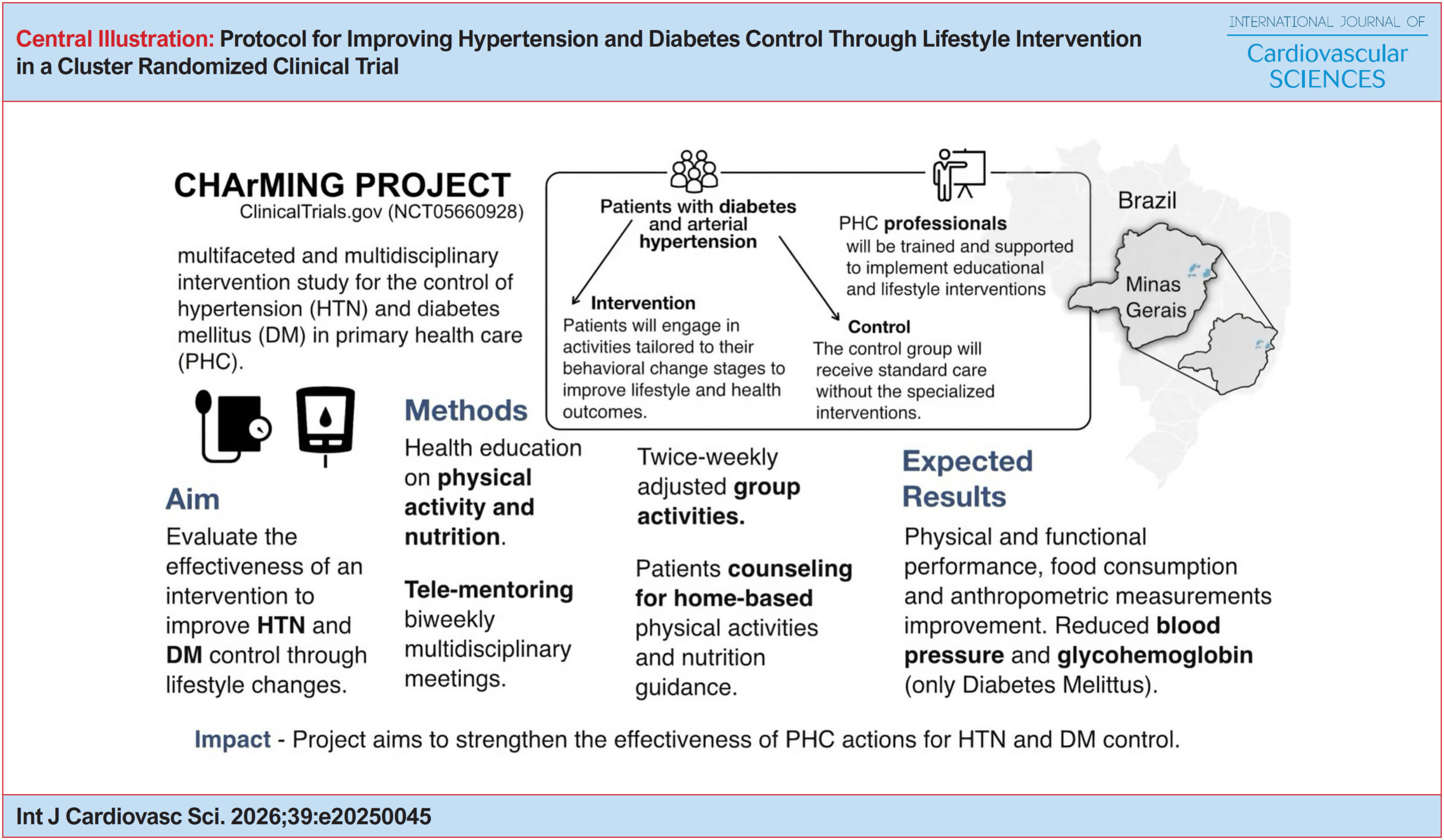
Hypertension and Diabetes Mellitus (DM) are prevalent chronic conditions and major risk factors for cardiovascular diseases. Adequate control of these conditions is challenging, and lifestyle changes are crucial to achieving better management.

Objectives:

To evaluate the effectiveness of a multifaceted and multidisciplinary intervention to improve the control of hypertension and DM in the primary care setting.

Methods:

This cluster randomized clinical trial focuses on lifestyle modifications for managing hypertension and DM, addressing gaps in current non-pharmacological interventions. Primary care professionals are trained to promote health education on physical activity and nutrition. Support is provided through a telementoring program, including messaging app communication, biweekly online meetings (teletutoring), and asynchronous teleconsultations. Primary care professionals conduct twice-weekly group activities with structured intensity adjustments and biweekly health education sessions using interactive methods like conversations, games, and group dynamics. For patients unable to join group activities, brief counseling and guidance on unsupervised physical activity are offered.

Results:

The primary outcomes are blood pressure and glycated hemoglobin values. The innovative intervention program aims to empower primary care professionals and reduce barriers to care through lifestyle changes, improved health education, and support systems for both supervised and unsupervised interventions. Conclusions: Supporting primary care professionals through education and remote assistance can enhance the effectiveness of lifestyle interventions, contributing significantly to the control of hypertension and DM in primary care settings. Trial registration: Previously registered with .
  • Exercise
  • Glycemic Control
  • Healthy Diet
  • Hypertension
  • Primary Health Care
Read Full Article
Creative Commons Attribution (CC BY) Creative Commons license
01/06/2026 DOI: 10.36660/ijcs.20250045 Views 1
ABC
Viewpoint

Physical Exercise in Patients with Heart Disease and in the General Population in Times of Coronavirus

Ricardo Stein

I will begin this text without speaking about exercise. I want to emphasize that individuals with chronic diseases, such as hypertension, heart failure, different types of myocardiopathy, and some forms of arrhythmia are at an increased risk of fatal outcomes after contracting SARS-COV-2 and developing the infection denominated COVID-19. In the same manner, those who have undergone mechanical or surgical revascularization, individuals with prosthetic valves (whether biological or metallic), pacemakers, implanted defibrillators, or other devices, as well as those with some forms of congenital heart disease are also part of a higher risk group.

First point: The patients described above are definitely at a higher risk and they are part of the risk group regardless of age.*

[…]

  • Cardiovascular Diseases
  • Coronavirus
  • COVID-19
  • Exercise
  • Healthy Diet
  • Life Style
  • Physical activity
  • Residence
  • Risk Factors
  • Sedentarism
Read Full Article
Creative Commons Attribution (CC BY) Creative Commons license
11/05/2020 DOI: 10.36660/abc.20200281 Views 1
ABC
Editorial

Hypertension: Pathophysiological Aspects, Psychosocial Stress and Food Preference

Heno Ferreira Lopes

Arterial hypertension is highly prevalent in developed and developing countries. Together with high blood glucose levels, hyperlipidemia, overweight and obesity, it is considered a consequence of behavioral risk factors such as physical inactivity, tobacco use, harmful alcohol use and inadequate diets. The cause of arterial hypertension in most of the cases (over 90%) is unknown. The activation of the sympathetic nervous system, the renin-angiotensin-aldosterone system and an abnormal pressure-natriuresis curve play an important role in the pathophysiology of hypertension. Oxidative stress has also been identified as an intermediate phenotype in the development of arterial hypertension. Experimental and epidemiological studies point to psychosocial stress as a possible trigger that causes the autonomic imbalance (increased sympathetic activity) in hypertensive patients. This autonomic imbalance can be observed even before the arterial hypertension onset in children born to hypertensive parents. In addition to psychosocial stress, an unhealthy diet contributes to the development of arterial hypertension and higher cardiovascular morbidity/mortality.

If, on the one hand, diet plays an important role in the pathophysiology of arterial hypertension, on the other hand, adopting a healthy diet can result in better blood pressure control. The DASH (Dietary Approach to Stop Hypertension) diet, mentioned in worldwide guidelines, was evaluated by Appel et al. and it was the first scientifically tested diet to result in a significant blood pressure reduction in hypertensive patients. The DASH diet consists of easily accessible foods such as vegetables, fruits, nuts, lean meat, and low-fat milk and dairy products. In a study of obese hypertensive patients, we tried to elucidate the possible mechanisms involved in blood pressure reduction after the consumption of the standard DASH diet. In this study we demonstrated that the consumption of a standard DASH diet results in improved antioxidant capacity, especially in obese hypertensive patients. Since oxidative stress plays a role in the pathophysiology of arterial hypertension, this is one of the possible mechanisms for reducing blood pressure in those individuals who consume the DASH diet foods in adequate proportion.

[…]

  • Diabetes Mellitus
  • Dyslipidemias
  • Healthy Diet
  • Hypertension
  • Indicators of Morbidity and Mortality
  • Obesity
  • Oxidative Stress
  • Sedentary Behavior
Read Full Article
Creative Commons Attribution (CC BY) Creative Commons license
10/10/2019 DOI: 10.5935/abc.20190202
ABC
Editorial

The Lack of Nutritional Counseling during Hospitalization

Luiza Antoniazzi

During the nutritional follow-up of hospitalized individuals, the nutritionist has as activities to perform the diagnosis, dietary prescription, supervise the distribution of the diets and evaluate their acceptance, and also perform nutritional counseling so that these individuals understand how a standard specific diet may be more appropriate taking into account their diagnoses and nutritional status. The number of nutritionists issued by Resolution 600 of 2018 of the Federal Council of Nutritionists is 1 professional every 15 beds of high complexity and every 30 beds of medium complexity.

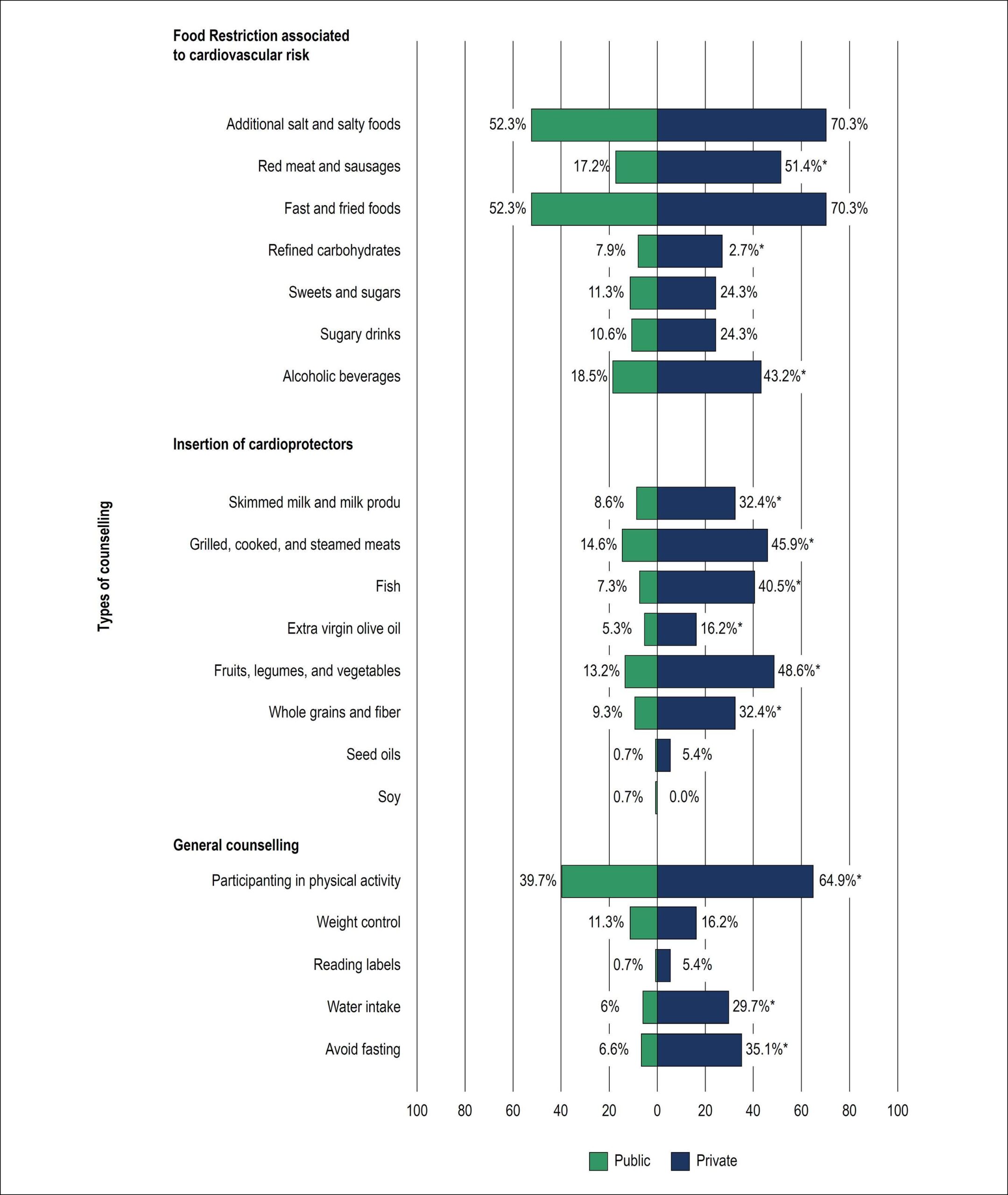
Lima et al. evaluated in an article published in this edition whether nutritional counseling was performed in the hospital environment for patients with Acute Myocardial Infarction (AMI) and the quality of this orientation. The authors found that 57.6% of the individuals hospitalized in the public network and 70.3% private hospitals, both in Sergipe, Brazil, had received in-hospital nutritional counseling.

[…]

  • Dietetics
  • Healthy Diet
  • Hospitalization
  • Inpatients
  • Risk reduction Behavior
Read Full Article
Creative Commons Attribution (CC BY) Creative Commons license
02/09/2019 DOI: 10.5935/abc.20190172 Views 1
Figure 1
ABC
Original Article

Quality of Intra-Hospital Nutritional Counseling in Patients with STEMI in the Public and Private Health Networks of Sergipe: The VICTIM Register

Ticiane Clair Remacre Munareto Lima et al. Danielle Góes da Silva Ikaro Daniel de Carvalho Barreto Jussiely Cunha Oliveira … Laís Costa Souza Oliveira Larissa Andreline Maia Arcelino Jeferson Cunha Oliveira Antônio Carlos Sobral Sousa José Augusto Soares Barreto Filho

Abstract

Background:

Having appropriate dietary habits is part of the recommendations after ST-Elevation Myocardial Infarction (STEMI), however, the quality of intra-hospital nutritional counselling in the different health services has been minimally explored.

Objective:

To evaluate the quality of intra-hospital nutritional counselling among patients with STEMI in the public and private health systems in Sergipe.

Methods:

A cross-sectional, with data from the Via Crucis for the Treatment of Myocardial Infarction (VICTIM) Register, conducted from April to November of 2017, with individuals aged ≥ 18 years diagnosed with STEMI, in one public health service hospital and three private hospitals. The occurrence and quality of nutritional counselling were analyzed based on current guidelines and the administration of questionnaires. A significance level of 0.05 was adopted.

Results:

A total of 188 patients were analyzed; 80.3% were from the public health service facility. Among the interviewees, 57.6% of the public health service, and 70.3% of the private hospital patients received intra-hospital nutritional counselling (p = 0.191). The documentation of this practice, in medical records, was lower in the public service (2.6% vs. 37.8%, p < 0.001). A predominance of restrictive orientations was found in the public and private sectors, mainly regarding salt and fat, 52.3% and 70.3% respectively (p = 0.064). Patients from the private service were more counselling to introduce of cardioprotective foods, mainly fruit, vegetable/legume consumption (48.6% vs. 13.2%, p < 0.001). Among those who received counselling, nutritional knowledge was higher in the private sector (68.2% vs. 26.3%, p < 0.001).

Conclusion:

The intra-hospital nutritional counselling provided to patients with STEMI, in Sergipe, still presents poor quality in both services, especially in the public health system.

  • Health Education/methods
  • Healthcare Disparities
  • Healthy Diet
  • Hospitals, Private
  • Hospitals,Public
  • Nutritional Support
  • Risk reduction Behavior
  • ST Elevation Myocardial Infarction
Read Full Article
Creative Commons Attribution (CC BY) Creative Commons license
18/07/2019 DOI: 10.5935/abc.20190124 Views 1
ABC
Editorial

Physical Activity and Healthy Eating Patterns in Public Schools in Brazil: A Strategy to Avert Risk Factors in Adulthood

Maria Cristina de Oliveira Izar et al. Francisco Antonio Helfenstein Fonseca

Cardiovascular disease (CVD) remains the leading cause of death globally, however, 80% of premature heart disease, stroke and diabetes can be prevented. Atherosclerotic cardiovascular disease (ASCVD) can begin in youth, exacerbated by exposure to factors associated with increased cardiovascular risk. There are interventions to prevent risk factors onset (primordial prevention), to identify and treat risk factors in childhood and adolescence (primary prevention) and to address the risk of additional events in those who already have ASCVD or other CVDs (secondary prevention) at a young age. Adolescence presents a prime opportunity to assess risk factors for CVD and to intervene to prevent its development.

The manuscript by Scherr et al. highlights the importance of a school-based program including physical activity (PA) and healthy eating patterns in adolescence for the prevention of cardiovascular risk factors.

[…]

  • Adolescent
  • Exercise
  • Healthy Diet
  • Risk Factors/prevention and control
Read Full Article
Creative Commons Attribution (CC BY) Creative Commons license
15/07/2019 DOI: 10.5935/abc.20190099
IJCS
Editorial

Consumption of Brazil Nuts Provides Cardiovascular Health Benefits

Mariana Sarto Figueiredo

Indroduction

The prevalence of chronic diseases, such as metabolic syndrome, obesity, dyslipidemia, type 2 diabetes mellitus (DM2), cancer, and neurodegenerative and cardiovascular disorders have been increasing in the world population. However, cardiovascular diseases remain the leading cause of mortality and morbidity worldwide. According to the Barker’s Theory (1993), hormonal, nutritional or environmental changes during critical periods of development such as gestation, lactation or adolescence may result in changes to the basic functions of the human body in childhood and “program” the progeny for the emergence of chronic diseases in the adult life, like DM2, obesity, cardiovascular diseases, intestinal dysbiosis, and hormonal and metabolic dysregulation. This phenomenon is known as “metabolic programming” or “developmental plasticity”.,

In the same direction, many authors have demonstrated the impact of an unhealthy diet on the development of chronic diseases such as metabolic syndrome, obesity, dyslipidemia, type 2 diabetes mellitus, cancer, neurodegenerative diseases and increased cardiovascular disorders., On the other hand, we know that the regular consumption of plant-based foods (cereals, fruits, vegetables, legumes, tree nuts and seeds), moderate consumption of seafood, fish and dairy and reduced consumption of alcohol, red meat and meat products may prevent and/or protect against diseases and provide health benefits, which is now widely recognized by health professionals.,

[…]

  • Anti-Inflammatory Agents
  • Brazil Nuts
  • Cardiovascular Diseases
  • Healthy Diet
  • Nuts
  • Risk reduction Behavior
Read Full Article
Creative Commons Attribution (CC BY) Creative Commons license
20/05/2019 DOI: 10.5935/2359-4802.20190037

How to cite this article

EndNote RIS

Electronic Document Format (Vancouver)

Motta-Santos D, Soares TBC, Carvalho MCR, Moura RMF, Fonseca SF, Guimarães LMF, Gonçalves R, et al. Protocol for Improving Hypertension and Diabetes Control Through Lifestyle Intervention in a Cluster Randomized Clinical Trial. International Journal of Cardiovascular Sciences 2026;39:e20250045.

Electronic Document Format (ABNT)

Motta-Santos, Daisy; Soares, Thiago Barbabela de Castro; Carvalho, Maria Cecília Ramos de; Moura, Regina Márcia Faria de; Fonseca, Sueli Ferreira da; Guimarães, Larissa Morelli Ferraz; Gonçalves, Reginaldo; Oliveira, Clara Rodrigues Alves de; Lopes, Aline Cristine Souza; Marcolino, Milena Soriano. Protocol for Improving Hypertension and Diabetes Control Through Lifestyle Intervention in a Cluster Randomized Clinical Trial. International Journal of Cardiovascular Sciences, v. 39, e20250045, May. 2026.

Electronic Document Format (APA)

Motta-Santos, D., Soares, T. B. C., Carvalho, M. C. R. , Moura, R. M. F. , Fonseca, S. F. , Guimarães, L. M. F., Gonçalves, R., Oliveira, C. R. A. , Lopes, A. C. S., & Marcolino, M. S. (2026). Protocol for Improving Hypertension and Diabetes Control Through Lifestyle Intervention in a Cluster Randomized Clinical Trial. International Journal of Cardiovascular Sciences, 39, e20250045.

Electronic Document Format (ISO)

Motta-Santos, Daisy and Soares, Thiago Barbabela de Castro and Carvalho, Maria Cecília Ramos de and Moura, Regina Márcia Faria de and Fonseca, Sueli Ferreira da and Guimarães, Larissa Morelli Ferraz and Gonçalves, Reginaldo and Oliveira, Clara Rodrigues Alves de and Lopes, Aline Cristine Souza and Marcolino, Milena Soriano. Protocol for Improving Hypertension and Diabetes Control Through Lifestyle Intervention in a Cluster Randomized Clinical Trial. International Journal of Cardiovascular Sciences [online]. 2026, vol. 39, [cited 2026-10-14], e20250045. Available from: <https://journals.cardiol.br/en/article/protocol-for-improving-hypertension-and-diabetes-control-through-lifestyle-intervention-in-a-cluster-randomized-clinical-trial/>. ISSN 2359-4802

EndNote RIS

Electronic Document Format (Vancouver)

Stein R. Physical Exercise in Patients with Heart Disease and in the General Population in Times of Coronavirus. Arquivos Brasileiros de Cardiologia 2020;114(5):827-8.

Electronic Document Format (ABNT)

Stein, Ricardo. Physical Exercise in Patients with Heart Disease and in the General Population in Times of Coronavirus. Arquivos Brasileiros de Cardiologia, v. 114, n. 5, p. 827-828, May. 2020.

Electronic Document Format (APA)

Stein, R. (2020). Physical Exercise in Patients with Heart Disease and in the General Population in Times of Coronavirus. Arquivos Brasileiros de Cardiologia, 114(5), 827-828.

Electronic Document Format (ISO)

Stein, Ricardo. Physical Exercise in Patients with Heart Disease and in the General Population in Times of Coronavirus. Arquivos Brasileiros de Cardiologia [online]. 2020, vol. 114, n. 5, [cited 2026-10-14], pp. 827-828. Available from: <https://journals.cardiol.br/en/article/physical-exercise-in-patients-with-heart-disease-and-in-the-general-population-in-times-of-coronavirus/>. ISSN 0066-782X

EndNote RIS

Electronic Document Format (Vancouver)

Lopes HF. Hypertension: Pathophysiological Aspects, Psychosocial Stress and Food Preference. Arquivos Brasileiros de Cardiologia 2019;113(3):381-2.

Electronic Document Format (ABNT)

Lopes, Heno Ferreira. Hypertension: Pathophysiological Aspects, Psychosocial Stress and Food Preference. Arquivos Brasileiros de Cardiologia, v. 113, n. 3, p. 381-382, Oct. 2019.

Electronic Document Format (APA)

Lopes, H. F. (2019). Hypertension: Pathophysiological Aspects, Psychosocial Stress and Food Preference. Arquivos Brasileiros de Cardiologia, 113(3), 381-382.

Electronic Document Format (ISO)

Lopes, Heno Ferreira. Hypertension: Pathophysiological Aspects, Psychosocial Stress and Food Preference. Arquivos Brasileiros de Cardiologia [online]. 2019, vol. 113, n. 3, [cited 2026-10-14], pp. 381-382. Available from: <https://journals.cardiol.br/en/article/hypertension-pathophysiological-aspects-psychosocial-stress-and-food-preference/>. ISSN 0066-782X

EndNote RIS

Electronic Document Format (Vancouver)

Antoniazzi L. The Lack of Nutritional Counseling during Hospitalization. Arquivos Brasileiros de Cardiologia 2019;113(2):270-1.

Electronic Document Format (ABNT)

Antoniazzi, Luiza. The Lack of Nutritional Counseling during Hospitalization. Arquivos Brasileiros de Cardiologia, v. 113, n. 2, p. 270-271, Sep. 2019.

Electronic Document Format (APA)

Antoniazzi, L. (2019). The Lack of Nutritional Counseling during Hospitalization. Arquivos Brasileiros de Cardiologia, 113(2), 270-271.

Electronic Document Format (ISO)

Antoniazzi, Luiza. The Lack of Nutritional Counseling during Hospitalization. Arquivos Brasileiros de Cardiologia [online]. 2019, vol. 113, n. 2, [cited 2026-10-14], pp. 270-271. Available from: <https://journals.cardiol.br/en/article/the-lack-of-nutritional-counseling-during-hospitalization/>. ISSN 0066-782X

EndNote RIS

Electronic Document Format (Vancouver)

Lima TCRM, Silva DG, Barreto IDC, Oliveira JC, Oliveira LCS, Arcelino LAM, Oliveira JC, et al. Quality of Intra-Hospital Nutritional Counseling in Patients with STEMI in the Public and Private Health Networks of Sergipe: The VICTIM Register. Arquivos Brasileiros de Cardiologia 2019;113(2):260-9.

Electronic Document Format (ABNT)

Lima, Ticiane Clair Remacre Munareto; Silva, Danielle Góes da; Barreto, Ikaro Daniel de Carvalho; Oliveira, Jussiely Cunha; Oliveira, Laís Costa Souza; Arcelino, Larissa Andreline Maia; Oliveira, Jeferson Cunha; Sousa, Antônio Carlos Sobral; Barreto Filho, José Augusto Soares. Quality of Intra-Hospital Nutritional Counseling in Patients with STEMI in the Public and Private Health Networks of Sergipe: The VICTIM Register. Arquivos Brasileiros de Cardiologia, v. 113, n. 2, p. 260-269, Jul. 2019.

Electronic Document Format (APA)

Lima, T. C. R. M., Silva, D. G. , Barreto, I. D. C., Oliveira, J. C., Oliveira, L. C. S., Arcelino, L. A. M., Oliveira, J. C., Sousa, A. C. S., & Barreto Filho, J. A. S. (2019). Quality of Intra-Hospital Nutritional Counseling in Patients with STEMI in the Public and Private Health Networks of Sergipe: The VICTIM Register. Arquivos Brasileiros de Cardiologia, 113(2), 260-269.

Electronic Document Format (ISO)

Lima, Ticiane Clair Remacre Munareto and Silva, Danielle Góes da and Barreto, Ikaro Daniel de Carvalho and Oliveira, Jussiely Cunha and Oliveira, Laís Costa Souza and Arcelino, Larissa Andreline Maia and Oliveira, Jeferson Cunha and Sousa, Antônio Carlos Sobral and Barreto Filho, José Augusto Soares. Quality of Intra-Hospital Nutritional Counseling in Patients with STEMI in the Public and Private Health Networks of Sergipe: The VICTIM Register. Arquivos Brasileiros de Cardiologia [online]. 2019, vol. 113, n. 2, [cited 2026-10-14], pp. 260-269. Available from: <https://journals.cardiol.br/en/article/quality-of-intra-hospital-nutritional-counseling-in-patients-with-stemi-in-the-public-and-private-health-networks-of-sergipe-the-victim-register/>. ISSN 0066-782X

EndNote RIS

Electronic Document Format (Vancouver)

Izar MCO, Fonseca FAH. Physical Activity and Healthy Eating Patterns in Public Schools in Brazil: A Strategy to Avert Risk Factors in Adulthood. Arquivos Brasileiros de Cardiologia 2019;112(6):782-3.

Electronic Document Format (ABNT)

Izar, Maria Cristina de Oliveira; Fonseca, Francisco Antonio Helfenstein. Physical Activity and Healthy Eating Patterns in Public Schools in Brazil: A Strategy to Avert Risk Factors in Adulthood. Arquivos Brasileiros de Cardiologia, v. 112, n. 6, p. 782-783, Jul. 2019.

Electronic Document Format (APA)

Izar, M. C. O., & Fonseca, F. A. H. (2019). Physical Activity and Healthy Eating Patterns in Public Schools in Brazil: A Strategy to Avert Risk Factors in Adulthood. Arquivos Brasileiros de Cardiologia, 112(6), 782-783.

Electronic Document Format (ISO)

Izar, Maria Cristina de Oliveira and Fonseca, Francisco Antonio Helfenstein. Physical Activity and Healthy Eating Patterns in Public Schools in Brazil: A Strategy to Avert Risk Factors in Adulthood. Arquivos Brasileiros de Cardiologia [online]. 2019, vol. 112, n. 6, [cited 2026-10-14], pp. 782-783. Available from: <https://journals.cardiol.br/en/article/physical-activity-and-healthy-eating-patterns-in-public-schools-in-brazil-a-strategy-to-avert-risk-factors-in-adulthood/>. ISSN 0066-782X

EndNote RIS

Electronic Document Format (Vancouver)

Figueiredo MS. Consumption of Brazil Nuts Provides Cardiovascular Health Benefits. International Journal of Cardiovascular Sciences 2019;32(3):205-6.

Electronic Document Format (ABNT)

Figueiredo, Mariana Sarto. Consumption of Brazil Nuts Provides Cardiovascular Health Benefits. International Journal of Cardiovascular Sciences, v. 32, n. 3, p. 205-206, May. 2019.

Electronic Document Format (APA)

Figueiredo, M. S. (2019). Consumption of Brazil Nuts Provides Cardiovascular Health Benefits. International Journal of Cardiovascular Sciences, 32(3), 205-206.

Electronic Document Format (ISO)

Figueiredo, Mariana Sarto. Consumption of Brazil Nuts Provides Cardiovascular Health Benefits. International Journal of Cardiovascular Sciences [online]. 2019, vol. 32, n. 3, [cited 2026-10-14], pp. 205-206. Available from: <https://journals.cardiol.br/en/article/consumption-of-brazil-nuts-provides-cardiovascular-health-benefits/>. ISSN 2359-4802

  • About ABC Family
  • Internal Regulation
  • Editorial Board
  • Brazilian Society of Cardiology (SBC)

Issues

SBC Guidelines

  • Videos
  • Podcasts
  • News