ABC Family Arquivos Brasileiros de Cardiologia International Journal of Cardiovascular Sciences ABC Heart Failure & Cardiomyopathy ABC Imagem Cardiovascular
Português English
ABC Family
Português English
  • About
    • About ABC Family
    • Internal Regulation
    • Editorial Board
    • Brazilian Society of Cardiology (SBC)
  • Issues
  • SBC Guidelines
  • Content
    • Videos
    • Podcasts
    • News
  • About
    • About ABC Family
    • Internal Regulation
    • Editorial Board
    • Brazilian Society of Cardiology (SBC)
  • Issues
  • SBC Guidelines
  • Content
    • Videos
    • Podcasts
    • News

ABC Family

  • ABC Family
  • Arquivos Brasileiros de Cardiologia
  • International Journal of Cardiovascular Sciences
  • ABC Heart Failure & Cardiomyopathy
  • ABC Imagem Cardiovascular
Search in

No content found.

Journals
Ordering
Article types
Others

  1. Home
  2. Keyword: Left Ventricular Dysfunction
ABCIC
Editorial

Beyond Ejection Fraction: Integrating Myocardial Strain and Cardiac Magnetic Resonance into the Contemporary Assessment of Left Ventricular Function

Marly Uellendahl

The assessment of left ventricular function is undergoing a profound transformation. For decades, left ventricular ejection fraction (LVEF) has occupied a central role in clinical practice, guiding diagnosis, risk stratification, and therapeutic decision-making across a broad spectrum of cardiovascular diseases. Its extensive clinical validation, ease of acquisition, and reproducibility have established two-dimensional echocardiography as the first-line modality for evaluating left ventricular systolic function.,

However, advances in cardiovascular imaging have demonstrated that myocardial function cannot be fully characterized by a single volumetric parameter. Although LVEF remains a robust marker of global left ventricular performance, its dependence on loading conditions and its limited sensitivity for detecting early contractile abnormalities underscore the need for a more comprehensive functional assessment.

[…]

  • Left Ventricular Dysfunction
  • Magnetic Resonance Imaging
  • Stroke Volume
Read Full Article
Creative Commons Attribution (CC BY) Creative Commons license
27/07/2026 DOI: 10.36660/abcimg.20260087i Views 1
Impact of Isometric Exercise on Left Ventricular Mechanics Assessed by Global Longitudinal Strain and Myocardial Work in Healthy Adults
ABCIC
Original Article

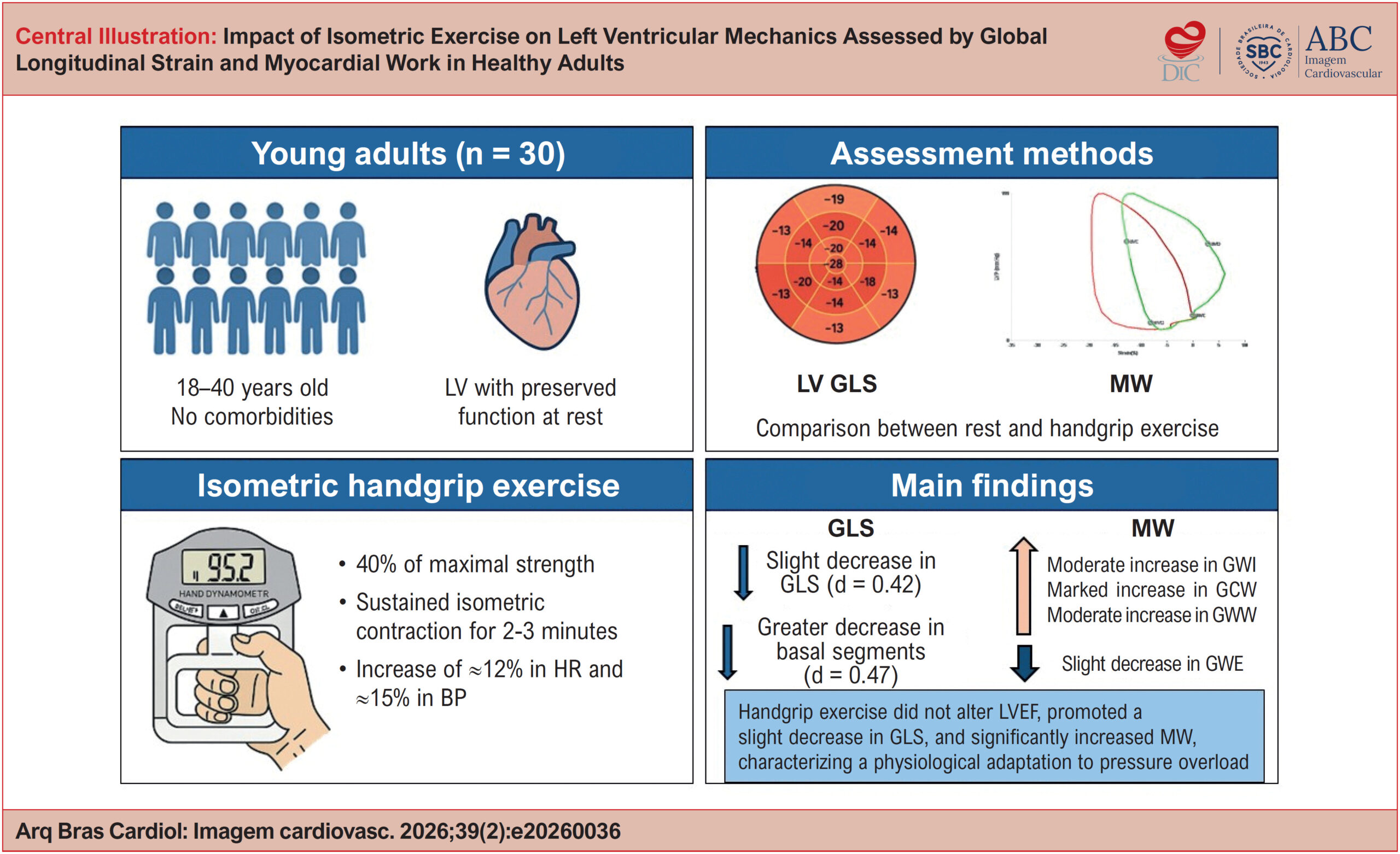
Impact of Isometric Exercise on Left Ventricular Mechanics Assessed by Global Longitudinal Strain and Myocardial Work in Healthy Adults

Marcio Mendes Pereira et al. Maria Estefania Bosco Otto Juliana Lins da Paz Portela

Abstract

Background:

Traditional volumetric parameters have limitations in detecting subtle left ventricular (LV) systolic dysfunction. Global longitudinal strain (GLS) and myocardial work (MW) allow a more sensitive assessment of ventricular mechanics.

Objectives:

To evaluate changes in GLS and MW indices during isometric handgrip exercise compared with resting conditions.

Methods:

A total of 30 healthy individuals (29.3 ± 6.1 years; 50% male) were included in the sample. Echocardiography was performed at rest and during handgrip exercise (30%-40% of maximal strength). GLS, LV ejection fraction (LVEF), and MW indices were assessed: i) global work index (GWI), ii) global constructive work (GCW), iii) global wasted work (GWW), and iv) global work efficiency (GWE). Comparisons were performed using paired tests. Statistical significance was set at p < 0.05.

Results:

Handgrip exercise increased both systolic blood pressure (115 ± 16 vs 133 ± 18 mmHg; p < 0.0001) and diastolic blood pressure (69 ± 9 vs 79 ± 13 mmHg; p = 0.0002), without significant changes in LVEF (64.8% vs 64.4%; p = 0.62). A decrease in GLS was observed (20.38% ± 2.57% vs 19.60% ± 2.52%; p = 0.028), along with increases in GWI (+244 mmHg%; p = 0.0002), GCW (+313 mmHg%; p < 0.0001), and GWW (+52 mmHg%; p = 0.0008) as well as a decrease in GWE (94.8% ± 1.8% vs 93.6% ± 2.5%; p = 0.022).

Conclusions:

Handgrip exercise induces measurable ventricular mechanical changes in healthy individuals, reflecting a physiological response to acute pressure overload.

  • Echocardiography
  • Exercise
  • Left Ventricular Dysfunction
Read Full Article
Creative Commons Attribution (CC BY) Creative Commons license
20/07/2026 DOI: 10.36660/abcimg.20260036i Views 2
Figure 1
ABCIC
Editorial

Recalibrating the Barometer: Echocardiography in Diastolic Dysfunction and the Era of New Algorithms

Maria Estefania Bosco Otto et al. Jorge Eduardo Assef Gustavo Nishida

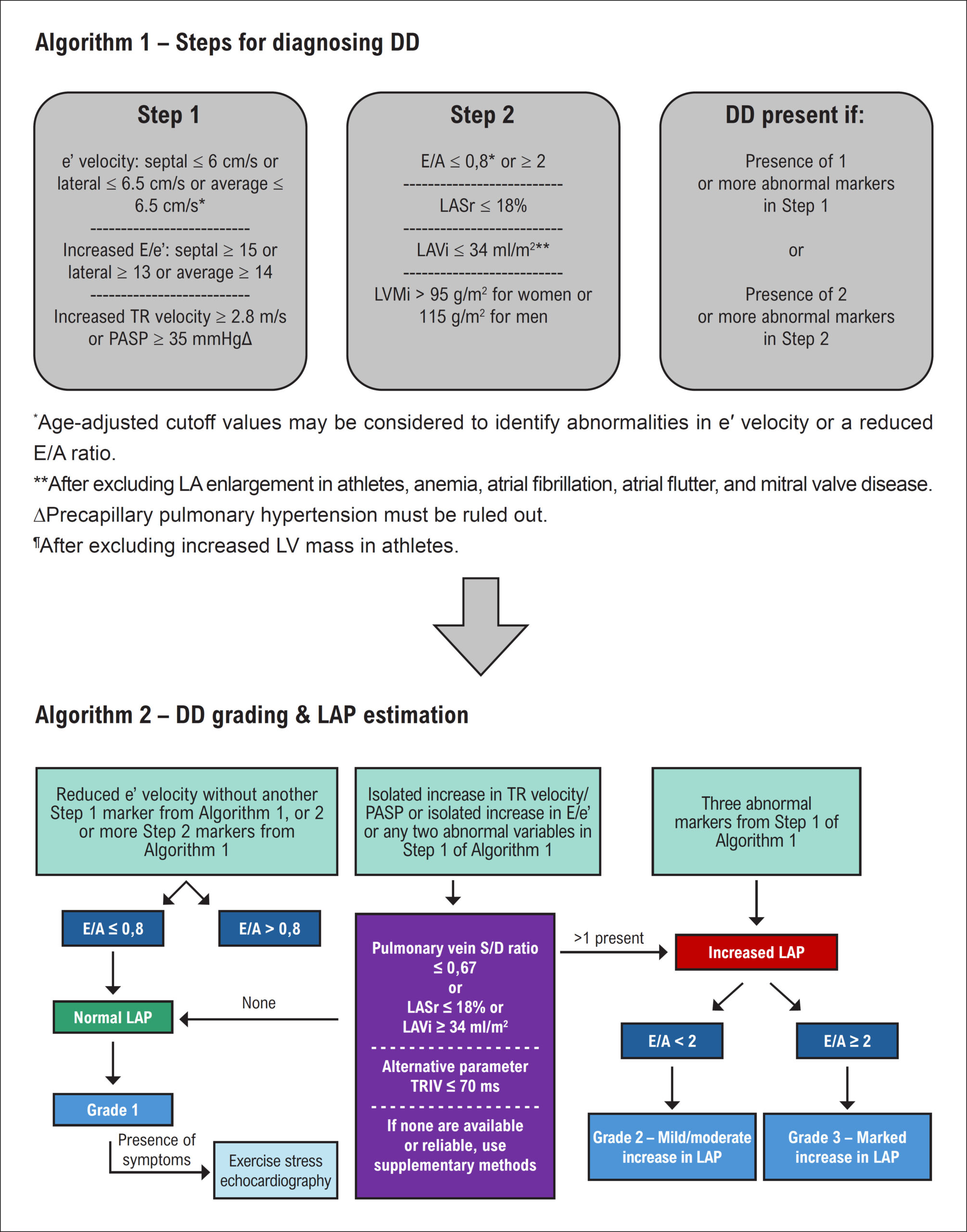
Diastolic dysfunction (DD) remains a diagnostic challenge, not for lack of available parameters, but because uncertainty emerges when complex physiology is reduced to static labels in echocardiographic reports. In clinical practice, physicians are often less concerned with the specific grade of DD and more interested in its prognostic implications and in whether increased filling pressures may explain dyspnea, guide further investigation, and support therapeutic decisions. It is precisely in this variable, mean left atrial pressure (MLAP) and left ventricular (LV) filling pressure (LVFP), that echocardiography must be most pragmatic, minimizing the number of “indeterminate” reports and offering an operational conclusion grounded in integrated physiology.–

The structured reasoning that supports this goal began with the 2009 American Society of Echocardiography/European Association of Echocardiography guideline on the evaluation of LV diastolic function, a landmark document that organized modern thinking on diastole, established a shared language for key pathophysiological mechanisms, and systematized the interpretation of echocardiographic parameters. Beyond its conceptual value, it reinforced a critical principle for echocardiography laboratories: the assessment of diastole must translate into a clinically meaningful message, particularly when heart failure with preserved ejection fraction (HFpEF) is suspected.

[…]

  • Diastolic Heart Failure
  • Echocardiography
  • Left Ventricular Dysfunction
Read Full Article
Creative Commons Attribution (CC BY) Creative Commons license
20/04/2026 DOI: 10.36660/abcimg.20260004i Views 2
Use of Artificial Intelligence Applied to Electrocardiogram for Diagnosis of Left Ventricular Systolic Dysfunction
ABC
Original Article

Use of Artificial Intelligence Applied to Electrocardiogram for Diagnosis of Left Ventricular Systolic Dysfunction

Wilton Batista de Santana Júnior et al. Marcelo M. Pinto Filho Sandhi Maria Barreto Murilo Foppa … Luana Giatti Rohan Khera Antonio Luiz Pinho Ribeiro

Abstract

Background

Heart failure (HF) is a disease associated with an important type of morbidity and mortality. The electrocardiogram (ECG), one of the tests used to evaluate HF, is low-cost and widely available.

Objective

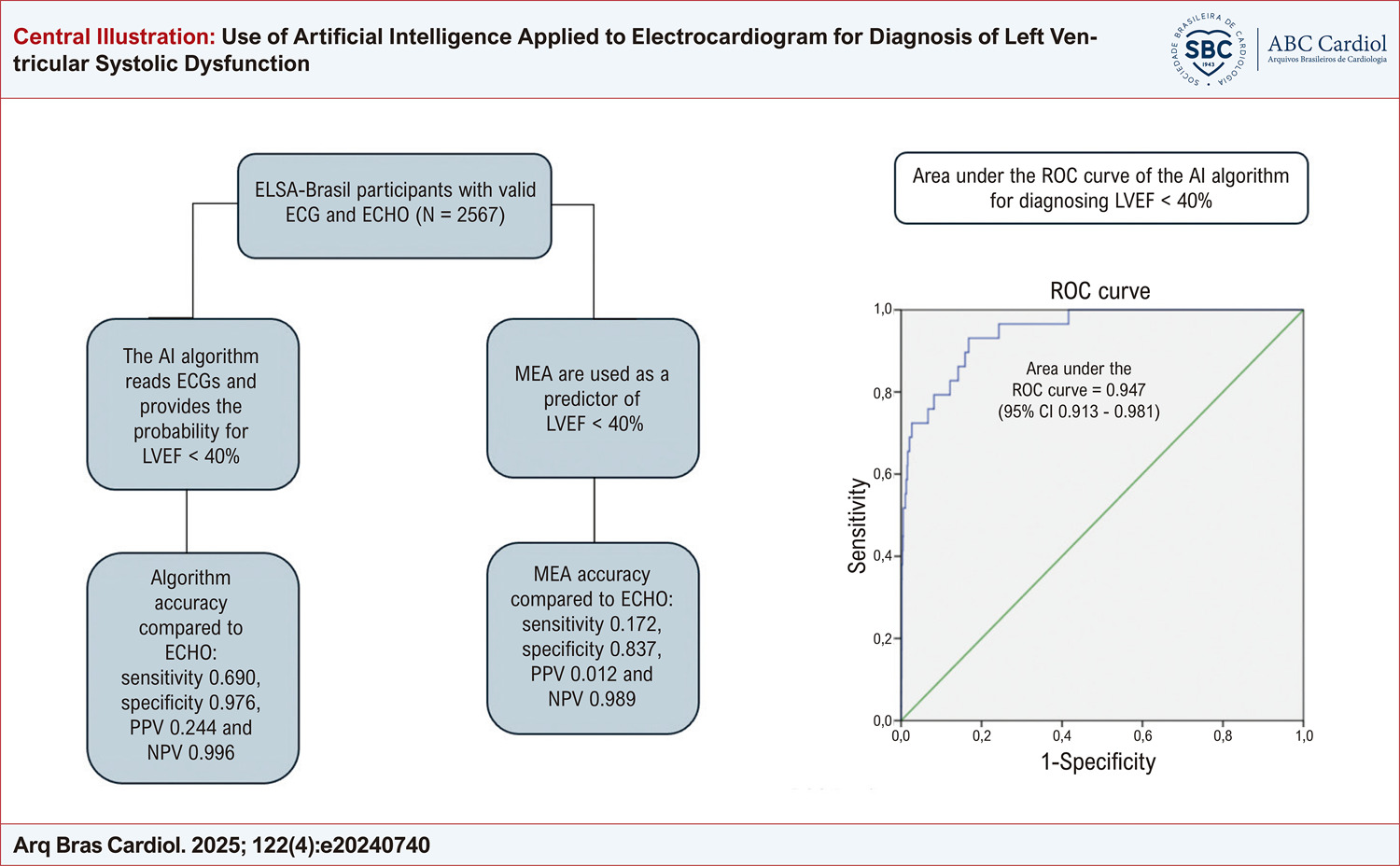
To evaluate the performance of an artificial intelligence (AI) algorithm applied to ECG to detect HF and compare it with the predictive power of major electrocardiographic alterations (MEA).

Methods

This work is a diagnostic accuracy cross-sectional study. All participants were from the Longitudinal Study of Adult Health (Estudo Longitudinal da Saúde do Adulto – ELSA-Brasil) and presented a valid ECG and echocardiogram (ECHO). The algorithm estimated probability values for left ventricular systolic dysfunction (LVSD). The assessed endpoint was left ventricular ejection fraction (LVEF) <40% in the ECHO. Sensitivity, specificity, positive predictive value (PPV), negative predictive value (NPV), positive likelihood ratio (LR+), negative likelihood ratio (LR-), and diagnostic odds ratio (DOR) were determined for both the algorithm and the MEA. The area under the ROC curve (AUC-ROC) for the algorithm was calculated.

Results

In the analytical sample of 2,567 individuals, the prevalence of LVEF <40% was 1.13% (29 individuals). The values obtained for sensitivity, specificity, PPV, NPV, LR+, LR-, and DOR for the algorithm were 0.690, 0.976, 0.244, 0.996, 27.6, 0.32, and 88.74, respectively. For the MEA, the values were 0.172, 0.837, 0.012, 0.989, 1.09, 0.990, and 1.07, respectively. The AUC-ROC of the algorithm to predict the LVEF <40% was 0.947 (95% CI: 0.913 – 0.981).

Conclusion

The AI algorithm performed well in detecting LVSD and can be used as a screening tool for LVSD.

  • Artificial Intelligence
  • Electrocardiography
  • Heart Failure
  • Left Ventricular Dysfunction
Read Full Article
Creative Commons Attribution (CC BY) Creative Commons license
16/05/2025 DOI: 10.36660/abc.20240740i
Central Illustration
ABC
Original Article

The Effect of Coronary Artery Bypass Graft Surgery on Contractile Function and Symptoms in Patients with Left Ventricular Dysfunction

Fernando Bassan et al. Roberto Esporcatte Marcelo Goulart Correia Octavio Drummond Guina … Guilherme de Souza Weigert Gracielle Christine do Nascimento Oliveira

Abstract

Background

The degree of left ventricular (LV) dysfunction is an independent risk factor for poor outcomes in patients with chronic coronary syndrome. Coronary artery bypass graft (CABG) is the standard care for the management of ischemic heart failure to improve symptoms and prognosis. However, the predictors of improvement are still uncertain.

Objective

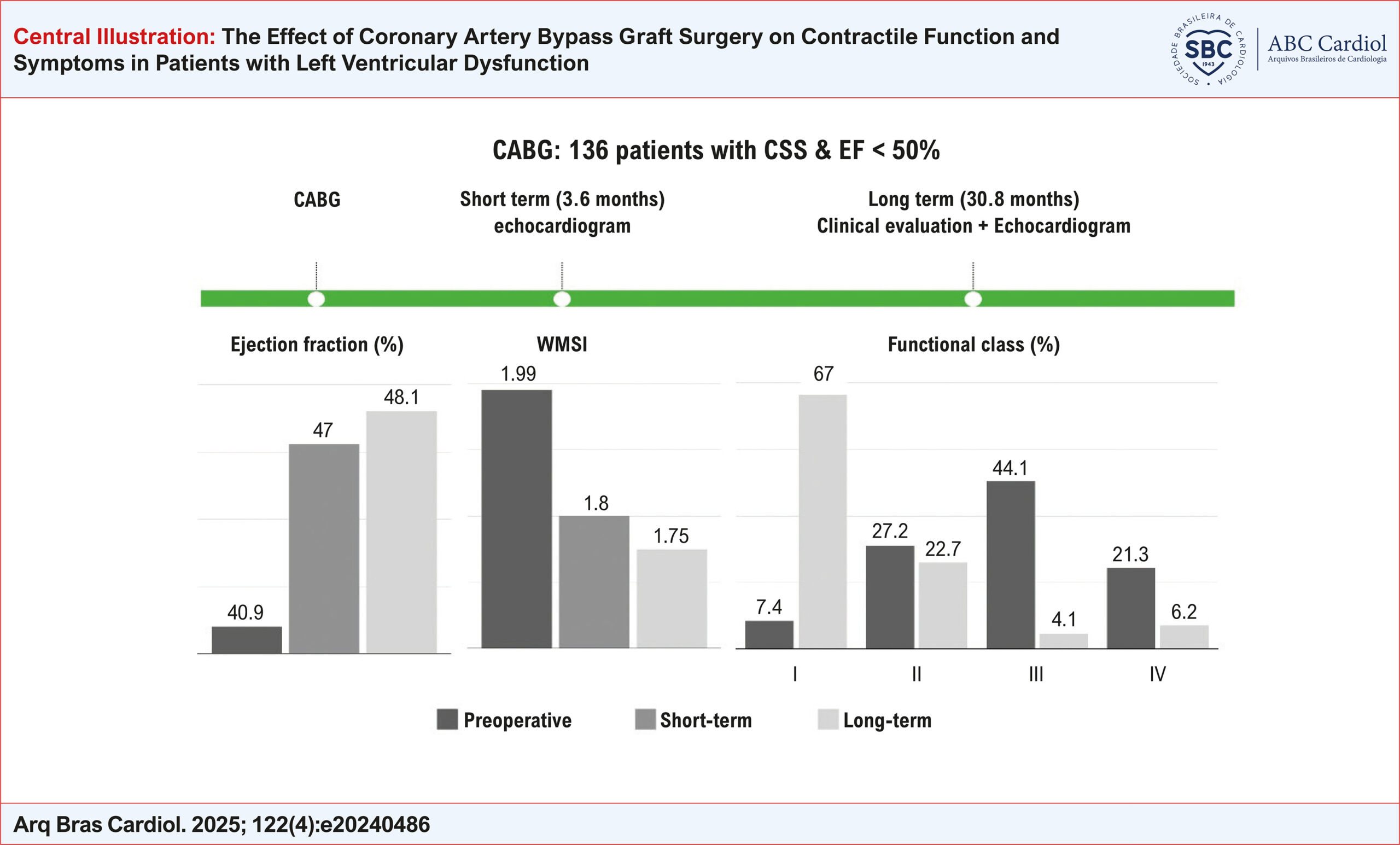
To assess the effect of myocardial revascularization on LV function and symptoms in patients with CCS and reduced left ventricular ejection fraction (LVEF), as well as to identify the improvement predictors.

Methods

We retrospectively analyzed the data and clinical status of 136 consecutive patients with LVEF<50% that underwent CABG. During clinical follow-up echocardiographic LV function was reassessed at the short-term (3.6 months) and long-term (30.8 months), and compared to baseline.

Results

Mean pre-operative LVEF was 40.9 ± 8.6% and wall motion score index (WMSI) was 1.99 ± 0.36, both improving at long-term to 48.1 ± 15.0% (p<0.001) and 1.75 ± 0.49 (p<0.001), respectively. We observed that 55.7% of the patients presented an improvement of LVEF≥10% and 58.1% in WMSI ≥10%. Univariate logistic regression analysis revealed that cerebrovascular disease was the only variable to be predictor of LVEF improvement. At the end of follow-up, we observed a reduction in the rate of patients in functional class III/IV when compared to baseline (65.4 vs. 10.3% – p<0.001).

Conclusions

Patients with CCS and reduced LVEF undergoing CABG experienced improvement in both LV contractile function and size, with beneficial response in functional class.

  • Chronic Coronary Syndrome
  • Heart Failure
  • Left Ventricular Dysfunction
  • Myocardial Revascularization
Read Full Article
Creative Commons Attribution (CC BY) Creative Commons license
12/05/2025 DOI: 10.36660/abc.20240486i Views 1
Figure 1
IJCS
Brief Communication

Prevalence of Subclinical Left Ventricular Dysfunction Evaluated by Global Longitudinal Strain in Female Carriers of Duchenne Muscular Dystrophy

Eduarda Vieira Rodrigues et al. Antonio Pedro Lima Costa Pereira Wilson Braz Correa Filho Maria Angelica de Faria Domingues de Lima … Marcio Aloysio Freitas Siqueira Junior Ana Paula Cassetta dos Santos Nucera Fabio de Souza

Abstract

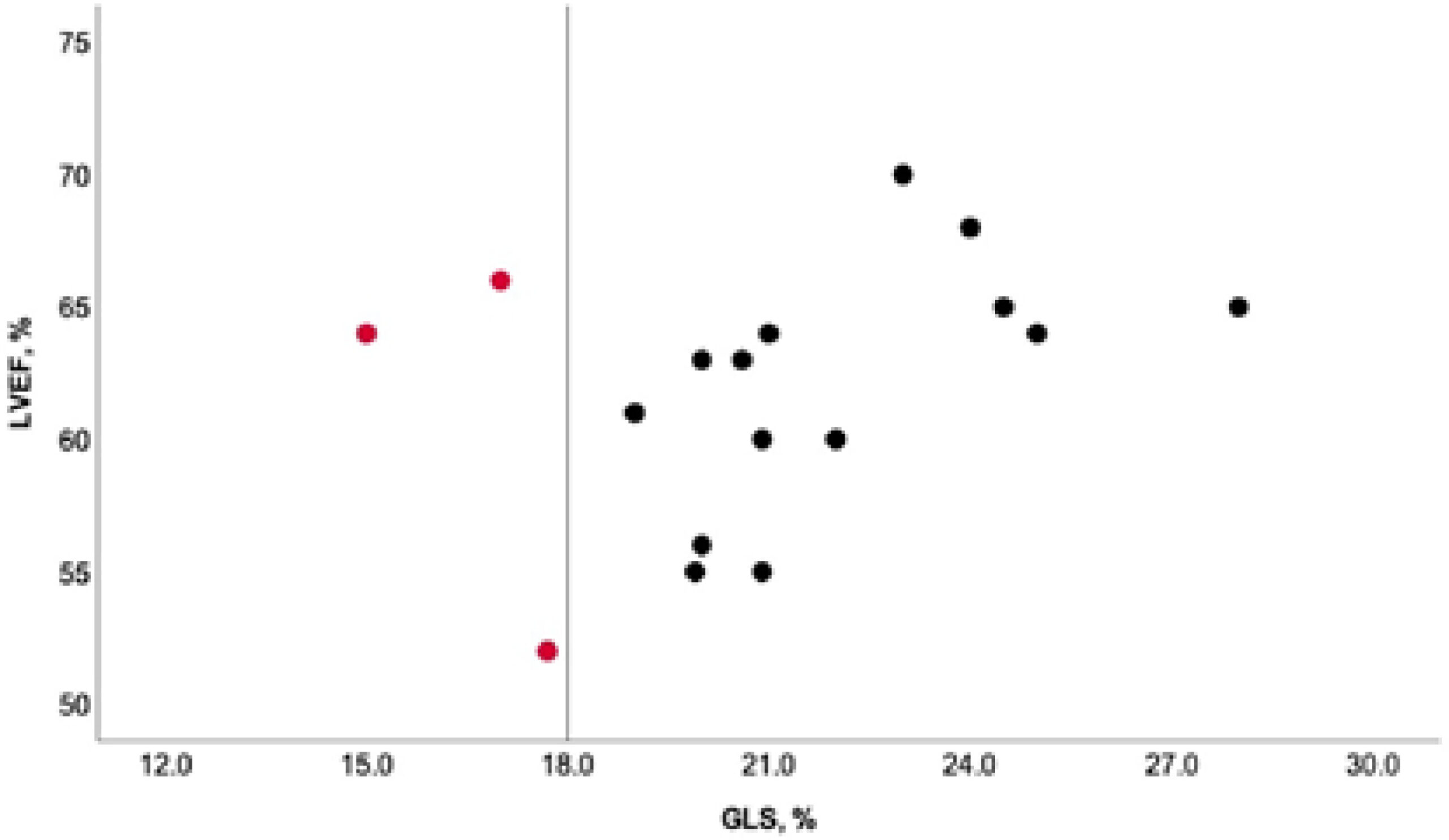
Duchenne muscular dystrophy (DMD) is a muscular disease genetically linked to the DMD gene, which encodes dystrophin, a protein that is crucial for the integrity of skeletal muscle and myocytes. This condition follows an X-linked inheritance pattern. Female carriers are typically asymptomatic; however, they may develop cardiomyopathy, making screening for structural heart disease advisable. We conducted a cross-sectional study to assess the prevalence of subclinical left ventricular (LV) dysfunction, defined by reduced global longitudinal strain (GLS), in asymptomatic female DMD carriers. Participants underwent 2-dimensional speckle tracking echocardiography following a standardized protocol, with GLS values ≤ 18% classified as reduced. Continuous variables were described as mean ± standard deviation and categorical variables as percentages. The association between left ventricular ejection fraction (LVEF) and GLS was assessed using Pearson’s correlation coefficient. The significance level adopted was 5%. Using a convenience sample, 17 participants (mean age 39 ± 5 years) were enrolled. No significant changes were observed in LV diameters, and the mean LVEF was 62% ± 5%. Reduced GLS was identified in 3 participants, indicating a prevalence of 17.6% for subclinical LV dysfunction. A weak correlation was found between GLS and LVEF (r = 0.366). Our findings indicate that approximately 1 in 6 female DMD carriers had subclinical LV dysfunction. These results highlight the need for genetic counseling for mothers of patients with DMD, as well as early screening with sensitive methods to detect heart disease in female DMD carriers.

  • Duchenne Muscular Dystrophy
  • Global Longitudinal Strain
  • Left Ventricular Dysfunction
  • Women's Health
  • X-Linked Genetic Diseases
Read Full Article
Creative Commons Attribution (CC BY) Creative Commons license
24/03/2025 DOI: 10.36660/ijcs.20230125
Impact of Valvular Event Time Assessment Methods on Myocardial Work Calculation by Echocardiography
ABCIC
Original Article

Impact of Valvular Event Time Assessment Methods on Myocardial Work Calculation by Echocardiography

Marcio Mendes Pereira et al. Francisco das Chagas Monteiro Júnior Sayuri Yamamura

Abstract

Background:

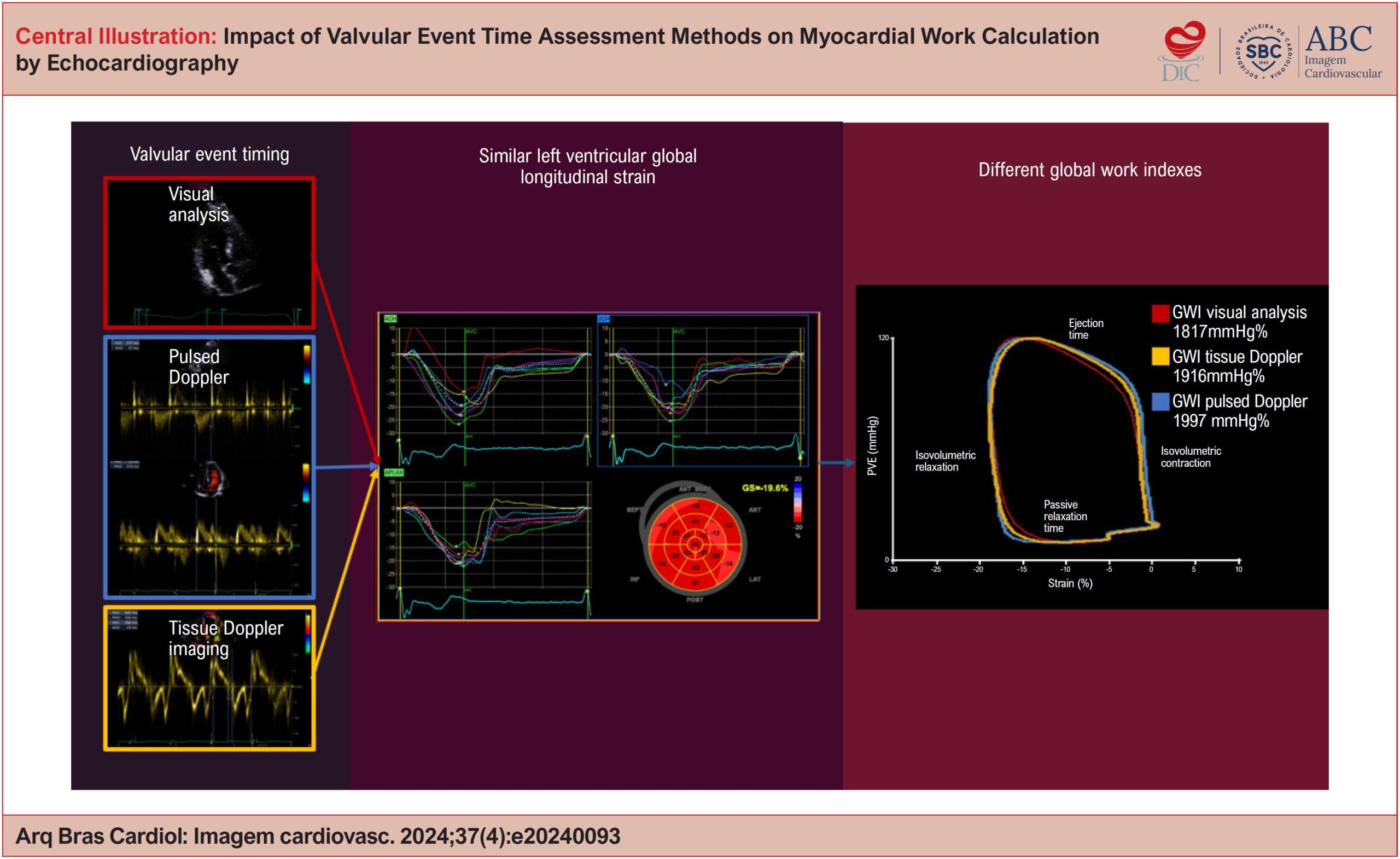
Left ventricular ejection fraction (LVEF) is the traditional parameter for assessing cardiac function, but it has limitations in the early detection of dysfunction. Global Longitudinal Strain (GLS) and myocardial work (MW) are promising alternatives, the latter being less influenced by load conditions. The calculation of MW depends on valvular event times (VET), obtained by methods that may generate divergent results.

Objectives:

To compare the impact of different methods of VET measurement – visual analysis (VA), tissue Doppler imaging (TDI) and pulsed Doppler (PD) – on global work index (GWI), global constructive work (GCW), global wasted work (GWW) and global work efficiency (GWE).

Method:

Cross-sectional clinical study with 35 healthy patients who underwent echocardiography between October 2022 and March 2023. MW was assessed using the EchoPAC software, with VET measurement by VA, TDI and DP. The results were analyzed by ANOVA and Friedman tests, followed by post-hoc analyses with a significance level of 5%.

Results:

GWI showed significant variation between the VET measurement methods, being lower by AV compared to TDI and DP (p<0.001). The GCW, GWW and GWE indexes did not demonstrate statistically significant differences between the methods.

Conclusions:

The VET measurement method significantly impacts the GWI, but does not affect the other MW indexes.

  • Echocardiography
  • Left Ventricular Dysfunction
  • Ventricular Function
Read Full Article
Creative Commons Attribution (CC BY) Creative Commons license
05/12/2024 DOI: 10.36660/abcimg.20240093i Views 1
Heart Failure Management of Patients with Amyloid Cardiomyopathy
IJCS
Review Article

Heart Failure Management of Patients with Amyloid Cardiomyopathy

Vanessa Simioni Faria et al. Ciro Mancilha Murad Fabiana G. Marcondes-Braga

Abstract

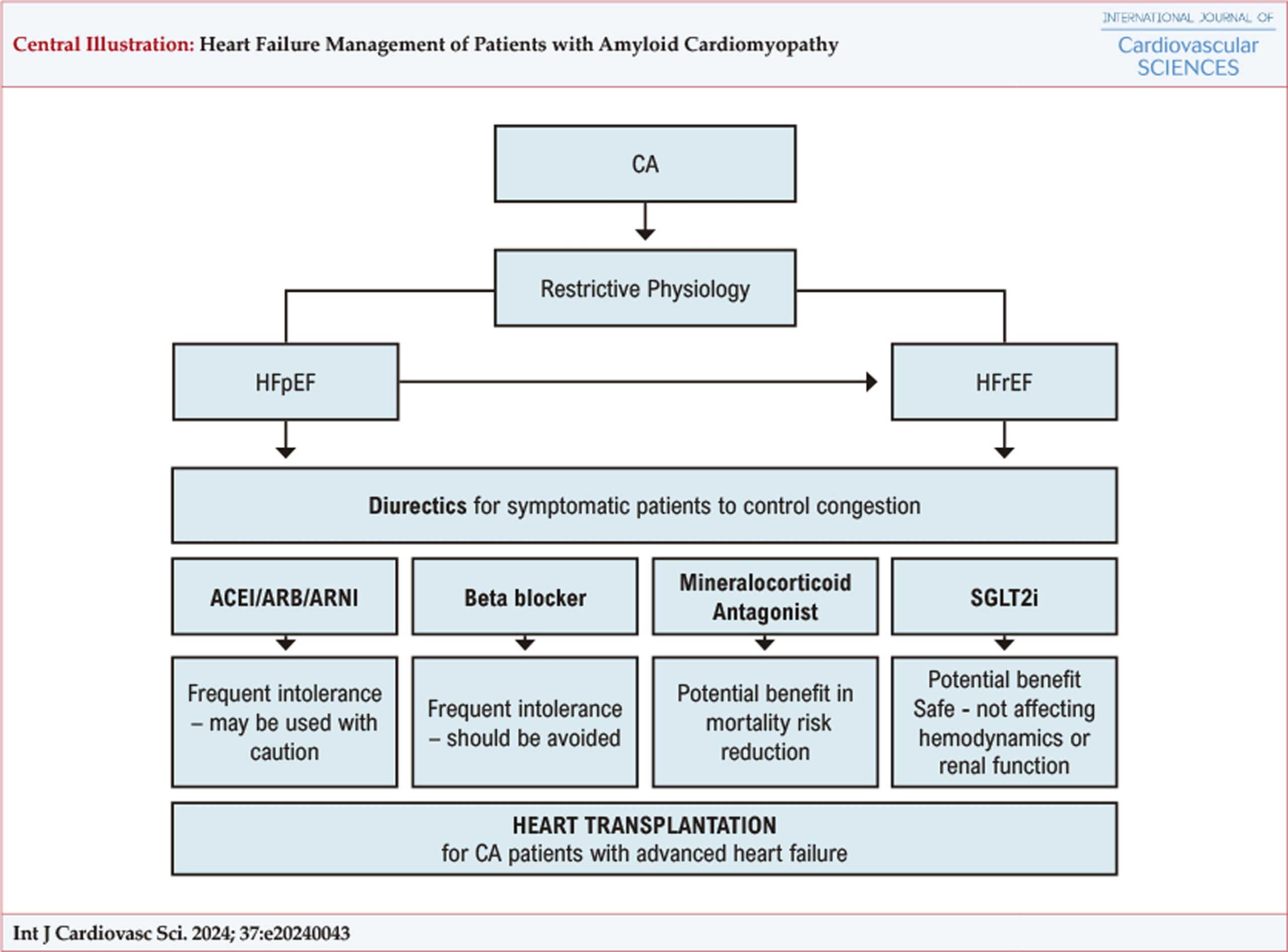
Cardiac amyloidosis (CA) can lead to progressive heart failure (HF) by depositing insoluble amyloid fibrils within the myocardial extracellular space, resulting in an infiltrative and restrictive cardiomyopathy. Although CA was previously perceived as rare and incurable, recent advances in diagnostics and emerging therapies have been changing this outlook. It is crucial to spread awareness about CA to facilitate earlier diagnosis and proper therapeutic interventions, enhancing patient prognosis and survival. Currently, there is an estimated delay of 2 years from symptom onset to diagnosis, typically involving consultation with an average of 5 different professionals. Advances in cardiovascular imaging have facilitated earlier and more accurate diagnosis, reducing the necessity for invasive procedures, such as endomyocardial biopsy. Presently, tafamidis is the only drug that has been shown to offer prognostic benefits in ATTR-CA. Tafamidis is a highly specific medication targeting the circulating TTR protein, stabilizing the TTR tetramer to prevent its dissociation into amyloidogenic monomers that deposit in the myocardium. Alongside specific amyloidosis therapy, supportive HF treatment may be required; however, managing CA with medications typically used for HF with reduced ejection fraction (HFrEF) can be challenging due to potential intolerance. The effectiveness of guideline-directed medical therapy (GDMT) remains undetermined and still requires evaluation through randomized controlled clinical trials (RCCTs). Thus, the treatment cornerstone remains the judicious use of loop diuretics and mineralocorticoid receptor antagonists to control volume overload. Due to the safety profile, not adversely affecting hemodynamics or renal function, sodium-glucose transport protein 2 (SGLT2) inhibitors may be an effective treatment for CA, but they also still require evaluation through RCCTs.

  • Amyloidosis
  • Cardiomyopathies
  • Heart Failure
  • Left Ventricular Dysfunction
Read Full Article
Creative Commons Attribution (CC BY) Creative Commons license
07/06/2024 DOI: 10.36660/ijcs.20240043 Views 2
ABC
Original Article

Markers of Tissue Perfusion as Predictors of Adverse Outcomes in Patients with Left Ventricular Dysfunction Undergoing Coronary Artery Bypass Surgery

Thiana Yamaguti et al. José Otavio Costa Auler Junior Luís Alberto Oliveira Dallan Filomena Regina Barbosa Gomes Galas … Ligia Cristina Câmara Cunha Marilde de Albuquerque Piccioni

Abstract

Background:

Cardiac surgery patients may be exposed to tissue hypoperfusion and anaerobic metabolism.

Objective:

To verify whether the biomarkers of tissue hypoperfusion have predictive value for prolonged intensive care unit (ICU) stay in patients with left ventricular dysfunction who underwent coronary artery bypass surgery.

Methods:

After approval by the institution’s Ethics Committee and the signing of informed consent, 87 patients with left ventricular dysfunction (ejection fraction < 50%) undergoing coronary artery bypass surgery were enrolled. Hemodynamic and metabolic biomarkers were collected at five time points: after anesthesia, at the end of the surgery, at ICU admission, and at six and twelve hours after. An analysis of variance for repeated measures followed by a Bonferroni post hoc test was used for repeated, continuous variables (hemodynamic and metabolic variables) to determine differences between the two groups over the course of the study period. The level of statistical significance adopted was 5%.

Results:

Thirty-eight patients (43.7%) who presented adverse outcomes were older, higher Euro score (p<0.001), and elevated ΔpCO2 as analyzed 12 hours after ICU admission (p<0.01), while increased arterial lactate concentration at 6 hours postoperatively was found to be a negative predictive factor (p<0.01).

Conclusions:

Euro SCORE, six-hour postoperative arterial lactate, 12-hour postoperative ΔPCO2, and eRQ are independent predictors of adverse outcomes in patients with left ventricular dysfunction after cardiac surgery.

  • Biomarkers
  • Left Ventricular Dysfunction
  • Thoracic Surgery
Read Full Article
Creative Commons Attribution (CC BY) Creative Commons license
05/04/2024 DOI: 10.36660/abc.20230247 Views 1
Figure 1
ABCHF
Review Article

Conduction Disturbances Leading to Heart Failure – What Clinicians Need to Know

Estêvão Lanna Figueiredo et al. Frank Nunes Fernando Carvalho Neuenschwander Kleisson Antônio Pontes Maia André Assis Lopes do Carmo

Abstract

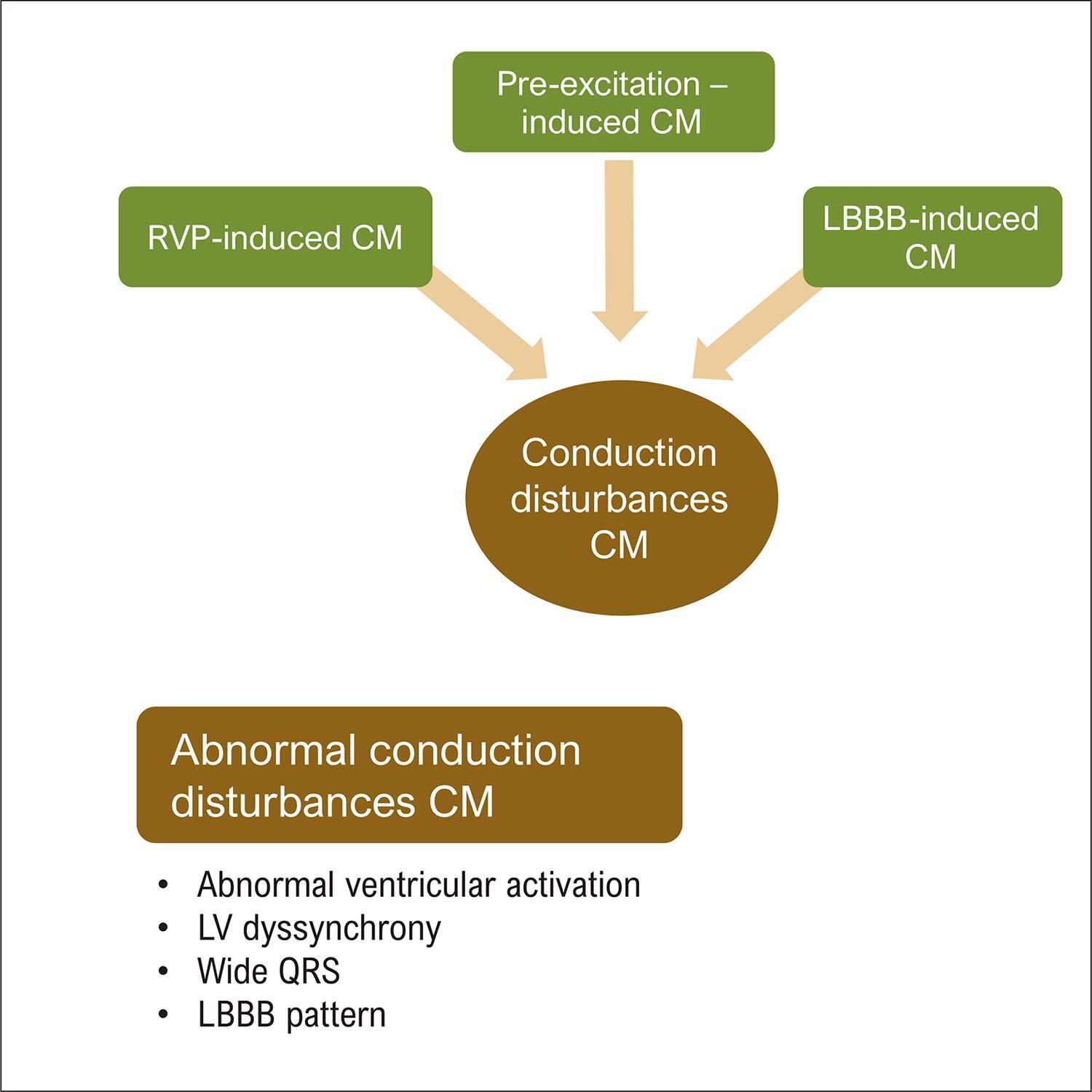
Recently, pre-excitation syndromes, left bundle branch block (LBBB), and right ventricular pacing have been recognized as causes of cardiomyopathies (CMs). They all have abnormal ventricular activation, that results in what is known as left ventricular (LV) dyssynchrony. These three entities show a common feature of wide QRS and LBBB pattern on the electrocardiogram. The term abnormal conduction-induced CM was, then, proposed. Appropriate diagnosis and treatment of these CMs will possibly improve LV ejection fraction, LV functional capacity and reduce morbidity and mortality. In this article we will briefly review these three clinical conditions, aiming to help clinicians to recognize them, manage and refer patients at risk.

  • Cardiomiopathy
  • Heart Failure
  • Left Bundle Branch Block
  • Left Ventricular Dysfunction
  • Pre-excitation Syndrome
  • Righy Ventricle Pacing
Read Full Article
Creative Commons Attribution (CC BY) Creative Commons license
10/07/2023 DOI: 10.36660/abchf.20230030 Views 1
Figure 1
ABC
Original Article

Influence of Physical Training after a Myocardial Infarction on Left Ventricular Contraction Mechanics

Márcio Silva Miguel Lima et al. Talia Falcão Dalçóquio Maria Cristina Donadio Abduch Jeane Mike Tsutsui … Wilson Mathias Jr José Carlos Nicolau

Abstract

Background

Exercise plays a positive role in the course of the ischemic heart disease, enhancing functional capacity and preventing ventricular remodeling.

Objective

To investigate the impact of exercise on left ventricular (LV) contraction mechanics after an uncomplicated acute myocardial infarction (AMI).

Methods

A total of 53 patients was included, 27 of whom were randomized to a supervised training program (TRAINING group), and 26 to a CONTROL group, who received usual recommendations on physical exercise after AMI. All patients underwent cardiopulmonary stress testing and a speckle tracking echocardiography to measure several parameters of LV contraction mechanics at one month and five months after AMI. A p value < 0.05 was considered statistically significant for the comparisons of the variables.

Results

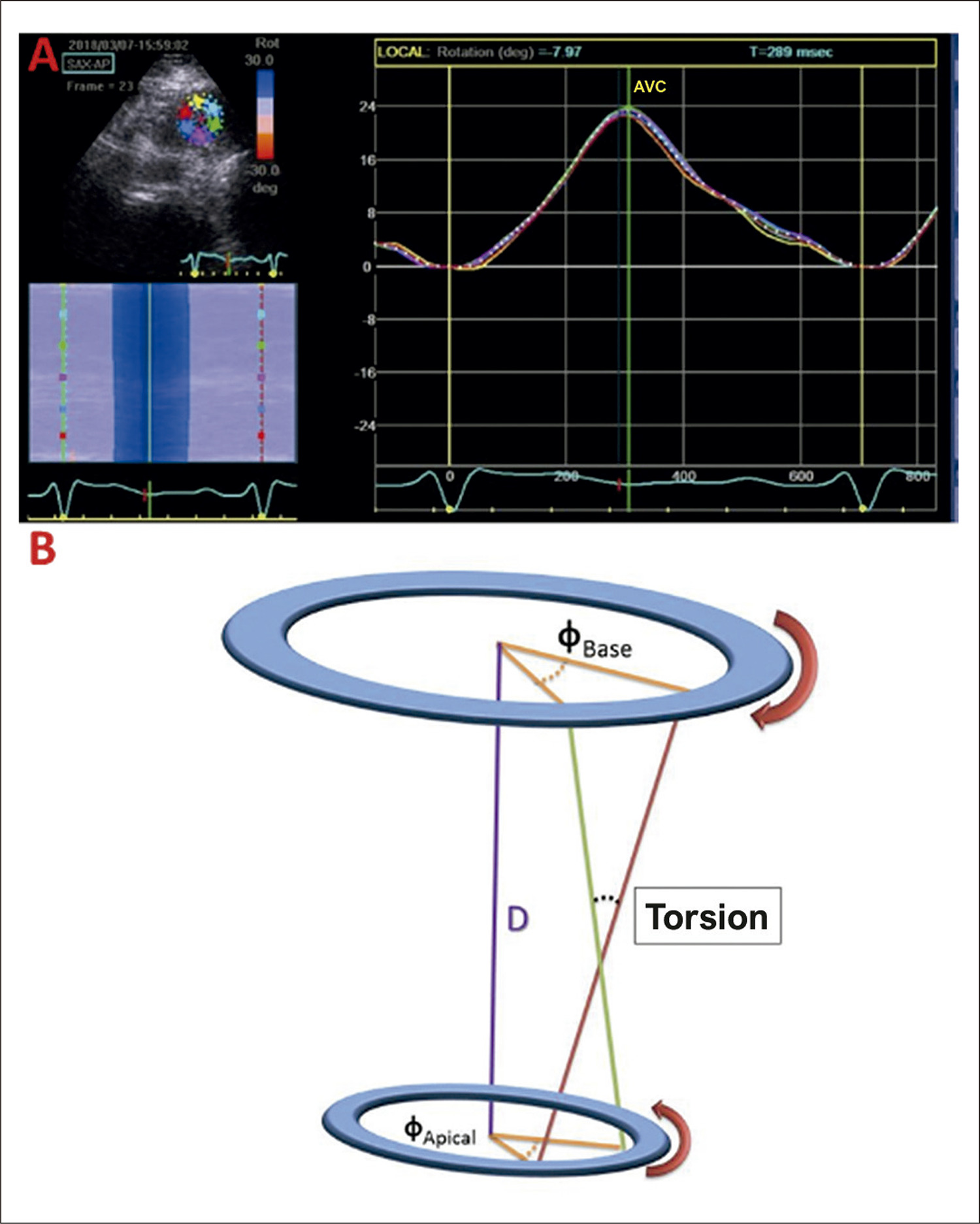
No significant difference were found in the analysis of LV longitudinal, radial and circumferential strain parameters between groups after the training period. After the training program, analysis of torsional mechanics demonstrated a reduction in the LV basal rotation in the TRAINING group in comparison to the CONTROL group (5.9±2.3 vs. 7.5±2.9o; p=0.03), and in the basal rotational velocity (53.6±18.4 vs.68.8±22.1 º/s; p=0.01), twist velocity (127.4±32.2 vs. 149.9±35.9 º/s; p=0.02) and torsion (2.4±0.4 vs. 2.8±0.8 º/cm; p=0.02).

Conclusions

Physical activity did not cause a significant improvement in LV longitudinal, radial and circumferential deformation parameters. However, the exercise had a significant impact on the LV torsional mechanics, consisting of a reduction in basal rotation, twist velocity, torsion and torsional velocity which can be interpreted as a ventricular “torsion reserve” in this population.

  • Exercise
  • Left Ventricular Dysfunction
  • Myocardial Infarction
Read Full Article
Creative Commons Attribution (CC BY) Creative Commons license
21/04/2023 DOI: 10.36660/abc.20220185 Views 1
ABCIC
Review Article

Left Atrial Strain in the Analysis of LV Diastolic Function: Ready to Use?

Antonio Amador Calvilho Júnior et al. Jorge Eduardo Assef João Moron Saes Braga Andrea de Andrade Vilela … Antonio Tito Paladino Filho Gustavo Nishida

Abstract

Left atrial (LA) dilation is a common indicator of diastolic dysfunction, and its analysis through a volume calculation reflects the cumulative effects of the left ventricular (LV) filling pressures. However, an increase in LA volume is not exclusive to diastolic dysfunction, which has also been observed in other clinical conditions. Thus, the evaluation of the LA strain enables a functional study of this chamber, adding to the morphological analysis through the volume calculation.

The LA strain, measured using the speckle tracking technique, brings information on the reservoir, conduction, and contractile functions of the LA, and is related to the LV function. Moreover, the changes in the LA strain precede the volumetric changes by nearly a decade, and correlate inversely with the degree of LA fibrosis – this has an important relationship with the diastolic dysfunction and its grading system. Albeit insufficient to explain its totality, LA fibrosis can partially justify the functional changes of this heart chamber and can favor the use of this variable as a complement to the current protocols for the analysis of the diastolic function.

Although further study is still warranted to establish other clinical applications, the LA strain stands out in the analysis of diastolic dysfunction and can be considered ready to use, offering a great potential to improve the evaluation of the overall cardiac function.

  • Echocardiography
  • Left Ventricular Dysfunction
  • Myocardium
Read Full Article
Creative Commons Attribution (CC BY) Creative Commons license
24/03/2023 DOI: 10.36660/abcimg.2022357i Views 1
ABCIC
Review Article

My Approach to Right Ventricular Longitudinal Strain with Automated 2D and 3D Software

Lucas Arraes de França et al. Lucas Velloso Dutra

Abstract

Right ventricular strain analysis has emerged as an important diagnostic tool in the detection of early right ventricular systolic dysfunction not detected by conventional echocardiography techniques. Furthermore, it is capable of providing additional diagnostic and prognostic information to the traditional parameters for evaluating right ventricular systolic function in various pathologies. The echocardiography method of choice for its assessment is longitudinal strain derived from speckletracking. This method has been shown to be more sensitive for small changes in systolic function when compared to tricuspid annular plane systolic excursion, tissue Doppler imaging of the tricuspid annular s’ wave, and right ventricular fractional area change. Advances in artificial intelligence and software with automated analysis have been introduced to this scenario with the aim of making the method simpler and quicker to apply, with lower inter- and intra-observer variability. The objective of this review article is to demonstrate the technique step by step, from image optimization and acquisition to interpretation of results, with illustrative figures of selected cases.

  • Echocardiography
  • Left Ventricular Dysfunction
  • Myocardium
Read Full Article
Creative Commons Attribution (CC BY) Creative Commons license
06/03/2023 DOI: 10.36660/abcimg.20230010i
Figure 1
ABCHF
Original Article

Efficacy of Different Cumulative Doses of Doxorubicin in the Induction of a Dilated Cardiomyopathy Model in Rats

Denise Mayumi Tanaka et al. João Lucas O’Connell Camila Godoy Fabricio Minna Moreira Dias Romano … Erica Carolina Campos Luciano Fonseca Lemos de Oliveira André Schmidt Eduardo Elias Vieira de Carvalho Marcus Vinícius Simões

Abstract

Background:

Doxorubicin (DOXO) has been used to induce dilated cardiomyopathy (DCM) in experimental models.

Objective:

To analyze cardiac changes after DOXO infusion and define the most effective protocol to reproduce an experimental model of DCM.

Methods:

Male Wistar rats were divided into 4 groups and received increasing cumulative doses of DOXO (at a rate of 2 mg/kg/week) or saline solution: the control group (CTR) received saline solution, Group D-8 received a total infusion of 8 mg/kg, Group D-12 received 12 mg/kg, and Group D-16 received 6 mg/kg. All animals underwent echocardiography at baseline and after the end of infusion. The animals were then euthanized and cardiac tissue was collected for histological analysis.

Results:

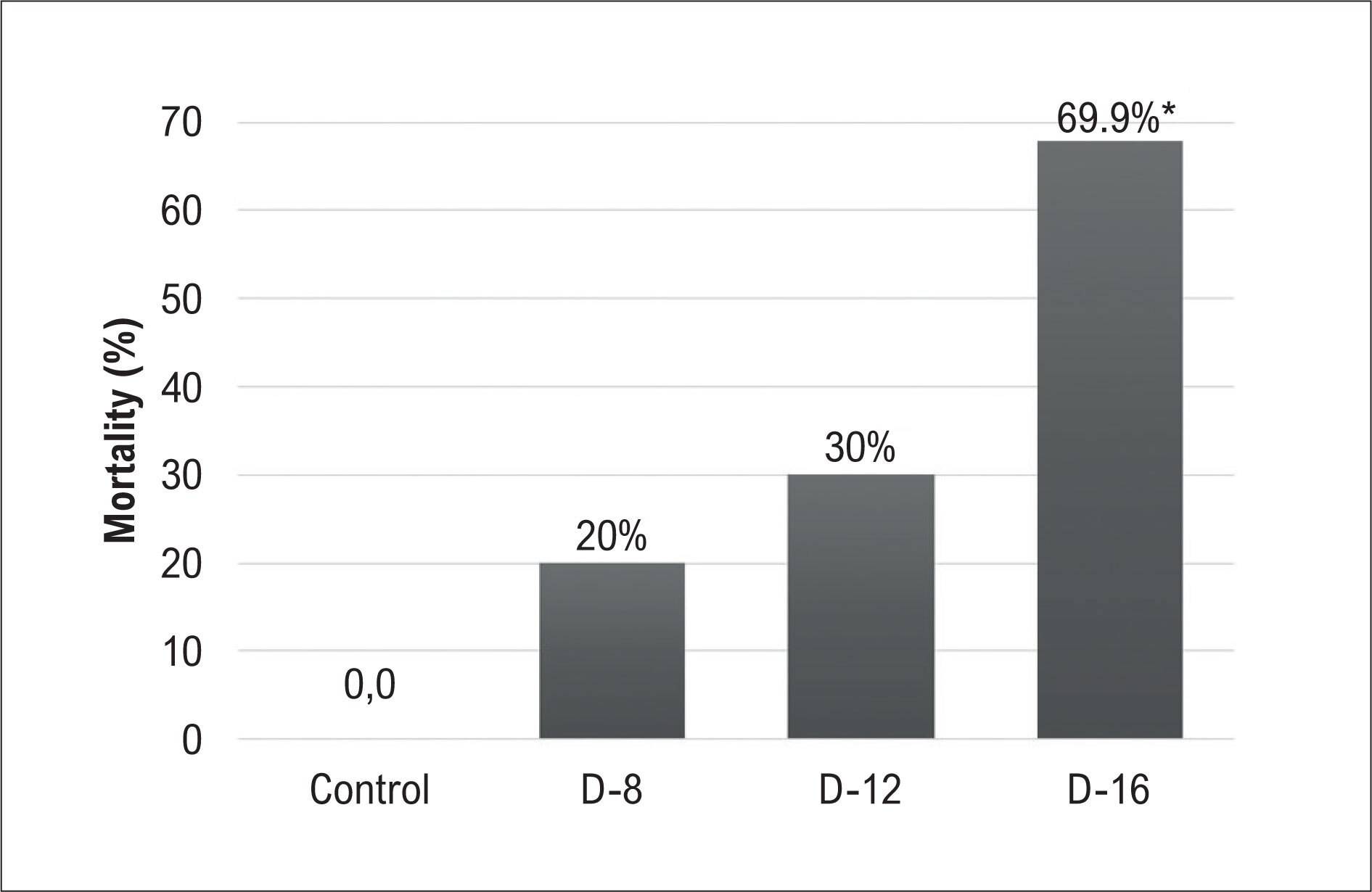
Mortality rates were 20% (D-8), 30% (D-12), and 67.6% (D-16). The 8 mg/kg dose was not associated with a significant reduction in left ventricular ejection fraction (LVEF) or an increase in left ventricular end-diastolic diameter (LVEDD). There was significant LVEF impairment with 12 mg/kg and 16 mg/kg doses compared to the control (68.3±5% vs 58.4±9%, p < 0.01, for CTR-12 vs D-12; and 66.0±6% vs 47.6±15%, p < 0.01, for CTR-16 vs D-16). Histological analyses revealed a greater percentage of fibrosis in D-12 (10.6±3.3%) and D-16 (9.8±2.3%) compared to CTR (2.3±1.0%), p < 0.001.

Conclusions:

The DOXO dose of 16 mg/kg was associated with severe cardiac changes and high mortality. Thus, we propose a DOXO dose of 12 mg/kg as the most appropriate and effective for inducing DCM with an acceptable mortality rate.

  • Cardiotoxicity
  • Dilated Cardiomyopathy
  • Doxorubicin
  • Heart Failure
  • Left Ventricular Dysfunction
Read Full Article
Creative Commons Attribution (CC BY) Creative Commons license
01/12/2022 DOI: 10.36660/abchf.20220074
ABCIC
Review Article

Strain Echocardiography in Patients with Diastolic Dysfunction and Preserved Ejection Fraction: Are We Ready?

Renato Hortegal et al. Henry Abensur

Abstract

The study of diastolic function in echocardiography has the following primary tasks: 1) Recognizing/categorizing diastolic dysfunction and 2) identifying signs of increased left ventricular filling pressures. The ASE 2016 guideline for the evaluation of left ventricular diastolic function opens possibilities for the use of new technologies that support the diagnostic process. A literature review on the clinical evidence and on the applicability of parameters of strain echocardiography in the evaluation of diastolic function in patients with preserved ejection fraction was carried out.

  • Diastole,/physiopathology
  • Echocardiography, Doppler
  • Heart Failure
  • Left Ventricular Dysfunction
  • Specklr Tracking
  • Ventricular Function/physiopathology
Read Full Article
Creative Commons Attribution (CC BY) Creative Commons license
20/01/2022 DOI: 10.5935/2318-8219.20170034 Views 2
ABCIC
Original Article

Correlation between Carotid Atherosclerosis and Left Ventricular Dysfunction at Echocardiography

Ana Gabriella Gonçalves Amorim et al. Ana Cristina Camarozano Wermelinger

Abstract

Introduction

Cardiovascular diseases are the leading cause of morbidity and mortality worldwide. Primary prevention, through early diagnosis, is necessary to enable proper treatment and control disease progression, reducing mortality and public health expenditures.

Objective

Correlate carotid artery atherosclerosis (evaluated by Doppler echocardiography) and left ventricular dysfunction (evaluated by echocardiography) and to correlate the findings with the patients’ cardiovascular risk.

Method

A total of 286 medical records of patients who underwent carotid Doppler echocardiography and transthoracic echocardiography were analyzed. The data analyzed were: presence of atherosclerotic plaque and degree of stenosis, left ventricular ejection fraction and presence of diffuse or segmental left ventricular contractile disorders.

Results

Of the 238 reports of carotid Doppler echocardiography, 18 had stenosis greater than 70% in the carotid artery and 14 of those had left ventricular contractile disorders (p = 0.045). Of the patients with very high cardiovascular risk, 61 had carotid artery stenosis (p < 0.001); 51 patients with very high cardiovascular risk had contractile disorders (p < 0.001). Of the 266 echocardiography reports, 37 had reduced left ventricular ejection fraction. Of these, 25 had very high cardiovascular risk (p < 0.001).

Conclusion

There was a positive relationship between carotid artery stenosis, reduced left ventricular ejection fraction and left ventricular (diffuse or segmental) contractile disorder with very high cardiovascular risk. It was also possible to correlate carotid stenosis with contractile disorder, although this study did not demonstrate any correlation between carotid stenosis and reduced left ventricular ejection fraction. (Arq Bras Cardiol: Imagem cardiovasc. 2019;32(1):6-13)

  • Aterosclerotic Plaque
  • Carotid Stenosis
  • Echocardiography
  • Left Ventricular Dysfunction
  • Systolic Volume
Read Full Article
Creative Commons Attribution (CC BY) Creative Commons license
20/01/2022 DOI: 10.5935/2318-8219.20190005
ABCIC
Editorial

My Approach to Left Ventricular Strain Assessment

Cintia Galhardo Tressino et al. Renato de Aguiar Hortegal Marcela Momesso Rodrigo Bellio de Mattos Barretto David Le Bihan

[…]

  • Echocardiography
  • Left Ventricular Dysfunction
  • Parameters
Read Full Article
Creative Commons Attribution (CC BY) Creative Commons license
17/12/2021 DOI: 10.47593/2675-312X/20203304ecom15 Views 1
Figure 1
IJCS
Case Report

Takotsubo Syndrome as a Complication of Mild COVID-19: A Case Report

Jéssica Mayara Oséas et al. William Santos de Oliveira Bruna Aparecida Oliveira Jayson Marcus Miranda … Raissa Gabriela Vieira Barros Nestor Rodrigues de Oliveira Neto

Introduction

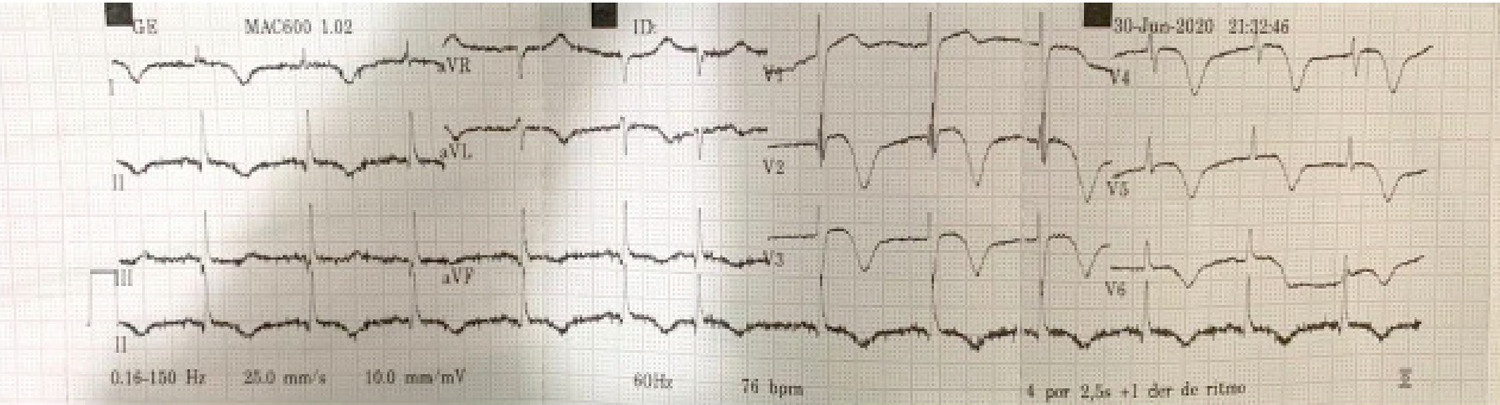
As the number of cases of coronavirus disease 2019 (COVID-19) has reached tens of millions worldwide, the understanding of its clinical manifestations has grown. These have been described as a range of systemic repercussions resulting from an interplay between direct organ damage and exaggerated host immune response. , In a descriptive case series study of COVID-19 patients in Wuhan, 44% of patients had either elevated cardiac biomarkers or new changes in electrocardiogram (ECG) and imaging exams, and 34% of all cases had acute heart failure. Systemic diseases with increased adrenergic response may lead to stress cardiomyopathy, or Takotsubo syndrome, which is a rare condition with challenging diagnosis in the course of COVID-19. Herein we present a case of an elderly woman with mild COVID-19 who presented classical features of takotsubo syndrome on the 5th day of illness.

[…]

  • Coronavirus infections
  • Left Ventricular Dysfunction
  • Stress Cardiomyopathy
  • Takotsubo Cardiomyopathy
Read Full Article
Creative Commons Attribution (CC BY) Creative Commons license
20/09/2021 DOI: 10.36660/ijcs.20200398 Views 1
Chart 1
IJCS
Original Article

Cardiopulmonary Exercise Testing in Patients with Implantable Cardioverter-Defibrillator: A Retrospective Study

Carolina Mizzaci et al. Thiago Fagundes Felipe Malafaia Sandro Felicioni … Susimeire Buglia Carlos Alberto Hossri Almir Ferraz Rica Buchler Romeu Meneghelo Luiz Mastrocolla

Abstract

Background:

Cardiopulmonary exercise testing is widely used in the evaluation of patients with left ventricular dysfunction, and some of these patients have an implantable cardioverter-defibrillator (ICD). However, this test presents specific challenges because of the susceptibility to ventricular arrhythmias during maximal levels of exercise.

Objective:

To evaluate the safety of cardiopulmonary exercise testing in patients with ICD.

Methods:

The study included patients with ICD who underwent cardiopulmonary exercise testing between 2007 and 2015. The tests were completed once the electronic devices were programmed. The maximum allowed heart rate reached during exercise was 10 beats below the first therapy zone programmed.

Results:

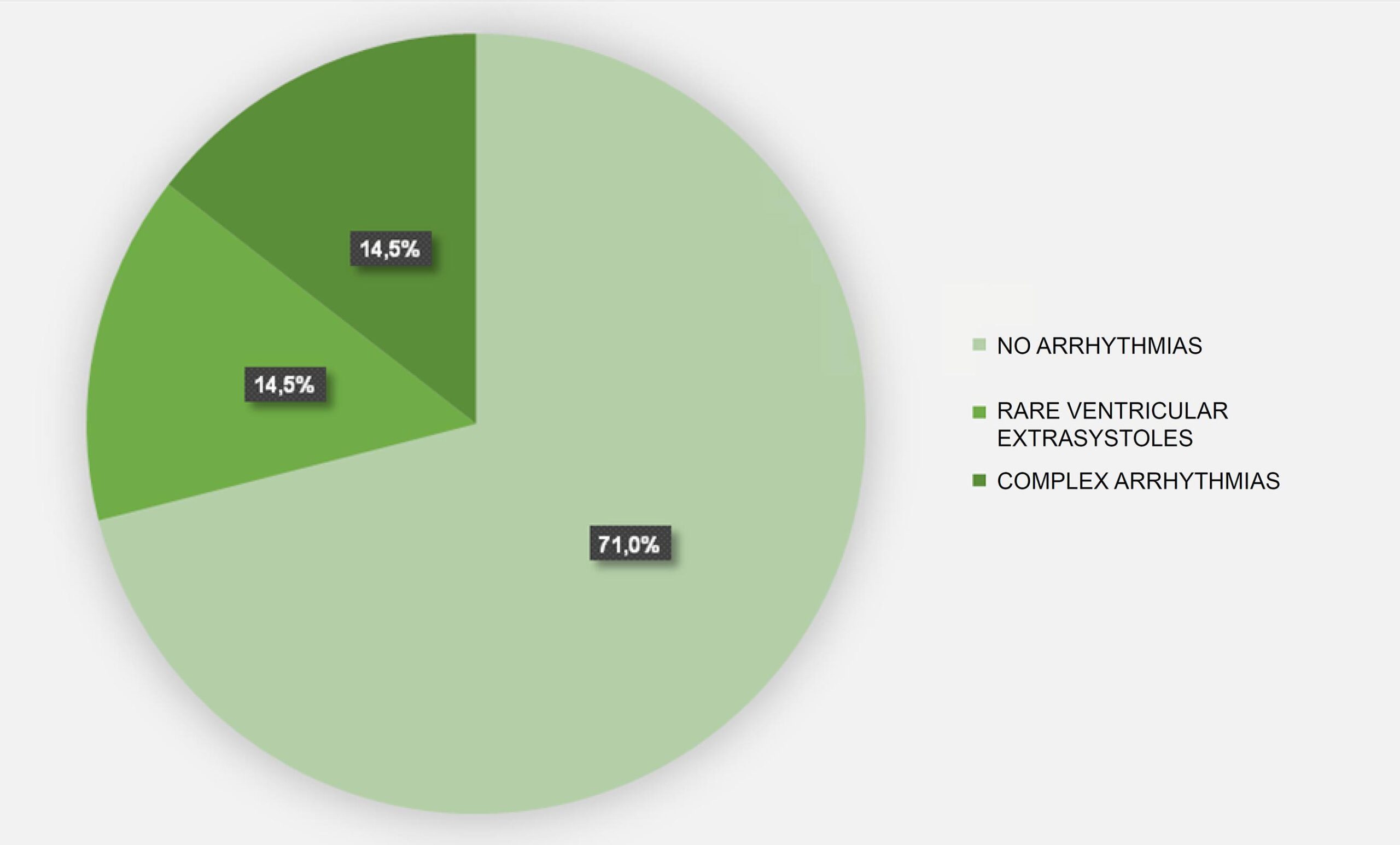
The study included 69 patients with mean age 53.7 ± 10.8 years, including 68% men. Exercise time was 8.7±2.3 minutes, with peak oxygen consumption of 13.3 ± 4.3 ml.kg-1.min-1. Peak heart rate was 62.9 ± 13.4% of the maximum rate predicted, with all patients taking specific medication. Ventricular arrhythmia was observed in 29% of the patients, and paired ventricular extrasystoles, ventricular bigeminism or non-sustained ventricular tachycardia were observed in only 14.5% of the patients. There was no sustained ventricular arrhythmia resulting in ICD therapy or other complications, such as inappropriate therapies. The frequency of severe events was 0%, 95% CI (0 – 5.2%).

Conclusion:

In the sample of patients evaluated, the cardiopulmonary exercise testing was shown to be safe during its performance in a hospital setting, following the safety standards.

  • Arrhythmias Cardiac
  • Breathing Exercise
  • Cardiovascular Diseases
  • Defibrillators, Implantable
  • Left Ventricular Dysfunction
  • Sudden Cardiac Death
Read Full Article
Creative Commons Attribution (CC BY) Creative Commons license
12/08/2019 DOI: 10.5935/2359-4802.20190066
Figure 1
ABC
Review Article

Effects of PDE type 5 inhibitors on Left Ventricular Diastolic Dysfunction in Resistant Hypertension

Ana Paula Cabral de Faria et al. Rodrigo Modolo Beatriz Vaz Domingues Moreno Heitor Moreno

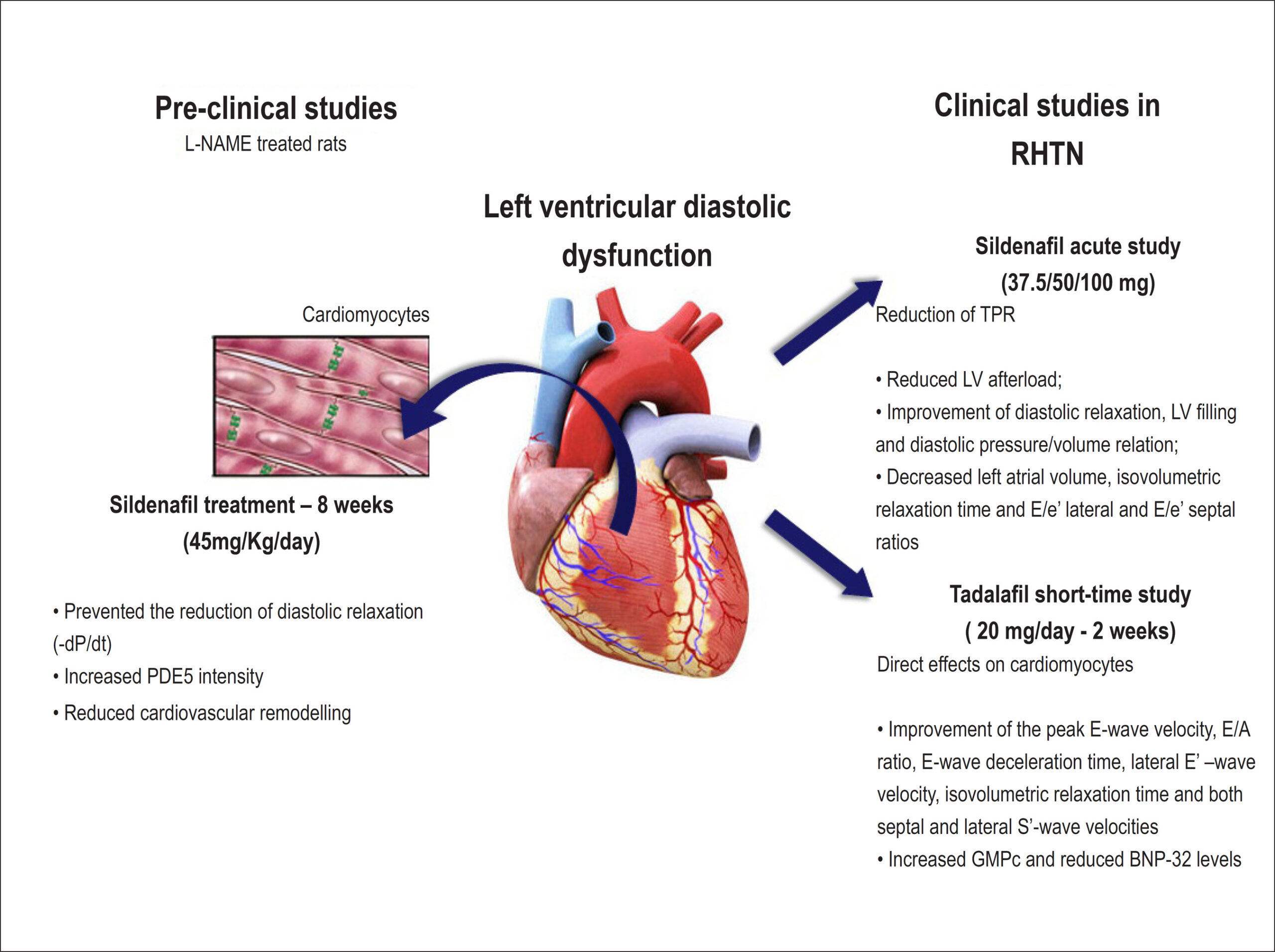
Resistant hypertension (RHTN) is a multifactorial disease characterized by blood pressure (BP) levels above goal (140/90 mmHg) in spite of the concurrent use of three or more antihypertensive drugs of different classes. Moreover, it is well known that RHTN subjects have high prevalence of left ventricular diastolic dysfunction (LVDD), which leads to increased risk of heart failure progression. This review gathers data from studies evaluating the effects of phosphodiesterase-5 (PDE-5) inhibitors (administration of acute sildenafil and short-term tadalafil) on diastolic function, biochemical and hemodynamic parameters in patients with RHTN. Acute study with sildenafil treatment found that inhibition of PDE-5 improved hemodynamic parameters and diastolic relaxation. In addition, short-term study with the use of tadalafil demonstrated improvement of LVDD, cGMP and BNP-32 levels, regardless of BP reduction. No endothelial function changes were observed in the studies. The findings of acute and short-term studies revealed potential therapeutic effects of IPDE-5 drugs on LVDD in RHTN patients.

  • Heart Failure
  • Hypertension
  • Left Ventricular Dysfunction
  • Phosphodiesterase 5 Inhibitors / therapeutic use
  • Vasodilator Agents / therapeutic use
Read Full Article
Creative Commons Attribution (CC BY) Creative Commons license
28/10/2014 DOI: 10.5935/abc.20140159
ABC
Original Article

Improvement in left ventricular dysfunction after surgical correction of mitral regurgitation

Antônio Sérgio Cordeiro da Rocha et al. Nazareth de Novaes da Rocha Rita de Cássia Villela Soares Marialda Coimbra … Rosana Grandelle Ramos Clara Weksler Fernando Eugênio Cruz Filho Celso Garcia da Silveira Paulo Roberto Dutra da Silva

OBJECTIVE: To evaluate whether left ventricular end-systolic (ESD) diameters £ 51mm in patients (pt) with severe chronic mitral regurgitation (MR) are predictors of a poor prognosis after mitral valve surgery (MVS). METHODS: Eleven pt (aged 36±13 years) were studied in the preoperative period (pre), median of 36 days; in the early postoperative period (post1), median of 9 days; and in the late postoperative period (post2), mean of 38.5±37.6 months. Clinical and echocardiographic data were gathered from each pt with MR and systolic diameter ³51mm (mean = 57±4mm) to evaluate the result of MVS. Ten patients were in NYHA Class III/IV. RESULTS: All but 2 pt improved in functional class. Two pt died from heart failure and infectious endocarditis 14 and 11 months, respectively, after valve replacement. According to ejection fraction (EF) in post2, we identified 2 groups: group 1 (n=6), whose EF decreased in post1, but increased in post2 (p=0.01) and group 2 (n=5), whose EF decreased progressively from post1 to post2 (p=0.10). All pt with symptoms lasting £ 48 months had improvement in EF in post2 (p=0.01). CONCLUSION: ESD ³51mm are not always associated with a poor prognosis after MVS in patients with MR. Symptoms lasting up to 48 months are associated with improvement in left ventricular function.

  • Left Ventricular Dysfunction
  • mitral regurgitation
  • mitral valvar correction
  • surgical correction
Read Full Article
Creative Commons Attribution (CC BY) Creative Commons license
04/01/2012 DOI: 10.1590/S0066-782X2003000100002 Views 1
Off-pump total myocardial revascularization in patients with left ventricular dysfunction
ABC
Artigo Original

Off-pump total myocardial revascularization in patients with left ventricular dysfunction

Rodrigo Milani et al. Brofman Paulo José Augusto Moutinho Barboza Laura … Guimarães Maximiliano Barbosa Alexandre Zitynski Lidia Précoma Dalton Varela Alexandre Marcel Rogers Ravanelli Francisco Maia

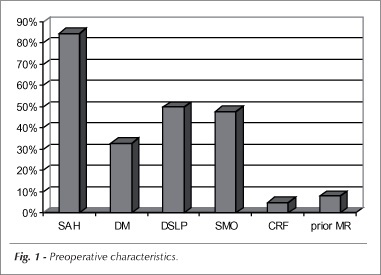
OBJECTIVE: To assess off-pump myocardial revascularization in patients with significant left ventricular dysfunction. METHODS: Four hundred and five patients with an ejection fraction less than 35% underwent myocardial revascularization without extracorporeal circulation. The procedure was performed with the aid of a suction stabilizer and the LIMA stitch. The distal anastomoses were performed first. RESULTS: A total of 405 patients were evaluated whose mean age was 63.4±9.78 years. Two hundred and seventy-nine patients were men (68.8%). With regard to risk factors, 347 patients were hypertensive, 194 were smokers, 202 were dyslipidemic, and 134 had diabetes. Two hundred and sixty patients were classified as NYHA functional class III and IV. Twenty patients suffered from chronic renal disease and were under dialysis. Fifty-one underwent emergency surgery, and 33 had been previously operated on. The mean ejection fraction was 27.2±3.54%. The mean EuroSCORE was 8.46±4.41. The mean number of anastomoses performed was 3.03±1.54 per patient. Forty-nine patients (12%) needed an intra-aortic balloon inserted after induction of anesthesia, whereas 73 (18%) needed inotropic support during the perioperative period. As to complications, 2 patients (0.49%) had renal failure, 2 had mediastinitis (0.49%), 7 (1.7%) needed to be reoperated because of bleeding, 5 patients (1.2%) suffered acute myocardial infarction, and 70 patients (17.3%) experienced atrial fibrillation. Eighteen (4.4%) patients died. CONCLUSION: Based on the data above, we concluded that myocardial revascularization without extracorporeal circulation in patients with left ventricular dysfunction is a safe and effective technique, and an alternative for high-risk patients. Results obtained were better than those predicted by EuroSCORE.

  • Left Ventricular Dysfunction
  • Myocardial Revascularization
  • no extracorporeal circulation
Read Full Article
Creative Commons Attribution (CC BY) Creative Commons license
28/08/2007 DOI: 10.1590/S0066-782X2007001300003 Views 1
Value of the radiological study of the thorax for diagnosing left ventricular dysfunction in Chagas' disease
ABC
Original Article

Value of the radiological study of the thorax for diagnosing left ventricular dysfunction in Chagas' disease

Amanda Arantes Perez et al. Antonio Luiz Pinho Ribeiro Márcio Vinícius Lins Barros Marcos Roberto de Sousa … Roberto José Bittencourt Fernando Santana Machado Manoel Otávio Costa Rocha

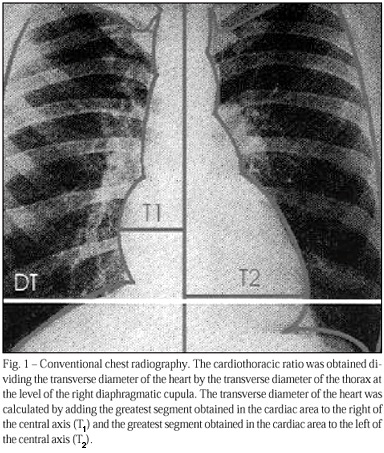
OBJECTIVE: To determine the value of the radiological study of the thorax for diagnosing left ventricular dilation and left ventricular systolic dysfunction in patients with Chagas’ disease. METHODS: A cross-sectional study of 166 consecutive patients with Chagas’ disease and no other associated diseases. The patients underwent cardiac assessment with chest radiography and Doppler echocardiography. Sensitivity, specificity, and positive and negative predictive values of chest radiography were calculated to detect left ventricular dysfunction and the accuracy of the cardiothoracic ratio in the diagnosis of left ventricular dysfunction with the area below the ROC curve. The cardiothoracic ratio was correlated with the left ventricular ejection fraction and the left ventricular diastolic diameter. RESULTS: The abnormal chest radiogram had a sensitivity of 50%, specificity of 80.5%, and positive and negative predictive values of 51.2% and 79.8%, respectively, in the diagnosis of left ventricular dysfunction. The cardiothoracic ratio showed a weak correlation with left ventricular ejection fraction (r=-0.23) and left ventricular diastolic diameter (r=0.30). The area calculated under the ROC curve was 0.734. CONCLUSION: The radiological study of the thorax is not an accurate indicator of left ventricular dysfunction; its use as a screening method to initially approach the patient with Chagas’ disease should be reevaluated.

  • Chagas disease
  • chest radiography
  • Left Ventricular Dysfunction
Read Full Article
Creative Commons Attribution (CC BY) Creative Commons license
02/04/2003 DOI: 10.1590/S0066-782X2003000200009

How to cite this article

EndNote RIS

Electronic Document Format (Vancouver)

Uellendahl M. Beyond Ejection Fraction: Integrating Myocardial Strain and Cardiac Magnetic Resonance into the Contemporary Assessment of Left Ventricular Function. ABC Imagem Cardiovascular 2026;39(2):e20260087.

Electronic Document Format (ABNT)

Uellendahl, Marly. Beyond Ejection Fraction: Integrating Myocardial Strain and Cardiac Magnetic Resonance into the Contemporary Assessment of Left Ventricular Function. ABC Imagem Cardiovascular, v. 39, n. 2, e20260087, Jul. 2026.

Electronic Document Format (APA)

Uellendahl, M. (2026). Beyond Ejection Fraction: Integrating Myocardial Strain and Cardiac Magnetic Resonance into the Contemporary Assessment of Left Ventricular Function. ABC Imagem Cardiovascular, 39(2), e20260087.

Electronic Document Format (ISO)

Uellendahl, Marly. Beyond Ejection Fraction: Integrating Myocardial Strain and Cardiac Magnetic Resonance into the Contemporary Assessment of Left Ventricular Function. ABC Imagem Cardiovascular [online]. 2026, vol. 39, n. 2, [cited 2026-10-14], e20260087. Available from: <https://journals.cardiol.br/en/article/beyond-ejection-fraction-integrating-myocardial-strain-and-cardiac-magnetic-resonance-into-the-contemporary-assessment-of-left-ventricular-function/>. ISSN 2318-8219

EndNote RIS

Electronic Document Format (Vancouver)

Pereira MM, Otto MEB, Portela JLP. Impact of Isometric Exercise on Left Ventricular Mechanics Assessed by Global Longitudinal Strain and Myocardial Work in Healthy Adults. ABC Imagem Cardiovascular 2026;39(2):e20260036.

Electronic Document Format (ABNT)

Pereira, Marcio Mendes; Otto, Maria Estefania Bosco; Portela, Juliana Lins da Paz. Impact of Isometric Exercise on Left Ventricular Mechanics Assessed by Global Longitudinal Strain and Myocardial Work in Healthy Adults. ABC Imagem Cardiovascular, v. 39, n. 2, e20260036, Jul. 2026.

Electronic Document Format (APA)

Pereira, M. M., Otto, M. E. B., & Portela, J. L. P. (2026). Impact of Isometric Exercise on Left Ventricular Mechanics Assessed by Global Longitudinal Strain and Myocardial Work in Healthy Adults. ABC Imagem Cardiovascular, 39(2), e20260036.

Electronic Document Format (ISO)

Pereira, Marcio Mendes and Otto, Maria Estefania Bosco and Portela, Juliana Lins da Paz. Impact of Isometric Exercise on Left Ventricular Mechanics Assessed by Global Longitudinal Strain and Myocardial Work in Healthy Adults. ABC Imagem Cardiovascular [online]. 2026, vol. 39, n. 2, [cited 2026-10-14], e20260036. Available from: <https://journals.cardiol.br/en/article/impact-of-isometric-exercise-on-left-ventricular-mechanics-assessed-by-global-longitudinal-strain-and-myocardial-work-in-healthy-adults/>. ISSN 2318-8219

EndNote RIS

Electronic Document Format (Vancouver)

Otto MEB, Assef JE, Nishida G. Recalibrating the Barometer: Echocardiography in Diastolic Dysfunction and the Era of New Algorithms. ABC Imagem Cardiovascular 2026;39(1):e20260004.

Electronic Document Format (ABNT)

Otto, Maria Estefania Bosco; Assef, Jorge Eduardo; Nishida, Gustavo. Recalibrating the Barometer: Echocardiography in Diastolic Dysfunction and the Era of New Algorithms. ABC Imagem Cardiovascular, v. 39, n. 1, e20260004, Apr. 2026.

Electronic Document Format (APA)

Otto, M. E. B., Assef, J. E., & Nishida, G. (2026). Recalibrating the Barometer: Echocardiography in Diastolic Dysfunction and the Era of New Algorithms. ABC Imagem Cardiovascular, 39(1), e20260004.

Electronic Document Format (ISO)

Otto, Maria Estefania Bosco and Assef, Jorge Eduardo and Nishida, Gustavo. Recalibrating the Barometer: Echocardiography in Diastolic Dysfunction and the Era of New Algorithms. ABC Imagem Cardiovascular [online]. 2026, vol. 39, n. 1, [cited 2026-10-14], e20260004. Available from: <https://journals.cardiol.br/en/article/recalibrating-the-barometer-echocardiography-in-diastolic-dysfunction-and-the-era-of-new-algorithms/>. ISSN 2318-8219

EndNote RIS

Electronic Document Format (Vancouver)

Santana Júnior WB, Pinto Filho MM, Barreto SM, Foppa M, Giatti L, Khera R, Ribeiro ALP, et al. Use of Artificial Intelligence Applied to Electrocardiogram for Diagnosis of Left Ventricular Systolic Dysfunction. Arquivos Brasileiros de Cardiologia 2025;122(4):e20240740.

Electronic Document Format (ABNT)

Santana Júnior, Wilton Batista de; Pinto Filho, Marcelo M.; Barreto, Sandhi Maria; Foppa, Murilo; Giatti, Luana; Khera, Rohan; Ribeiro, Antonio Luiz Pinho. Use of Artificial Intelligence Applied to Electrocardiogram for Diagnosis of Left Ventricular Systolic Dysfunction. Arquivos Brasileiros de Cardiologia, v. 122, n. 4, e20240740, May. 2025.

Electronic Document Format (APA)

Santana Júnior, W. B. , Pinto Filho, M. M., Barreto, S. M., Foppa, M., Giatti, L., Khera, R., & Ribeiro, A. L. P. (2025). Use of Artificial Intelligence Applied to Electrocardiogram for Diagnosis of Left Ventricular Systolic Dysfunction. Arquivos Brasileiros de Cardiologia, 122(4), e20240740.

Electronic Document Format (ISO)

Santana Júnior, Wilton Batista de and Pinto Filho, Marcelo M. and Barreto, Sandhi Maria and Foppa, Murilo and Giatti, Luana and Khera, Rohan and Ribeiro, Antonio Luiz Pinho. Use of Artificial Intelligence Applied to Electrocardiogram for Diagnosis of Left Ventricular Systolic Dysfunction. Arquivos Brasileiros de Cardiologia [online]. 2025, vol. 122, n. 4, [cited 2026-10-14], e20240740. Available from: <https://journals.cardiol.br/en/article/use-of-artificial-intelligence-applied-to-electrocardiogram-for-diagnosis-of-left-ventricular-systolic-dysfunction/>. ISSN 0066-782X

EndNote RIS

Electronic Document Format (Vancouver)

Bassan F, Esporcatte R, Correia MG, Guina OD, Weigert GS, Oliveira GCN. The Effect of Coronary Artery Bypass Graft Surgery on Contractile Function and Symptoms in Patients with Left Ventricular Dysfunction. Arquivos Brasileiros de Cardiologia 2025;122(4):e20240486.

Electronic Document Format (ABNT)

Bassan, Fernando; Esporcatte, Roberto; Correia, Marcelo Goulart; Guina, Octavio Drummond; Weigert, Guilherme de Souza; Oliveira, Gracielle Christine do Nascimento. The Effect of Coronary Artery Bypass Graft Surgery on Contractile Function and Symptoms in Patients with Left Ventricular Dysfunction. Arquivos Brasileiros de Cardiologia, v. 122, n. 4, e20240486, May. 2025.

Electronic Document Format (APA)

Bassan, F., Esporcatte, R., Correia, M. G., Guina, O. D., Weigert, G. S., & Oliveira, G. C. N. (2025). The Effect of Coronary Artery Bypass Graft Surgery on Contractile Function and Symptoms in Patients with Left Ventricular Dysfunction. Arquivos Brasileiros de Cardiologia, 122(4), e20240486.

Electronic Document Format (ISO)

Bassan, Fernando and Esporcatte, Roberto and Correia, Marcelo Goulart and Guina, Octavio Drummond and Weigert, Guilherme de Souza and Oliveira, Gracielle Christine do Nascimento. The Effect of Coronary Artery Bypass Graft Surgery on Contractile Function and Symptoms in Patients with Left Ventricular Dysfunction. Arquivos Brasileiros de Cardiologia [online]. 2025, vol. 122, n. 4, [cited 2026-10-14], e20240486. Available from: <https://journals.cardiol.br/en/article/the-effect-of-coronary-artery-bypass-graft-surgery-on-contractile-function-and-symptoms-in-patients-with-left-ventricular-dysfunction/>. ISSN 0066-782X

EndNote RIS

Electronic Document Format (Vancouver)

Rodrigues EV, Pereira APLC, Correa Filho WB, Lima MAFD, Siqueira Junior MAF, Nucera APCS, Souza F, et al. Prevalence of Subclinical Left Ventricular Dysfunction Evaluated by Global Longitudinal Strain in Female Carriers of Duchenne Muscular Dystrophy. International Journal of Cardiovascular Sciences 2025;38:e20230125.

Electronic Document Format (ABNT)

Rodrigues, Eduarda Vieira; Pereira, Antonio Pedro Lima Costa; Correa Filho, Wilson Braz; Lima, Maria Angelica de Faria Domingues de; Siqueira Junior, Marcio Aloysio Freitas; Nucera, Ana Paula Cassetta dos Santos; Souza, Fabio de. Prevalence of Subclinical Left Ventricular Dysfunction Evaluated by Global Longitudinal Strain in Female Carriers of Duchenne Muscular Dystrophy. International Journal of Cardiovascular Sciences, v. 38, e20230125, Mar. 2025.

Electronic Document Format (APA)

Rodrigues, E. V., Pereira, A. P. L. C., Correa Filho, W. B., Lima, M. A. F. D. , Siqueira Junior, M. A. F., Nucera, A. P. C. S., & Souza, F. (2025). Prevalence of Subclinical Left Ventricular Dysfunction Evaluated by Global Longitudinal Strain in Female Carriers of Duchenne Muscular Dystrophy. International Journal of Cardiovascular Sciences, 38, e20230125.

Electronic Document Format (ISO)

Rodrigues, Eduarda Vieira and Pereira, Antonio Pedro Lima Costa and Correa Filho, Wilson Braz and Lima, Maria Angelica de Faria Domingues de and Siqueira Junior, Marcio Aloysio Freitas and Nucera, Ana Paula Cassetta dos Santos and Souza, Fabio de. Prevalence of Subclinical Left Ventricular Dysfunction Evaluated by Global Longitudinal Strain in Female Carriers of Duchenne Muscular Dystrophy. International Journal of Cardiovascular Sciences [online]. 2025, vol. 38, [cited 2026-10-14], e20230125. Available from: <https://journals.cardiol.br/en/article/prevalence-of-subclinical-left-ventricular-dysfunction-evaluated-by-global-longitudinal-strain-in-female-carriers-of-duchenne-muscular-dystrophy/>. ISSN 2359-4802

EndNote RIS

Electronic Document Format (Vancouver)

Pereira MM, Monteiro Júnior FC, Yamamura S. Impact of Valvular Event Time Assessment Methods on Myocardial Work Calculation by Echocardiography. ABC Imagem Cardiovascular 2024;37(4):e20240093.

Electronic Document Format (ABNT)

Pereira, Marcio Mendes; Monteiro Júnior, Francisco das Chagas; Yamamura, Sayuri. Impact of Valvular Event Time Assessment Methods on Myocardial Work Calculation by Echocardiography. ABC Imagem Cardiovascular, v. 37, n. 4, e20240093, Dec. 2024.

Electronic Document Format (APA)

Pereira, M. M., Monteiro Júnior, F. C., & Yamamura, S. (2024). Impact of Valvular Event Time Assessment Methods on Myocardial Work Calculation by Echocardiography. ABC Imagem Cardiovascular, 37(4), e20240093.

Electronic Document Format (ISO)

Pereira, Marcio Mendes and Monteiro Júnior, Francisco das Chagas and Yamamura, Sayuri. Impact of Valvular Event Time Assessment Methods on Myocardial Work Calculation by Echocardiography. ABC Imagem Cardiovascular [online]. 2024, vol. 37, n. 4, [cited 2026-10-14], e20240093. Available from: <https://journals.cardiol.br/en/article/impact-of-valvular-event-time-assessment-methods-on-myocardial-work-calculation-by-echocardiography/>. ISSN 2318-8219

EndNote RIS

Electronic Document Format (Vancouver)

Faria VS, Murad CM, Marcondes-Braga FG. Heart Failure Management of Patients with Amyloid Cardiomyopathy. International Journal of Cardiovascular Sciences 2024;37:e20240043.

Electronic Document Format (ABNT)

Faria, Vanessa Simioni; Murad, Ciro Mancilha; Marcondes-Braga, Fabiana G.. Heart Failure Management of Patients with Amyloid Cardiomyopathy. International Journal of Cardiovascular Sciences, v. 37, e20240043, Jun. 2024.

Electronic Document Format (APA)

Faria, V. S., Murad, C. M., & Marcondes-Braga, F. G. (2024). Heart Failure Management of Patients with Amyloid Cardiomyopathy. International Journal of Cardiovascular Sciences, 37, e20240043.

Electronic Document Format (ISO)

Faria, Vanessa Simioni and Murad, Ciro Mancilha and Marcondes-Braga, Fabiana G.. Heart Failure Management of Patients with Amyloid Cardiomyopathy. International Journal of Cardiovascular Sciences [online]. 2024, vol. 37, [cited 2026-10-14], e20240043. Available from: <https://journals.cardiol.br/en/article/heart-failure-management-of-patients-with-amyloid-cardiomyopathy/>. ISSN 2359-4802

EndNote RIS

Electronic Document Format (Vancouver)

Yamaguti T, Auler Junior JOC, Dallan LAO, Galas FRBG, Cunha LCC, Piccioni MA. Markers of Tissue Perfusion as Predictors of Adverse Outcomes in Patients with Left Ventricular Dysfunction Undergoing Coronary Artery Bypass Surgery. Arquivos Brasileiros de Cardiologia 2024;121(2):e20230247.

Electronic Document Format (ABNT)

Yamaguti, Thiana; Auler Junior, José Otavio Costa; Dallan, Luís Alberto Oliveira; Galas, Filomena Regina Barbosa Gomes; Cunha, Ligia Cristina Câmara; Piccioni, Marilde de Albuquerque. Markers of Tissue Perfusion as Predictors of Adverse Outcomes in Patients with Left Ventricular Dysfunction Undergoing Coronary Artery Bypass Surgery. Arquivos Brasileiros de Cardiologia, v. 121, n. 2, e20230247, Apr. 2024.

Electronic Document Format (APA)

Yamaguti, T., Auler Junior, J. O. C., Dallan, L. A. O., Galas, F. R. B. G., Cunha, L. C. C., & Piccioni, M. A. (2024). Markers of Tissue Perfusion as Predictors of Adverse Outcomes in Patients with Left Ventricular Dysfunction Undergoing Coronary Artery Bypass Surgery. Arquivos Brasileiros de Cardiologia, 121(2), e20230247.

Electronic Document Format (ISO)

Yamaguti, Thiana and Auler Junior, José Otavio Costa and Dallan, Luís Alberto Oliveira and Galas, Filomena Regina Barbosa Gomes and Cunha, Ligia Cristina Câmara and Piccioni, Marilde de Albuquerque. Markers of Tissue Perfusion as Predictors of Adverse Outcomes in Patients with Left Ventricular Dysfunction Undergoing Coronary Artery Bypass Surgery. Arquivos Brasileiros de Cardiologia [online]. 2024, vol. 121, n. 2, [cited 2026-10-14], e20230247. Available from: <https://journals.cardiol.br/en/article/markers-of-tissue-perfusion-as-predictors-of-adverse-outcomes-in-patients-with-left-ventricular-dysfunction-undergoing-coronary-artery-bypass-surgery/>. ISSN 0066-782X

EndNote RIS

Electronic Document Format (Vancouver)

Figueiredo EL, Nunes F, Neuenschwander FC, Maia KAP, Carmo AAL. Conduction Disturbances Leading to Heart Failure – What Clinicians Need to Know. ABC Heart Fail Cardiomyop 2023;3(1):e20230030.

Electronic Document Format (ABNT)

Figueiredo, Estêvão Lanna; Nunes, Frank; Neuenschwander, Fernando Carvalho; Maia, Kleisson Antônio Pontes; Carmo, André Assis Lopes do. Conduction Disturbances Leading to Heart Failure – What Clinicians Need to Know. ABC Heart Fail Cardiomyop, v. 3, n. 1, e20230030, Jul. 2023.

Electronic Document Format (APA)

Figueiredo, E. L., Nunes, F., Neuenschwander, F. C., Maia, K. A. P., & Carmo, A. A. L. (2023). Conduction Disturbances Leading to Heart Failure – What Clinicians Need to Know. ABC Heart Fail Cardiomyop, 3(1), e20230030.

Electronic Document Format (ISO)

Figueiredo, Estêvão Lanna and Nunes, Frank and Neuenschwander, Fernando Carvalho and Maia, Kleisson Antônio Pontes and Carmo, André Assis Lopes do. Conduction Disturbances Leading to Heart Failure – What Clinicians Need to Know. ABC Heart Fail Cardiomyop [online]. 2023, vol. 3, n. 1, [cited 2026-10-14], e20230030. Available from: <https://journals.cardiol.br/en/article/conduction-disturbances-leading-to-heart-failure-what-clinicians-need-to-know/>

EndNote RIS

Electronic Document Format (Vancouver)

Lima MSM, Dalçóquio TF, Abduch MCD, Tsutsui JM, Mathias Jr W, Nicolau JC. Influence of Physical Training after a Myocardial Infarction on Left Ventricular Contraction Mechanics. Arquivos Brasileiros de Cardiologia 2023;120(4):e20220185.

Electronic Document Format (ABNT)

Lima, Márcio Silva Miguel; Dalçóquio, Talia Falcão; Abduch, Maria Cristina Donadio; Tsutsui, Jeane Mike; Mathias Jr, Wilson; Nicolau, José Carlos. Influence of Physical Training after a Myocardial Infarction on Left Ventricular Contraction Mechanics. Arquivos Brasileiros de Cardiologia, v. 120, n. 4, e20220185, Apr. 2023.

Electronic Document Format (APA)

Lima, M. S. M., Dalçóquio, T. F., Abduch, M. C. D., Tsutsui, J. M., Mathias Jr, W., & Nicolau, J. C. (2023). Influence of Physical Training after a Myocardial Infarction on Left Ventricular Contraction Mechanics. Arquivos Brasileiros de Cardiologia, 120(4), e20220185.

Electronic Document Format (ISO)

Lima, Márcio Silva Miguel and Dalçóquio, Talia Falcão and Abduch, Maria Cristina Donadio and Tsutsui, Jeane Mike and Mathias Jr, Wilson and Nicolau, José Carlos. Influence of Physical Training after a Myocardial Infarction on Left Ventricular Contraction Mechanics. Arquivos Brasileiros de Cardiologia [online]. 2023, vol. 120, n. 4, [cited 2026-10-14], e20220185. Available from: <https://journals.cardiol.br/en/article/influence-of-physical-training-after-a-myocardial-infarction-on-left-ventricular-contraction-mechanics/>. ISSN 0066-782X

EndNote RIS

Electronic Document Format (Vancouver)

Calvilho Júnior AA, Assef JE, Braga JMS, Vilela AA, Paladino Filho AT, Nishida G. Left Atrial Strain in the Analysis of LV Diastolic Function: Ready to Use?. Arquivos Brasileiros de Cardiologia Imagem cardiovascular 2023;36(1):e357.

Electronic Document Format (ABNT)

Calvilho Júnior, Antonio Amador; Assef, Jorge Eduardo; Braga, João Moron Saes; Vilela, Andrea de Andrade; Paladino Filho, Antonio Tito; Nishida, Gustavo. Left Atrial Strain in the Analysis of LV Diastolic Function: Ready to Use?. Arquivos Brasileiros de Cardiologia Imagem cardiovascular, v. 36, n. 1, e357, Mar. 2023.

Electronic Document Format (APA)

Calvilho Júnior, A. A., Assef, J. E., Braga, J. M. S., Vilela, A. A., Paladino Filho, A. T., & Nishida, G. (2023). Left Atrial Strain in the Analysis of LV Diastolic Function: Ready to Use?. Arquivos Brasileiros de Cardiologia Imagem cardiovascular, 36(1), e357.

Electronic Document Format (ISO)

Calvilho Júnior, Antonio Amador and Assef, Jorge Eduardo and Braga, João Moron Saes and Vilela, Andrea de Andrade and Paladino Filho, Antonio Tito and Nishida, Gustavo. Left Atrial Strain in the Analysis of LV Diastolic Function: Ready to Use?. Arquivos Brasileiros de Cardiologia Imagem cardiovascular [online]. 2023, vol. 36, n. 1, [cited 2026-10-14], e357. Available from: <https://journals.cardiol.br/en/article/left-atrial-strain-in-the-analysis-of-lv-diastolic-function-ready-to-use/>. ISSN 2318-8219

EndNote RIS

Electronic Document Format (Vancouver)

França LA, Dutra LV. My Approach to Right Ventricular Longitudinal Strain with Automated 2D and 3D Software. ABC Imagem Cardiovascular 2023;36(1):e20230010.

Electronic Document Format (ABNT)

França, Lucas Arraes de; Dutra, Lucas Velloso. My Approach to Right Ventricular Longitudinal Strain with Automated 2D and 3D Software. ABC Imagem Cardiovascular, v. 36, n. 1, e20230010, Mar. 2023.

Electronic Document Format (APA)

França, L. A. , & Dutra, L. V. (2023). My Approach to Right Ventricular Longitudinal Strain with Automated 2D and 3D Software. ABC Imagem Cardiovascular, 36(1), e20230010.

Electronic Document Format (ISO)

França, Lucas Arraes de and Dutra, Lucas Velloso. My Approach to Right Ventricular Longitudinal Strain with Automated 2D and 3D Software. ABC Imagem Cardiovascular [online]. 2023, vol. 36, n. 1, [cited 2026-10-14], e20230010. Available from: <https://journals.cardiol.br/en/article/my-approach-to-right-ventricular-longitudinal-strain-with-automated-2d-and-3d-software/>. ISSN 2318-8219

EndNote RIS

Electronic Document Format (Vancouver)

Tanaka DM, O’Connell JL, Fabricio CG, Romano MMD, Campos EC, Oliveira LFL, Schmidt A, et al. Efficacy of Different Cumulative Doses of Doxorubicin in the Induction of a Dilated Cardiomyopathy Model in Rats. ABC: Heart Failure & Cardiomyopathy 2022;2(3):242-9.

Electronic Document Format (ABNT)

Tanaka, Denise Mayumi; O’Connell, João Lucas; Fabricio, Camila Godoy; Romano, Minna Moreira Dias; Campos, Erica Carolina; Oliveira, Luciano Fonseca Lemos de; Schmidt, André; Carvalho, Eduardo Elias Vieira de; Simões, Marcus Vinícius. Efficacy of Different Cumulative Doses of Doxorubicin in the Induction of a Dilated Cardiomyopathy Model in Rats. ABC: Heart Failure & Cardiomyopathy, v. 2, n. 3, p. 242-249, Nov. 2022.

Electronic Document Format (APA)

Tanaka, D. M., O’Connell, J. L., Fabricio, C. G., Romano, M. M. D., Campos, E. C., Oliveira, L. F. L. , Schmidt, A., Carvalho, E. E. V. , & Simões, M. V. (2022). Efficacy of Different Cumulative Doses of Doxorubicin in the Induction of a Dilated Cardiomyopathy Model in Rats. ABC: Heart Failure & Cardiomyopathy, 2(3), 242-249.

Electronic Document Format (ISO)

Tanaka, Denise Mayumi and O’Connell, João Lucas and Fabricio, Camila Godoy and Romano, Minna Moreira Dias and Campos, Erica Carolina and Oliveira, Luciano Fonseca Lemos de and Schmidt, André and Carvalho, Eduardo Elias Vieira de and Simões, Marcus Vinícius. Efficacy of Different Cumulative Doses of Doxorubicin in the Induction of a Dilated Cardiomyopathy Model in Rats. ABC: Heart Failure & Cardiomyopathy [online]. 2022, vol. 2, n. 3, [cited 2026-10-14], pp. 242-249. Available from: <https://journals.cardiol.br/en/article/efficacy-of-different-cumulative-doses-of-doxorubicin-in-the-induction-of-a-dilated-cardiomyopathy-model-in-rats/>

EndNote RIS

Electronic Document Format (Vancouver)

Hortegal R, Abensur H. Strain Echocardiography in Patients with Diastolic Dysfunction and Preserved Ejection Fraction: Are We Ready?. Arquivos Brasileiros de Cardiologia Imagem cardiovascular 2022;30(4):132-9.

Electronic Document Format (ABNT)

Hortegal, Renato; Abensur, Henry. Strain Echocardiography in Patients with Diastolic Dysfunction and Preserved Ejection Fraction: Are We Ready?. Arquivos Brasileiros de Cardiologia Imagem cardiovascular, v. 30, n. 4, p. 132-139, Jan. 2022.

Electronic Document Format (APA)

Hortegal, R., & Abensur, H. (2022). Strain Echocardiography in Patients with Diastolic Dysfunction and Preserved Ejection Fraction: Are We Ready?. Arquivos Brasileiros de Cardiologia Imagem cardiovascular, 30(4), 132-139.

Electronic Document Format (ISO)

Hortegal, Renato and Abensur, Henry. Strain Echocardiography in Patients with Diastolic Dysfunction and Preserved Ejection Fraction: Are We Ready?. Arquivos Brasileiros de Cardiologia Imagem cardiovascular [online]. 2022, vol. 30, n. 4, [cited 2026-10-14], pp. 132-139. Available from: <https://journals.cardiol.br/en/article/strain-echocardiography-in-patients-with-diastolic-dysfunction-and-preserved-ejection-fraction-are-we-ready/>. ISSN 2318-8219

EndNote RIS

Electronic Document Format (Vancouver)

Amorim AGG, Wermelinger ACC. Correlation between Carotid Atherosclerosis and Left Ventricular Dysfunction at Echocardiography. Arquivos Brasileiros de Cardiologia Imagem cardiovascular 2022;32(1):6-13.

Electronic Document Format (ABNT)

Amorim, Ana Gabriella Gonçalves; Wermelinger, Ana Cristina Camarozano. Correlation between Carotid Atherosclerosis and Left Ventricular Dysfunction at Echocardiography. Arquivos Brasileiros de Cardiologia Imagem cardiovascular, v. 32, n. 1, p. 6-13, Jan. 2022.

Electronic Document Format (APA)

Amorim, A. G. G., & Wermelinger, A. C. C. (2022). Correlation between Carotid Atherosclerosis and Left Ventricular Dysfunction at Echocardiography. Arquivos Brasileiros de Cardiologia Imagem cardiovascular, 32(1), 6-13.

Electronic Document Format (ISO)

Amorim, Ana Gabriella Gonçalves and Wermelinger, Ana Cristina Camarozano. Correlation between Carotid Atherosclerosis and Left Ventricular Dysfunction at Echocardiography. Arquivos Brasileiros de Cardiologia Imagem cardiovascular [online]. 2022, vol. 32, n. 1, [cited 2026-10-14], pp. 6-13. Available from: <https://journals.cardiol.br/en/article/correlation-between-carotid-atherosclerosis-and-left-ventricular-dysfunction-at-echocardiography/>. ISSN 2318-8219

EndNote RIS

Electronic Document Format (Vancouver)

Tressino CG, Hortegal RA, Momesso M, Barretto RBM, Bihan DL. My Approach to Left Ventricular Strain Assessment. Arquivos Brasileiros de Cardiologia Imagem cardiovascular 2021;33(4):1-6.

Electronic Document Format (ABNT)

Tressino, Cintia Galhardo; Hortegal, Renato de Aguiar; Momesso, Marcela; Barretto, Rodrigo Bellio de Mattos; Bihan, David Le. My Approach to Left Ventricular Strain Assessment. Arquivos Brasileiros de Cardiologia Imagem cardiovascular, v. 33, n. 4, p. 1-6, Dec. 2021.

Electronic Document Format (APA)

Tressino, C. G., Hortegal, R. A., Momesso, M., Barretto, R. B. M., & Bihan, D. L. (2021). My Approach to Left Ventricular Strain Assessment. Arquivos Brasileiros de Cardiologia Imagem cardiovascular, 33(4), 1-6.

Electronic Document Format (ISO)

Tressino, Cintia Galhardo and Hortegal, Renato de Aguiar and Momesso, Marcela and Barretto, Rodrigo Bellio de Mattos and Bihan, David Le. My Approach to Left Ventricular Strain Assessment. Arquivos Brasileiros de Cardiologia Imagem cardiovascular [online]. 2021, vol. 33, n. 4, [cited 2026-10-14], pp. 1-6. Available from: <https://journals.cardiol.br/en/article/my-approach-to-left-ventricular-strain-assessment/>. ISSN 2318-8219

EndNote RIS

Electronic Document Format (Vancouver)

Oséas JM, Oliveira WS, Oliveira BA, Miranda JM, Barros RGV, Oliveira Neto NR. Takotsubo Syndrome as a Complication of Mild COVID-19: A Case Report. International Journal of Cardiovascular Sciences 2021;35(6):816-9.

Electronic Document Format (ABNT)

Oséas, Jéssica Mayara; Oliveira, William Santos de; Oliveira, Bruna Aparecida; Miranda, Jayson Marcus; Barros, Raissa Gabriela Vieira; Oliveira Neto, Nestor Rodrigues de. Takotsubo Syndrome as a Complication of Mild COVID-19: A Case Report. International Journal of Cardiovascular Sciences, v. 35, n. 6, p. 816-819, Sep. 2021.

Electronic Document Format (APA)

Oséas, J. M., Oliveira, W. S. , Oliveira, B. A., Miranda, J. M., Barros, R. G. V., & Oliveira Neto, N. R. (2021). Takotsubo Syndrome as a Complication of Mild COVID-19: A Case Report. International Journal of Cardiovascular Sciences, 35(6), 816-819.

Electronic Document Format (ISO)

Oséas, Jéssica Mayara and Oliveira, William Santos de and Oliveira, Bruna Aparecida and Miranda, Jayson Marcus and Barros, Raissa Gabriela Vieira and Oliveira Neto, Nestor Rodrigues de. Takotsubo Syndrome as a Complication of Mild COVID-19: A Case Report. International Journal of Cardiovascular Sciences [online]. 2021, vol. 35, n. 6, [cited 2026-10-14], pp. 816-819. Available from: <https://journals.cardiol.br/en/article/takotsubo-syndrome-as-a-complication-of-mild-covid-19-a-case-report/>. ISSN 2359-4802

EndNote RIS

Electronic Document Format (Vancouver)

Mizzaci C, Fagundes T, Malafaia F, Felicioni S, Buglia S, Hossri CA, Ferraz A, et al. Cardiopulmonary Exercise Testing in Patients with Implantable Cardioverter-Defibrillator: A Retrospective Study. International Journal of Cardiovascular Sciences 2019;32(4):368-73.

Electronic Document Format (ABNT)

Mizzaci, Carolina; Fagundes, Thiago; Malafaia, Felipe; Felicioni, Sandro; Buglia, Susimeire; Hossri, Carlos Alberto; Ferraz, Almir; Buchler, Rica; Meneghelo, Romeu; Mastrocolla, Luiz. Cardiopulmonary Exercise Testing in Patients with Implantable Cardioverter-Defibrillator: A Retrospective Study. International Journal of Cardiovascular Sciences, v. 32, n. 4, p. 368-373, Aug. 2019.

Electronic Document Format (APA)

Mizzaci, C., Fagundes, T., Malafaia, F., Felicioni, S., Buglia, S., Hossri, C. A., Ferraz, A., Buchler, R., Meneghelo, R., & Mastrocolla, L. (2019). Cardiopulmonary Exercise Testing in Patients with Implantable Cardioverter-Defibrillator: A Retrospective Study. International Journal of Cardiovascular Sciences, 32(4), 368-373.

Electronic Document Format (ISO)

Mizzaci, Carolina and Fagundes, Thiago and Malafaia, Felipe and Felicioni, Sandro and Buglia, Susimeire and Hossri, Carlos Alberto and Ferraz, Almir and Buchler, Rica and Meneghelo, Romeu and Mastrocolla, Luiz. Cardiopulmonary Exercise Testing in Patients with Implantable Cardioverter-Defibrillator: A Retrospective Study. International Journal of Cardiovascular Sciences [online]. 2019, vol. 32, n. 4, [cited 2026-10-14], pp. 368-373. Available from: <https://journals.cardiol.br/en/article/cardiopulmonary-exercise-testing-in-patients-with-implantable-cardioverter-defibrillator-a-retrospective-study/>. ISSN 2359-4802

EndNote RIS

Electronic Document Format (Vancouver)

Faria APC, Modolo R, Moreno BVD, Moreno H. Effects of PDE type 5 inhibitors on Left Ventricular Diastolic Dysfunction in Resistant Hypertension. Arquivos Brasileiros de Cardiologia 2014;104(1):85-9.

Electronic Document Format (ABNT)

Faria, Ana Paula Cabral de; Modolo, Rodrigo; Moreno, Beatriz Vaz Domingues; Moreno, Heitor. Effects of PDE type 5 inhibitors on Left Ventricular Diastolic Dysfunction in Resistant Hypertension. Arquivos Brasileiros de Cardiologia, v. 104, n. 1, p. 85-89, Oct. 2014.

Electronic Document Format (APA)

Faria, A. P. C. , Modolo, R., Moreno, B. V. D., & Moreno, H. (2014). Effects of PDE type 5 inhibitors on Left Ventricular Diastolic Dysfunction in Resistant Hypertension. Arquivos Brasileiros de Cardiologia, 104(1), 85-89.

Electronic Document Format (ISO)

Faria, Ana Paula Cabral de and Modolo, Rodrigo and Moreno, Beatriz Vaz Domingues and Moreno, Heitor. Effects of PDE type 5 inhibitors on Left Ventricular Diastolic Dysfunction in Resistant Hypertension. Arquivos Brasileiros de Cardiologia [online]. 2014, vol. 104, n. 1, [cited 2026-10-14], pp. 85-89. Available from: <https://journals.cardiol.br/en/article/effects-of-pde-type-5-inhibitors-on-left-ventricular-diastolic-dysfunction-in-resistant-hypertension/>. ISSN 0066-782X

EndNote RIS

Electronic Document Format (Vancouver)

Rocha ASC, Rocha NN, Soares RCV, Coimbra M, Ramos RG, Weksler C, Cruz Filho FE, et al. Improvement in left ventricular dysfunction after surgical correction of mitral regurgitation. Arquivos Brasileiros de Cardiologia 2012;80(1):13-8.

Electronic Document Format (ABNT)

Rocha, Antônio Sérgio Cordeiro da; Rocha, Nazareth de Novaes da; Soares, Rita de Cássia Villela; Coimbra, Marialda; Ramos, Rosana Grandelle; Weksler, Clara; Cruz Filho, Fernando Eugênio; Silveira, Celso Garcia da; Silva, Paulo Roberto Dutra da. Improvement in left ventricular dysfunction after surgical correction of mitral regurgitation. Arquivos Brasileiros de Cardiologia, v. 80, n. 1, p. 13-18, Jan. 2012.

Electronic Document Format (APA)

Rocha, A. S. C. , Rocha, N. N. , Soares, R. C. V., Coimbra, M., Ramos, R. G., Weksler, C., Cruz Filho, F. E., Silveira, C. G. , & Silva, P. R. D. (2012). Improvement in left ventricular dysfunction after surgical correction of mitral regurgitation. Arquivos Brasileiros de Cardiologia, 80(1), 13-18.

Electronic Document Format (ISO)

Rocha, Antônio Sérgio Cordeiro da and Rocha, Nazareth de Novaes da and Soares, Rita de Cássia Villela and Coimbra, Marialda and Ramos, Rosana Grandelle and Weksler, Clara and Cruz Filho, Fernando Eugênio and Silveira, Celso Garcia da and Silva, Paulo Roberto Dutra da. Improvement in left ventricular dysfunction after surgical correction of mitral regurgitation. Arquivos Brasileiros de Cardiologia [online]. 2012, vol. 80, n. 1, [cited 2026-10-14], pp. 13-18. Available from: <https://journals.cardiol.br/en/article/improvement-in-left-ventricular-dysfunction-after-surgical-correction-of-mitral-regurgitation/>. ISSN 0066-782X

EndNote RIS

Electronic Document Format (Vancouver)

Milani R, Paulo B, Moutinho JA, Laura B, Maximiliano G, Alexandre B, Lidia Z, et al. Off-pump total myocardial revascularization in patients with left ventricular dysfunction. Arquivos Brasileiros de Cardiologia 2007;89(1):11-5.

Electronic Document Format (ABNT)

Milani, Rodrigo; Paulo, Brofman; Moutinho, José Augusto; Laura, Barboza; Maximiliano, Guimarães; Alexandre, Barbosa; Lidia, Zitynski; Dalton, Précoma; Alexandre, Varela; Ravanelli, Marcel Rogers; Maia, Francisco. Off-pump total myocardial revascularization in patients with left ventricular dysfunction. Arquivos Brasileiros de Cardiologia, v. 89, n. 1, p. 11-15, Aug. 2007.

Electronic Document Format (APA)

Milani, R., Paulo, B., Moutinho, J. A., Laura, B., Maximiliano, G., Alexandre, B., Lidia, Z., Dalton, P., Alexandre, V., Ravanelli, M. R., & Maia, F. (2007). Off-pump total myocardial revascularization in patients with left ventricular dysfunction. Arquivos Brasileiros de Cardiologia, 89(1), 11-15.

Electronic Document Format (ISO)

Milani, Rodrigo and Paulo, Brofman and Moutinho, José Augusto and Laura, Barboza and Maximiliano, Guimarães and Alexandre, Barbosa and Lidia, Zitynski and Dalton, Précoma and Alexandre, Varela and Ravanelli, Marcel Rogers and Maia, Francisco. Off-pump total myocardial revascularization in patients with left ventricular dysfunction. Arquivos Brasileiros de Cardiologia [online]. 2007, vol. 89, n. 1, [cited 2026-10-14], pp. 11-15. Available from: <https://journals.cardiol.br/en/article/off-pump-total-myocardial-revascularization-in-patients-with-left-ventricular-dysfunction/>. ISSN 0066-782X

EndNote RIS

Electronic Document Format (Vancouver)

Perez AA, Ribeiro ALP, Barros MVL, Sousa MR, Bittencourt RJ, Machado FS, Rocha MOC, et al. Value of the radiological study of the thorax for diagnosing left ventricular dysfunction in Chagas’ disease. Arquivos Brasileiros de Cardiologia 2003;80(2):208-13.

Electronic Document Format (ABNT)

Perez, Amanda Arantes; Ribeiro, Antonio Luiz Pinho; Barros, Márcio Vinícius Lins; Sousa, Marcos Roberto de; Bittencourt, Roberto José; Machado, Fernando Santana; Rocha, Manoel Otávio Costa. Value of the radiological study of the thorax for diagnosing left ventricular dysfunction in Chagas’ disease. Arquivos Brasileiros de Cardiologia, v. 80, n. 2, p. 208-213, Apr. 2003.

Electronic Document Format (APA)

Perez, A. A., Ribeiro, A. L. P., Barros, M. V. L., Sousa, M. R. , Bittencourt, R. J., Machado, F. S., & Rocha, M. O. C. (2003). Value of the radiological study of the thorax for diagnosing left ventricular dysfunction in Chagas’ disease. Arquivos Brasileiros de Cardiologia, 80(2), 208-213.

Electronic Document Format (ISO)

Perez, Amanda Arantes and Ribeiro, Antonio Luiz Pinho and Barros, Márcio Vinícius Lins and Sousa, Marcos Roberto de and Bittencourt, Roberto José and Machado, Fernando Santana and Rocha, Manoel Otávio Costa. Value of the radiological study of the thorax for diagnosing left ventricular dysfunction in Chagas’ disease. Arquivos Brasileiros de Cardiologia [online]. 2003, vol. 80, n. 2, [cited 2026-10-14], pp. 208-213. Available from: <https://journals.cardiol.br/article/value-of-the-radiological-study-of-the-thorax-for-diagnosing-left-ventricular-dysfunction-in-chagas-disease/>. ISSN 0066-782X

  • About ABC Family
  • Internal Regulation
  • Editorial Board
  • Brazilian Society of Cardiology (SBC)

Issues

SBC Guidelines

  • Videos
  • Podcasts
  • News