Incremental Determinants of The Combined Supine-Prone Protocol for Myocardial Perfusion Scintigraphy
Tiago Oliveira Costa et al. Mário de Seixas Rocha Gilson Feitosa Soares Filho Raphael Abegão de Camargo Cristiano Ricardo Bastos de Macedo
Abstract
Background:
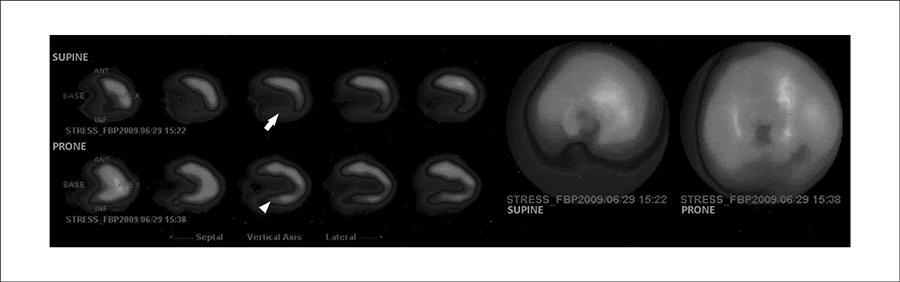
Myocardial perfusion scintigraphy is an important non-invasive method for diagnosing coronary artery disease, but it is not free from artifacts. Performing the combined supine-prone protocol can bring benefits to images with artifacts from the standard protocol in the supine position. The lack of unanimity in the implementation of the combined protocol may be related to the lack of objective data for the prior selection of patients.
Objective:
To evaluate which anthropometric profiles may be associated with a greater benefit in excluding artifacts for the optimized performance of the combined protocol.
Methods:
A cross-sectional and analytical study was carried out with 370 patients at the Nuclear Medicine Group Clinic between April and August 2022. The estimated level of statistical significance was 5%. Statistical analysis using binary logistic regression was used to evaluate the association between anthropometric data and the change in the initial test result after carrying out the combined protocol.
Results:
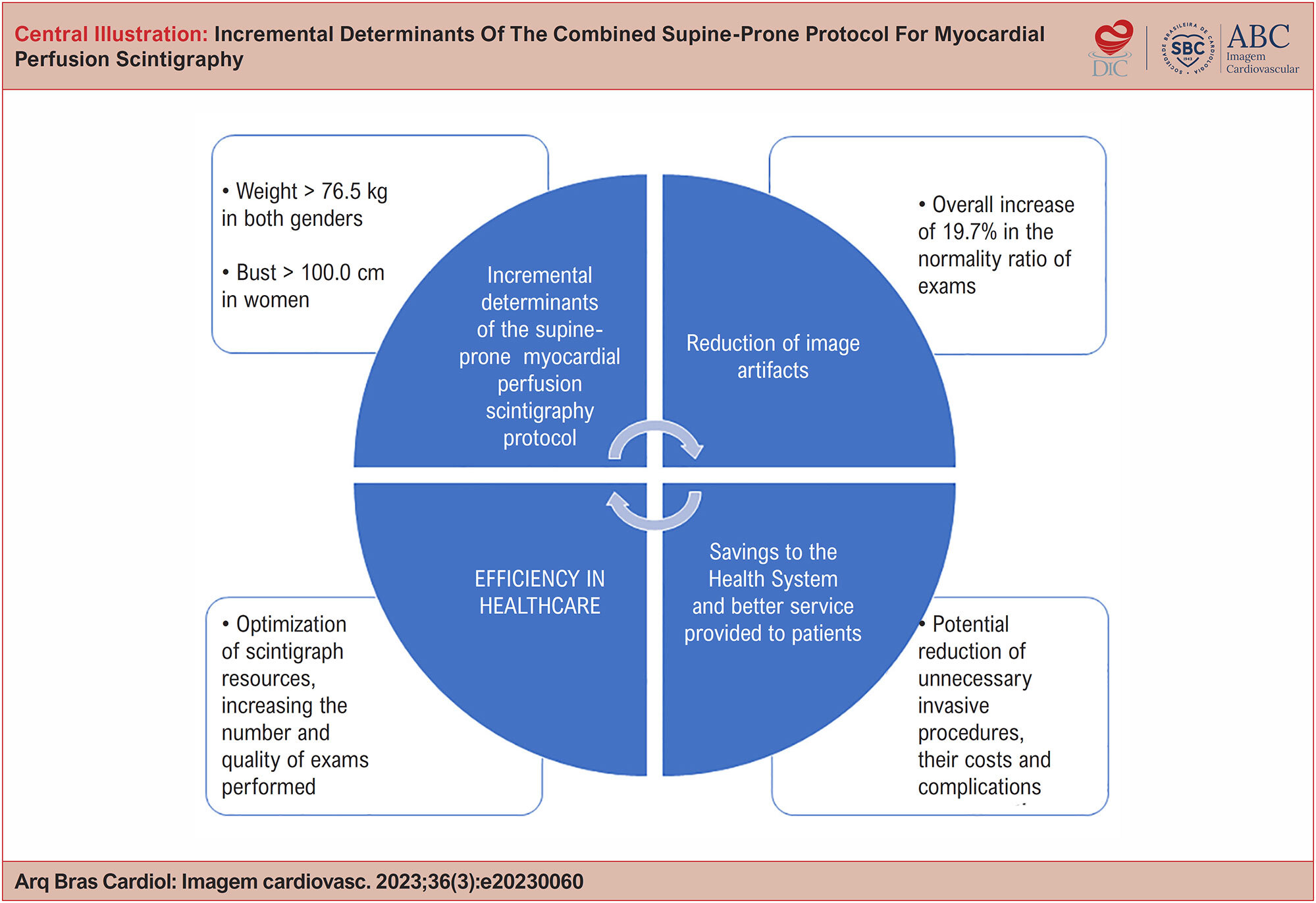
The combined protocol promoted a 19.7% increase in the normality ratio of the standard protocol. The variables weight, for both genders [OR = 1.02 (95% CI, 1.0002 – 1.04; p = 0.047)], and bust in women [OR = 1.06 (95% CI, 1. 01 – 1.11; p = 0.014)] represented incremental determinants with statistical significance. Weight greater than 76.5kg for both genders (S: 58.5%; E: 61.5%) and bust greater than 100.0 cm in women (S: 73.9%; E: 53.4%) were the best cutoff points in the receiver operating characteristic (ROC) curve.
Conclusion:
The optimized implementation of the combined protocol using the described weight and bust measurement criteria can promote greater efficiency in image acquisition.