ABC Family Arquivos Brasileiros de Cardiologia International Journal of Cardiovascular Sciences ABC Heart Failure & Cardiomyopathy ABC Imagem Cardiovascular
Português English
ABC Family
Português English
  • About
    • About ABC Family
    • Internal Regulation
    • Editorial Board
    • Brazilian Society of Cardiology (SBC)
  • Issues
  • SBC Guidelines
  • Content
    • Videos
    • Podcasts
    • News
  • About
    • About ABC Family
    • Internal Regulation
    • Editorial Board
    • Brazilian Society of Cardiology (SBC)
  • Issues
  • SBC Guidelines
  • Content
    • Videos
    • Podcasts
    • News

ABC Family

  • ABC Family
  • Arquivos Brasileiros de Cardiologia
  • International Journal of Cardiovascular Sciences
  • ABC Heart Failure & Cardiomyopathy
  • ABC Imagem Cardiovascular
Search in

No content found.

Journals
Ordering
Article types
Others

  1. Home
  2. Keyword: Cardiometabolic Risk Factors
Unconventional Anthropometric Indicators: Foundations, Applicability, and Validity as Predictors of Health Conditions
IJCS
Review Article

Unconventional Anthropometric Indicators: Foundations, Applicability, and Validity as Predictors of Health Conditions

Haroldo da Silva Ferreira et al. Antonio Fernando Silva Xavier Júnior Élison Ruan da Silva Almeida Tainá Cardoso Caminha-Uchôa … Andressa Bruna Batista de Verçoza Hitalo de Moraes Vieira

Abstract

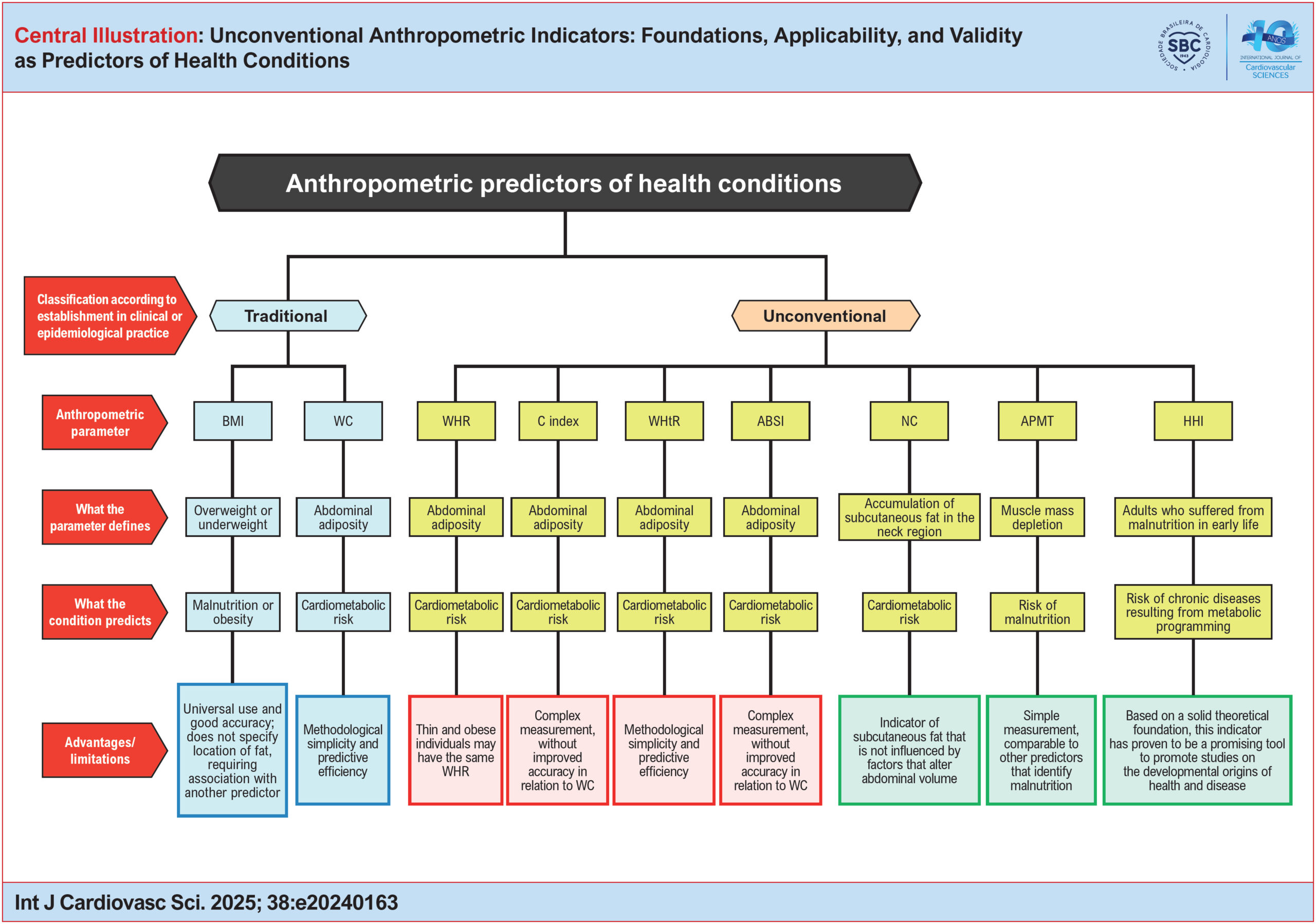
Several anthropometric parameters have been proposed as indicators of health conditions. Some have achieved wide acceptance and applicability. Others, although grounded in solid theoretical frameworks and demonstrating good diagnostic validity, have not gained the same level of recognition. These are referred to here as “unconventional anthropometric indicators”. This article aims to provide a descriptive and conceptual synthesis of these measures, addressing their nuances and applicability. It is a narrative review that discusses the following indicators: Head-to-height index (HHI), Waist-to-Height Ratio (WHtR), Conicity Index (C-Index), Waist-to-Hip Ratio (WHR), A Body Shape Index (ABSI), Neck Circumference (NC), and Adductor Pollicis Muscle Thickness (APMT). WHtR, C-Index, WHR, and ABSI are based on the identification of abdominal fat accumulation and its association with cardiometabolic risks. However, for this purpose, waist circumference stands out due to its methodological simplicity and predictive effectiveness. NC is an indicator of subcutaneous fat, whose excess increases disease risk and is not influenced by factors that alter abdominal volume. APMT identifies muscle depletion and is comparable to other anthropometric predictors of malnutrition risk. HHI was proposed to identify individuals who experienced undernutrition early in life. Grounded in a robust theoretical foundation, it is a promising tool for advancing research on the Developmental Origins of Health and Disease (DOHaD). The indicators analyzed are valuable for monitoring cardiometabolic risk factors, each with its unique characteristics. Understanding these particularities is essential for selecting the most appropriate indicators for different contexts, thus enabling more effective interventions.
  • Anthropometry
  • Cardiometabolic Risk Factors
  • Nutrition Assessment
  • Public Health Surveillance
  • Risk Factors
Read Full Article
Creative Commons Attribution (CC BY) Creative Commons license
27/06/2025 DOI: 10.36660/ijcs.20240163 Views 3
Causal Relationship between Television Viewing Time, Cardiovascular Diseases, and Potential Mechanisms
ABC
Original Article

Causal Relationship between Television Viewing Time, Cardiovascular Diseases, and Potential Mechanisms

Mengjin Hu et al. Boyu Li Jinggang Xia Chunlin Yin Yuejin Yang

Abstract

Background:

As the predominant leisure-time sedentary behavior, television viewing was documented to increase cardiovascular diseases in observational studies, yet the causal relationship and potential mechanisms remain to be determined.

Objectives:

To systematically investigate the causal relationship between television viewing time, cardiovascular diseases, and potential mechanisms.

Methods:

We conducted a two-sample Mendelian randomization (MR) analysis to estimate causal associations with cardiovascular diseases and biomarkers of cardiometabolic risk. The random inverse-variance weighted method was used as the primary estimate. To account for multiple comparisons, a Bonferroni correction p value for cardiovascular diseases and biomarkers of cardiometabolic risk was 0.0045 and 0.0024, respectively.

Results:

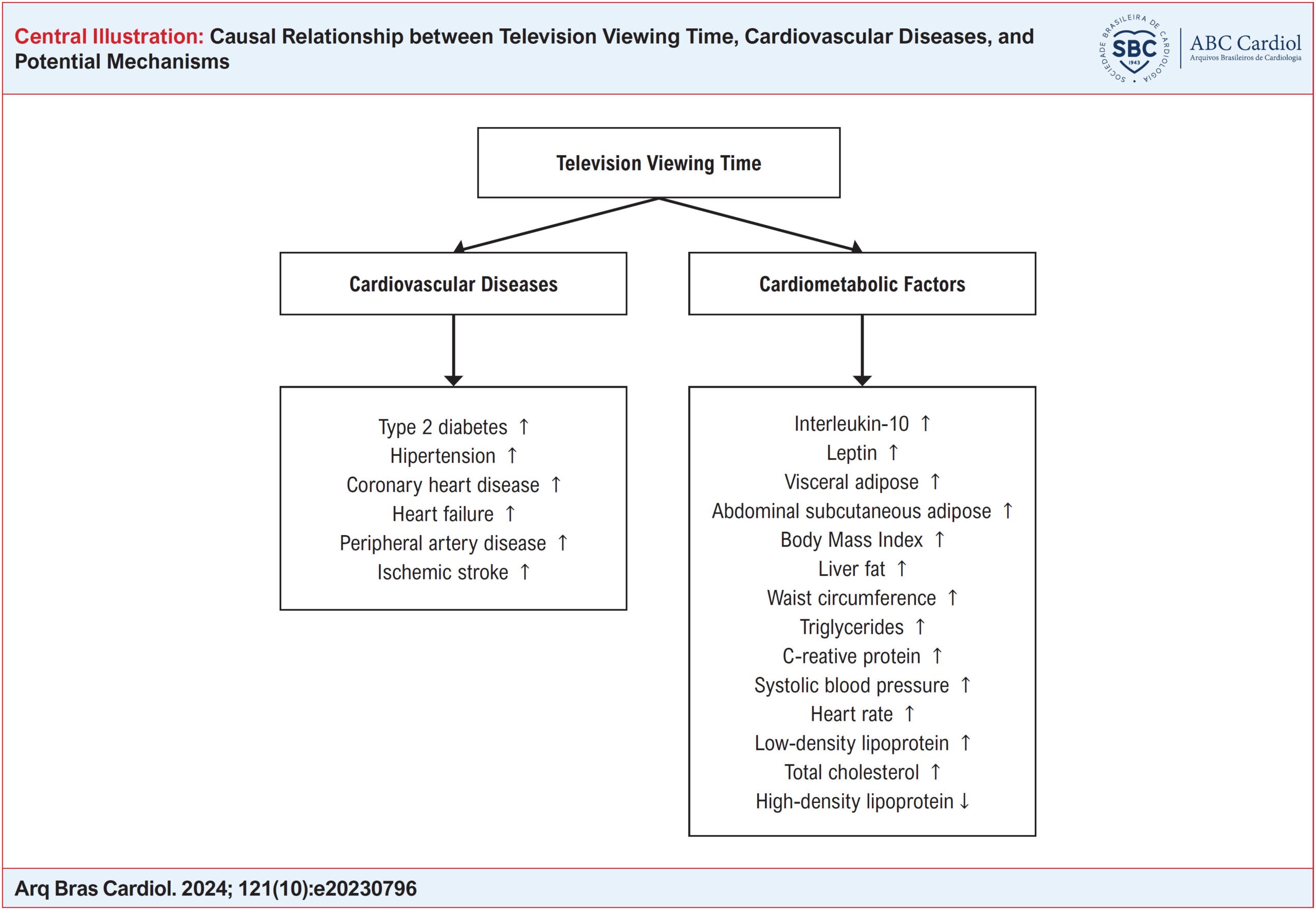
Genetically instrumented television viewing time was associated with higher risks of type 2 diabetes (odd ratio [OR]=2.51; 95% confidence interval [CI]: 1.89-3.33; p<0.00001), hypertension (OR=2.11; 95% CI: 1.67-2.66; p<0.00001), coronary heart disease (OR=1.53; 95% CI: 1.23-1.91; p=0.00015), and heart failure (OR=1.42; 95% CI: 1.18-1.70; p=0.00017). Suggestive evidence of harmful associations was also observed for peripheral artery disease (OR=1.58; 95% CI: 1.07-2.34; p=0.02253) and ischemic stroke (OR=1.34; 95% CI: 1.10-1.63; p=0.00328). Biomarkers of cardiometabolic risk, including interleukin 10, leptin, visceral adipose, abdominal subcutaneous adipose, liver fat, body mass index, waist circumference, triglycerides, and C-reactive protein, were increased. Systolic blood pressure, heart rate, low-density lipoprotein, and total cholesterol were potentially increased while high-density lipoprotein was decreased. However, television viewing time had no effect on venous thromboembolism or pulmonary embolism.

Conclusion:

Television viewing time was causally associated with increased risks of cardiovascular diseases, which may be explained by metabolic and inflammatory mechanisms.

  • Cardiometabolic Risk Factors
  • Cardiovascular Diseases
  • Inflammation
  • Mendelian Randomization Analysis
  • television
Read Full Article
Creative Commons Attribution (CC BY) Creative Commons license
28/10/2024 DOI: 10.36660/abc.20230796i Views 1
Figure 1
ABC
Original Article

Sedentary Behavior, Dietary Habits, and Cardiometabolic Risk in Physically Active Children and Adolescents

Paula Adriana dos Santos de Fontes et al. Jordana Herzog Siqueira Haysla Xavier Martins Polyana Romano Oliosa … Divanei Zaniqueli José Geraldo Mill Rafael de Oliveira Alvim

Abstract

Background

Sedentary behavior has been associated with several cardiometabolic risk factors during childhood. However, little is known about the impact of sedentary behavior on the health and eating habits of physically active children and adolescents.

Objective

To evaluate the association between sedentary behavior and cardiometabolic risk factors and eating habits in physically active children and adolescents.

Methods

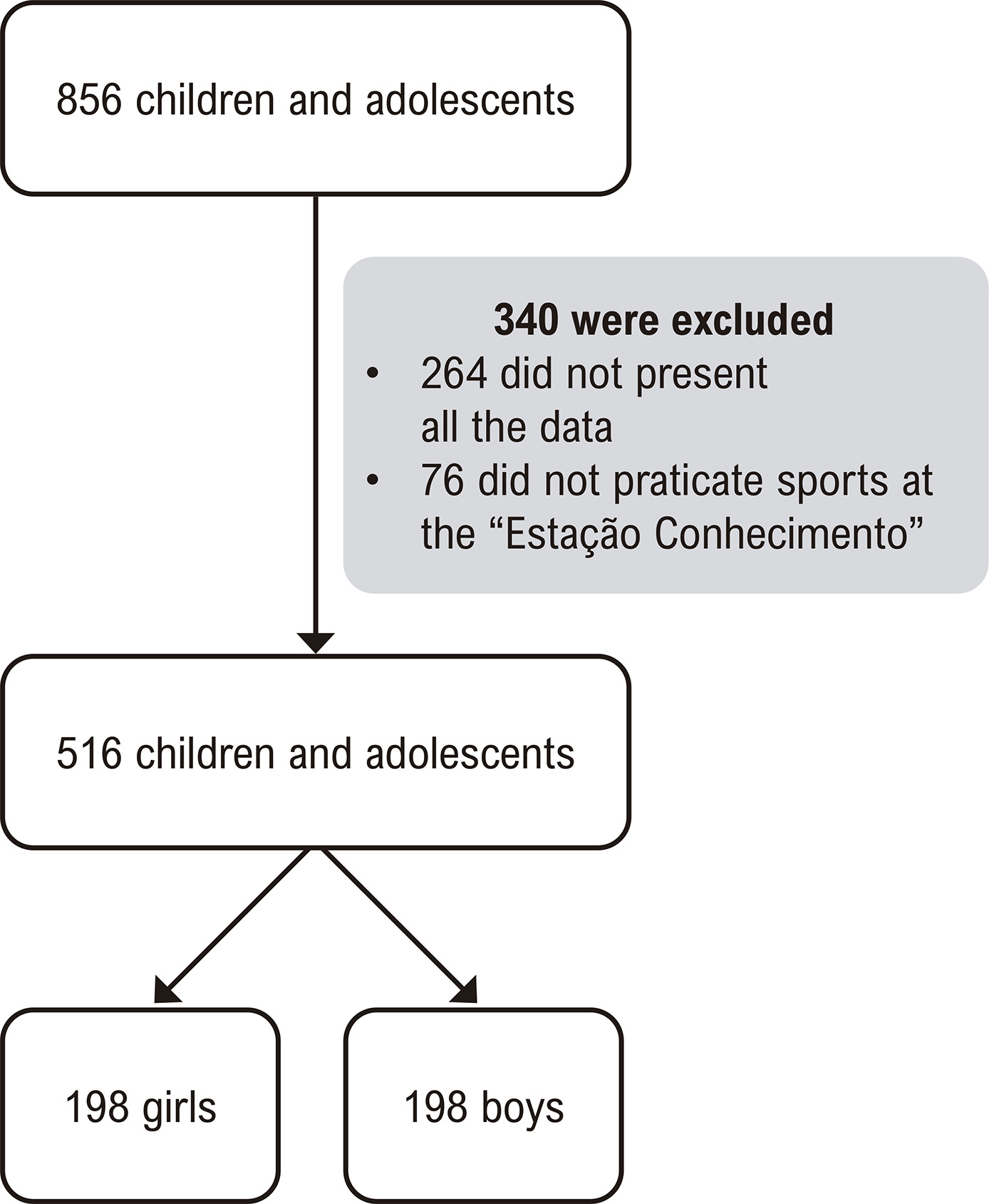
This cross-sectional study was conducted, including 516 physically active children and adolescents (10 to 18 years old; both sexes) enrolled in the social project “Estação Conhecimento-Vale” were evaluated. Biochemical and lifestyle variables (questionnaire) were collected. Sedentary behavior was determined indirectly (questionnaire), by using sitting time ≥ 3 hours per day as a cutoff point. A p-value < 0.05 was considered statistically significant for all tests.

Results

Sedentary behavior was not associated with overweight/obesity (odds ratio = 0.72 [95% confidence interval (CI): 0.325-1.389]), hypertriglyceridemia (odds ratio = 0.63 [95% CI: 0.306-1.297]), low HDL cholesterol (odds ratio = 0.57 [95% CI: 0.323-1.019]), or high non-HDL cholesterol (odds ratio = 0.63 [95% CI: 0.283-1.389]). However, children and adolescents with sedentary behavior were more likely to regularly consume food in front of the television (odds ratio = 1.96 [95% CI: 1.114-3.456]) and to consume at least one ultra-processed food per day (odds ratio = 2.42 [95% CI: 1.381-4.241]). In addition, they were less likely to consume fruit regularly (odds ratio = 0.52 [95% CI: 0.278-0.967]).

Conclusion

There was no association between sedentary behavior and cardiometabolic risk factors in physically active children and adolescents. However, sedentary behavior was associated with inadequate eating habits. Thus, we may suggest that the regular engagement in physical activity may attenuate the deleterious effects of sedentary behavior on the cardiometabolic parameters of children and adolescents.

  • Cardiometabolic Risk Factors
  • Child
  • Feeding Behavior
  • Sedentary Behavior
Read Full Article
Creative Commons Attribution (CC BY) Creative Commons license
03/02/2023 DOI: 10.36660/abc.20220357 Views 1

How to cite this article

EndNote RIS

Electronic Document Format (Vancouver)

Ferreira HS, Xavier Júnior AFS, Almeida RS, Caminha-Uchôa TC, Verçoza ABB, Vieira HM. Unconventional Anthropometric Indicators: Foundations, Applicability, and Validity as Predictors of Health Conditions. International Journal of Cardiovascular Sciences 2025;38:e20240163.

Electronic Document Format (ABNT)

Ferreira, Haroldo da Silva; Xavier Júnior, Antonio Fernando Silva; Almeida, Élison Ruan da Silva; Caminha-Uchôa, Tainá Cardoso; Verçoza, Andressa Bruna Batista de; Vieira, Hitalo de Moraes. Unconventional Anthropometric Indicators: Foundations, Applicability, and Validity as Predictors of Health Conditions. International Journal of Cardiovascular Sciences, v. 38, e20240163, Jun. 2025.

Electronic Document Format (APA)

Ferreira, H. S., Xavier Júnior, A. F. S., Almeida, R. S., Caminha-Uchôa, T. C., Verçoza, A. B. B. , & Vieira, H. M. (2025). Unconventional Anthropometric Indicators: Foundations, Applicability, and Validity as Predictors of Health Conditions. International Journal of Cardiovascular Sciences, 38, e20240163.

Electronic Document Format (ISO)

Ferreira, Haroldo da Silva and Xavier Júnior, Antonio Fernando Silva and Almeida, Élison Ruan da Silva and Caminha-Uchôa, Tainá Cardoso and Verçoza, Andressa Bruna Batista de and Vieira, Hitalo de Moraes. Unconventional Anthropometric Indicators: Foundations, Applicability, and Validity as Predictors of Health Conditions. International Journal of Cardiovascular Sciences [online]. 2025, vol. 38, [cited 2026-10-14], e20240163. Available from: <https://journals.cardiol.br/en/article/unconventional-anthropometric-indicators-foundations-applicability-and-validity-as-predictors-of-health-conditions/>. ISSN 2359-4802

EndNote RIS

Electronic Document Format (Vancouver)

Hu M, Li B, Xia J, Yin C, Yang Y. Causal Relationship between Television Viewing Time, Cardiovascular Diseases, and Potential Mechanisms. Arquivos Brasileiros de Cardiologia 2024;121(10):e20230796.

Electronic Document Format (ABNT)

Hu, Mengjin; Li, Boyu; Xia, Jinggang; Yin, Chunlin; Yang, Yuejin. Causal Relationship between Television Viewing Time, Cardiovascular Diseases, and Potential Mechanisms. Arquivos Brasileiros de Cardiologia, v. 121, n. 10, e20230796, Oct. 2024.

Electronic Document Format (APA)

Hu, M., Li, B., Xia, J., Yin, C., & Yang, Y. (2024). Causal Relationship between Television Viewing Time, Cardiovascular Diseases, and Potential Mechanisms. Arquivos Brasileiros de Cardiologia, 121(10), e20230796.

Electronic Document Format (ISO)

Hu, Mengjin and Li, Boyu and Xia, Jinggang and Yin, Chunlin and Yang, Yuejin. Causal Relationship between Television Viewing Time, Cardiovascular Diseases, and Potential Mechanisms. Arquivos Brasileiros de Cardiologia [online]. 2024, vol. 121, n. 10, [cited 2026-10-14], e20230796. Available from: <https://journals.cardiol.br/en/article/causal-relationship-between-television-viewing-time-cardiovascular-diseases-and-potential-mechanisms/>. ISSN 0066-782X

EndNote RIS

Electronic Document Format (Vancouver)

Fontes PAS, Siqueira JH, Martins HX, Oliosa PR, Zaniqueli D, Mill JG, Alvim RO, et al. Sedentary Behavior, Dietary Habits, and Cardiometabolic Risk in Physically Active Children and Adolescents. Arquivos Brasileiros de Cardiologia 2023;120(2):e20220357.

Electronic Document Format (ABNT)

Fontes, Paula Adriana dos Santos de; Siqueira, Jordana Herzog; Martins, Haysla Xavier; Oliosa, Polyana Romano; Zaniqueli, Divanei; Mill, José Geraldo; Alvim, Rafael de Oliveira. Sedentary Behavior, Dietary Habits, and Cardiometabolic Risk in Physically Active Children and Adolescents. Arquivos Brasileiros de Cardiologia, v. 120, n. 2, e20220357, Feb. 2023.

Electronic Document Format (APA)

Fontes, P. A. S. , Siqueira, J. H., Martins, H. X., Oliosa, P. R., Zaniqueli, D., Mill, J. G., & Alvim, R. O. (2023). Sedentary Behavior, Dietary Habits, and Cardiometabolic Risk in Physically Active Children and Adolescents. Arquivos Brasileiros de Cardiologia, 120(2), e20220357.

Electronic Document Format (ISO)

Fontes, Paula Adriana dos Santos de and Siqueira, Jordana Herzog and Martins, Haysla Xavier and Oliosa, Polyana Romano and Zaniqueli, Divanei and Mill, José Geraldo and Alvim, Rafael de Oliveira. Sedentary Behavior, Dietary Habits, and Cardiometabolic Risk in Physically Active Children and Adolescents. Arquivos Brasileiros de Cardiologia [online]. 2023, vol. 120, n. 2, [cited 2026-10-14], e20220357. Available from: <https://journals.cardiol.br/en/article/sedentary-behavior-dietary-habits-and-cardiometabolic-risk-in-physically-active-children-and-adolescents/>. ISSN 0066-782X

  • About ABC Family
  • Internal Regulation
  • Editorial Board
  • Brazilian Society of Cardiology (SBC)

Issues

SBC Guidelines

  • Videos
  • Podcasts
  • News