ABC Family Arquivos Brasileiros de Cardiologia International Journal of Cardiovascular Sciences ABC Heart Failure & Cardiomyopathy ABC Imagem Cardiovascular
Português English
ABC Family
Português English
  • About
    • About ABC Family
    • Internal Regulation
    • Editorial Board
    • Brazilian Society of Cardiology (SBC)
  • Issues
  • SBC Guidelines
  • Content
    • Videos
    • Podcasts
    • News
  • About
    • About ABC Family
    • Internal Regulation
    • Editorial Board
    • Brazilian Society of Cardiology (SBC)
  • Issues
  • SBC Guidelines
  • Content
    • Videos
    • Podcasts
    • News

ABC Family

  • ABC Family
  • Arquivos Brasileiros de Cardiologia
  • International Journal of Cardiovascular Sciences
  • ABC Heart Failure & Cardiomyopathy
  • ABC Imagem Cardiovascular
Search in

No content found.

Journals
Ordering
Article types
Others

  1. Home
  2. Keyword: Intra-Abdominal Fat
ABC
Letter to the Editor

Understanding the Link between Visceral Fat and Heart Health

Moacir Fernandes Godoy

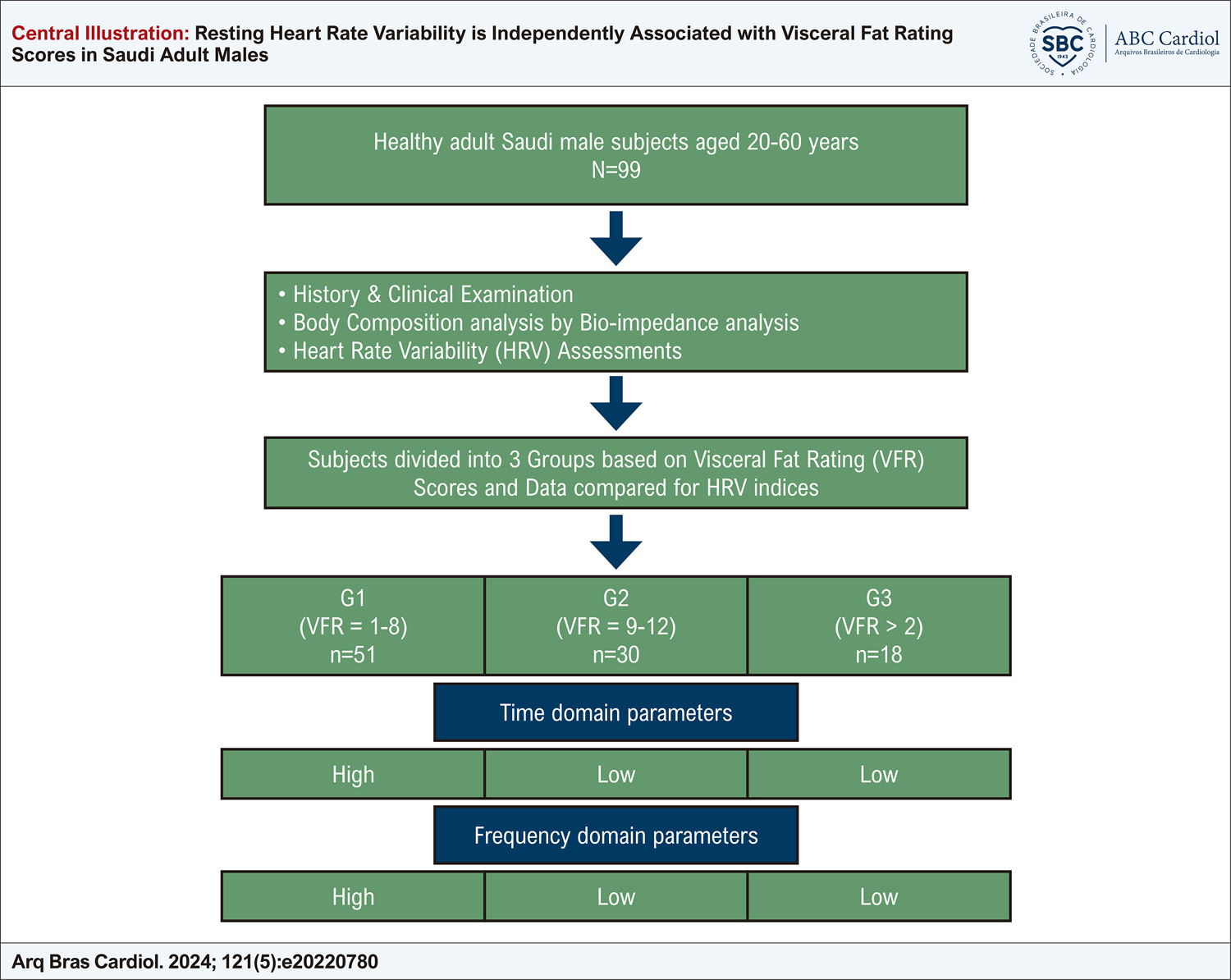
I read with interest the paper “Resting Heart Rate Variability is Independently Associated with Visceral Fat Rating Scores in Saudi Adult Males” by Syed Shahid Habib et al., published in ABC Cardiolcomparing heart rate variability (HRV) in 99 healthy men stratified by visceral fat rating (VFR) and showing associations between HRV and body composition metrics, but I have some reservations.

Heart rate variability has been demonstrated as a convenient method for assessing individual homeostatic status. Attempts to establish reference values according to age group and degree of impairment have been numerous in the specialized literature since the launch of the Task Force in 1996.– Among the most studied HRV variables are the standard deviation of normal RR intervals (SDNN) and the Root-mean square of successive differences (RMSSD) in the time domain and Low-Frequency power (LF ms2) and High-Frequency power (HF) in addition to the LF/HF ratio, in the frequency domain. These were exactly the variables studied by Habib and collaborators, concluding that men in the lowest visceral fat rating category (G1) had the highest HRV. Visceral Fat Rating was more strongly associated with HRV than body fat percentage and muscle mass to visceral fat ratio (MMVFR). Time domain parameters were more sensitive to visceral adipose tissue (VAT) than frequency domain parameters. They conclude by saying that HRV parameters could be the primary parameters of interest in monitoring cardiac-autonomic status in response to interventions targeting VAT reduction. These are all relevant points but there was a crucial problem in the presentation of this study. The HRV values cited in the results must have suffered a typing error as they are completely incompatible with the reference ranges.

[…]

  • Autonomic Nervous System
  • Heart Rate
  • Intra-Abdominal Fat
Read Full Article
Creative Commons Attribution (CC BY) Creative Commons license
03/02/2025 DOI: 10.36660/abc.20240466i
Resting Heart Rate Variability is Independently Associated with Visceral Fat Rating Scores in Saudi Adult Males
ABC
Original Article

Resting Heart Rate Variability is Independently Associated with Visceral Fat Rating Scores in Saudi Adult Males

Syed Shahid Habib et al. Shaea Alkahtani Nouf Aljawini Syed Mohammad Habib Andrew A. Flatt

Abstract

Background

Visceral adipose tissue (VAT) may be a specific modifiable contributor to body composition-related autonomic impairment.

Objectives

To compare heart rate variability (HRV) between groups stratified by visceral fat rating (VFR) and compare associations between HRV and body composition metrics.

Methods

A cross-sectional study was conducted on healthy men (n=99,age=37.8±13.4 years, body mass index [BMI]=26.9±4.6 kg/m2). HRV was derived from 5-minute electrocardiographic recordings. Body composition (body fat percentage, VFR, and muscle mass to visceral fat ratio [MMVFR]) was estimated using tetrapolar bioelectrical impedance analysis. Participants were categorized into groups according to VFR: G1 (VFR=1-8); G2(VFR=9-12); and G3(VFR>12). Age-adjusted comparisons were made between groups. Independent associations were quantified with multiple linear regressions. P <0.05 was significant.

Results

Root-mean square of successive differences (RMSSD) and standard deviation of normal RR intervals (SDNN) were higher for G1 vs. G2 and G3 (p<0.05). Low-frequency power (LF) was higher in G1 than in G2 (p<0.05). VFR and MMVFR were negatively associated with SDNN, RMSSD, LF, and HF (p<0.05). After adjusting for age, BMI, and systolic and diastolic blood pressure, VFR was significantly predictive of RMSSD, SDNN, and HF (p=0.002,–0.027), and MMVFR was significantly predictive of RMSSD and SDNN (p=0.020,–0.023).

Conclusions

Men in the lowest VFR category had the highest HRV. VFR was more strongly associated with HRV than body fat percentage and MMVR. Time domain parameters were more sensitive to VAT than frequency domain parameters. HRV parameters could be the primary parameters of interest in tracking cardiac-autonomic status in response to interventions targeting VAT reduction.

  • Autonomic Nervous System
  • Heart Rate
  • Intra-Abdominal Fat
Read Full Article
Creative Commons Attribution (CC BY) Creative Commons license
14/10/2024 DOI: 10.36660/abc.20220780i Views 1
Figure 1
ABC
Original Article

Epicardial Fat Volume Is Associated with Endothelial Dysfunction, but not with Coronary Calcification: From the Brazilian Longitudinal Study of Adult Health (ELSA-Brasil)

Karina P. M. P. Martins et al. Sandhi M. Barreto Daniel Bos Jesiana Pedrosa … Douglas R. M. Azevedo Larissa Fortunato Araújo Murilo Foppa Bruce B. Duncan Antonio Luiz P. Ribeiro Luisa C. C. Brant

Abstract

Background

The increase in epicardial fat volume (EFV) is related to coronary artery disease (CAD), independent of visceral or subcutaneous fat. The mechanism underlying this association is unclear. Coronary artery calcium (CAC) score and endothelial dysfunction are related to coronary events, but whether EFV is related to these markers needs further clarification.

Objectives

To evaluate the association between automatically measured EFV, cardiovascular risk factors, CAC, and endothelial function.

Methods

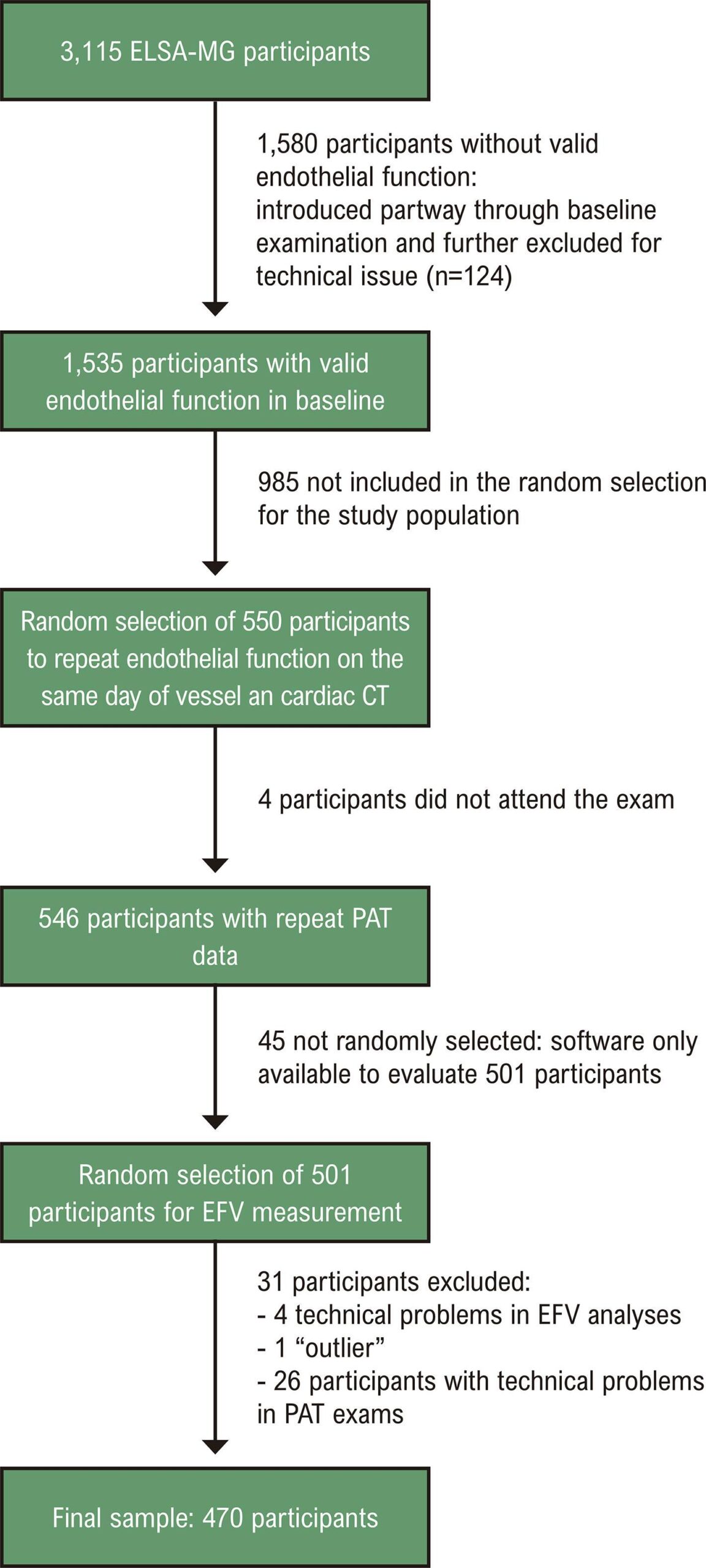
In 470 participants from the Brazilian Longitudinal Study of Adult Health (ELSA-Brasil) with measures of EFV, CAC score and endothelial function, we performed multivariable models to evaluate the relation between cardiovascular risk factors and EFV (response variable), and between EFV (explanatory variable) and endothelial function variables or CAC score. Two-sided p <0.05 was considered statistically significant.

Results

Mean age was 55 ± 8 years, 52.3% of patients were men. Mean EFV was 111mL (IQ 86-144), and the prevalence of CAC score=0 was 55%. In the multivariable analyses, increased EFV was related to female sex, older age, waist circumference, and triglycerides (p0.

Conclusion

Higher EFV was associated with impaired endothelial function, but not with CAC. The results suggest that EFV is related to the development of CAD through a pathway different from the CAC pathway, possibly through aggravation of endothelial dysfunction and microvascular disease.

  • Atherosclerosis
  • Intra-Abdominal Fat
  • Obesidade Abdominal
Read Full Article
Creative Commons Attribution (CC BY) Creative Commons license
10/10/2022 DOI: 10.36660/abc.20210750 Views 1
Figure 1
ABC
Original Article

Relationship Between Neck Circumference and Epicardial Fat Thickness in a Healthy Male Population

Uğur Küçük et al. Hilal Olgun Küçük Ferhat Cüce Sevket Balta

Abstract

Background:

Epicardial fat is an upper body visceral fat depot that may play a significant role in the development of adverse metabolic and cardiovascular risk profiles. There is a significant direct relationship between the amount of epicardial fat and general body adiposity (body mass index, BMI), but data regarding subcutaneous adiposity is limited.

Objective:

We conducted a study to determine the association between neck circumference and epicardial fat thickness in healthy young male individuals, and assess their individual correlations with general body adiposity and cardiometabolic risk factors.

Methods:

One hundred consecutive male patients aged 18 years or older with no known major medical conditions were included in the study. All participants underwent detailed physical examination including measurement of blood pressure, weight, height, waist/hip ratio, and neck circumference. Blood was collected to determine fasting glucose and lipid parameters. A standard echocardiographic examination was performed with additional epicardial fat thickness determination.

Results:

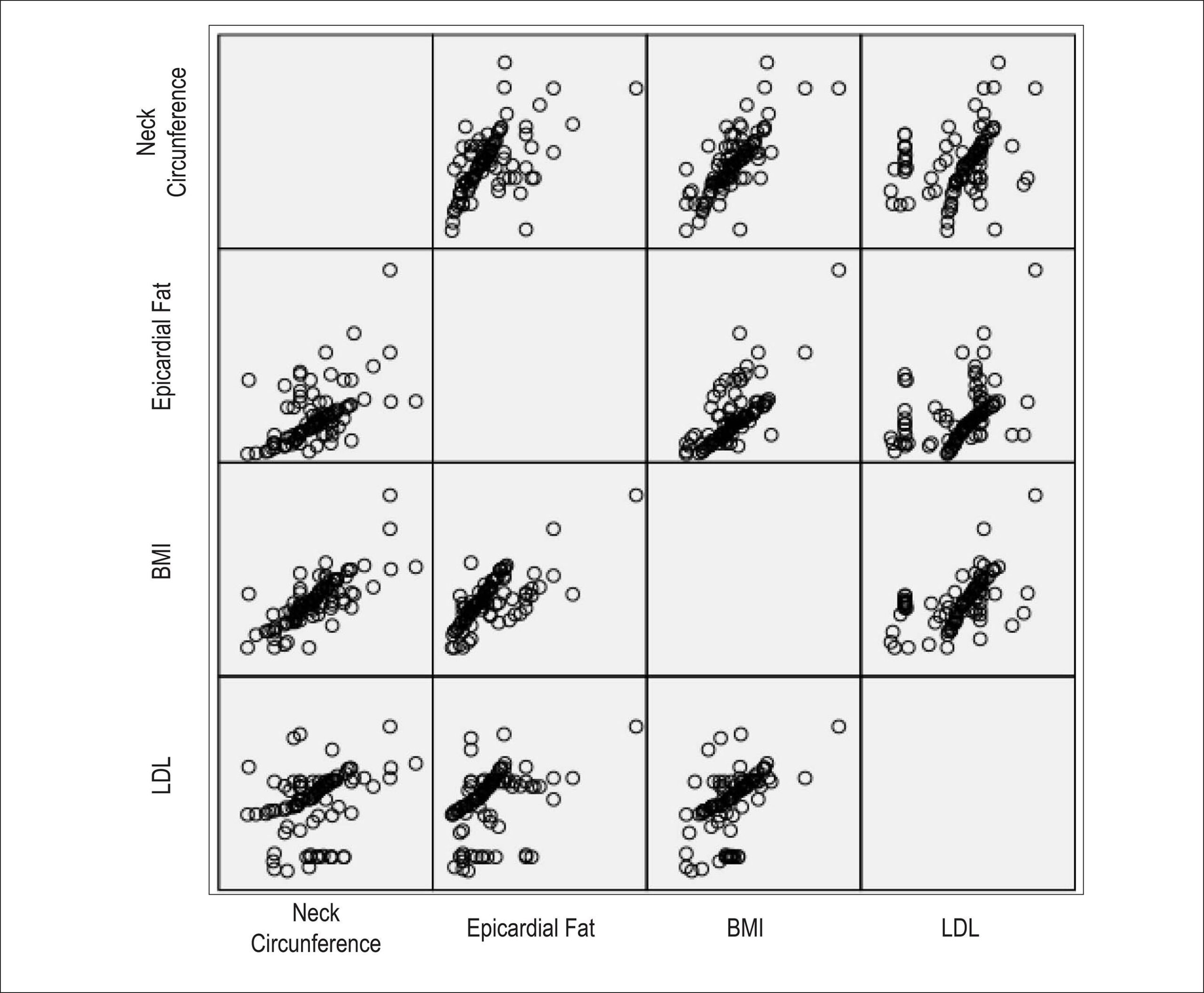
Among 100 study participants, neck circumference correlated significantly with weight, waist circumference, BMI, blood glucose, serum total cholesterol, low-density (LDL)-cholesterol, and triglycerides levels. No significant correlation was found between neck circumference and high-density lipoprotein (HDL)-cholesterol levels. Neck circumference correlated moderately and positively with echocardiographic epicardial fat thickness.

Conclusion:

Among patients with low cardiometabolic risk, increased neck circumference was associated with increased epicardial fat thickness.

  • Blood Glucose
  • Blood Pressure
  • body mass index
  • Cardiovascular Diseases
  • Echocardiography, Diagnosis
  • Intra-Abdominal Fat
  • Neck
Read Full Article
Creative Commons Attribution (CC BY) Creative Commons license
08/08/2016 DOI: 10.5935/abc.20160112
Anthropometric indicators of insulin resistance
ABC
Clinical Update

Anthropometric indicators of insulin resistance

Ana Carolina Vasques et al. Lina Rosado Gilberto Rosado Rita de Cassia Ribeiro … Sylvia Franceschini Bruno Geloneze

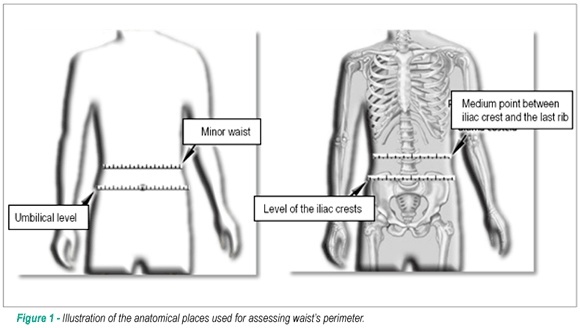
Some studies have analyzed the efficacy of anthropometric indicators in predicting insulin resistance (IR), for they are more economic and accessible. In this study, the objective was to discuss the measures and anthropometric indices that have been associated with IR. A bibliographic review was done, based on Scielo, Science Direct and Pubmed. Among these studies, waist and sagittal abdominal diameter presented better predictive capacity for IR, with more consistent results. The waist-to-thigh, waist-to-size, neck-to-thigh ratios, the conicity and the sagittal index have showed positive results; nevertheless, more studies are necessary to consolidate them as predictors to IR. The obtained results, with the use of body mass index and of the waist-to-hip ratio, were inconsistent. In the Brazilian population, the realization of studies evaluating the performance of these indicators in predicting IR is suggested, since the results of the studies conducted in other populations are not always applicable to ours, due to ethnical differences resulting from the great miscegenation in the country.

  • abdominal circumference
  • Anthropometry
  • Insulin Resistance
  • Intra-Abdominal Fat
  • Obesity
Read Full Article
Creative Commons Attribution (CC BY) Creative Commons license
29/09/2010 DOI: 10.1590/S0066-782X2010001100025

How to cite this article

EndNote RIS

Electronic Document Format (Vancouver)

Godoy MF. Understanding the Link between Visceral Fat and Heart Health. Arquivos Brasileiros de Cardiologia 2025;122(1):e20240466.

Electronic Document Format (ABNT)

Godoy, Moacir Fernandes. Understanding the Link between Visceral Fat and Heart Health. Arquivos Brasileiros de Cardiologia, v. 122, n. 1, e20240466, Feb. 2025.

Electronic Document Format (APA)

Godoy, M. F. (2025). Understanding the Link between Visceral Fat and Heart Health. Arquivos Brasileiros de Cardiologia, 122(1), e20240466.

Electronic Document Format (ISO)

Godoy, Moacir Fernandes. Understanding the Link between Visceral Fat and Heart Health. Arquivos Brasileiros de Cardiologia [online]. 2025, vol. 122, n. 1, [cited 2026-10-14], e20240466. Available from: <https://journals.cardiol.br/en/article/understanding-the-link-between-visceral-fat-and-heart-health-2/>. ISSN 0066-782X

EndNote RIS

Electronic Document Format (Vancouver)

Habib SS, Alkahtani S, Aljawini N, Habib SM, Flatt AA. Resting Heart Rate Variability is Independently Associated with Visceral Fat Rating Scores in Saudi Adult Males. Arquivos Brasileiros de Cardiologia 2024;121(5):e20220780.

Electronic Document Format (ABNT)

Habib, Syed Shahid; Alkahtani, Shaea; Aljawini, Nouf; Habib, Syed Mohammad; Flatt, Andrew A.. Resting Heart Rate Variability is Independently Associated with Visceral Fat Rating Scores in Saudi Adult Males. Arquivos Brasileiros de Cardiologia, v. 121, n. 5, e20220780, Oct. 2024.

Electronic Document Format (APA)

Habib, S. S., Alkahtani, S., Aljawini, N., Habib, S. M., & Flatt, A. A. (2024). Resting Heart Rate Variability is Independently Associated with Visceral Fat Rating Scores in Saudi Adult Males. Arquivos Brasileiros de Cardiologia, 121(5), e20220780.

Electronic Document Format (ISO)

Habib, Syed Shahid and Alkahtani, Shaea and Aljawini, Nouf and Habib, Syed Mohammad and Flatt, Andrew A.. Resting Heart Rate Variability is Independently Associated with Visceral Fat Rating Scores in Saudi Adult Males. Arquivos Brasileiros de Cardiologia [online]. 2024, vol. 121, n. 5, [cited 2026-10-14], e20220780. Available from: <https://journals.cardiol.br/en/article/resting-heart-rate-variability-is-independently-associated-with-visceral-fat-rating-scores-in-saudi-adult-males/>. ISSN 0066-782X

EndNote RIS

Electronic Document Format (Vancouver)

Martins KPMP, Barreto SM, Bos D, Pedrosa J, Azevedo DRM, Araújo LF, Foppa M, et al. Epicardial Fat Volume Is Associated with Endothelial Dysfunction, but not with Coronary Calcification: From the Brazilian Longitudinal Study of Adult Health (ELSA-Brasil). Arquivos Brasileiros de Cardiologia 2022;119(6):912-20.

Electronic Document Format (ABNT)

Martins, Karina P. M. P.; Barreto, Sandhi M.; Bos, Daniel; Pedrosa, Jesiana; Azevedo, Douglas R. M.; Araújo, Larissa Fortunato; Foppa, Murilo; Duncan, Bruce B.; Ribeiro, Antonio Luiz P.; Brant, Luisa C. C.. Epicardial Fat Volume Is Associated with Endothelial Dysfunction, but not with Coronary Calcification: From the Brazilian Longitudinal Study of Adult Health (ELSA-Brasil). Arquivos Brasileiros de Cardiologia, v. 119, n. 6, p. 912-920, Oct. 2022.

Electronic Document Format (APA)

Martins, K. P. M. P., Barreto, S. M., Bos, D., Pedrosa, J., Azevedo, D. R. M., Araújo, L. F., Foppa, M., Duncan, B. B., Ribeiro, A. L. P., & Brant, L. C. C. (2022). Epicardial Fat Volume Is Associated with Endothelial Dysfunction, but not with Coronary Calcification: From the Brazilian Longitudinal Study of Adult Health (ELSA-Brasil). Arquivos Brasileiros de Cardiologia, 119(6), 912-920.

Electronic Document Format (ISO)

Martins, Karina P. M. P. and Barreto, Sandhi M. and Bos, Daniel and Pedrosa, Jesiana and Azevedo, Douglas R. M. and Araújo, Larissa Fortunato and Foppa, Murilo and Duncan, Bruce B. and Ribeiro, Antonio Luiz P. and Brant, Luisa C. C.. Epicardial Fat Volume Is Associated with Endothelial Dysfunction, but not with Coronary Calcification: From the Brazilian Longitudinal Study of Adult Health (ELSA-Brasil). Arquivos Brasileiros de Cardiologia [online]. 2022, vol. 119, n. 6, [cited 2026-10-14], pp. 912-920. Available from: <https://journals.cardiol.br/en/article/epicardial-fat-volume-is-associated-with-endothelial-dysfunction-but-not-with-coronary-calcification-from-the-brazilian-longitudinal-study-of-adult-health-elsa-brasil/>. ISSN 0066-782X

EndNote RIS

Electronic Document Format (Vancouver)

Küçük U, Küçük HO, Cüce F, Balta S. Relationship Between Neck Circumference and Epicardial Fat Thickness in a Healthy Male Population. Arquivos Brasileiros de Cardiologia 2016;107(3):266-70.

Electronic Document Format (ABNT)

Küçük, Uğur; Küçük, Hilal Olgun; Cüce, Ferhat; Balta, Sevket. Relationship Between Neck Circumference and Epicardial Fat Thickness in a Healthy Male Population. Arquivos Brasileiros de Cardiologia, v. 107, n. 3, p. 266-270, Aug. 2016.

Electronic Document Format (APA)

Küçük, U., Küçük, H. O., Cüce, F., & Balta, S. (2016). Relationship Between Neck Circumference and Epicardial Fat Thickness in a Healthy Male Population. Arquivos Brasileiros de Cardiologia, 107(3), 266-270.

Electronic Document Format (ISO)

Küçük, Uğur and Küçük, Hilal Olgun and Cüce, Ferhat and Balta, Sevket. Relationship Between Neck Circumference and Epicardial Fat Thickness in a Healthy Male Population. Arquivos Brasileiros de Cardiologia [online]. 2016, vol. 107, n. 3, [cited 2026-10-14], pp. 266-270. Available from: <https://journals.cardiol.br/en/article/relationship-between-neck-circumference-and-epicardial-fat-thickness-in-a-healthy-male-population/>. ISSN 0066-782X

EndNote RIS

Electronic Document Format (Vancouver)

Vasques AC, Rosado L, Rosado G, Ribeiro RC, Franceschini S, Geloneze B. Anthropometric indicators of insulin resistance. Arquivos Brasileiros de Cardiologia 2010;95(1):e14-23.

Electronic Document Format (ABNT)

Vasques, Ana Carolina; Rosado, Lina; Rosado, Gilberto; Ribeiro, Rita de Cassia; Franceschini, Sylvia; Geloneze, Bruno. Anthropometric indicators of insulin resistance. Arquivos Brasileiros de Cardiologia, v. 95, n. 1, p. e14-e23, Sep. 2010.

Electronic Document Format (APA)

Vasques, A. C., Rosado, L., Rosado, G., Ribeiro, R. C., Franceschini, S., & Geloneze, B. (2010). Anthropometric indicators of insulin resistance. Arquivos Brasileiros de Cardiologia, 95(1), e14-e23.

Electronic Document Format (ISO)

Vasques, Ana Carolina and Rosado, Lina and Rosado, Gilberto and Ribeiro, Rita de Cassia and Franceschini, Sylvia and Geloneze, Bruno. Anthropometric indicators of insulin resistance. Arquivos Brasileiros de Cardiologia [online]. 2010, vol. 95, n. 1, [cited 2026-10-14], pp. e14-e23. Available from: <https://journals.cardiol.br/en/article/anthropometric-indicators-of-insulin-resistance/>. ISSN 0066-782X

  • About ABC Family
  • Internal Regulation
  • Editorial Board
  • Brazilian Society of Cardiology (SBC)

Issues

SBC Guidelines

  • Videos
  • Podcasts
  • News