| IJCS
ABC Family Arquivos Brasileiros de Cardiologia International Journal of Cardiovascular Sciences ABC Heart Failure & Cardiomyopathy ABC Imagem Cardiovascular
Português English
ABC Family | IJCS
Português English
  • About
    • About the Journal
    • Internal Regulation
    • Editors Section
    • Editorial Board
    • SBC Award
  • Instructions to Authors
    • Guidelines for Publication
    • Editorial Policy
    • Ethics Policy
    • Policy on the Use of Artificial Intelligence
    • Mandatory Publication Form
    • Publication Fee
  • Issues
  • SBC Guidelines
  • Abstracts
    • How to Publish an Abstract Supplement?
    • Published Supplements
  • About
    • About the Journal
    • Internal Regulation
    • Editors Section
    • Editorial Board
    • SBC Award
  • Instructions to Authors
    • Guidelines for Publication
    • Editorial Policy
    • Ethics Policy
    • Policy on the Use of Artificial Intelligence
    • Mandatory Publication Form
    • Publication Fee
  • Issues
  • SBC Guidelines
  • Abstracts
    • How to Publish an Abstract Supplement?
    • Published Supplements

ABC Family

  • ABC Family
  • Arquivos Brasileiros de Cardiologia
  • International Journal of Cardiovascular Sciences
  • ABC Heart Failure & Cardiomyopathy
  • ABC Imagem Cardiovascular
Search in

No content found.

Journals
Ordering
Article types
Others

  1. Home
  2. IJCS
  3. Issues
  4. 2026, Volume 39
Infant Feeding Practices and Their Association with Stunting, Overweight, Obesity, and Other Cardiometabolic Risks in African Children: A Systematic Review
Original Article

Infant Feeding Practices and Their Association with Stunting, Overweight, Obesity, and Other Cardiometabolic Risks in African Children: A Systematic Review

Jude Eteneneng Enoh et al. Roland Tiagha Akah Benedicta Ngwenchi Nkeh-Chungag

Abstract

Introduction:

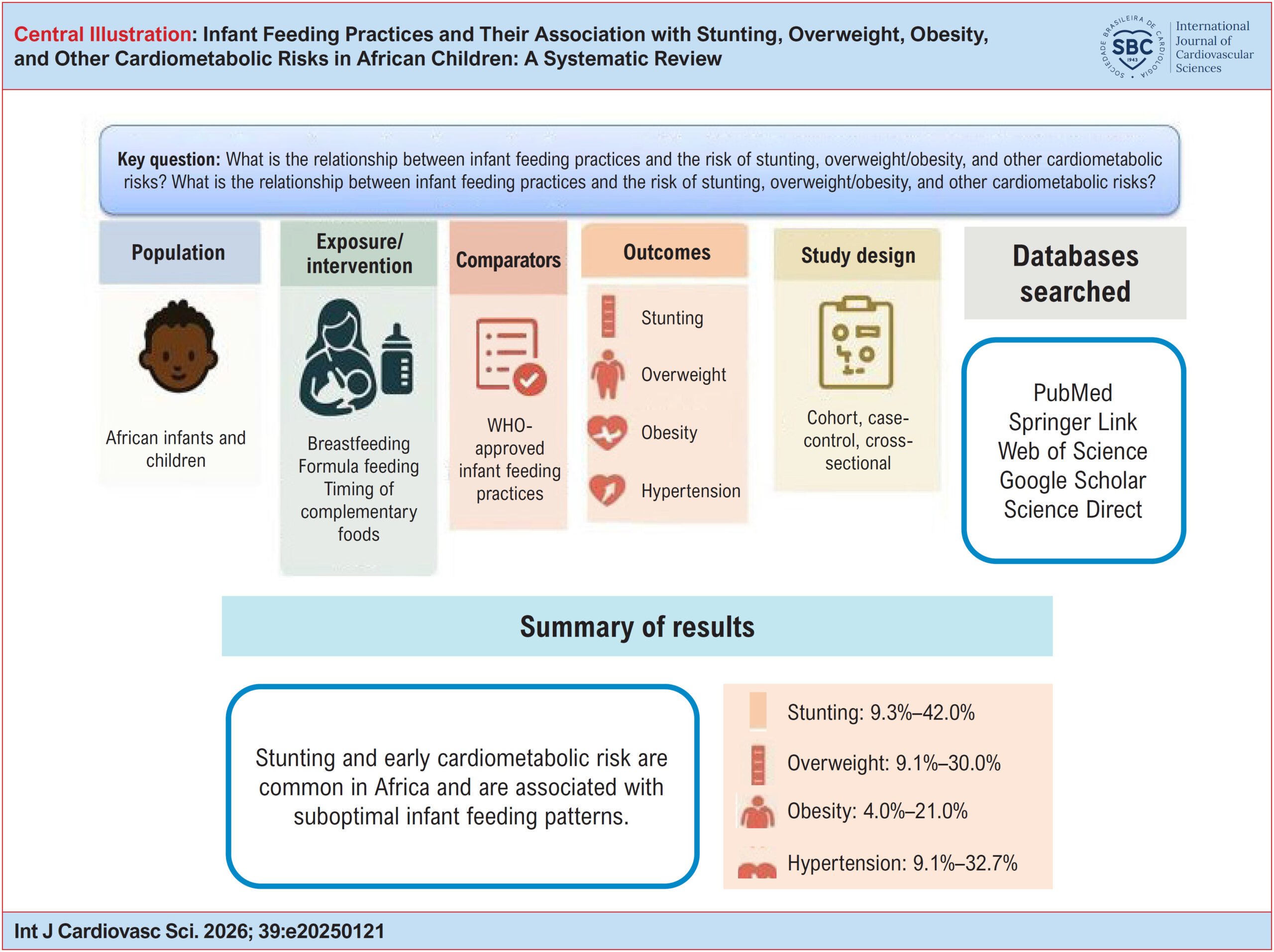
Feeding patterns among infants, particularly in Africa, play a central role in shaping child growth and long-term health outcomes such as stunting, overweight, and obesity in early childhood.

Objectives:

This systematic review assessed infant feeding practices and their association with stunting, overweight, obesity, and cardiometabolic risk in children in Africa.

Methods:

PubMed, Springer Link, Web of Science, Google Scholar, and Science Direct databases were searched for articles published between 2004 and 2024. Infant feeding indicators (exclusive breastfeeding, complementary feeding, and dietary variety) and outcomes of the children (stunting, overweight, obesity, blood pressure, and lipid profiles) were retrieved.

Results:

The review identified 12 studies (7 cohort, 5 cross-sectional) involving approximately 15,620 participants. Cardiometabolic risk markers such as hypertension were identified in 2 studies, with the prevalence ranging from 9.1% to 32.7%. Obesity was reported in 5 studies, with prevalence ranging from 4.0% to 21.0%. Six studies identified stunting and overweight, with their prevalence ranging from 9.3% to 42% and 9.1% to 30.0%, respectively. Diabetes was reported in just 1 of the studies in South Africa and was observed more in males (2.6%) than females (1.9%).

Conclusion:

Stunting and early cardiometabolic risk are common in Africa and are associated with suboptimal infant feeding patterns. Inappropriate complementary feeding and early weaning of breastfeeding are linked to stunting as well as early overweight/obesity. Exclusive breastfeeding for up to 6 months is still a poorly achieved target in most settings, even though it is crucial for optimal growth.
  • Breast Feeding
  • Cardiovascular Diseases
  • Infant
  • Infant Nutritional Physiological Phenomena
Read Full Article
Creative Commons Attribution (CC BY) Creative Commons license
11/09/2026 DOI: 10.36660/ijcs.20250121 Views 1
Transcatheter Aortic Valve Implantation in Nonagenarians: In-Hospital Complications and One-Year Follow-Up Mortality
Original Article

Transcatheter Aortic Valve Implantation in Nonagenarians: In-Hospital Complications and One-Year Follow-Up Mortality

Nelson Durval Ferreira Gomes de Mattos et al. Rafael Lauria de Oliveira Constantino Gonzalez Salgado André Luiz Silveira Sousa … Andre Luiz da Fonseca Feijó Rodrigo Verney Castello Branco Giovanna Zadra de Mattos José Carlos Pizzolante Secco Luiz Antonio Ferreira Carvalho Helena Cramer Rey

Abstract

Background:

Aortic Stenosis (AS) is prevalent among elderly individuals and is associated with high mortality when untreated. Transcatheter Aortic Valve Implantation (TAVI) has emerged as a viable therapeutic alternative, particularly for patients with surgical contraindications. However, its application in nonagenarians remains controversial due to limited data in this very elderly population.

Objective:

To evaluate clinical outcomes in nonagenarian patients undergoing TAVI at a private quaternary hospital, with emphasis on mortality and in-hospital as well as one-year complications.

Methods:

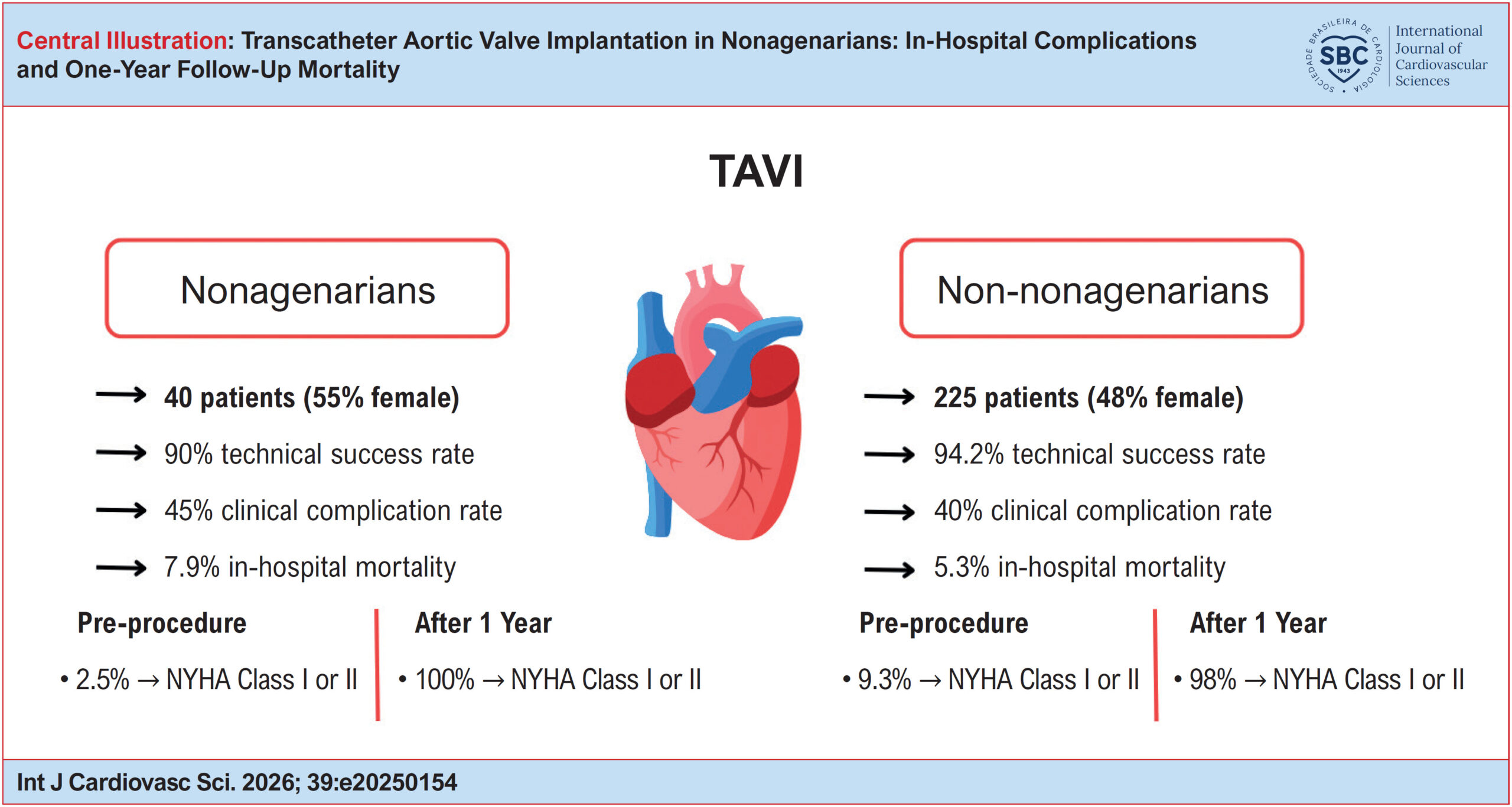
A retrospective cohort study with prospective follow-up was conducted between 2009 and 2023. A total of 265 patients with symptomatic severe AS who underwent TAVI were included, of whom 40 were nonagenarians (≥ 89 years). Data were obtained from an institutional database and from the Brazilian Registry of Aortic Bioprosthesis Implantation by Catheter – New Technologies (RIBAC-NT). Comparisons between nonagenarians and younger patients were performed using the Student’s t-test for continuous variables and the chi-square (χ2) test for categorical variables. A p-value < 0.05 was considered statistically significant.

Results:

Among nonagenarians, 55% were female, 72.5% had hypertension, and 95% had chronic kidney disease. The technical success rate was 55%. Major complications included permanent pacemaker implantation (35%) and adverse events (45%). In-hospital mortality was 7.9%, with no statistically significant differences at 30 days (p = 0.40), 6 months (p = 0.35), and one year (p = 0.06) compared to younger patients.

Conclusion:

TAVI proved to be a safe and effective therapeutic option in nonagenarians, showing clinical outcomes comparable to those of younger individuals.

  • Aortic Valve Stenosis
  • Hospital Mortality
  • Nonagenarians
  • postoperative complications
  • Transcatheter Aortic Valve Replacement
Read Full Article
Creative Commons Attribution (CC BY) Creative Commons license
11/09/2026 DOI: 10.36660/ijcs.20250154 Views 1
Genetic Evidence for the Association Between Sjögren's Syndrome and Cardiovascular Disease Risk
Original Article

Genetic Evidence for the Association Between Sjögren's Syndrome and Cardiovascular Disease Risk

Yafang Gao et al. Guohua Wu Tianyu Jin Zhijie Shen … Nannan Zhou Xiaohong Huang

Abstract

Background:

Previous studies have indicated that patients with Sjögren’s syndrome (SS) exhibit an increased risk of cardiovascular disease (CVD). However, the causal association between SS and CVD risk remains to be elucidated.

Objectives:

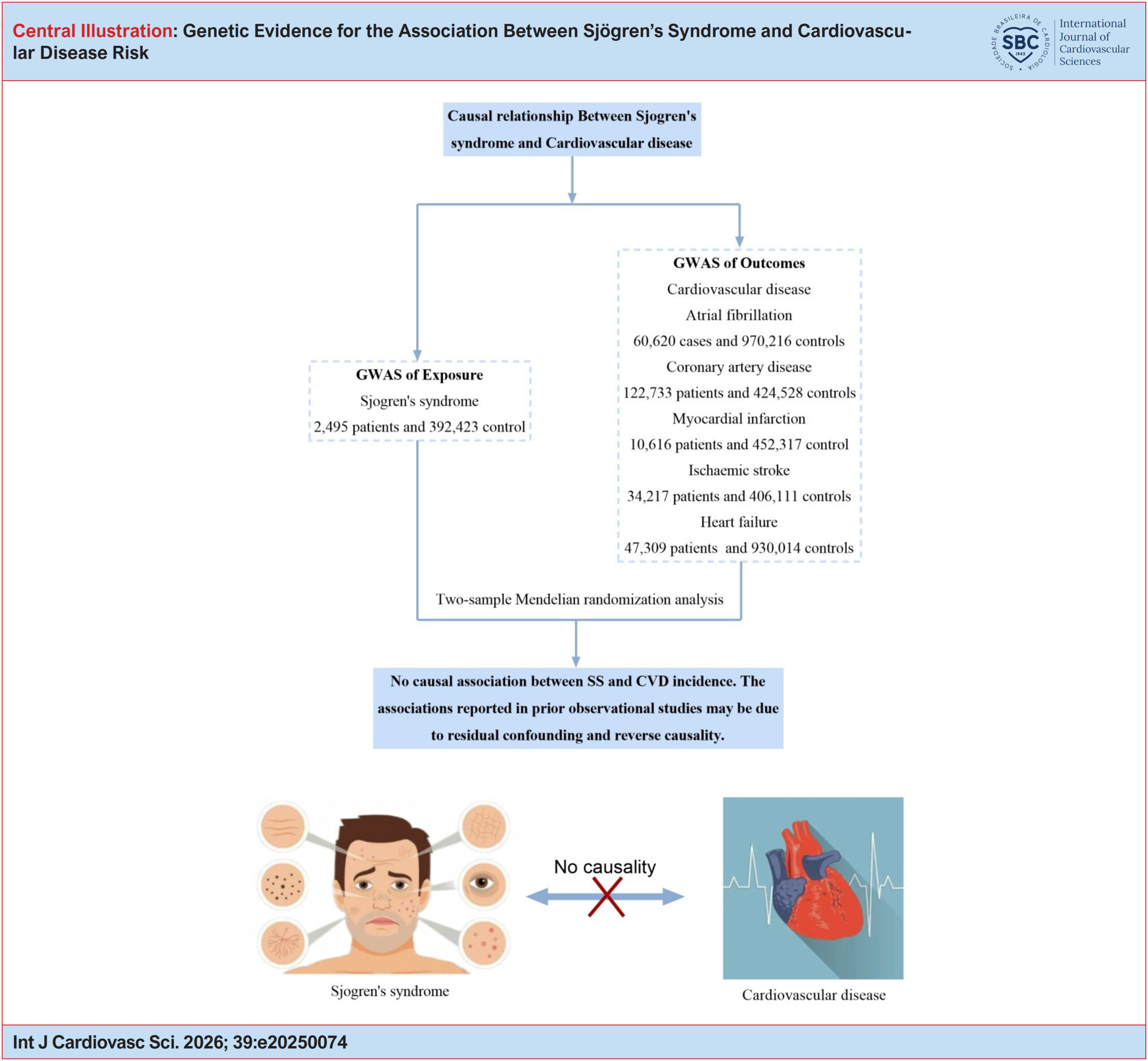
This investigation explored the genetic relationship between SS and CVD risk through Mendelian randomization (MR).

Methods:

We identified the genetic association between SS and CVD incidence via two-sample MR analysis based on summary statistics from publicly available genome-wide association studies (GWAS). The inverse-variance weighting (IVW) method was used for the primary analysis in our study. Additionally, we conducted several sensitivity analyses to confirm the stability and reliability of the MR results.

Results:

MR analysis revealed that SS was not significantly associated with the risk of various CVDs, including atrial fibrillation (AF) (odds ratio [OR] = 0.98, 95% confidence interval [CI] = 0.95–1.01; p = 0.22), ischemic stroke (IS) (OR = 0.99, 95% CI = 0.93–1.05; p = 0.68), heart failure (HF) (OR = 1.00, 95% CI = 0.96–1.04; p = 0.91), coronary artery disease (CAD) (OR = 0.99, 95% CI = 0.94–1.04; p = 0.60), and myocardial infaion (MI) (OR = 1.01, 95% CI = 0.97–1.06; p = 0.61).

Conclusions:

Our MR study did not provide genetic evidence supporting a causal association between SS and CVD incidence. The associations reported in prior observational studies may be due to residual confounding and reverse causality.

  • Cardiovascular Diseases
  • Coronary Artery Disease
  • Mendelian Randomization Analysis
  • Sjogren's Syndrome
Read Full Article
Creative Commons Attribution (CC BY) Creative Commons license
11/09/2026 DOI: 10.36660/ijcs.20250074 Views 3
Myocardial Infarction with Non-Obstructive Coronary Arteries: Clinical Profile, Diagnostic Investigation, and Outcomes in a Tertiary Center Cohort
Original Article

Myocardial Infarction with Non-Obstructive Coronary Arteries: Clinical Profile, Diagnostic Investigation, and Outcomes in a Tertiary Center Cohort

Kelvyn Vital et al. Ricardo Pavanello Barbara Porto Valente Bruno Noshang Blaas … Bianca Fernandes Tavora Arruda Raphael Rossi Maria Isabel Del Monaco Fausto Feres

Abstract

Background:

Myocardial infarction with non-obstructive coronary arteries (MINOCA) represents a heterogeneous clinical syndrome associated with diverse pathophysiological mechanisms and a non-negligible prognosis. Despite conceptual advances, diagnostic uncertainties and significant variations in etiological investigation and clinical management persist in real-world practice, particularly in centers with limited access to advanced imaging modalities.

Objectives:

To describe the clinical profile, diagnostic strategies employed, and clinical outcomes of patients with MINOCA followed at a Brazilian tertiary center.

Methods:

Observational, retrospective study including consecutive patients diagnosed with MINOCA, defined according to the Fourth Universal Definition of Myocardial Infarction and European guidelines. Clinical, angiographic, and complementary diagnostic data, as well as the treatment instituted and clinical outcomes during follow-up, were collected.

Results:

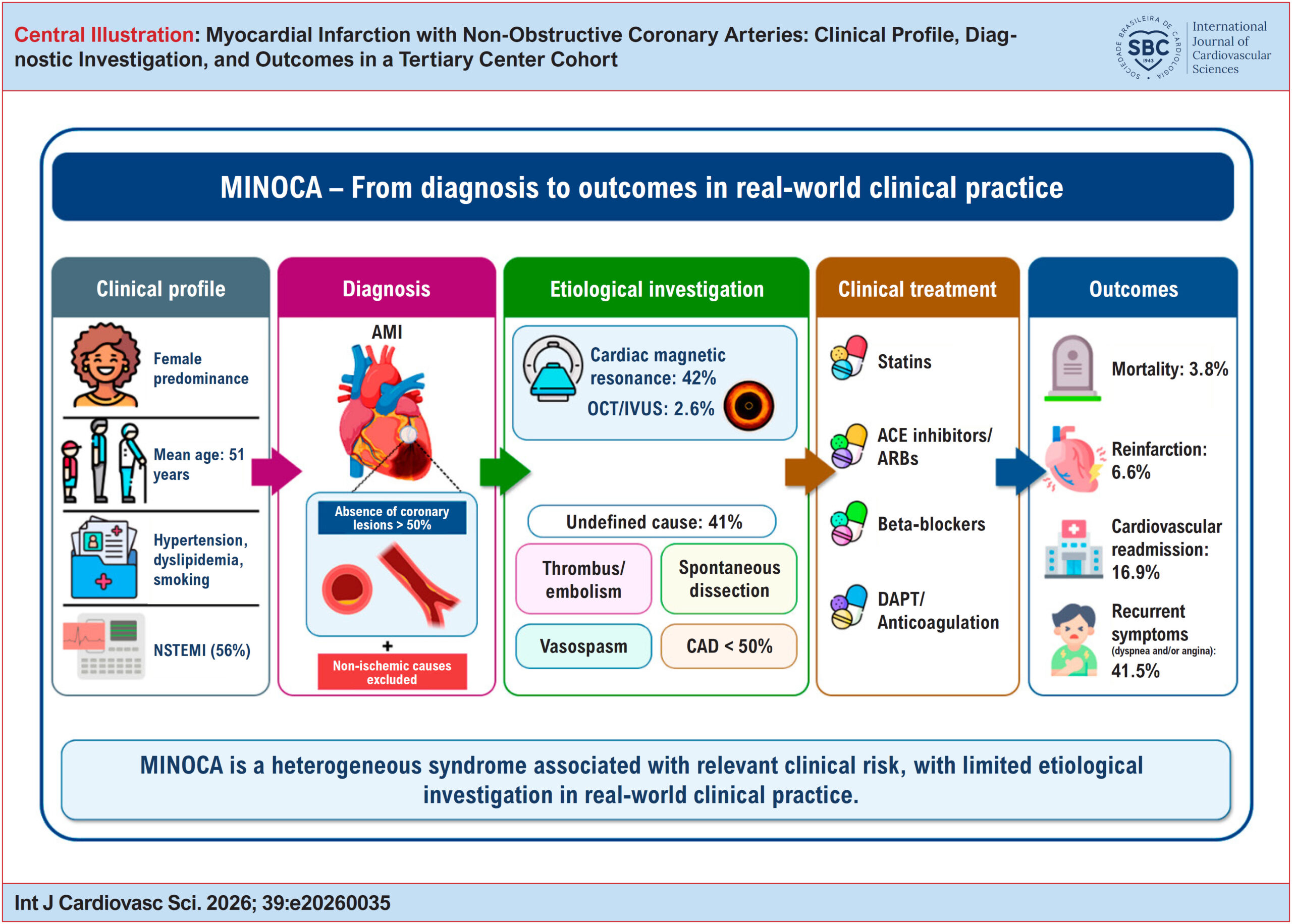
A total of 196 patients were included, with a mean age of 50.6 ± 11.8 years and a slight female predominance (52.6%). Systemic arterial hypertension (60.2%), dyslipidemia (45.9%), and current or former smoking (48.0%) were frequent. Cardiac magnetic resonance imaging was performed in 42.3% of cases, whereas intracoronary imaging methods were rarely used (2.6%). In 40.8% of patients, a definitive etiology could not be established. During follow-up (n = 183), mortality was 3.8%, reinfarction occurred in 6.6%, and new cardiovascular hospitalizations occurred in 16.9%.

Conclusions:

Patients with MINOCA present an intermediate-risk clinical profile and a relevant incidence of cardiovascular events during follow-up. The high proportion of cases without a defined etiological diagnosis reflects limitations in investigation and reinforces the need for more structured diagnostic strategies and individualized clinical management.

  • Coronary Artery Disease
  • MINOCA
  • Myocardial Infarction
Read Full Article
Creative Commons Attribution (CC BY) Creative Commons license
11/09/2026 DOI: 10.36660/ijcs.20260035 Views 4
Figure 1
Case Report

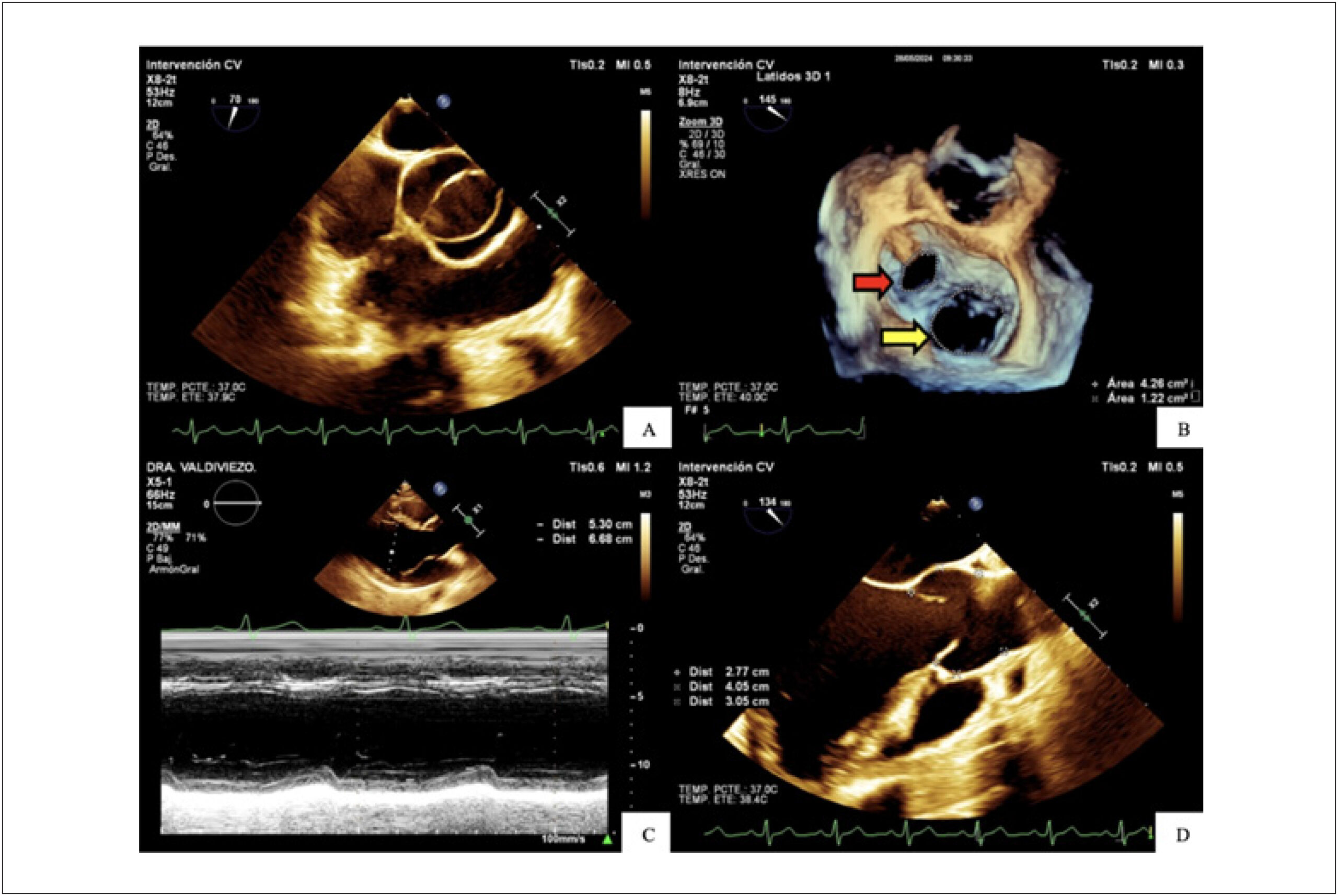
Double-Orifice Mitral Valve with Severe Regurgitation Associated with Bicuspid Aortic Valve: A Case Report

Patricia Delgado Cedeño et al. Estefania Carolina Arteaga Herrera Cesar João Tumbaco Mite Elsie Valdivieso Valenzuela … Juan Javier Zuñiga Bohorquez Guillermo Navas Moreira

Introduction

Double-orifice mitral valve (DOMV) was first described in 1876 by the British pathologist William Smith Greenfield. It is a very rare congenital or acquired cardiac anomaly with limited epidemiologic data and no clear sex predilection.

Congenital DOMV rarely occurs in isolation and is commonly associated with other cardiac anomalies, such as aortic coarctation, patent ductus arteriosus, atrioventricular septal defects, and bicuspid aortic valve (BAV), among others. Functionally, it may behave normally and remain asymptomatic; however, symptoms may arise from mitral valve dysfunction, such as stenosis or regurgitation.

[…]

  • Mitral Valve
  • Mitral Valve Annuloplasty
  • Mitral Valve Insufficiency
Read Full Article
Creative Commons Attribution (CC BY) Creative Commons license
11/09/2026 DOI: 10.36660/ijcs.20250214 Views 2
Editorial

The Importance of Observational Studies

Paolo Blanco Villela et al. Larissa Franco de Andrade

Discussing coronary artery disease without beginning with the traditional phrase “cardiovascular diseases are the leading cause of death worldwide” becomes challenging – especially because that statement, unfortunately, is no longer sufficient. There is no way to avoid it except by expanding upon it: in addition to leading global mortality statistics, cardiovascular diseases represented the primary cause of disability-adjusted life years (DALYs) in 2023, accounting for 437 million (95% UI: 401–465 million) DALYs worldwide – a 1.4-fold increase compared with 1990.

Naturally, ischemic heart diseases are included in this group and ranked first, with 193 million DALYs in 2023 and an age-standardized mortality rate of 99.8 (89.9–108.4) per 100,000 inhabitants, according to data from the Global Burden of Disease (GBD).

[…]

  • Epidemiology
  • Myocardial Ischemia
  • Observational Study
Read Full Article
Creative Commons Attribution (CC BY) Creative Commons license
07/09/2026 DOI: 10.36660/ijcs.20260130 Views 2
Reversal of Therapeutic Recommendations in the American College of Cardiology Coronary Artery Disease Guidelines
Original Article

Reversal of Therapeutic Recommendations in the American College of Cardiology Coronary Artery Disease Guidelines

Alessandra Carvalho Caldas et al. Denise Matias Daniel Medina Luis Claudio Lemos Correia

Abstract

Background:

Medical reversal is defined as the discontinuation of a procedure’s recommendation due to new evidence regarding its efficacy or safety. Cardiology is the specialty with the highest number of documented reversals, yet there is no information available about the probability of reversal.

Objectives:

To describe the frequency of medical reversal in the ischemic heart disease guidelines published by the American College of Cardiology/American Heart Association (ACC/AHA), according to levels of evidence.

Methods:

The most recent guidelines for stable coronary disease, non-ST-elevation acute coronary syndrome, and ST-elevation myocardial infarction were compared with the first version. Medical reversal was defined as a shift from a recommended procedure to a contraindicated one or the removal of the recommendation. The quality of evidence was categorized by the guidelines as high, moderate, or low.

Results:

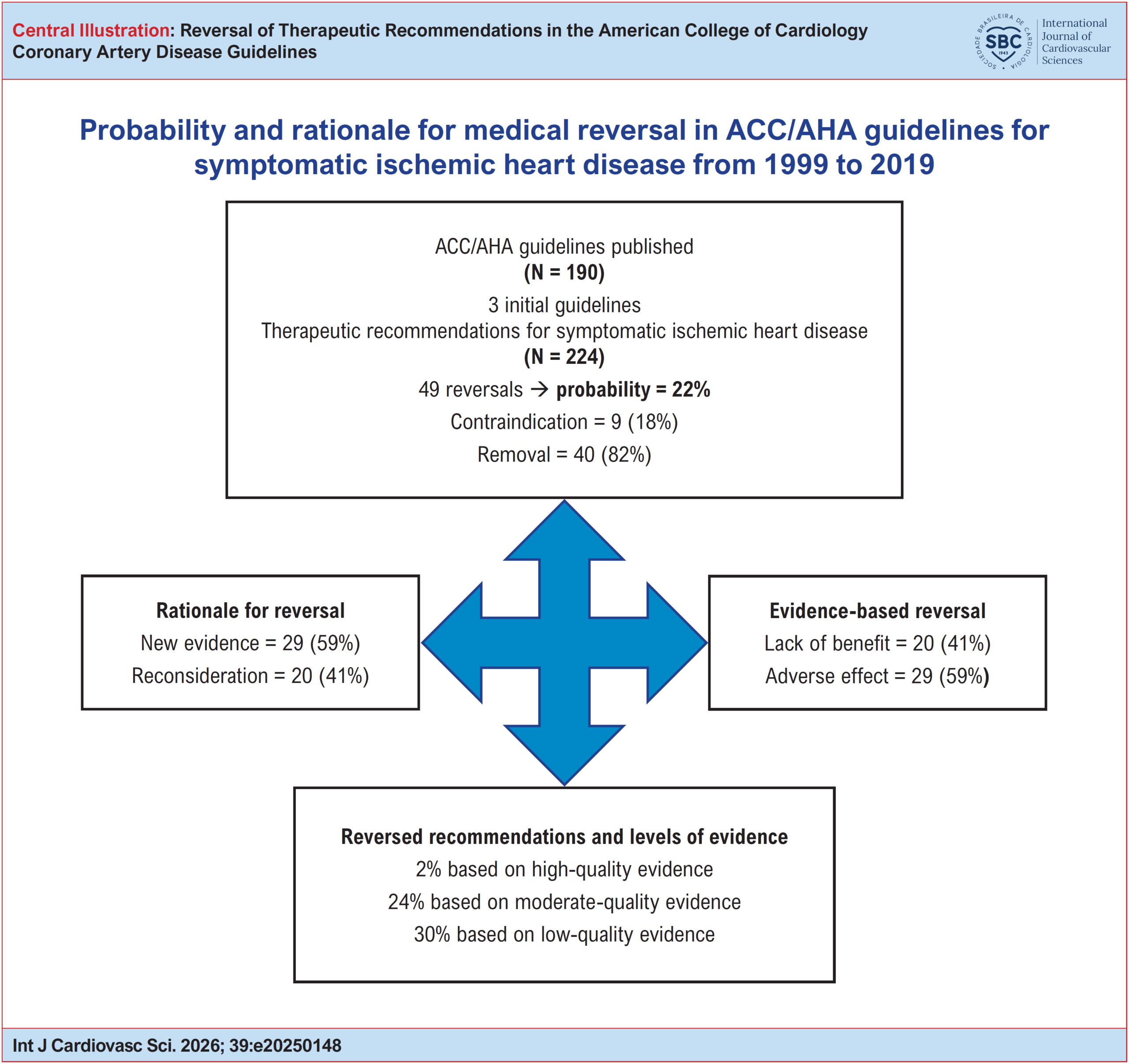
A total of 224 therapeutic recommendations were identified, with 19% based on high-quality evidence, 42% on moderate-quality evidence, and 39% on low-quality evidence. Forty-nine medical reversals were observed, constituting 22% of all therapeutic recommendations included in the first version of the guidelines. The probability of reversal for procedures based on high-quality evidence was 2%, compared with 25% for procedures with moderate-quality evidence and 30% for procedures with low-quality evidence.

Conclusion:

In the ACC/AHA ischemic heart disease guidelines, medical reversal is common in recommendations based on moderate or low-quality evidence, but rare in those with high-quality evidence.

  • Acute coronary syndrome
  • Coronary Artery Disease
  • Myocardial Infarction
Read Full Article
Creative Commons Attribution (CC BY) Creative Commons license
07/09/2026 DOI: 10.36660/ijcs.20250148 Views 2
Figure 1
Case Report

Early Cascade Screening and Lipid-Lowering Therapy in Childhood: Challenges in the Management of Familial Hypercholesterolemia

Juliana Simões Zanotti et al. Eduardo Tomaz Quartero Martim Renato Jorge Alves

Abstract

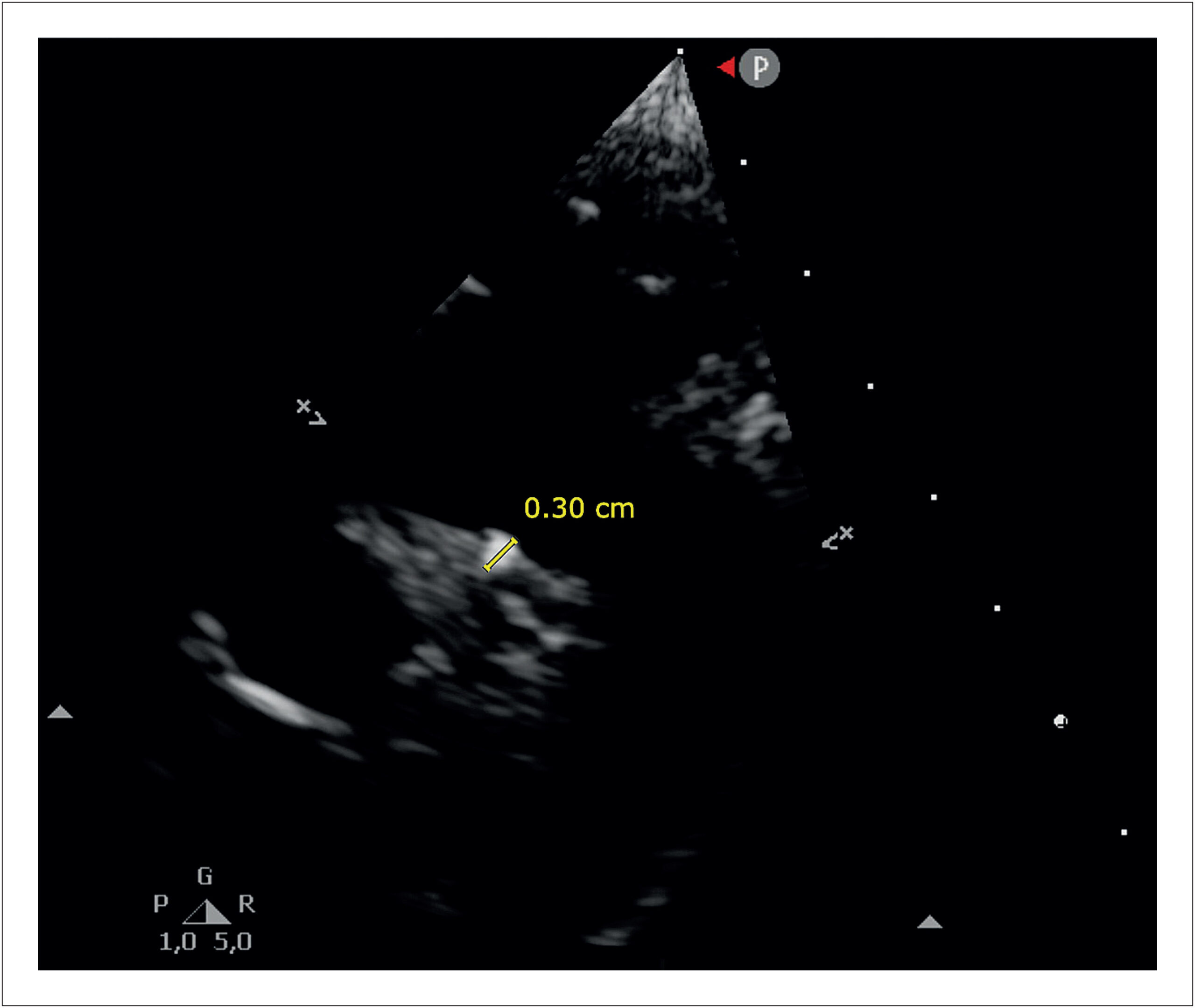
This case highlights the importance of cascade screening for the early diagnosis of Familial Hypercholesterolemia (FH) in children. Early identification at the age of five enabled the timely initiation of lipid-lowering therapy and underscored the need for individualized treatment based on atherosclerotic risk. Despite a substantial reduction in LDL-C levels, the patient remained above recommended therapeutic targets, emphasizing the need for ongoing monitoring and treatment intensification. The detection of subclinical atherosclerosis further reinforces the importance of continuous cardiovascular surveillance. A comprehensive management strategy combining cascade screening, family-based risk assessment, and early intervention is essential to reduce long-term cardiovascular risk and improve clinical outcomes.

  • Atherosclerosis
  • Hyperlipoproteinemia Type II
  • LDL Lipoproteins
Read Full Article
Creative Commons Attribution (CC BY) Creative Commons license
07/09/2026 DOI: 10.36660/ijcs.20260095
QT Prolongation Following Premature Ventricular Contractions: A Potential Marker of Concealed Long QT Syndrome
Original Article

QT Prolongation Following Premature Ventricular Contractions: A Potential Marker of Concealed Long QT Syndrome

Khatuna Jalabadze et al. Pavle Machavariani Bachuki Tsiklauri Natalia Garuchava … Ia Avaliani Maya Chigogidze

Abstract

Background:

Long QT syndrome (LQTS) predisposes individuals to malignant ventricular arrhythmias and sudden cardiac death; however, diagnosis remains challenging in patients with borderline corrected QT (QTc) values. Premature Ventricular Contractions (PVCs) may unmask concealed abnormalities of ventricular repolarization.

Aim:

To determine whether post-PVC QTc prolongation can differentiate patients with confirmed LQTS, healthy controls, and borderline index cases.

Methods:

In this retrospective study, 24-hour electrocardiography (ECG) recordings from 84 subjects were analyzed, including 10 patients with confirmed LQTS, 72 healthy controls, and 2 index patients with borderline baseline QTc values. QTc intervals before and after PVCs were measured manually and corrected using Bazett’s formula. Between-group differences were evaluated using analysis of covariance (ANCOVA) adjusted for baseline QTc, whereas within-group changes were assessed with paired t-tests. A two-tailed p < 0.05 was considered statistically significant.

Results:

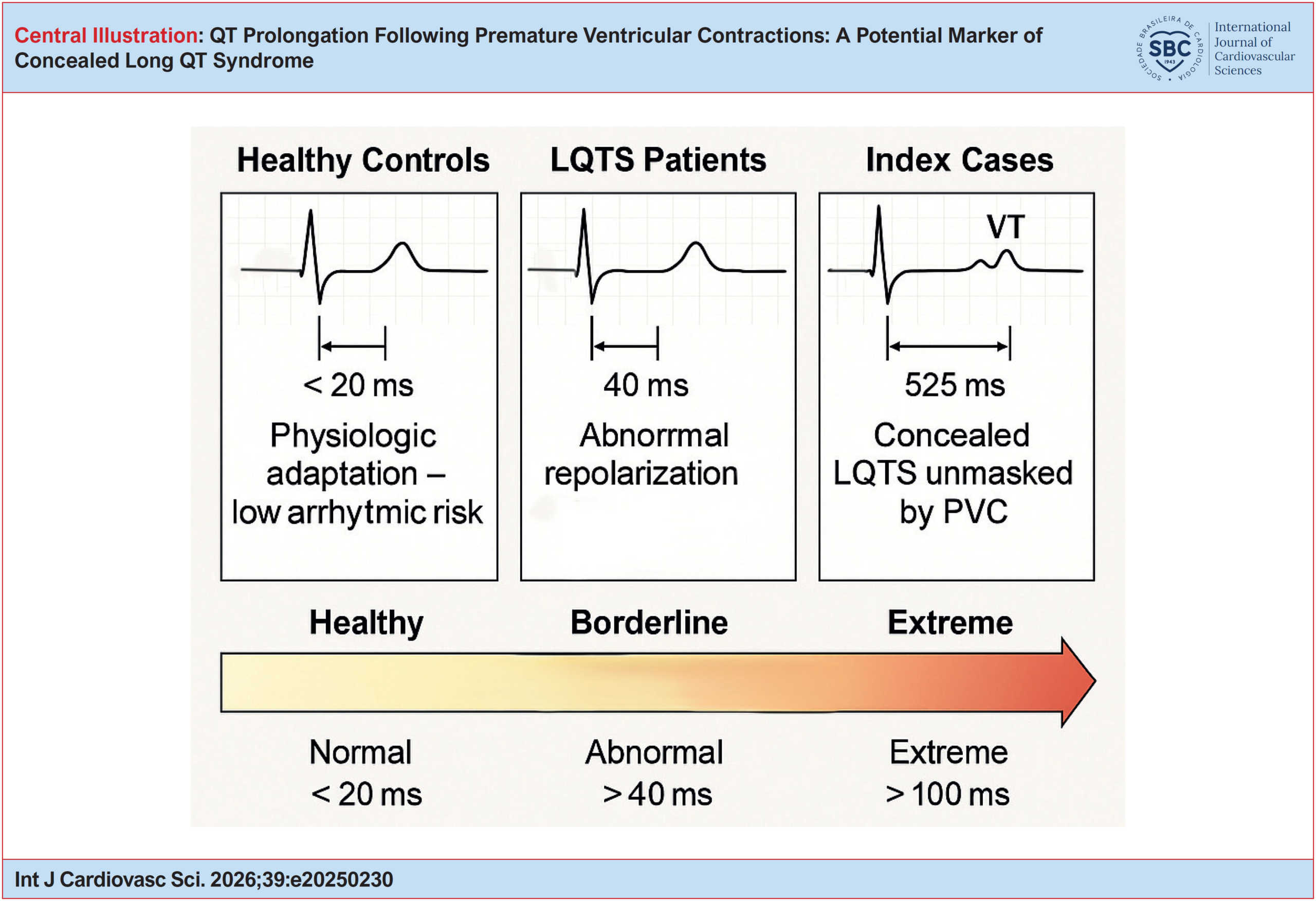
Post-PVC QTc intervals were longer in patients with LQTS than in healthy controls (488 ± 23 ms vs 391 ± 37 ms; adjusted p = 0.066). Overall, PVCs were associated with a mean QTc increase of +15.7 ms (95% CI 7.1–24.3; p = 0.0005), with larger increases observed in LQTS patients (+22.3 ms; p = 0.0019) compared with healthy controls (+10.0 ms; p = 0.0098). The two index patients exhibited marked QTc prolongation, rising from borderline baseline values (360–460 ms) to 540–600 ms (Δ≈165 ms).

Conclusion:

PVC-induced QTc prolongation may help distinguish healthy individuals from patients with overt or borderline LQTS. Whereas healthy controls demonstrated mild physiologic adaptation, patients with confirmed LQTS showed consistent QTc prolongation, and index patients exhibited marked post-PVC increases suggestive of concealed repolarization abnormalities. Assessment of QTc following PVCs may represent a simple bedside approach to improve diagnostic accuracy and risk stratification in LQTS; prospective studies in larger cohorts are warranted to confirm these findings.

  • Cardiac Arrhythmias
  • Long QT Syndrome
  • Ventricular Premature Complexes
Read Full Article
Creative Commons Attribution (CC BY) Creative Commons license
07/09/2026 DOI: 10.36660/ijcs.20250230 Views 3
Protocol For Weaning From Mechanical Ventilation in Patients Undergoing Coronary Artery Bypass Grafting: Cohort Study
Original Article

Protocol For Weaning From Mechanical Ventilation in Patients Undergoing Coronary Artery Bypass Grafting: Cohort Study

André Luiz Lisboa Cordeiro et al. Wallace Fernando de Souza Lopes Tainara Conceição de Jesus Ana Julia Gomes de Oliveira … Ana Cecília de Oliveira Coutinho André Raimundo França Guimarães

Abstract

Background:

Patients with heart disease often require mechanical ventilation (MV). Although weaning protocols may reduce the duration of MV, the literature presents contradictory findings regarding their effectiveness, and there is a lack of studies specifically involving cardiac patients.

Objective:

To evaluate whether a weaning protocol reduces the duration of MV compared with weaning based on clinical judgment in cardiac patients.

Methods:

A retrospective cohort study was conducted with patients undergoing myocardial revascularization. They were randomly assigned to either the protocol-driven (intervention) group or the conventional weaning group. Weaning time, MV duration, and length of stay in the Intensive Care Unit (ICU) were assessed. Comparisons between groups were performed using the unpaired Student’s t-test. A p-value <0.05 was considered statistically significant.

Results:

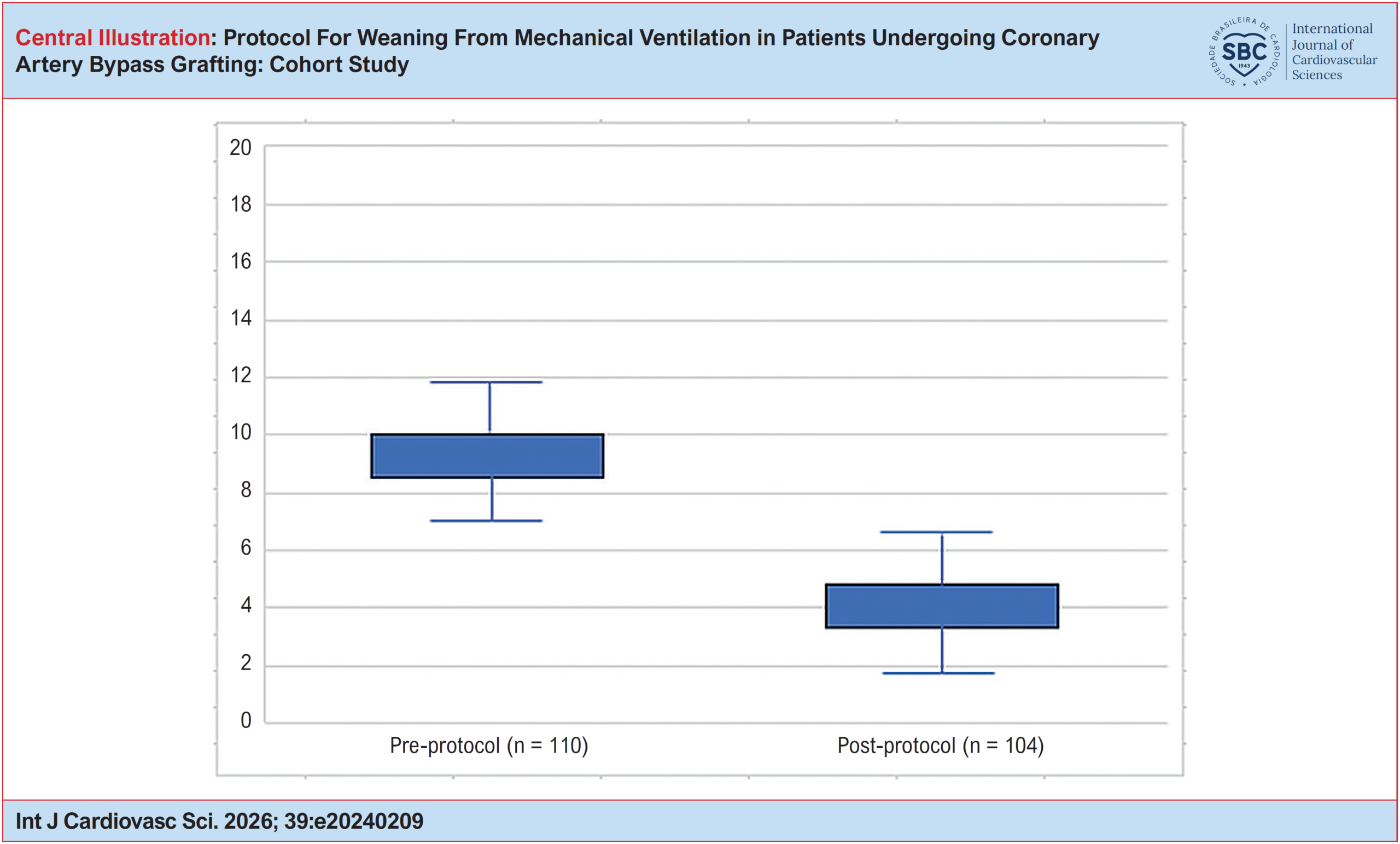
A total of 214 patients were evaluated. The mean duration of MV was shorter in the intervention group (4 vs. 9 hours, p < 0.001). The mean ICU length of stay was 2 vs. 5 days in the intervention and control groups, respectively (p = 0.02).

Conclusion:

The findings suggest that protocol-guided weaning may be associated with reductions in weaning time, duration of MV, and ICU length of stay, raising the hypothesis of a potential clinical benefit that warrants further investigation in future studies.

  • Artificial Respiration
  • Clinical Protocols
  • Intensive Care Units
Read Full Article
Creative Commons Attribution (CC BY) Creative Commons license
07/09/2026 DOI: 10.36660/ijcs.20240209 Views 1
Editorial

Cardiac Myosin Inhibitors in Patients with Hypertrophic Cardiomyopathy

Marcelo Imbroinise Bittencourt et al. Ricardo Mourilhe-Rocha

In recent years, we have witnessed a significant shift in the management of symptomatic Hypertrophic Cardiomyopathy (HCM). For decades, treatment relied on medications that provided hemodynamic support without directly addressing sarcomeric hypercontractility, the primary pathophysiological driver of the disease. The emergence of Cardiac Myosin Inhibitors (CMIs), particularly mavacamten and aficamten, has transformed this landscape., In an article published in this issue of the International Journal of Cardiovascular Sciences, Fogaça PHT et al. present an updated systematic review and meta-analysis that reinforces the efficacy of this class of medications while providing important insights into their effects in both obstructive and non-obstructive HCM.

The study pooled data from six randomized controlled trials. Five included patients with obstructive HCM, whereas one – the MAVERICK-HCM trial – included patients with non-obstructive HCM.,,- The inclusion of non-obstructive patients represents a distinctive aspect of this analysis, as the benefits of CMIs in the absence of left ventricular outflow tract (LVOT) obstruction remain less well established.

[…]

  • Cardiac Myosins
  • Hypertrophic Cardiomyopathy
  • Therapeutics
Read Full Article
Creative Commons Attribution (CC BY) Creative Commons license
21/08/2026 DOI: 10.36660/ijcs.20260134 Views 3
Viewpoint

Asymptomatic Patients With Suspected Coronary Artery Disease: What Are Clinicians Afraid Of?

Antônio Sérgio Cordeiro da Rocha et al. Dany Kruczan

Introduction

In contemporary practice, myocardial revascularization, particularly Percutaneous Coronary Intervention (PCI), is frequently performed in asymptomatic individuals with suspected Coronary Artery Disease (CAD). This occurs despite robust evidence from Randomized Clinical Trials (RCTs) over the past two decades demonstrating that, in patients with Chronic Coronary Syndromes (CCS), neither PCI nor Coronary Artery Bypass Grafting (CABG) reduces mortality when compared with Guideline-directed Medical Therapy (GDMT). In selected populations, revascularization confers symptomatic relief, particularly among patients with frequent angina, but without prognostic advantage.

The persistence of invasive strategies in asymptomatic patients appears to be driven largely by two cognitive biases: the “oculostenotic reflex”, the impulse to correct angiographically visible stenoses, and the “oculoischemic reflex”, the perceived need to revascularize documented ischemia irrespective of symptoms. Both are rooted in the fear that untreated coronary obstructions inevitably herald sudden cardiac death or Acute Myocardial Infarction (AMI).,

[…]

  • Acute coronary syndrome
  • Coronary Artery Disease
  • Percutaneous Coronary Intervention
  • Risk Factors
Read Full Article
Creative Commons Attribution (CC BY) Creative Commons license
21/08/2026 DOI: 10.36660/ijcs.20250075 Views 2
Letter to the Editor

Metabolic Challenges in The Semiarid Region: A Critical Analysis of Nutritional Transition and Early Cardiovascular Risk

Leonardo Alves Santos et al. Álvaro Eduardo Santos Oliveira Beatriz Vitória Carvalho Lordêlo Luis Antonio Cavalcanti Matias … Rodrigo Mendes Pedro Pereira Tenório

Dear Editor,

We had the opportunity to review the article entitled “Assessment of Overweight/Obesity and Elevation of Blood Pressure in Schools in Rural and Urban Area in the Backlands of Bahia.” We would like to congratulate the authors for their initiative in investigating a pediatric cohort in a region marked by social and climatic vulnerability, frequently underrepresented in scientific literature, as well as for highlighting the relevance of addressing childhood obesity and arterial hypertension – two major cardiovascular risk factors with direct impact on future morbidity and mortality.

[…]

  • Heart Disease Risk Factors
  • Hypertension
  • Metabolism
  • Obesity
Read Full Article
Creative Commons Attribution (CC BY) Creative Commons license
21/08/2026 DOI: 10.36660/ijcs.20260059 Views 2
Home-Based Vs. Usual and Center-Based Cardiac Rehabilitation: Effects on Aerobic Fitness and Quality of Life
Review Article

Home-Based Vs. Usual and Center-Based Cardiac Rehabilitation: Effects on Aerobic Fitness and Quality of Life

Cauã Teixeira Mota et al. Claudia Lucia de Moraes Forjaz

Abstract

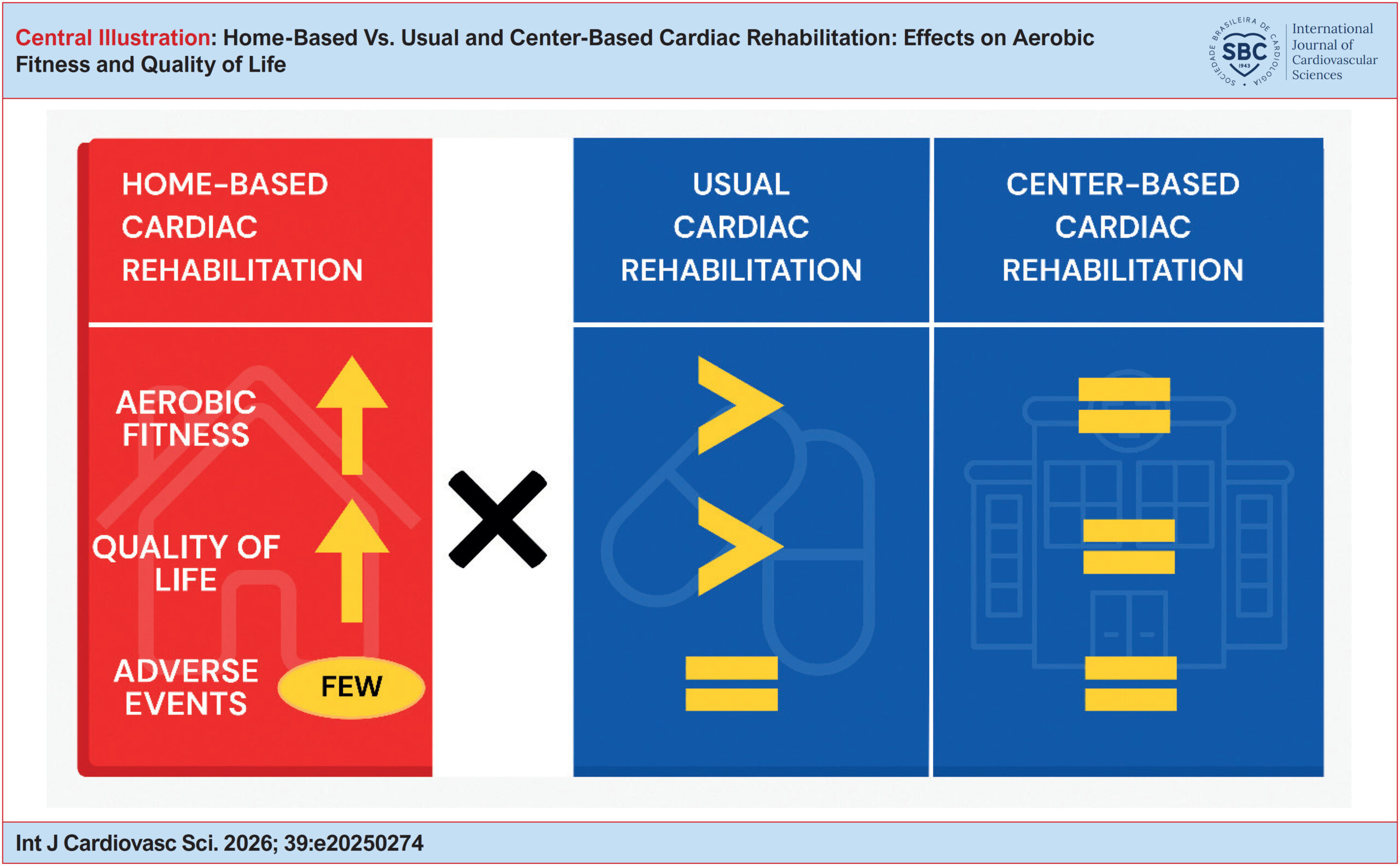
Home-based cardiac rehabilitation has been proposed as an alternative to expand access to treatment for patients with cardiovascular diseases. This systematic review evaluated the effects of home-based cardiac rehabilitation, with emphasis on physical exercise, on aerobic fitness, quality of life, and adverse events compared with usual cardiac rehabilitation and center-based cardiac rehabilitation. A literature search was conducted in the PubMed database, including only randomized controlled clinical trials involving adults and older adults with coronary artery disease or heart failure. Twenty-three studies conducted in different countries were identified; however, none was performed in Brazil. The total sample comprised 2,298 participants, of whom 24% were women. All studies implemented aerobic training, either alone or combined with resistance training, and the vast majority maintained remote contact with participants every one to two weeks. Comparisons between pre- and post-intervention outcomes showed that home-based cardiac rehabilitation improved aerobic fitness and/or quality of life in 22 studies, with greater improvements than those observed with usual cardiac rehabilitation and outcomes comparable to those achieved with center-based cardiac rehabilitation. Furthermore, the incidence of adverse events was low and similar across the three rehabilitation models. Overall, home-based cardiac rehabilitation improves aerobic fitness and quality of life more effectively than usual cardiac rehabilitation and provides benefits comparable to those of center-based cardiac rehabilitation without increasing the risk of adverse events, supporting its use in the treatment of cardiovascular diseases. Nevertheless, the absence of studies conducted in Brazil highlights the need for further research on this rehabilitation model in the Brazilian context.

  • Cardiac Rehabilitation
  • Exercise
  • Quality of life
Read Full Article
Creative Commons Attribution (CC BY) Creative Commons license
21/08/2026 DOI: 10.36660/ijcs.20250274 Views 2
Figure 1
Original Article

Evaluation of Cardiovascular Risks Associated with Calcium Use: A Systematic Review and Meta-Analysis

Paulo Henrique Gouveia et al. Joyce da Silva Guimarães Astrid Wiens

Abstract

Background

Calcium plays vital roles in both physiological and pathological processes, and its use as a therapeutic agent is primarily indicated for osteoporosis and osteopenia. It may increase cardiovascular risk, thereby increasing cardiovascular morbidity and mortality.

Objective

To synthesize the available evidence on cardiovascular risks in patients using calcium-based medications and supplements.

Methods

This systematic review and meta-analysis utilized three major international databases and included intervention studies and comparative observational studies with data on the intake of calcium-based medications or supplements in adult populations and associated cardiovascular outcomes. A p-value < 0.05 was considered for all analyses, and the certainty of evidence was assessed using the GRADE approach.

Results

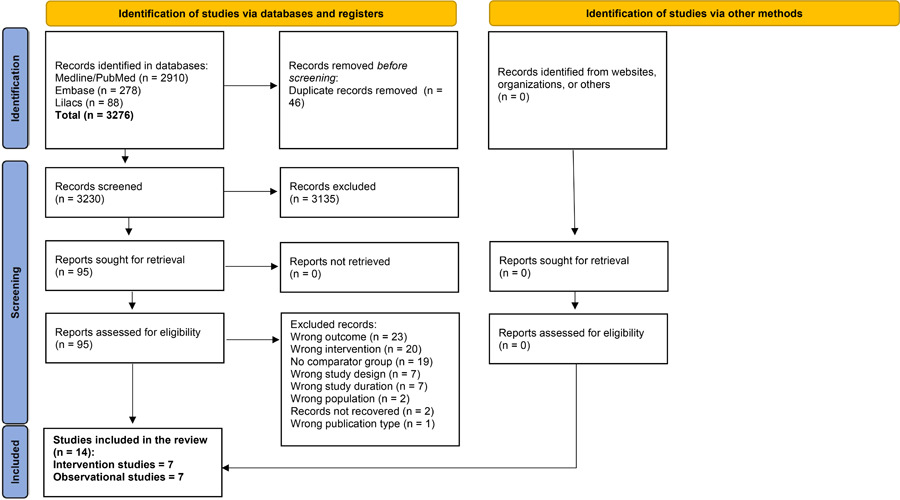
A total of fourteen articles were included: three pivotal intervention studies, four post hoc analyses, and seven observational studies. The outcomes assessed were mortality from cardiovascular events, myocardial infarction, stroke, and coronary artery disease. Although an increased incidence of coronary artery disease was observed among users of calcium-based medications or supplements when considering only observational studies (RR 1.08; 95% CI 1.02–1.15), this finding was not confirmed in interventional studies. Therefore, further investigation is warranted. No increased risk of cardiovascular mortality, myocardial infarction, or stroke was observed. The quality of the evidence was considered low or very low for all outcomes due to the risk of bias and limitations inherent to the meta-analyses themselves.

Conclusions

Caution is recommended when interpreting the results, particularly in the development of clinical protocols. The importance of pharmacotherapeutic monitoring for patients using these medications is emphasized, and further research to explore additional outcomes is suggested.

  • Calcium
  • Calcium Compounds
  • Heart Disease Risk Factors
  • systematic review
Read Full Article
Creative Commons Attribution (CC BY) Creative Commons license
17/08/2026 DOI: 10.36660/ijcs.20250239
Letter to the Editor

Prognostic Value of C-reactive Protein (CRP) in Patients With Acute Heart Failure (AHF) Admitted to General Wards in Brazil

Vanessa Souza Silva Medrado et al. João Emmanuel Coelho de Morais Domingos Sávio de Oliveira e Silva João Pedro Lopes Azevedo … Thalisson Gonçalves Almeida Pedro Pereira Tenório

Dear Editor,

We read with great interest the article by Ferigato et al. investigating the prognostic value of C-reactive protein (CRP) in patients with acute heart failure (AHF) admitted to general wards in Brazil. We would like to congratulate the authors for addressing a topic of substantial practical relevance: the search for accessible biomarkers in settings where gold-standard tools, such as natriuretic peptides, have inconsistent availability.

[…]

  • C-Reactive Protein
  • Heart Failure
  • Prognosis
Read Full Article
Creative Commons Attribution (CC BY) Creative Commons license
17/08/2026 DOI: 10.36660/ijcs.20260053 Views 1
Assessment of Adherence to Drug Therapy in Patients with Heart Failure Followed at a Specialized Outpatient Clinic
Original Article

Assessment of Adherence to Drug Therapy in Patients with Heart Failure Followed at a Specialized Outpatient Clinic

Breno Gabriel Araújo Sampaio de Jesus et al. Felipe Barros Oliveira Felipe Caires Araújo Meira Lívia Brito Oliveira … Fabio Figueirêdo Costa Adriana Lopes Latado

Abstract

Background:

Heart failure (HF) is a severe syndrome with high global prevalence. Despite safe and effective pharmacological therapies, its prognosis remains unfavorable, and low treatment adherence is the leading cause of rehospitalizations and worse outcomes.

Objective:

To assess treatment adherence and its determinants in patients with HF followed at cardiology outpatient clinics of a specialized hospital.

Methods:

A single-center, cross-sectional, observational study was conducted, with data collection via in-person interviews. Treatment adherence was measured using the Brief Medication Questionnaire (BMQ). Variables associated with adherence with p < 0.10 were included in a multivariate model, considering a significance level of 5%.

Results:

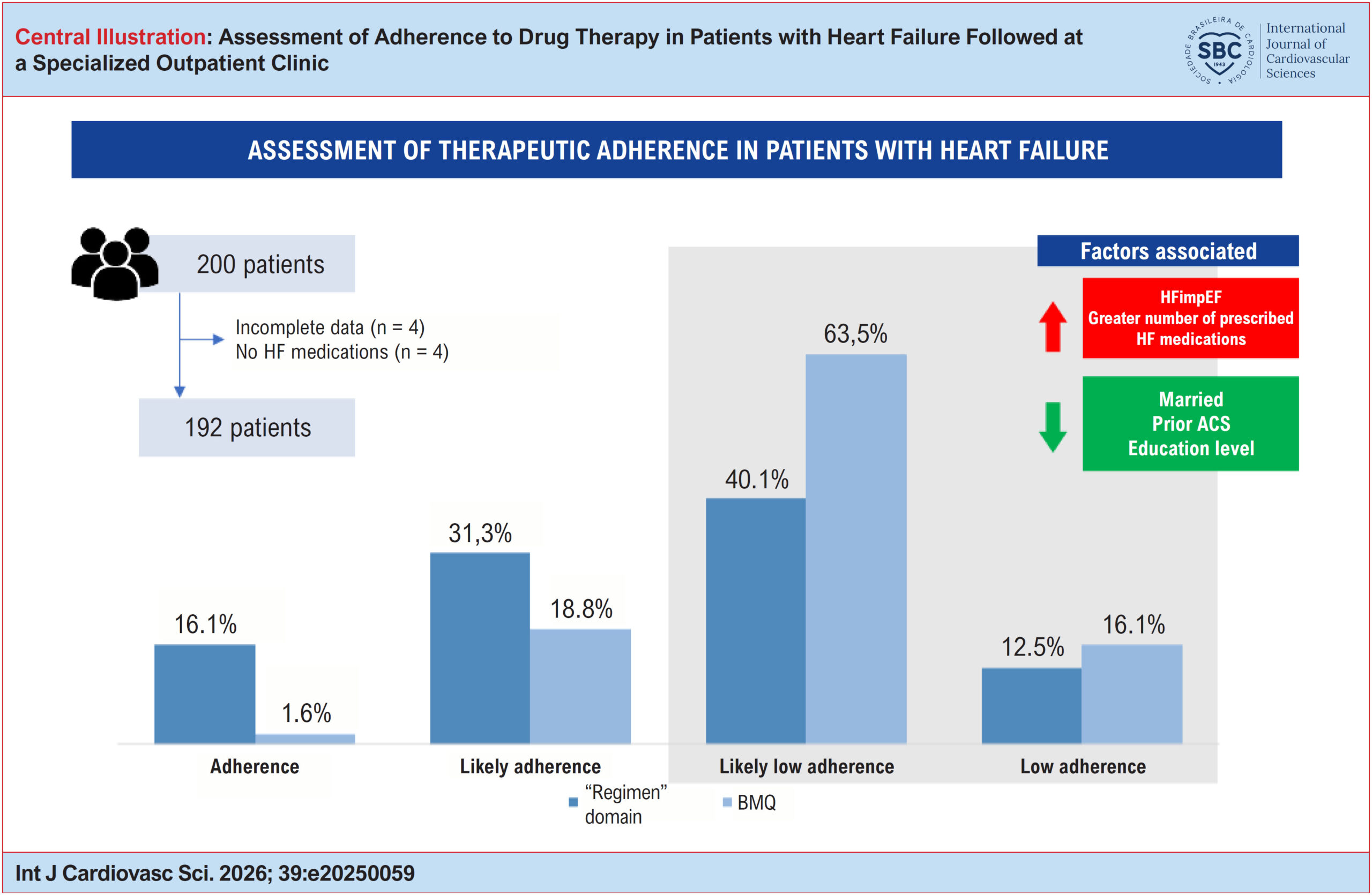
A total of 200 patients were included; 79.6% showed low adherence according to the BMQ, and 52.6% showed low adherence in the “regimen” domain. Only 3 (1.6%) patients presented no barriers to adherence. In multivariate analysis, being married (odds ratio [OR] 0.40; 95% confidence interval [CI] 0.16–0.96; p = 0.042), prior acute coronary syndrome (ACS) (OR 0.21; 95% CI 0.08–0.51; p < 0.001), education level (OR 0.90; 95% CI 0.82–0.98; p = 0.018), higher number of prescribed medications (OR 1.44; 95% CI 1.03–2.05; p = 0.037), and HF with improved ejection fraction (OR 2.76; 95% CI 1.06–7.63; p = 0.042) were independent predictors of low adherence.

Conclusion:

Low therapeutic adherence among patients with HF is prevalent and influenced by socioeconomic factors, social support, polypharmacy, and clinical characteristics. The results reinforce the need for health education and the simplification of therapeutic regimens.

  • Ambulatory Care
  • Heart Failure
  • medication adherence
Read Full Article
Creative Commons Attribution (CC BY) Creative Commons license
13/08/2026 DOI: 10.36660/ijcs.20250059 Views 1
Letter to the Editor

Access to Guideline-Directed Heart Failure Therapy in Brazil: Methodological and Policy Considerations

Fatih Aydin

While the study’s findings are valuable, some methodological aspects could affect how we interpret them. The analysis is based solely on the presence of medications in Municipal Lists of Essential Medicines (REMUMEs), rather than on actual dispensing records or pharmacy inventory data. However, the fact that a medication is on an official list does not mean that patients can actually receive it in practice. Local procurement rules, supply chain issues, and prescribing practices can significantly affect the availability of drugs when patients need them. Conversely, medications absent from REMUMEs may still be accessible through other mechanisms within SUS. Therefore, relying solely on documentary evidence may not fully reflect the real accessibility of HF therapies. Dispensing records or pharmacy-level availability data could provide a more accurate representation of patient access.

Another important point to consider is how we understand the limited use of newer HF treatments, particularly angiotensin receptor–neprilysin inhibitors and sodium–glucose cotransporter-2 inhibitors. These treatments are often provided through specific national programs, such as the Specialized Pharmaceutical Assistance Component (CEAF), rather than being included in REMUMEs. Consequently, assessing REMUMEs alone may underestimate the availability of these agents within the broader SUS framework. Moreover, the regulatory and reimbursement processes for drugs like dapagliflozin and sacubitril/valsartan have changed quickly in recent years. This makes it especially important to understand how long they have been available.

[…]

  • Drug Therapy
  • Health Services Accessibility
  • Heart Failure
Read Full Article
Creative Commons Attribution (CC BY) Creative Commons license
07/08/2026 DOI: 10.36660/ijcs.20260067 Views 2
Association Between Inflammatory Hematologic Indices and Acute Coronary Syndrome Phenotypes
Original Article

Association Between Inflammatory Hematologic Indices and Acute Coronary Syndrome Phenotypes

Fabiele de Lima Righi et al. Gustavo Sugai Paula Araujo Renato Jorge Alves

Abstract

Background:

The systemic immune-inflammation index (SII) and the systemic inflammation response index (SIRI) are inflammatory biomarkers derived from neutrophil (N), platelet (P), lymphocyte (L), and monocyte (M) counts. These indices have been associated with prognostic value in patients with coronary artery disease (CAD) and may contribute to risk stratification in acute coronary syndrome (ACS).

Objectives:

To evaluate the independent association between inflammatory hematologic indices and ACS phenotypes and to explore their relationship with cardiovascular risk factors.

Methods:

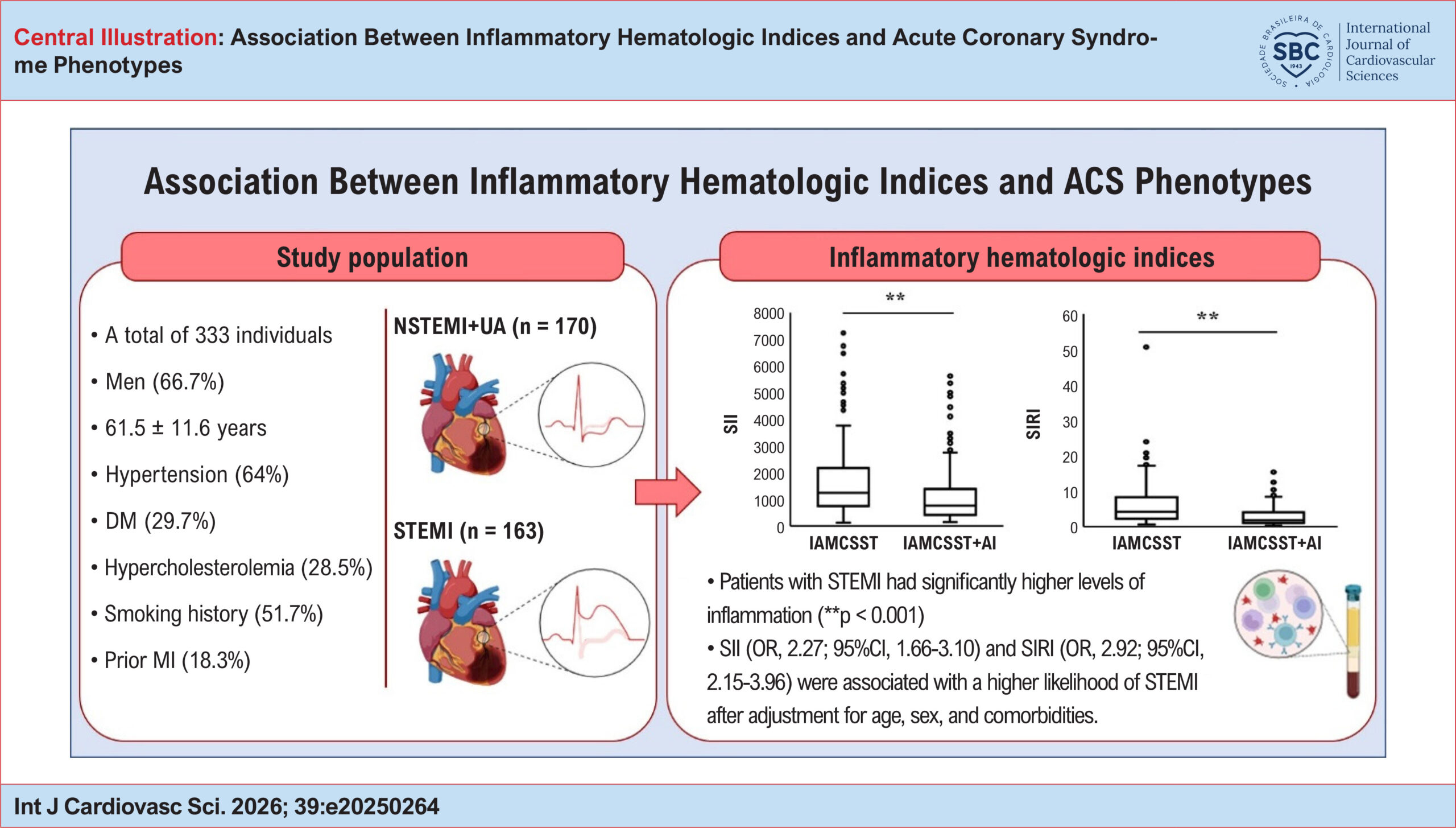
This retrospective study analyzed data collected from medical records between July 2022 and July 2023, including 333 patients aged ≥ 18 years of both sexes diagnosed with ACS and admitted to the emergency department of a public hospital in the state of São Paulo, Brazil. Sample was divided into two groups: i) ST-segment elevation myocardial infarction (STEMI) and ii) non-ST-segment elevation myocardial infarction plus unstable angina (NSTEMI+UA). SII was calculated as N × P / L and SIRI as N × M / L. The association between inflammatory indices and ACS phenotypes was assessed using multivariable logistic regression models. Statistical significance was set at 5%.

Results:

Higher values of the inflammatory indices SII (odds ratio [OR], 2.27; 95%CI, 1.66-3.10) and SIRI (OR, 2.92; 95%CI, 2.15-3.96), as well as a history of smoking, were independently associated with a higher likelihood of STEMI diagnosis. Additionally, the STEMI group showed significantly higher values of SII, SIRI, MLR, NLR, and PLR compared with the NSTEMI+UA group.

Conclusions:

Higher SII and SIRI values were independently associated with STEMI diagnosis, which suggests these indices may reflect differences in the inflammatory profile across ACS phenotypes.

  • Acute coronary syndrome
  • Biomarcadores
  • Coronary Artery Disease
  • Inflammation
Read Full Article
Creative Commons Attribution (CC BY) Creative Commons license
07/08/2026 DOI: 10.36660/ijcs.20250264 Views 1
Treatment Adherence and Cardiometabolic Goals in Patients with Coronary Artery Disease in the North Region of Brazil
Original Article

Treatment Adherence and Cardiometabolic Goals in Patients with Coronary Artery Disease in the North Region of Brazil

Fernando Maia Coutinho et al. Talles L. Pereira Nogueira Dilma do Socorro Moraes de Souza Lucianna Serfaty de Holanda … Vitor Bruno Teixeira de Holanda Michele N. Assad Rafael M. Coutinho Ana Flávia Oliveira de Souza Márcio César Ribeiro Marvão Thiago da Silva Paulo

Abstract

Background:

Patients with coronary artery disease (CAD) are categorized by cardiovascular risk depending on associated risk factors and events, requiring more rigorous treatment goals.

Objective:

To investigate treatment adherence, using the Morisky–Green test, and achievement of metabolic goals at a tertiary public hospital in Belém, Pará, Brazil.

Methods:

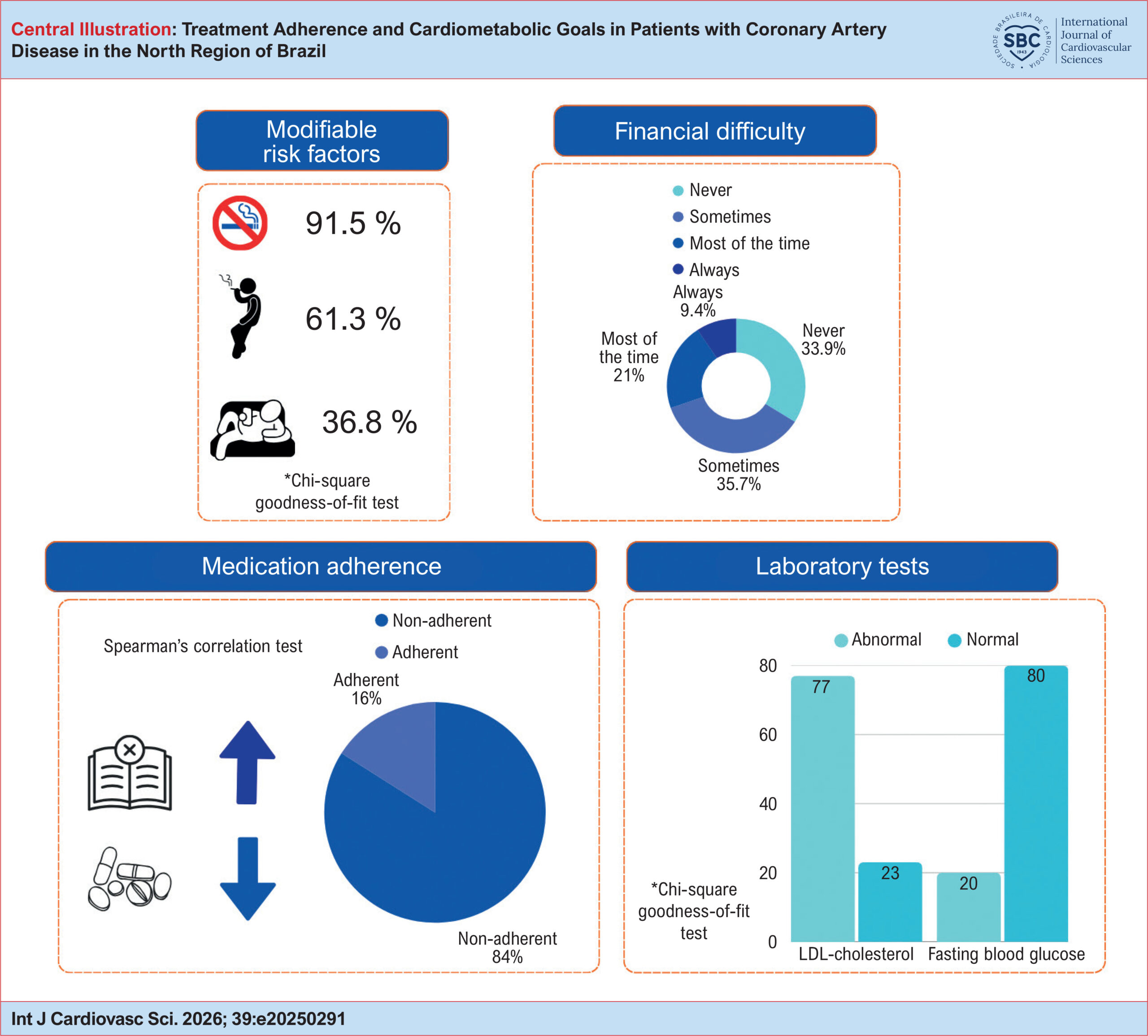
This observational, cross-sectional, and analytical study was conducted with a sample of 106 patients with CAD at very high cardiovascular risk, treated in the outpatient clinic of a tertiary care hospital. The following data were collected over a 4-month period: demographic information, medication adherence (Morisky–Green test), modifiable risk factors, and laboratory parameters (lipids, blood glucose, blood pressure, heart rate, and abdominal circumference). Associations were assessed using chi-square test or G test, and correlations were analyzed using Spearman’s test, adopting a significance level of 5% (p < 0.05).

Results:

Treatment adherence analysis showed an adherence rate of 16.0%. Low-density lipoprotein (LDL) -cholesterol levels were above the target of 50 mg/dL in 72.6% of patients, and normal blood glucose was achieved in 75.5%. Education level was the only epidemiological variable associated with therapeutic non-adherence (p = 0.0130). Regarding financial aspects, only 9.4% reported persistent difficulty in purchasing medications; among those reporting difficulty, high-potency statins were the most frequently cited (58.6%).

Conclusions:

Education level was shown to be a determining factor in understanding treatment, impacting adherence. Laboratory tests revealed significant deficiencies in lipid control, reinforcing the need for clinical optimization. Difficulties in accessing statins and low medication adherence underscore the importance of educational interventions and multidisciplinary approaches for better management of CAD.

  • Coronary Artery Disease
  • Risk Factors
  • Treatment Adherence and Compliance
Read Full Article
Creative Commons Attribution (CC BY) Creative Commons license
07/08/2026 DOI: 10.36660/ijcs.20250291
Is Hypertension a Predictor of Mortality in People Living With HIV/AIDS?
Original Article

Is Hypertension a Predictor of Mortality in People Living With HIV/AIDS?

Gustavo Eduardo Fante et al. Pedro Antonio Pagote Dall’Omo Karina Bobato do Valle Arcelio Benetoli … Jean Fernando Sandeski Zuber Camila Marineli Martins Erildo Vicente Muller

Abstract

Background:

Hypertension is a chronic non-communicable disease that increases cardiovascular risk and significantly contributes to mortality. It is one of the most prevalent conditions among people living with human immunodeficiency virus/acquired immunodeficiency syndrome (HIV/AIDS).

Objectives:

The objective of this study was to investigate hypertension as a predictor of mortality in people living with HIV/AIDS, analyzing the association of prior diagnosis of hypertension with morbidity and mortality in this population.

Methods:

This retrospective cohort study evaluated the medical records of 1207 patients receiving treatment at the Specialized Care Service (SAE) of a city in the state of Paraná over 264 months.

Results:

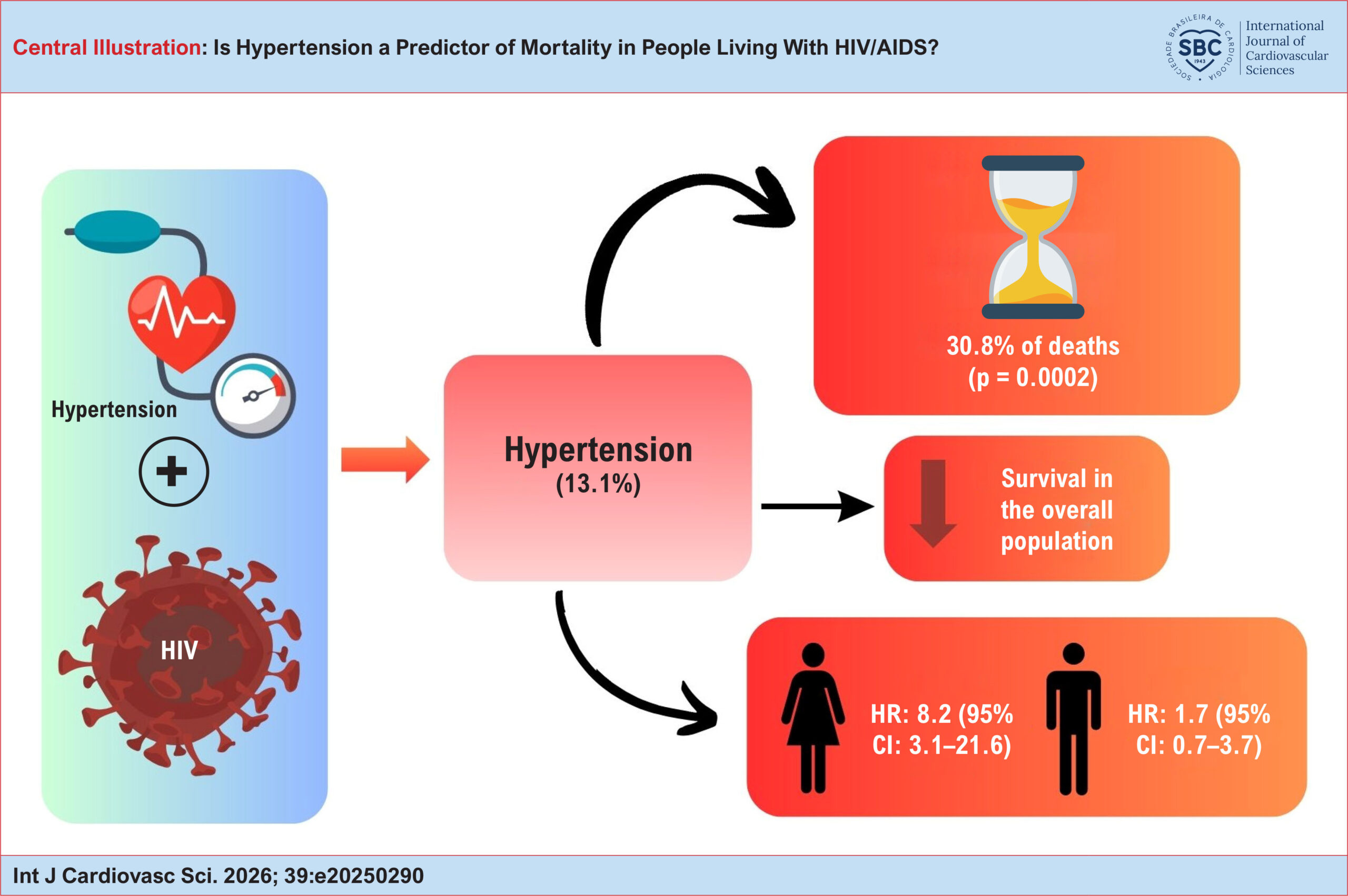
Among patients diagnosed with HIV/AIDS, 13.1% had hypertension. During the analyzed period, 52 deaths were recorded (4.31%), 30.77% of which occurred among patients with hypertension (p = 0.0002). Lower survival was observed among patients with hypertension (p < 0.0001), and mortality was significantly higher among women with hypertension (p < 0.0001). The hazard ratio (HR) for the general population was 3.1 (95% confidence interval [CI]: 1.7–5.6), with an HR of 1.7 for men (95% CI: 0.7–3.7) and 8.2 for women (95% CI: 3.1–21.6).

Conclusions:

Hypertension was a significant predictor of mortality in people living with HIV/AIDS, with a particularly strong impact among women.

  • Acquired Immunodeficiency Syndrome
  • Hypertension
  • Mortality
  • Survival
Read Full Article
Creative Commons Attribution (CC BY) Creative Commons license
07/08/2026 DOI: 10.36660/ijcs.20250290 Views 2
Editorial

Gender differences in Body Adiposity and Endothelial Dysfunction in Overweight and Obese Individuals with Suboptimal Vitamin D Status

Marcelo Chiara Bertolami

The article by Faria et al. explored anthropometric indices, vascular and autonomic function in obese and overweight individuals with suboptimal vitamin D status.

Obesity has a significant impact on human health through multiple mechanisms. One potential mechanism involves the association between obesity and low vitamin D levels. The authors used advanced techniques to evaluate endothelial function in an overweight and obese population with suboptimal vitamin D levels.

[…]

  • Adiposity
  • Gender Identity
  • Obesity
  • Overweight
Read Full Article
Creative Commons Attribution (CC BY) Creative Commons license
07/08/2026 DOI: 10.36660/ijcs.20260094
Figure 1
Case Report

Allergy and Ischemia: A Case Report of Type II Kounis Syndrome

Rafael Viana et al. Miguel Carias Diogo Brás

Introduction

Kounis Syndrome (KS), also known as “allergic angina,” is a rare condition in which an allergic reaction triggers acute coronary events. Its mechanism involves mast cell degranulation, releasing inflammatory mediators such as histamine, cytokines, and proteases. These substances can induce coronary artery spasm, plaque rupture, or thrombus formation. KS is classified into three types: Type I (occurring in patients without coronary artery disease, CAD), Type II (in patients with pre-existing CAD), and Type III (associated with stent thrombosis). In this report, we present a case of Type II KS.

[…]

  • Acute coronary syndrome
  • Anaphylaxis
  • Kounis Syndrome
Read Full Article
Creative Commons Attribution (CC BY) Creative Commons license
03/08/2026 DOI: 10.36660/ijcs.20250037
Original Article

Epidemiological Profile of Arterial Hypertension in the Municipality of Rio de Janeiro, Brazil, 2011 and 2019

Catia Martins Cristina Oliveira et al. Anna Carolina Pinho da Silva Bianca Ramos Marins Silva Ana Clara Campos

Abstract

Background:

Cardiovascular diseases are currently the leading global cause of morbidity and premature mortality. High blood pressure is one of the precursors to the disease, which, when undetected, can lead to other serious complications such as thrombosis, acute myocardial infarction, and stroke.

Objective:

To analyze the profile of hypertension and associated factors in the municipality of Rio de Janeiro in the years 2011 and 2019.

Method:

This is a population-based cross-sectional study that used data from the Vigitel telephone survey implemented by the Ministry of Health. The eligible population was that of the municipality of Rio de Janeiro, aged eighteen or older, in 2011 and 2019. To analyze the association between the outcome and the independent variables, multivariate logistic regression was used, estimating the Odds Ratio and its respective 95% confidence intervals.

Results:

The predominant sociodemographic profile remained similar in 2011 and 2019: a majority of women, 18-39 years, and with 9-12 years of schooling. Education level in 2011 appeared as a protective factor among individuals with 12 or more years of schooling (OR: 0.64, 95% CI: 0.43; 0.97). Obese individuals had a 2.81- and 2.96-times greater chance, in 2011 and 2019, respectively, of reporting hypertension, compared to non-obese individuals.

Conclusion:

The study highlights the need to expand the healthcare network to implement more effective strategies that consider the determinants of hypertension in order to achieve a greater impact on the management and control of the disease.

  • Delivery of Health Care
  • Health Surveys
  • Hypertension
  • Risk Factors
Read Full Article
Creative Commons Attribution (CC BY) Creative Commons license
03/08/2026 DOI: 10.36660/ijcs.20240165

Could not load more articles. Please try again.

How to cite this article

EndNote RIS

Electronic Document Format (Vancouver)

Enoh JE, Akah RT, Nkeh-Chungag BN. Infant Feeding Practices and Their Association with Stunting, Overweight, Obesity, and Other Cardiometabolic Risks in African Children: A Systematic Review. International Journal of Cardiovascular Sciences 2026;39:e20250121.

Electronic Document Format (ABNT)

Enoh, Jude Eteneneng; Akah, Roland Tiagha; Nkeh-Chungag, Benedicta Ngwenchi. Infant Feeding Practices and Their Association with Stunting, Overweight, Obesity, and Other Cardiometabolic Risks in African Children: A Systematic Review. International Journal of Cardiovascular Sciences, v. 39, e20250121, Sep. 2026.

Electronic Document Format (APA)

Enoh, J. E., Akah, R. T., & Nkeh-Chungag, B. N. (2026). Infant Feeding Practices and Their Association with Stunting, Overweight, Obesity, and Other Cardiometabolic Risks in African Children: A Systematic Review. International Journal of Cardiovascular Sciences, 39, e20250121.

Electronic Document Format (ISO)

Enoh, Jude Eteneneng and Akah, Roland Tiagha and Nkeh-Chungag, Benedicta Ngwenchi. Infant Feeding Practices and Their Association with Stunting, Overweight, Obesity, and Other Cardiometabolic Risks in African Children: A Systematic Review. International Journal of Cardiovascular Sciences [online]. 2026, vol. 39, [cited 2026-10-14], e20250121. Available from: <https://journals.cardiol.br/en/article/infant-feeding-practices-and-their-association-with-stunting-overweight-obesity-and-other-cardiometabolic-risks-in-african-children-a-systematic-review/>. ISSN 2359-4802

EndNote RIS

Electronic Document Format (Vancouver)

Mattos NDFG, Oliveira RL, Salgado CG, Sousa ALS, Feijó ALF, Branco RVC, Mattos GZ, et al. Transcatheter Aortic Valve Implantation in Nonagenarians: In-Hospital Complications and One-Year Follow-Up Mortality. International Journal of Cardiovascular Sciences 2026;39:e20250154.

Electronic Document Format (ABNT)

Mattos, Nelson Durval Ferreira Gomes de; Oliveira, Rafael Lauria de; Salgado, Constantino Gonzalez; Sousa, André Luiz Silveira; Feijó, Andre Luiz da Fonseca; Branco, Rodrigo Verney Castello; Mattos, Giovanna Zadra de; Secco, José Carlos Pizzolante; Carvalho, Luiz Antonio Ferreira; Rey, Helena Cramer. Transcatheter Aortic Valve Implantation in Nonagenarians: In-Hospital Complications and One-Year Follow-Up Mortality. International Journal of Cardiovascular Sciences, v. 39, e20250154, Sep. 2026.

Electronic Document Format (APA)

Mattos, N. D. F. G. , Oliveira, R. L. , Salgado, C. G., Sousa, A. L. S., Feijó, A. L. F., Branco, R. V. C., Mattos, G. Z. , Secco, J. C. P., Carvalho, L. A. F., & Rey, H. C. (2026). Transcatheter Aortic Valve Implantation in Nonagenarians: In-Hospital Complications and One-Year Follow-Up Mortality. International Journal of Cardiovascular Sciences, 39, e20250154.

Electronic Document Format (ISO)

Mattos, Nelson Durval Ferreira Gomes de and Oliveira, Rafael Lauria de and Salgado, Constantino Gonzalez and Sousa, André Luiz Silveira and Feijó, Andre Luiz da Fonseca and Branco, Rodrigo Verney Castello and Mattos, Giovanna Zadra de and Secco, José Carlos Pizzolante and Carvalho, Luiz Antonio Ferreira and Rey, Helena Cramer. Transcatheter Aortic Valve Implantation in Nonagenarians: In-Hospital Complications and One-Year Follow-Up Mortality. International Journal of Cardiovascular Sciences [online]. 2026, vol. 39, [cited 2026-10-14], e20250154. Available from: <https://journals.cardiol.br/en/article/transcatheter-aortic-valve-implantation-in-nonagenarians-in-hospital-complications-and-one-year-follow-up-mortality/>. ISSN 2359-4802

EndNote RIS

Electronic Document Format (Vancouver)

Gao Y, Wu G, Jin T, Shen Z, Zhou N, Huang X. Genetic Evidence for the Association Between Sjögren’s Syndrome and Cardiovascular Disease Risk. International Journal of Cardiovascular Sciences 2026;39:e20250074.

Electronic Document Format (ABNT)

Gao, Yafang; Wu, Guohua; Jin, Tianyu; Shen, Zhijie; Zhou, Nannan; Huang, Xiaohong. Genetic Evidence for the Association Between Sjögren’s Syndrome and Cardiovascular Disease Risk. International Journal of Cardiovascular Sciences, v. 39, e20250074, Sep. 2026.

Electronic Document Format (APA)

Gao, Y., Wu, G., Jin, T., Shen, Z., Zhou, N., & Huang, X. (2026). Genetic Evidence for the Association Between Sjögren’s Syndrome and Cardiovascular Disease Risk. International Journal of Cardiovascular Sciences, 39, e20250074.

Electronic Document Format (ISO)

Gao, Yafang and Wu, Guohua and Jin, Tianyu and Shen, Zhijie and Zhou, Nannan and Huang, Xiaohong. Genetic Evidence for the Association Between Sjögren’s Syndrome and Cardiovascular Disease Risk. International Journal of Cardiovascular Sciences [online]. 2026, vol. 39, [cited 2026-10-14], e20250074. Available from: <https://journals.cardiol.br/en/article/genetic-evidence-for-the-association-between-sjogrens-syndrome-and-cardiovascular-disease-risk/>. ISSN 2359-4802

EndNote RIS

Electronic Document Format (Vancouver)

Vital K, Pavanello R, Valente BP, Blaas BN, Arruda BFT, Rossi R, Monaco MID, et al. Myocardial Infarction with Non-Obstructive Coronary Arteries: Clinical Profile, Diagnostic Investigation, and Outcomes in a Tertiary Center Cohort. International Journal of Cardiovascular Sciences 2026;39:e20260035.

Electronic Document Format (ABNT)

Vital, Kelvyn; Pavanello, Ricardo; Valente, Barbara Porto; Blaas, Bruno Noshang; Arruda, Bianca Fernandes Tavora; Rossi, Raphael; Monaco, Maria Isabel Del; Feres, Fausto. Myocardial Infarction with Non-Obstructive Coronary Arteries: Clinical Profile, Diagnostic Investigation, and Outcomes in a Tertiary Center Cohort. International Journal of Cardiovascular Sciences, v. 39, e20260035, Sep. 2026.

Electronic Document Format (APA)

Vital, K., Pavanello, R., Valente, B. P., Blaas, B. N., Arruda, B. F. T., Rossi, R., Monaco, M. I. D., & Feres, F. (2026). Myocardial Infarction with Non-Obstructive Coronary Arteries: Clinical Profile, Diagnostic Investigation, and Outcomes in a Tertiary Center Cohort. International Journal of Cardiovascular Sciences, 39, e20260035.

Electronic Document Format (ISO)

Vital, Kelvyn and Pavanello, Ricardo and Valente, Barbara Porto and Blaas, Bruno Noshang and Arruda, Bianca Fernandes Tavora and Rossi, Raphael and Monaco, Maria Isabel Del and Feres, Fausto. Myocardial Infarction with Non-Obstructive Coronary Arteries: Clinical Profile, Diagnostic Investigation, and Outcomes in a Tertiary Center Cohort. International Journal of Cardiovascular Sciences [online]. 2026, vol. 39, [cited 2026-10-14], e20260035. Available from: <https://journals.cardiol.br/en/article/myocardial-infarction-with-non-obstructive-coronary-arteries-clinical-profile-diagnostic-investigation-and-outcomes-in-a-tertiary-center-cohort/>. ISSN 2359-4802

EndNote RIS

Electronic Document Format (Vancouver)

Cedeño PD, Herrera ECA, Mite CJT, Valenzuela EV, Bohorquez JJZ, Moreira GN. Double-Orifice Mitral Valve with Severe Regurgitation Associated with Bicuspid Aortic Valve: A Case Report. International Journal of Cardiovascular Sciences 2026;39:e20250214.

Electronic Document Format (ABNT)

Cedeño, Patricia Delgado; Herrera, Estefania Carolina Arteaga; Mite, Cesar João Tumbaco; Valenzuela, Elsie Valdivieso; Bohorquez, Juan Javier Zuñiga; Moreira, Guillermo Navas. Double-Orifice Mitral Valve with Severe Regurgitation Associated with Bicuspid Aortic Valve: A Case Report. International Journal of Cardiovascular Sciences, v. 39, e20250214, Sep. 2026.

Electronic Document Format (APA)

Cedeño, P. D., Herrera, E. C. A., Mite, C. J. T., Valenzuela, E. V., Bohorquez, J. J. Z., & Moreira, G. N. (2026). Double-Orifice Mitral Valve with Severe Regurgitation Associated with Bicuspid Aortic Valve: A Case Report. International Journal of Cardiovascular Sciences, 39, e20250214.

Electronic Document Format (ISO)

Cedeño, Patricia Delgado and Herrera, Estefania Carolina Arteaga and Mite, Cesar João Tumbaco and Valenzuela, Elsie Valdivieso and Bohorquez, Juan Javier Zuñiga and Moreira, Guillermo Navas. Double-Orifice Mitral Valve with Severe Regurgitation Associated with Bicuspid Aortic Valve: A Case Report. International Journal of Cardiovascular Sciences [online]. 2026, vol. 39, [cited 2026-10-14], e20250214. Available from: <https://journals.cardiol.br/en/article/double-orifice-mitral-valve-with-severe-regurgitation-associated-with-bicuspid-aortic-valve-a-case-report/>. ISSN 2359-4802

EndNote RIS

Electronic Document Format (Vancouver)

Villela PB, Andrade LF. The Importance of Observational Studies. International Journal of Cardiovascular Sciences 2026;39:e20260130.

Electronic Document Format (ABNT)

Villela, Paolo Blanco; Andrade, Larissa Franco de. The Importance of Observational Studies. International Journal of Cardiovascular Sciences, v. 39, e20260130, Sep. 2026.

Electronic Document Format (APA)

Villela, P. B., & Andrade, L. F. (2026). The Importance of Observational Studies. International Journal of Cardiovascular Sciences, 39, e20260130.

Electronic Document Format (ISO)

Villela, Paolo Blanco and Andrade, Larissa Franco de. The Importance of Observational Studies. International Journal of Cardiovascular Sciences [online]. 2026, vol. 39, [cited 2026-10-14], e20260130. Available from: <https://journals.cardiol.br/en/article/the-importance-of-observational-studies/>. ISSN 2359-4802

EndNote RIS

Electronic Document Format (Vancouver)

Caldas AC, Matias D, Medina D, Correia LCL. Reversal of Therapeutic Recommendations in the American College of Cardiology Coronary Artery Disease Guidelines. International Journal of Cardiovascular Sciences 2026;39:e20250148.

Electronic Document Format (ABNT)

Caldas, Alessandra Carvalho; Matias, Denise; Medina, Daniel; Correia, Luis Claudio Lemos. Reversal of Therapeutic Recommendations in the American College of Cardiology Coronary Artery Disease Guidelines. International Journal of Cardiovascular Sciences, v. 39, e20250148, Sep. 2026.

Electronic Document Format (APA)

Caldas, A. C., Matias, D., Medina, D., & Correia, L. C. L. (2026). Reversal of Therapeutic Recommendations in the American College of Cardiology Coronary Artery Disease Guidelines. International Journal of Cardiovascular Sciences, 39, e20250148.

Electronic Document Format (ISO)

Caldas, Alessandra Carvalho and Matias, Denise and Medina, Daniel and Correia, Luis Claudio Lemos. Reversal of Therapeutic Recommendations in the American College of Cardiology Coronary Artery Disease Guidelines. International Journal of Cardiovascular Sciences [online]. 2026, vol. 39, [cited 2026-10-14], e20250148. Available from: <https://journals.cardiol.br/en/article/reversal-of-therapeutic-recommendations-in-the-american-college-of-cardiology-coronary-artery-disease-guidelines/>. ISSN 2359-4802

EndNote RIS

Electronic Document Format (Vancouver)

Zanotti JS, Martim ETQ, Alves RJ. Early Cascade Screening and Lipid-Lowering Therapy in Childhood: Challenges in the Management of Familial Hypercholesterolemia. International Journal of Cardiovascular Sciences 2026;39:e20260095.

Electronic Document Format (ABNT)

Zanotti, Juliana Simões; Martim, Eduardo Tomaz Quartero; Alves, Renato Jorge. Early Cascade Screening and Lipid-Lowering Therapy in Childhood: Challenges in the Management of Familial Hypercholesterolemia. International Journal of Cardiovascular Sciences, v. 39, e20260095, Sep. 2026.

Electronic Document Format (APA)

Zanotti, J. S., Martim, E. T. Q., & Alves, R. J. (2026). Early Cascade Screening and Lipid-Lowering Therapy in Childhood: Challenges in the Management of Familial Hypercholesterolemia. International Journal of Cardiovascular Sciences, 39, e20260095.

Electronic Document Format (ISO)

Zanotti, Juliana Simões and Martim, Eduardo Tomaz Quartero and Alves, Renato Jorge. Early Cascade Screening and Lipid-Lowering Therapy in Childhood: Challenges in the Management of Familial Hypercholesterolemia. International Journal of Cardiovascular Sciences [online]. 2026, vol. 39, [cited 2026-10-14], e20260095. Available from: <https://journals.cardiol.br/en/article/early-cascade-screening-and-lipid-lowering-therapy-in-childhood-challenges-in-the-management-of-familial-hypercholesterolemia/>. ISSN 2359-4802

EndNote RIS

Electronic Document Format (Vancouver)

Jalabadze K, Machavariani P, Tsiklauri B, Garuchava N, Avaliani I, Chigogidze M. QT Prolongation Following Premature Ventricular Contractions: A Potential Marker of Concealed Long QT Syndrome. International Journal of Cardiovascular Sciences 2026;39:e20250230.

Electronic Document Format (ABNT)

Jalabadze, Khatuna; Machavariani, Pavle; Tsiklauri, Bachuki; Garuchava, Natalia; Avaliani, Ia; Chigogidze, Maya. QT Prolongation Following Premature Ventricular Contractions: A Potential Marker of Concealed Long QT Syndrome. International Journal of Cardiovascular Sciences, v. 39, e20250230, Sep. 2026.

Electronic Document Format (APA)

Jalabadze, K., Machavariani, P., Tsiklauri, B., Garuchava, N., Avaliani, I., & Chigogidze, M. (2026). QT Prolongation Following Premature Ventricular Contractions: A Potential Marker of Concealed Long QT Syndrome. International Journal of Cardiovascular Sciences, 39, e20250230.

Electronic Document Format (ISO)

Jalabadze, Khatuna and Machavariani, Pavle and Tsiklauri, Bachuki and Garuchava, Natalia and Avaliani, Ia and Chigogidze, Maya. QT Prolongation Following Premature Ventricular Contractions: A Potential Marker of Concealed Long QT Syndrome. International Journal of Cardiovascular Sciences [online]. 2026, vol. 39, [cited 2026-10-14], e20250230. Available from: <https://journals.cardiol.br/en/article/qt-prolongation-following-premature-ventricular-contractions-a-potential-marker-of-concealed-long-qt-syndrome/>. ISSN 2359-4802

EndNote RIS

Electronic Document Format (Vancouver)

Cordeiro ALL, Lopes WFS, Jesus TC, Oliveira AJG, Coutinho ACO, Guimarães ARF. Protocol For Weaning From Mechanical Ventilation in Patients Undergoing Coronary Artery Bypass Grafting: Cohort Study. International Journal of Cardiovascular Sciences 2026;39:e20240209.

Electronic Document Format (ABNT)

Cordeiro, André Luiz Lisboa; Lopes, Wallace Fernando de Souza; Jesus, Tainara Conceição de; Oliveira, Ana Julia Gomes de; Coutinho, Ana Cecília de Oliveira; Guimarães, André Raimundo França. Protocol For Weaning From Mechanical Ventilation in Patients Undergoing Coronary Artery Bypass Grafting: Cohort Study. International Journal of Cardiovascular Sciences, v. 39, e20240209, Sep. 2026.

Electronic Document Format (APA)

Cordeiro, A. L. L., Lopes, W. F. S., Jesus, T. C. , Oliveira, A. J. G. , Coutinho, A. C. O., & Guimarães, A. R. F. (2026). Protocol For Weaning From Mechanical Ventilation in Patients Undergoing Coronary Artery Bypass Grafting: Cohort Study. International Journal of Cardiovascular Sciences, 39, e20240209.

Electronic Document Format (ISO)

Cordeiro, André Luiz Lisboa and Lopes, Wallace Fernando de Souza and Jesus, Tainara Conceição de and Oliveira, Ana Julia Gomes de and Coutinho, Ana Cecília de Oliveira and Guimarães, André Raimundo França. Protocol For Weaning From Mechanical Ventilation in Patients Undergoing Coronary Artery Bypass Grafting: Cohort Study. International Journal of Cardiovascular Sciences [online]. 2026, vol. 39, [cited 2026-10-14], e20240209. Available from: <https://journals.cardiol.br/en/article/protocol-for-weaning-from-mechanical-ventilation-in-patients-undergoing-coronary-artery-bypass-grafting-cohort-study/>. ISSN 2359-4802

EndNote RIS

Electronic Document Format (Vancouver)

Bittencourt MI, Mourilhe-Rocha R. Cardiac Myosin Inhibitors in Patients with Hypertrophic Cardiomyopathy. International Journal of Cardiovascular Sciences 2026;39:e20260134.

Electronic Document Format (ABNT)

Bittencourt, Marcelo Imbroinise; Mourilhe-Rocha, Ricardo. Cardiac Myosin Inhibitors in Patients with Hypertrophic Cardiomyopathy. International Journal of Cardiovascular Sciences, v. 39, e20260134, Aug. 2026.

Electronic Document Format (APA)

Bittencourt, M. I., & Mourilhe-Rocha, R. (2026). Cardiac Myosin Inhibitors in Patients with Hypertrophic Cardiomyopathy. International Journal of Cardiovascular Sciences, 39, e20260134.

Electronic Document Format (ISO)

Bittencourt, Marcelo Imbroinise and Mourilhe-Rocha, Ricardo. Cardiac Myosin Inhibitors in Patients with Hypertrophic Cardiomyopathy. International Journal of Cardiovascular Sciences [online]. 2026, vol. 39, [cited 2026-10-14], e20260134. Available from: <https://journals.cardiol.br/en/article/cardiac-myosin-inhibitors-in-patients-with-hypertrophic-cardiomyopathy/>. ISSN 2359-4802

EndNote RIS

Electronic Document Format (Vancouver)

Rocha ASC, Kruczan D. Asymptomatic Patients With Suspected Coronary Artery Disease: What Are Clinicians Afraid Of?. International Journal of Cardiovascular Sciences 2026;39:e20250075.

Electronic Document Format (ABNT)

Rocha, Antônio Sérgio Cordeiro da; Kruczan, Dany. Asymptomatic Patients With Suspected Coronary Artery Disease: What Are Clinicians Afraid Of?. International Journal of Cardiovascular Sciences, v. 39, e20250075, Aug. 2026.

Electronic Document Format (APA)

Rocha, A. S. C. , & Kruczan, D. (2026). Asymptomatic Patients With Suspected Coronary Artery Disease: What Are Clinicians Afraid Of?. International Journal of Cardiovascular Sciences, 39, e20250075.

Electronic Document Format (ISO)

Rocha, Antônio Sérgio Cordeiro da and Kruczan, Dany. Asymptomatic Patients With Suspected Coronary Artery Disease: What Are Clinicians Afraid Of?. International Journal of Cardiovascular Sciences [online]. 2026, vol. 39, [cited 2026-10-14], e20250075. Available from: <https://journals.cardiol.br/en/article/asymptomatic-patients-with-suspected-coronary-artery-disease-what-are-clinicians-afraid-of/>. ISSN 2359-4802

EndNote RIS

Electronic Document Format (Vancouver)

Santos LA, Oliveira ES, Lordêlo BVC, Matias LAC, Mendes R, Tenório PP. Metabolic Challenges in The Semiarid Region: A Critical Analysis of Nutritional Transition and Early Cardiovascular Risk. International Journal of Cardiovascular Sciences 2026;39:e20260059.

Electronic Document Format (ABNT)

Santos, Leonardo Alves; Oliveira, Álvaro Eduardo Santos; Lordêlo, Beatriz Vitória Carvalho; Matias, Luis Antonio Cavalcanti; Mendes, Rodrigo; Tenório, Pedro Pereira. Metabolic Challenges in The Semiarid Region: A Critical Analysis of Nutritional Transition and Early Cardiovascular Risk. International Journal of Cardiovascular Sciences, v. 39, e20260059, Aug. 2026.

Electronic Document Format (APA)

Santos, L. A., Oliveira, E. S., Lordêlo, B. V. C., Matias, L. A. C., Mendes, R., & Tenório, P. P. (2026). Metabolic Challenges in The Semiarid Region: A Critical Analysis of Nutritional Transition and Early Cardiovascular Risk. International Journal of Cardiovascular Sciences, 39, e20260059.

Electronic Document Format (ISO)

Santos, Leonardo Alves and Oliveira, Álvaro Eduardo Santos and Lordêlo, Beatriz Vitória Carvalho and Matias, Luis Antonio Cavalcanti and Mendes, Rodrigo and Tenório, Pedro Pereira. Metabolic Challenges in The Semiarid Region: A Critical Analysis of Nutritional Transition and Early Cardiovascular Risk. International Journal of Cardiovascular Sciences [online]. 2026, vol. 39, [cited 2026-10-14], e20260059. Available from: <https://journals.cardiol.br/en/article/metabolic-challenges-in-the-semiarid-region-a-critical-analysis-of-nutritional-transition-and-early-cardiovascular-risk/>. ISSN 2359-4802

EndNote RIS

Electronic Document Format (Vancouver)

Mota CT, Forjaz CLM. Home-Based Vs. Usual and Center-Based Cardiac Rehabilitation: Effects on Aerobic Fitness and Quality of Life. International Journal of Cardiovascular Sciences 2026;39:e20250274.

Electronic Document Format (ABNT)

Mota, Cauã Teixeira; Forjaz, Claudia Lucia de Moraes. Home-Based Vs. Usual and Center-Based Cardiac Rehabilitation: Effects on Aerobic Fitness and Quality of Life. International Journal of Cardiovascular Sciences, v. 39, e20250274, Aug. 2026.

Electronic Document Format (APA)

Mota, C. T., & Forjaz, C. L. M. (2026). Home-Based Vs. Usual and Center-Based Cardiac Rehabilitation: Effects on Aerobic Fitness and Quality of Life. International Journal of Cardiovascular Sciences, 39, e20250274.

Electronic Document Format (ISO)

Mota, Cauã Teixeira and Forjaz, Claudia Lucia de Moraes. Home-Based Vs. Usual and Center-Based Cardiac Rehabilitation: Effects on Aerobic Fitness and Quality of Life. International Journal of Cardiovascular Sciences [online]. 2026, vol. 39, [cited 2026-10-14], e20250274. Available from: <https://journals.cardiol.br/en/article/home-based-vs-usual-and-center-based-cardiac-rehabilitation-effects-on-aerobic-fitness-and-quality-of-life/>. ISSN 2359-4802

EndNote RIS

Electronic Document Format (Vancouver)

Gouveia PH, Guimarães JS, Wiens A. Evaluation of Cardiovascular Risks Associated with Calcium Use: A Systematic Review and Meta-Analysis. International Journal of Cardiovascular Sciences 2026;39:e20250239.

Electronic Document Format (ABNT)

Gouveia, Paulo Henrique; Guimarães, Joyce da Silva; Wiens, Astrid. Evaluation of Cardiovascular Risks Associated with Calcium Use: A Systematic Review and Meta-Analysis. International Journal of Cardiovascular Sciences, v. 39, e20250239, Aug. 2026.

Electronic Document Format (APA)

Gouveia, P. H., Guimarães, J. S., & Wiens, A. (2026). Evaluation of Cardiovascular Risks Associated with Calcium Use: A Systematic Review and Meta-Analysis. International Journal of Cardiovascular Sciences, 39, e20250239.

Electronic Document Format (ISO)

Gouveia, Paulo Henrique and Guimarães, Joyce da Silva and Wiens, Astrid. Evaluation of Cardiovascular Risks Associated with Calcium Use: A Systematic Review and Meta-Analysis. International Journal of Cardiovascular Sciences [online]. 2026, vol. 39, [cited 2026-10-14], e20250239. Available from: <https://journals.cardiol.br/en/article/evaluation-of-cardiovascular-risks-associated-with-calcium-use-a-systematic-review-and-meta-analysis/>. ISSN 2359-4802

EndNote RIS

Electronic Document Format (Vancouver)

Medrado VSS, Morais JEC, Silva DSO, Azevedo JPL, Almeida TG, Tenório PP. Prognostic Value of C-reactive Protein (CRP) in Patients With Acute Heart Failure (AHF) Admitted to General Wards in Brazil. International Journal of Cardiovascular Sciences 2026;39:e20260053.

Electronic Document Format (ABNT)

Medrado, Vanessa Souza Silva; Morais, João Emmanuel Coelho de; Silva, Domingos Sávio de Oliveira e; Azevedo, João Pedro Lopes; Almeida, Thalisson Gonçalves; Tenório, Pedro Pereira. Prognostic Value of C-reactive Protein (CRP) in Patients With Acute Heart Failure (AHF) Admitted to General Wards in Brazil. International Journal of Cardiovascular Sciences, v. 39, e20260053, Aug. 2026.

Electronic Document Format (APA)

Medrado, V. S. S., Morais, J. E. C. , Silva, D. S. O. , Azevedo, J. P. L., Almeida, T. G., & Tenório, P. P. (2026). Prognostic Value of C-reactive Protein (CRP) in Patients With Acute Heart Failure (AHF) Admitted to General Wards in Brazil. International Journal of Cardiovascular Sciences, 39, e20260053.

Electronic Document Format (ISO)

Medrado, Vanessa Souza Silva and Morais, João Emmanuel Coelho de and Silva, Domingos Sávio de Oliveira e and Azevedo, João Pedro Lopes and Almeida, Thalisson Gonçalves and Tenório, Pedro Pereira. Prognostic Value of C-reactive Protein (CRP) in Patients With Acute Heart Failure (AHF) Admitted to General Wards in Brazil. International Journal of Cardiovascular Sciences [online]. 2026, vol. 39, [cited 2026-10-14], e20260053. Available from: <https://journals.cardiol.br/en/article/prognostic-value-of-c-reactive-protein-crp-in-patients-with-acute-heart-failure-ahf-admitted-to-general-wards-in-brazil/>. ISSN 2359-4802

EndNote RIS

Electronic Document Format (Vancouver)

Jesus BGAS, Oliveira FB, Meira FCA, Oliveira LB, Costa FF, Latado AL. Assessment of Adherence to Drug Therapy in Patients with Heart Failure Followed at a Specialized Outpatient Clinic. International Journal of Cardiovascular Sciences 2026;39:e20250059.

Electronic Document Format (ABNT)

Jesus, Breno Gabriel Araújo Sampaio de; Oliveira, Felipe Barros; Meira, Felipe Caires Araújo; Oliveira, Lívia Brito; Costa, Fabio Figueirêdo; Latado, Adriana Lopes. Assessment of Adherence to Drug Therapy in Patients with Heart Failure Followed at a Specialized Outpatient Clinic. International Journal of Cardiovascular Sciences, v. 39, e20250059, Aug. 2026.

Electronic Document Format (APA)

Jesus, B. G. A. S. , Oliveira, F. B., Meira, F. C. A., Oliveira, L. B., Costa, F. F., & Latado, A. L. (2026). Assessment of Adherence to Drug Therapy in Patients with Heart Failure Followed at a Specialized Outpatient Clinic. International Journal of Cardiovascular Sciences, 39, e20250059.

Electronic Document Format (ISO)

Jesus, Breno Gabriel Araújo Sampaio de and Oliveira, Felipe Barros and Meira, Felipe Caires Araújo and Oliveira, Lívia Brito and Costa, Fabio Figueirêdo and Latado, Adriana Lopes. Assessment of Adherence to Drug Therapy in Patients with Heart Failure Followed at a Specialized Outpatient Clinic. International Journal of Cardiovascular Sciences [online]. 2026, vol. 39, [cited 2026-10-14], e20250059. Available from: <https://journals.cardiol.br/en/article/assessment-of-adherence-to-drug-therapy-in-patients-with-heart-failure-followed-at-a-specialized-outpatient-clinic/>. ISSN 2359-4802

EndNote RIS

Electronic Document Format (Vancouver)

Aydin F. Access to Guideline-Directed Heart Failure Therapy in Brazil: Methodological and Policy Considerations. International Journal of Cardiovascular Sciences 2026;39:e20260067.

Electronic Document Format (ABNT)

Aydin, Fatih. Access to Guideline-Directed Heart Failure Therapy in Brazil: Methodological and Policy Considerations. International Journal of Cardiovascular Sciences, v. 39, e20260067, Aug. 2026.

Electronic Document Format (APA)

Aydin, F. (2026). Access to Guideline-Directed Heart Failure Therapy in Brazil: Methodological and Policy Considerations. International Journal of Cardiovascular Sciences, 39, e20260067.

Electronic Document Format (ISO)

Aydin, Fatih. Access to Guideline-Directed Heart Failure Therapy in Brazil: Methodological and Policy Considerations. International Journal of Cardiovascular Sciences [online]. 2026, vol. 39, [cited 2026-10-14], e20260067. Available from: <https://journals.cardiol.br/en/article/access-to-guideline-directed-heart-failure-therapy-in-brazil-methodological-and-policy-considerations/>. ISSN 2359-4802

EndNote RIS

Electronic Document Format (Vancouver)

Righi FL, Sugai G, Araujo P, Alves RJ. Association Between Inflammatory Hematologic Indices and Acute Coronary Syndrome Phenotypes. International Journal of Cardiovascular Sciences 2026;39:e20250264.

Electronic Document Format (ABNT)

Righi, Fabiele de Lima; Sugai, Gustavo; Araujo, Paula; Alves, Renato Jorge. Association Between Inflammatory Hematologic Indices and Acute Coronary Syndrome Phenotypes. International Journal of Cardiovascular Sciences, v. 39, e20250264, Aug. 2026.

Electronic Document Format (APA)

Righi, F. L., Sugai, G., Araujo, P., & Alves, R. J. (2026). Association Between Inflammatory Hematologic Indices and Acute Coronary Syndrome Phenotypes. International Journal of Cardiovascular Sciences, 39, e20250264.

Electronic Document Format (ISO)

Righi, Fabiele de Lima and Sugai, Gustavo and Araujo, Paula and Alves, Renato Jorge. Association Between Inflammatory Hematologic Indices and Acute Coronary Syndrome Phenotypes. International Journal of Cardiovascular Sciences [online]. 2026, vol. 39, [cited 2026-10-14], e20250264. Available from: <https://journals.cardiol.br/en/article/association-between-inflammatory-hematologic-indices-and-acute-coronary-syndrome-phenotypes/>. ISSN 2359-4802

EndNote RIS

Electronic Document Format (Vancouver)

Coutinho FM, Nogueira TLP, Souza DSM, Holanda LS, Holanda VBT, Assad MN, Coutinho RM, et al. Treatment Adherence and Cardiometabolic Goals in Patients with Coronary Artery Disease in the North Region of Brazil. International Journal of Cardiovascular Sciences 2026;39:e20250291.

Electronic Document Format (ABNT)

Coutinho, Fernando Maia; Nogueira, Talles L. Pereira; Souza, Dilma do Socorro Moraes de; Holanda, Lucianna Serfaty de; Holanda, Vitor Bruno Teixeira de; Assad, Michele N.; Coutinho, Rafael M.; Souza, Ana Flávia Oliveira de; Marvão, Márcio César Ribeiro; Paulo, Thiago da Silva. Treatment Adherence and Cardiometabolic Goals in Patients with Coronary Artery Disease in the North Region of Brazil. International Journal of Cardiovascular Sciences, v. 39, e20250291, Aug. 2026.

Electronic Document Format (APA)

Coutinho, F. M., Nogueira, T. L. P., Souza, D. S. M. , Holanda, L. S. , Holanda, V. B. T. , Assad, M. N., Coutinho, R. M., Souza, A. F. O. , Marvão, M. C. R., & Paulo, T. S. (2026). Treatment Adherence and Cardiometabolic Goals in Patients with Coronary Artery Disease in the North Region of Brazil. International Journal of Cardiovascular Sciences, 39, e20250291.

Electronic Document Format (ISO)

Coutinho, Fernando Maia and Nogueira, Talles L. Pereira and Souza, Dilma do Socorro Moraes de and Holanda, Lucianna Serfaty de and Holanda, Vitor Bruno Teixeira de and Assad, Michele N. and Coutinho, Rafael M. and Souza, Ana Flávia Oliveira de and Marvão, Márcio César Ribeiro and Paulo, Thiago da Silva. Treatment Adherence and Cardiometabolic Goals in Patients with Coronary Artery Disease in the North Region of Brazil. International Journal of Cardiovascular Sciences [online]. 2026, vol. 39, [cited 2026-10-14], e20250291. Available from: <https://journals.cardiol.br/en/article/treatment-adherence-and-cardiometabolic-goals-in-patients-with-coronary-artery-disease-in-the-north-region-of-brazil/>. ISSN 2359-4802

EndNote RIS

Electronic Document Format (Vancouver)

Fante GE, Dall’Omo PAP, Valle KB, Benetoli A, Zuber JFS, Martins CM, Muller EV, et al. Is Hypertension a Predictor of Mortality in People Living With HIV/AIDS?. International Journal of Cardiovascular Sciences 2026;39:e20250290.

Electronic Document Format (ABNT)

Fante, Gustavo Eduardo; Dall’Omo, Pedro Antonio Pagote; Valle, Karina Bobato do; Benetoli, Arcelio; Zuber, Jean Fernando Sandeski; Martins, Camila Marineli; Muller, Erildo Vicente. Is Hypertension a Predictor of Mortality in People Living With HIV/AIDS?. International Journal of Cardiovascular Sciences, v. 39, e20250290, Aug. 2026.

Electronic Document Format (APA)

Fante, G. E., Dall’Omo, P. A. P., Valle, K. B. , Benetoli, A., Zuber, J. F. S., Martins, C. M., & Muller, E. V. (2026). Is Hypertension a Predictor of Mortality in People Living With HIV/AIDS?. International Journal of Cardiovascular Sciences, 39, e20250290.

Electronic Document Format (ISO)

Fante, Gustavo Eduardo and Dall’Omo, Pedro Antonio Pagote and Valle, Karina Bobato do and Benetoli, Arcelio and Zuber, Jean Fernando Sandeski and Martins, Camila Marineli and Muller, Erildo Vicente. Is Hypertension a Predictor of Mortality in People Living With HIV/AIDS?. International Journal of Cardiovascular Sciences [online]. 2026, vol. 39, [cited 2026-10-14], e20250290. Available from: <https://journals.cardiol.br/en/article/is-hypertension-a-predictor-of-mortality-in-people-living-with-hiv-aids/>. ISSN 2359-4802

EndNote RIS

Electronic Document Format (Vancouver)

Bertolami MC. Gender differences in Body Adiposity and Endothelial Dysfunction in Overweight and Obese Individuals with Suboptimal Vitamin D Status. International Journal of Cardiovascular Sciences 2026;39:e20260094.

Electronic Document Format (ABNT)

Bertolami, Marcelo Chiara. Gender differences in Body Adiposity and Endothelial Dysfunction in Overweight and Obese Individuals with Suboptimal Vitamin D Status. International Journal of Cardiovascular Sciences, v. 39, e20260094, Aug. 2026.

Electronic Document Format (APA)

Bertolami, M. C. (2026). Gender differences in Body Adiposity and Endothelial Dysfunction in Overweight and Obese Individuals with Suboptimal Vitamin D Status. International Journal of Cardiovascular Sciences, 39, e20260094.

Electronic Document Format (ISO)

Bertolami, Marcelo Chiara. Gender differences in Body Adiposity and Endothelial Dysfunction in Overweight and Obese Individuals with Suboptimal Vitamin D Status. International Journal of Cardiovascular Sciences [online]. 2026, vol. 39, [cited 2026-10-14], e20260094. Available from: <https://journals.cardiol.br/en/article/gender-differences-in-body-adiposity-and-endothelial-dysfunction-in-overweight-and-obese-individuals-with-suboptimal-vitamin-d-status/>. ISSN 2359-4802

EndNote RIS

Electronic Document Format (Vancouver)

Viana R, Carias M, Brás D. Allergy and Ischemia: A Case Report of Type II Kounis Syndrome. International Journal of Cardiovascular Sciences 2026;39:e20250037.

Electronic Document Format (ABNT)

Viana, Rafael; Carias, Miguel; Brás, Diogo. Allergy and Ischemia: A Case Report of Type II Kounis Syndrome. International Journal of Cardiovascular Sciences, v. 39, e20250037, Aug. 2026.

Electronic Document Format (APA)

Viana, R., Carias, M., & Brás, D. (2026). Allergy and Ischemia: A Case Report of Type II Kounis Syndrome. International Journal of Cardiovascular Sciences, 39, e20250037.

Electronic Document Format (ISO)

Viana, Rafael and Carias, Miguel and Brás, Diogo. Allergy and Ischemia: A Case Report of Type II Kounis Syndrome. International Journal of Cardiovascular Sciences [online]. 2026, vol. 39, [cited 2026-10-14], e20250037. Available from: <https://journals.cardiol.br/en/article/allergy-and-ischemia-a-case-report-of-type-ii-kounis-syndrome/>. ISSN 2359-4802

EndNote RIS

Electronic Document Format (Vancouver)

Oliveira CMC, Silva ACP, Silva BRM, Campos AC. Epidemiological Profile of Arterial Hypertension in the Municipality of Rio de Janeiro, Brazil, 2011 and 2019. International Journal of Cardiovascular Sciences 2026;39:e20240165.

Electronic Document Format (ABNT)

Oliveira, Catia Martins Cristina; Silva, Anna Carolina Pinho da; Silva, Bianca Ramos Marins; Campos, Ana Clara. Epidemiological Profile of Arterial Hypertension in the Municipality of Rio de Janeiro, Brazil, 2011 and 2019. International Journal of Cardiovascular Sciences, v. 39, e20240165, Aug. 2026.

Electronic Document Format (APA)

Oliveira, C. M. C., Silva, A. C. P. , Silva, B. R. M., & Campos, A. C. (2026). Epidemiological Profile of Arterial Hypertension in the Municipality of Rio de Janeiro, Brazil, 2011 and 2019. International Journal of Cardiovascular Sciences, 39, e20240165.

Electronic Document Format (ISO)

Oliveira, Catia Martins Cristina and Silva, Anna Carolina Pinho da and Silva, Bianca Ramos Marins and Campos, Ana Clara. Epidemiological Profile of Arterial Hypertension in the Municipality of Rio de Janeiro, Brazil, 2011 and 2019. International Journal of Cardiovascular Sciences [online]. 2026, vol. 39, [cited 2026-10-14], e20240165. Available from: <https://journals.cardiol.br/en/article/epidemiological-profile-of-arterial-hypertension-in-the-municipality-of-rio-de-janeiro-brazil-2011-and-2019/>. ISSN 2359-4802

Sede – Rio de Janeiro
Av. Marechal Câmara, 160
3º andar – Sala: 330 – Centro
Rio de Janeiro – CEP: 20020-907
Tel.: (55 +21) 3478-2700
ou (21) 99386-3961
E-mail: revista@cardiol.br

Sede – São Paulo
Alameda Santos, 705 – 11º andar
Cerqueira César | São Paulo
CEP: 01419-001
Tel.: (55 +11) 3411-5500
E-mail: revista@cardiol.br

  • About the Journal
  • Internal Regulation
  • Editors Section
  • Editorial Board
  • SBC Award

  • Guidelines for Publication
  • Editorial Policy
  • Ethics Policy
  • Policy on the Use of Artificial Intelligence
  • Mandatory Publication Form
  • Publication Fee

Issues

SBC Guidelines

  • How to Publish an Abstract Supplement?
  • Published Supplements