ABC Family Arquivos Brasileiros de Cardiologia International Journal of Cardiovascular Sciences ABC Heart Failure & Cardiomyopathy ABC Imagem Cardiovascular
Português English
ABC Family
Português English
  • About
    • About ABC Family
    • Internal Regulation
    • Editorial Board
    • Brazilian Society of Cardiology (SBC)
  • Issues
  • SBC Guidelines
  • Content
    • Videos
    • Podcasts
    • News
  • About
    • About ABC Family
    • Internal Regulation
    • Editorial Board
    • Brazilian Society of Cardiology (SBC)
  • Issues
  • SBC Guidelines
  • Content
    • Videos
    • Podcasts
    • News

ABC Family

  • ABC Family
  • Arquivos Brasileiros de Cardiologia
  • International Journal of Cardiovascular Sciences
  • ABC Heart Failure & Cardiomyopathy
  • ABC Imagem Cardiovascular
Search in

No content found.

Journals
Ordering
Article types
Others

  1. Home
  2. Keyword: Treatment Adherence and Compliance
Treatment Adherence and Cardiometabolic Goals in Patients with Coronary Artery Disease in the North Region of Brazil
IJCS
Original Article

Treatment Adherence and Cardiometabolic Goals in Patients with Coronary Artery Disease in the North Region of Brazil

Fernando Maia Coutinho et al. Talles L. Pereira Nogueira Dilma do Socorro Moraes de Souza Lucianna Serfaty de Holanda … Vitor Bruno Teixeira de Holanda Michele N. Assad Rafael M. Coutinho Ana Flávia Oliveira de Souza Márcio César Ribeiro Marvão Thiago da Silva Paulo

Abstract

Background:

Patients with coronary artery disease (CAD) are categorized by cardiovascular risk depending on associated risk factors and events, requiring more rigorous treatment goals.

Objective:

To investigate treatment adherence, using the Morisky–Green test, and achievement of metabolic goals at a tertiary public hospital in Belém, Pará, Brazil.

Methods:

This observational, cross-sectional, and analytical study was conducted with a sample of 106 patients with CAD at very high cardiovascular risk, treated in the outpatient clinic of a tertiary care hospital. The following data were collected over a 4-month period: demographic information, medication adherence (Morisky–Green test), modifiable risk factors, and laboratory parameters (lipids, blood glucose, blood pressure, heart rate, and abdominal circumference). Associations were assessed using chi-square test or G test, and correlations were analyzed using Spearman’s test, adopting a significance level of 5% (p < 0.05).

Results:

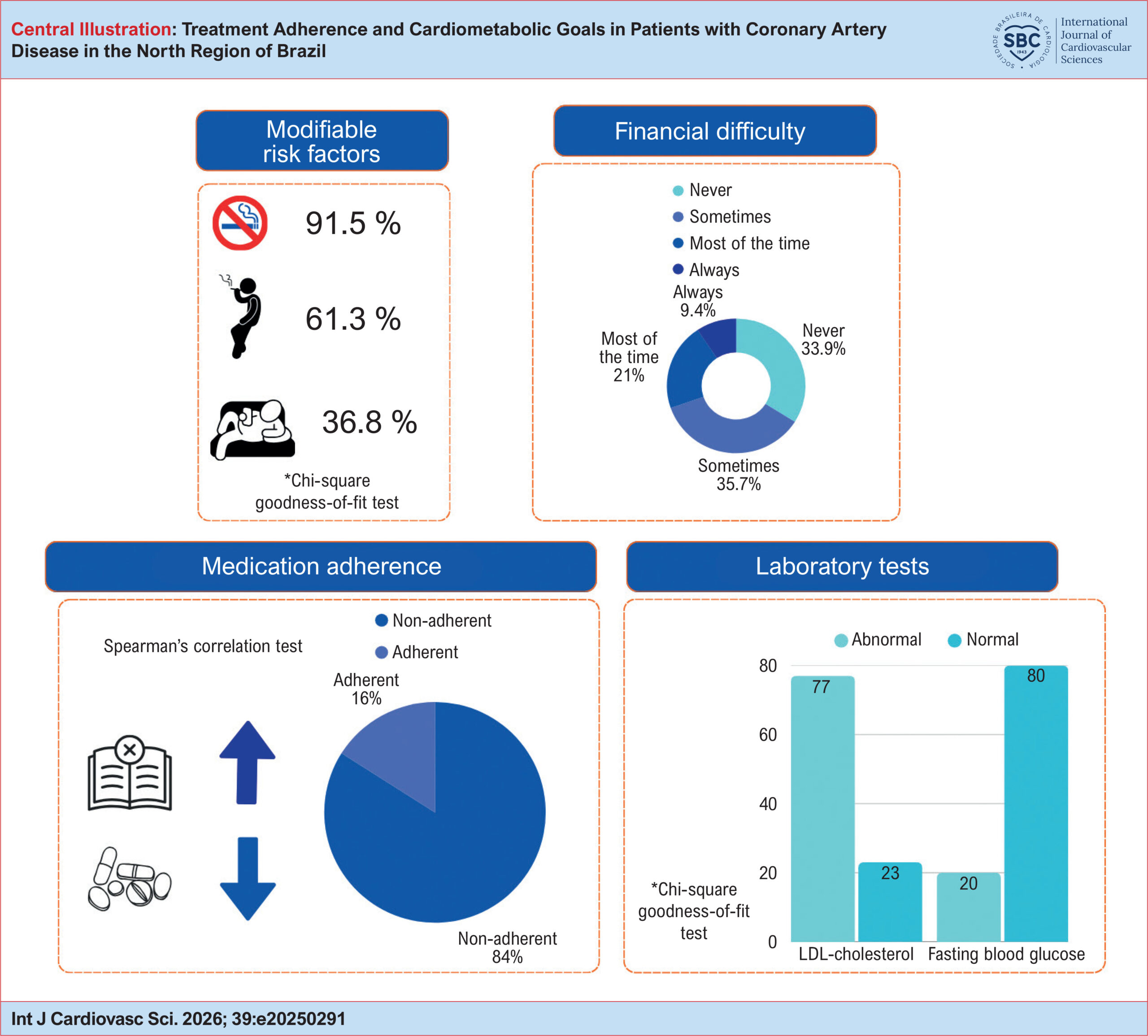
Treatment adherence analysis showed an adherence rate of 16.0%. Low-density lipoprotein (LDL) -cholesterol levels were above the target of 50 mg/dL in 72.6% of patients, and normal blood glucose was achieved in 75.5%. Education level was the only epidemiological variable associated with therapeutic non-adherence (p = 0.0130). Regarding financial aspects, only 9.4% reported persistent difficulty in purchasing medications; among those reporting difficulty, high-potency statins were the most frequently cited (58.6%).

Conclusions:

Education level was shown to be a determining factor in understanding treatment, impacting adherence. Laboratory tests revealed significant deficiencies in lipid control, reinforcing the need for clinical optimization. Difficulties in accessing statins and low medication adherence underscore the importance of educational interventions and multidisciplinary approaches for better management of CAD.
  • Coronary Artery Disease
  • Risk Factors
  • Treatment Adherence and Compliance
Read Full Article
Creative Commons Attribution (CC BY) Creative Commons license
07/08/2026 DOI: 10.36660/ijcs.20250291
Spirituality/Religiosity and Adherence to Treatment in Hypertensive Individuals
ABC
Original Article

Spirituality/Religiosity and Adherence to Treatment in Hypertensive Individuals

Yanne da Silva Camargo et al. Aliny Serafim Borges Ferreira Luana Araújo Macedo Scalia Patrícia Magnabosco … Aline Guarato da Cunha Bragato Maria Beatriz Guimarães Raponi Nelson Dinamarco Valéria Nasser Figueiredo

Abstract

Background

Adherence to drug and non-drug treatment for hypertension has a major socioeconomic impact, in addition to reducing the risk of cardiovascular events and morbidity and mortality. It is known that spirituality and religiosity can be incorporated into coping and managing hypertension.

Objective

To analyze possible factors associated with adherence to treatment in hypertensive patients and the role of spirituality/religiosity in this context.

Methods

Observational, cross-sectional, quantitative study, carried out with 237 hypertensive individuals monitored in a large Brazilian teaching hospital. Sociodemographic, clinical and lifestyle data were collected, in addition to measuring anthropometric data and performing a physical examination. To determine adherence to drug and non-drug treatment for hypertension, the QATSAH instrument was used and, to assess the level of spirituality/religiosity, the Duke Religion Index and the Brief Multidimensional Measure of Religiousness/Spirituality were applied.

Results

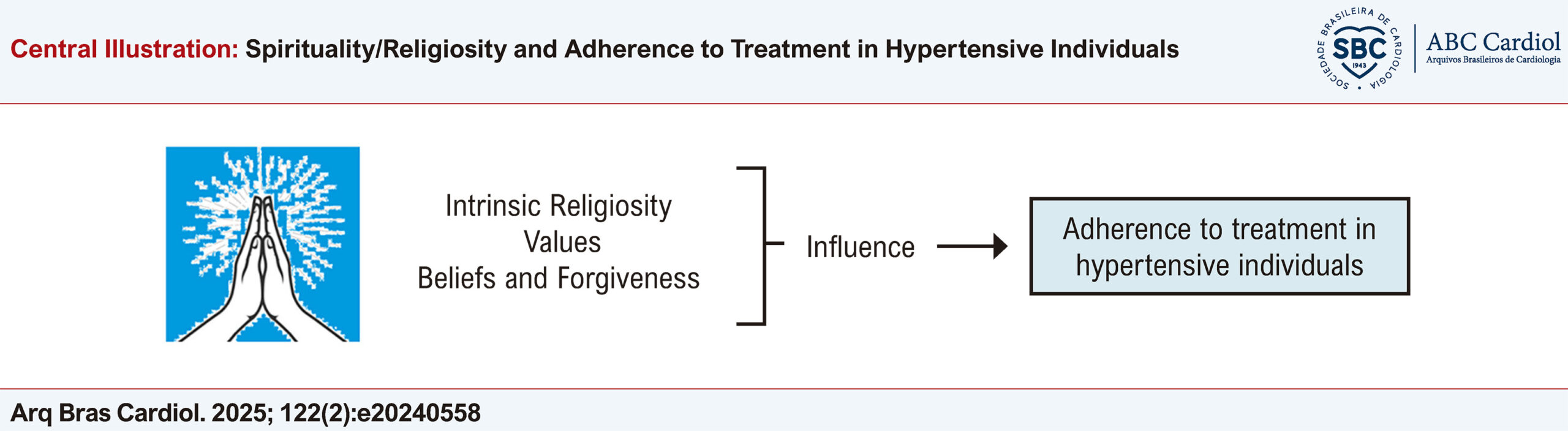
Higher levels of adherence to treatment were observed when aged ≥65 years, physically active, and who did not consume alcohol (p<0.05). Regarding religiosity and spirituality, intrinsic religiosity (β = 0.24, 95%CI [0.22, 1.13], p = 0.004), values and beliefs (β = -0.18, 95%CI [-1.58, -0.20], p = 0.012), and forgiveness (β = 0.16, 95%CI [0.13, 1.19], p = 0.015) were statistically significant predictors of treatment adherence. Organizational religiosity, non-organizational religiosity, and daily spiritual experiences were not significant.

Conclusion

Greater intrinsic religiosity, lower scores in Values and Beliefs and higher scores in Forgiveness increase the level of medication and non-medication adherence in hypertensive individuals.

  • Hypertension
  • medication adherence
  • Spirituality
  • Treatment Adherence and Compliance
Read Full Article
Creative Commons Attribution (CC BY) Creative Commons license
21/02/2025 DOI: 10.36660/abc.20240558i
Potentially Inappropriate Cardioverter Defibrillator Implants in Secondary Prevention of Death
ABC
Original Article

Potentially Inappropriate Cardioverter Defibrillator Implants in Secondary Prevention of Death

William Neves de Carvalho et al. Tainá Teixeira Viana Clara Salles Figueiredo Fernanda Martins Luiz Carlos Santana Passos

Abstract

Background:

Implantable cardioverter defibrillators (ICDs) are recommended for patients experiencing malignant tachyarrhythmias due to irreversible causes, who are clinically stable, and have a life expectancy exceeding one year. However, adverse socioeconomic and psychosocial conditions can adversely affect short-term survival and may render implantation inappropriate.

Objective:

To assess whether economic and psychosocial markers (EPSM) are associated with higher mortality in the first year (indicating potentially inappropriate implants) following ICD implantation.

Methods:

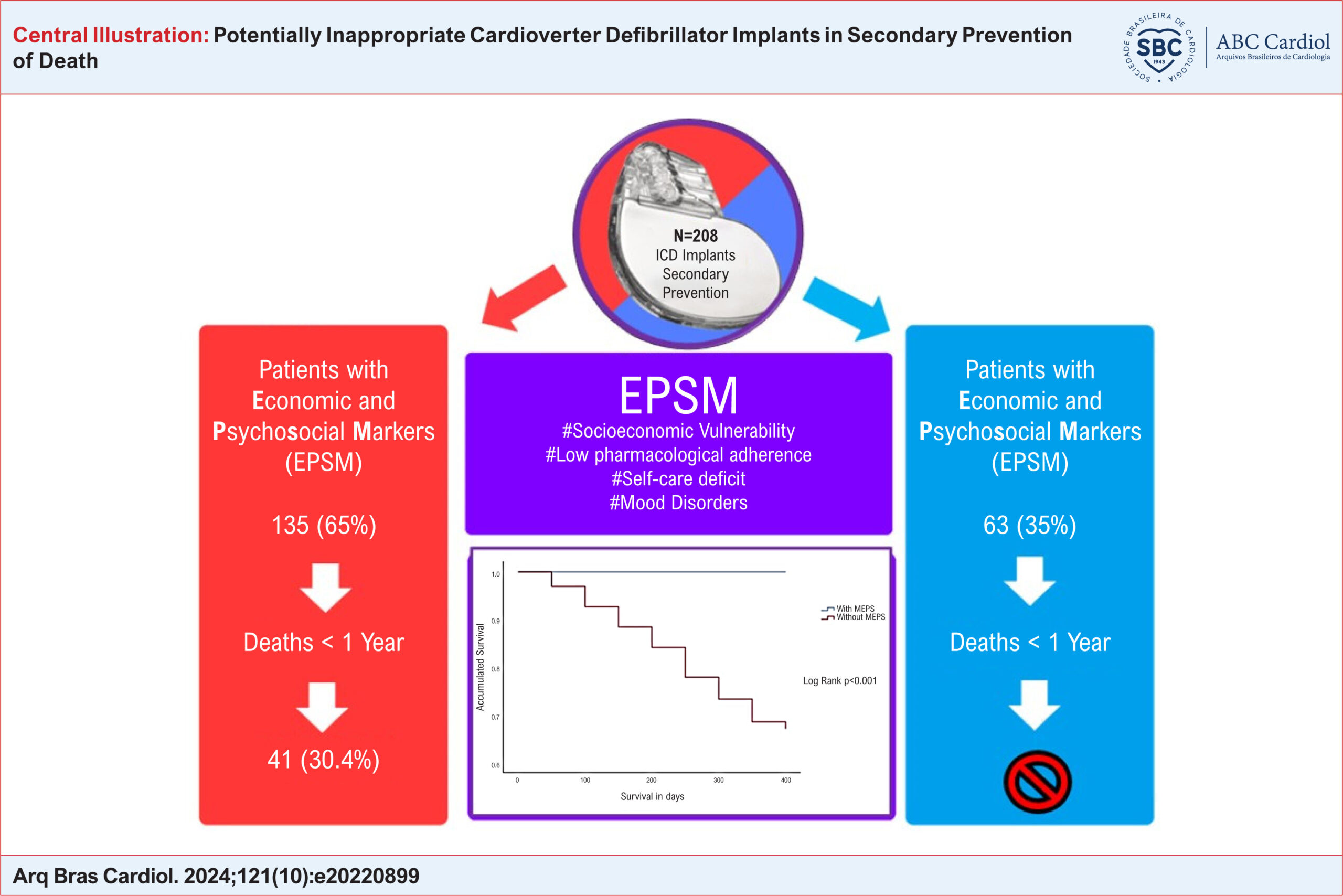
A prospective cohort study conducted between 2017 and 2021 included patients with heart failure and left ventricular ejection fraction (LVEF) < 50% who underwent ICD implantation for secondary prophylaxis. Prior to the procedure, patients were evaluated by an MDT, which examined four EPSM variables, namely socioeconomic vulnerability, self-care capacity, pharmacological adherence, and mood disorders. The participants were monitored for at least 12 months. Statistical significance was considered to be p-values < 0.05.

Results:

A total of 208 individuals were included, with 144 (68.9%) being male. The mean LVEF was 32% ±9 and 107 (51%) had Chagas disease etiology. The mortality rate in the first year was 54/208 (25.8%). All patients who died had at least one of the EPSM and there no deaths were reported among the 73 (35.4%) who did not have EPSM. In multivariate analysis, having EPSM and LVEF were the only independent predictors of mortality under 1 year: RR 20.48 (2.75 – 52.29); p=0.003 and RR 0.97 (0.93 – 0.99); p=0.047, respectively.

Conclusion:

Socioeconomic and psychosocial conditions should be identified and, where possible, resolved before implantation, as they may make device implantation a potentially inappropriate procedure.

  • Implantable Defibrillators
  • medication adherence
  • Patient Care Team
  • Social Vulnerability
  • Treatment Adherence and Compliance
Read Full Article
Creative Commons Attribution (CC BY) Creative Commons license
11/11/2024 DOI: 10.36660/abc.20220899i
ABC
Editorial

The Journey Towards Hypertension Control in Brazil

Carlos Henrique Miranda

Arterial hypertension (AH) is a highly prevalent cardiovascular, cerebrovascular, and renal risk factor worldwide. This associated risk can be reduced through the institution of a well-established and scientifically validated therapy. For these reasons, AH control plays a role in preventing chronic degenerative diseases in public health. The controlled AH rate reflects the quality of health care offered to the population.

The Arterial Hypertension control rate evaluated by the office and residential measurements: LHAR National Registry, recently published in the Arquivos Brasileiros de Cardiologia, shows an overview of this scenario in Brazil. Some findings of this study deserve to be highlighted.

[…]

  • Health Care Quality Indicators/ethics
  • Hypertension/epidemiology
  • Hypertension/prevention and control
  • Risk Factors
  • Treatment Adherence and Compliance
Read Full Article
Creative Commons Attribution (CC BY) Creative Commons license
10/11/2023 DOI: 10.36660/abc.20230533
Figure 1
ABC
Original Article

Blood Pressure Control and Associated Factors in a Real-World Team-Based Care Center

Thiago Veiga Jardim et al. Ana Luiza Lima Souza Weimar Kunz Sebba Barroso Paulo Cesar B. Veiga Jardim

Abstract

Background

Although team-based care is recommended for patients with hypertension, results of this intervention in a real-world setting are missing in the literature.

Objective

To report the results of a real-world long-term team-based care for hypertensive patients we conducted this study.

Methods

Data of hypertensive patients attending a multidisciplinary treatment center located in the Midwest region of Brazil in June 2017 with at least two follow-up visits were retrospectively assessed. Anthropometric, blood pressure (BP), follow-up time, pharmacological treatment, diabetes and lifestyle data were collected from the last visit to the service. BP values < 140 x 90 mmHg in non-diabetics and < 130 x 80 mmHg in diabetics were considered controlled. A logistic regression model was built to identify variables independently associated to BP control. Significance level adopted p < 0.05.

Results

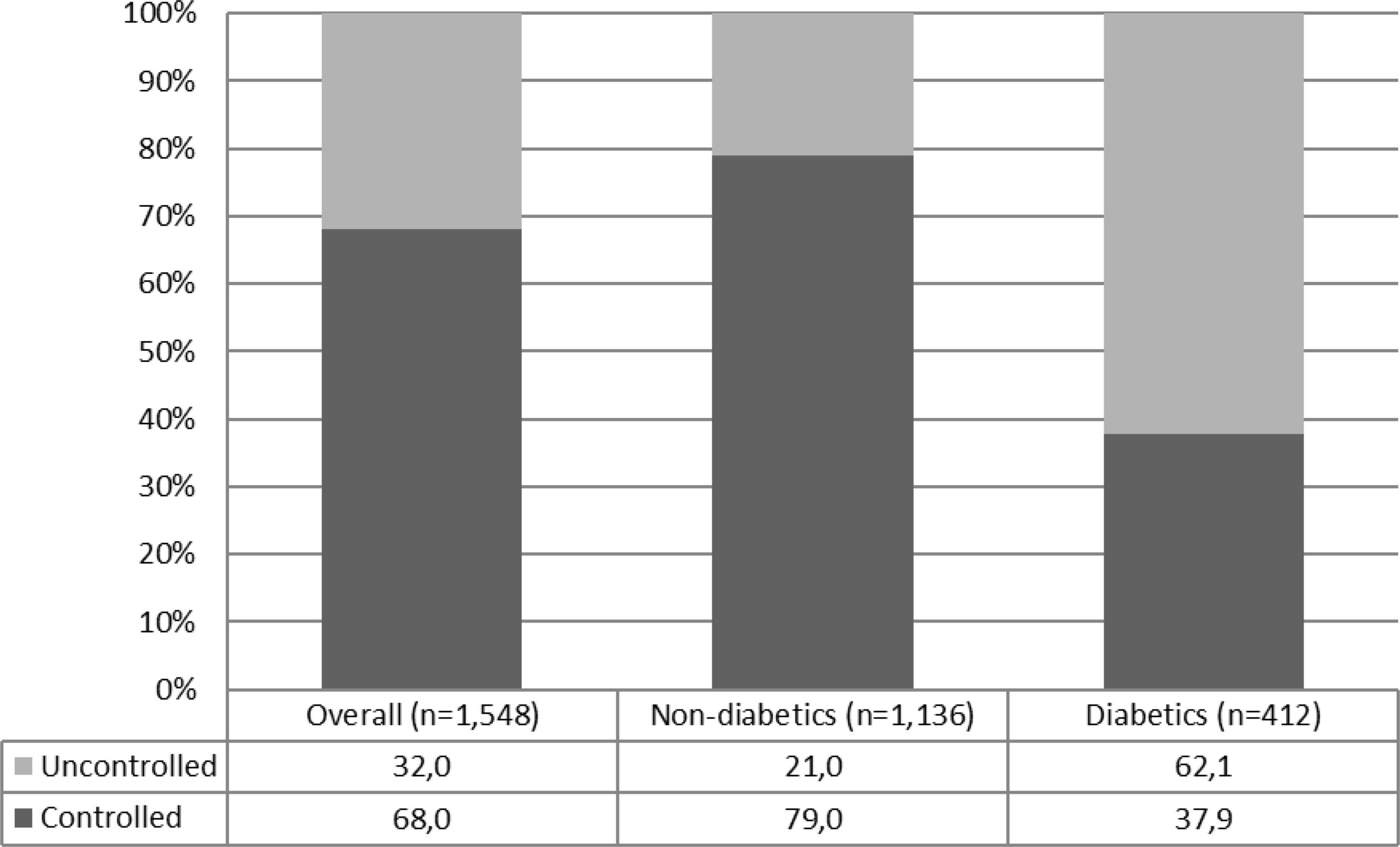
A total of 1,548 patients were included, with a mean follow-up time of 7.6 ± 7.1 years. Most patients were female (73.6%; n=1,139) with a mean age of 61.8 ±12.8 years. BP control rates in all the sample, and in non-diabetics and diabetics were 68%, 79%, and 37.9%, respectively. Diabetes was inversely associated with BP control (OR 0.16; 95%CI 0.12-0.20; p<0.001) while age ≥ 60 years (OR 1.48; 95%CI 1.15-1.91; p=0.003) and female sex (OR 1.38; 95%CI 1.05-1.82; p=0.020) were directly associated.

Conclusions

A BP control rate around 70% was found in patients attending a multidisciplinary team care center for hypertension. Focus on patients with diabetes, younger than 60 years and males should be given to further improve these results. (Arq Bras Cardiol. 2020; 115(2):174-181)

  • Blood Pressure/prevention and control
  • Exercise
  • Hypertension
  • Life Style
  • Obesity
  • Sedentarism
  • Treatment Adherence and Compliance
Read Full Article
Creative Commons Attribution (CC BY) Creative Commons license
28/08/2020 DOI: 10.36660/abc.20180384 Views 1
ABC
Editorial

Evaluating Sodium Restriction in Heart Failure

Pedro Pimenta de Mello Spineti

Although salt and water retention plays a crucial role in heart failure (HF) pathophysiology, controversy still exists about dietary salt restriction in the treatment of HF patients. Small clinical studies have suggested that excessive sodium restriction (< 5 g of salt per day), as compared with normal-sodium diet (approximately 7 g of salt per day), may be associated with deleterious effects in patients with chronic HF, including increased neurohormonal activation, and higher hospitalization and mortality rates.,

A recent meta-analysis of nine studies involving 479 HF patients undergoing dietary sodium restriction was inconclusive for the recommendation of this strategy in hospitalized patients. None of the studies analyzed in the meta-analysis included hard endpoints such as all-cause death or cardiovascular mortality. However, a modest tendency for improvement of functional class was observed in outpatients undergoing sodium restriction intake. The author reinforces the need for randomized, prospective studies including large sample sizes, evaluating the effect of different regimens of sodium intake on relevant outcomes to build evidence base for detailed recommendations.

[…]

  • Diet Therapy
  • Diet-Sodium- Restricted/methods
  • Heart Failure/complications
  • Patient Compliance
  • Survey and Questionnaires
  • Treatment Adherence and Compliance
Read Full Article
Creative Commons Attribution (CC BY) Creative Commons license
01/02/2019 DOI: 10.5935/abc.20190017

How to cite this article

EndNote RIS

Electronic Document Format (Vancouver)

Coutinho FM, Nogueira TLP, Souza DSM, Holanda LS, Holanda VBT, Assad MN, Coutinho RM, et al. Treatment Adherence and Cardiometabolic Goals in Patients with Coronary Artery Disease in the North Region of Brazil. International Journal of Cardiovascular Sciences 2026;39:e20250291.

Electronic Document Format (ABNT)

Coutinho, Fernando Maia; Nogueira, Talles L. Pereira; Souza, Dilma do Socorro Moraes de; Holanda, Lucianna Serfaty de; Holanda, Vitor Bruno Teixeira de; Assad, Michele N.; Coutinho, Rafael M.; Souza, Ana Flávia Oliveira de; Marvão, Márcio César Ribeiro; Paulo, Thiago da Silva. Treatment Adherence and Cardiometabolic Goals in Patients with Coronary Artery Disease in the North Region of Brazil. International Journal of Cardiovascular Sciences, v. 39, e20250291, Aug. 2026.

Electronic Document Format (APA)

Coutinho, F. M., Nogueira, T. L. P., Souza, D. S. M. , Holanda, L. S. , Holanda, V. B. T. , Assad, M. N., Coutinho, R. M., Souza, A. F. O. , Marvão, M. C. R., & Paulo, T. S. (2026). Treatment Adherence and Cardiometabolic Goals in Patients with Coronary Artery Disease in the North Region of Brazil. International Journal of Cardiovascular Sciences, 39, e20250291.

Electronic Document Format (ISO)

Coutinho, Fernando Maia and Nogueira, Talles L. Pereira and Souza, Dilma do Socorro Moraes de and Holanda, Lucianna Serfaty de and Holanda, Vitor Bruno Teixeira de and Assad, Michele N. and Coutinho, Rafael M. and Souza, Ana Flávia Oliveira de and Marvão, Márcio César Ribeiro and Paulo, Thiago da Silva. Treatment Adherence and Cardiometabolic Goals in Patients with Coronary Artery Disease in the North Region of Brazil. International Journal of Cardiovascular Sciences [online]. 2026, vol. 39, [cited 2026-10-14], e20250291. Available from: <https://journals.cardiol.br/en/article/treatment-adherence-and-cardiometabolic-goals-in-patients-with-coronary-artery-disease-in-the-north-region-of-brazil/>. ISSN 2359-4802

EndNote RIS

Electronic Document Format (Vancouver)

Camargo YS, Ferreira ASB, Scalia LAM, Magnabosco P, Bragato AGC, Raponi MBG, Dinamarco N, et al. Spirituality/Religiosity and Adherence to Treatment in Hypertensive Individuals. Arquivos Brasileiros de Cardiologia 2025;122(2):e20240558.

Electronic Document Format (ABNT)

Camargo, Yanne da Silva; Ferreira, Aliny Serafim Borges; Scalia, Luana Araújo Macedo; Magnabosco, Patrícia; Bragato, Aline Guarato da Cunha; Raponi, Maria Beatriz Guimarães; Dinamarco, Nelson; Figueiredo, Valéria Nasser. Spirituality/Religiosity and Adherence to Treatment in Hypertensive Individuals. Arquivos Brasileiros de Cardiologia, v. 122, n. 2, e20240558, Feb. 2025.

Electronic Document Format (APA)

Camargo, Y. S., Ferreira, A. S. B., Scalia, L. A. M., Magnabosco, P., Bragato, A. G. C., Raponi, M. B. G., Dinamarco, N., & Figueiredo, V. N. (2025). Spirituality/Religiosity and Adherence to Treatment in Hypertensive Individuals. Arquivos Brasileiros de Cardiologia, 122(2), e20240558.

Electronic Document Format (ISO)

Camargo, Yanne da Silva and Ferreira, Aliny Serafim Borges and Scalia, Luana Araújo Macedo and Magnabosco, Patrícia and Bragato, Aline Guarato da Cunha and Raponi, Maria Beatriz Guimarães and Dinamarco, Nelson and Figueiredo, Valéria Nasser. Spirituality/Religiosity and Adherence to Treatment in Hypertensive Individuals. Arquivos Brasileiros de Cardiologia [online]. 2025, vol. 122, n. 2, [cited 2026-10-14], e20240558. Available from: <https://journals.cardiol.br/en/article/spirituality-religiosity-and-adherence-to-treatment-in-hypertensive-individuals/>. ISSN 0066-782X

EndNote RIS

Electronic Document Format (Vancouver)

Carvalho WN, Viana TT, Figueiredo CS, Martins F, Passos LCS. Potentially Inappropriate Cardioverter Defibrillator Implants in Secondary Prevention of Death. Arquivos Brasileiros de Cardiologia 2024;121(10):e20220899.

Electronic Document Format (ABNT)

Carvalho, William Neves de; Viana, Tainá Teixeira; Figueiredo, Clara Salles; Martins, Fernanda; Passos, Luiz Carlos Santana. Potentially Inappropriate Cardioverter Defibrillator Implants in Secondary Prevention of Death. Arquivos Brasileiros de Cardiologia, v. 121, n. 10, e20220899, Nov. 2024.

Electronic Document Format (APA)

Carvalho, W. N. , Viana, T. T., Figueiredo, C. S., Martins, F., & Passos, L. C. S. (2024). Potentially Inappropriate Cardioverter Defibrillator Implants in Secondary Prevention of Death. Arquivos Brasileiros de Cardiologia, 121(10), e20220899.

Electronic Document Format (ISO)

Carvalho, William Neves de and Viana, Tainá Teixeira and Figueiredo, Clara Salles and Martins, Fernanda and Passos, Luiz Carlos Santana. Potentially Inappropriate Cardioverter Defibrillator Implants in Secondary Prevention of Death. Arquivos Brasileiros de Cardiologia [online]. 2024, vol. 121, n. 10, [cited 2026-10-14], e20220899. Available from: <https://journals.cardiol.br/en/article/potentially-inappropriate-cardioverter-defibrillator-implants-in-secondary-prevention-of-death/>. ISSN 0066-782X

EndNote RIS

Electronic Document Format (Vancouver)

Miranda CH. The Journey Towards Hypertension Control in Brazil. Arquivos Brasileiros de Cardiologia 2023;120(8):e20230533.

Electronic Document Format (ABNT)

Miranda, Carlos Henrique. The Journey Towards Hypertension Control in Brazil. Arquivos Brasileiros de Cardiologia, v. 120, n. 8, e20230533, Nov. 2023.

Electronic Document Format (APA)

Miranda, C. H. (2023). The Journey Towards Hypertension Control in Brazil. Arquivos Brasileiros de Cardiologia, 120(8), e20230533.

Electronic Document Format (ISO)

Miranda, Carlos Henrique. The Journey Towards Hypertension Control in Brazil. Arquivos Brasileiros de Cardiologia [online]. 2023, vol. 120, n. 8, [cited 2026-10-14], e20230533. Available from: <https://journals.cardiol.br/en/article/the-journey-towards-hypertension-control-in-brazil/>. ISSN 0066-782X

EndNote RIS

Electronic Document Format (Vancouver)

Jardim TV, Souza ALL, Barroso WKS, Jardim PCBV. Blood Pressure Control and Associated Factors in a Real-World Team-Based Care Center. Arquivos Brasileiros de Cardiologia 2020;115(2):174-81.

Electronic Document Format (ABNT)

Jardim, Thiago Veiga; Souza, Ana Luiza Lima; Barroso, Weimar Kunz Sebba; Jardim, Paulo Cesar B. Veiga. Blood Pressure Control and Associated Factors in a Real-World Team-Based Care Center. Arquivos Brasileiros de Cardiologia, v. 115, n. 2, p. 174-181, Aug. 2020.

Electronic Document Format (APA)

Jardim, T. V., Souza, A. L. L., Barroso, W. K. S., & Jardim, P. C. B. V. (2020). Blood Pressure Control and Associated Factors in a Real-World Team-Based Care Center. Arquivos Brasileiros de Cardiologia, 115(2), 174-181.

Electronic Document Format (ISO)

Jardim, Thiago Veiga and Souza, Ana Luiza Lima and Barroso, Weimar Kunz Sebba and Jardim, Paulo Cesar B. Veiga. Blood Pressure Control and Associated Factors in a Real-World Team-Based Care Center. Arquivos Brasileiros de Cardiologia [online]. 2020, vol. 115, n. 2, [cited 2026-10-14], pp. 174-181. Available from: <https://journals.cardiol.br/en/article/blood-pressure-control-and-associated-factors-in-a-real-world-team-based-care-center/>. ISSN 0066-782X

EndNote RIS

Electronic Document Format (Vancouver)

Spineti PPM. Evaluating Sodium Restriction in Heart Failure. Arquivos Brasileiros de Cardiologia 2019;112(2):171-2.

Electronic Document Format (ABNT)

Spineti, Pedro Pimenta de Mello. Evaluating Sodium Restriction in Heart Failure. Arquivos Brasileiros de Cardiologia, v. 112, n. 2, p. 171-172, Jan. 2019.

Electronic Document Format (APA)

Spineti, P. P. M. (2019). Evaluating Sodium Restriction in Heart Failure. Arquivos Brasileiros de Cardiologia, 112(2), 171-172.

Electronic Document Format (ISO)

Spineti, Pedro Pimenta de Mello. Evaluating Sodium Restriction in Heart Failure. Arquivos Brasileiros de Cardiologia [online]. 2019, vol. 112, n. 2, [cited 2026-10-14], pp. 171-172. Available from: <https://journals.cardiol.br/en/article/evaluating-sodium-restriction-in-heart-failure/>. ISSN 0066-782X

  • About ABC Family
  • Internal Regulation
  • Editorial Board
  • Brazilian Society of Cardiology (SBC)

Issues

SBC Guidelines

  • Videos
  • Podcasts
  • News