ABC Family Arquivos Brasileiros de Cardiologia International Journal of Cardiovascular Sciences ABC Heart Failure & Cardiomyopathy ABC Imagem Cardiovascular
Português English
ABC Family
Português English
  • About
    • About ABC Family
    • Internal Regulation
    • Editorial Board
    • Brazilian Society of Cardiology (SBC)
  • Issues
  • SBC Guidelines
  • Content
    • Videos
    • Podcasts
    • News
  • About
    • About ABC Family
    • Internal Regulation
    • Editorial Board
    • Brazilian Society of Cardiology (SBC)
  • Issues
  • SBC Guidelines
  • Content
    • Videos
    • Podcasts
    • News

ABC Family

  • ABC Family
  • Arquivos Brasileiros de Cardiologia
  • International Journal of Cardiovascular Sciences
  • ABC Heart Failure & Cardiomyopathy
  • ABC Imagem Cardiovascular
Search in

No content found.

Journals
Ordering
Article types
Others

  1. Home
  2. Keyword: Transcatheter Aortic Valve Replacement
Transcatheter Aortic Valve Implantation in Nonagenarians: In-Hospital Complications and One-Year Follow-Up Mortality
IJCS
Original Article

Transcatheter Aortic Valve Implantation in Nonagenarians: In-Hospital Complications and One-Year Follow-Up Mortality

Nelson Durval Ferreira Gomes de Mattos et al. Rafael Lauria de Oliveira Constantino Gonzalez Salgado André Luiz Silveira Sousa … Andre Luiz da Fonseca Feijó Rodrigo Verney Castello Branco Giovanna Zadra de Mattos José Carlos Pizzolante Secco Luiz Antonio Ferreira Carvalho Helena Cramer Rey

Abstract

Background:

Aortic Stenosis (AS) is prevalent among elderly individuals and is associated with high mortality when untreated. Transcatheter Aortic Valve Implantation (TAVI) has emerged as a viable therapeutic alternative, particularly for patients with surgical contraindications. However, its application in nonagenarians remains controversial due to limited data in this very elderly population.

Objective:

To evaluate clinical outcomes in nonagenarian patients undergoing TAVI at a private quaternary hospital, with emphasis on mortality and in-hospital as well as one-year complications.

Methods:

A retrospective cohort study with prospective follow-up was conducted between 2009 and 2023. A total of 265 patients with symptomatic severe AS who underwent TAVI were included, of whom 40 were nonagenarians (≥ 89 years). Data were obtained from an institutional database and from the Brazilian Registry of Aortic Bioprosthesis Implantation by Catheter – New Technologies (RIBAC-NT). Comparisons between nonagenarians and younger patients were performed using the Student’s t-test for continuous variables and the chi-square (χ2) test for categorical variables. A p-value < 0.05 was considered statistically significant.

Results:

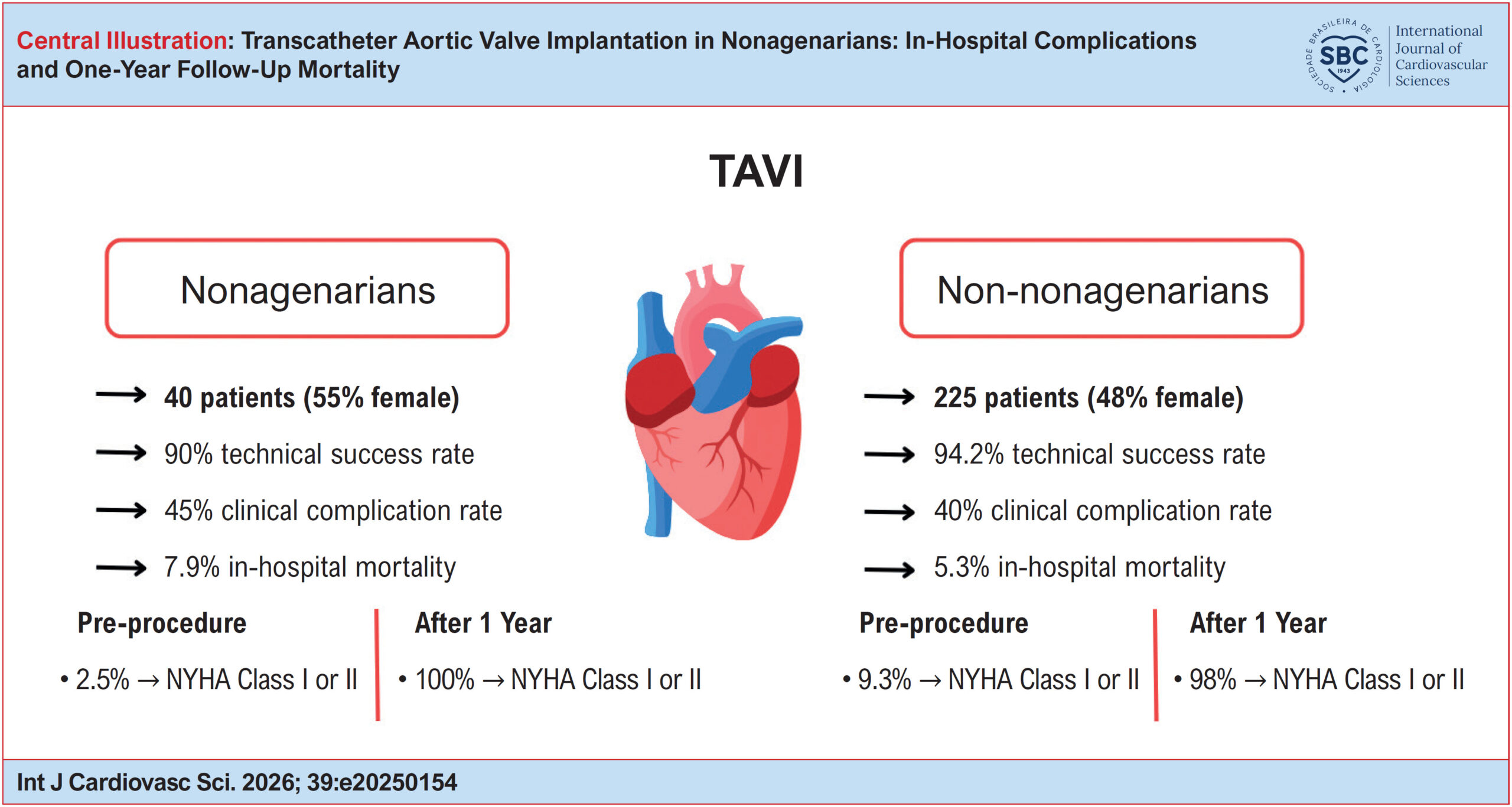
Among nonagenarians, 55% were female, 72.5% had hypertension, and 95% had chronic kidney disease. The technical success rate was 55%. Major complications included permanent pacemaker implantation (35%) and adverse events (45%). In-hospital mortality was 7.9%, with no statistically significant differences at 30 days (p = 0.40), 6 months (p = 0.35), and one year (p = 0.06) compared to younger patients.

Conclusion:

TAVI proved to be a safe and effective therapeutic option in nonagenarians, showing clinical outcomes comparable to those of younger individuals.
  • Aortic Valve Stenosis
  • Hospital Mortality
  • Nonagenarians
  • postoperative complications
  • Transcatheter Aortic Valve Replacement
Read Full Article
Creative Commons Attribution (CC BY) Creative Commons license
11/09/2026 DOI: 10.36660/ijcs.20250154 Views 1
Temporal Trends and In-hospital Outcomes of Transcatheter Aortic Valve Implantation in Bicuspid Aortic Valves in Brazil: A Propensity-Matched Analysis
ABC
Original Article

Temporal Trends and In-hospital Outcomes of Transcatheter Aortic Valve Implantation in Bicuspid Aortic Valves in Brazil: A Propensity-Matched Analysis

Pedro Calomeni et al. Fernando Bernardi Fábio Sandoli de Brito Jr Marcella Sousa Abizaid … Francisco Ribeiro Barbosa Pedro Alves Lemos Fausto Feres Dimytri Alexandre Siqueira Ricardo Costa Rogério Sarmento-Leite Fernanda Mangione José Armando Mangione Luiz Eduardo Koenig São Thiago Valter Correia de Lima Adriano Dias Dourado Oliveira Marcos Antônio Marino Carlos José Francisco Cardoso Paulo Ricardo Avancini Caramori Rogério Tadeu Tumelero Antenor Lages Fortes Portela Maurício Lopes Prudente Leônidas Alvarenga Henriques Fábio Solano de Freitas Souza Cristiano Guedes Bezerra Guy Fernandes de Almeida Prado Junior Leandro Zacarias Figueiredo de Freitas Ederlon Ferreira Nogueira George César Ximenes Meireles Renato Bastos Pope Ênio Eduardo Guérios Pedro Beraldo de Andrade Luciano de Moura Santos Augusto Celso Lopes Vinicius Borges Cardozo Esteves Cleverson Zukowski Alexandre Abizaid Henrique Barbosa Ribeiro

ABSTRACT

Background:

Bicuspid aortic valve (BAV) is a significant risk factor for aortic stenosis (AS). Yet, the outcomes of transcatheter aortic valve implantation (TAVI) remain unclear, as most randomized trials excluded such patients. Furthermore, most published evidence on TAVI in BAV comes from high-income countries, which may not reflect realities of underserved populations.

Objectives:

Evaluate temporal trends, procedural, and in-hospital outcomes between BAV and tricuspid aortic valve (TAV) patients.

Methods:

Retrospective observational study based on a Brazilian multicenter registry of TAVI patients between January 2009 and December 2021. We performed propensity score matching to adjust comparisons. A p-value <0.05 was considered statistically significant for all analyses.

Results:

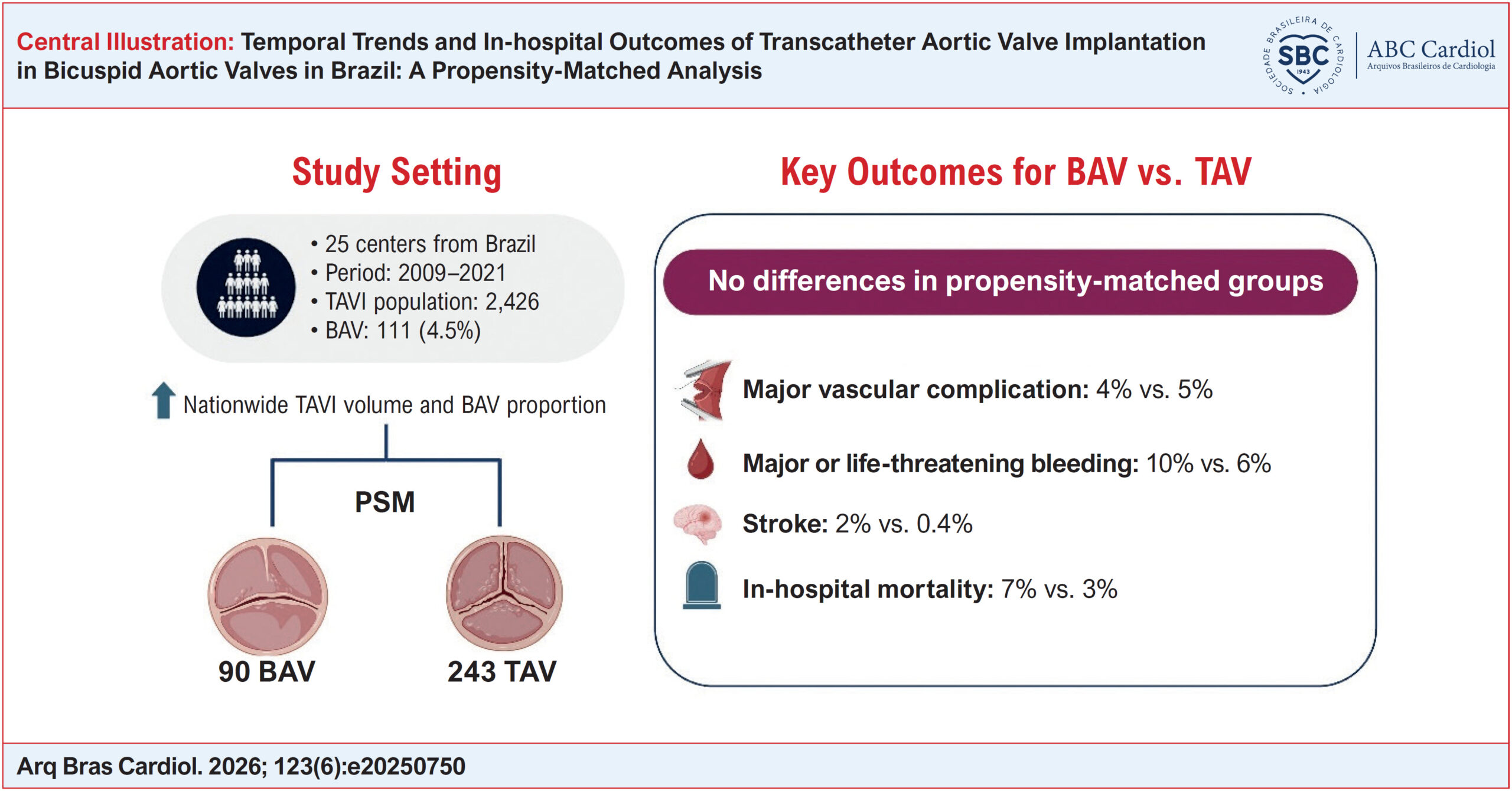
Among 2,426 patients from 25 centers, 111 had BAV. TAVI procedures increased over time in both groups. After one-to-three matching, 90 BAV and 243 TAV patients were included. No significant differences were observed in rates of major vascular complications (4% vs. 5%; p=0.99), major or life-threatening bleeding (10% vs. 6%; p=0.34), stroke (2% vs. 0.4%; p=0.37), or in-hospital mortality (7% vs. 3%; p=0.21). Over time, there was a significant reduction in in-hospital mortality (p<0.01) and major procedural complications (p<0.01 for vascular, bleeding, and stroke events), regardless of valve type.

Conclusion:

During the study period, annual TAVI procedures increased in both BAV and TAV patients, although the prevalence of BAV remained relatively low. No significant differences were observed in procedural or clinical outcomes between the propensity-matched groups. Both valve types showed reductions in procedural complications and in-hospital mortality over time.

  • Aortic Valve Stenosis
  • Bicuspid Aortic Valve Disease
  • Heart Valve Prosthesis Implantation
  • Transcatheter Aortic Valve Replacement
Read Full Article
Creative Commons Attribution (CC BY) Creative Commons license
10/08/2026 DOI: 10.36660/abc.20250750i
ABC
Editorial

Excellent In-Hospital Outcomes in Bicuspid TAVI. But What Comes Next?

Maria Cristina Meira Ferreira

Transcatheter aortic valve implantation (TAVI) has expanded rapidly over the last decade, driven by randomized trials, contemporary registries, and the progressive evolution of international guideline recommendations. In parallel, multicenter studies have increasingly demonstrated the use of TAVI in more complex and lower surgical risk populations, including patients with bicuspid anatomy. As accumulated experience increased and newer generations of transcatheter valves were incorporated into clinical practice, scenarios previously considered challenging began to be explored more frequently, including aortic stenosis associated with a bicuspid aortic valve.

However, questions remain regarding the extent to which evidence derived from tricuspid aortic stenosis can be directly extrapolated to patients with bicuspid anatomy. As highlighted by Hirji et al., bicuspid valve disease represents a fundamentally distinct condition from degenerative tricuspid stenosis, characterized by asymmetric calcification, elliptical annular geometry, and a high prevalence of associated aortopathy. These characteristics introduce challenges capable of affecting both immediate procedural success and long-term valve performance and durability.

[…]

  • Aortic Valve Stenosis
  • Bicuspid Aortic Valve Disease
  • Transcatheter Aortic Valve Replacement
Read Full Article
Creative Commons Attribution (CC BY) Creative Commons license
10/08/2026 DOI: 10.36660/abc.20260398i Views 1
Figure 1
IJCS
Case Report

Transcatheter Correction of Aortic-Right Ventricular Shunt Following Aortic Valve Replacement: A Case Report

Adnaldo da Silveira Maia et al. Mauro Henrique Batista Camacho Andresa Fernandes Perego Dayara Hoffmann Mayer José Honório Palma da Fonseca

Abstract

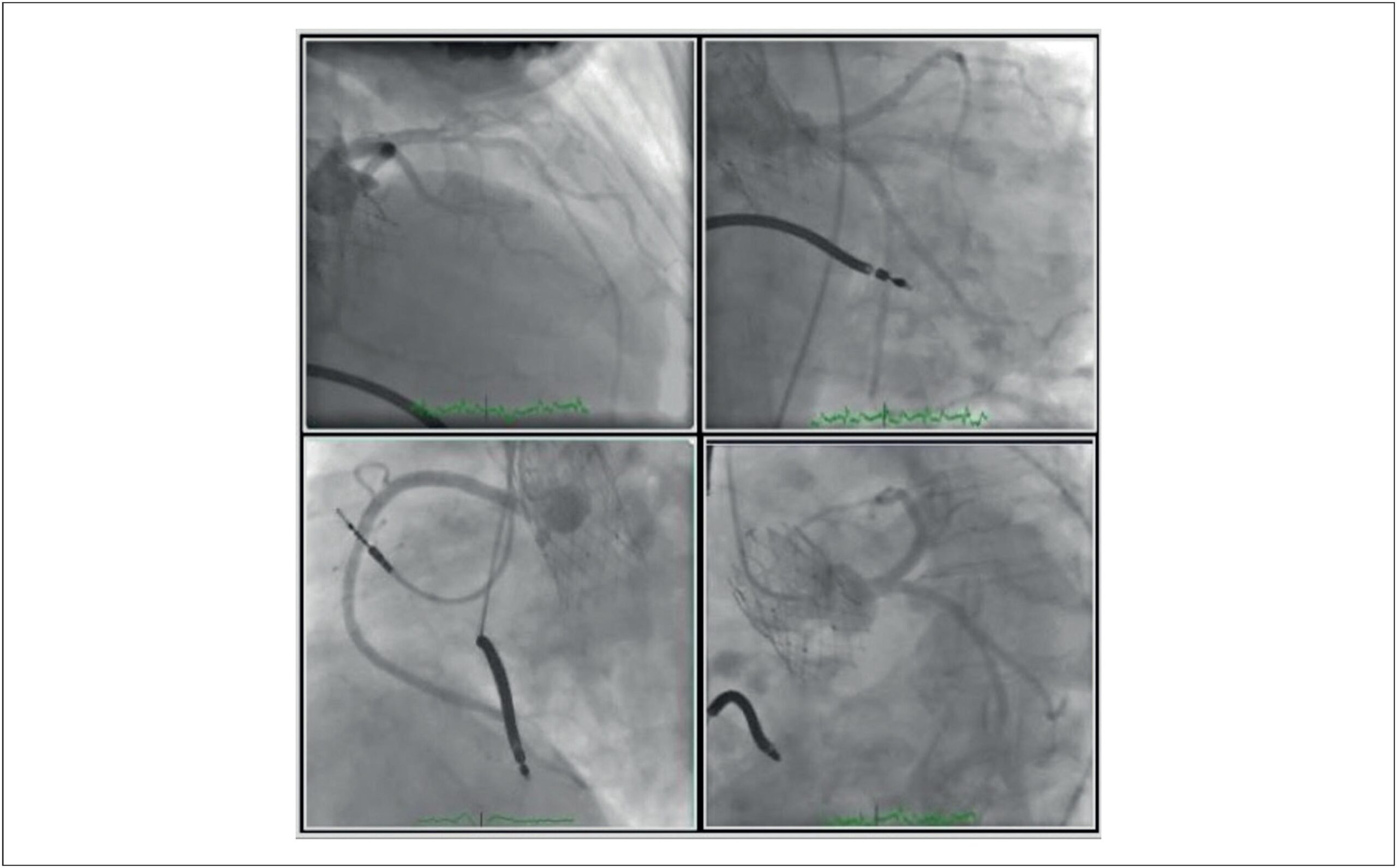
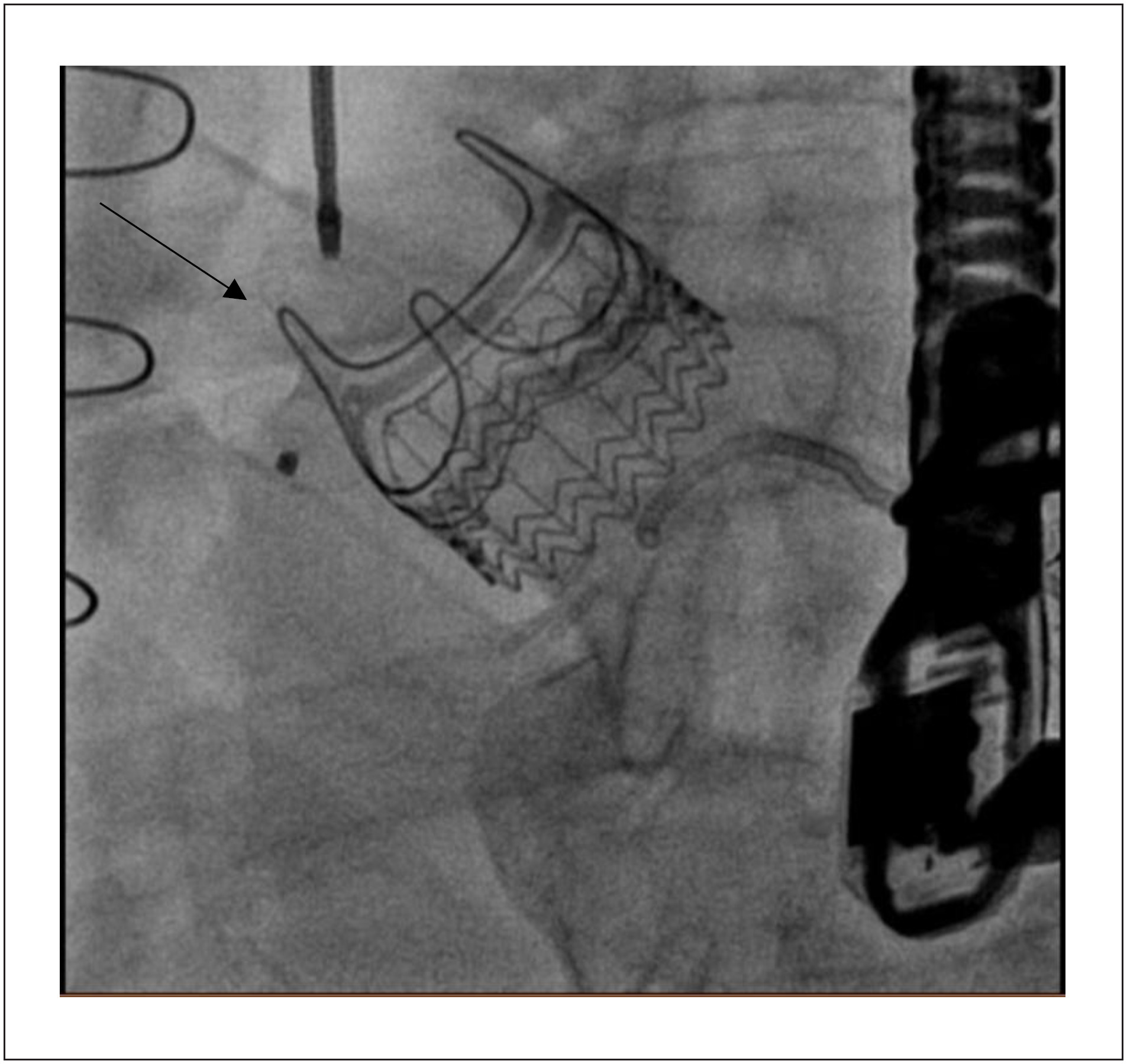
We describe the first case in the literature of transcatheter correction of aortic-right ventricular (Ao-RV) shunt after aortic valve replacement (AVR) with an Intuity® prosthesis (Edwards Lifesciences). A 79-year-old patient with a history of coronary artery bypass grafting and aortic regurgitation underwent AVR using a rapid-release 25-mm Intuity® prosthesis. After 45 days, he presented with severe heart failure, and an Ao-RV shunt was identified on transthoracic echocardiography. Given his history of previous cardiac surgeries, percutaneous correction was attempted. Initially, an attempt was made to catheterize the defect via the transapical approach, which was unsuccessful. The right femoral artery was punctured, and the shunt was catheterized via the aorta, with the implantation of a MemoPart ventricular septal defects (VSD) occluder, resulting in a significant reduction of the shunt. The patient was then transferred to the intensive care unit. However, there was no satisfactory clinical improvement, and transthoracic echocardiography revealed persistent Ao-RV shunt. Therefore, the surgical team opted for a new approach through the femoral artery and a second MemoPart VSD occluder was implanted. A transesophageal echocardiogram showed no leak, and the patient progressed satisfactorily and was discharged from the hospital. Shunts after AVR are rare. In these conditions, percutaneous management is a safe and feasible technical option. This is the first case reported in the literature of this type of complication after Intuity prosthesis implantation.

  • Aorta
  • Heart Ventricles
  • Transcatheter Aortic Valve Replacement
Read Full Article
Creative Commons Attribution (CC BY) Creative Commons license
09/01/2026 DOI: 10.36660/ijcs.20250060
ABC
Editorial

Cost Implications and Perspectives of TAVI versus SAVR in the Hospital Setting

Renato Paladino Nemoto et al. Roney Orismar Sampaio

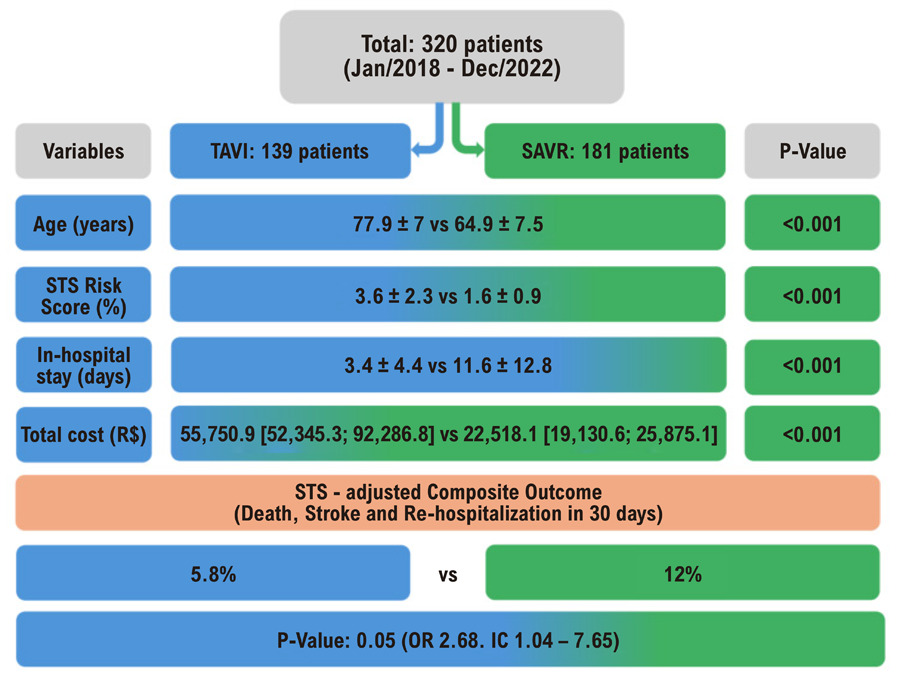
The article “Transcatheter Aortic Valve Implantation vs. Aortic Valve Surgery in a Brazilian Public Health System (SUS) Hospital: Periprocedural Outcomes and Costs” addresses a relevant topic, especially after the inclusion of transcatheter aortic valve implantation (TAVI) in the list of procedures available in the SUS. Patients undergoing TAVI are typically older, with more comorbidities, and are more frail. Conversely, surgical aortic valve replacement (SAVR) in elderly patients can result in increased morbidity and length of hospital stay.

In the study, surgical risk was low in both groups (STS 3.62±2.28 in the TAVI group vs 1.64±0.94 in SAVR, p<0.001), which may demonstrate the limitation of surgical risk stratification with current tools. Mortality was lower in the TAVI group (2.8% vs. 5.0%), but without reaching statistical significance. The minimally invasive strategy (without general anesthesia, with transthoracic echocardiography monitoring) resulted in a shorter hospital length of stay (2.0 [1.0; 4.0] days in the TAVI group vs. 8.0 [7.0; 12.0] days in the SAVR group, p<0.001). However, the costs were higher than those of SAVR. The high prices of materials (R$ 55,750.90 [52,345.30; 92,286.8] TAVI vs. R$ 22,518.10 [19,130.60; 25,875.10] SAVR, p<0.001) is a significant factor. Late complications, such as a higher rate of hospital infection, including surgical wound infection, are unfavorable to surgery, due to increased hospitalization for use of antimicrobials, hospital human resources, among other costs.

[…]

  • Costs and Cost Analysis
  • Therapeutics
  • Transcatheter Aortic Valve Implantation
  • Transcatheter Aortic Valve Replacement
Read Full Article
Creative Commons Attribution (CC BY) Creative Commons license
15/12/2025 DOI: 10.36660/abc.20250669i Views 1
Transcatheter Aortic Valve Implantation vs. Aortic Valve Surgery in a Brazilian Public Health System (SUS) Hospital: Periprocedural Outcomes and Costs
ABC
Original Article

Transcatheter Aortic Valve Implantation vs. Aortic Valve Surgery in a Brazilian Public Health System (SUS) Hospital: Periprocedural Outcomes and Costs

Gabriel Prado Saad et al. Alberto Collella Cervone José Henrique Delamain Vitor Belloti … Ana Paula Beck da Silva Etges Giullia Sarabando Perez Bruna Bronhara Damiani Mario Issa Farid Samaan Auristela Isabel de Oliveira Ramos Fausto Feres Dimytri Alexandre Alvim de Siqueira

Abstract

Background

Transcatheter aortic valve implantation (TAVI) has emerged as a preferred treatment for severe, symptomatic aortic stenosis (AS). However, comparative data with surgical aortic valve replacement (SAVR) within the Brazilian public health system (SUS) remain limited.

Objective

To compare clinical outcomes and perform a cost-analysis of TAVI versus SAVR in SUS patients.

Methods

This retrospective, single-center study evaluated clinical outcomes and direct medical costs, using a statistical significance threshold of 5%.

Results

Between 01/2018 and 12/2022, 320 patients (139 TAVI, 181 SAVR) were included. TAVI patients were older (77.9 vs. 64.9 years, p<0.001) and had higher surgical risk (STS 3.62% vs. 1.64%, p<0.001). Mortality (2.9% vs. 5.0%) and stroke rates (1.4% vs. 3.3%) were numerically lower for TAVI, but not statistically significant. In a risk-adjusted composite outcome (death, stroke, re-hospitalization), TAVI showed potential superiority (5.8% vs. 12%, OR 2.68, 95% CI 1.04-7.65, p=0.05), though not statistically significant. TAVI was associated with a shorter hospital stay (2.0 vs. 8.0 days, p<0.001). TAVI’s total cost was significantly higher than SAVR’s (R$ 55,750.90 [52,345.30; 92,286.80] vs R$ 22,518.10 [19,130.60; 25,875.10, – p<0.001]).

Conclusions

In this study, TAVI displayed similar clinical outcomes compared to SAVR, while being performed on older patients with higher surgical risk. From an economic perspective, costs of TAVI treatment were significantly higher than SAVR, driven mainly by device costs, while in-hospital length of stay was significantly lower. With extended follow-up and reduced procedural costs, TAVI may become a cost-effective option in the SUS.

  • Aortic Valve Stenosis
  • Costs and Cost Analysis
  • Heart Valve Prosthesis Implantation
  • Transcatheter Aortic Valve Replacement
Read Full Article
Creative Commons Attribution (CC BY) Creative Commons license
15/12/2025 DOI: 10.36660/abc.20250021i Views 3
ABCIC
Editorial

Transesophageal Echocardiogram Always Before TAVI?

Jairo Alves Pinheiro et al. João Lucas Pinheiro Lucas Velloso Dutra Luciano Holanda Renata de Sá Cassar

Cardiovascular imaging is crucial in the selection and planning of interventions for structural heart disease.

Transcatheter aortic valve implantation (TAVI) has transformed the management of severe aortic stenosis (AS) in high-risk surgical populations and is currently being expanded to intermediate- and low-risk populations.

[…]

  • Aortic Valve Stenosis
  • Magnetic Resonance Imaging
  • Transcatheter Aortic Valve Replacement
  • Transesophageal echocardiography
Read Full Article
Creative Commons Attribution (CC BY) Creative Commons license
08/12/2025 DOI: 10.36660/abcimg.20250060i
Transcatheter Aortic Valve Implantation (TAVI) Versus Surgical Valve Replacement on Clinical Outcomes in Patients with Aortic Stenosis
ABC
Review Article

Transcatheter Aortic Valve Implantation (TAVI) Versus Surgical Valve Replacement on Clinical Outcomes in Patients with Aortic Stenosis

André Luiz Lisboa Cordeiro et al. Emmanuel de Souza Gonçalves Rute Macêdo de Santana Tayane Siqueira Martins dos Santos

Abstract

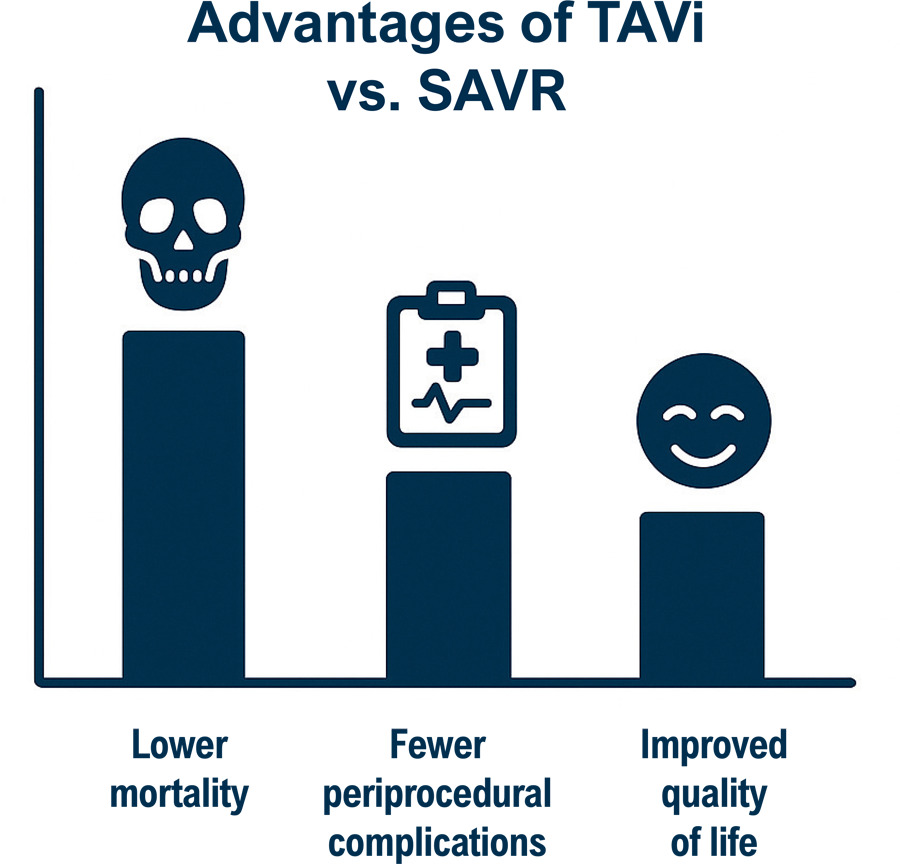
Aortic stenosis (AS) is one of the most prevalent valve lesions, and transcatheter aortic valve replacement (TAVI) has emerged as an alternative to surgical aortic valve replacement (SAVR). TAVI is a minimally invasive procedure that has proven to be a safer option in several aspects. The objective is to review the impact of TAVI compared to surgical aortic valve replacement on mortality, postoperative complications, hospitalization, and quality of life in patients with AS. A systematic review was conducted using the PICO strategy, with searches in the PubMed, Central, and LILACS databases, employing the following descriptors: aortic stenosis, hospitalization, mortality, clinical trial, transcatheter aortic valve implantation, quality of life, postoperative complications, combined with the Boolean operators “AND” and “OR.” A total of 29 articles were found after reading the titles and abstracts. Of these, nine showed lower mortality in patients undergoing TAVI, while three reported lower mortality in the SAVR group. Eight articles had similar findings regarding complications, with six showing a lower incidence of postoperative complications in TAVI and three in SAVR. Additionally, three articles showed better quality of life in TAVI patients, while one study indicated a shorter hospital stay for TAVI patients. In all studies, the patients analyzed were over 70 years old. TAVI reduced mortality compared to SAVR in patients with AS. Furthermore, TAVI was associated with a reduction in hospital stay and improvement in quality of life. Regarding postoperative complications, the results indicated that TAVI tends to have a lower complication rate, although variations exist between studies.

  • Aortic Valve Stenosis
  • Transcatheter Aortic Valve Replacement
Read Full Article
Creative Commons Attribution (CC BY) Creative Commons license
17/11/2025 DOI: 10.36660/abc.20240295i Views 1
Impact of Updated Guidelines on TAVI Outcomes in a Health Maintenance Organization in Brazil: A Decade-Long Retrospective Study
IJCS
Original Article

Impact of Updated Guidelines on TAVI Outcomes in a Health Maintenance Organization in Brazil: A Decade-Long Retrospective Study

Maria da Gloria Cruvinel Horta et al. Marcus Carvalho Borin Julia Teixeira Tupinambas Luciano Rios Scherrer … Mateus Goncalves Souza Matheus del-Valle Carina Rejane Martins Daniel Pitchon dos Reis Geraldo Jose Coelho Ribeiro Karina de Castro Zocrato Lelia Maria de Almeida Carvalho Marcela Pinto Freitas Mariana Michel Barbosa Mariza Cristina Torres Talim Fernando Biscione Martin Silvana Marcia Bruschi Kelles

Abstract

Background

Aortic stenosis is a progressive condition that leads to significant morbidity and mortality if untreated. Transcatheter aortic valve implantation (TAVI) provides a less invasive alternative to surgical aortic valve replacement (SAVR), particularly for high-risk patients.

Objectives

This study evaluates the outcomes of TAVI procedures performed in a Health Maintenance Organization (HMO) in Brazil from 2013 to 2023, focusing on the impact of clinical guidelines updated in 2018.

Methods

A retrospective cohort study included 325 patients diagnosed with severe symptomatic aortic stenosis who underwent TAVI. Patients were divided into two groups: those treated before January 2019 (n=56) and those treated from January 2019 onwards (n=269). The primary outcomes included all-cause mortality and major complications, while the secondary outcomes encompassed procedural success rates and specific complication rates. Continuous variables were analyzed using the Mann-Whitney test, and categorical variables were analyzed using the chi-square test or Fisher’s exact test. Statistical significance was defined as p < 0.05.

Results

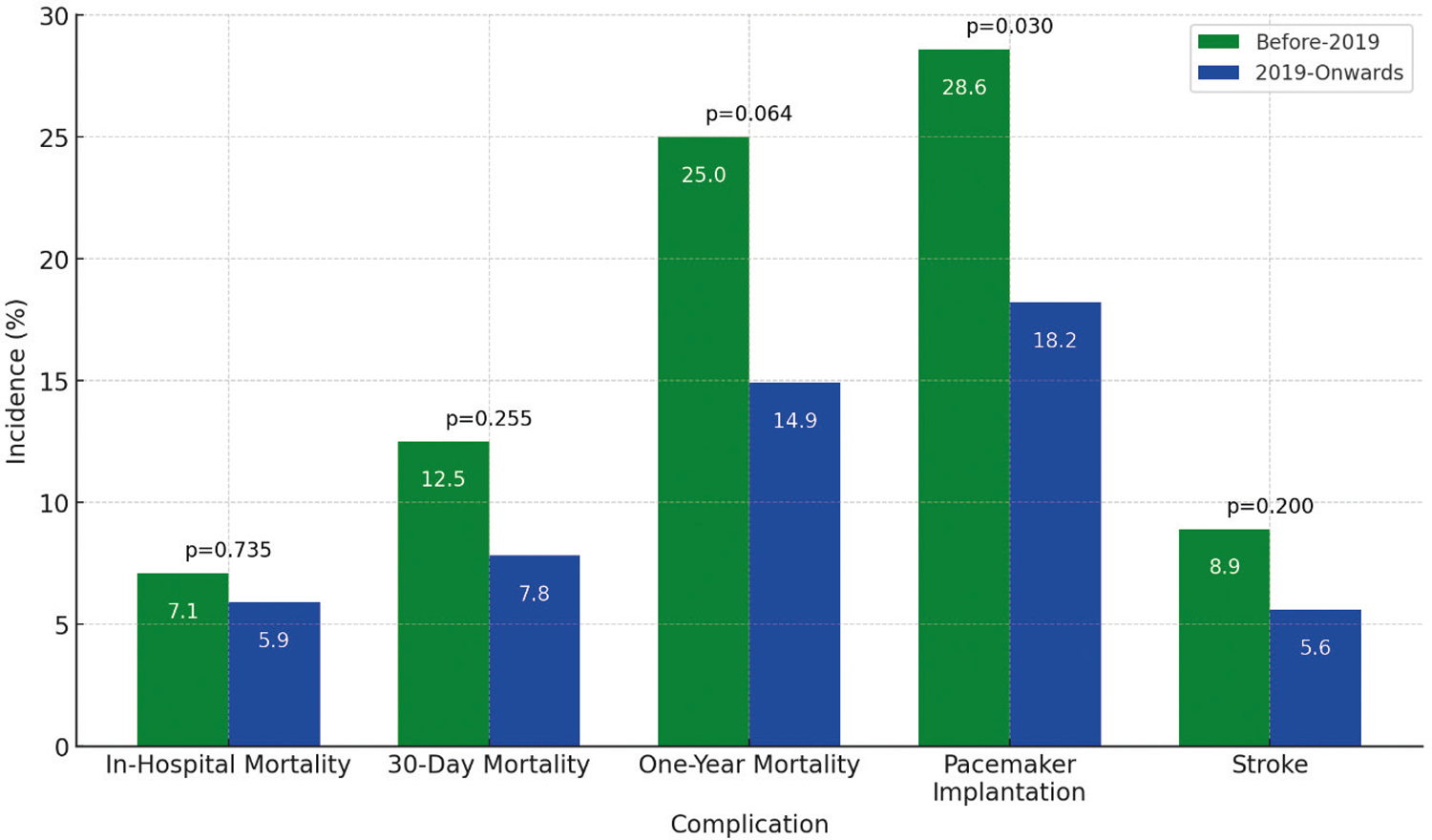
After January 2019, the shift to self-expanding valves was associated with a statistically significant reduction in pacemaker implantation rates (from 28.6% to 18.2%, p=0.03), whereas other outcomes did not reach statistical significance.

Conclusions

The implementation of updated protocols was associated with improved TAVI outcomes, especially a reduced need for pacemaker implantation, supporting its expanded use in intermediate-risk patients.

  • Aortic Valve Stenosis
  • Cardiovascular Surgical Procedures
  • Practice Guideline
  • Transcatheter Aortic Valve Replacement
Read Full Article
Creative Commons Attribution (CC BY) Creative Commons license
13/10/2025 DOI: 10.36660/ijcs.20240243 Views 2
First Percutaneous Orthotopic Tricuspid Valve Implantations using the LuX-Valve Plus Device in Latin America: Report of the First Three Cases
ABCIC
Original Article

First Percutaneous Orthotopic Tricuspid Valve Implantations using the LuX-Valve Plus Device in Latin America: Report of the First Three Cases

Fernanda Esteves et al. Vinícius Esteves Marcio Mendes Pereira Frederico José Neves Mancuso … Marden Tebet Sergio Kreimer Edmur Carlos de Araújo Francisco Monteiro de Almeida Magalhães

Abstract

Background:

Severe tricuspid regurgitation (TR) is associated with high morbidity and mortality, especially in patients with contraindications for surgery. Transcatheter tricuspid valve replacement has emerged as a minimally invasive alternative for this population, with the LuX-Valve Plus device designed for orthotopic implantation via the transjugular route.

Objective:

To report the first 3 cases of transcatheter tricuspid valve replacement using the LuX-Valve Plus device in Latin America, assessing the feasibility, safety, and immediate clinical outcomes.

Methods:

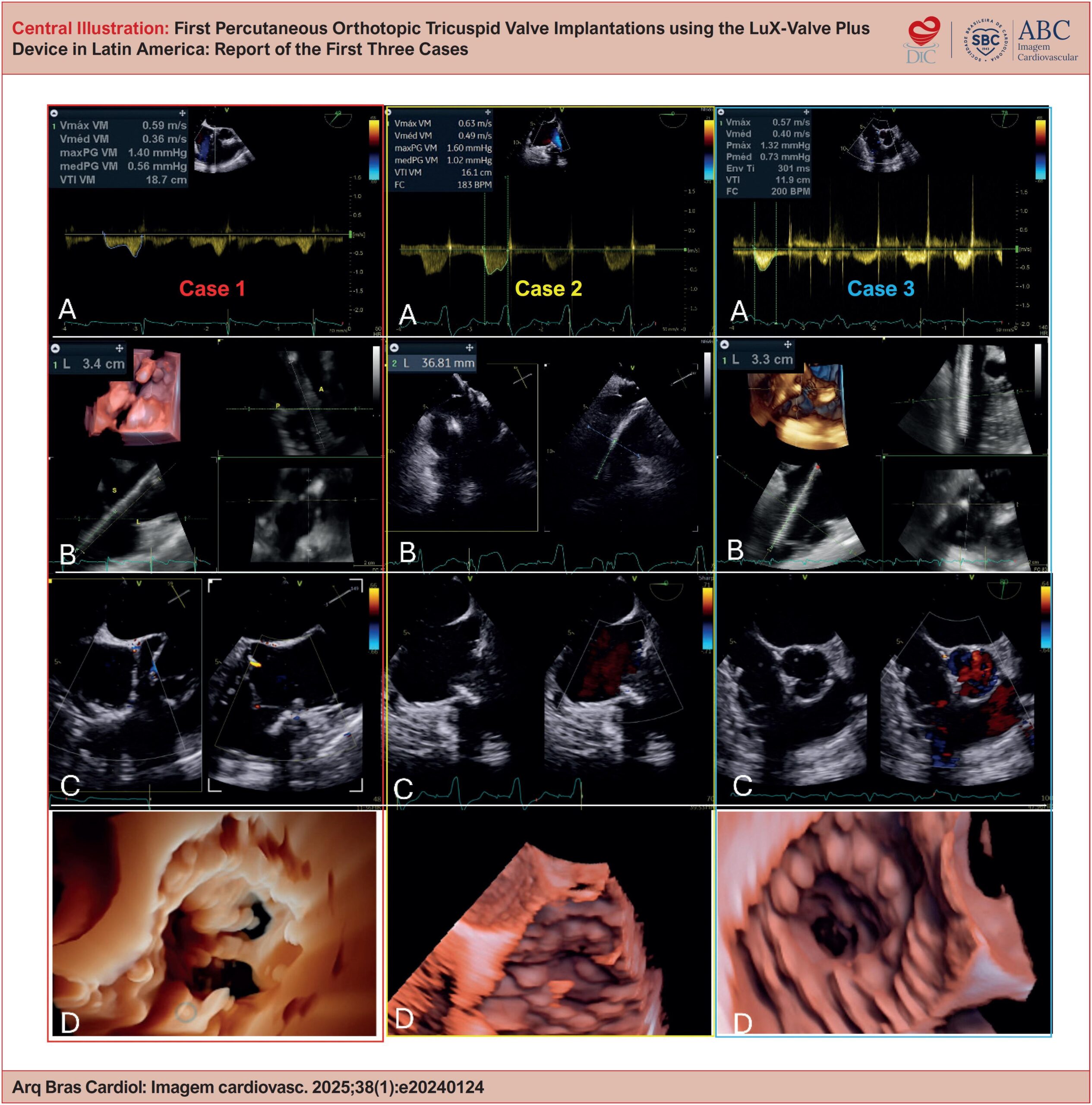
The study included 3 female patients with torrential TR and high surgical risk. Pre-procedure assessment included transesophageal echocardiography, 3-dimensional transthoracic echocardiography (3D TEE), computed tomography, and cardiac catheterization. The procedure was performed via transjugular access, under general anesthesia, with 3D TEE and fluoroscopy guidance. Implant efficacy was assessed as resolution of TR, transprosthetic gradient, and post-procedure complications.

Results:

The implants were successful in all cases, with complete resolution of TR, absence of paravalvular leaks, and adequate transprosthetic gradient. Right ventricular function was preserved, and all patients were discharged 3 to 4 days after the procedure with no significant complications.

Conclusion:

Transcatheter tricuspid valve replacement using the LuX-Valve Plus was shown to be a viable and safe alternative for patients with severe TR and high surgical risk. The use of 3D TEE was essential to the planning and execution of the implant. Further studies are needed to assess durability and long-term clinical outcomes.

  • Transcatheter Aortic Valve Replacement
  • Transesophageal echocardiography
  • Tricuspid Valve
  • Tricuspid Valve Insufficiency
Read Full Article
Creative Commons Attribution (CC BY) Creative Commons license
28/03/2025 DOI: 10.36660/abcimg.20240124i Views 1
Figure 1
ABCIC
Case Report

Late Evolution of Takotsubo Cardiomyopathy Following Transcatheter Aortic Valve Implantation

Merve Akbulut Çakır et al. Emirhan Çakır Çağlar Kaya Kenan Yalta

Introduction

Transcatheter aortic valve implantation (TAVI) is recognized as a first-line treatment for symptomatic patients with advanced aortic stenosis who are at high surgical risk. In inoperable patients with poor prognosis, it carries a risk for complications, such as myocardial infarction due to coronary occlusion, stroke, annular rupture, etc.¹ Takotsubo Cardiomyopathy (TTC) is a syndrome that usually develops in the absence of overt coronary occlusion and signs of alternative diagnosis, including myocarditis. It presents with electrocardiographic changes, increased cardiac biomarkers, and typical echocardiographic findings., In this article, we describe a patient with TTC who previously underwent TAVI and subsequent implantable cardiac defibrillator (ICD) implantation.

[…]

  • Echocardiography
  • Takotsubo Cardiomyopathy
  • Transcatheter Aortic Valve Replacement
Read Full Article
Creative Commons Attribution (CC BY) Creative Commons license
28/03/2025 DOI: 10.36660/abcimg.20240130i
Advances in Percutaneous Tricuspid Valve Treatment
ABCIC
Review Article

Advances in Percutaneous Tricuspid Valve Treatment

Marcio Mendes Pereira et al. Maria Estefânia Otto Fernando Melo Netto Fernanda Esteves

Abstract

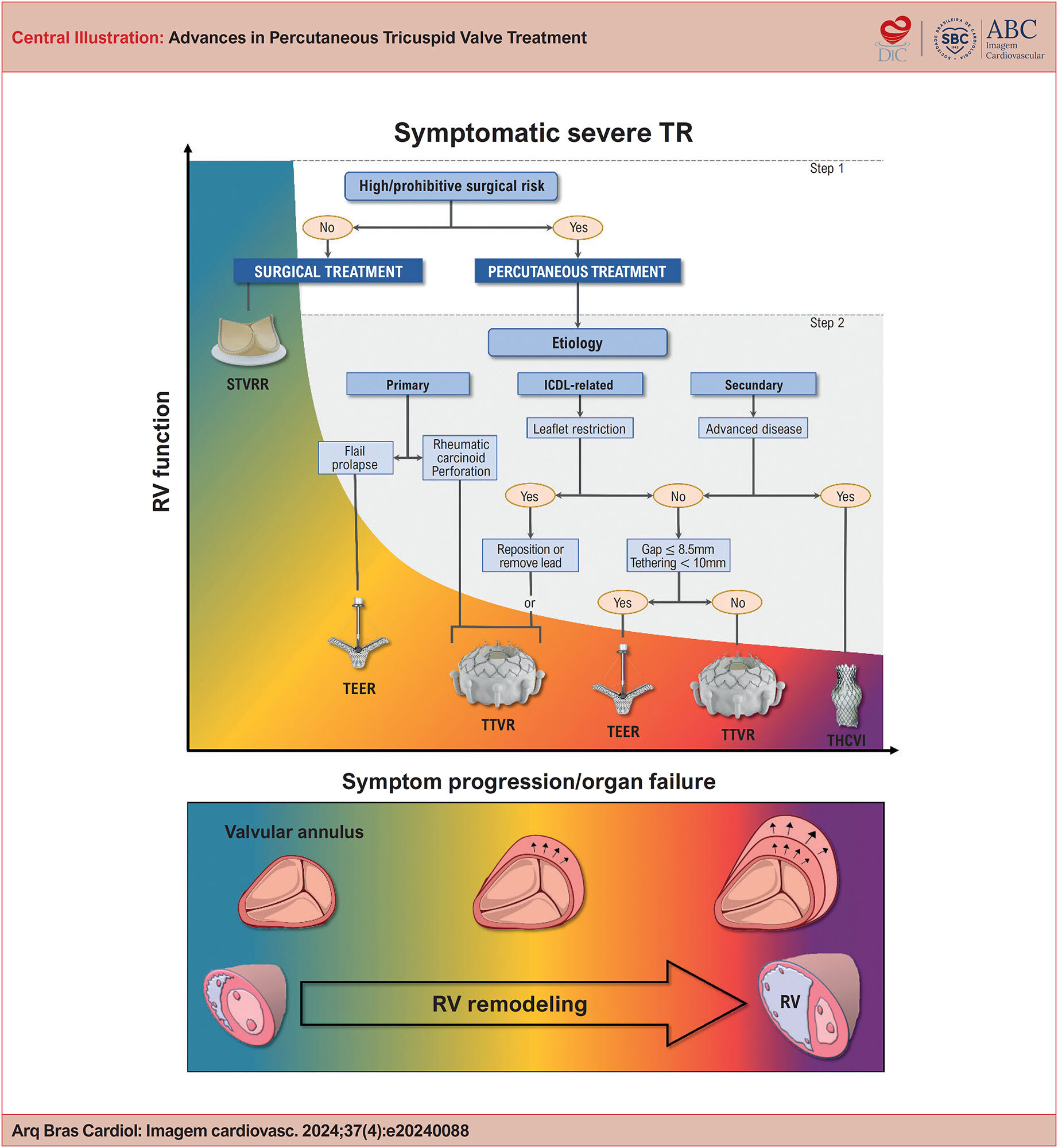
Tricuspid regurgitation (TR) is a frequently underdiagnosed and undertreated condition, often associated with poor clinical outcomes, particularly in elderly and high-risk surgical patients. As the prevalence of TR continues to rise and traditional surgical methods face limitations, percutaneous techniques have emerged as promising alternatives. This article reviews the latest advancements in the percutaneous treatment of TR, highlighting new etiological and quantitative classifications, in addition to exploring the indications and outcomes of key techniques, including percutaneous edge-to-edge repair and transcatheter valve replacement. Moreover, it discusses the anatomical challenges involved and the vital role of echocardiography in periprocedural planning and monitoring. Based on current data, percutaneous interventions have shown effectiveness in alleviating symptoms and enhancing the quality of life for patients with severe TR, making them a viable option for those who are not candidates for conventional surgery.

  • Echocardiography
  • Transcatheter Aortic Valve Replacement
  • Tricuspid Valve Insufficiency
Read Full Article
Creative Commons Attribution (CC BY) Creative Commons license
22/11/2024 DOI: 10.36660/abcimg.20240088i
In-Hospital Outcomes in the Brazilian Registry of Transcatheter Aortic Valve Implantation – 14-Year Analysis
ABC
Original Article

In-Hospital Outcomes in the Brazilian Registry of Transcatheter Aortic Valve Implantation – 14-Year Analysis

Maria Cristina Meira Ferreira et al. Viviana de Mello Guzzo Lemke Maria Sanali Moura de Oliveira Paiva Emilia Matos do Nascimento … Basílio de Bragança Pereira Gláucia Maria Moraes de Oliveira

Abstract

Background

Transcatheter aortic valve implantation (TAVI) has had an exponential increase of its indication, being incorporated into the Brazilian Unified Public Health System in 2022, thus requiring assessment of its use in Brazil.

Objeticve

To assess the factors associated with in-hospital mortality and non-fatal complications in both genders in the Brazilian Registry of Transcatheter Aortic Valve Implantation and New Technologies (RIBAC-NT) population.

Method

Analysis of the RIBAC-NT database from 2008 to 2022 was performed. Logistic models and machine learning were used for statistical assessment of the association between variables and outcomes. The software R was used and a 5% significance level, adopted.

Results

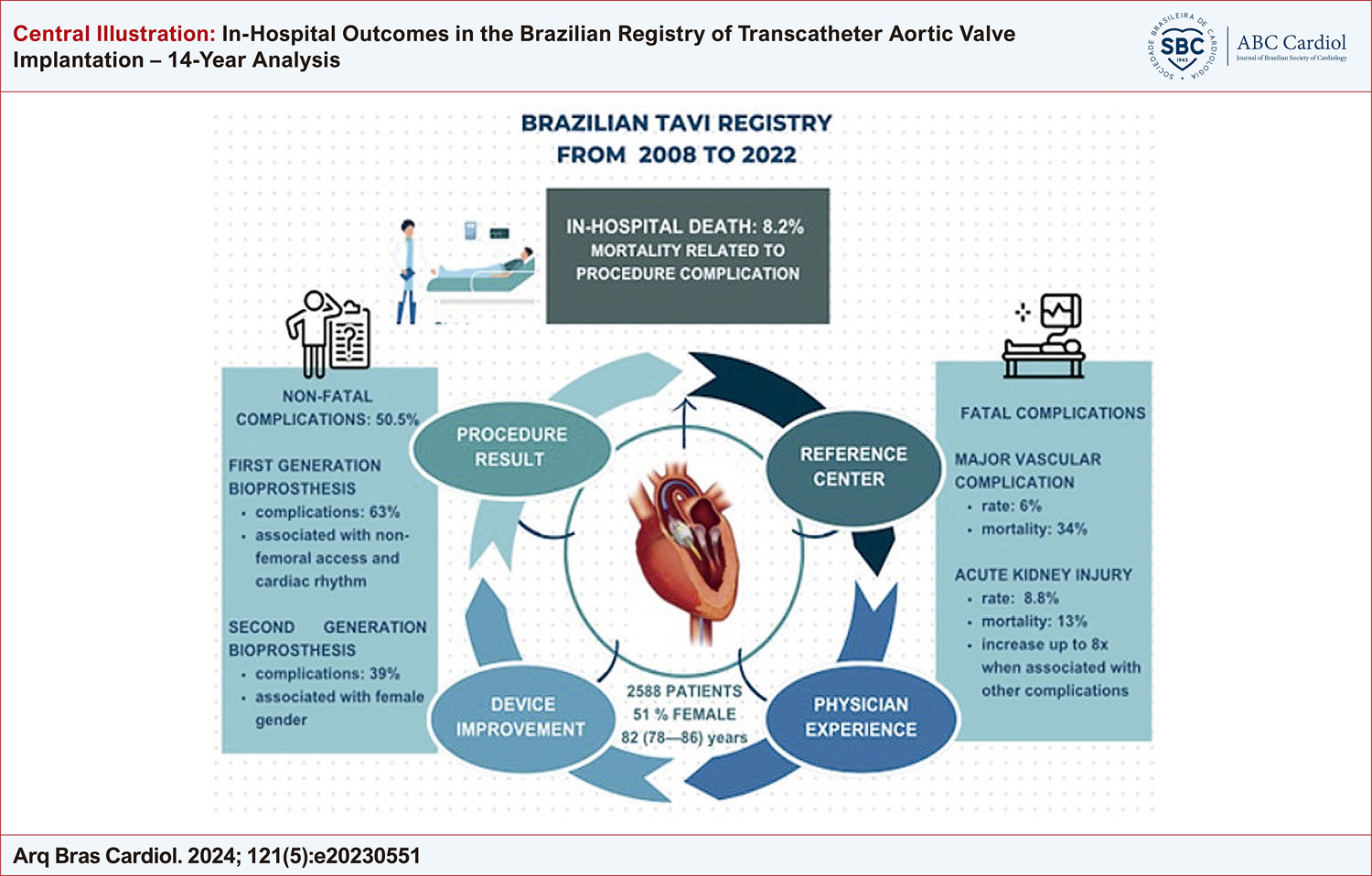
Analysis of 2588 patients (women, 51.2%; in-hospital death, 8.2%). Mortality was associated with procedural complications, of which major vascular complication (VC) and acute kidney injury (AKI) stood out (p<0.001). Major VC occurred in 6% of the patients, with 34% mortality; AKI occurred in 8.8%, with 13% mortality, which increased up to 8 times when AKI coexisted with other complications. Non-fatal complications occurred in 50.5% of all patients, affecting 63% of those with 1st generation (1G) bioprosthesis and 39% of those with 2nd generation (2G) bioprosthesis (p<0,001). Non-femoral access and heart rhythm influenced non-fatal complications in patients with 1G prostheses, while complications in patients with 2G prosthesis associated with the female gender (39.6% vs. 30.4%, p=0.003).

Conclusion

In-hospital mortality in the RIBAC-NT population was directly associated with procedural complications, mainly major VC and AKI. The occurrence of non-fatal complications differed according to gender and bioprosthesis type.

  • Aortic Valve Disease
  • Aortic Valve Stenosis
  • Heart Valve Prosthesis
  • Heart Valve Prosthesis Implantation
  • Transcatheter Aortic Valve Replacement
Read Full Article
Creative Commons Attribution (CC BY) Creative Commons license
14/10/2024 DOI: 10.36660/abc.20230551i
ABC
Editorial

Unlocking Transcatheter Aortic Valve Replacement Expertise in Brazil: Lessons from National Data

Sofia Cabral

Procedural outcomes in cardiology, as in other fields in Medicine, are influenced by numerous factors, including patient characteristics, procedural intricacy, operator proficiency, available technological differentiation, and healthcare resources. Higher volume centers report better results for many procedures, though the extent of that benefit varies depending on the procedure’s complexity. The more complex the procedure the higher the relationship between experience and outcomes. Additionally, each procedure has its learning curve (LC), both at individual and group levels, which adds density to the assessment. From an academic standpoint, an LC defines the relationship between performance (learning) and practice (effort). In health training, this learning process typically follows a non-linear pattern initially marked by a steep slope as the basics of the procedure are acquired, followed by an inflection point where the learning rate decelerates. Eventually, it reaches an asymptotic expression, representing the plateau phase of high proficiency. Understanding how a procedure’s LC behaves is important because it provides valuable insights for scientific societies and healthcare regulatory authorities in defining the competency requirements for practitioners and assisting decision-makers in effective resource allocation. Most importantly, it plays a critical role in maintaining high standards of care.

In the field of cardiovascular interventions, the LC phenomenon has extensively been verified, from cardiac surgery to coronary percutaneous intervention, and more recently, transcatheter aortic valve replacement (TAVR).4-7 Despite conflicting results from different series, researchers have consistently recognized a pattern in the LC of TAVR. This pattern depicts an early phase where procedure efficiency and safety outcomes steeply increase with increasing experience, followed by flattening out and eventual consolidation phases.

[…]

  • Brazil
  • Learning Curve
  • Transcatheter Aortic Valve Replacement
Read Full Article
Creative Commons Attribution (CC BY) Creative Commons license
12/08/2024 DOI: 10.36660/abc.20240302i Views 1
Figure 1
IJCS
Case Report

Snare-Assisted Aortic Valve Crossing for TAVI: A Case Report

Andre Grazina et al. Bárbara Lacerda Teixeira Inês Rodrigues António Fiarresga Duarte Cacela

Abstract

In some transcatheter aortic valve implantation (TAVI) procedures, difficulty in crossing the valve delivery system occurs. There are some described anatomical risk factors as extreme angulation, heavy calcification, and bicuspid morphology. A possible reason may be an unfavorable angle of approach because of the outward push by the incoming crimped bioprosthesis and insufficient support/trackability of the extra stiff wire. Several techniques, tips, and tricks have been developed to overcome this problem and avoid procedure failures, such as the “pull-and-push” technique, pre-dilation, buddy wire, balloon cushion, buddy balloon and snare techniques. Here, we report a case of TAVI complicated by the difficulty in crossing the calcified native aortic valve (AV) that was solved with the snare technique without complications.

  • Aortic Valve
  • Aortic Valve Stenosis
  • Transcatheter Aortic Valve Replacement
Read Full Article
Creative Commons Attribution (CC BY) Creative Commons license
09/08/2024 DOI: 10.36660/ijcs.20230147 Views 1
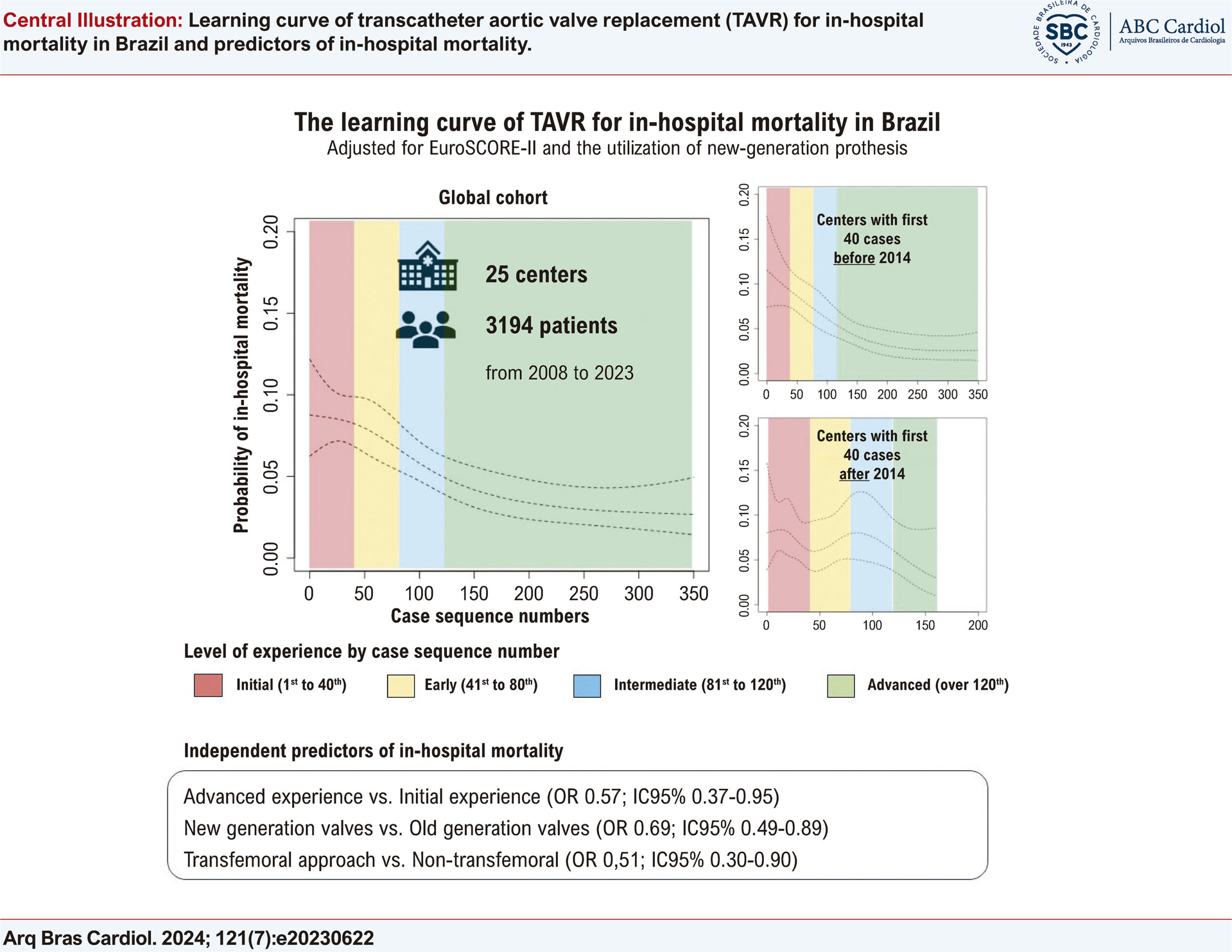
Learning Curve for In-Hospital Mortality of Transcatheter Aortic Valve Replacement: Insights from the Brazilian National Registry
ABC
Original Article

Learning Curve for In-Hospital Mortality of Transcatheter Aortic Valve Replacement: Insights from the Brazilian National Registry

Fernando Luiz de Melo Bernardi et al. Alexandre A. Abizaid Fábio Sândoli de Brito Jr Pedro A. Lemos … Dimytri Alexandre Alvim de Siqueira Ricardo Alves Costa Rogério Eduardo Gomes Sarmento Leite Fernanda Marinho Mangione Luiz Eduardo Koenig São Thiago José A. Mangione Valter Correia de Lima Adriano Dourado Oliveira Marcos Antônio Marino Carlos José Francisco Cardoso Paulo R. A. Caramori Rogério Tumelero Antenor Lages Fortes Portela Mauricio Prudente Leônidas Alvarenga Henriques Fabio Solano Souza Cristiano Guedes Bezerra Guy F. A. Prado Jr Leandro Zacaris Figueiredo Freitas Ederlon Ferreira Nogueira George César Ximenes Meireles Renato Bastos Pope Enio Guerios Pedro Beraldo de Andrade Luciano de Moura Santos Mauricio Felippi de Sá Marchi Nelson Henrique Fantin Fundão Henrique Barbosa Ribeiro

Abstract

Background

Robust data on the learning curve (LC) of transcatheter aortic valve replacement (TAVR) are lacking in developing countries.

Objective

To assess TAVR’s LC in Brazil over time.

Methods

We analyzed data from the Brazilian TAVR registry from 2008 to 2023. Patients from each center were numbered chronologically in case sequence numbers (CSNs). LC was performed using restricted cubic splines adjusted for EuroSCORE-II and the use of new-generation prostheses. Also, in-hospital outcomes were compared between groups defined according to the level of experience based on the CSN: 1st to 40th (initial-experience), 41st to 80th (early-experience), 81st to 120th (intermediate-experience), and over 121st (high-experience). Additional analysis was performed grouping hospitals according to the number of cases treated before 2014 (>40 and ≤40 procedures). The level of significance adopted was <0.05.

Results

A total of 3,194 patients from 25 centers were included. Mean age and EuroSCORE II were 80.7±8.1 years and 7±7.1, respectively. LC analysis demonstrated a drop in adjusted in-hospital mortality after treating 40 patients. A leveling off of the curve was observed after case #118. In-hospital mortality across the groups was 8.6%, 7.7%, 5.9%, and 3.7% for initial-, early-, intermediate-, and high-experience, respectively (p<0.001). High experience independently predicted lower mortality (OR 0.57, p=0.013 vs. initial experience). Low-volume centers before 2014 showed no significant decrease in the likelihood of death with gained experience, whereas high-volume centers had a continuous improvement after case #10.

Conclusion

A TAVR LC phenomenon was observed for in-hospital mortality in Brazil. This effect was more pronounced in centers that treated their first 40 cases before 2014 than those that reached this milestone after 2014.

  • Aortic Valve Stenosis
  • Hospital Mortality
  • Transcatheter Aortic Valve Replacement
Read Full Article
Creative Commons Attribution (CC BY) Creative Commons license
26/07/2024 DOI: 10.36660/abc.20230622i Views 1
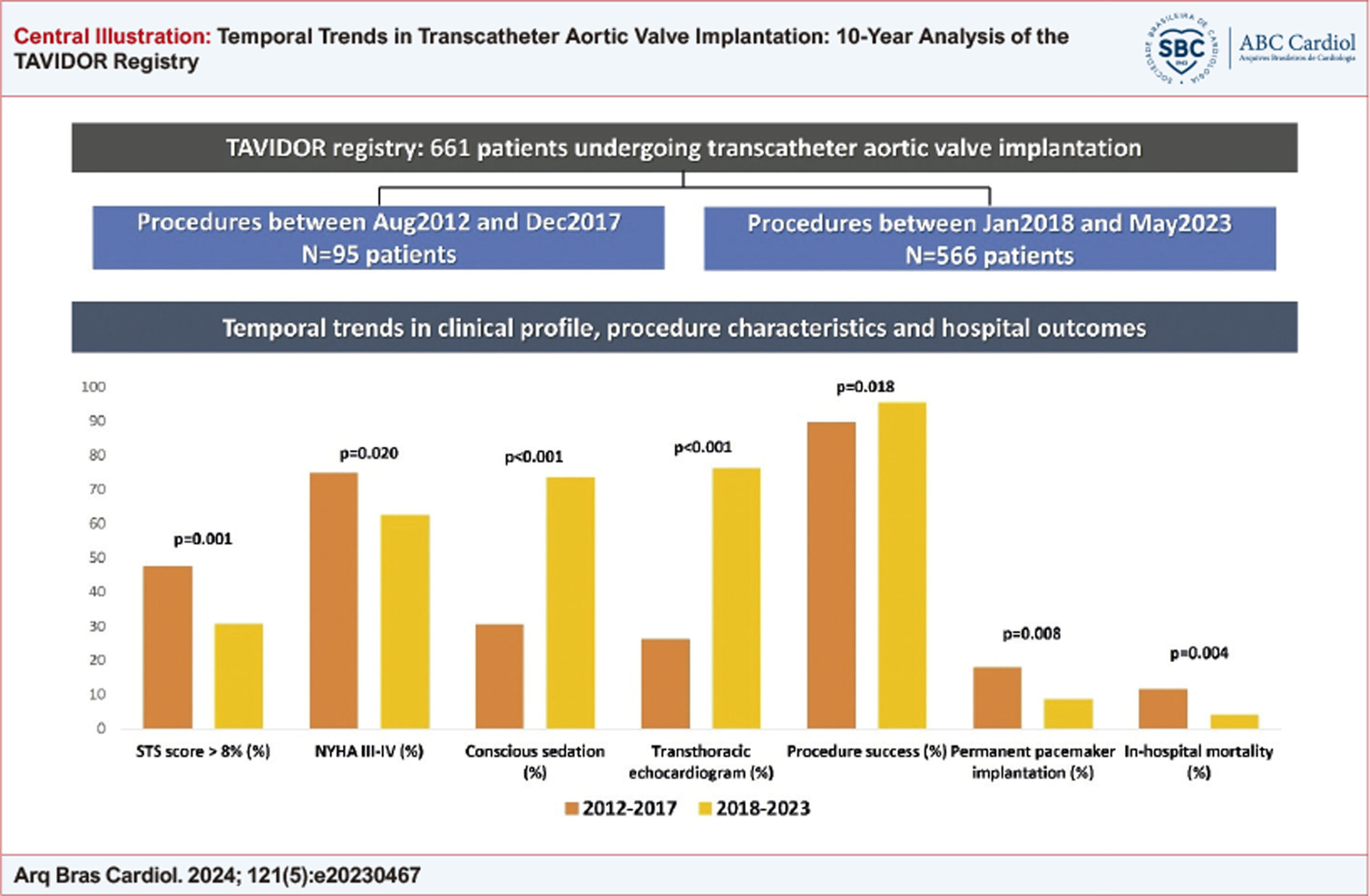
Temporal Trends in Transcatheter Aortic Valve Implantation: 10-Year Analysis of the TAVIDOR Registry
ABC
Original Article

Temporal Trends in Transcatheter Aortic Valve Implantation: 10-Year Analysis of the TAVIDOR Registry

Vinicius Esteves et al. Pedro Beraldo de Andrade Cleverson Neves Zukowski Edmur Araujo … Cristiano Guedes Bezerra Adriano Dourado Oliveira Eduardo Pessoa de Melo Gustavo Gama Rodrigo Cantarelli Luiz Alberto Piva e Mattos Angelo Tedeschi Vitor Alves Loures Vitor Vahle Guilherme Barreto Gameiro Silva Miguel Antonio Neves Rati Augusto Celso Lopes Nilson de Moura Fé Filho Gustavo Alves Sérgio Costa Tavares Filho Sergio Kreimer Marden Tebet Felipe Maia Maurício Sales de Oliveira Alberto Fonseca Angelina Camiletti Denilson Campos de Albuquerque Olga Ferreira de Souza

Abstract

Background

Transcatheter aortic valve implantation (TAVI) has established itself as the preferential strategy to approach severe aortic stenosis. Information on procedural improvements and nationwide results obtained with the technique throughout the past decade are unknown.

Objectives

To assess the temporal variation of the demographic profile, procedural characteristics, and in-hospital outcomes of patients undergoing TAVI procedures at the Rede D’Or São Luiz.

Methods

Observational registry comprising 29 national institutions, comparing the characteristics of the TAVI procedures performed from 2012 to 2017 (Group 1) to those performed from 2018 to 2023 (Group 2). The statistical significance level adopted was p < 0.05.

Results

This study assessed 661 patients, 95 in Group 1 and 566 in Group 2, with a mean age of 81.1 years. Group 1 patients had a higher prevalence of New York Heart Association functional class III or IV and STS risk score > 8%. In addition, they more often underwent general anesthesia, transesophageal echocardiographic monitoring, and access through femoral dissection. Group 2 patients had a higher success rate of the TAVI procedure (95.4% versus 89.5%; p = 0.018), lower mortality (3.9% versus 11.6%; p = 0.004), and less often needed permanent pacemaker implantation (8.5% versus 17.9%; p = 0.008).

Conclusions

The 10-year temporal trends analysis of the TAVIDOR Registry shows a reduction in patients’ clinical complexity over time. Furthermore, the advance to minimalistic implantation techniques, added to the technological evolution of the devices, may have contributed to the favorable outcomes observed among those whose implantation occurred in the last 5 years studied.

  • Aged
  • Aortic Valve Stenosis
  • Spatio-Temporal Analysis
  • Transcatheter Aortic Valve Replacement
Read Full Article
Creative Commons Attribution (CC BY) Creative Commons license
17/06/2024 DOI: 10.36660/abc.202300467i
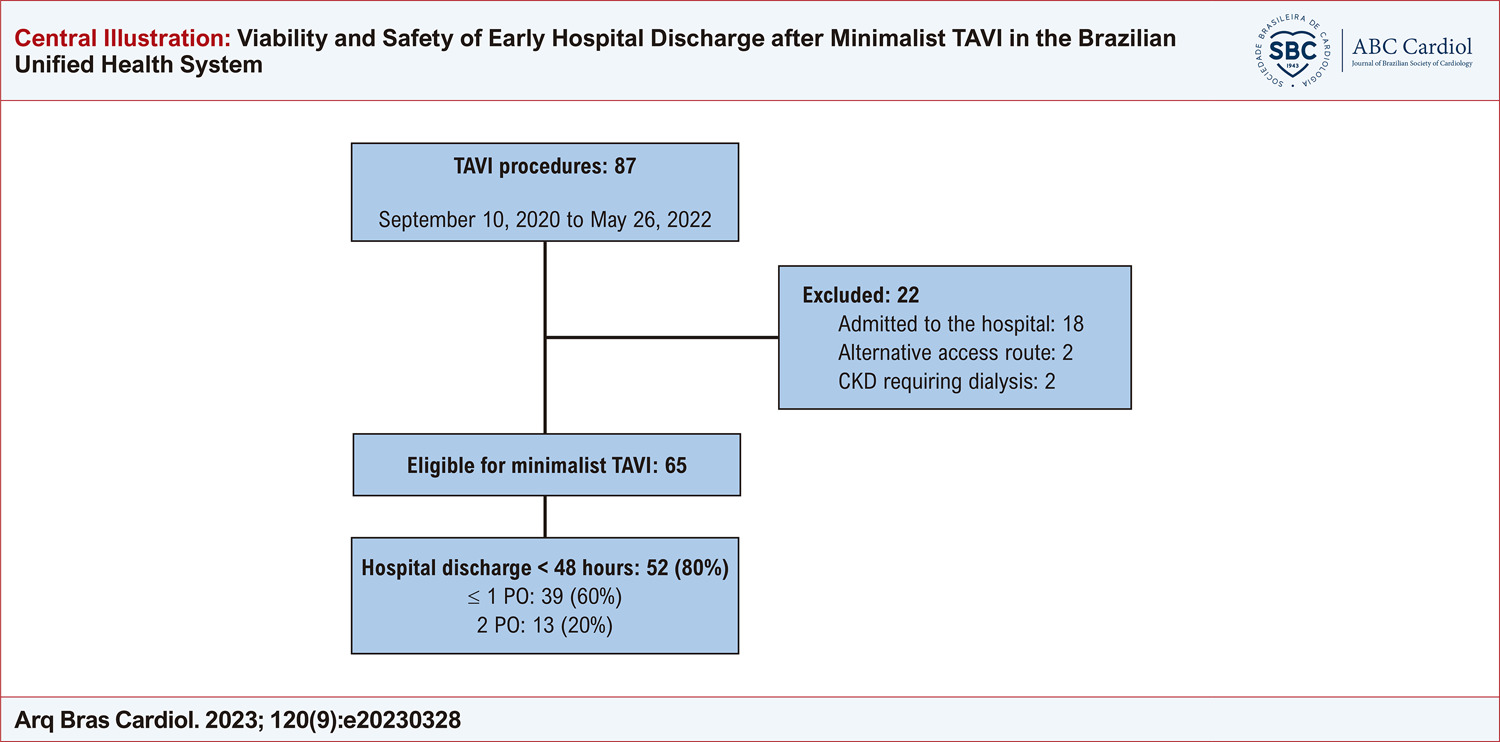
Viability and Safety of Early Hospital Discharge after Minimalist TAVI in the Brazilian Unified Health System
ABC
Research Letter

Viability and Safety of Early Hospital Discharge after Minimalist TAVI in the Brazilian Unified Health System

Marcos Almeida Meniconi et al. Fernanda Jacques Calçado Oliveira Alberto Colella Cervone Dorival Julio Della Togna … Fausto Feres Auristela Isabel de Oliveira Ramos Dimytri Alexandre de Alvim Siqueira

Introduction

Transcatheter aortic valve implantation (TAVI) has established itself as the treatment of choice for octogenarian patients with aortic stenosis. Broadly speaking, TAVI with a minimalist approach (M-TAVI) refers to the performance of the procedure under conscious sedation and local anesthesia, percutaneous femoral access, monitoring with transthoracic echocardiography, and early mobilization. Studies have indicated the safety of M-TAVI with hospital discharge within 24 hours after the procedure, with reduced hospital costs,,which is a relevant aspect from the perspective of national public health. Thus, the objective of this study was to evaluate the feasibility and safety of a multidisciplinary institutional M-TAVI protocol with the goal of hospital discharge within 48 hours, implemented in a tertiary hospital that is part of the Brazilian Unified Health System (SUS).

[…]

  • Aortic Valve Stenosis
  • Transcatheter Aortic Valve Replacement
  • Unified Health System
Read Full Article
Creative Commons Attribution (CC BY) Creative Commons license
20/10/2023 DOI: 10.36660/abc.20230328
ABC
Editorial

Transcatheter Aortic Valve Implantation: What has Happened and What is Yet to Come

David Costa de Souza Le Bihan et al. Rodrigo Bellio de Mattos Barretto Wilson Mathias Junior

In April 2002, the first transcatheter aortic valve implantation (TAVI) was performed in humans, still as an experimental procedure, in a patient with aortic stenosis and cardiogenic shock, unable to undergo surgical intervention, with this compassionate procedure being his only possibility to survive. To get to this moment, much effort had already been taken into developing prototypes for almost 20 years previous, but probably Dr. Alain Cribier already had the idea, at that time of the first implant, of the revolution to come.

After 21 years of the first case, TAVI has now come of age. Today, it is part of the routine of clinical cardiologists, who have come to trust it as a real alternative to conventional surgical treatment. TAVI has revolutionized how we treat the most prevalent valve disease in developed countries, affecting up to 7% of the population over 65.

[…]

  • Aortic Valve Stenosis
  • systematic review
  • Transcatheter Aortic Valve Implantation
  • Transcatheter Aortic Valve Replacement
Read Full Article
Creative Commons Attribution (CC BY) Creative Commons license
14/08/2023 DOI: 10.36660/abc.20230401 Views 1
Central Illustration
ABC
Original Article

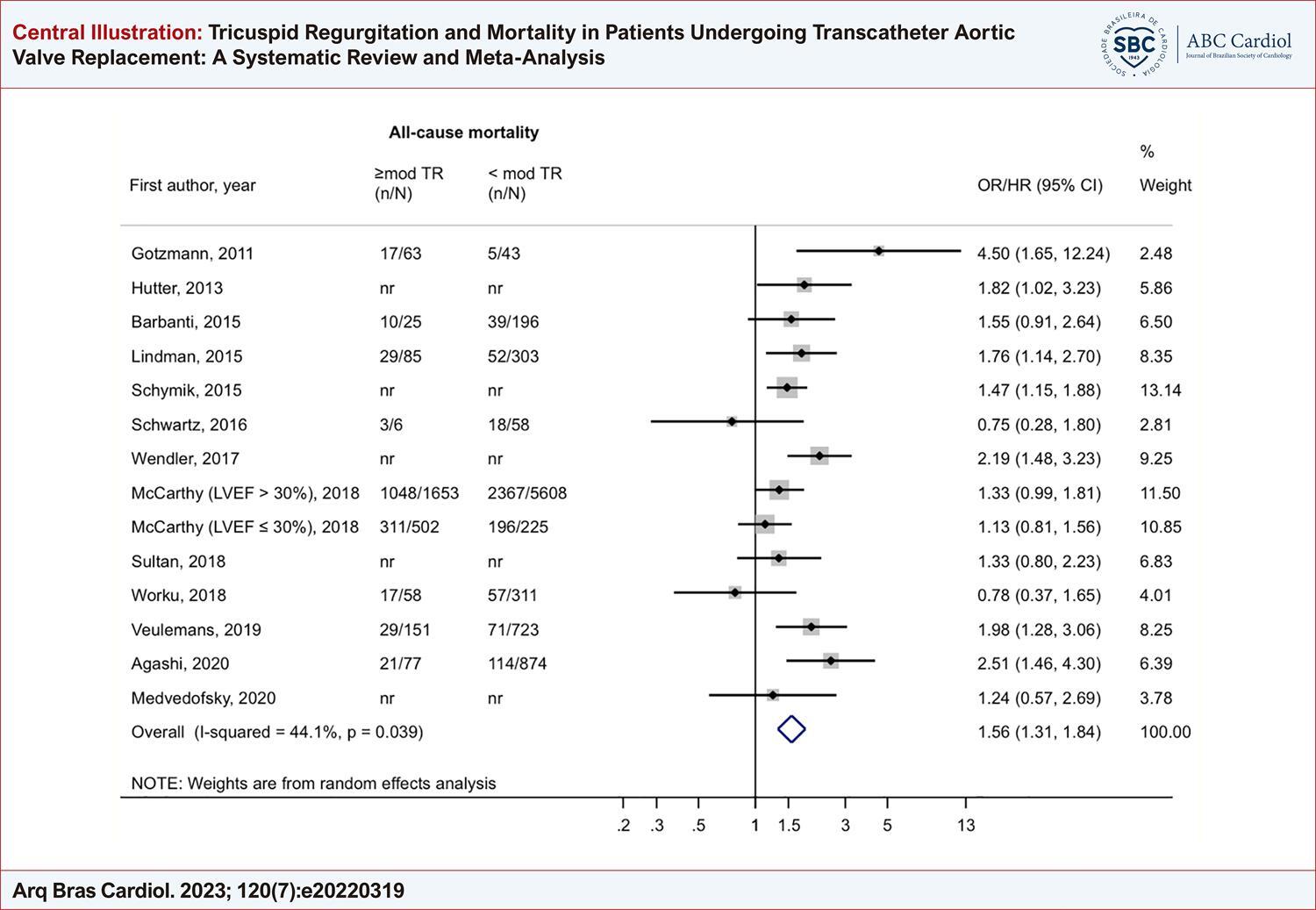
Tricuspid Regurgitation and Mortality in Patients Undergoing Transcatheter Aortic Valve Replacement: A Systematic Review and Meta-Analysis

Bruna Olandoski Erbano et al. Nicolle Amboni Schio Renato Delascio Lopes Tiago Costa Bignoto … Marcia Olandoski Raquel Silva Brito da Luz Guilherme Dagostin de Carvalho Lucas Henrique Olandoski Erbano Auristela Isabel de Oliveira Ramos Fausto Feres José Rocha Faria Neto Cristina Pellegrino Baena Dimytri Alexandre de Alvim Siqueira

Abstract

Background

The extent of cardiac damage associated with aortic stenosis has important prognostic implications after transcatheter aortic valve replacement (TAVR). However, the role of tricuspid regurgitation (TR) in this clinical setting is still unclear.

Objectives

To explore the association between TR and mortality in patients undergoing TAVR and assess changes in TR severity post TAVR and its relationship with short and mid-term mortality.

Methods

Relevant databases were searched for articles published from inception until August 2020. Out of 414 screened studies, we selected 24 that reported the degree of TR pre or post TAVR. The primary outcome was all-cause mortality, and random effects meta-analysis models were conducted (at a significance level of 5%).

Results

Seventeen studies reported associations between pre-TAVR TR and all-cause mortality (> 45,000 participants) and thirteen accessed TR severity post TAVR (709 participants). Moderate/severe baseline TR was associated to higher all-cause mortality both at 30 days (HR 1.65; 95% CI, 1.20-2.29) and 1.2 years (HR 1.56; 95% CI, 1.31-1.84). After TAVR, 43% of patients presented a decrease of at least one grade in TR (30 days, 95% CI, 30-56%), sustained at 12.5 months in 44% of participants (95% CI, 35-52%). Persistence of significant TR was associated with a two-fold increase in all-cause mortality (HR 2.12; 95% CI, 1.53-2.92).

Conclusions

Significant TR pre TAVR is associated with higher mortality. Although TR severity may improve, the persistence of significant TR post TAVR is strongly associated with increased mortality. Our findings highlight the importance of a detailed assessment of TR pre and post TAVR and might help identify patients who may benefit from more careful surveillance in this scenario.

  • Aortic Valve Stenosis
  • Mortality
  • Transcatheter Aortic Valve Replacement
  • Tricuspid Valve Insufficiency
Read Full Article
Creative Commons Attribution (CC BY) Creative Commons license
07/08/2023 DOI: 10.36660/abc.20220319
Figure 1
ABC
Original Article

Transcatheter Valve Replacement in Patients with Aortic Valve Stenosis: An Overview of Systematic Reviews and Meta-Analysis with Different Populations

Henrique Diegoli et al. Marcia Regina Dias Alves Lucas Miyake Okumura Caroline Kroll … Dayane Silveira Luiz Henrique Picolo Furlan

Abstract

Background

Randomized controlled trials (RCTs) and observational studies have compared the efficacy and safety of transcatheter aortic valve replacement (TAVR) and surgical aortic valve replacement (SAVR) in patients with severe aortic stenosis.

Objectives

Compare TAVR and SAVR in patients with different surgical risks, population characteristics, and different transcatheter prosthetic valves.

Methods

An overview of systematic reviews (SRs) was conducted following a structured protocol. Results were grouped by surgical risk, population characteristics, and different valves. RCTs in the SRs were reanalyzed through meta-analyses, and the results were summarized using the GRADE method. The adopted level of statistical significance was 5%.

Results

Compared to SAVR, patients with high surgical risk using TAVR had a lower risk of (odds ratio, 95% confidence interval, absolute risk difference) atrial fibrillation (AF) (0.5, 0.29-0.86, -106/1000) and life-threatening bleeding (0.29, 0.2-0.42, -215/1000). Patients with intermediate surgical risk had a lower risk of AF (0.27, 0.23-0.33, -255/1000), life-threatening bleeding (0.15, 0.12-0.19, -330/1000), and acute renal failure (ARF) (0.4, 0.26-0.62, -21/1000). Patients with low surgical risk had a lower risk of death (0.58, 0.34-0.97, -16/1000), stroke (0.51, 0.28-0.94, -15/1000), AF (0.16, 0.12-0.2, -295/1000), life-threatening bleeding (0.17, 0.05-0.55, -76/1000), and ARF (0.27, 0.13-0.55, -21/1000), and had a higher risk of permanent pacemaker implantation (PPI) (4.22, 1.27-14.02, 141/1000). Newer generation devices had a lower risk of AF than older generations, and patients using balloon-expandable devices did not experience higher risks of PPI.

Conclusions

This paper provides evidence that patients at low, intermediate, and high surgical risks have better outcomes when treated with TAVR compared with SAVR.

  • Aortic Valve Stenosis
  • systematic review
  • Transcatheter Aortic Valve Replacement
Read Full Article
Creative Commons Attribution (CC BY) Creative Commons license
17/07/2023 DOI: 10.36660/abc.20220701
IJCS
Editorial

Beyond Sex-Based Differences: Exploring the Complexities of Aortic Stenosis in Women

Pâmela Cavalcante et al. Flavio Tarasoutchi

Sex is an important biological variable in the pathophysiology of cardiovascular disease. , In fact, it could determine great differences in manifestation, treatment, and outcomes of several heart disorders. At the level of the aortic valve, there are sex-specific factors related to the pathogenesis of aortic stenosis (AS) that influence hemodynamics changes resulting from pressure overload response, and they should be considered in the management of patients. Despite the fact that sex-based differences in AS exist, they are often not fully recognized and understood, leading to unequal treatment outcomes between males and females. ,

This issue of the International Journal of Cardiovascular Sciences presents a comprehensive review of the growing evidence on sex disparities, from the pathogenesis to the treatment of severe degenerative AS, focusing on women.

[…]

  • Aortic Valve Stenosis
  • Hypertension, Ventricular Hypertrophy
  • Sex Differences
  • Transcatheter Aortic Valve Replacement
  • Women
Read Full Article
Creative Commons Attribution (CC BY) Creative Commons license
17/07/2023 DOI: 10.36660/ijcs.20230042 Views 1
Figure 1
IJCS
Review Article

Degenerative Aortic Stenosis in Women: Challenges and Perspectives

Maria Cristina Meira Ferreira et al. Deborah Christina Nercolini Mayara Viana de Oliveira Magaly Arrais dos Santos … Fernanda Mangione Viviana Lemke Maria Sanali Moura Paiva Gláucia Maria Moraes Oliveira

Abstract

Degenerative aortic stenosis is currently a public health problem. Affecting the elderly population, this pathology has been showing an increasing prevalence as a direct result of the population aging. In this context, women have a greater life expectancy, corresponding to most of the population with degenerative aortic stenosis. Specific characteristics of this pathology in females are present in the diagnosis, pathophysiology, anatomical aspects, imaging and in therapeutic approach. Women present a more severe disease with less valve calcification than men, more concentric ventricular remodeling, higher transvalvular gradients, and less myocardial fibrosis. Less evident symptoms mean that these patients are referred later for surgical or percutaneous therapeutic treatment. The greater comorbidity presented by females and possibly due to the smaller body surface, bring specific aspects that affect the surgery results, leading to higher mortality rates and, more often, the prosthesis-patient mismatch. Percutaneous valve implantation is a good alternative, with better results in females, when compared to surgery, both in the treatment of native valves and in the treatment of a previously implanted bioprosthesis’ dysfunction. The challenges encountered for the treatment of aortic stenosis in women and their possible solutions are described in this article, focusing on the observed difference of aortic stenosis in females and their possible solutions.

  • Aortic Valve Stenosis
  • Heart Valve Implantation
  • Heart Valve Prostheses
  • Transcatheter Aortic Valve Replacement
Read Full Article
Creative Commons Attribution (CC BY) Creative Commons license
10/07/2023 DOI: 10.36660/ijcs.20210261
ABCIC
Case Report

Role of Multimodality for the Diagnosis of Thrombosis at Late Follow-up of Patients Selected for TAVI: Review of a Case Series

Laila Caroline Oliveira Souza Barbosa Gomes et al. Alexandre Costa Souza Stephanie de Azevedo Drubi Bruna de Mattos Ivo Junqueira … Mariana Lins Baptista Guedes Bezerra Rodrigo Vieira de Melo

Introduction

The first transcatheter aortic valve implantation (TAVI) was performed by Alan Cribier in France in 2002 and the technique was introduced in Brazil in 2008. Since then, this modality has been consolidated and many patients have been approached using this technique. After more than 10 years of the first TAVI in Brazil, an increasing number of late complications appear in the cardiovascular imaging laboratory, with challenging anatomical and functional aspects in daily practice. Late thrombosis of aortic endoprosthesis may be one of the causes of dysfunction in the follow-up after TAVI. This clinical entity can assume a complex profile for accurate diagnosis and proper patient management, since it can have a variable presentation, ranging from subclinical leaflet thrombosis to limiting symptoms related to heart failure. Transesophageal echocardiography (TEE), the additional resource of 3D echocardiography and high-resolution computed tomography (CT) play a complementary role in the diagnosis of this etiology through anatomical valve reconstruction with evidence of hypoattenuated leaflet thickening (HALT) with or without hypoattenuation affecting motion (HAM) of one or more prosthetic valve leaflets., The risk of embolic events after diagnosis of leaflet thrombosis is still uncertain, especially for the central nervous system., This case series presents two illustrative reports of aortic endoprostheses with high gradients and complementary aspects of the multimodality that direct the etiology to the diagnosis of late prosthesis thrombosis.

[…]

  • Multimodality
  • Prosthesis thrombosis
  • Transcatheter Aortic Valve Replacement
Read Full Article
Creative Commons Attribution (CC BY) Creative Commons license
31/03/2023 DOI: 10.36660/abcimg.2023367i

Could not load more articles. Please try again.

How to cite this article

EndNote RIS

Electronic Document Format (Vancouver)

Mattos NDFG, Oliveira RL, Salgado CG, Sousa ALS, Feijó ALF, Branco RVC, Mattos GZ, et al. Transcatheter Aortic Valve Implantation in Nonagenarians: In-Hospital Complications and One-Year Follow-Up Mortality. International Journal of Cardiovascular Sciences 2026;39:e20250154.

Electronic Document Format (ABNT)

Mattos, Nelson Durval Ferreira Gomes de; Oliveira, Rafael Lauria de; Salgado, Constantino Gonzalez; Sousa, André Luiz Silveira; Feijó, Andre Luiz da Fonseca; Branco, Rodrigo Verney Castello; Mattos, Giovanna Zadra de; Secco, José Carlos Pizzolante; Carvalho, Luiz Antonio Ferreira; Rey, Helena Cramer. Transcatheter Aortic Valve Implantation in Nonagenarians: In-Hospital Complications and One-Year Follow-Up Mortality. International Journal of Cardiovascular Sciences, v. 39, e20250154, Sep. 2026.

Electronic Document Format (APA)

Mattos, N. D. F. G. , Oliveira, R. L. , Salgado, C. G., Sousa, A. L. S., Feijó, A. L. F., Branco, R. V. C., Mattos, G. Z. , Secco, J. C. P., Carvalho, L. A. F., & Rey, H. C. (2026). Transcatheter Aortic Valve Implantation in Nonagenarians: In-Hospital Complications and One-Year Follow-Up Mortality. International Journal of Cardiovascular Sciences, 39, e20250154.

Electronic Document Format (ISO)

Mattos, Nelson Durval Ferreira Gomes de and Oliveira, Rafael Lauria de and Salgado, Constantino Gonzalez and Sousa, André Luiz Silveira and Feijó, Andre Luiz da Fonseca and Branco, Rodrigo Verney Castello and Mattos, Giovanna Zadra de and Secco, José Carlos Pizzolante and Carvalho, Luiz Antonio Ferreira and Rey, Helena Cramer. Transcatheter Aortic Valve Implantation in Nonagenarians: In-Hospital Complications and One-Year Follow-Up Mortality. International Journal of Cardiovascular Sciences [online]. 2026, vol. 39, [cited 2026-10-14], e20250154. Available from: <https://journals.cardiol.br/en/article/transcatheter-aortic-valve-implantation-in-nonagenarians-in-hospital-complications-and-one-year-follow-up-mortality/>. ISSN 2359-4802

EndNote RIS

Electronic Document Format (Vancouver)

Calomeni P, Bernardi F, Brito Jr FS, Abizaid MS, Barbosa FR, Lemos PA, Feres F, et al. Temporal Trends and In-hospital Outcomes of Transcatheter Aortic Valve Implantation in Bicuspid Aortic Valves in Brazil: A Propensity-Matched Analysis. Arquivos Brasileiros de Cardiologia 2026;123(6):e20250750.

Electronic Document Format (ABNT)

Calomeni, Pedro; Bernardi, Fernando; Brito Jr, Fábio Sandoli de; Abizaid, Marcella Sousa; Barbosa, Francisco Ribeiro; Lemos, Pedro Alves; Feres, Fausto; Siqueira, Dimytri Alexandre; Costa, Ricardo; Sarmento-Leite, Rogério; Mangione, Fernanda; Mangione, José Armando; Thiago, Luiz Eduardo Koenig São; Lima, Valter Correia de; Oliveira, Adriano Dias Dourado; Marino, Marcos Antônio; Cardoso, Carlos José Francisco; Caramori, Paulo Ricardo Avancini; Tumelero, Rogério Tadeu; Portela, Antenor Lages Fortes; Prudente, Maurício Lopes; Henriques, Leônidas Alvarenga; Souza, Fábio Solano de Freitas; Bezerra, Cristiano Guedes; Prado Junior, Guy Fernandes de Almeida; Freitas, Leandro Zacarias Figueiredo de; Nogueira, Ederlon Ferreira; Meireles, George César Ximenes; Pope, Renato Bastos; Guérios, Ênio Eduardo; Andrade, Pedro Beraldo de; Santos, Luciano de Moura; Lopes, Augusto Celso; Esteves, Vinicius Borges Cardozo; Zukowski, Cleverson; Abizaid, Alexandre; Ribeiro, Henrique Barbosa. Temporal Trends and In-hospital Outcomes of Transcatheter Aortic Valve Implantation in Bicuspid Aortic Valves in Brazil: A Propensity-Matched Analysis. Arquivos Brasileiros de Cardiologia, v. 123, n. 6, e20250750, Aug. 2026.

Electronic Document Format (APA)

Calomeni, P., Bernardi, F., Brito Jr, F. S. , Abizaid, M. S., Barbosa, F. R., Lemos, P. A., Feres, F., Siqueira, D. A., Costa, R., Sarmento-Leite, R., Mangione, F., Mangione, J. A., Thiago, L. E. K. S., Lima, V. C. , Oliveira, A. D. D., Marino, M. A., Cardoso, C. J. F., Caramori, P. R. A., Tumelero, R. T., Portela, A. L. F., Prudente, M. L., Henriques, L. A., Souza, F. S. F., Bezerra, C. G., Prado Junior, G. F. A., Freitas, L. Z. F. , Nogueira, E. F., Meireles, G. C. X., Pope, R. B., Guérios, E., Andrade, P. B. , Santos, L. M., Lopes, A. C., Esteves, V. B. C., Zukowski, C., Abizaid, A., & Ribeiro, H. B. (2026). Temporal Trends and In-hospital Outcomes of Transcatheter Aortic Valve Implantation in Bicuspid Aortic Valves in Brazil: A Propensity-Matched Analysis. Arquivos Brasileiros de Cardiologia, 123(6), e20250750.

Electronic Document Format (ISO)

Calomeni, Pedro and Bernardi, Fernando and Brito Jr, Fábio Sandoli de and Abizaid, Marcella Sousa and Barbosa, Francisco Ribeiro and Lemos, Pedro Alves and Feres, Fausto and Siqueira, Dimytri Alexandre and Costa, Ricardo and Sarmento-Leite, Rogério and Mangione, Fernanda and Mangione, José Armando and Thiago, Luiz Eduardo Koenig São and Lima, Valter Correia de and Oliveira, Adriano Dias Dourado and Marino, Marcos Antônio and Cardoso, Carlos José Francisco and Caramori, Paulo Ricardo Avancini and Tumelero, Rogério Tadeu and Portela, Antenor Lages Fortes and Prudente, Maurício Lopes and Henriques, Leônidas Alvarenga and Souza, Fábio Solano de Freitas and Bezerra, Cristiano Guedes and Prado Junior, Guy Fernandes de Almeida and Freitas, Leandro Zacarias Figueiredo de and Nogueira, Ederlon Ferreira and Meireles, George César Ximenes and Pope, Renato Bastos and Guérios, Ênio Eduardo and Andrade, Pedro Beraldo de and Santos, Luciano de Moura and Lopes, Augusto Celso and Esteves, Vinicius Borges Cardozo and Zukowski, Cleverson and Abizaid, Alexandre and Ribeiro, Henrique Barbosa. Temporal Trends and In-hospital Outcomes of Transcatheter Aortic Valve Implantation in Bicuspid Aortic Valves in Brazil: A Propensity-Matched Analysis. Arquivos Brasileiros de Cardiologia [online]. 2026, vol. 123, n. 6, [cited 2026-10-14], e20250750. Available from: <https://journals.cardiol.br/en/article/temporal-trends-and-in-hospital-outcomes-of-transcatheter-aortic-valve-implantation-in-bicuspid-aortic-valves-in-brazil-a-propensity-matched-analysis/>. ISSN 0066-782X

EndNote RIS

Electronic Document Format (Vancouver)

Ferreira MCM. Excellent In-Hospital Outcomes in Bicuspid TAVI. But What Comes Next?. Arquivos Brasileiros de Cardiologia 2026;123(6):e20260398.

Electronic Document Format (ABNT)

Ferreira, Maria Cristina Meira. Excellent In-Hospital Outcomes in Bicuspid TAVI. But What Comes Next?. Arquivos Brasileiros de Cardiologia, v. 123, n. 6, e20260398, Aug. 2026.

Electronic Document Format (APA)

Ferreira, M. C. M. (2026). Excellent In-Hospital Outcomes in Bicuspid TAVI. But What Comes Next?. Arquivos Brasileiros de Cardiologia, 123(6), e20260398.

Electronic Document Format (ISO)

Ferreira, Maria Cristina Meira. Excellent In-Hospital Outcomes in Bicuspid TAVI. But What Comes Next?. Arquivos Brasileiros de Cardiologia [online]. 2026, vol. 123, n. 6, [cited 2026-10-14], e20260398. Available from: <https://journals.cardiol.br/en/article/excellent-in-hospital-outcomes-in-bicuspid-tavi-but-what-comes-next/>. ISSN 0066-782X

EndNote RIS

Electronic Document Format (Vancouver)

Maia AS, Camacho MHB, Perego AF, Mayer DH, Fonseca JHP. Transcatheter Correction of Aortic-Right Ventricular Shunt Following Aortic Valve Replacement: A Case Report. International Journal of Cardiovascular Sciences 2026;38:e20250060.

Electronic Document Format (ABNT)

Maia, Adnaldo da Silveira; Camacho, Mauro Henrique Batista; Perego, Andresa Fernandes; Mayer, Dayara Hoffmann; Fonseca, José Honório Palma da. Transcatheter Correction of Aortic-Right Ventricular Shunt Following Aortic Valve Replacement: A Case Report. International Journal of Cardiovascular Sciences, v. 38, e20250060, Jan. 2026.

Electronic Document Format (APA)

Maia, A. S., Camacho, M. H. B., Perego, A. F., Mayer, D. H., & Fonseca, J. H. P. (2026). Transcatheter Correction of Aortic-Right Ventricular Shunt Following Aortic Valve Replacement: A Case Report. International Journal of Cardiovascular Sciences, 38, e20250060.

Electronic Document Format (ISO)

Maia, Adnaldo da Silveira and Camacho, Mauro Henrique Batista and Perego, Andresa Fernandes and Mayer, Dayara Hoffmann and Fonseca, José Honório Palma da. Transcatheter Correction of Aortic-Right Ventricular Shunt Following Aortic Valve Replacement: A Case Report. International Journal of Cardiovascular Sciences [online]. 2026, vol. 38, [cited 2026-10-14], e20250060. Available from: <https://journals.cardiol.br/en/article/transcatheter-correction-of-aortic-right-ventricular-shunt-following-aortic-valve-replacement-a-case-report/>. ISSN 2359-4802

EndNote RIS

Electronic Document Format (Vancouver)

Nemoto RP, Sampaio RO. Cost Implications and Perspectives of TAVI versus SAVR in the Hospital Setting. Arquivos Brasileiros de Cardiologia 2025;122(10):e20250669.

Electronic Document Format (ABNT)

Nemoto, Renato Paladino; Sampaio, Roney Orismar. Cost Implications and Perspectives of TAVI versus SAVR in the Hospital Setting. Arquivos Brasileiros de Cardiologia, v. 122, n. 10, e20250669, Dec. 2025.

Electronic Document Format (APA)

Nemoto, R. P., & Sampaio, R. O. (2025). Cost Implications and Perspectives of TAVI versus SAVR in the Hospital Setting. Arquivos Brasileiros de Cardiologia, 122(10), e20250669.

Electronic Document Format (ISO)

Nemoto, Renato Paladino and Sampaio, Roney Orismar. Cost Implications and Perspectives of TAVI versus SAVR in the Hospital Setting. Arquivos Brasileiros de Cardiologia [online]. 2025, vol. 122, n. 10, [cited 2026-10-14], e20250669. Available from: <https://journals.cardiol.br/en/article/cost-implications-and-perspectives-of-tavi-versus-savr-in-the-hospital-setting/>. ISSN 0066-782X

EndNote RIS

Electronic Document Format (Vancouver)

Saad GP, Cervone AC, Delamain JH, Belloti V, Etges APBS, Perez GS, Damiani BB, et al. Transcatheter Aortic Valve Implantation vs. Aortic Valve Surgery in a Brazilian Public Health System (SUS) Hospital: Periprocedural Outcomes and Costs. Arquivos Brasileiros de Cardiologia 2025;122(10):e20250021.

Electronic Document Format (ABNT)

Saad, Gabriel Prado; Cervone, Alberto Collella; Delamain, José Henrique; Belloti, Vitor; Etges, Ana Paula Beck da Silva; Perez, Giullia Sarabando; Damiani, Bruna Bronhara; Issa, Mario; Samaan, Farid; Ramos, Auristela Isabel de Oliveira; Feres, Fausto; Siqueira, Dimytri Alexandre Alvim de. Transcatheter Aortic Valve Implantation vs. Aortic Valve Surgery in a Brazilian Public Health System (SUS) Hospital: Periprocedural Outcomes and Costs. Arquivos Brasileiros de Cardiologia, v. 122, n. 10, e20250021, Dec. 2025.

Electronic Document Format (APA)

Saad, G. P., Cervone, A. C., Delamain, J. H., Belloti, V., Etges, A. P. B. S., Perez, G. S., Damiani, B. B., Issa, M., Samaan, F., Ramos, A. I. O., Feres, F., & Siqueira, D. A. A. (2025). Transcatheter Aortic Valve Implantation vs. Aortic Valve Surgery in a Brazilian Public Health System (SUS) Hospital: Periprocedural Outcomes and Costs. Arquivos Brasileiros de Cardiologia, 122(10), e20250021.

Electronic Document Format (ISO)

Saad, Gabriel Prado and Cervone, Alberto Collella and Delamain, José Henrique and Belloti, Vitor and Etges, Ana Paula Beck da Silva and Perez, Giullia Sarabando and Damiani, Bruna Bronhara and Issa, Mario and Samaan, Farid and Ramos, Auristela Isabel de Oliveira and Feres, Fausto and Siqueira, Dimytri Alexandre Alvim de. Transcatheter Aortic Valve Implantation vs. Aortic Valve Surgery in a Brazilian Public Health System (SUS) Hospital: Periprocedural Outcomes and Costs. Arquivos Brasileiros de Cardiologia [online]. 2025, vol. 122, n. 10, [cited 2026-10-14], e20250021. Available from: <https://journals.cardiol.br/en/article/transcatheter-aortic-valve-implantation-vs-aortic-valve-surgery-in-a-brazilian-public-health-system-sus-hospital-periprocedural-outcomes-and-costs/>. ISSN 0066-782X

EndNote RIS

Electronic Document Format (Vancouver)

Pinheiro JA, Pinheiro JL, Dutra LV, Holanda L, Cassar RS. Transesophageal Echocardiogram Always Before TAVI?. ABC Imagem Cardiovascular 2025;38(3):e20250060.

Electronic Document Format (ABNT)

Pinheiro, Jairo Alves; Pinheiro, João Lucas; Dutra, Lucas Velloso; Holanda, Luciano; Cassar, Renata de Sá. Transesophageal Echocardiogram Always Before TAVI?. ABC Imagem Cardiovascular, v. 38, n. 3, e20250060, Dec. 2025.

Electronic Document Format (APA)

Pinheiro, J. A., Pinheiro, J. L., Dutra, L. V., Holanda, L., & Cassar, R. S. (2025). Transesophageal Echocardiogram Always Before TAVI?. ABC Imagem Cardiovascular, 38(3), e20250060.

Electronic Document Format (ISO)

Pinheiro, Jairo Alves and Pinheiro, João Lucas and Dutra, Lucas Velloso and Holanda, Luciano and Cassar, Renata de Sá. Transesophageal Echocardiogram Always Before TAVI?. ABC Imagem Cardiovascular [online]. 2025, vol. 38, n. 3, [cited 2026-10-14], e20250060. Available from: <https://journals.cardiol.br/en/article/transesophageal-echocardiogram-always-before-tavi/>. ISSN 2318-8219

EndNote RIS

Electronic Document Format (Vancouver)

Cordeiro ALL, Gonçalves ES, Santana RM, Santos TSM. Transcatheter Aortic Valve Implantation (TAVI) Versus Surgical Valve Replacement on Clinical Outcomes in Patients with Aortic Stenosis. Arquivos Brasileiros de Cardiologia 2025;122(10):e20240295.

Electronic Document Format (ABNT)

Cordeiro, André Luiz Lisboa; Gonçalves, Emmanuel de Souza; Santana, Rute Macêdo de; Santos, Tayane Siqueira Martins dos. Transcatheter Aortic Valve Implantation (TAVI) Versus Surgical Valve Replacement on Clinical Outcomes in Patients with Aortic Stenosis. Arquivos Brasileiros de Cardiologia, v. 122, n. 10, e20240295, Nov. 2025.

Electronic Document Format (APA)

Cordeiro, A. L. L., Gonçalves, E. S., Santana, R. M. , & Santos, T. S. M. (2025). Transcatheter Aortic Valve Implantation (TAVI) Versus Surgical Valve Replacement on Clinical Outcomes in Patients with Aortic Stenosis. Arquivos Brasileiros de Cardiologia, 122(10), e20240295.

Electronic Document Format (ISO)

Cordeiro, André Luiz Lisboa and Gonçalves, Emmanuel de Souza and Santana, Rute Macêdo de and Santos, Tayane Siqueira Martins dos. Transcatheter Aortic Valve Implantation (TAVI) Versus Surgical Valve Replacement on Clinical Outcomes in Patients with Aortic Stenosis. Arquivos Brasileiros de Cardiologia [online]. 2025, vol. 122, n. 10, [cited 2026-10-14], e20240295. Available from: <https://journals.cardiol.br/en/article/transcatheter-aortic-valve-implantation-tavi-versus-surgical-valve-replacement-on-clinical-outcomes-in-patients-with-aortic-stenosis/>. ISSN 0066-782X

EndNote RIS

Electronic Document Format (Vancouver)

Horta MGC, Borin MC, Tupinambas JT, Scherrer LR, Souza MG, del-Valle M, Martins CR, et al. Impact of Updated Guidelines on TAVI Outcomes in a Health Maintenance Organization in Brazil: A Decade-Long Retrospective Study. International Journal of Cardiovascular Sciences 2025;38:e20240243.

Electronic Document Format (ABNT)

Horta, Maria da Gloria Cruvinel; Borin, Marcus Carvalho; Tupinambas, Julia Teixeira; Scherrer, Luciano Rios; Souza, Mateus Goncalves; del-Valle, Matheus; Martins, Carina Rejane; Reis, Daniel Pitchon dos; Ribeiro, Geraldo Jose Coelho; Zocrato, Karina de Castro; Carvalho, Lelia Maria de Almeida; Freitas, Marcela Pinto; Barbosa, Mariana Michel; Talim, Mariza Cristina Torres; Martin, Fernando Biscione; Kelles, Silvana Marcia Bruschi. Impact of Updated Guidelines on TAVI Outcomes in a Health Maintenance Organization in Brazil: A Decade-Long Retrospective Study. International Journal of Cardiovascular Sciences, v. 38, e20240243, Oct. 2025.

Electronic Document Format (APA)

Horta, M. G. C., Borin, M. C., Tupinambas, J. T., Scherrer, L. R., Souza, M. G., del-Valle, M., Martins, C. R., Reis, D. P. , Ribeiro, G. J. C., Zocrato, K. C., Carvalho, L. M. A., Freitas, M. P., Barbosa, M. M., Talim, M. C. T., Martin, F. B., & Kelles, S. M. B. (2025). Impact of Updated Guidelines on TAVI Outcomes in a Health Maintenance Organization in Brazil: A Decade-Long Retrospective Study. International Journal of Cardiovascular Sciences, 38, e20240243.

Electronic Document Format (ISO)

Horta, Maria da Gloria Cruvinel and Borin, Marcus Carvalho and Tupinambas, Julia Teixeira and Scherrer, Luciano Rios and Souza, Mateus Goncalves and del-Valle, Matheus and Martins, Carina Rejane and Reis, Daniel Pitchon dos and Ribeiro, Geraldo Jose Coelho and Zocrato, Karina de Castro and Carvalho, Lelia Maria de Almeida and Freitas, Marcela Pinto and Barbosa, Mariana Michel and Talim, Mariza Cristina Torres and Martin, Fernando Biscione and Kelles, Silvana Marcia Bruschi. Impact of Updated Guidelines on TAVI Outcomes in a Health Maintenance Organization in Brazil: A Decade-Long Retrospective Study. International Journal of Cardiovascular Sciences [online]. 2025, vol. 38, [cited 2026-10-14], e20240243. Available from: <https://journals.cardiol.br/en/article/impact-of-updated-guidelines-on-tavi-outcomes-in-a-health-maintenance-organization-in-brazil-a-decade-long-retrospective-study/>. ISSN 2359-4802

EndNote RIS

Electronic Document Format (Vancouver)

Esteves F, Esteves V, Pereira MM, Mancuso FJN, Tebet M, Kreimer S, Araújo EC, et al. First Percutaneous Orthotopic Tricuspid Valve Implantations using the LuX-Valve Plus Device in Latin America: Report of the First Three Cases. ABC Imagem Cardiovascular 2025;38(1):e20240124.

Electronic Document Format (ABNT)

Esteves, Fernanda; Esteves, Vinícius; Pereira, Marcio Mendes; Mancuso, Frederico José Neves; Tebet, Marden; Kreimer, Sergio; Araújo, Edmur Carlos de; Magalhães, Francisco Monteiro de Almeida. First Percutaneous Orthotopic Tricuspid Valve Implantations using the LuX-Valve Plus Device in Latin America: Report of the First Three Cases. ABC Imagem Cardiovascular, v. 38, n. 1, e20240124, Mar. 2025.

Electronic Document Format (APA)

Esteves, F., Esteves, V., Pereira, M. M., Mancuso, F. J. N., Tebet, M., Kreimer, S., Araújo, E. C. , & Magalhães, F. M. A. (2025). First Percutaneous Orthotopic Tricuspid Valve Implantations using the LuX-Valve Plus Device in Latin America: Report of the First Three Cases. ABC Imagem Cardiovascular, 38(1), e20240124.

Electronic Document Format (ISO)

Esteves, Fernanda and Esteves, Vinícius and Pereira, Marcio Mendes and Mancuso, Frederico José Neves and Tebet, Marden and Kreimer, Sergio and Araújo, Edmur Carlos de and Magalhães, Francisco Monteiro de Almeida. First Percutaneous Orthotopic Tricuspid Valve Implantations using the LuX-Valve Plus Device in Latin America: Report of the First Three Cases. ABC Imagem Cardiovascular [online]. 2025, vol. 38, n. 1, [cited 2026-10-14], e20240124. Available from: <https://journals.cardiol.br/en/article/first-percutaneous-orthotopic-tricuspid-valve-implantations-using-the-lux-valve-plus-device-in-latin-america-report-of-the-first-three-cases/>. ISSN 2318-8219

EndNote RIS

Electronic Document Format (Vancouver)

Çakır MA, Çakır E, Kaya , Yalta K. Late Evolution of Takotsubo Cardiomyopathy Following Transcatheter Aortic Valve Implantation. ABC Imagem Cardiovascular 2025;38(1):e20240130.

Electronic Document Format (ABNT)

Çakır, Merve Akbulut; Çakır, Emirhan; Kaya, Çağlar; Yalta, Kenan. Late Evolution of Takotsubo Cardiomyopathy Following Transcatheter Aortic Valve Implantation. ABC Imagem Cardiovascular, v. 38, n. 1, e20240130, Mar. 2025.

Electronic Document Format (APA)

Çakır, M. A., Çakır, E., Kaya, , & Yalta, K. (2025). Late Evolution of Takotsubo Cardiomyopathy Following Transcatheter Aortic Valve Implantation. ABC Imagem Cardiovascular, 38(1), e20240130.

Electronic Document Format (ISO)

Çakır, Merve Akbulut and Çakır, Emirhan and Kaya, Çağlar and Yalta, Kenan. Late Evolution of Takotsubo Cardiomyopathy Following Transcatheter Aortic Valve Implantation. ABC Imagem Cardiovascular [online]. 2025, vol. 38, n. 1, [cited 2026-10-14], e20240130. Available from: <https://journals.cardiol.br/en/article/late-evolution-of-takotsubo-cardiomyopathy-following-transcatheter-aortic-valve-implantation/>. ISSN 2318-8219

EndNote RIS

Electronic Document Format (Vancouver)

Pereira MM, Otto ME, Netto FM, Esteves F. Advances in Percutaneous Tricuspid Valve Treatment. ABC Imagem Cardiovascular 2024;37(4):e20240088.

Electronic Document Format (ABNT)

Pereira, Marcio Mendes; Otto, Maria Estefânia; Netto, Fernando Melo; Esteves, Fernanda. Advances in Percutaneous Tricuspid Valve Treatment. ABC Imagem Cardiovascular, v. 37, n. 4, e20240088, Nov. 2024.

Electronic Document Format (APA)

Pereira, M. M., Otto, M. E., Netto, F. M., & Esteves, F. (2024). Advances in Percutaneous Tricuspid Valve Treatment. ABC Imagem Cardiovascular, 37(4), e20240088.

Electronic Document Format (ISO)

Pereira, Marcio Mendes and Otto, Maria Estefânia and Netto, Fernando Melo and Esteves, Fernanda. Advances in Percutaneous Tricuspid Valve Treatment. ABC Imagem Cardiovascular [online]. 2024, vol. 37, n. 4, [cited 2026-10-14], e20240088. Available from: <https://journals.cardiol.br/en/article/advances-in-percutaneous-tricuspid-valve-treatment/>. ISSN 2318-8219

EndNote RIS

Electronic Document Format (Vancouver)

Ferreira MCM, Lemke VMG, Paiva MSMO, Nascimento EM, Pereira BB, Oliveira GMM. In-Hospital Outcomes in the Brazilian Registry of Transcatheter Aortic Valve Implantation – 14-Year Analysis. Arquivos Brasileiros de Cardiologia 2024;121(5):e20230551.

Electronic Document Format (ABNT)

Ferreira, Maria Cristina Meira; Lemke, Viviana de Mello Guzzo; Paiva, Maria Sanali Moura de Oliveira; Nascimento, Emilia Matos do; Pereira, Basílio de Bragança; Oliveira, Gláucia Maria Moraes de. In-Hospital Outcomes in the Brazilian Registry of Transcatheter Aortic Valve Implantation – 14-Year Analysis. Arquivos Brasileiros de Cardiologia, v. 121, n. 5, e20230551, Oct. 2024.

Electronic Document Format (APA)

Ferreira, M. C. M., Lemke, V. M. G., Paiva, M. S. M. O., Nascimento, E. M. , Pereira, B. B., & Oliveira, G. M. M. (2024). In-Hospital Outcomes in the Brazilian Registry of Transcatheter Aortic Valve Implantation – 14-Year Analysis. Arquivos Brasileiros de Cardiologia, 121(5), e20230551.

Electronic Document Format (ISO)

Ferreira, Maria Cristina Meira and Lemke, Viviana de Mello Guzzo and Paiva, Maria Sanali Moura de Oliveira and Nascimento, Emilia Matos do and Pereira, Basílio de Bragança and Oliveira, Gláucia Maria Moraes de. In-Hospital Outcomes in the Brazilian Registry of Transcatheter Aortic Valve Implantation – 14-Year Analysis. Arquivos Brasileiros de Cardiologia [online]. 2024, vol. 121, n. 5, [cited 2026-10-14], e20230551. Available from: <https://journals.cardiol.br/en/article/in-hospital-outcomes-in-the-brazilian-registry-of-transcatheter-aortic-valve-implantation-14-year-analysis/>. ISSN 0066-782X

EndNote RIS

Electronic Document Format (Vancouver)

Cabral S. Unlocking Transcatheter Aortic Valve Replacement Expertise in Brazil: Lessons from National Data. Arquivos Brasileiros de Cardiologia 2024;121(7):e20240302.

Electronic Document Format (ABNT)

Cabral, Sofia. Unlocking Transcatheter Aortic Valve Replacement Expertise in Brazil: Lessons from National Data. Arquivos Brasileiros de Cardiologia, v. 121, n. 7, e20240302, Aug. 2024.

Electronic Document Format (APA)

Cabral, S. (2024). Unlocking Transcatheter Aortic Valve Replacement Expertise in Brazil: Lessons from National Data. Arquivos Brasileiros de Cardiologia, 121(7), e20240302.

Electronic Document Format (ISO)

Cabral, Sofia. Unlocking Transcatheter Aortic Valve Replacement Expertise in Brazil: Lessons from National Data. Arquivos Brasileiros de Cardiologia [online]. 2024, vol. 121, n. 7, [cited 2026-10-14], e20240302. Available from: <https://journals.cardiol.br/en/article/unlocking-transcatheter-aortic-valve-replacement-expertise-in-brazil-lessons-from-national-data/>. ISSN 0066-782X

EndNote RIS

Electronic Document Format (Vancouver)

Grazina A, Teixeira BL, Rodrigues I, Fiarresga A, Cacela D. Snare-Assisted Aortic Valve Crossing for TAVI: A Case Report. International Journal of Cardiovascular Sciences 2024;37:e20230147.

Electronic Document Format (ABNT)

Grazina, Andre; Teixeira, Bárbara Lacerda; Rodrigues, Inês; Fiarresga, António; Cacela, Duarte. Snare-Assisted Aortic Valve Crossing for TAVI: A Case Report. International Journal of Cardiovascular Sciences, v. 37, e20230147, Aug. 2024.

Electronic Document Format (APA)

Grazina, A., Teixeira, B. L., Rodrigues, I., Fiarresga, A., & Cacela, D. (2024). Snare-Assisted Aortic Valve Crossing for TAVI: A Case Report. International Journal of Cardiovascular Sciences, 37, e20230147.

Electronic Document Format (ISO)

Grazina, Andre and Teixeira, Bárbara Lacerda and Rodrigues, Inês and Fiarresga, António and Cacela, Duarte. Snare-Assisted Aortic Valve Crossing for TAVI: A Case Report. International Journal of Cardiovascular Sciences [online]. 2024, vol. 37, [cited 2026-10-14], e20230147. Available from: <https://journals.cardiol.br/en/article/snare-assisted-aortic-valve-crossing-for-tavi-a-case-report/>. ISSN 2359-4802

EndNote RIS

Electronic Document Format (Vancouver)

Bernardi FLM, Abizaid AA, Brito Jr FS, Lemos PA, Siqueira DAA, Costa RA, Leite REGS, et al. Learning Curve for In-Hospital Mortality of Transcatheter Aortic Valve Replacement: Insights from the Brazilian National Registry. Arquivos Brasileiros de Cardiologia 2024;121(7):e20230622.

Electronic Document Format (ABNT)

Bernardi, Fernando Luiz de Melo; Abizaid, Alexandre A.; Brito Jr, Fábio Sândoli de; Lemos, Pedro A.; Siqueira, Dimytri Alexandre Alvim de; Costa, Ricardo Alves; Leite, Rogério Eduardo Gomes Sarmento; Mangione, Fernanda Marinho; Thiago, Luiz Eduardo Koenig São; Mangione, José A.; Lima, Valter Correia de; Oliveira, Adriano Dourado; Marino, Marcos Antônio; Cardoso, Carlos José Francisco; Caramori, Paulo R. A.; Tumelero, Rogério; Portela, Antenor Lages Fortes; Prudente, Mauricio; Henriques, Leônidas Alvarenga; Souza, Fabio Solano; Bezerra, Cristiano Guedes; Prado Jr, Guy F. A.; Freitas, Leandro Zacaris Figueiredo; Nogueira, Ederlon Ferreira; Meireles, George César Ximenes; Pope, Renato Bastos; Guerios, Enio; Andrade, Pedro Beraldo de; Santos, Luciano de Moura; Marchi, Mauricio Felippi de Sá; Fundão, Nelson Henrique Fantin; Ribeiro, Henrique Barbosa. Learning Curve for In-Hospital Mortality of Transcatheter Aortic Valve Replacement: Insights from the Brazilian National Registry. Arquivos Brasileiros de Cardiologia, v. 121, n. 7, e20230622, Jul. 2024.

Electronic Document Format (APA)

Bernardi, F. L. M., Abizaid, A. A., Brito Jr, F. S. , Lemos, P. A., Siqueira, D. A. A. , Costa, R. A., Leite, R. E. G. S., Mangione, F. M., Thiago, L. E. K. S., Mangione, J. A., Lima, V. C. , Oliveira, A. D., Marino, M. A., Cardoso, C. J. F., Caramori, P. R. A., Tumelero, R., Portela, A. L. F., Prudente, M., Henriques, L. A., Souza, F. S., Bezerra, C. G., Prado Jr, G. F. A., Freitas, L. Z. F., Nogueira, E. F., Meireles, G. C. X., Pope, R. B., Guerios, E., Andrade, P. B. , Santos, L. M., Marchi, M. F. S., Fundão, N. H. F., & Ribeiro, H. B. (2024). Learning Curve for In-Hospital Mortality of Transcatheter Aortic Valve Replacement: Insights from the Brazilian National Registry. Arquivos Brasileiros de Cardiologia, 121(7), e20230622.

Electronic Document Format (ISO)

Bernardi, Fernando Luiz de Melo and Abizaid, Alexandre A. and Brito Jr, Fábio Sândoli de and Lemos, Pedro A. and Siqueira, Dimytri Alexandre Alvim de and Costa, Ricardo Alves and Leite, Rogério Eduardo Gomes Sarmento and Mangione, Fernanda Marinho and Thiago, Luiz Eduardo Koenig São and Mangione, José A. and Lima, Valter Correia de and Oliveira, Adriano Dourado and Marino, Marcos Antônio and Cardoso, Carlos José Francisco and Caramori, Paulo R. A. and Tumelero, Rogério and Portela, Antenor Lages Fortes and Prudente, Mauricio and Henriques, Leônidas Alvarenga and Souza, Fabio Solano and Bezerra, Cristiano Guedes and Prado Jr, Guy F. A. and Freitas, Leandro Zacaris Figueiredo and Nogueira, Ederlon Ferreira and Meireles, George César Ximenes and Pope, Renato Bastos and Guerios, Enio and Andrade, Pedro Beraldo de and Santos, Luciano de Moura and Marchi, Mauricio Felippi de Sá and Fundão, Nelson Henrique Fantin and Ribeiro, Henrique Barbosa. Learning Curve for In-Hospital Mortality of Transcatheter Aortic Valve Replacement: Insights from the Brazilian National Registry. Arquivos Brasileiros de Cardiologia [online]. 2024, vol. 121, n. 7, [cited 2026-10-14], e20230622. Available from: <https://journals.cardiol.br/en/article/learning-curve-for-in-hospital-mortality-of-transcatheter-aortic-valve-replacement-insights-from-the-brazilian-national-registry/>. ISSN 0066-782X

EndNote RIS

Electronic Document Format (Vancouver)

Esteves V, Andrade PB, Zukowski CN, Araujo E, Bezerra CG, Oliveira AD, Melo EP, et al. Temporal Trends in Transcatheter Aortic Valve Implantation: 10-Year Analysis of the TAVIDOR Registry. Arquivos Brasileiros de Cardiologia 2024;121(5):e20230467.

Electronic Document Format (ABNT)

Esteves, Vinicius; Andrade, Pedro Beraldo de; Zukowski, Cleverson Neves; Araujo, Edmur; Bezerra, Cristiano Guedes; Oliveira, Adriano Dourado; Melo, Eduardo Pessoa de; Gama, Gustavo; Cantarelli, Rodrigo; Mattos, Luiz Alberto Piva e; Tedeschi, Angelo; Loures, Vitor Alves; Vahle, Vitor; Silva, Guilherme Barreto Gameiro; Rati, Miguel Antonio Neves; Lopes, Augusto Celso; Fé Filho, Nilson de Moura; Alves, Gustavo; Tavares Filho, Sérgio Costa; Kreimer, Sergio; Tebet, Marden; Maia, Felipe; Oliveira, Maurício Sales de; Fonseca, Alberto; Camiletti, Angelina; Albuquerque, Denilson Campos de; Souza, Olga Ferreira de. Temporal Trends in Transcatheter Aortic Valve Implantation: 10-Year Analysis of the TAVIDOR Registry. Arquivos Brasileiros de Cardiologia, v. 121, n. 5, e20230467, Jun. 2024.

Electronic Document Format (APA)

Esteves, V., Andrade, P. B. , Zukowski, C. N., Araujo, E., Bezerra, C. G., Oliveira, A. D., Melo, E. P. , Gama, G., Cantarelli, R., Mattos, L. A. P. , Tedeschi, A., Loures, V. A., Vahle, V., Silva, G. B. G., Rati, M. A. N., Lopes, A. C., Fé Filho, N. M., Alves, G., Tavares Filho, S. C., Kreimer, S., Tebet, M., Maia, F., Oliveira, M. S. , Fonseca, A., Camiletti, A., Albuquerque, D. C. , & Souza, O. F. (2024). Temporal Trends in Transcatheter Aortic Valve Implantation: 10-Year Analysis of the TAVIDOR Registry. Arquivos Brasileiros de Cardiologia, 121(5), e20230467.

Electronic Document Format (ISO)

Esteves, Vinicius and Andrade, Pedro Beraldo de and Zukowski, Cleverson Neves and Araujo, Edmur and Bezerra, Cristiano Guedes and Oliveira, Adriano Dourado and Melo, Eduardo Pessoa de and Gama, Gustavo and Cantarelli, Rodrigo and Mattos, Luiz Alberto Piva e and Tedeschi, Angelo and Loures, Vitor Alves and Vahle, Vitor and Silva, Guilherme Barreto Gameiro and Rati, Miguel Antonio Neves and Lopes, Augusto Celso and Fé Filho, Nilson de Moura and Alves, Gustavo and Tavares Filho, Sérgio Costa and Kreimer, Sergio and Tebet, Marden and Maia, Felipe and Oliveira, Maurício Sales de and Fonseca, Alberto and Camiletti, Angelina and Albuquerque, Denilson Campos de and Souza, Olga Ferreira de. Temporal Trends in Transcatheter Aortic Valve Implantation: 10-Year Analysis of the TAVIDOR Registry. Arquivos Brasileiros de Cardiologia [online]. 2024, vol. 121, n. 5, [cited 2026-10-14], e20230467. Available from: <https://journals.cardiol.br/en/article/temporal-trends-in-transcatheter-aortic-valve-implantation-10-year-analysis-of-the-tavidor-registry/>. ISSN 0066-782X

EndNote RIS

Electronic Document Format (Vancouver)

Meniconi MA, Oliveira FJC, Cervone AC, Togna DJD, Feres F, Ramos AIO, Siqueira DAA, et al. Viability and Safety of Early Hospital Discharge after Minimalist TAVI in the Brazilian Unified Health System. Arquivos Brasileiros de Cardiologia 2023;120(9):e20230328.

Electronic Document Format (ABNT)

Meniconi, Marcos Almeida; Oliveira, Fernanda Jacques Calçado; Cervone, Alberto Colella; Togna, Dorival Julio Della; Feres, Fausto; Ramos, Auristela Isabel de Oliveira; Siqueira, Dimytri Alexandre de Alvim. Viability and Safety of Early Hospital Discharge after Minimalist TAVI in the Brazilian Unified Health System. Arquivos Brasileiros de Cardiologia, v. 120, n. 9, e20230328, Oct. 2023.

Electronic Document Format (APA)

Meniconi, M. A., Oliveira, F. J. C., Cervone, A. C., Togna, D. J. D., Feres, F., Ramos, A. I. O., & Siqueira, D. A. A. (2023). Viability and Safety of Early Hospital Discharge after Minimalist TAVI in the Brazilian Unified Health System. Arquivos Brasileiros de Cardiologia, 120(9), e20230328.

Electronic Document Format (ISO)

Meniconi, Marcos Almeida and Oliveira, Fernanda Jacques Calçado and Cervone, Alberto Colella and Togna, Dorival Julio Della and Feres, Fausto and Ramos, Auristela Isabel de Oliveira and Siqueira, Dimytri Alexandre de Alvim. Viability and Safety of Early Hospital Discharge after Minimalist TAVI in the Brazilian Unified Health System. Arquivos Brasileiros de Cardiologia [online]. 2023, vol. 120, n. 9, [cited 2026-10-14], e20230328. Available from: <https://journals.cardiol.br/en/article/viability-and-safety-of-early-hospital-discharge-after-minimalist-tavi-in-the-brazilian-unified-health-system/>. ISSN 0066-782X

EndNote RIS

Electronic Document Format (Vancouver)

Bihan DCSL, Barretto RBM, Mathias Junior W. Transcatheter Aortic Valve Implantation: What has Happened and What is Yet to Come. Arquivos Brasileiros de Cardiologia 2023;120(7):e20230401.

Electronic Document Format (ABNT)

Bihan, David Costa de Souza Le; Barretto, Rodrigo Bellio de Mattos; Mathias Junior, Wilson. Transcatheter Aortic Valve Implantation: What has Happened and What is Yet to Come. Arquivos Brasileiros de Cardiologia, v. 120, n. 7, e20230401, Aug. 2023.

Electronic Document Format (APA)

Bihan, D. C. S. L., Barretto, R. B. M., & Mathias Junior, W. (2023). Transcatheter Aortic Valve Implantation: What has Happened and What is Yet to Come. Arquivos Brasileiros de Cardiologia, 120(7), e20230401.

Electronic Document Format (ISO)

Bihan, David Costa de Souza Le and Barretto, Rodrigo Bellio de Mattos and Mathias Junior, Wilson. Transcatheter Aortic Valve Implantation: What has Happened and What is Yet to Come. Arquivos Brasileiros de Cardiologia [online]. 2023, vol. 120, n. 7, [cited 2026-10-14], e20230401. Available from: <https://journals.cardiol.br/en/article/transcatheter-aortic-valve-implantation-what-has-happened-and-what-is-yet-to-come/>. ISSN 0066-782X

EndNote RIS

Electronic Document Format (Vancouver)

Erbano BO, Schio NA, Lopes RD, Bignoto TC, Olandoski M, Luz RSB, Carvalho GD, et al. Tricuspid Regurgitation and Mortality in Patients Undergoing Transcatheter Aortic Valve Replacement: A Systematic Review and Meta-Analysis. Arquivos Brasileiros de Cardiologia 2023;120(7):e20220319.

Electronic Document Format (ABNT)

Erbano, Bruna Olandoski; Schio, Nicolle Amboni; Lopes, Renato Delascio; Bignoto, Tiago Costa; Olandoski, Marcia; Luz, Raquel Silva Brito da; Carvalho, Guilherme Dagostin de; Erbano, Lucas Henrique Olandoski; Ramos, Auristela Isabel de Oliveira; Feres, Fausto; Faria Neto, José Rocha; Baena, Cristina Pellegrino; Siqueira, Dimytri Alexandre de Alvim. Tricuspid Regurgitation and Mortality in Patients Undergoing Transcatheter Aortic Valve Replacement: A Systematic Review and Meta-Analysis. Arquivos Brasileiros de Cardiologia, v. 120, n. 7, e20220319, Aug. 2023.

Electronic Document Format (APA)

Erbano, B. O., Schio, N. A., Lopes, R. D., Bignoto, T. C., Olandoski, M., Luz, R. S. B. , Carvalho, G. D. , Erbano, L. H. O., Ramos, A. I. O., Feres, F., Faria Neto, J. R., Baena, C. P., & Siqueira, D. A. A. (2023). Tricuspid Regurgitation and Mortality in Patients Undergoing Transcatheter Aortic Valve Replacement: A Systematic Review and Meta-Analysis. Arquivos Brasileiros de Cardiologia, 120(7), e20220319.

Electronic Document Format (ISO)

Erbano, Bruna Olandoski and Schio, Nicolle Amboni and Lopes, Renato Delascio and Bignoto, Tiago Costa and Olandoski, Marcia and Luz, Raquel Silva Brito da and Carvalho, Guilherme Dagostin de and Erbano, Lucas Henrique Olandoski and Ramos, Auristela Isabel de Oliveira and Feres, Fausto and Faria Neto, José Rocha and Baena, Cristina Pellegrino and Siqueira, Dimytri Alexandre de Alvim. Tricuspid Regurgitation and Mortality in Patients Undergoing Transcatheter Aortic Valve Replacement: A Systematic Review and Meta-Analysis. Arquivos Brasileiros de Cardiologia [online]. 2023, vol. 120, n. 7, [cited 2026-10-14], e20220319. Available from: <https://journals.cardiol.br/en/article/tricuspid-regurgitation-and-mortality-in-patients-undergoing-transcatheter-aortic-valve-replacement-a-systematic-review-and-meta-analysis/>. ISSN 0066-782X

EndNote RIS

Electronic Document Format (Vancouver)

Diegoli H, Alves MRD, Okumura LM, Kroll C, Silveira D, Furlan LHP. Transcatheter Valve Replacement in Patients with Aortic Valve Stenosis: An Overview of Systematic Reviews and Meta-Analysis with Different Populations. Arquivos Brasileiros de Cardiologia 2023;120(7):e20220701.

Electronic Document Format (ABNT)

Diegoli, Henrique; Alves, Marcia Regina Dias; Okumura, Lucas Miyake; Kroll, Caroline; Silveira, Dayane; Furlan, Luiz Henrique Picolo. Transcatheter Valve Replacement in Patients with Aortic Valve Stenosis: An Overview of Systematic Reviews and Meta-Analysis with Different Populations. Arquivos Brasileiros de Cardiologia, v. 120, n. 7, e20220701, Jul. 2023.

Electronic Document Format (APA)

Diegoli, H., Alves, M. R. D., Okumura, L. M., Kroll, C., Silveira, D., & Furlan, L. H. P. (2023). Transcatheter Valve Replacement in Patients with Aortic Valve Stenosis: An Overview of Systematic Reviews and Meta-Analysis with Different Populations. Arquivos Brasileiros de Cardiologia, 120(7), e20220701.

Electronic Document Format (ISO)

Diegoli, Henrique and Alves, Marcia Regina Dias and Okumura, Lucas Miyake and Kroll, Caroline and Silveira, Dayane and Furlan, Luiz Henrique Picolo. Transcatheter Valve Replacement in Patients with Aortic Valve Stenosis: An Overview of Systematic Reviews and Meta-Analysis with Different Populations. Arquivos Brasileiros de Cardiologia [online]. 2023, vol. 120, n. 7, [cited 2026-10-14], e20220701. Available from: <https://journals.cardiol.br/en/article/transcatheter-valve-replacement-in-patients-with-aortic-valve-stenosis-an-overview-of-systematic-reviews-and-meta-analysis-with-different-populations/>. ISSN 0066-782X

EndNote RIS

Electronic Document Format (Vancouver)

Cavalcante P, Tarasoutchi F. Beyond Sex-Based Differences: Exploring the Complexities of Aortic Stenosis in Women. International Journal of Cardiovascular Sciences 2023;36:e20230042.

Electronic Document Format (ABNT)

Cavalcante, Pâmela; Tarasoutchi, Flavio. Beyond Sex-Based Differences: Exploring the Complexities of Aortic Stenosis in Women. International Journal of Cardiovascular Sciences, v. 36, e20230042, Jul. 2023.

Electronic Document Format (APA)

Cavalcante, P., & Tarasoutchi, F. (2023). Beyond Sex-Based Differences: Exploring the Complexities of Aortic Stenosis in Women. International Journal of Cardiovascular Sciences, 36, e20230042.

Electronic Document Format (ISO)

Cavalcante, Pâmela and Tarasoutchi, Flavio. Beyond Sex-Based Differences: Exploring the Complexities of Aortic Stenosis in Women. International Journal of Cardiovascular Sciences [online]. 2023, vol. 36, [cited 2026-10-14], e20230042. Available from: <https://journals.cardiol.br/en/article/beyond-sex-based-differences-exploring-the-complexities-of-aortic-stenosis-in-women/>. ISSN 2359-4802

EndNote RIS

Electronic Document Format (Vancouver)

Ferreira MCM, Nercolini DC, Oliveira MV, Santos MA, Mangione F, Lemke V, Paiva MSM, et al. Degenerative Aortic Stenosis in Women: Challenges and Perspectives. International Journal of Cardiovascular Sciences 2023;36:e20210261.

Electronic Document Format (ABNT)

Ferreira, Maria Cristina Meira; Nercolini, Deborah Christina; Oliveira, Mayara Viana de; Santos, Magaly Arrais dos; Mangione, Fernanda; Lemke, Viviana; Paiva, Maria Sanali Moura; Oliveira, Gláucia Maria Moraes. Degenerative Aortic Stenosis in Women: Challenges and Perspectives. International Journal of Cardiovascular Sciences, v. 36, e20210261, Jul. 2023.

Electronic Document Format (APA)

Ferreira, M. C. M., Nercolini, D. C., Oliveira, M. V. , Santos, M. A. , Mangione, F., Lemke, V., Paiva, M. S. M., & Oliveira, G. M. M. (2023). Degenerative Aortic Stenosis in Women: Challenges and Perspectives. International Journal of Cardiovascular Sciences, 36, e20210261.

Electronic Document Format (ISO)

Ferreira, Maria Cristina Meira and Nercolini, Deborah Christina and Oliveira, Mayara Viana de and Santos, Magaly Arrais dos and Mangione, Fernanda and Lemke, Viviana and Paiva, Maria Sanali Moura and Oliveira, Gláucia Maria Moraes. Degenerative Aortic Stenosis in Women: Challenges and Perspectives. International Journal of Cardiovascular Sciences [online]. 2023, vol. 36, [cited 2026-10-14], e20210261. Available from: <https://journals.cardiol.br/en/article/degenerative-aortic-stenosis-in-women-challenges-and-perspectives/>. ISSN 2359-4802

EndNote RIS

Electronic Document Format (Vancouver)

Gomes LCOSB, Souza AC, Drubi SA, Junqueira BMI, Bezerra MLBG, Melo RV. Role of Multimodality for the Diagnosis of Thrombosis at Late Follow-up of Patients Selected for TAVI: Review of a Case Series. ABC Imagem Cardiovascular 2023;36(1):e367.

Electronic Document Format (ABNT)

Gomes, Laila Caroline Oliveira Souza Barbosa; Souza, Alexandre Costa; Drubi, Stephanie de Azevedo; Junqueira, Bruna de Mattos Ivo; Bezerra, Mariana Lins Baptista Guedes; Melo, Rodrigo Vieira de. Role of Multimodality for the Diagnosis of Thrombosis at Late Follow-up of Patients Selected for TAVI: Review of a Case Series. ABC Imagem Cardiovascular, v. 36, n. 1, e367, Mar. 2023.

Electronic Document Format (APA)

Gomes, L. C. O. S. B., Souza, A. C., Drubi, S. A., Junqueira, B. M. I., Bezerra, M. L. B. G., & Melo, R. V. (2023). Role of Multimodality for the Diagnosis of Thrombosis at Late Follow-up of Patients Selected for TAVI: Review of a Case Series. ABC Imagem Cardiovascular, 36(1), e367.

Electronic Document Format (ISO)

Gomes, Laila Caroline Oliveira Souza Barbosa and Souza, Alexandre Costa and Drubi, Stephanie de Azevedo and Junqueira, Bruna de Mattos Ivo and Bezerra, Mariana Lins Baptista Guedes and Melo, Rodrigo Vieira de. Role of Multimodality for the Diagnosis of Thrombosis at Late Follow-up of Patients Selected for TAVI: Review of a Case Series. ABC Imagem Cardiovascular [online]. 2023, vol. 36, n. 1, [cited 2026-10-14], e367. Available from: <https://journals.cardiol.br/en/article/role-of-multimodality-for-the-diagnosis-of-thrombosis-at-late-follow-up-of-patients-selected-for-tavi-review-of-a-case-series/>. ISSN 2318-8219

  • About ABC Family
  • Internal Regulation
  • Editorial Board
  • Brazilian Society of Cardiology (SBC)

Issues

SBC Guidelines

  • Videos
  • Podcasts
  • News