ABC Family Arquivos Brasileiros de Cardiologia International Journal of Cardiovascular Sciences ABC Heart Failure & Cardiomyopathy ABC Imagem Cardiovascular
Português English
ABC Family
Português English
  • About
    • About ABC Family
    • Internal Regulation
    • Editorial Board
    • Brazilian Society of Cardiology (SBC)
  • Issues
  • SBC Guidelines
  • Content
    • Videos
    • Podcasts
    • News
  • About
    • About ABC Family
    • Internal Regulation
    • Editorial Board
    • Brazilian Society of Cardiology (SBC)
  • Issues
  • SBC Guidelines
  • Content
    • Videos
    • Podcasts
    • News

ABC Family

  • ABC Family
  • Arquivos Brasileiros de Cardiologia
  • International Journal of Cardiovascular Sciences
  • ABC Heart Failure & Cardiomyopathy
  • ABC Imagem Cardiovascular
Search in

No content found.

Journals
Ordering
Article types
Others

  1. Home
  2. Keyword: Calcium Channels
Antihypertensive Effect of New Agonist of Adenosine Receptor in Spontaneously Hypertensive Rats
ABC
Original Article

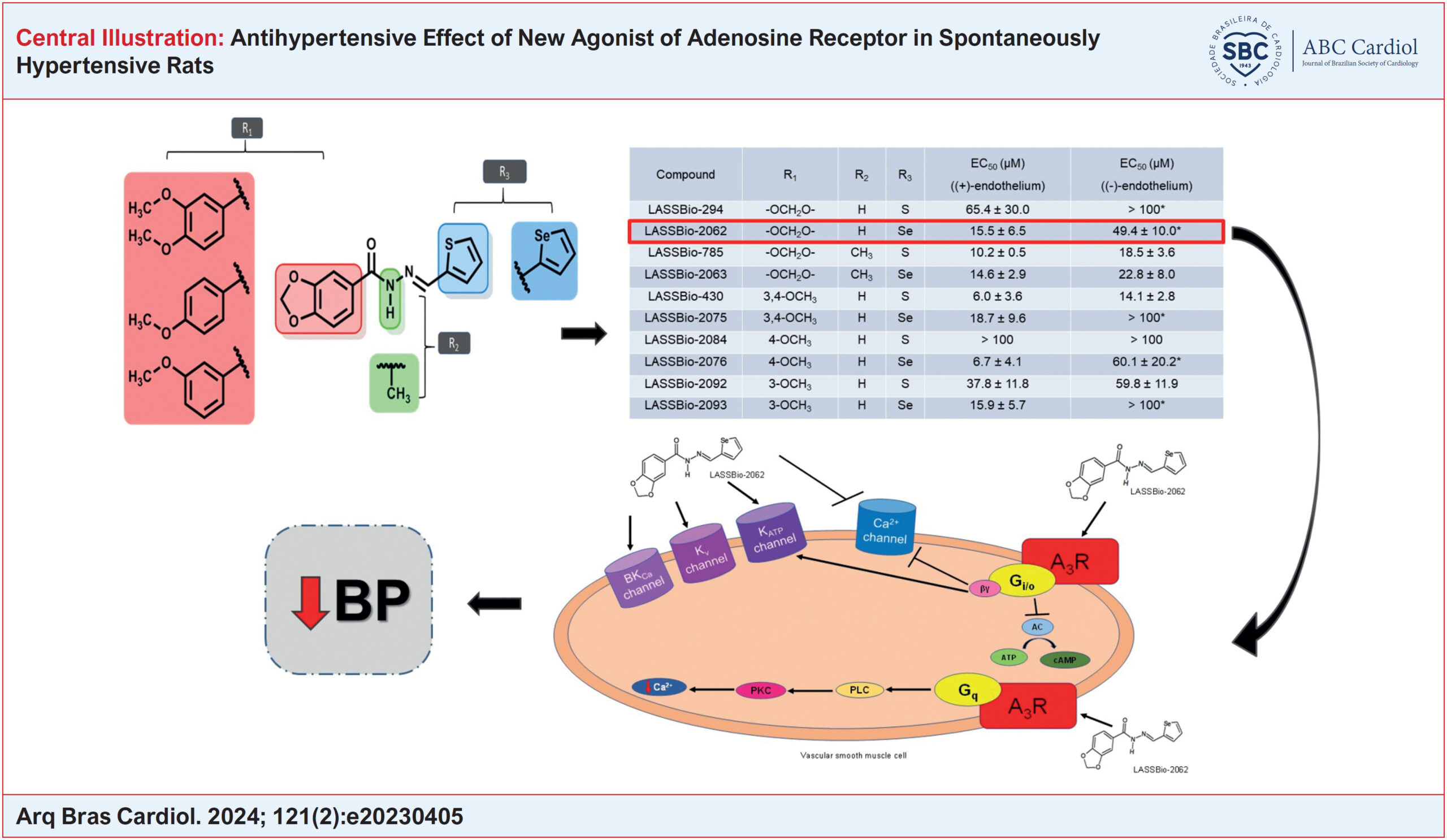
Antihypertensive Effect of New Agonist of Adenosine Receptor in Spontaneously Hypertensive Rats

Bruna de Souza Rocha et al. Jaqueline Soares da Silva Júlia Galvez Bulhões Pedreira Tadeu Lima Montagnoli … Eliezer Jesus Barreiro Gisele Zapata-Sudo

Abstract

Background

Systemic arterial hypertension is a risk factor for cardiac, renal, and metabolic dysfunction. The search for new strategies to prevent and treat cardiovascular diseases led to the synthesis of new N-acylhydrazones to produce antihypertensive effect. Adenosine receptors are an alternative target to reduce blood pressure because of their vasodilatory action and antioxidant properties, which may reduce oxidative stress characteristic of systemic arterial hypertension.

Objective

To evaluate the antihypertensive profile of novel selenium-containing compounds designed to improve their interaction with adenosine receptors.

Methods

Vascular reactivity was evaluated by recording the isometric tension of pre-contracted thoracic aorta of male Wistar rats after exposure to increasing concentrations of each derivative (0.1 to 100 μM). To investigate the antihypertensive effect in spontaneously hypertensive rats, systolic, diastolic, and mean arterial pressure and heart rate were determined after intravenous administration of 10 and 30 μmol/kg of the selected compound LASSBio-2062.

Results

Compounds named LASSBio-2062, LASSBio-2063, LASSBio-2075, LASSBio-2076, LASSBio-2084, LASSBio-430, LASSBio-2092, and LASSBio-2093 promoted vasodilation with mean effective concentrations of 15.5 ± 6.5; 14.6 ± 2.9; 18.7 ± 9.6; 6.7 ± 4.1; > 100; 6.0 ± 3.6; 37.8 ± 11.8; and 15.9 ± 5.7 μM, respectively. LASSBio-2062 (30 μmol/kg) reduced mean arterial pressure in spontaneously hypertensive rats from 124.6 ± 8.6 to 72.0 ± 12.3 mmHg (p < 0.05). Activation of adenosine receptor subtype A3 and potassium channels seem to be involved in the antihypertensive effect of LASSBio-2062.

Conclusions

The new agonist of adenosine receptor and activator of potassium channels is a potential therapeutic agent to treat systemic arterial hypertension.
  • Calcium Channels
  • Hypertension
  • Purinergic P1 Receptors
  • Vasodilation
Read Full Article
Creative Commons Attribution (CC BY) Creative Commons license
05/04/2024 DOI: 10.36660/abc.20230405 Views 1
IJCS
Editorial

Hyperthyroidism and Cardiac Contractility

Dhiãnah Santini de Oliveira Chachamovitz

Much information is lacking on hyperthyroidism and cardiac function, especially in isolated muscles. Certainly, the time the heart muscle is exposed to elevated thyroid hormones (TH) influences the magnitude of their effects. The primary changes seem to be related to increases in the heart mass/body mass ratio and in relaxation kinetics.

These cardiac changes may also be related not only to the time of exposure to excess thyroid hormones, but to the level or intensity of hyperthyroidism, as well as the underlying cardiac condition, which may reflect exercise conditioning and overload. In this sense, the cellular mechanisms of muscle adaptation, energy and oxygen consumption, certainly make differences. As well as muscle strength and sarcoplasmic/endoplasmic reticulum calcium (SRCa) activity, they may also have different individual adaptive characteristics.

[…]

  • Arrhythmias Cardiac
  • Calcium Channels
  • Heart Failure
  • Myocardial Contraction
  • Rats
  • thyroxine
Read Full Article
Creative Commons Attribution (CC BY) Creative Commons license
13/07/2022 DOI: 10.36660/ijcs.20220081 Views 1
Figure 1
IJCS
Original Article

Correlation Between Cardiac Calcium Index and Coronary Artery Disease

Cintia Rocha Fortes de Sá et al. Ana Cristina Camarozano Wermelinger Daniane Rafael Rubens Zenóbio Darwich … Jerônimo Antonio Fortunato Junior Daniela de Castro Carmo Liz Andréa Villela Baroncini

Resumo

Introduction:

Valvular deposits of calcium quantified by transthoracic echocardiography are associated with the occurrence of systemic atherosclerotic disease, but its prognostic value and influence of associated cardiovascular risk factors have not been defined yet.

Objectives:

To correlate the valvular cardiac calcium index by transthoracic echocardiography with cardiovascular risk factors and presence of coronary artery disease (CAD).

Methods:

We selected 203 patients (61.2 ± 14.3 years; 57.6% females) who underwent transthoracic echocardiography with cardiac calcium index quantification. The presence or absence of CAD, hypertension, diabetes mellitus (DM), dyslipidemia, and smoking was assessed.

Results:

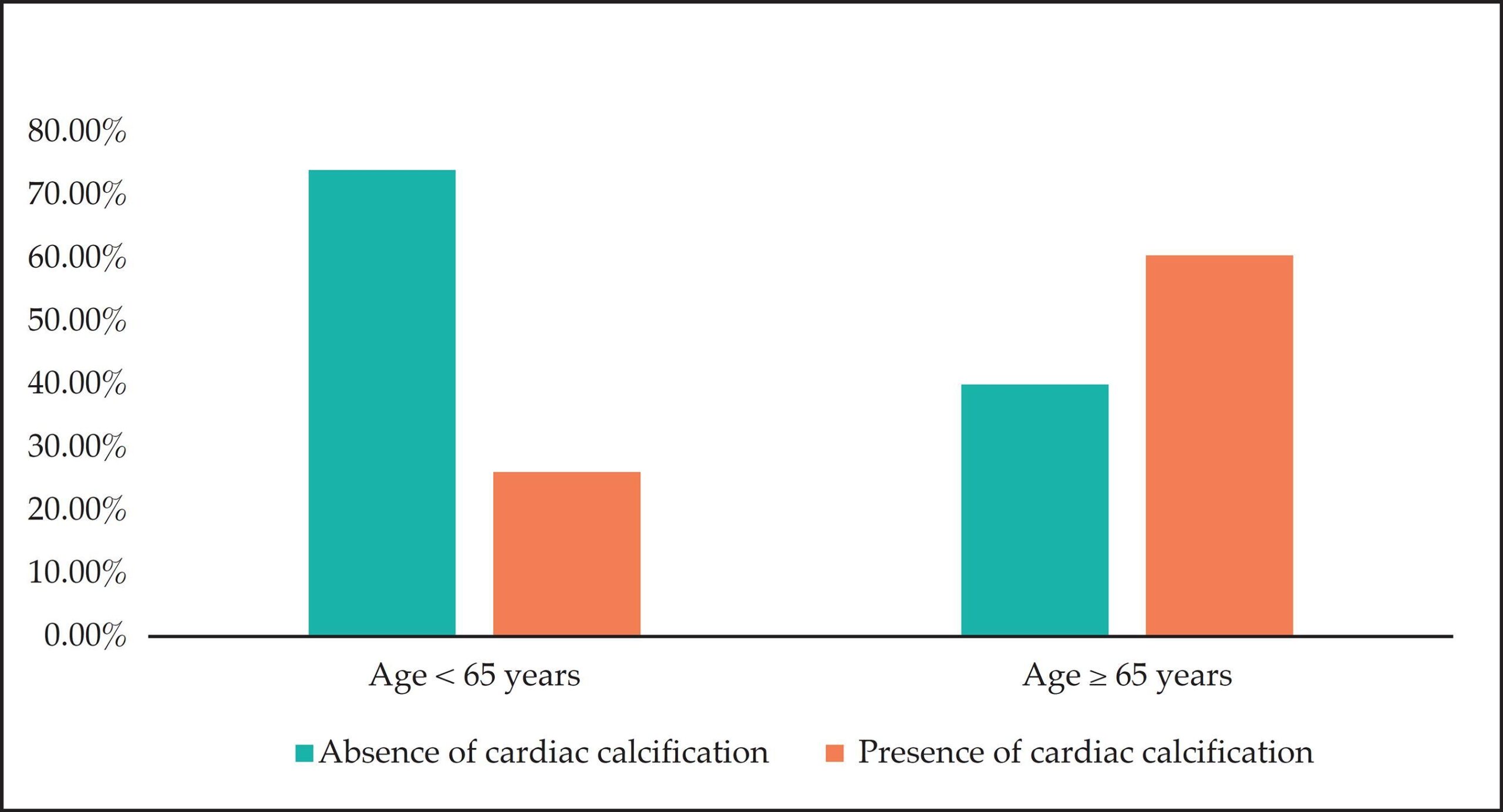
Age above 65 years (p < 0.001) and the presence of hypertension (p < 0.001) showed a significant correlation with the presence of cardiac calcification, whereas DM (p = 0.056) and CAD (p = 0.08) showed only a trend toward a correlation with calcification. Mitral valve calcification alone correlated significantly with age above 65 years (p 65 years (OR 1.05, 95%CI 1.02-1.08, p = 0.003) correlated significantly and independently with mitral valve calcification. Aortic valve calcification alone showed no correlation with the presence of CAD (p = 0.435), but correlated significantly with age above 65 years (p < 0.001) and hypertension (p < 0.001). On multivariate analysis, only age (OR 1.1, 95%CI 1.06-1.14, p < 0.001) remained independently and significantly correlated with aortic calcification.

Conclusion:

Age above 65 years and hypertension were independent risk factors for the presence of valvular cardiac calcification, with mitral valve calcification alone emerging as significantly and independently associated with the presence of CAD.

  • Calcium Channels
  • Coronary Artery Disease
  • Echocardiography/methods
  • Risk Factors
  • Vascular Calcification
Read Full Article
Creative Commons Attribution (CC BY) Creative Commons license
01/01/2017 DOI: 10.5935/2359-4802.20170038
Figure 1
ABC
Original Article

Jabuticaba-Induced Endothelium-Independent Vasodilating Effect on Isolated Arteries

Daniela Medeiros Lobo de Andrade et al. Leonardo Luis Borges Ieda Maria Sapateiro Torres Edemilson Cardoso da Conceição Matheus Lavorenti Rocha

Abstract

Background:

Despite the important biological effects of jabuticaba, its actions on the cardiovascular system have not been clarified.

Objectives:

To determine the effects of jabuticaba hydroalcoholic extract (JHE) on vascular smooth muscle (VSM) of isolated arteries.

Methods:

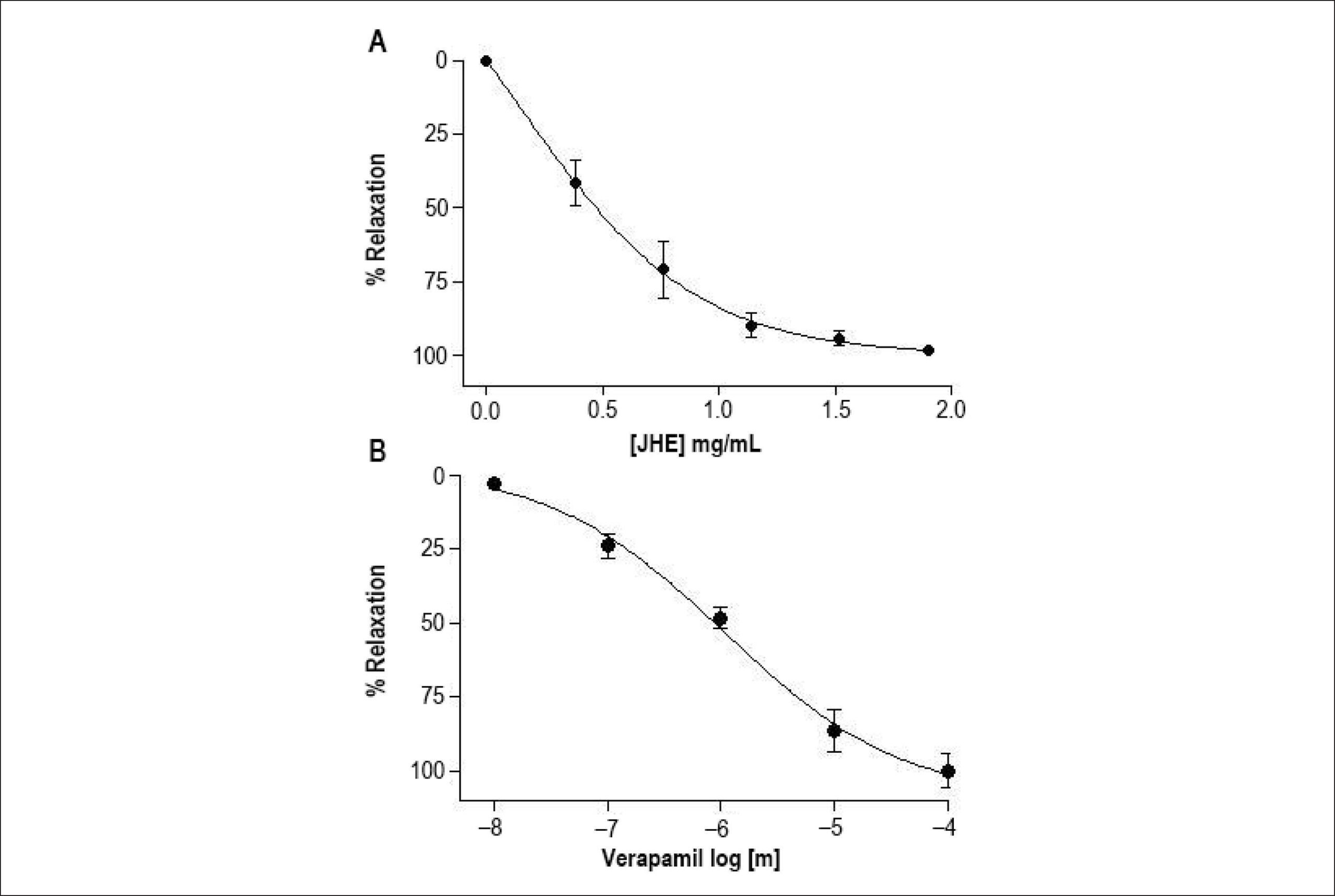
Endothelium-denuded aortic rings of rats were mounted in isolated organ bath to record isometric tension. The relaxant effect of JHE and the influence of K+ channels and Ca2+ intra- and extracellular sources on JHE-stimulated response were assessed.

Results:

Arteries pre-contracted with phenylephrine showed concentration-dependent relaxation (0.380 to 1.92 mg/mL). Treatment with K+ channel blockers (tetraethyl-ammonium, glibenclamide, 4-aminopyridine) hindered relaxation due to JHE. In addition, phenylephrine-stimulated contraction was hindered by previous treatment with JHE. Inhibition of sarcoplasmic reticulum Ca2+ ATPase did not change relaxation due to JHE. In addition, JHE inhibited the contraction caused by Ca2+ influx stimulated by phenylephrine and KCl (75 mM).

Conclusion:

JHE induces endothelium-independent vasodilation. Activation of K+ channels and inhibition of Ca2+ influx through the membrane are involved in the JHE relaxant effect.

  • Calcium Channels
  • Jabuticaba (Myrciaria Cauliflora)
  • Muscle, Smooth, Vascular
  • Trees
  • Vasodilatation
Read Full Article
Creative Commons Attribution (CC BY) Creative Commons license
11/08/2016 DOI: 10.5935/abc.20160118

How to cite this article

EndNote RIS

Electronic Document Format (Vancouver)

Rocha BS, Silva JS, Pedreira JGB, Montagnoli TL, Barreiro EJ, Zapata-Sudo G. Antihypertensive Effect of New Agonist of Adenosine Receptor in Spontaneously Hypertensive Rats. Arquivos Brasileiros de Cardiologia 2024;121(2):e20230405.

Electronic Document Format (ABNT)

Rocha, Bruna de Souza; Silva, Jaqueline Soares da; Pedreira, Júlia Galvez Bulhões; Montagnoli, Tadeu Lima; Barreiro, Eliezer Jesus; Zapata-Sudo, Gisele. Antihypertensive Effect of New Agonist of Adenosine Receptor in Spontaneously Hypertensive Rats. Arquivos Brasileiros de Cardiologia, v. 121, n. 2, e20230405, Apr. 2024.

Electronic Document Format (APA)

Rocha, B. S., Silva, J. S. , Pedreira, J. G. B., Montagnoli, T. L., Barreiro, E. J., & Zapata-Sudo, G. (2024). Antihypertensive Effect of New Agonist of Adenosine Receptor in Spontaneously Hypertensive Rats. Arquivos Brasileiros de Cardiologia, 121(2), e20230405.

Electronic Document Format (ISO)

Rocha, Bruna de Souza and Silva, Jaqueline Soares da and Pedreira, Júlia Galvez Bulhões and Montagnoli, Tadeu Lima and Barreiro, Eliezer Jesus and Zapata-Sudo, Gisele. Antihypertensive Effect of New Agonist of Adenosine Receptor in Spontaneously Hypertensive Rats. Arquivos Brasileiros de Cardiologia [online]. 2024, vol. 121, n. 2, [cited 2026-10-14], e20230405. Available from: <https://journals.cardiol.br/en/article/antihypertensive-effect-of-new-agonist-of-adenosine-receptor-in-spontaneously-hypertensive-rats/>. ISSN 0066-782X

EndNote RIS

Electronic Document Format (Vancouver)

Chachamovitz DSO. Hyperthyroidism and Cardiac Contractility. International Journal of Cardiovascular Sciences 2022;35(4):465-6.

Electronic Document Format (ABNT)

Chachamovitz, Dhiãnah Santini de Oliveira. Hyperthyroidism and Cardiac Contractility. International Journal of Cardiovascular Sciences, v. 35, n. 4, p. 465-466, Jul. 2022.

Electronic Document Format (APA)

Chachamovitz, D. S. O. (2022). Hyperthyroidism and Cardiac Contractility. International Journal of Cardiovascular Sciences, 35(4), 465-466.

Electronic Document Format (ISO)

Chachamovitz, Dhiãnah Santini de Oliveira. Hyperthyroidism and Cardiac Contractility. International Journal of Cardiovascular Sciences [online]. 2022, vol. 35, n. 4, [cited 2026-10-14], pp. 465-466. Available from: <https://journals.cardiol.br/en/article/hyperthyroidism-and-cardiac-contractility/>. ISSN 2359-4802

EndNote RIS

Electronic Document Format (Vancouver)

Sá CRF, Wermelinger ACC, Rafael D, Darwich RZ, Fortunato Junior JA, Carmo DC, Baroncini LAV, et al. Correlation Between Cardiac Calcium Index and Coronary Artery Disease. International Journal of Cardiovascular Sciences 2017;30(2):136-44.

Electronic Document Format (ABNT)

Sá, Cintia Rocha Fortes de; Wermelinger, Ana Cristina Camarozano; Rafael, Daniane; Darwich, Rubens Zenóbio; Fortunato Junior, Jerônimo Antonio; Carmo, Daniela de Castro; Baroncini, Liz Andréa Villela. Correlation Between Cardiac Calcium Index and Coronary Artery Disease. International Journal of Cardiovascular Sciences, v. 30, n. 2, p. 136-144, Dec. 2016.

Electronic Document Format (APA)

Sá, C. R. F. , Wermelinger, A. C. C., Rafael, D., Darwich, R. Z., Fortunato Junior, J. A., Carmo, D. C., & Baroncini, L. A. V. (2017). Correlation Between Cardiac Calcium Index and Coronary Artery Disease. International Journal of Cardiovascular Sciences, 30(2), 136-144.

Electronic Document Format (ISO)

Sá, Cintia Rocha Fortes de and Wermelinger, Ana Cristina Camarozano and Rafael, Daniane and Darwich, Rubens Zenóbio and Fortunato Junior, Jerônimo Antonio and Carmo, Daniela de Castro and Baroncini, Liz Andréa Villela. Correlation Between Cardiac Calcium Index and Coronary Artery Disease. International Journal of Cardiovascular Sciences [online]. 2017, vol. 30, n. 2, [cited 2026-10-14], pp. 136-144. Available from: <https://journals.cardiol.br/en/article/correlation-between-cardiac-calcium-index-and-coronary-artery-disease/>. ISSN 2359-4802

EndNote RIS

Electronic Document Format (Vancouver)

Andrade DML, Borges LL, Torres IMS, Conceição EC, Rocha ML. Jabuticaba-Induced Endothelium-Independent Vasodilating Effect on Isolated Arteries. Arquivos Brasileiros de Cardiologia 2016;107(3):223-9.

Electronic Document Format (ABNT)

Andrade, Daniela Medeiros Lobo de; Borges, Leonardo Luis; Torres, Ieda Maria Sapateiro; Conceição, Edemilson Cardoso da; Rocha, Matheus Lavorenti. Jabuticaba-Induced Endothelium-Independent Vasodilating Effect on Isolated Arteries. Arquivos Brasileiros de Cardiologia, v. 107, n. 3, p. 223-229, Aug. 2016.

Electronic Document Format (APA)

Andrade, D. M. L. , Borges, L. L., Torres, I. M. S., Conceição, E. C. , & Rocha, M. L. (2016). Jabuticaba-Induced Endothelium-Independent Vasodilating Effect on Isolated Arteries. Arquivos Brasileiros de Cardiologia, 107(3), 223-229.

Electronic Document Format (ISO)

Andrade, Daniela Medeiros Lobo de and Borges, Leonardo Luis and Torres, Ieda Maria Sapateiro and Conceição, Edemilson Cardoso da and Rocha, Matheus Lavorenti. Jabuticaba-Induced Endothelium-Independent Vasodilating Effect on Isolated Arteries. Arquivos Brasileiros de Cardiologia [online]. 2016, vol. 107, n. 3, [cited 2026-10-14], pp. 223-229. Available from: <https://journals.cardiol.br/en/article/jabuticaba-induced-endothelium-independent-vasodilating-effect-on-isolated-arteries/>. ISSN 0066-782X

  • About ABC Family
  • Internal Regulation
  • Editorial Board
  • Brazilian Society of Cardiology (SBC)

Issues

SBC Guidelines

  • Videos
  • Podcasts
  • News