ABC Family Arquivos Brasileiros de Cardiologia International Journal of Cardiovascular Sciences ABC Heart Failure & Cardiomyopathy ABC Imagem Cardiovascular
Português English
ABC Family
Português English
  • About
    • About ABC Family
    • Internal Regulation
    • Editorial Board
    • Brazilian Society of Cardiology (SBC)
  • Issues
  • SBC Guidelines
  • Content
    • Videos
    • Podcasts
    • News
  • About
    • About ABC Family
    • Internal Regulation
    • Editorial Board
    • Brazilian Society of Cardiology (SBC)
  • Issues
  • SBC Guidelines
  • Content
    • Videos
    • Podcasts
    • News

ABC Family

  • ABC Family
  • Arquivos Brasileiros de Cardiologia
  • International Journal of Cardiovascular Sciences
  • ABC Heart Failure & Cardiomyopathy
  • ABC Imagem Cardiovascular
Search in

No content found.

Journals
Ordering
Article types
Others

  1. Home
  2. Keyword: Diabetic Cardiomyopathies
ABC
Editorial

Diabetic Cardiomyopathy: Unraveling Pathophysiological Mechanisms via Non-coding RNAs

Elida Paula Benquique Ojopi et al. Éder Anderson Rodrigues Gustavo Augusto Ferreira Mota Marina Politi Okoshi Luana Urbano Pagan

Diabetic cardiomyopathy (DCM) is a serious complication of diabetes mellitus (DM) characterized by changes that result in cardiac remodeling with ventricular dysfunction and eventually heart failure in the absence of other conditions such as arterial hypertension, valvular heart disease, coronary artery disease, and congenital heart disease. DCM develops independently of other cardiovascular risk factors and is associated with metabolic abnormalities, including hyperglycemia and hyperlipidemia. Multiple mechanisms contribute to DCM pathogenesis, such as impaired cardiac insulin signaling, mitochondrial dysfunction, oxidative stress, inflammation, and calcium handling defects. Despite its increasing prevalence, the underlying mechanisms of DCM remain largely unelucidated, and effective treatment is still needed.

Non-coding RNAs (ncRNAs) are transcriptional outputs that do not translate into proteins, exhibiting a diverse range of biogenesis, size, shape, and function. The most extensively studied ncRNAs are microRNAs (miRNAs) and long non-coding RNAs (lncRNAs). It has become a broadly accepted definition that ncRNAs over 200 nucleotides in length are classified as lncRNAs. miRNAs belong to a broader class of ncRNAs known as ‘small RNAs’, which are defined by their size (20–28 nucleotides) and association with Argonaute (Ago) family proteins. Small RNAs act as guides, directing Ago proteins to target nucleic acids to induce gene silencing. miRNAs and lncRNAs regulate various processes involved in DCM, including oxidative stress, inflammation, apoptosis, and autophagy. Therefore, they have been explored as potential biomarkers and therapeutic targets.,

[…]
  • Diabetic Cardiomyopathies
  • Long Noncoding RNA
  • MicroRNAs
Read Full Article
Creative Commons Attribution (CC BY) Creative Commons license
25/08/2025 DOI: 10.36660/abc.20250395i Views 1
Figure 1
ABCIC
Original Article

Left Ventricular Global Longitudinal Strain: an Early Marker of Diabetic Cardiomyopathy

Ana Carolina Saran et al. Stephanie Corradini Tormin Jennifer Vogel Rogério Krakauer João Eduardo Nunes Salles

Abstract

Background:

Diabetic cardiomyopathy (DCM) leads to abnormal myocardial structure and function in the absence of cardiac risk factors. Screening in the pre-clinical phase is not well established. Global longitudinal strain (GLS) has been measured as an important echocardiography parameter in asymptomatic patients.

Objective:

To describe the presence of early parameters of DCM in patients with type 2 diabetes (T2DM) without cardiovascular disease and to compare results against 2 control groups (CT groups).

Methods:

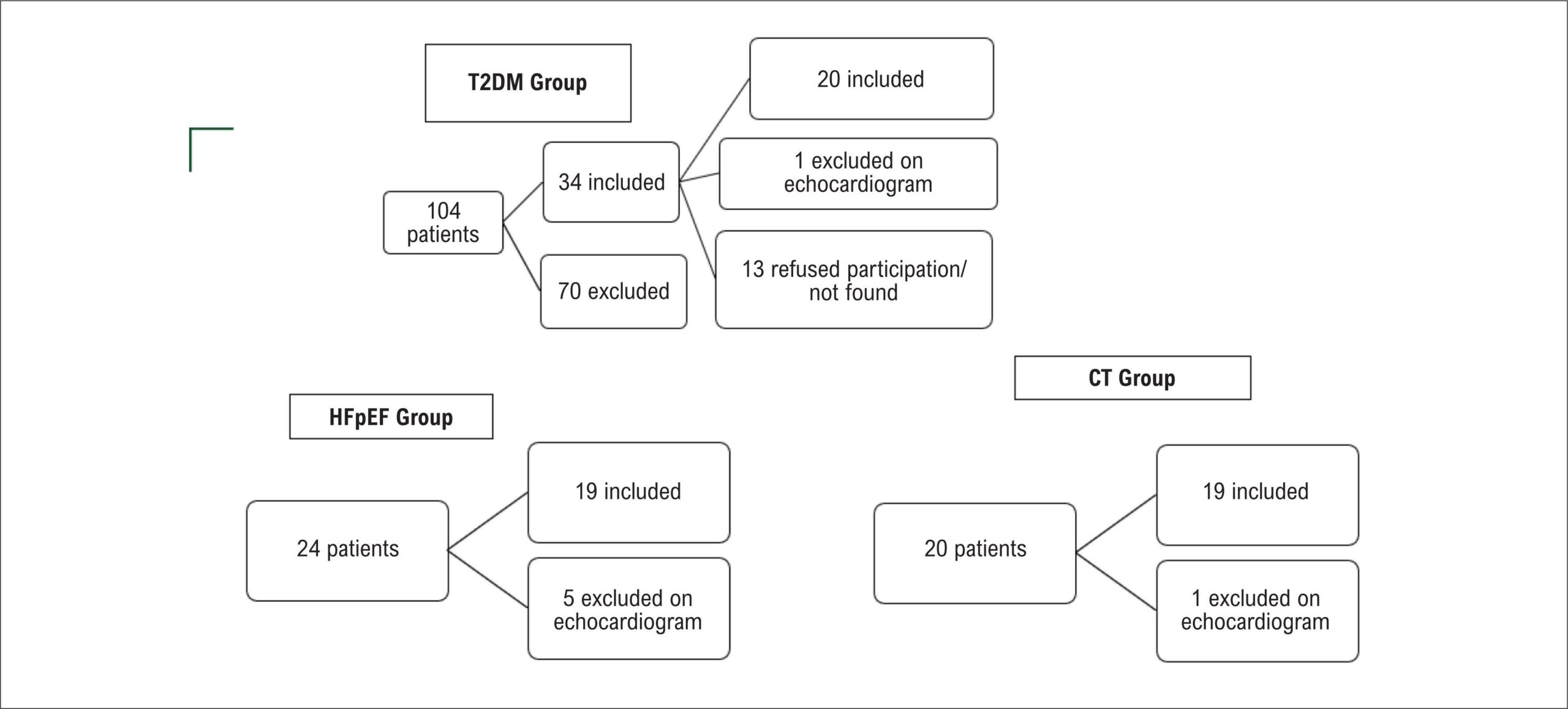
A total of 58 patients were divided into the following 3 groups: T2DM (n = 20); heart failure (HF) with preserved ejection fraction (HFpEF) without T2DM (n = 19); and control without T2DM or HFpEF (n = 19). Patients with cardiovascular disease and those using SGLT2 inhibitors, pioglitazone or saxagliptin were excluded.

Results:

The mean overall prevalence of GLS was 16% (standard deviation [SD] ± 2.9), and 41% of participants had abnormal values, comprising 10 (50%) patients from the T2DM, 11 (58%) from the HFpEF, and 3 (16%) from the CT groups (p = 0.019). Mean GLS values in the T2DM, HFpEF, and CT groups were 16.1%, 14.8%, and 17.5%, respectively (p = 0.015). There was a negative moderate association between HbA1c levels and GLS values in the T2DM group (p = 0.043).

Conclusions:

GLS proved to be a potential early marker of left ventricular (LV) cardiac changes in patients with T2DM, given the similarity between this patient group and the HFpEF group studied.

  • Diabetes Mellitus
  • Diabetic Cardiomyopathies
  • Echocardiography
  • Ventricular Dysfunction
Read Full Article
Creative Commons Attribution (CC BY) Creative Commons license
30/01/2025 DOI: 10.36660/abcimg.20240082i Views 1
Figure 1
ABC
Original Article

Inhibiting Glucose Metabolism By miR-34a and miR-125b Protects Against Hyperglycemia-Induced Cardiomyocyte Cell Death

Chao-rui Xu et al. Qiu-ju Fang

Abstract

Background:

It is well-known that insulin resistance and hyperglycemia are important pathological causes for the development of diabetic cardiomyopathy (DCM). However, its precise molecular mechanisms in the pathogenesis of DCM remain unclear.

Objectives:

Recent studies reveal that microRNAs (miRNA) play essential roles in the pathogenesis of DCM. This project aimed to determine the roles of miR-34a and miR-125b in hyperglycemia-induced cardiomyocyte cell death.

Methods:

Rat primary cardiomyocytes were isolated and exposed to normal and high concentrations of glucose. Cell viability was measured using MTT assay. Expressions of miR-34a and miR-125b were detected by qRT-PCR. Potential targets of miR-34a and miR-125b were predicted from www.Targetscan.org and validated from human heart tissues. A statistical significance of p<0.05 was considered.

Results:

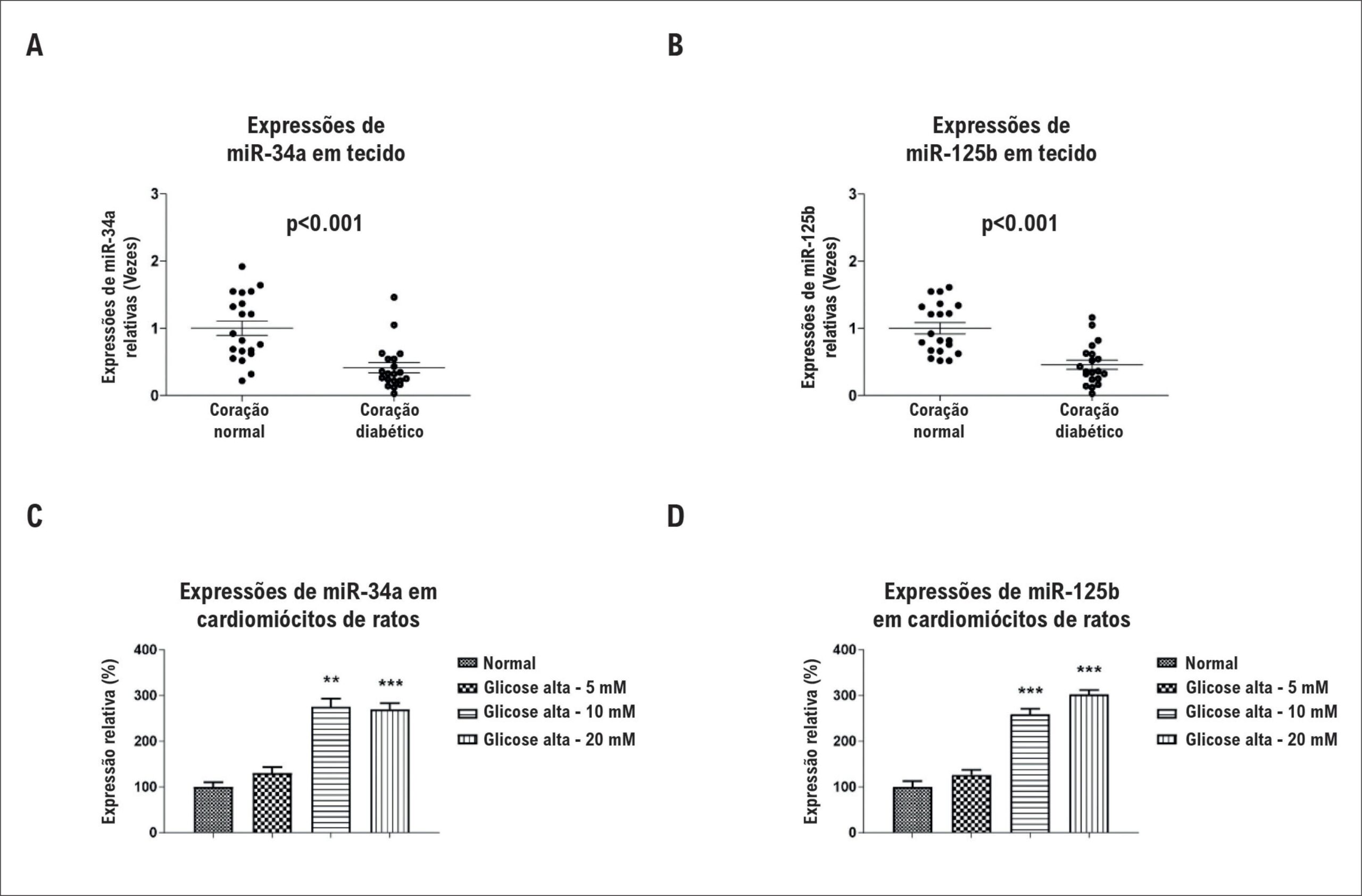
The present study shows that miR-34a and miR-125b are downregulated in a human diabetic heart. Moreover, in vitro data from rat primary cardiomyocytes showed that short-term high glucose treatment stimulates miR-34a and miR-125b expressions. Under high glucose, it was found that rat cardiomyocytes displayed increased intracellular glucose metabolism, and glucose uptake and lactate production were significantly increased. It was also found that the key glucose metabolic enzymes, Hexokinase 2 (HK2) and Lactate dehydrogenase-A (LDHA), were direct targets of miR-125b and miR-34a, respectively. Overexpression of miR-125b and miR-34a could prevent hyperglycemia-induced cardiomyocyte cell death. Finally, the restoration of HK2 and LDHA in miR-125b and miR-34a overexpressed cardiomyocytes recovered the cardiomyocytes’ sensitivity to hyperglycemia.

Conclusion:

Our results proposed a molecular mechanism for the microRNA-mediated diabetic cardiovascular protection and will contribute to developing treatment strategies for diabetes-associated cardiovascular dysfunction.

  • Cell Death
  • Diabetic Cardiomyopathies
  • Glicose Metabolism Disordes
  • Hiperglycemia
  • Myocytes,Cardiac
  • Rats
Read Full Article
Creative Commons Attribution (CC BY) Creative Commons license
23/04/2021 DOI: 10.36660/abc.20190529 Views 1
ABC
Editorial

Cardiac Effects of Trimetazidine in Diabetic Rats

Alfredo J. Mansur

Diabetes mellitus may be associated with a specific form of cardiomyopathy independent of other comorbidities. Left ventricular hypertrophy is the main pathological change described in cardiomyopathy of patients with diabetes mellitus. Different mechanisms may be operative in the pathogenesis of the hypertrophy: metabolic derangements, inflammation and among other factors, oxidative stress. Oxidative stress may lead to cellular damage by free radical-induced oxidation of DNA, proteins and lipids.

Reactive oxygen species may lead to consequences in cardiomyocytes including hypertrophy, apoptosis and fibrosis; in this regard a cellular detoxification mechanism may be missing for attenuating severity of damage induced by some reactive oxygen species. Hence, interventions that might be protective would be worth to be investigated, including drug therapy.

[…]

  • Angina Pectoris/metabolismo
  • Diabetes Mellitus
  • Diabetic Cardiomyopathies
  • Hypertrophic, Left Ventricular/metabolismo
  • Oxidative Stress
  • Trimetazidine/therapeutic use
Read Full Article
Creative Commons Attribution (CC BY) Creative Commons license
01/02/2019 DOI: 10.5935/abc.20190012 Views 1

How to cite this article

EndNote RIS

Electronic Document Format (Vancouver)

Ojopi EPB, Rodrigues A, Mota GAF, Okoshi MP, Pagan LU. Diabetic Cardiomyopathy: Unraveling Pathophysiological Mechanisms via Non-coding RNAs. Arquivos Brasileiros de Cardiologia 2025;122(7):e20250395.

Electronic Document Format (ABNT)

Ojopi, Elida Paula Benquique; Rodrigues, Éder Anderson; Mota, Gustavo Augusto Ferreira; Okoshi, Marina Politi; Pagan, Luana Urbano. Diabetic Cardiomyopathy: Unraveling Pathophysiological Mechanisms via Non-coding RNAs. Arquivos Brasileiros de Cardiologia, v. 122, n. 7, e20250395, Aug. 2025.

Electronic Document Format (APA)

Ojopi, E. P. B., Rodrigues, A., Mota, G. A. F., Okoshi, M. P., & Pagan, L. U. (2025). Diabetic Cardiomyopathy: Unraveling Pathophysiological Mechanisms via Non-coding RNAs. Arquivos Brasileiros de Cardiologia, 122(7), e20250395.

Electronic Document Format (ISO)

Ojopi, Elida Paula Benquique and Rodrigues, Éder Anderson and Mota, Gustavo Augusto Ferreira and Okoshi, Marina Politi and Pagan, Luana Urbano. Diabetic Cardiomyopathy: Unraveling Pathophysiological Mechanisms via Non-coding RNAs. Arquivos Brasileiros de Cardiologia [online]. 2025, vol. 122, n. 7, [cited 2026-10-14], e20250395. Available from: <https://journals.cardiol.br/en/article/diabetic-cardiomyopathy-unraveling-pathophysiological-mechanisms-via-non-coding-rnas/>. ISSN 0066-782X

EndNote RIS

Electronic Document Format (Vancouver)

Saran AC, Tormin SC, Vogel J, Krakauer R, Salles JEN. Left Ventricular Global Longitudinal Strain: an Early Marker of Diabetic Cardiomyopathy. ABC Imagem Cardiovascular 2025;38(1):e20240082.

Electronic Document Format (ABNT)

Saran, Ana Carolina; Tormin, Stephanie Corradini; Vogel, Jennifer; Krakauer, Rogério; Salles, João Eduardo Nunes. Left Ventricular Global Longitudinal Strain: an Early Marker of Diabetic Cardiomyopathy. ABC Imagem Cardiovascular, v. 38, n. 1, e20240082, Jan. 2025.

Electronic Document Format (APA)

Saran, A. C., Tormin, S. C., Vogel, J., Krakauer, R., & Salles, J. E. N. (2025). Left Ventricular Global Longitudinal Strain: an Early Marker of Diabetic Cardiomyopathy. ABC Imagem Cardiovascular, 38(1), e20240082.

Electronic Document Format (ISO)

Saran, Ana Carolina and Tormin, Stephanie Corradini and Vogel, Jennifer and Krakauer, Rogério and Salles, João Eduardo Nunes. Left Ventricular Global Longitudinal Strain: an Early Marker of Diabetic Cardiomyopathy. ABC Imagem Cardiovascular [online]. 2025, vol. 38, n. 1, [cited 2026-10-14], e20240082. Available from: <https://journals.cardiol.br/en/article/left-ventricular-global-longitudinal-strain-an-early-marker-of-diabetic-cardiomyopathy/>. ISSN 2318-8219

EndNote RIS

Electronic Document Format (Vancouver)

Xu C, Fang Q. Inhibiting Glucose Metabolism By miR-34a and miR-125b Protects Against Hyperglycemia-Induced Cardiomyocyte Cell Death. Arquivos Brasileiros de Cardiologia 2021;116(3):415-22.

Electronic Document Format (ABNT)

Xu, Chao-rui; Fang, Qiu-ju. Inhibiting Glucose Metabolism By miR-34a and miR-125b Protects Against Hyperglycemia-Induced Cardiomyocyte Cell Death. Arquivos Brasileiros de Cardiologia, v. 116, n. 3, p. 415-422, Apr. 2021.

Electronic Document Format (APA)

Xu, C., & Fang, Q. (2021). Inhibiting Glucose Metabolism By miR-34a and miR-125b Protects Against Hyperglycemia-Induced Cardiomyocyte Cell Death. Arquivos Brasileiros de Cardiologia, 116(3), 415-422.

Electronic Document Format (ISO)

Xu, Chao-rui and Fang, Qiu-ju. Inhibiting Glucose Metabolism By miR-34a and miR-125b Protects Against Hyperglycemia-Induced Cardiomyocyte Cell Death. Arquivos Brasileiros de Cardiologia [online]. 2021, vol. 116, n. 3, [cited 2026-10-14], pp. 415-422. Available from: <https://journals.cardiol.br/en/article/inhibiting-glucose-metabolism-by-mir-34a-and-mir-125b-protects-against-hyperglycemia-induced-cardiomyocyte-cell-death/>. ISSN 0066-782X

EndNote RIS

Electronic Document Format (Vancouver)

Mansur AJ. Cardiac Effects of Trimetazidine in Diabetic Rats. Arquivos Brasileiros de Cardiologia 2019;112(2):179.

Electronic Document Format (ABNT)

Mansur, Alfredo J.. Cardiac Effects of Trimetazidine in Diabetic Rats. Arquivos Brasileiros de Cardiologia, v. 112, n. 2, p. 179-179, Jan. 2019.

Electronic Document Format (APA)

Mansur, A. J. (2019). Cardiac Effects of Trimetazidine in Diabetic Rats. Arquivos Brasileiros de Cardiologia, 112(2), 179-179.

Electronic Document Format (ISO)

Mansur, Alfredo J.. Cardiac Effects of Trimetazidine in Diabetic Rats. Arquivos Brasileiros de Cardiologia [online]. 2019, vol. 112, n. 2, [cited 2026-10-14], pp. 179-179. Available from: <https://journals.cardiol.br/en/article/cardiac-effects-of-trimetazidine-in-diabetic-rats/>. ISSN 0066-782X

  • About ABC Family
  • Internal Regulation
  • Editorial Board
  • Brazilian Society of Cardiology (SBC)

Issues

SBC Guidelines

  • Videos
  • Podcasts
  • News