ABC Family Arquivos Brasileiros de Cardiologia International Journal of Cardiovascular Sciences ABC Heart Failure & Cardiomyopathy ABC Imagem Cardiovascular
Português English
ABC Family
Português English
  • About
    • About ABC Family
    • Internal Regulation
    • Editorial Board
    • Brazilian Society of Cardiology (SBC)
  • Issues
  • SBC Guidelines
  • Content
    • Videos
    • Podcasts
    • News
  • About
    • About ABC Family
    • Internal Regulation
    • Editorial Board
    • Brazilian Society of Cardiology (SBC)
  • Issues
  • SBC Guidelines
  • Content
    • Videos
    • Podcasts
    • News

ABC Family

  • ABC Family
  • Arquivos Brasileiros de Cardiologia
  • International Journal of Cardiovascular Sciences
  • ABC Heart Failure & Cardiomyopathy
  • ABC Imagem Cardiovascular
Search in

No content found.

Journals
Ordering
Article types
Others

  1. Home
  2. Keyword: calcium channel blockers
Figure 1
ABC
Letter to the Editor

Non-dihydropyridine Calcium Channel Blockers in Atrial Fibrillation with Mildly Reduced Ejection Fraction: Caution is Still Advised

Jefferson Luis Vieira et al. Carlos Eduardo Lucena Montenegro

Conclusion

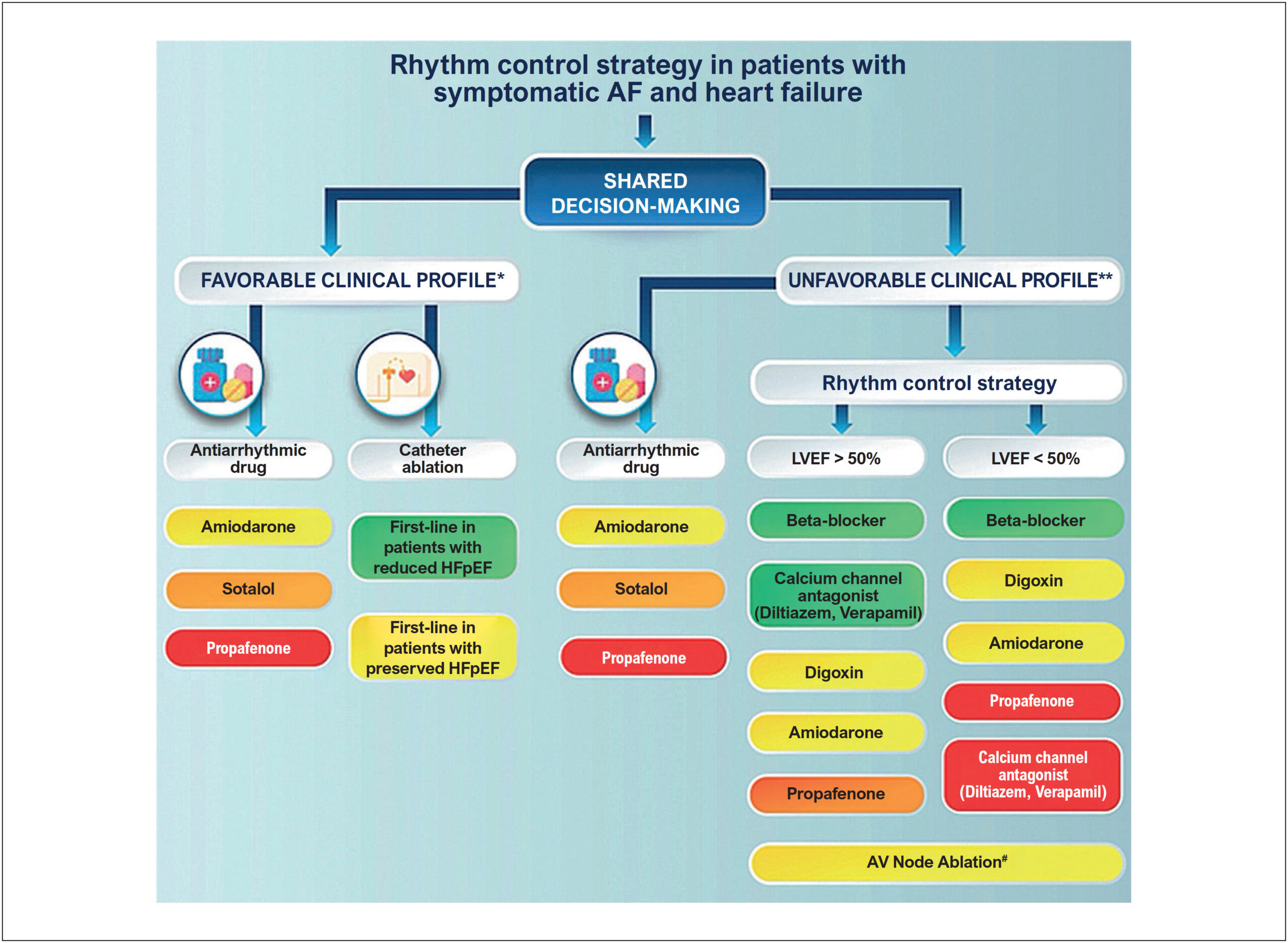
Given the lack of robust safety and benefit data for NDHP-CCBs in patients with HFmrEF and the existence of prognostically aligned alternatives, the current recommendation may be interpreted permissively and lead to potentially detrimental practices. Furthermore, the Second Universal Definition of Heart Failure provides additional conceptual support for this proposal by recognizing that patients with mildly reduced EF constitute a distinct biological phenotype and by discouraging therapeutic reasoning based solely on arbitrary LVEF thresholds. We advocate that the guideline explicitly reinforce the non-recommendation of verapamil/diltiazem when LVEF <50%, until specific studies in HFmrEF validate their safety and prognostic neutrality.

[…]

  • Atrial Fibrillation
  • calcium channel blockers
  • Heart Failure
Read Full Article
Creative Commons Attribution (CC BY) Creative Commons license
10/08/2026 DOI: 10.36660/abc.20260195i Views 1
Strategic Use of Intravenous Medications to Protect Target Organs in Hypertensive Emergencies
IJCS
Review Article

Strategic Use of Intravenous Medications to Protect Target Organs in Hypertensive Emergencies

Mariana Costa Silva et al. Rubens Carmo Costa Filho Vanessa Estato

Abstract

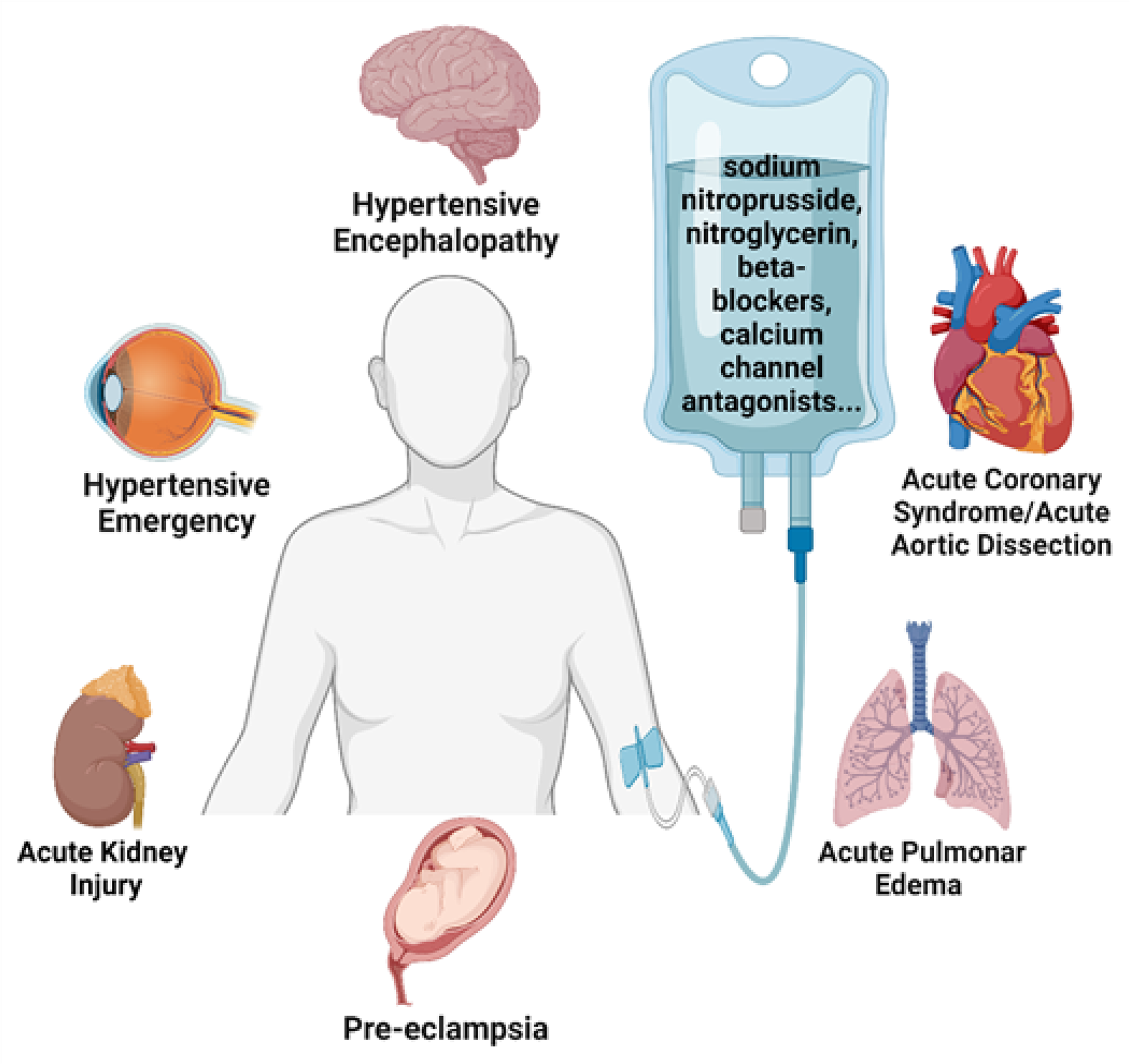
Hypertensive emergencies (HE) are life-threatening conditions triggered by sudden increases in blood pressure (BP) exceeding 180 mmHg systolic and/or 110 mmHg diastolic levels, often resulting in acute organ damage (AOD) and the risk of death. This article discusses contemporary practices in diagnosing and managing these episodes, emphasizing early recognition and immediate therapeutic intervention. It highlights the significance of a meticulous diagnostic assessment for appropriate clinical and therapeutic approaches, including detailed medical history, physical examination, and complementary investigations. Treatment focuses on the judicious use of intravenous antihypertensive agents such as sodium nitroprusside, nitroglycerin (NTG), beta-blockers, and calcium channel antagonists, stressing careful administration to prevent further harm. Individualization of treatment in HE is imperative and should be meticulously tailored to the patient’s clinical profile and main complications, notably hypertensive encephalopathy, acute pulmonary edema, acute coronary syndromes, acute aortic dissection, and preeclampsia. These conditions require differentiated approaches due to their severity. The article underscores the scarcity of randomized controlled clinical trials addressing all daily practice questions regarding managing HE. This is due to the complexity of available drugs, clinical conditions, adverse effects, and drug interactions in various scenarios. Consequently, clinical wisdom and careful observation remain pivotal in decision-making. It also addresses the complexity of accurately measuring BP in emergency settings, which can pose an additional diagnostic challenge. Finally, it emphasizes the need for new evidence to guide therapeutic practices in HE, aiming to improve patient care and clinical outcomes continuously.

  • Adrenergic beta-Antagonists
  • antihypertensive agents
  • calcium channel blockers
  • Cardiovascular Diseases
  • hypertensive crisis
Read Full Article
Creative Commons Attribution (CC BY) Creative Commons license
28/02/2025 DOI: 10.36660/ijcs.20240117
Figure 1
ABC
Original Article

Antihypertensive Activity of Sauromatum guttatum Mediated by Vasorelaxation and Myocardial Depressant Effects

Bibi Rabia et al. Umme Salma Kashif Bashir Taous Khan Abdul Jabbar Shah

Abstract

Background:

Sauromatum guttatum (S. guttatum) is used in the treatment of blood disorders and reportedly has a spasmolytic activity through Ca2+channel inhibition.

Objectives:

The aim of this study was to investigate the antihypertensive potential of S. guttatum in high salt-induced hypertensive Sprague-Dawley (SD) rat model (HSHRs).

Methods:

SD rats were divided into normotensive, hypertensive, S. guttatum and verapamil treated groups. S. guttatum crude extract (Sg.Cr) (100, 150 and 300 mg/kg/day) and verapamil (5, 10 and 15 mg/kg/day) were administered orally along with NaCl. Aortic rings and right atrial strips from normotensive rats were used to investigate the underlying mechanisms. The level of statistical significance was set at 5%.

Results:

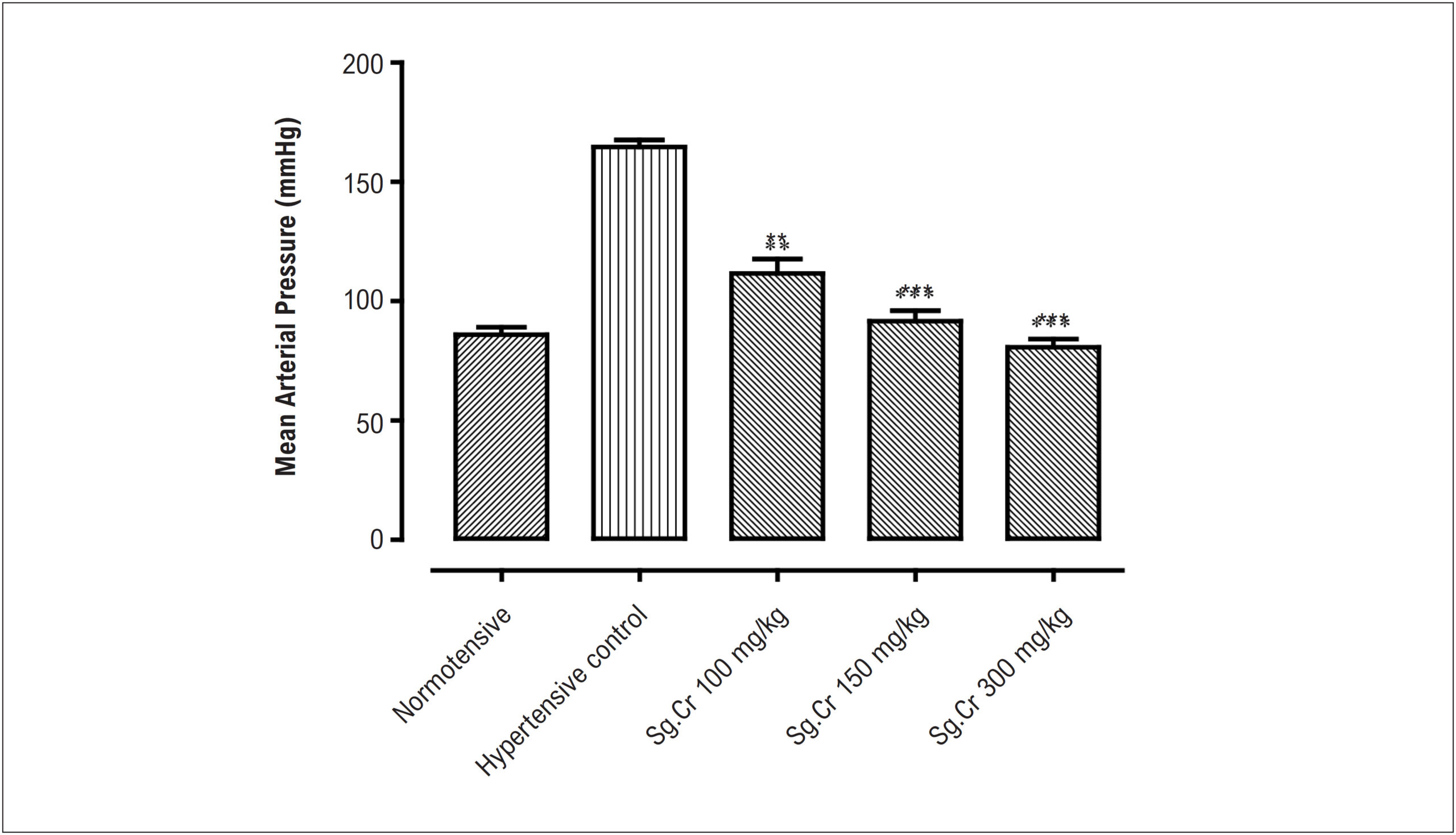
Mean arterial pressure decreased in the Sg.Cr and verapamil-treated hypertensive groups in a dose-dependent manner (p < 0.001). In the vascular reactivity study, acetylcholine induced relaxations with an EC50value of 0.6 µ g/mL (0.3–1.0) in Sg.Cr-treated hypertensive rats (300 mg/kg), suggesting endothelial preservation. In isolated normotensive rat aorta, Sg.Cr-treated rats showed vasorelaxation with an EC50value of 0.15 mg/mL (0.10-0.20), ablated by endothelial denudation or pretreatment withL-NAME and atropine. Sg.Cr treatment caused relaxation against high K+-induced contractions, like verapamil. Sg.Cr showed negative inotropic (82%) and chronotropic effects (56%) in isolated rat atrial preparations reduced with atropine. The phytochemical investigation indicated presence of alkaloids, flavonoids and tannins.

Conclusion:

S. guttatum has a vasodilatory effect through endothelial function preservation, muscarinic receptor-mediated NO release and Ca2+movement inhibition, while atrial myocardial depressant effect can be linked to the muscarinic receptor. These findings provide pharmacological base for using S. guttatum extract as an antihypertensive medication.

  • Antihypertensive
  • Blood Pressure
  • calcium channel blockers
  • Cardiac Performance
  • Hypertension
  • Rats
  • Sauromatum guttatum
  • Vasodilatation
Read Full Article
Creative Commons Attribution (CC BY) Creative Commons license
04/09/2021 DOI: 10.36660/abc.20200055
Figure 1
ABC
Case Report

Propafenone Overdose: From Cardiogenic Shock to Brugada Pattern

Julio Gil et al. Bruno Marmelo Luís Abreu Hugo Antunes … Luís Ferreira dos Santos José Costa Cabral

Introduction

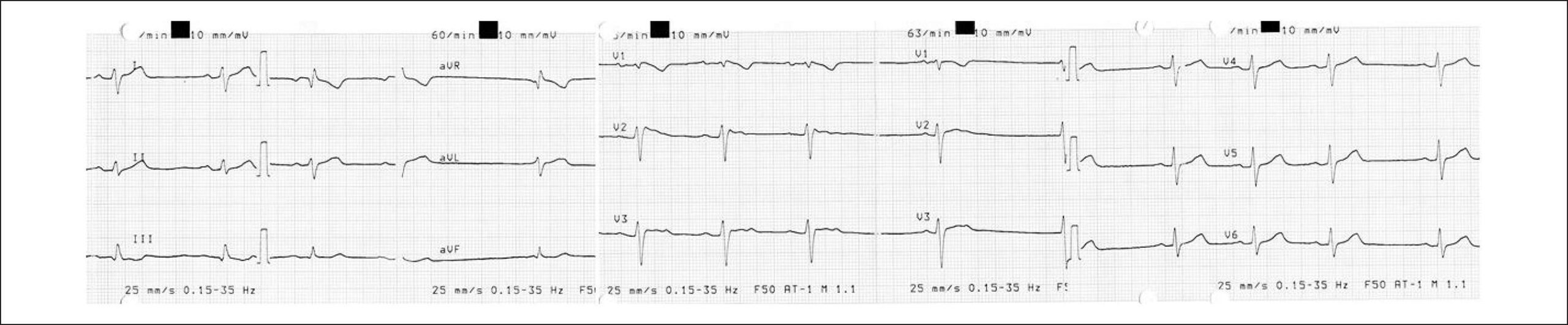
Propafenone is a class IC antiarrhythmic drug used in the treatment of ventricular and supraventricular arrhythmias.– It is primarily a potent sodium channel blocker, yet also exhibits beta-blocking and calcium channel blocking activity.,, Propafenone is able to induce important ECG changes, namely prolongation of the PR interval, bundle branch block, wide QRS and QT intervals, as well as ventricular tachycardia or bradycardia., It may be associated with significant proarrhythmogenic effects, even at therapeutic doses. A fatal overdose on propafenone is usually attributed to conduction abnormalities, leading to asystole or electromechanical dissociation. The authors describe two clinical cases of propafenone intoxication with life-threatening ECG changes, but with a favorable final outcome.

[…]

  • Anti-Arrhythmia Agents
  • Arrhythmias Cardiac
  • calcium channel blockers
  • Propafenone
  • Toxicity
Read Full Article
Creative Commons Attribution (CC BY) Creative Commons license
01/03/2018 DOI: 10.5935/abc.20180033
Diltiazem as an alternative to beta-blocker in coronary artery computed tomography angiography
ABC
Artigo Original

Diltiazem as an alternative to beta-blocker in coronary artery computed tomography angiography

Carlos Eduardo Rochitte et al. Guilherme Santana Antunes Azevedo Afonso Akio Shiozaki Clerio Francisco Azevedo Roberto Kalil Filho

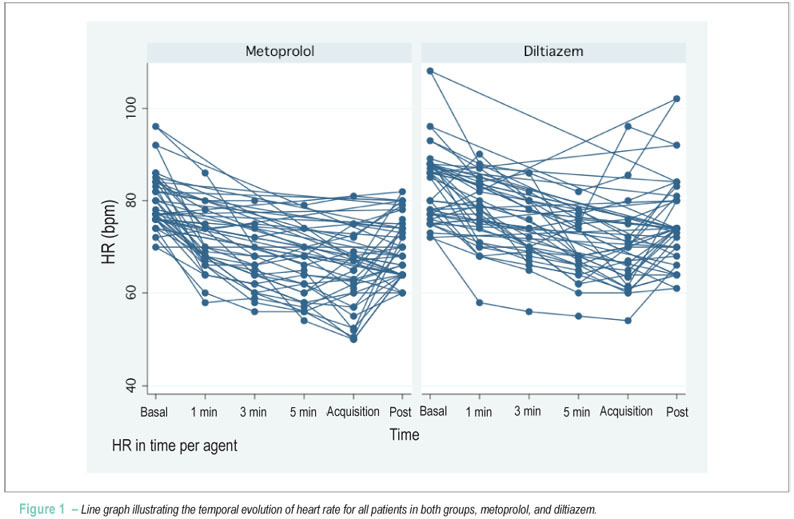
BACKGROUND: Reducing heart rate (HR) in CT angiography of the coronary arteries (CTACor) is critical to image quality. The effectiveness of calcium channel blockers as alternatives for patients with contraindications to beta-blockers has not been established. OBJECTIVES: To compare the efficacy in the reduction of HR and RR variability of metoprolol and diltiazem in CTACor. METHODS: Prospective, randomized, open study that included patients with clinical indication of CTACor in sinus rhythm with HR > 70 bpm and no use of agents that could interfere with HR. Fifty patients were randomized to the groups: metoprolol IV 5-15 mg or up to HR ≤ 60 bpm (M), and diltiazem IV 0.25 to 0.60 mg/kg or up to HR ≤ 60 bpm (D). Blood pressure (BP) and HR were measured at baseline, 1 minute, 3 minutes and 5 minutes after the agents, at the acquisition and after CTACor. RESULTS: HR reduction in absolute values was higher in group M than in group D (1, 3, 5 min, acquisition and post-test). The percentage reduction of HR was significantly higher in group M only 1 min and 3 min after the start of the agents. There was no difference in 5 min at acquisition and after examination. The percentage RR variability in group D was lower than that in group M during acquisition (RR variability/mean HR of acquisition). A single case of AVB, 2:1 Mobitz I occurred, which was spontaneously reverted (group D). CONCLUSION: We conclude that diltiazem is an effective and safe alternative to beta-blockers in the reduction of HR when performing computed tomography angiography of coronary arteries. (Arq Bras Cardiol. 2012; [online].ahead print, PP.0-0)

  • calcium channel blockers
  • Coronary Angiography
  • Coronary Vessels
  • Diltiazem
  • Tomography
Read Full Article
Creative Commons Attribution (CC BY) Creative Commons license
26/06/2012 DOI: 10.1590/S0066-782X2012005000059
Vascular endothelial function in patients with coronary slow flow and the effects of nebivolol
ABC
Artigo Original

Vascular endothelial function in patients with coronary slow flow and the effects of nebivolol

Yilmaz Gunes et al. Hasan Ali Gumrukcuoglu Serkan Akdag Hakki Simsek … Musa Sahin Mustafa Tuncer

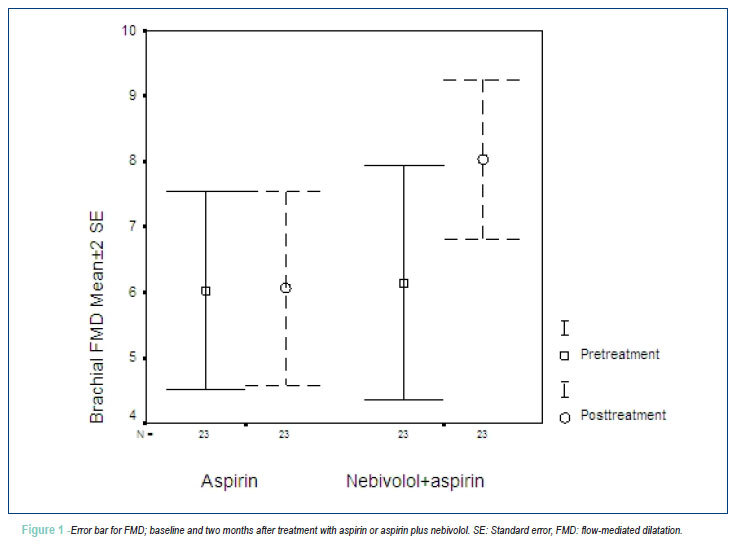
BACKGROUND: Brachial endothelial function has been associated with coronary slow flow (CSF). Increasing blood flow to brachial artery provokes endothelium to release nitric oxide (NO) with subsequent vasodilatation. Besides its β1-blocker activity, nebivolol causes vasodilatation by increasing endothelial NO release. OBJECTIVE: To assess the effects of nebivolol on vascular endothelial function in patients with CSF. METHODS: Forty-six patients with CSF and 23 individuals with normal epicardial coronary arteries were examined with transthoracic echocardiography and brachial artery ultrasonography. The patients were reevaluated two months after treatment with aspirin or aspirin plus nebivolol. RESULTS: Patients with CSF had higher body mass index (26.5 ± 3.3 vs. 23.8 ± 2.8, p < 0.001), mitral inflow isovolumetric relaxation time (IVRT) (114.9 ± 18.0 vs. 95.0 ± 22.0 msec, p < 0.001) and lower left ventricular ejection fraction (LVEF) (63.5 ± 3.1% vs. 65.4 ± 2.2, p = 0.009), HDL-cholesterol (39.4 ± 8.5 vs. 45.8 ± 7.7 mg/dL, p = 0.003) and brachial flow-mediated dilatation (FMD) (6.1 ± 3.9% vs. 17.6 ± 4.5%, p < 0.001). There were significant correlations between FMD and the presence of CSF (r = 0.800, p < 0.001) and HDL-cholesterol (r = 0.349, p = 0.003). Among Patients with CSF, although pretreatment mean FMD values were similar (6.1 ± 4.3% vs. 6.0 ± ,6%, p = 0.917) compared to aspirin alone group, posttreatment FMD was significantly higher in patients treated with aspirin plus nebivolol (6.0 ± 3.5% vs. 8.0 ± 2.9%, p = 0.047). Treatment with nebivolol was associated with a significant increase in FMD (6.0 ± 3.6 to 8.0 ± 2.9 %, p = 0.030) whereas treatment with aspirin alone was not. CONCLUSION: Endothelial function may be impaired in both coronary and brachial arteries in patients with CSF and nebivolol may be effective in the improvement of endothelial function in patients with CSF.

  • calcium channel blockers
  • Endothelium, Vascular
  • Regional Blood Flow
Read Full Article
Creative Commons Attribution (CC BY) Creative Commons license
21/10/2011 DOI: 10.1590/S0066-782X2011005000105

How to cite this article

EndNote RIS

Electronic Document Format (Vancouver)

Vieira JL, Montenegro CEL. Non-dihydropyridine Calcium Channel Blockers in Atrial Fibrillation with Mildly Reduced Ejection Fraction: Caution is Still Advised. Arquivos Brasileiros de Cardiologia 2026;123(6):e20260195.

Electronic Document Format (ABNT)

Vieira, Jefferson Luis; Montenegro, Carlos Eduardo Lucena. Non-dihydropyridine Calcium Channel Blockers in Atrial Fibrillation with Mildly Reduced Ejection Fraction: Caution is Still Advised. Arquivos Brasileiros de Cardiologia, v. 123, n. 6, e20260195, Aug. 2026.

Electronic Document Format (APA)

Vieira, J. L., & Montenegro, C. E. L. (2026). Non-dihydropyridine Calcium Channel Blockers in Atrial Fibrillation with Mildly Reduced Ejection Fraction: Caution is Still Advised. Arquivos Brasileiros de Cardiologia, 123(6), e20260195.

Electronic Document Format (ISO)

Vieira, Jefferson Luis and Montenegro, Carlos Eduardo Lucena. Non-dihydropyridine Calcium Channel Blockers in Atrial Fibrillation with Mildly Reduced Ejection Fraction: Caution is Still Advised. Arquivos Brasileiros de Cardiologia [online]. 2026, vol. 123, n. 6, [cited 2026-10-14], e20260195. Available from: <https://journals.cardiol.br/en/article/non-dihydropyridine-calcium-channel-blockers-in-atrial-fibrillation-with-mildly-reduced-ejection-fraction-caution-is-still-advised/>. ISSN 0066-782X

EndNote RIS

Electronic Document Format (Vancouver)

Silva MC, Costa Filho RC, Estato V. Strategic Use of Intravenous Medications to Protect Target Organs in Hypertensive Emergencies. International Journal of Cardiovascular Sciences 2025;38:e20240117.

Electronic Document Format (ABNT)

Silva, Mariana Costa; Costa Filho, Rubens Carmo; Estato, Vanessa. Strategic Use of Intravenous Medications to Protect Target Organs in Hypertensive Emergencies. International Journal of Cardiovascular Sciences, v. 38, e20240117, Feb. 2025.

Electronic Document Format (APA)

Silva, M. C., Costa Filho, R. C., & Estato, V. (2025). Strategic Use of Intravenous Medications to Protect Target Organs in Hypertensive Emergencies. International Journal of Cardiovascular Sciences, 38, e20240117.

Electronic Document Format (ISO)

Silva, Mariana Costa and Costa Filho, Rubens Carmo and Estato, Vanessa. Strategic Use of Intravenous Medications to Protect Target Organs in Hypertensive Emergencies. International Journal of Cardiovascular Sciences [online]. 2025, vol. 38, [cited 2026-10-14], e20240117. Available from: <https://journals.cardiol.br/en/article/strategic-use-of-intravenous-medications-to-protect-target-organs-in-hypertensive-emergencies/>. ISSN 2359-4802

EndNote RIS

Electronic Document Format (Vancouver)

Rabia B, Salma U, Bashir K, Khan T, Shah AJ. Antihypertensive Activity of Sauromatum guttatum Mediated by Vasorelaxation and Myocardial Depressant Effects. Arquivos Brasileiros de Cardiologia 2021;117(6):1093-10.

Electronic Document Format (ABNT)

Rabia, Bibi; Salma, Umme; Bashir, Kashif; Khan, Taous; Shah, Abdul Jabbar. Antihypertensive Activity of Sauromatum guttatum Mediated by Vasorelaxation and Myocardial Depressant Effects. Arquivos Brasileiros de Cardiologia, v. 117, n. 6, p. 1093-1103, Nov. 2020.

Electronic Document Format (APA)

Rabia, B., Salma, U., Bashir, K., Khan, T., & Shah, A. J. (2021). Antihypertensive Activity of Sauromatum guttatum Mediated by Vasorelaxation and Myocardial Depressant Effects. Arquivos Brasileiros de Cardiologia, 117(6), 1093-1103.

Electronic Document Format (ISO)

Rabia, Bibi and Salma, Umme and Bashir, Kashif and Khan, Taous and Shah, Abdul Jabbar. Antihypertensive Activity of Sauromatum guttatum Mediated by Vasorelaxation and Myocardial Depressant Effects. Arquivos Brasileiros de Cardiologia [online]. 2021, vol. 117, n. 6, [cited 2026-10-14], pp. 1093-1103. Available from: <https://journals.cardiol.br/en/article/antihypertensive-activity-of-sauromatum-guttatum-mediated-by-vasorelaxation-and-myocardial-depressant-effects/>. ISSN 0066-782X

EndNote RIS

Electronic Document Format (Vancouver)

Gil J, Marmelo B, Abreu L, Antunes H, Santos LF, Cabral JC. Propafenone Overdose: From Cardiogenic Shock to Brugada Pattern. Arquivos Brasileiros de Cardiologia 2018;110(3):292-4.

Electronic Document Format (ABNT)

Gil, Julio; Marmelo, Bruno; Abreu, Luís; Antunes, Hugo; Santos, Luís Ferreira dos; Cabral, José Costa. Propafenone Overdose: From Cardiogenic Shock to Brugada Pattern. Arquivos Brasileiros de Cardiologia, v. 110, n. 3, p. 292-294, Feb. 2018.

Electronic Document Format (APA)

Gil, J., Marmelo, B., Abreu, L., Antunes, H., Santos, L. F. , & Cabral, J. C. (2018). Propafenone Overdose: From Cardiogenic Shock to Brugada Pattern. Arquivos Brasileiros de Cardiologia, 110(3), 292-294.

Electronic Document Format (ISO)

Gil, Julio and Marmelo, Bruno and Abreu, Luís and Antunes, Hugo and Santos, Luís Ferreira dos and Cabral, José Costa. Propafenone Overdose: From Cardiogenic Shock to Brugada Pattern. Arquivos Brasileiros de Cardiologia [online]. 2018, vol. 110, n. 3, [cited 2026-10-14], pp. 292-294. Available from: <https://journals.cardiol.br/en/article/propafenone-overdose-from-cardiogenic-shock-to-brugada-pattern/>. ISSN 0066-782X

EndNote RIS

Electronic Document Format (Vancouver)

Rochitte CE, Azevedo GSA, Shiozaki AA, Azevedo CF, Kalil Filho R. Diltiazem as an alternative to beta-blocker in coronary artery computed tomography angiography. Arquivos Brasileiros de Cardiologia 2012;99(2):706-13.

Electronic Document Format (ABNT)

Rochitte, Carlos Eduardo; Azevedo, Guilherme Santana Antunes; Shiozaki, Afonso Akio; Azevedo, Clerio Francisco; Kalil Filho, Roberto. Diltiazem as an alternative to beta-blocker in coronary artery computed tomography angiography. Arquivos Brasileiros de Cardiologia, v. 99, n. 2, p. 706-713, Jun. 2012.

Electronic Document Format (APA)

Rochitte, C. E., Azevedo, G. S. A., Shiozaki, A. A., Azevedo, C. F., & Kalil Filho, R. (2012). Diltiazem as an alternative to beta-blocker in coronary artery computed tomography angiography. Arquivos Brasileiros de Cardiologia, 99(2), 706-713.

Electronic Document Format (ISO)

Rochitte, Carlos Eduardo and Azevedo, Guilherme Santana Antunes and Shiozaki, Afonso Akio and Azevedo, Clerio Francisco and Kalil Filho, Roberto. Diltiazem as an alternative to beta-blocker in coronary artery computed tomography angiography. Arquivos Brasileiros de Cardiologia [online]. 2012, vol. 99, n. 2, [cited 2026-10-14], pp. 706-713. Available from: <https://journals.cardiol.br/en/article/diltiazem-as-an-alternative-to-beta-blocker-in-coronary-artery-computed-tomography-angiography/>. ISSN 0066-782X

EndNote RIS

Electronic Document Format (Vancouver)

Gunes Y, Gumrukcuoglu HA, Akdag S, Simsek H, Sahin M, Tuncer M. Vascular endothelial function in patients with coronary slow flow and the effects of nebivolol. Arquivos Brasileiros de Cardiologia 2011;97(4):275-80.

Electronic Document Format (ABNT)

Gunes, Yilmaz; Gumrukcuoglu, Hasan Ali; Akdag, Serkan; Simsek, Hakki; Sahin, Musa; Tuncer, Mustafa. Vascular endothelial function in patients with coronary slow flow and the effects of nebivolol. Arquivos Brasileiros de Cardiologia, v. 97, n. 4, p. 275-280, Oct. 2011.

Electronic Document Format (APA)

Gunes, Y., Gumrukcuoglu, H. A., Akdag, S., Simsek, H., Sahin, M., & Tuncer, M. (2011). Vascular endothelial function in patients with coronary slow flow and the effects of nebivolol. Arquivos Brasileiros de Cardiologia, 97(4), 275-280.

Electronic Document Format (ISO)

Gunes, Yilmaz and Gumrukcuoglu, Hasan Ali and Akdag, Serkan and Simsek, Hakki and Sahin, Musa and Tuncer, Mustafa. Vascular endothelial function in patients with coronary slow flow and the effects of nebivolol. Arquivos Brasileiros de Cardiologia [online]. 2011, vol. 97, n. 4, [cited 2026-10-14], pp. 275-280. Available from: <https://journals.cardiol.br/en/article/vascular-endothelial-function-in-patients-with-coronary-slow-flow-and-the-effects-of-nebivolol/>. ISSN 0066-782X

  • About ABC Family
  • Internal Regulation
  • Editorial Board
  • Brazilian Society of Cardiology (SBC)

Issues

SBC Guidelines

  • Videos
  • Podcasts
  • News