ABC Family Arquivos Brasileiros de Cardiologia International Journal of Cardiovascular Sciences ABC Heart Failure & Cardiomyopathy ABC Imagem Cardiovascular
Português English
ABC Family
Português English
  • About
    • About ABC Family
    • Internal Regulation
    • Editorial Board
    • Brazilian Society of Cardiology (SBC)
  • Issues
  • SBC Guidelines
  • Content
    • Videos
    • Podcasts
    • News
  • About
    • About ABC Family
    • Internal Regulation
    • Editorial Board
    • Brazilian Society of Cardiology (SBC)
  • Issues
  • SBC Guidelines
  • Content
    • Videos
    • Podcasts
    • News

ABC Family

  • ABC Family
  • Arquivos Brasileiros de Cardiologia
  • International Journal of Cardiovascular Sciences
  • ABC Heart Failure & Cardiomyopathy
  • ABC Imagem Cardiovascular
Search in

No content found.

Journals
Ordering
Article types
Others

  1. Home
  2. Keyword: Heart-Assist Devices
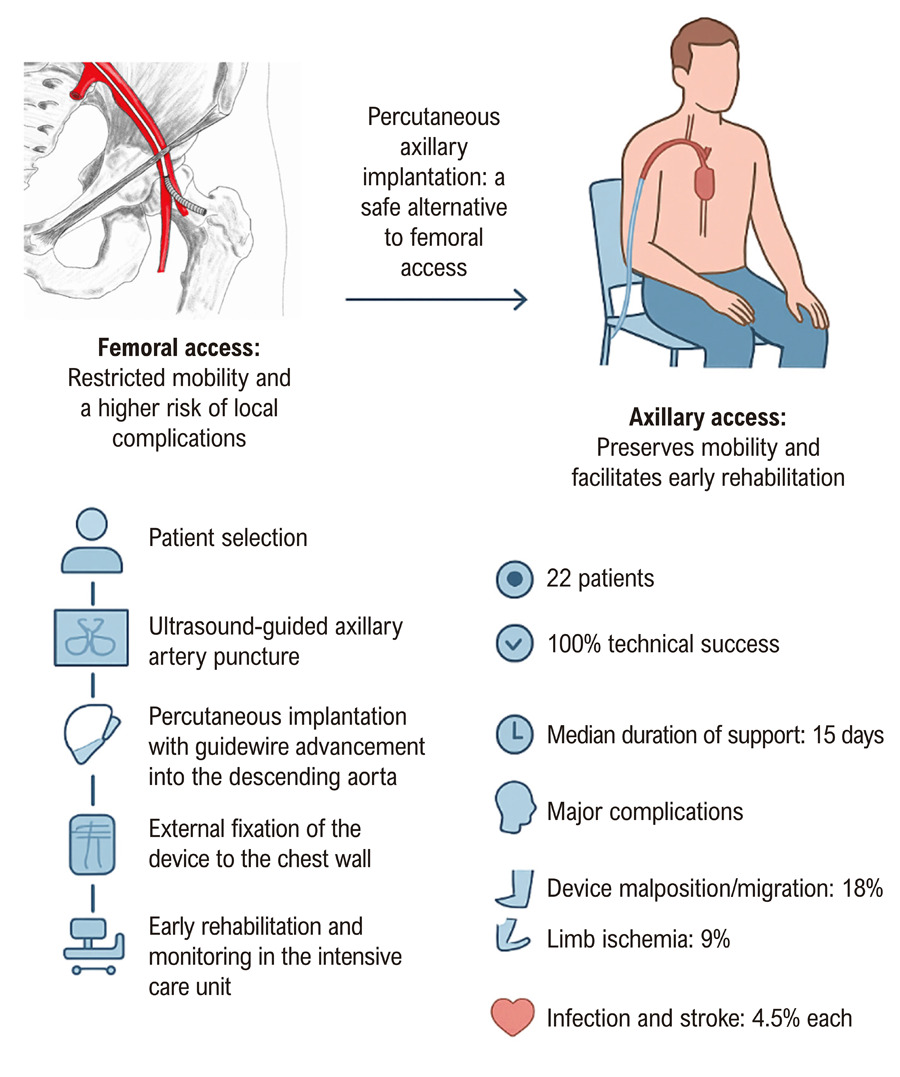
Percutaneous Axillary Intra-Aortic Balloon Pump Implantation in Patients Hospitalized with Heart Failure: Initial Brazilian Experience
ABC
Original Article

Percutaneous Axillary Intra-Aortic Balloon Pump Implantation in Patients Hospitalized with Heart Failure: Initial Brazilian Experience

Bruno Alves da Mota Rocha et al. Pedro H. M. C. de Melo Luis Mapa Rafael Nunes Oliveira … Antônio Fernando Freire Hernán Patricio García Mejía Vanessa Corcioli Bellini Liliane Kopel Silvia Gelás Lage Fabiana Goulart Marcondes-Braga Sandrigo Mangini Monica S. Ávila Iascara Wozniak de Campos Fernando Bacal Fábio Sândoli de Brito Jr Alexandre A. Abizaid Pedro Felipe Gomes Nicz

Abstract

Background

The intra-aortic balloon pump (IABP) is the most widely used mechanical circulatory support device for patients with advanced heart failure (HF) in our setting. However, femoral implantation restricts patient mobility during support.

Objective

To report the initial experience of a Brazilian advanced HF referral center with percutaneous axillary IABP implantation.

Methods

Consecutive patients hospitalized for HF who underwent percutaneous axillary IABP implantation at a tertiary cardiology referral center were included. A p-value < 0.05 was considered statistically significant.

Results

Between December 2020 and December 2023, 22 patients underwent percutaneous axillary IABP implantation. The mean age was 53 ± 10.7 years. All patients were hospitalized with refractory HF and were listed for heart transplantation. The procedure was successfully performed in all patients selected for the axillary approach. The median duration of support was 15 days (interquartile range: 7–28 days). Observed complications included device migration (18.2%), limb ischemia (9.1%), and isolated infectious and neurological events. Half of the patients either underwent heart transplantation or were successfully weaned from mechanical support.

Conclusion

The initial experience with percutaneous axillary IABP implantation demonstrated that the technique is feasible, safe, and reproducible. Further studies are needed to establish the role of this strategy within the continuum of care for patients hospitalized with advanced HF while awaiting heart transplantation.
  • Heart Failure
  • Heart Transplantation
  • Heart-Assist Devices
  • Intra-Aortic Balloon Pumping
Read Full Article
Creative Commons Attribution (CC BY) Creative Commons license
25/09/2026 DOI: 10.36660/abc.20250735i Views 9
Figure 1
ABCHF
Viewpoint

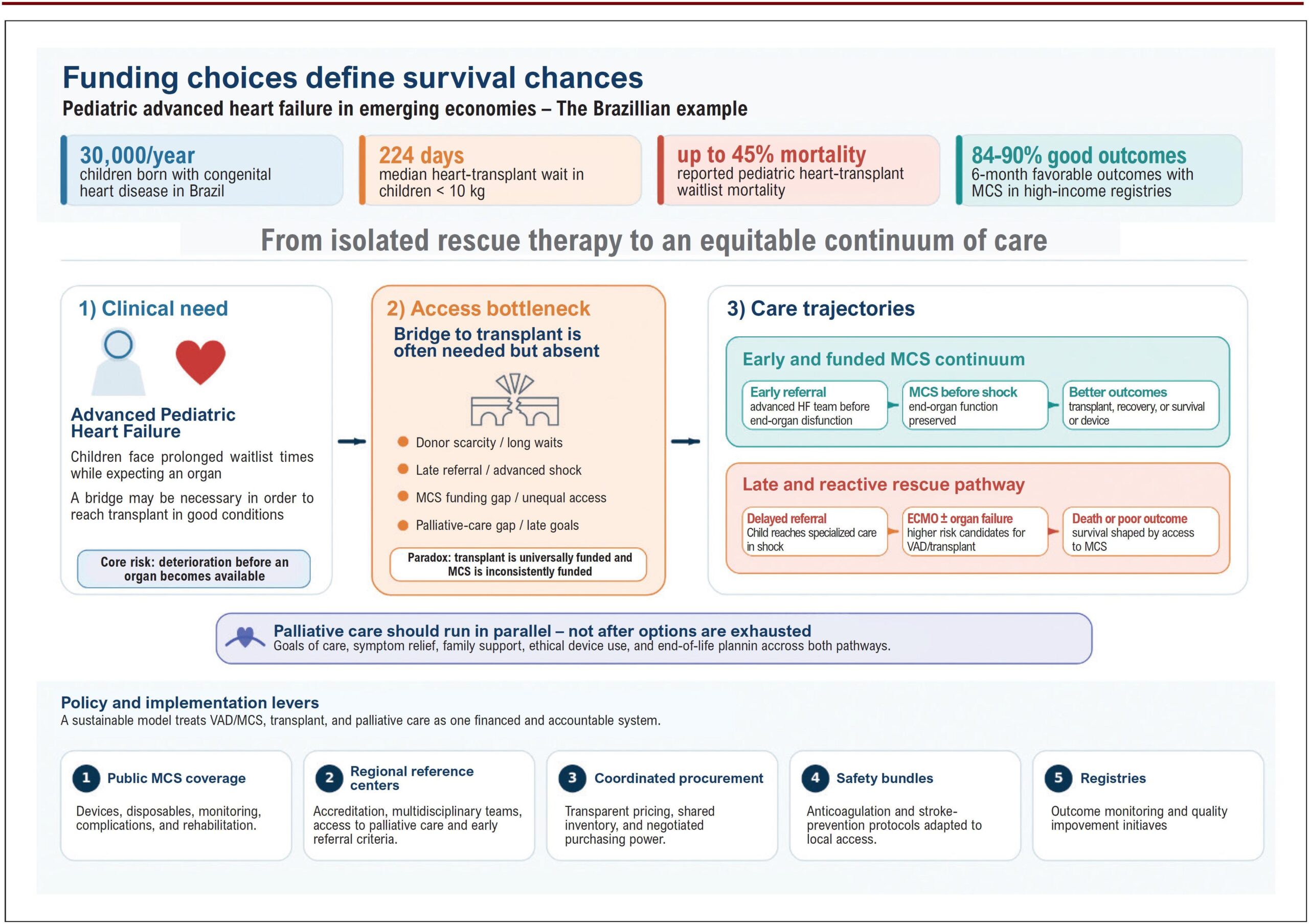
What We Choose to Fund Defines Who We Choose to Save: Pediatric Heart Failure in Emerging Economies

Carolina Vieira de Campos et al. Luiz Fernando Caneo Tamara J. Pimenta Desiree S. Machado

Management of pediatric advanced heart failure (HF) in low- to middle-income countries faces substantial and interconnected challenges, including severely limited access to specialized care, a shortage of adequately trained healthcare professionals, delayed referrals, and high mortality rates. These systemic constraints significantly restrict both the availability and the effectiveness of life-saving therapies for children with end-stage HF.

A deeper understanding of mechanical circulatory support (MCS) in emerging economies – illustrated here through the Brazilian experience – provides a valuable foundation for identifying structural, logistical, and ethical barriers to care. Such analysis also informs the development of strategies aimed at the sustainable and equitable expansion of advanced HF therapies for children.

[…]

  • Extracorporeal Membrane Oxygenation
  • Heart Failure
  • Heart Transplantation
  • Heart-Assist Devices
  • Pediatrics
Read Full Article
Creative Commons Attribution (CC BY) Creative Commons license
11/09/2026 DOI: 10.36660/abchf.20260014i Views 1
Figure 1
ABC
Case Report

Brazil's First High-Risk Percutaneous Coronary Intervention with Hemodynamic Support from a Percutaneous Pulsatile Device: A Case Report

André M. Nicolau et al. Pedro H. M. C. de Melo Lucas Aguiar Alencar de Oliveira Rafael Bergo … Thiago A. Kleinsorge Roger Renault Godinho Fábio Sândoli de Brito Jr Alexandre A. Abizaid Carlos de Magalhães Campos

Abstract

Percutaneous coronary intervention (PCI) is the most widely used coronary revascularization method worldwide, even in cases of high anatomical complexity. However, this increasing complexity has increased the risks associated with the procedure. Mechanical circulatory assist devices (MCADs), such as the iVAC 2L, have been used for hemodynamic support in high-risk PCIs.

We describe the first case in Brazil of PCI performed with the support of the iVAC 2L, a pulsatile MCAD. The patient, an 81-year-old man, had functional class III angina and severe lesions in the left main coronary artery (LMCA), left anterior descending artery (LAD), and circumflex artery (CX), associated with extensive calcification. The procedure was performed with the support of the iVAC 2L, and PCI was performed with stenting of the LMCA, LAD, and CX. The entire procedure was performed without the need for vasoactive drugs, and the device was removed without vascular complications.

High-risk PCI has become increasingly common, often requiring ventricular mechanical support. The iVAC 2L offers advantages such as pulsatile flow and ease of implantation, making it an alternative to the intra-aortic balloon pump and Impella. This report highlights the potential use of the iVAC 2L in Brazil, expanding therapeutic options for high-risk patients.

  • Coronary Artery Disease
  • Heart-Assist Devices
  • Percutaneous Coronary Intervention
Read Full Article
Creative Commons Attribution (CC BY) Creative Commons license
15/12/2025 DOI: 10.36660/abc.202250236i Views 1
Central Illustration
ABCHF
Review Article

History and Application of Mechanical Assist Devices as a Bridge to Heart Transplant: A Review and Perspectives in Brazil

Alvaro Perazzo et al. Fabio Antônio Gaiotto Samuel Padovani Steffen Shirlyne Fabianni Dias Gaspar … Vanessa Simioni Faria Rebeca Cavalcante Silva Ferreira Aline Carbonera Danielle Louvet Guazzelli Jael Andrea Rioja Gamboa Leonardo Flud Ideal Helen Lima Gomes Alexandre Targino Gomes Falcão Filho Andre Loureiro Fernandes Luiza Hermanny Campos Camila Lambert Steffen Carolina Limongi Renato Leal Varjão Monica Samuel Avila Luis Fernando Bernal da Costa Seguro Sandrigo Mangini Fabiana Goulart Marcondes-Braga Gabriel Barros Aulicino Iascara Wozniak de Campos Ronaldo Honorato Barros Santos Domingos Dias Lourenço Filho Mariusz Kowalewski Daniele Ronco Matteo Matteucci Paolo Meani Claudio Francesco Russo Michele di Mauro Silvia Mariani Antonio Loforte Dominik Wiedmann Fernando Bacal Glenn Whitman Prakash Punjabi Roberto Lorusso Fabio Biscegli Jatene

Abstract

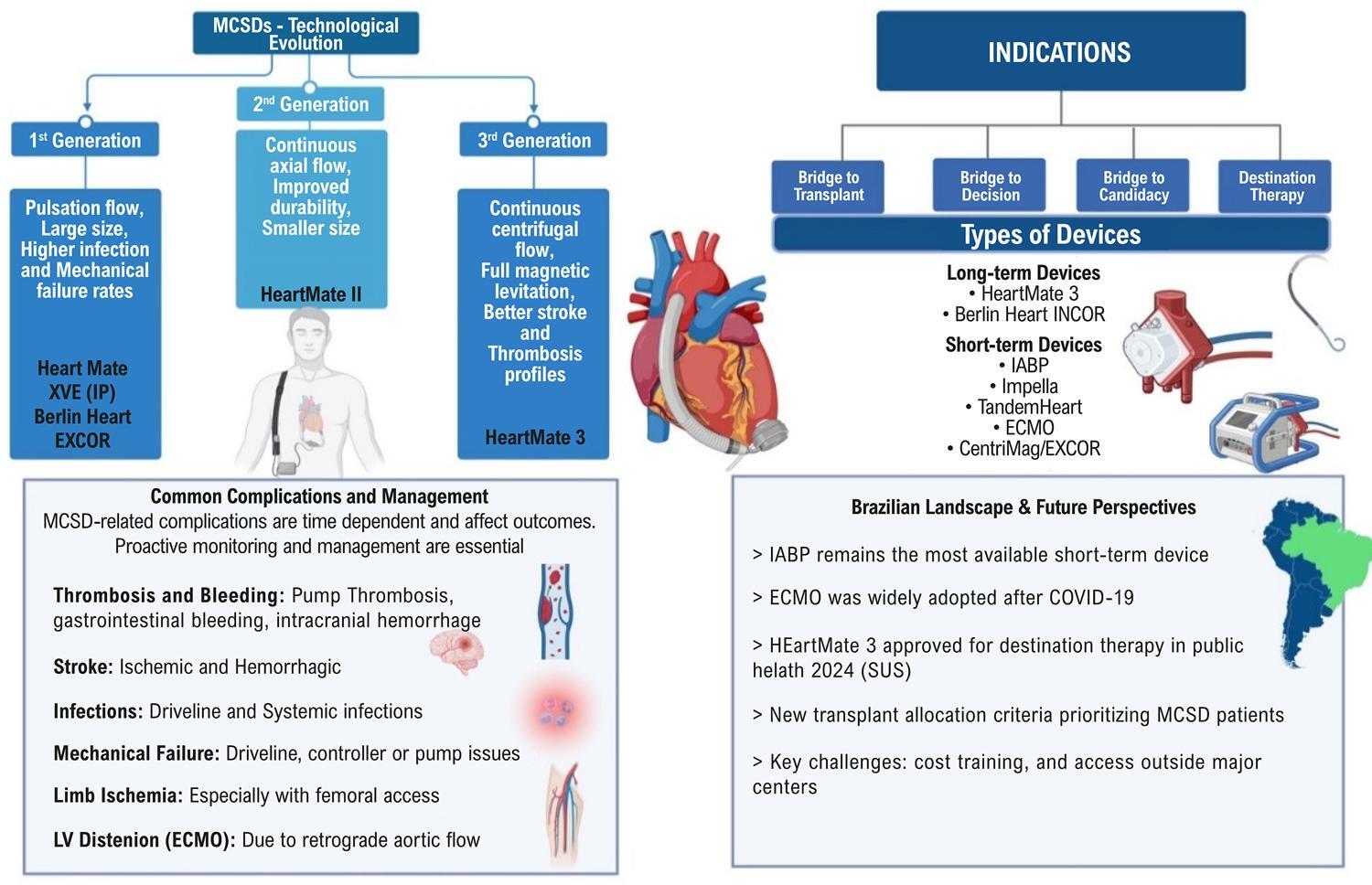
Mechanical circulatory support (MCS) devices have evolved significantly over the past decades and play a vital role in managing end-stage heart failure, especially as a bridge to heart transplantation. From the pioneering heart-lung machines to third-generation ventricular assist devices (VADs), MCS technology has advanced to provide more durable, efficient, and safer options for both short- and long-term support. This review outlines the historical development of mechanical assist devices, the types of available supports – ranging from intra-aortic balloon pumps and extracorporeal membrane oxygenation to implantable devices like HeartMate 3 – and their clinical indications and complications. Special attention is given to right ventricular dysfunction, thromboembolic and hemorrhagic complications, and infections, which remain major challenges in the management of patients with MCS devices. In Brazil, despite the growing evidence supporting MCS in critically ill patients, access remains limited due to financial and systemic constraints. The review explores the current landscape of device availability in the country, national guidelines, cost-effectiveness data, and the impact of recent changes in transplant allocation criteria that prioritize patients receiving mechanical support. Notably, the approval of long-term VADs for destination therapy in the public health system in 2024 marks a significant milestone. This review offers a comprehensive perspective on MCS utilization, highlighting both global advances and Brazil-specific challenges. By identifying gaps in access and proposing future directions, it advocates for expanded use of these life-saving technologies to improve survival and quality of life in advanced heart failure patients.

  • Cardiology
  • Heart Transplantation
  • Heart-Assist Devices
  • Thoracic Surgery
Read Full Article
Creative Commons Attribution (CC BY) Creative Commons license
14/08/2025 DOI: 10.36660/abchf.20250016i Views 2
ABCHF
Editorial

Long-Term Ventricular Assist Devices: Where are We in Brazil?

Silvia Moreira Ayub-Ferreira et al. Bruno Biselli

The use of long-term ventricular assist devices (VADs) as a therapeutic option in patients with advanced heart failure (HF) refractory to drug therapy is well established worldwide. The latest update of the Interagency Registry for Mechanically Assisted Circulatory Support (INTERMACS) reported more than 27,000 VAD implants between 2010 and 2019, with approximately 3,000 implants annually in recent years. In addition, 12-month survival rates after implantation reached 82%, with significantly improved quality of life and functional capacity.

The technological development of VADs in the last decade has dramatically changed the type of device used. Between 2010 and 2014, axial-flow devices accounted for most VAD implants. Since 2017, centrifugal-flow VADs with magnetic levitation have had a significant increase in the number of implants, accounting for 75% of implanted devices in 2019.

[…]

  • Cardiogenic shock
  • Heart Failure
  • Heart-Assist Devices
Read Full Article
Creative Commons Attribution (CC BY) Creative Commons license
29/06/2022 DOI: 10.36660/abchf.20220026 Views 1
Figure 1
ABCHF
Review Article

Long-Term Ventricular Assist Devices – Main Complications in Contemporary Clinical Practice

Dayanna Machado Pires Lemos et al. Gustavo Paes Silvano Kely Regina da Luz Marco Aurélio Lumertz Saffi … Marcus Vinicius Przepiorka Vieira Fernando Luis Scolari Lívia Adams Goldraich

Abstract

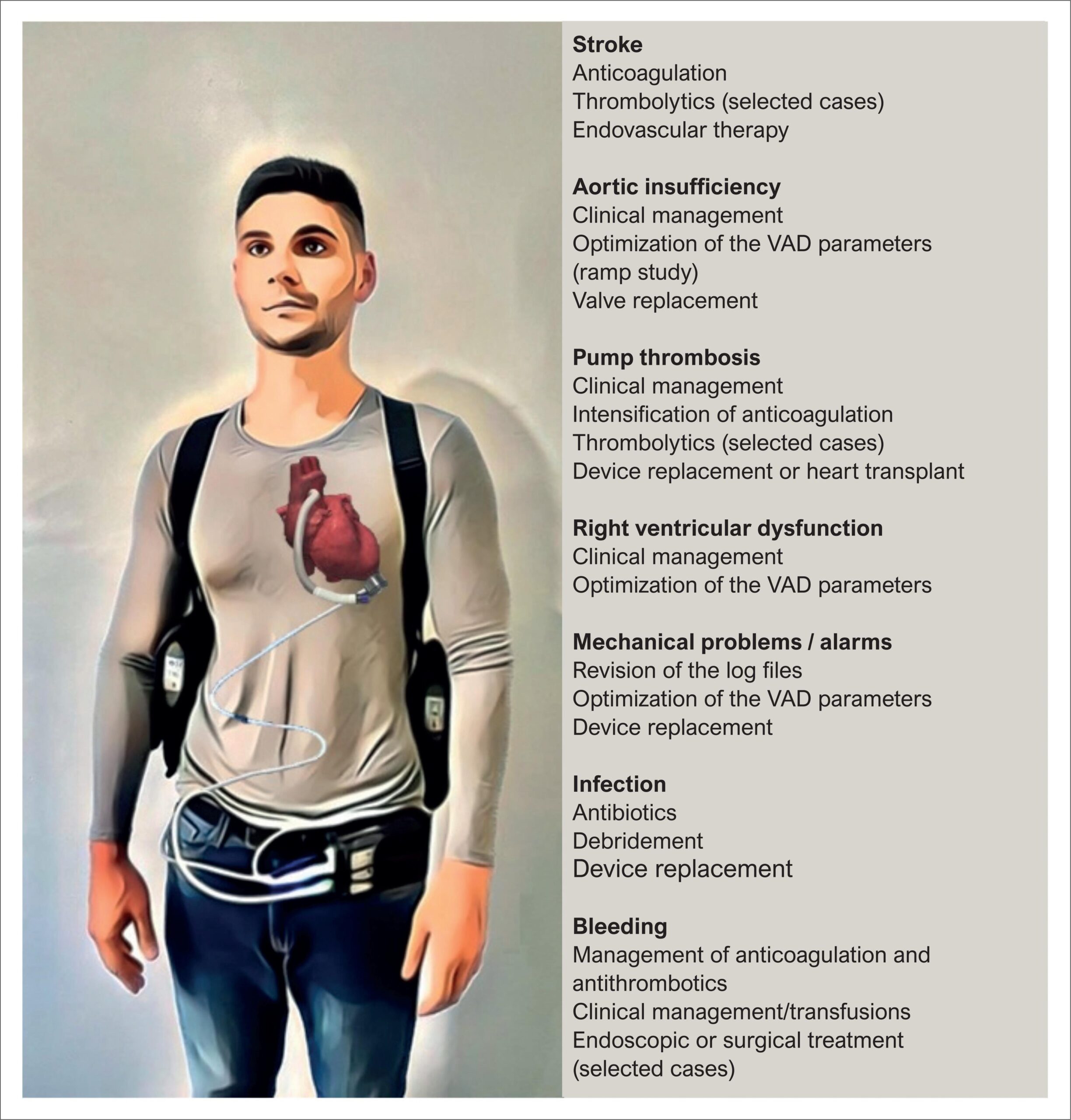
Advanced heart failure (HF) is associated with reduced quality of life and high hospitalization and mortality rates. Ventricular assist devices (VADs) promote an increase in cardiac output, and consequently improvements in body functions, functional capacity and patient survival. However, the use of VAD may be associated with complications and require systematic and specialized care. Ischemic and hemorrhagic stroke is among the most feared complications and its occurrence is related to thrombus formation in the pump. The connection between the driveline and the external power source is a potential source of infection that may extend to the mediastinum. Management of bleeding caused by anticoagulation therapy may be challenging, since discontinuation of the treatment may lead to thrombus formation. Aortic insufficiency and right ventricular dysfunction may occur, particularly in prolonged periods of support, requiring optimization of VAD parameters and clinical management. Although uncommon, mechanical failure of the VAD may occur and require replacement of the pump or even heart transplant. Thus, identification and management of the main complications of VAD in patients with advanced HF is needed, so that strategies for prevention and rigorous clinical follow-up can be implemented. This review aims to summarize the main adverse events in patients with long-term VAD.

  • Heart Failure
  • Heart-Assist Devices
  • Ventricular Dysfunction, Left
Read Full Article
Creative Commons Attribution (CC BY) Creative Commons license
29/06/2022 DOI: 10.36660/abchf.20220044 Views 1
ABC
Case Report

Left Ventricular Assist Device Followed by Heart Transplantation

Bruno Biselli et al. Silvia Moreira Ayub-Ferreira Monica Samuel Avila Fábio Antonio Gaiotto … Fabio Biscegli Jatene Edimar Alcides Bocchi

Introduction

Heart failure (HF) is the major cause of cardiovascular hospitalization in Brazil. It is estimated that approximately 1%–2% of the population present with HF and 50% of these individuals have a decreased ejection fraction.

In the last 30 years, despite the substantial improvement in the treatment of chronic HF, the quality of life and survival rates of affected patients are limited. In addition, most of these patients are refractory to standard treatment and hospitalization, and rates of death or rehospitalization within 6 months are approximately 50%.

[…]

  • Heart Failure
  • Heart Transplantation
  • Heart-Assist Devices
  • Shock, Cardiogenic
Read Full Article
Creative Commons Attribution (CC BY) Creative Commons license
01/03/2015 DOI: 10.5935/abc.20140198 Views 1
Reel Syndrome: an Unusual Complication of Cardiac Pacemaker Implantation
ABC
Image

Reel Syndrome: an Unusual Complication of Cardiac Pacemaker Implantation

Salvador Alandete Germán et al. Ronny Rodelo Haad

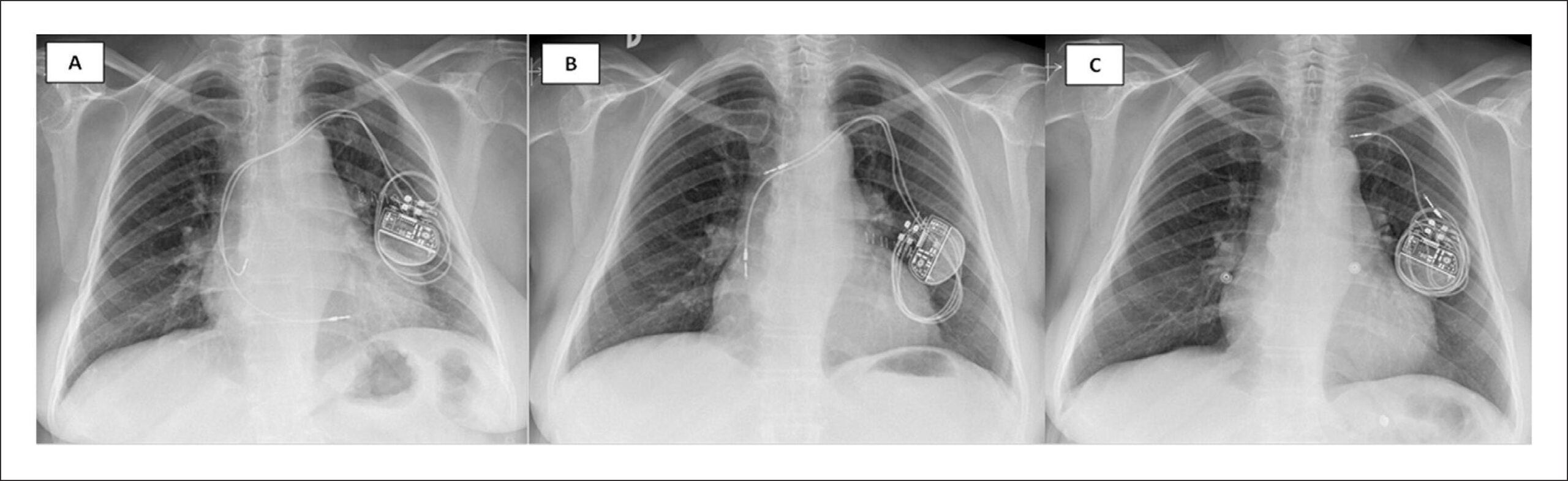
A 67-year-old woman who underwent pacemaker implantation 4 days ago (A) consulted the emergency department with complaints of perception of muscle contractions on the right side of her chest. She did not have chest pain, dyspnea, or palpitations. Physical examination did not reveal any relevant findings. Electrocardiogram showed an absence of sensing or stimulation of the right atrium and right ventricle. Chest X-ray showed the displacement of the leads into the right atrium and the superior vena cava (B). Thus, she was referred to the cardiology department for lead repositioning.

A few months later, the patient presented with the same symptoms. A repeat chest X-ray showed a similar displacement of both the leads (C).

[…]

  • Heart-Assist Devices
  • Pacemaker, Artificial
  • Radiography/utilization
Read Full Article
Creative Commons Attribution (CC BY) Creative Commons license
01/03/2015 DOI: 10.5935/abc.20140204 Views 1
Hemodynamic performance and inflammatory response during the use of VAD-InCor as a bridge to transplant
ABC
Artigo Original

Hemodynamic performance and inflammatory response during the use of VAD-InCor as a bridge to transplant

João Galantier et al. Luiz Felipe P. Moreira Anderson Benício Adolfo A. Leirner … Idágene Cestari Edmar A. Bocchi Fernando Bacal Noedir A. G. Stolf

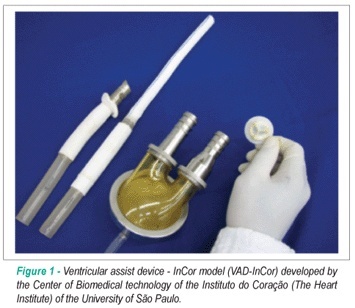
BACKGROUND: Cardiac transplantation faces the serious problem of lack of donors and it is estimated that 20 to 40% of the patients die while waiting for heart transplantation. For these patients, the use of mechanical circulatory assist devices is the only choice of survival while waiting for a donor. In Brazil, the experience with mechanical circulatory support is limited and there is no regular program regarding the use of these devices as a bridge to heart transplantation. OBJECTIVE: To evaluate the hemodynamic performance and the systemic inflammatory response during the clinical use of the InCor-type ventricular assist device (VAD-InCor) as a bridge to heart transplantation. METHODS: Between October 2003 and April 2006, 11 patients in the waiting list for heart transplantation presented hemodynamic deterioration due to refractory cardiogenic shock. Seven of these patients were submitted to VAD-InCor implantation for left ventricular assistance. The etiologic diagnosis was Chagas’ disease in 5 patients and idiopathic dilated cardiomyopathy in 2. RESULTS: The duration of left ventricular assistance ranged from 14 to 42 days (mean 26.2 days). During this period, the hemodynamic performance of the DAV-InCor was adequate to support a normal hemodynamic state. There was normalization of central venous oxygen saturation and serum lactate. Two patients were submitted to heart transplantation, while the other 5 patients died under assistance due to infection and multiple organ failure. CONCLUSION: The performance of the VAD-InCor, in the hemodynamic behavior of the studied patients, was adequate for the maintenance of a satisfactory circulatory state during the studied period. There was improvement in the tissue perfusion parameters and maintenance of systemic inflammatory response signs. There was a high incidence of complications; however, complications related to the device, which could compromise the safety of its use, were not demonstrated.

  • assisted circulation
  • Heart Transplantation
  • Heart-Assist Devices
  • heart, artificial
Read Full Article
Creative Commons Attribution (CC BY) Creative Commons license
05/01/2009 DOI: 10.1590/S0066-782X2008001700008 Views 1

How to cite this article

EndNote RIS

Electronic Document Format (Vancouver)

Rocha BAM, Melo PHMC, Mapa L, Oliveira RN, Freire AF, Mejía HPG, Bellini VC, et al. Percutaneous Axillary Intra-Aortic Balloon Pump Implantation in Patients Hospitalized with Heart Failure: Initial Brazilian Experience. Arquivos Brasileiros de Cardiologia 2026;123(8):e20250735.

Electronic Document Format (ABNT)

Rocha, Bruno Alves da Mota; Melo, Pedro H. M. C. de; Mapa, Luis; Oliveira, Rafael Nunes; Freire, Antônio Fernando; Mejía, Hernán Patricio García; Bellini, Vanessa Corcioli; Kopel, Liliane; Lage, Silvia Gelás; Marcondes-Braga, Fabiana Goulart; Mangini, Sandrigo; Ávila, Monica S.; Campos, Iascara Wozniak de; Bacal, Fernando; Brito Jr, Fábio Sândoli de; Abizaid, Alexandre A.; Nicz, Pedro Felipe Gomes. Percutaneous Axillary Intra-Aortic Balloon Pump Implantation in Patients Hospitalized with Heart Failure: Initial Brazilian Experience. Arquivos Brasileiros de Cardiologia, v. 123, n. 8, e20250735, Sep. 2026.

Electronic Document Format (APA)

Rocha, B. A. M., Melo, P. H. M. C. , Mapa, L., Oliveira, R. N., Freire, A. F., Mejía, H. P. G., Bellini, V. C., Kopel, L., Lage, S. G., Marcondes-Braga, F. G., Mangini, S., Ávila, M. S., Campos, I. W. , Bacal, F., Brito Jr, F. S. , Abizaid, A. A., & Nicz, P. F. G. (2026). Percutaneous Axillary Intra-Aortic Balloon Pump Implantation in Patients Hospitalized with Heart Failure: Initial Brazilian Experience. Arquivos Brasileiros de Cardiologia, 123(8), e20250735.

Electronic Document Format (ISO)

Rocha, Bruno Alves da Mota and Melo, Pedro H. M. C. de and Mapa, Luis and Oliveira, Rafael Nunes and Freire, Antônio Fernando and Mejía, Hernán Patricio García and Bellini, Vanessa Corcioli and Kopel, Liliane and Lage, Silvia Gelás and Marcondes-Braga, Fabiana Goulart and Mangini, Sandrigo and Ávila, Monica S. and Campos, Iascara Wozniak de and Bacal, Fernando and Brito Jr, Fábio Sândoli de and Abizaid, Alexandre A. and Nicz, Pedro Felipe Gomes. Percutaneous Axillary Intra-Aortic Balloon Pump Implantation in Patients Hospitalized with Heart Failure: Initial Brazilian Experience. Arquivos Brasileiros de Cardiologia [online]. 2026, vol. 123, n. 8, [cited 2026-10-14], e20250735. Available from: <https://journals.cardiol.br/en/article/percutaneous-axillary-intra-aortic-balloon-pump-implantation-in-patients-hospitalized-with-heart-failure-initial-brazilian-experience/>. ISSN 0066-782X

EndNote RIS

Electronic Document Format (Vancouver)

Campos CV, Caneo LF, Pimenta TJ, Machado DS. What We Choose to Fund Defines Who We Choose to Save: Pediatric Heart Failure in Emerging Economies. ABC Heart Fail Cardiomyop 2026;6:e20260014.

Electronic Document Format (ABNT)

Campos, Carolina Vieira de; Caneo, Luiz Fernando; Pimenta, Tamara J.; Machado, Desiree S.. What We Choose to Fund Defines Who We Choose to Save: Pediatric Heart Failure in Emerging Economies. ABC Heart Fail Cardiomyop, v. 6, e20260014, Sep. 2026.

Electronic Document Format (APA)

Campos, C. V. , Caneo, L. F., Pimenta, T. J., & Machado, D. S. (2026). What We Choose to Fund Defines Who We Choose to Save: Pediatric Heart Failure in Emerging Economies. ABC Heart Fail Cardiomyop, 6, e20260014.

Electronic Document Format (ISO)

Campos, Carolina Vieira de and Caneo, Luiz Fernando and Pimenta, Tamara J. and Machado, Desiree S.. What We Choose to Fund Defines Who We Choose to Save: Pediatric Heart Failure in Emerging Economies. ABC Heart Fail Cardiomyop [online]. 2026, vol. 6, [cited 2026-10-14], e20260014. Available from: <https://journals.cardiol.br/en/article/what-we-choose-to-fund-defines-who-we-choose-to-save-pediatric-heart-failure-in-emerging-economies/>

EndNote RIS

Electronic Document Format (Vancouver)

Nicolau AM, Melo PHMC, Oliveira LAA, Bergo R, Kleinsorge TA, Godinho RR, Brito Jr FS, et al. Brazil’s First High-Risk Percutaneous Coronary Intervention with Hemodynamic Support from a Percutaneous Pulsatile Device: A Case Report. Arquivos Brasileiros de Cardiologia 2025;122(10):e20250236.

Electronic Document Format (ABNT)

Nicolau, André M.; Melo, Pedro H. M. C. de; Oliveira, Lucas Aguiar Alencar de; Bergo, Rafael; Kleinsorge, Thiago A.; Godinho, Roger Renault; Brito Jr, Fábio Sândoli de; Abizaid, Alexandre A.; Campos, Carlos de Magalhães. Brazil’s First High-Risk Percutaneous Coronary Intervention with Hemodynamic Support from a Percutaneous Pulsatile Device: A Case Report. Arquivos Brasileiros de Cardiologia, v. 122, n. 10, e20250236, Dec. 2025.

Electronic Document Format (APA)

Nicolau, A. M., Melo, P. H. M. C. , Oliveira, L. A. A. , Bergo, R., Kleinsorge, T. A., Godinho, R. R., Brito Jr, F. S. , Abizaid, A. A., & Campos, C. M. (2025). Brazil’s First High-Risk Percutaneous Coronary Intervention with Hemodynamic Support from a Percutaneous Pulsatile Device: A Case Report. Arquivos Brasileiros de Cardiologia, 122(10), e20250236.

Electronic Document Format (ISO)

Nicolau, André M. and Melo, Pedro H. M. C. de and Oliveira, Lucas Aguiar Alencar de and Bergo, Rafael and Kleinsorge, Thiago A. and Godinho, Roger Renault and Brito Jr, Fábio Sândoli de and Abizaid, Alexandre A. and Campos, Carlos de Magalhães. Brazil’s First High-Risk Percutaneous Coronary Intervention with Hemodynamic Support from a Percutaneous Pulsatile Device: A Case Report. Arquivos Brasileiros de Cardiologia [online]. 2025, vol. 122, n. 10, [cited 2026-10-14], e20250236. Available from: <https://journals.cardiol.br/en/article/brazils-first-high-risk-percutaneous-coronary-intervention-with-hemodynamic-support-from-a-percutaneous-pulsatile-device-a-case-report/>. ISSN 0066-782X

EndNote RIS

Electronic Document Format (Vancouver)

Perazzo A, Gaiotto FA, Steffen SP, Gaspar SFD, Faria VS, Ferreira RCS, Carbonera A, et al. History and Application of Mechanical Assist Devices as a Bridge to Heart Transplant: A Review and Perspectives in Brazil. ABC Heart Fail Cardiomyop 2025;5(2):e20250016.

Electronic Document Format (ABNT)

Perazzo, Alvaro; Gaiotto, Fabio Antônio; Steffen, Samuel Padovani; Gaspar, Shirlyne Fabianni Dias; Faria, Vanessa Simioni; Ferreira, Rebeca Cavalcante Silva; Carbonera, Aline; Guazzelli, Danielle Louvet; Gamboa, Jael Andrea Rioja; Ideal, Leonardo Flud; Gomes, Helen Lima; Falcão Filho, Alexandre Targino Gomes; Fernandes, Andre Loureiro; Campos, Luiza Hermanny; Steffen, Camila Lambert; Limongi, Carolina; Varjão, Renato Leal; Avila, Monica Samuel; Seguro, Luis Fernando Bernal da Costa; Mangini, Sandrigo; Marcondes-Braga, Fabiana Goulart; Aulicino, Gabriel Barros; Campos, Iascara Wozniak de; Santos, Ronaldo Honorato Barros; Lourenço Filho, Domingos Dias; Kowalewski, Mariusz; Ronco, Daniele; Matteucci, Matteo; Meani, Paolo; Russo, Claudio Francesco; Mauro, Michele di; Mariani, Silvia; Loforte, Antonio; Wiedmann, Dominik; Bacal, Fernando; Whitman, Glenn; Punjabi, Prakash; Lorusso, Roberto; Jatene, Fabio Biscegli. History and Application of Mechanical Assist Devices as a Bridge to Heart Transplant: A Review and Perspectives in Brazil. ABC Heart Fail Cardiomyop, v. 5, n. 2, e20250016, Aug. 2025.

Electronic Document Format (APA)

Perazzo, A., Gaiotto, F. A., Steffen, S. P., Gaspar, S. F. D., Faria, V. S., Ferreira, R. C. S., Carbonera, A., Guazzelli, D. L., Gamboa, J. A. R., Ideal, L. F., Gomes, H. L., Falcão Filho, A. T. G., Fernandes, A. L., Campos, L. H., Steffen, C. L., Limongi, C., Varjão, R. L., Avila, M. S., Seguro, L. F. B. C., Mangini, S., Marcondes-Braga, F. G., Aulicino, G. B., Campos, I. W. , Santos, R. H. B., Lourenço Filho, D. D., Kowalewski, M., Ronco, D., Matteucci, M., Meani, P., Russo, C. F., Mauro, M. , Mariani, S., Loforte, A., Wiedmann, D., Bacal, F., Whitman, G., Punjabi, P., Lorusso, R., & Jatene, F. B. (2025). History and Application of Mechanical Assist Devices as a Bridge to Heart Transplant: A Review and Perspectives in Brazil. ABC Heart Fail Cardiomyop, 5(2), e20250016.

Electronic Document Format (ISO)

Perazzo, Alvaro and Gaiotto, Fabio Antônio and Steffen, Samuel Padovani and Gaspar, Shirlyne Fabianni Dias and Faria, Vanessa Simioni and Ferreira, Rebeca Cavalcante Silva and Carbonera, Aline and Guazzelli, Danielle Louvet and Gamboa, Jael Andrea Rioja and Ideal, Leonardo Flud and Gomes, Helen Lima and Falcão Filho, Alexandre Targino Gomes and Fernandes, Andre Loureiro and Campos, Luiza Hermanny and Steffen, Camila Lambert and Limongi, Carolina and Varjão, Renato Leal and Avila, Monica Samuel and Seguro, Luis Fernando Bernal da Costa and Mangini, Sandrigo and Marcondes-Braga, Fabiana Goulart and Aulicino, Gabriel Barros and Campos, Iascara Wozniak de and Santos, Ronaldo Honorato Barros and Lourenço Filho, Domingos Dias and Kowalewski, Mariusz and Ronco, Daniele and Matteucci, Matteo and Meani, Paolo and Russo, Claudio Francesco and Mauro, Michele di and Mariani, Silvia and Loforte, Antonio and Wiedmann, Dominik and Bacal, Fernando and Whitman, Glenn and Punjabi, Prakash and Lorusso, Roberto and Jatene, Fabio Biscegli. History and Application of Mechanical Assist Devices as a Bridge to Heart Transplant: A Review and Perspectives in Brazil. ABC Heart Fail Cardiomyop [online]. 2025, vol. 5, n. 2, [cited 2026-10-14], e20250016. Available from: <https://journals.cardiol.br/en/article/history-and-application-of-mechanical-assist-devices-as-a-bridge-to-heart-transplant-a-review-and-perspectives-in-brazil/>

EndNote RIS

Electronic Document Format (Vancouver)

Ayub-Ferreira SM, Biselli B. Long-Term Ventricular Assist Devices: Where are We in Brazil?. ABC: Heart Failure & Cardiomyopathy 2022;2(2):131-2.

Electronic Document Format (ABNT)

Ayub-Ferreira, Silvia Moreira; Biselli, Bruno. Long-Term Ventricular Assist Devices: Where are We in Brazil?. ABC: Heart Failure & Cardiomyopathy, v. 2, n. 2, p. 131-132, Jun. 2022.

Electronic Document Format (APA)

Ayub-Ferreira, S. M., & Biselli, B. (2022). Long-Term Ventricular Assist Devices: Where are We in Brazil?. ABC: Heart Failure & Cardiomyopathy, 2(2), 131-132.

Electronic Document Format (ISO)

Ayub-Ferreira, Silvia Moreira and Biselli, Bruno. Long-Term Ventricular Assist Devices: Where are We in Brazil?. ABC: Heart Failure & Cardiomyopathy [online]. 2022, vol. 2, n. 2, [cited 2026-10-14], pp. 131-132. Available from: <https://journals.cardiol.br/en/article/long-term-ventricular-assist-devices-where-are-we-in-brazil/>

EndNote RIS

Electronic Document Format (Vancouver)

Lemos DMP, Silvano GP, Luz KR, Saffi MAL, Vieira MVP, Scolari FL, Goldraich LA, et al. Long-Term Ventricular Assist Devices – Main Complications in Contemporary Clinical Practice. ABC: Heart Failure & Cardiomyopathy 2022;2(2):182-91.

Electronic Document Format (ABNT)

Lemos, Dayanna Machado Pires; Silvano, Gustavo Paes; Luz, Kely Regina da; Saffi, Marco Aurélio Lumertz; Vieira, Marcus Vinicius Przepiorka; Scolari, Fernando Luis; Goldraich, Lívia Adams. Long-Term Ventricular Assist Devices – Main Complications in Contemporary Clinical Practice. ABC: Heart Failure & Cardiomyopathy, v. 2, n. 2, p. 182-191, Jun. 2022.

Electronic Document Format (APA)

Lemos, D. M. P., Silvano, G. P., Luz, K. R. , Saffi, M. A. L., Vieira, M. V. P., Scolari, F. L., & Goldraich, L. A. (2022). Long-Term Ventricular Assist Devices – Main Complications in Contemporary Clinical Practice. ABC: Heart Failure & Cardiomyopathy, 2(2), 182-191.

Electronic Document Format (ISO)

Lemos, Dayanna Machado Pires and Silvano, Gustavo Paes and Luz, Kely Regina da and Saffi, Marco Aurélio Lumertz and Vieira, Marcus Vinicius Przepiorka and Scolari, Fernando Luis and Goldraich, Lívia Adams. Long-Term Ventricular Assist Devices – Main Complications in Contemporary Clinical Practice. ABC: Heart Failure & Cardiomyopathy [online]. 2022, vol. 2, n. 2, [cited 2026-10-14], pp. 182-191. Available from: <https://journals.cardiol.br/en/article/long-term-ventricular-assist-devices-main-complications-in-contemporary-clinical-practice/>

EndNote RIS

Electronic Document Format (Vancouver)

Biselli B, Ayub-Ferreira SM, Avila MS, Gaiotto FA, Jatene FB, Bocchi EA. Left Ventricular Assist Device Followed by Heart Transplantation. Arquivos Brasileiros de Cardiologia 2015;104(3):e22-4.

Electronic Document Format (ABNT)

Biselli, Bruno; Ayub-Ferreira, Silvia Moreira; Avila, Monica Samuel; Gaiotto, Fábio Antonio; Jatene, Fabio Biscegli; Bocchi, Edimar Alcides. Left Ventricular Assist Device Followed by Heart Transplantation. Arquivos Brasileiros de Cardiologia, v. 104, n. 3, p. e22-e24, Feb. 2015.

Electronic Document Format (APA)

Biselli, B., Ayub-Ferreira, S. M., Avila, M. S., Gaiotto, F. A., Jatene, F. B., & Bocchi, E. A. (2015). Left Ventricular Assist Device Followed by Heart Transplantation. Arquivos Brasileiros de Cardiologia, 104(3), e22-e24.

Electronic Document Format (ISO)

Biselli, Bruno and Ayub-Ferreira, Silvia Moreira and Avila, Monica Samuel and Gaiotto, Fábio Antonio and Jatene, Fabio Biscegli and Bocchi, Edimar Alcides. Left Ventricular Assist Device Followed by Heart Transplantation. Arquivos Brasileiros de Cardiologia [online]. 2015, vol. 104, n. 3, [cited 2026-10-14], pp. e22-e24. Available from: <https://journals.cardiol.br/en/article/left-ventricular-assist-device-followed-by-heart-transplantation/>. ISSN 0066-782X

EndNote RIS

Electronic Document Format (Vancouver)

Germán SA, Haad RR. Reel Syndrome: an Unusual Complication of Cardiac Pacemaker Implantation. Arquivos Brasileiros de Cardiologia 2015;104(3):e26.

Electronic Document Format (ABNT)

Germán, Salvador Alandete; Haad, Ronny Rodelo. Reel Syndrome: an Unusual Complication of Cardiac Pacemaker Implantation. Arquivos Brasileiros de Cardiologia, v. 104, n. 3, p. e26-e26, Feb. 2015.

Electronic Document Format (APA)

Germán, S. A., & Haad, R. R. (2015). Reel Syndrome: an Unusual Complication of Cardiac Pacemaker Implantation. Arquivos Brasileiros de Cardiologia, 104(3), e26-e26.

Electronic Document Format (ISO)

Germán, Salvador Alandete and Haad, Ronny Rodelo. Reel Syndrome: an Unusual Complication of Cardiac Pacemaker Implantation. Arquivos Brasileiros de Cardiologia [online]. 2015, vol. 104, n. 3, [cited 2026-10-14], pp. e26-e26. Available from: <https://journals.cardiol.br/en/article/reel-syndrome-an-unusual-complication-of-cardiac-pacemaker-implantation/>. ISSN 0066-782X

EndNote RIS

Electronic Document Format (Vancouver)

Galantier J, Moreira LFP, Benício A, Leirner AA, Cestari I, Bocchi EA, Bacal F, et al. Hemodynamic performance and inflammatory response during the use of VAD-InCor as a bridge to transplant. Arquivos Brasileiros de Cardiologia 2009;91(5):327-34.

Electronic Document Format (ABNT)

Galantier, João; Moreira, Luiz Felipe P.; Benício, Anderson; Leirner, Adolfo A.; Cestari, Idágene; Bocchi, Edmar A.; Bacal, Fernando; Stolf, Noedir A. G.. Hemodynamic performance and inflammatory response during the use of VAD-InCor as a bridge to transplant. Arquivos Brasileiros de Cardiologia, v. 91, n. 5, p. 327-334, Jan. 2009.

Electronic Document Format (APA)

Galantier, J., Moreira, L. F. P., Benício, A., Leirner, A. A., Cestari, I., Bocchi, E. A., Bacal, F., & Stolf, N. A. G. (2009). Hemodynamic performance and inflammatory response during the use of VAD-InCor as a bridge to transplant. Arquivos Brasileiros de Cardiologia, 91(5), 327-334.

Electronic Document Format (ISO)

Galantier, João and Moreira, Luiz Felipe P. and Benício, Anderson and Leirner, Adolfo A. and Cestari, Idágene and Bocchi, Edmar A. and Bacal, Fernando and Stolf, Noedir A. G.. Hemodynamic performance and inflammatory response during the use of VAD-InCor as a bridge to transplant. Arquivos Brasileiros de Cardiologia [online]. 2009, vol. 91, n. 5, [cited 2026-10-14], pp. 327-334. Available from: <https://journals.cardiol.br/en/article/hemodynamic-performance-and-inflammatory-response-during-the-use-of-vad-incor-as-a-bridge-to-transplant/>. ISSN 0066-782X

  • About ABC Family
  • Internal Regulation
  • Editorial Board
  • Brazilian Society of Cardiology (SBC)

Issues

SBC Guidelines

  • Videos
  • Podcasts
  • News